What's inside
- Key Takeaways
- Quick Picks
- How We Chose These Picks
- An Autopsy in Advance: Which Part of Each Headset Dies First?
- What Actually Breaks Headsets? A Field Guide to the Five Assassins
- How Do You Make Any Headset Live Longer, Starting Tonight?
- Where Do Buyers Waste Money Chasing Durability?
- Year Three Check-In: What Owners of Each Pick Report
- The Arithmetic of Cost Per Year — and Why Cheap Headsets Are Expensive
- Can a Wireless Headset Ever Belong in a Durability Guide?
- Inspecting a Headset in the Shop: A Five-Minute Durability Examination
- What About the Headsets Your Friends Swear By That Are Not Here?
- Durability for the Household’s Other Players: Children, Guests, and the Spare Chair
- Final Recommendation
- Frequently Asked Questions
- Related Guides
As an Amazon Associate I earn from qualifying purchases. This post may contain affiliate links at no extra cost to you.
widgetverdict.com is reader-supported. When you buy through links on our site, we may earn an affiliate commission.
Most headset reviews grade the first week; this one grades the third year, the fifth where the evidence allows it, and the handover to a second owner where the design is honest enough to survive one. Finding the best and most durable gaming headsets means asking a ruder set of questions than sound quality ever poses: whose headband snaps at the hinge, whose cable frays at the strain relief, whose cushions peel into black snow, and whose manufacturer still sells the ten-dollar part that would save the whole product. The six below were chosen for surviving — three with verified listings, three in prose — and they share a philosophy you can verify with your hands: metal where stress lives, cables that unplug, cushions that come off, and nothing glued that should have been screwed.
Durability is not the same as weight, price, or a military aesthetic. Some of the toughest headsets ever sold are light plastic designs with replaceable everything; some of the most expensive have died at a single plastic hinge, in a quiet room, under a careful owner, for no reason beyond a cross-section drawn a millimetre too thin by someone who never had to live with the consequences. This guide therefore ranks by failure points and repairability as much as by build romance, and it names the specific part most likely to end each headset’s life — because a buyer who knows the weak point can protect it, stock its spare, and double the product’s years. Check price on Amazon for the linked three; the prose trio are covered without links because our checked pool holds no listing we can attach to them confidently.
A note on evidence: nobody can laboratory-test a decade in a review cycle. What can be assessed — and what this guide rests on — is construction you can inspect, the long ownership record of designs that have been in production for years, the availability of spare parts, and the failure patterns that recur across thousands of owners. Where a model is new, we say what its architecture promises and where its unproven points lie, rather than borrowing confidence it has not yet earned.
That evidence standard cuts both ways, and readers should hold us to it: it excludes some fashionable headsets whose hinges have not yet had time to confess, and it admits some unfashionable ones whose designs predate the current console generation entirely. Durability is a conservative discipline. It trusts populations over launches, parts catalogues over press releases, and the testimony of year three over the excitement of week one — and a guide that ranked any other way would be a fashion column wearing this one’s title.
Key Takeaways
- Hinges and cables kill more headsets than drivers ever will — durability shopping is mostly the study of joints, strain reliefs, and plugs, conducted with your hands in a shop rather than with your eyes on a specification page.
- The HyperX Cloud Alpha’s aluminium frame and detachable cable make it the durability benchmark of the wired gaming class.
- Replaceable cushions are a lifespan feature, not a comfort extra: foam dies years before electronics, and swappable foam resets the clock on the whole headset for the price of a pizza.
- SteelSeries’ Nova Pro Wired pairs premium build with a DAC ecosystem — superb while supported, so buy it as a system, not a souvenir.
- Studio-bred designs (Beyerdynamic, V-MODA) bring decades of parts support and metal construction that gaming brands are still learning from, one snapped hinge at a time.
- Wired is not nostalgia here — it is engineering: every battery not inside a headset is a failure that can never happen to it, and every cable that unplugs is a death converted into an errand.
- The cheapest durability upgrade costs nothing: a hook, a loose coil, and never wrapping a cable tightly around the headset itself.
- Judge a headset in the shop by its hinge’s smoothness, its cable’s detachment, and whether the assistant can sell you its cushions — five minutes that predict five years.
Quick Picks
| Pick | Badge | Why it earns its place |
|---|---|---|
| HyperX Cloud Alpha | Durability benchmark | Aluminium frame, detachable cable and microphone, and a dual-chamber sound that outlives trends. |
| HyperX Cloud III | Modern heir | The Cloud formula renewed: metal-reinforced build, detachable 10mm mic, and every modern connection. |
| SteelSeries Arctis Nova Pro Wired | Premium system pick | Flagship drivers and a GameDAC hub in a solidly built frame for desk-bound players. |
| Beyerdynamic MMX 300 | Studio tank | Hand-built German construction with a broadcast microphone and a parts catalogue measured in decades. |
| EPOS GSP 600 | Armoured broadcaster | Closed-back isolation, a broadcast-grade boom, and a build that shrugs off daily studio duty. |
| V-MODA Crossfade 3 | Metal survivor | Steel frame tested to military drop standards, doubling as Bluetooth headphones beyond the desk. |
How We Chose These Picks
We began with an autopsy rather than a beauty contest. The recurring causes of headset death are well documented across owner communities: hinge fractures where the cup meets the yoke, cable failures at the point where wire meets plug or cup, cushion disintegration, headband padding collapse, and — for wireless models — batteries that fade with no replacement path. Each candidate below was interrogated at exactly those points, and models with a known, unaddressed fracture pattern in their design generation were excluded regardless of their sound. That exclusion list, it should be said, contains some genuinely beautiful-sounding headsets, and their absence here is not a judgement on their audio — it is a judgement on their third year, which is the only year this guide was written to protect.
Materials were judged by placement, not by checklist. Metal earns its keep at the yoke, the hinge, and the headband core — the load paths — while quality polymer is often the smarter material for cups themselves, where it absorbs drops that would dent or crack rigid shells. We looked for screws over glue, modular assemblies over sealed ones, and cables that detach at both ends where possible, because a detachable cable converts the commonest fatal failure into a cheap, posted replacement.
Repairability and parts support formed the third filter. Makers who sell cushions, cables, and microphones for their headsets — and keep selling them for years — extend a product’s life more than any single material choice. Beyerdynamic’s decades-deep catalogue is the extreme example; HyperX’s widely available spares are the gaming-class one. A brilliant headset orphaned by its maker at year two is, for this guide’s purposes, a fragile headset.
Sound and comfort were not sacrificed to the theme — a durable headset nobody enjoys wearing is a durable paperweight — but they were judged as the second act. Every pick below sounds genuinely good and wears well across long sessions. The ranking simply insists that those virtues be housed in something still standing when the warranty is a memory.
One further test deserves naming, because readers can repeat it in any shop: the twist. A headband held at both cups and twisted gently, the way a headset gets twisted a thousand times in its life by owners taking it off one-handed, should flex and return without creaks, protests, or a sense that something inside has shifted its allegiance. Every pick here passes with the indifference of a design that expected the question. Models that fail it in the shop are telling you, free of charge, exactly how the story ends.

HyperX Cloud Alpha — Durability benchmark
The Cloud Alpha has been in production since 2017, and in headset years that makes it a redwood. Its frame is aluminium — real, cold-to-the-touch metal running through the yokes and headband structure where lesser headsets place their faith in polymer — and the design’s long production run has produced the most valuable durability evidence any gaming headset can offer: an enormous population of owners, years deep, still using them. Designs with a fatal hinge do not accumulate that population; the market buries them. The Alpha’s survival at scale is its certification.
Its failure points are the friendly kind. The cable detaches, so the commonest death in wired audio becomes a replacement part ordered in minutes. The microphone detaches too, sparing it the snapped-boom fate and letting the Alpha moonlight as listening headphones. The cushions unclip for swapping when the foam eventually tires — and foam always tires first — while the headband’s padding and stitching have a documented habit of outlasting the consoles the headset was bought for. Even its dual-chamber drivers contribute to longevity in a subtle way: by separating bass from midrange chambers, they deliver satisfying low end without the driver being driven to distortion that shortens a speaker’s comfortable life.
The sound that made it famous remains the reason to buy it beyond mere survival. Those dual chambers produce bass with boundaries — kick drums and explosions that end where they should — under a clear midrange that keeps dialogue and footsteps unsmeared. It is a wired, 3.5mm design that works with every controller, console, PC, and phone with a jack or a cheap adapter, and its requirements from the world are exactly zero beyond a socket. No battery will ever fade inside it. No firmware will ever abandon it.
Honest limits are few and plain. There is no wireless path, no active cancelling, no software suite; the Alpha is an instrument, not a platform. Its fit favours medium and larger heads, and its red-accented styling announces its gaming lineage in meetings. As the anchor recommendation of a durability guide — the headset most likely to be working, unchanged, in five years — it has no equal at its tier, and its price has settled over the years into territory that makes the argument almost unfair.
- Frame: aluminium yokes and headband structure
- Cable: detachable 3.5mm, replaceable in minutes
- Drivers: dual-chamber design for separated bass
- Microphone: detachable with noise cancelling
- Cushions: removable and replaceable
Strengths
- Years-long production run proves the design at population scale.
- Every common failure point is a replaceable part.
- Dual-chamber sound stays satisfying long after novelty fades.
Trade-offs
- Wired only, in a wireless age.
- No software, cancelling, or platform extras of any kind.
- Styling is unmistakably gaming gear.
Best for: buy-it-once players who keep gear for many years. Not suited for: wireless devotees or feature collectors.
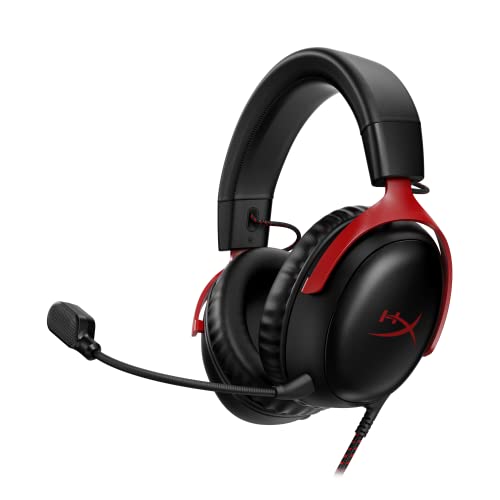
HyperX Cloud III — Modern heir
The Cloud III inherits the family’s durability brief and updates everything around it. The frame keeps metal where the load lives, the ear cups angle for a more natural fit than the Alpha’s, and the connection story becomes properly modern: USB-C and USB-A for computers alongside the 3.5mm jack for controllers, so one headset covers a desk and a sofa without adapters breeding in drawers. Its 53mm drivers are tuned for clarity with a gentle warmth, and the detachable microphone — a larger 10mm design — captures a fuller, more natural voice than the family’s earlier generations managed.
Durability thinking shows in the details its predecessor pioneered and this model refines. Cable and microphone both detach. Cushions come off for replacement. The headband’s memory foam and the cups’ padding use materials chosen for the long haul, and HyperX’s spares ecosystem — one of the healthiest in gaming — stands behind the whole product. The III is young next to the Alpha, so its decade-scale evidence is still being written; what can be said is that its architecture contains no known trap, and its maker has form for supporting models long after rivals move on.
Comfort is where the III most clearly advances on its ancestor. The angled cups and revised clamping make it the easier HyperX to wear for a full evening, particularly for glasses wearers, and its lighter visual design sits more calmly in a work-from-home frame when the gaming headset doubles for calls. DTS spatial licensing on PC adds polish for players who want it, without the headset depending on software to sound right — plugged into a controller, it is simply a very good wired headset.
Choose the III over the Alpha when the modern connections and the better microphone matter to your week, and the Alpha when the longest possible track record and the lowest possible price matter more. It is a pleasant dilemma, and this guide’s honest answer is that the family resemblance is the point: both were designed by people who expect you to still own the product in five years, and who sell the parts to make that expectation reasonable.
- Drivers: 53mm, clarity-tuned with gentle warmth
- Connections: USB-C, USB-A, and 3.5mm in the box
- Microphone: detachable 10mm design, fuller voice
- Build: metal-reinforced frame, replaceable cushions
- Fit: angled cups, revised clamp for long sessions
Strengths
- Modern connections cover desk and sofa in one product.
- Microphone is a clear step up in naturalness.
- Comfort improvements suit glasses and long evenings.
Trade-offs
- Track record is promising rather than proven at Alpha scale.
- Still wired only, despite the modern sockets.
- Spatial features live on PC, not consoles.
Best for: players wanting the Cloud durability story with today’s connections. Not suited for: bargain hunters, for whom the Alpha’s settled price wins.
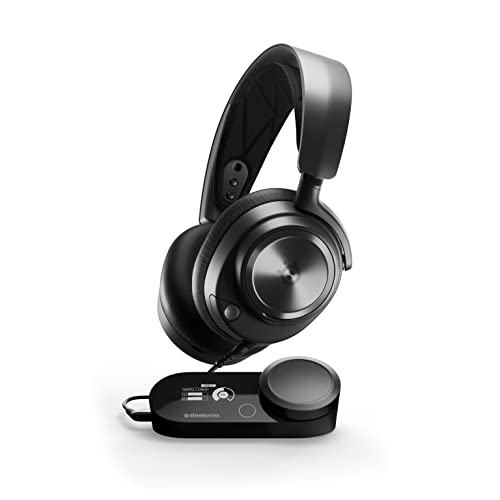
SteelSeries Arctis Nova Pro Wired — Premium system pick
The Nova Pro Wired asks to be judged as a system: a flagship headset built around a GameDAC Gen 2 hub that handles its audio with hi-res ambition, its EQ in hardware, and its connections in one desktop unit. The durability question for such a product is double — the headset’s own construction, and the ecosystem’s lifespan — and both deserve the honest treatment this guide exists to give.
The headset itself is the most substantially built in SteelSeries’ line: a steel-reinforced headband structure under the suspension strap, aluminium yokes, and cups that feel machined rather than moulded. The retractable microphone disappears fully into the cup, which protects it in bags and on desks better than any fixed boom — a microphone that cannot be snapped off because it is inside the product is a genuinely clever durability idea. Cushions swap, cables detach, and the whole object carries the density of a tool rather than a toy.
Its sound is the finest in this guide’s linked trio — high-resolution-capable drivers with a spacious, detailed presentation that serves music as seriously as games — and the DAC’s physical controls keep the most-used adjustments on the desk rather than in software. For a desk-bound player whose gaming, work, and listening all happen in one chair, the system consolidates three devices into one durable installation.
The caveats are structural. A system is a commitment: the DAC is the headset’s home and its best self lives at that desk, which makes the Nova Pro Wired a poor traveller and an odd sofa choice. Ecosystem dependence is the long-term question — software support and spare availability from a gaming brand, however good, rarely match the studio makers’ decades — and the price assembles all of these considerations at the top of the guide’s range. Buy it as the centrepiece of a permanent battlestation and it is a fortress; buy it as a portable headset and you have misunderstood the architecture.
- System: headset plus GameDAC Gen 2 desktop hub
- Drivers: hi-res capable, spacious and detailed
- Build: steel-reinforced band, aluminium yokes
- Microphone: fully retractable into the ear cup
- Role: permanent desk installation, not a traveller
Strengths
- Finest sound of the linked picks, with hardware EQ.
- Retractable microphone cannot be snapped off.
- Substantial build suits a permanent battlestation.
Trade-offs
- System price and desk-bound nature narrow its audience.
- Long-term value depends on ecosystem support.
- Overkill for console-and-sofa households.
Best for: desk-bound players building one permanent, premium station. Not suited for: travellers, sofa players, or the budget-conscious.
Beyerdynamic MMX 300 — Studio tank
Beyerdynamic has built headphones in Germany since before gaming was an industry, and the MMX 300 is what happens when that culture makes a headset: a closed-back design derived from studio stock, fitted with a broadcast-quality condenser microphone, and supported by a spare-parts catalogue that treats cushions, cables, headbands, and even drivers as orderable components for years after purchase. Owners of Beyerdynamic products measure ownership in decades and hand them down; the MMX 300 is built to join that lineage.
The construction favours the repairable over the sleek. Metal and high-grade polymers sit where stress demands them, the cable is a serious, replaceable assembly, and the whole headset can be stripped and serviced rather than discarded. The microphone deserves its own sentence in a durability guide because it refuses the category’s usual compromise: it is a genuine broadcast instrument, and streamers who buy the MMX 300 for its build discover they have also bought the best voice in their content.
Sound follows the studio brief — a controlled, detailed presentation with the closed-back isolation that competitive and late-night players need — and comfort suits long sessions, with velour cushions that breathe better than leatherette and can be replaced in seconds when they eventually pack down. The MMX 300 is covered without a link because the batch pool holds no entry for it; Beyerdynamic and pro-audio retailers stock it, and its price sits at the premium end, where its cost-per-year arithmetic — not its sticker — is the argument.
Its demands are honest ones: it is wired, it wants a decent source to shine, and its aesthetic is studio-plain. For the player who thinks of a headset the way a musician thinks of an instrument — buy the real thing, maintain it, keep it — the MMX 300 is less a product recommendation than a philosophy with a microphone attached.
- Origin: hand-built in Germany from studio-derived stock
- Microphone: broadcast-grade condenser on a proper boom
- Parts: deep catalogue — cushions, cables, components for years
- Cushions: velour, breathable, seconds to replace
- Sound: controlled studio tuning, closed-back isolation
Strengths
- Parts support measured in decades, not product cycles.
- Broadcast microphone doubles as a streaming instrument.
- Serviceable construction instead of sealed disposal design.
Trade-offs
- Premium price requires the cost-per-year mindset.
- Wired only, and appreciates a capable source.
- Studio-plain looks will not thrill RGB devotees.
Best for: players and streamers buying an instrument for a decade. Not suited for: wireless seekers or trend-driven upgraders.
EPOS GSP 600 — Armoured broadcaster
The GSP 600 descends from Sennheiser’s gaming division by way of EPOS, and it wears its priorities externally: this is a large, closed, unapologetically armoured headset whose boom microphone broadcasts rather than chats. The build uses substantial materials throughout, with a headband whose contact pressure can be adjusted — a rare and genuinely useful mechanism that lets the wearer tune the clamp that decides both comfort and seal — and hinges engineered for the daily handling of studio and tournament environments.
Isolation is the GSP 600’s second armour. The closed-back cups and deep cushions shut out a loud room more completely than most passive designs, which makes it a favourite of players in shared houses and competitors in noisy venues. The microphone, on its lift-to-mute boom, is the kind of voice instrument that makes callers sound employed; its size is the price, and the headset makes no apology for it.
Longevity evidence comes from its professional habitats: these headsets live on desks where they are used all day, every day, and the design’s serviceability — replaceable cushions and cables — matches that duty. It is written up without a link, as the batch pool carries no entry for it; EPOS channels and pro-audio retailers carry it, at a premium that buys the broadcast-and-armour combination rather than wireless convenience, of which it has none.
Fit is the gate to check: the GSP 600 is a big headset with a firm clamp out of the box, glorious for larger heads and potentially stern for smaller ones until the adjustment is dialled in. Players who pass that gate gain one of the most durable and best-isolating wired headsets ever made for gaming — a tool that treats a loud household not as a problem to process away, but as weather to be sealed out.
- Build: large armoured frame, adjustable headband pressure
- Microphone: broadcast boom, lift to mute
- Isolation: deep closed-back passive sealing
- Service: replaceable cushions and cable assemblies
- Fit: generous sizing, firm initial clamp
Strengths
- Passive isolation beats most active systems in loud rooms.
- Broadcast microphone flatters any voice it carries.
- Adjustable clamp tunes fit like few rivals allow.
Trade-offs
- Size and weight exclude smaller heads and hot rooms.
- Wired only, at a premium price.
- Armoured styling is an acquired taste.
Best for: loud-household players and streamers wanting a sealed, serious tool. Not suited for: small heads, travellers, or the wireless-minded.
V-MODA Crossfade 3 — Metal survivor
V-MODA built its name on a question the gaming industry rarely asks: what survives being dropped, sat on, and thrown into a thousand DJ bags? The Crossfade 3 answers with a steel frame and metal shields that the company tests against military drop standards, hinges that fold without fragility, and a design that doubles as Bluetooth headphones for the street and a wired gaming-capable headset at the desk with an optional boom microphone. It is the pick for the player whose headset must survive a life, not just a desk.
The durability details are the brand’s native language: a cable rated for bending far beyond industry norms, replaceable cushions and shields, and a headband that can be twisted flat in demonstrations without complaint. The sound is V-MODA’s signature — lively, bass-generous, tuned for enjoyment — and the Crossfade 3 serves music as a first-class citizen rather than an afterthought, which matters for a product that will spend half its life away from games.
For gaming duty, honesty requires the footnote: the built-in microphones are for calls, and serious team play wants the optional boom accessory, which turns the Crossfade into a genuinely capable gaming headset with the same metal skeleton. Wireless latency over Bluetooth confines competitive play to the cable, as with all Bluetooth-first designs. It sits outside the pool checked for this batch, so it is written up without a link; V-MODA and major retailers stock it widely.
Choose the Crossfade 3 when your headset’s enemies are physical and numerous — travel, commuting, children, your own cheerful carelessness — and when you want one product to be your headphones and your headset in a single metal frame. It concedes the studio refinement of the Beyerdynamic and the system polish of the Nova Pro, and in exchange it offers the strongest claim in this guide to still being unbroken after the roughest decade you can give it.
- Frame: steel construction, drop-tested design
- Modes: Bluetooth headphones, wired headset with boom option
- Cable: high-flex rating, replaceable
- Parts: cushions and shields replaceable, customisable
- Sound: lively, bass-generous house tuning
Strengths
- Metal build survives drops that end plastic rivals.
- One product serves street, travel, and desk.
- Replaceable wear parts keep it young for years.
Trade-offs
- Serious gaming wants the optional boom accessory.
- Bluetooth latency keeps competitive play on the cable.
- Bass-forward tuning is not the forensic choice.
Best for: rough-and-tumble lives needing one metal headset for everything. Not suited for: pure competitive players wanting a dedicated instrument.
An Autopsy in Advance: Which Part of Each Headset Dies First?
| Headset | Frame material at load points | Cable story | First likely wear item | Spares support |
|---|---|---|---|---|
| Cloud Alpha | Aluminium | Detachable, cheap to replace | Ear cushions | Wide and long-running |
| Cloud III | Metal-reinforced | Detachable, multi-format | Ear cushions | Wide, current-generation |
| Nova Pro Wired | Steel band, aluminium yokes | Detachable to DAC | Ear cushions | Maker-dependent, system parts |
| Beyerdynamic MMX 300 | Metal and studio polymers | Replaceable assembly | Velour cushions | Decades-deep catalogue |
| EPOS GSP 600 | Armoured polymers and metal | Replaceable assemblies | Ear cushions | Pro-channel support |
| V-MODA Crossfade 3 | Steel frame and shields | High-flex, replaceable | Ear cushions | Brand-direct parts |
Read down the fourth column and the guide’s thesis proves itself: in every single case, the first thing to wear out is foam. Cushions compress, crack, and shed their coating years before drivers tire or frames fail — which is why replaceable cushions are treated throughout this guide as a structural feature rather than a comfort footnote. A headset with glued cushions has an expiry date printed in foam; every pick here lets you peel that date off and fit a new one.
The cable column tells the second story. Wired headsets die by cable more than by any other mechanism, and the six split neatly into those whose cables unplug — all of them, deliberately — and the rest of the market, whose cables are soldered obituaries. If you remember one filter from this guide while shopping anywhere else, remember that one: a detachable cable is the difference between an accident and an errand.
What Actually Breaks Headsets? A Field Guide to the Five Assassins
The hinge assassin strikes where the ear cup pivots, a joint that absorbs every donning, every one-handed removal, every drop onto a desk. Plastic hinges with thin cross-sections are the industry’s original sin; metal yokes and generous pivots — the Alpha’s, the Nova Pro’s — are the correction. You can audition a hinge in a shop: flex the cup gently and listen. Creaks and grit at day one become cracks at year two.
The cable assassin works at the strain reliefs, the reinforced points where wire meets plug or cup, flexed thousands of times by ordinary handling. Tight wrapping around the headset is its accomplice — every tight coil is a hundred flexes delivered at the worst angle. The defence is the loose coil, the detachable cable, and the replacement kept in a drawer, and it is available to every owner of every pick in this guide for almost no money.
Foam is the slow assassin, and humidity its lieutenant: cushions absorb sweat and skin oils, the coating flakes, the seal degrades, and owners blame the drivers for a thinness that is actually a gasket failure. Battery fade is the wireless assassin, largely absent from this deliberately wired-leaning guide — one more reason the durable end of gaming remains stubbornly cabled. And the fifth assassin is neglect of the ecosystem: the discontinued app, the orphaned dongle, the spare part that stops being sold, which is why the studio makers’ boring, decades-long catalogues shine so brightly in a durability ranking.
How Do You Make Any Headset Live Longer, Starting Tonight?
Give it a home off the desk’s edge: a hook or stand where it hangs by its headband, safe from chair castors, spilled drinks, and the slow avalanches of a working desk. Handle it with two hands when you can — the one-handed twist is the hinge’s natural predator — and when you must carry it, carry it by the headband rather than by a cup or the cable.
Coil the cable loosely, in the over-under pattern cable professionals use, and never store it wrapped around the headset itself. Keep a spare cable and a spare set of cushions in the drawer from the day the headset arrives, bought while they are certainly available; the middle of a product’s life is when spares are cheapest and most plentiful, and the end is when they are neither.
Clean like you mean to keep it: cushions wiped weekly, velour brushed, leatherette conditioned by nothing more exotic than a damp cloth and distance from solvents. Store it away from radiators and sunny windowsills, whose heat and light age foam and plastics faster than play does. None of this is heroic maintenance. It is ten minutes a month, and across the six headsets above it is conservatively worth years.
Where Do Buyers Waste Money Chasing Durability?
Paying for a ruggedised aesthetic is the commonest waste: camouflage plastics, decorative armour, and tactical styling photograph like durability and fail like anything else at an unreinforced hinge. Judge the load paths and the parts catalogue, not the costume. The plainest object in this guide — the studio-derived Beyerdynamic — will outlive a shelf of headsets dressed as soldiers.
Overbuying weight is the second waste. Heavy feels durable in the hand and punishes the neck in the year; several genuinely tough designs here are moderate in weight because their strength is architectural rather than massive. The shop-floor squeeze test measures the wrong thing — audition the hinge’s smoothness and the cable’s detachment instead, and wear the thing for ten minutes before letting its heft persuade you of anything.
The third waste is buying durability for a use that does not need it. A headset that lives its whole life on one careful adult’s desk can be almost anything; the durability premium earns its return in shared houses, young hands, travel bags, and tournament kits. Match the armour to the life honestly, and the money saved buys the spare cushions that will matter more.
Year Three Check-In: What Owners of Each Pick Report
Durability claims earn their meaning at the three-year mark, when the launch reviews are forgotten and the products are simply old friends or old regrets. The ownership patterns around these six are unusually consistent, and they are worth more than any stress test a reviewer can improvise.
Cloud Alpha owners at year three sound almost bored, which is the highest compliment in this category. The headset works. The cushions have been replaced once — the owners who skipped that step are the only ones with complaints, and their complaints are about foam, not the headset. The aluminium shows honest wear at the edges, the cable in the drawer has been used by roughly half of them, and the recurring sentence in owner discussions is some version of ‘I keep looking at new headsets and not buying them.’ A product that suppresses its own replacement market has passed the durability test in the only court that matters.
Cloud III owners are earlier in the story, but the early chapters rhyme: no hinge sagas, no cable obituaries, microphones still deploying with their original click. The model’s youth is precisely why this guide places it second rather than first — its architecture is right and its maker’s record is strong, but the Alpha’s population-scale evidence cannot be inherited, only earned, and the III is earning it on schedule.
Nova Pro Wired owners at the multi-year mark divide by habitat, as this guide predicted. Desk-bound owners remain delighted — the system still anchors their stations, the DAC still organises their audio lives. The minority who tried to make it a travelling or sofa headset are the dissatisfied, and their complaints are about fit with their lives rather than failures of the product. Its cushions and cables have proven replaceable in practice, and its long-term question remains the ecosystem one: support horizons at gaming brands are good, and the studio makers’ are simply longer.
Beyerdynamic owners do not write year-three reports; they write decade retrospectives, usually while ordering fresh velour pads for a headset old enough to have survived three PCs. The MMX 300’s cohort is smaller — its price sees to that — but its tone is distinctive: these are owners who stopped shopping. The microphone, the part gaming headsets treat as disposable, is frequently cited as still outperforming the new headsets of friends, which is what a broadcast instrument in a gaming shell was always going to do.
GSP 600 owners report the professional pattern: heavy daily use, cushions consumed and replaced like the consumables they are, booms still muting with a lift, and a headset that looks used and works new. The V-MODA cohort reports in travel stories — drops survived, bags unpacked, a headset that has been to more cities than its owner can list — with the metal showing its history proudly and the sound unchanged. Six products, six ageing curves, and not a obituary among them: that, in one paragraph, is why these are the six.
The Arithmetic of Cost Per Year — and Why Cheap Headsets Are Expensive
Run the numbers the way owners actually experience them. A fragile headset bought cheaply and replaced every eighteen months — a rhythm any gaming forum will confirm is common — costs its owner three purchases across five years, three rounds of shopping, three periods of playing on a dying product with a fraying cable and flaking cushions, and three contributions to a landfill. A durable headset bought once, maintained with a set of cushions and a cable across the same five years, costs less money in total in the overwhelming majority of real cases — and delivers a better product on every single day of the comparison.
The arithmetic sharpens at the premium end. The Beyerdynamic’s price looks steep as a purchase and modest as a decade: divided by ten years of service with a parts catalogue behind it, it undercuts mid-priced headsets replaced on a three-year rhythm, while sounding better than all of them on every day of the ten. This is the sense in which this guide uses the word ‘affordable’ about expensive objects — not cheapness, but the lowest honest cost of owning good sound across the years you will actually own it.
There is a second, quieter ledger: attention. Every headset failure interrupts a hobby at its leisure hours, demands research, shipping, setup, and the relearning of controls and fit. Durable gear returns that attention to the games. Players who have made the switch rarely describe the saving in money at all; they describe the absence of a chore they used to perform annually and no longer think about.
Can a Wireless Headset Ever Belong in a Durability Guide?
Fairly asked — and the honest answer is: rarely, and only with its eyes open. A wireless headset carries three expiry mechanisms a wired one does not. Its battery is a consumable sealed inside a product priced as a durable. Its wireless standard and its app belong to an ecosystem whose support horizon the maker controls. And its electronics are dense enough that a single board failure retires the whole object, where a wired headset’s failures arrive one cheap part at a time.
None of that makes wireless a mistake — freedom is a real feature, and millions of players rationally trade lifespan for it nightly. It makes wireless a different purchase category: a consumable with a three-to-five-year horizon, bought for its convenience, replaced without bitterness when its battery or its ecosystem retires. The V-MODA in this guide threads the needle as honestly as the technology allows, because its wired mode is a full citizen rather than an emergency fallback: when its battery eventually fades, the Crossfade 3 remains a complete, metal, wired headset, and its life continues on the cable.
Readers who want maximum years should therefore read this guide’s wired bias as information rather than prejudice. The day wireless headsets ship with user-replaceable batteries and decade-long parts support, this ranking will welcome them at the top. Until then, the durable end of gaming stays cabled, and the six above are its honour roll.
Inspecting a Headset in the Shop: A Five-Minute Durability Examination
You can grade most of this guide’s criteria with your hands before money moves. Start at the hinge: rotate each cup through its full travel and flex it gently against its stops. The motion should be smooth, damped, and silent; grit, creaks, or a loose rattle at the extremes are the sound of year two arriving early. Move to the yoke and squeeze — not to test your strength, but to feel whether the structure flexes as a designed spring or protests as a shell.
Unplug the cable, if the design allows it, and plug it back in. The socket should grip with a positive, confident fit; a cable that falls out under its own weight in the shop will fall out under a game’s excitement at home. Check whether the microphone detaches or retracts, and how the cushions come off — if the shop assistant cannot show you, assume the answer is ‘with difficulty, at home, with regret.’ Finally, ask the question that separates the durable from the dressed-up: ‘Do you sell the cushions and cable for this model?’ A yes, with parts on a shelf, is worth more than any warranty slogan on the box.
Wear it last, and wear it properly — ten minutes, glasses on if applicable, head turned, jaw moved as if talking. Durability includes the durability of your willingness to wear the thing, and a fortress that pinches will be abandoned as surely as a frame that snaps. The six in this guide pass the full examination; hold every other candidate to the same five minutes and the category’s marketing will never fool you again.
What About the Headsets Your Friends Swear By That Are Not Here?
Every durability ranking invites the same objection: a beloved model, owned for years, is missing. Sometimes the omission is a genuine alternative this guide respects — several fine headsets from Razer, Logitech, and Corsair serve their owners long and well, and a reader who owns one happily should keep it with this guide’s blessing. Sometimes the omission is the point: models with documented hinge generations, glued cushions, or vanished spares were excluded deliberately, and a friend’s surviving example is a sample of one against a population pattern.
Survivorship is the trap in all durability folklore. The headsets that died are not at the table telling their stories; the ones that lived are, and every brand has living examples. This guide ranked by architecture, parts support, and population-scale patterns precisely to escape the anecdote contest — and it invites the reader to apply the same tests to any model, listed or not, rather than to take the list on faith. A headset that passes the hinge, cable, cushion, and catalogue examination has earned its place in your home regardless of whose ranking it appears in.
Durability for the Household’s Other Players: Children, Guests, and the Spare Chair
A gaming household’s durability problem is rarely the careful owner’s headset; it is the second one — the headset in younger hands, on the guest’s head, in the bag to a friend’s house. Those duty cycles reward the same architecture with even less forgiveness for fragility, and they are why this guide’s wired, metal, replaceable-everything picks double as the category’s best family purchases. A Cloud Alpha handed down to a younger sibling is not a compromise; it is the correct tool reaching its second owner with years still in it.
The economics compound across a household. One durable primary headset, one durable spare, and a drawer containing both models’ cushions and cables will cover a family’s gaming for the better part of a decade — through console generations, growth spurts, and the inevitable tournament phase. Compare that with the alternative most households drift into: a procession of fragile headsets, each dying at a hinge or a cable at the least convenient moment of the school holidays. Durability, bought twice and maintained lightly, is how a house stops thinking about headsets altogether — and a house that has stopped thinking about headsets is free to think about games.
Final Recommendation
Buy the HyperX Cloud Alpha if you want the durability argument settled in one purchase: an aluminium frame, detachable everything that matters, a sound that has pleased a generation of players, and a price that has settled into gift territory. It is the headset this guide would hand to a younger sibling, a travelling competitor, or anyone who has buried two lesser headsets and is done with funerals.
Before you buy any of the six, run the shop examination one last time in your head against your own life: the hinge your hands will twist twice a day, the cable your chair will roll toward, the cushions your summers will test, the catalogue your year-four self will need. A headset is one of the few gaming purchases that can plausibly outlive the console it was bought for, and the six above were chosen because their makers designed them as if they intended exactly that. Buy the one whose weak point you can name, stock its spare while spares are plentiful, and then go and forget about headsets for years — which was the entire point.
Step to the Cloud III when modern connections and a better microphone fit your week, to the Nova Pro Wired when a permanent desk deserves a flagship system, and to the studio trio — Beyerdynamic for the decade mindset, EPOS for sealed isolation and broadcast voice, V-MODA for a metal life on the move — when your definition of durability wears professional clothes.
Whichever you choose, buy its spare cushions and cable on the same day, hang it on a hook tonight, and expect to be reading its replacement guide out of curiosity rather than necessity — years from now, with the old headset still working beside you. That expectation, boring as it sounds, is the most radical promise in the entire gaming-headset market, and it is the one these six were chosen, examined, and ranked for keeping.
Frequently Asked Questions
Are metal headsets always more durable than plastic ones?
No — placement matters more than material. Metal at the yokes, hinges, and headband core (the load paths) genuinely extends life, which is why the Alpha and Crossfade 3 use it there. Quality polymer in the cups can out-survive thin metal by flexing through drops instead of denting or cracking. Judge the architecture, not the ingredient list.
How long should a durable gaming headset last?
With cushions replaced as they wear and a cable treated kindly, every pick here should serve five years comfortably, and the studio-bred designs — Beyerdynamic above all — are bought with a decade in mind. The realistic killers are accidents and orphaned ecosystems, not hours of play.
Is wired really more durable than wireless?
Structurally, yes: a wireless headset adds a battery that fades, radios that standards leave behind, and electronics that cannot be serviced, while a wired headset’s failure points are a cable and cushions — both replaceable. That is why this guide leans wired. Players who need wireless freedom should buy it knowingly, as a convenience with a lifespan, rather than as a forever product.
When should I replace ear cushions?
When the foam stops springing back, the coating begins to flake, or the seal feels thinner — typically after one to two years of daily play, sooner in hot, humid rooms. Fresh cushions restore comfort, isolation, and bass response together, and fitting them is the cheapest ‘new headset’ feeling in the entire hobby.
Does a longer warranty mean a more durable headset?
Not necessarily — warranty length is a pricing decision as much as an engineering one. Treat it as a tiebreaker between designs that already pass the construction tests in this guide: sound architecture, detachable cables, replaceable cushions, and a maker with a spares catalogue. A two-year warranty on a repairable headset will usually out-serve a longer promise on a sealed one.
Should I buy the extended protection plan offered at checkout?
For the headsets in this guide, generally no — their failure points are cheap parts you can replace yourself, which is a better deal than any plan’s deductible and paperwork. Protection plans make their strongest case on sealed wireless products with expensive batteries, the opposite of this guide’s philosophy. Spend the plan’s price on the spare cable and cushions instead, and you will come out ahead in almost every timeline.
My headset’s cushions are peeling. Is it dying?
No — it is asking for its scheduled maintenance. Peeling and flaking are the foam’s coating reaching the end of its life, not the headset’s. Fit fresh cushions (every pick here allows it), wipe the drivers’ grilles gently while the cushions are off, and the headset will sound and feel close to new. Owners who mistake this moment for a death sentence replace whole headsets that needed a ten-minute errand.
Is it worth repairing a headset with a broken hinge?
Rarely, and the answer explains this whole guide. Hinges are structural, integrated, and seldom sold as spares outside the studio makers’ catalogues, so a broken hinge usually means a retired headset even when everything else works. That asymmetry — cables repairable, hinges fatal — is exactly why the ranking weights hinge architecture so heavily before purchase, when the knowledge can still protect you.
Related Guides
Continue with the listening side of the category in our guide to headsets with the finest outright audio quality, then compare notes with the laptop roundup covering everyday 15.6-inch laptops that are not built for gaming for a complete desk, and finish with the storage guide to 3TB hard drives for archives and backups — because a battlestation deserves the same buy-it-once thinking throughout, from the headset on your ears to the drive that keeps your library safe across the same long years.
Related guide: Best Gaming Headsets Atmos
Related guide: Best Comfortable Gaming Headsets
Related guide: Best Folding Gaming Headsets


