What's inside
- Key Takeaways
- Quick Picks
- How We Chose These Picks
- What Happened to True 5.1 — and What Replaced It in the Best 5.1 Gaming Headsets?
- From Ten Drivers to Two: Reading the Modern Surround Field
- How Do You Judge a Surround Effect Honestly in Your Own Games?
- Which Surround-Era Mistakes Should Today’s Buyer Avoid?
- Where Does Platform Spatial Audio Fit Alongside These Headsets?
- How Do You Set Up 5.1 on a PC So the Headset Actually Receives It?
- Which Genres Gain Most From a 5.1 Rendering — and Which Gain Least?
- Why Does Surround Sound Convincing to Your Friend and Wrong to You?
- What Does Ownership of a Dongle-and-DAC Surround System Ask of You?
- A Note for Buyers Returning to Surround After the Old Era
- Final Recommendation
- Frequently Asked Questions
- Related Guides
As an Amazon Associate I earn from qualifying purchases. This post may contain affiliate links at no extra cost to you.
widgetverdict.com is reader-supported. When you buy through links on our site, we may earn an affiliate commission.
Anyone searching for the best 5.1 gaming headsets deserves the truth before the list, so here it is in the first paragraph: the true 5.1 gaming headset — one with separate physical drivers for centre, front, rear, and subwoofer channels packed into each earcup — is effectively extinct. It died of its own physics. Cramming five small drivers into a cup produced worse sound than one good driver, cost more to build, weighed more on the head, and convinced almost nobody who compared it honestly against quality stereo. What survived, and what this guide actually recommends, is something better wearing the old name: modern headsets that accept a 5.1 signal and render its space convincingly through two excellent drivers and mature processing — Dolby, DTS, and platform spatial audio that place sounds around you with a precision the multi-driver antiques never achieved.
This guide is therefore written as both a buying guide and a short, honest history. The three linked picks are the headsets we would actually buy today for 5.1-style gaming: a legend that built its name on virtual 7.1 processing, a flagship wired design with hi-res drivers and serious spatial tools, and a broadcast-voiced USB headset with Dolby processing. The three prose-only picks are the history made tangible — Razer’s multi-driver Tiamat, ASUS’s true-surround Centurion, and Sennheiser’s beloved PC 363D — included so you can see what the old idea was, why it faded, and why the modern processing route is not a consolation prize but the victory of the better technology.
It is worth pausing on why the industry let the old design die without a fight, because the reason protects you from its next disguise. Multi-driver headsets were not killed by fashion or by cost-cutting; they were killed by comparison, in listening tests anyone can repeat: the same mix, rendered by five small drivers per side and then by one excellent driver per side with processing, judged blind by listeners who wanted the expensive idea to win. It lost on accuracy, on comfort, and on price simultaneously — a clean sweep that left manufacturers nothing to defend. Any future product that revives the discrete-driver claim should be asked to publish its own version of that comparison. Until one does, the verdict of the last decade stands as this guide’s foundation.
Terminology first, because it misleads more shoppers than any other corner of audio. When a modern headset says it “does 5.1” or “does 7.1,” it means its software or dongle takes a multi-channel signal and mixes it for two ears using head-related transfer functions — mathematics modelled on how your outer ear shapes sound arriving from different directions. Done well, your brain receives the cues it uses in real rooms and places the rear-left explosion behind your left shoulder, where the game intended it. Done badly, it sounds like a cave. The picks below were chosen for doing it well, and the sections after them explain how to judge the effect in your own games rather than taking any box’s word for it.
Key Takeaways
- Discrete multi-driver 5.1 headsets are effectively extinct; every worthwhile modern option renders 5.1 through two drivers plus processing, and sounds better for it.
- The HyperX Cloud II remains the spiritual home of surround gaming headsets: its USB dongle’s virtual surround made the category mainstream and still serves PC players well.
- The SteelSeries Arctis Nova Pro Wired is the modern flagship answer — hi-res capable drivers, an external DAC/control station, and spatial tools for players who want the fullest rendering.
- Corsair’s HS80 RGB USB pairs Dolby processing with the finest microphone family in this guide, for players whose voice matters as much as their soundstage.
- The prose-only Tiamat, Centurion, and PC 363D are the history lesson made tangible: fascinating, once-serious engineering that the market weighed carefully against good stereo and good processing — and retired, permanently, for reasons any listener can verify with a single blind comparison today.
Quick Picks
| Pick | Badge | Why it is here |
|---|---|---|
| HyperX Cloud II | The surround legend | The headset that taught a generation what virtual surround could do, with a USB dongle, proven comfort, and an aluminium frame. |
| SteelSeries Arctis Nova Pro Wired | The modern flagship | Hi-res drivers, a GameDAC control station, and spatial processing for the fullest 5.1 rendering money currently buys in a headset. |
| Corsair HS80 RGB USB | Dolby with a broadcast voice | Dolby Audio processing and the HS80 line’s celebrated microphone, in a wired USB design for PC players. |
| Razer Tiamat 7.1 V2 | The multi-driver fossil | Ten real drivers in two earcups — the old idea at its most extreme, honoured here as history, not as a recommendation to hunt down. |
| ASUS ROG Centurion | The true-surround experiment | ASUS’s discrete-driver surround headset with its own USB station; ambitious, heavy, and discontinued for instructive reasons. |
| Sennheiser PC 363D | The beloved ancestor | A classic open-back gaming headset with a USB surround dongle, remembered fondly and superseded by everything above it. |
How We Chose These Picks
Selection for this guide began with the honesty test: any product whose marketing still implies physical 5.1 drivers it does not contain was excluded from recommendation, however it sounds. The surviving field was then judged on the quality of the illusion, which decomposes into three parts. First, the drivers themselves — because processing cannot rescue a driver that smears detail, the two speakers doing all the work must be genuinely good stereo drivers before any spatial mathematics touches them. Second, the processing — the maturity of the surround implementation, judged by whether rear cues stay distinct from side cues and whether dialogue stays anchored to the screen rather than wandering into the effect. Third, the off switch: every recommended pick must sound excellent with processing disabled, because some games, films, and all music are better served by clean stereo, and a headset that needs its effect to sound respectable is a trick, not a tool.
Microphones were judged as in our other guides, on the intelligibility and naturalness of the voice your team receives, with extra credit for designs that keep working identically in surround and stereo modes. Comfort was assessed over long sessions, since surround gaming skews toward immersive, hours-long titles where a headset’s weight and clamp write the review that matters. Platform honesty was enforced strictly: most surround processing in this category lives on PC through USB, and console players were told plainly in each section what their version of the product does and does not do, rather than being allowed to assume the headline feature travels with the plug.
The prose-only trio was chosen as a curriculum, not as filler. Between them they represent the three roads the old category took: Razer’s maximalist multi-driver engineering, ASUS’s systems approach with an external station, and Sennheiser’s processing-dongle classic that actually pointed toward the future. A reader who understands why each road ended understands the modern market better than most of its marketing departments — and will never again pay a premium for the words “true surround” on a box.
What Happened to True 5.1 — and What Replaced It in the Best 5.1 Gaming Headsets?

HyperX Cloud II — The surround legend
The Cloud II is the headset that made surround gaming ordinary, and its biography explains the whole category. When it arrived, its proposition was a USB dongle carrying virtual 7.1 processing — a step beyond the 5.1 mixes games offered — paired with a genuinely good stereo headset: 53mm drivers, memory foam, an aluminium frame, a detachable microphone. Players who had been burned by multi-driver gimmicks discovered that two proper drivers plus mathematics placed sounds more convincingly than five small drivers plus hope, and the market’s centre of gravity moved, permanently, to processing. A decade of imitations later, the Cloud II remains the reference implementation of that idea.
Its surround performance, judged by today’s standards, is honest rather than state-of-the-art. The dongle’s processing widens the stage and gives rear effects a genuine behind-you quality in games that output multi-channel audio, and the effect’s greatest virtue is restraint: it widens without hollowing, so voices and core effects stay solid while the edges of the world expand. Newer systems — the Nova Pro’s below, and platform-level spatial audio on modern consoles and Windows — resolve finer distinctions, particularly height. But the Cloud II’s rendering remains entirely convincing in the genres that made it famous, and its stereo mode, dongle bypassed, is simply the classic Cloud sound: warm, full, and fatigue-free.
The rest of the product explains its longevity as thoroughly as the processing does. The frame is metal where rivals of its era were plastic, the cushions are replaceable, the microphone detaches and captures the clear, natural voice that made the line’s reputation in team chat, and the whole headset works in plain 3.5mm mode on consoles and controllers — where, to be plain, it is a stereo headset, because the surround lives in the USB dongle on PC. That platform honesty matters and this guide repeats it deliberately: buy the Cloud II as a PC surround headset that moonlights everywhere else, and it rewards that honesty for years.
Who is it for, in a market with newer flagships? The PC player who wants the proven, uncomplicated version of surround gaming — the one that asks for no accounts, no ecosystem, no learning curve — and who values the category’s most battle-tested comfort and build. Its price position has settled over the years into the market’s friendliest territory for what it offers; check price on Amazon, because the legend is frequently the value pick of this entire guide. Some products survive on nostalgia. The Cloud II survives because its central idea was right, and being right ages better than being new.
- Surround: virtual processing via USB dongle, from 5.1/7.1 sources
- Drivers: 53mm units with the line’s warm, full tuning
- Frame: aluminium build with memory foam cushions
- Voice: detachable boom, clear and natural in chat
- Modes: USB surround on PC; plain 3.5mm stereo elsewhere
Strengths
- The proven, restrained surround rendering that defined the category
- Build and comfort that have outlasted a decade of rivals
- Excellent stereo when the effect is off — no trick dependency
Trade-offs
- Surround processing is PC-and-USB only; consoles get stereo
- Newer systems resolve height and finer rear detail
- Design and features are a settled classic, not a modern suite
Best for: the PC player who wants surround gaming in its most proven, uncomplicated form.
Not suited for: console-first players expecting the surround effect through a controller.
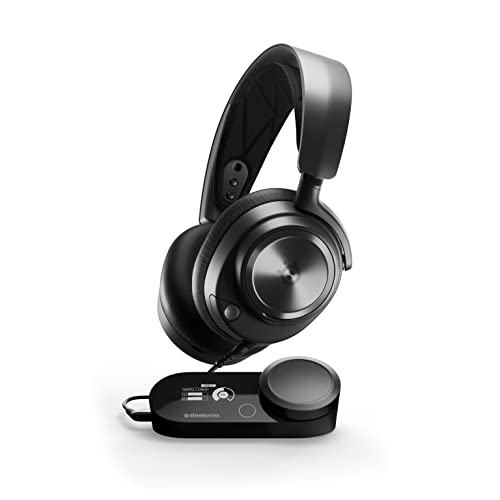
SteelSeries Arctis Nova Pro Wired — The modern flagship
If the Cloud II is where surround gaming became ordinary, the Arctis Nova Pro Wired is where it currently peaks. SteelSeries built this wired flagship around an external GameDAC Gen 2 — a desktop control station with its own display, hi-res audio certification, and the processing muscle that a dongle cannot match — feeding a headset with premium drivers tuned for resolution. The result is the fullest rendering of a 5.1 or 7.1 game mix available in a gaming headset: rear cues that resolve into rear-left and rear-right with conviction, a soundstage with genuine depth, and detail retrieval that survives the processing intact because the drivers underneath it are excellent stereo drivers first.
The Sonar software ecosystem is where the 5.1 story becomes customisable. Per-game profiles, parametric EQ, separate game and chat mixing, and spatial adjustments let an owner shape the rendering to a title’s mix rather than accepting a global effect — the difference between surround as a checkbox and surround as an instrument. Competitive players use the same machinery in reverse, trimming immersion for information; cinematic players push it toward width and height. The DAC’s physical controls keep the most-used adjustments on the desk rather than in a menu, which is where flagship money should visibly go: into the interactions you perform daily.
As a stereo headset with everything switched off, the Nova Pro justifies itself without the surround conversation at all — its drivers deliver a clean, detailed, genuinely hi-fi-leaning presentation for music and film, and its microphone, a retractable ClearCast design with AI noise reduction in the software path, captures a voice that streamers and meeting-heavy players can use professionally. Comfort comes from the family’s suspension headband and breathable cushions, in a wired design whose cable runs to the DAC on your desk rather than to a controller in your hands — a topology PC players will recognise as home and console players should note carefully, because this flagship’s world is the desk.
Its compromises are the flagship’s usual ones, stated plainly. It is the most complex product in this guide, and its riches reward an owner willing to spend an evening learning the software; the plug-and-forget player will use a tenth of it and should buy the Cloud II instead. Its surround story is a PC story. And its tier asks flagship money — check price on Amazon — for capabilities whose value depends entirely on whether you will use the instrument or merely own it. For the player who will use it, nothing else in this guide is close.
- Drivers: premium units with hi-res audio capability
- Station: GameDAC Gen 2 with display and desk controls
- Software: Sonar suite with per-game profiles and mixing
- Voice: retractable ClearCast boom with AI noise reduction
- Spatial: mature processing with per-title customisation
Strengths
- The most convincing and customisable surround rendering here
- Stereo performance that stands as hi-fi in its own right
- Desk-station controls that flagship buyers actually use daily
Trade-offs
- Complexity that casual owners will never fully use
- A desk-and-PC product at heart; consoles are guests
- Flagship tier pricing for capabilities that demand engagement
Best for: PC players who treat surround gaming as a tunable instrument, not a preset.
Not suited for: plug-and-forget buyers or console-first households.
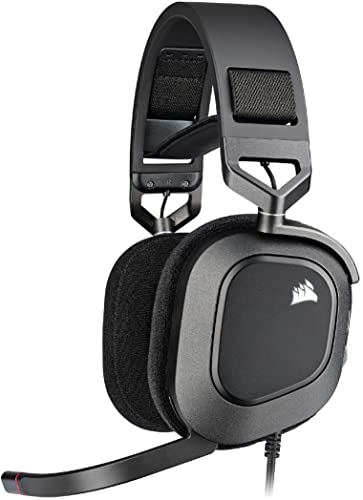
Corsair HS80 RGB USB — Dolby with a broadcast voice
The HS80 RGB USB makes a specific and persuasive argument: that the player who cares most about a 5.1 mix is often the same player whose voice carries the session — the streamer, the raid leader, the friend who narrates the game for the whole party. Corsair wired this HS80 variant for PC, gave it Dolby Audio surround processing, and kept the line’s defining asset intact: a broadcast-grade boom microphone that captures a voice with a fullness and room rejection that no other pick in this guide matches. Surround headsets are usually reviewed as listening devices. This one insists on being reviewed as a two-way instrument.
The Dolby processing renders 5.1 and 7.1 game mixes with the polish expected of the name: a wide, stable stage, rear effects that stay behind you rather than smearing to the sides, and dialogue that remains nailed to the centre where directors put it. Corsair’s iCUE software adds EQ and settings depth, and the headset’s 50mm drivers give the processing good raw material — a rich, cinematic stereo foundation that keeps the effect grounded when it is on and keeps films and music satisfying when it is off. Among the three linked picks, this is the cinematic listener’s surround: less forensic than the Nova Pro’s instrument, warmer and more theatrical in exchange.
The microphone deserves its paragraph, as it does in every HS80 review, because it changes what its owner can do. Voices recorded through it need little help to sound produced; the flip-to-mute gesture is certain; and the capture’s rejection of keyboard and room lets a player stream from an ordinary desk in an ordinary flat without treating the room first. For the growing class of players who broadcast to twelve friends with the seriousness of twelve thousand, that microphone is not a feature of the headset. It is the headset’s second product, included.
The boundaries are clear and PC-shaped. This wired USB design lives on computers; consoles are not its country, and the RGB lighting that names it is a desk aesthetic rather than a function. Its fit — memory foam, a floating headband, a firmer initial clamp — suits long desk sessions and loosens with wear. Buy it as the surround headset for the PC player who talks as much as they listen, and it has no rival in this guide. Buy it for a console couch, and you have bought the wrong HS80.
- Surround: Dolby Audio processing for multi-channel game mixes
- Drivers: 50mm units with a rich, cinematic foundation
- Voice: broadcast-grade boom, flip-up to mute
- Connection: wired USB, built for PC life
- Software: iCUE for EQ, settings, and lighting control
Strengths
- The finest microphone in this guide, by a clear margin
- Dolby rendering that keeps dialogue anchored and rears honest
- Warm stereo foundation that flatters films and music
Trade-offs
- PC-only by design; consoles need not apply
- Lighting is decoration, however tasteful
- Firm initial clamp needs a breaking-in period
Best for: PC streamers and leaders who want surround space and a broadcast voice together.
Not suited for: console players or minimalists who resent software suites.
Razer Tiamat 7.1 V2 — The multi-driver fossil
Behold the old idea at its most magnificent and most doomed. The Tiamat carried ten discrete drivers — five in each earcup: centre, front, rear, side, and a subwoofer — each fed its own channel from a PC sound card’s analogue outputs, with a control unit for per-channel volume. It was the literal fulfilment of the “true surround” promise, engineered with total sincerity by a company that believed the promise. We include it in prose, without a link and without any suggestion that you hunt one down, because it is the most instructive object in the category’s history: the experiment that proved, conclusively, why the experiment ended.
The physics were unkind in ways no engineering budget could repeal. Five small drivers in a cup are five compromised drivers — none large enough for real bass, none positioned to image like a proper stereo pair — and their combined output was consistently judged less convincing, and less enjoyable, than one good driver per ear rendering the same mix through processing. The Tiamat was also heavy, hungry for a specific kind of PC audio output that was already disappearing, and priced like the flagship it was. Owners who loved it loved the idea and the theatre of it; the market, comparing with its ears, chose otherwise.
Its afterlife is honourable. The Tiamat remains the reference point every “true surround” claim must answer, the museum piece that lets reviewers say, with evidence, that the experiment was run properly and the result is in. If you encounter one cheaply as a curiosity, it is a wonderful artefact of gaming’s most literal-minded era. As a tool for hearing games in 2026, the three linked picks above — each cheaper to run, lighter to wear, and better at the very trick the Tiamat was built for — have inherited its ambition and improved on its method. That is not a sad ending. That is how technology is supposed to work.
- Drivers: ten discrete units, five channels per earcup
- Feed: analogue multi-channel inputs from a PC sound card
- Control: external unit with per-channel volume
- Build: substantial, flagship-weighted, unapologetically theatrical
- Status: discontinued; a museum piece with a working plug
Strengths
- The purest realisation of the discrete-surround idea ever sold
- Per-channel hardware control no software has replicated
- A genuine piece of gaming audio history
Trade-offs
- Small drivers never matched one good driver’s sound
- Depends on analogue sound-card outputs the market abandoned
- Heavy, complex, and superseded at its own speciality
Best for: collectors and the curious who want the old idea in physical form.
Not suited for: anyone shopping for a headset to actually play on today.
ASUS ROG Centurion — The true-surround experiment
ASUS approached the same dream from the systems side. The ROG Centurion paired discrete drivers in each cup — front, centre, rear, and subwoofer channels — with an external USB audio station carrying its own processing, controls, and connections, an architecture meant to give true surround the infrastructure it needed to succeed. It was Republic of Gamers engineering at full seriousness: no gimmick pricing, no toy construction, a genuine attempt to make the multi-driver idea work by surrounding it with competence. Its inclusion here, in prose, completes the curriculum the Tiamat began: even done well, with a station and a budget and a famous engineering house behind it, the idea did not survive comparison.
The reasons rhymed with the Tiamat’s. Multiple small drivers imaged less convincingly than the processing route, the system was heavy and desk-bound, and the price placed it against flagships whose stereo-plus-processing simply sounded better to the customers who auditioned both. ASUS, to its credit, read the market’s verdict and moved its ROG audio line toward the modern architecture — strong drivers, serious processing, platform spatial support — where it competes today. The Centurion’s station concept, interestingly, did survive in spirit: the Nova Pro’s GameDAC in this very guide is the same idea, a desk station serving the headset, except now it feeds two excellent drivers instead of ten compromised ones.
That lineage is the real reason to remember the Centurion kindly. Product categories learn by building the wrong thing excellently and noticing. The Centurion’s owners got a fascinating, well-made object; the industry got its answer. Shoppers in 2026 get the dividend — a market that no longer asks them to fund the experiment again. When a modern box promises “true” anything, the Centurion is the ghost at the table, suggesting you ask the only question that settled its fate: compared with good stereo and good processing, does it actually sound better? It did not. Nothing since has changed the answer.
- Drivers: discrete multi-channel units in each earcup
- Station: external USB audio hub with processing and controls
- Architecture: a systems attempt to make true surround succeed
- Build: flagship ROG construction, desk-bound and weighty
- Status: discontinued; its station idea survives in modern DACs
Strengths
- Serious engineering applied honestly to a hard problem
- The external-station concept that modern flagships inherited
- Build quality worthy of its maker’s flagship line
Trade-offs
- Multi-driver imaging lost to processing in direct comparison
- Heavy, complex, and tied to its desk station
- Superseded by its own maker’s modern direction
Best for: readers who want to understand how the modern market was decided.
Not suited for: buyers seeking a current, supported surround headset.
Sennheiser PC 363D — The beloved ancestor
The third road the old category took is the one that led somewhere. Sennheiser’s PC 363D was, at heart, a superb open-back stereo gaming headset — the company’s hi-fi drivers, a reference-class microphone for its era, the airy soundstage that open backs give for free — paired with a USB dongle carrying Dolby processing for surround duties. In other words, it was already the modern architecture, assembled by a headphone company before the market had agreed the modern architecture was the answer. Players who owned one tend to speak of it the way drivers speak of a first good car, and its reputation has outlived its production run by years.
Its virtues remain instructive. The open-back design traded isolation for a natural, spacious stereo image that needed less processing to feel wide — a reminder that some of what surround software simulates, physics can provide. The microphone set a standard for natural voice capture that budget headsets still chase. And the dongle approach kept the headset itself a pure analogue instrument, usable anywhere, with the surround living in an accessory rather than in the product’s identity. Read the Cloud II’s formula and you will see the 363D’s fingerprints; read the whole modern category and you will see its vindication.
Why, then, is it prose-only history rather than a recommendation? Because time moved its specifics along: the design is discontinued, its processing is a generation behind the Nova Pro’s instruments and the platform spatial audio now built into consoles and Windows, and surviving units are ageing in their cushions and cables. Honour it as the ancestor that got the architecture right. Then buy its descendants — the linked picks above — which is, in the end, exactly what its maker would tell you to do, and what its maker’s modern gaming line exists to sell you.
- Design: open-back stereo headset with a USB surround dongle
- Sound: airy, natural soundstage from the open architecture
- Voice: a microphone that set its era’s standard
- Architecture: analogue headset, processing as an accessory
- Status: discontinued and beloved; the modern formula’s ancestor
Strengths
- The modern surround architecture, arrived at early
- Open-back spaciousness that needed little processing
- Reference voice quality for its generation
Trade-offs
- Discontinued; surviving units are ageing
- Open backs leak sound in and out by design
- Its processing is a generation behind current systems
Best for: understanding where today’s surround headsets came from.
Not suited for: a purchase decision in the current market.
From Ten Drivers to Two: Reading the Modern Surround Field
| Headset | How it renders 5.1 | Surround platform | Microphone |
|---|---|---|---|
| HyperX Cloud II | Virtual processing, USB dongle | PC via dongle | Detachable boom |
| SteelSeries Arctis Nova Pro Wired | Processing via GameDAC + Sonar | PC, per-game profiles | Retractable boom |
| Corsair HS80 RGB USB | Dolby Audio processing | PC via USB | Broadcast boom |
| Razer Tiamat 7.1 V2 | Ten physical drivers | Analogue sound card | Fixed boom |
| ASUS ROG Centurion | Physical drivers + USB station | PC via station | Boom design |
| Sennheiser PC 363D | Dolby dongle + open-back stereo | PC via dongle | Boom, era reference |
The table is the category’s biography in six rows. The bottom three are the past: two attempts to build surround physically, and one early sketch of the processing future. The top three are the present, and their disagreements are about everything except the architecture — all three render space with mathematics over two drivers, differing in how customisable the mathematics is, how cinematic its flavour runs, and what microphone rides along. A shopper who grasps that the architecture question is settled can spend their attention where it still matters: on driver quality, processing maturity, and fit.
Notice, too, the platform column’s honesty. Surround processing in headsets remains overwhelmingly a PC story, because PCs offer the USB path and the software layer it needs. Consoles have answered with their own platform-level spatial audio — Sony’s Tempest and Microsoft’s spatial options — which any good stereo headset can carry, including these picks in their stereo modes. The modern console route to 5.1-style space is therefore not a headset feature at all, and a console buyer reading this guide should shop the stereo fundamentals of the linked picks with confidence, letting the console do the spatial work it was built to do.
How Do You Judge a Surround Effect Honestly in Your Own Games?
Forget demo reels; use a scene you know. Load a game whose map lives in your memory, stand somewhere with action on all sides, and close your eyes. With processing on, can you point — physically point — at the off-screen sounds and be right? The rear test is the discriminating one: most weak implementations collapse rear cues into a vague sides-and-back wash, while the systems in this guide’s linked picks keep rear-left and rear-right separable. Then find a voice — a companion, a cutscene, a teammate — and check that it stayed human and centred. Surround that buys space by hollowing the voices has charged you too much for the room.
Run the same scene in plain stereo before deciding anything. A surprising share of players discover their game’s native stereo mix, through a good headset, already places sounds so well that the processing adds width but not information — and width, unlike information, is a taste. There is no wrong answer, only an untested one, and the test costs twenty minutes in a game you already own. Owners who run it become immune to surround marketing for life, because they have heard, in their own ears, the difference between an effect and an improvement.
Finally, test the music rule: play an album you love with the processing on. Nearly every surround system mangles recorded music, which was mixed for two speakers in a room, not for a simulated one. A headset whose effect you must remember to disable for music is fine — all three linked picks behave this way — but disable it you must, and the habit is worth forming on day one. Surround is a game mode. Stereo is the native language of everything else.
Which Surround-Era Mistakes Should Today’s Buyer Avoid?
The first is paying for the word “true.” As the Tiamat and Centurion sections document, physical multi-driver surround was tried at flagship budgets by serious companies and lost on sound. Any modern product trading on discrete-driver nostalgia is selling the museum as a tool. The second mistake is the mirror image: dismissing processing as fake. Virtual surround is not a lesser substitute for the real thing; by every listening comparison the market has run, it is the real thing’s superior — the technique that won. The third mistake is buying a surround headset for a console and expecting the PC feature list: read each pick’s platform notes, because in this category the gap between the PC and console versions of the same product is wider than anywhere else in our programme.
The fourth mistake is subtler and lives in settings menus: stacking spatial systems. Running a headset’s Dolby processing on top of a console’s or Windows’ own spatial audio double-processes the mix and produces the cavernous, phasey sound that gives the whole category a bad name in forum posts. Choose one spatial layer — the platform’s or the headset’s — and disable the other. Half the “surround sounds terrible” stories in gaming are this single settings error, and it is free to fix.
Where Does Platform Spatial Audio Fit Alongside These Headsets?
The most important development in surround gaming since the Cloud II is that the processing moved into the platforms themselves. PlayStation’s Tempest engine renders spatial audio from the console for any connected stereo headset. Windows carries Sonic, with Dolby Atmos for Headphones and DTS Headphone:X available as system-level layers. Xbox offers its own spatial options. This changes the buying logic fundamentally: a console or PC can now supply the mathematics, which means the headset’s job reverts to the oldest job in audio — being two excellent drivers with a comfortable frame — while the platform does the spatial thinking for free.
Does that make this guide’s linked picks, with their own processing, redundant? Not quite, and the distinction is worth money. Headset-borne processing like the Cloud II’s dongle or the Nova Pro’s DAC travels with the product and behaves identically on any PC, including machines where platform layers are unavailable, unlicensed, or set up for speakers. It also bundles the tuning — EQ, mixing, profiles — into one manufacturer’s tested system rather than a stack of platform settings. But the platform route has a genuine advantage the dongles cannot claim: it is rendered with knowledge of the exact game mix at the source, and on PlayStation especially, Tempest’s object-based rendering through a good stereo headset can rival anything in this guide.
The practical synthesis for a modern buyer is liberating. On PC, choose between the headset’s system and the platform’s system by testing both in your main title — never stacked, as the mistakes section warns — and keep the winner. On console, buy the stereo headset you love from this guide’s linked three, all of which are excellent stereo instruments, and let the console’s engine do the spatial work it was designed to do. Either way, the conclusion the extinct multi-driver era was groping toward stands: the space was never in the earcups. It was always in the signal.
How Do You Set Up 5.1 on a PC So the Headset Actually Receives It?
More surround disappointment is born in settings menus than in any product, so here is the short, correct liturgy. First, tell Windows the truth: in the sound control panel, configure your headset’s output device for the multi-channel layout its processing expects — most dongle and DAC systems present themselves accordingly, and several include a setup step in their software that owners skip and then blame. Second, tell the game the truth: in its audio settings, select the surround or home-theatre output option rather than the headphone option when you intend to use external processing, because the headphone option often pre-mixes the channels down to stereo before your headset’s mathematics ever sees them, leaving it nothing to render.
Third, choose exactly one spatial layer, as this guide has preached: the headset’s own processing or the operating system’s, never both. Fourth, set the game’s dynamic range honestly — the “full range” or “home theatre” setting preserves the quiet cues that surround exists to deliver, while night-mode compression, useful for speakers in a flat, flattens precisely the information you bought the system to hear. Fifth, verify with a channel test or a known scene before your first competitive session, using the pointing test from the judging section above.
None of these steps is difficult, and together they take ten minutes once. They are, however, the difference between the product the reviewers described and the product frustrated owners describe in one-star frustration — the same headset, the same game, separated by five honest settings. Surround is a chain, and it is only ever as strong as its least-configured link.
Which Genres Gain Most From a 5.1 Rendering — and Which Gain Least?
Horror is the genre that justifies the entire category in one creaking floorboard. Games designed around dread mix their threats into the rear and side channels deliberately, and a convincing 5.1 rendering through the Nova Pro or Cloud II turns spatial information into emotion with an efficiency no other genre matches. Tactical shooters gain the most competitively, as this programme’s other guides discuss — rear cues are decisions there. Open-world and simulation titles gain the most atmospherically: weather, crowds, and cities acquire a wrap-around presence that stereo alone suggests but surround inhabits.
At the other end, competitive arena titles with deliberately clean mixes gain the least, because their audio designers already optimised the stereo image for information, and processing can only redecorate it — many serious players in those titles run plain stereo on headsets bought from this very guide, using the off switch this guide insisted every pick must honour. Music games, retro titles, and anything mixed in a previous era’s stereo gain nothing at all. The mature position, and the one this guide recommends without embarrassment, is a headset with excellent processing and an owner who treats it as a per-game decision rather than a permanent state. The button exists. Use it like one.
Why Does Surround Sound Convincing to Your Friend and Wrong to You?
Because your ears are, acoustically, a fingerprint. The mathematics inside every system in this guide — head-related transfer functions — models how a head and outer ears filter sound arriving from each direction, and those filters are how your brain locates a noise behind you without seeing it. The catch is that the model in the software is built from average ears, or from a research subject’s ears, and your brain has spent your whole life calibrating to your ears specifically. When the model and the listener match well, the illusion is total. When they differ — in ear shape, in head size, in the folds nobody thinks about — rear cues can collapse toward the sides or drift upward, and the same system on the same game sounds broken to one player and miraculous to another.
This is why the personalisation features spreading through the category matter more than their marketing suggests. Systems that let you select among several HRTF profiles, or that build one from a photograph of your ear as Sony’s ecosystem does, are not gimmicks; they are attempts to close the one gap that processing power alone cannot. It is also why this guide’s judging section insists on the pointing test in your own games: no reviewer’s ears can certify your illusion. The encouraging news is that most listeners land close enough to the average model for the linked picks to work convincingly, and that the brain adapts — a week of play recalibrates expectations measurably, which is why surround should be judged on day seven, not minute seven.
There is a humility lesson in this for the whole category. Surround quality is partly a property of the listener, which means the honest question is never “which system is best” but “which system is best for these ears, in these games.” The Nova Pro’s customisation earns its flagship place partly because it gives the listener the most ways to close that personal gap. The Cloud II’s restraint earns its legend partly because a gentle effect survives a wider range of ears than an aggressive one. Both are rational answers to the same human fact.
What Does Ownership of a Dongle-and-DAC Surround System Ask of You?
Surround headsets in the modern architecture are small systems rather than single objects — a headset, a dongle or a DAC, a software layer — and systems reward a little administration. Keep the dongle or DAC in a fixed port and a fixed place; these are not parts that enjoy travel in a laptop bag’s crush zone, and a lost Cloud II dongle is a surround headset demoted to stereo until its replacement arrives. Keep the software updated at a calm moment rather than on game night, and export or photograph your tuned profiles once they are dialled in, because the profile you spent an evening perfecting is an asset and should be backed up like one.
The headset half of the system asks for the usual mercies this programme preaches: cushions replaced when they flatten — a tired seal leaks bass and blurs the very imaging the processing works to create, so cushion condition is a surround-quality issue and not merely a comfort one — cables routed kindly, and the boom handled by its base. Owners who keep the seal fresh consistently report that their surround “came back,” when in fact it never left; it was the foam that went. In a category built on illusion, the physical details are the illusion’s foundation, and they repay attention out of all proportion to their cost.
A Note for Buyers Returning to Surround After the Old Era
A distinct tribe reads this guide: players who owned the old multi-driver headsets, or wanted to, and have carried a suspicion ever since that surround in a headset is a swindle. Their scepticism was earned honestly in 2012 and is simply out of date, and the fastest cure is a single evening with the Cloud II or the Nova Pro in a game built for multi-channel audio. The rendering they will hear is not the old theatre improved; it is a different and better technology that happens to share the name, the way a modern electric drivetrain shares the word “car” with a carburettor. Judging today’s systems by the Tiamat’s standards is as fair as judging today’s stereo by a wind-up gramophone — the museum pieces in this guide are honoured precisely so that the comparison can be closed, not kept open.
For that returning reader, the entry point matters. Start with the Cloud II, whose restraint and familiarity will feel like the category apologising in person, or with the Nova Pro if the intervening years have made a tuner of you. Either way, run the pointing test, keep one spatial layer, and give your ears the week of adaptation the HRTF section describes. The tribe’s usual story ends the same way: the suspicion retires, the surround stays on for the games that earn it, and the museum keeps its fossils with nobody’s grudge attached.
Final Recommendation
For most PC players drawn to this category, the Cloud II remains the recommendation with the fewest caveats: the proven surround implementation, the proven comfort, the proven frame, at a position that has settled into friendliness — the legend as value pick. Choose the Arctis Nova Pro Wired when surround is your hobby as well as your feature: its DAC, software, and driver quality make it the fullest rendering of a 5.1 mix that a headset currently offers, and the only pick here that rewards endless tuning. Choose the HS80 RGB USB when your sessions are led by your voice — its Dolby space is cinematic and its microphone is in a class the others visit only as tourists. And let the Tiamat, the Centurion, and the PC 363D rest in their honoured prose, remembered with genuine gratitude rather than mockery: they are the reason this guide can tell you, with the full confidence of a settled and fairly run experiment, that the best 5.1 gaming headsets of the modern era have two drivers, good mathematics, honest microphones, and nothing whatsoever left to prove to anyone.
Frequently Asked Questions
Do true 5.1 headsets with multiple drivers still exist?
Effectively no. The Razer Tiamat and ASUS ROG Centurion were the serious attempts, both are discontinued, and the market’s verdict was consistent: five small drivers per side sounded worse than one good driver per side with processing. Modern “5.1” and “7.1” headsets accept multi-channel signals and render them virtually, which is the technique that won.
Is virtual surround actually as good as real surround speakers?
It is a different experience rather than a lesser copy, and for the solo player it is frequently the more practical one: no speaker placement, no room treatment, no volume negotiation with the rest of the household, and a sweet spot that follows your head instead of anchoring you to one cushion. A well-set room of speakers still wins for shared film nights and for the physical sensation of bass in the chest. The headset wins the other three hundred evenings of the year, which is why so many households that own both end up gaming on the headset by default. A physical 5.1 speaker setup fills a room and serves several listeners; a headset’s rendering serves one listener with precise directional cues and total isolation from the room. For gaming information — where is that sound relative to me — a good headset rendering is arguably more useful, and it works at midnight in a flat full of sleepers.
Will these headsets give me surround on PlayStation or Xbox?
Not through their own processing — the surround features here are PC stories, delivered over USB. On console, these picks work as quality stereo headsets, and the consoles’ own spatial audio systems (Tempest on PlayStation, spatial options on Xbox) can then do the spatial work through them. Buy them console-side for their stereo quality, not for the dongle.
Should I use surround processing for music and films?
Films mixed in 5.1 can benefit, since the processing is rendering an actual multi-channel source. Music almost never does: albums are mixed for stereo, and surround processing on a stereo source manufactures a space the recording never had. The rule in this guide is simple — surround for multi-channel games and films, clean stereo for music.
What is the difference between 5.1 and 7.1 in a headset?
Two additional virtual side channels in the source mix, rendered by exactly the same two drivers through the same mathematics, which is why experienced listeners treat the distinction as a footnote rather than a feature: a game mixed in 7.1 gives the processing slightly more positional information to work with, and a game mixed in 5.1 loses almost nothing in translation. In practice the audible difference in headsets is small — both describe how many channels the processing accepts, not how many speakers you are wearing. Judge a headset by how convincingly it places sounds, not by the channel count on its box.
Can I stack the headset’s surround with my console’s spatial audio?
Please do not, however tempting the logic of “more surround” may sound in the settings menu on the first evening. Two spatial systems processing the same mix produce the hollow, phasey sound that disappoints so many first-time surround users. Pick one layer — the platform’s or the headset’s — and disable the other. It is the single most valuable settings change in this entire category of headsets, and it costs absolutely nothing to make.
Related Guides
Continue through the wider surround family, once your own pointing test has taught your ears what to listen for, with our 360 VR headsets for fully immersive play, then the 7.1 audio headsets and what the extra channels add, and finally the 7.1 wireless headsets that cut the cord without losing the space.
Related guide: Best Gaming Headsets Razer
Related guide: Best Gaming Headsets For Bass


