What's inside
- Where to Buy
- Key Takeaways
- Quick Picks
- How We Chose These Picks
- Comparison Table
- How to Choose
- How many lumens does a sanctuary actually need?
- Should a church choose laser over lamp at these brightness levels?
- What should a church check during the first month after installation?
- Common Mistakes
- Final Recommendation
- Frequently Asked Questions
- Related Guides
As an Amazon Associate I earn from qualifying purchases. This post may contain affiliate links at no extra cost to you.
[SITE_DOMAIN] is reader-supported. When you buy through links on our site, we may earn an affiliate commission.
Where to Buy
Every projector in this guide links to the Amazon listing whose title states the lumen figure the recommendation rests on, and the committee habit worth forming is to read that title aloud before voting. The Panasonic PT-VMZ61 prints the guide’s highest figure. The ViewSonic LSD600W prints its zoom and LAN control beside its lumens. The PT-VMZ51, the LS740W, the LS740HD and the Epson Pro EX11000 each carry their current figure on their own page, where it belongs — this guide prints no prices, only the brightness arithmetic a church actually decides on.
A sanctuary is the most demanding bright room in ordinary life, which is why the search for the best church projectors over 4000 lumems — lumens, in the spelling the rest of the world uses — deserves more rigour than a brightness slogan. The congregation reads from the screen: lyrics in real time, scripture in full passages, notices, liturgy, the words of a service that fails when the back pew squints. The lights stay up because people read hymnals, watch children and move safely. And the windows, in many beloved buildings, were designed by architects who loved daylight more than projection. A church projector must win in exactly those conditions.
Every brightness figure in this guide comes from a listing title, quoted and checkable: 6200, 6000, 5500, 5500, 5200 and 4600 lumens. No figure was inferred from a model name, a predecessor or a reputation, because church committees spend real congregational money and deserve numbers they can verify in the source document. Where a title is silent — and several here are strikingly silent about lenses and throw — the spec boxes say so with the standard wording, and the reviews treat installation figures as homework for the installer rather than as facts this page possesses.
The six divide by the rooms churches actually contain. Two WUXGA Panasonics anchor text-heavy sanctuaries at 5200 and 6200 lumens. Two ViewSonic lasers at 5500 lumens split by resolution — WXGA for flexible halls, 1080p for video-rich services. A 6000-lumen ViewSonic installation model adds LAN control for tech teams. And a 4600-lumen Epson, the threshold pick, trades raw output for the guide’s richest connectivity and its most honest brightness claim, stated for colour and white alike.
Churches are also, not incidentally, among the most honest test beds in projection: their content is unforgiving (text), their operators are volunteers, their buildings are old, and their audiences include every age of eyesight. A projector that succeeds in a sanctuary at 10 a.m. on a bright Sunday has passed an examination that most boardrooms never set. That is why this guide holds its picks to sanctuary standards throughout, and why home and classroom readers who borrow these recommendations for their own lit rooms will find the brightness discipline transfers intact.
Key Takeaways
- All six titles state their lumens: 6200, 6000, 5500, 5500, 5200 and 4600 — no figure here is inferred from a model name.
- The Panasonic PT-VMZ61 is the brightest pick at 6200 stated lumens, with WUXGA text resolution.
- The Epson Pro EX11000 states 4600 lumens for both colour and white brightness — the most complete claim in the guide.
- The ViewSonic LSD600W is the only title naming LAN control, and the only one stating a numeric zoom: 1.3x.
- Two picks are WXGA; churches projecting small-font text should weigh that trade before the brightness tempts them.
Quick Picks
| Pick | Badge | Why it is here |
|---|---|---|
| Panasonic PT-VMZ51 | The WUXGA laser anchor | A WUXGA LCD laser projector stating 5200 lumens in white — the sanctuary anchor for text-heavy services. |
| ViewSonic LS740W | The flexible-install 5500 | 5500 lumens at WXGA with optical zoom, keystone, corner adjustment and 360-degree projection, aimed at education and auditoriums. |
| ViewSonic LS740HD | The 1080p all-venue laser | The same 5500-lumen laser toolkit as its WXGA sibling, upgraded to Full HD 1080p for home-theater-grade video in the hall. |
| Panasonic PT-VMZ61 | The brightest sanctuary pick | 6200 lumens — the highest figure in this guide — in a WUXGA LCD laser body for glass-heavy sanctuaries and large halls. |
| Epson Pro EX11000 | The wireless connected pick | 4600 lumens of colour and white brightness in a 3LCD Full HD laser with Miracast, two HDMI ports, USB power and a built-in 16W speaker. |
| ViewSonic LSD600W | The networked installation pick | 6000 lumens in a WXGA DLP laser installation projector with dual HDMI, 1.3x zoom, LAN control and 360-degree projection. |
How We Chose These Picks
Brightness was the gate and the title was the only key. Candidates needed a lumen figure printed in their listing title above the four-thousand line this guide is named for, and all six survivors print one. That rule sounds pedantic until a committee has been burned by a projector whose marketing name promised a brightness its specification never claimed; this guide’s ladder — 4600 to 6200 — can be audited by any reader in minutes, and a church purchase should always be auditable by the people who funded it.
Beyond the gate, the set was balanced across the three variables that decide sanctuary success. Resolution splits the list into text machines (WUXGA), video machines (1080p) and flexible halls (WXGA), because congregations differ in what fills their screens. Installation range splits it again, from the Epson’s connection-first design to the LSD600W’s networked installer toolkit. Light source, happily, does not split it at all: every pick here is a laser, which is the correct default for machines mounted above people’s heads and serviced by volunteers.
A final filter was honesty about scale. Each review states the room its pick is too much or too little for, in measurable terms — screen size, font size, lumen gaps — because a church that buys the wrong size of right projector has still bought the wrong projector. The recommendations are therefore conditional by design, and the conditions are printed where a committee can argue with them.
One more consideration shaped the final six: the service after the sale, in its broadest sense. A church projector is maintained by whoever the congregation can muster, so the guide favoured machines whose titles describe straightforward installation and operation — stated zooms where they exist, corner correction where mounts are imperfect, network control where a team exists to use it. Complexity that requires a contractor for every adjustment is a recurring cost disguised as a feature, and the reviews flag it wherever a title leans that way.
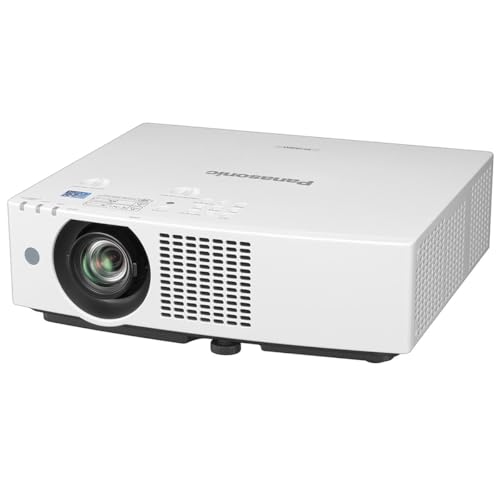
Panasonic PT-VMZ51 — The WUXGA laser anchor
A church projector earns its keep on Sunday morning, under lights the congregation needs for hymnals, projecting words that must be read from the back pew. The Panasonic PT-VMZ51 states its case in a short title: WUXGA resolution, LCD technology, a laser light source, 5200 lumens, in a white housing. WUXGA is the detail a worship leader should circle first, because lyrics, scripture and liturgy are text before they are pictures, and the extra vertical resolution over plain 1080p keeps lines of text crisp when a passage fills the screen from top to bottom.
The laser source matters to a church in a way it never matters to a home. A sanctuary projector hangs high, often above seating, and every lamp change is a lift, a ladder and a volunteer with a head for heights. A laser engine stretches the interval between those interventions, and its light output holds steadier across its life than a fading lamp’s. The white finish, named in the title, is the aesthetic half of the same practicality: against a white ceiling the housing visually disappears, which is what most sanctuaries want from equipment — present in the picture, absent from the room.
- Resolution named in the title: WUXGA
- Technology: LCD
- Light source: laser
- Brightness stated in the title: 5200 lumens
- Finish: white
- Lens, zoom and throw figures: Not stated in the listing title — verify with the manufacturer documentation
Strengths
- WUXGA resolution serves lyric and scripture text, the dominant content of most services.
- The laser source suits a high ceiling mount where lamp changes are disruptive and costly in volunteer time.
- 5200 stated lumens clear the guide’s threshold with headroom for lights-up singing.
Trade-offs
- The title states no zoom, throw or lens-shift figures, so screen fit must be confirmed from Panasonic documentation before mounting.
- No speaker or audio capability is named in the title; sanctuary sound must come from the house system.
- No connectivity list is given in the title, so input planning for the media booth is unverified from the listing alone.
Best for: a sanctuary projecting text-dense services — lyrics, scripture, liturgy — from a fixed ceiling mount, where WUXGA sharpness and 5200 stated lumens serve the back pew.
Not suited for: a portable ministry carrying a projector between rooms weekly — this title describes a fixed installation laser unit, and its lens and mounting figures are not stated for a buyer who needs to re-aim it at every venue.
Churches should read this model alongside its bigger sibling further down the list, because the pair frame a genuine decision. The VMZ51 and VMZ61 share a family, a resolution and a finish, differing in their stated brightness — 5200 against 6200 lumens. A sanctuary with modest windows and controlled lighting buys the VMZ51 and spends the difference elsewhere; a glass-walled hall buys the headroom. Neither choice is a compromise, and the family resemblance means the media team’s learning carries across either way.
Sanctuary teams can find the PT-VMZ51’s current figure on its Amazon listing — worth checking alongside the throw distance Panasonic’s documentation gives for your screen width.
The LCD choice deserves a sentence for committees weighing technologies. Three-chip LCD designs are valued in lit rooms for colour brightness that holds up in both colour and white content, which for a church means the amber of a candlelit graphic and the white of a lyric slide are served by the same engine. Committees comparing this Panasonic against the DLP entries below should project the same lyric slide on both if they possibly can, because text over a coloured background is exactly where the technologies part company.
A sanctuary’s weekly rhythm also suits this machine’s temperament. Weekday funerals, weddings and rehearsals all call the projector up at short notice, often run by whichever volunteer is present rather than by the Sunday regular. A laser unit that wakes to full brightness and simply works, without a warm-up ritual or a lamp nearing its end, lowers the skill floor for every one of those occasions — and in church life, the occasions that matter most are rarely the ones with the full tech team present.
For the avoidance of doubt in committee: the VMZ51 is not the budget version of anything. It is the correctly sized version for the majority of sanctuaries, whose screens and windows sit in the middle of the ranges this guide describes. Churches that recognise their room in that description should buy it without the anxiety that a brighter sibling exists — headroom you never spend is not a virtue, it is a donation to a specification sheet.

ViewSonic LS740W — The flexible-install 5500
The LS740W brings the guide’s joint-second brightness figure — 5500 lumens, stated in its title — and pairs it with the longest installation vocabulary in this set: optical zoom, keystone, corner adjustment, ceiling mount, 360-degree projection and quick setup. Its title names education and auditorium use outright. For a church, read that as a machine built for halls that are not perfect rectangles: the fellowship hall with the mount offset from centre, the chapel whose screen shares a wall with a door, the youth room where the projector must sit where the ceiling allows rather than where geometry prefers.
The resolution is the stated trade, and it must not be glossed: WXGA, printed in the title as a 1280×800 wide display. That is fewer pixels than the WUXGA Panasonics and the 1080p entries here, and on fine text it shows — small lyric fonts and dense scripture passages will render less crisply than on the VMZ51. What the buyer receives in exchange is brightness, laser life and installation forgiveness at this tier. A church whose content is large-type lyrics, video and welcome slides will rarely feel the trade; a church projecting study notes in a small font will feel it every week.
- Resolution named in the title: WXGA, 1280×800 wide display
- Brightness stated in the title: 5500 lumens
- Light source: laser
- Adjustment named: optical zoom, keystone, corner adjustment
- Mounting named: ceiling mount, 360-degree projection
- Named venues: education, auditorium, golf simulation
Strengths
- 5500 stated lumens with corner adjustment fits crooked halls where the mount cannot sit on the screen’s axis.
- 360-degree projection and ceiling mounting give installers freedom in awkward legacy buildings.
- Quick setup in the title speaks to halls that host services, classes and events in rotation.
Trade-offs
- WXGA at 1280×800 is the lowest resolution in this guide — fine print and small lyric fonts lose crispness.
- The title names no network control, so booth operation planning cannot assume it.
- Its wide feature list targets institutions; a tiny chapel may pay for adjustment range it never uses.
Best for: a fellowship hall or multi-use auditorium with an off-centre mount and mixed content — big lyrics, video, slides — where 5500 stated lumens and corner adjustment solve the room.
Not suited for: a Bible-study room projecting dense small-font text at close range — the title’s 1280×800 resolution is the binding limit there, whatever the brightness.
The 360-degree projection claim deserves translation for a church context. It means the unit can be oriented beyond the standard horizontal mount — tilted for a floor display at a youth event, angled for a nativity walk-through, mounted in the portrait-ish attitudes special services sometimes demand. Most Sundays it will sit level and unnoticed, but buildings with one projector and many ministries live on exactly this kind of versatility, and the title states it rather than implying it.
For halls with awkward geometry, the LS740W listing on Amazon holds the current figure — pair that check with a tape measure across your own ceiling before the committee votes.
Note the company this model keeps in the guide: its 1080p sibling follows immediately below with the same brightness and the same installation toolkit. The pair let a church choose its resolution with everything else held constant, which is the cleanest comparison shopping this category offers. Decide by content, not by habit: read your smallest regular text — the copyright line under lyrics counts — and ask whether 1280×800 renders it kindly at your screen size.
Education-wing buyers should note how directly this title speaks to them: education is printed in it. A church school or a weekday academy sharing the building gets a machine specified for exactly its rooms, and the quick-setup claim matters at 8 a.m. when a teacher, not a technician, is the operator. The same unit then serves the evening youth service in the same hall. Buildings that earn their keep seven days a week should buy projectors that admit it in their titles, and this one does.
A hall that hosts examinations, elections or community meetings on weekdays will find this ViewSonic’s education DNA paying rent beyond the congregation’s own programme. Outside hirers judge a venue by whether their slides simply worked, and a bright, forgiving, quick-setup projector is the difference between a hall that is recommended and a hall that is merely available. For churches whose buildings support their budgets, that reputation is a line item, even if it never appears in one.
ViewSonic LS740HD — The 1080p all-venue laser
Take the LS740W’s entire proposition — 5500 stated lumens, laser source, optical zoom, keystone, corner adjustment, ceiling mount, 360-degree projection, quick setup — and replace its one compromise. The LS740HD’s title leads with 1080p and Full HD, and names home theater alongside classroom and auditorium. For a church, that combination answers the fastest-growing content in modern services: produced video. Sermon illustrations, mission films, worship lyric videos and streamed guest speakers all arrive as video first, and a Full HD engine shows them at the resolution they were made in.
The auditorium and classroom venues in the title translate directly to church life — the main hall and the education wing are the same rooms wearing Sunday names. Corner adjustment remains the quietly decisive feature in older buildings, where screens hang on walls that predate projection and mounts land where joists allow. A rectangle corrected at its four corners looks intentional; a trapezoid, however bright, looks like an apology. At 5500 stated lumens with that correction toolkit, the LS740HD is the guide’s most forgiving bright machine for a building that cannot be rebuilt around its projector.
- Resolution named in the title: 1080p Full HD
- Brightness stated in the title: 5500 lumens
- Light source: laser
- Adjustment named: optical zoom, keystone, corner adjustment
- Mounting named: ceiling mount, 360-degree projection
- Named venues: home theater, classroom, auditorium, golf simulation
Strengths
- Full HD at 5500 stated lumens covers produced video and lyrics without the WXGA trade.
- Corner adjustment plus optical zoom rescue installations on imperfect walls and off-axis mounts.
- The laser source suits a fixed mount above seating where servicing is a planned event, not a weekly chore.
Trade-offs
- WUXGA Panasonics still offer more vertical resolution for text-dense liturgy.
- The title states no speaker, so film nights need the house sound system.
- No network or control features are named in the title for booth integration planning.
Best for: a main sanctuary or hall mixing lyric slides with produced video every week, mounted once on an imperfect ceiling at 5500 stated lumens.
Not suited for: a text-only traditional service projecting dense liturgy in small fonts — the WUXGA models above resolve that content more finely than this title’s 1080p.
Churches running evening film or sports-viewing outreach will feel this model’s home-theater half most. A 1080p picture at this brightness holds a community movie night in a hall that cannot fully darken — lights low rather than off, doors opening, children circulating — where a dimmer cinema projector would wash out. That social brightness, more than any single specification, is why dual-identity machines like this one have become the default recommendation for multi-use sacred spaces.
The LS740HD’s Amazon page carries its current figure — check it there while you measure your hall’s throw, because this is the model most churches here will shortlist first.
A word on the laser promise shared by both ViewSonic entries: in a church calendar, laser life is measured in Easters. A unit installed this year should still be serving, unopened, when the children now in the nursery are in the youth group, and the absence of lamp orders from the church budget is a small annual mercy every treasurer will recognise. That service-life point applies across the laser picks in this guide, and it is strongest where the mount is highest.
Streaming has quietly become a sanctuary workload, and this model’s Full HD clarity serves it. A guest teacher on a screen, a missionary call from another continent, a denominational broadcast — each arrives as video, and each asks the projector to be a television as much as a slide machine. The LS740HD’s title, uniquely here, claims the home-theater identity alongside the auditorium one, and churches whose programme now mixes both should read that dual claim as the honest description of their own Sundays.
Youth ministry is where this model quietly earns a second living. A bright 1080p picture that survives a hall’s lights serves games nights, film discussions and the video-led teaching that fills a modern youth programme, and the corner correction forgives the improvised setups teenagers specialise in. Churches often discover their projector’s second congregation is under twenty; the LS740HD is the pick here best built for both congregations at once.

Panasonic PT-VMZ61 — The brightest sanctuary pick
Some sanctuaries are simply bright: glass down one wall, a clerestory that floods the chancel at the morning service, a modern hall built like a conservatory. For those rooms this guide’s answer is arithmetic. The Panasonic PT-VMZ61 states 6200 lumens — the largest figure among the six titles here — behind the same WUXGA LCD laser formula as its 5200-lumen sibling, in the same white finish. Every lumen in that headline was taken from the title, as every lumen in this guide is; no model name was allowed to imply a figure the listing does not print.
The extra thousand lumens over the VMZ51 buy a specific thing: legibility at larger screen sizes in uncontrolled light. Brightness is spent by the square foot — spread the same lumens over a bigger screen and each part of the picture dims — so a large sanctuary with a wide screen consumes lumens the way a large room consumes heating. The VMZ61 exists for the churches whose screen and windows together outspend a 5000-class machine. A small, curtained chapel gains nothing from it, and this review will not pretend otherwise; surplus brightness in a dark room is merely a dimmer setting waiting to be found.
- Resolution named in the title: WUXGA
- Technology: LCD
- Light source: laser
- Brightness stated in the title: 6200 lumens — the highest in this guide
- Finish: white
- Lens, zoom and throw figures: Not stated in the listing title — verify with the manufacturer documentation
Strengths
- 6200 stated lumens give the most headroom here for large screens in glass-heavy sanctuaries.
- WUXGA resolution keeps lyric and scripture text fine at the screen sizes this brightness serves.
- The laser LCD formula matches its sibling, so a two-room church can standardise on one family.
Trade-offs
- The title states no installation figures at all — zoom, throw and lens data must come from Panasonic documentation.
- Small dark chapels will not use its headroom; the surplus serves only big, bright rooms.
- No audio or connectivity features are named in the title for media-booth planning.
Best for: a large sanctuary with uncontrolled daylight and a wide screen, where 6200 stated lumens and WUXGA text are both genuinely needed every Sunday.
Not suited for: a 60-seat chapel with curtains and a modest screen — the title’s 6200 lumens are headroom that room will never spend, and a 4600-lumen pick below serves it at the right scale.
Committees should notice what the VMZ61’s sparse title asks of them: homework. Panasonic prints the brightness, the resolution, the technology and the finish, and leaves the installation engineering to its documentation — throw ratios, lens options, mounting data. For a permanent sanctuary installation that is the correct division of labour, because the installer, not the listing, should size the lens to the room. Budget the conversation with the installer as part of this purchase, and the machine will reward it for a decade.
Large sanctuaries should confirm the PT-VMZ61’s current figure on its Amazon listing, then hand the listing and your screen dimensions to the installer together — the two documents belong in the same envelope.
Stewardship also argues for buying brightness once, at the right size. Churches that under-buy replace early, and a replaced projector costs the congregation twice — the second purchase plus the second installation day. The VMZ61’s headroom is, for the right building, the conservative choice: capacity bought a single time, dimmed when the evening service allows, and still sufficient when the congregation grows into a larger screen.
There is a worship dimension to surplus brightness that committees rarely name: confidence. A congregation that trusts the screen stops thinking about the screen. Nobody wonders whether the words will be readable during the bright anthem; nobody in the side seats angles for a better view. The VMZ61’s 6200 stated lumens, in the rooms that need them, buy that absence of distraction — and in a service, an unnoticed projector is not a small thing but the entire point of the equipment budget.
Glass sanctuaries should also plan the VMZ61’s partnership with the building itself. Blinds on the worst window, a screen surface chosen for ambient light, seating angled away from the brightest reflection — each small building decision multiplies the value of the lumens bought. The projector is the largest single lever, not the only one, and the churches that pull all of them together are the ones visitors describe, without knowing why, as the room where everything was easy to follow.
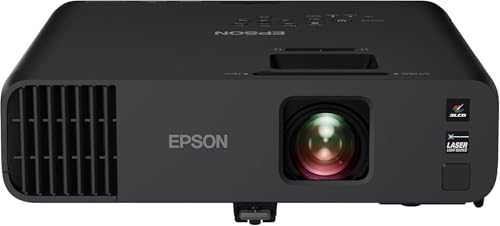
Epson Pro EX11000 — The wireless connected pick
The Epson Pro EX11000 is the guide’s connectivity story. Its title states 4600 lumens — specified, unusually and usefully, as both colour and white brightness — from a 3-chip 3LCD Full HD 1080p wireless laser, with Miracast screen sharing, two HDMI ports, USB power and a built-in 16W speaker. For a church, that list reads like the fellowship hall’s wish list: the visiting speaker mirrors a laptop without a cable hunt, the youth leader plugs in a streaming stick powered by the projector’s own USB, and the midweek class hears its audio from the unit itself when the hall system is locked away.
The colour-and-white phrasing deserves a committee’s attention, because it is the most informative brightness claim in this guide. A single white-brightness figure can hide weaker colour light; Epson’s title commits to 4600 lumens of each, which is the figure that governs how a coloured worship graphic, a photograph or a video actually looks in a lit room. At the guide’s threshold end — 4600 is the lowest figure here — that honesty matters more, not less: this is the pick for rooms whose light is managed, whose screens are moderate, and whose real problem was never raw lumens but connection friction.
- Resolution named in the title: Full HD 1080p
- Technology: 3-chip 3LCD
- Brightness stated in the title: 4600 lumens colour and white brightness
- Wireless named: Miracast screen sharing
- Ports named: 2 HDMI, USB power
- Audio named: built-in 16W speaker
Strengths
- Colour and white brightness are both stated at 4600 lumens — the most complete brightness claim here.
- Miracast plus two HDMI ports and USB power dissolve the visiting-speaker cable problem.
- The built-in 16W speaker serves midweek rooms where the main sound system stays off.
Trade-offs
- 4600 stated lumens is the lowest figure in this guide — vast glass sanctuaries will outspend it.
- The title names no optical zoom or corner adjustment for difficult mounts.
- Wireless sharing depends on the presenter’s device supporting Miracast, as the title names it.
Best for: a fellowship hall or education wing hosting rotating presenters, where Miracast, twin HDMI and a built-in speaker at 4600 stated lumens solve the weekly friction.
Not suited for: a main sanctuary with a very large screen in uncontrolled daylight — the title’s 4600 lumens sit 1600 below the guide’s brightest pick, and that gap shows at scale.
Think of the EX11000 as the projector a church lends its ministries. The choir director’s rehearsal slides, the finance team’s budget review, the wedding coordinator’s walkthrough — all of them happen in rooms where a permanently installed flagship is not, and where a capable, connectable, self-sounding unit turns a borrowed laptop into a presentation in two minutes. Churches are communities before they are venues, and this is the community pick in a list of venue machines.
Hall coordinators can check the EX11000’s current figure on its Amazon page — the listing also presents the Miracast and port details your presenters will ask about first.
The USB power detail, easy to skim past, quietly enables the streaming-stick pattern that has become the default in small churches: a stick in the HDMI port, powered by the projector, serving lyric videos and teaching content without a booth computer at all. Paired with the speaker, the EX11000 can run a complete small-room service from two cables. That completeness, at the guide’s gentlest brightness, is a deliberate trade — and for the right rooms, the correct one.
Small churches should weigh one more Epson virtue: it forgives the absent booth. Many congregations have no media desk, no operator and no intention of building either — the projector is switched on by the person leading, from the front, between other duties. A unit with wireless sharing, a speaker of its own and two HDMI ports is operable by that person with a laptop and ninety seconds. The flagship machines in this guide assume a team; this one assumes a leader with full hands, which describes half the churches in the country.
There is a generosity argument for the Epson in shared buildings. Congregations that host other congregations, language classes, recovery groups and toddler mornings are lending their rooms to people who will never read a manual. A projector that a stranger can connect to — wirelessly, or with the cable that is obviously the right one — and hear without help is a piece of hospitality equipment. The EX11000’s title reads like it was written for exactly those Tuesdays.

ViewSonic LSD600W — The networked installation pick
The LSD600W states the guide’s second-highest brightness — 6000 lumens — and wraps it in the vocabulary of professional installation: an installation projector, by its title, with dual HDMI, a 1.3x optical zoom, horizontal and vertical keystone, four-corner adjustment, 360-degree projection, LAN control and ceiling mounting, in a DLP laser design at WXGA resolution. LAN control is the phrase a larger church’s tech team will seize on: a projector on the network can be monitored, scheduled and managed from the booth or the office, rather than visited with a ladder and a remote.
The DLP and WXGA pairing frames its trade honestly. DLP at 6000 stated lumens delivers a bright, durable picture for video, large lyrics and presentations; WXGA resolution caps the fineness of small text, as it did for the LS740W. The installation toolkit is the compensation, and it is extensive — the zoom figure is actually stated here, 1.3x, alongside both keystone axes and corner correction, which together let an installer place this unit where the building demands and still land a true rectangle on the screen. For a church with a tech ministry and a difficult hall, that combination is the argument.
- Resolution named in the title: WXGA
- Technology: DLP
- Brightness stated in the title: 6000 lumens
- Light source: laser
- Zoom stated: 1.3x optical
- Control named: LAN control, dual HDMI, H/V keystone, 4-corner adjustment, 360-degree projection, ceiling mount
Strengths
- 6000 stated lumens sit just below the guide’s ceiling, with a full professional installation toolkit.
- LAN control lets a tech team manage the unit over the network — unique in this guide’s titles.
- The 1.3x zoom is stated numerically, letting installers plan throw before the site visit.
Trade-offs
- WXGA resolution limits fine text, the same trade as the LS740W and sharper against this brightness.
- The title names no built-in speaker; audio planning belongs to the house system.
- Its installation depth is wasted on a simple room with a centred mount and short throw.
Best for: a larger church with a tech team and a difficult hall, where 6000 stated lumens, a stated 1.3x zoom and LAN control turn a hard installation into a managed one.
Not suited for: a small study room reading dense text from two metres — WXGA at this brightness is the wrong tool, and the title’s installation toolkit addresses problems that room does not have.
Churches with several rooms should read the LAN control line as a fleet feature. One networked projector is a convenience; a standardised set of them, across sanctuary, hall and youth rooms, is an operations system — one volunteer can confirm every unit’s status before the first service, and a failure announces itself to the team rather than to the congregation. The LSD600W is the pick in this guide whose title most clearly imagines that world, and multi-room churches should weigh it accordingly.
Tech teams will find the LSD600W’s current figure on its Amazon listing — bring your network plan to that page, because this model rewards buyers who think in systems.
Finally, note the brightness ladder this guide has actually built, because the LSD600W completes it: 4600, 5200, 5500 twice, 6000 and 6200 stated lumens, every figure printed in a title and none inferred. A committee that knows its screen size and its daylight can walk that ladder rung by rung and stop where the arithmetic says stop. The LSD600W is the rung for churches whose arithmetic lands high but whose building also demands control — brightness with a network attached.
The DLP engine deserves its own note for video-heavy churches. DLP designs are long associated with strong motion handling and durable colour over long service, and at 6000 stated lumens the LSD600W pairs that character with genuine installation depth. A church streaming fast-moving content — sports outreach, concert footage, youth media — will feel the DLP temperament as steadiness. Read alongside its WXGA limit, the picture is consistent: motion and brightness first, fine text second, and a title that says so plainly.
Installers will read the LSD600W’s title with professional pleasure: a stated zoom, both keystone axes, corner correction, network control and a ceiling mount, all printed where a quote can be built from them. That completeness shortens the distance between a committee’s decision and a finished room, because fewer facts must be chased before the work is priced. In a category where several titles leave the engineering as an exercise for the buyer, this one arrives with its homework done.
Comparison Table
| Pick | Headline figure from its title | Defining trait | Main limit |
|---|---|---|---|
| Panasonic PT-VMZ51 | 5200 lumens, WUXGA LCD laser | Text-true sanctuary anchor | Lens figures not stated in title |
| ViewSonic LS740W | 5500 lumens, WXGA 1280×800 | Flexible halls, corner adjustment | Lowest text resolution tier |
| ViewSonic LS740HD | 5500 lumens, 1080p Full HD | Video-rich services | No speaker named in title |
| Panasonic PT-VMZ61 | 6200 lumens, WUXGA LCD laser | Brightest; large glass sanctuaries | Lens figures not stated in title |
| Epson Pro EX11000 | 4600 lumens colour and white, 1080p | Wireless, speaker, twin HDMI | Lowest lumens in guide |
| ViewSonic LSD600W | 6000 lumens, WXGA DLP, LAN control | Networked installation, 1.3x zoom stated | WXGA text limit |
How to Choose
Start with the screen, not the projector. Measure its width, note the distance to the farthest seat, and read your smallest regular text — the verse reference, the copyright line — at that distance on your current setup. Brightness is spent across screen area, so the same 5500 lumens that flood a modest screen merely serve a wide one. Churches routinely discover their real requirement is a size decision disguised as a brightness decision, and the ladder in this guide lets them climb it one stated rung at a time.
Then audit the light honestly, at service time. A hall measured on a cloudy Tuesday is a different room on a bright Sunday, and the projector must serve the Sunday. Note which windows strike the screen, whether blinds exist and actually close, and how much light the congregation itself needs. The 6200-lumen pick exists for rooms that fail this audit; the 4600-lumen pick exists for rooms that pass it and have connection problems instead. Buying for the audited room, not the imagined one, is the whole discipline.
Finally, plan the installation as part of the purchase. Several titles here state no lens figures at all, which means the throw calculation belongs to the installer’s site visit, not to the order page. Mount height, screen position, cable runs to the booth and network access for the LAN-controlled model are all decisions with costs, and a committee that budgets them alongside the projector will finish the project in one season instead of three.
Do not forget the human installation either: who holds the remote, who owns the spare cable, whose phone number is taped inside the booth door. The best-equipped sanctuary in this guide still fails a funeral if the one volunteer who understood it is away. Choose the projector your second and third operators can run, document the setup in the booth, and the brightness you bought will still be serving the congregation long after the committee that chose it has rotated away.
How many lumens does a sanctuary actually need?
The titles in this guide span 4600 to 6200 lumens, and the right point on that ladder is set by screen size and daylight, not by a universal number. A moderate screen in a room with working blinds is honestly served at the ladder’s lower end, especially by a claim stated for colour and white alike, as the Epson’s is. A wide screen, a long room or glass that cannot be shaded pushes the requirement up rung by rung, which is why the guide’s ceiling sits at 6200 rather than at a rounder boast.
Committees should distrust any answer that skips their room. The useful exercise is comparative: project your densest lyric slide at service-time light on a borrowed or current machine, note where legibility fails — back pew, side seats, choir — and let that failure, measured in your own building, choose the rung. Brightness bought against a measured failure is never wasted; brightness bought against a fear usually is.
Should a church choose laser over lamp at these brightness levels?
Every pick in this guide is a laser, and for ceiling-mounted sanctuary use that uniformity is the market giving sound advice. A laser source removes the lamp-replacement cycle from a position that needs a lift to reach, holds its output steadier over years of Sundays, and starts at full brightness for the first hymn rather than warming toward it. For a portable unit carried between rooms the calculus can differ, but nothing in this guide is portable-first, and neither are the rooms it serves.
The laser commitment does raise the stakes of the initial choice, because the light source is the projector for its whole service life. That argues for the discipline this guide is built on — figures from titles, rooms measured honestly, installers consulted early — since a laser sanctuary projector is a decade-scale decision wearing a purchase order’s clothes.
What should a church check during the first month after installation?
Treat the first month as a commissioning period rather than a honeymoon. Keep a notebook in the booth — paper is fine — and log every occasion the picture disappointed: the bright morning the side seats lost the lyrics, the evening service where the video looked grey, the funeral where the photographs washed pale. Patterns in that log point to fixes that are usually cheap: a screen repositioned, a blind repaired, a brightness setting chosen for the room rather than the showroom.
Ask the congregation, too, and ask the right people: the back row, the side seats, the oldest eyes and the youngest. A projector serves the whole room or it serves the front half expensively. If the log stays empty for a month of varied services, the installation is done and the machine can begin its real career of being forgotten — which, as this guide has argued from its first page, is the destiny every church projector should aspire to.
Common Mistakes
Shopping by model reputation instead of stated figures is the error this guide was written against. A famous name and a familiar number series tell a committee nothing checkable; the title’s printed lumens, resolution and features are the contract. Two machines in this very list share a family and differ by a thousand lumens — the difference between a served sanctuary and a squinting one — and only the titles, read carefully, keep them straight.
Forgetting the screen is the second recurring failure. Churches buy brightness for a screen they then replace with a larger one, or project onto a wall whose paint drinks half the light they paid for. The projector, the screen surface and the room’s light are one system with one budget; a committee that treats the screen as an afterthought will blame the projector for the wall’s behaviour, and will shop for lumens to fix a paint problem.
Neglecting the people who will run the machine completes the trio. A networked installation projector in a church with no tech volunteer is a feature bought for nobody, while a simple unit in a church with a skilled team wastes their gifts. Match the machine’s operating model — booth-managed, presenter-plugged, set-and-forget — to the congregation’s actual roster of helpers, and the projector will be loved by the only jury that sits every week.
A subtler mistake is measuring success on installation day. Any bright projector impresses in its first week; the judgement that matters is the fiftieth Sunday, when the novelty has gone and only legibility remains. Committees should schedule that review when they approve the purchase — a standing invitation to report squinting, glare or washed colour — because a projector bought with a review date is a projector whose shortcomings surface while they can still be addressed, by a screen change, a blind repair or a settings afternoon.
Final Recommendation
Let the room choose. Text-dense traditional sanctuaries take a WUXGA Panasonic — the 5200 for managed light, the 6200 for glass and scale. Video-rich services in imperfect halls take the LS740HD; flexible multi-use spaces take its WXGA sibling. Tech-teamed churches with hard buildings take the LSD600W and its LAN control. Halls drowning in cables rather than darkness take the Epson and its honest 4600. Every figure behind those sentences is printed in a title a committee member can open tonight.
A projector bought this way — measured room, stated figures, matched ministry — disappears into the life of a congregation, which is the highest compliment church equipment can earn: nobody notices it, everybody reads the words.
If the committee is split between two finalists, borrow the tiebreaker this guide used throughout: project your own densest real content — not a demo reel — at service time, in your own room, and let the back pew vote with its eyes. The titles and figures narrow the field to machines that deserve the test; only the room itself can crown one of them, and a congregation that has seen its own words on both machines will defend the choice it made together.
Frequently Asked Questions
Are all the lumen figures in this guide verified?
They are all taken from the listing titles, which any reader can open and check: 6200 for the Panasonic PT-VMZ61, 6000 for the ViewSonic LSD600W, 5500 for both LS740 models, 5200 for the PT-VMZ51 and 4600 for the Epson Pro EX11000. No figure was inferred from a model name or a predecessor’s specification.
Which pick is best for lyrics and scripture text?
The two WUXGA Panasonics, because WUXGA carries more vertical resolution than 1080p or WXGA for full screens of text. Choose between them by light and screen size: the 5200-lumen VMZ51 for managed rooms, the 6200-lumen VMZ61 for bright, large sanctuaries.
Can any of these run a midweek class without the main sound system?
The Epson Pro EX11000 is the title that names a built-in speaker — 16W — alongside its Miracast sharing and twin HDMI ports. The other five titles name no speaker, so midweek audio for them should be planned through the room’s own system.
What does LAN control actually give a church?
On the ViewSonic LSD600W, whose title names it, network control means the tech team can monitor and manage the projector over the building network instead of visiting the mount with a remote. In multi-room churches that becomes fleet management: status checks before services, from the booth or office.
Is WXGA good enough for a main sanctuary?
[“It depends on the smallest content. Large-type lyrics, video and slides sit comfortably at the WXGA titles’ 1280×800, and the LS740W adds 5500 lumens and corner adjustment. Dense scripture passages and study material in small fonts are where WXGA visibly softens, and those churches should step to the 1080p or WUXGA picks.”]
How long will a laser church projector serve?
Long enough that the choice deserves the care this guide gives it: a laser source removes the lamp cycle, so the planning horizon becomes the projector’s electronic life and the congregation’s needs, both measured in years of Sundays rather than in lamp hours counted anxiously by a volunteer. Churches should still budget for the room around it — screens age, booths rewire — but the light engine itself steps out of the annual maintenance conversation.
Related Guides
Churches rarely project in only one room, so the neighbouring guides cover the rest of the building and beyond: our classroom AV projector guide, for the education wing’s weekday machines, the daylight projector guide, for halls where windows win every argument, our star and galaxy projector guide, for the youth room’s ceiling on a Friday night.


