What's inside
- Where to Buy
- Key Takeaways
- Quick Picks
- How We Chose These Picks
- Comparison Table
- How to Choose
- Can any projector work in direct sunlight?
- Are more lumens always better in a bright room?
- What should be checked in the first week of daylight use?
- Common Mistakes
- Final Recommendation
- Frequently Asked Questions
- Related Guides
As an Amazon Associate I earn from qualifying purchases. This post may contain affiliate links at no extra cost to you.
[SITE_DOMAIN] is reader-supported. When you buy through links on our site, we may earn an affiliate commission.
Where to Buy
Daylight projectors should be bought the way they are judged in this guide: figure first, from the listing that prints it. The ViewSonic LS901-4K prints its zoom beside its lumens. The Epson Pro EX11000 prints its brightness twice, once for colour and once for white. The ViewSonic LS740HD, the ViewSonic PA503HD, the Sony VPL-PHZ51 and the Optoma HZ41 each hold their current figure on their own Amazon page — and no figure in this guide was taken from anywhere but a title.
Let the terms be set plainly before a single lumen is counted: the best projectors that work during daylight do not defeat the sun. No machine in this guide — no machine a household or a school can sensibly buy — will hold a picture against direct sunlight falling on the screen itself, and any seller implying otherwise is selling the weather along with the hardware. What these six do, and do genuinely, is hold a legible, enjoyable picture in rooms that are lit: curtains open against an ordinary day, lamps on, windows present and accounted for. That is the honest meaning of daylight projection, and it is a large and useful territory — most rooms, most of the time, for most of the things people actually project.
The currency of that territory is stated brightness, and this guide spends only what titles print: 5500 lumens twice, 5300 once, 4600 twice, and 4000 once, every figure quoted from a listing title a reader can open. One refinement matters throughout — the difference between a brightness figure stated for white and one stated for colour as well, which the Epson’s title makes explicit and the others leave open. In a lit room the picture is mostly colour, so that distinction is not pedantry; it is the difference between a specification and an advertisement.
The six divide by the daylight rooms people actually own. Two 5500-lumen lasers serve the venue and the bright 4K living room. A 5300-lumen Sony serves the professional data room. Two 4600-lumen machines serve the working room and the household, with opposite philosophies. And a 4000-lumen ViewSonic serves the ordinary bright room at the ladder’s first honest rung. Screen size runs through every judgement below, because brightness is spent by the square foot — the same lumens that flood a modest screen merely serve a large one — and the reviews state their sizes as plainly as their figures.
Key Takeaways
- Every figure here is printed in a title: 5500, 5500, 5300, 4600, 4600 and 4000 lumens.
- The Epson Pro EX11000 states 4600 lumens for colour and white brightness alike — the guide’s most complete claim.
- The ViewSonic LS901-4K pairs 5500 lumens with the only stated zoom here: 1.7x optical.
- No pick defeats direct sun on the screen; daylight here means lit rooms and open curtains, honestly defined.
- The PA503HD’s 4000 lumens are the threshold — enough for managed daylight at moderate sizes, not for glass halls.
Quick Picks
| Pick | Badge | Why it is here |
|---|---|---|
| Epson Pro EX11000 | The colour-honest 4600 | 4600 lumens stated for both colour and white brightness from a 3LCD Full HD wireless laser, with Miracast, twin HDMI and a 16W speaker. |
| ViewSonic LS740HD | The 5500-lumen venue laser | 5500 lumens in a 1080p laser with optical zoom, keystone, corner adjustment and 360-degree projection for classrooms and auditoriums. |
| ViewSonic PA503HD | The accessible 1080p daylight starter | 4000 lumens in a Full HD DLP with optical zoom, auto keystone and 120Hz — the daylight ladder’s first honest rung. |
| Sony VPL-PHZ51 | The WUXGA professional laser | 5300 lumens in a WUXGA laser body from Sony’s professional line — a short title with a boardroom’s confidence. |
| ViewSonic LS901-4K | The bright 4K HDR laser | 5500 lumens behind a 4K UHD HDR picture, with dual HDMI, a 1.7x optical zoom, corner adjustment and LAN control. |
| Optoma HZ41 | The compact home laser | A compact Full HD laser stating 4,600 lumens for home entertainment and gaming — daylight capability in a domestic body. |
How We Chose These Picks
Stated brightness was the gate, with the threshold set where experience puts it: a title printing at least 4000 lumens, because below that figure a lit room at ordinary screen sizes stops being a negotiation and becomes a defeat. All six survivors print their figures, and the guide’s ladder can be audited from the titles alone in minutes — a property this site considers essential for any purchase whose entire argument is a number.
The second filter was the daylight room’s variety. Raw output alone would have produced six venue machines; instead the set was balanced across the rooms daylight actually troubles — the hall, the boardroom, the training room, the classroom, the living room, the family room at lunchtime — because each room spends brightness differently and forgives different weaknesses. Installation range was the third filter, since bright rooms are old rooms disproportionately often: corner correction, stated zooms, auto keystone and network control each earned their pick its place beside the pure lumen count.
A last discipline governed the writing rather than the selection: no pick is described as sunlight-proof, and the sun-on-screen case is named as unwinnable in the introduction, the mistakes and the questions alike. Daylight marketing thrives on that ambiguity, and a guide that profits from it has failed its readers before the first review begins.
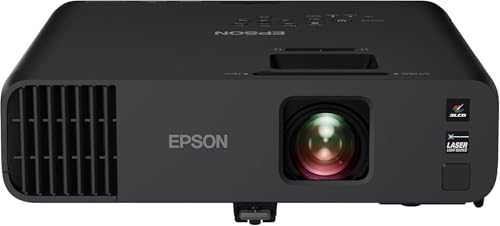
Epson Pro EX11000 — The colour-honest 4600
Daylight projection is a war over colour as much as over brightness, and the Epson Pro EX11000 is the only machine in this guide whose title fights on both fronts in print: 4600 lumens, stated explicitly as colour brightness and as white brightness, from a 3-chip 3LCD Full HD laser. That dual statement is the most trustworthy brightness claim in this article, because a projector can post a heroic white figure while its colours run at a fraction of it — and in a lit room, where the picture is mostly colour, the fraction is what the audience sees. Epson’s title removes the doubt by committing to the same number twice.
The rest of the title equips the machine for the rooms daylight actually happens in: wireless with Miracast for the presenter who arrives with a laptop and no cable, two HDMI ports for the room’s permanent source and its guest, USB power for a streaming stick, and a built-in 16W speaker for sound without a system. This is the daylight pick for the working room — the training space, the office with the glass wall, the classroom’s brighter cousin — where the projector must serve strangers daily and the light cannot be negotiated with. Its 4600 is the guide’s joint-lowest figure, and its honesty about colour is why it leads anyway.
- Resolution named in the title: Full HD 1080p
- Technology: 3-chip 3LCD
- Brightness stated: 4600 lumens colour and white brightness
- Light source: laser
- Wireless named: Miracast
- Ports named: 2 HDMI, USB power
- Audio named: built-in 16W speaker
Strengths
- Colour and white brightness stated at the same 4600 lumens — daylight colour you can verify from the title.
- Miracast, twin HDMI and USB power dissolve the guest-presenter connection ritual.
- A built-in 16W speaker completes the room without a separate sound system.
Trade-offs
- 4600 stated lumens is the guide’s floor; very large screens in hard daylight will outspend it.
- No zoom or corner adjustment is named in the title for difficult mounts.
- Its business framing means no home-cinema format claims — this is a working room’s machine.
Best for: a training room, office or bright classroom of moderate screen size, where colour-honest 4600 lumens and presenter-proof connections matter more than raw output.
Not suited for: a glass-walled hall with a very wide screen — the title’s 4600 lumens sit 900 below the guide’s 5500-lumen picks, and that gap is spent by screen area and daylight together.
The 3LCD architecture deserves its daylight paragraph. Three-chip designs produce colour with the same light budget as white, which is the engineering fact beneath the title’s dual claim, and in practice it means the pie chart keeps its colours at noon, the map keeps its countries, and the photograph keeps its skin tones while the room stays lit. Buyers comparing this Epson against brighter-on-paper rivals should project a colour-dense image, not a white slide, before deciding — daylight verdicts are written in colour.
Working-room buyers can open the EX11000’s Amazon listing for its current figure — and should read the colour-brightness wording there as carefully as this review did.
The laser source completes the working-room argument quietly. A machine that lives in a training room is switched on by whoever books the room, at whatever brightness the day demands, and a laser’s consistency across years of that treatment — no lamp dimming toward a replacement nobody budgeted — is the difference between a facility that works and one that slowly embarrasses its owner. Daylight rooms are unforgiving of dimming; the EX11000’s engine is built to postpone the reckoning.
A presenter’s-eye virtue also hides in the wireless claim that specifications flatten. Walking into a bright room, opening a laptop and seeing your slides already on the wall — via Miracast, without the cable hunt, the adapter ring, the call to facilities — changes the social physics of the first five minutes. Meetings start when the picture appears. A daylight projector’s real competition is often the room’s own friction, and this title attacks both enemies at once.
Set the Epson at the head of this guide deliberately: it defines the honesty standard the brighter machines are then judged against. A buyer who understands why colour-and-white equality matters will read every other title here with better questions — and may still choose a brighter machine, for a bigger or harder room, but will choose it knowing exactly which claim was traded away.
A final Epson consideration belongs to the people who inherit the room. Working spaces change hands — new teachers, new trainers, new facilities managers — and a projector whose connections forgive strangers and whose laser asks for nothing is the one still serving under its third owner. Institutional memory is short; equipment that needs none is a form of kindness to the future, and this title, unusually, specifies that kindness in print.

ViewSonic LS740HD — The 5500-lumen venue laser
Raw, stated power has its own eloquence: 5500 lumens, the joint-highest figure in this guide, in a 1080p laser whose title names the venues daylight defeats lesser machines in — classroom, auditorium, home theater. The LS740HD does not qualify its brightness with conditions or sub-claims; it prints the number and then prints the installation toolkit that lets a real building use it: optical zoom, keystone, corner adjustment, ceiling mounting, 360-degree projection and quick setup. For a buyer whose room is simply, stubbornly bright, this is the straightforward answer — the most light, in a Full HD picture, with the correction features that imperfect rooms require.
Corner adjustment is the feature to dwell on, because daylight rooms are rarely new rooms. They are the converted barn, the Victorian schoolroom, the office floor with the column in the wrong place — spaces where the screen cannot hang square to the only possible mount. Correcting each corner independently turns the resulting trapezoid back into a rectangle, and a rectangle is what makes a bright picture look intentional rather than improvised. Brightness buys legibility; geometry buys dignity; this title sells both, which is why it anchors the guide’s upper tier.
- Resolution named in the title: 1080p Full HD
- Brightness stated: 5500 lumens
- Light source: laser
- Adjustment named: optical zoom, keystone, corner adjustment
- Mounting named: ceiling mount, 360-degree projection
- Named venues: home theater, classroom, auditorium, golf simulation
Strengths
- 5500 stated lumens — joint-highest here — for the rooms daylight hits hardest.
- Corner adjustment rescues bright pictures in crooked, legacy buildings.
- Full HD resolution keeps video and text honest at venue screen sizes.
Trade-offs
- The title names no speaker; venue sound belongs to the room’s system.
- No colour-brightness figure is stated alongside the headline lumens.
- Its venue scale is more machine than a small bright study needs.
Best for: a bright auditorium, classroom or hall of real size, where 5500 stated lumens and corner correction must survive an imperfect building at midday.
Not suited for: a small home office with one shaded window — the title’s venue brief and 5500 lumens address rooms far larger and brighter than that.
The 360-degree projection claim widens this machine’s daylight life in a direction buyers overlook: orientation freedom. A projector that can be tilted beyond the level — for a floor display at an exhibition, an angled wall in a gallery, a temporary venue with no ceiling to mount to — keeps its brightness useful when the building refuses the standard arrangement. Daylight venues are improvised more often than brochures admit, and a title that states this freedom is describing the improvisation honestly.
Venue buyers will find the LS740HD’s current figure on its Amazon page — the page to visit with your hall’s dimensions and window positions already noted.
Quick setup, the title’s closing phrase, deserves respect in the daylight context specifically. Bright rooms are often shared rooms — the hall with three bookings a day, the classroom with five teachers — and a projector that reaches its corrected, focused state quickly is one whose brightness actually gets used. A brighter machine that takes twenty minutes of fiddling loses to this one in the only ledger that matters: the pictures an institution actually shows in a week.
Home-theater naming in the same title as auditorium is not the contradiction it appears. A 5500-lumen laser that serves a hall by day can serve a film society by night in the same building, and dual-identity machines are how community venues afford one good projector instead of two mediocre ones. Buyers from village halls, schools and churches should read this title as addressed to them jointly — it was.
Finally, the laser engine under the brightness: at venue scale, brightness that fades is a recurring purchase, and a laser’s steadier output turns the 5500 figure from a first-year boast into a planning constant. Facilities managers think in constants. This is the pick in the guide whose title most completely speaks their language.
Venues should also hear the maintenance arithmetic inside the laser claim. A hall projector at ceiling height in a building with a part-time caretaker is a machine whose every service visit is an event; a laser stretches the calendar between events toward the building’s own rhythm of years rather than a lamp’s rhythm of terms. The 5500 figure gets the headline, but the calendar is what the venue actually lives with, season after season.

ViewSonic PA503HD — The accessible 1080p daylight starter
Not every daylight problem is a venue problem. Most are a front room with the curtains that came with the house, a classroom whose blinds work, an office that could dim but would rather not — rooms where the light is ordinary and the requirement is a picture that stays respectable through it. The PA503HD states the entry figure for that life: 4000 lumens, in a Full HD 1080p DLP, with optical zoom, auto keystone, a 120Hz refresh and the venues printed plainly — classroom, business, presentation, large screens, smooth action. It is the guide’s threshold pick, and its review will treat the threshold honestly: sufficient for managed daylight at sensible sizes, insufficient for the glass hall, and priced in attention accordingly.
Auto keystone is the line that reveals its intended owner. A projector that squares itself when placed at an angle belongs to the teacher, the trainer and the home user who set up quickly and often, on tables and carts, in rooms that change. Combined with the optical zoom — a real zoom, stated, not a digital crop — the PA503HD forgives the two placement sins its owners will actually commit: the wrong angle and the wrong distance. Daylight buying is usually discussed as a lumens auction; this machine argues, persuasively, that for most rooms the contest is really about forgiveness.
- Brightness stated in the title: 4000 lumens
- Resolution named: 1080p Full HD
- Technology: DLP
- Adjustment named: optical zoom, auto keystone
- Refresh stated: 120Hz
- Ports named: HDMI, USB
- Mounting named: ceiling mount
Strengths
- Full HD at 4000 stated lumens covers the ordinary bright room honestly.
- Auto keystone plus optical zoom forgive quick, imperfect setups.
- The 120Hz refresh serves sports and action in a lit room — the title’s own smooth-action claim.
Trade-offs
- 4000 stated lumens is below every other pick here; hard daylight and huge screens exceed it.
- No speaker is named in the title.
- No colour-brightness statement accompanies the headline figure.
Best for: a classroom, office or front room with managed daylight and a moderate screen, where 4000 stated lumens and auto keystone make a quick, honest setup.
Not suited for: an unshaded glass hall — this title’s 4000 lumens sit 1500 below the guide’s brightest picks, and midday in that room will spend the difference.
The DLP engine’s character suits this pick’s rooms in a way worth naming. DLP pictures are associated with crisp motion and strong performance in exactly the mixed content these rooms show — a presentation, then a video, then a match at lunchtime. The title’s smooth-action phrase and 120Hz figure point the same way. A buyer whose daylight room is primarily a sports room — the pub garden, the clubhouse, the family room on a Saturday — should weight this pick above its ladder position.
Ordinary bright rooms can check the PA503HD’s current figure on its Amazon listing — the sensible first page to open before climbing any higher up the lumen ladder.
There is a budgeting virtue in a threshold pick that guides rarely honour: it stops the climb. Brightness shopping has no natural ceiling — there is always a brighter machine — and the PA503HD exists to tell a large class of buyers that their room’s requirement has already been met, in print, with features to spare. Money not spent chasing lumens a room cannot use is money available for the screen, the mount and the blinds, which in real rooms buy more picture than another thousand lumens would.
The large-screens phrase in its title should be read with its number, not instead of it. At 4000 stated lumens, large means the larger end of domestic and classroom sizes in managed light — a claim this review endorses — and not the auditorium wall, for which this guide keeps two 5500-lumen machines. Titles reward readers who hold their phrases and their figures together; this one survives that reading, which is more than many can say.
And a word for its likely owner, the upgrader: the household or school replacing a dim, ageing unit whose picture has become a polite suggestion. For that buyer the PA503HD’s combination — a stated figure, Full HD, forgiving setup — is the upgrade that simply lands, without an installation project attached. Not every purchase should be a project.
The PA503HD also suits the one daylight case this guide has not named yet: the rented room. Tutors, clubs and small congregations who hire a hall by the hour cannot install anything, and a portable, auto-squaring, stated-4000 machine that works on a table in a bright hired space is their entire category. Its title’s venue list — classroom, business, presentation — reads like a letting agent’s brochure, and that is meant as a compliment.

Sony VPL-PHZ51 — The WUXGA professional laser
Sony’s title for the VPL-PHZ51 is seven words long and contains everything a professional buyer needs to start: the maker’s name, the model, 5,300 lumens, WUXGA, laser, projector. No venue list, no feature spray, no adjectives at all. That restraint is itself a market signal — this is a machine sold into boardrooms, lecture theatres and institutions where the conversation continues in specification documents and installer quotes, and where a title’s job is to state the headline figures correctly and stop. The figures it states are strong ones for daylight: 5300 lumens, just below this guide’s ceiling, behind a WUXGA resolution that serves text and data at professional density.
WUXGA is the daylight professional’s resolution for a reason this guide has met before: the extra vertical space over 1080p is where spreadsheets, documents and multi-window desktops live. A bright room in a working building is usually a data room — the quarterly review, the design critique, the lecture with its dense slides — and WUXGA keeps that content’s fine detail while 5300 stated lumens keep it visible against the room’s light. The combination is less glamorous than a cinema specification and more useful in the buildings that buy projectors by the floor.
- Brightness stated in the title: 5,300 lumens
- Resolution named: WUXGA
- Light source: laser
- Ports and connectivity: Not stated in the listing title — verify with the manufacturer documentation
- Lens, zoom and throw figures: Not stated in the listing title — verify with the manufacturer documentation
- Audio: Not stated in the listing title — verify with the manufacturer documentation
Strengths
- 5300 stated lumens sit near the guide’s ceiling, in a professional WUXGA body.
- WUXGA resolution serves dense documents, data and multi-window content in lit rooms.
- The laser source suits permanent installation in working buildings.
Trade-offs
- The title states no ports, lens or audio data — installation planning requires Sony documentation.
- No correction features are named for imperfect rooms.
- Its professional brief offers no home-entertainment format claims for film use.
Best for: a boardroom, lecture theatre or professional space with a large screen and controlled daylight, where WUXGA data at 5300 stated lumens is the working requirement.
Not suited for: a shortlist that requires ports and lens figures from the listing — this title states none, unlike the feature-dense ViewSonic titles here.
Professional minimalism in a title cuts both ways, and this review has practised the same discipline on the Panasonic church picks elsewhere on this site: what is stated can be bought on; what is not must be quoted for. The PHZ51’s buyer should therefore treat the listing as the opening of a procurement, not its conclusion — the installer’s site survey, the lens calculation and the control integration are where this machine is actually specified, and Sony’s professional channel exists to have exactly those conversations.
Professional buyers can note the VPL-PHZ51’s current figure from its Amazon listing, then take the room’s measurements to the specification documents, where this machine’s real detail lives.
There is a steadiness argument for buying inside a professional line that consumer titles cannot make. Institutions value the model that remains available, supportable and familiar across a multi-year rollout — the same projector in the new wing as in the old, serviced by the same knowledge. The PHZ51’s plain title is written for that world, and buyers furnishing a building rather than a room should recognise the dialect as a feature in itself.
Daylight, in the professional context, also includes the evening meeting in a glass tower — the city-facing boardroom that is dim at noon and blazing at six. A 5300-lumen WUXGA laser is specified for the worst hour of that room’s day, which is the correct professional standard: equipment in working buildings is judged at its hardest moment, not its average one, and this title’s figures are sized for the hard moment.
Compared with the guide’s other near-ceiling pick, the LS740HD, the Sony trades the title’s feature list for resolution: WUXGA against 1080p, professional silence against venue versatility. Data rooms should take the Sony’s side of that trade; mixed venues should take the ViewSonic’s. The guide keeps both because real buildings contain both kinds of room, often on the same corridor.
Sony’s professional restraint extends to how the machine will be judged in service: not by applause but by absence — the absence of complaints from the back of the lecture theatre, of squinting in the boardroom’s far chairs, of the facilities ticket saying the picture washed out again. Professional equipment aspires to be unmentioned, and a title that states two figures and stops is written by a maker who understands that aspiration completely.

ViewSonic LS901-4K — The bright 4K HDR laser
The LS901-4K asks the question this guide has been circling: what if the daylight room also wants the best picture? Its title answers with the joint-highest brightness here — 5500 lumens — behind a 4K UHD laser picture with HDR, and then does something no rival manages: it states its zoom. A 1.7x optical zoom is a generous, plannable figure, printed beside four-corner adjustment, keystone, dual HDMI, LAN control and ceiling mounting. This is the daylight pick for the buyer who refuses the usual trade — brightness or resolution, power or polish — and wants the title to commit to both in the same breath.
The 1.7x zoom deserves the spotlight a moment longer, because it is the installation figure that decides whether a bright 4K picture can actually be landed in a real room. A wide zoom range lets the mount go where the ceiling allows — clear of the light fitting, the beam, the sprinkler — while the image still lands exactly on the screen. Lesser zooms force the mount position, and forced mounts in finished rooms become building works. Add LAN control for the managed building and corner correction for the imperfect wall, and the LS901-4K’s title describes the most completely installable machine in this guide.
- Resolution claim in the title: 4K UHD
- Brightness stated: 5500 lumens
- Light source: laser
- Zoom stated: 1.7x optical — the widest figure in this guide
- Adjustment named: 4-corner adjustment, keystone
- Ports and control named: dual HDMI, LAN control
- Formats named: HDR, 4K HDR/HLG
Strengths
- 5500 stated lumens behind a 4K HDR picture — the guide’s brightness and resolution in one title.
- The stated 1.7x zoom gives installers genuine placement freedom.
- LAN control and dual HDMI suit managed, multi-source rooms.
Trade-offs
- The title names no speaker; cinema sound belongs to an external system.
- Its capability is surplus in a small, dim room that a threshold pick serves.
- No warranty period is stated in the title.
Best for: a bright living room or venue that wants a genuine 4K HDR picture at 5500 stated lumens, installed once with a stated 1.7x zoom and network control.
Not suited for: a portable or cart-based setup — this title describes a ceiling-mounted, LAN-controlled installation, not a travelling machine.
HDR in daylight deserves an honest sentence, because it is the first casualty of ambient light: the subtle shadow gradations HDR exists to deliver are exactly what a lit room washes away. The LS901-4K’s answer is arithmetic — at 5500 stated lumens, more of the HDR range survives the room than any dimmer machine can offer, and in the evening the same picture deepens into the full home-theater performance its title claims. Buyers should expect daylight HDR to be a partial victory and evening HDR to be the whole one, and judge this machine as the best available compromise between the two.
Bright-room cinephiles can open the LS901-4K’s Amazon listing for its current figure — its stated zoom makes it the listing here most worth reading with a floor plan open beside it.
Golf simulation, named at the title’s end, is a daylight use in disguise: simulator bays are lit, active spaces where a player must see the room, the ball and the screen at once. A 5500-lumen 4K machine with a wide zoom is precisely that bay’s instrument, and its presence in the title tells buyers the maker has tested the machine in the brightest recreational setting there is. If it can hold a fairway at noon in a lit bay, a family room’s Sunday afternoon holds no terrors for it.
The LAN control line, shared only with the church guide’s installation pick on this site, marks the LS901-4K as a citizen of managed buildings as well as homes. In a venue — a club, a school, a hire space — networked oversight turns a projector from an appliance into infrastructure. Domestic buyers lose nothing by its presence; institutional buyers should count it as a headline feature wearing a quiet font.
This is also the guide’s clearest illustration that the daylight question has matured. A decade ago, brightness meant sacrificing the picture; the LS901-4K’s title refuses the sacrifice in print — 4K, HDR, a stated zoom and the joint-highest lumens in one specification. Buyers with the room and the screen to spend it on are living in the good years of this category.
Buyers hesitating at this tier should consider the counterfactual honestly: the cheaper daylight machine that almost serves the room will be discussed at every bright occasion for its whole life, while the LS901-4K’s surplus — brightness, resolution, zoom — is discussed never, because it simply removes the occasions. In venues and in family rooms alike, the most expensive projector is the one that remains a topic of conversation.

Optoma HZ41 — The compact home laser
The HZ41’s title is a model of domestic economy: Full HD 1080p, compact, laser — and then the figure, 4,600 lumens, assigned in the title’s own words to home entertainment and gaming. That assignment matters, because it tells the buyer which daylight this machine was built for: not the auditorium’s, not the boardroom’s, but the home’s — the living room at the weekend, the family room with the garden doors open, the bedroom where a match is watched at lunchtime. At 4600 stated lumens in a compact laser body, the HZ41 is the daylight pick for houses, and its review will judge it by household standards rather than venue ones.
Compactness, in a home, is not a vanity metric. It is the difference between a projector that lives on a shelf or a sideboard — present, used, unremarkable — and one that requires a mount, a weekend and a negotiation. A compact laser can also move: from the living room to the garden wall at dusk, from the children’s room to the spare room when guests arrive. Daylight capability that travels is worth more to most households than a fixed surplus of lumens, and the HZ41’s title, in four honest phrases, describes exactly that travelling competence.
- Resolution named in the title: Full HD 1080p
- Form named: compact
- Light source: laser
- Brightness stated: 4,600 lumens
- Named uses: home entertainment and gaming
- Ports, zoom and audio: Not stated in the listing title — verify with the manufacturer documentation
Strengths
- 4600 stated lumens aimed explicitly at home entertainment and gaming.
- Compact laser form lives on furniture and moves between rooms.
- Full HD suits the films, sport and games a household actually projects.
Trade-offs
- The title states no ports, zoom or speaker — the detail must come from Optoma documentation.
- 4600 lumens is the guide’s joint floor; a huge screen in hard sun exceeds it.
- No correction features are named for crooked rooms.
Best for: a household living room or family room with ordinary daylight, where a compact laser stating 4,600 lumens serves films, sport and games from a shelf.
Not suited for: an installation planned from listing figures alone — this title states no zoom, throw or port data, while the LS901-4K prints a 1.7x zoom in the open.
Gaming’s presence in this home title deserves a fair reading. The HZ41 claims no latency figure, and this guide will not invent one; what it claims is brightness and form — a compact laser bright enough for a lit room’s casual and family gaming, where the contest is against daylight rather than against other players’ milliseconds. Households whose gaming is social — the racing game at a birthday, the football title before the real match — are served by exactly this proposition, and competitive players have their own guide on this site.
Households can check the HZ41’s current figure on its Amazon page — a short visit, for a machine whose whole appeal is how little fuss it asks of a home.
The laser engine, again, is the ownership story: in a compact home machine, a light source that does not dim across the children’s school years converts a gadget purchase into a fixture. Families rarely re-buy projectors on schedule; they replace them when the picture embarrasses them. A laser postpones that day by years, and a compact body that still looks at home on the shelf postpones it further. The HZ41 is built, in both senses, to be kept.
Its 4,600 figure also teaches the guide’s most useful household lesson: daylight is a spectrum of rooms, not a single test. The same lumens that drown in a glass extension are generous in a north-facing living room, and the HZ41’s honest home assignment invites the buyer to judge their own room rather than a laboratory’s. Stand in the room at the hour you will watch, look at the wall, and the right rung of this guide’s ladder usually announces itself.
Against the Epson that shares its figure, the contrast of philosophies is complete: the EX11000 spends its title on connections and colour honesty for working rooms, the HZ41 spends its on form and domestic purpose. Same lumens, different lives. A buyer choosing between them is not choosing a better projector but a better description of their own week — which is, in the end, what every recommendation in this guide has been asking them to do.
The HZ41’s compactness has one more household consequence: it can be put away. Homes where the projector is an event rather than a fixture — brought out for the final, the film night, the grandparents’ photographs — need a machine that stores in a cupboard and sets up without a ceremony. A compact laser stating a home-sized brightness is that machine’s exact description, and its title’s brevity is the brevity of a product that knows its drawer.
Comparison Table
| Pick | Headline figure from its title | Defining trait | Main limit |
|---|---|---|---|
| Epson Pro EX11000 | 4600 lumens colour and white, 1080p | Colour-honest working rooms | Guide’s joint-lowest lumens |
| ViewSonic LS740HD | 5500 lumens, 1080p, corner adjustment | Bright venues, crooked buildings | No speaker named in title |
| ViewSonic PA503HD | 4000 lumens, 1080p, auto keystone | Ordinary bright rooms, quick setups | Threshold brightness |
| Sony VPL-PHZ51 | 5,300 lumens, WUXGA laser | Professional data rooms | No ports or lens stated in title |
| ViewSonic LS901-4K | 5500 lumens, 4K UHD, 1.7x zoom stated | Bright 4K living rooms and venues | Installation machine, not portable |
| Optoma HZ41 | 4,600 lumens, compact Full HD laser | Household daylight, movable | No ports or zoom stated in title |
How to Choose
Measure your daylight at the hour you will actually project, because rooms have schedules. The classroom at ten, the living room at Sunday lunch, the boardroom at the six o’clock meeting in June — each is a different opponent, and the projector must beat the specific one it will face weekly, not an average of the day. Note where the light lands: a bright room whose light misses the screen wall is a far easier room than a dimmer one with a window facing the picture, and no lumen figure in any title knows the difference. Only your eyes, in the room, at the hour, can referee.
Size the screen before climbing the ladder. Brightness is spent across area, so decide the picture’s dimensions first and let them set the rung: moderate screens live honestly at 4000 to 4600 stated lumens in managed light; large screens and hard light push the requirement to the 5300 and 5500 titles. Buyers who reverse the order — lumens first, screen later — routinely discover they have purchased a figure and starved a wall, or filled a wall and bankrupted the budget on brightness a smaller picture never needed.
Finally, spend on the room alongside the machine. Blinds that actually close, a screen surface chosen for ambient light, a wall colour that does not drink the picture — each of these buys visible picture quality at a fraction of a brighter projector’s cost, and each multiplies whatever lumens the budget does buy. The wisest daylight purchases in this guide’s experience are systems: a rightly-runged projector, a decent screen and one honest afternoon spent on the windows.
Can any projector work in direct sunlight?
On the screen itself, no — and the buyer deserves the answer without a salesman’s footnote. Direct sun delivers more light to that surface than any projector in this guide can return, by an order of magnitude no specification can argue with. The practical answers are architectural, not electronic: move the picture out of the sun’s path, shade the window that feeds it, or schedule around the hour it strikes. Every projector here will serve brilliantly in the same room once the sunbeam itself is off the screen.
What the six in this guide do defeat is the ordinary lit room — lamps on, curtains open on a bright day, windows everywhere except in the picture’s face. That is the condition most people mean by daylight, most of the time, and it is a condition worth buying for confidently. Just let the definition be the honest one, and let any seller who blurs it explain the physics in writing.
Are more lumens always better in a bright room?
Up to the room’s requirement, yes; beyond it, the surplus buys little and can cost much. An over-bright projector in a modest room spends its life dimmed, its owner having paid for headroom the walls never requested — while the same money spent on a screen, blinds or a wider zoom would have improved every picture the room ever showed. The ladder in this guide exists so buyers can stop at their rung: 4000 for the managed room, 4600 for the working and household rooms, 5300 to 5500 for the venues and the glass.
There is one exception worth naming: the growing room. A school adding a larger screen next year, a household moving the projector to a bigger space, a venue whose windows are a known future problem — those buyers should climb one rung past today’s arithmetic, because brightness is the one specification that cannot be added later. Headroom bought against a named future is planning; headroom bought against a vague fear is waste.
What should be checked in the first week of daylight use?
Use the projector at the worst hour, not the best. New owners naturally demo their machine in the flattering evening and discover its true character at the following noon, in front of an audience. Deliberately run the hardest regular occasion in the first week — the bright lesson, the lunchtime match, the six o’clock meeting — and judge the picture from the worst seat in the room, where the light is strongest and the angle least kind. That is the picture you bought; everything else is a bonus.
Then adjust the room before adjusting the machine. A blind repaired, a screen shifted a foot out of a reflection, a lamp moved off the picture’s axis — these one-time, near-free changes routinely outperform every setting in the projector’s menu. Keep a short note of what was changed and what it fixed; daylight rooms drift with the seasons, and the household that documented its spring solution will solve its autumn faster.
Common Mistakes
Believing the sunlight photograph is the founding error of daylight buying. Listings show projectors beaming vivid pictures in sun-flooded rooms, and the photograph is always lying by omission — the sun is beside the screen, the hour is kind, the exposure is chosen. This guide’s introduction set the honest terms, and they bear repeating at the point of purchase: lit rooms, yes; a sunbeam on the picture, no. Buyers who internalise that sentence are immune to most of the category’s disappointments.
Comparing lumens across claim types is the arithmetic error. A colour-and-white figure, like the Epson’s, is a stricter promise than a single headline number; two machines both claiming a similar total may deliver visibly different colour in a lit room. The disciplined comparison reads the wording, not just the digits — and where a title offers only one number, the buyer should know which question that number has not answered, and weight demonstration and documentation accordingly.
Ignoring the screen completes the trio of daylight errors. A projector’s lumens land on a surface, and a grey wall, a glossy paint or a screen chosen for a dark cinema will each tax the brightness the buyer paid for. In lit rooms the screen is half the system; households that budget it as an afterthought end up climbing the lumen ladder to compensate for a surface, which is the most expensive way to buy a wall.
Final Recommendation
Let the room’s worst regular hour choose the rung. Managed daylight and moderate screens take the PA503HD or either 4600 — the Epson for working rooms and colour honesty, the Optoma for households and mobility. Data rooms take the Sony’s WUXGA at 5300. Venues and bright 4K living rooms take a 5500 — the LS740HD for installation forgiveness, the LS901-4K for resolution and its stated zoom. Every one of those assignments is printed in a title, and the sunbeam exception is printed in this guide, which is exactly where both belong.
Project at noon before you judge at midnight, and the machine you keep will be the machine your room actually needed — bright where it counts, honest where it matters, and forgotten, as all good equipment is forgotten, the moment the picture starts.
Buy in the order this guide was written: define the room’s daylight honestly, size the screen, read the titles for their printed figures, and only then fall in love with a model. A projector chosen in that order becomes part of the room’s furniture within a month. A projector chosen in the reverse order remains a purchase — discussed, defended, occasionally regretted — for as long as it hangs there. The six machines above can all be the first kind, in the rooms their titles describe.
Frequently Asked Questions
What is the minimum brightness for a lit room?
In this guide’s judgement, a stated 4000 lumens is the working threshold for a moderate screen in managed daylight — the PA503HD’s figure. Below it, lit rooms stop being a negotiation. Above it, screen size and the hardness of the light decide how far up the ladder a buyer should climb, through 4600 to the 5300 and 5500 titles.
Why does colour brightness matter separately?
Because a lit-room picture is mostly colour, and a headline lumen figure may describe white light only. The Epson Pro EX11000 states 4600 lumens for colour and for white alike, which is why its apparently modest figure leads this guide’s honesty ranking. For titles stating a single number, the colour performance is the unasked question — worth a demonstration with colour-dense content.
Can I use a daylight projector for films at night?
Happily — several titles here claim the home-theater identity outright, and the LS901-4K adds 4K HDR. Bright machines dim gracefully for evening use, and the same installation that survives noon will flatter midnight. The reverse journey is the impossible one: a cinema projector bought for darkness will not climb into daylight, which is why this guide’s readers are buying in the right direction.
Does screen size change the lumens I need?
Directly: brightness is spread across the picture’s area, so doubling the screen’s dimensions quarters the light on each part of it. This is why the reviews tie every figure to a room and a size, and why the choose section insists on sizing the screen before climbing the ladder. A figure without a size is a slogan.
Which pick is best for a classroom with big windows?
A 5500-lumen pick — the LS740HD, whose title names the classroom outright and adds corner adjustment for the old building, or the LS901-4K where 4K and a stated zoom matter. If the windows strike the screen directly, no pick here suffices until the glass is shaded; that sentence is the most valuable one in this answer.
Related Guides
Daylight is one end of the brightness spectrum; the neighbouring guides cover the rest of the building’s light: our church projector guide, for sanctuaries whose windows preach their own sermon, the classroom AV projector guide, for lights-up teaching at 4000 stated lumens, our console gaming projector guide, for the room after the sun goes down.


