What's inside
- Where to Buy
- Key Takeaways
- Quick Picks
- How We Chose These Picks
- Comparison Table
- How to Choose a Laser Phosphor Projector
- What Is a Laser Phosphor Light Engine, in Plain Terms?
- How Should Brightness Figures Be Compared Across This Guide?
- Does the Light Source Matter More Than the Panel?
- Common Mistakes When Buying a Laser Projector
- Final Recommendation
- Frequently Asked Questions
- Related Guides
As an Amazon Associate I earn from qualifying purchases. This post may contain affiliate links at no extra cost to you.
[SITE_DOMAIN] is reader-supported. When you buy through links on our site, we may earn an affiliate commission.
Where to Buy
Laser phosphor machines span boardrooms and cinemas, so confirm each listing’s configuration before comparing. Christie’s DHD555-GS page is where to check that the two HDMI cables named in its title are part of the offer you are buying. The DHD635-GS listing states no lens in its own title, so confirm lens availability and cost on the page before anything else. Christie’s DHD850-GS page carries the burden of its sparse title, and its full specification should be read there in detail. Optoma’s HZ41 listing is the place to verify the compact model’s gaming claims against your console setup. Epson’s Pro EX11000 page should be read for its Miracast wording if wireless presenting drives your purchase. Optoma’s UHZ36 listing is where to confirm the black home theatre model’s details, since its title is the briefest of the home picks.
Behind most of the laser projectors installed in the world’s boardrooms, lecture halls and mid-size venues sits one workhorse architecture: a blue laser exciting a phosphor wheel, producing the light that the panel then shapes into an image. The best laser phosphor projectors are the machines built on that idea at its most proven — and this guide begins with a labelling discipline the category itself often skips. Only one title here actually prints the words laser phosphor. The others say laser, or say almost nothing, and their spec boxes record the light source exactly as each title phrases it. A phosphor wheel is never assigned to a machine whose own listing does not claim one.
That discipline matters because laser phosphor is a specific engineering answer, not a synonym for laser. Pure RGB laser designs generate their colours directly; phosphor designs convert, trading a measure of ultimate colour reach for maturity, efficiency and a cost structure that put laser light into ordinary institutions years before the exotic designs became plausible. A buyer choosing this class is choosing the proven branch of the laser family, and should choose it with eyes open about which branch each model actually grows on.
Christie’s GS series anchors the guide for a reason. Christie builds projectors for cinemas, control rooms and venues where failure is a public event, and its GS line carries that institutional DNA into the laser phosphor class: single-chip DLP designs, brightness stated in the professional dialect, and — on one model — a lens sold separately in the professional manner. Three GS machines appear here, at three levels of title forthcomingness, and comparing how their listings speak is a short course in buying professional equipment.
The home and office machines that complete the six translate the same light-source idea into domestic dialects. A compact Full HD laser for entertainment and gaming, a business laser with a speaker specified for speech, and a 4K UHD laser for the home theatre: none of their titles claims the phosphor architecture, and none is diminished by that honesty. They are here because a buyer researching laser phosphor will meet them in the same search results, and deserves a guide that sorts the class by evidence rather than by keyword.
Ownership economics explain the class’s dominance wherever institutions buy. A laser phosphor engine removes the lamp from the maintenance calendar, holds its output across years of daily use, and starts instantly for the first meeting of the day. Multiplied across a school district, a hospital’s teaching rooms or a company’s floors of meeting spaces, that reliability is the product; the picture, excellent as it can be, is how the product is delivered.
Key Takeaways
- Only the Christie DHD555-GS states laser phosphor in its title, at a stated 5,000 ANSI lumens from a 1DLP HD design.
- The DHD635-GS states 5,400 lumens and FHD, and is sold with no lens, per its title.
- The DHD850-GS title names only its GS series and DLP technology, so its light source and output must be confirmed in documentation.
- Optoma’s HZ41 is a compact Full HD laser stating 4,600 lumens for home entertainment and gaming; its title does not claim phosphor.
- Epson’s Pro EX11000 states 4,600 lumens, Miracast and a 16W speaker for business; its 3LCD laser title likewise makes no phosphor claim.
- Optoma’s UHZ36 is a 4K UHD laser home theatre model whose title states HDR and no brightness figure.
Quick Picks
| Pick | Badge | Why it is here |
|---|---|---|
| Christie DHD555-GS | The Named Laser Phosphor | The one title here that prints laser phosphor outright: 5,000 ANSI lumens, 1DLP HD, two HDMI cables. |
| Christie DHD635-GS | The Lens-Free FHD Step | FHD laser DLP at a stated 5,400 lumens, sold without a lens for chosen optics. |
| Christie DHD850-GS | The Sparse GS Flagship | A GS series DLP model whose brief title leaves specification to its documentation. |
| Optoma HZ41 | The Compact Home Laser | Full HD 1080p laser at a stated 4,600 lumens for entertainment and gaming. |
| Epson Pro EX11000 | The Business Laser | 3LCD Full HD laser at a stated 4,600 lumens with Miracast and a 16W speaker. |
| Optoma UHZ36 | The 4K Home Theatre Laser | 4K UHD laser with HDR stated, in black, for a settled film room. |
How We Chose These Picks
The class was defined from the titles outward. Machines whose listings claim laser light were eligible; machines whose listings claim the phosphor architecture specifically were identified as such, in words, wherever they appear. That produced a shortlist honest about its own composition: one explicitly laser phosphor professional model, its two GS siblings at different levels of documentation, and three laser machines from the home and office world whose titles stay silent on architecture. Readers deserve that map before they deserve any ranking.
Professional and domestic dialects were kept apart throughout. ANSI lumens on the Christie, plain lumens on the Optoma and Epson home models: the figures are reported in the dialect each title uses, and the reviews compare intent — venue, meeting room, living room — rather than pretending the numbers are one currency. A buyer crossing between the professional and domestic shelves should carry that caution with them.
Institutional evidence was weighed as heavily as image evidence. A lens sold separately, cables included in a title, a speaker specified in watts, a warranty culture implied by a maker’s channel: these are the details that decide whether a projector serves an organisation well across a decade, and the Christie and Epson reviews treat them as first-class specifications rather than as footnotes.
Finally, silence was catalogued rather than filled. The DHD850-GS’s near-empty title is the extreme case, and its review models the correct response — interest, documentation, demonstration — that a buyer should apply to every sparse professional listing, in this guide and beyond it.

Christie DHD555-GS — The Named Laser Phosphor
The DHD555-GS earns the headline of this guide by doing the simplest thing in it: its title says laser phosphor, in full, beside a stated 5,000 ANSI lumens, a 1DLP HD design and two included HDMI cables. For the venue manager, school district or house of worship shopping this architecture deliberately, that plain statement is the entire shortlist criterion — a professional single-chip DLP machine, on the proven phosphor branch of the laser family, from a maker whose projectors run cinemas.
Five thousand ANSI lumens calibrates the rooms honestly: mid-size venues, lecture theatres, sanctuaries and training spaces with screens of moderate ambition and light that can be partly managed. This is the working tier of institutional projection, where the audience numbers in dozens or low hundreds and the content is presentations, lyrics, teaching material and video that must read from the back. The ANSI dialect of the figure signals the professional channel’s measurement habits, and buyers should compare it against other ANSI figures rather than against the plain-lumen claims of the domestic models below.
HD resolution, stated without a pixel count in the title, places the machine in the presentation tradition rather than the cinema one. Fine data at small sizes will not be its glory; legibility at distance will. Institutions should match that to their content with the same honesty this guide applies elsewhere — a control room’s dense dashboards belong on a different specification, while a lecture hall’s slides and camera feeds are exactly this machine’s daily bread.
The two HDMI cables in the title are a small detail with a professional accent: the listing imagines an installer unboxing a working system, not a bare chassis. Combined with Christie’s channel — dealers and integrators who commission what they sell — the DHD555-GS presents the most complete institutional offer in this guide: named architecture, stated output, a maker’s service culture, and the humility to include the cables.
Laser phosphor’s ownership story completes the case for its constituency. No lamp inventory in the facilities cupboard, no dim final term before a replacement, no warm-up ritual before the first lecture: across a fleet of rooms, those absences compound into the budget line that justifies the class. A single-room buyer gets the same virtues at smaller scale, with the addition of Christie’s name when the time comes to resell or to call for help.
- Light source: laser phosphor, stated in the title
- Brightness figure in the title: 5,000 ANSI lumens
- Technology: 1DLP
- Resolution class: HD, per title
- Included: two HDMI cables stated
- Native pixel count: Not stated in the listing title — verify with the manufacturer documentation
Strengths
- The only title here that names the laser phosphor architecture outright.
- A stated 5,000 ANSI lumens suits mid-size institutional rooms.
- Christie’s professional channel brings commissioning and service culture with it.
Trade-offs
- HD resolution class limits fine data and small text at large sizes.
- ANSI figures should not be compared directly with plain-lumen home claims.
- No lens arrangement is described in the title, so optics need confirming.
Best for: schools, sanctuaries and lecture spaces buying the laser phosphor architecture deliberately, through a professional channel.
Not suited for: a data-dense control room, where the HD panel rather than the light source becomes the binding limit.
If the whole guide had to be summarised in one listing, this would be it: the architecture named, the output stated, the audience obvious.
Institutions should also hear the maintenance accent in a specification like this one. A projector specified for rooms that run all day accumulates hours at a rate home machines never meet, and a light source that treats those hours as routine rather than as consumption changes the facilities conversation from replacement planning to simple cleaning schedules. That is the context in which a figure like 5,000 ANSI lumens should be read: not as a showroom boast, but as output that is still there in the third year of terms and services.

Christie DHD635-GS — The Lens-Free FHD Step
The DHD635-GS steps the GS conversation up in resolution and brightness while removing the lens from the box: an FHD laser DLP projector stating 5,400 lumens, sold with no lens. Each half of that sentence serves the professional buyer. FHD answers the content that HD softens — detailed slides, video at venue sizes, data that must survive the back row. The absent lens answers the room: a separate Christie optic chosen for one hall’s throw, rather than a bundled compromise chosen for everyone’s.
Five thousand four hundred lumens, in the same professional family dialect as its sibling, buys the larger end of the mid-venue world: bigger screens, longer halls, light that resists management. Institutions graduating from the 555’s tier — a sanctuary that doubled its screen, a lecture theatre that merged two rooms — will recognise the step’s logic immediately. It is not a different machine so much as the same institutional idea with more light and more pixels, which is how professional lines are supposed to read.
The lens-free sale deserves the emphasis this guide has given the practice before, because Christie buyers meet it constantly. Budget the optic as a first-class line, select it from the throw calculation, and confirm its availability before the body is ordered; an institution that treats the lens as an accessory will stall its own installation. Rental and staging firms, holding lenses as fleet inventory, will read the same arrangement as pure convenience.
Laser is stated; phosphor is not, in this title. The GS family’s architecture is a matter of record in Christie’s documentation, and a buyer for whom the phosphor wheel specifically matters — for colour reasons, for fleet standardisation — should confirm the light engine’s construction there rather than from this listing. The review’s discipline is the guide’s discipline: the 555 prints the word and gets the credit; the 635 does not and is described by what it prints.
DLP’s institutional virtues recur here: crisp text, a robust optical path, and a channel that commissions and maintains what it sells. Combined with FHD and the higher stated output, the 635 is the GS pick for venues whose content has outgrown HD and whose geometry demands chosen optics — a narrower constituency than its sibling’s, and a more demanding one.
- Resolution class: FHD, per title
- Brightness figure in the title: 5,400 lumens
- Technology: DLP
- Light source: laser, as stated in the title
- Lens: none included, per title
- Phosphor architecture: Not stated in the listing title — verify with the manufacturer documentation
Strengths
- FHD resolution serves detailed content that the HD sibling softens.
- A stated 5,400 lumens covers larger mid-size venues.
- Separate optics let the lens match one room’s exact throw.
Trade-offs
- A lens must be budgeted and ordered before the machine can project.
- The title does not claim the phosphor architecture in words.
- Output is wasted on small rooms that the 555’s tier serves fully.
Best for: larger lecture theatres and sanctuaries with FHD content and a specific throw to satisfy.
Not suited for: single-box purchases, since no lens is included in the sale.
The 635 is the professional’s version of a step up: more light, more pixels, and the optics left where professionals prefer them — in the installer’s hands.
There is a fleet arithmetic behind the lens-free arrangement that single-room buyers rarely see. An institution running twenty rooms at three throw distances can stock three lens types and swap them as rooms are refurbished, while the bodies stay mounted. Standardisation at the lens level, invisible in any single purchase, is one of the quiet economies that professional lines are designed around, and it explains why the arrangement persists despite confusing first-time buyers every year.

Christie DHD850-GS — The Sparse GS Flagship
The DHD850-GS arrives wearing a part number for a title: a manufacturer, a systems line, a GS series designation, a model and the letters DLP. No brightness, no resolution, no light source, no lens information. By the numbering logic of its own family it sits above the two GS machines already reviewed, and a knowledgeable buyer will have expectations about what that position means — but expectations are not specifications, and this guide’s rule, applied without fear or favour, is that a title this silent gets a review about silence.
What the silence itself communicates is channel. A listing written this way was not written for a browser; it was written for a procurement system, an integrator’s quote, a replacement order for a fleet that already runs the model. Christie’s institutional world runs substantially on such rails, and the 850’s presence here represents the many professional machines a searching buyer will meet in exactly this undocumented form. The correct response is neither suspicion nor faith, but a documentation request.
That request should ask, in order: the rated brightness and its measurement dialect, the native resolution, the light engine’s construction — including whether the phosphor architecture this guide is named for is present — the lens options and their ranges, and the warranty and service terms the channel attaches. With those answers in writing, the 850 can be compared against its siblings’ stated figures and against the room’s requirements. Without them, any comparison is theatre.
DLP is the one technical word the title does spend, and it carries its usual institutional implications: a single-chip design’s crispness with text and data, and a maker’s professional support culture behind it. A venue already standardised on Christie DLP — with lenses, mounts or service agreements in place — has rational grounds to pursue the documentation conversation first, because fleet consistency is a real economy that specification shoppers routinely undervalue.
The review closes with the guide’s standing advice for sparse flagships: never let a model’s position in a line substitute for its figures. Flagships disappoint buyers who assume, and reward buyers who verify, with a consistency that amounts to a law of professional purchasing. The 850 may be the strongest machine in this guide; its title simply declines to prove it, and the proof is the buyer’s job to obtain.
- Technology: DLP, per title
- Series: GS series, per title
- Brightness: Not stated in the listing title — verify with the manufacturer documentation
- Light source: Not stated in the listing title — verify with the manufacturer documentation
Strengths
- A GS series position signals Christie’s professional installation tier.
- DLP design suits the text and data diet of institutional rooms.
- Fleet buyers already running Christie gain consistency economies.
Trade-offs
- The title states no brightness, so no room can be matched from the listing.
- The light source goes unnamed, leaving the phosphor question to documentation.
- Resolution and lens arrangements are equally unstated in the title.
Best for: an institution standardised on Christie, buying through an integrator who supplies full documentation.
Not suited for: direct ordering from the listing alone, since the title provides neither an output figure nor a light source.
Treat this listing as a door with a respected name on it. Knock, ask for the specification sheet, and let the sheet — not the nameplate — make the case.
Channel depth deserves its sentence here too. Christie sells through people who answer telephones, hold loaner stock and have commissioned the same chassis in a dozen other buildings. When a venue’s projector is also its public face — the screen behind the speaker, the image at the graduation — that human infrastructure is part of the specification, and it is priced into professional machines in a way that a bare online comparison will never show.

Optoma HZ41 — The Compact Home Laser
Optoma’s HZ41 translates the laser idea into the living room’s dialect: a compact Full HD 1080p laser projector stating 4,600 lumens, framed for home entertainment and gaming. The word compact does quiet work in that title — this is a machine meant to live on a shelf or a ceiling mount in an ordinary room, not to be flown in a hall — while the brightness figure does loud work, promising an image that survives the lighting conditions ordinary rooms actually have at viewing hours.
Four thousand six hundred lumens at 1080p is a deliberate allocation. The budget that might have bought a 4K panel bought light instead, and for the content named in the title — entertainment and gaming, streamed and played at social sizes — that allocation is defensible in a way specification snobbery refuses to admit. A bright, punchy Full HD image on a 100-inch screen in a lamplit room pleases more households, more evenings, than a dimmer 4K image apologising for the curtains.
Gaming in the title should be read as intent rather than as a measured claim, because no lag figure is printed. A household whose play is casual and communal can take the intent at face value; a competitive player should pull the input lag specification from the listing and weigh it as seriously as the brightness. The same discipline applies to the light source’s architecture: laser is stated, phosphor is not, and the HZ41 is reviewed as a laser machine, full stop.
Compactness compounds across ownership. A smaller machine is easier to mount, easier to move between rooms for a garden screening, easier to store when the living room reclaims itself, and less of a visual event on the ceiling. For renters and for households whose projector leads a double life, those are not conveniences but the substance of the purchase, and the HZ41’s title is the only one in this guide that leads with the trait.
Its boundary is resolution ambition. A dedicated cinema room, a very large screen, a 4K library demanding its due — those households should read the UHZ68-class and UHZ36 arguments elsewhere in this programme and spend accordingly. The HZ41’s constituency is the far larger one whose evenings are bright, social and Full HD-shaped, and who would rather have light than pixels.
- Resolution: Full HD 1080p, stated in the title
- Brightness figure in the title: 4,600 lumens
- Light source: laser
- Form: compact, per title
- Named uses: home entertainment and gaming, per title
- Phosphor architecture: Not stated in the listing title — verify with the manufacturer documentation
Strengths
- A stated 4,600 lumens serves lamplit living rooms at social screen sizes.
- Compact form suits shelves, mounts and rooms that reclaim themselves.
- Laser light matches the daily on-off rhythm of entertainment use.
Trade-offs
- 1080p resolution concedes detail to the 4K models at large sizes.
- No input lag figure is printed for competitive gaming judgement.
- The title makes no phosphor claim, so architecture questions go to documentation.
Best for: living rooms wanting a bright, compact laser for streamed entertainment and casual gaming.
Not suited for: a dedicated 4K cinema room, where resolution rather than brightness is the currency.
The HZ41 is the laser idea with its sleeves rolled up: no ceremony, plenty of light, and a size that respects the room it lives in.
Portability within a building is the HZ41’s second, quieter form of compactness. A machine that one person can carry between the lounge and the spare room, or lend to a neighbour without a logistics meeting, gets used for the unplanned evenings that never justify a dedicated installation: the visiting grandchildren’s film, the photo slideshow at a birthday, the match moved outdoors. Projectors earn their keep in those unplanned hours as surely as in the planned ones.
Epson Pro EX11000 — The Business Laser
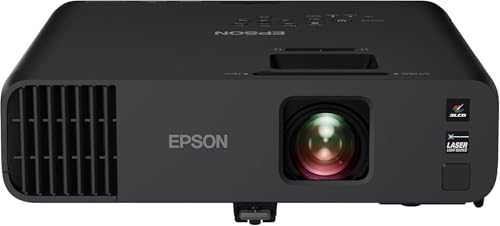
Epson’s Pro EX11000 brings the guide’s light-source conversation into the working week, with a title that specifies like a facilities document: a 3-chip 3LCD Full HD 1080p wireless laser projector stating 4,600 lumens of colour and white brightness, Miracast, two HDMI ports, USB power and a built-in 16W speaker, for business. In a guide containing a title with almost no words, this one is a pleasure to review — nearly every claim a business buyer needs is printed, and the review can spend itself on implications instead of apologies.
Miracast is the feature that changes meeting behaviour. The cable ceremony — whose laptop, which adapter, why is the screen black — is the tax every badly equipped room levies on every meeting, and wireless casting abolishes most of it. Two HDMI ports keep the room’s fixed computer and a guest machine connected simultaneously, and USB power supports the streaming sticks and peripherals that modern presenting accumulates. Read together, the connectivity list describes a room that starts meetings on time.
The 16W speaker, specified in watts in the title, addresses the other chronic meeting failure: video that cannot be heard. Boardrooms and training spaces run calls, clips and recorded material through the projector’s audio more often than any specification admits, and a speaker engineered for speech at room scale is a working tool, not a garnish. Hybrid meetings live or die on whether the far end can be understood, and Epson has printed its answer.
3LCD architecture brings the colour-brightness discipline Epson titles are known for: the stated 4,600 lumens applies to colour as well as white, so saturated charts, brand material and photographic slides hold their intensity in lit rooms. Laser light then protects the investment in the facilities ledger — no lamp stock, no dim quarter before the client visit, output at specification in year three as in week one. The EX11000’s case is a total-cost argument wearing a specification’s clothes, and it is all the stronger for being printable.
Phosphor honesty applies here as everywhere in this guide: the title says laser and 3LCD, and claims no architecture beyond that. A buyer standardising a fleet on a particular engine design should confirm construction in documentation; a buyer purchasing outcomes — brightness, casting, speech, uptime — already has everything needed in the title itself.
- Technology: 3-chip 3LCD
- Resolution: Full HD 1080p
- Brightness figure in the title: 4,600 lumens of colour and white brightness
- Light source: laser
- Wireless: Miracast stated
- Connections: two HDMI ports and USB power stated
- Sound: built-in 16W speaker stated
Strengths
- Miracast plus twin HDMI ports ends the meeting-room connection ceremony.
- A 16W speaker is specified for speech in the title itself.
- Colour and white brightness are both stated at 4,600 lumens for lit rooms.
Trade-offs
- 1080p resolution suits presenting rather than cinema ambitions.
- No phosphor architecture is claimed in the title.
- Home theatre buyers will find its tuning aimed at legibility over mood.
Best for: offices, training rooms and schools presenting daily in lit spaces with visiting laptops.
Not suited for: a home cinema, where its business tuning and 1080p panel serve the wrong master.
Of all the titles in this guide, this is the one a procurement officer could approve from the listing alone — and that completeness is itself a professional virtue.
Schools and training providers should note how completely this title answers the questions their procurement forms actually ask. Connections, casting, speaker output, brightness for both colour and white, resolution — the form can be filled from the listing without a single follow-up email, which is a rarer experience in technology purchasing than it should be, and a sign of a maker who understands that business buyers are buying certainty as much as lumens.
Optoma UHZ36 — The 4K Home Theatre Laser
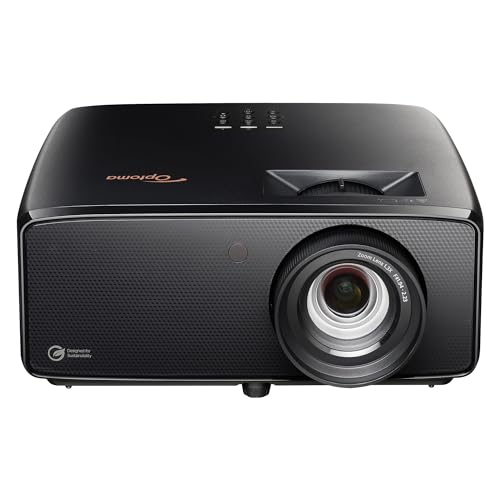
Optoma’s UHZ36 closes the guide at the home theatre end of the laser family: a 4K UHD laser projector with HDR stated, finished in black, described by its maker as a home theatre machine. Its title is the briefest of the domestic picks, and the brevity frames its constituency precisely — households that already own sources, sound and a screen, and want the projector to be a picture engine rather than an entertainment system. No platform is named because none is offered as the argument; the argument is the image and the light behind it.
4K UHD is the claim that separates this machine from the HZ41 across the Optoma divide, and the comparison between the two siblings is the cleanest illustration in this guide of the pixels-versus-light trade. The HZ41 spends on brightness at 1080p; the UHZ36 spends on resolution for a room that can control its light. Neither allocation is superior in the abstract — each is correct for the room it imagines, and a buyer choosing between them is really describing their own curtains.
HDR is stated without a format attached, so the format-sensitive buyer should confirm the details on the listing, particularly if their library leans on a specific dynamic format. The absence of a brightness figure deserves the same calm treatment: pull the documented number, set it against the intended screen size and the room’s darkness, and let geometry arbitrate. A treated room asks surprisingly little brightness of any projector, and a machine designed for such rooms should not be faulted for declining to headline a figure its audience does not need maximised.
Laser light serves the film household’s particular rhythm: long sessions, double features, a series finished over a weekend, and then — crucially — the casual half-hour on a Tuesday that lamp owners rationed and laser owners do not. Consistency across that calendar is the ownership experience this class sells, and a platform-free machine ages on the household’s schedule rather than an app store’s, which dedicated rooms quietly prefer.
Phosphor labelling closes the review as it opened the guide. The UHZ36’s title says laser and nothing more about architecture, so none is claimed for it here. A buyer for whom the phosphor wheel is the point — for fleet reasons, for colour philosophy, for the class itself — has exactly one title in this guide that prints the word, and it belongs to the Christie at the top. Everyone else is buying laser outcomes, and the UHZ36’s outcomes are a settled dark room and a 4K picture that stays itself for years.
- Resolution claim: 4K UHD, per title
- Light source: laser
- HDR: stated in the title without a format suffix
- Finish: black
- Intended setting: home theatre, per title
- Brightness: Not stated in the listing title — verify with the manufacturer documentation
Strengths
- 4K UHD resolution serves a settled film room’s large screen.
- No internal platform to age, slow or orphan the machine.
- Laser consistency suits heavy film households across years.
Trade-offs
- No brightness figure is printed, so the listing must supply the room match.
- Sound and streaming must come from the room’s own equipment.
- HDR format details are unspecified in the title.
Best for: film households with a darkened room, their own sources and a long ownership horizon.
Not suited for: a bright living room needing a stated lumen figure and a built-in platform, which the HZ41 and EX11000 answer better.
The UHZ36 is the guide’s quietest listing and, for the right room, its most confident one: a laser, a 4K panel and nothing asking for attention in between.
A final domestic consideration: the UHZ36 asks its owner to bring the cinema, and households should be honest about whether that is a pleasure or a chore in their particular home. For the enthusiast, assembling sources and sound is the hobby itself. For the family that wants a film to be one button away, the smart machines elsewhere in this programme exist, and choosing the purist instrument for a convenience household is a mismatch no picture quality can redeem.
Comparison Table
| Pick | Headline facts from its listing title | Light source, as titled |
|---|---|---|
| Christie DHD555-GS | 5,000 ANSI lumens, 1DLP HD, two HDMI cables included | Laser phosphor, stated outright |
| Christie DHD635-GS | 5,400 lumens, FHD DLP, sold with no lens | Laser |
| Christie DHD850-GS | GS series DLP; core figures not printed in the title | Not stated in the listing title |
| Optoma HZ41 | Full HD 1080p, compact, 4,600 lumens, entertainment and gaming | Laser |
| Epson Pro EX11000 | 3LCD Full HD, 4,600 lumens, Miracast, 16W speaker, business | Laser |
| Optoma UHZ36 | 4K UHD, HDR stated, black, home theatre | Laser |
The right-hand column is this guide’s thesis in miniature. One title claims the architecture this category is named for; the rest claim laser light in varying degrees of detail, and the honest buyer reads the column as a map of what is known, not as a ranking of what is good.
How to Choose a Laser Phosphor Projector
Decide first whether the architecture itself is your requirement or merely your search term. Fleet managers standardising on a proven engine, institutions with colour or service reasons to prefer the phosphor branch, should hold out for titles and documentation that name it — the DHD555-GS in print, the others in their specification sheets. Buyers who simply want laser outcomes — instant starts, no lamps, steady output — can shop the whole table by room and resolution, and will often land on a machine whose title never mentions phosphor at all.
Match the room next, in the usual order: screen size, ambient light, content. The professional Christies serve institutional rooms with integrators attached; the EX11000 serves the lit meeting room; the HZ41 serves the bright living room; the UHZ36 serves the dark film room. Crossing those assignments — a business machine in a cinema, a cinema machine in a boardroom — produces the category’s characteristic disappointments, and every title here declares its room plainly enough to prevent them.
Price the system, not the chassis. The lens-free Christie needs its optic; the sparse Christie needs a documentation process that may end in an integrator’s quote; the domestic machines need screens and mounts suited to their rooms. A comparison that stops at the projector’s figure will mislead in both directions, flattering body-only machines and penalising complete ones.
Demonstration discipline matters in this class as much as in the cinema one, with a institutional twist: audition with your own content, in your own room, at your own worst hour. A lecture hall at noon, a meeting room with the blinds as they actually are during meetings, a living room with the lamps the family actually uses — those are the conditions the chosen figure must survive, and no showroom substitutes for them.
Finally, interrogate the service story with the same rigour as the picture. Who commissions the machine, who cleans it, what does the maker’s channel look like in your region, and what happens in year four? Laser light removes the lamp from those questions; it does not remove the questions, and institutions that ask them at purchase time are the ones still praising the class a decade later.
What Is a Laser Phosphor Light Engine, in Plain Terms?
A blue laser diode array shines on a rotating wheel coated with phosphor, which converts part of that light into the broader spectrum the projector needs; colour wheels or panels then divide it into the image. The design’s virtues are the ones that built the installed base: efficiency, maturity, a light source that holds its output for very long service, and manufacturing economics that brought laser brightness to ordinary institutions years ahead of the exotic alternatives.
Buyers should also understand what the architecture is not. It is not the lamp era’s bargain of cheap entry and recurring consumables, and it is not the direct-laser flagship world of maximum colour reach at maximum commitment. It is the middle that became the mainstream: the engineering settlement that most of the world’s installed laser projectors actually embody, which is precisely why a guide bearing its name owes readers accuracy about where it appears.
Its trade-offs are equally specific. Colour reach, while strong, is architecturally bounded in a way direct RGB laser designs are not, which is why the premium home world increasingly speaks a different light language. For the institutional and domestic duties in this guide — presentations, teaching, entertainment, film in controlled rooms — the phosphor branch’s balance of reach, cost and proven service remains the rational default, provided the machine in question actually uses it, which is a documentation question wherever the title is silent.
How Should Brightness Figures Be Compared Across This Guide?
Dialect first, number second. The Christie DHD555-GS states ANSI lumens, the professional measurement; the Optoma and Epson domestic models state plain lumens; the DHD635-GS states lumens without a dialect in its title; and two titles state nothing at all. Comparing across those dialects as though they were one currency manufactures precision that the listings do not contain.
The robust method is intent matching. Each stated figure was chosen by its maker for a class of room — mid-size venue, lit meeting room, lamplit living room — and a buyer who matches their room to the figure’s intended room, then checks screen size against it, will choose better than a buyer who crowns the largest number. Brightness is a room specification wearing a machine’s clothing.
Does the Light Source Matter More Than the Panel?
For ownership, often yes; for the image on a given night, rarely. The panel and its processing decide what the picture looks like — DLP’s crispness here, 3LCD’s colour discipline there — while the light source decides how the machine behaves across years: starting, holding brightness, demanding service. Buyers who keep projectors for a decade should weight the light source as a first-class decision; buyers who upgrade with each panel generation can afford to weight the picture first.
The laser phosphor class exists precisely where those two weightings meet: a mature light engine behind proven panels, sold through channels that service both. That is why the class dominates institutional purchasing, and why this guide treats its labelling with such care — a buyer standardising a fleet on the architecture is making a decade-long decision, and deserves titles that say what they mean.
Common Mistakes When Buying a Laser Projector
Assuming every laser projector is a laser phosphor projector leads the errors, and this guide’s own table is the counterexample: one title in six prints the architecture’s name. A buyer whose requirement is genuinely the phosphor design must verify it in documentation wherever the title is silent, and a buyer whose requirement is merely laser light should stop paying a premium for a word their room cannot see.
Comparing brightness across dialects without noticing them manufactures false winners. ANSI and plain figures are measured under different rules, and a shortlist built on blended numbers will mislead its owner in both directions — overbuying for one room, underbuying for another. Keep the dialects separate, or compare in the room that matters.
Ordering a lens-free professional machine as though it were complete is the budget error with the longest shadow. The DHD635-GS states its arrangement plainly; the failure mode belongs entirely to buyers who skim. Any professional title should trigger a completeness check — lens, mount, cables, commissioning — before the order, not after the delivery.
Ignoring the sparse listings’ lesson completes the set. A title like the DHD850-GS’s is not a defective product page; it is a signpost to a channel. Buyers who treat it as a finished offer will be disappointed by their own method, while buyers who request the documentation may find the strongest machine in their comparison waiting behind the quietest title.
Final Recommendation
Buyers who came for the architecture itself should start and very possibly finish with the Christie DHD555-GS: the named laser phosphor design, a stated 5,000 ANSI lumens, and a professional channel behind it. Larger FHD venues step to the DHD635-GS with its lens budgeted separately, and Christie-standardised institutions should open the DHD850-GS documentation conversation. Business rooms belong to the EX11000’s complete specification, bright living rooms to the HZ41, and dark film rooms to the UHZ36.
Whichever machine is chosen, the discipline that protects the purchase is the one this guide opened with: read the light source exactly as the title states it, match the room before the specification, and price the whole system. Laser light will then do what it has quietly done across a decade of institutions — start instantly, hold its brightness, and stay out of the facilities calendar for years.
Institutions writing a tender around this class should steal the guide’s central discipline and put it in the document: require the light engine’s construction to be stated by the bidder, in writing, alongside brightness in a named dialect. Tenders written that way receive comparable offers; tenders written loosely receive marketing. The same sentence, adapted, belongs in a household’s notebook when comparing the domestic machines — because the habit of asking precisely is the entire difference between buying a projector and buying a story about one.
Frequently Asked Questions
Which of these projectors is actually a laser phosphor model?
Only the Christie DHD555-GS states laser phosphor in its listing title. The other titles claim laser light without naming the architecture, or — in the DHD850-GS’s case — name neither, so their light engine construction should be confirmed in manufacturer documentation by any buyer for whom the distinction matters.
Why does the DHD635-GS ship without a lens?
Professional installation practice: one body serves many rooms when its optics can be chosen per throw distance. The lens is a separate, deliberate purchase selected from the room’s measurements, and it must be budgeted before the body is ordered.
Are ANSI lumens and regular lumens the same?
No. They are measured under different rules, and figures in one dialect should not be ranked directly against the other. This guide reports each figure in the dialect its title uses and compares rooms and intent rather than blending numbers.
Can a business laser like the EX11000 serve as a home projector?
It can fill a bright living room, and its speaker and casting are genuinely useful, but its tuning aims at legibility for presentations rather than at cinema mood, and its 1080p panel caps film detail. The HZ41 and UHZ36 are the home-shaped answers in this guide.
How long does a laser light source actually serve?
This guide discusses lifetime in ownership terms rather than laboratory hours, because that is how the benefit arrives: no lamp replacements, no dimming final season, no warm-up ritual, across years of daily institutional or domestic use. Specific rated hours belong in each model’s documentation, and fleet buyers should compare them there alongside warranty terms.
What should I ask for when a title states almost nothing?
The manufacturer’s specification sheet, covering brightness and its dialect, native resolution, light engine construction, lens options and warranty terms. The DHD850-GS review lists the questions in order; a seller who cannot answer them has told you something important.
One habit unites the satisfied owners of every machine in this guide, from the Christie fleet manager to the film household with the quiet Optoma: they bought the system, not the specification. The lens was chosen, the screen was matched, the service path was written down, and the light source — named honestly, in whatever dialect its title used — was left to do the one job it promises better than any lamp ever did: be there, at full brightness, on the thousandth morning exactly as on the first, asking for nothing.
And when the machine is finally mounted, commissioned and showing its first picture to a full room, resist the urge to keep adjusting it. Photograph the aligned image, file the documentation you gathered, record the lens and focus positions in the room’s own records, and hand the next operator a system whose settings are written down rather than remembered. That small administrative ceremony, performed once, is what separates an installation from an arrangement — and it costs nothing but ten minutes on the one day when everything is already open, measured and understood, with the installer still in the building, the ladder still standing in the corner of the room, and every question still cheap to ask and easy to answer properly. A well-bought laser projector’s finest quality is that it disappears — into the lesson, the service, the meeting, the film — and the owners who get the most from this class are the ones who let it vanish, season after season, while the light simply refuses to fade.
Related Guides
The laser conversation continues in our large venue projector guide, where several of these installation machines reappear at hall scale, and in our filmmaker projector guide, where laser light is judged by colour and contrast in the screening room.


