What's inside
- Key Takeaways
- Quick Picks
- How We Chose These Picks
- Comparison Table
- How to Choose a Mirrorless Camera for Stills
- Does Sensor Size Still Matter for Still Photographs?
- How Should a Stills Photographer Split a Budget Between Body and Lenses?
- What Makes a Camera Good for Portraits Specifically?
- How Does a Stills Kit Grow Sensibly Over Five Years?
- Common Mistakes When Buying a Camera for Stills
- Final Recommendation
- Frequently Asked Questions
- Related Guides
As an Amazon Associate I earn from qualifying purchases. This post may contain affiliate links at no extra cost to you.
[SITE_DOMAIN] is reader-supported. When you buy through links on our site, we may earn an affiliate commission.
Where to buy — all six cameras in this guide are linked on Amazon, and each review heading and Quick Picks row points to the precise configuration under discussion: a kit with its zoom, a body on its own, or a bundle whose extras are named in its listing. Configurations matter enormously with cameras, so confirm the bundle contents on the page before paying.
Photographers shopping for the best mirrorless cameras for stills face a pleasant problem: nearly every modern body also shoots serious video, and the video specifications shout louder in marketing than the stills virtues that decide a photographer’s decade. This guide inverts the emphasis. Video is acknowledged where a listing title states it, but the judging here is done by stills criteria — sensor, lens ecosystem, handling for single frames, and the kind of photographic work each body was plainly built to serve.
The six picks span three sensor sizes and four mounts, which is deliberate. A stills photographer chooses a system, not a gadget: the lens shelf that accumulates over ten years will cost more and matter more than any single body. Sony’s E-mount pair, Canon’s full-frame RF body, Nikon’s flagship FX bundle and Panasonic’s two Micro Four Thirds hybrids each represent a different answer to the question of what a stills kit should feel like to carry, to hold and to grow.
Read the reviews with your own dominant subject in mind. The wedding shooter, the street wanderer, the studio portraitist and the mountain walker will rank these six differently, and each review names the photographic temperament it suits rather than pretending a universal winner exists. Where a listing title withholds a figure — a resolution, a video mode — the spec box records that silence instead of filling it from launch coverage.
Key Takeaways
- Sony’s a7 IV kit pairs a 28-70mm zoom with the deepest lens catalogue in this guide, an all-round stills foundation.
- Canon’s EOS R6 Mark II body brings a 24.2 megapixel full-frame sensor to photographers who already own or plan RF glass.
- Nikon’s Z8 bundle arrives as a professional hybrid kit with a battery, a 64GB card and photo software included.
- Sony’s a6400 is the compact APS-C option, with real-time eye autofocus and a flip screen beside its 16-50mm lens.
- Panasonic’s Lumix G97 and G100 keep Micro Four Thirds small, light and honest for photographers who walk far.
- Every video claim in this guide comes from a listing title; stills judgement leads, video follows.
Quick Picks
| Pick | Badge | Why it made the cut |
|---|---|---|
| Sony Alpha a7 IV with 28-70mm Lens | Full-frame all-rounder kit | A working zoom included and the E-mount system’s full depth behind it. |
| Canon EOS R6 Mark II Body | Body-only RF foundation | A 24.2 megapixel full-frame sensor for a photographer choosing lenses deliberately. |
| Nikon Z8 Bundle | Professional hybrid kit | Nikon’s FX flagship format with battery, card and software in the bundle. |
| Sony a6400 with 16-50mm Lens | Compact APS-C traveller | Eye autofocus and a flip screen in the smallest serious package here. |
| Panasonic Lumix G97 with 12-60mm Lens | Micro Four Thirds hybrid | A versatile 12-60mm zoom on a body built for photo and video creators. |
| Panasonic Lumix G100 with 12-32mm Lens | Lightweight walk-around kit | 4K video, a tracking microphone and 5-axis hybrid stabilisation in a tiny kit. |
How We Chose These Picks
Stills-first selection begins with the sensor and the mount, because those two decisions outlive every other feature on a camera. Full-frame bodies anchor this guide — the a7 IV, the R6 Mark II and the Z8 — for photographers whose work involves dim venues, large prints or deliberate background separation. APS-C and Micro Four Thirds picks earned their places by the opposite virtue: smaller sensors mean smaller lenses, and a stills kit that travels everywhere photographs more than a superior kit left at home.
Kit completeness was judged case by case. A body-only listing is not a flaw when the buyer is a system photographer with lenses waiting, so the R6 Mark II’s body-only status is treated as a feature for its audience. Conversely, the Z8 bundle’s included battery, memory card and software were weighed as genuine working value for a professional equipping a second body or a studio spare, not as padding.
Autofocus entered the judging only where a title states it, and only for its stills value: the a6400’s real-time eye autofocus is a portrait photographer’s tool as much as a videographer’s, because a sharp eye at wide aperture is the difference between a keeper and a near miss. Titles that say nothing about focusing were not credited with focusing virtues, however famous the model.
Finally, each pick had to represent a defensible stills philosophy rather than a rung on a price ladder. The G100’s presence beside the Z8 is not a joke about budgets; it is a claim that a light camera carried daily will out-photograph a heavy one carried monthly, for a certain kind of photographer. This guide’s job is to help you discover which kind you are.

Sony Alpha a7 IV with 28-70mm Lens — Full-frame all-rounder kit
Sony’s listing for this kit is unusually plain: a black a7 IV body, a 28-70mm zoom, and a note that body and lens are compatible with Sony E-mount systems. That plainness suits the camera’s role in a stills photographer’s life. The a7 IV is the body people buy when they stop experimenting with systems and settle into one, and the included zoom means the settling can begin the day the box opens rather than after a second transaction.
The 28-70mm range covers the stills photographer’s daily bread. At its wide end it takes in interiors, street scenes and environmental portraits; at its long end it frames head-and-shoulders portraits and compresses landscapes pleasantly. A new owner can shoot an entire first year on this single zoom and learn, from their own archive, exactly which focal lengths deserve a faster prime — the most reliable lens-buying education there is.
E-mount depth is the strategic argument. Sony’s own lenses, plus a wide field of third-party glass built for the same mount, give this kit more upgrade directions than any other pick in the guide. A stills photographer who begins here is not merely buying a camera; they are buying into the largest lens marketplace in mirrorless photography, with used examples circulating at every level.
Notice the discipline this review must observe: the listing title states neither a megapixel count nor video figures for this kit, so neither is printed here. That restraint costs the a7 IV nothing in this guide, because its stills case rests on the format, the mount and the kit’s completeness — but a buyer comparing resolution figures should take them from Sony’s documentation, not from any summary.
Handling for stills is where an all-rounder earns its name across a long day: weddings, school events and travel days all demand a body that disappears into the hands. The a7 IV’s position in Sony’s line — above the entry bodies, below the specialised flagships — is precisely the all-round brief, and photographers who shoot a bit of everything, seriously, are its natural constituency.
Growth from here is graceful. Add a fast prime for evenings, a longer zoom for the sidelines, a second body years later — the mount accommodates each step without orphaning the kit lens, which remains the light travel option even in a mature bag. Few purchases in photography stay this useful for this long.
Wedding and event photographers form a second constituency worth naming. A body that must serve twelve-hour days, two-card peace of mind habits and lenses from fisheye to telephoto benefits from an ecosystem with professional depth, and the a7 IV’s placement in Sony’s working line — surrounded by bodies sharing its mount at every level — means a second body, a rental or a borrowed lens always speaks the same language. That surrounding depth rarely appears in specifications, yet it decides real Saturdays.
- Format: full-frame mirrorless, Sony E-mount
- Kit lens: 28-70mm zoom included
- Finish: black
- Sensor resolution: Not stated in the listing title — verify with the manufacturer documentation
- Video specification: Not stated in the listing title — verify with the manufacturer documentation
Strengths
- Complete full-frame kit with a genuinely versatile zoom included
- E-mount lens catalogue is the deepest available to any pick here
- All-round positioning suits mixed stills subjects across a whole career
Trade-offs
- Title omits resolution and video figures, so spec comparison needs Sony documentation
- Kit zoom is a starting lens, not the fast glass low-light specialists crave
- Full-frame lenses for later upgrades cost more than APS-C equivalents
Best for: a stills photographer seeking a full-frame foundation with a working zoom and the widest future lens choice
Not suited for: a minimal travel bag, since full-frame zooms grow larger than the APS-C and Micro Four Thirds kits below
When you open this kit’s Amazon page, check that the configuration shown is the 28-70mm lens bundle in black, because the a7 IV also sells body-only and the stills value described here assumes the zoom is in the box.

Canon EOS R6 Mark II Body — Body-only RF foundation
Canon’s title for the R6 Mark II is a study in economy: body only, full-frame, a 24.2 megapixel CMOS sensor, photo and video capabilities. No lens, no bundle extras, no adjectives doing heavy lifting. That economy tells you the intended buyer — a photographer who either already owns RF lenses or wants the lens decision to be entirely their own, unshaped by whatever zoom a kit department chose to bundle.
The 24.2 megapixel full-frame sensor sits in a resolution class many working photographers consider the sweet spot for stills: files large enough for serious cropping and generous prints, without the storage and processing weight of ultra-high-resolution bodies. For event work, weddings, editorial assignments and family documentation alike, that balance keeps a whole day’s shooting manageable on ordinary cards and computers.
Body-only buying also clarifies the true shape of a stills budget. The money not spent on a kit zoom can be directed at the single lens that matches a photographer’s actual subject — a fast prime for the portraitist, a wide zoom for the architectural shooter — and a body-plus-one-great-lens kit almost always out-photographs a body-plus-kit-zoom kit at the same total spend. This pick is the guide’s clearest expression of that principle.
Canon’s RF mount is the surrounding story. A photographer committing here gains access to Canon’s own RF lenses and a growing third-party field, with the assurance of the system’s flagship lineage behind the mount’s future. The R6 Mark II’s placement — a serious body beneath Canon’s flagship tier — historically means handling and features trickled from professional models, though this guide credits only what the title states: the format, the sensor and the dual photo-video brief.
Who should walk past this pick? Anyone without a lens plan. A body-only box punishes the unprepared buyer with a beautiful, unusable object until glass arrives, and beginners are better served by the kits elsewhere in this guide. The R6 Mark II rewards the deliberate: an upgrader from an earlier RF body, a DSLR veteran converting systems with intent, a second-body buyer whose lenses are already on the shelf.
Its stills-first appeal is focus. Freed from bundle compromises, every part of this purchase is chosen: the sensor class, the mount, and then the glass. Photographers who think in systems rather than in gadgets will recognise the R6 Mark II as the guide’s purest foundation stone.
Studio photographers should also pause here. A body-only purchase pairs naturally with a deliberate studio lens — the portrait prime or standard zoom a studio lives on — and with tethered, tripod-mounted working habits where the camera is furniture rather than luggage. In that environment the R6 Mark II’s sensible resolution and full-frame rendering serve session after session, and the absence of a kit zoom is not a gap but a correct omission.
- Sensor: 24.2 megapixel CMOS, full-frame
- Configuration: body only — no lens included
- Brief per title: photo and video capabilities
- Mount family: Canon RF (mirrorless)
- Kit extras: none in this listing
Strengths
- 24.2 megapixel full-frame files balance detail with manageable storage
- Body-only format frees the entire lens budget for a deliberate choice
- Natural upgrade point for photographers already holding RF lenses
Trade-offs
- No lens included, so day-one shooting requires glass already owned or ordered
- Total system cost is body plus lenses, higher than any kit here
- Title gives no video detail beyond a general capability statement
Best for: an experienced photographer seeking a full-frame Canon body to pair with deliberately chosen RF lenses
Not suited for: a first-camera purchase without a lens budget, since the body-only box cannot take a photograph alone
If the R6 Mark II is your foundation, price it on its page alongside the exact first RF lens you intend to mount, and judge the pair’s combined figure — that combined figure, not the body alone, is this pick’s real cost of entry.

Nikon Z8 Bundle — Professional hybrid kit
Nikon’s bundle listing leads with the camera’s dual citizenship — an 8K video and stills hybrid in the FX format, which is Nikon’s name for full-frame — and then does something flagship listings rarely do: it itemises a working kit. An EN-EL15C battery, a 64GB memory card and photo software are included, among further extras the title summarises rather than lists. For a stills photographer, the headline remains the body: Nikon’s professional-tier hybrid, sold here in a box that acknowledges professionals need power and storage from the first hour.
Why does a flagship belong in a stills guide at all? Because certain photographic work — fast action, demanding events, commercial assignments where a missed frame is a lost fee — justifies a body built without compromise, and the Z8’s professional positioning states that intent plainly. The stills photographer who shoots sport for a local paper, weddings at a high level, or wildlife with serious intent is this bundle’s reader.
The bundle composition deserves the same scrutiny as the body. A named battery model in the title lets a buyer verify compatibility with existing Nikon chargers and spares; a 64GB card gets a working photographer through a first assignment, though high-volume shooters will add larger media quickly. Photo software in the box is the softest item — useful for a newcomer to Nikon’s ecosystem, redundant for an established editor — and it is weighed here as a minor bonus rather than a reason to buy.
FX format means the Z mount’s full-frame lens line stands behind this body, and that line has matured into a complete professional system. A stills photographer investing at this level is buying a decade of assignments, and the mount’s depth — fast primes, professional zooms, telephotos for the field — is the real product. The bundle is simply the most convenient door into it found in this guide.
Restraint applies to this review as to the others: the title does not state a megapixel figure, so none is printed, and the 8K video claim is recorded because the title makes it, not expanded with modes the title omits. A buyer at this level will read Nikon’s full documentation before committing, and rightly so; this guide’s role is placement — the Z8 is the professional summit of these six picks — not a substitute for that reading.
Size and seriousness are the honest costs. A flagship hybrid body is a substantial object that announces professional intent, and its price class places it beyond casual experimentation. For the photographer whose work funds it, neither fact is a drawback. For everyone else, the picks below exist precisely so that excellent stills do not require this altitude.
Sports and wildlife photographers will read this bundle differently from everyone else: as infrastructure. A flagship hybrid body is the platform on which long telephotos, monopods and press-box workflows are built, and the included battery and card are the first consumables of that infrastructure rather than gifts. Judged that way, the bundle’s composition is simply correct — the items a working kit consumes fastest are present from the first delivery, and the Z mount’s professional telephoto shelf waits behind them.
- Format: FX (full-frame) mirrorless, Nikon Z mount
- Brief per title: 8K video and stills hybrid
- Bundle includes: EN-EL15C battery and 64GB memory card
- Software: photo software included per title
- Sensor resolution: Not stated in the listing title — verify with the manufacturer documentation
Strengths
- Professional-tier body with a working bundle rather than a bare box
- Named battery and card let buyers verify compatibility before ordering
- Full-frame Z system gives a complete professional lens roadmap
Trade-offs
- Flagship price class is unjustifiable for casual stills use
- 64GB card will feel small to high-volume action shooters
- Resolution figure absent from the title, requiring documentation checks
Best for: a working photographer seeking Nikon’s professional hybrid body with battery, card and software already bundled
Not suited for: discreet street photography, where a flagship-sized body draws the attention smaller picks avoid
On the Z8 bundle page, read the full contents list carefully against the title’s summary — battery, card and software should all appear — since bundle compositions shift and this recommendation values the kit as much as the camera.

Sony a6400 with 16-50mm Lens — Compact APS-C traveller
Sony’s a6400 listing is the most forthcoming in this guide: a compact APS-C interchangeable-lens camera with real-time eye autofocus, 4K video, a flip screen and the 16-50mm lens, E-mount compatible, model ILCE-6400L/B in black. Nearly every phrase in that title translates directly into a stills benefit, starting with the eye autofocus — a feature that sounds like video garnish and is, in practice, a portrait photographer’s quiet revolution.
Eye autofocus changes portrait arithmetic. With a lens opened wide, depth of field shrinks to centimetres, and a focus point placed on a nose or an eyelash rather than the eye ruins an otherwise lovely frame. A camera that finds and holds the eye in real time lets the photographer compose, direct the sitter and watch expressions instead of policing a focus point. For family portraits, pet photography and any stills work involving a living face, that is the difference between a session of keepers and a session of almosts.
The flip screen serves stills more than its vlogging reputation suggests. Low angles — a toddler’s eye level, a dog in grass, fungi on a forest floor — become comfortable rather than contortionist, and high angles over crowds or fences open up equally. Combined with the compact APS-C body and the small 16-50mm kit zoom, the a6400 builds the guide’s most carry-everywhere serious kit: a camera that fits a jacket-adjacent bag and therefore attends the moments that become photographs.
APS-C economics complete the case. E-mount lenses in APS-C format are smaller and gentler on a budget than their full-frame counterparts, and the a6400’s owner can build a three-lens kit — kit zoom, fast prime, modest telephoto — for what a single professional full-frame zoom might cost. The stills quality from a modern APS-C sensor satisfies prints and screens alike; what the format asks in return is a little more care in very dim light.
The title’s 4K video mention is recorded for completeness in a stills guide, and the flip screen plainly serves self-filming too. Neither distracts from the stills argument: this is the pick for a photographer whose best camera must also be their most present camera, and whose subjects are overwhelmingly people and animals with eyes worth focusing on.
There is a rental-house footnote to the a6400’s case: compact APS-C bodies with eye autofocus are the cameras friends borrow and then buy. Its size invites lending, its focusing forgives the borrower’s inexperience, and its kit zoom covers a weekend’s variety. A household camera that serves guests, teenagers and grandparents as gracefully as its owner has a value no specification captures, and the a6400’s title — compact, eye-focused, flip-screened — reads like a description of exactly that social role.
- Sensor: APS-C (resolution not stated in the listing title)
- Kit lens: 16-50mm, E-mount
- Autofocus: real-time eye autofocus, per title
- Screen: flip screen
- Video: 4K, as stated in the listing title
- Model: ILCE-6400L/B, black
Strengths
- Real-time eye autofocus transforms portrait and pet hit rates
- Compact body and small kit zoom make it the most carried camera here
- Flip screen unlocks low and high stills angles comfortably
Trade-offs
- APS-C sensor asks more care in very low light than the full-frame picks
- Kit zoom’s range is modest for distant subjects
- Resolution figure is not stated in the title and needs Sony documentation
Best for: a portrait and family photographer seeking eye autofocus in a compact APS-C kit carried daily
Not suited for: large-format printing from heavy crops, where the full-frame picks offer more file to work with
Verify on the a6400’s page that the listing is the ILCE-6400L/B kit with the 16-50mm lens included, since a body-only variant circulates as well and the travel value here depends on that little zoom arriving with the camera.
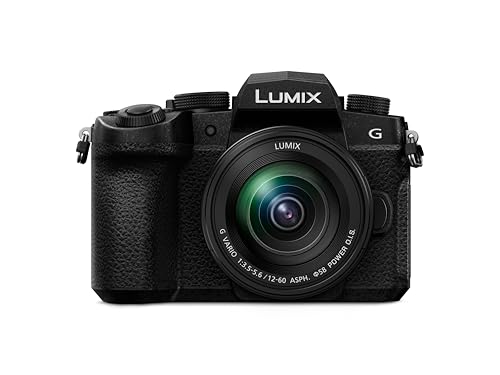
Panasonic Lumix G97 with 12-60mm Lens — Micro Four Thirds hybrid
Panasonic describes the G97 as a compact hybrid Micro Four Thirds mirrorless camera with the Lumix G Vario 12-60mm F3.5-5.6 lens, designed for content creators in photo and video. In a stills guide, the phrase worth seizing is the lens. A 12-60mm zoom on Micro Four Thirds frames like a 24-120mm would on full frame — a span that covers wide scenes, everyday subjects and respectful portraits in a single, genuinely compact package.
That zoom range is the stills argument in one line. Most photographers’ archives cluster between wide-establishing and short-telephoto, and the G97’s kit lens lives exactly there without a swap. Walk-around photography — travel days, family outings, documentary wandering — rewards the photographer who never has to stop and change glass, and Micro Four Thirds keeps the whole assembly light enough that a full day’s carrying never becomes the story.
The format’s trade is well understood and worth stating plainly in a stills context: a smaller sensor gathers less light than the full-frame picks and renders background blur less dramatically at equivalent settings. In exchange it delivers depth of field that landscape and travel photographers often prefer — more of the scene sharp at once — and a lens shelf of remarkable compactness. Neither side of that trade is a defect; it is a fork in photographic taste.
Panasonic’s title frames the G97 for creators working in both photo and video, and stills buyers benefit from that hybrid engineering in durability of design: a body expected to work all day for creators tends to handle a photographer’s long weekend without complaint. The model designation DC-G97MK9 identifies the kit precisely, which helps when comparing listings.
What the title withholds is a resolution figure, and the spec box below records that honestly. A stills buyer for whom pixel count is a primary criterion should consult Panasonic’s documentation for the G97 before deciding; a buyer whose criterion is a balanced, light, one-lens system will find the case already made by the format and the zoom.
Documentary photographers working close to home may value the G97 most of all. A neighbourhood project — the same streets across seasons, portraits of shopkeepers, a changing building site — rewards a camera that can be carried on every errand without ceremony, and the 12-60mm zoom’s span means the frame is always available, wide for the scene and longer for the face. Projects like these are built from hundreds of ordinary days, and ordinary days are precisely where a light, complete kit defeats a heavier, theoretically superior one.
- Format: Micro Four Thirds mirrorless
- Kit lens: Lumix G Vario 12-60mm F3.5-5.6
- Brief per title: hybrid, designed for content creators in photo and video
- Model: DC-G97MK9
- Sensor resolution: Not stated in the listing title — verify with the manufacturer documentation
Strengths
- 12-60mm kit zoom covers the walk-around range more fully than rival kits
- Micro Four Thirds keeps body and lenses genuinely light for travel
- Deep depth of field suits landscape and documentary stills styles
Trade-offs
- Smaller sensor trails the full-frame picks in dim light and blur
- F3.5-5.6 zoom aperture is modest for evening shooting
- Resolution not stated in the title, so print-size planners must check documentation
Best for: a travelling photographer seeking one light zoom that covers wide scenes through portraits without a lens change
Not suited for: shallow-depth portraiture as a house style, since the smaller sensor renders background blur more conservatively
On the G97’s page, confirm the DC-G97MK9 kit designation and the 12-60mm lens in the contents, because that zoom’s span — not any body figure — is the foundation of this pick’s stills case.

Panasonic Lumix G100 with 12-32mm Lens — Lightweight walk-around kit
The G100 is the smallest commitment in this guide, and its listing reads like a traveller’s checklist: a 4K mirrorless camera for photo and video, a built-in microphone with tracking, the Micro Four Thirds interchangeable system, a 12-32mm lens and 5-axis hybrid image stabilisation, model DC-G100DKK9 in black. Every item serves portability. This is the stills camera for photographers whose best subjects appear during ordinary life — commutes, walks, café tables — where a large body would simply not be present.
Stabilisation deserves top billing in a stills review of this camera. Five-axis hybrid stabilisation, as the title names it, steadies handheld frames at slower shutter speeds, which in practice means sharper dusk street scenes, museum interiors where flash is unwelcome, and video-free stills walks that end after sunset. For a small camera often used without a tripod, that steadiness is worth more than a specification with a bigger number.
The 12-32mm kit lens keeps the package pocket-adjacent. Its range leans wide — ideal for streets, interiors, landscapes and the environmental portraits that tell a viewer where a person is, not merely what they look like. Photographers whose taste runs to context over compression will find this little zoom aligned with their eye; those who live at long focal lengths should look at the G97’s 12-60mm instead.
The built-in microphone with tracking belongs to the camera’s video side, and a stills guide notes it briefly for the hybrid buyer: a photographer who also records family moments gains directional audio without carrying a separate microphone. It does not influence the stills ranking, but it rounds out a kit designed to be the only device in a small bag.
As with its G97 sibling, the title omits a megapixel figure, and this review prints none. The G100’s case rests on presence and steadiness: the photograph you actually take, sharp, at the moment life offers it. For a great many photographers that is not a compromise position — it is the entire philosophy of their practice, and Panasonic has built the tidiest expression of it in this guide.
Parents rediscovering photography after the phone years form this camera’s quiet constituency. School gates, park benches, grandparents’ gardens — the G100’s size means it can live in the same bag as the snacks and spare clothes, ready for the unrepeatable expression rather than packed away for a dedicated outing. Photographs of childhood are overwhelmingly taken by the camera that was present, and presence is the specification this little Panasonic optimises above all others, with stabilisation ensuring the hurried, one-handed frame still lands sharp.
- Format: Micro Four Thirds interchangeable lens system
- Kit lens: 12-32mm
- Stabilisation: 5-axis hybrid I.S., per title
- Audio: built-in microphone with tracking
- Video: 4K, as stated in the listing title
- Model: DC-G100DKK9, black
Strengths
- Smallest, lightest complete kit in this guide for daily carrying
- 5-axis hybrid stabilisation sharpens handheld low-light stills
- Wide-leaning kit zoom suits street, travel and interior photography
Trade-offs
- 12-32mm range ends before portrait telephoto territory begins
- Micro Four Thirds sensor trails larger formats in extreme low light
- Resolution figure absent from the title for print planners to verify
Best for: a walker and traveller seeking the lightest interchangeable-lens kit that still stabilises handheld stills
Not suited for: telephoto subjects, since the kit zoom’s 32mm long end offers little magnification for distant detail
Check the G100 listing for the DC-G100DKK9 designation before ordering, and note the 12-32mm lens in the contents — the compactness praised here is a property of that exact body-and-lens pairing.
Comparison Table
| Pick | Format | Lens in the box | Notable title fact | Stills temperament |
|---|---|---|---|---|
| Sony a7 IV kit | Full-frame, E-mount | 28-70mm zoom | Body and lens E-mount compatible | All-round system foundation |
| Canon EOS R6 Mark II | Full-frame, 24.2MP | None — body only | Photo and video capabilities | Deliberate lens-led build |
| Nikon Z8 bundle | FX full-frame | None — bundle extras instead | EN-EL15C battery and 64GB card included | Professional hybrid work |
| Sony a6400 | APS-C | 16-50mm | Real-time eye autofocus, flip screen | Portraits and family life |
| Panasonic Lumix G97 | Micro Four Thirds | 12-60mm F3.5-5.6 | Hybrid creator design | One-lens travel coverage |
| Panasonic Lumix G100 | Micro Four Thirds | 12-32mm | 5-axis hybrid stabilisation | Everyday carry and streets |
How to Choose a Mirrorless Camera for Stills
Begin with the lens shelf you intend to own in five years, then choose the body that starts it. A stills photographer’s archive is built by glass: the fast prime that defines their portraiture, the zoom that covers their travel, the telephoto that reaches their wildlife. Bodies are replaced; mounts persist. That is why this guide treats the body-only R6 Mark II and the kit-bundled a7 IV as equally rational — each is a door into a system, and the door matters less than the rooms behind it.
Sensor size comes second, and it should be chosen by subject rather than by status. Full frame rewards the photographer of dim halls, night streets and deliberate portraiture. APS-C rewards the photographer of families, travel and everyday documentary, with smaller lenses at every step. Micro Four Thirds rewards the walker: the photographer whose pictures happen miles from a car, where every gram is a decision. None of these is a consolation prize; each is the correct answer to a different photographic life.
Consider also how each system treats colour and files, because stills photographers live inside their editing software for years. Every maker renders colour with a house character, and while modern files are flexible, a photographer who consistently fights a system’s skin tones or greens will tire of the fight. Sample galleries from working photographers — not launch showcases — are the honest preview: look for the subjects you shoot, in the light you shoot them, and notice which system’s ordinary results already resemble your finished taste. The body whose files need the least correction for your eye is a body you will enjoy for a decade.
Third, audit your carrying reality. Photographers routinely overestimate their tolerance for weight in the shop and underestimate it on the street. If your honest pattern is a camera in a small shoulder bag daily, the a6400 or G100 will produce more good photographs than a flagship that attends only ceremonies. If your pattern is deliberate outings with a dedicated backpack, the full-frame picks’ size costs nothing. Buy for the pattern you have, not the expedition you imagine.
Last, let autofocus claims be verified rather than assumed. This guide credits the a6400’s eye autofocus because its title states it; other bodies here may focus brilliantly, but their titles do not say so, and a portrait photographer for whom focus acquisition is the whole purchase should read manufacturer documentation for the specific system under consideration. Specifications that decide a purchase deserve a primary source.
Does Sensor Size Still Matter for Still Photographs?
Yes, but in narrower ways than forum arguments suggest. A larger sensor gathers more light per frame, which shows in very dim scenes and in the ease of separating a subject from its background. It does not make a midday landscape sharper, a composition stronger or a moment better timed — and most stills are made in adequate light, where the APS-C and Micro Four Thirds picks in this guide perform without apology.
Where size genuinely decides outcomes is at the edges of a practice: the wedding photographer shooting a candlelit first dance, the portraitist whose signature is a melting background, the printmaker cropping aggressively. Photographers living at those edges should buy the full-frame picks and accept their lens costs. Photographers living in the broad middle — travel, family, street, landscape by day — will find the smaller formats not merely sufficient but often preferable, because the camera that comes along is the camera that matters.
How Should a Stills Photographer Split a Budget Between Body and Lenses?
A durable rule of thumb gives the body roughly half the first budget and reserves the rest for glass, because lenses hold their value and their usefulness across body generations. The body-only R6 Mark II exists for buyers who already follow that rule; the kits exist for buyers preferring the split made for them. Either route is sound. The unsound route is spending the entire budget on a flagship body and mounting a lens bought as an afterthought, which produces expensive files of ordinary character.
Sequence matters as much as proportion. Buy the body and one lens that matches your dominant subject, shoot for a season, and let your archive nominate the second lens. The a7 IV kit owner who discovers a love of evenings needs a fast prime; the G97 owner drawn to distant birds needs reach. Both discoveries are cheaper and more accurate than any pre-purchase speculation, including this guide’s.
Printing deserves a sentence in any stills decision, because a printed photograph is where format differences either justify themselves or evaporate. At the sizes most homes display — up to a large living-room print — every sensor class in this guide produces beautiful results from a well-exposed file, and the limiting factor is almost always the lens and the exposure, not the body. Photographers who print very large, or crop deeply for wildlife, are the ones who should weight the full-frame picks’ files most heavily; everyone else can choose by handling, mount and the honest arithmetic of what they will actually carry up the hill.
What Makes a Camera Good for Portraits Specifically?
Three things, in order: focus that lands on the eye, a lens that can blur a background pleasantly, and handling that lets the photographer talk to the sitter instead of the menu. The a6400 addresses the first directly with its titled eye autofocus. The full-frame picks address the second through format, given suitable glass. The third is personal — it is why experienced portraitists urge handling a body before buying when possible, and why the comparison table above lists temperament beside format.
Skin, light and patience do the rest, and no body in this guide supplies them. A stills photographer choosing for portraits should therefore weight the focusing evidence and the lens roadmap above resolution figures, and treat any title’s silence on autofocus as a prompt to read the manufacturer’s own portrait-relevant documentation before deciding.
How Does a Stills Kit Grow Sensibly Over Five Years?
Year one belongs to the kit lens and one addition chosen by evidence: sort your archive by focal length and by the light you shot in, and the missing tool will name itself — reach, width or speed. Year two usually adds the lens your subjects demanded, plus the unglamorous infrastructure of a second battery, faster cards and a bag that fits the grown kit. Photographers who buy infrastructure late spend shoots managing scarcity; those who buy it on schedule forget it exists, which is the point.
Years three to five are where systems justify themselves. A second body — often the previous main body demoted rather than sold — appears in the bags of event and wedding photographers, and the mount’s second-hand market quietly supplies the specialised lens that a new price would make irrational. Notice that none of this growth requires replacing the original purchase: the a7 IV kit lens still travels, the R6 Mark II still anchors, the G100 still walks daily. A stills system chosen well compounds; one chosen by launch-day excitement gets sold, at a loss, and begun again.
Common Mistakes When Buying a Camera for Stills
Letting video specifications steer a stills purchase
Video figures are printed larger and argued louder, so stills buyers routinely pay for recording modes they will never open while neglecting the lens that would transform their photographs. Decide your stills needs first — sensor, mount, one great lens — and treat video capability as a bonus that several picks here happen to include. A camera bought for its footage ceiling and used for stills is a misallocation that follows a photographer for years.
Counting megapixels before counting lenses
Resolution is the easiest figure to compare and among the least decisive for most stills work, which is why this guide prints it only where a title states it. A 24-megapixel-class file prints beautifully at sizes most households ever attempt. The photographer who chooses a system for its lens shelf, and a body for its handling, will out-shoot the photographer who chose by pixel count alone — especially once both archives reach their second year.
Buying a flagship to grow into
The Z8 bundle is a magnificent tool for the photographer whose work already demands it, and a heavy, expensive tutor for one whose work does not. Skills grow through frames taken, not features owned, and a mid-range body shot daily teaches more than a flagship shot monthly. Grow into equipment by exhausting the equipment you have; the upgrade conversation becomes remarkably clear at the moment a real limitation, repeatedly met, can be named in one sentence.
Ignoring the second-hand lens market of a system
A mount’s used market is a hidden subsidy. Systems with deep circulation — E-mount most of all in this guide — let a photographer add excellent glass at gentle prices for years. When comparing two bodies that otherwise tie, ask which one’s lenses you can afford second-hand in your country, in the focal lengths you actually use. That answer, more than any launch specification, predicts the kit you will own in five years.
Final Recommendation
For most stills photographers, the Sony a7 IV kit is the recommendation to beat: full-frame format, a working 28-70mm zoom in the box, and the deepest lens ecosystem in this guide behind it. Choose the R6 Mark II instead when Canon’s RF system is your chosen home and your lens plan is already written. The Z8 bundle serves the professional whose assignments justify a flagship and who values a working kit in one delivery. Below the full-frame line, the a6400 is the portrait-and-family pick on the strength of its eye autofocus, while the G97 and G100 split the travellers: the G97 for one-lens range, the G100 for the lightest possible daily carry. Every one of the six will take excellent photographs; the right one is the one whose system you want to grow old with.
Weather deserves a final honest paragraph. None of the six listing titles claims sealing or rugged construction, so a stills photographer whose work happens in rain, surf spray or desert dust should treat weather resistance as a question for manufacturer documentation rather than an assumption carried from a flagship’s reputation. Bags, covers and simple caution protect any of these bodies through most conditions photographers actually meet, and the habit of protecting the camera matters more than the badge on its top plate. Buy the photography first; manage the weather with sense.
Frequently Asked Questions
Which of these cameras is best for a photographer who never shoots video?
All six shoot stills as their core craft in this guide’s reading, and the video capabilities named in some titles can simply be left unused. The purest stills-led purchases are arguably the body-only R6 Mark II, whose budget flows entirely into lenses, and the G100, whose stabilisation and size serve handheld stills daily. Choose by mount and carrying pattern rather than by avoiding video features, which cost a stills photographer nothing when ignored.
Why do some spec boxes say a figure is not stated?
Because the listing titles for those configurations do not print the figure, and this guide does not borrow specifications from launch articles or sibling models. A missing figure in a spec box is information, not an omission: it tells you exactly which detail to confirm in the manufacturer’s documentation before buying. The a7 IV kit, Z8 bundle, G97 and G100 all carry at least one such honest gap.
Is Micro Four Thirds enough for serious stills work?
For a large share of serious work, yes. The G97 and G100 trade the low-light and background-blur extremes of full frame for size, weight and depth of field that many travel, street and landscape photographers actively prefer. Seriousness in photography is a property of the practice — consistency, printing, editing, returning to subjects — and both Panasonic picks support that practice fully. Photographers whose work lives in dark venues should still choose a larger format.
Should I buy a body-only camera or a kit?
Buy body-only when you already own lenses for the mount or have one specific first lens chosen, as with the R6 Mark II. Buy a kit when the included zoom matches your subjects, as the a7 IV’s 28-70mm and the G97’s 12-60mm do for most generalists. The error is buying body-only by accident or a kit whose lens you will immediately replace; both mistakes are visible in the listing title before any money moves, which is why this guide quotes kit contents so carefully.
How important is eye autofocus for stills, really?
For portraits of people and animals, it is the single most keeper-multiplying feature of the mirrorless era, because wide-aperture focus errors concentrate exactly on eyes. The a6400’s title states real-time eye autofocus outright, which is why it anchors this guide’s compact end. For landscapes, architecture and still life it matters not at all — one more reason the right camera depends on your dominant subject rather than on any universal ranking.
Which pick suits a photographer upgrading from a phone?
The one whose size will not intimidate and whose lens arrives in the box: the a6400 or the G100 for most people, the G97 when a longer everyday zoom is wanted from the start. Phone photographers already understand composition and sharing; what they need from a first real camera is depth, light and lens character without a carrying penalty that sends them back to the pocket. All three compact picks deliver that transition, and their mounts leave room to grow when the phone is finally forgotten.
A stills camera is a long companion, so choose the system whose lenses you want to collect, whose weight your shoulders accept without negotiation, and whose files you enjoy looking at on an ordinary evening — then go and fill a card with the people and places already in front of you, because that first honest archive will teach you more about your photography than any comparison, this one included, ever could.
None of the six is a mistake. They are six different wagers about what your photography will become, and the most useful thing a guide can do is make each wager’s terms explicit — which is why kit contents, stated autofocus and honest silences fill these reviews instead of superlatives.
A closing thought on longevity: stills photographers keep bodies longer than almost any other technology buyers, and the second-hand shelves are full of decade-old mirrorless cameras still making their owners happy. Whichever pick you choose, expect the relationship to be measured in years and in thousands of frames, and choose accordingly — for the hands, the mount and the subjects you have, in that order.
Related Guides
Keep comparing with mirrorless cameras with quick autofocus and 4K video, plan outdoor work through mirrorless cameras for landscape and wildlife photography, or stretch a budget with used mirrorless cameras under a modest ceiling.
Related guides
- Best Thermal Imaging Cameras Hunting: Six Handheld Thermal Monoculars for Night Observation
- Best Mirrorless Cameras for Bird Photography: Crop Reach, Fast Bursts and the Lens Question Answered First
- Best 4K Cameras Travel Shooters Actually Carry
- Best 1080 Webcams: Six Full HD Cameras Judged on Light, Focus and Voice


