What's inside
- Key Takeaways
- Where to Buy
- Quick Picks
- How These Six Earned Their Places
- Side by Side: The Six Compact Lumix Options
- How to Choose a Compact Lumix
- Building a Two-Lens Compact Lumix Kit
- Getting Sharp Handheld Shots From Small Bodies
- What Compact Really Costs: The Whole Outfit Audit
- A First Month With a Compact Lumix: Habits That Stick
- Video Habits for Stills Photographers Crossing Over
- Carrying the Kit: Bags, Straps and the Friction Audit
- Renting the Decision: A Weekend With Borrowed Glass
- A Note on Colour: Shooting Finished Photographs
- Compact Lumix Buying Mistakes
- Frequently Asked Questions
- Final Recommendation
As an Amazon Associate I earn from qualifying purchases. This post may contain affiliate links at no extra cost to you.
[SITE_DOMAIN] is reader-supported. When you buy through links on our site, we may earn an affiliate commission at no extra cost to you. Prices and availability change; check the Amazon listing for the current details.
Small cameras earn their keep on the days when a big kit would have stayed home, and the best compact lumix mirrorless cameras solve a particular version of that problem: Panasonic bodies that travel light yet still accept interchangeable lenses, so the camera can shrink for a street walk and grow for a portrait session. Five of the six cameras below are true mirrorless bodies with swappable glass. The sixth, the LX100 II, keeps a fixed lens and appears as guidance only, because leaving it out would make the compact Lumix conversation dishonest.
Two sensor families share this page. Four cameras use Micro Four Thirds, the system Panasonic built around small lenses and deep stabilisation, while the S9 steps up to a full frame sensor inside a body pitched at travel and social media. That split matters more than any single feature: Micro Four Thirds keeps the whole kit, lenses included, genuinely pocketable in a small sling, whereas the S9 trades some of that compactness for the full frame look in stills and video.
Read the six reviews as a ladder rather than a league table. The G100 courts creators who film themselves, the G97 balances stills and video in one hybrid body, the two G9 generations serve photographers who want speed and resolution headroom, and the S9 speaks to travellers who refuse to leave full frame behind. Each review states only what its listing title supports, and flags the rest for the manufacturer documentation instead of guessing.
Weight tells the story in grams nobody prints on the box: body, kit lens, battery, card and strap together decide whether a camera rides in a coat or stays in a cupboard. Every pick below was judged as that complete travelling weight, not as a bare body on a studio scale, because compactness is a property of the outfit you actually carry through an airport, up a fell path or around a city that refuses to stop moving for your photography.
Key Takeaways
- Four of the six picks are Micro Four Thirds bodies, where compact lenses keep the full kit small enough for daily carry.
- The LUMIX S9 is the only full frame camera here, sold with an 18-40mm lens and aimed at travel and social media work.
- The G9II carries a 25.2 megapixel sensor with phase hybrid autofocus, while the earlier G9 offers 20.3 megapixels plus an 80 megapixel high-resolution mode.
- The G100 bundles a 12-32mm lens and a built-in microphone with tracking, a creator-leaning kit straight from the box.
- The LX100 II is covered without a link or an image because its lens is fixed; it cannot swap lenses like the other five.
- Kit lenses differ across the line, so the glass in the box deserves as much attention as the body behind it.
Where to Buy
Panasonic LUMIX G97 — Check price on Amazon
Panasonic LUMIX G100 — Check price on Amazon
Panasonic LUMIX S9 — Check price on Amazon
Panasonic LUMIX G9II — Check price on Amazon
Panasonic LUMIX G9 — Check price on Amazon
Quick Picks
| Pick | Best for | Sensor / System | Lens in the Box | Check |
|---|---|---|---|---|
| Panasonic LUMIX G97 | Hybrid stills and video in a compact kit | Micro Four Thirds | LUMIX G Vario 12-60mm f/3.5-5.6 included | Check price on Amazon |
| Panasonic LUMIX G100 | Solo creators filming themselves | Micro Four Thirds | 12-32mm lens included | Check price on Amazon |
| Panasonic LUMIX S9 | Full frame travel and social content | Full frame | 18-40mm lens included | Check price on Amazon |
| Panasonic LUMIX G9II | Demanding stills work and fast action | Micro Four Thirds, 25.2MP | Body only in this listing | Check price on Amazon |
| Panasonic LUMIX G9 | High-resolution stills on a mature body | Micro Four Thirds, 20.3MP | Body only in this listing | Check price on Amazon |
| Panasonic LUMIX LX100 II | Fixed-lens compact guidance | Fixed-lens compact | Lens cannot be changed | Guidance only |
How These Six Earned Their Places
The shortlist had to stay genuinely compact, so every body here either ships in a small kit or belongs to a system whose lenses stay small. That rule pushed out larger Lumix bodies that photograph beautifully but defeat the point of the category, and it kept the emphasis on cameras that fit a jacket pocket, a small sling or a corner of a carry-on bag without negotiation.
Configuration honesty shaped the order as much as capability. Three picks arrive with a lens in the box, two are body-only listings that assume glass already owned or bought separately, and one is a fixed-lens compact included for guidance. Mixing those formats without labelling them would mislead, so each review names its format in the first lines and prices the decision accordingly in words, never in invented figures.
Generational overlap was handled openly. The G9 and G9II sit side by side because both remain on sale and both answer real briefs: the newer body for phase hybrid autofocus and a higher-resolution sensor, the older one for its high-resolution mode and mature handling. Treating them as strangers would have hidden the most useful comparison on this page.
Compact full frame curiosity cuts both ways, so readers weighing sensor size against second-hand value will find the trade-offs mapped in our guide to buying a used full-frame mirrorless body before money changes hands.
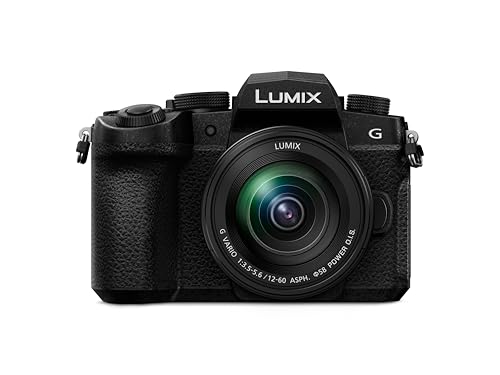
Panasonic LUMIX G97
Best for: carrying one compact kit that covers family stills in the morning and a short video project after lunch, with a versatile zoom already mounted
Not suited for: building a lens collection around a different mount, since every future lens purchase here follows the Micro Four Thirds standard
- System: Micro Four Thirds mirrorless, described in the listing as a compact hybrid camera
- Lens included: LUMIX G Vario 12-60mm f/3.5-5.6
- Positioning: designed for content creators in photo and video, per the listing title
- Model code: DC-G97MK9
- Further specifications: Not stated in the listing title — verify with the manufacturer documentation
The G97 makes its case through the lens bolted to the front of the kit. A 12-60mm zoom spans the range most everyday photography actually uses, from room-width interiors at the wide end to head-and-shoulders portraits at the long end, and that coverage means the camera leaves the shop ready for real work rather than ready for a second purchase. For a compact body, that completeness is the whole argument: one box, one battery to charge, one lens to learn.
Panasonic positions the G97 for creators working across photo and video, and the hybrid framing shows in how naturally the body suits mixed days. A school concert, a product shot for a small shop, a walking tour filmed in short clips between stills — the camera treats those as one assignment instead of two. Photographers stepping up from a phone will feel the jump in control immediately, while the size stays close enough to phone-era habits that the camera actually gets carried.
The limits are the limits of the format. Micro Four Thirds glass keeps everything small, yet the same mount decision shapes low-light character and depth of field for as long as the system is owned. Within those boundaries the G97 is a coherent, finished kit rather than a starter fragment, and that coherence is rarer in this price-conscious corner of the market than spec sheets suggest.
A month with the G97 teaches its quiet strength: consistency. The zoom range means the lens rarely comes off, which keeps the sensor clean, the bag simple and the photographer’s attention on subjects rather than equipment decisions. Families notice it first — the camera is simply there, charged and ready, at the school gate and the Sunday table alike. That presence, repeated daily, produces more good photographs than any burst rate, and it is why balanced hybrid kits like this one quietly outsell the exotic bodies that dominate forum arguments. There is also a teaching dividend. A teenager handed the G97 with its zoom mounted can learn framing, exposure and video basics on one forgiving instrument, and the files will survive the learning curve with dignity. Cameras that serve two generations of a household earn their shelf space twice, and balanced kits do it best.
Strengths
- Kit zoom covers wide interiors through short telephoto portraits without a lens change
- Hybrid photo and video positioning suits mixed creator days in one body
- Micro Four Thirds mount keeps the whole outfit small enough for daily carry
Trade-offs
- Committing to Micro Four Thirds glass closes the door on full frame lenses later
- A variable-aperture kit zoom asks more of the sensor as evening light fades
- Creators wanting a body-only discount get no such option in this listing
If the one-kit idea appeals, the G97 listing lays out the exact bundle contents, and you can check price on Amazon once the 12-60mm range matches the way you already shoot.

Panasonic LUMIX G100
Best for: filming yourself at arm’s length or on a small tripod, where the tracking microphone and compact 12-32mm kit keep the rig simple
Not suited for: handholding long telephoto lenses for distant wildlife, because the bundled zoom is a wide-to-normal lens and the body favours compact glass
- System: Micro Four Thirds interchangeable lens system
- Video: 4K, as stated in the listing title
- Audio: built-in microphone with tracking
- Stabilisation: 5-axis hybrid I.S.
- Lens included: 12-32mm
- Model code: DC-G100DKK9, black finish
- Further specifications: Not stated in the listing title — verify with the manufacturer documentation
Most cameras treat audio as an afterthought; the G100 builds its identity around it. A built-in microphone with tracking aims to keep a speaking voice clear as the presenter moves, which is the single most common failure in solo creator footage. Pair that with a body small enough to perch on a mini tripod beside a laptop, and the camera becomes a desk-and-daypack filming tool rather than a shrunken stills camera with video bolted on.
The 12-32mm kit lens reinforces the brief. Its range suits rooms, desks, market stalls and street corners — the geography of vlogging and everyday documentation — while staying short enough that the camera balances on small supports without tipping. Five-axis hybrid stabilisation steadies walking shots and handheld stills, softening the jitter that gives beginner footage away. Stills remain part of the deal, with the full Micro Four Thirds lens catalogue available when a faster prime joins the bag.
Choose the G100 with clear eyes about its centre of gravity. Photographers who rarely record video pay for a microphone system they will seldom use, and the compact kit lens will not isolate subjects the way a fast prime can. As a creator’s first interchangeable-lens camera, though, the priorities are correctly ordered: sound, size and simplicity first, expansion later.
Desk creators will appreciate how the G100 rethinks small mercies: a body light enough for the smallest tripods, a screen-and-microphone partnership aimed at a speaker in frame, and a kit lens that keeps a home office looking spacious rather than cramped. Filming a tutorial at midnight, the tracking audio follows a presenter who turns to a whiteboard and back without the voice falling apart. Those are production details, and they compound across a year of weekly videos into a channel that sounds grown-up long before its subscriber count agrees. Battery discipline suits the G100’s style of work: short clips, stills between, long pauses while a script is rewritten. Creators who film in bursts will find the rhythm natural, and a spare battery in the desk drawer completes the setup more honestly than any accessory with a logo. Small cameras reward small systems thinking.
Strengths
- Tracking built-in microphone tackles the most common solo-video weakness
- Compact 12-32mm kit keeps small tripods and gimbals balanced
- 5-axis hybrid stabilisation helps both walking footage and handheld stills
Trade-offs
- Video-leaning design gives stills specialists features they may never touch
- Kit zoom range ends before true telephoto territory begins
- Audio tracking helps a presenter, not a distant stage or ceremony
Creators who record their own voice daily should read the G100’s microphone description closely on the product page, then check price on Amazon against the cost of a separate camera-plus-microphone rig.

Panasonic LUMIX S9
Best for: travelling light while keeping a full frame sensor, with the 18-40mm lens covering city streets, interiors and social-ready clips
Not suited for: treating compactness as the only priority, because full frame lenses beyond the kit grow larger than Micro Four Thirds equivalents
- Sensor: full frame, per the listing title
- Design: compact mirrorless travel camera
- Lens included: 18-40mm
- Positioning: social media and travel, per the listing
- Finish: green, model code DC-S9NG9
- Further specifications: Not stated in the listing title — verify with the manufacturer documentation
The S9 exists to settle an argument travellers keep having with themselves: full frame files or a bag that closes without a fight. Panasonic’s answer is a compact full frame body paired with a modest 18-40mm zoom, a combination aimed squarely at social media and travel work. The sensor brings the shallow depth and low-light character that smaller formats chase, while the body stays closer to compact-camera manners than to professional-brick proportions.
That 18-40mm range deserves a second look. It favours the wide, environmental style that travel feeds reward — hotel rooms, old-town lanes, markets, viewpoints with the landscape left in frame — over compressed telephoto detail. Paired with the right in-camera colour approach, the kit encourages shooting finished-looking images on the move rather than stockpiling files for heavy editing at home. The green finish signals the intent: this is a camera meant to be seen in hand, not hidden in a kit bag.
Full frame ownership still carries full frame consequences. Lenses beyond the kit cost more and weigh more, and the compact body philosophy works best when the lens collection stays disciplined. Travellers who embrace that discipline get the sensor they wanted without surrendering the carry-everywhere habit that makes travel photography happen at all.
The S9 also changes how a travel day is planned. Knowing the files will carry a full frame look encourages a slower itinerary: fewer viewpoints, longer stays, photographs made at the edges of the day when the light earns the sensor. Its compact zoom keeps the camera welcome in cafés and galleries where a professional-looking rig invites questions, and that social invisibility is a creative tool. Travellers who shoot for the feed and the wall in equal measure will find the compromise unusually well judged. Street photographers should note what the S9’s styling does to a scene: a green compact full frame reads as a holiday camera, and subjects relax accordingly. That camouflage, plus the wide kit zoom’s environmental framing, produces candid travel frames that a professional-looking rig would have announced and destroyed. Discretion is a specification too, and this body is fluent in it.
Strengths
- Full frame sensor inside a genuinely compact travel body
- 18-40mm kit suits wide, environmental travel storytelling
- Social-first positioning matches how travel images are actually shared
Trade-offs
- Future full frame lenses outgrow the compact promise quickly
- Kit zoom range stops short of portraits at a distance and wildlife
- Colour finish and styling will not suit every taste or occasion
The green S9 kit is listed with its 18-40mm lens included, so travellers can check price on Amazon and judge the full frame premium against the Micro Four Thirds kits above it.

Panasonic LUMIX G9II
Best for: fast-moving subjects and demanding stills work where phase hybrid autofocus, a 25.2 megapixel sensor and strong stabilisation all pull together
Not suited for: starting from zero with no lenses in hand, since this body-only listing leaves the first lens as a separate, unavoidable purchase
- Sensor: 25.2 megapixel, per the listing title
- Autofocus: phase hybrid AF
- Stabilisation: described in the listing as powerful image stabilization
- Positioning: flagship model of the G series, high-speed performance and mobility
- Configuration: body only, model code DC-G9M2BODY
- Further specifications: Not stated in the listing title — verify with the manufacturer documentation
Flagship is a word marketing departments spend freely, but the G9II’s listing spends it on specifics: a 25.2 megapixel sensor, phase hybrid autofocus and stabilisation the title calls powerful, wrapped in a body that still talks about mobility. That combination targets the photographer whose subjects refuse to cooperate — birds lifting off a marsh, children crossing a football pitch, street scenes that assemble and dissolve in seconds.
Phase hybrid autofocus is the headline change over the older G9 generation. Phase detection brings decisive subject acquisition to a system long praised for everything except continuous focus confidence, and it changes which assignments a Micro Four Thirds body can accept without apology. The resolution step to 25.2 megapixels adds cropping room for wildlife work, where reach is often bought with pixels when a longer lens stays home.
None of that flagship intent makes the body-only format painless. The first lens is a real second decision, and the system rewards owners who already hold Micro Four Thirds glass or plan a deliberate two-lens kit. For those owners, the G9II is the compact system’s ceiling: professional pace without professional bulk.
Working photographers will read the G9II’s specification as a promise about missed shots: fewer of them. Phase hybrid focus, a responsive flagship body and stabilisation that trusts handheld work at dusk combine into a camera that accepts assignments its predecessors would have declined politely. Birders walking a reserve at dawn, where the subject is a silhouette for three seconds and gone, understand exactly what that confidence is worth, and why a flagship Micro Four Thirds body remains a rational professional purchase rather than a nostalgic one. Consider also the lenses waiting for this body: Micro Four Thirds telephotos that would be furniture in full frame become hand-holdable partners here, which is the system’s founding bargain. The G9II’s focus and stabilisation finally let that bargain perform at professional pace, and wildlife photographers working from hides and small boats feel the difference in their shoulders by lunchtime.
Strengths
- Phase hybrid autofocus answers the classic Micro Four Thirds objection
- 25.2 megapixel sensor leaves useful cropping room for distant subjects
- Flagship stabilisation supports handheld work in poor light
Trade-offs
- Body-only listing means the lens budget starts immediately after checkout
- Flagship capability is wasted on slow, tripod-bound subjects alone
- Sits at the top of the range, so value hunters should compare the G9 first
Owners of Micro Four Thirds lenses can treat the G9II as a body upgrade and check price on Amazon for the DC-G9M2BODY listing without paying for a duplicate kit lens.

Panasonic LUMIX G9
Best for: landscape and still-life photographers who can exploit the 80 megapixel high-resolution mode from a tripod, plus everyday 20.3 megapixel shooting
Not suited for: relying on continuous autofocus for erratic action as the main brief, where the newer G9II generation was built to answer
- Sensor: 20.3 megapixel
- Special mode: 80 megapixel high-resolution mode
- Video: 4K, as stated in the listing title
- Stabilisation: 5-axis Dual I.S. 2.0
- Display: 3-inch LCD
- Model code: DC-G9, black finish
- Further specifications: Not stated in the listing title — verify with the manufacturer documentation
The original G9 remains the thinking photographer’s bargain in this line-up. Its 20.3 megapixel sensor handles everyday work with ease, while the 80 megapixel high-resolution mode — a multi-shot technique that shifts the sensor between exposures — serves landscapes, architecture and product stills where the subject holds still and detail is the entire point. Few cameras at any size offer that kind of split personality.
Five-axis Dual I.S. 2.0 stabilisation and a 3-inch LCD round out a body designed when Panasonic’s stills ambitions peaked, and the handling reflects that era’s seriousness. Beside the G9II, the differences are honest ones: fewer megapixels, no phase hybrid autofocus in the title, and a high-resolution party trick the newer flagship does not headline. Photographers whose work is deliberate rather than frantic lose remarkably little by choosing the elder body.
Age brings the usual homework. Batteries, firmware habits and accessory ecosystems belong to an earlier product cycle, and action photographers should weigh the autofocus generation gap carefully. For tripod-led work, travel stills and patient craft, the G9’s value logic is difficult to argue with.
Time has been kind to the G9’s reputation because its strengths were never fashionable ones: a serious grip, dependable stabilisation and that high-resolution mode waiting for the landscape days. Owners describe a camera that feels engineered rather than marketed, and the second-hand and remaining-stock market reflects the affection. For the photographer whose calendar holds more dawns on tripods than afternoons at racetracks, the generational gap to the G9II narrows to a single feature — autofocus style — and the saving can fund the tripod those dawns deserve. The G9 also makes an unusually good second body for G9II owners and a first body for their partners, sharing lenses, batteries habits and handling logic across the pair. Mixed-generation kits are how real households actually shoot, whatever the launch photographs suggest, and this generation gap is small enough to bridge without friction.
Strengths
- 80 megapixel high-resolution mode serves landscapes and product stills
- Dual I.S. 2.0 stabilisation steadies handheld shooting across the range
- Mature body with serious handling at a previous-generation position
Trade-offs
- Autofocus generation predates the phase hybrid system of the G9II
- 20.3 megapixels leave less cropping headroom for distant subjects
- High-resolution mode demands a still subject and a stable support
Landscape shooters curious about that high-resolution mode can review the DC-G9 listing details and check price on Amazon before deciding whether the newer flagship earns its premium.
Panasonic LUMIX LX100 II
Best for: a pocketable compact with a fixed lens, covered here so the compact Lumix picture stays complete
Not suited for: swapping lenses for different assignments, because the lens on this camera is fixed and cannot be removed
- Format: fixed-lens compact camera — not an interchangeable-lens mirrorless body
- Coverage: prose-only guidance in this guide; no Amazon link is attached
- Further specifications: Not stated in the listing title — verify with the manufacturer documentation
Plainly stated, the LX100 II does not belong to the interchangeable-lens family that fills the rest of this page: its lens is fixed to the body, and that single fact is why it appears as prose-only guidance with no purchase link and no product image. Including it silently among mirrorless bodies would mislabel the camera; excluding it entirely would ignore the model many compact-Lumix searches are actually about.
As a fixed-lens compact, its appeal is focus. One lens, one body, no mount decisions, no second-lens budget, no bag Tetris before leaving the house. Photographers who know they live at one focal range often produce their best work with exactly that constraint, and a camera that is always ready beats a system that is theoretically superior but frequently left behind.
Verify any LX100 II listing personally before buying anywhere: confirm the seller, the condition description and the exact model name in the listing text, since this guide deliberately attaches no link. Treat second-hand examples with the same sensor, screen and control checks described in the how-to section below.
There is also a discipline argument for the fixed-lens life that deserves airtime. Photographers raised on one focal length develop a recognisable style faster, because the frame becomes a constant and the world becomes the variable. The LX100 II belongs to that school entirely: no lens roadmap, no mount loyalty, no upgrade itch beyond a spare battery. Readers who recognise their own happiest shooting pattern in that description should not let its prose-only status here read as a dismissal; it is a categorisation, and the camera’s following exists for good reasons. Second-hand hunters should apply the used-buying discipline to this model with particular care, since no linked listing is provided here: meet the camera’s controls, check the lens operation through its range, and photograph a plain surface to judge the sensor. A fixed-lens compact lives or dies by the health of the one lens it owns, so that inspection is the whole negotiation.
Strengths
- Fixed-lens simplicity removes mount and lens-budget decisions entirely
- Compact format encourages genuine everyday carry
- A single-lens constraint can sharpen composition habits
Trade-offs
- The lens cannot be changed, so one focal range must serve every subject
- No verified listing is linked here, so sourcing takes extra care
- It cannot grow into a system the way the five mirrorless bodies can
This model is covered as guidance only, with no link attached: search the exact full model name, read the condition and contents lines of any listing you find, and confirm the camera is the fixed-lens LX100 II before paying.
Side by Side: The Six Compact Lumix Options
The table repeats the quick view with the generational pair adjacent, so the G9 and G9II can be compared line by line before the buying guide widens the lens.
| Pick | Best for | Sensor / System | Lens in the Box | Check |
|---|---|---|---|---|
| Panasonic LUMIX G97 | Hybrid stills and video in a compact kit | Micro Four Thirds | LUMIX G Vario 12-60mm f/3.5-5.6 included | Check price on Amazon |
| Panasonic LUMIX G100 | Solo creators filming themselves | Micro Four Thirds | 12-32mm lens included | Check price on Amazon |
| Panasonic LUMIX S9 | Full frame travel and social content | Full frame | 18-40mm lens included | Check price on Amazon |
| Panasonic LUMIX G9II | Demanding stills work and fast action | Micro Four Thirds, 25.2MP | Body only in this listing | Check price on Amazon |
| Panasonic LUMIX G9 | High-resolution stills on a mature body | Micro Four Thirds, 20.3MP | Body only in this listing | Check price on Amazon |
| Panasonic LUMIX LX100 II | Fixed-lens compact guidance | Fixed-lens compact | Lens cannot be changed | Guidance only |
How to Choose a Compact Lumix
Four questions settle most compact Lumix decisions: which sensor family, which format in the box, how the camera will actually be carried, and whether video shares the brief with stills.
Micro Four Thirds or full frame: which sensor family fits the bag?
Micro Four Thirds wins the arithmetic of travel: bodies stay small and, crucially, lenses stay small, so a two-lens kit disappears into a daypack. Full frame in the S9 buys shallower depth of field and a particular low-light look, paid for in lens size the moment the kit grows. Decide by imagining the whole system on a train platform, not the body alone on a desk. Photographers who mostly share online will rarely feel the smaller sensor as a ceiling, while those printing large or cropping hard have a genuine reason to step up.
Kit lens or body only: what arrives in the box?
A kit lens makes the camera complete on day one and usually costs less than the same lens bought later, which suits first-time mirrorless owners. Body-only listings reward existing lens owners and deliberate choosers who already know their focal lengths. The trap is comparing a body-only figure against a kit figure as if they were the same purchase. Add the price of a first lens to every body-only option before judging value, and check whether the bundled zoom’s range matches the subjects you photograph most.
Style influences handling more than most spec sheets admit, and readers drawn to dials and retro controls can compare this modern line-up with vintage-styled mirrorless cameras before settling on a body.
How small is small enough for daily carry?
Compactness only counts at the size you will actually carry. A body that fits a coat pocket changes behaviour; one that needs a dedicated bag changes plans. Weigh the camera with its kit lens mounted, strap and battery included, and compare that against the bag you already own rather than a bag you might buy. The G100 kit and the S9 kit live at the easy-carry end of this page, while the G9 bodies ask for a small sling and reward the commitment with capability.
Stills first, video first, or a true hybrid day?
Name the split honestly. A creator filming talking-head clips daily should weight the G100’s tracking microphone heavily, because retakes cost more time than any spec gap. A stills-led photographer shooting occasional clips is better served by the G97’s versatile zoom or the G9 line’s resolution tools. Hybrid shooters who genuinely alternate all day sit between those poles, and for them stabilisation quality and lens range matter more than any single headline feature.
What should the second lens be?
Evidence, not advertising, should answer. If the frustration log complains about indoor light and busy backgrounds, a fast prime transforms more photographs than any other single purchase in this system. If it complains about distance — stages, sports, shy wildlife — a compact telephoto zoom is the honest fix. If the log is empty after a season, the correct second lens is none at all, and the money belongs to a trip taken with the kit you already understand.
Building a Two-Lens Compact Lumix Kit
The smartest compact systems grow by one deliberate lens, not by a shopping spree. Start with the kit zoom for a full season and keep notes on where it frustrates: too slow indoors, too short at the zoo, too wide for portraits. That frustration log, not advertising, should choose the second lens. A fast prime answers indoor complaints, a compact telephoto answers reach complaints, and either keeps the system small enough to remain a compact system.
Families are the toughest compact-camera test of all, which is why the autofocus discussion continues in our roundup of mirrorless cameras that keep up with children and their unpredictable movement.
Carry discipline protects the investment. Two lenses plus a body should still fit the bag that made the camera appealing, and every addition should displace something rather than accumulate. Photographers who protect that rule keep the joy of the format for years; those who let the kit sprawl end up owning a large system with small-sensor compromises, which is the one outcome nobody intended.
Getting Sharp Handheld Shots From Small Bodies
Small bodies invite casual technique, and stabilisation forgives much of it, but sharpness still begins with stance and shutter discipline. Brace elbows against the body, squeeze rather than jab the shutter, and let the stabilisation settle for a breath before firing. Indoors, raise the shutter speed one step beyond the instinctive setting; a slightly noisier sharp frame always beats a clean blurred one.
Review at full magnification occasionally, not constantly. A weekly check of a few frames at one hundred percent teaches which shutter speeds your own hands can hold with each lens, and that personal number is worth more than any generic rule printed in a manual.
What Compact Really Costs: The Whole Outfit Audit
Before buying any body on this page, audit the outfit honestly on paper: body, the lens you will actually mount most days, two batteries, cards, a strap you like and the bag it must fit. That list, priced and weighed as one purchase, is the compact system you are choosing — and it regularly reverses rankings made from body-only figures. A heavier body with a featherweight kit lens can travel lighter than a featherweight body behind a professional zoom.
The audit also exposes hidden subscriptions. Every mount carries its own prices for the fast prime, the travel zoom and the replacement battery, and those figures differ enough between Micro Four Thirds and full frame to matter across a five-year ownership. Compact Lumix ownership is pleasurable precisely because the Micro Four Thirds column of that audit stays modest; the S9’s column is the deliberate exception, bought for the sensor and justified by the files.
A First Month With a Compact Lumix: Habits That Stick
Week one belongs to the kit lens and the automatic modes, unashamedly: learn what the camera chooses, then start overruling it one decision at a time. Week two adds aperture control for portraits and gatherings. Week three is for video — short, deliberate clips with attention to the audio the body captures. Week four reviews the month’s files at full size and writes the frustration log that the buying guide’s second-lens advice depends on.
Two habits separate owners who grow from owners who stall. The first is carrying the camera on ordinary days, when nothing is scheduled and everything is photographable. The second is deleting bravely: compact cameras invite volume, and an archive pruned to its strongest frames teaches composition faster than any tutorial, because the pattern of your own misses becomes impossible to ignore.
Video Habits for Stills Photographers Crossing Over
Compact Lumix bodies invite stills photographers into video gently, and three habits make the crossing painless. First, shoot clips in complete thoughts — ten seconds of a scene with a beginning and an end beats a minute of wandering. Second, listen while filming; the sound you ignore on the day becomes the flaw you cannot remove in the edit. Third, stabilise with your body before your settings, because a braced stance improves footage more than any menu buried three levels deep.
Edit the same week, while the day is still memorable, and keep the clips beside the stills in one archive rather than in a forgotten video folder. Hybrid cameras produce hybrid memories, and the families and clients who receive both together consistently value the combination more than either medium alone. That is the quiet business case behind every hybrid body on this page.
Carrying the Kit: Bags, Straps and the Friction Audit
Every compact system eventually faces the friction audit: how many small annoyances stand between the photographer and a photograph? A bag whose camera pocket opens the wrong way, a strap that tangles with a coat, a lens cap that lives in a different pocket each day — each friction is trivial alone and decisive together, because photographs are lost to accumulated hesitation far more often than to missing specifications.
Solve the audit physically. Choose the smallest bag that holds the body with its working lens mounted, because a camera that must be assembled is a camera that stays home. Settle the strap question for a full week per candidate rather than an afternoon, and store the whole outfit in one place, charged, so that leaving the house with it costs less thought than leaving without it. Compact cameras reward exactly this domestic engineering.
Renting the Decision: A Weekend With Borrowed Glass
Before the second-lens money moves, borrow the candidate for a weekend — from a friend, a rental shelf or a generous shop — and shoot your ordinary life through it rather than a test chart. Focal lengths reveal their true cost in doorways and at dinner tables, not in specifications, and a prime that delights at a wedding may irritate at breakfast. The compact system’s small lenses make such trials cheap, and the habit of trying before committing is worth more than the lens eventually chosen.
Apply the same weekend logic retrospectively to the body itself whenever a shop allows handling time. Five minutes of dials, weight and menu logic will teach your hands what a month of reviews cannot, and compact cameras, whose entire promise is physical pleasure in daily use, deserve that physical interview before the paperwork.
A Note on Colour: Shooting Finished Photographs
Compact cameras live close to the share button, so their colour deserves a deliberate decision in the first week: shoot a familiar scene — your street, your kitchen, a face you know — in each of the body’s colour styles and live with the results on a big screen before choosing a default. The style that flatters your actual life, rather than a test chart, becomes the camera’s signature, and photographs across the years gain the consistency that makes an archive feel authored.
Revisit the choice each season. Winter light and summer light flatter different renderings, and the compact camera that travels everywhere will meet both; a default chosen in January and never questioned can quietly dull a July. The dial-turn of a colour decision is small, and its compound interest across thousands of frames is anything but.
Compact Lumix Buying Mistakes
Judging the body and forgetting the lenses
The body is the smallest part of a system’s size and cost over time. Price and weigh the two lenses you are most likely to add before choosing a mount, because that total — not the launch-day body figure — is the real purchase.
Treating a fixed-lens compact as a mirrorless body
The LX100 II shows why labels matter: a fixed lens cannot be swapped, upgraded or replaced. Buying any compact under the assumption that lenses come later leads to an expensive misunderstanding, so read the format line of every listing twice.
Buying the flagship for a beginner’s workload
The G9II’s speed and resolution serve demanding work, but a new photographer’s bottleneck is practice, not hardware. A simpler kit that gets carried daily teaches faster than a flagship that feels too precious to take out.
Ignoring the microphone question for video
Built-in audio decides whether solo footage is usable or needs a rescue edit. Creators should rank the G100’s tracking microphone as a core feature, not a footnote, and stills-only shooters should not pay for audio hardware they will never switch on.
Skipping the second-hand check on older bodies
Previous-generation bodies like the G9 reward a careful inspection: shutter behaviour, screen condition, battery health and mount contacts all deserve a look before money moves, whether the seller is a shop or a stranger.
Over-accessorising a compact system
Cages, grips and rigs can quietly convert a compact camera into the large system it replaced. Add accessories only when a real shoot exposed the need, and remove them when the need passes, so the camera keeps the size that made it worth buying.
Storing the camera uncharged
A compact camera’s whole purpose is readiness, and an uncharged body in a drawer is furniture. Build the Sunday-evening charge into the week’s rhythm, keep the working lens mounted and the card formatted after each transfer, and the camera will be a camera again on Monday morning.
Frequently Asked Questions
Is the LUMIX S9 really full frame?
Yes. Its listing title describes a full frame mirrorless camera, and it is the only full frame body among these six picks. The other interchangeable-lens models here use the Micro Four Thirds system, while the LX100 II is a fixed-lens compact covered for guidance only.
What separates the G9II from the G9?
Generation and focus. The G9II lists a 25.2 megapixel sensor with phase hybrid autofocus and flagship positioning, while the G9 lists 20.3 megapixels, an 80 megapixel high-resolution mode and Dual I.S. 2.0 stabilisation. Deliberate, tripod-led work narrows the gap; fast action widens it.
Which compact Lumix suits a first-time creator?
The G100 is built for that reader: a 12-32mm kit lens, 4K video and a built-in microphone with tracking address the exact problems solo creators hit first. The G97 is the alternative when a longer, more versatile zoom matters more than the microphone system.
Can lenses be shared between these cameras?
The Micro Four Thirds bodies — G97, G100, G9II and G9 — share one lens mount family, so glass bought for one fits the others. The full frame S9 belongs to a different lens family, and the LX100 II accepts no interchangeable lenses at all.
Why is there no link on the LX100 II?
Because its lens is fixed, it is not an interchangeable-lens mirrorless camera, so it is covered as guidance without a purchase link or product image. Any listing found elsewhere should be checked carefully for the exact model name and condition before buying.
Do kit lenses limit image quality?
A kit zoom limits aperture and sometimes reach, not the ability to make strong photographs. Most photographers outgrow a kit lens’s speed in low light before they outgrow its sharpness, which is why the second-lens plan in the how-to section starts from your own frustration log.
Are compact Lumix cameras good for beginners?
The format suits beginners unusually well: complete kits like the G97 and G100 remove the lens question, the bodies stay small enough to carry while habits form, and the Micro Four Thirds lens catalogue stays affordable as skills grow. The G9 line serves beginners less directly, since its flagship handling assumes intent, but even there the automatic modes provide a safe starting floor.
How long do these cameras stay relevant?
Mirrorless bodies age gracefully because their sensors and mounts stabilise: the G9 remains a working recommendation years after launch, which is the pattern to expect. Relevance ends through support — batteries, firmware, service — rather than through image quality, so buying into a mount with a deep lens catalogue is the practical longevity strategy.
Which compact Lumix is best for travel?
The S9 for full frame files in a compact travel kit, the G100 for the lightest creator-friendly outfit, and the G97 when one zoom must cover an entire trip without a lens change. The G9 pair travel beautifully too, but ask for a dedicated small bag rather than a coat pocket, and reward the commitment with the strongest stills tools here.
Do compact Lumix bodies work with adapted lenses?
Adaptation depends on the mount and the adapter in question, and the listings here make no adaptation claims, so the manufacturer documentation and the adapter maker’s own compatibility notes are the authorities. As a rule, native lenses keep every electronic feature the body offers, while adapted glass trades some of that integration for character — a trade worth making knowingly, never accidentally.
Is one compact Lumix enough for a whole household?
For most households, yes — a complete kit like the G97 or G100 becomes the shared instrument, passed between partners and older children with the lens already mounted and the modes already friendly. Households with two serious photographers eventually want a body each, and the generational pairing of a G9 beside a G9II shows how gracefully this system shares lenses across that divide.
Final Recommendation
For most readers, the G97 is the compact Lumix to buy first: a complete kit, a genuinely useful zoom range and hybrid manners that cover family life, travel and creator side-projects without a second purchase. Creators who film themselves should step sideways to the G100 for its tracking microphone, and travellers chasing the full frame look should step up to the S9 with eyes open about lens size.
Photographers with demanding subjects belong with the G9II, while patient landscape and still-life shooters can save with the G9 and its high-resolution mode. The LX100 II remains a fine fixed-lens compact to hunt down carefully, on the clear understanding that its lens never comes off. Small cameras reward the people who carry them, so choose the body your bag, your hands and your habits will actually take out the door tomorrow morning.
One last filter before checkout: hold the decision up against next month, not next year. The right compact Lumix is the one whose kit fits the bag you own, whose lens range covers the subjects already on your camera roll, and whose handling makes you slower to put it down. Get that match right and the specifications will take care of themselves for years.


