What's inside
- Where to Buy
- Key Takeaways
- Quick Picks
- How the picks were chosen
- Comparison Table
- How do you choose a stabilized DSLR or mirrorless camera?
- How in-body stabilization works, and where it stops working
- Stabilized bodies and the lenses you already own
- Common Mistakes
- Frequently Asked Questions
- Final Recommendation
As an Amazon Associate I earn from qualifying purchases. This post may contain affiliate links at no extra cost to you.
[SITE_DOMAIN] is reader-supported. When you buy through links on our site, we may earn an affiliate commission at no extra cost to you. Prices and availability change; check the Amazon listing for the current details.
Where to Buy
Canon EOS R8 Mark II Body — Check price on Amazon
Sony a7 V Body — Check price on Amazon
Nikon Z5 II 24-50 Kit — Check price on Amazon
Fujifilm X-T50 with 15-45mm Lens — Check price on Amazon
OM System OM-5 Mark II — Check price on Amazon
Pentax K-3 Mark III Silver — Check price on Amazon
Three listings are body-only, two are kits with a zoom included, and the OM-5 Mark II is a body listing in silver. Each review states its configuration and its stabilization evidence plainly.
The best dslr or mirrorless cameras with image stabilization share one defining mechanism — the sensor itself moves to counteract your hands — and this guide spans both traditions that built cameras around it. Five of the six bodies are mirrorless, from Canon’s EOS R8 Mark II, whose title claims in-body image stabilization in the lightest full-frame EOS body, to the OM System OM-5 Mark II with its stated 5-axis system and IP53 sealing. The sixth is a DSLR, the Pentax K-3 Mark III, included on the same honest basis as its predecessors elsewhere in this site’s coverage: Pentax’s in-body 5-axis shake reduction is sensor-shift stabilization in the fullest sense, stated in its title alongside a weather resistant magnesium alloy body and a 1.05x optical viewfinder — and a guide that excluded the DSLR tradition’s best stabilized body on a label technicality would fail the reader it claims to serve.
Stabilization claims are handled here with the strictness the feature demands. Three titles state stabilization outright: Canon’s in-body claim, Sony’s stated 5-axis in-body stabilization on the a7 V, and the OM-5 Mark II’s stated 5-axis system. The Pentax title states in-body 5-axis shake reduction in so many words. Two titles — the Nikon Z5 II kit and the Fujifilm X-T50 kit, whose lens carries OIS in its name — do not state in-body stabilization for the body itself, and their reviews say so plainly, treating those bodies’ stabilization position as a verification item rather than an assumption. That distinction, between bodies documented as stabilized and bodies whose documentation must be checked, is the most important sorting in this guide.
Why does in-body stabilization matter enough to organise a guide around? Because it stabilizes every lens you own — the fast prime with no stabilization of its own, the vintage glass, the adapted favourite — and because it compounds: a stabilized body behind a stabilized lens, where the makers coordinate the two, steadies shots neither could steady alone. Handheld low-light stills, walking video, long-lens work in wind — the feature touches all of it, which is why it has become a deciding specification for serious buyers. Readers arriving from the budget end of this question will find our guide to mirrorless Cameras for Advanced Photography a useful map of where these systems lead at their flagship tiers.
Key Takeaways
- Four titles state in-body stabilization outright: Canon R8 Mark II, Sony a7 V (5-axis), OM-5 Mark II (5-axis) and Pentax K-3 Mark III (5-axis shake reduction).
- The Canon EOS R8 Mark II adds stated 40 FPS stills and 4K/60p video, claiming the lightest full-frame EOS body with IBIS.
- The Sony a7 V title states AI autofocus at 30fps alongside its 5-axis in-body stabilization.
- The OM-5 Mark II states IP53 weather sealing with its 5-axis system — the only formal sealing rating in the set.
- The Nikon Z5 II and Fujifilm X-T50 kits state no in-body stabilization for the body; the Fujifilm’s kit lens carries OIS, and both bodies’ stabilization must be verified.
- The Pentax K-3 Mark III is a DSLR whose sensor-shift shake reduction is genuine in-body stabilization, in a weather resistant magnesium alloy body.
Quick Picks
| Pick | Badge | Why it made the cut |
|---|---|---|
| Canon EOS R8 Mark II Body | Lightest full-frame EOS with IBIS | In-body stabilization stated, with 40 FPS stills and 4K/60p video in a travel-and-portrait pitched body. |
| Sony a7 V Body | 5-axis IBIS with AI autofocus | Full-frame body stating 5-axis in-body stabilization and AI AF at 30fps. |
| Nikon Z5 II 24-50 Kit | Full-frame kit, verify IBIS | 24.5MP full-frame body with a 24-50mm zoom included; body stabilization not stated in the title. |
| Fujifilm X-T50 with 15-45mm Lens | Kit with an OIS lens | APS-C body with the XC 15-45mm OIS power zoom included; body stabilization not stated in the title. |
| OM System OM-5 Mark II | Sealed 5-axis compact body | 20.4MP Four Thirds body stating 5-axis stabilization and IP53 weather sealing in silver. |
| Pentax K-3 Mark III Silver | The stabilized DSLR flagship | APS-C DSLR stating in-body 5-axis shake reduction, 12fps and a weather resistant magnesium body. |
How the picks were chosen
The selection began with the mechanism, not the marketing. A body belongs in this guide if in-body stabilization is central to its documented proposition — stated in its title, as four of these are — or if it represents an important case the reader must understand, as the two kits do: bodies sold into a stabilization-minded search whose titles, read carefully, document stabilization in the lens rather than the body, or do not document it at all. Including those two, honestly labelled, teaches the exact reading skill this category demands, because the wider market is full of listings whose stabilization language blurs the same line.
Both traditions were represented deliberately. The mirrorless bodies show the feature’s modern mainstream: stated systems from Canon, Sony and OM System across full-frame, and Four Thirds formats. The Pentax shows the DSLR tradition’s mature answer — sensor-shift stabilization refined across generations inside a flagship APS-C body with an optical viewfinder, a combination no mirrorless body replicates. A reader choosing between traditions deserves both presented at their best, with the evidence graded openly.
Specifications beyond stabilization were used only where titles state them: Canon’s 40 FPS and 4K/60p, Sony’s 30fps AI autofocus, Nikon’s 24.5MP and 4K kit description, the OM-5’s 20.4MP and IP53 rating, Pentax’s 12fps and viewfinder figures. Where titles are silent — and several are silent about the very feature this guide is organised around — the spec boxes record the silence and the reviews direct the reader to the manufacturer documentation, because a stabilization purchase made on an assumed specification is the precise failure this guide exists to prevent.

Canon EOS R8 Mark II Body — lightest full-frame EOS with IBIS
Badge: Lightest full-frame EOS with IBIS
Spec box
- Format: Full-frame mirrorless
- Stabilization: In-body image stabilization, stated in the title
- Continuous shooting: 40 FPS stills
- Video: 4K/60p video
- Design claim: Lightest full-frame EOS camera with IBIS, per the listing title
- Positioning: Travel and portraits, per the listing title
- Body configuration: Body only
Canon’s title for the EOS R8 Mark II is a small masterpiece of positioning: the lightest full-frame EOS camera with in-body image stabilization, 40 FPS stills, 4K/60p video, pitched at travel and portraits. The headline claim answers the oldest objection to full-frame mirrorless — that stabilized full-frame bodies are heavy — by making lightness itself the feature, and for the stabilization-minded buyer it lands precisely: here is in-body stabilization, stated outright, in the full-frame EOS body that asks the least of your shoulder. A new listing like this one also carries a discipline note: its specifications are taken here strictly from its title, and buyers should confirm the full documented specification in Canon’s materials, since a Mark II generation’s details deserve verification rather than assumption from its predecessor.
The supporting figures widen the appeal beyond stabilization. Forty frames per second is a serious burst rate for a travel-and-portrait body — family action, street moments, wildlife opportunism on a trip — and 4K/60p video covers both standard delivery and smooth slow motion for travel films. Combined with in-body stabilization, which steadies every RF lens including the unstabilized fast primes portrait photographers love, the package describes a body designed to be carried daily and used for everything. That is a coherent philosophy: the camera that is present, stabilized and fast enough for the moment that actually happens.
Travel and portraits, the title’s own words, deserve a moment’s interpretation. Travel rewards the lightness claim and the stabilization — handheld evening streets, interiors where tripods are unwelcome, long days where the camera must not become the burden that ends the shooting. Portraits reward stabilization differently: slower shutter speeds at longer focal lengths, natural-light sittings without a forest of stands, and the freedom to mount fast, unstabilized primes and still shoot them at dusk. The R8 Mark II’s stated brief serves both practices from the same specification, which is rarer than it sounds.
The body-only configuration is the one structural cost: the first RF lens is a separate purchase, and the lightness promise should be honoured at the lens shelf with Canon’s compact RF options rather than spent on a heavy professional zoom. Buyers should also verify the documented stabilization rating and its behaviour with their intended lenses, since the title states the feature without a stop figure. On its documented terms — lightest full-frame EOS with IBIS, stated speed, stated video — this is the set’s most complete travel proposition on a full-frame sensor.
Strengths
- In-body stabilization is stated in the title, in the lightest full-frame EOS body Canon claims.
- 40 FPS stills and 4K/60p video are stated, covering action moments and travel filming.
- Full-frame rendering serves the travel and portrait work the title names.
Trade-offs
- A new listing whose full specification should be verified in Canon documentation beyond the title’s claims.
- The title states no stabilization stop figure, so rated performance needs checking.
- Body only, so the first RF lens adds to the total.
There is a generational point worth making about a Mark II at this position in a line. A second generation exists to correct the first: the handling complaints answered, the specification gaps closed, the role clarified. Buyers of a Mark II body are purchasing that correction process as much as the specification itself, and the title’s confidence — staking the claim on lightness with stabilization, the original concept sharpened — suggests Canon knows exactly which buyer this body serves. Verify the details, by all means; but the concept has already survived one full generation of owners.
Best for: travelling light pairs with stated in-body stabilization in the lightest full-frame EOS body.
Not suited for: a lens included cannot be assumed, since this listing is the body only.
Travel shooters can Check price on Amazon for the EOS R8 Mark II body and verify its documented stabilization rating alongside.
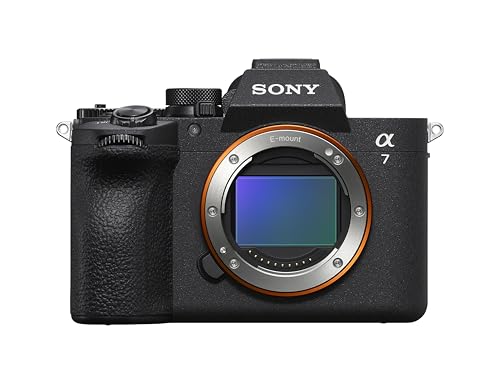
Sony a7 V Body — 5-axis IBIS with AI autofocus
Badge: 5-axis IBIS with AI autofocus
Spec box
- Format: Full-frame mirrorless
- Stabilization: 5-axis in-body stabilization, stated in the title
- Autofocus: AI autofocus
- Continuous shooting: 30fps, per the listing title
- Body configuration: Body only
- Sensor resolution: Not stated in the listing title – verify with the manufacturer documentation
Sony’s a7 V title pairs the two systems that decide modern hit rates: a full-frame mirrorless body with AI autofocus at 30fps and 5-axis in-body stabilization, body only. Read those claims together and their combined meaning emerges. Autofocus intelligence decides whether the subject is sharp in principle — the eye found, the moving subject tracked — while stabilization decides whether the photographer’s own movement lets that sharpness survive the exposure. A body that states both is addressing the two independent causes of unsharp photographs in one specification, and for working photographers whose keepers-per-hour is an economic figure, that pairing is the purchase.
The 5-axis designation, stated in the title, is the full form of in-body stabilization: compensation across pitch, yaw, roll and the two shift axes, applying to every E-mount lens mounted, including the fast primes and adapted glass that carry no stabilization of their own. Thirty frames per second, also stated, places the body in serious action territory for a generalist full-frame camera — sports sidelines, wildlife, events — where stabilization’s role shifts from enabling slow shutter speeds to steadying the view and the long lens between bursts. The AI autofocus wording signals subject-recognition intelligence; verify its specific modes in Sony’s documentation, since the title states the capability class rather than its menu.
The title withholds the sensor resolution, and this review records that plainly rather than borrowing a figure from the line’s reputation: resolution-led buyers should confirm the documented count in Sony’s materials before purchase. The same verification applies to the stabilization’s rated figure, which the title expresses as a 5-axis system without a stop number. These are the routine checks of a current-generation flagship-class purchase, and they do not weaken what the title does establish — format, stabilization system, autofocus class and burst rate, stated in one line.
As the generalist seat in Sony’s full-frame line, the a7 V addresses the hybrid middle of serious practice, and our Sony video coverage at sony Mirrorless Cameras for Video examines the same system’s moving-image side for readers whose work splits between stills and film. For the stabilization-first buyer, the a7 V’s case is direct: a stated 5-axis body system inside the deepest lens ecosystem in this guide, behind autofocus designed to make the sharpness the stabilization protects actually land on the subject.
Strengths
- 5-axis in-body stabilization is stated, covering every E-mount lens including unstabilized primes.
- AI autofocus at a stated 30fps addresses subject sharpness and burst work together.
- Full-frame format inside the deepest lens ecosystem in this set.
Trade-offs
- The title states no sensor resolution, so that figure requires verification in Sony documentation.
- No stabilization stop figure is stated, only the 5-axis system.
- Body only, with E-mount lenses a separate investment.
Consider the working day this pairing is really aimed at. A wedding, a news assignment, a commercial shoot: hundreds of frames in mixed light, many at shutter speeds and focal lengths where hands betray, all of them worthless if focus missed or shake smeared. Autofocus intelligence raises the ceiling of what can be attempted; stabilization raises the floor of what survives. Professionals buy floors before ceilings, because clients forgive an unattempted frame and never forgive a ruined one — and a title that states both systems is speaking that professional language fluently.
Best for: hybrid shooting pairs stated 5-axis stabilization with AI autofocus on a full-frame body.
Not suited for: a stated megapixel figure in the listing would settle more, since this title prints none.
Sony-system shooters can Check price on Amazon on the a7 V body and confirm its documented sensor specification in parallel.

Nikon Z5 II 24-50 Kit — full-frame kit, verify IBIS
Badge: Full-frame kit, verify IBIS
Spec box
- Format: Full-frame mirrorless
- Sensor resolution: 24.5MP
- Video: 4K camera, per the listing title
- Kit lens: 24-50mm zoom lens included
- Design: Compact, lightweight wide-angle to standard everyday zoom, per the listing title
- Stabilization: Not stated in the listing title – verify with the manufacturer documentation
The Nikon Z5 II kit requires this guide’s central distinction to be applied in the open. Its title describes a compact full-frame 24.5MP 4K camera with a lightweight 24-50mm wide-angle-to-standard everyday zoom — an attractive, complete full-frame kit — and it does not state in-body stabilization for the body. That silence is not an accusation; the Z system’s bodies are a stabilization-era design family, and Nikon’s documentation is exactly where this body’s stabilization specification should be confirmed. But a guide organised around in-body stabilization must grade evidence as it finds it, and on the evidence of this title, the Z5 II’s stabilization is a verification item, not a documented feature. Buyers should settle it in Nikon’s materials before purchase — it takes minutes, and it decides whether this kit belongs on a stabilization shortlist at all.
What the title does document deserves its own fair hearing. A 24.5MP full-frame sensor is the all-rounder resolution class — confident prints, manageable files, the sensor size video shooters favour — and 4K is stated for its video side. The included 24-50mm zoom is a considered kit choice for the everyday full-frame brief: wide enough for interiors and landscapes, standard at the long end for people and detail, and described as lightweight, which keeps the complete kit honest about carry. A full-frame system that arrives complete, with the lens mounted and the first photograph an hour away, has a practical charm the body-only listings cannot match.
The kit’s positioning within Nikon’s line — the accessible full-frame tier — also shapes its value story. This is the body through which photographers enter full-frame Z ownership, and its kit form lowers every barrier except the stabilization question this guide keeps returning to. Nikon-committed readers comparing across this site’s coverage will find the Z5 II’s smaller sibling context in our video guide, where the original Z 5’s compact claim was examined; the Mark II generation’s documented figures, including stabilization, belong to the current documentation and should be read there.
Verdict on evidence: an appealing full-frame kit whose stabilization must be verified before it can be recommended on stabilization grounds. If Nikon’s documentation confirms the in-body system this body’s generation suggests, the kit becomes one of the set’s most accessible full-frame answers; if your purchase cannot wait for that check, the stated-stabilization bodies above and below it in this guide carry their evidence in their titles.
Strengths
- Complete full-frame kit with a stated 24.5MP sensor and a 24-50mm zoom included.
- 4K video stated, covering the hybrid everyday brief the kit describes.
- Compact, lightweight zoom keeps the full-frame package carryable.
Trade-offs
- In-body stabilization is not stated in the title and must be verified in Nikon documentation.
- The kit zoom’s range is everyday rather than telephoto; reach is a later lens.
- Stabilization-led buyers cannot shortlist this kit on title evidence alone.
The kit zoom’s 24-50mm span deserves a kind word before the verdict, because it reflects how full-frame newcomers actually photograph. The wide end covers the interiors, groups and landscapes of everyday life; the standard end covers people and detail; and the deliberate absence of telephoto reach keeps the lens small enough that the camera leaves the house. A kit that gets carried teaches its owner what the second lens should be — and by the time that lesson lands, the stabilization question this guide keeps asking will have been answered from Nikon’s documentation and from the owner’s own handheld results.
Best for: entering full-frame shooting comes as a complete 24.5MP kit with an everyday zoom, after verifying the documented stabilization.
Not suited for: deciding on stated stabilization evidence alone is risky here, since this title states none for the body.
Nikon entrants can Check price on Amazon for the Z5 II kit and settle the stabilization specification in Nikon’s documentation before ordering.

Fujifilm X-T50 with 15-45mm Lens — kit with an OIS lens
Badge: Kit with an OIS lens
Spec box
- Format: Mirrorless digital camera, Fujifilm X system, APS-C class
- Kit lens: XC 15-45mm F3.5-5.6 OIS PZ lens included
- Finish: Silver
- Body stabilization: Not stated in the listing title – verify with the manufacturer documentation
- Sensor resolution: Not stated in the listing title – verify with the manufacturer documentation
- Video specification: Not stated in the listing title – verify with the manufacturer documentation
The Fujifilm X-T50 kit is this guide’s clearest teaching example, because its title contains a stabilization acronym that does not mean what a hurried reader hopes. The included lens is the XC 15-45mm F3.5-5.6 OIS PZ — and OIS, optical image stabilization, lives in that lens. It steadies shots taken through this specific lens, which is genuinely useful, and it does nothing for any other lens mounted on the body. Whether the X-T50 body itself carries in-body stabilization is a question this title does not answer, and the honest treatment — the treatment this entire guide is built on — is to record it as unverified here and direct the buyer to Fujifilm’s documentation, where the body’s full specification settles the matter one way or the other before money moves.
Judged as a kit rather than as a stabilization claim, the package has real merit. The 15-45mm power zoom covers the wide-to-standard range everyday and travel photography inhabit, its OIS steadies that range competently, and the silver body’s compact X-system form makes a handsome, carryable whole. A buyer whose stabilization needs begin and end with the kit lens’s range — a common and legitimate position — may find the lens-based answer entirely sufficient, particularly once Fujifilm’s documentation has clarified what, if anything, the body adds.
The distinction matters most at the second lens. The moment this kit’s owner mounts an unstabilized X-mount prime — the classic fast portrait or street lens — the stabilization question returns in full, answered by whatever the body’s documented specification says. Buyers planning a prime-led future should therefore treat the documentation check as the purchase decision itself, not as a formality. Buyers planning to live on zooms with their own stabilization can weigh the kit on its other merits with a clear conscience.
Within this set, the X-T50 kit is the cautionary inclusion that proves the guide’s method: it sits here not because its title documents in-body stabilization — it does not — but because shoppers searching this keyword will meet this listing, and they deserve to have its OIS lens read correctly before they buy. Read correctly, it is a pleasant compact kit with lens stabilization included and a body question to verify; read carelessly, it is a disappointment scheduled for the day the first unstabilized prime arrives.
Strengths
- Kit lens carries OIS, steadying the wide-to-standard range most everyday shooting uses.
- Complete kit in silver, ready to photograph without a second purchase.
- Compact X-system form suits travel and daily carrying.
Trade-offs
- Body in-body stabilization is not stated in the title and must be verified in Fujifilm documentation.
- Lens OIS helps only through this lens; unstabilized primes depend entirely on the body’s answer.
- The title states no sensor or video figures, so the verification list is long.
None of this should obscure the kit’s genuine pleasures, which are considerable. Fujifilm’s handling and colour character make everyday photography feel crafted rather than captured, the power zoom’s smoothness flatters casual filming, and the silver finish turns the camera into an object its owner enjoys carrying — a nontrivial virtue, since carried cameras take the photographs. The kit asks only for clear-eyed buying: know which component holds the stabilization, verify the other component in the documentation, and the purchase will satisfy exactly as understood.
Best for: everyday shooting with lens stabilization comes in a compact X-system package, with the body specification verified first.
Not suited for: documented in-body stabilization is not the claim here, since this title documents stabilization in the lens only.
Fujifilm-curious buyers can Check price on Amazon for the silver X-T50 kit and read the body’s documented stabilization specification before deciding.

OM System OM-5 Mark II — sealed 5-axis compact body
Badge: Sealed 5-axis compact body
Spec box
- Format: Four Thirds
- Sensor resolution: 20.4MP
- Stabilization: 5-axis image stabilization, stated in the title
- Weather sealing: IP53 weather-sealed, stated in the title
- Video: 4K video
- Design: Compact lightweight design, silver body
The OM-5 Mark II in silver carries the most complete outdoor specification stated in any title in this guide: a 20.4MP Four Thirds sensor, 4K video, 5-axis image stabilization, an IP53 weather-sealed rating and a compact lightweight design. The stabilization and the sealing belong together in practice. Outdoor photography is handheld photography in falling light — forest interiors, dawn ridges, wet evenings in old towns — and it is also photography in the weather that makes those scenes worth shooting. A body that states both its 5-axis system and its sealing rating is documenting the two capabilities the outdoor brief actually consists of, and no other title in this set documents both.
Five-axis stabilization on the Four Thirds format has a particular synergy worth explaining. The format’s lenses are small and light, which means the whole handheld package — body and lens together — carries less momentum and tires the arms less over a long day, while the sensor-shift system steadies whatever is mounted, including the system’s many unstabilized primes and manual lenses. The 20.4MP resolution is the format’s honest trade, sufficient for strong prints at moderate sizes and any screen use, and the compact design means this stabilized, sealed capability travels in a jacket-adjacent bag rather than a dedicated expedition pack.
The IP53 rating, stated in the title, is a formal ingress specification — tested protection against dust and water spray — and it should be relied on as documented, with the standing caution that a system is sealed only when the mounted lens is sealed too, which buyers should verify per lens. Our cross-format video coverage at dSLR and Mirrorless Cameras for Video places this body among its peers for readers weighing its 4K filming side as well.
Against the full-frame bodies here, the OM-5 Mark II concedes light gathering and ultimate resolution, and it does so in exchange for the set’s most complete statement of the two features this guide is about — stabilization, documented, and sealing, documented — in the smallest package present. For the outdoor-led photographer, that exchange is not a compromise; it is the correct allocation, and this silver body-only listing is its cleanest expression.
Strengths
- 5-axis stabilization and IP53 sealing are both stated in the title, unique in this set.
- Compact lightweight design makes the stabilized, sealed package genuinely portable.
- Four Thirds lenses keep the whole outdoor system small and affordable.
Trade-offs
- 20.4MP trails the larger formats for heavy cropping and very large prints.
- Body only in this listing, so the first lens is a separate purchase.
- System sealing depends on mounting a sealed lens, to be verified per lens.
Silver deserves its sentence too, because finish is function outdoors more often than studio photographers admit. A silver top plate shows scratches and trail wear honestly, heats less in hard sun than a black body left on a rock at a rest stop, and — a small, real effect — reads as a classic camera rather than professional equipment in villages and markets where discretion keeps photographs natural. None of that outweighs a specification, but on a body whose specifications already lead its class for this brief, the finish is a pleasant final argument.
Best for: outdoor conditions meet stated 5-axis stabilization and IP53 sealing in the most compact body here.
Not suited for: full-frame light gathering exceeds this sensor, since it is Four Thirds format.
Outdoor photographers can Check price on Amazon on the silver OM-5 Mark II body and pair it with a sealed lens to complete the weather system.

Pentax K-3 Mark III Silver — the stabilized DSLR flagship
Badge: The stabilized DSLR flagship
Spec box
- Format: APS-C DSLR, flagship body
- Stabilization: In-body 5-axis shake reduction, stated in the title
- Continuous shooting: 12fps
- Viewfinder: 1.05x optical viewfinder with 100 percent FOV
- Build: Weather resistant magnesium alloy body, silver
- Display: Touch screen LCD
The Pentax K-3 Mark III’s title is the most specification-rich in this guide, and its stabilization line is unambiguous: an in-body 5-axis shake reduction system, in a flagship APS-C silver body with 12fps shooting, a touch screen LCD, a weather resistant magnesium alloy body and a 1.05x optical viewfinder with 100 percent field of view. Shake reduction is Pentax’s name for sensor-shift stabilization — the sensor moves, every mounted K-mount lens is stabilized, and the mechanism is identical in principle to the systems the mirrorless bodies here advertise. This is not a DSLR tolerated in a stabilization guide; on its title’s evidence, it is one of the guide’s best-documented stabilized bodies, full stop.
The viewfinder figure deserves its paragraph, because it expresses the DSLR tradition’s surviving argument at its strongest. A 1.05x magnification optical viewfinder with full frame coverage is a large, bright, zero-lag window on the scene that no electronic finder replicates exactly, and a generation of photographers who compose through glass will read that specification as this body’s headline. Paired with a weather resistant magnesium alloy body — Pentax’s sealing language, stated in the title — and 12fps continuous shooting, the package describes a serious field camera whose stabilization serves the same handheld, poor-light, long-lens work as any mirrorless rival’s.
Sensor-shift stabilization in the Pentax implementation also carries the system’s long-standing bonus: because the sensor can move deliberately as well as reactively, Pentax bodies have historically offered composition-adjustment and simulation features built on the same hardware — verify the specific features in Pentax documentation, since this title states the shake reduction itself rather than the derivative modes built on it. The practical core needs no verification embellishment: decades of K-mount lenses, including affordable vintage primes with no stabilization of their own, gain a 5-axis body system the moment they mount, which is the deepest expression of in-body stabilization’s founding promise.
The honest costs are the DSLR format’s own: a larger, heavier body than the mirrorless picks, an APS-C sensor in a set with full-frame options, and video that belongs to a stills-first design philosophy — verify its documented recording specification with stills-led expectations. For the photographer whose heart is in the optical finder and whose shelves hold K-mount glass, none of that outweighs a flagship body whose title documents stabilization, sealing-class build and speed in a single breath.
Strengths
- In-body 5-axis shake reduction is stated outright, stabilizing the entire K-mount lens shelf.
- Weather resistant magnesium alloy body and a 1.05x, 100 percent optical viewfinder are stated.
- 12fps continuous shooting gives the stabilized body genuine action capability.
Trade-offs
- A DSLR’s size and weight exceed the mirrorless bodies in this set.
- APS-C format concedes low-light headroom to the full-frame picks.
- Video is a stills-first body’s secondary role; verify its documented specification.
Longevity completes the Pentax case. A magnesium-bodied flagship from a maker that revises its flagships slowly is a decade-scale tool: the mount’s lenses span generations, the body’s build anticipates years of field use, and the stabilization hardware at its heart does not date the way processors and video specifications date. A photographer who buys this body is opting out of the upgrade rhythm entirely, and for a certain temperament — the one that would rather master one camera completely than sample three — that opt-out is the most valuable feature any title in this guide describes.
Best for: looking through an optical finder still allows stated in-body 5-axis stabilization in a weather resistant flagship DSLR.
Not suited for: the lightest stabilized system is a different route, since a magnesium DSLR body is the heaviest route here.
Pentax faithful can Check price on Amazon for the silver K-3 Mark III and enjoy the rarest sentence in this guide — a DSLR whose stabilization evidence needs no caveats.
The table’s third column is the guide in miniature: four bodies carry their stabilization evidence in their titles, two carry a question that five minutes in the documentation will answer. Neither group is being praised or punished — they are being read accurately, which is the only favour a buying guide can honestly do a reader in a category where one letter separates the mechanism being bought from the mechanism being assumed.
Comparison Table
| Camera | Type and format | Stabilization evidence | Other figures stated | Configuration |
|---|---|---|---|---|
| Canon EOS R8 Mark II Body | Mirrorless, full-frame | In-body stabilization stated | 40 FPS stills, 4K/60p video | Body only |
| Sony a7 V Body | Mirrorless, full-frame | 5-axis in-body stated | AI autofocus, 30fps | Body only |
| Nikon Z5 II 24-50 Kit | Mirrorless, full-frame | Not stated in the listing title — verify | 24.5MP, 4K, 24-50mm zoom included | Kit |
| Fujifilm X-T50 with 15-45mm Lens | Mirrorless, APS-C class | OIS in the kit lens; body not stated — verify | 15-45mm OIS PZ lens included | Kit, silver |
| OM System OM-5 Mark II | Mirrorless, Four Thirds | 5-axis stated, IP53 sealed | 20.4MP, 4K video | Body only, silver |
| Pentax K-3 Mark III Silver | DSLR, APS-C | In-body 5-axis shake reduction stated | 12fps, 1.05x viewfinder, magnesium body | Body only, silver |
How do you choose a stabilized DSLR or mirrorless camera?
Grade the evidence first, because this category rewards literal reading. Four of these titles state in-body stabilization in so many words, and those four bodies can be shortlisted on stabilization grounds today. Two titles do not, and those two kits must pass a documentation check before they belong on the same list — not because their bodies necessarily lack the feature, but because a purchase this specific should rest on a stated specification rather than on a family resemblance. Make that single discipline your first filter and the category’s marketing fog lifts considerably.
Then choose the tradition by the shooting experience you want to live with. Mirrorless bodies show the stabilized, focused image electronically, work silently, and dominate current lens development; the Pentax DSLR answers with an optical finder of stated excellence, a magnesium field body and a mount full of affordable history. Neither is the correct choice in the abstract. The correct choice is the one whose finder, handling and lens shelf match the photography you actually do, because stabilization serves the shooting, never the reverse.
Format comes third. Full-frame bodies here — Canon and Sony stated, Nikon pending your verification — gather the most light and pair stabilization with the shallowest depth of field. Four Thirds, in the OM-5 Mark II, pairs stated stabilization with stated sealing and the smallest system. APS-C splits the difference in the Fujifilm kit question and the Pentax flagship. Match the format to your light, your lenses and your bag, in that order.
Budget the whole stabilized system before the final decision, because stabilization interacts with lens choice in the total. A body with a stated system lets you buy cheaper, unstabilized lenses without losing steadiness — often recovering a meaningful part of the body’s price across the first two lenses — while a body without it pushes stabilization costs into every lens that needs the feature. Run that arithmetic for your planned shelf, not just for the body, and the ranking of these six can shift in ways the body prices alone never predict.
Finally, verify the rated performance of your finalist’s system in the manufacturer documentation — the stop figure, the behaviour with your specific lenses, any coordinated lens-body modes — because titles state the system’s existence more often than its measured strength. Two bodies can both honestly claim 5-axis stabilization and differ in real-world stops; the documentation, and your own slow-shutter test in the first week of ownership, settle which one your hands needed.
How in-body stabilization works, and where it stops working
The mechanism is elegant: the sensor sits on a floating stage driven by actuators, guided by motion sensors that read the camera’s shake hundreds of times per second, and the stage shifts and rotates the sensor to cancel the movement during the exposure. Five-axis systems, as stated by the Sony, OM System and Pentax titles here, correct pitch, yaw and roll plus horizontal and vertical shift — the full vocabulary of hand movement, including the close-up shift errors that two-axis lens systems cannot reach. That is why in-body stabilization transformed macro and low-light handheld work when it matured: it corrects the movements that dominate at close range and slow shutter speeds.
Its limits are equally physical, and honest buyers should know them. Stabilization corrects the camera’s movement, not the subject’s: a stabilized portrait of a swaying child is a sharp background behind a blurred face. At long telephoto lengths, the lens’s own stabilization has mechanical leverage the sensor stage cannot match, which is why coordinated body-plus-lens systems exist and why wildlife shooters should verify the coordinated behaviour for their specific combination. And stabilization spends its benefit at the shutter speeds where hands fail — roughly the range between safe handholding and a second or so — beyond which a tripod remains the only honest answer.
Technique multiplies whatever the hardware provides, and stabilized bodies reward technique more visibly than unstabilized ones ever could. The classic handheld disciplines — elbows anchored, breath settled, shutter pressed rather than jabbed, the camera braced against a wall, a tree, a companion’s shoulder where the situation allows — each add their fraction of a stop, and the sensor’s compensation stacks on top of the total rather than replacing it. Photographers who treat stabilization as a partner to technique routinely handhold at speeds that read as impossible on a specification sheet; photographers who treat it as a substitute discover its limits within a week. The bodies in this guide deserve the first kind of owner.
For video, the calculus shifts again: stabilization smooths the small, constant movements of handheld filming, and many systems add electronic correction that crops slightly into the frame. Filmmakers should verify the video behaviour of their finalist separately from the stills specification, because the two modes do not always engage the same system in the same way.
Stabilized bodies and the lenses you already own
The economic heart of in-body stabilization is the lens shelf. Every unstabilized lens you own — the fast prime bought for its rendering, the manual-focus vintage favourite, the adapted classic from another system — becomes a stabilized lens on these bodies, at no additional cost, forever. Photographers with deep shelves should price that fact honestly: a stabilized body can be worth more to them than a nominally better unstabilized body, because it upgrades every lens they already paid for. This is the Pentax proposition in its purest form, and it applies in mirrorless mounts too, wherever older or third-party glass lacks stabilization of its own.
The reverse calculation matters for new buyers. A photographer starting from an empty shelf will buy modern lenses, many of which carry their own stabilization, and the body’s system then serves as insurance and as a partner in coordinated modes rather than as the sole source of steadiness. Both calculations are legitimate; they simply produce different rankings of the same six bodies, which is why this guide grades evidence and describes mechanisms instead of crowning a single winner for every shelf.
Adapted lenses extend the same logic across mounts. Photographers who adapt a beloved manual lens from another system — for its rendering, its history, its price — usually surrender autofocus and aperture communication in the bargain, but on a stabilized body they do not surrender steadiness, because the sensor knows nothing about the lens’s origin. For collectors and tinkerers this is quietly one of in-body stabilization’s greatest gifts: it reunites the entire history of interchangeable lenses with modern handheld technique, and it is available in both traditions represented in this guide.
One practical test closes the section: mount your most-used unstabilized lens on any finalist you can handle in a shop, shoot a dim corner at a slow shutter speed, and inspect the result at full magnification. Stabilization is one of the few camera features whose value is completely visible in a ten-second test, and no specification table argues with a sharp frame.
Common Mistakes
The first mistake in this category is reading OIS as IBIS — treating a lens’s optical stabilization, like the Fujifilm kit’s, as evidence about the body. The acronyms differ by one letter and by the entire mechanism, and the difference decides what happens when the second lens arrives. The second mistake is the symmetrical one: assuming a body lacks in-body stabilization because its title omits it, without the five-minute documentation check that settles the question, as the Nikon kit in this guide requires.
A third mistake is comparing stabilization by axis count alone. Five axes is the full mechanism, but rated stops, lens coordination and real behaviour at your focal lengths decide outcomes, and two honest 5-axis systems can perform differently in your hands. A fourth mistake is expecting stabilization to rescue subject movement or to replace a tripod for long exposures; it corrects your shake, within its range, and nothing else — a law no marketing has yet repealed.
A related mistake is leaving stabilization switched off, or in the wrong mode, and concluding the feature is oversold. Stabilization systems have modes — for static subjects, for panning, for video — and the wrong mode can fight the photograph you are making, particularly when panning with a system set for stillness. Read the finalist’s documentation for its mode logic during the first week, run the slow-shutter test in each mode, and learn which setting your dominant subjects need; the feature rewards that small tuition for years.
The final mistake is buying the stabilized body and mounting an unsealed, unstabilized, unsuitable lens for the work, then blaming the system. Stabilization is a property of the combination in your hands on the day; choose the body and the first lenses as one decision, verified as one specification.
Frequently Asked Questions
Which bodies here state in-body stabilization in their titles? Four: the Canon EOS R8 Mark II, the Sony a7 V with 5-axis stabilization, the OM System OM-5 Mark II with 5-axis stabilization, and the Pentax K-3 Mark III with in-body 5-axis shake reduction. That four-from-six ratio is itself a fair picture of the wider market, where stabilization language is common in listings but explicit in-body statements are rarer than the searching buyer expects.
Does the Nikon Z5 II have in-body stabilization? Its listing title does not state it, so this guide treats it as unverified and directs buyers to Nikon’s documentation for the body’s full specification before purchasing on stabilization grounds.
Does the Fujifilm X-T50 kit’s OIS mean the body is stabilized? No. OIS is stabilization inside the included 15-45mm lens. The body’s own stabilization is not stated in the title and must be verified in Fujifilm’s documentation.
Is a DSLR’s shake reduction the same as mirrorless IBIS? In mechanism, yes: Pentax’s shake reduction moves the sensor to counteract shake, which is exactly what mirrorless in-body systems do. The K-3 Mark III states in-body 5-axis shake reduction in its title.
Which stabilized body is also weather sealed? The OM System OM-5 Mark II states an IP53 weather-sealed rating in its title. The Pentax K-3 Mark III states a weather resistant magnesium alloy body. System sealing also depends on the mounted lens being sealed.
How many stops of stabilization should I expect in real use? Titles in this guide state systems rather than stop figures, so check the rated figure for your finalist in its documentation — then expect your own results to vary with focal length, technique and subject. Treat the rating as a ceiling established under test conditions and your handheld discipline as the variable that decides how close you approach it.
Should stabilization decide between two otherwise equal bodies? Yes, when your photography is handheld, low-light or long-lens — which describes most photography, most days, for most of the photographers this guide serves. A stated, documented in-body system is a daily-use advantage that compounds across every lens and every year of ownership, and it rationally breaks ties that resolution or burst figures cannot.
Does in-body stabilization help with old manual lenses? Yes — that is its founding advantage. Any lens mounted on a stabilized body gains stabilization, including manual and vintage glass with no electronics, though the body may ask for the focal length to be entered for best results; verify the procedure in the documentation.
Final Recommendation
Buy on stated evidence, then on tradition and format. The stated-stabilization shortlist is four deep: the Canon EOS R8 Mark II for the lightest full-frame EOS expression with speed to spare, the Sony a7 V for 5-axis stabilization behind AI autofocus in the deepest ecosystem, the OM System OM-5 Mark II for stabilization with sealing in the compact outdoor form, and the Pentax K-3 Mark III for the optical-finder faithful whose K-mount shelves deserve a 5-axis flagship. The Nikon Z5 II kit joins that list the moment its documentation confirms what its title leaves open, and the Fujifilm kit serves buyers whose stabilization needs live inside its OIS lens, with the body question answered in Fujifilm’s materials before the prime-lens future arrives.
One closing observation from the evidence itself: this is the first era in which a buyer can assemble a shortlist like this one at all — stabilized bodies stated plainly across five brands, two traditions and three sensor formats, with the feature’s presence checkable from a title rather than rumoured from a forum. That transparency is new, it favours the careful reader, and every body in this guide was chosen to reward one.
Whichever body you choose, run the ten-second test with your own most-used lens before the return window closes — a dim corner, a slow shutter, full magnification — because in-body stabilization is the rare feature that proves itself completely in a single frame, and the body that passes that test in your hands is the right one regardless of what any ranking, including this one, predicted.
Related guides
- Best Thermal Imaging Cameras Hunting: Six Handheld Thermal Monoculars for Night Observation
- Best Mirrorless Cameras for Bird Photography: Crop Reach, Fast Bursts and the Lens Question Answered First
- Best 4K Cameras Travel Shooters Actually Carry
- Best 1080 Webcams: Six Full HD Cameras Judged on Light, Focus and Voice


