Our Top Picks
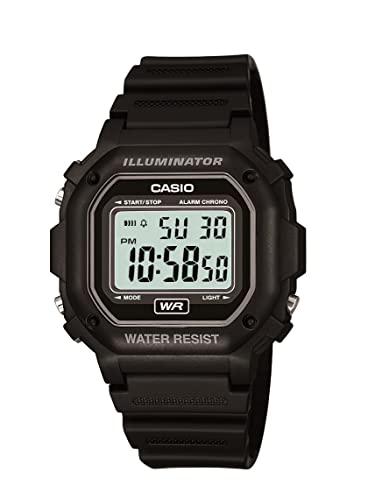 Casio Men's F108WH Illuminator Collection Black Resin Strap6 x 6 x 3 inches0.2 poundsCheck on Amazon


What's inside
- Why a wristwatch still matters when monitors are everywhere
- The second hand: the single most important feature
- Twenty four hour time and the bezel question
- Decontamination: straps, cases, and the sink test
- Water resistance for hands that are always wet
- Reading the dial at night: lume, backlights, and dark rigs
- Weight, edges, and working in gloves
- Glass, cases, and surviving knocks
- Analog versus digital: choosing your readout
- Smartwatches on shift: where they help and where they do not
- Bare below the elbows and uniform rules: check your own service
- Choosing for twelve and twenty four hour shifts
- Features by assignment: not every EMS job is the same
- A practical shortlist of watch styles that suit EMS
- Fit and sizing without guesswork
- How to judge a listing in ten minutes
- Care routine: keeping a duty watch safe and ready
- Common mistakes buyers in EMS make
- Budget thinking without price tags
- Frequently asked questions
- Check prices on Amazon
- The bottom line for crews who time lives in seconds
As an Amazon Associate I earn from qualifying purchases. This post may contain affiliate links at no extra cost to you.
On an ambulance, a watch is not jewelry and it is not a fashion choice. It is a small clinical tool that sits on your wrist while you count a pulse, time respirations, note when a drug went in, and work out how long a patient has been down. The best watches for EMS earn that place by doing a handful of jobs very well, under gloves, in poor light, with wet hands, and after contact with surfaces and fluids that you would never want near a dress watch or a delicate phone. This guide works through those jobs in detail, so you can match a watch to your service, your shift pattern, and your own habits on scene.
Disclosure: this guide is based on published specifications and maker documents, plus publicly available professional guidance on infection control, uniform practice, and patient assessment. It does not rely on private bench trials or on claims about products handled in secret. As an Amazon Associate we earn from qualifying purchases. Links in buying guides of this kind may support the site at no extra cost to the reader, and that support never changes the functional criteria set out below. Where a detail matters for safety or for a purchase, check the current maker listing and your own agency policy before you commit.
Why a wristwatch still matters when monitors are everywhere
Modern ambulances carry monitors that display heart rate, oxygen saturation, blood pressure, and capnography. Those devices are central to care, and nothing in this guide suggests a watch replaces them. Yet monitors are not always on the patient in the first minute. You may be in a stairwell, on a roadside, in a crowded kitchen, or kneeling beside a patient while a partner brings the monitor in from the truck. In those minutes your fingers on a pulse and your eyes on a second hand give you a rate, a rhythm impression, and a sense of change that no later printout can recreate.
A watch also keeps working when other tools are busy. A phone may be in a pocket under a gown, locked, wet, or needed for a protocol lookup. A wall clock may not exist at the scene. A monitor screen may face away from you. Your wrist, by contrast, turns with your hand. While one hand holds a wrist or a carotid site, a glance at the other wrist gives you time without breaking contact or asking someone else to count for you.
There is a documentation role as well. Patient care reports depend on times: time of onset, time of arrival, time of each intervention, time of reassessment. A clear watch, read the same way every time, reduces rounding errors and guesswork later when you write the report from memory in a moving vehicle or at a busy station. Crews who develop a steady habit of glancing, noting, and repeating times aloud tend to produce cleaner records, and the watch is part of that habit.
The second hand: the single most important feature
If you buy only for one feature, buy for the second hand. Counting pulse and respirations depends on watching a known interval pass while you count beats or breaths, then doing the arithmetic. For a regular pulse, many clinicians count for fifteen seconds and multiply by four. For a slower, irregular, or pediatric pulse, thirty seconds multiplied by two gives a steadier figure. Respirations are often counted for thirty seconds, sometimes for a full minute when the pattern is uneven or very slow. Every one of those methods needs a second hand you can read at a glance, at arm length, without squinting.
What makes a second hand readable
- A length that reaches close to the minute track, so you can see exactly which second mark it crosses at the start and end of the count.
- A color or shape that stands apart from the hour and minute hands, such as a contrasting tip, a counterweight tail, or a slender profile that cannot be confused with the minute hand.
- A dial with clear second or minute markers around the edge, printed with enough contrast to read under station light and in the back of a rig.
- Movement that lands on the marks rather than floating between them, which matters more on some quartz models than others and is worth checking in maker photos and owner manuals.
Size matters too. A tiny dress dial may look neat at the station, but its second hand can vanish when your arm is extended into a footwell or across a patient on a stretcher. A mid sized dial with bold markers usually serves better. Very large dials bring their own problems, catching on cuffs and kit, so the sweet spot for most wrists is a moderate case with a dial that devotes real space to the outer track.
Digital watches solve the timing problem in a different way. A digital display with a running seconds readout, or a stopwatch mode that starts with one press, can be just as workable, and some crews prefer it. The trade off is that starting a stopwatch takes a button press and a mode check, while an analog second hand is always running and always visible. Many experienced providers favor analog for pulse counts for exactly that reason: no mode, no press, no doubt about whether the timer started.
A short refresher on counting with the hand you have
Place your fingers on the pulse, find the rhythm first, then look up at the watch and begin counting at the next clear mark. Count for your chosen interval, look back, and do the sum at once, saying the result quietly to yourself or to your partner. If the rhythm felt irregular, extend the count rather than trusting a short sample. For respirations, watch chest rise while keeping a hand lightly in place as if still taking a pulse; patients who know their breathing is being counted often change it. Your watch supports both tasks only if you can start and stop the count without hunting for the hand.
New clinicians sometimes ask whether a sweeping hand is better than a ticking hand. A ticking quartz hand that steps once per second maps neatly onto counting, because each step is one second. A smooth sweep can be read just as well against the track, though it asks a little more practice. Either is fine. What is not fine is a watch with no second hand at all, a fashion model with three decorative subdials and no true seconds readout, or a smartwatch face that hides seconds to save power.
Twenty four hour time and the bezel question
EMS documentation runs on the twenty four hour clock. Reports, dispatch logs, hospital handovers, and medication records all use it, and confusion between morning and evening hours is a real source of charting errors. A watch that shows twenty four hour time helps you read and record the hour the way you will write it, with no mental conversion at three in the morning at the end of a long shift.
Some analog dials print the twenty four hour numbers in a smaller inner ring, thirteen through twenty four beside the standard one through twelve. That inner ring is more useful than it first appears. Early in a career, and again when fatigue sets in, glancing at the inner number beside the hour hand removes a step and a chance to slip. Digital models usually offer a twenty four hour mode in settings; set it once and leave it there, so the display always matches your paperwork.
Bezels divide opinion, and the honest answer is that a bezel is helpful only if you use its specific trick. A rotating bezel with a marker you can align to the minute or second hand gives you an elapsed time readout without arithmetic. Align the marker when you arrive on scene, when a tourniquet goes on, or when a medication is given, and later you can read minutes elapsed straight off the dial. That can support, though never replace, a written time. A bezel that turns too easily will drift when knocked under gloves. A fixed bezel with printed twenty four hour or sixty minute markings gives the reference without the moving part, and it is easier to clean.
What to avoid is a heavy dive style bezel bought only for looks. Deep teeth catch glove cuffs, trap grime in the grooves, and add bulk that knocks against cot rails. If you choose a rotating bezel, choose one with shallow, rounded teeth, firm clicks, and markings you can read at night. If you will never align it on a call, skip it and take the cleaner, lighter case.
Decontamination: straps, cases, and the sink test
An EMS watch will be exposed to sweat, rain, hand soap, surface wipes, alcohol based hand rub, and, on bad calls, blood and other body fluids. The right response is not to baby the watch. The right response is to choose a watch you can wash under a tap with soap, wipe down with your agency approved products, dry quickly, and put back on without worry. Every material choice in this section serves that routine.
Strap materials, ranked by how they live with washing
- Silicone and rubber straps rinse clean, do not absorb fluid, dry in minutes, and tolerate repeated washing better than any other common option. A smooth strap with few holes and no stitching cleans fastest.
- Resin and other molded polymer straps behave much the same way and often come on the most affordable field and digital models.
- One piece woven nylon straps can be washed and even laundered, but they stay damp longer and can hold odor after a long shift, so they suit crews who rotate two straps.
- Leather, suede, and padded stitched straps are poor choices for clinical work. They absorb moisture, crack under repeated cleaning agents, and cannot be wiped clean in any meaningful sense.
- Metal link bracelets look professional, yet each link joint is a small trap for grime. A smooth metal bracelet can be washed, but it takes longer to clean well, weighs more, and may not fit over or under gloves the way a soft strap does.
Strap hardware matters as well. A simple buckle with a rounded frame rinses clean and will not snag. Spring bars are a weak point on any watch; straps that pass under the case in one piece reduce the risk of a single bar failure dropping the watch, though they add a little thickness. Quick release bars make strap swaps fast, which helps if you keep a spare strap at the station and change it after a contaminated call.
Case shapes that clean easily
Smooth cases with few seams, shallow grooves, and no decorative crevices wipe down quickly. Pushers and crowns deserve a look: large knurled crowns are easy to turn but hold dirt, while smaller sealed crowns clean faster and are less likely to be pulled out by a cuff. On digital models, recessed buttons often rinse cleaner than proud ones. Whatever the style, check that the case back sits flat and that there are no sharp engraved edges that will hold residue or scratch skin.
Your cleaning method must follow your agency rules and the watch maker limits. Some watches tolerate only mild soap and water. Alcohol and stronger agents can cloud some plastics, dry out some strap compounds, and damage seals over time. Read the maker care notes, use the mildest method your infection control policy allows for the exposure involved, and replace a strap that stays discolored or tacky after cleaning. A strap is a consumable on this job; budget for a spare.
Water resistance for hands that are always wet
EMS hands are washed or sanitized between every patient contact, and often several times during a single call. Add rain, sweat, splashes at the sink, and the occasional scene near water, and a watch with weak water resistance will fog or fail within a season. Water resistance ratings need careful reading, because the numbers do not mean what everyday language suggests.
A rating marked as thirty meters does not mean you can dive to thirty meters. In watch industry terms it generally means resistance to splashes and brief contact, not sustained immersion or hot showers. Fifty meters handles rain, washing, and shallow immersion with more margin. One hundred meters or more brings a sturdier build, often with better seals and, on some models, a screw down crown, and it copes well with repeated washing under a tap. For EMS use, treat fifty meters as a sensible floor and one hundred meters as comfortable headroom, unless the maker states plainly that a lower rated model is built for daily washing.
Temperature and soap matter. Hot water, steam, and harsh detergents age seals faster than cold water does. Pressing buttons underwater is discouraged on most models unless the maker says otherwise. After a wash, dry the watch with a clean cloth, pay attention to the area under the strap, and let it air before you put on gloves for the next call. Have seals checked or replaced at battery service if the maker offers that service, especially on a watch you rely on every shift.
Also think about the crystal fogging clue. Moisture inside the dial after washing is a sign that a seal has failed or a crown was left open. A watch in that state should come off clinical duty until it is repaired, because its timing can no longer be trusted and fluid inside will corrode the movement. This is one more reason to own a simple backup watch rather than one costly piece with no spare behind it.
Reading the dial at night: lume, backlights, and dark rigs
Night work changes what readable means. You may need a time check in a dark bedroom, in the back of a rig with the lights low so a patient can rest, or outdoors with only scene lights behind you. Two systems cover this need, and many good EMS watches offer one of them in a strong form.
Luminous paint, often called lume, charges from light and glows afterward. Good lume on the hands and hour markers lets you read the time with no button press, which keeps one hand free and avoids a bright flash in a patient face. Look for lume on all three hands, including the second hand tip, and on enough markers to orient the dial. The quality gap between models is wide: some glow brightly for hours, others fade within the first hour of a shift. Maker photos taken in darkness, and published details about the luminous compound used, tell you more than a daylight studio shot.
Backlights solve the problem with power instead of paint. On digital models a backlight that lights the whole display evenly, stays on long enough to read, and can be triggered with a gloved press is ideal. On analog models with a light, check that the light shows the hands rather than washing out the dial. Some crews prefer a backlight because it works regardless of whether the watch saw light earlier in the shift, which matters on winter nights when sleeves cover the dial for hours.
Tritium tubes, found on a smaller set of watches, glow continuously without charging and can last for many years before dimming. They suit night heavy services well. They also cost more and come in fewer case styles. Whichever system you pick, test your own reading comfort: can you tell the hour, minute, and second at a glance in the dark, without tipping the dial toward a light? If you must hunt, the system is not strong enough for clinical timing.
Weight, edges, and working in gloves
A watch that annoys you at hour two will be unbearable at hour twenty. Weight is the first comfort factor. Light resin and polymer cases, and mid sized metal cases in titanium or thin steel, disappear on the wrist in a way that thick steel divers never do. On a twelve or twenty four hour shift, that difference shows up as less wrist fatigue, less adjusting, and less temptation to take the watch off and leave it in a pocket where it is useless.
Edges are the second factor. Look for rounded lugs, a smooth case side, and a crown that does not dig into the back of your hand when your wrist bends. You will bend your wrist constantly: lifting, reaching into cabinets, holding a bag valve mask, writing on a clipboard. A crown that presses a sore spot during those motions will teach you to hate an otherwise good watch. Crown guards and recessed crowns reduce both discomfort and accidental pulls.
Gloves change the fit. A watch worn under exam gloves needs a low profile so the cuff can pass over it without tearing, or it must sit where your agency allows it in relation to the glove line. A tall case and a stiff strap fight the glove and slow you down at the exact moment you want speed. Thin cases, flexible straps, and buckles that lie flat are the friendly combination. If you often wear heavier extrication gloves, check that buttons and crowns do not get pressed by the glove cuff, which can stop a timer or change a mode without you noticing.
Patient comfort belongs in this section too. Smooth edges and a covered buckle are less likely to scratch fragile skin when you hold a wrist, support an arm, or work close to an elderly patient. Older patients, infants, and patients with thin or damaged skin deserve that care. Before a watch becomes your daily piece, run your own fingers over every edge that might touch a patient, and reject anything with a burr, a sharp lug tip, or an exposed clasp corner.
Glass, cases, and surviving knocks
Ambulance work knocks watches against cot rails, door frames, oxygen bottles, cabinet latches, and the ground. A raised bezel or a recessed crystal takes some of those hits instead of the glass. Mineral glass resists scratches better than basic acrylic and is common on mid range field watches. Sapphire is harder and resists scratches best of all, at a higher price. Acrylic scratches easily but tends to flex rather than shatter, and it can be polished; it remains a reasonable choice on low cost models you expect to replace.
Shatter behavior matters more than scratch behavior for clinical work. A crystal that cracks into sharp fragments is a hazard near open wounds and near your own gloved hands. Makers rarely advertise shatter behavior in plain terms, so the practical approach is to favor reputable movements and crystals, avoid ultra thin fashion glass, and retire any watch with a cracked crystal at once. A cracked watch also loses water resistance and cannot be cleaned properly, which alone disqualifies it from duty.
Shock resistance is a related virtue. Digital sports models often publish shock resistant construction, with the movement cushioned inside the case. Analog field watches rely on sturdy construction and proven quartz movements that tolerate daily knocks well. Either route can work. What you want is a watch that keeps accurate time after the ordinary bumps of a month of shifts, not a delicate dress movement in a thin case that was never meant for this work.
Analog versus digital: choosing your readout
Analog remains the classic EMS choice for reasons already covered: an always visible second hand, a quick sense of elapsed time from hand positions, and a dial that reads in the dark with good lume and no button press. Analog also tends to present a calm, professional face to patients. Its limits are real: alarms and timers are weaker or absent, a second time zone is rare, and counting exact seconds in poor light takes more care than reading digits.
Digital models offer precise stopwatch and countdown functions, multiple alarms, dual time, and a backlight on demand. A countdown timer can help time reassessment intervals or transport legs, and an alarm can remind you of a scheduled check during a long standby. Their weak points are mode confusion, small digits on cluttered displays, and buttons that do things you did not intend when pressed by a cuff. Choose a digital model with large main digits, a simple mode order, and a stopwatch reachable in one or two presses.
Hybrid models try to split the difference, with hands over a small digital window. They can work well if the window does not steal space from the second track and if the hands do not cover the window at the moment you need it. Read the dial layout closely before you buy a hybrid for clinical use.
Chronographs: useful or clutter?
A true chronograph adds a stopwatch driven by extra hands and pushers. On paper it suits timing. In practice, many analog chronographs put the running seconds on a tiny subdial, which defeats the main EMS need for a large central second hand. If you consider a chronograph, confirm that the central hand serves the time seconds or that the subdial is genuinely large and clear. Pushers also add openings and cleaning burden. For most crews, a plain three hand watch or a digital stopwatch does the timing job with less clutter and less cost.
Smartwatches on shift: where they help and where they do not
Smartwatches are common in EMS now, and a fair guide has to place them honestly. They bring notifications, timers with haptic taps, quick notes, and reference apps to the wrist. A silent vibration alarm can wake a crew member or mark a reassessment time without a sound in a patient room. Voice notes can capture a detail for later charting when your hands are busy a moment later. Heart rate readings from the wrist can offer a rough reference trend for your own fitness and rest, and in a pinch they may prompt a second look at a patient situation, but they are not a medical measurement of the patient and they never replace a monitored pulse, a manual count, or clinical judgment.
That boundary deserves emphasis. A consumer smartwatch measuring your own heart rate through your wrist says nothing reliable about the patient in front of you. Patient heart rate, rhythm, saturation, and blood pressure come from your assessment and your agency medical devices. Treat any smartwatch health feature as personal wellness data for the wearer, useful for tracking your sleep after nights or your exertion on a busy shift, and nothing more.
The clinical drawbacks of smartwatches are practical. Their cases have speaker slots, microphone holes, sensor housings, button seams, and strap joints that give fluids and grime more places to hide than a smooth analog case offers. Many straps supplied with them are fine, but the head unit itself takes longer to clean well. Screens sleep to save power, so the second hand or seconds readout may not be visible when you glance down; you may need a wrist raise, a tap, or a press, with gloves complicating each of those. Battery life is the other limit, covered in the shift section below: a watch that needs a charge every night will, sooner or later, die during a holdover.
Notifications can also cut both ways. Dispatch related alerts on the wrist can help. Personal messages lighting up during patient care do not. If you wear a smartwatch on duty, set it to a restrained profile: work alerts only, a simple face with a clear seconds display, a washable strap, and a screen lock that tolerates wet hands. Some crews keep a smartwatch for station and personal time and a plain analog watch for patient contact, which is a sensible split when policy allows both.
Readers comparing connected models for sport and outdoor use may also want to look at best affordable smartwatches for budget oriented options, keeping in mind that price alone says nothing about cleanability or seconds display, the two points that matter most for EMS duty.
Bare below the elbows and uniform rules: check your own service
Many health settings follow a bare below the elbows approach for direct patient care: short sleeves or sleeves rolled up, no wristwatch, no bracelets, and rings limited or removed, so that hands and wrists can be washed fully and nothing interferes with that washing. Hospital based clinicians will know this practice well. Ambulance services vary more, because field work adds watches back into the picture for timing, and many agencies permit or even expect a wristwatch as part of the uniform.
This guide cannot settle that question for your service, and it would be wrong to try. Policies differ by country, by state or region, by agency, and by setting; a hospital based transfer crew may follow the hospital rule inside the building and the agency rule on the road. Some services allow a plain watch with a smooth strap. Some require removal for certain procedures or for work in specific units. Some address smartwatches separately because of their seams and screens.
So treat this section as a prompt, not a permission slip. Before you buy, read your uniform and infection control policies, and ask a supervisor or educator if the wording is unclear. Ask specifically about watches during patient contact, about strap materials, and about any rule that applies inside receiving facilities. If your service follows a strict bare below the elbows rule for patient care, the right answer may be a watch worn for driving, station duties, and timing away from direct contact, removed and stored safely when the rule applies, or a fob style alternative if your policy provides one. Following the local rule protects patients, protects you, and protects your standing at work; no buying guide outranks it.
Uniform appearance matters in a smaller way too. Most services expect a watch to look plain and professional: dark or muted colors, no large logos facing the patient, no novelty faces. A clean field watch in black, navy, or muted steel fits almost any uniform. Bright colors may be fine for off duty sport but can look out of place on a call and may clash with agency dress codes.
Choosing for twelve and twenty four hour shifts
Shift length shapes the right watch more than most buyers expect. A watch for a twelve hour day shift in a busy urban service faces constant washing, frequent timing, and heavy glove use. A watch for a twenty four hour shift at a slower station adds night reading, sleep adjacent comfort, and the risk that you will be held over or called back before you can charge or change anything.
Battery and power
Quartz analog and basic digital watches run for years on a single battery, which is their quiet superpower. You can forget about charging entirely, and the watch will be ready for the extra shift, the disaster callout, and the week your charger stays at home. Solar assisted quartz models stretch service further by topping up from light, though they still contain a rechargeable cell that ages over years. Automatic mechanical watches need no battery but need regular wear to keep running, can drift more in time than quartz, and cost more to service; they are a personal pleasure more than a practical EMS pick.
Smartwatches sit at the other end. One to several days per charge is typical depending on model and settings, and heavy use of light, sensors, and alerts shortens that span. On a twenty four hour shift with a holdover, a low battery warning is not a small annoyance; it is the loss of your timing tool. If you rely on a smartwatch, build a charging habit at the station, carry the correct cable in your kit bag, and keep a simple quartz backup in your locker for the day the smartwatch is flat, cracked, or updating when you need it.
Comfort across a full day and night
On long shifts you will sleep, eat, drive, lift, and chart with the watch on, unless your policy requires removal for rest. A flexible strap that you can loosen one hole in warm weather and tighten again for calls prevents the slow ache of a fixed fit. A case that does not press the wrist bone, a buckle that does not dig when you rest your forearm on a table, and a total weight that you stop noticing are the marks of a watch that survives twenty four hours gracefully. If you wear the watch to sleep at the station, a dim face matters: strong lume or a screen that lights at a wrist turn can disturb rest, yours and a bunkmate. Some crews turn a smartwatch to a theater or sleep mode at night and rely on the station alerting system, which is the correct priority.
Time accuracy across a long shift is rarely an issue for quartz, which typically drifts by seconds per month. Sync habits matter more: compare your watch with dispatch or station time at the start of a shift set, and correct it if needed, so your documented times line up with the rest of the record. Radio controlled and satellite synced models remove that chore where signals allow, and phone synced smartwatches stay aligned on their own.
Features by assignment: not every EMS job is the same
Urban EMT and paramedic work
High call volume rewards speed and cleaning above all. Favor a smooth analog or simple digital watch, a silicone strap, strong water resistance, and nothing that slows glove changes. A spare strap and a backup watch at the station pay off quickly in this setting, because turnaround time between calls leaves no room for careful deep cleaning of a complicated case.
Rural and long transport work
Long transports reward elapsed time tools and night reading. A bezel you can set at departure, a countdown timer for reassessment reminders, and excellent lume or backlight help during an hour or more in a dark patient compartment. Dual time is rarely needed, but an alarm that vibrates or sounds softly can support a reassessment rhythm on a quiet road.
Flight and critical care transport
Flight crews work in noise, vibration, and tight space, often with helmets and gloves that limit fine button work. Large, high contrast dials, simple controls, and straps that stay put under movement matter most. Follow your program rules on devices and jewelry in the aircraft, which may be stricter than ground rules, and remember that cabin altitude and rapid pressure change are hard on weak seals.
Community paramedicine and clinic adjacent roles
Home visits and clinic support work bring longer conversations and more hand washing in sinks you do not control. A professional looking, low profile watch that washes quickly and does not alarm loudly in a quiet home fits this work well. Appointment timing and visit duration tools on a digital or smart model can help, provided patient facing manners stay front and center.
Students and new clinicians
If you are in training, buy the simple thing first: a clear analog quartz watch with a full second track, a washable strap, and a price that lets you replace it without grief if it is lost or damaged during rotations. Learn to count pulse and respirations on that dial until the method is automatic. Fancy features can come later, once you know which ones your actual service rewards. Preceptors notice steady basic skills far more than gear.
A practical shortlist of watch styles that suit EMS
Rather than naming specific models with details that change between model years, this section describes the styles that repeatedly fit the criteria above. Use it as a set of templates when you browse current listings, and score each candidate against the checklist later in this guide.
The classic field watch in quartz
A mid sized field watch with bold Arabic numerals, a full minute and second track, luminous hands and markers, and a resin or steel case on a silicone strap is the default answer for many crews. It reads fast, cleans fast, and looks right with a uniform. Look for a second hand with a colored or luminous tip and an inner twenty four hour ring if you can get it. This style is the safest first purchase and the most common backup watch in station lockers.
The simple digital sports watch
A resin digital watch with large digits, a stopwatch, a countdown timer, an alarm, a full display backlight, and strong water resistance suits crews who time intervals often and who prefer digits at night. Choose one with a smooth strap, recessed buttons, and a twenty four hour display option. Avoid models with crowded screens that show four data fields in tiny type; on a call you need one time, read instantly.
The nurse style watch and fob alternatives
Watches marketed to nurses often bring exactly the right dial: large numerals, a prominent second hand, and clear minute marks, because ward work shares the pulse counting need. Some come as lapel or fob watches on a pin or clip, intended for settings where wristwatches are not worn. If your policy limits wrist wear, a fob approved by your agency can preserve the timing function. Check that a fob hangs securely, cannot swing into a patient, and can be cleaned; a fob on a fabric lanyard fails the cleaning test in most settings.
The restrained smartwatch setup
If you go the smartwatch route for duty, the setup matters as much as the model: a simple face with an always available seconds readout, a silicone sport strap, a case without decorative openings where possible, work only notifications, and a charging cable kept at work. Score it honestly on cleaning time. If a deep clean takes twice as long as your analog backup, that cost lands on every contaminated call.
Fit and sizing without guesswork
Case diameter is only part of fit. Lug to lug length, the distance from the top lug tip to the bottom, decides whether a watch overhangs your wrist. Thickness decides glove clearance. As a working guide, smaller wrists usually do well with compact to mid sized cases and short lug spans, while larger wrists can carry a bigger dial that may actually read better for timing. Try to judge fit from published lug to lug and thickness figures, not diameter alone.
Strap length and hole spacing matter on shift because wrists swell in heat and after exertion. A strap with closely spaced holes gives finer adjustment. A deployant clasp looks tidy but adds bulk and cleaning seams; a simple pin buckle in a washable strap remains the field favorite. If you wear the watch over a uniform cuff in cold weather for driving and under gloves for care, expect to adjust it during the shift, and choose hardware you can work with cold fingers.
Left or right wrist is personal, with two practical notes. Wear the watch on the wrist that leaves your dominant hand free for writing and procedures, and keep it on the same wrist every shift so glancing becomes automatic. If you take pulses with a preferred hand, your watch on the opposite wrist is the one you will look at while counting, so rehearse that pairing until it feels natural.
How to judge a listing in ten minutes
- Find a straight on dial photo. Can you see a true second hand or a seconds readout, a full outer track, and twenty four hour help in print or in settings?
- Find a dark photo or a published lume detail. Are the hands and markers treated, including the second hand?
- Read the water resistance figure and the maker care notes together. Do they support daily washing under a tap?
- Identify the strap material and whether a spare strap is sold. Reject leather and padded stitched straps for clinical duty.
- Note case material, thickness, and weight if published. Picture it under a glove cuff and against a cot rail.
- Check the crystal material and whether the crystal sits recessed or raised.
- Confirm battery type and expected life, or for a smartwatch, the charge span and cable type.
- Search the maker documents for cleaning limits, especially any warning about alcohol or solvents.
- Picture the dirtiest call of your last month. Walk through cleaning this exact watch at that sink, step by step.
- Price a backup at the same time. Two simple watches often serve EMS work better than one costly watch with no spare.
Our research across maker documents shows the same pattern again and again: the models that suit EMS best are rarely the ones marketed with the loudest claims. They are the plain ones whose published details line up, point by point, with the jobs in this guide. A listing that cannot answer the questions above from its own documents is asking you to guess, and clinical gear should not be bought on a guess.
Care routine: keeping a duty watch safe and ready
Build a small routine and the watch will last. After a call with visible contamination, remove the watch if your policy directs, wash it with mild soap and water as the maker allows, rinse well, and dry it fully, including under the strap, before it goes back on. Between patients, follow your hand hygiene process and include the wrist area the watch covers when it is removed, or work around it exactly as your policy describes. At the end of a shift set, take the strap off if it detaches easily and give both strap and case a fuller wash; let them dry overnight rather than sealing them damp in a kit bag.
Inspect monthly. Look for crystal cracks, a loose crown, worn strap holes, tired spring bars, and any softening or tackiness in the strap compound. Check the time against a trusted source. If the second hand starts to jump in multi second steps, many quartz movements are signaling a low battery; plan the battery change before the watch stops mid shift, and ask the service point about seal renewal at the same visit.
Common mistakes buyers in EMS make
- Buying a fashion watch with no second hand because it looked sharp with the uniform, then discovering on the first assessment that pulse counting is guesswork.
- Choosing a leather or stitched strap that cannot survive the first month of washing and wipes.
- Paying for a large chronograph whose running seconds hide on a tiny subdial.
- Trusting a thirty meter rating as if it promised daily immersion, then living with a fogged dial.
- Wearing a smartwatch with a sleeping screen and no plan for the night it runs flat on a holdover.
- Ignoring agency uniform and infection control rules until a supervisor raises them.
- Spending the whole budget on one watch and keeping no clean spare for a contaminated call.
- Picking the largest case on the shelf, then fighting it under every glove cuff for a year.
Budget thinking without price tags
EMS suitable watches exist at modest, middle, and high spending levels, and the functional checklist does not change with the amount spent. At modest levels, resin digital models and simple quartz field watches deliver the core jobs well; you trade away sapphire crystals, premium lume, and finer finishing. In the middle, you gain better crystals, stronger lume, tidier cases, and longer service support. At high levels you may gain tritium light, titanium cases, and longer warranties, which some crews value for night work and comfort, but no amount of spending removes the need for washing, a washable strap, or a backup.
Spend first on the strap, the seconds readout, and water resistance. Spend next on the crystal and light for night work. Spend last on decoration. And keep the receipt and warranty details with your kit records; a watch that fails early under normal duty should go back through the maker channel, not into a drawer.
Frequently asked questions
Can I count a pulse with a digital watch?
Yes, if the display shows running seconds or you start its stopwatch as you begin the count. Practice the button sequence with gloves on before you rely on it, and prefer a model whose stopwatch starts with a single press from the time display. If starting the timer feels fiddly in practice, an analog dial will serve you better.
What if my agency does not allow wristwatches during patient care?
Follow the agency rule. Ask whether an approved fob or a watch worn only outside direct care is acceptable, and store a removed watch somewhere clean and secure rather than in a pocket with used gloves or equipment. The timing skill still matters; the approved tool for your setting is the one to build the habit on.
How often should I replace the strap?
Replace it when it stays discolored, cracked, stretched at the holes, or tacky after a proper wash, and sooner if your infection control lead advises it after a heavy exposure. Many full time crew members treat straps as yearly consumables, and some keep a rotation of two so one can dry fully while the other works.
Is a mechanical watch a poor choice for EMS?
For most crews, yes as a primary duty watch. Mechanical movements drift more than quartz, need servicing, and dislike hard knocks, and their cost makes contamination damage painful. If you love mechanical watches, enjoy one off duty and keep a quartz watch for clinical work.
Do I need a rotating bezel?
No. A bezel helps only if you build the habit of setting it at key moments to read elapsed minutes. A fixed bezel or no bezel keeps the case smoother, lighter, and easier to clean. Choose based on honest habit, not on looks.
Can a smartwatch measure a patient heart rate for the chart?
No. Chart values come from your manual assessment and your agency medical devices. A wrist device worn by you measures you. Using consumer wellness data as a patient value would be unsafe and indefensible in a record.
Check prices on Amazon
Live listings for the shortlist in this guide are pulled from Amazon below, so prices and availability are always current at the moment you look.


GOLDEN HOUR Men's Nylon Slip-Thru Strap Watch with Military Time Easy Read Dial Glowing Hands in Black


The bottom line for crews who time lives in seconds
Choose the watch that counts cleanly, reads in the dark, washes under a tap, sits light and smooth under gloves, and agrees with the rules of the service you work for. For most EMS clinicians that points to a plain quartz field watch or a simple digital sports watch on a silicone strap, with a clean spare waiting at the station, and with a smartwatch kept in its proper place as a helpful extra rather than the tool of record. Match the dial to your counting method, match the strap to your sink, match the case to your gloves, and the watch will repay you on the calls where seconds carry real weight. When the next tone drops and the room goes quiet around a still chest, the plain dial you can read without thinking will feel less like gear and more like a colleague keeping time beside you.