Our Top Picks


What's inside
- What a multi-sensor watch is actually for
- The altimeter: useful, honest, and dependent on the weather
- The barometer and the storm alarm
- The digital compass: bearings, declination, and interference
- Temperature, sunrise, and the supporting measurements
- Tough Solar: how the power system changes ownership
- Multiband 6 and radio-controlled accuracy
- Analog-digital against full digital
- Water resistance, case size, and the truth about fit
- Field use: mountains, forest, water, and work
- Sensor generations and buying within the range
- Maintenance, accuracy checks, and living with the instrument
- Data logging, displays, and reading the watch under pressure
- Trip planning with pressure and light: a worked routine
- Fishing, hunting, and the lunar side of the range
- Common buying mistakes in this category
- Check prices on Amazon
- Choosing between a sensor watch and everything else
As an Amazon Associate I earn from qualifying purchases. This post may contain affiliate links at no extra cost to you.
This publication is reader-supported, and qualifying purchases made through links here may earn a commission that funds further guides, with no extra cost to you.
What a multi-sensor watch is actually for
A multi-sensor watch earns its place on a wrist by answering environmental questions without a phone, a signal, or a charging cable. The classic combination, often shortened to ABC, joins an altimeter, a barometer, and a digital compass, and Casio built much of its reputation in this category around the Pro Trek line, where those three measurements sit at the centre of the design rather than appearing as extras. Temperature sensing usually joins them, and some models add sunrise and sunset times, tide or moon data, and activity logging aimed at people who navigate hills, forests, and coastlines on foot.
The appeal becomes obvious in places where connected devices struggle. A phone battery fades quickly in cold air, a touchscreen resists wet gloves, and a valley floor can erase network coverage entirely. A dedicated sensor watch keeps working through all of that because its job is narrow: measure the air, the direction, and the height, display the results legibly, and do so for months or years on solar charging. That narrowness, often framed as a limitation beside a smartwatch, is precisely the engineering choice that makes the tool dependable outdoors.
Casio organises this capability under its Triple Sensor technology, refined across successive generations. Each generation has shrunk the sensor package, reduced power draw, and improved measurement intervals, so newer versions sample the compass more responsively and run longer between charges than earlier designs. The details differ by model and release period, which is why broad claims about the line matter less than understanding what each sensor does, where its errors come from, and how calibration keeps readings honest in the field.
Buyers arriving from the smartwatch world should reset expectations early. There are no app notifications to triage, no voice assistant waiting for a command, and no colour map that redraws itself as you walk. Instead there is a compass bearing available at the press of a button, a pressure trend that hints at incoming weather, and an altitude trace that confirms whether the ridge ahead is the last one. Readers who have compared connected options through guides such as best multisport smartwatches will recognise the fork in the road: rich software and short battery life on one side, austere instrumentation and remarkable endurance on the other.
This guide works through the sensors one by one, then the power and timekeeping systems that support them, then the practical questions of case size, water resistance, display format, and field technique. The aim is not to declare a single winner across the range, because the range serves different wrists and different terrain. The aim is to give you enough mechanical understanding to read any product page in the category and know which specifications will matter at altitude, in rain, or halfway through a long descent with the light going.
The altimeter: useful, honest, and dependent on the weather
Most sensor watches estimate altitude from air pressure, because pressure falls in a predictable way as you climb. The watch measures the pressure at your current position and converts it into a height figure using a standard atmospheric model. That method is elegant and power-efficient, but it carries an unavoidable complication: pressure also changes when the weather changes, even if you have not moved at all. A passing front can shift the reading by the equivalent of a noticeable climb while the watch sits on a tent floor overnight.
Calibration is therefore a habit rather than a setup step. At a trailhead with a known elevation, on a summit with a surveyed marker, or at a mapped viewpoint, you set the altimeter to the true figure, and from that anchor the watch tracks relative change accurately as you move. Relative change is where the instrument shines. It will tell you faithfully how much you have climbed since the anchor point, how far you dropped into a col, and whether the path ahead trends upward, provided the weather holds reasonably steady during the interval you care about.
Drift accumulates when conditions refuse to hold steady. A long ascent through deteriorating weather mixes genuine height gain with pressure loss from the approaching system, and the displayed altitude can overstate your progress. Experienced users treat the figure as a strong estimate, cross-checking at every known point the map offers: a lake whose elevation is printed, a pass, a junction with a sign. Each correction resets the error to zero, so frequent small calibrations keep the instrument trustworthy across a full day in unsettled conditions.
Resolution and logging add further nuance. Finer measurement increments make short climbs and descents visible in the recorded profile, which helps when reviewing a route or judging remaining effort. Some models store altitude points automatically at intervals, building a graph you can read back in camp to understand the shape of the day. That record also exposes drift clearly, because a flat overnight line that wandered reveals exactly how much the weather moved your baseline while you slept, information that improves the next morning’s calibration judgement.
Temperature influences pressure-based readings as well, since air density varies with heat and cold. Watches compensate using their own temperature sensor, but that sensor sits against a warm wrist, which biases its input. For the most consistent altitude behaviour, some users loosen the strap or rest the watch off the wrist briefly before taking a reading they intend to rely on. These are small disciplines, yet they separate a reading that deserves confidence from a number copied off the display simply because it appeared there.
None of this makes the altimeter a weak tool. It makes it a tool with a known character, like a map whose contours need a compass to orient them. Judged as a relative instrument, recalibrated at known points and read alongside terrain, it remains one of the fastest ways to answer the walker’s recurring questions: how much higher is the pass, have we started descending, and is this the shoulder the route description warned about. The mistake is expecting satellite certainty from a pressure sensor, and then blaming the sensor for a misunderstanding it never claimed to resolve.
The barometer and the storm alarm
The barometer measures the same air pressure the altimeter uses, but interprets it for weather rather than height. Falling pressure generally signals deteriorating conditions, rising pressure suggests improvement, and a steady reading implies more of whatever you already have. The absolute number matters less than the trend and its speed. A slow decline across a day might mean a weak front arriving tomorrow; a sharp drop over a few hours deserves immediate attention, especially in exposed terrain where retreat options narrow quickly.
Casio builds this interpretation into a pressure tendency graph on many models, plotting recent hours so the direction of change is visible at a glance. Reading that graph becomes a morning and evening ritual on longer trips: check the trend before leaving camp, compare it with the sky, and let the combination shape decisions about summit attempts, river crossings, or an early descent. The graph cannot name the storm or time its arrival, but it frequently provides the first objective hint that conditions are turning while the view still looks benign.
The storm alarm feature watches for rapid pressure change and alerts the wearer with an audible signal and a display indicator. Its value lies in catching a fast-moving deterioration while you are occupied with walking, cooking, or sleeping, rather than studying the dial. Like any threshold-based alert, it can trigger during altitude change, because rapid ascent produces rapid pressure change too. Understanding that interaction prevents confusion: an alarm that sounds during a steep climb may be reporting your own movement, while one that sounds in a stationary camp carries a different weight entirely.
Barometric readings also reward a stationary reference habit. When a group stops for the night, noting the pressure and the calibrated altitude lets the morning comparison separate weather movement from anything else. If altitude appears to have changed overnight at a fixed camp, the weather moved. That single observation, repeated across trips, teaches a user more about local pressure behaviour than any manual summary, and it calibrates expectations for how much altimeter drift to forgive on the following day’s climb.
Coastal and lowland users should not dismiss the barometer as a mountain-only instrument. Pressure trends inform fishing conditions, small-boat decisions, and the simple question of whether an afternoon ride will end in rain. Some models in the broader range add tide graphs and moon age, which pair naturally with pressure information for people working or travelling by the shore. The sensor package serves anyone whose plans bend around weather, which is a far larger group than the mountaineers in the advertising imagery.
Accuracy limits deserve plain statement. A watch barometer samples the air at the wrist, inside a sleeve, or under a cuff, and microclimates around the body differ slightly from a weather station’s Stevenson screen on a mast. Readings are entirely adequate for trend judgement, which is the purpose, and inadequate for pretending to be a meteorological office. Used for trends, checked against the sky, and combined with a forecast obtained before departure, the barometer becomes the most quietly valuable sensor in the set, because weather is the variable that changes plans most often.
The digital compass: bearings, declination, and interference
The compass sensor detects the Earth’s magnetic field and reports direction relative to magnetic north. That distinction between magnetic and true north is the first thing a new owner must absorb. The gap between them, called declination, varies by location and changes slowly over time, and many models let you enter a correction so the display reads in true bearings that match your map. Walking a long leg on an uncorrected bearing in a region with large declination can displace you meaningfully, so the setting is worth the two minutes it takes before a trip rather than during one.
Calibration of the compass is a physical routine. The watch asks to be rotated through a figure pattern or turned level through a full circle, depending on the generation, so the sensor can map the magnetic environment around it. Perform that routine away from vehicles, steel structures, power lines, and the magnets hiding in phone cases and bag closures. A calibration performed beside a car bonnet teaches the sensor a distorted field, and the resulting bearings will lean consistently until the routine is repeated somewhere cleaner.
Interference in daily use is subtler. Walking past a steel gate, standing on a reinforced bridge, or holding the watch beside a trekking pole tip can swing a bearing temporarily. The remedy is awareness: take important bearings with the watch held level, away from metal you are carrying, and confirm them twice from slightly different positions. If two readings from a few steps apart agree, the field is probably clean. If they disagree wildly, something nearby is bending the field, and moving is more productive than staring at the display.
Bearing memory and direction locking features help translate a reading into movement. A typical technique sets the bearing toward a visible landmark or a map-derived target, stores it, and then uses the display’s indicators to stay aligned while walking ground where the target disappears behind trees or folds of terrain. Re-sighting at every clearing keeps errors small. The compass does not know where you are, only which way you face, so it rewards users who pair it with a map and terrain association rather than treating the bearing number as a route by itself.
Sensor generations differ in how continuously they track direction. Earlier designs measured in short bursts to conserve power, while later Triple Sensor versions extended continuous measurement considerably, making it practical to follow a bearing while moving without repeatedly restarting the mode. That improvement sounds minor on a specification list and feels major on a featureless plateau in mist, where stopping to restart a reading every few steps breaks rhythm and concentration. When comparing generations, compass measurement duration and update behaviour deserve as much attention as headline accuracy figures.
Temperature and tilt also play their parts. Magnetic sensors are largely indifferent to cold, but batteries and displays are not, and extreme cold slows liquid crystal response on digital models. Holding the watch reasonably level matters because tilt distorts the field reading; many designs compensate within a range, yet a steeply tilted wrist still degrades the result. The consistent theme across all three sensors is that technique multiplies the value of the hardware, and a user who learns the routines gets navigation-grade help from an instrument that a careless user might dismiss as approximate.
Temperature, sunrise, and the supporting measurements
The thermometer is the most misunderstood sensor in the package. It measures the temperature at the watch case, which on a wrist means a blend of air temperature and body heat. Readings taken while wearing the watch typically run warm, sometimes by a margin large enough to mislead anyone planning clothing or judging freezing levels. The established workaround is simple: remove the watch, rest it in shade away from direct sun and warm surfaces, and allow time for the case to settle toward the surrounding air before trusting the figure.
Used that way, the thermometer becomes genuinely informative in camp. An overnight low recorded while the watch hangs in a tent tells you how close conditions came to the rating limit of a sleeping bag, whether frost on the flysheet matches the air or just radiational cooling, and how water supplies should be stored against freezing. Anglers and early risers use the same settling habit at a riverbank or a harbour wall. The sensor rewards patience and punishes haste, which makes it a fair emblem for the whole category.
Sunrise and sunset times depend on location data you provide, typically through coordinates or a city selection, and on the date the watch already knows from its calendar. For walkers, those two times structure the day: when to leave a high camp to reach a descent before dark, how much margin remains after a summit, whether a headtorch belongs in the top of the pack. Photographers plan around the same figures, and hunters and anglers often organise activity around low-light periods. Accuracy is more than adequate for planning, provided the location setting reflects where you actually are rather than home.
Some models extend the supporting cast with moon age, tide graphs, a step counter, or fishing and hunting time indicators derived from lunar position. These extras vary widely across the range and should be treated as model-specific research rather than assumed line-wide features. A buyer whose trips centre on coastal fishing should verify tide functionality and how locations are selected, while a buyer focused on alpine routes may never open those screens. Specification tables reward readers who match features to their own calendar instead of collecting the longest possible list.
World time, alarms, stopwatch, and countdown functions round out the practical toolkit and tend to be executed with the reliability expected of a mature digital platform. Multiple daily alarms serve as camp wake-ups and medication reminders, the stopwatch handles training intervals and cooking timing, and dual-time displays help travellers keep home time visible. None of this is glamorous, and all of it gets used weekly by owners whose watches live on the wrist rather than in a drawer, which is the real test of any feature list.
Tough Solar: how the power system changes ownership
Tough Solar is Casio’s solar charging system, converting light through a panel integrated into the dial and storing energy in a rechargeable cell. The consequence for ownership is profound: under ordinary exposure to daylight and indoor light, the watch sustains itself indefinitely, running its sensors, alarms, and illumination without a cable, a dock, or a battery swap on any schedule the owner must remember. For a tool bought to be ready whenever a trip appears, that self-sufficiency removes the most common failure mode of electronic gear, the flat battery discovered the night before departure.
Power management works through levels and saving modes that the owner should understand rather than ignore. A charge indicator shows the stored level, and at lower levels the watch progressively restricts demanding functions, while power saving blanks the display during quiet hours in darkness to stretch reserves. A watch stored for months in a drawer can deplete itself, and recovery involves patient exposure to bright light rather than panic. Leaving the watch on a windowsill periodically, or simply wearing it with the dial uncovered by a cuff, keeps the system in its comfortable middle range.
Light quality matters more than light duration alone. Bright outdoor light charges rapidly, overcast daylight contributes usefully, and ordinary indoor lighting maintains a healthy cell slowly. Heavy sensor use, frequent illumination, and repeated radio reception attempts draw more than casual timekeeping, so a winter expedition with long nights, thick cuffs, and constant compass work is the sternest test the system faces. Even there, deliberate exposure during rest stops and a dial kept clear of sleeves usually balances the account, because the underlying consumption of the platform is exceptionally frugal.
The rechargeable cell itself ages over years, gradually holding less than it did when new, and eventual replacement is a service task rather than a user task on most sealed designs. That timescale is measured in many years of typical use, and the practical implication is modest: buy from channels that can support servicing, and do not treat solar as a promise that the watch will never need professional attention. Seals age, buttons wear, and resin components fatigue on their own schedules regardless of how the energy arrives.
Comparing this arrangement with a smartwatch clarifies the category divide better than any feature table. A connected watch offers vastly more computation and communication, paid for with charging measured in days. A solar sensor watch offers a handful of measurements, paid for with charging measured in seasons of neglect. Readers weighing expedition options in guides like best adventure smartwatches have usually felt both sides of that exchange, and the honest question is which failure you would rather manage on day six of a trip: a watch asking for its cable, or a watch that cannot show a map. There is no universal answer, only a personal one.
Multiband 6 and radio-controlled accuracy
Multiband 6 refers to reception of time calibration signals broadcast from six transmitter stations across Japan, North America, Europe, and China, carrying atomic clock references that reset a watch to precise time automatically. Where a signal reaches, the watch corrects itself overnight, compensating for the small drift inherent in any quartz movement and handling calendar transitions without owner involvement. For people who value exact time for transport connections, coordinated group departures, or simply the satisfaction of a second hand that agrees with the speaking clock, the system is quietly delightful.
Reception has geography and physics attached. Signals travel best at night, attenuate through concrete and steel, and weaken with distance from the transmitter, terrain obstruction, and atmospheric conditions. A watch that syncs reliably on a wooden windowsill at home may fail in a basement flat in a distant city, and large parts of the southern hemisphere sit outside useful range altogether. Manual reception can be attempted by placing the watch near a window with its antenna area oriented toward the transmitter, and the manual explains the orientation for each design.
Failure to receive is not failure of the watch. The quartz movement continues with accuracy entirely adequate for field use, drifting by seconds across a month rather than across a day. Buyers outside coverage areas should therefore value Multiband 6 as a bonus for travel rather than a core reason to purchase, while buyers inside strong coverage can treat nightly correction as a genuine convenience. Some travellers disable automatic reception on trips to conserve power and avoid repeated attempts in hopeless locations, a small management detail worth knowing before a long journey.
Daylight saving transitions and time zone handling interact with the radio system in ways worth a first-week check. When the home city is set correctly, signal-based correction applies the appropriate offset and seasonal rules for that location. Set the city wrong and the watch will faithfully maintain the wrong time with atomic precision. It is a gentle reminder that automation amplifies configuration rather than replacing it, and ten minutes spent confirming home city, date format, and sensor calibration after purchase pays for itself repeatedly.
Analog-digital against full digital
The range divides broadly into full digital displays and combinations that pair conventional hands with digital windows. Full digital models present sensor data as large numerals and graphs, switch modes quickly, and usually offer the clearest barometric trend plots and altitude logs. Their displays favour information density and legibility under exertion, and their cases often lean into resin construction that shrugs off knocks. For users who buy the watch primarily as an instrument, the digital presentation is the direct route to the data.
Analog-digital designs add hour and minute hands over or beside the digital elements, which changes both appearance and interaction. Time reads at a glance in the traditional way, the watch sits more comfortably in settings where a large digital block looks out of place, and some wearers simply prefer watching hands move. The compromises are real: hands can obscure small digital windows at certain times, mode operation may involve the hands moving aside in designs that support that courtesy, and the overall information display is usually less spacious than a dedicated digital layout.
Materials and finishing often follow the format divide. Digital field models emphasise lightweight resin cases and guards that protect buttons and bezels from impact. Combination models appear in both resin and metal constructions, with some lines aiming at a more refined outdoor aesthetic suitable for travel and office wear between trips. Sapphire crystal, carbon-reinforced cases, and titanium components appear at various points in the broader family, each trading cost against scratch resistance, weight, or corrosion behaviour. The buyer’s task is matching those material choices to actual exposure rather than assuming the most expensive construction is automatically the most suitable.
There is also a middle path in the wider Casio catalogue where classic-styled analog designs carry sensor functions with minimal digital presence, appealing to wearers who want capability without an expedition look; browsing comparisons such as best analog smartwatches helps clarify how much display a person genuinely wants. Whatever the format, button layout and glove operation deserve attention. Sensor modes that require bare fingertips and long menu dives will frustrate in winter conditions, while large, well-spaced buttons that can be worked through a liner glove keep the instrument usable exactly when conditions make it necessary.
Water resistance, case size, and the truth about fit
Water resistance ratings in this category commonly sit at levels suitable for swimming and snorkelling, with some models built for more demanding immersion. The rating describes laboratory resistance under static conditions, and real use adds movement, temperature change, soap, and ageing seals to the equation. Buttons should not be operated underwater unless the maker explicitly permits it, and any watch that has taken a hard knock to the case or had its back opened deserves a pressure check before trusting it in deep water again. Treating the rating as a margin rather than a target keeps the watch safe.
Daily water exposure is where these watches quietly excel. Rain, river crossings, hand washing, sweat, and the occasional dunk while landing a fish fall well inside their competence, and the resin straps clean easily and dry quickly. Leather or fabric straps offered on some style-led variants behave differently, absorbing water and ageing faster in constant wet use, so a buyer planning regular immersion should favour resin or metal and treat alternative straps as fair-weather options. Strap choice is a functional specification in this category, not merely a colour decision.
Case dimensions in the sensor category run large by dress-watch standards, because the case must house the sensor, protect it, and present a legible display. Widths that would overwhelm a small wrist in a fashion watch can work here when lug design curves the case downward and the strap distributes weight, but there are limits. A case that overhangs the wrist bones will catch on cuffs and straps of a backpack, shift during activity, and fatigue the wearer across a long day. Published dimensions should be compared against your current watches, and lug-to-lug length matters more than diameter alone for how the watch actually sits.
Thickness interacts with clothing in the same practical way as ring height does for jewellery: layered sleeves, glove cuffs, and jacket shells all negotiate with the watch for the same space. A slimmer sensor model slides under a shell cuff and stays protected; a taller one keeps the display proud and accessible but snags more often. Neither is wrong, yet the difference decides daily comfort for people who wear the watch through working winters rather than only on summer trails. Weight completes the picture, with resin digital models often feeling surprisingly light for their size, while metal combination pieces carry a substance some wearers enjoy and others tire of by evening.
Legibility deserves a final word in the fit discussion. A large case earns its size only if the digits, hands, and indicators use the space well. Contrast, digit height, backlight quality, and the behaviour of the display in bright sun and in darkness determine whether information arrives in a glance or demands a squint and a button press. Night illumination that preserves dark adaptation reasonably, and a display that remains readable at oblique angles while the wrist hangs naturally, separate thoughtful designs from merely big ones.
Field use: mountains, forest, water, and work
On a mountain day, the sensors settle into a rhythm. Calibrate altitude at the trailhead, glance at the pressure trend with breakfast still in mind, and use the compass at the two or three junctions where the path dissolves into sheep tracks or snow. During the climb, altitude readings pace effort better than guesswork, because knowing the remaining height to a col converts an intimidating slope into a countable task. On descent, especially in mist, a stored bearing and a falling altitude line together confirm that the correct valley has been chosen long before any landmark appears.
Forest navigation leans harder on the compass and on disciplined technique. Under canopy, distant landmarks vanish, paths braid around fallen trees, and distances deceive. Short bearing legs between identifiable features, pace awareness, and altitude checks where streams and ridges provide contour clues keep a walker oriented without any satellite assistance. The watch supports that method patiently, because its compass is always available and its battery never becomes the reason to hurry. Mushroom hunters, surveyors, foresters, and hunters share versions of this workflow even when their destinations differ completely.
Around water, the supporting features take the lead. Pressure trends inform whether a small-boat outing should shorten, tide information shapes shore fishing and rockpool timing where a model provides it, and sunrise and sunset figures decide when navigation lights and headtorches enter the plan. Water resistance removes the hesitation that accompanies ordinary electronics near spray and rain. Anglers also appreciate a watch that tolerates being rinsed under a tap at the end of the day, removing salt and grime before either can work into buttons and strap holes.
Working wearers, from site engineers to delivery riders, often adopt these watches for reasons that have little to do with expeditions. The case tolerates knocks, the strap tolerates sweat and washing, the alarms and timers handle shifts and breaks, and the solar system tolerates being forgotten. A compass bearing across an unfamiliar industrial estate or a barometric hint that the afternoon will turn wet are small services, repeated often enough to justify the wrist space. Durability categories overlap here with the active wearables discussed in best active smartwatches, although the sensor watch pursues that durability without a touchscreen or a charging routine.
Cold weather technique deserves explicit mention because winter exposes every weakness. Liquid crystal displays respond more slowly as temperature falls, batteries of all chemistries deliver less in deep cold, and thick gloves defeat small controls. Wearing the watch over a cuff keeps it accessible but exposes it to colder air; wearing it against the skin preserves display behaviour while making readings harder to reach. Experienced winter users choose per activity, warm the watch briefly inside a layer before a critical compass session, and rely on alarms and pre-set bearings to reduce fiddling when fingers are clumsy.
Sensor generations and buying within the range
Triple Sensor development across generations followed a consistent direction: smaller hardware, lower consumption, faster and longer measurement. Earlier generations established the ABC formula and proved its durability, and they remain capable instruments for users whose needs centre on occasional bearings and altitude checks. Later generations improved compass continuity, refined altitude resolution, and integrated more efficient operation, which matters most to users who navigate actively rather than consult occasionally. A specification comparison should therefore focus on measurement behaviour, not just the presence of the same three sensor names.
Model families within and around Pro Trek divide by emphasis. Some prioritise the fullest outdoor feature set with the largest displays and most complete logging. Others slim the case for everyday wear, accept a smaller display, and keep the core sensors intact. Still others lean into analog presentation and refined materials for travellers who move between trail and city. Casio’s broader outdoor-adjacent lines borrow pieces of this technology at different constructions and price structures, so a buyer should confirm the exact sensor generation, water rating, and power system of the specific model under consideration rather than generalising from the brand name.
Condition and channel matter when buying older stock or pre-owned examples. A solar watch that sat in a dark warehouse may arrive deeply discharged and need extended light exposure before it behaves normally, which is recoverable and not a defect. Resin straps and bezels age with ultraviolet exposure and heat, becoming stiff or cracked over years, and replacement availability varies by model age. Seals on an older watch of unknown history deserve professional attention before immersion. None of these cautions disqualify a purchase; they define the inspection questions a careful buyer asks while the return window is still open.
Counterfeit and grey-market concerns apply to popular outdoor watches as they do to any recognisable product. Purchase records, correct packaging, consistent serial and module information, and a seller who answers specific questions all reduce risk. Grey imports can be genuine yet complicate warranty servicing in your region, which matters for a product designed to be serviced rather than replaced. Weigh any saving against the cost of a future seal service or cell replacement handled without local support, because long ownership is the normal expectation in this category.
Maintenance, accuracy checks, and living with the instrument
Routine maintenance is refreshingly short. Rinse salt, mud, and sunscreen from the case and strap with fresh water, dry the watch before storage, and keep the sensor port area free of packed grit, since debris around a pressure sensor can slow its response to genuine change. Avoid exposing resin to strong solvents and insect repellents known to attack plastics, applying repellent to skin before putting the watch on and wiping the case afterwards on trips where biting insects make that chemistry unavoidable.
Accuracy checks become a background habit rather than a chore. Compare altitude against known points whenever a route provides them, glance at the pressure trend against the actual sky each morning, and take two compass bearings at a known landmark occasionally to confirm nothing has drifted or been disturbed by a nearby magnet. A watch that behaves consistently through those spot checks can be trusted between them, and a watch that misbehaves announces the problem early, while recalibration or a battery level check can still fix it at home.
Strap and hardware inspection mirrors the inspection logic used for any hard-worn equipment. Spring bars corrode, strap keepers split, and resin holes elongate where a buckle tongue has loaded them for years. Replacing a strap is inexpensive compared with losing a watch to a failed bar in a river. Buttons should operate with a clean, positive action; a button that feels gritty or reluctant after a rinse and dry deserves service attention before a trip rather than optimism during one.
When service is needed, the questions are practical: who in your region handles the brand, whether pressure testing follows any opening of the case, and how long turnaround runs during peak seasons. A watch bought for self-reliance still depends on an ecosystem for seals, cells, and crystal replacement, and knowing that ecosystem in advance converts a future failure from a crisis into a parcel and a wait. Keep purchase records and any service receipts together, because a documented history also supports resale value in a category where informed buyers pay for evidence of care.
Data logging, displays, and reading the watch under pressure
Logging turns momentary readings into a record you can reason with later. Altitude logs capture the shape of a route, pressure logs preserve the weather story of a trip, and some models store bearing or temperature points alongside timestamps. The storage is modest compared with a connected device that records every second of a workout, yet modesty has a virtue: the summaries a sensor watch keeps are the ones a walker actually reviews, namely total ascent, highest point reached, lowest overnight temperature, and how the pressure moved before a storm arrived. When comparing models, check what is logged automatically, what requires manual saving, and how many records survive before older entries are overwritten.
Display behaviour under exertion separates thoughtful designs from specification-led ones. Digits should remain readable when the wrist is swinging, wet, or viewed from the side while a hand grips a pole. Negative displays, where light characters sit on a dark background, photograph dramatically and divide opinion in real light; many wearers find positive displays clearer in bright sun and dim forests alike. Backlight duration, the ability to trigger illumination with a wrist tilt on some designs, and the way the light preserves night vision all matter during the hours when a headtorch is not yet on but the path is already dark.
Button logic deserves rehearsal at home rather than discovery on a ridge. Learn which press enters compass mode, how long a hold recalibrates, and how the watch returns to timekeeping, because cold fingers and gloves punish exploratory menu pressing. Most owners develop a small repertoire: altitude on the move, pressure at stops, compass at junctions, time everywhere else. A model whose layout supports that repertoire with direct-access buttons will feel faster than a technically richer model that buries the same functions behind layered menus, and speed of access is a genuine safety feature when weather is building.
Trip planning with pressure and light: a worked routine
Consider how the instruments combine across an ordinary three-day hill trip, because integration is where their value compounds. On the evening before departure, a forecast gives the broad picture, the watch is charged by a day on a bright shelf, the home city and declination are confirmed, and the altimeter is set from a known elevation at the valley accommodation. None of that takes long, and it establishes the baselines every later reading depends on. The discipline is front-loaded deliberately, while information and comfort are both plentiful.
During the first morning, pressure is noted before the group leaves, altitude is recalibrated at the trailhead sign, and the first compass check happens at the car park exit where a wrong turn would be embarrassing rather than serious. As the route climbs, altitude readings at stream crossings and path junctions quietly confirm position against the map’s contours, building confidence without any single reading carrying the whole navigational burden. If the pressure graph begins sliding while summits remain under cloud, the group discusses the trend at a sheltered stop and shortens the day’s ambition while options remain plentiful.
By the final day, the watch has become part of the group’s shared awareness. Sunrise time shaped the start, an overnight pressure fall explained the fresh snow on the tops, and the descent bearing stored at the col guides the first confusing minutes in mist before the path reasserts itself. Back at the valley, the altitude log retells the route honestly, including the shoulder that felt endless and the descent that was steeper than memory admits. No single moment required satellite coverage, a subscription, or a charging cable, which is the entire proposition of the category stated in practical terms.
Fishing, hunting, and the lunar side of the range
Anglers were among the earliest adopters of sensor watches, and the reasons remain practical. Pressure trends correlate with fish activity closely enough that generations of fishermen have kept barometers by the door, and a wrist version travels to the bank instead of staying at home. Tide tables built into suitable models remove the printed booklet from the tackle bag, moon phase informs night session planning, and water resistance plus a resin strap suit an environment of spray, scales, and sudden immersion when a catch is released. Temperature readings taken properly, with the watch rested in shade at the water’s edge, help judge conditions in a way a forecast for the nearest town cannot.
Hunting and wildlife observation use the same lunar and light data differently. Sunrise and sunset times carry legal as well as practical weight in many regions, where permitted hours are defined around them, and a watch that displays both for the actual location removes ambiguity in the field. Moon illumination shapes expectations for animal movement and for how much natural light a stalk or a hide session will have. The compass supports the quiet, short bearing legs that woodland hunting involves, and a silent vibration or muted alarm, where a model offers it, respects the acoustic discipline the activity demands.
These specialisms illustrate a broader buying principle for the whole range: verify the exact feature implementation rather than the feature name. Tide data is only useful if your coastline can be set accurately, moon data only matters if the display is reachable without a menu expedition, and a fishing timer is only worth having if its alerts suit how you actually fish. Product pages compress these distinctions into bullet points of equal size, while ownership reveals them at very different sizes indeed.
Common buying mistakes in this category
The most frequent error is purchasing for the specification sheet rather than the itinerary. A buyer planning gentle coastal walks gains little from the largest expedition case, and may end up leaving an oversized watch at home on precisely the days it was bought for. The reverse error also occurs: a slim, style-led model chosen for weekday wear gets taken onto serious winter routes where its smaller buttons and shallower water protection are asked questions they were never designed to answer. Matching case, controls, and rating to the hardest day you realistically expect, rather than the average day or the most extreme fantasy, produces a watch that is worn constantly instead of occasionally.
A second mistake is expecting the sensors to behave like satellite positioning. New owners sometimes calibrate nothing, walk a bearing without setting declination, and then conclude the instrument is unreliable when the outcome disappoints. The sensors reward a modest apprenticeship: one evening with the manual, one practice calibration at a known landmark, and one short local walk using bearings deliberately. After that investment, operation becomes automatic, and readings earn the trust that uninstructed use never quite grants. Sellers cannot supply that apprenticeship in the box, which is why honest guides emphasise technique as part of the product.
A third mistake is neglecting the support questions until they become urgent. Confirming strap availability for the model, the regional service route, and the realistic turnaround for a seal replacement takes minutes before purchase and saves weeks of uncertainty years later. Buyers also overlook the humble question of strap length and hole spacing on smaller wrists, where a watch can be technically wearable yet never quite secure. Each of these details is unglamorous, and together they decide whether a technically excellent instrument becomes a daily companion or a drawer resident with an impressive manual.
One further habit ties the others together: record your baselines where you can find them again. A notebook line noting the trailhead elevation, the morning pressure, and the declination value used removes guesswork when a reading looks odd hours later, and it gives the next trip a starting point grounded in your own terrain rather than in a generic table. Owners who keep that small discipline consistently report the same experience: the watch stops feeling like a gadget that produces numbers and starts functioning as a field notebook that happens to live on the wrist, consulted briefly and believed readily because its history has been earned trip by trip.
Check prices on Amazon
Live listings for the shortlist in this guide are pulled from Amazon below, so prices and availability are always current at the moment you look.
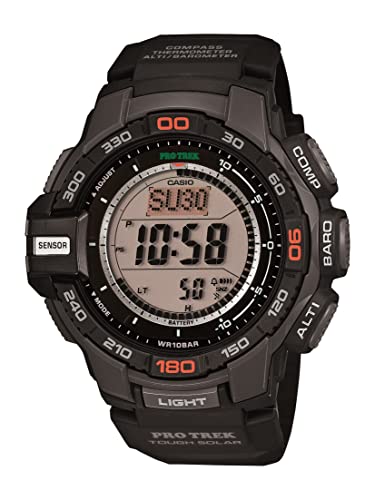
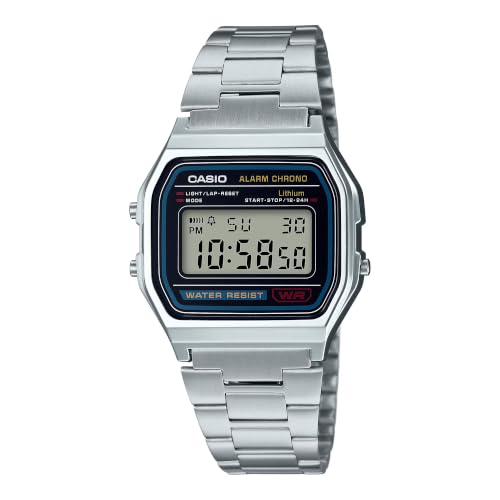
Casio Men's Pro Trek PRG-270-1 Tough Solar Triple Sensor Multifunction Digital Sport Watch



Choosing between a sensor watch and everything else
The decision finally reduces to which information you need outdoors and which burdens you accept in exchange. If your routes are recorded, shared, and navigated on detailed mapping, if messages must reach your wrist, and if charging nightly is a tolerable routine, a connected watch serves you better and this category will feel austere. If your priorities run the other way, toward instruments that work in any weather, in any coverage hole, for seasons without attention, the sensor watch’s restraint becomes its recommendation. Many experienced outdoorspeople own both and choose per trip, which is a legitimate answer rather than indecision.
Budget thinking should account for lifespan. A solar sensor watch commonly remains useful across a span in which several generations of connected devices cycle through batteries, software support, and relevance. Cost per year of service, rather than cost at the till, is the fair comparison, and it frequently flatters the simpler instrument. Add the avoided accessories, the absence of subscriptions for core functions, and the resale interest in well-kept examples, and the economic case rests on durability rather than novelty.
Fit the choice to your terrain one last time. Alpine walkers weight altimeter behaviour and compass continuity heavily. Coastal users weight water resistance, tide support where offered, and pressure trends. Forest workers weight compass reliability and case toughness. Travellers weight radio timekeeping, world time, and a format that passes in a restaurant. The range exists because those weightings differ, and a model that is wrong for one itinerary can be exactly right for another, which is why category advice should end with your calendar rather than a podium.
Chosen with that honesty, a Casio multi-sensor watch settles onto the wrist as the sort of equipment that disappears into a routine: checked at breakfast, trusted at the junction, rinsed under the tap at night, and still quietly counting the pressure change while its owner sleeps before the next ridge.