Our Top Picks


What's inside
- Rechargeable batteries for scanners: two different worlds share one word
- How to match a Bearcat battery: model, BP code, and the label on the old pack
- HQRP 2200mAh Battery for Uniden Bearcat BP-180 BP-250 (B009S4MQ74)
- Artisan Power Replacement Battery for Uniden SDS100, Extended Capacity Li-ion 5400 mAh (B0FTZXBSK5)
- ZZcell Battery Replacement for Bearcat Sportcat BP120 / BP150 / BP180 / BP250 (B072NBWQR6)
- HQRP Battery Compatible with Uniden Bearcat BC245 BC245XLT BC250 BC250D BC296 BC296D (B009S3HO1S)
- HQRP Battery Compatible with Uniden Bearcat SPORTCAT BP-120 BP-150 BP-180 BP-250 (B009S3HMFG)
- Kastar 2-Pack Battery Replacement for Uniden Bearcat Sportcat SC160B, SC-180, SC200, BP1000, BP1600 (B089PTQKM6)
- ExpertPower 6V 1100mAh Ni-Mh Battery for Uniden BP-2500, BC2500XLT, BC3000XLT (B00AG1GWW8)
- Kastar 1-Pack Battery Replacement for Uniden Bearcat Sportcat BP-120, BP-150, BP-180, BP-250, BC120 (B089Q36Z3N)
- SCANNER SPARES Pack of 5 Batteries Compatible with Symbol MC9000 Series Barcode Scanners, 2600mAh (B09SYCLV6D)
- BTRY-LS42RAA0E-01 Replacement Battery for Motorola Symbol LS4278 LI4278 DS6878 Handheld Barcode Scanner (B09XT7QGGM)
- Ni-MH and Li-ion in this guide: chemistry follows the device, not preference
- Cycle life, shift work, and knowing when a pack is done
- How to choose: a buying guide, common mistakes, and care on shift
- Setting up a charging station that works for listeners and for fleets
- Check prices on Amazon
- Disclosure
As an Amazon Associate I earn from qualifying purchases. This post may contain affiliate links at no extra cost to you.
Rechargeable batteries for scanners: two different worlds share one word
The word scanner covers two very different kinds of equipment in this guide, and keeping them separate is the first step to buying the right battery. The first world is the Uniden Bearcat radio scanner, a receiver used by hobbyists, race fans, aviation listeners, and public-safety monitors to follow radio traffic. Those handhelds use battery packs identified by BP codes and related Uniden part numbers, and several listings here also state a capacity in milliamp hours or a chemistry such as nickel-metal hydride or lithium-ion. The second world is the warehouse and retail barcode scanner, represented here by Symbol devices in the MC9000 series and the LS4278 family, where a battery is a shift tool that must survive constant trigger pulls, cradle returns, and multi-shift rotation in a working fleet.
A battery that is perfect for one world has no place in the other. Bearcat packs are shaped and coded for specific Uniden handhelds, while Symbol packs are built for enterprise barcode devices with their own housings and contacts. Our research for this guide therefore organizes every product by the device family and code stated in its title, and readers should do the same: identify whether your scanner listens to radio or reads barcodes, read the exact model and battery code from the device or its old pack, and only then compare capacity, pack count, and chemistry among listings that match that code. Skipping that order is how the wrong pack gets ordered with complete confidence.
There is also a difference in how failure feels. A radio scanner with a fading pack goes quiet at the worst moment of an event, a storm, or a race, and the listener may not know what was missed. A barcode scanner with a fading pack slows a worker mid-aisle, forces a walk back to a cradle or spare station, and multiplies that lost time across a team. In both cases the battery is a consumable with a finite cycle life, and treating it as a planned replacement, rather than a surprise, is the core habit this guide encourages for home listeners and fleet managers alike.
How to match a Bearcat battery: model, BP code, and the label on the old pack
Uniden reused similar handheld shapes across many Bearcat generations, so model names alone can mislead. The reliable identifiers are the scanner model printed on the device, the BP code or part number on the existing pack, and any replacement number the pack label carries. Listings in this guide name codes including BP-180, BP-250, BP-120, BP-150, BP1000, BP1600, BP-2500, and part number BBTY0356001, alongside scanner models such as BC245, BC245XLT, BC250, BC250D, BC296, BC296D, and the SportCat line including SC140, SC160B, SC-180, and SC200. Write your code down exactly, including hyphens, before comparing listings, because BP-180 and BP-250 are different packs for different generations even though both belong to Bearcat handhelds.
If the old pack is missing entirely, use the scanner model to narrow the field, then cross-check the code named for that model in the listing title. Photograph the empty battery compartment as well, since contact layout and pack outline provide a final visual check against product images. For background on how automatic chargers manage rechargeable packs in other equipment, best 18650 battery chargers explains cylindrical cell charging, which is a different format from these fitted packs and should be read as general charging education rather than a substitute for the charger your scanner system specifies.
- Copy the BP code or part number from the old pack exactly, including punctuation.
- Confirm the scanner model in the listing matches your handheld model.
- Compare compartment shape and contact position with product photographs.
- Note the chemistry and capacity stated in the title before comparing options.
- Keep the old pack until the replacement has charged and powered the scanner through a normal session.
HQRP 2200mAh Battery for Uniden Bearcat BP-180 BP-250 (B009S4MQ74)
This HQRP listing states a capacity of 2200mAh in its title and names BP-180 and BP-250 along with part number BBTY0356001 and scanner models BC245, BC245XLT, BC250, BC250D, and BC296. For owners of those Bearcat generations, the stated capacity gives a concrete comparison point against the pack being replaced, and the dual BP code naming reflects how these packs serve more than one related handheld. Start by confirming which of the named codes matches your own pack label, because the listing breadth is helpful only after that personal match is made.
A pack in this class suits the listener who monitors during events, weather, or travel and needs a full session without rationing volume or backlight use. Put the new pack through a complete charge, then use it through a typical listening day and note how it behaves compared with the old pack at its best. If the scanner returns to lasting the sessions you actually attend, the replacement has done its job. Keep the scanner and spare together in the case you take to races or trips, so the fresh capacity is present where it is needed rather than stored at home.
Whatever the device, fit and first charge set the tone. Seat the pack fully, confirm any latch or cover closes as it did with the original, and complete a full charge before judging runtime. Then judge it under your real workload: a full listening session for a Bearcat, or a full shift pattern for a barcode device. A pack that has been verified in real use can be trusted in the moments that matter, while a pack that has only sat on a charger remains an assumption. Record the date it entered service on a small label, so future wear can be judged against real age and use.
Artisan Power Replacement Battery for Uniden SDS100, Extended Capacity Li-ion 5400 mAh (B0FTZXBSK5)
The Artisan Power listing is the lithium-ion entry in this set, described in its title as an extended capacity Li-ion pack of 5400 mAh for Uniden SDS100 radios, replacing BPS100HD. The SDS100 is a distinct, newer handheld from the older Bearcat models that dominate this guide, so this pack should be considered only by SDS100 owners whose device calls for the replaced part named in the title. Its stated capacity is the headline: within the correct device, higher stated capacity is intended to support longer monitoring between charges, which matters for all-day event listening and storm coverage.
Extended capacity also invites realistic planning. A larger stated capacity supports longer sessions, but actual runtime still depends on volume, backlight, and how busy the monitored systems are. SDS100 owners should confirm the BPS100HD replacement reference against their current pack, charge the new pack fully before a long event, and carry the charging cable or solution the SDS100 system uses, because a modern handheld in heavy use can still outrun any single pack on a multi-day trip. This listing shows why code matching matters more as scanners modernize: the SDS100 pack belongs to its own device, not to the BP-180 or BP-250 generations.
Whatever the device, fit and first charge set the tone. Seat the pack fully, confirm any latch or cover closes as it did with the original, and complete a full charge before judging runtime. Then judge it under your real workload: a full listening session for a Bearcat, or a full shift pattern for a barcode device. A pack that has been verified in real use can be trusted in the moments that matter, while a pack that has only sat on a charger remains an assumption. Record the date it entered service on a small label, so future wear can be judged against real age and use.
ZZcell Battery Replacement for Bearcat Sportcat BP120 / BP150 / BP180 / BP250 (B072NBWQR6)
The ZZcell listing names BP120, BP150, BP180, and BP250 codes together with part number BBTY0356001 and SportCat references including NASCAR SportCat and SC140 in its title. That wide code list makes label checking essential: find which single code your SportCat pack carries, then confirm that code appears here. SportCat handhelds have a strong following among race fans, where a scanner is used intensely for a weekend and then stored until the next event, a pattern that is hard on packs left fully depleted between uses.
For event-driven listeners, the best routine is to charge before the event, confirm the scanner runs through a practice session at home, and recharge after the event before storage rather than leaving the pack empty in a gear bag for months. A replacement pack restores the starting point for that routine. If your SportCat sat for seasons with a dead pack installed, remove the old pack, inspect the compartment for any residue or damage, and only then fit the replacement. A fresh pack in a clean compartment, charged on schedule, is what turns a race-weekend scramble into a simple grab-and-go habit.
Whatever the device, fit and first charge set the tone. Seat the pack fully, confirm any latch or cover closes as it did with the original, and complete a full charge before judging runtime. Then judge it under your real workload: a full listening session for a Bearcat, or a full shift pattern for a barcode device. A pack that has been verified in real use can be trusted in the moments that matter, while a pack that has only sat on a charger remains an assumption. Record the date it entered service on a small label, so future wear can be judged against real age and use.
HQRP Battery Compatible with Uniden Bearcat BC245 BC245XLT BC250 BC250D BC296 BC296D (B009S3HO1S)
This HQRP listing is framed by scanner models rather than leading with BP codes, naming BC245, BC245XLT, BC250, BC250D, BC296, and BC296D scanners in its title. Owners of those models can approach from the device side: if your handheld is one of the named models, this listing is speaking to your generation, and the next step is to verify the pack code inside your scanner against the pack offered. Model-led listings are convenient when the old pack label is worn or missing, because the model on the scanner body is usually still legible.
Listeners who keep a Bearcat by a desk or bedside for weather and local traffic often notice pack wear as a slow shortening of untethered sessions, even if the scanner spends much of its life near power. A fresh pack restores portable freedom for porches, garages, and trips. After fitting, run the scanner on battery alone for a normal session rather than leaving it permanently connected, so you learn its real runtime and can trust it when you carry it away from the desk. That knowledge, gained early, prevents the false confidence of a pack that has never actually been asked to do a full session.
Whatever the device, fit and first charge set the tone. Seat the pack fully, confirm any latch or cover closes as it did with the original, and complete a full charge before judging runtime. Then judge it under your real workload: a full listening session for a Bearcat, or a full shift pattern for a barcode device. A pack that has been verified in real use can be trusted in the moments that matter, while a pack that has only sat on a charger remains an assumption. Record the date it entered service on a small label, so future wear can be judged against real age and use.
HQRP Battery Compatible with Uniden Bearcat SPORTCAT BP-120 BP-150 BP-180 BP-250 (B009S3HMFG)
This second HQRP SportCat listing names BP-120, BP-150, BP-180, and BP-250 with part number BBTY0356001 as a replacement range. Its overlap with other listings in this guide is itself instructive: several makers cover the same SportCat codes, so the buyer decision shifts to careful code confirmation, the condition of the specific scanner, and buying from a listing whose stated codes match the pack in hand. When two listings both match your code, either can be the right category, and the deciding work is the verification you do before ordering, not a search for a dramatic difference the titles do not claim.
SportCat owners should also think about accessories as a system. A fresh pack delivers its value when the belt clip, case, and charging routine are ready too, because a scanner left in a drawer with a good pack still gets forgotten. Set the scanner up where it will be grabbed for events, keep its charger in the same place, and make the pre-event charge part of packing rather than a morning-of discovery. That placement discipline is simple, and it is the difference between owning a working scanner and actually hearing the event you bought it for.
Whatever the device, fit and first charge set the tone. Seat the pack fully, confirm any latch or cover closes as it did with the original, and complete a full charge before judging runtime. Then judge it under your real workload: a full listening session for a Bearcat, or a full shift pattern for a barcode device. A pack that has been verified in real use can be trusted in the moments that matter, while a pack that has only sat on a charger remains an assumption. Record the date it entered service on a small label, so future wear can be judged against real age and use.
Kastar 2-Pack Battery Replacement for Uniden Bearcat Sportcat SC160B, SC-180, SC200, BP1000, BP1600 (B089PTQKM6)
The Kastar two-pack listing names SportCat SC160B, SC-180, and SC200 models with BP1000 and BP1600 references, a different code pair from the BP-120 to BP-250 group, which underlines why SportCat alone is not a sufficient identifier. Owners of the named models gain the two-pack advantage: one pack in the scanner and one charged reserve, or a rotation that lets a pack rest while the other works a long race day. Two packs also provide insurance during multi-day events where overnight charging time is short and mornings start early.
Manage a two-pack set by labeling each pack and alternating them, rather than exhausting the first pack completely every day while the second stays untouched for months. Alternation spreads cycles and keeps both packs exercised. Store the reserve in the scanner case, protected from loose metal objects, and swap at a natural break instead of waiting for the scanner to die at a critical restart or finish. For race fans, that swap discipline, practiced once at home, becomes automatic in the grandstand when attention belongs on the track.
Whatever the device, fit and first charge set the tone. Seat the pack fully, confirm any latch or cover closes as it did with the original, and complete a full charge before judging runtime. Then judge it under your real workload: a full listening session for a Bearcat, or a full shift pattern for a barcode device. A pack that has been verified in real use can be trusted in the moments that matter, while a pack that has only sat on a charger remains an assumption. Record the date it entered service on a small label, so future wear can be judged against real age and use.
ExpertPower 6V 1100mAh Ni-Mh Battery for Uniden BP-2500, BC2500XLT, BC3000XLT (B00AG1GWW8)
The ExpertPower listing is explicit about its electrical identity in its title: 6V, 1100mAh, nickel-metal hydride chemistry, made for Uniden BP-2500 and the BC2500XLT and BC3000XLT scanners, and described as a rechargeable scanner battery. Those stated figures make it a clear example of why specifications must match the device generation. A pack defined by voltage and chemistry for these older models is not interchangeable with packs for other Bearcat lines, and its stated capacity should be judged within its own class rather than compared directly with lithium-ion figures elsewhere in this guide.
Ni-MH packs benefit from consistent habits: charge fully before use, avoid leaving them depleted for long storage, and expect gradual capacity loss across many cycles as normal wear. Owners reviving a BC2500XLT or BC3000XLT should first confirm the compartment and contacts are clean, then let the new pack complete its initial charge without impatience. These older scanners remain valued for their bands and simplicity, and a correctly matched Ni-MH pack is often the single part that returns one to regular service after years on a shelf.
Whatever the device, fit and first charge set the tone. Seat the pack fully, confirm any latch or cover closes as it did with the original, and complete a full charge before judging runtime. Then judge it under your real workload: a full listening session for a Bearcat, or a full shift pattern for a barcode device. A pack that has been verified in real use can be trusted in the moments that matter, while a pack that has only sat on a charger remains an assumption. Record the date it entered service on a small label, so future wear can be judged against real age and use.
Kastar 1-Pack Battery Replacement for Uniden Bearcat Sportcat BP-120, BP-150, BP-180, BP-250, BC120 (B089Q36Z3N)
This Kastar single-pack listing covers BP-120, BP-150, BP-180, and BP-250 codes and names BC120 among its compatible references. As a one-pack option, it fits the owner who needs a direct replacement for a faded pack and already has a working charging routine for a SportCat-generation handheld. The single-pack format keeps the decision simple: verify the code, replace the tired pack, and return to listening without building a larger rotation than your habits require.
A single fresh pack is also a sensible way to assess a scanner that has been unused for years. If the scanner performs well on the new pack, you know the device itself is sound and can decide later whether a second pack would help for events. If problems persist with a known fresh pack and a full charge, attention can shift to the scanner, antenna, or programming with the battery removed as a suspect. That diagnostic clarity is valuable, and it is why replacement in the correct code, one step at a time, beats buying several accessories at once for a device whose health is still unknown.
Whatever the device, fit and first charge set the tone. Seat the pack fully, confirm any latch or cover closes as it did with the original, and complete a full charge before judging runtime. Then judge it under your real workload: a full listening session for a Bearcat, or a full shift pattern for a barcode device. A pack that has been verified in real use can be trusted in the moments that matter, while a pack that has only sat on a charger remains an assumption. Record the date it entered service on a small label, so future wear can be judged against real age and use.
SCANNER SPARES Pack of 5 Batteries Compatible with Symbol MC9000 Series Barcode Scanners, 2600mAh (B09SYCLV6D)
With this listing the guide crosses into the barcode world. Scanner Spares offers a pack of five batteries compatible with Symbol MC9000 series barcode scanners, stated at 2600mAh, and naming MC9090, MC9190, and MC92N0 models. A five-pack is a fleet format, not a single-device purchase: it supports spare stations, shift rotation, and immediate swaps when a device fades mid-task in a warehouse, stockroom, or logistics operation. The stated capacity and the named models are the checks; an MC-series device outside the named range should not be assumed compatible.
Fleet spares only help if they are managed. Keep charged spares at the point where devices are issued, separate charged from depleted packs with a clear bin or tag system, and train every shift to swap rather than abandon a fading device on a shelf. Five packs allow a working buffer: devices in use, spares ready, and depleted packs charging, all at once. Track which packs age fastest and rotate stock so the same packs are not always the spares and always the workers. In a busy operation, that small logistics discipline protects throughput far more than any single device feature. Readers managing charging infrastructure for larger battery systems may also compare approaches in best agm battery chargers, while remembering those chargers serve a different battery class entirely.
Whatever the device, fit and first charge set the tone. Seat the pack fully, confirm any latch or cover closes as it did with the original, and complete a full charge before judging runtime. Then judge it under your real workload: a full listening session for a Bearcat, or a full shift pattern for a barcode device. A pack that has been verified in real use can be trusted in the moments that matter, while a pack that has only sat on a charger remains an assumption. Record the date it entered service on a small label, so future wear can be judged against real age and use.
BTRY-LS42RAA0E-01 Replacement Battery for Motorola Symbol LS4278 LI4278 DS6878 Handheld Barcode Scanner (B09XT7QGGM)
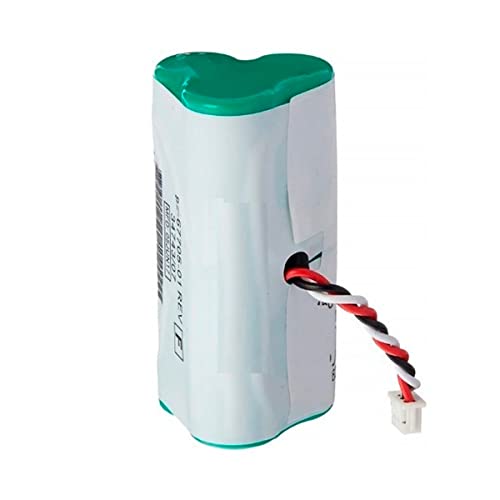
The final listing carries an enterprise part number, BTRY-LS42RAA0E-01, as the replacement battery for Motorola Symbol LS4278, LI4278, and DS6878 handheld barcode scanners. In cordless barcode scanning, the battery lives in a handle that may sit in a cradle between uses, be carried through a store or clinic, and be expected to respond instantly after hours of standby. Matching the part number is the professional way to buy here: the part number on the old battery or in the device documentation should correspond to the replacement reference in the title.
Because these scanners often work in pairs or small fleets at checkouts, pharmacies, and receiving desks, a fading battery shows up as a queue problem, not just a device problem. Replace on evidence: shorter time between cradle returns, more frequent low warnings during a shift, or a handle that no longer lasts a known workload it once covered. After replacement, confirm the scanner pairs and scans normally through a full shift before returning it to the busiest station. Keeping one verified spare for a small fleet prevents a single tired battery from taking a checkout or receiving point out of service at peak time.
Whatever the device, fit and first charge set the tone. Seat the pack fully, confirm any latch or cover closes as it did with the original, and complete a full charge before judging runtime. Then judge it under your real workload: a full listening session for a Bearcat, or a full shift pattern for a barcode device. A pack that has been verified in real use can be trusted in the moments that matter, while a pack that has only sat on a charger remains an assumption. Record the date it entered service on a small label, so future wear can be judged against real age and use.
Ni-MH and Li-ion in this guide: chemistry follows the device, not preference
Two chemistries appear in the titles here. Nickel-metal hydride is stated for the ExpertPower pack for older Uniden models, while lithium-ion is stated for the Artisan Power SDS100 pack described as extended capacity. That distribution reflects device design across generations. The practical rule is simple: a scanner uses the chemistry and voltage its maker designed for its charging system, and the buyer job is to match the stated code and specifications, not to upgrade a device to a different chemistry on personal preference. A listing that states its chemistry and voltage, as the ExpertPower title does, is giving you verification data. Use it.
Care habits overlap more than chemistry labels suggest. Both chemistries dislike being stored for long periods in a fully depleted state, both lose capacity gradually across cycles, and both should be kept away from excessive heat. Chargers and cradles should be the ones intended for the device system. General charging background in best automatic marine battery chargers and best automatic battery chargers concerns larger automatic charging equipment for other battery classes, and it can help supervisors think about charging areas, ventilation, and routine, but those units are not chargers for the fitted scanner packs listed here and should never be connected to them.
Capacity figures stated in titles, such as 2200mAh, 5400 mAh, 1100mAh, and 2600mAh, are comparable only inside the same device family and voltage class. A larger number in a different scanner does not mean a better battery for yours. Within your correct code, a stated capacity helps you understand the maker positioning of that pack, and your own logged runtime after a full charge tells you the rest. Keep that log simple: date, device, and whether the pack lasted the session or shift you needed.
Cycle life, shift work, and knowing when a pack is done
Every rechargeable pack in this guide has a finite number of useful cycles, after which capacity fades even if the pack still accepts a charge. In a home Bearcat, that fade appears over years. In a barcode fleet working multiple shifts, it can appear far sooner in calendar time because cycles accumulate daily. The signs are consistent across both worlds: shorter runtime, faster drop after the first portion of use, and in lithium packs, any swelling or change in fit. A swollen pack leaves service immediately in either world, and a pack that no longer covers a known workload after a full charge has given its answer.
For fleets, build replacement into the routine rather than waiting for complaints. Date labels, a charged-spare station, and a separate place for packs awaiting evaluation keep the system honest. For home listeners, a pre-event check a week ahead leaves time to charge, evaluate, and order a correctly coded replacement if the old pack disappoints. Both habits replace urgency with schedule, which is cheaper in time and attention even before any other consideration.
- Date every pack when it enters service.
- Swap barcode scanner packs at a station, not randomly across the floor.
- Evaluate a suspect pack after one full charge and one real workload.
- Remove swollen or damaged packs from service at once.
- Store spares away from loose metal and away from heat sources.
- Reorder by code from the pack label, not from memory of the device name.
How to choose: a buying guide, common mistakes, and care on shift
Choose in this order. First, name your world: radio scanner or barcode scanner. Second, copy the code or part number from the old pack: a BP code or BBTY0356001 for Bearcat generations, BPS100HD as the replaced reference for the SDS100 listing, BP-2500 for the ExpertPower Ni-MH pack, or BTRY-LS42RAA0E-01 for the Symbol cordless models. Third, confirm your device model appears in the listing. Fourth, decide pack count by workload: a single pack for a home listener with a working routine, two packs for event rotation, and multi-packs such as the five-pack for MC9000 fleets where swaps happen across shifts. Fifth, note any stated capacity or chemistry and file it with the pack date label.
The common mistakes mirror that order in reverse. Ordering by the word SportCat without a BP code, assuming an SDS100 pack fits older Bearcat models, comparing milliamp hours across different voltages and devices, leaving a new pack uncharged until the morning of an event, and letting charged and depleted fleet packs mix in one bin are the errors that cause most disappointment. Each is prevented by the label-first method in this guide. Care during use is equally plain: keep contacts clean, keep packs dry, return barcode scanners to their cradles as the workflow intends, and do not leave packs in hot vehicles between shifts or events.
Storage follows the same principles for both worlds. Keep packs in a cool, dry place, partially charged rather than abandoned empty for long periods, and check stored packs on a schedule if the device will sit between seasons or events. Before a race weekend, a storm season, or a peak retail period, run every pack through a charge and a real workload. That proving step, done early, is the simplest insurance a scanner owner or fleet lead can arrange, and it turns battery care from a hope into a verified state.
Setting up a charging station that works for listeners and for fleets
A good charging station is boring by design. It sits in one known place, it has the charger or cradle for the device, it has a clear spot for charged packs and a different spot for packs that need charging, and nobody has to hunt for a cable when a session or a shift is about to start. For a home Bearcat listener, that station might be a single shelf near the door where the scanner, its case, and its spare pack live together, so packing for a race, a trip, or a storm watch becomes a matter of picking up a kit that is already complete. The station also protects packs from the two most common household hazards: being lost in a drawer among metal objects, and being left in a hot or damp place such as a garage bench in summer or a laundry room shelf.
In a warehouse or retail setting, the same idea scales up. Label the station by device family so Bearcat-era thinking never mixes with barcode work, keep MC9000 spares separate from LS4278 handle batteries, and make the swap rule visible to every shift: a device that warns of low charge goes back, a charged spare goes out, and the depleted pack goes into the charging spot, never into the charged bin. Supervisors should review the station weekly, remove any pack with a damaged casing or a date label that shows it has outlasted its companions, and note which stations run short most often, because a station that is always empty is a signal that pack count, not worker habit, is the real problem. A short weekly review keeps small shortages from becoming peak-hour failures.
Finally, plan for the day a pack fails despite good habits. Keep the code list for every device you own at the station itself, printed or written in a notebook, so a replacement can be ordered by exact code without pulling a working device out of service to read its label. That list should include the scanner model, the pack code or part number, the date the current pack entered service, and the listing reference you used last time. With that record in place, reordering becomes a calm administrative task rather than an urgent search, and both the home listener and the fleet lead can keep their attention on listening and on the work the scanner was bought to support.
Check prices on Amazon
Live listings for the shortlist in this guide are pulled from Amazon below, so prices and availability are always current at the moment you look.


Disclosure
This article is based on our research into the battery codes, part numbers, stated capacities, and device models published in each maker listing, together with general care practice for rechargeable packs in radio and barcode equipment. Compatibility should always be confirmed against the label of the pack being replaced, because similar device names can use different codes across generations. As an Amazon Associate we earn from qualifying purchases. Purchases made through affiliate links in this guide may support the site, and readers and fleet buyers should still match code, model, and pack count to their own devices and shift patterns before ordering any replacement described here.