Our Top Picks


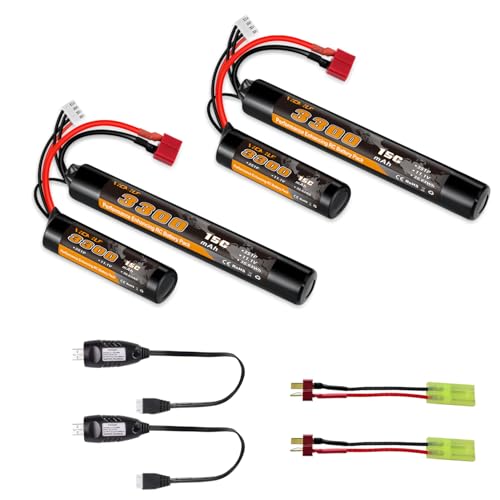


What's inside
- Voltage first: what separates a 7.4V pack from an 11.1V pack
- Trigger contacts, arcing and the honest case for a MOSFET
- Decoding the C rating without falling for wrapper theatre
- Capacity, physical size and the compartment that decides both
- Four shapes and the furniture each one was designed around
- Mini-Tamiya versus Deans: a small plug with outsized influence
- Balance charging is not optional etiquette; it is cell survival
- Storage voltage, swelling cells and dignified disposal
- Matching archetypes: which pack profiles suit which guns
- Ownership habits that quietly separate good packs from short-lived ones
- Internal resistance: the specification hiding behind performance
- Charge rate, parallel boards and other ways to ruin a Sunday
- Soldering a connector conversion without cooking the pack
- Alarms, cut-offs and electronic guardians
- Heat, cold and the calendar: environmental honesty
- Myths that refuse to retire
- Reading a product listing like an auditor
- Game-day logistics for a battery collection
- Discharge curves and what flat really means
- When the older chemistries still make sense
- Buying second-hand packs without inheriting regrets
- The field repair pouch: small tools, large rescues
- Deciding between two finalists on your shortlist
- Neighbouring charging topics worth a detour
- Check prices on Amazon
- A short checklist before any pack earns your money
As an Amazon Associate I earn from qualifying purchases. This post may contain affiliate links at no extra cost to you.
Some links leaving this page carry an affiliate tag, and when a purchase follows, the seller pays a small commission that never comes out of your pocket as an added charge. Everything compared below leans on specification sheets released by manufacturers, manuals and support documents those companies publish, plus recurring themes that surface across owner discussions, because a battery is ultimately a bundle of measurable electrical limits rather than a matter of taste. Nothing here rests on claims of personal product trials, so treat each figure as a published value you can verify against the label wrapped around any pack you are considering.
An automatic electric gun asks its battery to do two jobs that pull in opposite directions. The pack must deliver sharp bursts of current every time the gearbox cycles, yet it also has to survive an entire afternoon of intermittent firing without sagging so far that the motor labours. Lithium polymer chemistry suits that workload because pouch cells hold voltage well under load and pack considerable energy into shapes that slide inside narrow replica furniture. Getting the match right, though, involves far more than picking the largest capacity printed on a colourful wrapper, since voltage class, discharge capability, physical outline and connector style all interact with the gun sitting in front of you.
Voltage first: what separates a 7.4V pack from an 11.1V pack
Manufacturers build these packs from individual pouch cells wired in series, and each cell contributes a nominal 3.7 volts to the total printed on the label. Two cells in series produce the familiar 7.4V configuration, commonly shortened to 2S, while three cells stacked the same way yield 11.1V, known as 3S. Fresh off a charger the numbers climb higher, because a fully charged cell sits near 4.2 volts, so a topped-up 2S pack actually presents roughly 8.4 volts to the motor and a charged 3S pack approaches 12.6 volts. That distinction matters whenever you read forum advice quoting voltages, since nominal and fully charged figures describe the same hardware at different moments.
Raising voltage spins the motor faster, and a faster motor shortens the interval between shots in semi-automatic fire while lifting the cyclic rate during automatic bursts. Many players describe the change as snappier trigger response, because the gearbox completes its cycle sooner after the contacts close. The trade arrives elsewhere in the circuit: higher voltage also pushes more current through mechanical trigger contacts at the instant they separate, encouraging tiny arcs that pit and carbonise the contact faces over thousands of cycles. Gearboxes with conservative gearing and mild springs tolerate 3S power gracefully, whereas tightly tuned setups already running near their mechanical comfort zone may complain through overshoot, double firing on semi, or accelerated wear inside the shell.
Publisher documentation from several AEG brands draws a fairly consistent line between the two classes. Entry-level and mid-range replicas with standard ferrite motors, 18:1 gears and no electronic control unit are usually specified around 2S lithium polymer or older nickel-based packs. Models whose manuals explicitly welcome 11.1V operation almost always pair that permission with a factory-fitted electronic trigger system or hardened internals. Reading the manual for your exact model therefore beats general advice, because two outwardly similar carbines can carry very different guidance depending on the switch assembly hidden inside the grip and the metallurgy chosen for the contact trolley.
Trigger contacts, arcing and the honest case for a MOSFET
A traditional AEG switch is a simple sliding contact arrangement. Pulling the trigger drives a trolley forward until copper faces meet, completing the circuit between battery and motor, and releasing the trigger lets a spring drag those faces apart again. Every separation under load draws a brief arc, and arc energy grows with voltage, which is why contacts fed by 3S packs often show blackened, pitted surfaces far sooner than identical switches run gently on 2S power. Carbon deposits raise electrical resistance, resistance generates heat, and heat accelerates further degradation, so a switch can drift from occasional hesitation into unreliable semi-automatic behaviour across a single busy season.
A MOSFET changes the division of labour inside that circuit. Instead of forcing the full motor current through the delicate mechanical contacts, the switch wires carry only a faint signal current, while a transistor mounted elsewhere handles the heavy flow between pack and motor. Maker literature for add-on MOSFET units consistently presents contact longevity as the headline benefit when 11.1V packs enter the picture, with reduced resistance along the power path as a secondary gain. Some units add active braking, burst programming or cycle completion, but even the simplest protective device solves the core problem: the trigger stops being the component asked to interrupt a straining motor dozens of times per minute.
Deciding whether your build needs that protection comes down to the combination you actually run. A stock gun sipping current through a mild spring on 7.4V power can live a long, contented life with plain contacts. Move to an 11.1V pack, a stronger spring or a high-torque motor drawing heavier current, and the arithmetic of arcing shifts against the switch. Owners who report burnt trolleys frequently describe the same prelude: semi-automatic fire growing lazy, then intermittent, then dependent on wiggling the trigger. Treating a MOSFET as insurance bought before those symptoms appear is cheaper than replacing switch assemblies after carbon scoring has already chewed through the plating.
Decoding the C rating without falling for wrapper theatre
The C figure printed beside capacity describes how quickly a pack can safely release its stored energy relative to its own size. Multiply capacity in amp-hours by the C number and you obtain a theoretical continuous current ceiling: a 1,300 milliamp-hour pack labelled 20C works out to 26 amps, while a 2,200 milliamp-hour pack at the same rating reaches 44 amps on paper. Treat those products as ceilings rather than promises, because pouch temperature, lead gauge, connector resistance and cell age all shave away at what arrives at the motor. Conservative builders leave generous headroom between calculated demand and published ceiling instead of treating the multiplication as a guarantee carved into the wrapper.
Many listings quote two discharge figures, a continuous number and a larger burst number meant to cover momentary peaks lasting only seconds. Motor start-up is precisely such a peak, since a stationary armature initially draws far more current than a spinning one, so burst headroom does serve a genuine purpose during the first fraction of every shot cycle. Confusion creeps in when sellers splash the burst figure across marketing banners while tucking the continuous rating into fine print. Comparing packs fairly means lining up continuous against continuous, then checking whether the burst allowance comfortably covers the inrush your motor and spring combination is likely to demand during cold starts on a frosty morning.
Insufficient discharge capability announces itself through behaviour rather than paperwork. Voltage sags deeply each time the trigger is pulled, the motor sounds strained instead of eager, rate of fire decays noticeably as the session progresses, and the pack may feel warm along its faces after modest use. Any of those symptoms can also implicate gear shimming, motor height or a tired spring, so disciplined troubleshooting changes one variable at a time. Swapping in a borrowed pack with stronger published discharge figures is a quick discriminator: if the gun wakes up immediately, the original battery was the bottleneck; if nothing changes, the problem lives inside the gearbox rather than inside the pouch cells.
Capacity, physical size and the compartment that decides both
Milliamp-hours quantify stored charge, and stored charge governs roughly how many cycles a gearbox can complete before voltage slides toward the point where continued firing risks cell damage. Bigger numbers, however, arrive inside bigger pouches, and airsoft furniture offers notoriously stingy accommodation. Buffer tubes swallow only slim stick shapes, handguards hide batteries beneath rails crowded with wiring, and crane stocks split capacity across two lobes flanking the tube. Measuring your compartment with calipers, including room for leads and the connector body, prevents the classic disappointment of a technically perfect pack that physically refuses to go home without crushing its own wiring harness against sharp furniture edges.
Manufacturers publish pack dimensions, yet those figures occasionally omit protruding leads or the slight bulge that pouch cells develop with age, so allow a small margin beyond the printed length and thickness. Mock-fitting with foam or balsa cut to the stated dimensions is an old workshop trick that costs nothing and reveals interference before money changes hands. Pay attention to where the leads exit the pack, because a top-exit harness inside a tight handguard may kink sharply against the barrel nut, while a side-exit arrangement slides past the same obstruction without drama. Small geometric details like that rarely appear in marketing copy, although they decide whether installation feels effortless or adversarial.
Runtime expectations deserve similar realism. A pack rated at 1,300 milliamp-hours does not deliver a fixed shot count, since spring strength, gear ratio, motor efficiency, ambient temperature and your own firing discipline all move the total. Published comparisons therefore frame capacity as relative guidance: stepping from 1,100 to 1,600 milliamp-hours within the same footprint class generally buys a longer day, not a precisely calculable number of extra magazines. Cold weather deserves a footnote of its own, because lithium polymer cells surrender capacity and discharge strength as temperatures fall, a quirk familiar to anyone whose crisp winter game turned sluggish despite a freshly charged battery.
Four shapes and the furniture each one was designed around
Stick packs stretch their cells into a single slender column, the natural tenant for buffer tubes, top covers on AK-pattern replicas and any compartment shaped like a tunnel. Their limitation is capacity, since a narrow column simply cannot hold much active material, and their length can foul against sling plates or wiring routed through the same passage. Butterfly arrangements, also sold as nunchuck packs, split cells into two slim legs joined by a flexible lead, letting one leg rest on either side of a handguard barrel or inside the twin channels of certain stocks. That split buys capacity without demanding a wider cavity, at the cost of fussier installation while you coax both legs and their shared harness into place.
Crane-stock packs take the butterfly idea further with a third element sized for the central tube, spreading cells across every void the stock designer left behind. They reward patience during fitting and punish haste, because pinched insulation on the bridging lead is a common casualty of forcing furniture closed over a reluctant harness. Brick packs abandon subtlety entirely: a compact rectangular block carrying generous capacity, intended for replicas with roomy fixed stocks, battery boxes styled as accessories, or custom builds where the compartment was designed around the battery rather than the reverse. Choosing among these outlines is therefore a furniture question first and an electrical question second, which is why experienced players start shopping with a ruler rather than a catalogue.
Weight distribution hides inside the shape decision too. A hefty brick concentrated in a fixed stock shifts balance rearward and can make a long replica feel handier at the muzzle, while the same mass tucked into a handguard drags the front down during extended aiming. Neither answer is universally right; a support build fired from a bipod shrugs off nose weight that would exhaust a player clearing rooms all afternoon. Where rules allow external battery pouches, some owners relocate larger packs entirely, trading sleek lines for freedom from compartment geometry, though dangling leads then need protection against snags, weather and the occasional doorway that reaches out to grab exposed wiring.
Mini-Tamiya versus Deans: a small plug with outsized influence
The mini-Tamiya connector shipped on countless stock replicas uses small spring contacts inside a nylon housing, a design inherited from radio-control hobbies of an earlier era. It works adequately at modest currents, yet its contact area and spring tension impose resistance that grows embarrassing as builds demand more from their batteries. Deans-style T-Plugs answer with broad flat blades held under firm spring pressure, presenting a larger contact patch and a connection that stays mechanically snug after repeated mating cycles. Published comparisons of connector resistance consistently favour the T-Plug format, which explains why upgraded replicas so frequently arrive wearing one and why battery catalogues now list connector choice as a headline specification rather than a footnote.
Mixing ecosystems through adapter leads is possible but self-defeating when done permanently, because the adapter reinserts the weaker connector into the circuit and adds another pair of contacts plus extra lead length. A short adapter earns its keep for charging borrowed packs or rescuing a game day, while a gun you own outright deserves a proper conversion performed once, with soldered joints, heat-shrink insulation and careful polarity discipline. Polarity deserves shouting about: airsoft wiring conventions place positive and negative in specific housing positions, and a reversed pack can destroy electronic trigger units instantly. Verify orientation with a multimeter before the first connection whenever a connector has been changed, soldered or even merely suspected of nonstandard assembly.
Connector condition belongs on your maintenance checklist alongside gearbox shimming. Contacts that feel loose, show discolouration or warm noticeably during firing are asking for replacement, not encouragement. A plug that intermittently loses contact mimics a dying battery, sending owners shopping for cells when the real culprit costs pennies and hides at the end of a wire. Keep housings clean, keep blades free of corrosion, and retire any lead whose insulation has chafed through near the crimp. Electrical reliability in an AEG is a chain of small kindnesses, and the connector is the link most players handle daily while thinking about least.
Balance charging is not optional etiquette; it is cell survival
Series packs drift. Individual pouches inside a 2S or 3S battery never age in perfect lockstep, so after repeated cycles one cell may sit slightly higher or lower than its neighbours at the end of a charge. A balance charger reads each cell through the thin white balance lead and trims the process so every pouch finishes near 4.2 volts together, instead of letting the strongest cell overshoot while the weakest lags behind. Overcharging a lithium polymer cell invites swelling and, in ugly cases, fire, while chronically undercharging its partner quietly steals capacity from the whole assembly. Skipping the balance lead to save thirty seconds therefore trades a trivial convenience for cumulative damage that no later care can fully reverse.
Choosing charging hardware deserves the same scrutiny as choosing the pack itself, and a dedicated roundup of best lipo balance chargers walks through port counts, charge rates and discharge-to-storage functions in far greater depth than a battery guide can spare. Whatever unit you settle on, confirm that it speaks the correct chemistry profile, because lithium polymer, lithium ion and nickel programmes terminate at different voltages despite sharing similar-looking menus. Charge at the rate the pack maker publishes, commonly expressed as a multiple of capacity, and resist the temptation to hurry a reluctant battery with aggressive settings before a game. A pack charged gently the night before will outlive one repeatedly force-fed on the morning of every event.
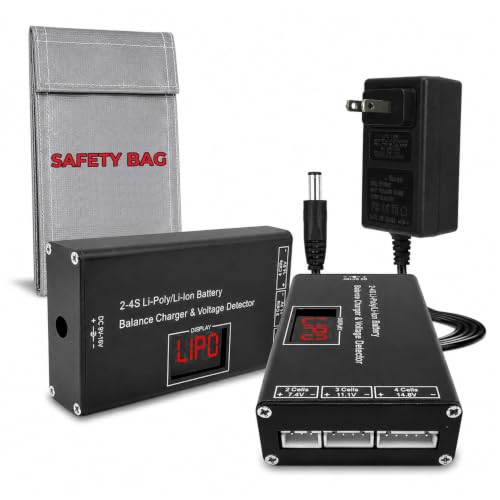
Where charging happens matters as much as the settings dialled in. Manuals across the industry repeat a consistent litany: charge on a non-flammable surface, keep the pack inside a fire-resistant bag or box, stay within sight and earshot, and never leave a charging battery alone overnight or while the house empties. Those instructions sound theatrical until you read incident reports describing pouches that vented during otherwise ordinary sessions. A balance charger with audible alarms, temperature monitoring where supported, and automatic termination gives you layers of warning, yet none of them substitute for a human being in the next room who can respond when an alarm starts complaining.
Storage voltage, swelling cells and dignified disposal
Lithium polymer cells dislike sitting full and dislike sitting empty; their chemistry ages slowest near the middle of the charge range. Maker guidance converges on roughly 3.8 volts per cell as a storage target, which is why decent chargers include a dedicated storage programme that either charges or discharges a pack toward that resting point. A battery parked at full charge for months often returns with elevated internal resistance and a faint puffiness, while one stored flat may sag below recovery entirely. Building a small ritual around storage mode after the final game of a trip costs minutes and repays itself in seasons of extra service from packs that would otherwise fade quietly in a drawer.
Charging bags woven from fire-resistant material are cheap insurance with one job: containing a venting pack long enough to protect the surrounding room. They are not magic, and a sealed bag stuffed carelessly can still smoke impressively, so leave the flap arranged as the manufacturer directs and keep the bag away from solvents, aerosols and the rest of your stored batteries. Inspect packs before every charge for soft swelling, creased corners, damaged wrap or a sweet chemical smell leaking from a puncture. Any of those findings retires the battery immediately, because a compromised pouch does not heal, negotiate or improve with gentle treatment and optimistic thinking.
Disposal follows a calm, unglamorous script. A swollen or damaged pack should be isolated on a non-flammable surface away from other batteries, then taken to a local hazardous-waste or battery-recycling channel that accepts lithium chemistries; household rubbish is never an appropriate destination for reactive cells. Some hobby guidance describes fully discharging retired packs before handover, but local facility instructions take precedence over internet folklore, so ask the receiving site what state they prefer. Never puncture a pouch to speed anything along, never incinerate one, and never leave a suspect battery baking inside a hot vehicle while you decide what to do with it later.
Matching archetypes: which pack profiles suit which guns
Consider first the ordinary mid-length carbine with a buffer tube and no electronic trigger, the most common silhouette at most fields. A 7.4V stick or slim butterfly in the 1,200 to 1,600 milliamp-hour band, with a continuous discharge figure comfortably above the low twenties, respects both the compartment and the plain contact switch. The gun cycles briskly, the contacts age slowly, and the whole arrangement avoids modifications entirely. Players who later crave sharper response can revisit voltage with full knowledge of the MOSFET conversation, rather than discovering contact erosion the expensive way after a season of enthusiastic 3S experiments on hardware that never asked for them.
AK-pattern replicas with space beneath the top cover reward a different calculation. Their long, flat compartment welcomes extended stick packs, and many such guns carry robust switches and torquey stock motors that wake up noticeably on 11.1V power. A 3S stick with moderate capacity and honest discharge figures suits the player who values trigger immediacy, provided the specific model’s documentation blesses the voltage or a protective MOSFET joins the build. Watch lead routing along the cover’s edge, because the same generous space that swallows a long pack also offers sheet metal eager to nibble insulation every time the cover snaps shut after a battery swap in fading light.
Compact personal-defence-weapon styles and stubby submachine replicas present the cruellest geometry of all: tiny compartments, short wiring runs and owners who understandably want full-size runtime. Miniaturised brick and short stick packs in the 900 to 1,300 milliamp-hour range exist precisely for these guns, often with surprisingly healthy discharge ratings because their makers know the motors are working hard for their size. Accept the shorter runtime gracefully and carry a spare; swapping a fresh small pack at lunch beats forcing an oversized one into a compartment until something cracks. Heat also concentrates in cramped spaces, so check pack temperature after heavy strings and let furniture breathe between games.
Designated marksman and support builds sit at the opposite extreme, with cavernous fixed stocks or accessory battery boxes inviting bricks of 2,200 milliamp-hours and beyond. Sustained automatic fire draws current relentlessly, so discharge headroom matters more here than squeezing the last milliamp-hour into the shell. A high-capacity 2S brick keeps a support gun fed without cooking its contacts, while a 3S brick behind an electronic trigger delivers the response a semi-locked marksman platform craves. Either way, weigh the finished replica honestly; a stock stuffed with the largest available block can turn a long patrol game into an upper-body workout nobody scheduled.
Pistol-calibre carbines and other featherweight builds deserve a gentler brief. Their gearboxes are small, their motors modest, and their charm lies in agility, so a featherweight 7.4V pack in the 1,000 milliamp-hour neighbourhood preserves the handling that justified buying the gun. Chasing headline discharge numbers here buys little, because the drivetrain cannot spend current it was never geared to use. Spend the savings on a second identical pack instead, since two modest batteries rotated through a day teach better charging habits and guarantee a charged spare exists when the first one fades during the final scenario of the afternoon.
Ownership habits that quietly separate good packs from short-lived ones
Keep a simple log, even a strip of tape on each pack marked with its purchase month and a tally of outings. Patterns emerge quickly: the battery that always returns hottest, the one whose balance leads need the longest correction, the one that swells a fraction more each season. Retiring a pack based on observed drift beats retiring three after one fails dramatically mid-game. Rotation also equalises wear across a collection, so mark packs and use them in turn rather than always grabbing the favourite that lives at the front of the bag while its siblings age unused at the back.
Low-voltage discipline protects every cell you own. Lithium polymer packs should never be drained until the gun barely turns over, because dragging cells below roughly 3.0 volts under load scars them permanently. Electronic triggers with programmable cut-offs, simple plug-in alarms and plain player awareness all guard the same boundary. When the rate of fire audibly sags and the motor starts sounding tired, the game is telling you the pack has given enough; swap it rather than milking the final magazine. That restraint, repeated across a season, is the difference between batteries that feel strong in year two and batteries that puff apologetically in month four.
Transport deserves a sentence of its own. Carry packs in a padded, fire-resistant case with leads secured so terminals cannot meet loose metal, magazines or tools rattling around the same kit bag. Remove the battery from the replica for travel, both because many venues require it and because a jolted trigger in transit helps nobody. Arrive, inspect, connect, and chrono your day around known-good power; electrical surprises discovered at home are anecdotes, while the same surprises discovered at the field become missed games, borrowed batteries and a lingering suspicion that your entire loadout resents you personally.
Internal resistance: the specification hiding behind performance
Two packs can share identical labels yet behave like distant cousins, and internal resistance usually explains the family rift. Resistance inside a cell opposes current flow, converting a slice of every discharge into heat and dragging terminal voltage downward under load. Fresh, healthy pouches measure low; tired, abused or cold pouches measure high, and chargers with a resistance-check function report the figure per cell so drift becomes visible before failure makes it obvious. A single cell climbing away from its siblings predicts imbalance, shortened runtime and early swelling, which is why owners who log resistance alongside purchase dates can retire packs on evidence rather than superstition or sudden disappointment.
Cell matching inside a factory pack is the quiet manufacturing step that separates reputable output from bargain-bin roulette. Better assemblers grade pouches by capacity and resistance, then marry near-identical cells so the series string shares work evenly across thousands of cycles. Mismatched strings punish their weakest member relentlessly, since that cell reaches both charge and discharge limits first while its partners still hold reserve. Buyers cannot inspect grading through a wrapper, yet warranty terms, published quality processes and consistent owner reports about longevity all hint at how seriously a maker treats the invisible craft of pairing cells before the heat-shrink ever closes around them.
Charge rate, parallel boards and other ways to ruin a Sunday
Charge rate wears the same C notation as discharge but describes a gentler transaction. A 1C charge fills a pack in roughly an hour, flowing current numerically equal to its capacity, while higher multiples shorten the wait at the cost of warmth and long-term kindness. Most airsoft packs publish 1C as the everyday recommendation regardless of what the cells might tolerate in emergencies, and treating that figure as a ceiling rather than a challenge keeps pouches youthful. Players needing several packs ready for dawn should simply start earlier or rotate a second charger, because chemistry accepts scheduling solutions far more gracefully than it accepts impatience expressed through amperage.
Parallel charging boards tempt owners of many small packs by promising to fill several batteries in one session, and they can work safely when every connected pack shares cell count, similar capacity and closely matched resting voltages. Violate those preconditions and the board becomes a negotiation among unequal batteries conducted through copper traces, with stronger packs force-feeding weaker ones the moment leads connect. Fuses on quality boards limit the damage from mistakes, yet no fuse restores the subtle harm done by routinely marrying packs at divergent charge states. Beginners are better served by sequential charging and a notebook until the underlying discipline feels boring, because boring is exactly what safe charging should feel like.
Lead quality quietly governs how much of a pack’s promise reaches the motor. Silicone-insulated wire in generous gauges stays flexible in cold weather and resists the nicking that stiff PVC jackets invite, while short runs between battery and gearbox preserve voltage that long looms would squander as heat. When rewiring a replica, route conductors away from sharp casting edges, moving selector plates and the enthusiastic screws that pin furniture together. A chafed lead shorting against a gearbox shell can end a battery, a MOSFET and a game day in a single fragrant moment, which makes ten seconds with a torch and a fingertip inspection the cheapest reliability upgrade in the entire sport.
Soldering a connector conversion without cooking the pack
Converting a battery lead to a T-Plug is a five-minute job that punishes carelessness for years, so preparation dominates the actual soldering. Work on one conductor at a time, keep the other insulated and taped away from mischief, and never let bare positive and negative leads share the same postcode during the operation. Tin both wire and terminal, use a hot iron briefly rather than a lukewarm one forever, and let each joint cool undisturbed so the solder sets glossy instead of crystalline. Heat-shrink belongs over every finished joint, slid into place before soldering begins, because discovering its absence afterwards means undoing good work while the iron is still smug and hot.
Polarity conventions deserve a second visit here because conversions are where they go to die. Airsoft T-Plug wiring places the positive conductor on the vertical blade of the T in the prevailing convention, yet prevailing conventions have buried many electronic triggers when an assembler assumed rather than verified. Photograph the original connector before cutting anything, test the finished lead with a multimeter against a known-good pack, and only then introduce the battery to a gun. A reversed connection can destroy a control unit faster than a trigger finger can react, and the smoke that follows writes the lesson in a script nobody forgets or wishes to reread.
Alarms, cut-offs and electronic guardians
Plug-in low-voltage alarms are the simplest guardians a lithium pack can carry, clipping onto the balance lead and watching each cell individually while the gun fires. When any pouch sags beneath a chosen threshold under load, the alarm protests loudly enough to hear through ear protection at conversational distances, which occasionally embarrasses the owner but reliably saves the battery. Settings matter: an alarm threshold chosen too low warns after damage has begun, while one chosen too high cries wolf during every energetic burst. Most guidance settles near 3.3 volts per cell under load as a practical compromise between caution and sanity during spirited play.
Electronic trigger units with programmable protection move that guardianship inside the gun, monitoring pack voltage and refusing to cycle once the floor approaches. Their documentation typically lists configurable thresholds and behaviour on cutoff, whether the gun stops abruptly or grants a final warning burst. Such systems pair naturally with 11.1V builds, consolidating MOSFET protection, contact relief and battery supervision into one board, though they also concentrate risk: a failed unit can silence a gun completely where a dumb switch merely degraded gracefully. Carrying a spare basic replica, or at least understanding your unit’s failure modes before a big event, is the mark of an owner who plans beyond optimism.
Heat, cold and the calendar: environmental honesty
Temperature writes its signature across every discharge curve a manufacturer publishes, usually at a comfortable room-temperature benchmark that real life rarely supplies. Summer heat inside a parked car can push a stored pack toward accelerated ageing in a single afternoon, while winter fields steal capacity so effectively that a battery feeling half-empty may simply be cold rather than discharged. Warming a chilled pack gently in an inside pocket before play restores much of its vigour, whereas charging a cold-soaked battery immediately invites lithium plating that permanently trims capacity. Patience around temperature extremes is unglamorous, unbillable advice that quietly doubles the useful life of an entire battery collection.
Cycle life figures quoted by makers, often a few hundred full cycles before capacity fades to eighty percent, assume courteous treatment throughout: moderate rates, storage near mid-charge, no deep discharges, no cooking in kit bags. Real collections die less from cycle counts than from calendar abuse, the pack left full in a drawer for a year, the one forgotten in a gun after a muddy game, the bargain purchase that arrived puffed and was used anyway. A quarterly ritual of checking resting voltages and topping every pack back to storage level takes twenty minutes and interrupts most of these slow tragedies before they finish writing themselves.
Myths that refuse to retire
One durable myth insists that a higher C rating alone transforms any gun, as though discharge capability were horsepower rather than headroom. A pack cannot push current a motor declines to draw, so bolting a monstrous discharge figure onto a mild stock build changes little beyond wallet weight and perhaps voltage stability under burst. The reverse myth claims voltage is destiny and 11.1V ruins every replica it touches, ignoring the thousands of documented builds whose switches survive happily behind electronic protection. Both stories survive because each contains a splinter of truth wrapped in overgeneralisation, and specification literacy is the solvent that dissolves them back into their useful, narrower claims.
Another superstition holds that a slightly puffed pack is merely cosmetically compromised and safe to nurse along. Swelling is gas, gas is decomposition, and decomposition inside a sealed pouch is a one-way journey whose later chapters involve venting rather than recovery. Retiring a puffy battery feels wasteful precisely because it may still cycle a gun convincingly, yet continued service gambles a gearbox, a MOSFET and possibly a room against the remaining value of a consumable. Consumables are called consumables because their story ends; the skill lies in closing the book at the right page instead of demanding one chapter more.
A third tale promises that freezing a tired pack restores it, a folk remedy borrowed from chemistries with different failure modes and preserved by wishful thinking. Cold temporarily changes resistance readings and can make a weak battery seem briefly lively, but no thaw returns lost active material or heals a damaged separator. What actually revives borderline packs, modestly and temporarily, is a gentle full cycle on a quality charger that rebalances cells and reminds the owner exactly how much capacity remains. Even then, the honest destination for a battery that needs reviving is the short list for replacement, not the starting lineup for an important event.
Reading a product listing like an auditor
Listings reward forensic reading. Dimensions should appear in millimetres with a diagram, discharge figures should distinguish continuous from burst, connector type should be named rather than merely photographed, and the balance lead should match the cell count in the headline. Vague listings that shout capacity while whispering everything else usually conceal generic cells in cheerful shrink-wrap, and the market’s cheapest offerings sometimes print capacities that physics cannot fit inside the stated dimensions. Comparing claimed capacity against physical volume across several makers exposes outliers instantly, because energy density improves incrementally across the industry, never by the magical leaps that fantasy listings describe.
Owner feedback, read in aggregate, contributes patterns that specifications cannot: leads that detach at the crimp after a month, wrappers that split along seams, packs arriving with one cell suspiciously low. Single dramatic reviews prove little, since shipping damage and misuse write reviews too, but the same complaint recurring across seasons describes a manufacturing habit rather than an accident. Weight your reading toward recent reports on the current version of a pack, because factories revise cell sourcing silently and last year’s excellence may have been value-engineered into this year’s mediocrity while the listing photographs remained reassuringly identical.
Game-day logistics for a battery collection
Veterans organise packs the way quartermasters organise anything: charged and checked the night before, transported in a fire-resistant case, labelled by voltage class so a 3S battery never wanders into a gun that expects 2S during a hurried swap. A small multimeter or cell checker in the kit bag settles arguments that guesswork prolongs, confirming whether a sluggish gun suffers from a tired pack or a mechanical sulk. Spare capacity should exceed expected need by a comfortable margin, because weather, scenario length and a teammate’s forgotten charger all conspire to consume the buffer that optimism considered unnecessary during packing.
Post-game routine closes the loop that pre-game preparation opens. Packs come home, rest until they reach room temperature, then go onto the charger in storage mode rather than being abandoned at whatever voltage the final skirmish left behind. Damage noticed during play gets marked immediately with tape, because memory generously forgives defects that inspection should not. Ten unhurried minutes at the workbench converts the chaos of a game day into a collection that remains trustworthy, and trust, once a battery has earned it across a season, is the real product every specification sheet was trying to sell you all along.
Discharge curves and what flat really means
A discharge curve plots voltage against delivered capacity, and lithium polymer chemistry earns its popularity partly from the shape of that line. After an initial settle from full charge, voltage declines gradually across the middle of the discharge, giving a gun consistent manners for most of the pack’s useful life, before falling away steeply near exhaustion. That steep final knee is the danger zone: performance collapses quickly, and a player chasing a few more shots drags cells toward damaging depths in minutes. Understanding the curve reframes the audible slowdown of a tired gun as a gauge reading rather than a challenge, and gauges deserve obedience.
Manufacturers derive published curves at specified constant currents and temperatures, conditions no skirmish reproduces, since an AEG sips and gulps in pulses while its owner sprints, crouches and complains about the weather. Treat curves as comparative instruments between packs rather than promises about your afternoon. A pack whose curve holds voltage higher at the current your build draws will feel stronger regardless of headline capacity, and two packs with identical milliamp-hours can therefore produce noticeably different trigger manners. This is also why swapping anecdotes between dissimilar builds misleads: each gearbox interrogates its battery with a different accent.
When the older chemistries still make sense
Nickel-metal hydride packs have not vanished from catalogues, and their survival is not pure nostalgia. They tolerate clumsy charging with greater forgiveness, shrug off storage at full charge that would age lithium pouches, and suit loaner guns handed to new players whose battery discipline is still theoretical. Their penalties are weight, lower energy density and a self-discharge habit that empties a pack left in a cupboard for months. A household running beginner days or maintaining a rarely used backup replica can rationally keep one nickel pack in service, provided its charger speaks the right language and nobody expects lithium manners from it.
Lithium iron phosphate occupies a quieter niche, offering exceptional cycle life and thermal composure at lower nominal voltage per cell, which rearranges the series arithmetic for any gun considering it. Availability in airsoft-friendly shapes is thinner, and charger support must be verified rather than assumed, since its charge termination differs from ordinary lithium polymer programmes. For most players it remains a curiosity, yet its existence is a useful reminder that lithium is a family rather than a single personality, and the pouch in your stock was chosen by an industry balancing energy, cost and convenience rather than by destiny.
Buying second-hand packs without inheriting regrets
Used batteries circulate constantly through club sales and marketplace listings, usually described with optimism and photographed with mercy. A fair inspection asks for resting voltage per cell, which a conscientious seller can show with a checker in the photograph, plus honest answers about age, storage habits and any swelling however slight. Packs offered without balance-lead access for inspection, or priced as though unknown history were a feature, should be valued as lottery tickets rather than equipment. The savings on a tired battery evaporate the first time it strands a gun mid-event or demands early replacement at full retail.
Counterfeit and relabelled packs haunt the bargain end of the new market as well, wearing famous wrappers around anonymous cells. Weight is an imperfect but revealing witness: a pack claiming generous capacity should mass roughly what comparable honest packs mass, and one that feels suspiciously featherweight is announcing missing active material. Purchase channels with functioning returns, legible manufacturer information and consistent labelling across a product range all reduce exposure. When a deal’s only documentation is enthusiasm, the documentation is the deal, and walking away remains the most underrated skill in the entire hobby.
The field repair pouch: small tools, large rescues
A modest pouch transforms electrical misfortune from event-ending to anecdotal. Pack a cell checker, a short adapter lead for the connector you do not personally use, electrical tape for emergency insulation, a few cable ties, and the Allen keys your furniture demands for battery access. Add a printed card noting which of your guns accept which voltage class, because borrowed packs and hurried swaps scramble memories that felt infallible at breakfast. None of this weighs anything, all of it fits beside a speedloader, and the first time the pouch rescues a teammate’s day it achieves a social value entirely out of proportion to its contents.
Repairs at the field should stay conservative: reseat connectors, insulate a chafed lead, swap in a known-good pack, diagnose with the checker. Soldering belongs to the bench, bypassing a protection device belongs nowhere, and a swollen battery belongs in isolation rather than in a final heroic magazine. The discipline to declare a pack done for the day, while the game continues without it, is the same discipline that keeps collections healthy for seasons. Equipment serves the event; the event never owes equipment a dramatic farewell involving smoke.
Deciding between two finalists on your shortlist
When two packs survive every filter and differ only in emphasis, let your actual calendar arbitrate. The player attending monthly woodland days with long scenarios should favour capacity and gentle discharge figures that sip rather than gulp, while the indoor regular playing short, violent rounds benefits from compact dimensions and voltage stability across brief, intense expenditure. Price the pair across expected lifespan rather than purchase day, including the charger features each demands and the spares policy each implies. A battery is a consumable companion for several seasons of play, and choosing it by the life you will actually live with it beats choosing by the build you idly imagine assembling someday.
One final habit ties the whole subject together: buy batteries as a system rather than as isolated bargains, keeping cell counts, connector standards and charger programmes consistent across your collection wherever the guns allow it. Consistency shrinks the adapter drawer, simplifies game-day packing, reduces the chance of a mismatched connection under time pressure, and lets every new pack inherit a charging routine that has already proven itself calm, documented and repeatable across several seasons of uneventful service.
Neighbouring charging topics worth a detour
Airsoft households rarely stop at one chemistry, and the charging shelf tends to accumulate neighbouring specialisms over time. Rotorcraft flyers in the family will appreciate the dedicated comparison of best drone chargers, where parallel boards and per-cell monitoring for flight packs get the detailed treatment those high-discharge batteries demand. The overlap is real: balance discipline, storage habits and fire-aware charging locations transfer directly between the two hobbies, and a charger bought thoughtfully for one discipline often moonlights competently for the other, provided its chemistry profiles and connector leads genuinely cover both fleets without a tangle of improvised adapters.
Cylindrical cells run the rest of the modern kit bag, from torches to radios to the power banks that keep phones alive during weekend events. A separate guide to best li ion battery chargers examines bay chargers that analyse capacity and internal resistance, while the companion piece on best 18650 battery chargers narrows onto that single ubiquitous format and the torches, headlamps and vape-adjacent hardware built around it. Keeping cylindrical-cell charging on hardware designed for it, rather than abusing adapters on a pouch-pack charger, keeps every chemistry on the programme its manufacturer intended and reduces the creative wiring experiments that precede most workshop mishaps.
Check prices on Amazon
Live listings for the shortlist in this guide are pulled from Amazon below, so prices and availability are always current at the moment you look.



A short checklist before any pack earns your money
Start with the manual for your replica and circle the voltage class it endorses, then decide whether a MOSFET already lives in the build or joins the shopping list alongside a 3S pack. Measure the compartment in three dimensions, note where leads must travel, and shortlist only shapes that fit with margin to spare. Compare continuous discharge figures next, keeping burst numbers in their proper supporting role, and confirm the connector matches your gun or budget for a tidy conversion. Finally, verify that your charger offers a genuine balance programme and a storage mode, because a wonderful battery paired with a careless charger is merely a slow-motion disappointment wearing a colourful wrapper.
None of this requires exotic knowledge, only the patience to let specifications outrank slogans. Voltage shapes behaviour, discharge figures describe honesty under load, geometry decides whether a pack fits at all, and charging habits determine whether any of it still works next season. Choose the battery that respects your particular gearbox, furniture and trigger assembly, treat it with the small courtesies lithium chemistry demands, and it will repay you the way good equipment always does: by disappearing from your thoughts entirely while the game unfolds exactly as it should.