Our Top Picks


What's inside
- Why a quartz watch keeps time so differently
- The 32,768 hertz standard and what it actually means
- Accuracy figures: seconds per month, seconds per year
- Thermocompensation and high-accuracy approaches
- Battery life claims decoded brand by brand
- Japanese and Swiss movements at datasheet level
- Solar quartz and light-powered storage
- Case thickness, proportions, and wearing comfort
- Water resistance, gaskets, and honest depth claims
- Chronographs, calendars, and complication costs
- Straps, bracelets, and the ownership experience
- How to shortlist a quartz watch with confidence
- How quartz crystals are grown, cut, and tuned
- Legibility after dark: lume, contrast, and hand design
- Case materials beyond polished steel
- Buying pre-owned quartz without inheriting problems
- Environmental handling and cell disposal
- Common misconceptions, examined calmly
- Crowns, stems, and pushers: small parts, daily consequences
- Quartz in professional and sporting roles
- Troubleshooting symptoms owners describe most
- Check prices on Amazon
- A short history that explains present-day variety
As an Amazon Associate I earn from qualifying purchases. This post may contain affiliate links at no extra cost to you.
Affiliate disclosure: Some outbound links on this page may earn this publication a commission when a reader completes a purchase, and that support helps fund continued buying-guide research without changing the guidance presented here.
Why a quartz watch keeps time so differently
A quartz watch tells time by counting vibrations rather than balancing springs. Inside every conventional design, a tiny tuning-fork-shaped crystal receives current from a cell, bends in response, and returns an electrical pulse each cycle. Circuitry divides that rapid pulse train down to one impulse per second, and a miniature stepper motor advances gearing connected to hands or updates digits on a display. Because counting stays electronic until the final mechanical step, friction influences accuracy far less than it does inside purely mechanical calibres. Owners notice the result during ordinary routines: the seconds hand lands precisely upon printed markers, dates flip near midnight without drifting across weeks, and the watch resumes correct time after sitting inside a drawer through seasonal wardrobe changes.
Understanding that signal chain changes how a buyer reads any specification sheet. Frequency alone does not guarantee superior performance, crystal cutting quality matters, circuit calibration matters, and temperature behaviour matters just as much. Manufacturers publish accuracy as a monthly or yearly allowance because real crystals respond to heat, cold, ageing, and shock. A sensible comparison therefore treats headline frequency as a starting point, then examines tolerance bands, compensation methods, cell expectations, sealing, and service access. Readers who prefer hybrid displays or connected features can also browse best hybrid smartwatches for a neighbouring category, although conventional analogue quartz follows different priorities centred on autonomy and legibility.
The 32,768 hertz standard and what it actually means
Nearly every mainstream quartz calibre oscillates at 32,768 cycles per second, a figure chosen because binary division reaches one pulse per second after fifteen halvings. Engineers favoured a power of two long before wristwatches adopted it, since simple counter circuits could perform repeated division without complex arithmetic. The crystal sits inside a sealed metal can, often cylindrical or rectangular, and its fork arms flex in opposite directions. Electrodes deposited upon the crystal surface detect piezoelectric voltage generated by that flexing, feeding an oscillator loop that sustains motion while consuming remarkably little current.
Higher-frequency designs exist, yet rarity and power demand limit their spread. Some precision lines operate at several hundred thousand cycles each second, reducing division error sensitivity and enabling smoother compensation strategies. Others remain at the familiar rate but invest heavily in crystal selection, hermetic packaging, and individual regulation during assembly. Buyers should therefore resist equating raw frequency with everyday superiority. A carefully aged and trimmed standard-frequency crystal paired with stable circuitry frequently outperforms a poorly controlled exotic oscillator once temperature swings and years of service enter the picture.
How division, motors, and gearing shape the tick
After division reaches one hertz, the integrated circuit alternates polarity sent toward a coil. That coil interacts with a permanent-magnet rotor, nudging it half a turn per impulse. Lavet-type stepper motors dominate analogue production because they combine low consumption with compact dimensions. Gearing reduces rotor motion toward seconds, minutes, and hours shafts, while calendar works draw additional torque near midnight. When a seconds hand appears to shudder or land between markers, causes may include gear backlash, hand alignment during fitting, dial printing tolerance, or rotor behaviour under load. None of those visible quirks necessarily indicate oscillator inaccuracy, since electronic counting and mechanical display operate as separate stages.
Digital modules skip most gearing and drive liquid-crystal segments directly, removing hand alignment concerns while introducing display contrast and viewing-angle considerations. Ana-digital layouts blend both paths, sharing one oscillator yet powering motors plus an electronic screen. Such layouts demand more energy whenever backlights, alarms, sensors, or radio reception activate, so published cell life for hybrid pieces deserves closer reading than figures quoted for simple three-hand models.
Accuracy figures: seconds per month, seconds per year
Mainstream datasheets commonly promise accuracy within roughly fifteen seconds monthly under normal wearing conditions, although individual brands publish narrower or wider bands depending upon market tier. That allowance sounds modest until converted across a year, where unchecked drift could approach three minutes. Premium thermocompensated families tighten expectations dramatically, with certain lines specifying ten seconds yearly or even five seconds yearly under stated temperature conditions. Reading the fine print matters because brands define reference conditions differently: some assume daily wear for set hours, others measure across a laboratory temperature window, and others exclude extreme storage.
Temperature exerts the strongest everyday influence upon a tuning-fork crystal. Its frequency follows a parabolic curve peaking near ordinary room conditions, then falls as surroundings grow hotter or colder. A watch left upon a sunlit dashboard experiences a different error profile from one worn beneath a sleeve during winter commuting. Wrist wear moderates exposure because body heat buffers rapid changes, which explains why several accuracy claims assume regular contact with skin. Owners chasing maximum precision should store pieces away from radiators, vehicle cabins during heatwaves, and unheated outbuildings during hard frost.
Ageing, shock, and magnetism in daily service
Crystals age gradually as mass loading, mounting stress, and surface contamination shift resonance across years. Reputable makers pre-age crystals before regulation, flattening early drift so owners encounter steadier behaviour during initial ownership. Sudden shocks can fracture delicate fork arms or disturb mounting, although ordinary knocks against doorframes seldom cause measurable harm. Strong magnetic fields rarely disturb the oscillator itself, yet they can affect stepper rotors and nearby steel components, occasionally producing stalled or doubled steps until the field disappears. Anyone working beside industrial motors, medical imaging suites, or powerful loudspeaker magnets should favour designs whose documentation addresses magnetic resistance explicitly.
Battery voltage decline introduces another subtle variable. Most circuits maintain stable oscillation across a broad voltage range, then falter quickly near exhaustion. That design choice explains why many watches keep excellent time until shortly before stopping, rather than slowing gradually across months. End-of-life indication exists precisely because graceful degradation cannot be relied upon as a warning.
Thermocompensation and high-accuracy approaches
Thermocompensated quartz tackles the parabolic temperature problem directly. One approach counts oscillator cycles and periodically inhibits or adds pulses after consulting a temperature sensor, correcting accumulated error before display. Another approach uses dual crystals with differing thermal behaviour, deriving compensation from their relationship. A third trims frequency by adjusting load capacitance in response to sensed conditions. Each method adds circuit complexity and calibration effort, which explains why high-accuracy pieces occupy premium tiers and why their datasheets describe correction intervals in unusual detail.
Buyers evaluating these watches should ask three practical questions. First, does published tolerance assume wrist wear, and for how many hours daily? Second, can independent watchmakers service the calibre, or does correction equipment remain proprietary to factory centres? Third, does the design include perpetual calendar logic that preserves date accuracy across leap years, reducing crown interventions that might disturb sealing? Shoppers comparing connected alternatives may glance toward best active smartwatches for fitness-oriented features, yet dedicated high-accuracy quartz pursues a narrower promise: autonomous timekeeping that stays close without signals, pairing routines, or charging cables.
Radio-controlled and satellite-adjusted relatives
Some quartz watches sidestep long-term drift by receiving external time signals. Terrestrial broadcasts serve parts of North America, Europe, China, and Japan, while satellite systems offer broader coverage for travellers crossing oceans. Reception typically occurs overnight when atmospheric conditions favour signal capture and the wearer remains still. Between successful receptions, the internal oscillator governs performance exactly like any standalone calibre, so baseline accuracy still matters during extended stays inside shielded buildings or remote valleys. Antenna placement influences case materials, pushing designers toward resin sections or clever coil positioning inside metal housings.
These signal-adjusted models suit owners who value automatic correctness above mechanical purity of autonomy. They still require cells or light-powered storage, still depend upon gaskets, and still benefit from periodic inspection. Their manuals describe reception windows, manual triggering, and home-city settings in considerable depth, and buyers moving across time zones should confirm whether automatic zone handling exists or whether crown adjustments remain necessary after every journey.
Battery life claims decoded brand by brand
Published cell life ranges from roughly two years inside feature-rich analogue chronographs to a decade inside simple three-hand calibres using larger cells and frugal motors. The spread confuses shoppers because brands calculate expectations under differing assumptions about chronograph use, alarm frequency, backlight activation, and daily seconds-hand operation. A slim dress piece might carry a tiny silver-oxide cell whose capacity limits service intervals despite efficient circuitry, whereas a chunky field design houses a bigger lithium cell and stretches intervals considerably. Always locate the exact calibre reference inside a manual, then read its stated cell type and expected duration rather than relying upon retailer summaries.
Silver-oxide cells dominate traditional watchmaking because their discharge curve stays flat across most of service life, delivering stable voltage until near exhaustion. Alkaline substitutes cost less but sag earlier and carry greater leakage risk, making them a poor economy inside any valued piece. Lithium cells appear in larger digital and ana-digital designs, offering higher capacity and strong cold performance. Rechargeable accumulators inside light-powered models follow separate rules discussed later, since their longevity depends upon exposure patterns rather than calendar time alone.
End-of-charge warnings owners should recognise
Many analogue calibres announce a fading cell by advancing the seconds hand in two-second or four-second jumps while preserving correct overall time. That behaviour, widely called end-of-life indication, signals that replacement should be arranged soon, often within days or a few weeks depending upon calibre documentation. Digital modules may flash segments, dim displays, or present a battery icon. Ignoring those warnings invites leakage risk inside silver-oxide cells left exhausted for long periods, and leakage can corrode contacts or damage coils beyond economical repair.
Prudent owners treat the first irregular jump as a scheduling prompt rather than a curiosity. Note the date, avoid opening the case personally unless trained and equipped, and choose a workshop that pressure-checks sealing after cell renewal. Anyone who owns several pieces should keep a simple log recording calibre, cell reference, replacement date, and gasket condition. Such records transform future servicing from guesswork into routine maintenance and help identify a calibre that consistently underperforms its published interval, hinting at excess friction or electrical faults.
Japanese and Swiss movements at datasheet level
Comparing national watchmaking traditions works best at the level of published specifications rather than folklore. Japanese manufacturers such as Seiko, Citizen, and Casio produce enormous calibre families spanning disposable fashion pieces through thermocompensated flagships, with documentation that often lists dimensions, jewel counts, accuracy bands, and cell types openly. Swiss producers including ETA, Ronda, and Sellita-adjacent quartz lines emphasise service networks, metal construction in higher tiers, and repairability through widely distributed spare parts. Neither origin guarantees excellence; both countries supply entry-level calibres built to cost targets alongside prestige movements engineered for longevity.
Datasheet details separate meaningful tiers. Look for the number of jewels in gear pivots, whether plates and bridges use metal or synthetic materials, whether the circuit allows regulation or trimming, and whether the maker publishes torque figures for date-changing loads. Repairability shows in parts availability: a calibre with replaceable coils, circuits, and gaskets supports decades of ownership, while sealed disposable modules push owners toward complete movement exchange. Exchange is not inherently bad — it can restore performance quickly — but buyers who value long-term stewardship should understand which philosophy a chosen model follows before purchase.
Reading calibre numbers like a technician
Calibre designations encode family, generation, and complication layout, although each maker follows private conventions. Cross-reference the exact code against official manuals rather than forum summaries. Height figures predict case thickness, diameter figures reveal whether the movement fills its housing or hides behind spacers, and stem height influences crown position relative to lugs. Jewelled counts in quartz serve friction reduction at pivot points rather than signalling luxury by themselves. A seven-jewel analogue calibre generally signals a serviceable gear train, while zero-jewel or one-jewel designs target minimal cost and limited repair horizons.
Country-of-origin markings deserve similar precision. A dial signed with a national label may still house a movement produced elsewhere, assembled under rules defined by trade law thresholds. Enthusiasts who care about provenance should examine caseback engravings, movement markings visible through exhibition backs, and official product documentation together. Those who prioritise outdoor durability over provenance debates might instead survey best outdoor smartwatches for connected rugged designs, while traditional quartz field watches remain a separate, simpler proposition.
Solar quartz and light-powered storage
Light-powered quartz replaces disposable cells with a photovoltaic layer beneath a translucent dial, feeding a rechargeable accumulator that stores energy for dark periods. Citizen popularised the architecture under its Eco-Drive name, Seiko fields competing solar families, and Casio fits similar systems across digital and analogue ranges. Reserve figures vary widely: efficient three-hand designs may run many months after a full charge, while sensor-laden models measure autonomy in weeks once satellite reception or altimeter use enters daily routines. Manuals specify charging times under office lighting, overcast daylight, and direct sun, revealing how dramatically source intensity changes recovery speed.
Ownership habits determine whether solar designs feel effortless or frustrating. A watch stored inside a closed drawer can deplete itself into protective sleep, hiding hands at twelve or suspending digital functions until light returns. Regular wear near windows usually maintains healthy charge, but heavy sleeves during winter plus indoor employment can starve a dial for weeks. Owners should expose pieces to bright ambient light periodically, avoid leaving them upon hot surfaces during deliberate sun charging, and remember that accumulator capacity fades after many years, eventually requiring workshop replacement despite the absence of routine cell swaps.
Dial design trade-offs behind the light
Photovoltaic layers impose aesthetic constraints. Designers hide cells beneath semi-transparent finishes, textured surfaces, or mother-of-pearl veneers thin enough to admit illumination. Deep black dials absorb presentation drama but may transmit less energy than paler alternatives, prompting engineers to enlarge cell area or improve conversion efficiency. Subdials, applied indices, and thick luminous plots shade portions of the surface, so charging guidance often recommends orienting the entire face toward light rather than relying upon incidental exposure during wear. Buyers who prize dramatic dial depth should accept slightly longer charging discipline as part of the bargain.
Secondary cells also change failure diagnosis. A solar piece that stops after darkness may simply need sustained illumination, not repair, whereas erratic behaviour after thorough charging suggests accumulator decline or circuit faults. Workshops distinguish those states through voltage measurement under load, another reason to prefer service points familiar with light-powered calibres rather than general kiosks that only swap standard cells.
Case thickness, proportions, and wearing comfort
Quartz architecture permits slimmer housings than mechanical watchmaking because no mainspring barrel, automatic rotor, or tall gear stack competes for vertical space. Dress designs descend toward five or six millimetres including crystal, while water-resistant field and dive styles add thickness through reinforced casebacks, rotating bezels, and gasket compression allowances. Movement height supplies only the baseline; crystal doming, dial layering, and caseback curvature complete the measurement that determines how a piece slides beneath cuffs.
Diameter interacts with thickness in ways catalogue numbers obscure. A broad, thin case can feel elegant across a smaller wrist if lug-to-lug span stays restrained, whereas a narrow but tall diver may wobble despite modest diameter. Lug curvature, strap stiffness near spring bars, and caseback protrusion all influence perceived comfort during desk work or glove wear. Shoppers ordering remotely should compare lug-to-lug distance against wrist width, seek side-profile photography, and consider whether crown guards will press into the back of the hand during flexion.
Crystal choices: sapphire, mineral, and acrylic
Sapphire, grown synthetically from aluminium oxide, resists scratching from most everyday materials and appears across mid-tier and premium quartz lines. Only harder substances such as diamond or silicon carbide mark it under normal circumstances, although its brittleness means sharp impacts against stone edges can chip or shatter the pane. Mineral glass occupies the middle ground: harder than acrylic, cheaper than sapphire, and liable to accumulate hairline scratches across years of contact with masonry, tools, or gritty sleeves. Acrylic survives impacts by flexing, polishes back to clarity with suitable compounds, and retains a warm distortion prized on vintage-styled pieces.
Anti-reflective treatment matters as much as substrate. Coatings applied beneath the crystal reduce glare without exposing fragile layers to external abrasion, while double-sided treatments deepen dial contrast at the cost of smudge visibility and possible coating wear. Flat panes minimise distortion at oblique angles, domed panes soften reflections across broader arcs but magnify edges. Divers favour thickness and pressure tolerance, dress-watch buyers favour slimness and clarity, and field-watch owners often accept mineral glass as a pragmatic compromise where replacement cost stays low after hard use.
Water resistance, gaskets, and honest depth claims
Water resistance describes performance during standardised static pressure checks, not permission for reckless aquatic use at the printed depth. A thirty-metre marking generally suits splashes and rain rather than swimming, fifty metres tolerates brief immersion during careful swimming, and one hundred metres or beyond supports snorkelling confidence when crowns remain secured. Dedicated dive certification involves additional shock, visibility, and timing requirements beyond simple pressure survival. Temperature changes complicate every claim: a hot shower expands air inside a case, then cooling can draw moisture past ageing seals, which is why manufacturers discourage bathing while wearing pieces not explicitly designed for thermal cycling.
Sealing depends upon compressible gaskets at the caseback, crown stem, pushers, and crystal seat. Nitrile and silicone compounds dominate, chosen for elasticity retention across temperature ranges. Ultraviolet exposure, solvents, perfume, and simple ageing harden those rings until compression no longer blocks ingress. Screw-down crowns add a mechanical safeguard by squeezing their gasket deliberately, yet they protect nothing when left unscrewed. Pushers on chronographs should stay untouched underwater unless documentation explicitly permits operation while submerged, because each press can momentarily break a seal path.
Maintenance rhythm that preserves sealing
Workshops renew caseback gaskets during most cell replacements and lubricate them lightly with silicone grease to ease seating. Crown gaskets hide inside the tube and crown assembly, requiring deeper disassembly to inspect. A practical rhythm pairs every cell change with a dry pressure check, and full gasket renewal every few years for pieces regularly exposed to swimming or humid climates. Condensation appearing beneath a crystal demands urgent attention: open the case in a dry environment, dry components professionally, and investigate entry points before corrosion reaches dial paint or circuit contacts. Readers who enjoy understated dials with electronic assistance can compare best analog smartwatches alongside conventional pieces, keeping in mind that connected models add charging ports or sealed backs that alter service routines entirely.
Chronographs, calendars, and complication costs
Adding complications consumes energy and thickness in predictable ways. A chronograph motor may drive a dedicated seconds register, minute counter, and hour counter, each requiring gearing and return-to-zero mechanisms. Perpetual calendars track month lengths and leap cycles through programmed logic, sparing owners February corrections but demanding correct initial setting after any power interruption. Moonphase discs advance slowly and add dial depth. Alarm calibres include a piezo element bonded inside the caseback, whose buzz depends upon case material and wrist contact. Every added function deserves scrutiny regarding hand legibility: crowded subdials can bury the primary time display beneath decorative density.
Buyers should also examine how corrections happen. Recessed pushers adjusted with a pin suit infrequent settings such as moonphase, while crown-only correction simplifies calendar handling during travel. Some calibres protect gearing by prohibiting date changes near midnight when automatic advancement engages; manuals state forbidden windows plainly, and ignoring them risks damaged date wheels. Quickset mechanisms, hacking seconds for precise setting, and independently adjustable hour hands for travel each signal thoughtful calibre engineering beyond headline accuracy.
Digital displays, alarms, and world-time variants
Pure digital quartz expands capability dramatically: multiple alarms, countdown timers, stopwatches recording laps, dual-time zones, and calendar displays spanning decades. Segment contrast fades at oblique angles on basic modules, while higher-grade displays improve polariser quality and digit definition. Electroluminescent or LED backlights consume meaningful energy, so manuals quote cell life assuming limited daily illumination. Resin-cased digital designs often integrate buttons with direct pusher seals, simplifying construction and improving shock isolation around the module, which floats inside elastomer cushions.
World-time analogue calibres move hands to city selections through motor sequences that feel theatrical during first use. Owners should verify whether daylight-saving handling is automatic, manual, or absent, because a city ring printed years ago cannot anticipate legislative changes to observance dates. Radio or satellite correction resolves that ambiguity where reception succeeds, linking this complication family back to signal-adjusted designs discussed earlier.
Straps, bracelets, and the ownership experience
Although movements headline this guide, wearing satisfaction often hinges upon attachments. Steel bracelets distribute weight, survive moisture, and develop surface scuffs that workshops can refinish. Leather elevates dress pieces but deteriorates under sweat and swimming, demanding seasonal inspection near spring-bar holes. Silicone and fluororubber straps tolerate water and temperature extremes while attracting lint in dry climates. Woven nylon passes beneath the case, adding security if one spring bar fails, yet adds height and retains moisture after rain.
Clasp design influences daily pleasure disproportionately. Butterfly clasps preserve bracelet symmetry but may lack micro-adjustment, stamped clasps feel flimsy yet offer plentiful holes for fine sizing, and milled clasps with push-button release combine security with refinement. Quick-release spring bars encourage strap rotation between formal and casual contexts, effectively multiplying wardrobe value from a single quartz piece whose accuracy needs no daily attention. Lug width follows industry conventions at even millimetre increments for most modern cases, although integrated bracelets lock owners into proprietary replacements.
How to shortlist a quartz watch with confidence
Begin with use rather than brand prestige. Daily office wear rewards slim cases, sapphire panes, and modest water resistance paired with a bracelet or leather rotation. Frequent swimming demands higher sealing, screw-down crowns, and straps indifferent to chlorine or salt. Travel favours independent hour hands, world-time logic, or signal reception suited to destination regions. Precision enthusiasts should filter for thermocompensated datasheets and confirm service pathways before committing, since specialised circuits narrow repair options.
Next, read the manual before purchase whenever makers publish it openly. Confirm cell type, expected interval, warning behaviour, correction restrictions, and gasket guidance. Examine dial photography for hand contrast against backgrounds at multiple angles, and inspect whether applied indices catch light or printed markers suffice. Finally, weigh total ownership: replacement straps, periodic pressure checks, eventual accumulator renewal for solar models, and movement exchange costs for sealed calibres. A quartz watch chosen through that lens delivers its central promise quietly for years — exact time, minimal fuss, and design pleasure every morning it leaves the nightstand.
How quartz crystals are grown, cut, and tuned
Industrial quartz begins as synthetic bars cultivated hydrothermally inside steel autoclaves, where seed plates encourage slow crystalline growth across weeks. Technicians slice those bars along precise orientations because cut angle governs temperature behaviour, ageing characteristics, and motional resistance. Tuning-fork blanks emerge through photolithographic etching or mechanical shaping, followed by electrode deposition and vacuum sealing inside protective cans. Each production stage narrows frequency spread, yet final trimming still occurs after assembly, when circuits meet their assigned crystals and technicians measure actual oscillation rather than assuming nominal values.
Trimming historically involved adjusting tiny capacitor values or removing minute amounts of electrode material with lasers. Contemporary integrated circuits store correction coefficients digitally, allowing factories to characterise each oscillator across temperature points and programme compensation tables unique to that unit. Such individual calibration explains part of the price gap separating commodity modules from refined calibres sharing identical nominal frequency. It also explains why circuit replacement during later servicing sometimes requires recalibration equipment: a fresh board paired with an aged crystal will not automatically inherit the original correction profile.
Quality signals hidden inside published dimensions
Movement diameter and height reveal design intent when read alongside case proportions. A calibre nearly filling its housing suggests purpose-built integration, while a small module centred by a thick plastic spacer inside an oversized case signals fashion-first engineering. Spacer material matters during drops, because brittle holders can crack and allow movement shift that misaligns stem and crown. Metal retaining rings, shock-absorbing module mounts in sports designs, and dial feet secured at multiple points all indicate durability thinking that specification headlines rarely advertise.
Jewel bearings deserve a second look in this context. Synthetic ruby pallets at high-wear pivot points reduce friction and stabilise torque delivery toward hands, especially valuable where a single motor drives heavy luminous hands plus calendar discs. Lower-cost trains rely upon metal-on-metal or engineered polymer bushings that perform adequately for years but age differently. Neither approach condemns a watch outright; intended service horizon should match construction. A novelty piece worn occasionally tolerates simpler internals, whereas a daily companion expected to serve across decades justifies jewelled, repairable architecture.
Legibility after dark: lume, contrast, and hand design
Photoluminescent compounds charge under daylight or indoor lamps and re-emit stored energy across evening hours. Strontium aluminate pigments dominate modern production, glowing longer and brighter than older zinc-sulphide formulas. Application thickness governs endurance more than brand mystique: deep-filled indices on dive designs hold generous compound volumes, while thin printed dress markers prioritise elegance and fade sooner. Tritium gas tubes follow a different principle, self-illuminating through radioactive decay captured inside sealed glass capsules, and they maintain constant brightness without charging at the cost of gradual dimming across a half-life measured in years.
Hand geometry influences quick reading as strongly as glowing material. Broad dauphine facets split light across polished planes, sword profiles carry wide luminous inserts, and syringe tips suit aviation-inspired dials. Problems arise when hour and minute hands share near-identical lengths or when polished surfaces mirror dark surroundings into invisibility. High-contrast combinations — matte black hands upon pale dials, or bright steel against deep blue — remain readable under office glare and theatre dimness alike. Buyers with changing eyesight should favour generous hand width, uncluttered minute tracks, and numerals large enough to interpret without tilting toward lamps.
Dial materials and finishing worth paying for
Enamel dials, fired in kilns across repeated layers, deliver depth and colour permanence that lacquer struggles to match, though production losses keep them scarce. Guilloché engraving, whether machine-turned by traditional rose engines or reproduced through stamping, plays with light across concentric patterns. Sunburst brushing radiates from dial centres beneath tinted lacquer, shifting tone as wrists rotate. Meteorite slices introduce crystalline Widmanstätten patterns unique to each cut, while stone dials such as lapis or malachite demand careful thickness control to avoid cracking during hand fitting.
Printed details separate careful manufacture from haste. Minute markers should align beneath rehaut graduations, date numerals should centre inside apertures, and brand lettering should show crisp edges under magnification. Slight misregistration occurs even among respected makers, yet gross misalignment hints at lax inspection. Photographs taken straight above a dial reveal more truth than angled marketing imagery, and prospective owners examining pre-owned examples should request such views before judging condition.
Case materials beyond polished steel
Titanium reduces wrist weight substantially compared with stainless steel and suits wearers sensitive to nickel content in some alloys. Its surface oxidises into a protective grey tone that reads more utilitarian, and hardness treatments offered by several Japanese makers improve scratch resistance toward steel-like behaviour. Ceramic cases deliver glossy permanence and colour stability, though brittle fracture remains possible after severe impacts against tile or stone. Carbon composites and forged carbon blends shed further grams while introducing marbled patterning that divides opinion among traditionalists.
Resin housings dominate shock-oriented digital lines because elastomer bumpers absorb energy that would dent metal. Replaceable bezels and strap sets extend those designs across many years, since outer armour sacrifices itself during abrasion. Precious-metal quartz dress pieces exist as well, pairing gold cases with refined calibres for buyers who want jewellery presence without mechanical servicing intervals. Weight distribution changes with every material: a gold case upon leather concentrates mass atop the wrist, while a full steel bracelet spreads load around its circumference.
Buying pre-owned quartz without inheriting problems
Second-hand quartz offers unusual value because depreciation hits electronic timepieces harder than mechanical counterparts, yet inspection discipline matters. Request confirmation that every function operates: date changeover near midnight, chronograph reset alignment, alarm sound where fitted, and smooth crown positions without gritty resistance. A seconds hand stuttering in irregular bursts can signal low voltage, fouled gearing, or motor trouble, and sellers sometimes dismiss such behaviour as normal charm. Photographs of the caseback reveal tool slips from careless opening, suggesting amateur cell swaps that may have compromised gaskets or coil wiring.
Ask when the last cell renewal occurred and whether sealing was verified afterward. Unknown histories argue for budgeting an immediate service that includes fresh gaskets, contact cleaning, and consumption measurement. Technicians use specialised meters to assess circuit draw; excessive consumption predicts short cell life and points toward dried lubricants or partial short circuits. Dial and hand originality affects collector value on vintage pieces, where replacement service dials glow differently and alter period character. Box and papers matter less for quartz than documented calibre identity, since correct manuals unlock correction procedures for calendars and world-time functions.
Inside a competent service visit
A thorough workshop visit begins with external inspection and timing measurement before any opening occurs. The technician records rate across positions and temperatures where equipment allows, photographs existing damage, and discusses authorisation thresholds with the owner. Opening follows with case-specific tools that avoid marring lugs or backs. Inside, the old cell comes out first, contacts receive inspection under magnification, and any leakage residue gets neutralised before new components approach the movement. Gear train freedom is checked by gentle hand movement through the crown, while calendar engagement is exercised across month boundaries.
Reassembly includes gasket renewal, lubrication where specified, and caseback torque applied evenly. Dry pressure equipment screens for gross leaks, and wet pressure equipment confirms performance under simulated depth for dive-rated pieces. Final regulation or verification runs across at least a day for high-accuracy calibres, because instantaneous readings cannot capture thermal correction cycles. Owners receive the removed cell and gaskets back in careful workshops, a small transparency habit that builds trust. Turnaround varies from same-day attention for simple cell work to several weeks where factory parts or calibration benches are involved.
Environmental handling and cell disposal
Spent watch cells contain metals and electrolytes that belong in dedicated recycling streams rather than household refuse. Many jewellers and municipal collection points accept silver-oxide cells, recovering silver content through established refining channels. Owners accumulating dead cells at home should store them inside a dry container with terminals taped, preventing short circuits among loose pieces. Solar accumulators eventually require similar responsible handling after workshop replacement, and their longer service horizon reduces total waste volume across a watch lifetime.
Longevity itself functions as an environmental argument. A repairable quartz watch worn for twenty years spreads manufacturing impact across thousands of days, outperforming disposable fashion cycles regardless of movement type. Choosing replaceable straps, serviceable calibres, and timeless proportions keeps pieces in circulation. Makers publishing spare-parts horizons help owners plan stewardship, and independent workshops preserve skills that keep older electronic calibres viable long after original retail seasons end.
Storage habits for collections large and small
Collectors rotating several pieces should store quartz watches in conditions resembling comfortable rooms: moderate temperature, low humidity, darkness for dial preservation. Pulling crowns to hacking positions halts hand motion on some calibres and reduces consumption modestly, but it also opens a potential moisture path past crown gaskets and risks forgetting reset dates. Leaving watches running preserves calendar continuity and keeps lubricants distributed through occasional gear motion. Solar models prefer bright shelves or window-adjacent storage with heat caution, while radio-controlled pieces receive signals best near exterior walls away from dense electronics clusters.
Travel introduces separate considerations. Airport security scanners do not harm quartz circuits under normal exposure, and cabin pressure changes stay well within case design tolerances. Hotel safes can be humid in tropical climates, so silica gel packets inside travel rolls earn their tiny weight. A single versatile quartz piece with strong water resistance often serves an entire itinerary, from trail mornings to formal dinners, eliminating checked-baggage risk for additional watches.
Common misconceptions, examined calmly
One persistent myth claims quartz watches lack craftsmanship because electronics replace hand-finished gearing. In reality, high-grade quartz production involves crystal science, precision assembly, individual calibration, and case finishing equal to mechanical counterparts at comparable tiers. Another myth suggests every quartz calibre is disposable; serviceable families from both Japanese and Swiss makers contradict that generalisation, with parts catalogues spanning decades. A third misconception equates thickness with quality, ignoring that slimness itself demands engineering discipline in dial clearance, hand spacing, and caseback design.
Some buyers assume solar models never need professional attention. Accumulators age, gaskets harden, and gear lubricants dry regardless of energy source, so inspection intervals still apply. Others believe water resistance is permanent once printed upon a dial; sealing is a perishable condition renewed through maintenance, not an eternal property. Finally, accuracy marketing sometimes implies laboratory tolerance guarantees identical results upon every wrist. Temperature exposure, wear patterns, and ageing ensure individual variation, and honest datasheets frame figures as limits under defined conditions rather than promises of identical daily behaviour.
Approached with clear eyes, quartz watchmaking rewards study as richly as any horological branch. Its story runs from laboratory crystals through space-age optimism into contemporary thermocompensated flagships that rival observatory instruments of earlier eras. The right purchase balances published data, construction evidence, service access, and personal taste — and then simply gets worn, quietly marking years with a fidelity earlier generations could scarcely imagine.
Crowns, stems, and pushers: small parts, daily consequences
The crown is the component owners touch most, yet its engineering rarely receives attention until something feels wrong. Knurling depth determines grip with dry fingers, while diameter decides whether adjustments feel precise or fiddly during winter glove use. The stem connects crown to movement through a slender shaft that also carries sealing rings inside the case tube. Detent positions — winding where applicable, date setting, hand setting — should engage with distinct tactile steps. Mushy transitions suggest worn detent springs or contaminated mechanisms deserving inspection before moisture exploits the same pathway.
Screw-down crowns add threads that must start cleanly without cross-threading resistance. Owners should press gently while rotating backward until a subtle click indicates thread alignment, then turn forward to secure. Forcing misaligned threads damages both crown and tube, converting a minor habit into a workshop bill. Pusher feel on chronographs follows similar logic: crisp actuation with defined return springs signals healthy mechanisms, while sticky travel hints at dried gasket friction or debris accumulation around pusher tubes. Keeping crowns secured and pushers clean after beach exposure, sunscreen application, or dusty work preserves those interfaces cheaply.
Bracelet sizing and micro-adjustment at home
Correct bracelet fit lets a watch stay centred without constricting circulation as wrists swell across warm afternoons. A useful guideline leaves room for a fingertip between bracelet and wrist underside, though personal preference varies with case weight. Removing links symmetrically from both sides keeps the clasp centred beneath the wrist, and retaining every removed link plus screws or pins preserves future flexibility for resale or seasonal adjustment. Pin-and-collar systems demand care because tiny collars vanish easily on desks; working inside a shallow tray prevents loss.
Micro-adjustment holes inside clasps fine-tune circumference in small increments without link removal, and some modern clasps extend tool-free across several millimetres during the day. Owners adjusting at home should support the case against a soft surface, use properly sized screwdrivers to avoid slot damage, and apply thread-locking compound only where makers specify it. When confidence falters, a jeweller completes sizing in minutes with correct tooling, a modest expense compared with repairing a slipped screwdriver gouge across polished lugs.
Quartz in professional and sporting roles
Aviation crews value quartz for legibility, low maintenance during irregular schedules, and dual-time displays that track home bases across rotations. Marine users appreciate sealed cases, luminous dials for night watches aboard vessels, and countdown functions for regatta starts. Healthcare workers often choose quartz pieces with prominent seconds hands for pulse counting, smooth cases that tolerate frequent sanitising, and straps that survive repeated washing. Each profession exposes watches to distinct chemical, magnetic, and impact environments, so generic durability claims matter less than matching documented resistances to actual workplace hazards.
Sporting models layer additional considerations: stopwatch resolutions reaching tenths or hundredths of seconds, lap memories for training review, and button layouts operable without visual attention. Lap-memory capacity and data export options separate serious training instruments from casual timers. Chest-strap or wrist-sensor connectivity belongs to connected categories, but standalone quartz timers remain relevant where simplicity and battery endurance outweigh data ecosystems. Referees, coaches, and race officials frequently prefer such directness during events where charging infrastructure is uncertain and failure carries competitive consequences.
Choosing for different wrists and life stages
Children learning time benefit from clear numerals, robust resin or steel cases, and straps that tolerate playground abrasion without tears over replacement cost. Students entering professional life often select versatile mid-size pieces that pair with varied wardrobes and require no attention during examination periods or early-career travel. Retirees frequently prioritise legibility, lightweight titanium, and clasps manageable with reduced grip strength, alongside day-date displays that support routine orientation. None of these stages demands a single correct answer, but naming the wearer’s daily context narrows catalogues faster than browsing by brand reputation alone.
Gift purchases carry extra uncertainty because wrist size, taste, and existing collections remain unknown to the giver. Neutral proportions, interchangeable straps, and restrained dial colours reduce mismatch risk. Engraving casebacks adds permanence, although it may complicate returns, so confirming sizing first protects both sentiment and practicality. A quartz gift offers one quiet advantage: it arrives ready to wear accurately without winding rituals or setting instruction, letting the recipient enjoy the gesture immediately.
Troubleshooting symptoms owners describe most
When a quartz watch stops overnight but revives after a shake, suspicion falls upon intermittent electrical contact, a nearly exhausted cell, or debris interrupting gear teeth. Shaking temporarily restores contact in each scenario, which is why the symptom misleads owners into believing the piece healed itself. A workshop visit with consumption measurement and contact inspection resolves the ambiguity quickly. Similarly, a date that changes around midday rather than midnight indicates hands were installed or set twelve hours out of phase, a simple correction during any service rather than a calibre defect.
Condensation that appears after cold outdoor air meets a warm room may reflect a small amount of trapped humidity rather than active leakage, yet repeated fogging deserves sealing investigation. Hands colliding or catching upon applied indices point toward impact displacement or loose hand fitting, and continued operation can scratch dial surfaces, so stopping the movement by pulling the crown where the calibre supports hacking limits further harm. Chronograph hands failing to return exactly to zero often need electronic recalibration described in manuals, a procedure involving crown positions and pusher sequences that owners can perform carefully at home.
Rapid cell depletion across consecutive replacements signals underlying faults more reliably than any single short interval. Causes include elevated circuit draw, dried pivot lubricants increasing motor load, or partial coil insulation failure. Reporting the pattern clearly when booking service — including dates of previous renewals and observed warning behaviour — helps technicians target diagnostics instead of repeating another simple swap. Keeping the small paper record mentioned earlier transforms these conversations from vague recollection into evidence.
Warranty, documentation, and keeping records straight
Manufacturer warranties for quartz pieces commonly cover movement defects across periods that vary by brand and region, while excluding cells, straps, crystals, and water damage where maintenance conditions were ignored. Retaining purchase documentation, warranty cards, and service receipts in one folder simplifies claims and supports resale valuation. Photographing a new watch from several angles upon arrival creates a condition baseline useful for insurance records and for distinguishing later wear from delivery defects. Serial numbers engraved upon casebacks should be recorded separately from the watch itself, stored alongside calibre references and strap specifications.
Digital manuals deserve local backup because brand websites reorganise archives and older calibre documents occasionally disappear behind revised support portals. Saving the official PDF beside purchase records preserves correction procedures for calendars, alarms, and world-time settings that owners may need years later at an airport or after a cell change resets stored preferences. That modest archiving habit closes the loop on quartz ownership: precise instruments reward owners who keep equally precise paperwork, and both together ensure the next decade of service starts from knowledge rather than guesswork.
Check prices on Amazon
Live listings for the shortlist in this guide are pulled from Amazon below, so prices and availability are always current at the moment you look.


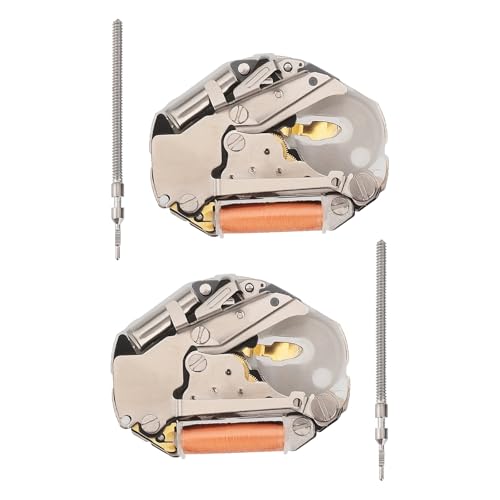
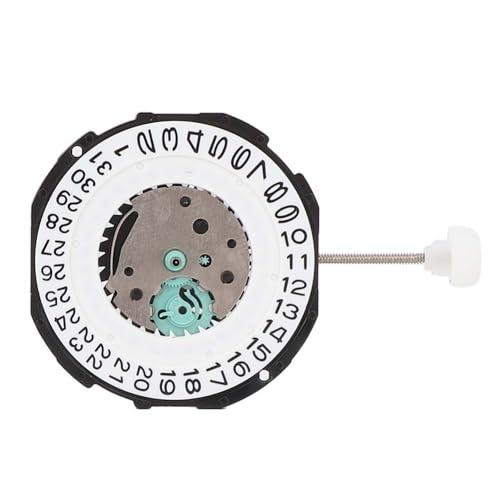
Ronda 515 Quartz Watch Movement for Watches


Casio Men's Core MQ24-1EL Black Rubber Quartz Fashion Watch
A short history that explains present-day variety
Quartz wristwatches reached consumers at the close of the nineteen-sixties, when Japanese and Swiss laboratories raced to miniaturise crystal oscillators for the wrist. Early commercial pieces carried substantial price tags and futuristic styling, yet manufacturing scale inverted that positioning within a decade as integrated circuits collapsed in cost. Swiss production volumes fell sharply during the ensuing disruption, then recovered around redesigned electronic calibres and fashion-led brands. Japanese makers pressed forward with solar charging, radio correction, and eventually satellite synchronisation, layering each innovation upon the same foundational counting principle.
That history explains why contemporary catalogues span such extremes. The underlying oscillator is inexpensive to reproduce at acceptable accuracy, so value migrates toward calibration, construction, finishing, and support. Collectors now revisit early quartz references with fresh respect, documenting first-generation circuits and preserving examples that once seemed disposable. Meanwhile mainstream buyers benefit from maturity: proven calibres, global service familiarity, and accuracy that earlier mechanical chronometer competitions would have celebrated. Choosing well today means recognising where a given model invests beyond the commodity core — in compensation, materials, sealing, or serviceability — and paying for the investment that matches personal priorities rather than chasing novelty for its own sake.
One final practical habit ties every theme in this guide together: verify claims against primary documentation whenever a purchase matters. Manufacturer manuals, calibre datasheets, and official service guidance carry the figures that govern accuracy bands, cell references, charging durations, and sealing care, while retailer listings compress those details into marketing shorthand that occasionally distorts them. Cross-checking takes minutes, prevents mismatched expectations, and equips owners to maintain what they bought. A quartz watch rewards that small diligence disproportionately, because its virtues — precision, endurance, discretion — reveal themselves gradually across years of unremarkable, dependable mornings rather than during a single dramatic moment at the point of sale.
Readers comparing several finalists side by side may find a simple written matrix helpful: calibre reference, stated tolerance, cell or accumulator type, case dimensions including lug span, crystal material, sealing figure, strap attachment standard, and nearest authorised service point. Filling those cells from official sources exposes gaps that glossy photography conceals and turns an emotional shortlist into a defensible decision grounded in evidence.
With that matrix complete, trust the evidence it contains and commit without endless second-guessing. No catalogue piece satisfies every criterion simultaneously, and the discipline of ranking priorities beforehand prevents late doubts from rewriting sound reasoning. The watch selected through documented specifications, honest construction, and realistic maintenance planning will justify its place on the wrist long after launch-season excitement fades from memory entirely.