Our Top Picks
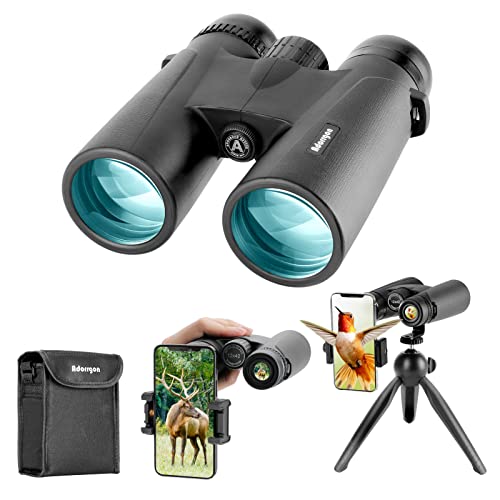 Adorrgon 12x42 High Powered Binoculars for Adults12x425.75 x 4.95 x 2.1 inches1.1 poundsCheck on Amazon


What's inside
- Why glassing for archery is its own discipline
- Magnification: the honest case for eight power
- When ten power earns its extra shake
- Objective diameter, twilight factor and relative brightness
- Field of view at archery distances
- Close focus and the short end of the range
- Coatings, prism glass and colour honesty
- Eye relief, eyecups and shooting with glasses
- Weight, balance and carrying the glass all day
- Roof prism versus Porro prism for bow work
- Weather sealing for wet woods and dusty ranges
- Glassing technique inside timber and brush
- Target and competition archery: reading the face
- Hunting applications from stand to open country
- Rangefinding binoculars: the combined alternative
- Stability aids and tripod use
- Durability, service life and ownership details
- Matching the instrument to your dominant season
- Frequently raised points, answered plainly
- Reading a specification sheet line by line
- Judging antlers, reading sign and recovering arrows
- Small hands, young archers and shared family glass
- Travelling to tournaments and hunts
- A worked comparison across four configurations
- Pre-purchase checklist in plain order
- Additional field notes
- More field notes
- Seasonal adjustments worth remembering
- Check prices on Amazon
- Disclosure
As an Amazon Associate I earn from qualifying purchases. This post may contain affiliate links at no extra cost to you.
Why glassing for archery is its own discipline
Archery compresses distances in a way rifle hunting never does. Most ethical bow shots happen inside forty yards, many inside twenty-five, yet the observation work stretches far beyond that envelope. An archer studies a target face at seventy metres during a ranking round, then the following weekend picks apart shadowed brush at dawn hoping to separate an ear flick from a falling leaf. Both jobs reward steady resolution, honest colour and a view that stays comfortable through long holds, because the person behind the glass often holds a bow in one hand and cannot brace with elbows planted on a pack.
That single-handed reality shapes nearly every recommendation in this guide. A binocular that feels superb during a shop counter demonstration may become tiresome when lifted repeatedly with the drawing arm already fatigued. Balance matters as much as headline sharpness. So does a focus wheel that turns smoothly under a gloved finger without overshooting, and eyecups that return to a chosen position after being knocked inside a harness chest pack. Our research compared published optical data across magnification classes rather than relying on marketing labels, and the patterns that emerged were consistent enough to organise a purchase around.
Readers who also photograph wildlife will recognise some overlap in priorities, since both pursuits value low-light reach and faithful plumage or pelage tones. The guides collected under best cameras to shoot wildlife explore sensor behaviour after sunset, whereas this page stays with handheld optics. Keeping those disciplines separate helps clarify why an archer might accept a slightly dimmer image in exchange for a wider, calmer view that locates a nock or a tine faster.
Magnification: the honest case for eight power
An 8×42 configuration divides its 42 millimetre objective diameter by eight, producing a 5.25 millimetre exit pupil. That number describes the bright disc floating behind each eyepiece, and it can be compared with the diameter of your own pupil under given light. In deep shade beneath a closed canopy, a healthy adult pupil may open toward five millimetres, so an 8×42 delivers a column of light roughly matched to the eye. The practical result is an image that keeps its composure during the first and last legal minutes, when deer movement peaks and target faces sit in flat shadow.
Lower magnification also forgives hand movement. Every tremor gets multiplied by the power of the instrument, so an eight-power view swims less than a ten-power view when pulse rises after climbing into a stand. Field archers walking a roped course benefit similarly, because they raise the binocular dozens of times across a round and each acquisition needs to settle quickly. A steadier picture shortens the time spent hunting for a scoring ring or a faint blood fleck on a leaf, which preserves concentration for the shot sequence itself.
Angular coverage is the third dividend. Typical 8×42 models quote a true field near 7.5 to 8.5 degrees, translating to roughly 393 to 446 feet visible at one thousand yards. Inside woodland, that breadth lets an archer scan a funnel between bedding cover and a feeding edge without constant panning. Panning introduces motion that game can detect, and it also tires the neck during stationary sits. Choosing eight power therefore trades a modest amount of reach for brightness, steadiness and situational awareness, a trade many bowhunters should accept gladly.
When ten power earns its extra shake
A 10×42 yields a 4.2 millimetre exit pupil and a noticeably tighter apparent view. At a western canyon distance of three hundred yards, that extra magnification separates bedded animals from rock texture more convincingly, and it helps judge whether a buck carries a broken point before a long stalk begins. Spot-and-stalk archery in open sage, alpine valleys or cut agricultural land places a premium on such judgement, because closing two hundred yards of exposed ground on a misjudged animal wastes the best hours of a day.
Target specialists have their own reasons to prefer ten power. Reading arrow holes in a straw or foam butt at ninety metres, distinguishing a shaft that clipped the gold from one sitting in the red, becomes easier when the image is larger. Scorers still walk forward to confirm doubtful calls, yet a good ten-power glass reduces unnecessary trips and keeps a tournament moving. Recurve and compound divisions both shoot long faces outdoors, and barebow archers at fifty metres also appreciate the additional detail when checking whether an arrow sits inside the ten ring.
The costs remain real. Ten-power instruments usually show a field near 6.5 degrees, close to 341 feet at one thousand yards, and depth perception feels flatter because the scene compresses. Hand shake grows more visible, especially after a cold sit stiffens fingers. Some archers solve the steadiness problem with a trekking pole rest, a fence post or the top limb of a bow used as a prop. Others accept ten power only for open-country seasons and keep a lighter eight-power unit for timber. Neither answer is wrong; terrain should dictate the decision.
Objective diameter, twilight factor and relative brightness
Objective size governs how much light the system can gather before coatings and prism geometry take their share. Moving from a 32 millimetre lens to a 42 gathers substantially more area, since area scales with the square of radius, and that advantage appears at dawn even when headline specifications look similar. Compact 8×32 models remain attractive for mountain travel, though their four millimetre exit pupil gives away low-light comfort. Full-size 42 millimetre glass has become the default archery recommendation precisely because it balances gathering power against a barrel diameter hands can still wrap securely.
Twilight factor, calculated as the square root of magnification multiplied by objective diameter, gives 8×42 a value near 18.3 and 10×42 near 20.5. Manufacturers quote the figure because it hints at detail recognition under dim conditions, but it ignores transmission quality entirely. A well-coated 8×42 transmitting ninety percent of incoming light can outperform a poorly coated 10×42 after sunset despite the arithmetic disadvantage. Relative brightness, the exit pupil squared, tells a complementary story: 27.6 for the eight-power configuration against 17.6 for ten power, assuming identical coatings.
Published transmission curves deserve more attention than either shortcut number. Glass that peaks in the green-yellow band matches human sensitivity under mesopic light, the mixed rod and cone regime of dawn. Some coatings bias colour toward warmth, which can make a grey-brown animal vanish into autumn litter. Neutral transmission keeps antler tips distinct from pale branches. When comparing specification sheets, look for percentage figures across the visible spectrum rather than a single peak claim, and treat any model refusing to publish transmission data with polite scepticism.
Field of view at archery distances
Catalogue field figures are quoted at one thousand yards, a distance no bow shot will ever cover, so convert them mentally to the ranges that matter. A binocular showing 420 feet at one thousand yards displays about 16.8 feet across at forty yards and roughly 8.4 feet at twenty. That twenty-yard slice frames a deer body plus surrounding escape routes, letting an archer watch for a second animal stepping into the shooting lane. A narrower ten-power view at the same distance may crop the scene to little more than ribs and shoulder.
Apparent field, the angle perceived through the eyepieces, influences immersion and edge awareness. Wide apparent fields near sixty degrees feel panoramic and reduce the tunnel sensation during long scans. Designers achieve width with larger ocular lenses and more complex eyepiece groups, which adds weight and sometimes softens the outermost ten percent of the image. A mild edge falloff matters little for archery, because the subject normally sits centred while the periphery merely warns of approaching movement. Flat-field designs aimed at astronomy solve a problem archers rarely have.
Stereoscopic depth also deserves mention. Barrels spaced widely apart exaggerate three-dimensional separation, helping an observer decide whether a visible antler belongs to an animal standing in front of a thicket or behind it. Roof prism housings place objectives close to the interpupillary spacing of the eyes, giving a natural but less dramatic depth cue. Porro prism bodies spread the objectives farther apart and can make near brush layers easier to disentangle. In tangled cover, that depth information sometimes matters more than raw resolution measured on a chart.
Close focus and the short end of the range
Minimum focus distance separates versatile archery glass from specialist long-range instruments. Models focusing down to two metres let a seated archer inspect a broadhead for a nicked blade, read a fletching code, or study tracks pressed into mud directly below a stand. Long minimum distances near five metres force awkward leaning and lose those small tasks entirely. Indoor target archers benefit too, since eighteen-metre lanes place the butt close enough that a two-metre specification feels generous while a five-metre limit still works, yet the same instrument travels outdoors where near inspection becomes routine.
Focus travel speed interacts with close focus in subtle ways. A wheel requiring two full rotations from nearest point to infinity gives fine control at distance but feels ponderous when a subject moves from fifteen yards to sixty. Faster gearing near one rotation suits hunting, where acquiring a walking animal matters more than micro-adjusting a static target. Some premium mechanisms vary resistance across the range, moving quickly through the middle distances and slowing near infinity. Specification sheets rarely describe gearing feel, so published wheel rotation counts offer the best remote clue.
Diopter compensation, usually adjusted on the right eyepiece, corrects differences between individual eyes and typically spans plus or minus three to five dioptres. A locking diopter ring prevents the setting drifting inside a harness. Archers who wear corrective lenses may still prefer using the diopter to shoot without glasses during rain, when spectacles fog and smear. Setting it correctly involves focusing the left barrel on a distant sign with the centre wheel, then matching the right barrel using only the diopter ring while covering the left objective. Repeat that ritual after anyone borrows the instrument.
Coatings, prism glass and colour honesty
Fully multi-coated optics carry anti-reflective layers on every air-to-glass surface, reducing internal reflections that wash out contrast. The phrase fully broadband adds a promise that coatings perform across the whole visible spectrum rather than favouring a narrow band. Phase correction coatings on roof prism surfaces align light waves split by the prism geometry, restoring contrast that would otherwise sag noticeably. Skipping phase correction is the single most revealing economy in a roof prism binocular, and serious archery models include it without exception.
Prism material divides into BaK-4 barium crown glass, with a higher refractive index and rounder exit pupil, and BK-7 borosilicate, common in cheaper instruments where the exit pupil may show squared edges when examined against a bright wall. Extra-low dispersion elements in the objective group tame chromatic aberration, the purple or green fringe appearing along high-contrast edges such as antler against sky. Fringing rarely prevents identification, though it does erode the fine contrast needed to judge a scoring line or a hairline crack in a limb viewed through the same glass later.
Colour fidelity carries tactical weight for target archery. World Archery faces use concentric zones of white, black, blue, red and gold, and a binocular tinting the image yellow can blur the boundary between red and gold at distance. Hunting scenes pose the opposite challenge: blood trailing after a shot requires distinguishing dark red droplets on brown leaves, a task a warm-biased image complicates. Neutral glass, sometimes described as colour-true in maker literature, serves both arenas without forcing the brain to recalibrate between venues.
Eye relief, eyecups and shooting with glasses
Eye relief measures the distance from the rear eyepiece surface to the point where the full field becomes visible, and spectacle wearers generally need at least sixteen millimetres, preferably eighteen or more. Short relief forces glasses against the eyecup and crops the outer field into a keyhole. Archers who shoot wearing prescription lenses, sunglasses on bright ranges, or safety eyewear during indoor leagues should treat relief as a hard requirement rather than a comfort feature. Published figures occasionally flatter reality, so a model quoting twenty millimetres provides safer margin.
Twist-up eyecups with positive detents let non-glasses wearers extend the cups fully and glasses wearers retract them completely, with intermediate stops for sunglasses of varying frame depth. Rubber cups that fold down tear eventually and offer no intermediate position. Detents also matter after the binocular rides in a chest harness, because a cup knocked one click shorter changes eye placement enough to introduce blackout crescents. Kidney-bean blackouts appear when the eye sits too close or drifts off axis, and they multiply under the awkward neck angles involved in looking downward from a treestand.
Interpupillary distance adjustment, commonly spanning roughly 56 to 74 millimetres, must match the spacing of the user’s eyes or the two circular images refuse to merge. Narrow-faced archers and younger shooters should confirm the lower end of the range before ordering. The hinge should hold its setting firmly; a hinge loosening over a season produces double images that owners often misdiagnose as collimation failure. True collimation errors, where optical axes diverge, cause eyestrain headaches after minutes of use and require factory service rather than hinge pressure.
Weight, balance and carrying the glass all day
A typical 8×42 roof prism binocular weighs between 600 and 700 grams, while magnesium-bodied flagships dip below that band and heavily armoured models exceed it. Two hundred grams sounds trivial at breakfast and significant by the final end of a field round, because the load hangs from the neck or shoulders and the arms lift it hundreds of times. Chest harnesses distribute weight across the torso and keep the instrument from swinging into a bow riser during a stalk. Shoulder slings suit target venues where the glass rests on a tripod or a belt hook between ends.
Balance point influences perceived weight more than scale readings suggest. A binocular balanced near the focus wheel settles into the palms without nose-diving, letting fingers relax between scans. Front-heavy designs demand constant grip pressure and accelerate forearm fatigue. Housing texture contributes as well: fine pebble armour grips securely with damp hands, while deep sculpting can snag on harness fabric. Cold-weather archers should also consider metal focus wheels, which feel precise but conduct heat away from bare fingers faster than rubberised wheels during a January sit.
Hikers covering serious elevation before glassing may study the crossover advice in best cameras to take hiking, where pack weight discipline receives similar treatment. The shared lesson is that every optical device competes with water, layers and food for the same shoulders. An archer who leaves a heavy binocular at camp gains nothing from its superior dawn performance, so honest self-knowledge about carrying habits belongs in the purchase decision alongside optical benchmarks.
Roof prism versus Porro prism for bow work
Roof prism housings align the objective and eyepiece in a straight tube, producing the slim H-shaped profile most modern hunting optics use. The design seals easily, fits chest harnesses neatly and survives knocks without shifting prism alignment as readily. Manufacturing precision drives cost upward, because roof surfaces demand tight tolerances and phase coatings to reach their potential. Nearly every serious archery recommendation of the past decade has used this layout, and aftermarket accessories from harness makers assume its dimensions.
Porro prism bodies offset the barrels in a zigzag, spreading objectives wider than the eyepieces. That geometry delivers generous depth perception and excellent optical value, since Porro surfaces are cheaper to grind accurately and need no phase treatment. The trade-offs are bulk, a more exposed bridge and sealing that historically lagged behind roof designs, although modern waterproof Porro models exist. Field archers shooting from marked pegs in mild weather may happily accept the size penalty, whereas a treestand hunter threading the instrument through a harness opening usually prefers the slimmer profile.
Reverse Porro compacts invert the layout, placing objectives closer together than eyepieces, and serve as lightweight scouting tools for indoor or short-range target work. Their small lenses limit dawn performance severely. Treat them as supplements rather than primary glass. Whichever layout you choose, confirm that the central hinge, focus mechanism and diopter all operate without grit or backlash, because mechanical refinement predicts field satisfaction more reliably than small differences in measured resolution between reputable models.
Weather sealing for wet woods and dusty ranges
Nitrogen or argon purging displaces moist internal air, preventing interior fog when a binocular moves from a warm vehicle into cold morning air. Argon molecules are larger and leak more slowly through seals, extending the fogproof interval between services. O-ring sealing at the focus shaft, hinge and eyepiece assemblies keeps driven rain out during a squall on an exposed range. Makers quoting an IPX7 rating claim survival after immersion at one metre for thirty minutes, while IPX5 covers resistance to water jets; the distinction matters for anyone who has dropped glass into a creek crossing.
External lens coatings that bead water, sometimes marketed under proprietary names, genuinely help during drizzle because droplets coalesce and roll away instead of filming across the objective. They do not excuse wiping with a shirt tail, which grinds dust across coatings. A lens pen, a blower bulb and a microfibre cloth stored in a sealed pouch form the correct field kit. Dusty summer ranges add another hazard: fine grit accumulating in the focus mechanism, best prevented by keeping the instrument inside its harness whenever the wind lifts visible dust clouds.
Rubber armour absorbs the small impacts of a life spent bumping against tree steps, bow cams and vehicle door frames. Armour thickness varies, and heavily sculpted armour can add surprising weight. Check that armour does not bridge across the hinge in a way that restricts narrow interpupillary settings. Objective lens caps tethered to the barrels stay available without dangling into the view, and a single-piece rainguard covering both eyepieces deploys faster than individual caps when a shower arrives mid-end.
Glassing technique inside timber and brush
Woodland observation rewards patience structured into a grid. Begin with the unaided eye, letting peripheral vision register movement across a wide arc, then raise the binocular only toward sectors that produced a flicker or an out-of-place horizontal line. Deer bodies present horizontal shapes in a vertical forest, and ears rotate independently of each other in ways branches never imitate. Working the focus wheel slowly through depth layers separates animals standing behind the first screen of saplings from the screen itself, a technique sometimes called peeling the cover.
Light direction changes what the glass can reveal. Looking toward a low sun floods the objective with veiling glare and silhouettes everything, so repositioning even a few metres to place a trunk between you and the sun restores contrast. Side lighting models antler tines and target faces alike, while overcast midday light flattens depth but reveals colour honestly. Dawn mist scatters light and shortens useful range drastically; under those conditions close focus and wide field outperform magnification, because any animal visible at all will be near.
Stillness discipline matters as much as optical quality. Raising a binocular in one smooth motion, holding it for a genuine minute rather than a restless few seconds, and lowering it slowly keeps movement signatures low. A harness with a quiet magnetic or elastic closure prevents the snap and rustle that announce an archer to every squirrel in the drainage. Those squirrels, incidentally, serve as unpaid sentries: their alarm barking often reveals another hunter or a moving deer long before the glass finds either.
Target and competition archery: reading the face
Competition archery uses the binocular differently from hunting. Distances are known, the target is stationary and the question is precise: where exactly did each arrow land, and what sight adjustment follows? At seventy metres for recurve or fifty for compound and barebow, an eight or ten power instrument resolves arrow shafts against coloured zones well enough to call groups confidently. The archer studies not just scoring position but pattern shape, since a group drifting high right across an end tells a different story from random scatter caused by a single poor release.
Colour neutrality becomes measurable here. Faces printed for outdoor rounds place a thin white dividing line between red and gold zones, and glass with a strong warm cast can erase that boundary at distance. Indoor faces at eighteen metres use smaller ten rings, and the lighting in sports halls often mixes fluorescent and daylight spectra, punishing optics with poor contrast. A binocular that renders the blue zone distinctly from black under hall lighting earns its place in the kit bag of any league shooter.
Between ends, the instrument mostly waits, so competition archers tolerate heavier glass than hunters do. Many keep the binocular on a small tripod or monopod beside the shooting line, which removes shake entirely and makes even twelve power usable, although this guide concentrates on handheld powers for versatility. Etiquette matters: glassing a neighbour’s target is normal, commenting on their score uninvited is not, and leaving optics unattended on the line during collection rounds invites accidental knocks from passing bows.
Hunting applications from stand to open country
Treestand hunting compresses most observation into a semicircle of timber within sixty yards. Here the wide field and bright exit pupil of an 8×42 dominate, and close focus helps inspect scrapes, rubs and trails passing beneath the platform. Shots angles are steep, so an archer glassing downward needs eyecups that seal against the brow without the instrument slipping. Short, frequent checks replace long scanning sessions, because animals materialise silently at close range and a binocular glued to the face at the wrong moment costs the chance to raise the bow instead.
Ground blind hunting introduces window geometry. Narrow shooting ports restrict how widely a binocular can be manoeuvred, favouring compact handling and fast focus. Turkey hunters sharing the blind in spring value close focus for judging beard length and spur detail at twenty yards, where a long minimum distance would blur the very features under judgement. Dark blind interiors also make exit pupil size feel larger than the numbers suggest, since the eye dilates in the gloom and then meets a bright exterior scene through the glass.
Open-country bowhunting reverses every priority. The binocular becomes the primary hunting tool, locating bedded animals at several hundred yards before any stalk begins. Ten power, tripod adaptability and superior edge clarity rise in importance, while close focus fades. Photographers pursuing similar subjects face parallel choices, and the discussion in best mirrorless cameras for bird photography about reach versus portability echoes the same compromise from a different craft. Spot-and-stalk archers should also weigh how the glass performs at midday heat shimmer, when rising air currents cap usable magnification regardless of optical quality.
Rangefinding binoculars: the combined alternative
Laser rangefinding binoculars merge a measuring laser, an angle sensor and sometimes a ballistic solver into the optical housing. Pressing a button returns a line-of-sight distance, often with an angle-compensated equivalent horizontal range that matters enormously for steep treestand and mountain shots. A twenty-eight yard line-of-sight reading from a high stand might correspond to a twenty-three yard horizontal distance, and holding for the longer figure sends an arrow high. Integration removes the separate rangefinder from the harness and guarantees the measured object is exactly the object centred in the view.
The compromises deserve clear eyes. Combined units weigh more, commonly approaching or exceeding eight hundred grams, and their optical path shares space with electronics that can limit transmission slightly compared with a pure binocular of similar money. Battery dependence introduces a failure mode pure glass never suffers, although most units continue working as ordinary binoculars when the cell dies. Display brightness must suit both noon glare and dawn shade, and red illuminated readouts preserve night vision better than black liquid crystal figures that vanish against shadowed timber.
Separate instruments retain loyal defenders. A dedicated rangefinder is smaller, cheaper to replace and usable with one hand while the other holds the bow at full draw in an emergency re-range. Two devices also spread risk: losing one over a ridge does not orphan the other function. Competition archers, meanwhile, gain nothing from rangefinding models because tournament distances are marked and electronic aids face rule restrictions in many divisions. Decide by counting how often you truly re-range during a typical hunt rather than by imagining the single dramatic moment when integration might shine.
Stability aids and tripod use
A tripod adapter transforms any binocular into a rock-steady observation platform, and the benefit at ten power is dramatic during long open-country sessions. Most roof prism models hide a threaded socket beneath a cap on the front hinge, accepting a post adapter that clamps into a quick-release plate. Target archers exploit the same socket on a monopod at the shooting line. Even a trekking pole with a threaded stud serves in the field, converting walking equipment already carried into a rest without additional pack weight.
Handheld technique still repays study for the many moments a support is unavailable. Tucking elbows against the ribs, gripping the barrels with fingertips rather than palms, and timing observation between heartbeats all reduce visible shake. The brim of a cap pressed lightly against the eyecups adds a third contact point that steadies the image surprisingly well. Some archers loop the neck strap taut between extended arms to create tension bracing, a trick borrowed from photography that works during short checks though it fatigues shoulders quickly.
Image-stabilised binoculars exist and cancel shake electronically, delivering an eerily calm view at fourteen power or beyond. Their weight, battery needs and cost place them outside mainstream archery use, and stabilisation cannot correct the subject motion of a walking deer. For most bow work, disciplined technique plus sensible magnification reaches the same practical outcome. Reserve stabilised glass for boat-based observation or medical tremor, where its advantages become decisive rather than luxurious.
Durability, service life and ownership details
A binocular bought for archery should be considered a decade-long companion, and construction details predict longevity better than launch-year specifications. Metal hinge barrels outlast plastic ones, focus mechanisms with metal gearing resist the grit of field seasons, and armour bonded rather than merely stretched over the housing stays put. Serial numbers recorded at purchase simplify warranty claims and insurance documentation. Photograph the instrument alongside your bow during licence-season preparation so any loss report carries a precise description.
Cleaning discipline preserves coatings. Blow loose particles away first, breathe lightly on the lens only when no cleaning fluid is available, and wipe in gentle circles from centre outward with a fresh microfibre surface. Store the binocular dry, with caps fitted, in a cool room rather than a vehicle cabin that bakes daily. Silica gel sachets inside the storage case absorb residual humidity after wet hunts. Eyepiece surfaces deserve particular care because scratches there sit close to the eye and scatter light across the whole view.
Second-hand purchases can serve archers well when checked methodically. Examine the exit pupils against a white wall for chips or squared clipping, scan a straight roofline for double imaging, and work the focus through its full travel listening for grit. Hazy interior elements suggest seal failure and expensive service. Trail-camera users accustomed to evaluating used field gear will find the mindset familiar; the listings under best affordable game cameras attract a similar audience of patient, value-conscious woodland observers.
Matching the instrument to your dominant season
Start the decision with an honest inventory of your last twenty outings. Count hours spent in closed timber against hours in open ground, target ends against hunting sits, and dawn sessions against midday. The dominant environment should choose magnification, with secondary uses accommodated rather than optimised. An archer splitting time evenly between club competition and autumn hunting usually lands on 8×42 for its breadth and brightness, accepting that long target faces will demand a touch more squinting than a ten-power alternative would.
Budget allocation follows a durable rule in optics: glass quality compounds daily, while features impress briefly. Spending more on coatings, prism treatment and mechanical refinement within the 8×42 or 10×42 format yields satisfaction every outing, whereas exotic magnification or integrated electronics serve narrower moments. Eyecup comfort, hinge tension and wheel feel are personal variables no specification table captures, so handling rival models at a range open day or club evening remains worthwhile whenever geography permits.
Accessories deserve a final, restrained pass. A well-fitted chest harness, a quality lens cleaning kit, tethered objective covers and perhaps a tripod adapter complete the working system. Skip decorative cases and redundant straps. Configure the harness at home, set the diopter, adjust the strap length and practise drawing the binocular one-handed until the motion is silent and automatic. Equipment rehearsed in the garden behaves predictably in the woods, and confidence in small systems frees attention for wind, light and animal behaviour.
Frequently raised points, answered plainly
Archers often ask whether higher magnification reveals scoring rings at ninety metres during field rounds where distances may be unmarked. Ten power helps, but atmospheric shimmer over sun-warmed ground can erase the advantage by early afternoon, and a steadier eight-power image sometimes reads arrow position more reliably. Another recurring question concerns using the same binocular for both compound target work and hunting seasons. Dual use is entirely practical; simply clean range dust from the housing before autumn and re-check the diopter after months of storage.
Night-adjacent performance prompts confusion because no passive binocular creates light. What good glass does is deliver a larger share of available photons with contrast intact, which is why transmission quality outranks twilight factor arithmetic. Questions about fogging usually trace back to external condensation rather than seal failure: a cold instrument brought against a warm face fogs outside the lenses, and waiting a minute or using an anti-fog cloth solves it. Internal haze, by contrast, appears as a permanent film and warrants professional service.
Finally, many buyers wonder how long quality optics remain competitive. Coating chemistry improves gradually, and a well-made 8×42 from a reputable maker stays satisfying for many seasons because the underlying optical geometry is mature. Mechanical wear, lost caps and changing eyesight prompt replacement more often than optical obsolescence. Buy the best-made instrument your circumstances allow, maintain it with modest care, and let skill in positioning, patience and wind reading supply the remaining performance.
Reading a specification sheet line by line
Specification sheets reward slow reading because each figure assumes a measurement convention. Magnification and objective diameter appear first, written as 8×42, yet the useful derived numbers, exit pupil and relative brightness, rarely appear beside them. Field of view may be quoted in degrees, in feet at one thousand yards, or in metres at one thousand metres, and converting between them prevents false comparisons. One degree equals roughly 52.5 feet at that distance, so a 7.8 degree field corresponds to about 410 feet, however the marketing page chooses to present it.
Close focus, eye relief and interpupillary range follow, each measured differently across brands. Eye relief figures sometimes describe the distance from the eyecup rim rather than the lens surface, flattering the number by several millimetres. Weight may exclude caps and strap or include them, producing discrepancies near fifty grams between rival listings of identical hardware. Length measurements taken with eyecups extended differ from those with cups retracted. None of this implies dishonesty; it simply means comparisons should normalise definitions before declaring a winner on paper.
Warranty terms close the sheet and deserve equal scrutiny. Some makers promise lifetime coverage against manufacturing defects while excluding accidental damage, others sell extended accidental protection, and a few operate generous repair programmes at modest fixed cost. For an instrument carried through wet timber weekly, the service network’s turnaround time matters practically. A binocular returned within a fortnight in October preserves a season; one returning in January becomes a story. Record the serial number, purchase date and retailer in the same notebook that holds your bow’s draw weight and string measurements.
Judging antlers, reading sign and recovering arrows
Judging a buck through binoculars involves proportions rather than absolute guesses. Ear width on a mature whitetail spans roughly thirteen to fifteen inches tip to tip in many regions, giving a built-in ruler against which beam length and spread can be compared. Mule deer ears run wider, and elk demand an entirely different mental scale. The glass contributes by resolving whether a point grows from a beam or merely appears to where a twig crosses behind it, a distinction that has saved many archers from ground shrinkage surprises.
After a shot, the binocular becomes a recovery tool. From the stand, an archer can follow the deer’s departure route, mark the last visible landmark, and inspect the arrow if it lies in open ground, noting fletching colour and apparent blood character without descending prematurely. Hair colour visible on the ground through the glass hints at hit height: pale belly hair suggests a low exit, dark coarse hair a higher entry. Such observations guide the waiting period before tracking begins, arguably the most consequential decision in the entire recovery.
Blood trailing itself rarely involves optics at distance, yet scanning ahead from each flagged marker prevents the common error of walking over the next sign. A compact grip on the binocular, one hand only, leaves the other free for flagging tape or a bow. Brightness again outranks magnification during this work because trailing often happens at dusk under time pressure. When the trail ends successfully, the same glass that judged the animal now documents the scene for the archer’s own records before field dressing begins.
Small hands, young archers and shared family glass
Interpupillary minimums decide whether younger archers can use a family binocular at all. A child whose eyes sit fifty-two millimetres apart cannot merge the images from a model stopping at fifty-six, and forcing the attempt produces headaches blamed unfairly on eyesight. Models reaching down to fifty-one or fifty-two millimetres open the instrument to most teenagers. Weight compounds the issue, since a youngster holding seven hundred grams at arm’s length tires within a minute and begins bracing the barrels against any available fence or tree.
Clubs introducing juniors to field archery often keep a pool of mid-size 8×32 instruments for exactly these reasons. The smaller objective sacrifices dawn brightness that junior sessions rarely need, because coaching happens in daylight. Rubber armour in bright colours survives being set down on gravel and helps supervisors spot a forgotten unit during pack-up. Neck straps should be adjusted short enough that the binocular cannot swing into a bow limb when its owner bends to pull arrows from a target.
Shared glass also needs a hygiene and adjustment ritual. Each user resets the diopter, which argues for a model whose diopter scale carries clear markings so settings can be noted and restored in seconds. Eyecups return to a marked detent, hinge spacing to a remembered number where the bridge provides one. Teaching this sixty-second routine early builds the equipment discipline that later protects far more expensive sights, rests and release aids from neglect.
Travelling to tournaments and hunts
Air travel treats binoculars as carry-on essentials, never as checked baggage. Temperature and pressure swings in a cargo hold stress seals, and baggage handling delivers impacts no armour was designed around. Inside the cabin the instrument rides in its harness within a personal bag, caps fitted, protected from the metal buckles of neighbouring gear. Security screening occasionally asks for a closer look, which a clean, dry instrument passes without drama. Arriving with glass in hand also means a delayed suitcase cannot cancel the first practice session.
Vehicle travel creates subtler hazards. A binocular left on a dashboard bakes behind glass, and one sliding loose in a footwell collects grit at every stop. The safest vehicle home is a padded case wedged so it cannot migrate, stored away from direct sun. Winter hunters moving between a heated cab and freezing stands should let the instrument acclimatise inside its closed case for several minutes, slowing the temperature change that triggers external condensation on cold lenses.
International trips add documentation habits. Photograph purchase receipts and serial numbers, store copies separately from the instrument, and research whether the destination treats hunting optics as restricted goods, which a plain sporting binocular almost never is. Tournament travel is simpler still: the glass joins arrows and bow in the competition checklist, verified the night before departure rather than discovered missing at the venue. A spare lens cloth in the bow case has rescued many ranking rounds from a single fingerprint.
A worked comparison across four configurations
Placing 8×32, 8×42, 10×42 and 10×50 side by side clarifies what each step buys. The 8×32 offers a four millimetre exit pupil and the lightest carry, suiting daylight field rounds and mountain travel where every gram competes with water. Stepping to 8×42 raises the exit pupil to 5.25 millimetres and transforms dawn usability while adding roughly one hundred fifty grams. Nothing else in the comparison delivers so much working benefit for so modest a penalty, which explains the configuration’s dominance in archery recommendations.
The move from 8×42 to 10×42 keeps the same objective and therefore gathers identical total light, but spreads it across a larger apparent image, dimming each unit area while enlarging detail. Exit pupil falls to 4.2 millimetres. For a target archer reading arrow positions at ninety metres in good light, the exchange favours the ten. For a timber hunter at last light, it favours the eight. Same glass budget, opposite correct answers, decided entirely by venue and hour.
Finally, 10×50 restores the exit pupil to five millimetres while retaining ten-power reach, at the cost of the heaviest and bulkiest housing in the group. Western spot-and-stalk hunters who glass from a tripod for hours accept that bulk gladly. Treestand hunters almost never should. The lesson generalises beyond these four: configurations form a network of trades among brightness, detail, steadiness and carry burden, and the archer’s calendar, not a reviewer’s ranking, should arbitrate among them.
Pre-purchase checklist in plain order
Work through the following sequence before money changes hands. First, name your dominant venue in one sentence, timber, open country, target line or a stated mixture, and let that sentence choose magnification. Second, confirm the exit pupil arithmetic suits your typical light. Third, verify eye relief against your eyewear and interpupillary range against your face. Fourth, check close focus against the small inspection tasks you actually perform. Fifth, weigh the complete carry system, binocular plus harness, against a full day on your feet.
- Dominant venue decides between eight and ten power before any brand discussion begins.
- Exit pupil near or above five millimetres protects dawn and dusk sessions in shadowed cover.
- Eye relief of sixteen millimetres or more keeps spectacle wearers inside the full field.
- Close focus around two metres covers broadhead inspection, track reading and stand-side detail.
- Phase corrected roof prisms or quality Porro prisms preserve the contrast that identifies game.
- Sealed, purged construction prevents internal fog during cold morning transitions.
- A locking diopter and positive eyecup detents hold personal settings inside a harness.
- Service reputation and warranty terms guard a purchase expected to last a decade.
Any model surviving that sequence will serve well, and remaining differences shrink to hand feel and budget. Resist reopening settled questions because a rival listing advertises a marginal specification advantage in an area your venue never stresses. Confidence in a chosen instrument grows through use, and familiarity with its focus direction, eyecup positions and harness behaviour becomes a genuine field skill. The best binocular for archery is ultimately the one whose operation disappears, leaving attention free for wind, light and the shot itself.
Additional field notes
One further habit separates satisfied owners from perpetual shoppers: keeping a simple field notebook. Record the date, venue, light conditions and any moment the view impressed or disappointed, noting whether the cause traced back to magnification, brightness, focus speed or carry comfort. After a single season those entries describe your actual needs more accurately than any general guide can, and they convert the next purchase, perhaps a complementary compact for travel, into a precise decision instead of a hopeful guess.
More field notes
Weather deserves a line in that notebook too. Humid evenings after rain fog external lenses fastest when an archer moves from a vehicle into still woodland air, while crisp frosty mornings reward the brightest glass because animals feed longer in the open. Patterns emerge slowly: a particular stand that always needs the widest field, a range whose afternoon glare argues for better coatings, a tournament venue where ten power would have settled a disputed call. Equipment chosen against recorded patterns stops being generic and becomes personal.
Seasonal adjustments worth remembering
Spring turkey season shared with archery practice rewards the closest focus and the quietest harness, because birds approach within bow range and every metallic click carries across still air. Summer field rounds punish poor eyecup sealing when sweat and sunscreen conspire to slide the instrument down the nose, a small indignity solved by a clean eyecup surface and a strap adjusted one notch shorter than winter settings allow. Autumn remains the season this guide optimised for, with its dim timber and patient sitting.
Winter indoor leagues reverse the lighting problem completely. Hall illumination is plentiful yet mixed in colour, so contrast and neutral rendering matter while exit pupil size becomes almost irrelevant. An archer using one binocular across all four seasons should therefore weight the autumn specification most heavily and accept minor compromises elsewhere, since no single configuration leads every category. Recording which compromise actually surfaced during each season, in the notebook habit described earlier, keeps future upgrades honest and prevents buying the same lesson twice.
One last practical note concerns lending the instrument to a hunting partner or a fellow competitor. A thirty-second handover routine, covering diopter position, eyecup setting and strap length, prevents the borrowed binocular returning with its adjustments scattered and its owner quietly annoyed. Note your own settings on a small card inside the harness lid, and restoring them becomes a glance rather than a ritual. Shared equipment survives friendships best when courtesy is systematised, and a card costing nothing preserves both the settings and the goodwill around any camp or clubhouse.
Check prices on Amazon
Live listings for the shortlist in this guide are pulled from Amazon below, so prices and availability are always current at the moment you look.



Disclosure
A reader asked during a club evening who pays for guides like this one, so the answer belongs on the page: this publication earns a commission when a reader follows a retail link on this site and completes a purchase, and that income supports the writing without changing the purchase price. Recommendations here rest on specification comparison, manufacturer documentation and accumulated reader reports rather than on any payment from an optics maker, and no brand reviewed the conclusions before publication. Where a specification could not be confirmed from primary documentation, this guide says so instead of filling the gap with a guess. Carry the glass that suits your ground, maintain it kindly, and let patient observation turn ordinary mornings into the stories retold at every winter club dinner.