Key takeaways
- Fall detection smartwatches explained in detail: how sensors work, emergency calling, cellular options, battery trade-offs and setup for parents.
What's inside
- How a Watch Decides That a Fall Has Happened
- The Countdown: What Happens Between Impact and a Call
- Cellular Watches Versus Models That Lean on a Phone
- Everyday Smartwatches Versus Dedicated Medical Alert Devices
- Monitoring Services, Subscriptions, and What the Fee Actually Buys
- Battery Life: The Trade-Off That Decides Real-World Safety
- Setting the Watch Up for a Parent or Relative
- False Alarms: Why They Happen and How to Reduce Them
- Will They Actually Wear It? Comfort, Habit, and Dignity
- Water Resistance and Life Around Sinks, Showers, and Rain
- The Honest Limits Every Family Should Hear Before Buying
- Check prices on Amazon
- A Practical Shortlist of Questions to Ask About Any Model
As an Amazon Associate I earn from qualifying purchases. This post may contain affiliate links at no extra cost to you.
Choosing a watch that can call for help after a hard fall starts with a disclosure worth stating plainly. As an Amazon Associate we earn from qualifying purchases. That relationship does not change the criteria in this guide, which rest on manufacturer specifications, published sensor documentation, and safety guidance written for older adults and their families. A fall sensor is not a fashion feature or a marketing badge. It is a chain of events — motion sensing, pattern recognition, a warning the wearer can cancel, and a call placed when nobody responds — and every link in that chain deserves scrutiny before money changes hands.
This guide treats the best smart watches with fall sensor as safety equipment first and wrist computers second. The display size, app library, and strap colour matter far less than whether the device notices a genuine collapse, distinguishes it from a dropped watch or a vigorous workout, and reaches a real person quickly. Readers comparing models will find the mechanics explained before any buying advice appears, because a feature that is misunderstood tends to be configured badly, and a badly configured safety feature creates confidence without protection. Setup, charging habits, and honest limits receive as much space here as the sensors themselves.
How a Watch Decides That a Fall Has Happened
The core hardware pairing is an accelerometer and a gyroscope working together many times per second. The accelerometer tracks linear movement along three axes, registering the sudden acceleration of a body moving toward the floor and the abrupt stop that follows impact. The gyroscope tracks rotation, capturing the twisting or tumbling motion that separates a fall from simply bending down quickly. Neither sensor alone tells the whole story, which is why manufacturers fuse their readings through a single motion processor rather than treating each stream in isolation.
Algorithms look for a sequence rather than a single spike. A typical signature begins with a brief moment of weightlessness or rapid downward movement, continues with a sharp impact peak, and ends with an unusual stillness or a changed wrist orientation. Dropping a phone onto a desk produces the impact without the preceding free movement and the following prone posture, so well-tuned software rejects it. Published technical material from major platforms describes training these classifiers on recorded falls, simulated falls by stunt performers, and large volumes of ordinary activity so the boundary between danger and daily life keeps improving.
Sensitivity is a compromise that cannot be engineered away. A threshold set too eagerly cries wolf during tennis, gardening, or applauding at a concert, teaching the wearer to ignore alerts. A threshold set too cautiously misses the slow slide from a chair that ends with a fractured hip and no dramatic impact at all. Many real falls, particularly those cushioned by furniture or a hand reaching for support, produce messy signals that sit between categories. Buyers should therefore read fall detection as a probability tool, valuable because it catches many emergencies, never as a guarantee that every emergency will be caught.
Some platforms refine detection with additional signals. A barometer can register a rapid change in height, heart-rate sensors may notice a sudden change after impact, and microphones on certain models listen for the sound signature of a crash or fall when the feature is enabled. Each extra input sharpens judgement in some situations and adds noise in others. The practical question for a family is not which sensor list looks longest on a specification sheet, but whether the finished product has a documented track record, clear settings, and alerts that a specific wearer can hear, feel, and cancel comfortably.
Hard Falls, Soft Falls, and the Grey Area Between Them
Manufacturers often use the phrase hard fall because that is what the technology detects most reliably: a clear drop, a forceful impact, and a period of little movement afterwards. A person who slumps gradually against a wall, slides down, and ends seated on the floor may never trigger the sequence, even though the medical consequences can be equally serious. Families supporting someone with fainting episodes, low blood pressure on standing, or Parkinsonian freezing should discuss that gap openly with clinicians rather than assuming the watch covers every collapse pattern.
Activity context changes the maths as well. During a logged workout, some watches raise or lower their sensitivity because running, rowing, and weight training generate repeated impacts that resemble falls. A wearer who starts an exercise session for a gentle walk gains more accurate step and heart tracking, yet should check whether fall alerts remain active during workouts on their chosen model. The manual and the support pages for the exact software version matter here, because behaviour that applied to an earlier release may have changed after an update.
The Countdown: What Happens Between Impact and a Call
When a likely fall is registered, the watch does not usually dial immediately. It vibrates, sounds an alert, and displays a prompt asking whether the wearer is all right, with a large option to say so and another to request help at once. If the wearer responds that they are fine, the incident closes. If they tap for help, the call begins without waiting. That pause protects privacy and prevents emergency lines receiving automatic calls for every stumble, while still acting when a person cannot respond.
If nobody interacts with the prompt, a louder countdown follows, commonly lasting somewhere between thirty seconds and a minute depending on platform and settings. The watch may announce that emergency services are about to be called, giving a conscious wearer a final chance to cancel. When the countdown expires, the device calls the local emergency number or a monitoring centre, plays or transmits the location, and notifies nominated emergency contacts with a message and a map link. Exact wording, timing, and contact behaviour differ by brand, region, and whether the watch has its own cellular connection.
A detail families frequently miss is what happens after the call. Some systems keep the line open so the wearer can speak to the dispatcher through the watch speaker; others place the call and then rely on the phone nearby. A frail voice, a noisy room, or a watch worn loosely can make that conversation difficult, which is why the automated location message matters so much. Practising a test of the non-emergency parts — opening the alert screen, finding the cancel button, checking that contacts receive a notification — builds familiarity without tying up an emergency line.
Location Accuracy When It Matters Most
Location sent after a fall usually blends satellite positioning with Wi-Fi and cellular signals. Outdoors, satellite fixes are generally strong. Indoors, especially in apartment blocks, basements, and large retail buildings, the reported point may identify the building rather than the room. Emergency contacts who know the wearer’s address, floor, access codes, and usual routines add information no sensor can supply. Completing the medical identification profile on the watch, including conditions, medicines, and allergies, gives responders context during the minutes when the wearer may be unable to explain anything.
Altitude data helps in multi-storey homes on some platforms, yet it remains approximate. A family should not promise an elderly parent that help will arrive at the exact spot shown on a map. The honest promise is narrower and still worthwhile: the watch can start the process, share a useful location, and alert people who love them, far faster than waiting for the wearer to crawl to a phone or for a neighbour to notice something wrong hours later.
Cellular Watches Versus Models That Lean on a Phone
A cellular watch carries its own connection to a mobile network, usually through an electronic SIM linked to the owner’s phone plan. It can place the emergency call from a garden, a pavement, or a bathroom while the paired phone charges in another room or sits forgotten at home. For a person who walks a dog alone, gardens at an allotment, or simply forgets their handset regularly, that independence is the strongest argument for the cellular version and the ongoing plan that supports it.
A non-cellular watch depends on Bluetooth range to its phone or, on some models, a known Wi-Fi network. Within a small flat where the phone is rarely far away, that arrangement may work perfectly well and costs less to run. In a larger house with thick walls, a phone left upstairs while the wearer falls downstairs can break the chain completely. Anyone weighing the saving should map the home honestly: distances, dead spots, charging locations, and the wearer’s actual habit of carrying the phone from room to room.
Shoppers comparing calling capability more broadly may also want our guide to best android smartwatches that make phone calls, since ordinary voice calling and emergency calling overlap without being identical. A watch that handles cheerful calls to grandchildren clearly may still bury its emergency settings several menus deep. Speaker volume, microphone placement, and how the device behaves with wet hands or gloves all influence whether a shaken wearer can actually communicate after an incident.
Network coverage deserves the same scepticism as sensor claims. A cellular watch on a carrier with weak signal at the wearer’s address is not meaningfully independent. Checking coverage maps is a start, but asking neighbours on the same network about indoor reception is better. Basements, metal-roofed buildings, and rural valleys defeat marketing language quickly. Where coverage is doubtful, a monitored medical alert service using a dedicated base station and a wearable pendant may remain the more dependable architecture, a comparison explored further below.
Everyday Smartwatches Versus Dedicated Medical Alert Devices
Mainstream smartwatches bundle fall detection inside a much larger product: notifications, fitness tracking, music, payments, and app stores. Their advantage is dignity and familiarity. Many older adults will wear an attractive watch daily while refusing a pendant that announces frailty to every visitor. Daily wear is not a vanity point; a safety device left in a drawer protects nobody. The smartwatch also improves over time through software updates and gives family members location sharing and communication tools in the same object.
Dedicated medical alert watches and pendants take the opposite approach. They do fewer things, often with a single large button, a louder speaker tuned for voice, and a direct line to a staffed response centre. Their software does not need to distinguish a fall from a dance class inside a general-purpose operating system, and their batteries may last far longer between charges because they are not powering bright displays and background applications. For someone with cognitive decline who cannot manage menus, that simplicity can outweigh every smart feature combined.
Response pathways differ in a way buyers must understand. A mainstream watch generally calls public emergency services directly and messages personal contacts. A monitored service routes the alert to trained operators who can speak to the wearer, judge whether an ambulance, a neighbour, or a family member is the right response, and stay on the line. Operators also hold lockbox codes, gate instructions, and medical notes supplied at enrolment. That human layer is the real product being bought with a monitoring subscription, not merely the plastic device on the wrist.
Neither category wins universally. A confident seventy-year-old who already uses a smartphone, walks outdoors daily, and wants one device for calls, walks, and safety is often well served by a mainstream cellular watch. A ninety-year-old with hearing loss, arthritis, and no interest in charging gadgets nightly may be safer with a monitored pendant and a base station that tests itself. The correct question is which system this particular person will wear, charge, understand, and tolerate at three in the morning after a frightening fall.
Monitoring Services, Subscriptions, and What the Fee Actually Buys
Subscription language around fall detection confuses many buyers because three different charges can hide behind one monthly figure. The first is the cellular plan that lets a watch connect independently. The second is a premium health or safety tier from the watch platform itself, sometimes required to unlock automatic detection or extended alert features. The third is a professional monitoring contract with a staffed centre. A product page may advertise fall detection prominently while only the hardware capability is included in the purchase, with the response service billed separately.
Before committing, families should establish precisely who answers when an alert fires, at what hours, in what language, and with what authority to dispatch help. Is the centre staffed around the clock every day of the year, or does an unanswered alert roll over to personal contacts? Can operators speak through the watch, or do they call a phone that may be out of reach? Are false alarms charged for, is there a minimum contract term, and what happens to the service if the wearer moves house or spends winter with relatives in another region?
This guide deliberately discusses those questions without attaching prices, because fees, promotions, and plan structures change and vary by country. The durable advice is to compare the total arrangement rather than a headline figure: device, cellular line, monitoring, replacement policy for a lost watch, and cancellation terms. A cheaper unmonitored setup that calls emergency services directly may suit one household perfectly. Another household may gladly pay for trained operators because adult children live abroad and cannot coordinate a response across time zones.
Free trials and family sharing deserve a careful read as well. Some services allow several contacts to receive alerts through an app, view location history, and confirm that the watch is charged and being worn. That visibility reassures families, yet it also raises privacy questions for an independent older person who does not want children tracking every trip to the shops. Agreeing the boundaries in advance — alerts for emergencies only, for example, rather than routine location checking — preserves trust and makes the wearer more likely to keep the device on.
Battery Life: The Trade-Off That Decides Real-World Safety
Continuous motion sensing, bright displays, cellular radios, and satellite positioning all draw power, and they draw it from one of the smallest batteries in consumer electronics. Many full-featured smartwatches need charging every day or two under typical use, and heavy use of calling or outdoor tracking shortens that further. A fall sensor only protects during the hours the watch is on the wrist and alive. A device that spends every morning on a charger while its owner showers, dresses, and moves around the busiest rooms of the house has a predictable blind spot.
Readers who place endurance near the top of their priorities can compare the wider field in our roundup of best battery life smartwatches, keeping in mind that the longest-lived models sometimes achieve their figures by using simpler displays and fewer background features. The right balance depends on routine. A wearer who reliably charges a watch during breakfast may never notice a short battery life. A wearer who forgets, travels, or dislikes fiddly magnetic chargers needs every extra day of endurance a model can offer.
Charging design matters as much as capacity. Small puck chargers that demand precise alignment frustrate arthritic hands, and proprietary cables vanish into drawers. A charging stand that holds the watch upright at the bedside, shows its status clearly, and doubles as a night clock turns a chore into a habit. Some families place the charger beside the kettle or the toothbrush, anchoring the routine to an existing habit. Others choose a consistent thirty-minute top-up during an evening television programme, keeping the watch available overnight when bathroom trips make falls more likely.
Battery health declines over years of daily cycles, so a watch that barely lasts a day when new may fall short by its second winter. Checking the manufacturer’s battery replacement policy, warranty length, and typical service cost belongs in the purchase decision for a device bought primarily for safety. Low-battery warnings should be enabled and, where the platform allows, shared with a family contact. A vibration on the wrist that a sleeping or confused wearer ignores is less useful than an alert that also reaches a daughter’s phone before the battery dies.
Power-Saving Modes and Their Hidden Costs
Most watches offer a low-power mode that stretches remaining charge by dimming the display, limiting background activity, or disabling radios. Families should learn exactly what their model suspends in that mode. If cellular connectivity or fall detection itself switches off to save power, the mode creates a dangerous illusion: the watch is present and showing the time, yet its safety function is dormant. The instruction manual for the specific model, not general assumptions about the brand, is the source to trust for that detail.
A sensible rule is to treat twenty percent charge as empty for a safety-first wearer. Charging early and often is gentler on modern batteries than repeated deep discharge, and it keeps a margin for an unexpected night away from home. Carrying the charging cable on overnight trips sounds trivial until a hotel stay ends with a dead watch on the morning of a long drive. Small habits like these, unglamorous as they are, determine whether an impressive specification becomes everyday protection.
Setting the Watch Up for a Parent or Relative
Setup should happen calmly, together, and well before the watch is needed in anger. Start with the emergency contacts, entering at least two people who are likely to answer quickly and who live close enough to help or hold useful information. Add the medical identification profile next: conditions such as diabetes or heart disease, blood-thinning and other critical medicines, allergies, implanted devices, and the name of the usual doctor or clinic. Review every entry aloud with the wearer, because the person described by that profile should recognise and approve what responders will read.
Confirm that fall detection is actually switched on. On some platforms the feature activates automatically only for users above a certain age recorded in their profile, while younger users must enable it manually, and settings can reset or move after major software updates. Check the toggle, check the age and health profile it depends on, and check again after updates. Then verify the emergency calling behaviour for the wearer’s country, since the number dialled and the information transmitted are handled differently across regions and carriers.
Fit and comfort come next. The watch should sit snugly enough that its sensors maintain contact and the device does not slide toward the hand, without pinching or marking the skin. Try the strap the wearer will actually use daily, not a decorative alternative. Practise pressing the side button, responding to a vibration, and cancelling a demonstration alert together, slowly and more than once. Confidence built on a quiet afternoon transfers surprisingly well to a stressful moment; panic at an unfamiliar screen does not.
Finally, agree on the family protocol. Who receives alerts, who calls the wearer first, who holds a spare key or lockbox code, and who contacts neighbours? Write that plan down and keep a copy near the phone of each contact. A watch alert that reaches four relatives who each assume someone else is responding can waste the very minutes the technology was bought to save. Naming a primary and a backup responder, and reviewing the arrangement after any change in health or living situation, turns individual gadgets into a genuine support system.
False Alarms: Why They Happen and How to Reduce Them
Every wearer of a fall-detecting watch will eventually trigger a false alarm or come close. Dropping the watch onto a hard floor while fastening the strap is a classic cause, as are energetic activities: chopping wood, clapping, hammering, playing drums, or celebrating a goal with arms thrown upward. Some systems learn from cancelled alerts, yet none learns perfectly. The first false alarm should be treated as tuition rather than failure, an opportunity to notice what movement caused it and whether sensitivity settings or wearing position need adjustment.
Reducing false alarms starts with fit. A loose watch swings and strikes surfaces with exaggerated force, generating impact signatures the algorithm must interpret. Wearing the device on the non-dominant wrist often calms the data, because that arm performs fewer forceful tasks, though personal comfort and existing habits should guide the choice. Keeping software updated matters too, since manufacturers refine their classifiers over time and release notes occasionally mention detection improvements directly.
Cancellation confidence is the other half of the equation. A wearer who understands the countdown, trusts that cancelling carries no penalty, and can reach the control quickly will dismiss false alarms calmly. A wearer frightened of bothering emergency services may instead rip the watch off or ignore real symptoms after a genuine fall. Families should say explicitly and repeatedly that triggering an alert is never a disgrace, that responders prefer a cancelled call to an undiscovered emergency, and that nobody will be cross about a mistaken alarm.
Repeated false alarms at the same time of day often point to a specific activity worth examining: a particular exercise class, a heavy door, a gardening task, or the transfer from bed to chair. Logging when alerts occur for a few weeks can reveal the pattern. Some platforms allow sensitivity adjustment or per-activity behaviour; others do not, and the honest remedy may be removing the watch for that single activity while placing a phone or alert pendant within reach instead. Improvised workarounds should still leave some route to help in place.
Will They Actually Wear It? Comfort, Habit, and Dignity
Compliance is the unglamorous word researchers use for whether a person keeps using a device, and it decides the value of every fall sensor ever sold. Weight, thickness, strap texture, heat against the skin, and how the watch looks with everyday clothes all feed a simple daily decision: put it on, or leave it on the dresser. A model chosen by an adult child for its specification sheet may fail that test for the parent who finds its case bulky or its strap sweaty in summer.
Involve the wearer in choosing wherever possible. Let them handle display sizes, try strap materials, and react to how notifications look and sound. Someone who enjoys seeing photographs of grandchildren on the watch face, checking the weather each morning, or counting steps on a favourite walk gains positive reasons to wear the device beyond fear. Safety technology that also delights tends to stay on the wrist; technology that only frightens tends to migrate to a drawer within a month.
Night-time deserves specific thought. Many falls happen during trips to the bathroom, when lights are low, blood pressure dips on standing, and the watch may be charging. Some wearers keep the watch on overnight and charge it during a morning routine instead; sleep tracking on many models makes overnight wear normal rather than exceptional. Others cannot sleep with a watch on at all. For them, a bedside alert button or a monitored pendant worn around the neck may cover the night hours while the watch covers the day, and combining systems is a strength, not an admission of defeat.
Skin health under the strap is easy to overlook until irritation makes wear impossible. Manufacturers advise wearing the device slightly loose during the day outside safety-critical moments, keeping the strap clean and dry, and rotating wrists if redness appears. Sweat, soap residue, and trapped moisture after washing-up are common culprits. A spare strap in a different material — breathable fabric instead of fluoroelastomer, for instance — gives the skin a change and gives the wearer a freshly washed option while the other dries.
Water Resistance and Life Around Sinks, Showers, and Rain
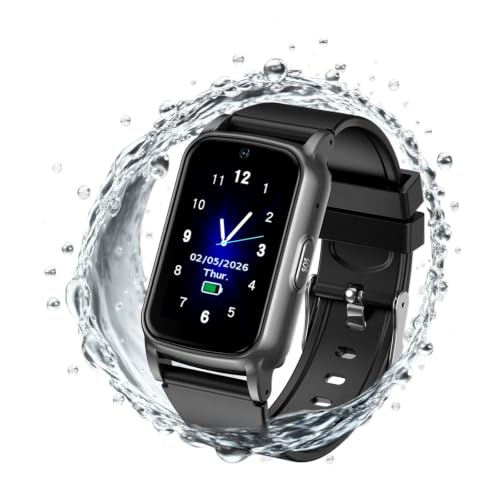
Fall risk concentrates around water: wet bathroom floors, shower steps, garden hoses, and rain-slick pavements. A watch that must be removed for every shower leaves its wearer unprotected in precisely the room where help is hardest to summon. Buyers should therefore study water resistance ratings carefully, understanding that a rating earned in laboratory conditions describes resistance to immersion at a stated depth and duration, not a lifetime promise against steam, soap, and ageing seals.
Ratings expressed in atmospheres or with industry codes need translating into daily behaviour. Splash resistance suits handwashing and rain. A stronger rating is appropriate for showering and swimming, subject to the manufacturer’s own guidance, which sometimes discourages hot showers, saunas, and high-velocity water despite a headline rating. Salt water, chlorinated pools, and sunscreen all demand a rinse in fresh water afterwards on most models. Buttons should not be pressed underwater unless the maker explicitly permits it, since that action can defeat seals.
Wet conditions also affect the emergency interaction itself. Touchscreens behave erratically under running water, and a wearer who has fallen in a shower may be unable to swipe a small prompt. Physical buttons, voice control where available, and the automatic countdown become the important pathways in that scenario. Testing how the watch responds with wet hands at home — simply navigating to the emergency screen, not placing a real call — reveals limitations while the stakes are low and adjustments are still easy.
For readers whose main interest is activity and sport rather than household safety, our guide to best gps smartwatches covers location tracking in depth, and many of those models share the stronger water resistance that swimmers and runners expect. The overlap is genuine: a watch bought for a parent who swims weekly should satisfy both the safety checklist in this guide and the workout requirements in that one, rather than forcing a choice between being tracked accurately and being protected after a fall.
The Honest Limits Every Family Should Hear Before Buying
No consumer watch replaces a professionally monitored alarm system designed, installed, and maintained for that single purpose. Monitored systems can include wall buttons in fixed high-risk locations, pendants with longer battery life, base stations with backup power and cellular connections, automatic self-testing, and operators who follow rehearsed protocols. A smartwatch depends on a small battery, a consumer operating system, personal settings, and the wearer’s habits. Presenting it to a parent as complete protection overstates what the technology is and may discourage additional measures that would genuinely help.
Detection gaps remain even in the best implementations. Slow collapses may not register. A watch removed for charging, swimming, or comfort cannot help. A fall in an area without cellular or phone coverage may be recorded without reaching anyone. A wearer who cancels the alert out of embarrassment, confusion, or a head injury’s effect on judgement defeats the escalation the system was designed to provide. Each of these gaps has partial remedies — charging routines, coverage checks, family protocols — but none disappears entirely, and honest planning acknowledges them.
Medical decisions sit outside a watch entirely. Repeated falls are a symptom worth investigating: medicines that lower blood pressure, vision changes, vitamin deficiencies, footwear, loose rugs, poor lighting, and missing grab rails all contribute. An occupational therapist’s home assessment often prevents more injuries than any wearable. The watch belongs in a wider plan that includes strength and balance exercise where a clinician recommends it, a medication review, and practical changes to the home. Technology that summons help after a fall is the last line of defence, not the first.
Privacy and data form the final limit to consider. Fall events, location history, heart data, and emergency contacts are sensitive records held by large platforms under their own policies. Families should read what is stored, where, and for how long, and should set sharing controls deliberately rather than accepting defaults. An older adult who understands and consents to what relatives can see is a partner in the arrangement. One who discovers later that their movements were visible all along may abandon the watch, and the safety benefit, altogether.
Check prices on Amazon
Live listings for the shortlist in this guide are pulled from Amazon below, so prices and availability are always current at the moment you look.
A Practical Shortlist of Questions to Ask About Any Model
Does the watch detect falls automatically, or only offer a manual emergency button, and is automatic detection enabled by default for the wearer’s age group? Does it need a cellular plan to call away from the phone, and does that plan work at the wearer’s address? Who receives the alert — public emergency services, a monitoring centre, personal contacts, or some combination — and in what order? How long does the countdown last, how is it cancelled, and can a wearer with limited dexterity manage that action under stress?
How long does the battery realistically last with detection, cellular, and location features active, and what exactly does the power-saving mode switch off? What is the water resistance rating, and does the manufacturer approve showering in it? Can emergency contacts see low-battery or missed-wear alerts? Is a subscription required for any part of the safety chain, what are its terms, and can it be cancelled without losing ordinary watch functions the wearer enjoys?
Shoppers whose relative also wants a capable everyday device for walks, travel, and training may find our coverage of best active smartwatches useful alongside this safety-first checklist, because durability and sport features often travel together. Whatever model survives these questions, buy it from a channel with a fair returns window, set it up together, test every non-emergency step, and review the arrangement after the first month. The best fall-sensor watch is ultimately the one that is charged, configured, understood, and on the wrist on an ordinary Tuesday.
A note on updates: after any major software release, spend five minutes reopening the health and safety settings together, confirming that contacts, medical details, and detection toggles survived the upgrade unchanged.
Keep the watch’s emergency information consistent with any wallet card or fridge notice the household already uses, so responders never receive conflicting details about medicines, allergies, or next of kin.
If the wearer uses a walking aid, discuss which wrist carries the watch and how a frame or cane changes arm movement, since unusual motion patterns are exactly what detection software must interpret correctly.
Relatives who live far away can still contribute by reviewing alert settings during video calls, checking that location sharing looks right, and keeping their own contact details current in the wearer’s profile.
When a watch is replaced, transfer the safety configuration deliberately rather than assuming it follows automatically, then retire the old device only after the new one has passed the same checks at home.
Seasonal changes alter fall risk in ways a setup checklist should anticipate. Winter adds heavy coats that muffle a watch speaker, gloves that defeat touchscreens, icy pavements, and darker afternoons that hide kerbs and steps. Reviewing the watch arrangement each autumn — checking that the wearer can still trigger an emergency call with cold hands, that the strap fits over or under the layers actually worn, and that outdoor routes remain within reliable network coverage — turns a static purchase into a living safety routine that follows the year rather than the day it was unboxed.
Travel deserves its own rehearsal. A watch configured perfectly for home may behave differently in another country, where the emergency number, cellular roaming, and monitoring coverage all change at the border. Before a trip, families should confirm whether automatic calling works at the destination, store the local emergency number and the hotel address in the watch profile where the platform allows, and agree on which contact coordinates help across time zones. A wearer visiting grandchildren abroad gains little from a safety chain whose first link quietly assumes a home postcode.
Hearing and vision shape the alert experience in ways specifications rarely state plainly. A countdown warning delivered only as a small on-screen message will be missed by a wearer who has fallen without their glasses, while a spoken announcement at modest volume disappears for someone with hearing aids removed at night. Look for watches that combine channels — vibration strong enough to feel, sound loud enough to notice, and a display bright enough to read — and test the combination with the actual wearer, in a noisy kitchen and a quiet bedroom, before trusting it.
Two wearers in one household create their own complications. Partners who share chargers, swap watches absent-mindedly, or hold each other’s emergency profiles can scramble an otherwise careful setup. Colour-coded straps, separate charging spots on opposite sides of the bed, and a household rule that watches are never exchanged prevent the quiet confusion in which an alert names the wrong person or a medical profile describes the wrong conditions. Where both partners wear fall-detecting watches, test each device separately and record which contacts each one notifies, because responders acting on crossed information waste precious minutes.
The first month with a new watch is a trial, whether or not anyone calls it that. Families do well to review the experience together after a few weeks: how many alerts fired, how many were false, whether charging fitted the routine or fought it, and whether the wearer ever left the watch behind deliberately. Small adjustments made then — a different strap, a moved charger, a revised contact order — are cheap. The same frustrations discovered after a real emergency, when confidence in the whole arrangement collapses at once, are far more expensive in every sense that matters.
Documentation kept at home multiplies the value of the technology. A single page near the telephone should list the watch model, the network it uses, the monitoring arrangements if any, the order in which contacts are alerted, and the location of a spare key. Visiting relatives, home carers, and neighbours drawn into an emergency rarely know any of this, and they cannot guess it under pressure. The page should be reviewed whenever a phone number, medicine, or living arrangement changes, because stale instructions misdirect help almost as effectively as no instructions at all.
Carers who visit professionally interact with these watches daily and are worth consulting during selection. A district nurse or home aide can say immediately whether a strap will survive frequent hand hygiene routines, whether a bulky case will interfere with transfers and lifting support, and whether the wearer reliably cooperates with similar devices already in the home. Their practical knowledge of the individual — not of the product — is precisely the knowledge a specification sheet cannot contain, and a five-minute conversation with them prevents purchases that fail for reasons no reviewer could foresee.
Data from the watch can start useful conversations when it is treated as a prompt rather than a verdict. A pattern of alerts during night-time bathroom trips might lead a clinician to review blood-pressure medicines taken in the evening. Repeated near-fall activity spikes at the same hour might reveal a hazardous transfer from a favourite chair. Families who bring such observations, modestly framed, to medical appointments give professionals something concrete to work with, while remembering that consumer motion data is approximate and was never collected under clinical conditions.
Insurance, warranty, and replacement arrangements belong in the same folder as the safety plan. Watches are lost in hospitals, damaged in the very falls they detect, and occasionally destroyed by water despite their ratings. Knowing in advance whether the maker offers accidental-damage cover, how a replacement is configured, and how long the wearer would be without protection turns a crisis into an errand. For a device whose entire purpose is availability, the speed of replacement is a safety specification, even though it never appears in the technical table on a product page.
Adult children sometimes discover that their parent wears the watch only when family visit, performing compliance rather than practising it. That pattern signals a conversation, not a scolding: perhaps the strap irritates, the alerts embarrass, the charging annoys, or the watch symbolises a decline the parent is not ready to accept. Each cause has a different remedy, from a softer strap to a more discreet model to a frank renegotiation of what relatives may see. Technology adopted under pressure tends to be abandoned quietly; technology chosen with genuine consent tends to survive.
A wearer returning home after a hospital stay is a special case worth planning for. Strength, balance, medication, and confidence may all have changed during the admission, while the watch settings have not. Revisit the emergency profile, confirm that new medicines are listed, check that the strap still fits a wrist that may have lost weight, and consider whether additional measures — a bedside button, a monitored pendant for the night, more frequent contact check-ins — are warranted for the recovery weeks when fall risk is often at its highest.
Voice assistants built into many watches offer an underrated backup route to help. A wearer who cannot reach a button after a fall may still be able to speak a command to call a named contact, provided the feature is set up, the contact names are pronounceable by the system, and the wearer has practised the exact phrase aloud. Practise matters because voice recognition trained on calm speech can stumble over a frightened, breathless voice, and knowing a second method — the physical button — keeps one failure from becoming a total failure.
Group settings reveal another practical detail: watches belonging to different people sometimes respond to the same spoken wake phrase or produce similar alert sounds, causing confusion in shared housing or care settings. Distinct alert tones where the platform allows them, clearly labelled chargers, and staff who know which resident owns which device all reduce that confusion. In a family home the equivalent is simpler — everyone who might respond to an alert should hear the countdown sound once in advance, so its meaning is recognised instantly rather than debated.
The economics of the whole arrangement repay a calm annual review. Subscriptions renew, cellular plans change, monitoring contracts roll over, and a household can drift into paying for overlapping services — a watch plan, a pendant contract, and a premium app tier all promising similar reassurance. Listing what each service actually does, who answers each alert, and which device the wearer truly uses often reveals one layer that can be simplified without reducing safety. Money saved there is better spent on grab rails, lighting, and footwear that prevent the fall in the first place.
Finally, remember that confidence itself is a benefit worth protecting. Many older adults restrict their lives after a first fall, declining walks, visits, and outings they once enjoyed, and that shrinking world damages health faster than inactivity statistics can capture. A watch that a wearer trusts — because it was chosen with them, set up patiently, and explained honestly — can return a measure of that confidence. The goal was never the gadget. The goal is a person continuing to live their ordinary, valuable life with one more layer of help quietly travelling on their wrist.
When comparing two finalists that both pass the safety checks, let the wearer’s ordinary preferences decide: the face they find handsome, the strap colour they reach for, the charging routine that matches their mornings. Those small affinities, dismissed as cosmetic by specification-driven buyers, are what carry a device through the thousand unremarkable days between emergencies. A safety product’s real test is not the dramatic afternoon it summons an ambulance, welcome though that is, but the long succession of normal days on which it was simply there, charged, worn, and working.
Emergency contacts should rehearse their side of the system with the same seriousness as the wearer. Each contact needs the alert application installed, notifications exempted from overnight silent modes where they have agreed to that responsibility, and a clear understanding of what an alert message contains and what it does not. A contact who first encounters the alert format during a genuine emergency will spend critical minutes learning an interface instead of acting. A short practice session, using the platform’s demonstration or notification settings rather than a real emergency call, removes that learning curve in advance.
Strap choice influences detection more than most buyers realise, because a watch that rotates freely around the wrist presents its sensors with chaotic motion during both ordinary activity and genuine falls. A strap that holds the case stable at the back of the wrist, snug without constriction, gives the algorithm cleaner data in both directions: fewer phantom impacts from a swinging case, and a clearer stillness signal afterwards. Trying two strap styles during the first week and noting which produces fewer nuisance alerts is a simple experiment with lasting benefits for trust in the system.
The speaker and microphone deserve a practical test at home. Place the paired phone in another room where the model allows independent calling, or follow the maker’s guidance for a safe configuration check, and judge whether a conversation through the watch is intelligible at arm’s length in a room with a television playing. A wearer with a soft voice or a hearing impairment may need the watch held closer, a fact far better discovered during a calm rehearsal than during a frightened call from a bathroom floor.
Software settings that seem unrelated to safety can undermine it quietly. Aggressive notification muting, scheduled do-not-disturb periods, and battery optimisation features that suspend background applications may also silence the very alerts the system exists to deliver, depending on platform. During setup, review notification and focus settings alongside the safety toggles, and repeat that review whenever the wearer reports that the watch has become strangely quiet. The safety chain is only as strong as the most mundane setting that can interrupt it.
Where a wearer splits the year between two homes, or spends long seasons with different relatives, the safety arrangement must travel as deliberately as the medication does. Coverage, emergency numbers, contact availability, and even which charger lives where all change with the address. A short relocation checklist — network check, profile address updated, contacts reconfirmed, spare key arrangements reviewed — prevents the dangerous assumption that a system proven in one house automatically functions in another, and it gives the relatives hosting the stay a defined role instead of a vague worry.
A fall that the watch detects and the wearer survives without injury still deserves follow-up, because it is information about balance, environment, or medication that will not repeat itself politely forever. Note where it happened, what the wearer was doing, and what footwear and lighting were involved, and share that record at the next medical appointment. Patterns assembled from small incidents are how clinicians distinguish a one-off trip over a grandchild’s toy from the beginning of a decline that strength training, vision correction, or a medication change could still reverse.
Respect for the wearer’s autonomy should govern every decision in this guide, including the decision of whether to buy at all. An adult who understands the technology and declines it has exercised a right, not created a problem, and families serve them better by improving lighting, rails, and check-in habits than by pressing a device on them that will be resented and removed. Where concern remains high, a monitored pendant offered without pressure, or a simple daily call routine, may achieve much of the same reassurance while honouring the person’s clearly stated wishes.
One last habit ties the whole arrangement together: a brief weekly glance, by wearer or family, at charge level, strap condition, and any alerts logged since the previous check, ideally over a cup of tea rather than as an inspection, so the watch remains what it should be — an ordinary, trusted companion that happens to watch over its wearer as faithfully as they watch over it.