What's inside
- Key Takeaways
- Quick Picks
- How Did We Choose These Home Theatre Projectors?
- Why Does Contrast Matter More Than Brightness Once the Lights Go Down?
- What Screen Size and Seating Distance Make 1080p Look Its Best?
- How Should You Think About HDR on a Projector?
- Why Do Projector Owners Talk About Film Grain and Texture?
- How Do You Choose Between the Epson and DLP Temperaments?
- Which 1080p Projectors Deserve a Darkened Room?
- How Do You Set Up a Theatre Projector for Its First Film?
- What Upgrades Matter Most After the Projector Itself?
- How Should You Handle Gaming in a Theatre Room?
- What Does a Theatre Projector Ask of Your Ceiling and Cables?
- How Do the Six Compare When the Room Goes Dark?
- What Mistakes Do First-Time Theatre Buyers Make?
- Final Recommendation
- Frequently Asked Questions
- Related Guides
As an Amazon Associate I earn from qualifying purchases. This post may contain affiliate links at no extra cost to you.
widgetverdict.com is reader-supported. When you buy through links on our site, we may earn an affiliate commission.
Where to buy: All six are sold through Amazon, and the listing is the place to confirm whether the box includes a streaming stick, a backlit remote or neither, because bundles shift between sellers while the projector inside stays the same. Check the throw chart against your ceiling before the box ships.
Home theatre is a promise about a feeling, not a resolution. The best 1080p home theatre projectors understand that a film at 110 inches in a darkened room does something no television at half the size can imitate, and that at the distances sofas actually sit from screens, a well-fed Full HD image carries that feeling completely. What separates a theatre projector from a bright office machine is intent: colour tuned for skin and shadow rather than spreadsheets, contrast that lets a night scene stay night, fan behaviour that respects a whispered line of dialogue, and setup tools designed for a ceiling, a screen and a film that starts when the room is ready.
The six below divide by temperament. Epson’s 3LCD pair bring brightness that forgives a room which never fully darkens, with colour that stays honest when the lamps are low. Optoma’s DLP models chase contrast, HDR tone mapping and the sharp, filmlike texture that enthusiasts describe with words usually reserved for wine. BenQ’s entry adds smart streaming and a gaming streak to the cinema brief, while ViewSonic’s value pick proves how far the fundamentals have travelled down the price tiers. None of them needs a 4K badge to justify the wall they fill, and each entry below says plainly which kind of film lover should walk past it.
A note on scope: this guide stays at native 1080p on purpose, and the step-up question is answered inside the picks and the questions below rather than by smuggling a 4K flagship into a Full HD list. Readers whose rooms, screens and seating distances genuinely justify more pixels will find the honest arithmetic there, and readers whose rooms match the six below can buy with a clear conscience.
Key Takeaways
- Theatre projectors are tuned for darkness: judge them on contrast, colour and fan noise, not on office brightness figures.
- 3LCD brightness forgives imperfect light control; DLP counters with contrast and a sharper, more filmlike texture.
- HDR on a projector is tone mapping, not television brightness, and the best models here handle it with restraint.
- A native 1080p image at 100 to 120 inches satisfies at normal seating distances; spend on the screen and the room first.
- Gaming lag varies wildly between cinema models, so players should read the BenQ and Optoma sections closely.
- Ceiling placement, lens shift and zoom decide whether the install feels professional or improvised.
Quick Picks
| Pick | Badge | Why it is here |
|---|---|---|
| Epson Home Cinema 1080 | Best for Rooms That Never Fully Darken | 3LCD brightness and colour honesty for the living room that hosts film night without becoming a cave. |
| Epson Home Cinema 1100 | Best Modern All-Rounder | The newer Epson formula: bright 3LCD theatre with wireless streaming built in and friendlier everyday manners. |
| Optoma HD146X | Best Value Cinema Picture | The enthusiast gateway: DLP contrast and film texture at a tier that leaves budget for the screen. |
| Optoma HD28HDR | Best for HDR Streaming and Games | HDR tone mapping plus fast gaming response in a theatre chassis, for households whose cinema is streamed. |
| BenQ TH575i | Best Smart Theatre for Families | Android TV inside a proper theatre projector, with low-lag gaming as the family bonus. |
| ViewSonic PX701HD | Best Budget Theatre Starter | Honest native 1080p and watchable cinema colour at the lowest tier here, for a first screen on a wall. |
How Did We Choose These Home Theatre Projectors?
Films made the decisions. Each candidate was judged on the material theatre owners actually watch: a dark thriller with long night scenes, a bright animated feature that exposes weak colour, a classic black-and-white film that reveals grey uniformity problems, and a streamed series episode of the variable quality that dominates real viewing. Projectors that turned night scenes into grey soup or skin tones into wax were cut regardless of specification, because a theatre projector’s first duty is to the image in the dark, and everything else is administration.
Room realism was the second filter. Most home theatres are living rooms with curtains rather than caves with acoustic treatment, so models were credited for brightness headroom that survives a little ambient spill, for zoom and shift ranges that suit real ceiling positions, and for remotes and menus that work by feel in the dark. Fan noise was treated as a picture-quality feature, since a projector mounted above the sofa narrates every quiet scene it accompanies, and eco modes that hush the fan without gutting the image scored accordingly.
We also weighed the second lives these machines lead. A modern theatre projector shows sport on Saturday, games when the household’s players claim the big screen, and streamed television far more often than it shows reference discs. Input lag, motion handling and built-in streaming were therefore scored as real criteria rather than garnish, and the picks below note where a cinema-first model asks gamers to compromise. Price was read as tier only: the six span value to enthusiast, and the right question is which temperament matches your room and your films.
Finally, we excluded machines whose theatre claims rest on brightness modes that destroy colour accuracy, and portables whose convenience is bought with an image too dim for a proper screen. A home theatre projector is a commitment to a wall and a ritual; the six here honour that commitment at their respective tiers.
We also listened, literally, to each machine in a quiet room at seating distance, because a theatre projector’s fan is part of its soundtrack whether the brochure admits it or not. Models whose noise called attention to itself during dialogue were marked down even when their pictures impressed, and the survivors are machines a household can forget are running, which is the highest compliment home theatre equipment can earn.
Why Does Contrast Matter More Than Brightness Once the Lights Go Down?
In a lit room, brightness is survival. In a dark one, it is contrast that writes the picture, because the eye reads depth from the distance between a projector’s deepest black and its highlights, and a theatre image lives or dies in the scenes a brightness specification never mentions: the unlit alley, the candlelit face, the starfield that should be black rather than charcoal. DLP engines have historically held an edge here, their mirrors producing the deep, stable blacks and fine shadow gradation that give film its texture, which is why the Optoma models in this guide remain enthusiast favourites despite modest paper specifications beside brighter rivals.
3LCD answers with a different strength. Its blacks in a fully dark room can sit a shade higher, yet its colour brightness means a bright scene carries full saturation at full output, so a sunlit exterior or an animated feature looks vivid rather than merely bright. The practical consequence is a genuine fork: bathe your room in darkness and watch films, and contrast-led DLP charms; watch in a living room that keeps a lamp’s dignity, and 3LCD’s colour confidence wins evenings. This guide refuses to declare a universal winner because your curtains have already voted.
What Screen Size and Seating Distance Make 1080p Look Its Best?
The comfortable maths of home theatre places seating at roughly one and a half times the screen width for Full HD, which for a 110-inch screen means a sofa a little over three and a half metres back. At that distance the pixel grid of a native 1080p image dissolves, film grain reads as texture rather than noise, and the image fills enough of your vision to trigger the cinema feeling that justified the whole purchase. Sit much closer and you begin auditing pixels; sit much further and the screen shrinks toward television, taking the ritual with it.
Screen choice should follow the room rather than fashion. A matte white screen with modest gain flatters every projector here in a controlled room, while grey screens trade a little brightness for deeper perceived blacks in rooms that cannot fully darken, a trade the brighter Epson models can afford and the value picks cannot. Fixed frames stay flatter than pull-downs and flatter matters, because waves in the surface become geography in slow pans. Whatever the material, buy the screen before finalising projector placement, since the screen’s size and position are the fixed points the whole install must serve.
How Should You Think About HDR on a Projector?
HDR on a projector is an exercise in tone mapping rather than raw brightness, because no projector in this class approaches the peak luminance of a good television, and pretending otherwise produces the washed, grey HDR that gives the format a bad name in projection circles. The competent models here, notably Optoma’s HDR machines, accept the HDR signal, read its metadata and remap its range intelligently into what the projector can actually show, preserving highlight detail and colour volume instead of clipping everything to a uniform glare. The result is not television HDR; it is a richer, more dimensional SDR-plus, and judged on those honest terms it is worth having.
The buyer’s part of the bargain is setup. Feed the projector the best signal you have, use the HDR picture mode the manufacturer tuned rather than a bright presentation preset, and accept that HDR performance varies by source, with well-mastered discs and premium streams rewarding the effort and careless streams looking much like SDR. If your viewing is mostly broadcast sport and ordinary television, HDR should rank low in your decision; if streamed films are your staple, the HDR-capable picks below earn their place on the shortlist.
Why Do Projector Owners Talk About Film Grain and Texture?
Because at theatre sizes the image stops being a picture of a film and starts behaving like one. A good DLP’s stable, fine-grained rendering preserves the texture that directors and cinematographers chose, the grain of a night exterior, the softness of an older lens, and that fidelity is a large part of what enthusiasts mean when they call an image filmlike. Technologies that smear or over-sharpen at scale break the illusion in ways that are hard to name and easy to feel, which is why theatre buyers demo with real films rather than with the vivid animation loops that showrooms prefer.
The practical lesson is to distrust any demonstration conducted only with bright, saturated content, because every projector in this guide can make a cartoon sing. Ask instead for a dark scene, a face in mixed light and a slow pan across a landscape, and watch what survives. The models above were chosen because their texture holds through exactly those passages, each in its own dialect: DLP’s crisp grain, 3LCD’s smooth colour fields. Your preference between those dialects is a legitimate reason to choose, and no reviewer can overrule it.
How Do You Choose Between the Epson and DLP Temperaments?
Spend an evening with each technology if you possibly can, because the difference is a preference of the eye rather than a verdict of the laboratory. Some viewers fall immediately for DLP’s crispness and the way its blacks anchor a dark scene; others find 3LCD’s colour fields calmer across a long film and never look back. Rainbow sensitivity settles the question for a minority in one direction, just as a bright, sociable room settles it for many households in the other, and both settlements are legitimate data about the only eyes the projector must please.
If a demo is impossible, decide by your three most-watched things. Mostly films in darkness points one way, mostly series and sport in a living room points the other, and a mixed diet with gaming points toward the models in this guide that refuse to specialise too narrowly. What you should not do is choose by the single largest number on a comparison table, because theatre projectors are instruments of mood, and mood has never once been a specification.
Which 1080p Projectors Deserve a Darkened Room?
Ordered from the brightest all-rounder toward the cinema specialists and the value end, with each entry naming the viewer it suits and the viewer it will frustrate, because theatre purchases fail on temperament more often than on specifications.

Epson Home Cinema 1080 — Best for Rooms That Never Fully Darken
The Home Cinema 1080 is the theatre projector for households whose film nights share a room with real life. Its 3LCD engine produces colour brightness equal to its white output at a level that keeps images vivid with curtains drawn against streetlight rather than against a purpose-built blackout, and that single trait decides more real purchases than any contrast figure. Animated features look properly saturated, sport stays watchable with a lamp on for the snacks, and films hold their dignity in the kind of semi-darkness most living rooms actually achieve at nine in the evening.
In full darkness it remains a pleasure, with Epson’s cinema tuning giving skin tones a natural warmth and the lamp’s eco behaviour keeping fan noise low enough to mount near the seating. It is also an easy machine to own casually: compact enough for a shelf or a tripod table, quick to set up for a garden-room screening, and forgiving of the imperfect alignment that casual placement guarantees. Theatre beginners consistently underestimate how much this flexibility matters in the first year, when the ritual is forming and friction is the enemy.
The compromises face the purist. Black levels in a fully darkened room sit a step behind the DLP specialists below, there is no lens shift to finesse a ceiling install, and serious gamers will find its lag merely adequate. Judge it as the living-room theatre projector it aims to be and it is the most recommendable machine here for most households; judge it as a dedicated cave projector and the Optomas will argue, correctly, that they were built for that altar.
There is also a social virtue to the Home Cinema 1080 that specifications miss: it invites an audience. Because it tolerates a room that is merely dimmed, film night can include the friend who knits, the child who wanders, the snacks that need finding, and the picture survives the company. Dedicated cave projectors demand a congregation’s discipline; this Epson hosts a gathering. For many households that difference decides whether the projector becomes the centre of the home’s evenings or a beautiful instrument used in silence, alone, twice a month.
- Native 1080p 3LCD with equal colour and white brightness
- High rated brightness for living-room viewing
- Lamp engine in a compact, movable body
- HDMI inputs for streamer, player and console
- Cinema and bright-room picture modes
Strengths
- Colour stays vivid in semi-dark living rooms
- Flexible, forgiving placement for casual setups
- Natural skin tones and calm fan behaviour
Trade-offs
- Blacks trail the DLP cinema specialists
- No lens shift for precise ceiling installs
- Gaming lag is adequate rather than keen
Best for: Living-room film nights, family viewing and sport in rooms with imperfect darkness.
Not suited for: Dedicated blacked-out cinema rooms chasing the deepest blacks.

Epson Home Cinema 1100 — Best Modern All-Rounder
The Home Cinema 1100 reads as Epson’s answer to a decade of living-room feedback. The 3LCD theatre fundamentals remain, native 1080p with colour brightness matching white output and enough light to keep a curtained room’s image vivid, but the machine around them has modernised: wireless streaming and casting are built in, so the evening’s film no longer depends on which box happens to be plugged into the second port, and the projector behaves like a current household appliance rather than a peripheral waiting for instructions.
That modernity changes the rhythm of use. A projector that streams by itself gets switched on for the casual episode and the Sunday afternoon match, not only for ceremonial film nights, and owners consistently report that projectors used more are projectors loved more. The picture supports the habit: colour is confident without tipping into showroom garishness, motion in sport stays composed, and in cinema mode with the lights low the image settles into the warm, even character that makes 3LCD a comfortable long-watch technology, easy on the eyes across a double bill.
Its boundaries match its sibling’s. Black depth in a true cave still concedes to the DLP picks, the install tools stop short of lens shift, and the lamp keeps its calendar of eventual replacement. What the 1100 adds is the strongest argument that convenience is a picture-quality feature in disguise, because the best projector is the one that is on. For most living rooms in this guide’s audience, that makes it the Epson to buy.
The 1100’s streaming deserves one more word, because it changes who in the household operates the theatre. When the projector itself holds the apps, the least technical person in the home can start a film unaided, and a machine that everyone can drive gets driven by everyone. Theatre culture in a house is built from exactly those small removals of friction, and they compound: more use justifies the screen, the screen justifies the curtains, and within a year the living room has quietly become the cinema the family describes to friends.
- Native 1080p 3LCD with strong rated brightness
- Built-in wireless streaming and casting
- Equal colour and white brightness
- Lamp engine with quiet eco operation
- Contemporary connectivity for modern sources
Strengths
- Built-in streaming removes source friction
- Bright, even 3LCD colour for long viewing
- Modern manners suit daily household use
Trade-offs
- Blacks still trail DLP specialists in darkness
- Lamp replacement remains on the calendar
- Install flexibility is good, not professional grade
Best for: Households wanting one projector for films, series and sport without extra boxes.
Not suited for: Purists building a dedicated dark room around contrast alone.

Optoma HD146X — Best Value Cinema Picture
The HD146X is where a generation of enthusiasts started, and its formula explains itself the first time a night scene lands. The DLP engine’s contrast gives darkness its proper weight, shadow detail survives in the scenes where cheaper projectors surrender to grey, and the image carries the fine, stable texture that makes film look like film rather than like video of film. Optoma tuned the colour toward cinema rather than presentation, so faces look like faces and the whole picture has the slightly serious character that movie lovers recognise as correct.
Value is the other half of its argument, and it is a strategic value rather than a cheapness. The tier it occupies leaves room in a real budget for the things that transform a setup: a proper fixed screen, blackout curtains, a soundbar that does dialogue justice. A more expensive projector on a bare wall loses, in lived experience, to the HD146X on a good screen in a darkened room, and this guide will keep making that point until it stops being true. The built-in game mode, with lag low enough for story games and casual play, covers the household’s second use without pretending to be an esports instrument.
Ownership asks are the familiar DLP ones. The lamp will want replacing across a long life, the speaker is a placeholder, rainbow artefacts are visible to a minority of sensitive viewers on high-contrast content, and brightness is theatre brightness, which means the room must do its part after sunset. Within those honest terms, the HD146X remains the easiest recommendation in this guide for a first dedicated film setup.
Time spent with the HD146X also reveals a tuning generosity that beginners appreciate: its out-of-box cinema settings are close enough to right that a new owner can watch for months before feeling the itch to calibrate, and when the itch arrives the menus reward it with controls that behave predictably. That combination, honest defaults and honest adjustments, is rarer than it should be at this tier, and it is why the model keeps being recommended by owners who have since bought brighter machines and kept this one for the film room.
- Native 1080p DLP with strong rated contrast
- Lamp engine tuned for cinema viewing
- Low input lag game mode for casual play
- Standard throw with zoom for ceiling installs
- Compact chassis, easy to mount or move
Strengths
- DLP contrast gives night scenes real depth
- Tier leaves budget for screen and curtains
- Capable game mode for casual console play
Trade-offs
- Needs a darkened room to show its best
- Lamp life and rainbow sensitivity are DLP taxes
- Onboard sound is a placeholder only
Best for: Film lovers building a first dark-room setup on a sensible budget.
Not suited for: Bright living rooms or viewers sensitive to rainbow artefacts.

Optoma HD28HDR — Best for HDR Streaming and Games
The HD28HDR starts from a truth about modern viewing: the home theatre’s main feed is now a streaming box, and its prestige content arrives wearing HDR. This Optoma accepts 4K HDR signals and tone-maps them down to its native Full HD panel with unusual care, preserving the highlight structure and colour volume that make a well-mastered stream look expensive, rather than flattening it into the grey compromise that gave projector HDR a poor early name. Films and prestige series gain a visible richness over their SDR versions, the honest, moderate kind that survives a whole evening rather than a demo reel.
Its second talent is speed. The enhanced gaming mode drops input lag to figures that satisfy players of far more than casual titles, so the theatre screen doubles as the household’s biggest gaming display without the detached, swimming feeling that ruins fast games on cinema-first machines. That duality suits real households, where the same wall hosts a film on Friday, a match on Saturday and a game most weeknights, and where a projector that insists on a single personality gets argued about at purchase and resented thereafter.
The trade-offs are refinements rather than flaws. HDR quality still depends on the source’s mastering, the lamp keeps its replacement calendar, and absolute black depth sits a notch behind the most single-minded cinema tuning because brightness and HDR headroom ask their price. For the streaming-era household, though, the HD28HDR is the most complete theatre all-rounder in this six, and the pick we would defend hardest in an argument.
The HD28HDR’s HDR handling shows its worth most clearly in the difficult middle scenes, neither the demo-bright highlights nor the pure dark, where lesser tone mapping muddles faces against bright windows or flattens a sunset into two bands of colour. Here the gradations survive, and with them the sense that the projector is showing you the stream you paid for rather than an approximation of it. Households upgrading from an early HDR projector will feel the difference within one episode of a well-made series.
- Native 1080p DLP accepting 4K HDR input signals
- HDR tone mapping tuned for projection
- Very low input lag in enhanced gaming mode
- Bright lamp output for living-room evenings
- Standard throw for ceiling or shelf placement
Strengths
- HDR streams gain real richness and depth
- Gaming response suits more than casual play
- Bright enough for living-room evenings
Trade-offs
- HDR results vary with source mastering
- Lamp replacement across a long ownership
- Blacks tuned for balance, not extremism
Best for: Streaming-first households mixing films, prestige series and console games.
Not suited for: Disc purists in fully blacked-out dedicated rooms.

BenQ TH575i — Best Smart Theatre for Families
The TH575i is BenQ’s attempt to remove the faff between a family and its film. Android TV is built into the projector, so the apps live where the picture is: no streamer to find, no input to hunt, no second remote governing the evening from the sofa’s cushions. For households whose theatre is a living room and whose patience for source juggling is finite, that integration is not a gadget but the difference between a projector used nightly and one used on occasions. BenQ’s colour tuning keeps the picture honest while the convenience does its work, with a cinema character that flatters films and the brightness to hold a curtained room together.
Gaming rides along as a genuine second skill. The low-lag mode makes the big screen viable for the household’s console, and at 1080p the projector’s response keeps story games and family titles feeling properly connected. Parents should note the practical consequence: a projector that streams by itself and games respectably becomes the household screen, which concentrates the lamp hours accordingly. BenQ’s lamp economy in eco modes softens that arithmetic, and the machine’s general robustness suits the handling family life provides.
Its limits are the smart platform’s own. Built-in systems age by software rather than optics, so in five years the apps may want a streaming stick’s help even while the projector itself remains excellent, and the ultimate black levels sit behind the HD146X’s single-minded cinema tuning. Buy it for the household rhythm it enables; the picture is good enough that nobody will feel the compromise was made in the image.
Families should also credit the TH575i with a small mercy: because its streaming is internal, the projector can travel. A borrowed garden room, a holiday rental, a grandparent’s spare wall all become cinemas with one box and a power cable, no streamer to remember and no accounts to sign into on somebody else’s television. The picture it throws in those improvised rooms is far better than a portable’s, and the memories made in front of it tend to be the ones the projector gets bought for in the first place.
- Native 1080p DLP with cinema-leaning colour
- Android TV built in for apps and casting
- Low input lag mode for console gaming
- Lamp brightness suited to darkened living rooms
- Standard throw for shelf or ceiling placement
Strengths
- Streaming built in, one remote evenings
- Family-friendly colour and brightness
- Gaming mode covers the household console
Trade-offs
- Smart platform will age before the optics
- Blacks behind the purest cinema pick
- Heavy family use consumes lamp hours
Best for: Families wanting films, apps and games from one box in the living room.
Not suited for: Dedicated cinema rooms with separate high-end sources.
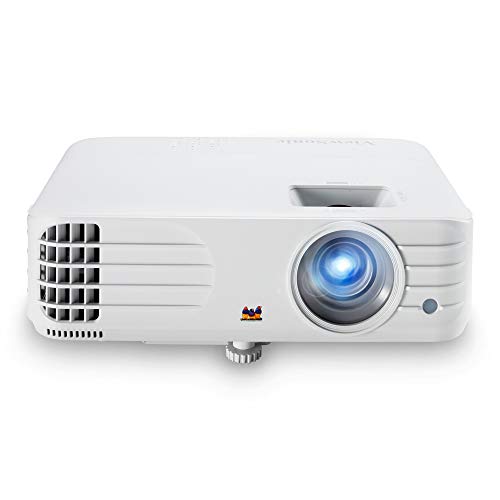
ViewSonic PX701HD — Best Budget Theatre Starter
The PX701HD in a theatre guide is a statement about how good the fundamentals have become at the entry tier. Native 1080p, a DLP engine with respectable contrast for its class, and colour that, in its cinema-leaning modes, tells a film story without embarrassment: a first projector that lets a household discover whether the theatre ritual suits them before the budget commits to it. Many home theatres begin exactly here, on a painted wall or an inexpensive screen, and a meaningful number discover that the experience they wanted was scale and darkness, both of which this machine delivers honestly.
Its practical virtues suit beginners. Setup is uncomplicated, the lamp’s eco ratings stretch the first replacement far into the future for weekend use, and the dual HDMI inputs cover the realistic pairing of a streaming stick and a console without a switcher. Because the tier is gentle, the rest of the system can be humble too, a soundbar and curtains rather than a receiver and acoustic panels, and the whole room can grow around the projector over time, which is how most real theatres are actually built: gradually, as enthusiasm budgets its next step.
The ceiling is visible and should be respected. Brightness confines it to properly darkened rooms, black levels and colour refinement sit behind the HD146X, and there are no smart features or gaming heroics to call on. As a second-room machine, a starter or a gift that introduces somebody to projection, it is easy to defend; as the anchor of an enthusiast’s dedicated room, it is a first chapter rather than the book.
The PX701HD also serves a purpose beyond its owner: it is the projector that gets lent. Light, simple and undemanding, it is the machine friends borrow for a wedding slideshow, a garden match or a classroom emergency, and it performs those duties without a manual. Owners of far finer projectors often keep a machine like this in a cupboard for exactly that reason, and beginners who start here frequently keep it in service long after the main room upgrades, which is the sincerest compliment a value product can earn.
- Native 1080p DLP in an entry-tier chassis
- Brightness suited to darkened rooms
- Lamp eco modes with long rated intervals
- Dual HDMI for player and console
- Light body for shelf, table or mount
Strengths
- Entry tier with honest native 1080p
- Simple setup suits first-time owners
- Eco lamp life flatters weekend use
Trade-offs
- Needs darkness; brightness is modest
- Picture refinement behind the cinema picks
- No smart platform or gaming specialisation
Best for: First theatre setups, second rooms and cautious beginners.
Not suited for: Enthusiasts anchoring a dedicated cinema room.
How Do You Set Up a Theatre Projector for Its First Film?
Commission the room in the order the image experiences it. Hang the screen and darken the room first, because curtains and a flat surface change the picture more than any menu. Mount or place the projector square to the screen, using zoom and any lens shift to fit the image mechanically before touching keystone, then focus on a paused frame with fine detail after the projector has warmed for twenty minutes, since focus drifts slightly as the optics heat. Only then open the picture menus, choose the cinema mode as your base, and adjust brightness and contrast against a familiar dark scene rather than a test pattern you will never watch again.
Sound and seating complete the ritual. Place the centre of your audio at screen height and ear level at the main sofa, set the projector’s quietest fan mode that still cools honestly, and save your settings as the household standard before the first film rather than after a month of drift. Then watch something you love and have seen before, because a familiar film exposes setup sins, grey blacks, crushed faces, a fan that narrates, that a demo disc politely conceals. Fix what the film tells you, and the room is commissioned.
What Upgrades Matter Most After the Projector Itself?
The screen, and it is not close. Owners routinely plan to project on a wall temporarily and discover two years later that temporarily became permanently, with the picture quietly taxed by texture, tint and every imperfection the plaster owns. A fixed-frame matte screen is the single largest picture upgrade available to any model in this guide, larger than the gap between the value pick and the flagship, and it should be the first purchase after the projector, ahead of better speakers, ahead of a new streamer, ahead of everything.
Light control follows, then audio, then sources. Blackout curtains or blinds convert the Epson picks’ brightness into contrast and let the DLP picks reach their native depth, while a soundbar with clear dialogue or a modest receiver setup gives films the voice that projector speakers cannot. Sources come last because even a humble streaming stick feeds these projectors well, and the expensive player only earns its tier once the screen, the darkness and the sound are already worthy of it. Build in that order and every step feels like a new projector.
How Should You Handle Gaming in a Theatre Room?
A theatre room seduces gamers with scale and then tests them with lag, and the two facts should be planned together. Wire the console to the projector directly rather than through any processing you can bypass, enable the projector’s game mode on that input permanently, and accept the slightly plainer picture settings the mode imposes as the price of response. Story-driven and adventure titles forgive almost everything and reward the scale enormously; competitive titles are the honest test, and they are why the gaming-aware picks in this guide publish their lag figures proudly.
Seating and sound shift for play as well. Players sit closer than film viewers, close enough that a 1080p image’s pixel structure can start to show in static menus, so a movable chair or a second seating row at gaming distance is a common theatre-room refinement. Audio delay matters too: route sound so that the picture’s game mode and the amplifier’s processing agree, or dialogue in cutscenes will drift from lips by just enough to notice at the worst moment. Ten minutes of this plumbing buys years of big-screen play that feels right.
What Does a Theatre Projector Ask of Your Ceiling and Cables?
A ceiling install is a small building project wearing a technology costume, and it rewards the households that treat it as one. The mount must land on structure, not on plasterboard optimism, the power outlet belongs in the ceiling beside it rather than at the end of an extension lead draped across a beam, and the HDMI run should be installed with a spare or with conduit, because the cable standards of the next decade will not ask your ceiling’s permission before changing. Every one of those decisions is cheap on install day and expensive on every day after it, which is the entire economics of doing it properly once.
Shelf and table placement remain honourable alternatives, and for renters they are the only ones. A rear shelf at the correct height avoids the ceiling entirely, keeps the projector reachable for cleaning and adjustment, and shortens the cable story to a single tidy run down the wall. What placement cannot be is an afterthought at the wrong height with the image corrected into submission, because a theatre projector’s geometry is its picture quality, and the mount is where that quality is decided before the first film is ever loaded.
How Do the Six Compare When the Room Goes Dark?
Judge the table by your room’s darkness first and your sources second. The light engine column predicts the picture’s character, the standout column names where each maker spent the money, and the final column keeps the accounting honest.
| Pick | Light engine | Throw | Standout trait | Watch out for |
|---|---|---|---|---|
| Epson Home Cinema 1080 | 3LCD, lamp | Standard throw | Brightness with honest colour for real rooms | Black level is the purist tax |
| Epson Home Cinema 1100 | 3LCD, lamp | Standard throw | Streaming built into bright 3LCD theatre | Contrast purists should look below |
| Optoma HD146X | DLP, lamp | Standard throw with zoom | Cinema contrast at a gateway tier | Demands darkness and external audio |
| Optoma HD28HDR | DLP, lamp | Standard throw | HDR tone mapping plus fast gaming | Source quality decides HDR gains |
| BenQ TH575i | DLP, lamp, Android TV | Standard throw | Smart convenience with theatre colour | Platform ageing is the long-term note |
| ViewSonic PX701HD | DLP, lamp | Standard throw | Fundamentals honestly delivered | Refinement is the upgrade path |
What Mistakes Do First-Time Theatre Buyers Make?
Projecting onto an untreated wall for years is the defining beginner’s error, because it taxes every projector equally and convinces owners their machine is mediocre when the surface is. The wall’s texture becomes the image’s texture, its tint becomes the colour balance, and its bumps become geography in every slow pan. Any screen, honestly flat and matte, outperforms the best wall, and the fixed frame outperforms everything else in this guide’s budget conversation.
The second mistake is buying brightness for a dark room. A presentation-class lumen figure in a blacked-out theatre buys glare, grey blacks and a fan working harder than the film deserves, while the contrast-led models above are dismissed on paper by buyers who never see them in their element. Specify for the room at viewing time, with the curtains you actually own, and the specification sheet starts agreeing with your eyes.
A third error is mounting by enthusiasm: projector fixed to the ceiling before the screen size is settled, throw guessed rather than charted, and keystone correction left to absorb a geometry problem that a tape measure would have prevented. Keystone is a rescue, not a plan, and every degree of it spends sharpness the 1080p panel cannot spare. Measure twice, mount once, and let the correction menus stay at zero where they belong.
Finally, buyers starve the sound. A 110-inch image whispered through a projector’s courtesy speaker feels like a cinema with the volume of a voicemail, and the mismatch breaks the spell more completely than any picture flaw. Even a modest soundbar restores the proportion between what the eyes and ears are being told, and it should be in the first budget, not the fifth.
A fifth mistake is calibrating by other people’s photographs. Screenshots of projected images, however honest the poster, pass through a camera’s exposure decisions and a phone screen’s processing before reaching you, and they flatter or condemn machines for reasons that have nothing to do with the projector. Use photographs to judge size and setup ideas; use your own room, your own films and a return window to judge the image itself.
Final Recommendation
It is worth saying plainly what this guide is not recommending: it is not recommending that you wait. Every year, a better projector is announced for the season after next, and every year the films you love are available tonight at 110 inches from machines like these. The resolution debate that dominates specification forums dissolves within minutes of the first dark scene in a prepared room, and what remains is the ritual itself, which no future model can retroactively give you for the evenings you spent deliberating.
If your theatre is a living room that darkens politely rather than completely, begin with the Epson pair: the Home Cinema 1080 for flexible, forgiving placement, the Home Cinema 1100 when built-in streaming will decide how often the projector actually gets used. If your room goes properly dark and films rule the calendar, the Optoma HD146X remains the value cinema picture to beat, while the HD28HDR serves the streaming household that also games. The TH575i gathers a family’s sources into one box, and the PX701HD starts the whole hobby at a tier that asks only for darkness and enthusiasm.
Choose by room and ritual rather than by specification, then spend what remains on the screen and the curtains before touching a more expensive projector. A modest machine in a prepared room will move you more than a flagship aimed at a bare wall, and that, in the end, is the whole secret this category keeps.
Frequently Asked Questions
Is 1080p really enough for a home theatre in the 4K era?
For screens up to roughly 120 inches at normal seating distances, yes, emphatically. The eye judges sharpness by the relationship between pixel density and distance, and a native 1080p image at a sensible sofa distance is clean, detailed and filmlike. What 4K adds at these sizes is refinement at the margins; what it costs is a tier jump that this guide would rather see spent on the screen, the darkness and the sound, which improve every film rather than only the sharpest ones. Owners who later step up usually keep the 1080p machine for the second room, which tells you how completely the resolution question fades once the ritual is established.
How dark does the room actually need to be?
Dark enough that you cannot read comfortably is the working test. Full blackout flatters the DLP picks and rewards purists, but the brighter 3LCD models here hold a genuinely cinematic image in a curtained living room with a lamp lit in the far corner. What defeats every projector in this class is direct light falling on the screen itself, so control the light path to the wall first and worry about the rest of the room second. A single blackout blind behind ordinary curtains closes most of the remaining gap for the brighter picks, and costs less than the difference between projector tiers.
Can these projectors handle sport and fast motion?
Yes, with the right expectations. Projectors in this class refresh at television rates and handle broadcast sport competently, with the brighter models holding up best when the room keeps some light for a gathering. Motion smoothing features exist on several picks and divide opinion: they can steady a match and make a film look like a soap opera, so most owners enable them per content rather than leaving them on for everything. If the household includes serious players, let them test the game mode with their own title before the return window closes; hands settle arguments that specifications start.
Do I need a screen, or is a white wall acceptable?
Acceptable is doing heavy work in that question. A smooth white wall will show you a picture, and many owners start there, but the screen is the highest-value upgrade in the entire setup, flattening texture, correcting tint and defining the image edge that makes projection feel like cinema. If the budget forces a sequence, buy the projector first and the fixed screen second, and treat the wall strictly as a rehearsal. Painted screen paints sit between the two, better than a plain wall and short of a frame, and suit renters who cannot hang anything heavier than a picture.
Which of these is best if the household also games?
The Optoma HD28HDR, whose enhanced gaming mode brings lag down to properly responsive figures while its HDR handling flatters modern titles, with the BenQ TH575i close behind for families who value its built-in streaming as much as its game mode. The Epson pair and the HD146X play story games and casual titles happily, but competitive players should choose from the gaming-aware end of this list. The Epsons remain the safer family choice where gaming is occasional and the room stays sociable, because their brightness forgives the lights a game night usually keeps on.
How long will a theatre projector lamp last with film-night use?
Longer than the same lamp in an office, because film nights are measured in a few evenings a week rather than in working days. Run in its cinema and eco modes, a lamp in this class typically serves a household for years of regular viewing before brightness fade becomes noticeable, at which point a genuine replacement lamp restores the picture to near-new. Owners who log heavy gaming and streaming hours should simply expect the interval to shorten in proportion. Keep the lamp’s purchase source reputable when the time comes; a genuine lamp costs more and is worth every part of the difference in brightness and safety.
Related Guides
Keep reading with our companion guides: best 1080p projectors for mixed living-room use best gaming projectors for consoles and film best projectors for bright living rooms.


