Our Top Picks



What's inside
- What a BIA Monitor Really Measures
- Foot-to-Foot, Hand-to-Foot, and Segmental Designs
- The Numbers on the Screen, Decoded One by One
- Hydration: The Variable That Moves Everything
- Accuracy Compared With DEXA and Other Reference Methods
- App Sync, Profiles, and Living With the Data
- Who Should Not Use a BIA Monitor
- Choosing Between Models: A Feature Order That Makes Sense
- Setup, Placement, and a Reading Routine That Stays Repeatable
- Interpreting Change Over Weeks and Seasons
- Care, Cleaning, and Household Practicalities
- Single-Frequency, Multi-Frequency, and Spectroscopy Without the Mystique
- Reading Results Across Different Bodies and Life Stages
- Three Household Scenarios and the Model Each One Calls For
- Check prices on Amazon
- Frequently Asked Questions
As an Amazon Associate I earn from qualifying purchases. This post may contain affiliate links at no extra cost to you.
A morning body-composition reading is most useful when you treat it as a consistent trend line rather than a laboratory verdict on a single day. As an Amazon Associate we earn from qualifying purchases. This guide explains how bioelectrical impedance monitors, often called BIA devices, estimate body fat, muscle, water, and related figures from a harmless-feeling electrical measurement taken through the feet, the hands, or both. Understanding what the device actually measures, and what it merely calculates afterwards, is the difference between using one wisely for months and being misled by ordinary daily fluctuations.
What a BIA Monitor Really Measures
A bioelectrical impedance monitor sends a very small alternating electrical current through the body and measures how strongly the body resists and reacts to that current. The sensation is normally absent; you stand on metal footplates or grip metal handles and feel nothing at all. Water-rich tissue such as muscle conducts the current more readily than fat, which contains far less water. From the measured impedance, together with your height, weight, age, and sex as entered in a profile, the device’s equations estimate total body water and then derive fat-free mass and body fat. Every figure beyond impedance and weight is therefore an estimate built on assumptions, not a direct observation.
That chain of inference matters. The scale portion weighs you directly and usually does so accurately. The impedance portion measures an electrical property directly, though contact quality and hydration influence it. Everything displayed after that, including body fat percentage, skeletal muscle mass, visceral fat level, bone mass, and metabolic rate, comes from population equations chosen by the manufacturer. Two monitors can measure similar impedance and still report noticeably different body fat because their equations, electrode arrangements, and assumptions about body shape differ. Neither is necessarily malfunctioning; they are modelling the same body through different statistical lenses.
Impedance, resistance, reactance, and phase angle in plain language
Resistance describes how much the body’s fluids and tissues oppose the current. Reactance reflects how cell membranes briefly store and release charge, a behaviour that changes with cell integrity and the balance between water inside and outside cells. Impedance combines the two. Some advanced and professional devices report phase angle, a value derived from the relationship between reactance and resistance, which clinicians and researchers sometimes follow as a general marker associated with cell health and nutritional status. Consumer monitors mostly hide these raw quantities and show the friendlier derived figures, which is convenient for daily use but worth remembering when a single percentage moves: the raw measurement may have shifted only slightly while the equation amplified the change.
Frequency adds another layer. Simpler monitors use a single frequency, commonly around fifty kilohertz, while more elaborate segmental and professional units sweep several frequencies because low and high frequencies travel differently through fluid compartments. A multi-frequency design can model intracellular and extracellular water more separately, at least in principle. In consumer purchasing, frequency count should rank below electrode arrangement, consistent protocol, and sensible software, because a well-used basic monitor reveals trends more reliably than a feature-rich device used carelessly at random times of day.
Foot-to-Foot, Hand-to-Foot, and Segmental Designs
The classic home design is a scale with four foot electrodes. Current enters one foot, crosses the lower body, and returns through the other foot. This foot-to-foot path samples the legs thoroughly and infers the rest of the body from equations, which means it estimates the trunk rather than measuring it directly. For many users that trade is acceptable: the device is quick, lives on the bathroom floor, asks nothing except bare feet, and produces repeatable numbers when conditions are kept steady. Its weakness appears in people whose composition differs strongly between lower and upper body, such as athletes with heavily developed shoulders and arms, or individuals carrying most adipose tissue around the abdomen.
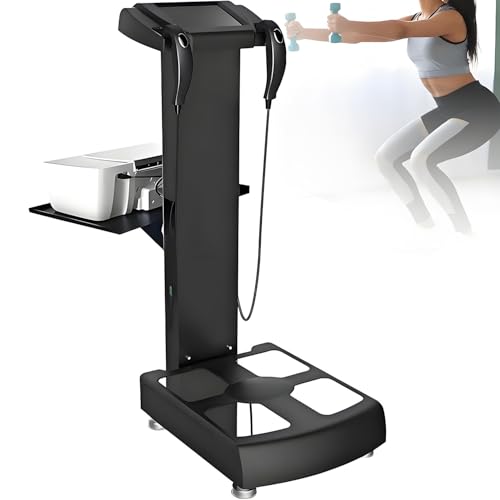
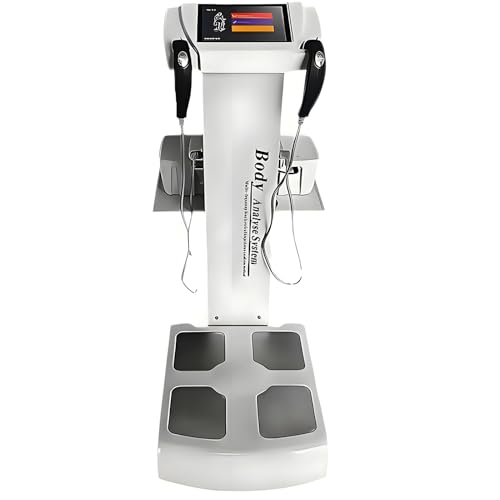
Hand-to-foot designs add a pull-out or attached handle with thumb and palm electrodes, sending current through arms and trunk as well as legs. Segmental models go further, reporting separate estimates for each arm, each leg, and the trunk. That breakdown can be genuinely useful: a physiotherapy patient can watch one recovering leg, a rower can see whether training is balancing the arms, and a clinician-minded user can notice asymmetries worth discussing with a professional. Segmental figures are still equation outputs, and the trunk segment is the hardest to model because its impedance is low relative to its mass, so treat small segment differences as prompts for attention rather than precise anatomical facts.
Electrode count and why contact quality beats marketing numbers
A basic scale typically presents four foot contacts, two under each foot. Segmental systems commonly use eight contact points, adding both hands. More electrodes enable more measurement paths, but only when contact is complete and consistent. Dry callused heels, socks worn out of habit, a foot placed half off the plate, or a loose grip on the handles all degrade the signal before any equation runs. Manufacturers design plate shapes and handle textures to guide placement, yet the user’s routine remains decisive. Wipe plates clean, stand centred with weight evenly spread, keep arms in the position the manual specifies, usually slightly away from the torso so the arms do not touch the body and create an alternate path.
Some professional analysers use adhesive electrodes or tetrapolar arrangements with separate current and sensing contacts placed by an operator, reducing contact artefacts further. That clinical style explains why a gym or clinic analyser and a bathroom scale can disagree even on the same morning. Readers who also follow wrist-based health tracking will recognise the same principle from devices covered in this guide to best active smartwatches: a sensor only reports well when its contact with the body is consistent, and convenience features never fully compensate for sloppy placement.
The Numbers on the Screen, Decoded One by One
Body fat percentage receives the most attention and deserves the most caution. It expresses estimated fat mass as a share of total weight, and healthy ranges vary with sex and age because essential fat and typical distribution differ. Follow the direction of your own readings over weeks rather than comparing your number with a friend’s reading from a different brand. Muscle mass and skeletal muscle figures estimate the contractile tissue the equations expect from your water and weight; they move slowly in reality, so a large overnight jump signals fluid shift, not new tissue. Bone mass on a consumer monitor is a modelled estimate correlated with fat-free mass, not a scan of your skeleton, and it should never be used to judge bone density or fracture risk.
Total body water percentage expresses estimated water as a share of weight and naturally runs higher in leaner bodies because muscle holds more water than fat. Visceral fat is usually shown as a unitless level or an estimated area rating rather than a weighed quantity; it aims to reflect fat around the abdominal organs, a depot associated with metabolic risk, but a home device infers it indirectly. Basal metabolic rate is calculated from fat-free mass through standard formulas and represents resting energy needs before activity, useful for rough nutrition planning and nothing more exact. Some apps add a body score or physique rating that compresses several estimates into one gamified number; such scores can motivate, yet they hide which component moved and should never outrank the underlying trend lines.
Protein, subcutaneous fat, and other secondary readouts
Higher-end consumer models display additional lines such as protein mass, subcutaneous fat percentage, fat-free body weight, and an estimated metabolic or body age. Each is another transformation of the same impedance and profile data, not a fresh measurement. Body age in particular is a comparison against population averages dressed as a birthday; a flattering or alarming value says more about the reference table than about your arteries. When choosing between models, count genuinely distinct capabilities, such as segmental paths, multiple user profiles, or a guest mode, rather than the sheer number of derived metrics on a product page, because ten transformations of one measurement are still one measurement.
Hydration: The Variable That Moves Everything
No factor distorts a BIA reading more reliably than water. Drink a large glass shortly before stepping on and the current finds an easier path, nudging estimates toward a leaner interpretation. Exercise hard, sweat, sit in a sauna, or spend an evening with alcohol, and dehydration pushes readings the other way. A hot shower, a long bath, a heavy meal, and a full bladder each leave fingerprints. Even the time of day matters because fluid redistributes when you lie down overnight and again when you stand and move. This is not a defect unique to one brand; it is the physics of measuring a body whose conducting medium changes by the hour.
The practical response is protocol, not anxiety. Measure at the same time, ideally in the morning after using the bathroom and before eating or drinking much, with clean dry feet, on the same hard floor, wearing little or the same light clothing each time. Keep a simple log of anything unusual: a late salty dinner, an illness, a long run, travel, or medication changes that affect fluid. When a reading surprises you, look at the log before reacting to the number. Experienced users judge a seven-day rolling average and largely ignore single mornings, in the same way a sailor trusts a barometer’s trend more than any one reading on a changeable day.
Special situations that shift fluid and fool equations
Menstrual cycle phases commonly move water retention enough to shift body fat estimates across a week, which is why comparisons spaced a full cycle apart can be fairer than week-to-week judgements for some users. Fever, gastrointestinal illness, and recovery days after endurance events all distort results until normal hydration returns. People with oedema, kidney conditions, heart failure, or prescribed diuretics live with fluid balances that standard equations were never built to model; for them, a home BIA figure can mislead in either direction, and any use should be discussed with their clinician, who may value the weight trend alone and disregard the composition estimates entirely.
Skin temperature and room conditions play smaller but real roles. Cold feet from an unheated bathroom floor in winter can raise contact resistance, while damp feet straight from a shower lower it artificially. Let feet reach a normal dry state, keep the device in the room where it is used rather than carrying it between climates, and avoid measuring immediately after coming indoors from heavy exertion in heat. These details sound fussy in a product guide, yet they explain most of the mystery variance that makes new owners declare a monitor inconsistent during its first fortnight.
Accuracy Compared With DEXA and Other Reference Methods
Dual-energy X-ray absorptiometry, usually shortened to DEXA, separates bone, fat, and lean tissue using two X-ray energies and serves as the common reference in studies of consumer BIA devices. Research comparisons generally find that home monitors can track groups reasonably while differing from DEXA for an individual by several percentage points of body fat, sometimes more at the extremes of leanness or obesity, in older adults, and in athletes whose bodies depart from the reference populations behind the equations. Magnetic resonance imaging quantifies tissue volumes with still greater anatomical detail at far greater cost and inconvenience, while hydrostatic weighing and air displacement methods estimate density through entirely different physical routes.
The fair conclusion is not that home BIA is useless, but that it is a trend instrument. A monitor that reads three points above a clinic result yet does so consistently will still show fat loss during a training block as a downward drift, and muscle-focused users can watch lean estimates hold steady while weight falls. Problems begin when a user treats a home percentage as a laboratory fact, sets a goal on a single decimal place, or compares readings across different devices as if brands shared one equation. Choose one device, keep its settings correct, and let its own history be the comparison that counts.
Why equations fit some bodies better than others
Prediction equations are built from study volunteers, and a given model’s volunteers may skew toward particular ages, ancestries, and body shapes. Limb length proportions, trunk shape, and typical fat distribution vary across populations, so an equation tuned on one group can bias results for another. Children and adolescents need dedicated equations because growth changes water distribution; older adults lose muscle and redistribute fat in ways that generic adult formulas approximate imperfectly. Very lean strength athletes and people with obesity both sit near the edges where assumptions strain. Manufacturers rarely publish their equations or validation groups in consumer materials, which is another reason to privilege repeatability on your own body over impressive claims in a brochure.
Athlete mode exists precisely because one population broke the standard assumptions badly enough to need its own branch. Selecting it usually tells the device to expect higher muscle mass and lower fat for a given impedance, shifting results for people who train intensely many hours each week and carry genuinely low fat. It is not a compliment setting for anyone who visits a gym twice a week; choosing it without the physiology to match simply flatters the output and corrupts the trend. If you are unsure, stay in standard mode for a full month of consistent readings, because continuity of method matters more than squeezing a mode decision you can revisit later with better evidence.
App Sync, Profiles, and Living With the Data
Most current monitors connect by Bluetooth to a phone application, and some add Wi-Fi so readings upload without the phone nearby. Bluetooth models are simple and sip power, but they need the phone within range and occasionally hold a reading in memory until the next sync. Wi-Fi models suit shared households and early routines where a phone may be charging elsewhere, at the cost of a more involved setup and a dependence on the home network. Either way, confirm that the application recognises multiple users automatically by weight range, handles a guest without creating a phantom profile, and lets you export your history in a standard format so years of readings are not trapped if you change brands.
Profile accuracy quietly governs output quality. Height entered a few centimetres wrong, an incorrect birth date, or the wrong sex selection will bend every estimate the equations produce, day after day, in a way no electrode can correct. When a household shares a device, check that the monitor assigned the reading to the right person before celebrating or worrying; overlapping weight ranges between partners or between a parent and a teenager are the usual cause of crossed profiles. Some models ask the user to confirm identity on the display or in the app when weights are close, a small friction that prevents large confusion.
Integrations and the wider health picture
Many applications forward weight and composition data to phone health platforms and training services, letting a BIA trend sit beside sleep, activity, and nutrition records. That combined view can be genuinely illuminating: a plateau explained by poor sleep, or water swings that follow hard sessions, become visible. It can also encourage obsessive checking. Weighing several times a day produces noise, not insight, and composition estimates need even more restraint than weight. A sustainable rhythm for most people is a morning reading a few times per week, reviewed weekly, with the application used for charts rather than for hourly reassurance. Readers building a broader tracking setup on a modest budget may also browse best affordable smartwatches for the activity side of that picture, keeping in mind that wrist estimates and scale estimates each carry their own assumptions.
Privacy deserves a sentence in any connected-device decision. Body composition history is health data. Read the maker’s policy on cloud storage, account deletion, and data sharing, prefer services that let you delete history permanently, and use a unique account password with any available extra sign-in protection. A monitor used in a clinic, gym, or shared house raises consent questions as well; guests should know a reading may be stored, and a true guest mode that discards data is the polite and safer default for visitors.
Who Should Not Use a BIA Monitor
Safety guidance for this category is unusually clear on one point. People with an implanted pacemaker or another implanted electronic medical device should not use a consumer BIA monitor unless their device maker and clinician have explicitly approved that specific use, because the measurement passes an electrical current through the body. The current is tiny and the concern is precautionary for many modern implants, yet precaution is exactly the right posture where an implanted cardiac device is involved, and manufacturers print the warning for a reason. A conventional scale function without the impedance measurement, where a model offers a weight-only mode, may be an acceptable alternative to discuss with the clinician.
Pregnancy is the other standard caution. The current itself is not the main issue so much as the equations, which were not built for a body whose fluid compartments and mass distribution are changing for two. A pregnant user gains little from composition estimates that cannot model the situation, and weight tracking alone, guided by her care team, is the sensible course. People with implanted metal should ask rather than assume: orthopaedic hardware can alter local conduction, and while many users with plates or joint replacements read without obvious problems, segmental results near the hardware deserve scepticism. Anyone with a condition affecting fluid balance, as described earlier, should treat the composition output as unreliable until a professional advises otherwise.
Children, eating concerns, and psychological fit
Many consumer monitors set a minimum age for composition measurement, often in the later teens, because growing bodies need different equations and because the numbers invite unhealthy fixation. Weight-only use for a child under family or medical guidance is a separate matter from handing a young person a daily body fat score. Adults with a history of disordered eating should consider honestly whether frequent composition feedback supports or undermines their health; for some, a simple scale used occasionally, or no home device at all, is the wiser purchase. A buying guide can describe sensors all day, but the right device is the one whose data you can hold lightly and use calmly.
Accessibility also belongs in a who-should-skip discussion. A foot-only scale requires standing barefoot, steady and unaided, which excludes some users with balance or mobility limitations. Handheld impedance devices and professional seated or lying analysers serve those situations better. Displays with small low-contrast figures frustrate users with low vision, while application-based readouts with large type and voice output can restore independence. Judge the interface with the actual reader in mind, not with the eyes of the person placing the order.
Choosing Between Models: A Feature Order That Makes Sense
Start with measurement architecture, because it cannot be upgraded later. Decide whether foot-to-foot convenience or hand-to-foot segmental information matches your purpose. A general user tracking weight and a rough fat trend is well served by a good four-electrode scale. A user rehabilitating one leg, a coach monitoring a squad’s limbs separately, or someone whose upper and lower body differ markedly will use segmental data enough to justify handles and eight contacts. Readers comparing display-centric purchases sometimes arrive here from screen guides such as best 10 bit monitors; the useful parallel is that headline specifications only matter when the underlying measurement or panel genuinely changes what you can see.
Next, examine capacity and platform size. Heavier users need a stated capacity with headroom and a platform wide enough for a stable stance, because a cramped platform forces the partial foot contact that ruins readings. Check the increment for weight, the units offered, and whether the display shows the key figures on the device itself or hides them in the application. A monitor that displays only weight and pushes everything else to a phone annoys users who keep phones out of the bathroom. Battery arrangements matter in small ways that accumulate: common replaceable cells are easy to keep as spares, while sealed rechargeable units need a charging habit and may age with the device.
Software quality, updates, and long-term support
The application is half the product. Look for clear trend charts with weekly and monthly averages, manual entry and correction of a misassigned reading, export in an open format, and firmware update notes that explain changes. An equation update can shift your entire history’s meaning if the application recalculates old readings silently; a responsible maker versions such changes and tells users. Check how long the maker has supported earlier models, because a monitor can outlive the phone operating systems it launched with, and an orphaned application turns a connected device into a basic scale. Offline memory for many readings protects data during phone changes and travel.
Household features separate thoughtful designs from solitary ones. Automatic recognition for several adults, a baby or pet weighing mode that calculates a held weight by difference, and a guest mode cover real family life. Some models add heart rate measurement through the footplates or a standing pulse estimate; treat those as conveniences rather than medical readings. Users who already track workouts through best android smartwatches fitness may prefer a monitor whose application shares data smoothly with that ecosystem, so the morning composition trend and the day’s training load can be reviewed in one place without manual copying.
Setup, Placement, and a Reading Routine That Stays Repeatable
Place the monitor on a hard, level surface. Thick carpet lets a scale flex and can distort both weight and contact, which is why some models supply carpet feet and why a tiled or wooden bathroom floor is the natural home. Leave the device in place; dragging it between rooms changes its footing and its calibration habits, and many models ask for a brief zeroing step after being moved. During setup, enter profiles carefully, stand still when the device takes its reference reading, and connect the application before the household’s first real morning so recognition ranges learn correctly from the start.
Build the routine around anchors you already keep. Wake, use the bathroom, step on with dry bare feet, stand still until the reading completes, and step off before dressing or breakfast. For segmental handles, dry hands matter as much as dry feet, and hand cream applied minutes earlier can change contact in either direction, so measure before the morning’s lotions and potions. Keep fingernails and jewellery in mind only insofar as grip changes; consistency is the goal, not ritual purity. If shift work or travel scrambles mornings, choose the equivalent point in your own cycle, the first waking of your main sleep, and keep that anchor instead.
Calibration, verification, and when to suspect the device
Consumer BIA monitors do not offer user calibration for impedance, but weight can be sanity-checked with a known object such as a sealed exercise weight or a full container whose mass you have confirmed elsewhere. Repeat a reading three times in a row under identical conditions; weight should agree closely, while composition may vary a little. Wide swings across back-to-back attempts point to contact trouble, a low battery, a flexing floor, or feet shifting between attempts. Replace or recharge power cells when the display dims or the manual suggests it, because a weakening supply can produce erratic behaviour before it produces an honest low-battery warning.
Keep expectations for verification realistic. You cannot validate body fat at home against a truth you possess, which is precisely why protocol discipline carries the whole enterprise. What you can validate is repeatability, sensible response to known changes such as a long training block, and agreement in direction with waist measurements, clothing fit, and photographs taken under similar light. When those independent signals and the monitor agree over a season, confidence in the trend is earned. When the monitor alone insists something dramatic happened overnight, believe the signals, not the screen.
Interpreting Change Over Weeks and Seasons
Real tissue change is slow. Muscle gained through progressive training and adequate protein accumulates over months, and fat loss at a sustainable pace shows as a gentle slope, not a staircase. A monitor used well makes those slopes visible beneath daily noise. Graph your weekly averages and annotate the chart with training phases, illnesses, holidays, and any change in creatine use or diet style, because supplements and carbohydrate intake shift water storage and therefore shift readings in ways that mimic tissue change. A new low-carbohydrate phase often drops water quickly, flattering fat estimates for a fortnight; a return to normal eating restores the water and appears, falsely, as sudden fat gain unless the annotation reminds you what actually happened.
Plateaus deserve a structured response. First confirm the protocol has not drifted: a new bath mat under the device, a profile edited during an application update, or a habit of measuring after an evening workout can all manufacture a plateau or a breakthrough. Then look at waist circumference and performance markers. If waist and strength both improve while the monitor sulks, trust the broader picture and continue. If every signal agrees that nothing has moved for a month or more, the honest variables are intake, activity, sleep, and time, and the monitor has done its job by refusing to invent progress.
Sharing readings with coaches and clinicians
A trend export means more to a professional than a single screenshot. Bring averages, the device model, and a note of your measurement routine, and expect a good clinician to weigh the information accordingly, perhaps comparing it with clinic measurements taken under controlled conditions. Coaches can use segmental trends to flag a limb that lags after injury, while remembering that consumer segmental values are estimates. Nobody competent will redesign a treatment around one home percentage, and a user who understands that boundary gets more value from professional conversations, because the discussion stays on patterns and corroborating evidence instead of on defending a gadget.
Care, Cleaning, and Household Practicalities
Wipe electrodes and the platform with a soft, slightly damp cloth and mild cleaning suitable for the surface, then dry them; residue from bath products and dust both interfere with contact over time. Never immerse the device, and keep it out of direct shower spray and standing water even in a steamy bathroom, using ventilation or a nearby dry shelf if the room never truly dries between uses. Check the underside occasionally for hair and grit that can rock the feet on a hard floor. Store spare batteries away from the damp room where the monitor lives, and note the purchase season in the application or on a label so a slow drift years later can be compared against the device’s age.
Handles and cables on segmental models need gentle treatment. Let the handle retract without snapping, avoid wrapping its cord tightly around the unit, and teach children that the handle is a sensor, not a skipping rope. In a shared house, agree where the device lives and who may move it; most mystery inconsistencies trace back to a well-meaning relocation onto carpet. If the monitor travels with an athlete to camps or competitions, readings taken in new places, at new times, after flights that dehydrate, should be marked as travel data and excluded from the home trend’s averages.
Common mistakes that new owners make
- Measuring at random times and then averaging numbers that were never comparable in the first place.
- Wearing socks, standing on carpet, or gripping segmental handles with freshly moisturised hands.
- Selecting athlete mode for flattery rather than physiology, which quietly rewrites the meaning of the trend.
- Entering an approximate height or the wrong birth date and never revisiting the profile afterwards.
- Comparing one brand’s percentage with another brand’s percentage as if both used the same equations.
- Reacting to a single morning by changing diet or training before checking hydration and the weekly average.
- Letting the application assign readings to the wrong household member when two people’s weights overlap.
- Expecting the device to judge bone health, organ fat, or disease risk beyond what an indirect estimate can support.
Each mistake is understandable, and each is fixable in a day. The owners who still value a BIA monitor a year later are rarely the ones with the most elaborate model; they are the ones who settled a routine in the first fortnight, stopped chasing daily decimals, and let slow evidence accumulate. That temperament, more than any electrode arrangement, is what a prospective buyer should honestly assess before choosing how advanced a model to bring home.
Single-Frequency, Multi-Frequency, and Spectroscopy Without the Mystique
Specification pages sometimes present frequency as if it were a camera’s megapixel count, a number that settles quality by itself. The reality is more modest and more interesting. A single-frequency device sends its current at one rate and applies an equation validated for that arrangement. A multi-frequency device samples at several rates, gaining information about how water compartments respond, because current at lower frequencies travels mainly around cells while higher frequencies penetrate them more effectively. Bioimpedance spectroscopy extends that sweep across many points and fits a model to the curve. In research and clinical settings these distinctions support specific analyses. In a bathroom, their value depends entirely on whether the manufacturer validated the consumer equations behind the friendly display, information that marketing rarely supplies in useful detail.
For a buyer, the sensible translation is this: do not pay a premium for frequency language alone. Pay for electrode paths you will use, software that preserves and exports your history, a platform that fits your feet and your household, and a maker with a record of supporting its applications. A dual-frequency segmental model from a careful maker can be an excellent instrument. A long frequency list attached to vague software and no export route is decoration. The measurement physics sets the ceiling; everything about routine, equations, and data handling decides how close daily life gets to that ceiling.
Professional analysers and why clinics arrange things differently
Clinic and research analysers often separate the person from the morning’s chaos. The subject may be asked to fast, void, avoid exercise beforehand, and lie or stand in a standard posture while an operator places electrodes or supervises handles and footplates. Temperature is controlled, recent intake is recorded, and the same device is used for follow-up. That ceremony is not fussiness; it is an admission that the method’s repeatability comes from conditions. Home users cannot and need not reproduce a clinic, but borrowing its logic, same time, same state, same device, captures most of the benefit. It also explains why a clinic figure deserves more confidence as a snapshot while a home trend deserves more confidence as a story: each is strongest at a different job.
Professional units may also report raw resistance, reactance, and phase angle at several frequencies, letting a trained reader judge whether a change in derived fat-free mass is plausible or whether fluid shift is masquerading as tissue change. Consumer applications increasingly expose a water ratio or an extracellular figure on higher models. If yours does, learn to glance at it when a composition reading startles you. A simultaneous swing in water measures is the device quietly telling you that this morning’s surprise is hydration wearing a costume, and the correct response is a glass of patience rather than a revised diet.
Reading Results Across Different Bodies and Life Stages
An older adult following a monitor deserves particular care in interpretation. Muscle tends to decline with age while fat redistributes, and hydration of fat-free tissue changes, so equations built on younger volunteers can flatter or alarm in systematic ways. The trend still informs, especially when paired with strength, mobility, and waist measures, but thresholds printed in a generic chart should not be treated as personal targets without professional context. Resistance training, adequate protein, and balance work matter more than any decimal, and a monitor that shows lean mass holding while strength rises is reporting a victory even if weight barely moves.
For users managing substantial weight loss, early readings can swing as water, glycogen, and gut content change faster than tissue. Loose skin and altered body geometry after large losses also strain the shape assumptions inside equations, so corroborate with waist, hip, and limb circumferences taken with a simple tape under consistent tension. Photographs every few weeks under similar light and posture, unflattering as they can feel, often communicate composition change more honestly than any single instrument. The monitor joins a panel of witnesses; it should never sit as sole judge, and a season in which tape, photographs, clothing, and trend all agree is a season whose conclusion you can trust.
Men, women, and why the same percentage means different things
Essential fat differs between sexes, and healthy distribution differs too, with gynoid and android patterns storing tissue in different regions that foot-only paths sample unevenly. This is one more argument for judging yourself against your own history and against ranges appropriate to your sex and age, rather than against a partner, a training companion, or an image online. A foot-to-foot device may under-read change concentrated in the trunk and over-read change in the legs for either sex, which segmental hand contacts partly address. Even then, the trunk remains the modelled segment, so a user whose entire goal concerns abdominal change should track waist circumference as a primary measure and let the monitor play a supporting role.
Three Household Scenarios and the Model Each One Calls For
Consider a couple beginning a shared fitness effort, both beginners, neither interested in limb data. Their risks are crossed profiles, an application one of them finds irritating, and early discouragement from noisy readings. A sturdy foot-to-foot model with automatic recognition, a clear display on the device, and weekly average charts answers every one of those risks. Their money is better spent on the shoes, food, and time that change bodies than on segmental handles neither will use after the novelty fades. What they need from the monitor is a shared, calm ritual and a chart that tells the truth slowly.
Consider instead a masters rower returning from a shoulder injury, tracking whether the recovering side regains muscle while total weight stays in a class band. Here segmental arm and trunk information, imperfect as it is, speaks directly to the question, and a hand-to-foot model with exportable history lets a physiotherapist review the arc of recovery. The handle routine is not a chore in this house; it is the point. The same logic serves a runner rehabilitating a leg, a climber balancing forearms, or a coach responsible for a small squad, provided everyone remembers that segment values guide attention rather than deliver verdicts.
Finally, consider a multigenerational home where grandparents track weight for their clinician, parents follow training, and teenagers should encounter nothing more fraught than a shoe size. The right purchase separates those experiences: profiles with composition visible in an adult’s application, a weight-only presentation on the shared display where the model allows it, and a guest mode for visitors. Capacity, platform stability, and large figures outrank every analytical flourish. A device that frightens a grandparent with an unexplained body-age score has failed at household design regardless of its sensor count, and a thoughtful buyer shops for the family’s peace of mind alongside the measurement.
What to do in the first thirty days with a new monitor
Use the first fortnight as a calibration of habits rather than of the body. Measure on schedule, note the disruptions, and resist interpreting anything. In the second fortnight, look at the emerging average and at how far single mornings stray from it; that personal noise band is the most valuable number the device will ever teach you, because every later change must exceed it to deserve a response. Set the application’s goals, if you use them, in terms of averages and dates that respect slow tissue change. Decide in advance what evidence would make you adjust food, training, or sleep, and write that rule somewhere you will see it on a discouraging morning. A rule written in a calm moment protects a plan from a noisy reading far better than willpower does.
At the end of the month, review the whole panel: weight average, fat and lean trends, waist, a performance marker you care about, and how you actually feel and sleep. If the panel mostly agrees, continue. If the monitor disagrees with everything else, suspect protocol drift or a profile error before suspecting your body. This monthly review rhythm, repeated across seasons, is the mature use of consumer BIA, and it is available on modest hardware. The expensive mistake is not buying a simple model; it is buying any model and then living at the mercy of its least reliable output, the single morning.
A note on gifts, gyms, and second-hand devices
A BIA monitor is a thoughtful gift only for someone who has expressed interest in tracking composition; unrequested, it can land as commentary on a body rather than as a gadget, and the giver should think carefully. Gyms and workplaces offering shared analysers should present results with the same restraint, ideally with staff who can explain hydration and trend thinking instead of handing over a printout of percentages as if it were a diagnosis. Anyone acquiring a second-hand device should factory-reset it, clear the previous owner’s profiles and cloud links, replace the batteries, clean the electrodes thoroughly, and confirm the application still supports that model before relying on it. An unsupported application reduces a connected monitor to its display, which may still be acceptable, but the price of the bargain should reflect that reduction honestly.
Finally, remember that the category improves quietly rather than dramatically. Newer models tend to refine recognition, displays, and application design more than they reinvent the underlying estimation, so an older device used with a disciplined routine is not obsolete merely because a successor exists. Replace a monitor when its platform cracks, its application loses support, its weight readings become erratic, or your needs genuinely change toward segmental information. Replacing it in hope that a new equation will finally agree with a clinic to the decimal is a hope the physics of the method will keep disappointing, season after season, no matter how polished the new display looks in the shop.
One more practical detail belongs in the record: keep the manual’s electrode diagram and your profile settings somewhere you can find them after a phone change or an application reinstall. Rebuilding profiles from memory invites the small height and birth-date errors discussed earlier, and a household that has measured happily for a year can confuse itself in an afternoon by recreating accounts carelessly during a handset upgrade. Export the history before switching phones, confirm the export opens, and only then retire the old device. Data that took seasons to accumulate deserves the same backup courtesy as photographs, because unlike a photograph, a lost morning reading can never be taken again under the same conditions.
Travel deserves a final mention in any routine discussion, because flights, hotel food, unfamiliar beds, and time-zone shifts disturb sleep and hydration together. Readings taken during the first mornings home often look like a verdict on the trip when they are really a record of dry cabin air and salty restaurant dinners. Mark travel days in the application, resume the normal anchor time, and give the average a week to forget the journey before judging anything. Athletes who travel to compete learn this quickly; recreational users benefit from borrowing their patience rather than discovering the same lesson through a fortnight of unnecessary worry each time they return from a holiday or a demanding work trip away.
If two people in one household read very differently on the same device, resist ranking them against each other. Different heights, limb proportions, training histories, and fluid habits feed different equations, and a shared bathroom is not a league table. Each person’s honest opponent is their own average from last season, measured under their own steady routine, on the same floor, with the same unhurried minute before breakfast.
Check prices on Amazon
Live listings for the shortlist in this guide are pulled from Amazon below, so prices and availability are always current at the moment you look.


Frequently Asked Questions
How often should I measure for a trustworthy trend?
Three to five mornings a week under the same conditions gives a weekly average that smooths ordinary fluid noise without turning the ritual into a burden. Daily measurement also works if you genuinely judge only the average. Less frequent than weekly makes trends slow to emerge and leaves each single reading carrying more emotional weight than it deserves.
Why did my body fat jump after a hard workout day?
Sweat loss, glycogen depletion, inflammation, and the drinks and meals that follow training all change the water the current travels through. The reading moved because your fluid state moved, not because tissue appeared or vanished in a day. Wait for a normal morning after a rest day and compare weekly averages before drawing any conclusion about the training block.
Is a segmental model worth choosing over a simple scale design?
It is worth it when you will act on limb-by-limb information: rehabilitation, asymmetric sports, or a physique goal where balance matters. For general weight management, the extra paths add cost and a handle routine without changing decisions, and a simpler device used consistently will serve better than a segmental one used sporadically because the handles feel like a chore.
Can I use a BIA monitor if I have a pacemaker?
Do not use the impedance function unless your implant maker and clinician have approved that specific use for you. Manufacturers advise against it as a precaution because the measurement sends a small current through the body. Ask whether a weight-only mode on a particular model is acceptable in your case, and follow that individual guidance rather than general reassurance from other users.
Why does my monitor disagree with the analyser at my gym?
Different electrode paths, equations, time of day, clothing, and hydration all separate the two readings, and a gym device may use hand and foot contacts while a home scale uses feet alone. Disagreement of a few points is common and does not prove either device broken. Pick one as your trend reference and let the other be an occasional cross-check of direction.
Does athlete mode make readings more accurate for everyone active?
No. Athlete mode applies different assumptions intended for people with substantial training volume and genuinely low fat. For a moderately active user it usually shifts estimates in a flattering direction while making them less comparable with standard references. Consistency matters more: whichever mode fits your physiology, keep it unchanged while a trend is being judged.
Used with a steady routine and a sceptical eye, a bioelectrical impedance monitor becomes a quiet household instrument that rewards patience: it will not hand you a laboratory truth before breakfast, but across a season of honest mornings it can show whether the work you are doing is genuinely reshaping the body you live in, and that slow, corroborated evidence is exactly what makes the category worth choosing carefully rather than impulsively.


