What's inside
- Key Takeaways
- Quick Picks
- How We Chose These Picks
- Reading the Ladder: Graphics, Screens, and Storage Across the Six
- How Much Graphics Card Does Your Library Actually Need?
- What Does a Good Gaming Desk Setup Add?
- What Should You Check Before Buying the Best 15 Inch Gaming Laptops?
- How Do You Keep a Gaming Laptop Fast and Cool for Years?
- What Happens to Resale and Longevity in This Class?
- Should a Gaming Laptop Be Your Only Computer?
- Common Mistakes When Buying for Gaming
- Final Recommendation
- Frequently Asked Questions
- Related Guides
As an Amazon Associate I earn from qualifying purchases. This post may contain affiliate links at no extra cost to you.
widgetverdict.com is reader-supported. When you buy through links on our site, we may earn an affiliate commission.
Fifteen inches is precisely where gaming laptops grow up. The 14 inch class trades power for portability, while the 17 inch class trades your bag for a desktop’s posture, and between them sits the size that balances a real graphics card, a real cooling system, and a machine you can still actually carry to a friend’s house or a term-time address. Choosing the best 15 inch gaming laptops in 2026 means reading well past the graphics card’s badge, because the badge is exactly where honesty goes to be simplified: the same GPU name can hide different power limits, different screens can waste or honour the frames the card produces, and two machines in this very guide illustrate how far apart two listings wearing similar promises can land.
Four picks carry verified links, and their listing titles are the authority for every figure claimed here. HP’s Victus 15 opens the guide as the accessible entry — and its title deserves a careful read, because it specifies a GeForce RTX 3050 alongside its 144Hz display and eight-core Intel processor, whatever looser summaries elsewhere may suggest. MSI’s Katana 15 HX occupies the opposite pole, pairing an RTX 5070 with a QHD 165Hz panel. Between them sit two Lenovos sharing a 15.3 inch footprint and an RTX 5060: the LOQ, the value-engineered line, and the Legion 5a, which adds an OLED WQXGA display and double the memory. Two more lines — ASUS’s TUF Gaming A15 and Acer’s Nitro V 15 — are profiled in prose, because their configurations multiply across sellers too quickly for one listing to represent them fairly. On the linked listings you can check price on Amazon and verify each configuration in the title before ordering, a habit this category rewards more than any other in computing.
Set the expectations of the class plainly from the start. A 15 inch gaming laptop is a desktop that tolerates travel well: it games plugged in, it carries its power brick as part of its weight, and its battery exists for lectures and films rather than for serious play. Its fans are plainly audible under load because physics insists on it. What it returns for those terms is the most gaming capability per unit of money and luggage anywhere in the industry — full-size keyboards, screens ranging from fast to gorgeous, and graphics hardware that runs current titles properly rather than apologetically. Buyers who accept the terms get a machine that anchors a desk properly and still fits a backpack. Buyers who secretly want an ultrabook should read this guide’s thin-laptop sibling instead and save themselves a noisy, heavy disappointment.
Key Takeaways
- The Victus 15’s verified title specifies an RTX 3050 — read gaming listings by their own titles, not by summaries or headlines, because this category blurs configurations constantly.
- The Katana 15 HX is the performance summit here by a clear margin: an i7-14650HX, an RTX 5070, and a QHD 165Hz display in one 15.6 inch chassis.
- Lenovo’s pair splits the middle cleanly by screen and memory: the LOQ’s WUXGA IPS at 165Hz versus the Legion 5a’s OLED WQXGA panel and its 32GB of memory.
- Every linked pick pairs its graphics card with a 165Hz or 144Hz display, so none of them wastes its hard-earned frames on a 60Hz panel.
- Storage is generous across the guide — the two Lenovos and the Katana state a terabyte in their titles, while the Victus’s 512GB is the figure to plan upgrades around.
- Buy for the games you play weekly, not the ones you might buy someday: every rung of this ladder is excellent at its own library and wasted on another.
Quick Picks
| Pick | Badge | Why it earns its place |
|---|---|---|
| HP Victus 15 | The accessible entry | A 144Hz full HD screen, an eight-core i5-13420H, and an RTX 3050 — honest esports-grade gaming at the guide’s entry point. |
| MSI Katana 15 HX | Performance summit | An RTX 5070 driven by an i7-14650HX, displayed on a QHD 165Hz panel, with a terabyte of SSD storage aboard. |
| Lenovo LOQ | Value-engineered 5060 | An RTX 5060 and a 165Hz WUXGA IPS screen over a Ryzen 7 250, with 1TB of storage in the title. |
| Lenovo Legion 5a | The OLED flagship | The LOQ’s formula elevated: an OLED WQXGA 165Hz display and 32GB of memory around the same RTX 5060. |
| ASUS TUF Gaming A15 | Prose pick — durability brief | ASUS’s ruggedised gaming line, built to military durability standards and sold in many Ryzen configurations. |
| Acer Nitro V 15 | Prose pick — the perennial rival | Acer’s long-running value gaming line, the Victus’s most direct competitor across a wide configuration spread. |
How We Chose These Picks
Selection began with the pairing rule: a graphics card is only as good as the screen asked to display it. Any configuration mating a capable GPU to a 60Hz panel was cut, because frames the display cannot show are money spent on arithmetic nobody sees. Every surviving pick pairs its card with a high-refresh panel — 144Hz at the entry, 165Hz above it — and the panel’s resolution was then matched to the card’s realistic strength, so that no pick promises QHD gaming its silicon cannot sustain or wastes a strong card on a screen beneath it.
Processors were judged as the GPU’s partner rather than as a headline. Modern games starve on weak CPUs in busy scenes, so each pick’s chip was checked for core count and generation: the Victus’s eight-core i5, the Katana’s HX-class i7, and the Ryzen 7 250 shared by the Lenovos all clear the bar their graphics cards set. Memory was held to sixteen gigabytes as the class floor, with the Legion’s 32GB recognised as the longevity play it is. Storage was read from titles literally — a discipline this category demands, as the Victus’s own listing demonstrates — and a terabyte was claimed only where the title states it.
Cooling and chassis were the third filter, assessed at the level of each line’s established design: dual-fan layouts, exhaust paths that do not cook the keyboard deck, and hinges and lids built for a bag’s daily insults. The two prose lines passed the same filters as families; they are profiled without links because their retail configurations — spanning multiple GPUs, screens, and processors under one name — change faster than any single listing can honestly represent, and each prose section names the configuration territory worth hunting.
Finally, the guide was balanced as a ladder rather than a pile. One entry point, one summit, and two middle machines separated by a clear idea — screen and memory — give readers a decision they can actually make. The prose picks widen the ladder’s base with the two lines every gaming shopper will meet in the wild, so that the guide serves buyers who find those names in a store as faithfully as buyers who order from this page.
A final selection note concerns the 15.3 inch screens in the Lenovo pair. That figure is Lenovo’s current gaming footprint — marginally smaller than a classic 15.6, in exchange for the taller 16:10-style working area their resolutions describe. Bag fit, desk presence, and play experience are effectively identical to the 15.6 inch picks, and the difference should rank below every other figure in this guide when you choose. We state the sizes exactly as their titles do, because in a category this prone to blurred summaries, exactness is a form of respect for the reader’s money.

HP Victus 15 — The Accessible Entry
The Victus 15 is where this guide’s honesty lesson lives, so read its listing the way this guide did: the title specifies an Intel Core i5-13420H — eight cores, a genuinely quick chip — 16GB of memory, a 512GB SSD, a 15.6 inch full HD display at 144Hz, and a GeForce RTX 3050. The RTX 3050 is an entry-level gaming card of an earlier generation, and no summary that dresses it as anything more should be trusted. What it does, it does well: esports titles — the competitive games most owners actually play most hours — run at high frame rates that the 144Hz panel can fully display, and older or well-optimised AAA games play enjoyably at sensible settings. What it will not do is power the newest blockbusters at maximum settings, and buyers whose library leans that way should climb this guide’s ladder rather than blame the machine for a mismatch chosen at purchase.
Judged as the entry point it is, the Victus is a well-composed machine. HP’s gaming-understatement design skips the aggressive styling of rivals, so the laptop sits acceptably in a classroom or office between sessions. The keyboard is backlit, the wireless is Wi-Fi 6, DTS:X audio tuning flatters games and films through headphones, and the cooling — a dual-fan layout with rear exhaust — keeps the deck civilised under load. The 512GB SSD is the configuration’s planning point: a modern game library outgrows it quickly, and owners should expect to curate installations or add storage where the chassis allows, rather than discovering the limit mid-download on release night.
The Victus’s buyer is specific: a player whose hours go to competitive and established titles, a student whose gaming shares a machine with coursework, a household buying a first gaming laptop that must also be a family computer. For those readers this is not the cheap option; it is the correctly sized one, and the money it leaves unspent buys the monitor, the headset, or the second year of game purchases that complete the hobby.
One more Victus virtue deserves recording: its upgrade posture. HP’s value gaming chassis has historically been among the friendlier in its class to open, with storage expansion a realistic owner’s project rather than a service-centre event, and the community documentation around the line is deep. A buyer who starts with the 512GB drive and a curated library is therefore not locked into that library forever — the machine can grow a second wind exactly when its owner knows which games deserve permanent residence. Confirm the exact model’s bay and slot arrangement before ordering parts, as configurations differ, but the philosophy is sound: buy the honest entry now, expand when the need is proven rather than predicted.
The Katana also deserves a word as a creator’s machine, because its buyer often is one. The HX processor’s core count chews through video exports and code builds that would keep lesser laptops busy through a coffee break, and the RTX 5070 accelerates the editing, streaming, and AI-assisted tools that modern creative software increasingly assumes. The QHD panel serves that second life as faithfully as the first — more pixels for timelines, more room for tool palettes. Buyers splitting their hours between play and production should read this pick as two machines sharing one chassis and one price, and judge its cost against the pair rather than against gaming alone.
The LOQ’s display choice rewards a closer look, because WUXGA’s extra vertical pixels are a quiet quality-of-life feature disguised as a gaming specification. Strategy games gain map room, documents gain lines, and the web gains breathing space — and since a gaming laptop spends a large share of its life outside games, the taller panel pays its dividend daily. Lenovo also fits the LOQ with the line’s characteristic keyboard, a proper gaming deck with the travel and spacing that long sessions and long essays both appreciate. Value lines usually cut the things you touch; the LOQ’s discipline about keeping them is why it anchors this guide’s middle.
Consider the Legion’s memory figure as a streaming specification, because that is where 32GB stops being a luxury and becomes a workflow. A modern creator-player runs the game, the broadcast software, the chat, the capture, and a browser of dashboards simultaneously, and that stack — not any single game — is what exhausts sixteen gigabytes. The Legion absorbs the whole stack without the owner performing triage before going live. Add the OLED’s gift to captured footage, which simply looks richer in every clip, and the 5a reads as the guide’s creator flagship wearing a gaming badge. Buyers who only play can save with the LOQ; buyers who play publicly should start here.
- Graphics: GeForce RTX 3050, as stated in the verified listing title
- Processor and memory: Intel Core i5-13420H, eight cores, with 16GB RAM
- Display: 15.6 inch full HD at 144Hz
- Storage: 512GB SSD — plan the game library around it
- Extras: backlit keyboard, Wi-Fi 6, DTS:X audio, Windows 11
Strengths
- 144Hz panel honours the frame rates its card produces in competitive titles.
- Restrained design works in classrooms and offices as well as bedrooms.
- Eight-core processor and 16GB of memory cover school and work without strain.
Trade-offs
- The RTX 3050 is an entry card; the newest AAA titles demand reduced settings.
- 512GB of storage fills quickly against modern game install sizes.
- Like every pick here, it games at full strength only while plugged in.
Best for: competitive and esports players, students, and first-time gaming laptop buyers.
Not suited for: maximum-settings play in the newest blockbuster releases.

MSI Katana 15 HX — Performance Summit
The Katana 15 HX is this guide’s ceiling, and its listing reads like a rebuttal to the idea that 15 inch gaming requires compromise. An Intel Core i7-14650HX — HX silicon being Intel’s desktop-leaning class, built for sustained power — drives a GeForce RTX 5070, and the results are shown on a 15.6 inch QHD display refreshing at 165Hz. That pairing is the point: QHD resolution is where current high-end mobile graphics earns its cost, delivering visibly finer images than full HD while the card still sustains the frame rates the panel can display. Sixteen gigabytes of DDR5 memory and a 1TB SSD complete a configuration with no obvious bottleneck, and MSI bundles a further 1TB portable hard drive in this listing — archive room for a game library’s back catalogue, kept off the fast internal drive.
MSI’s cooling, branded Cooler Boost 5, is the engineering that lets HX silicon behave like itself inside a 15.6 inch shell: dual fans and an array of heat pipes working hard enough that buyers should expect gaming-laptop acoustics — present, purposeful, and best answered with headphones, as in every machine of this power class. The keyboard is RGB backlit, the wireless is Wi-Fi 6E, and Windows 11 Home is the installed system.
Who is this for? The player who keeps a machine for years and buys the ceiling once rather than the middle twice; the creator who games — the same silicon that renders frames renders video timelines; and the enthusiast who knows exactly what QHD at high refresh does to a favourite title and refuses to un-know it. The Katana asks the guide’s highest commitment and returns the guide’s highest performance, with storage headroom that postpones the library-curation ritual the Victus begins immediately. On a desk with a good headset, it is a desktop replacement in the full sense, wearing a 15.6 inch disguise.
- Graphics: GeForce RTX 5070
- Processor and memory: Intel Core i7-14650HX with 16GB DDR5 RAM
- Display: 15.6 inch QHD at 165Hz
- Storage: 1TB SSD inside, plus a bundled 1TB portable hard drive
- Cooling and extras: Cooler Boost 5, RGB backlit keyboard, Wi-Fi 6E
Strengths
- The strongest processor-and-graphics pairing in this guide.
- QHD 165Hz display is matched to the card’s real capabilities.
- Two terabytes of total storage across internal and bundled drives ends library anxiety.
Trade-offs
- Fan noise under load is the honest price of HX-class power.
- The guide’s highest commitment, in money and in desk presence.
- Performance of this order is wasted on purely competitive, low-demand titles.
Best for: enthusiasts, creator-players, and long-cycle owners buying the ceiling once.
Not suited for: quiet-room gaming without headphones, or libraries of undemanding titles.

Lenovo LOQ — Value-Engineered 5060
Lenovo’s LOQ line exists to carry Legion engineering to a friendlier tier, and this 2026 configuration shows the idea at its sharpest. A GeForce RTX 5060 — current-generation graphics — is paired with an AMD Ryzen 7 250, 16GB of memory, and 1TB of storage stated in the title, behind a 15.3 inch WUXGA IPS display refreshing at 165Hz. WUXGA, at 1920 by 1200, gives the screen a little more vertical room than full HD, which games ignore and documents appreciate, and the IPS panel keeps colours honest at the angles a shared screen endures. The whole package reads as a deliberate argument: current graphics, a fast screen, and storage that fits a real library, in the chassis of Lenovo’s value line rather than its flagship.
The value engineering shows in the expected places — the LOQ’s materials and detailing sit a class below Legion’s, and its design language is workmanlike rather than sleek — and, importantly, not in the places that decide gameplay. The RTX 5060 runs current titles at the panel’s native resolution with settings that respect both the card and the player’s eyes, and Lenovo’s cooling in this line has earned a reputation for keeping its composure without theatrics. For many buyers this is the guide’s centre of gravity: the newest graphics generation, an honest screen, and a terabyte, without paying for flagship furniture.
Position it against its sibling below and the choice clarifies. The Legion 5a spends more on the display’s technology and doubles the memory; the LOQ keeps the same graphics heart and spends less everywhere else. Players who game on the laptop’s own screen and value image quality will feel the Legion’s pull. Players who dock to a monitor, or who simply rank frames and storage above panel pedigree, will find the LOQ the shrewder purchase — and the difference saved is real money in a hobby with no shortage of things to spend it on.
- Graphics: GeForce RTX 5060, current generation
- Processor and memory: AMD Ryzen 7 250 with 16GB memory
- Display: 15.3 inch WUXGA IPS at 165Hz
- Storage: 1TB, stated in the listing title
- Chassis note: Lenovo’s value line — Legion engineering, workmanlike finish
Strengths
- Current-generation RTX 5060 at the value line’s positioning.
- 165Hz IPS panel and a full terabyte cover the modern gaming brief completely.
- Cooling reputation for composure under sustained play.
Trade-offs
- Materials and detailing sit visibly below the Legion’s flagship standard.
- IPS panel cannot match the sibling’s OLED for contrast.
- 16GB of memory is the class standard, not the longevity maximum.
Best for: players wanting current graphics and a terabyte without flagship pricing.
Not suited for: purchases ranking display pedigree and finish above value.
Lenovo Legion 5a — The OLED Flagship
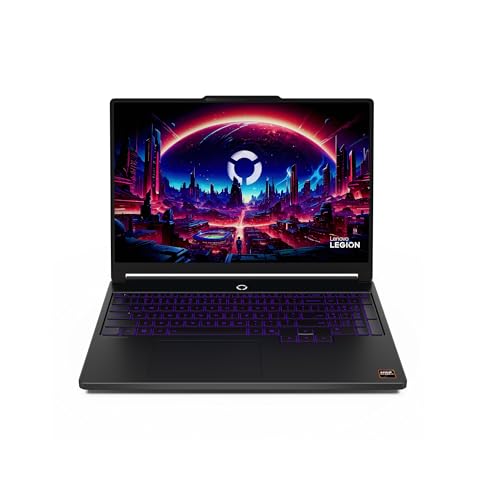
Take the LOQ’s formula and spend seriously on the two things a player looks at and lives with: that is the Legion 5a. The same GeForce RTX 5060 and Ryzen 7 250 pairing sits behind a 15.3 inch OLED WQXGA display at 165Hz — a panel whose per-pixel lighting delivers contrast no IPS screen can imitate, so night scenes, space games, and anything with shadow detail gain a dimension the sibling cannot show. Memory doubles to 32GB, the figure that removes multitasking ceilings and serves creator workloads — streaming while gaming, editing captured footage, running a development environment beside a test build — without negotiation. Storage stays at the terabyte the title states.
The Legion line’s flagship status shows in the chassis and cooling as much as the panel: a more rigid build, a cooling system tuned for sustained loads, and the general sense of a machine engineered as the line’s reference rather than its compromise. OLED ownership asks its one habit — vary content, respect the built-in panel care, avoid leaving static interfaces at full brightness for days — and returns image quality that re-sells the machine to its owner every time a dark scene loads.
Against the Katana, the Legion concedes raw graphics tier and counters with the better display, double the memory, and AMD efficiency. Against the LOQ, it is the same heart in a finer body with a far finer window. The buyer is the player who keeps a laptop longest and looks at it most: the one for whom the screen is not a specification but the entire visible product, and who would rather fund the window than the last increment of frame rate. For that reader, this is the guide’s most satisfying machine.
- Graphics: GeForce RTX 5060
- Processor and memory: AMD Ryzen 7 250 with 32GB memory — the guide’s maximum
- Display: 15.3 inch OLED WQXGA at 165Hz — the guide’s finest panel
- Storage: 1TB, stated in the listing title
- Chassis note: Legion flagship build and cooling
Strengths
- OLED contrast transforms dark games and films in a way IPS cannot follow.
- 32GB of memory serves gaming, streaming, and creating simultaneously.
- Flagship build and cooling suit a long ownership horizon.
Trade-offs
- OLED asks for basic panel-care habits with static content.
- The RTX 5060 sits a tier below the Katana’s 5070 for raw frame output.
- Premium pricing for gains concentrated in display and memory.
Best for: long-cycle owners and creator-players ranking the screen and memory first.
Not suited for: static-dashboard all-day use, or builds chasing maximum frames per pound spent.
ASUS TUF Gaming A15 — Prose Pick, the Durability Brief
ASUS sells the TUF Gaming A15 on a promise the rest of this guide makes only implicitly: survival. The TUF line is built and tested to military durability standards for drops, vibration, and environmental insult, wrapped around AMD Ryzen processors and a rotating cast of GeForce graphics. For the player whose laptop travels in a backpack daily — student digs, shared houses, LAN nights across town — that tested toughness is a specification as real as any frame rate, and the A15’s design leans into it: a sturdy, angular chassis that shrugs off the scuffs prettier machines collect as wounds.
The prose treatment reflects the line’s configuration sprawl. A15s reach shelves with several generations of Ryzen chips and graphics cards under near-identical names, and the difference between a well-chosen example and a careless one is the difference between this guide’s standards and a disappointment. Hunt for current-generation graphics, a high-refresh panel — the line’s better configurations refresh at 144Hz and beyond — and sixteen gigabytes of memory, and verify all three in the specific listing’s title rather than trusting the family name.
Against the Victus, its natural rival, the TUF counters HP’s polish with durability credentials and AMD’s efficiency. Against the Lenovos, it counters with the same toughness story a tier of polish below. It is the pick for the rough-and-tumble gaming life, bought with configuration discipline.
The TUF’s durability story has a second chapter worth knowing: consistency of design across years. ASUS evolves the A15 rather than reinventing it, so cases, docks, chargers, and community fixes carry across generations, and a buyer entering the line joins an ecosystem of knowledge rather than a single model year. For students buying one machine for an entire degree — the TUF’s natural constituency — that continuity matters almost as much as the drop testing. The machine will be opened, carried, lent, and lived with hard; a line designed and documented for exactly that life is the rational vessel for it.
- Class profile: 15.6 inch gaming line tested to military durability standards
- Processors: AMD Ryzen across generations — verify the exact chip per listing
- Configuration targets: current graphics, 144Hz-or-better panel, 16GB memory
- Ownership note: configuration sprawl is the line’s tax; buy the title, not the badge
Strengths
- Durability testing suits backpacks, shared houses, and daily travel.
- Well-chosen configurations match the guide’s linked picks on the gaming essentials.
- AMD platform efficiency stretches unplugged time between sessions.
Trade-offs
- Identical names hide configurations a full generation apart.
- Styling is unapologetically angular for office settings.
- Screen quality varies by configuration more than in the Lenovo lines.
Best for: travelling players and students whose machines live in bags.
Not suited for: orders placed without decoding the exact configuration first.
Acer Nitro V 15 — Prose Pick, the Perennial Rival
The Nitro V 15 is the gaming laptop every shopper meets: Acer’s value line has occupied the entry tier for so long that its black-and-red silhouette is practically the category’s logo. Its proposition mirrors the Victus’s — current-enough graphics, a high-refresh full HD panel, and a full-size gaming keyboard at the class’s most contested prices — and its configurations, spanning Intel and AMD processors and several graphics generations, are why it is profiled in prose. The Nitro rewards the same title-reading discipline this guide preaches: the name guarantees a gaming laptop, and nothing more specific than that.
Well-chosen Nitros are honest machines. The cooling handles their silicon without drama, the keyboards are proper gaming decks with room to play, and Acer’s sheer sales volume means accessories, parts, and community knowledge surround the line for years. The compromises track the tier: chassis materials are workmanlike, screens vary by configuration from decent to merely adequate, and speaker quality asks for the headset every gaming laptop owner already owns.
Shoppers will routinely find the Nitro and the Victus priced within sight of each other, and the decision between them is legitimately close: read both titles, compare the exact graphics card, panel refresh, memory, and storage, and let the better-specified machine win rather than the badge. That is not indecision — in the value tier, configuration literacy is the entire game, and the Nitro is its most common examination.
The Nitro’s ubiquity creates one more advantage nobody advertises: the used and refurbished ecosystem around it is the deepest in the value tier. A shopper priced out of the new configurations in this guide can often find a well-specified Nitro from a refurbisher with a warranty, applying the same title-reading discipline to a smaller outlay. The cautions are the used market’s own — battery health, fan condition, return rights — and they are manageable precisely because the line is so common that every question about it has been answered publicly a hundred times. Few purchases in this guide are as researchable as a Nitro, new or otherwise.
- Class profile: 15.6 inch value gaming line in Intel and AMD configurations
- Configuration targets: verify graphics generation, refresh rate, memory, and storage per listing
- Deck: full-size gaming keyboard across the line
- Ownership note: enormous installed base means parts and community knowledge for years
Strengths
- The value tier’s most established name, with configurations for every budget step.
- Honest cooling and a proper gaming keyboard in well-chosen builds.
- Ubiquity makes ownership, repair, and resale straightforward.
Trade-offs
- Configuration variance is the widest in this guide.
- Panel quality must be verified build by build.
- Materials and speakers are functional rather than refined.
Best for: value-tier shoppers willing to compare exact configurations across rivals.
Not suited for: badge-led shopping that expects the family name to guarantee a specification.
Reading the Ladder: Graphics, Screens, and Storage Across the Six
| Machine | Graphics | Display | Memory | Storage in title |
|---|---|---|---|---|
| HP Victus 15 | RTX 3050 | 15.6 inch FHD 144Hz | 16GB | 512GB SSD |
| MSI Katana 15 HX | RTX 5070 | 15.6 inch QHD 165Hz | 16GB DDR5 | 1TB SSD + 1TB portable HDD |
| Lenovo LOQ | RTX 5060 | 15.3 inch WUXGA IPS 165Hz | 16GB | 1TB |
| Lenovo Legion 5a | RTX 5060 | 15.3 inch OLED WQXGA 165Hz | 32GB | 1TB |
| ASUS TUF Gaming A15 | Varies by configuration | Target 144Hz or better | Target 16GB | Verify per listing |
| Acer Nitro V 15 | Varies by configuration | Target high-refresh FHD | Target 16GB | Verify per listing |
The ladder’s logic is visible in the graphics column: one entry card, two current-generation midrange cards separated by everything around them, and one high card at the summit. Notice what does not change — refresh rates stay high at every rung, because a slow panel would waste whichever card sits beneath it. Choose your rung by the games you actually play, then let the screen and storage columns confirm the choice.
How Much Graphics Card Does Your Library Actually Need?
Sort your games into three honest piles and the ladder sorts itself. The first pile — competitive and esports titles, indie games, and the back catalogue — is engineered by its makers to run on modest hardware at high frame rates, because those games live or die by their player counts. The Victus’s card and 144Hz screen serve this pile completely, and for many players this pile is ninety percent of their hours. The second pile — current mainstream releases played at native resolution with high settings — is the RTX 5060’s home ground, and the two Lenovos divide it by screen ambition. The third pile — the newest blockbusters at maximum settings, ray tracing showcased, QHD resolutions — is where the Katana’s 5070 earns its existence, and it is a smaller pile, for most owners, than marketing suggests.
The discipline is to buy for the pile you inhabit weekly, not the one you visit at Christmas. A player who buys the summit for a competitive library has purchased heat, noise, and cost in exchange for frames their games never requested. A player who buys the entry for a blockbuster habit has purchased a settings menu full of compromises. Both errors are configuration errors, not machine errors — every pick in this guide is excellent at its own pile — and both are avoidable with ten honest minutes spent looking at your own play history rather than at advertisements for games you might someday buy.
What Does a Good Gaming Desk Setup Add?
The laptop is the engine of the setup, not the whole of it, and the additions rank in a definite order. A headset comes first: it solves fan noise, delivers positional audio that genuinely improves competitive play, and carries the microphone your teammates deserve. A monitor comes second for desk-anchored players — the Lenovos and Katana can drive external displays beyond their built-in panels’ ambitions, and a large screen at a desk transforms the same silicon — while the laptop’s own display becomes the second screen for chat, guides, and streams. A stand that lifts and ventilates comes third, paying for itself in thermals and posture across every session.
Notice what is not on the list: exotic keyboards, decorative lighting, and capture hardware are refinements for owners whose basics are already complete. The guide’s ladder logic applies to the desk as much as to the laptop — fund the rungs in order, and each purchase will feel like the upgrade it is rather than a garnish on an unfinished foundation. A Victus on a complete desk will out-satisfy a Katana on a bare one across a year of evenings, which is the most useful sentence in this section and the one most often learned expensively.
What Should You Check Before Buying the Best 15 Inch Gaming Laptops?
Verify the graphics card in the listing’s own title, and treat any summary, headline, or marketplace category label as advertising until the title confirms it — this guide’s first pick exists partly to teach that reflex. Then check the card’s partner figures: the display’s refresh rate and resolution, because the pairing decides whether the card’s output is visible, and the memory figure, because sixteen gigabytes is the floor beneath which modern games and a browser full of guides begin to quarrel.
Storage deserves arithmetic, not vibes. Add the install sizes of the games you genuinely rotate, double the total for the library’s growth and the operating system’s appetite, and compare the result with the drive in the title. The Victus’s 512GB serves a curated library; the terabyte machines serve an accumulating one. Finally, plan the desk as part of the purchase: a headset for fan noise and voice chat, a stand or cooling pad if your sessions run long, and a surge-protected home for the power brick, because a gaming laptop’s natural habitat is plugged in and its performance lives or dies by that plug.
How Do You Keep a Gaming Laptop Fast and Cool for Years?
Dust is the long enemy, and the defence is boring: keep the intakes unobstructed, game on hard surfaces rather than bedding, and clear the vents with compressed air on a seasonal rhythm. Heat that cannot leave becomes throttling that no setting can cure, and most “my laptop got slow” stories in this category are airflow stories wearing a performance costume. Software hygiene is the second discipline — graphics drivers updated from the manufacturer’s own tool, game libraries pruned before the drive brims, and background launchers audited, because three storefronts auto-starting is a tax no processor should pay.
Manage expectations about batteries honestly. A gaming laptop’s battery is a bridge between sockets, not a power source for play: unplugged gaming halves performance and drains the pack at a rate that shortens its life. Play plugged in, use the battery for the lectures, films, and documents between sessions, and enable the manufacturer’s charge-limit feature if the machine lives on a desk — holding a battery below full charge across months of desk duty is the simplest longevity gift an owner can give it.
What Happens to Resale and Longevity in This Class?
Gaming laptops age in public: each new graphics generation re-prices every machine before it, and owners planning to sell onward should know the pattern. The summit machines hold value longest in absolute terms because their cards remain playable longest; the value-tier machines hold the largest share of their price because their buyers are numerous and their capabilities remain legible — a 144Hz screen and an honest card are easy to sell in any year. The practical conclusion is not to buy for resale, which is a mug’s game in fast-moving hardware, but to buy the rung you will actually keep: a machine matched to its owner’s library serves four or five years happily, and a well-kept example of any pick here will find a second owner grateful for exactly the honesty this guide has tried to practise about it.
Longevity inside one ownership follows the cooling discipline already described, plus one habit specific to the class: repasting and fan service are real maintenance in gaming laptops, performed by any competent shop in the third or fourth year, and they restore temperatures — and therefore performance — that dusting alone cannot. Owners who treat that service as scheduled rather than as failure routinely extract a fifth and sixth year from machines their first owners would have retired. The class rewards mechanical sympathy more than any other in this batch of guides, because its machines work hardest and say so loudest when neglected.
Should a Gaming Laptop Be Your Only Computer?
For a student or a young professional, it is often the smartest single purchase available — one machine that writes the essay, runs the coursework, anchors the desk, and plays properly at night. The processors in this guide outrun most office laptops outright, the memory matches or doubles them, and the screens, chosen for games, flatter everything else. The costs are the class’s known ones: a heavier bag, a battery that bridges rather than roams, and styling that ranges from discreet (the Victus, the Lenovos) to declarative (the Katana’s RGB). Buyers whose working life tolerates those terms gain a machine with no computational compromises at all.
The two-machine temptation — a thin laptop for the day and a gaming desktop for the night — deserves a direct answer. It buys specialisation at the price of duplication: two warranties, two storage pools to keep in sync, two machines ageing on separate clocks, and the perpetual small friction of the file that lives on the other computer. Against it, the 15 inch gaming laptop’s entire proposition is consolidation with a screen large enough to live on. Unless the desktop’s upgradability is a hobby in itself, consolidation wins for most owners, and the money saved funds the desk setup this guide keeps recommending. One excellent machine, completely equipped, beats two adequate ones sharing a budget and a attention span.
Common Mistakes When Buying for Gaming
Chasing the graphics badge while ignoring its context is the category’s defining error. A strong card behind a 60Hz screen, or starved by eight gigabytes of memory, or throttled by a chassis that cannot cool it, delivers a fraction of its promise — the pairing rule in this guide’s selection exists because the mistake is so common and so expensive. Read machines as systems: card, screen, memory, cooling, in that order, every time.
Undersizing storage runs a close second. Modern headline games occupy space that would have seemed absurd five years ago, and a 512GB drive shared with an operating system and a coursework folder becomes a weekly uninstall ritual. The ritual is survivable — the Victus section says so plainly — but it should be chosen knowingly, with eyes on the library you actually keep, rather than discovered on a release night.
Buyers also mistake the class for a portable console. A gaming laptop travels between desks; it does not game on trains, and its weight includes a power brick that spec sheets photograph separately. Owners who internalise the desk-to-desk reality love these machines. Owners who bought a commute fantasy spend years resenting a product that never claimed to be it.
The last error is future-proofing by folklore — paying for tiers of hardware aimed at games you do not play, on settings you cannot see, for a future that will bring better machines anyway. Buy for your library’s next two years, at the settings your eyes can verify on the panel in front of you. The ladder in this guide is honest about what each rung does; climb only as high as your games actually reach.
Timing a gaming laptop purchase follows the industry’s own rhythm. New graphics generations re-price the previous ones, and the weeks around a launch are when last generation’s well-specified machines — often differing from their replacements by margins a player cannot see — sell at their most honest. The discipline this guide teaches applies with extra force in those weeks: read the title, confirm the card and the panel, and let a previous-generation bargain be judged by its specification rather than its birthday. Several picks in this very guide owe their positions to exactly that arithmetic, and readers who shop the calendar with a title-reader’s eye will routinely buy a rung above the one their budget first suggested.
Final Recommendation
Most players should start at the Lenovo LOQ: current-generation RTX 5060 graphics, a 165Hz screen, and a terabyte of storage form the guide’s centre of gravity, and its value-line chassis spends money where games are felt. Step up to the Legion 5a when the display and memory matter as much as the frames — its OLED panel and 32GB make it the machine owners admire longest — or to the Katana 15 HX when QHD gaming and maximum silicon are the point of the purchase. Begin with the Victus 15 when the library is competitive and the budget must also cover the rest of the hobby, and shop the TUF A15 and Nitro V 15 with title-reading discipline whenever their configurations surface at the right specification.
Whatever rung you choose, verify the graphics card in the listing title, keep the refresh rate high, and budget the headset. A 15 inch gaming laptop bought as a system rather than a badge will still be making its owner grin at the settings screen years from now.
One expectation deserves setting before the questions, because it colours every answer: a gaming laptop’s performance figures describe it plugged in, on a desk, with its fans free to work. That is not a caveat invented by lawyers; it is the class’s physics, shared by every pick here and every rival anywhere. Judge these machines as desk instruments that travel, configure them as systems rather than badges, and they will meet every claim this guide has made for them. Judge them as consoles with keyboards and they will spend years being blamed for a misunderstanding.
Frequently Asked Questions
Why does the Victus 15 matter if its graphics card is the weakest here?
Because most gaming hours are not spent in the most demanding games. Competitive and esports titles — the games with the largest player counts — run beautifully on the RTX 3050 at the Victus’s native resolution, and its 144Hz panel displays every frame. It is the correctly sized machine for that library, and its section’s honesty about the card’s limits is the standard the whole category should be held to.
Is QHD worth it at 15.6 inches?
With a card strong enough to drive it, yes. The Katana’s QHD panel renders visibly finer detail than full HD at this size, and its RTX 5070 sustains playable rates at that resolution in current titles. With a weaker card the same panel becomes a liability, forcing upscaling compromises — which is why this guide pairs resolution claims to specific machines rather than praising QHD in the abstract.
What is the difference between the LOQ and the Legion 5a?
Same graphics heart, different everything visible. The Legion upgrades the display to OLED at higher resolution, doubles memory to 32GB, and builds the chassis to the flagship line’s standard; the LOQ keeps an excellent IPS panel and the class-standard memory in a value chassis. Players ranking image quality and longevity choose the Legion; players ranking value choose the LOQ, and neither is wrong.
Can these laptops handle school or office work too?
Effortlessly — every processor and memory configuration here exceeds mainstream work requirements by a wide margin. The compromises are physical rather than computational: weight, fan noise under load, and battery life measured for bridging rather than for full unplugged days. As an only machine for a student who games, the class is close to ideal; as a boardroom laptop, the gaming styling of some picks deserves a thought.
How much storage do I really need for games?
Count your rotating library honestly. A handful of competitive titles fits anywhere. A collection of large single-player games accumulates toward a terabyte faster than owners expect, between installs, updates, and captured footage. The terabyte configurations in this guide exist because that arithmetic is now the norm; the Victus’s 512GB remains workable for curated libraries and owners happy to rotate installs.
Do gaming laptops need a cooling pad?
Not need — but a stand that lifts the rear and clears the intakes helps every machine here during long sessions, and costs little. What matters is unobstructed airflow: hard surfaces, clear vents, and dust removed seasonally. A pad with fans adds a small further gain; elevation and cleanliness deliver most of the benefit.
Are these machines loud?
Under full gaming load, yes — moving enough air to cool this silicon is audible in every chassis in the class, and any review promising silence at maximum settings is describing a different workload. Under documents, browsing, and media, all four linked picks settle to near-inaudible. The practical answers are the ones this guide repeats: play with a headset, keep the vents clear, and let the machine be what it is during the hours it is earning its keep.
Is a 15 inch gaming laptop too big for a school bag?
It is the largest size that remains a realistic daily carry, and millions of students do exactly that. The honest accounting includes the power brick, which belongs in the weight total from the first day. Buyers with long walks on their route should weigh the whole loaded bag before committing, and buyers with a car or a short hop can ignore the question entirely — the screen and the cooling are worth more to them than the grams would be.
Carry the machine like the instrument it is and it will repay you in years: a padded compartment, the brick packed so its weight does not press the lid, and cables coiled rather than crushed. Gaming laptops are the heaviest things in most bags and the most valuable, and the order in which a bag is packed should reflect both facts. Owners who pack deliberately, dust seasonally, and service the fans before they complain are, empirically, the owners still gaming happily on these machines years later, when their less careful contemporaries are shopping again.
Related Guides
Three neighbouring guides complete the picture around this size: the general best 15 inch laptops roundup covers the same screens without the gaming hardware, our best 15 inch laptops with a 1 tb ssd selection examines the storage-first view of the class, and the best 13 inch laptops under 400 dollars guide shows the opposite end of the laptop market entirely. Fifteen inches, a fast screen, a terabyte where your library demands it, and a graphics card honestly described in its own listing’s title — get those things right at purchase and the machine will take care of the rest for years.


