Our Top Picks
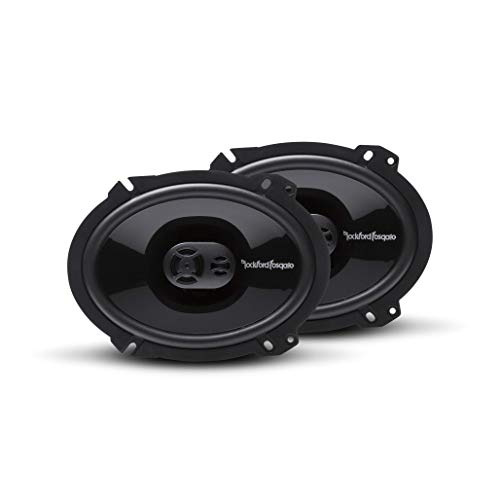 Rockford Fosgate P1683 Punch 6x8 3-Way Coaxial Full6x8 inches15 x 9.5 x 4 inches4.9 poundsCheck on Amazon
 Pioneer P.R.O. Series TS-M651PRO 6.5" Component Car Speakers6.5”4.2 x 6.85 x 6.85 inches5.68 poundsCheck on Amazon
What's inside
- What competition means in a door speaker
- Sensitivity: the number that decides loudness per watt
- Driver sizes: 6.5-inch, 8-inch, and the space between
- Power handling: RMS, programme, and the peak-number trap
- Frequency range: midbass, midrange, and honest crossover points
- Bullet tweeters and horn tweeters: the other half of the front stage
- Impedance, wiring, and what the amplifier actually sees
- The door itself: baffles, sealing, and deadening
- How competition drivers differ from coaxial speakers for daily listening
- Power supply, grounding, and the electrical foundation
- Tuning the front stage: crossovers, levels, and time alignment
- Durability, weather, and life in a real door
- A step-by-step selection method
- Frequently asked questions
- Check prices on Amazon
- Closing perspective
As an Amazon Associate I earn from qualifying purchases. This post may contain affiliate links at no extra cost to you.
Competition door speakers belong to a different branch of car audio from the speakers most drivers replace on a Saturday afternoon. A daily-listening coaxial is designed to sound pleasant at moderate volume from a head unit, to fit a shallow factory opening, and to forgive a door that was never sealed or treated. A competition driver is designed to get loud, stay composed while doing it, and project midrange energy across a show field or a judging lane. That difference in purpose changes almost everything worth comparing: sensitivity climbs from the high 80s into the mid and high 90s in decibels, power handling is quoted in serious RMS figures rather than optimistic peaks, cones become lighter and stiffer, surrounds become narrower, and the tweeter stops being a small dome glued into the centre of a woofer and becomes a separate bullet or horn device with its own mounting problem to solve.
Transparency about funding belongs near the top of any buying guide, so here it is in plain terms. Product recommendations in this category can be skewed by commissions, which is why the criteria below are built from published driver parameters, enclosure and door-acoustics principles, and amplifier matching maths rather than brand enthusiasm. As an Amazon Associate, this site earns from qualifying purchases made through its links, and that relationship does not change the sensitivity thresholds, power calculations, or installation warnings set out in the pages that follow.
This guide is prose-only by design. Instead of naming a shortlist of specific models with specifications that vary by production run and region, it teaches the selection method that experienced SPL and car audio competition builders actually use: start with the door you have, the amplifier power you can honestly supply, and the frequency range the front stage must cover, then choose driver diameter, sensitivity, impedance, and tweeter type to fit those fixed facts. A reader who absorbs the method can evaluate any pro-audio midrange driver on the market, including new releases, without depending on a frozen list that ages within a season.
What competition means in a door speaker
The word competition covers at least two related but distinct pursuits, and confusing them leads to mismatched purchases. In SPL competition, the goal is maximum sound pressure, measured in decibels, often with the vehicle stationary, doors open or closed depending on the class, and music or tones played at levels no one would tolerate on a commute. In sound-quality and pro-audio style demo builds, the goal is loudness with clarity: vocals and instruments that remain intelligible at high output across a parking area, sometimes called ground-pounder or demo builds. Door speakers serve both pursuits differently. An SPL-focused front stage needs to keep up with a substage producing enormous bass, so midrange output must be extreme or the music collapses into bass with a faint voice behind it. A demo build needs that same output but with tonal balance preserved over longer listening sessions, which raises the importance of thermal power handling and distortion behaviour.
Either way, the door location imposes hard limits. A door is a thin, leaky, resonant metal box with a window mechanism, a latch, wiring looms, and a trim panel that buzzes when excited. Factory speaker positions are usually low and forward, aimed at occupants’ legs rather than ears. Competition builders accept those limits and engineer around them with baffles, deadening, and sometimes custom pods or multiple drivers per door. Shoppers coming from home audio often underestimate how much of a competition door result is installation rather than driver. Two identical 6.5-inch pro midrange drivers can sound dramatically different in a treated, sealed door versus an untreated door with a cracked plastic mounting ring, and the difference is not subtle at high volume.
It helps to contrast this category with the mainstream sizes most replacement guides cover. If your goal is simply clearer daily music, the guides at best 6 5 inch car speakers address the conventional 6.5-inch replacement market, where sensitivity in the high 80s and modest power handling are normal and entirely adequate. Competition drivers start where those products end. They assume an external amplifier, a high-pass crossover, and an owner who accepts that a speaker optimised for output will not produce deep bass from a door, will not be weatherproof in the casual sense, and will not sound its best at whisper volume. Those trade-offs are not flaws; they are the price of the output the category exists to deliver.
Sensitivity: the number that decides loudness per watt
Sensitivity is the single most important specification for a competition door speaker, and it is also the one most often misread. Sensitivity describes how much sound pressure a driver produces from a given input, conventionally expressed as decibels at one metre with either one watt of input or 2.83 volts, depending on the manufacturer’s convention. The distinction matters. A 2.83-volt rating applied to a 4-ohm driver represents two watts, not one, which inflates the figure by about 3 dB compared with a true one-watt rating on that same driver. When comparing drivers across brands, a careful buyer checks which convention each sheet uses before treating a 98 dB claim and a 95 dB claim as a genuine three-decibel gap. Some pro-audio brands publish honest one-watt figures; others use the voltage convention common in car audio. Neither is automatically dishonest, but they are not directly interchangeable.
The practical stakes are large because decibels are logarithmic. Doubling amplifier power adds roughly 3 dB of output. Raising sensitivity by 3 dB achieves the same increase without any extra power, heat, or current draw. A driver rated at 98 dB sensitivity fed with 50 watts can, in simplified terms, match the output of a driver rated at 92 dB fed with 200 watts, while running cooler and leaving amplifier headroom in reserve. This is why competition midrange drivers chase sensitivity so aggressively, using light paper or treated-fabric cones, efficient motor structures, and surrounds that restrict low-frequency excursion the driver is never asked to produce. Every gram of moving mass saved and every restriction on wasted excursion buys output in the midrange band where the driver actually works.
For door use, a realistic target is 95 dB or higher on a comparable measurement basis for a primary midrange driver, with many serious pro drivers landing between 96 dB and 102 dB depending on size and convention. Larger diameters tend to post higher figures because cone area moves more air per unit of excursion. An 8-inch pro midrange will usually outrun a 6.5-inch driver of similar design at the same power, which is one reason multi-driver and large-driver doors dominate demo builds. The trade is installation depth, door real estate, and the beaming behaviour discussed later. Sensitivity should also be read alongside the frequency range over which it was measured; a figure averaged across a favourable midband does not guarantee strong output at the lower crossover point where the driver meets the substage.
Why high sensitivity changes amplifier shopping
High sensitivity relaxes, but does not eliminate, the amplifier requirement. A common beginner mistake is to assume a 98 dB driver needs almost no power and can run happily from a head unit. Head units deliver roughly 15 to 22 watts RMS per channel into 4 ohms on a good day, and their output stages clip early and harshly. A pro midrange driven by a clipping head unit sounds loud in the worst way: hard, shouty, and fatiguing, with tweeter damage a real risk because clipped waveforms deliver disproportionate high-frequency energy. A modest external amplifier delivering a clean 75 to 150 watts RMS per channel transforms the same driver, because the driver can reach competition volume while the amplifier operates well inside its clean range. Sensitivity determines how far a given clean watt goes; it does not make clean watts optional.
Current demand follows from the same maths. Chasing output with low-sensitivity drivers and enormous amplifiers loads the vehicle’s charging system heavily, inviting voltage drop that then reduces amplifier output and increases distortion, a self-defeating spiral. Efficient drivers break that spiral. Builders who plan the electrical side early, with adequate power cable gauge, a solid ground returned to the same reference as the rest of the system, and attention to alternator and battery capacity, get repeatable results. Builders who ignore it chase intermittent problems that masquerade as speaker faults. In competition settings, where a run may last seconds and a voltage sag can cost placement, that discipline matters as much as the driver choice itself.
Driver sizes: 6.5-inch, 8-inch, and the space between
The 6.5-inch pro midrange is the workhorse of competition doors because it fits, or nearly fits, the most common factory openings and aftermarket baffles. Its cone area is sufficient for strong midbass down to a sensible crossover point, typically somewhere between 80 Hz and 125 Hz depending on the driver and the door, and its dispersion remains reasonably wide through the vocal range. Multiple 6.5-inch drivers per door are common: two or four per side multiply cone area, share thermal load, and raise total output without asking any single driver to work at its limit. Wiring multiples introduces impedance decisions covered later, and each additional driver adds mounting and trim work, but the modularity is attractive because a build can grow from one pair to two pairs as budget and ambition expand.
The 8-inch pro midrange is the step up for builders who want maximum output per door opening or who run a single driver per side with serious intent. The larger cone moves more air, posts higher sensitivity in most product families, and produces midbass with an ease that smaller drivers match only in multiples. The costs are real: mounting depth grows, the door trim and pocket often need modification, the window travel must be checked against the magnet, and off-axis response narrows earlier because a larger cone beams high frequencies more strongly. In a door, where the driver points across the cabin rather than at the listener, beaming is not a theoretical concern. An 8-inch driver crossed to a bullet tweeter at the right frequency, with the tweeter placed and aimed thoughtfully, handles this well; an 8-inch driver left to run too high because the tweeter was mounted poorly will sound dull from the seats despite measuring loud on axis.
Between and around those sizes sit 6-inch, 6.75-inch, and 8-inch variants with shallow-mount motors, plus oversized frames that complicate nominal sizing. Nominal diameter is a marketing label, not a measurement; the cutout diameter, bolt pattern, and mounting depth on the specification sheet are what determine fit. Shoppers replacing drivers in less common factory sizes should also read the context in best 6 75 car speakers, since the 6.75-inch format illustrates how a small nominal difference changes baffle and adapter choices even before competition hardware enters the picture. For pro drivers, always work from the manufacturer’s dimensional drawing, measure the door with the trim removed, and confirm window-down clearance with the actual magnet diameter, not just the frame size.
How many drivers per door
Deciding between one larger driver and several smaller ones is partly acoustic, partly electrical, and partly practical. Several smaller drivers share heat across more voice coils, which helps during long demo sessions, and they can be arranged vertically or in a curve that suits a door’s shape. A single larger driver is simpler to wire, simpler to mount rigidly, and presents a single point source that can image more coherently for the driver seat. Multiple drivers wired in parallel drop the load impedance, which can extract more power from some amplifiers or push others into protection; wired in series they raise impedance and reduce per-driver power unless amplifier voltage is sufficient. Series-parallel combinations are the experienced builder’s tool for landing on a final load an amplifier likes, such as presenting 2 ohms or 4 ohms per channel from four 4-ohm drivers. Every combination should be calculated on paper before a single wire is cut, and the amplifier’s stability at that load, in the intended configuration, confirmed from its manual rather than assumed.
Power handling: RMS, programme, and the peak-number trap
Power handling figures in this category arrive in at least three flavours, and only one of them should drive a purchase. RMS, sometimes labelled continuous, describes the power a driver can handle over time without thermal or mechanical failure under a defined test signal. Programme or music power is a higher, loosely defined figure meant to reflect real signal peaks. Peak power is the largest number on the box and the least useful, representing an instant the driver might survive rather than a level it can sustain. A competition buyer compares RMS to RMS, then checks that the amplifier’s RMS output per channel, at the load the wiring will present, sits in a sensible relationship to that rating: enough to exploit the driver’s output, not so much that a careless volume hand destroys it in seconds.
Thermal and mechanical limits fail differently, and a good system respects both. Thermal failure is voice-coil overheating: the coil’s adhesive softens, the former distorts, resistance rises, and eventually the coil opens or shorts. It accumulates over minutes of high-power play, which is why demo builds that play song after song at full tilt need headroom in both driver rating and amplifier cleanliness. Mechanical failure is excursion damage: the cone travels beyond its controlled range, the surround or spider tears, or the coil leaves the gap and does not return cleanly. In door midrange service, mechanical damage usually follows a missing or mis-set high-pass filter, because low bass frequencies demand excursion a midrange driver was never built to deliver. A driver rated for generous RMS power can still be destroyed quickly by unfiltered 40 Hz energy at modest power. The crossover is a protection device as much as a sound-shaping one.
Voice-coil diameter and material give useful clues about thermal capacity. Larger coils, commonly 1.5 inches or 2 inches in serious pro midrange drivers, present more surface area to shed heat and more mass to absorb it, and they pair with vents and motor designs that move air across the coil. Former materials and high-temperature adhesives matter in sustained play. None of this replaces the published RMS figure, but it helps a buyer judge whether a high rating is plausible for the physical driver in hand. A featherweight driver with a small coil claiming enormous continuous power deserves scepticism; physics collects its debts eventually, usually during the loudest demo of the day.
Matching amplifier RMS to driver RMS
A practical matching method starts with the per-channel RMS the amplifier delivers at the final wired impedance, then compares it with the per-driver RMS rating and the number of drivers sharing that channel. If two drivers share a channel in parallel, the amplifier’s output divides between them, so each driver sees roughly half the channel power, while the amplifier sees the combined lower impedance and delivers more total power if it is designed to do so. Headroom is the goal: an amplifier loafing at half its clean capability sounds better and lasts longer than a smaller amplifier driven into clipping to reach the same volume. Experienced builders often choose amplifier power modestly above the combined driver rating and then control the result with gain structure, setting gains with test tones and measurement rather than by ear at maximum volume. Gain is not a volume knob, and treating it as one is the fastest route to clipped signals and burned coils.
Class D amplification dominates this space for good reasons: efficiency, compact size, and high power per unit of heat, all valuable in a vehicle. Modern full-range Class D designs are entirely suitable for midrange and tweeter duty, provided their noise floor and distortion figures are respectable and their crossovers are flexible enough for the system design. A digital signal processor, whether standalone or built into the amplifier, earns its place in competition builds by providing precise high-pass and low-pass filters, per-channel level control, time alignment between doors and tweeters, and equalisation to tame door-induced peaks. The processor is where a collection of loud parts becomes a tuned system, and skipping it while spending heavily on drivers is a common misallocation of budget.
Frequency range: midbass, midrange, and honest crossover points
A competition door driver lives in the middle of the spectrum. Its useful range typically begins somewhere between 70 Hz and 150 Hz at the bottom, set by the high-pass filter, and extends to somewhere between 3 kHz and 6 kHz at the top, where a tweeter takes over. Published frequency response ranges often claim far wider coverage, extending implausibly low and high; those endpoints usually reflect a response that exists on paper at reduced level rather than output the driver delivers with authority. The honest question is where the driver is strong: the band in which its sensitivity figure applies and its distortion stays controlled at high output. For most 6.5-inch pro midrange drivers, that strong band centres on the vocal and instrument fundamentals and harmonics that carry musical intelligibility, roughly 150 Hz to 4 kHz, with midbass support below and tweeter handover above.
Midbass deserves separate attention because it is where door installations struggle. The region from about 80 Hz to 250 Hz provides punch, drum weight, and the lower body of male vocals and bass guitar. Producing it loudly from a door requires cone area, a rigid mount, and a door cavity that does not leak pressure through access holes or rattle it away through the trim. Many competition builds cross the substage higher than home-audio purists would accept, letting subwoofers cover up to 80 Hz or beyond, precisely because doors are poor low-frequency enclosures. Others add dedicated midbass drivers. Either approach can work; what fails is asking a high-sensitivity midrange with a light, stiff cone and limited excursion to also be a subwoofer. Its suspension and motor are optimised against that job, and forcing it downward costs output, clarity, and eventually the driver itself.
At the top of the driver’s range, dispersion narrows as frequency rises, a behaviour governed by cone diameter relative to wavelength. This is why the crossover to the tweeter is chosen partly by ear and partly by geometry: cross too high and the midrange beams, leaving off-axis listeners in a dull zone; cross too low and a small tweeter is stressed by energy it cannot handle at competition levels. Bullet tweeters, discussed next, tolerate lower crossover points than delicate domes when properly filtered, but they still have limits, and their protection depends on the filter slope as much as the frequency. Steep slopes, commonly 18 dB or 24 dB per octave in processed systems, protect drivers and allow crossover points that shallow slopes would make unsafe.
Bullet tweeters and horn tweeters: the other half of the front stage
The bullet tweeter is the visual signature of the pro-audio car build: a compact compression-style or ring-radiator device, often with a distinctive phase plug or bullet at its centre, designed for very high sensitivity and focused projection. Sensitivities in the high 90s and beyond 100 dB are common on a comparable basis, which is necessary because the tweeter must keep pace with midrange drivers that are themselves extremely efficient, and it must do so while handling only the top slice of the spectrum. Bullet tweeters are typically crossed somewhere between 3 kHz and 6 kHz, mounted as high and as on-axis as the vehicle allows, frequently in the A-pillar, sail panel, or a pod on the door’s upper edge. Placement is not decoration; a tweeter buried low in a door behind a leg will measure loud and still fail to deliver presence to the listener’s ears.
Horn-loaded tweeters take the projection idea further, using a flared waveguide to control dispersion and raise efficiency. In doors and pillars, small horns can focus energy toward the listening area and reduce reflections off glass and dash surfaces, at the cost of a larger mounting footprint and a narrower sweet spot. The choice between bullet and horn often comes down to space, aiming options, and the tonal character a builder prefers: bullets tend toward a direct, forward presentation, horns toward a controlled, sometimes more spacious one. Both demand careful level matching. A tweeter even a few decibels too hot relative to the midrange turns a loud system into a painful one, because human hearing is most sensitive in the upper midrange and lower treble, exactly where an overdriven tweeter shouts. Per-channel level control in a processor, set with measurement and confirmed with familiar music at realistic volume, is the difference between impressive and unbearable.
Tweeter protection and longevity hinge on the crossover and on amplifier behaviour. A passive capacitor in series is the minimum protection in simple installs, but processed active systems give steeper, adjustable filtering and independent gain. Never run a bullet tweeter full-range to test it at volume, and be cautious even at low volume, because low-frequency energy overheats small coils quickly. Also respect polarity and channel assignment during tuning: a tweeter wired in reverse polarity relative to its midrange creates a cancellation notch around the crossover that no amount of equalisation fully repairs, and the fault is easy to miss when each driver sounds fine alone. Methodical builders label every wire, verify each driver individually at low level, and only then raise the system to working volume.
Super tweeters and the top octave
Some builds add a super tweeter dedicated to the highest frequencies, roughly from 8 kHz or 10 kHz upward, while a bullet or horn handles the lower treble. The rationale is dispersion and headroom: a very small radiating surface stays wide in dispersion at frequencies where larger devices beam tightly, and splitting the treble workload across two devices reduces strain on each. The cost is another crossover point to get right, another pair of devices to mount and aim, and another opportunity for level errors. For most door builds, a single well-chosen, well-placed bullet tweeter per side covers the requirement. Super tweeters make sense in no-compromise demo builds where every decibel of clean top end matters and a processor with enough channels is already in the system. Adding them to a simple build usually complicates tuning more than it improves sound.
Impedance, wiring, and what the amplifier actually sees
Most pro-audio car drivers are offered in 4-ohm and 8-ohm versions, a legacy of their shared heritage with live-sound reinforcement, and the choice is a system decision rather than a quality ranking. A single 4-ohm driver per channel suits a conventional stereo amplifier and extracts strong power from typical car-audio designs. The 8-ohm versions exist for multi-driver doors: two 8-ohm drivers in parallel present 4 ohms, four present 2 ohms, allowing builders to combine drivers without dropping the load to levels that stress amplifiers. Choosing impedance before choosing quantity is a classic error; decide how many drivers each door will carry, how they will be wired, and what final load each amplifier channel should see, then order the impedance that makes that arithmetic land on a safe, productive value.
The arithmetic itself is simple but unforgiving. Identical drivers in parallel divide impedance by the count; in series they multiply it. Mixed series-parallel groups can return to convenient loads, such as four 4-ohm drivers arranged as two series pairs in parallel presenting 4 ohms overall. What the arithmetic hides is power distribution and failure behaviour: in a series group, one failed open driver silences its partner, and drivers share voltage rather than current. Builders also need to remember that impedance is nominal, not constant; a driver’s actual impedance varies with frequency, dipping near resonance and rising at high frequencies due to voice-coil inductance. Amplifiers tolerant of reactive, varying loads, which is to say well-designed ones used within their ratings, handle this without drama. Amplifiers run at the edge of their minimum load, hot, on sagging voltage, sometimes do not.
Speaker wire for these systems is chosen by current, length, and resistance rather than by mythology. Long runs of thin wire waste power as heat and, more subtly, raise the effective resistance between amplifier and driver, which can alter damping and frequency balance at the margins. For high-power door runs, 14-gauge or 12-gauge oxygen-free or quality copper-clad cable is a sensible working range, with the thicker option favoured for long runs, low final impedances, and substage-level currents. Connections matter more than exotic metallurgy: crimped or soldered terminals, protected from moisture in the door environment, strain-relieved so flexing at the hinge does not fatigue the conductor, and routed through the factory boot rather than pinched in the door jamb. The door hinge area is where speaker wiring goes to die in amateur installs, chafed one opening at a time until an intermittent short sends an amplifier into protection during a judged run.
The door itself: baffles, sealing, and deadening
Installation is where competition door builds are won, and the baffle is the foundation. A baffle is the rigid structure that mounts the driver to the door; its job is to hold the driver immobile so cone motion becomes sound rather than baffle flex. Thin plastic factory adapters flex visibly under a heavy pro driver at volume, absorbing energy and adding distortion. Proper baffles are cut from dense material such as birch plywood, high-density fibreboard sealed against moisture, or quality polymer board, thick enough to stay rigid, and secured to the door’s metal with fasteners and a sealing gasket rather than hope. Adding a spacer ring also buys mounting depth, moving the magnet away from the window glass and regulator, but every millimetre of spacer moves the cone closer to the trim panel, so clearance must be checked at both ends of the travel with the trim fitted and the window down.
Sealing the door cavity turns a leaky metal shell into something closer to an enclosure. Large access holes in the inner skin are covered with rigid panels or heavy deadening material, seams are sealed, and the area directly behind the driver receives particular attention because rear-wave energy escaping into the cabin through trim gaps cancels front output, especially in the midbass. A waterproof shield or baffle extension above the driver protects it from water that inevitably passes the window seals, a detail borrowed from factory engineering that pro drivers, with their paper-based cones, need even more than the speakers they replace. Paper and treated-fabric cones are chosen for their stiffness-to-weight ratio and their damping behaviour, and many are treated for humidity resistance, but none of them enjoy direct water flow. A build that ignores drainage and shielding may sound superb for a season and then decline as cones soften and surrounds degrade.
Sound deadening serves two distinct purposes that are often conflated. Constraint-layer damping material applied to the outer and inner door skins reduces panel resonance, lowering the buzzing and ringing that high midbass output excites. Mass and decoupling treatments, including foam layers between trim and metal, address rattles and airborne leakage. Neither is a substitute for the other, and neither compensates for a flexing baffle. Priorities, in order, are a rigid sealed mount, a sealed cavity, damped skins, and then trim rattle control. Coverage strategy matters more than sheer quantity: treating the area around and opposite the driver, the large flat spans of skin, and the trim contact points delivers most of the benefit, while indiscriminately lining every surface adds weight the hinges and latches must carry. Doors that gain several kilograms of treatment should have their check straps and hinges inspected, because a sagging door is an expensive side effect of an audio upgrade.
Mounting depth and window clearance
Depth is the silent deal-breaker of door speaker shopping. Pro drivers carry large motors, and their mounting depths, often 70 mm to well beyond 90 mm for 8-inch models, exceed the shallow space many doors provide before the magnet meets window glass. The only reliable method is physical measurement: trim off, window fully down, measure from the mounting surface to the glass and to any regulator component that moves, then compare against the manufacturer’s depth figure with a margin for the baffle and for wiring terminals behind the driver. Remember that the glass position changes with the window’s travel arc in some vehicles, and that a driver clearing the glass at rest may foul it as the window passes. Builders who discover interference after purchase resort to thicker spacers and trim surgery; builders who measure first choose a shallow-mount variant or a smaller driver and keep the door civilised.
Readers working with less common factory openings will find the fitment discussion in best 6 by 8 car speakers useful background, because oval factory locations present the same depth, adapter, and sealing questions in a different shape, and the solutions, rigid adapter plates, careful sealing, and honest depth measurement, transfer directly to competition hardware. The lesson generalises: the door dictates the build, and the catalogue must adapt to the door, never the reverse.
How competition drivers differ from coaxial speakers for daily listening
A coaxial speaker mounts a tweeter in front of or within the woofer, sharing one mounting location, one crossover of usually simple design, and one amplifier channel per side. It is an elegant solution for daily listening: quick to install, tolerant of factory power, voiced for a balanced presentation at moderate volume, and available in sizes that drop into factory holes. Its limits are the limits of compromise. The woofer cone is interrupted by the tweeter mount, power handling is modest, sensitivity is typically in the high 80s to low 90s, and the tweeter’s output and dispersion are fixed by the shared geometry. At commuting volume none of that matters. At competition volume all of it does, which is why the categories diverge rather than one simply being a better version of the other.
A component pro setup separates every job. The midrange driver does only midrange and midbass, the bullet tweeter does only treble, the crossover is active and adjustable, each driver gets its own placement decision, and the amplifier channels multiply accordingly. Output, control, and tuning potential rise dramatically; so do cost, installation time, and the number of ways to get the tuning wrong. There is also a listening-character difference worth stating plainly: high-sensitivity pro drivers at low volume can sound lean, because their suspensions and voicing assume working levels, and their limited low-frequency extension leaves music thin without a substage. A daily driver who plays podcasts and quiet evening music may genuinely prefer a good coaxial. A competitor who needs front-stage output to balance a substage at full demonstration volume cannot get there with one. Knowing which listener you are is the first specification to settle.
Smaller dash and door locations raise a related point. Many vehicles carry a small factory driver high in the door or dash, and owners researching that location land on guides such as best 3 5 car speakers for the 3.5-inch class. In a competition build, that high location is usually better spent on the bullet tweeter or a dedicated midrange than on a small full-range driver, because the system’s output and clarity come from assigning each band to a driver sized for it. The small location’s value is its height and proximity to ear level, assets too precious to spend on a driver that duplicates work the door midrange already does better.
Power supply, grounding, and the electrical foundation
Amplifiers convert electrical power into acoustic power at finite efficiency, and the vehicle’s electrical system must supply the difference without voltage collapse. A front stage drawing several hundred watts RMS, alongside a substage drawing far more, can pull current that exposes every weak link: an undersized power cable, a ground bolted to a painted or thin panel, a tired battery, or an alternator already marginal for the vehicle’s own loads. Voltage drop is not an abstract concern; amplifier output falls with supply voltage, protection circuits trip, and clipped, distorted output rises exactly when the system is asked for its best. Competition builders therefore treat the electrical system as part of the audio system, upgrading the ground path between battery, chassis, and engine as a first step, sizing power cable to the total current and run length, and fusing at the battery to protect the vehicle.
Grounding discipline prevents the whines and pops that haunt high-gain systems. All audio grounds should reference the same point or electrically equivalent points with short, heavy conductors, and signal cables should be routed away from power cables where the vehicle permits, crossing at right angles when crossing is unavoidable. In active systems with processors, gain structure interacts with noise: set processor output and amplifier gains so the system reaches full output with the head unit near the top of its clean range, rather than running the source low and the amplifier gains high, which amplifies noise along with signal. These are unglamorous details, and they separate builds that are merely loud from builds that are loud, clean, and repeatable under judging conditions.
Capacitors and auxiliary batteries have specific, limited roles. A small capacitor near an amplifier can smooth very brief transients but cannot substitute for alternator capacity or cable gauge during sustained bass, and marketing that suggests otherwise has misled many buyers. An auxiliary battery helps when the system must play with the engine off, as in some demo formats, and it shortens the electrical distance to rear-mounted amplifiers. Neither fixes a charging system that cannot sustain the load with the engine running. The honest sequence is measurement first: observe voltage at the amplifier terminals during demanding play, identify where the drop occurs, and upgrade that link. Guessing wastes money; measuring directs it.
Tuning the front stage: crossovers, levels, and time alignment
A competition front stage is tuned in a deliberate order, because each step depends on the one before. First, crossovers are set to safe starting points: a high-pass for the door midrange drivers somewhere in the 80 Hz to 125 Hz region with a steep slope, a band-pass top for the midrange where it hands over to the tweeter, and a high-pass for the tweeter at or above its recommended minimum. Second, polarity and channel assignment are verified driver by driver. Third, levels are balanced so the tweeter supports rather than dominates the midrange, and the front stage as a whole balances against the substage at the system’s intended working volume, recognising that perceived balance shifts with level because hearing sensitivity to bass and treble changes with loudness. Only after those foundations does equalisation enter, cutting peaks caused by the cabin and door geometry rather than boosting dips, which are often cancellation effects that boosting cannot fix and that consume headroom in the attempt.
Time alignment addresses the door location’s geometry. The left driver sits far closer to a left-hand-drive listener than the right driver, so its sound arrives earlier and louder, dragging the perceived image toward the near door. Delaying the nearer channels by fractions of a millisecond, calculated from the distance differences and refined by ear or measurement, centres the vocal image and stabilises it. In doors-open demo listening, alignment matters less because listeners stand outside the geometry the alignment assumes, and many builders store separate processor presets for seated listening and for demonstration. A processor with preset memory turns that from a compromise into a switch. The broader point is that tuning is not a single afternoon’s ritual but a set of documented settings, saved and backed up, that can be restored after any electrical work and refined as the build evolves.
Measurement tools have become accessible enough that no serious build should be tuned blind. A calibrated measurement microphone and room-acoustics software adapted to the cabin reveal the response at the listening position, expose crossover-region cancellations, and verify that left and right sides match. Real-time analysis during level setting removes guesswork from tweeter matching. None of this requires laboratory expense; it requires method. Builders who measure can also verify the claims in this guide on their own vehicles, checking, for example, how much midbass output sealing the door actually added, which converts advice into knowledge and prevents repeating expensive steps that did nothing on a particular car.
Durability, weather, and life in a real door
Doors are hostile environments: temperature swings from freezing nights to cabin heat well beyond comfort, humidity, dust, vibration, and the occasional slam. Pro drivers built for this life use treated cones, robust surrounds in rubber or treated cloth, spiders that resist fatigue, and terminals that accept secure connections. Even so, expectations should be calibrated. A driver optimised for output with a light cone and a tight suspension will not tolerate the abuse a marine speaker shrugs off, and a vehicle that lives outdoors in a wet climate demands the shielding and drainage attention described earlier. Slamming a door with a heavy, loosely mounted driver accelerates baffle and trim damage; rigid mounting protects the driver as much as the sound.
Thermal durability during long demonstrations is managed by the operator as much as by the hardware. Voice coils heat with sustained high power and cool during quieter passages; programme material with dynamic range is far kinder than compressed material played continuously at maximum. Builders who demo for crowds learn to watch for the early signs of thermal stress, a change in tonal character, a faint smell from the door, output that seems to compress, and to back off before damage. In judged formats with fixed run lengths, the system’s thermal design, coil size, ventilation, amplifier headroom, is what carries it through. Either way, a spare driver of the exact model in the build is a common competition-budget line, not pessimism but logistics, because a failure the night before an event is a crisis only if no replacement exists.
A step-by-step selection method
The ideas above condense into a sequence any buyer can follow. First, define the pursuit: judged SPL, ground-pounder demonstration, or simply a very loud daily system, because the answer sets the output target and the thermal expectations. Second, measure the doors: factory opening, cutout, depth with the window down, trim clearance, and the locations available for tweeters. Third, decide driver count and diameter that the doors can genuinely house, favouring a rigid, sealed installation of a slightly smaller driver over a forced installation of a larger one. Fourth, choose sensitivity as high as the format allows, verifying the measurement convention, and confirm the driver’s honest working band covers the intended crossover points. Fifth, match RMS ratings between drivers and amplifier at the final wired impedance, with headroom, and plan the wiring combination on paper. Sixth, budget the unglamorous essentials, baffle material, deadening, sealing panels, cable, fusing, and processor, before upgrading any single component, because those essentials determine how much of the drivers’ capability the listener ever hears. Seventh, plan the tuning session and measurement tools as part of the purchase, not as an afterthought.
Common failure patterns map neatly onto skipped steps. A build that is loud but painful skipped level matching and tweeter discipline. A build that destroys drivers skipped crossover protection or gain method. A build that measures loud but sounds thin skipped door sealing and midbass planning. A build that dims lights and trips protection skipped the electrical foundation. Each failure is diagnosable and fixable, and each fix is cheaper when the step is done in sequence rather than retrofitted. The method also scales: a single pair of 6.5-inch pro drivers, one bullet tweeter pair, a four-channel amplifier, and a treated door is a complete, satisfying competition-style front stage, and the same logic extends it to multi-driver doors when ambition and budget grow.
Frequently asked questions
Can competition door speakers run without an external amplifier?
They can be connected and will produce sound, but the result defeats their purpose. Their sensitivity helps them play louder per watt than conventional speakers, yet head-unit power is limited and clips early, and clipping is both unpleasant and hazardous to tweeters. More importantly, head units rarely provide the steep, adjustable high-pass filtering these drivers need for protection, nor the per-channel control a pro front stage expects. An external amplifier is not an accessory for this category; it is part of the category’s definition, and budgets should treat it as such from the outset.
Are 8-ohm drivers quieter than 4-ohm drivers?
Not inherently. The impedance version of a driver family is a wiring tool, not a loudness grade. A single 8-ohm driver on a typical car amplifier receives less power than its 4-ohm counterpart because the amplifier delivers less into the higher load, so in a one-driver-per-channel comparison the 4-ohm version plays louder on the same amplifier. In multi-driver doors, 8-ohm drivers in parallel reach the same final loads as 4-ohm designs with fewer compromises, and total system output depends on the completed arithmetic, cone area, and sensitivity rather than the number printed on any single driver.
How loud is loud enough for a front stage?
The honest answer is relative to the substage it must balance. A front stage that cannot approach the substage’s output leaves music sounding like bass with accompaniment, while a front stage vastly louder than the substage sounds aggressive and thin. Builders therefore plan the two together, using sensitivity and power maths to predict output, and then set levels by measurement and listening at the intended working volume. Absolute decibel targets belong to specific competition classes and judging formats, whose rules should be read directly, because class definitions, microphone placement, and whether doors are open or closed change the target entirely.
Do paper cones belong in a car door?
Yes, with protection. Paper and paper-composite cones dominate pro audio because they combine low mass, high stiffness, and favourable damping, and manufacturers treat them for the automotive environment. What they cannot survive is neglect: direct water flow from failed window seals, missing shields, and standing moisture in the door bottom. With a shield above the driver, clear drain holes at the door’s base, and a sealed baffle, treated paper cones give long service. The material is a considered engineering choice, not a fragility to apologise for.
Check prices on Amazon
Live listings for the shortlist in this guide are pulled from Amazon below, so prices and availability are always current at the moment you look.
Pioneer P.R.O. Series TS-M651PRO 6.5" Component Car Speakers 500W Max | Perfect for High-SPL Builds and Pro-Level Car Audio
Closing perspective
Choosing competition door speakers rewards the buyer who thinks in systems: sensitivity before wattage, the door before the driver, protection before volume, and measurement before opinion. Get those priorities in order and the category’s hardware, efficient pro midrange drivers, disciplined bullet tweeters, honest amplification, delivers exactly what it promises, which is music at levels that turn a parked car into a venue and a judged run into a result. Get them backwards and the same hardware disappoints expensively. The method in this guide is deliberately transferable, because catalogues change every season while doors, physics, and decibels do not.
When the last baffle bolt is torqued and the processor preset is saved under a name you will still understand next season, resist the urge to keep turning things up; the best competition doors are the ones that sound composed at the exact moment everyone else reaches for the volume to prove a point.


