Our Top Picks


What's inside
- Why graphite changes the iron equation
- Graphite versus steel, honestly compared
- Who benefits most from a graphite set
- Swing speed and shaft weight
- Flex options decoded
- Launch, trajectory and real carry distance
- Vibration, joints and playing without pain
- Set makeup and the hybrid question
- Head design: forgiveness where it counts
- Length, lie and the basics nobody should skip
- Durability and care for composite shafts
- How a proper fitting session unfolds
- Reading published specifications like a sceptic
- Budget tiers described without prices
- Common mistakes when switching from steel
- Practising and playing your best with lighter clubs
- Course conditions that favour graphite
- What owner reports reveal over time
- Accessories and the wider bag
- Special situations worth considering
- Sustainability and the second-hand market
- Myths that refuse to retire
- Matching a set to your handicap journey
- Weather, travel and everyday logistics
- A season-by-season ownership rhythm
- Questions to ask before any purchase
- Three buyer profiles, three sensible answers
- How graphite interacts with the rest of your game
- Understanding torque, kick point and frequency in plain terms
- When steel still wins the argument
- Building confidence during the first month
- Graphite for juniors and developing players
- The fitting questions your data should answer
- A final decision framework
- Graphite on the practice ground
- What changes for your playing partners and league
- Storing, insuring and valuing the set
- Check prices on Amazon
- One last check at the till
As an Amazon Associate I earn from qualifying purchases. This post may contain affiliate links at no extra cost to you.
This guide contains affiliate links, and purchases made through them may earn us a commission that supports our research at no extra cost to you. Graphite iron sets attract golfers who want easier launch, gentler impact and a lighter club they can swing without forcing the motion. The category suits players whose driver speed sits in a moderate band, seniors protecting sore wrists, and anyone returning after a layoff who finds steel shafts punishing on mishits. Choosing well means matching shaft weight, flex and set makeup to the swing you actually bring to the first tee, not the swing you remember from a decade ago.
Why graphite changes the iron equation
A graphite shaft typically weighs far less than its steel counterpart, and that single difference ripples through everything else. Designers can move saved mass into the clubhead, lower the centre of gravity and help the ball climb faster from ordinary lies. Lighter total weight also lets a tired player maintain tempo late in a round, when steel sets often start feeling like exercise equipment. None of this guarantees extra distance, yet it removes several obstacles that quietly steal yards from slower swings.
Carbon composite also absorbs vibration differently. On a crisp strike the difference feels subtle, mostly a softer thud rather than a click. On thin contact low on the face, the contrast grows obvious: steel transmits a sharp sting into the hands, whereas graphite dulls that shock considerably. Golfers managing arthritis, tendon trouble or old wrist injuries frequently cite this cushioning as the main reason they switched, ahead of any distance claim printed on a box.
Modern graphite has moved well beyond the whippy reputation earned by early shafts. Current layups use layered fibres wound at varied angles, controlling torque and bend with precision that rivals mid-weight steel. Some models target high launch, others keep flight penetrating for players who generate plenty of speed already. Treating every graphite shaft as a senior product is therefore outdated; the material now spans the same performance spectrum as steel, simply at lower weights and with different feel.
Graphite versus steel, honestly compared
Steel keeps loyal defenders for good reasons. It costs less, delivers a firmer and more communicative strike, and suits strong players who prefer heavier overall heft for rhythm. Dispersion among elite ball strikers often tightens slightly with steel because the added mass resists manipulation through impact. If your swing speed is brisk, your joints feel fine and your budget matters, steel remains a perfectly sensible answer.
Graphite answers a different set of problems. It helps when launch angles sag, when carry distance drops between adjacent irons, or when a round leaves your forearms aching. The trade-offs deserve honesty too: graphite sets usually carry higher prices, very light models can feel vague to golfers who time their release by shaft load, and bottom-tier shafts vary more in consistency. Buying from established makers with published specifications reduces that risk substantially.
Consider a practical middle path many fitters recommend. Some players keep graphite through the mid irons, where launch help matters most, then use heavier composite or steel in scoring clubs where touch dominates. Others move entirely to graphite but choose a weight closer to their old steel, preserving familiar tempo. Either route beats an ideological commitment to one material; the scorecard only records outcomes.
Who benefits most from a graphite set
Senior golfers form the obvious audience, though age alone should not dictate the choice. A fit sixty-year-old with smooth tempo may thrive with mid-weight graphite, while a younger player nursing an elbow injury might need the lightest option available. The common thread is physical feedback: pain, fatigue or declining speed all argue for reducing the load each swing places on the body.
Women golfers and juniors transitioning to adult-length clubs also find graphite natural, since most sets aimed at them already use it. The more interesting group is the mid-handicap man who has resisted graphite out of pride. Published specifications show many such players gain carry simply because a lighter shaft lets them deliver the clubhead faster without swinging harder, a distinction that protects both tempo and lower backs.
Beginners deserve a mention as well. A forgiving graphite set with wide soles and hybrids at the long end shortens the frustrating phase where every third shot dribbles along the ground. Starting with equipment that launches the ball easily builds confidence and keeps practice enjoyable, which matters more for long-term improvement than squeezing theoretical performance from demanding blades.
Swing speed and shaft weight
Fitters usually begin with driver swing speed because it correlates with how much shaft a player can load. Speeds below roughly seventy-five miles per hour generally pair with the lightest graphite, often under sixty grams in the irons. Between seventy-five and ninety, mid-weight options around sixty-five to eighty-five grams tend to balance speed and control. Beyond that range, heavier graphite near ninety-five grams, or steel, enters the conversation again.
Those bands are starting points rather than laws. Tempo modifies everything: a smooth swinger at eighty miles per hour may prefer less weight than an aggressive transition at the same measured speed. Transition force, release timing and typical miss all shape the recommendation. This is precisely why a fitting session with launch data beats guessing from a chart, even a sensible one like this.
Weight also governs fatigue across eighteen holes. A set that feels lively on the practice mat can become laboured by the fifteenth tee if each club demands near-maximum effort. Choosing the lighter side of your plausible range often pays off late in rounds and during multi-day trips, when cumulative tiredness, rather than peak ability, decides scores.
Flex options decoded
Graphite iron shafts commonly come in ladies, senior, regular, stiff and occasionally extra-stiff designations, though no universal standard ties those letters to measured frequency. One maker’s regular can play firmer than another’s stiff, which frustrates comparison shopping. Published bend profiles and weight figures give a firmer basis for judgement than the letter printed near the grip.
Playing too stiff a shaft typically flattens trajectory and pushes misses right for right-handed golfers, because the shaft fails to release fully. Too soft produces the opposite pattern: ballooning flight, hooks and a vague sense that the head lags behind the hands. If your current misses cluster consistently on one side with a flat ball flight, flex deserves suspicion before technique takes all the blame.
Senior flex, often labelled A or M, deserves respect rather than embarrassment. It exists for moderate tempos and can transform a set from reluctant to cooperative. Many golfers discover that moving one flex softer restores the high, drawing flight they thought age had permanently removed. Pride is expensive in golf; the correct flex is simply the one that centres contact.
Launch, trajectory and real carry distance
Graphite sets usually launch the ball higher through a combination of lighter shafts, deeper centres of gravity and wider soles. Higher launch helps moderate speeds because their shots otherwise fall from the sky too early, losing carry to a shallow descent. A steeper landing angle also holds greens better, turning seven-iron approaches from runners into genuine scoring chances.
Distance claims need careful reading. A set may advertise longer seven-iron numbers simply by strengthening lofts, effectively renumbering the clubs. Judge a set by the gaps between its own clubs and by total carry consistency, not by comparing its seven-iron loft against a traditional benchmark. Published specifications list lofts openly, so a quick check exposes any numbering games before money changes hands.
Spin interacts with launch in ways beginners rarely expect. Very high launch with excessive spin climbs and stalls, especially into wind, while low spin with low launch knuckles and runs unpredictably. Graphite sets aimed at game improvement usually balance moderate spin with high launch, producing the towering, soft-landing flight their buyers want. Players in windy regions may prefer lower-launching graphite profiles that keep the ball under gusts.
Vibration, joints and playing without pain
Joint comfort is not a soft marketing theme; for many golfers it determines whether they play twice a week or twice a month. Graphite fibres dissipate impact energy along the shaft instead of conducting it straight into the grip. Owner reports from players with arthritic hands consistently describe being able to practise longer and finish rounds without icing their wrists afterwards, a practical benefit no launch monitor can quantify.
Elbow tendons benefit similarly. The jarring feedback from repeated thin strikes on firm winter turf aggravates golfer’s elbow and its tennis counterpart on the opposite side. A graphite set will not cure an injury, and medical advice outranks equipment advice every time, but reducing repeated shock removes one aggravating factor. Pairing graphite with softer, thicker grips compounds the effect for sensitive hands.
Cold weather sharpens the argument further. Mishits on a frosty morning with steel shafts can sting for several holes. Graphite mutes that punishment noticeably, which matters for golfers in northern climates whose season already feels short. Comfort keeps people playing, and people who keep playing maintain the strength and mobility that golf quietly provides.
Set makeup and the hybrid question
Most graphite sets replace long irons with hybrids, and rightly so. A four-hybrid launches more easily than a four-iron for nearly every amateur, sweeping the ball from light rough where a narrow iron would dig. Sets commonly run from a driving hybrid or five-hybrid through pitching wedge, sometimes adding a gap wedge or sand wedge in matching graphite. Check exactly which clubs are included before comparing sets, because headline counts hide important differences.
Gapping deserves attention at both ends. At the top, ensure your longest iron or hybrid does not duplicate the distance of your shortest fairway wood. At the bottom, confirm the wedge lofts step evenly toward whatever specialty wedges you already own. A pitching wedge at forty-three degrees followed by a sand wedge at fifty-six leaves an awkward hole precisely where scoring shots live.
Some sets include a matching putter or bag, which suits true beginners starting from nothing. Experienced players migrating from steel usually prefer iron-only packages, keeping their existing wedges and putter. Buying clubs you will immediately shelve wastes money and closet space, so read the set composition line by line rather than trusting hero photographs.
Head design: forgiveness where it counts
Graphite sets overwhelmingly use game-improvement heads, and the engineering is genuinely helpful. Perimeter weighting moves mass toward heel and toe, resisting twisting when contact strays from centre. Wide soles glide through turf instead of digging, turning fat shots into acceptable ones that still travel most of their intended distance. Offset helps square the face for players whose hands arrive late.
Progressive design refines this further. Long irons and hybrids carry the deepest cavities and lowest centres of gravity for maximum launch assistance. Short irons shrink slightly, with thinner top lines and less offset, because precision matters more than elevation from wedge range. A well-designed set therefore feels like two specialised families sharing one bag, rather than eleven identical clubs of varying length.
Looks influence confidence more than golfers admit. If a chunky head distracts you at address, performance data will not rescue your comfort. Fortunately the current market includes slimmer graphite-shafted profiles for players who want assistance without a shovel-like appearance. Trying a set visually, even indoors, filters out options you would never settle over confidently.
Length, lie and the basics nobody should skip
Standard length assumes a standard golfer who rarely walks into a shop. Wrist-to-floor measurement, not height alone, determines whether standard, extended or shortened shafts fit your posture. Graphite sets for tall players exist but are less common off the rack, so verify availability before falling for a particular model. Cutting graphite requires proper technique; a careless trim alters flex and swing weight.
Lie angle controls directional accuracy as surely as face aim. Clubs that sit too upright at impact tend to start shots left for right-handers, while flat lies leak balls right. Many graphite sets offer limited lie adjustment because their hosels and price points target simplicity, yet some makers provide two or three lie options at order time. Knowing your dynamic lie from a fitting prevents buying a set biased against your natural delivery.
Grip size completes the ergonomic picture. Undersized grips encourage excessive hand action and strain; oversized grips calm the hands and ease arthritic fingers. Midsize and jumbo options have grown popular among senior players for exactly this reason. Since grips are inexpensive relative to a set, treat them as part of the purchase decision rather than an afterthought.
Durability and care for composite shafts
Graphite’s reputation for fragility lingers from early production runs. Contemporary shafts withstand normal play for many seasons, provided they avoid the specific abuses that damage any composite: slamming clubs into bag dividers, leaning body weight on a shaft, or letting a cart strap crush the same spot repeatedly. Bag chatter marks are cosmetic, though a deep gouge near the hosel deserves professional inspection.
Heat is the other quiet enemy. Leaving clubs in a sealed car boot through a summer afternoon degrades epoxy bonds and can soften shaft properties over time. Storing a graphite set in a garage corner away from direct sun and heaters preserves it far better. These habits cost nothing and extend the life of an investment that usually exceeds a comparable steel set.
When a shaft does fail, it tends to splinter rather than bend, which looks dramatic but rarely injures anyone. Replacement shafts for popular models remain available for years, and a competent club builder can reshaft a favourite head instead of forcing a full set change. That repairability softens the long-term ownership risk considerably.
How a proper fitting session unfolds
A good fitter begins with your current clubs, measuring their lengths, lofts, lie angles and actual distances before showing you anything new. That baseline exposes whether your problem is launch, gapping, weight or simple inconsistency. Expect to hit dozens of balls while a launch monitor records speed, launch angle, spin and dispersion for each candidate shaft. Numbers accumulate into patterns no single flushed shot can fake.
Bring the shoes and glove you normally wear, and be honest about injuries, typical courses and how often you play. A fitter recommending shafts for a links player battling coastal wind will choose differently from one equipping a parkland golfer who needs maximum carry over soft fairways. Context steers the data interpretation, and withholding it produces generic advice.
Fatigue management matters during the session itself. Hitting fifty-seven-irons in twenty minutes distorts results, because later swings grow tired and slower. Reputable fitters rotate clubs, insert breaks and revisit the leading candidate at the end to confirm it still performs with a weary swing. If a shop rushes you toward a register, that tells you something about whose interests guide the process.
Reading published specifications like a sceptic
Manufacturer charts reward careful reading. Shaft weight figures sometimes describe the five-iron only, with other clubs varying by several grams. Torque numbers, once heavily marketed, matter less than marketing implied; extremely low torque in a light shaft can feel boardy and harsh. Kick point descriptions such as low, mid or high offer rough trajectory guidance, but actual bend profiles differ between brands using identical labels.
Loft tables deserve the closest scrutiny. Compare a candidate set’s seven-iron loft with your current one before celebrating promised distance gains. Also examine the longest and shortest clubs: some sets quietly omit a gap wedge, shifting a necessary purchase into your future. Swing weight ratings, usually in the C or D range, hint at head feel; very light graphite sets sometimes drop into ranges that make the head nearly disappear during the swing.
Warranty terms reveal manufacturer confidence. Multi-year coverage on shafts signals durable construction, while short warranties on budget sets suggest disposable expectations. Keep receipts and register products when makers offer it, because a documented purchase date simplifies any later claim considerably.
Budget tiers described without prices
Entry-level graphite sets bundle everything a newcomer needs, trading shaft refinement and head sophistication for completeness. They make sense for a first season or a returning player unsure about commitment. The shafts in this tier vary most between individual clubs, so golfers sensitive to consistency may outgrow them quickly, yet their forgiveness still teaches solid contact habits.
Mid-tier sets represent the sweet spot for most buyers addressed by this guide. Shafts come from recognised composite specialists, heads use modern multi-material construction, and set makeup options multiply. A senior player who golfs weekly will feel the difference in dispersion and finish quality every round. This is also where fitting support from retailers becomes common rather than exceptional.
Premium graphite pairs exotic shaft materials with tour-influenced head shapes, serving faster swingers who want composite feel without surrendering precision. Prices climb steeply here, justified mainly for committed players who will use the set for many seasons. Diminishing returns are real: the jump from mid-tier to premium rarely transforms scores the way moving from ill-fitting steel to properly fitted graphite can.
Common mistakes when switching from steel
The classic error is ordering the same flex letter you used in steel and expecting identical behaviour. Because graphite weighs less, many golfers need a different flex or a heavier graphite weight than intuition suggests. Another frequent mistake is choosing the absolute lightest set available, then discovering the clubs feel uncontrollable in wind and awkward from thick rough where head mass helps.
Ignoring wedges causes quieter problems. Players replace their irons, keep old steel wedges, and create a jarring weight discontinuity on the partial shots that decide scores. Matching wedge shafts to the new set, or at least choosing graphite wedges of similar weight, smooths that transition. Some makers sell matching wedges separately precisely for this reason.
Finally, many switchers judge the change after one range session. Tempo adapts over several rounds as the body learns the new load pattern. Give a properly fitted set at least a month of regular play before concluding it failed; early hooks or pushes often vanish once your transition stops swinging the new clubs like the old heavy ones.
Practising and playing your best with lighter clubs
Lighter equipment rewards rhythm over force, so practice should emphasise balance drills and three-quarter swings that finish held and steady. Many golfers discover their distance holds up surprisingly well at eighty percent effort, with dispersion improving markedly. That discovery alone can transform course management, replacing heroic swings with repeatable ones.
On the course, trust the extra launch from uneven lies. Graphite game-improvement irons excel at elevating the ball from light rough and bare patches where steel long irons once felt hopeless. Choose one extra club into the wind rather than forcing a full swing, and let the shaft’s design do the climbing work it was built for.
Golfers who track their rounds with wearable technology often pair these clubs with guidance from best golf smartwatches to record distances and spot gapping trends over a season. Objective records of real carry numbers, gathered across varied weather, refine club selection far better than memory of one career-best strike.
Course conditions that favour graphite
Soft fairways reward the high, steep-landing flight graphite sets produce, because approaches stop near their pitch marks instead of releasing through greens. Elevated greens and forced carries over bunkers or water play to the same strength. If your home course demands aerial golf, graphite’s launch assistance functions like a home-field advantage built into your bag.
Firm, windy links golf presents the sterner examination. High flight can balloon into a headwind, and light shafts demand disciplined tempo when gusts buffet the backswing. Skilled players answer by flighting the ball down: ball back, hands forward, abbreviated finish. Graphite sets with lower-launch profiles handle this better than maximum-height models, which is why regional conditions belong in every purchase conversation.
Altitude quietly flatters everyone, since thin air reduces drag and extends carry regardless of shaft material. Sea-level golfers visiting mountain resorts should not recalibrate their expectations permanently based on a holiday round. Conversely, cold dense air in late autumn shortens carry noticeably, and graphite’s ability to preserve swing speed when muscles stiffen becomes a genuine asset.
What owner reports reveal over time
Long-term owners tend to praise the same qualities they bought the set for: comfort, launch and confidence over the ball. Complaints cluster around predictable themes instead. Some players find very light grips and heads make their putting-like wedge touch shots feel disconnected, while others report that bargain shafts developed inconsistent behaviour between clubs after a season of heavy use.
Resale behaviour offers another clue. Recognised graphite sets from major makers hold demand among senior buyers, a growing demographic actively searching for exactly this equipment. Obscure budget sets depreciate faster, partly because replacement shafts and specifications become hard to verify. Buying a documented set from an established line protects both your game and your eventual trade-in options.
Durability feedback also separates brands. Owners of better composite shafts describe years of uneventful service, whereas failures concentrate in no-name shafts exposed to heat, bag abuse or both. The lesson matches the specification advice given earlier: the shaft maker’s reputation matters as much as the badge on the clubhead.
Accessories and the wider bag
A lighter iron set changes how the whole bag balances. Golfers who walk and carry notice immediately; pushcart users benefit less obviously but still appreciate easier lifting at the car. Those running electric trolleys should confirm their charging routine keeps pace with heavier use, a topic covered alongside best golf cart battery chargers for players who rely on powered transport every round.
Headcovers for hybrids, often included, actually matter because graphite shafts and painted hybrid crowns scuff easily in a crowded bag. Use them. A towel, a groove brush and a properly sized umbrella complete the unglamorous kit that protects a meaningful purchase. Dividers that run the full length of the bag reduce shaft chatter better than short padded slots.
Home practice has grown easier for golfers who simulate rounds indoors, and those comparing best short throw projectors for golf simulators will find that lighter clubs also reduce fatigue during long simulator sessions in winter. The same joint-friendly logic that justifies graphite outdoors applies under a garage ceiling in January.
Special situations worth considering
Returning after surgery or a long injury layoff calls for medical clearance first and equipment second. Once cleared, graphite’s reduced shock and lighter load make rebuilding a swing less punishing. Start with partial swings and short irons, letting the set’s easiest clubs rebuild rhythm before the hybrids come out. Progress measured in pain-free practice sessions matters more than yardage during recovery.
Golfers with naturally fast tempos sometimes fear graphite will feel uncontrollable, yet heavier composite options around ninety grams answer that concern directly. Such shafts preserve much of steel’s stability while keeping composite vibration damping. Dismissing the entire material category because entry-level senior shafts felt loose would exclude the very models designed for stronger players.
Left-handed golfers and shorter or taller players face thinner inventories, an unfortunate market reality. Ordering early, considering previous-season models and accepting a fitting-led special order all improve the odds of landing correct specifications. Compromising on length or flex because a shop happened to stock it undermines the entire purpose of switching.
Sustainability and the second-hand market
Buying used graphite demands extra diligence because hidden shaft damage is harder to spot than a bent steel shaft. Inspect each shaft for cracks, deep nicks and splintering, especially near the hosel and under the grip. Flex each gently and listen for creaks. A reputable used retailer with a return window reduces risk, and previous-season new sets often cost little more than gamble-grade used ones.
Composite recycling remains limited compared with steel, which is fully recyclable. Extending a set’s useful life through reshafting, regripping and honest resale therefore carries environmental as well as financial logic. Passing a serviceable set to a beginner keeps composite out of landfill and introduces another player to equipment that will help them learn.
Manufacturers have begun publishing more material information, and some now offer shaft trade-in programmes. These remain small initiatives, but golfers who care can favour brands investing in them. At minimum, storing clubs properly and repairing rather than replacing stretches the footprint of carbon fibre across far more rounds.
Myths that refuse to retire
The oldest myth claims graphite always hits farther than steel. Distance comes from delivered clubhead speed, launch and spin combining favourably, and a well-fitted steel set can outcarry a poorly chosen graphite one. What graphite reliably offers is the opportunity to swing a lighter club faster with less effort; whether that opportunity becomes yards depends on fitting quality and the player’s mechanics.
Another stubborn belief says graphite belongs exclusively to seniors and beginners. Professional tours have featured graphite in hybrids and driving irons for years, and strong amateurs increasingly choose heavier composite iron shafts for their feel. The material serves whoever matches its weight and profile correctly. Categorising equipment by stereotype rather than specification misleads buyers in both directions.
A third myth promises graphite will fix a slice. Shaft changes can influence timing and face delivery marginally, but a slice rooted in an open face and out-to-in path survives any shaft swap. Honest expectations matter: graphite improves launch, comfort and speed potential. It does not replace lessons, practice or sound course strategy, and sellers implying otherwise deserve scepticism.
Matching a set to your handicap journey
High handicappers should prioritise maximum forgiveness and hybrid coverage, accepting chunkier heads as the price of playable misses. The goal at this stage is keeping the ball in play and airborne, because penalty strokes and lost balls inflate scores far more than imperfect distance control. A complete graphite set with generous soles directly attacks those problems.
Mid handicappers stand at a crossroads. Their contact improves enough that slimmer profiles and more precise gapping start paying dividends, yet they still mishit often enough to need perimeter weighting. Many sets in this band use progressive heads that shrink toward the short irons, mirroring the player’s developing skills across the bag.
Low handicappers considering graphite usually arrive for joint relief rather than forgiveness. Their priorities invert: consistent shaft frequency, controlled flight and workable trajectories top the list. Premium heavier graphite answers those demands, and a skilled fitter becomes essential because small profile differences register clearly in the hands of an accomplished striker.
Weather, travel and everyday logistics
Flying with graphite clubs demands a rigid travel cover, because baggage systems subject bags to drops that steel tolerates more forgivingly. A stiff arm or broom handle cut longer than the driver adds cheap protection inside soft cases. Removing adjustable heads where possible and wrapping towels between clubheads further reduces transit damage.
Rain changes grip security more than shaft behaviour, though graphite’s lighter weight makes a slippery club feel even livelier in the hands. Carry spare gloves, rotate them between holes and dry grips at every shelter. Wet-weather gloves paired with corded or textured grips restore most of the control that drizzle steals.
Golfers who monitor exertion outdoors sometimes wear devices reviewed under best outdoor smartwatches to track walking distance and recovery between rounds, a habit that pairs naturally with graphite’s whole purpose of keeping golf enjoyable across decades rather than a single season.
A season-by-season ownership rhythm
Spring is the moment to inspect grips, check for shaft nicks accumulated over winter storage and confirm lofts have not drifted after a busy previous year. A club builder can measure and bend many game-improvement heads back to specification in minutes. Starting the season with verified equipment removes doubt when early rounds feel rusty.
Summer brings heat management: store the bag indoors between rounds, wipe grips after humid sessions and watch for ferrules creeping away from hosels, an early sign of epoxy stress. None of these chores takes long, yet together they prevent the small failures that sideline a favourite seven-iron in August.
Autumn invites honest assessment. Which clubs produced your best shots, and which distances caused recurring indecision? Gapping problems revealed by a season of real golf can be solved by adding one hybrid or replacing a wedge, rather than replacing the whole set. Winter then becomes practice time, ideally with the tempo drills described earlier, so spring begins ahead of where autumn ended.
Questions to ask before any purchase
Start with the shaft: who manufactures it, what does it weigh in the mid irons, and which flexes are genuinely available rather than theoretically listed? Follow with the heads: what are the lofts from longest to shortest club, and does a gap wedge exist within the set or as an add-on? Finish with logistics: warranty length, return window, fitting support and the availability of single replacement clubs after a loss.
Ask also what the set omits. Some bundles exclude a sand wedge, others stop at a nine-iron and call the pitching wedge a bonus. Photographs can flatter; the written specification list tells the truth. A retailer who answers these questions patiently, with numbers rather than adjectives, has earned your confidence more than one offering vague assurances about revolutionary technology.
Finally, ask yourself the simplest question of all: does this set solve the problem I actually have? If your joints ache and your launch sags, graphite answers directly. If your real problem is a chipping yip or chronic three-putts, redirect the budget toward wedges, a putter fitting or coaching. Equipment honesty, applied to oneself, saves more money than any discount.
Three buyer profiles, three sensible answers
Consider a sixty-eight-year-old who plays twice weekly, carries a driver around one hundred forty yards and finishes rounds with throbbing wrists. For this golfer, the lightest reputable graphite set with senior flex, oversized grips and hybrids replacing every iron longer than a seven is not a compromise; it is the correct tool. Expect higher flight, less pain and renewed willingness to practise.
Now picture a forty-five-year-old former athlete whose speed remains strong but whose elbow protests after range sessions. Heavier graphite near the weight of light steel preserves his tempo and dispersion while trimming impact shock. A blended set, graphite long and mid irons with matching graphite wedges, suits him better than an ultra-light senior package that would feel like swinging a fishing rod.
The third profile is a new golfer in her thirties, athletic but inconsistent, borrowing clubs of random lengths. A complete entry graphite set gives her uniform lengths, coherent gapping and easy launch while she learns. She may outgrow it within two seasons, and that is fine; equipment that accelerates learning has done its job even when eventually replaced.
How graphite interacts with the rest of your game
Confidence with irons reshapes strategy everywhere else. A player who trusts a graphite seven-iron to carry a bunker stops aiming timidly at fat parts of every green, and scoring improves through better decisions as much as better contact. Tee shots relax too, because a missed fairway no longer feels like a death sentence when the recovery club launches reliably from rough.
Short game expectations need recalibration, though. Wedges in graphite sets often fly higher and land softer than the steel wedges they replace, so pitches check sooner and release less. Spend practice time learning the new rollout distances before a competitive round exposes the difference at an expensive moment. Chipping with a lighter shaft also rewards a quieter hand action; let the head’s weight do the work.
Putting remains gloriously unaffected, a reminder that no single purchase transforms golf. The players who benefit most from graphite treat it as one honest upgrade inside a broader commitment to practice, fitness and sensible targets. That perspective keeps expectations healthy and enjoyment high.
Understanding torque, kick point and frequency in plain terms
Torque describes how much a shaft twists under load, expressed in degrees. Higher torque generally feels softer and can help slower swings square the face, while lower torque feels firmer and resists twisting for aggressive players. Because test methods differ between makers, compare torque only within one brand’s range rather than across catalogues.
Kick point, or bend point, indicates where the shaft flexes most. A low bend point encourages higher launch, a high bend point keeps flight down, and mid profiles split the difference. The effect is real but modest, a few tenths of a degree rather than a transformation. Head design and loft exert larger influence, so treat kick point as fine-tuning rather than the main event.
Frequency matching, the domain of custom builders, measures each shaft’s oscillation rate and aligns the set so every club flexes in a harmonious progression. Factory graphite sets approximate this; premium builders refine it. Players sensitive to feel notice the difference as an absence of one odd club that behaves unlike its siblings, a subtle but genuine quality marker.
When steel still wins the argument
Intellectual honesty requires naming steel’s victories. A young, strong, pain-free player on a tight budget gets more club for the money in steel, full stop. Players who practise on abrasive mats daily and value a crisp, connected strike may also prefer steel’s feedback. Heavy steel can stabilise an overly handsy swing in ways light graphite cannot.
Some golfers simply love the traditional feel and dislike graphite’s muted impact sensation, describing it as hitting through cotton wool. Preference is a legitimate specification in a game played for pleasure. The best set is ultimately the one its owner looks forward to using, and no spreadsheet of launch data should overrule genuine enjoyment.
Hybrid thinking resolves most stand-offs. Keep steel where it delights you, adopt graphite where your body or launch asks for help, and let a fitter blend the junction so weights progress sensibly. Golf bags have never required ideological purity, only clubs that cooperate with the person carrying them.
Building confidence during the first month
Plan your early rounds with the new set deliberately. Play one familiar course repeatedly so changing equipment is the only variable, and note carry distances club by club on a simple card. Within four or five rounds, patterns emerge: perhaps the eight-iron now flies as far as the old seven, or the hybrid covers a yardage that previously stranded you between clubs. Written evidence turns vague impressions into dependable selections.
Resist comparing every shot with playing partners swinging steel. Their lofts, lengths and speeds differ from yours, so their seven-iron tells you nothing about your own. The only meaningful comparison is against your previous golf: are approaches finishing pin-high more often, are mishits staying in play, and are your hands happier on the drive home?
Lessons taken during this bedding-in period multiply the benefit. An instructor watching you swing lighter clubs can rebuild tempo and balance around the new load, correcting compensations you developed to muscle heavier steel. Two or three sessions often unlock more distance than the shaft change alone, because technique and equipment finally pull in the same direction.
Graphite for juniors and developing players
Young golfers growing rapidly need clubs that keep pace without punishing developing joints. Graphite’s light weight suits junior sets because children swinging adult-weight steel learn to heave rather than swing, ingraining faults that coaches later struggle to undo. Properly light equipment lets a junior develop speed and sequence naturally, the foundations of every good adult motion.
Parents should resist buying oversized sets for children to grow into. Excess length destroys posture and contact, while a correctly sized graphite set, replaced or extended as growth demands, teaches honest mechanics. Some manufacturers offer lengthening programmes or trade-in schemes that soften the financial sting of inevitable upgrades.
Teenagers transitioning toward adult competition face the trickiest choice. A strong sixteen-year-old may already load a shaft like an adult, making junior graphite dangerously soft. Fitting matters enormously here; chronological age predicts almost nothing about the correct specification once puberty scrambles strength and coordination from month to month.
The fitting questions your data should answer
Launch monitor numbers only help when translated into decisions. Ask what your average carry is with each iron, not your best; golf is played with averages. Ask how wide your dispersion ellipse runs, because a shaft that adds five yards while doubling sideways scatter loses more strokes than it gains. Ask whether your spin supports holding your home course’s greens in summer firmness.
Also ask what happens when you swing at eighty percent. Many golfers discover a lighter graphite shaft loses almost nothing at reduced effort while tightening dispersion dramatically, a finding that changes how they play under pressure. If a candidate set only performs when you swing out of your shoes, it is auditioning for a golfer you cannot be for eighteen holes.
Write the answers down before leaving the studio. Memory flatters whichever club you secretly preferred, while numbers on paper remain stubbornly impartial. Should you order later, those notes let you verify that the delivered specifications match the configuration that produced the promising data.
A final decision framework
Begin with your body: pain, fatigue or declining speed makes graphite a strong default rather than a reluctant concession. Continue with your ball flight: chronically low, short-carry shots argue for the launch graphite sets are engineered to provide. Then weigh your tempo and strength, selecting shaft weight that preserves rhythm instead of chasing the lightest number in a catalogue.
Next, audit the set itself. Confirm the club composition, lofts and wedge coverage suit your course and existing equipment. Verify length, lie and grip options fit your measurements, and favour makers who publish complete specifications and stand behind their shafts with meaningful warranties. If a seller cannot answer basic questions about weight and flex, buy elsewhere.
Close the decision with a trial whenever possible, ideally outdoors where ball flight tells the truth that nets conceal. Even a single bucket with a demo seven-iron in your intended flex reveals whether the feel invites confidence or constant adjustment. Trust that reaction; you will repeat this swing thousands of times, and equipment that feels like an ally from the first strike usually remains one.
Ultimately, the finest graphite iron set is the one that quietly removes excuses, sending the ball on a high, honest arc while your hands stay comfortable from the opening tee shot to the final green.
Graphite on the practice ground
Range sessions reveal graphite’s character faster than any specification sheet. Alternate between your new seven-iron and a wedge, hitting five balls with each, and watch whether tempo stays constant across the change. Players who rush the lighter club at first usually settle within a single bucket once they stop trying to help the ball airborne and simply trust the loft and shaft to collaborate.
Use alignment sticks or club shafts laid on the ground to check that lighter equipment has not quietly altered your aim. Some golfers stand more athletically with less weight in their hands, which is welcome, while others drift closer to the ball and crowd the swing. Small setup shifts explain many early inconsistencies that owners mistakenly blame on flex, so verify posture and ball position before questioning the purchase.
Finish each session with three slow rehearsal swings and one full shot using your smoothest rhythm. That final ball, struck without violence, often travels within a few yards of your hardest efforts while finishing dead straight. Carrying that sensation to the course matters more than any single technical tip, because graphite rewards the golfer who swings like a pendulum rather than a lumberjack.
What changes for your playing partners and league
Switching equipment inside a regular fourball invites questions, jokes and occasionally unsolicited scepticism from friends loyal to steel. Let your scorecard answer over a month rather than debating shaft theory in the car park. Golfers who made the change for joint reasons often report that the social benefit surprises them most: they can accept midweek invitations again because recovery no longer consumes the following day.
League and society golfers should also confirm that nothing about a modern graphite set troubles competition rules. Conforming sets from established manufacturers satisfy equipment regulations comfortably, since governing bodies regulate dimensions, materials performance and groove geometry rather than mandating steel. Keep the manufacturer’s conformity information with your records if your league secretary enjoys paperwork.
Handicap implications arrive indirectly. Easier launch and reduced pain typically produce more consistent scoring across a season, and a falling handicap built on pain-free repetition is the most satisfying kind. Nobody receives strokes for their shaft material; whatever you gain, you earned with a swing your body can actually repeat.
Storing, insuring and valuing the set
A quality graphite set represents a meaningful household asset, so photograph each club, record serial numbers where present and keep purchase documents somewhere safer than the glove compartment. Home insurance schedules sometimes require listing sporting equipment above certain values, and documentation turns a theft claim from an argument into a formality. These dull tasks take ten minutes and only ever matter on a genuinely bad day.
At home, stand the bag away from radiators, boilers and sunlit conservatory glass. Composite shafts and epoxy bonds age gracefully under ordinary room conditions and poorly under repeated thermal punishment. A simple routine of drying clubs after wet rounds, checking grips monthly and replacing worn grips promptly keeps the set feeling new far longer than neglect allows.
When the time eventually comes to sell or pass the set along, honest descriptions of shaft condition, grip age and any repairs fetch better outcomes than optimistic vagueness. Buyers of used graphite ask precisely the questions this guide taught you to ask, and a seller who answers them completely closes deals quickly. Treat the next owner as you wished the previous one had treated you.
Choose graphite with clear eyes, fit it to the body you have today, and it will repay you in high, painless iron shots season after season under any sky.
Check prices on Amazon
Live listings for the shortlist in this guide are pulled from Amazon below, so prices and availability are always current at the moment you look.

TaylorMade Golf SIM 2 MAX IRON SET MENS RIGHT HAND GRAPHITE REGULAR 5-PW, AW
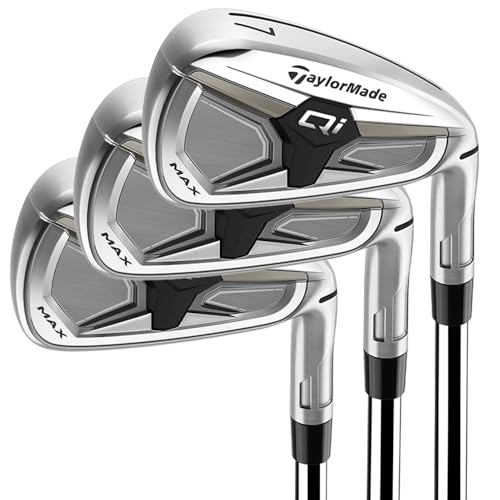
TaylorMade Golf Qi Max Irons Graphite Stiff Mens Righthand 5-PW,AW

Cleveland Golf Halo XL Full-Face Iron Set, Graphite, Regular, 5-PW/GW, Right Hand


TaylorMade Golf Qi Max HL Irons Graphite Regular Mens Righthand 6-PW,AW

TaylorMade Golf Qi Iron 5-P,AW Graphite Shaft Senior Right Handed
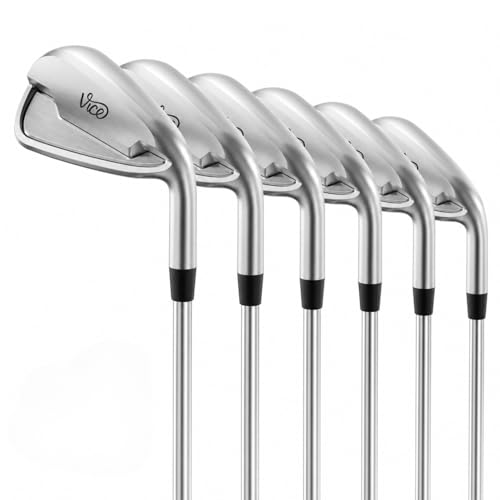
Vice Boost Plus Men's Golf Iron Set, Graphite, Right Hand
One last check at the till
Before paying, physically hold the six-iron and take three gentle practice swings in the shop or garden. Notice whether the head feels present throughout the motion or vanishes somewhere near the top, because that sensation predicts your on-course tempo better than any sales conversation. Confirm the receipt lists the exact flex, length and grip you ordered, since graphite sets are frequently stocked in several near-identical configurations that differ only in small print.
Ask how long a replacement shaft would take if you damaged one next spring, and whether the shop can reorder a single club from the same production family. Sets evolve yearly, and a discontinued line can strand an owner missing a nine-iron. A retailer with clear answers here is planning for your next five seasons, not merely today’s transaction, and that attitude is worth more than a token discount.
Walk away picturing your favourite par three, the pin tucked beyond a pond, and your new seven-iron rising cleanly toward it while your hands stay quiet and untroubled.