What's inside
- Key Takeaways
- Quick Picks
- How We Chose These Picks
- What Do Full-Grain, Genuine and Colombian Leather Actually Mean?
- How Should You Care for a Leather Backpack That Carries Electronics?
- Which Leather Laptop Backpacks Deserve a Place on Your Shortlist?
- How Can You Judge Leather Quality From Photographs and a Listing?
- What Should a Leather Laptop Backpack Hold — and What Should It Refuse?
- How Does Leather Age Across a Working Year?
- Which Leather Backpack Suits Which Professional Life?
- How Do the Six Leather Picks Compare at a Glance?
- What Mistakes Do Leather Backpack Buyers Keep Making?
- What Should You Do in the First Week With a New Leather Bag?
- Final Recommendation
- Frequently Asked Questions
- Related Guides
As an Amazon Associate I earn from qualifying purchases. This post may contain affiliate links at no extra cost to you.
widgetverdict.com is reader-supported. When you buy through links on our site, we may earn an affiliate commission.
Where to buy: the six leather bags below each link to a checked Amazon listing — two colours of Samsonite’s slim classic, two TIDING designs at different sizes and leather grades, a women’s daypack from BOSTANTEN and Kenneth Cole’s Colombian leather Manhattan — and the differences between them are mostly differences in the hide itself.
Leather is the most misdescribed material in the entire backpack market, so the best leather laptop backpacks deserve a guide that starts with vocabulary rather than products. Full-grain leather is the top layer of the hide with its natural surface intact; it is the strongest, the most expensive, and the only grade that develops the deep patina owners romanticise. Genuine leather, despite sounding like a reassurance, is a broad lower grade — real leather, certainly, but often split hide with a finished surface applied. Colombian leather in Kenneth Cole’s usage refers to a rich, vegetable-tanned style of full-grain hide associated with that country’s tanneries. None of these grades is a scam, but they are not interchangeable, and a buyer paying full-grain money for a split-hide bag has been failed by somebody’s description. This guide names the grade honestly for every pick and prices its expectations accordingly — in judgement, never in figures, since what matters is whether each bag is good at what its leather actually is.
Why choose leather at all, when modern fabrics are lighter, cheaper and indifferent to rain? Because a leather backpack does two things nylon cannot. It walks into a client meeting, a court building or a senior partner’s office and reads as intentional rather than merely practical, and it ages visibly — scuffs soften into character, the colour deepens, the bag becomes recognisably yours in a way a fabric pack never quite manages. Against that stand real costs: leather is heavy before you load it, it asks for occasional conditioning, it dislikes being soaked, and a good hide costs serious money. The six picks below span that honest range, from boardroom-slim to a 17.3 inch full-grain traveller.
Key Takeaways
- Full-grain is the premium grade; only the TIDING 17.3 and the Kenneth Cole Colombian are described that way here.
- Samsonite’s Classic Leather Slim appears in cognac and black — same design, two boardroom registers.
- Genuine leather picks such as the BOSTANTEN are legitimate bags, judged here as their actual grade.
- Leather adds empty weight and asks for conditioning; it repays both with presence and longevity.
- The TIDING 15.6 is the padded, practical middle: thick sponge sleeves and travel-friendly details.
- Check the stated laptop size against your machine’s body before falling for any hide.
Quick Picks
| Pick | Badge | Why it earns its place |
|---|---|---|
| Samsonite Classic Leather Slim Backpack Cognac | The warm boardroom classic | A slim, established leather silhouette in the colour that shows the hide at its best. |
| Samsonite Classic Leather Slim Backpack Black | The formal boardroom classic | The same slim Samsonite design in black, for settings where understatement is the dress code. |
| TIDING Leather Laptop Backpack 15.6 Inch | The padded all-rounder | Thick sponge-padded laptop and tablet sleeves, a bottle holder and a luggage strap in one workhorse. |
| TIDING Full Grain Leather Backpack 17.3 Inch | The full-grain flagship | Genuine full-grain hide, a big 17.3 inch fit and anti-theft detailing for serious travellers. |
| BOSTANTEN Leather Laptop Backpack | The women’s daypack | A genuine leather backpack purse format sized for 15.6 inch laptops and daily carry. |
| Kenneth Cole REACTION Colombian Leather Backpack | The heritage hide | Colombian leather in a slim 16 inch Manhattan profile with a traveller’s layout. |
How We Chose These Picks
The first test was descriptive honesty: each candidate’s listing had to let us state what leather it actually uses without inventing a grade. Bags whose copy hid behind the single word leather with no further clue were passed over in favour of makers who name their material. The second test was the laptop story — a defined padded compartment with a stated size — because a beautiful leather tote that leaves a computer rattling against its base is jewellery, not equipment. We then weighted construction details that decide whether leather bags age gracefully: edge finishing, stitching density where straps meet the body, hardware that will not pit or snap, and linings that protect both the machine and the hide from each other.
Range mattered as well. A guide that recommended six near-identical black slim packs would be useless, so the set deliberately spans two colours of one proven Samsonite design, a padded mid-size TIDING, its full-grain big brother, a women’s daypack format and a heritage Colombian hide. Readers will notice two picks share a model name; that is intentional and explained in their sections, because colour is a real decision in leather in a way it is not in nylon — the hide shows differently, scuffs differently and pairs with different wardrobes. What the set does not contain is any bag we could not describe truthfully, and in this category that restraint is the whole game.
One more distinction is worth drawing before the picks, because it shapes every judgement below: leather bags divide into those designed by luggage makers and those designed by fashion labels, and the difference shows in the laptop compartment. Luggage makers — Samsonite and TIDING in this set — start from the load and wrap the hide around it, which produces honest padding, sensible pockets and hardware chosen for cycles of use. Fashion-led designs start from the silhouette and accommodate the machine where the lines allow. Neither philosophy is dishonest, but buyers carrying an expensive workstation through a working week should know which one they are holding, and this guide’s ordering — luggage logic first, in the main — reflects where the safer money sits for most readers.
It is also fair to name what leather cannot do in 2026’s working patterns. It will not match a fabric pack for bicycle commuting in rain, for under-seat airline minimalism where every gram of the allowance counts, or for the parent whose bag doubles as a carrier of bottles, wipes and emergency snacks. Categories overlap in real lives, and a leather backpack bought for the office that must also serve the school run will serve the second job grudgingly. The readers who get the most from this guide are those whose laptop bag has one dominant job; they can optimise for it completely, and leather — judged, graded and cared for properly — rewards that clarity better than any other material in the category.
What Do Full-Grain, Genuine and Colombian Leather Actually Mean?
Full-grain means the hide’s outer surface — the grain — survives into the bag uncorrected. The fibres there are the densest in the hide, which is why full-grain resists tearing and stretching better than any lower grade, and why it breathes and patinas rather than peeling. It costs more because blemished hides cannot be used and the material is worked more carefully. Top-grain, one step down, is lightly sanded and finished for a uniform look; it is honest material, common in good bags, and slightly less durable at the surface. Genuine leather is the umbrella term for real leather below those grades, frequently split hide — the lower layer after the grain is removed — with an applied finish. It makes perfectly serviceable bags at gentler prices, and it will not patina the way full-grain does; its surface is a coating, and coatings eventually wear at corners and folds.
Colombian leather, as used by Kenneth Cole for the Manhattan line, describes a vegetable-tanned, full-grain style known for rich colour and a surface that marks and then blends those marks into the whole. Vegetable tanning itself — using plant tannins rather than chromium salts — produces a firmer hide that moulds to use over years and smells the way people expect leather to smell. None of this vocabulary is regulated tightly enough to trust blindly, which is why this guide leans on what each maker states and on the visible construction, and why the pick sections below separate the two full-grain designs from the genuine-leather ones without apology or exaggeration in either direction.
How Should You Care for a Leather Backpack That Carries Electronics?
Leather care around a laptop is mostly moisture management in both directions. A hide kept in air-conditioned dryness for months will stiffen and eventually crack at flex points, so an occasional light conditioning — a small amount of a reputable leather conditioner worked in with a soft cloth, tested first on a hidden patch — keeps the fibres supple. A hide soaked by rain faces the opposite problem: never dry it with heat, never seal it wet in a bag, and let it air-dry slowly away from radiators with the compartments open and the laptop, obviously, removed. Water spots on lighter colours such as cognac usually fade as the hide dries evenly; panicking and scrubbing makes them permanent.
Daily habits matter more than products. Do not store the bag by its top handle in a way that strains one seam for months; rotate how it rests. Keep pens capped or in their pocket, because ink on leather is forever. Wipe the base before setting it on a clean desk, since leather picks up grit that then grinds against both the hide and the furniture. Inside, the electronics need their own discipline: charger bricks and metal accessories should live in pockets or pouches rather than loose against the lining, and a machine should never ride with a hard object pressed between its lid and the compartment wall. Ten unglamorous minutes of care a few times a year is the entire maintenance contract, and owners who keep it routinely own bags that look better at year five than at year one.
Keep that worst-day test in mind as you read the six sections that follow, and let the grade labels do their work: they are printed plainly for every pick so that no reader has to decode marketing language to know exactly what hide they would be paying for.
Which Leather Laptop Backpacks Deserve a Place on Your Shortlist?

Samsonite Classic Leather Slim Backpack Cognac — The warm boardroom classic
Samsonite’s Classic Leather Slim is the establishment choice in this category, and the cognac version is the one that explains why leather still sells. The colour does what black cannot: it shows the hide. Variations in tone, the way the surface takes light, the slow darkening at the handle and edges as the bag is used — all of it is visible in cognac, and all of it reads as quality in rooms where people notice such things. The design itself is deliberately restrained, a slim vertical profile that carries a laptop and the day’s flat essentials without the bulk of a travel pack, which is precisely the silhouette a suit or a blazer wants behind it.
The slimness is a genuine constraint and should be bought with open eyes. This is a laptop, documents, charger and small-personal-items bag, not a gym-kit-and-lunchbox carrier, and owners who need overnight volume should be looking at the big TIDING further down this page. Within its brief, though, the Samsonite is coherent: an established maker, a classic shape that will not date, and a colour that pairs with navy, grey and brown wardrobes alike. Cognac also shows scratches more readily than black — and then, characteristically, absorbs them into the patina over the following weeks. Buyers who find that process charming are this bag’s people. Readers ready to compare the cognac finish against its black sibling can open the Samsonite listing from the quick picks table and study both under the same light.
Cognac also carries a wardrobe logic worth spelling out. It sits naturally against navy tailoring, warms up grey, and pairs with the brown shoes and belts many professionals already own, which makes the bag feel like part of an existing system rather than an accessory demanding its own supporting cast. In creative and academic settings it reads as considered without reading as corporate, a balance few colours manage. The trade is visibility: this is the bag people in a meeting will actually notice and occasionally compliment, and owners who prefer their equipment invisible should take that as useful information rather than flattery.
- Colour: cognac
- Profile: slim, vertical, boardroom-oriented
- Laptop role: dedicated compartment in a slim body
- Maker: Samsonite Classic Leather line
- Carry brief: laptop, documents and daily flat essentials
Strengths
- Cognac shows the hide’s character better than any dark finish.
- Slim silhouette sits correctly against formal clothing.
- Established design with no fashion expiry date.
Trade-offs
- Slim body excludes overnight or bulky daily loads.
- Light colour reveals scratches before patina absorbs them.
- Leather weight is noticeable for such a compact bag.
Best for: professionals whose laptop bag must look deliberate in formal rooms.
Not suited for: carriers who need one bag to swallow gym kit and groceries too.

Samsonite Classic Leather Slim Backpack Black — The formal boardroom classic
Everything said about the design above applies here, because this is the same Samsonite Classic Leather Slim in black — and the honest question is why a guide would list both. The answer is that in leather, colour is not a cosmetic afterthought but a functional property. Black hides scuffs that cognac displays, pairs with the widest range of formal clothing, and reads as the more conservative object in conservative rooms: legal, financial and governmental settings where the bag should disappear into the dress code rather than contribute to it. A buyer choosing between these two is really choosing how visible they want the material to be, and that is a legitimate, consequential decision worth its own section.
Black leather has its own ageing story, quieter than cognac’s. It does not darken so much as soften; the sheen evens out, edges take a gentle polish from handling, and the bag’s presence mellows rather than transforms. It also forgives the realities of commuting — platform dust, a brushed car door, the occasional rain spot — with far less visible evidence. The constraints are identical to its sibling’s: slim volume, leather weight, a brief built around laptop and documents. For the reader whose wardrobe is black, charcoal and white and whose meetings reward understatement, this is not the second-best colour of the Samsonite; it is the correct one, and the listing linked in the comparison table below shows it beside the cognac for a final visual check.
There is a practical black-leather detail that rarely appears in listings: dust. Light dust, lint and the pale scuff dust from platform floors show more on black hide than on any other colour here, and owners who care about a pristine surface will find themselves brushing this bag down more often than its cognac sibling. The counterweight is that genuine scratches and edge wear — the damage that actually matters — disappear into black almost completely. It is a finish that forgives the serious and displays the trivial, and most long-term owners conclude that is the correct way around for an object used every working day.
- Colour: black
- Profile: slim, vertical, boardroom-oriented
- Laptop role: dedicated compartment in a slim body
- Maker: Samsonite Classic Leather line
- Carry brief: formal daily essentials around a laptop
Strengths
- Black conceals the scuffs and dust of daily commuting.
- Matches formal dress codes without drawing the eye.
- Same proven slim design as the cognac version.
Trade-offs
- Shows less of the hide’s natural character over time.
- Slim volume rules out bulky or overnight loads.
- Leather construction outweighs fabric bags of similar size.
Best for: professionals in formal environments who want leather without display.
Not suited for: buyers who want the patina story to be the point of the purchase.
TIDING Leather Laptop Backpack 15.6 Inch — The padded all-rounder
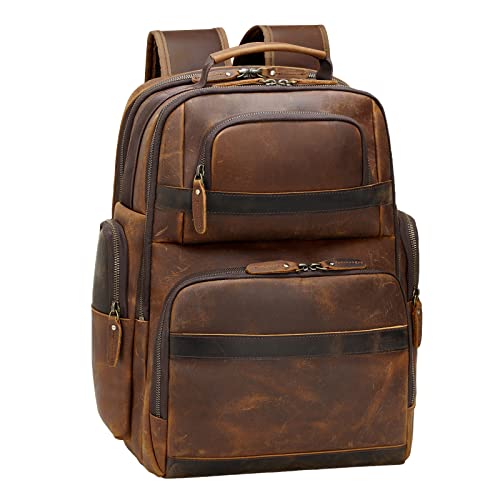
If the Samsonites are leather as tailoring, this TIDING is leather as workwear — in the complimentary sense. Its listing leads with thick sponge padding in both the laptop and tablet sleeves, which is the sort of unglamorous specification that decides whether a machine survives a year of being set down hard on train floors. Around that protective core the bag assembles the practical furniture of a modern work backpack: a water bottle holder, a luggage strap for sliding over a suitcase handle at the airport, and enough pocket structure to run a full working day out of it. The 15.6 inch fit lands on the most common laptop size in offices, and the overall shape stays daypack-honest rather than boardroom-slim.
TIDING sells a great deal of leather luggage, and this model shows the firm’s instinct for features over minimalism. Buyers should expect a bag that feels equipped rather than sculpted, and should judge the leather accordingly: this is a hard-working hide on a hard-working bag, chosen by people who want leather’s durability and presence without giving up the conveniences they are used to from fabric packs. It will not look as severe against a suit as the Samsonite, and it will swallow a day’s clutter far more happily. For the hybrid worker whose bag goes from home office to client site to airport in a single week, that trade is usually the right one. The TIDING listing in the quick picks shows the sleeve arrangement in detail, which is where this bag makes its case.
The bottle holder deserves a sentence of respect, because it signals how this TIDING expects to be used. Boardroom-slim bags omit it to protect their lines; this bag includes it because its owner’s day includes trains, site visits and desks without a kitchen nearby. Small features like that — and the luggage strap — accumulate into a design philosophy: nothing about the working day should require a second bag. Buyers whose days are exactly that miscellaneous will find the philosophy congenial, and the leather means the one bag they carry everywhere also happens to be the handsome one.
- Laptop fit: 15.6 inch machines, sponge-padded sleeve
- Tablet: separate padded sleeve
- Extras: water bottle holder, luggage strap
- Profile: full daypack proportions
- Carry brief: hybrid work and travel days
Strengths
- Thick padding protects both laptop and tablet properly.
- Luggage strap integrates with rolling suitcases on trips.
- Daypack volume handles a full working day’s clutter.
Trade-offs
- Busier styling sits less formally against a suit.
- Feature-rich build adds weight beyond the hide itself.
- Bottle holder breaks the clean leather silhouette.
Best for: hybrid workers wanting leather durability with modern backpack conveniences.
Not suited for: minimalists who want a slim, formal line above all else.

TIDING Full Grain Leather Backpack 17.3 Inch — The full-grain flagship
This is the bag the vocabulary lesson at the top of the guide was written for. TIDING states full grain for this 17.3 inch design, and everything about the product follows from that material decision: a large, structured travel backpack whose hide is expected to take years of airport floors, overhead bins and office corners and come out looking better for it. The laptop and tablet sleeves are padded, a luggage strap handles the airport, and anti-theft detailing addresses the city side of the journey. A 17.3 inch fit is rare in leather at any grade, because big hides without flaws are exactly what full-grain construction consumes, so the existence of this bag at scale is itself a statement about the maker’s supply of material.
It is also, unavoidably, a heavy and committed purchase. Full-grain hide at this size carries real weight before a large laptop — itself no feather — joins it, and buyers should think of this as luggage-grade equipment for people who travel with big machines: engineers with mobile workstations, photographers, designers, anyone whose 17 inch laptop is a professional tool rather than a media screen. For those owners the arithmetic works, because the bag will outlast several of the laptops it carries and look increasingly distinguished doing it. For a commuter with a light ultrabook, it is magnificent overkill, and the slim Samsonites above will serve better. Readers in the big-machine camp can examine the TIDING full-grain listing via the quick picks table, paying attention to the stated internal dimensions.
Full-grain at this size also changes how the bag should be bought. Treat the purchase as a decade-scale decision: check that the laptop fit covers not just today’s machine but the size class you are likely to stay in, confirm the strap geometry suits your frame on the listing’s dimensions, and plan the conditioning routine from the start rather than after the first dry winter. Owners who buy this class of bag casually often sell it within a year, not because it failed but because it was never matched to their pattern of work. Matched correctly, it becomes the piece of travel equipment people describe with unusual loyalty.
- Leather grade: full grain, as stated by the maker
- Laptop fit: 17.3 inch machines, padded sleeve
- Tablet: separate padded sleeve
- Extras: luggage strap, anti-theft detailing
- Carry brief: travel with large professional laptops
Strengths
- Full-grain hide offers the best ageing and durability here.
- Rare large-laptop fit in genuine leather construction.
- Travel features match the size of machine it carries.
Trade-offs
- Heaviest option in the set once a big laptop is loaded.
- Oversized for daily commuting with a small machine.
- Full-grain material asks for regular conditioning care.
Best for: professionals travelling with 17 inch class machines for years at a time.
Not suited for: light commuters or anyone counting every gram on foot.
BOSTANTEN Leather Laptop Backpack — The women’s daypack
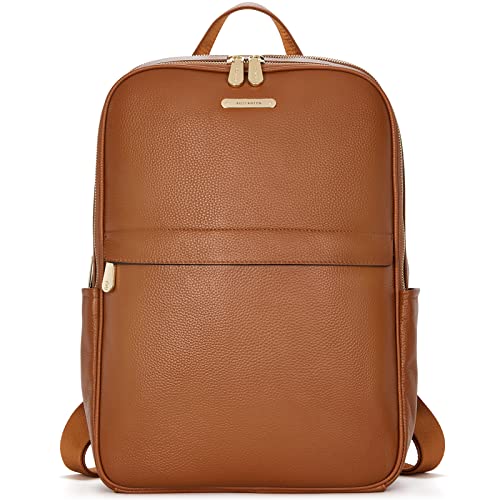
BOSTANTEN’s design starts from a different silhouette altogether: the backpack purse. Sized for a 15.6 inch laptop yet proportioned as a women’s daypack rather than a shrunken business bag, it serves the large group of buyers who found conventional laptop backpacks either too big, too rectangular or too clearly designed for someone else. The maker describes the material as genuine leather, and this guide takes that description at face value and judges the bag as what it is: a real-leather daily carrier at the grade where most leather goods honestly live, with a finished surface that keeps its colour uniform and shrugs off the small marks of daily use more readily than an unfinished hide would.
The brown finish shown in the listing suits the format — warm, casual-professional, equally at home in a lecture hall, a studio or a relaxed office — and the daypack proportions hold a laptop alongside the ordinary contents of a day without ballooning into luggage. What it will not do is develop the deep patina story of the full-grain TIDING, and buyers should not purchase it expecting that transformation; its surface is designed to stay as it arrives, which many owners frankly prefer. Judged on its own terms — an attractive, real-leather, laptop-capable daypack for women — it fills a slot none of the other five picks addresses. Those interested can find the BOSTANTEN listing through the comparison table, where its dimensions sit beside the rest for an honest scale check.
The BOSTANTEN also illustrates a point about proportion that big rectangular bags get wrong. A laptop is a flat, wide object, and a daypack built around it should be wide and flat too — yet many women’s laptop bags force the machine diagonally or leave it swimming in a tall narrow well. Here the format and the cargo agree with each other, which is why the bag carries smaller than its laptop size suggests. For students and professionals moving between rooms all day, that agreement between shape and load is felt in the shoulders by mid-afternoon, and it is the quality owners mention long after the colour compliments fade.
- Leather grade: genuine leather, as described by the maker
- Laptop fit: 15.6 inch machines
- Format: women’s backpack purse / daypack
- Colour shown: brown
- Carry brief: college, casual office and daily carry
Strengths
- Daypack proportions suit smaller frames and daily loads.
- Finished surface keeps its colour consistent with use.
- Full-size laptop fit inside a purse-format design.
Trade-offs
- Genuine grade will not patina like full-grain hide.
- Daypack volume limits overnight ambitions.
- Surface coating wears first at corners and folds.
Best for: women wanting a real-leather daypack that still carries a full laptop.
Not suited for: buyers specifically seeking full-grain ageing character.

Kenneth Cole REACTION Colombian Leather Backpack — The heritage hide
Kenneth Cole’s Manhattan design brings the third leather story in this guide: Colombian leather, the rich vegetable-tanned style the brand has used across its luggage for years. In the hand — and in the listing’s photography — it reads differently from the Samsonite’s smoother classic finish: deeper colour, a more pronounced natural surface, and a willingness to record the marks of use and then blend them into the whole as the hide matures. The bag built around it is a slim 16 inch travel backpack, a useful half-step up in machine size from the 15.6 inch crowd, arranged for the professional who moves between office and airport without changing bags.
The Manhattan name signals the intent: this is urban equipment, meant to look correct in a city professional’s day while still behaving at a departure gate. Its slim profile keeps it in the same broad family as the Samsonite designs, but the hide gives it a warmer, more individual presence, and owners tend to keep these bags for a long time precisely because the surface keeps changing. Care expectations follow the material: vegetable-tanned leather appreciates conditioning and dislikes neglect, and in return it offers the most characterful ageing of any pick in this set. Travellers who want heritage material without the big TIDING’s bulk will find this the natural landing spot, and the Kenneth Cole listing linked from the quick picks carries the current colour options.
Vegetable-tanned leather has one more behaviour buyers should anticipate: it darkens with sunlight and handling unevenly at first, so a new Manhattan can look patchy in its early weeks as the panels that meet hands and light change faster than sheltered ones. This is a phase, not a flaw, and it resolves into the deep, even richness the style is known for — but owners who expect a finished, static product from day one may misread the phase as inconsistency. Those who enjoy watching materials mature will find this the most rewarding hide in the guide to live with, precisely because its first year is visibly a beginning rather than a conclusion.
- Leather: Colombian, vegetable-tanned style
- Laptop fit: 16 inch machines
- Profile: slim Manhattan travel design
- Maker line: Kenneth Cole REACTION
- Carry brief: urban professional days with travel mixed in
Strengths
- Colombian hide ages with more character than smoother finishes.
- Sixteen inch fit covers machines the 15.6 crowd excludes.
- Slim profile suits both office days and airport runs.
Trade-offs
- Vegetable-tanned surface marks readily before blending in.
- Slim body limits bulky daily or overnight loads.
- Rich finish needs conditioning to keep its depth.
Best for: urban professionals wanting heritage leather in a travel-slim shape.
Not suited for: anyone who wants a finish that looks untouched forever.
Finally, a word about smell, because nobody warns buyers and everybody notices. Good leather smells rich and faintly sweet; a bag that arrives reeking of solvent or plastic is announcing its finish chemistry, and while the odour usually fades, its presence at unboxing is one more data point about grade. Air a new bag open for a day before loading it, and let that first inspection — nose included — be part of the ritual. The bags in this set come from makers whose materials reputations are established, but the habit of checking will serve you on every leather purchase after this one, long after the details of any single listing are forgotten.
How Can You Judge Leather Quality From Photographs and a Listing?
Remote judgement is imperfect, but leather telegraphs its quality more honestly than most materials if you know where to look. Zoom into the surface first. A natural grain shows variation — pores of slightly different sizes, subtle creases, a surface that does not repeat like wallpaper. Perfectly uniform pebbling across every panel often signals an embossed finish on a lower grade, which is not a crime but should be priced and expected accordingly. Then look at the edges. Quality bags finish their edges with paint, burnishing or folded construction; raw, fuzzy edges on straps and pocket mouths suggest cost was saved exactly where wear concentrates, and edges are where leather bags begin to look tired years before the main panels do.
Stitching tells the next part of the story. Even, dense stitching with no wandering lines matters structurally on a laptop bag, because the shoulder strap anchors and the laptop compartment carry constant load. Photos that show the strap attachments clearly are a good sign; listings that never show them are telling you something by omission. Hardware deserves the same scrutiny: zips should be metal-toothed or a reputable branded coil on a bag at these prices, buckles should look cast rather than stamped from thin sheet, and feet or base reinforcement protect the hide where it meets the floor. Finally, read the maker’s own words with a lawyer’s eye. A brand that specifies its grade, its tanning or its hide origin is staking reputation on those words; a brand that repeats the bare word leather forty times is spending your attention to avoid spending its own money on material.
Weight, paradoxically, is evidence in the buyer’s favour. Real leather of useful thickness is heavy, and a suspiciously light full-size leather bag has usually achieved its lightness with thin splits or fabric-backed panels. Cross-check the stated weight against the bag’s dimensions and grade claims: a full-grain 17 inch backpack should feel substantial in the numbers before it ever reaches your hands. None of these checks replaces handling the bag, which is why returns policies matter in this category more than in most — order with the intention of inspecting edges, stitching and surface under your own light, and send back without sentimentality any bag whose reality contradicts its photographs.
What Should a Leather Laptop Backpack Hold — and What Should It Refuse?
Leather bags reward owners who pack to their strengths. The slim designs in this guide — both Samsonites and the Kenneth Cole — are built around a flat world: laptop, tablet, documents, a notebook, chargers coiled flat, a paperback. Loaded that way they close cleanly, hang correctly and present the silhouette their designers drew. Loaded with a bulky jumper, a lunchbox and a pair of shoes, they bulge at the seams, strain their zips and lose the very elegance that justified the purchase. The larger TIDING designs forgive more, but even they are happiest with a traveller’s discipline: heavy items low and central, clothing rolled rather than stuffed, nothing hard pressed against the laptop’s lid.
There is also a category of cargo leather simply should refuse. Leaking bottles are the obvious one — a shampoo spill inside a fabric bag is laundry, inside a leather bag it is a permanent stain and a smell that conditions the hide in entirely the wrong way. Gym kit belongs elsewhere for the same reason: damp clothing against a lining for eight hours invites odours the material will hold. Sharp-edged tools, uncapped pens and loose keys all write on leather in ways that cannot be unwritten. Owners who respect those boundaries find the bag asks very little of them; owners who treat a leather backpack as an indestructible sack discover that its memory is exactly the problem, because the hide remembers everything it has met.
The positive version of the same advice is to build the bag into a routine. A leather laptop backpack works best as a stable system: the same charger in the same pocket, documents in their sleeve, the machine in and out along a familiar path. That stability is why professionals keep these bags for years without tiring of them — the bag becomes a known desk that travels, and its surface records the routine as patina rather than damage. If your carry changes completely every day, fabric’s indifference will suit you better; if your working kit is settled, leather will settle with it beautifully.
How Does Leather Age Across a Working Year?
Month one with a leather backpack is mostly about stiffness. New hide, especially vegetable-tanned or full-grain material, holds the shape it was cut to and resists the shape you want; zips run their tracks with a certain reluctance, the straps sit where they were sewn rather than where your shoulders are, and the whole bag feels like equipment being issued rather than owned. This is normal and temporary. The owners who love their bags at year three are the ones who treated month one as breaking-in rather than as a verdict, carrying the bag daily and letting the handles, straps and back panel learn their curves.
By month six the surface story begins. High-contact zones — the top handle, the lower corners, the panel against your back — polish and deepen ahead of the rest, and the first scratches arrive and then, on good hide, subside into the general tone. This is the period when cognac and Colombian leathers look their most interesting and when black leather looks its most quietly improved, its early uniformity replaced by a lived sheen. It is also when construction quality announces itself: stitching that was merely adequate begins to fuzz at load points, thin edge finishes crack, and well-made bags simply continue. The six picks in this guide were chosen with this half-year test in mind, because a leather bag is a long purchase and its listing photographs only ever show day one.
A year in, the bag has become infrastructure. You reach for pockets without looking, the laptop slides along a path the lining has polished, and the hide has taken the exact patina of your routes — darker where your hand lands, softer where the strap bends. Resale and hand-me-down value in good leather is real for the same reason: the object improves into its second owner. None of this happens with a bag kept in a cupboard for special occasions, which is the final paradox of the category — leather rewards use and punishes reverence, so buy it to carry it, daily and without ceremony, or do not buy it at all.
Which Leather Backpack Suits Which Professional Life?
Match the bag to the room you work in most. The lawyer, consultant or finance professional whose day is meetings in formal buildings belongs with the Samsonite silhouette, colour chosen by wardrobe, because the bag’s restraint is a form of fluency in those settings. The academic, architect or creative professional has more freedom and often more paper; the Kenneth Cole’s warmer hide or the padded TIDING will fit both the load and the culture of those workplaces better. The field professional — surveyor, inspector, sales engineer — needs the TIDING 15.6’s padding and bottle holder more than anyone’s silhouette, and its leather will take site-office life without complaint.
The travelling executive with a large workstation is the full-grain TIDING’s constituency, and the student or early-career professional who wants one handsome bag for lectures, internships and first jobs is the BOSTANTEN’s. What unites all six cases is that the laptop size was checked first and the leather story understood second; reverse that order and even a beautiful bag becomes a daily irritation. Readers still torn between two picks should decide by their worst recurring day — the longest walk, the heaviest load, the most formal room — because a bag that survives your worst day gracefully will never be the problem on your ordinary ones.
How Do the Six Leather Picks Compare at a Glance?
| Pick | Leather story | Laptop fit | Defining character |
|---|---|---|---|
| Samsonite Classic Slim Cognac | Classic leather finish | Slim laptop compartment | Warm, visible hide character |
| Samsonite Classic Slim Black | Classic leather finish | Slim laptop compartment | Formal understatement |
| TIDING 15.6 | Working leather build | 15.6 inch | Padded, feature-rich daypack |
| TIDING Full Grain 17.3 | Full grain | 17.3 inch | Luggage-grade flagship |
| BOSTANTEN Daypack | Genuine leather | 15.6 inch | Women’s backpack purse format |
| Kenneth Cole Manhattan | Colombian leather | 16 inch | Heritage hide, slim traveller |
Treat the comparison table below as a map rather than a ranking: the columns that matter are the leather story and the laptop fit, because a bag that wins on one and fails on the other is the wrong bag regardless of its other virtues.
What Mistakes Do Leather Backpack Buyers Keep Making?
The costliest mistake is buying the word leather instead of a grade. A shopper who pays a full-grain price for an unnamed hide, or who expects genuine leather to patina like the top layer of the hide, has been set up for disappointment by vague descriptions — which is why this guide graded every pick openly. The second mistake is ignoring empty weight. Leather bags start heavy; a commuter who walks forty minutes each way will feel that decision daily, and no amount of beauty compensates a shoulder that has voted against the purchase. Third comes size optimism: slim leather bags have structured interiors that forgive nothing, so a machine that almost fits will fit never, and the zip will record the struggle in its teeth.
Fourth, new owners often condition too much and too soon, soaking a bag that needed only to be carried, or reach for household oils that darken and soften leather unpredictably. A purpose-made conditioner, sparingly, a few times a year, is the entire regime. Fifth, leather gets bought for a fantasy commute and then used for a real one involving rain, bicycle racks and gym floors; the hide survives all of that, but its finish records it, and buyers who need a bag to look pristine under abuse should choose black, choose a finished surface, or honestly choose fabric. Finally, people store leather bags stuffed in plastic or in damp cupboards, inviting the one enemy — mildew — that genuinely ruins hides. Breathable storage, aired occasionally, is the whole secret.
What Should You Do in the First Week With a New Leather Bag?
Inspect before you carry. Under a bright light, check the stitching at both strap anchors, run every zip through its full travel twice, and look along the edges for finish that has already lifted. Photograph the panels in daylight; those pictures are your baseline for judging patina later and your evidence if a defect was present from the start. Then load the bag with your real kit — not a trial approximation — and walk a genuine route with it, because strap comfort and balance only declare themselves under a true load at a true distance.
Decide in that first week where the bag will live. A hook by the door that strains one handle is a slow injury; a flat shelf or a padded hanger spreads the load kindly. Set the internal order once — charger pocket, document sleeve, machine path — and resist reorganising it weekly, since the bag’s usefulness compounds when your hands learn it. If the hide arrives very dry from storage, one light conditioning in week one is reasonable; if it arrives supple, leave it alone and let your hands do the early work. A bag settled deliberately in its first seven days tends to stay settled for years.
Final Recommendation
Choose by grade first and silhouette second. If your working life is formal and your laptop mainstream, the Samsonite in whichever colour your wardrobe dictates is the settled, correct answer. If you travel with a big machine and intend to keep its bag for a decade, the full-grain TIDING stands alone here. And if you simply want leather that works as hard as fabric — padded, strapped and ready for a messy hybrid week — the TIDING 15.6 or the Kenneth Cole will serve you without ceremony; buy the hide you will actually enjoy watching grow old on your own shoulders, because that slow change, in the end, is what the money buys.
Frequently Asked Questions
Is full-grain leather worth it for a laptop backpack?
For a bag you will carry for many years, usually yes: the surface resists damage better, repairs more gracefully and develops character instead of wearing out. For a bag you expect to replace with changing fashion or changing laptop sizes, a lower grade delivers most of the look without the long-term investment logic.
Can a leather backpack handle rain?
Light rain, yes — shake it off, let the bag dry naturally and condition later if the surface looks thirsty. Sustained rain is different: water will spot lighter hides and can stiffen any leather dried badly afterwards. Commuters in wet climates should treat a leather bag as fair-weather equipment or accept the marks as part of its story.
Why are two Samsonite colours listed as separate picks?
Because in leather the colour changes how the bag ages, what it matches and how much wear it shows. Cognac displays the hide and its patina; black conceals scuffs and suits formal dress codes. They are the same design answering two genuinely different briefs.
How heavy is a leather laptop backpack compared with fabric?
Noticeably heavier at the same size, thanks to the hide and the structure needed to support it. Check the listed weight of any candidate against your current bag and be honest about your walking distance; leather rewards shorter, more deliberate commutes and punishes long ones.
Will a leather bag protect a laptop as well as a padded fabric pack?
It depends on the sleeve, not the shell. The TIDING models here carry thick sponge-padded sleeves comparable to good fabric bags, while slim designs trade some padding for profile. Judge each bag’s compartment on its own construction rather than assuming the hide itself is the protection.
Does leather stretch enough to fit a slightly large laptop?
Leather gives a little over time, especially at flex points, but a laptop compartment is a structured space with zips and seams that do not negotiate. A machine that needs force to enter on day one will still need force at year one, and the zip will pay for every attempt. Buy the size that closes easily around your actual computer, with room for its corners to sit without pressure.
Can leather backpacks be repaired if a strap or zip fails?
Usually, yes — and this is one of the material’s real advantages over fabric. Cobblers and leather workshops routinely restitch strap anchors, replace zips and refinish edges on quality bags, work that is rarely economical on a nylon pack. A well-made leather bag is therefore not a single-lifetime object but a maintainable one, which strengthens the case for buying the better grade when the budget allows.
How long should a good leather laptop backpack last?
With the light care routine described in this guide, a well-made leather bag should outlast several laptops — a decade of daily use is a reasonable expectation for full-grain construction, and genuine-leather designs commonly give many years before their finished surfaces tire. The usual end is not the hide failing but hardware or stitching reaching its limit, and those, as noted above, are the repairable parts of the object.
Related Guides
Leather is one answer to the professional brief; readers comparing materials should also browse best laptop backpacks for work, while those whose priority is the journey rather than the meeting room may prefer best leather-look travel backpacks compared with fabric alternatives for a wider view of the trade-offs. For the same materials discipline in a thinner profile, see Best Slim Laptop Backpacks.


