Our Top Picks
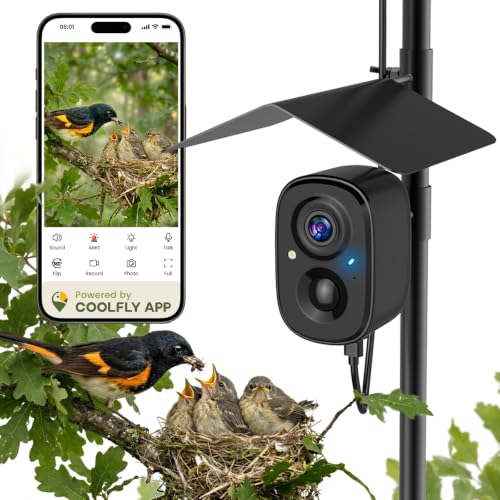 Smart Bird Camera Solar Powered with Pole forLarge0.62 x 3.93 x 62.99 inches2.41 poundsCheck on Amazon
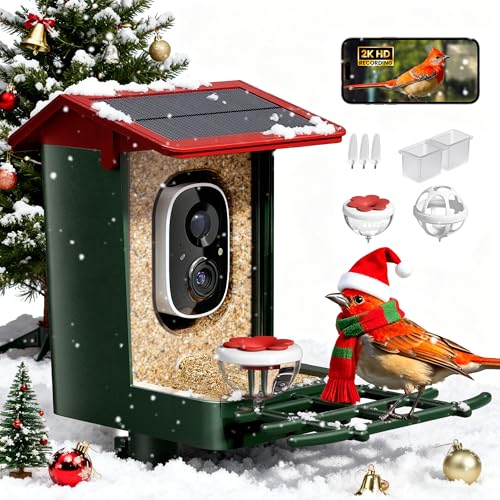
 NETVUE by Birdfy Bird Camera for Feeder/Bath Birdwatching2.2 x 2.2 x 9.06 inches0.52 poundsCheck on Amazon
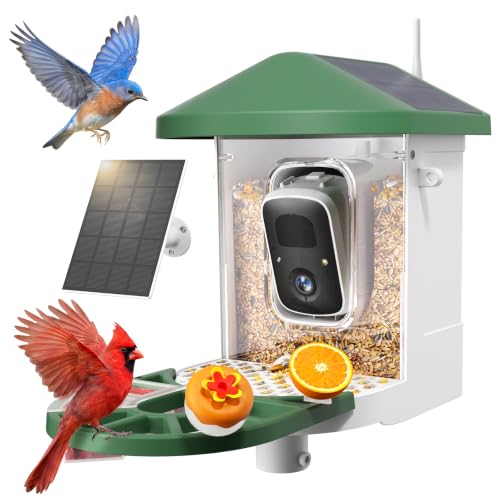
 Smart Bird Camera for Bird Feeder/Bath/House Hummingbird WatchingFlex(8-10 in)3.59 x 2.56 x 2.33 inches0.48 poundsCheck on Amazon


What's inside
- Watching birds at arm’s length is a different craft
- Minimum focus distance decides whether feathers resolve
- Species recognition by software: useful labels, honest limits
- How the camera notices a bird: heat signatures versus pixel change
- Batteries, small solar panels, and the arithmetic of winter
- Sealing, housing, and surviving a real garden year
- Where footage lives: memory cards, home networks, and cloud libraries
- Alerts on the phone: timely, filtered, and not overwhelming
- Keeping birds calm around lenses, lights, and small noises
- Placing the camera: feeders, baths, perches, and nest boxes
- Choosing between styles of bird camera
- Troubleshooting the frustrations every owner meets
- Light through a garden day, and what exposure systems do with it
- Sound, and the half of garden life that pictures miss
- Welfare first: feeding, hygiene, and the ethics of a watched station
- Check prices on Amazon
- A calmer way to decide: questions to answer before comparing models
As an Amazon Associate I earn from qualifying purchases. This post may contain affiliate links at no extra cost to you.
Watching birds at arm’s length is a different craft
A camera pointed at a feeder works at distances that would embarrass most outdoor surveillance gear. The subject may sit twenty centimetres from the lens, filling the frame with a single wing, while a second bird waits on a perch just behind it. Depth collapses. Light bounces off seed, wet feathers, and glossy plastic in quick succession as clouds move. Nothing about that scene resembles a driveway, a porch, or a forest trail, and gear chosen for those places often disappoints beside a hanging tube of sunflower hearts.
Dedicated bird cameras start from that compressed geometry. Their lenses focus unusually close, their sensors expose for small fast subjects against bright sky, and their housings invite mounting on poles, brackets, and nest box walls rather than fences. A unit built for a garden feeding station also expects to be ignored. Birds abandon a perch that clicks, glows, or shifts shape every few minutes, so quiet behaviour matters as much as resolution.
Families come to this category for different rewards. One household wants a grandparent-friendly window onto a balcony rail. Another keeps a garden list and hopes to settle arguments about whether a fleeting visitor was a coal tit or a marsh tit. Teachers use feeder footage to show pupils how beaks map to diets. Nest box watchers follow a slower drama, weeks of building and feeding compressed into brief visits that reward patience.
Each motive nudges the shortlist in a separate direction. Identification demands colour fidelity and crisp stills. Sharing clips with relatives favours simple apps and painless downloads. Nest observation values discretion above spectacle. A buyer who conflates these goals ends up with a technically impressive camera that serves none of them well, which is why this guide treats use case as the first specification worth naming.
Season reshapes the brief as well. Spring brings courtship displays, territorial scuffles, and adults ferrying food at exhausting tempo. Summer fledglings arrive clumsy and endlessly photogenic. Autumn moult softens plumage detail, making identification harder and honest colour more valuable. Winter compresses feeding into short hungry hours around dawn and dusk, exactly when light is weakest and batteries drain fastest.
Geography adds another layer. A sheltered courtyard in a mild coastal town forgives modest weather sealing. An exposed hillside garden in driving rain does not. Gardens visited by squirrels, cats, magpies, or deer need tougher mounts and cleverer detection than a fifth-floor balcony where the only intruders are pigeons. The best outdoor bird camera, in other words, is the one matched to a particular patch of ground.
Marketing language rarely helps with that matching. Resolution figures dominate packaging, yet a soft close-focus lens wastes every pixel a sensor offers. Night modes get illustrated with owls that the camera will never attract. Buyers do better reading a specification sheet backwards, starting with focus distance, detection method, and mounting options, and only then asking how many pixels sit behind the glass.
This article follows that order deliberately. Optics and focus come first, because an unsharp image cannot be rescued later. Detection follows, since a camera that wakes late records tails leaving the frame. Power, sealing, storage, and alerts build on those foundations. Species recognition software gets a sober treatment in its own section, because automated labels are helpful servants and unreliable narrators.
Minimum focus distance decides whether feathers resolve
Every lens has a closest point it can render sharply, and manufacturers of general-purpose outdoor cameras rarely optimise for anything nearer than a metre. Hang such a unit beside a feeder at typical bracket distance and the subject sits inside that dead zone. The resulting footage looks almost focused, which is worse than obvious blur, because viewers keep expecting detail that the optics never captured. Eye stripes smear. Leg colour vanishes. A ring or band on a leg becomes a pale smudge.
Bird-specific designs shorten that minimum dramatically, sometimes to a few centimetres, by using lens elements shaped for macro-like work at feeder range. The practical payoff shows in texture. Barbs separate on a breast feather. Seed fragments cling visibly to a beak. Raindrops bead on a crown. Those micro-details are precisely what separates a charming snapshot from an image that can support an identification argument later.
Depth of field shrinks as focus tightens, so closeness brings a trade. A bird facing the lens may show a needle-sharp eye while its tail dissolves into softness, simply because the two points sit at different distances. Slightly wider placement often beats maximum magnification for group scenes at a platform feeder, where several birds jostle across a span of thirty centimetres or more. Positioning becomes an optical decision, not merely a matter of what fits in frame.
Autofocus behaviour deserves scrutiny alongside the headline distance figure. Some units hunt visibly, pulsing in and out before settling, and small birds rarely wait for that process to finish. Fixed-focus designs tuned for a narrow band can outperform ambitious autofocus at feeder range, provided the installer respects the band when measuring bracket placement. Published focus ranges therefore deserve a tape measure during setup, not a guess from the patio door.
Lens coatings matter outdoors in ways studio photographers seldom face. A feeder camera stares into low sun at breakfast time for much of the year. Cheap glass flares, washing plumage into pastel ghosts, while better coatings preserve contrast when backlight strikes the dome or window. A small hood or a mounting angle offset from direct sunrise can rescue an otherwise capable unit, and thoughtful gardens offer several candidate positions worth scouting across a full day.
Digital zoom deserves a blunt warning. Cropping into a frame after capture adds no information; it merely enlarges whatever the lens delivered, noise included. Optical reach at close range comes from placement and field of view selection. A narrower native view of a single perch usually produces shareable images, whereas a wide scenic shot of the whole feeding station, cropped hard later, produces mush that disappoints everyone who receives it.
Field of view interacts with focus in subtler ways. Very wide lenses push the subject smaller and exaggerate distance between birds at opposite edges of a platform. Moderate angles flatter the scene and keep distortion modest around the frame borders, where a stretching wing can otherwise look anatomically strange. Gardeners who also enjoy the wider scene sometimes run two viewpoints, one tight portrait angle and one establishing view, rather than forcing a single device to compromise.
Glass also fogs. A cold lens meeting warm humid morning air can mist for the first hour of the day, precisely when dawn feeding peaks. Housings that breathe through membranes, or designs that warm the window slightly, cope better than sealed boxes that trap yesterday’s moisture inside. Wiping helps only until the next cold night, so anti-fog behaviour belongs on a serious buyer’s checklist even though brochures seldom mention it.
Species recognition by software: useful labels, honest limits
Modern feeder cameras often now offer automated identification, analysing a captured frame and proposing a species name inside the companion app. The convenience is real. A beginner scrolling through a morning of visits gets a gentle education, with each suggested label prompting a second look at wing bars, bill shape, and tail length. Over weeks, that feedback loop teaches field marks faster than a field guide alone for many casual watchers.
Accuracy, however, varies with conditions that brochures cannot control. Juveniles wear transitional plumage that confuses models trained largely on adult birds. Females of dimorphic species resemble females of related species far more than either resembles her mate. Partial views, a head behind a feeder port or wings raised mid-flap, strip away the very features a classifier needs. Regional lookalikes compound the problem when training data skews toward another continent’s avifauna.
Wise users treat a label as a hypothesis with a confidence problem attached. Cross-checking against distribution maps, season, and habitat filters out absurd suggestions quickly; a species that never occurs within a thousand kilometres of the garden did not visit before breakfast. Keeping the original photograph matters because re-examining it months later, with better personal knowledge, often overturns an early automated verdict that once felt authoritative.
Subscription structures hide inside this feature more often than anywhere else in the category. Some makers include basic naming in the purchase, while richer libraries, video analysis, or historical archives sit behind a monthly plan. Buyers should establish exactly which capabilities persist without payment, because a camera whose headline talent expires after a trial leaves a poorer tool on the pole. Offline identification, where offered, also helps gardens with weak wireless coverage.
There is a social dimension worth enjoying rather than fearing. Households debate labels at the kitchen table. Children learn to argue from evidence, pointing at a crest or an eye-ring instead of accepting the phone’s word. Community science projects sometimes accept feeder imagery with human-confirmed identifications, and the discipline of confirming a label before submitting it turns passive watching into genuine participation.
Behavioural recognition lags behind species naming. Software may register that a bird arrived without noticing that it displaced another, cached a seed, or fed a fledgling. Viewers still supply that narrative layer themselves. Expecting the app to narrate the garden leads to disappointment; expecting it to index the day’s visitors so a human can find the interesting moments leads to satisfaction that lasts beyond the novelty period.
Privacy settings accompany these cloud-linked features. Footage may leave the garden for analysis on distant servers, and neighbours’ conversations can ride along on audio tracks. Reading where processing happens, how long clips persist, and whether training programmes reuse customer imagery is part of buying an intelligent camera in a way it never was for a simple trail unit. Local processing options, when available, trade some sophistication for that control.
How the camera notices a bird: heat signatures versus pixel change
Two detection philosophies dominate this market, and their differences explain most missed moments. Passive infrared sensors watch for moving warmth, registering the heat contrast between a small body and the cooler background behind it. A bird landing on a perch changes that thermal pattern abruptly, waking the camera even before the subject settles. Because the trigger ignores swaying branches and drifting shadows, false alarms stay comparatively rare on bright windy days.
Pixel-based detection works from the image itself. The processor compares successive frames and reacts when enough of the picture changes. That approach can notice a cold-blooded visitor, a butterfly, or a bird whose temperature blends with sun-warmed wood, situations where heat sensing may hesitate. Its weakness mirrors its strength: falling leaves, rain streaks, shifting sunlight on a wall, and the feeder’s own swinging motion all alter pixels enthusiastically.
Sensitivity settings mediate between these extremes, and gardens differ enough that factory defaults rarely suit everyone. A sheltered feeder against a plain fence can run eager settings and catch tentative visitors. An exposed station above flower beds alive with bees and moving stems needs restraint, or the memory card fills with vegetation documentaries. Spending the first week tuning thresholds is normal ownership, not a sign of a defective purchase.
Wake speed converts detection into footage. A sensor may notice an arrival promptly while the camera still needs a moment to expose, focus, and begin recording, so the opening of a clip can miss the landing flare of wings that made the moment special. Pre-buffering, where offered, keeps a rolling slice of recent frames so the saved video begins slightly before the trigger. For stills shooters, burst behaviour matters more, since a sequence across two seconds often contains one frame with the head turned perfectly.
Detection zones refine matters further. Masking out a busy bird bath at the frame edge, or a road beyond the hedge, concentrates attention on the perch that matters. Some apps draw these zones as grids, others as freehand shapes, and the granularity affects how precisely a user can exclude a neighbour’s washing line. Zones also reduce the processing burden, which can shorten the delay between trigger and capture on modest hardware.
Night detection behaves differently again. Warm bodies stand out against cold darkness, favouring infrared triggers, while pixel systems may struggle as gain rises and noise shimmers across the frame, mimicking motion everywhere. Gardens hoping to record roosting behaviour or nocturnal visitors at a water dish should weigh night trigger reliability as heavily as headline night image quality, because an unwoken camera records nothing at all.
False triggers are not purely wasted. Reviewing a day of empty clips teaches the owner how light moves across the station, where a spider has built across the lens, and which branch dips into view under a perched pigeon’s weight. That diagnostic value fades quickly, though, and a setup still producing hundreds of vacant files after a fortnight of tuning deserves repositioning rather than more patience. Moving the camera a short distance often cures what endless settings menus could not.
Batteries, small solar panels, and the arithmetic of winter
Energy governs how often a garden camera demands attention, and attention is the currency casual watchers run out of first. A rechargeable pack that survives a busy spring month might fade within a fortnight in December, when cold chemistry delivers less capacity and long nights keep infrared emitters busy. Manufacturers quote endurance under gentle laboratory rhythms that no real feeding station follows, so halving a headline figure gives a more honest planning number.
Clip length and frequency dominate consumption more than standby draw. A station hosting a dawn queue of finches can trigger hundreds of recordings before lunch, each one spinning up the sensor, illuminator, and wireless radio. Shortening clips, trimming alert frequency, or letting the camera rest overnight when nothing feeds will stretch a charge further than any battery upgrade. Owners who review footage over the home network should also know that streaming is thirsty work compared with writing to local storage.
Solar assistance suits this category beautifully when the panel can see open sky. A modest panel angled toward midday sun can balance daily consumption for months, turning battery care into an occasional check rather than a chore. Shade complicates the promise. Panels tucked under the same tree canopy that shelters the feeder may harvest a fraction of their potential, and a panel that works in June can starve in November when the sun rides lower behind neighbouring roofs.
Panel placement therefore deserves the same scouting as camera placement. A short cable run lets the collector sit on a shed roof or fence top while the lens stays at perch height. Connectors along that run need weather protection, since a corroded joint silently converts a solar setup back into a battery one. Checking the app’s charge trend weekly reveals such failures early, long before a flat pack swallows a weekend of activity.
Swappable packs offer a different philosophy. Two batteries rotating through a charger mean the camera never leaves its mount, which preserves careful alignment and focus. Gardens far from a power socket, allotments for instance, benefit from that rhythm. Built-in cells reduce purchase complexity but tie the whole unit to a charging cable, and a camera brought indoors to charge records nothing while it sits on the kitchen counter.
Cold weather handling separates thoughtful designs from fair-weather toys. Lithium cells dislike deep discharge in frost, and some housings insulate the compartment or sip power to keep it marginally warmer. Owners in harsh climates sometimes bring units in during exceptional cold snaps, accepting a gap in coverage to protect the hardware. Reading the stated operating range before winter arrives beats discovering its meaning from a swollen battery in January.
Mains power, where an outdoor-rated supply can reach safely, removes the whole calculation and suits permanent nest box installations especially well. Cable routing then becomes the main project, keeping runs away from strimmers, rodents, and standing water. A hybrid arrangement, mains with battery backup, keeps recording through outages, though few feeder products offer it and the extra complexity suits dedicated naturalists more than casual viewers.
best mirrorless cameras for bird photography
Sealing, housing, and surviving a real garden year
Ingress ratings describe resistance to dust and water under controlled conditions, and they give buyers a shared vocabulary, yet real gardens attack equipment sideways. Rain arrives horizontally. Condensation forms inside imperfect seals as temperatures swing. Ultraviolet light embrittles cheap plastics across a few summers until a latch snaps during a routine battery change. A respectable protection grade is the entry ticket; build quality decides longevity after that.
Lens windows deserve particular attention because they face the weather directly. Recessed glass sheds droplets better than a proud dome that collects them. Hydrophobic coatings encourage water to bead and roll away rather than sheet across the view. Even so, a spider choosing the warm housing as scaffolding can drape silk across the window overnight, and the morning footage blooms with glowing strands once infrared light catches them. Accessible mounting, low enough to wipe safely, is a practical virtue.
Mounts carry loads that specifications ignore. A full feeder plus a large bird landing hard creates leverage that a flimsy bracket transmits into vibration and slow droop. Pole mounts with positive locking hold alignment through storms; friction-only arms creep. Wall brackets into mortar need suitable fixings, and fence panels flex more than newcomers expect, so a seemingly solid installation can still sway enough to blur close-focus work on gusty afternoons.
Cable entries and card slots are the usual failure points after a year outdoors. Flaps that seal with a positive click outlast loose rubber bungs. Hinges on battery doors fatigue where thin plastic bends daily, though a well-chosen setup should open that door rarely. Inspecting seals each spring, clearing grit from the mating surfaces, and replacing a perished gasket early costs little and prevents the slow internal corrosion that kills electronics quietly.
Colour and profile influence both wildlife and neighbours. A muted housing against bark or brick draws less attention from cautious species and from passers-by. Shiny finishes flash in sun and can startle birds at the moment of landing. Discreet placement also reduces theft temptation for front gardens, where a camera at a feeder is visible from the pavement. A thin security tether adds cheap insurance where the risk feels real.
Extreme heat deserves a mention alongside storms. A dark housing in full afternoon sun on a south-facing wall can cook its battery and sensor, shortening life and sometimes forcing protective shutdowns during heatwaves. Shading the body while leaving the lens view open, or choosing a pale finish for exposed sites, mitigates the problem. Gardens in hot climates should weigh stated temperature ceilings as seriously as northern buyers weigh frost tolerance.
Finally, consider the creatures investigating the hardware itself. Squirrels chew cable insulation with apparent relish. Woodpeckers occasionally drum on housings. Ants colonise warm dry compartments through surprisingly small gaps in summer. Conduit over exposed cable, sealed entries, and a mount a squirrel cannot easily reach turn these encounters from repairs into anecdotes, and every long-serving garden camera accumulates a few such stories.
Where footage lives: memory cards, home networks, and cloud libraries
Storage choices shape daily habits more than image quality does. A memory card keeps recordings physically in the garden, immune to broadband outages and free of ongoing fees, but reviewing means either retrieving the card or pulling files through the app at whatever speed the local connection allows. Card capacity interacts with trigger discipline; a well-tuned station can keep weeks of highlights on modest media, while a mis-aimed one overwrites its own best moments within days.
Card quality matters because outdoor writing is relentless. Media designed for continuous surveillance tolerates far more rewrite cycles than a bargain card bought for a holiday camera. Corruption tends to announce itself at the worst moment, after a rare visitor has departed. Formatting cards in the camera periodically, and replacing them on a schedule rather than after failure, are dull habits that protect irreplaceable footage of behaviour that may not recur for years.
Cloud libraries invert the trade. Clips upload automatically, appear on phones within moments, and survive even if the camera itself is stolen or drowned. The costs are subscription fees, dependence on upload bandwidth, and questions about where imagery of a private garden is processed and retained. Households sharing a home with lodgers, or gardens overlooked by neighbours, should read retention policies with the same care given to lens specifications.
Hybrid designs record locally and upload selected events, balancing resilience against convenience. A clip flagged by detection can travel to the cloud while the full day’s archive stays on the card. That arrangement suits rural broadband especially well, where uploading every trigger would saturate a slow connection and delay the alerts the owner actually cares about. Understanding which events qualify for upload prevents surprise gaps in the online library.
File organisation becomes a hobby in itself. Apps that group visits by hour, species label, or camera give the evening review a pleasant rhythm. Without such tools, hundreds of short files blur into an unsearchable mass, and the owner stops watching, which quietly defeats the purchase. Export options matter to anyone hoping to edit a seasonal compilation or send a grandchild a clip outside the maker’s app ecosystem.
Long-term archiving raises a gentle warning. The footage worth keeping across years is a tiny fraction of what a busy station records, and disciplined deletion keeps libraries meaningful. Saving the first fledgling visit, an unusual migrant, or a comical bathing dispute preserves the story of a garden. Keeping every Tuesday does not. Some owners keep a simple log alongside saved clips, noting weather and food offered, which turns entertainment into a modest natural history record.
Alerts on the phone: timely, filtered, and not overwhelming
An alert converts a recording into a shared moment. The phone buzzes, someone looks up, and a heron at the pond or a returning migrant becomes a live event rather than an evening discovery. That immediacy is the feature families mention most after a month of ownership, yet it is also the first feature people disable when a camera cries wolf through a windy afternoon.
Filtering quality therefore outranks alert speed. Systems that distinguish birds from other motion, or that let owners mute notifications while continuing to record, preserve the delight without the fatigue. Schedules help too: a household may welcome dawn alerts at weekends but not during the working week. Granular control over which cameras notify, and when, separates mature apps from basic ones that treat every trigger as equally urgent.
Thumbnail previews inside a notification change behaviour significantly. A glanceable image lets the owner decide whether to open the live view or let the moment pass, saving both time and battery on both devices. Without previews, curiosity forces an app launch for every squirrel. Over a season, that friction determines whether alerts remain enabled, and an alert system switched off is merely a storage system with extra steps.
Shared access multiplies the pleasure and the complexity. Partners, children, and grandparents may each want the app, with differing permissions for changing settings or deleting clips. Products differ widely in how gracefully they handle multiple viewers, simultaneous live streams, and account recovery when the person who installed everything forgets a password. Sorting access on installation day is kinder than untangling it during a holiday when the feeder sitter cannot sign in.
Connectivity range underlies every alert promise. A router’s signal at the patio door says little about its strength at the bottom of the garden behind a wet hedge. Mesh nodes, outdoor access points, or relocating the camera’s receiver can stabilise a marginal link. Some models buffer events and forward them when a connection returns, which softens dead zones, while others lose the moment entirely. Checking signal at the intended mount before drilling anything saves the most common installation regret.
best 1 inch sensor travel zoom cameras
Keeping birds calm around lenses, lights, and small noises
A feeder camera succeeds when birds forget it exists. That forgetting is earned through stillness, silence, and light that does not announce itself. Mechanical sounds are the first offender: a shutter-like click at each trigger, a filter snapping into place at dusk, or a loose mount ticking in the wind. Individually trivial, repeated at every arrival these noises teach wary species to feed elsewhere, and the footage slowly empties of exactly the visitors the owner hoped to see.
Visible indicator lights cause a similar problem after dark. A status diode that seems faint to human eyes can glare in a dark-adapted garden. Models offering a true lights-off mode, or placing indicators on the rear face, respect nocturnal behaviour better. Infrared illumination splits into two families: emitters whose faint red glow is visible at close range, and longer-wavelength designs that remain effectively invisible to people and wildlife alike. Roost boxes and night feeding studies favour the invisible kind.
Movement unsettles birds as much as sound. Pan-and-tilt heads that sweep to follow a subject may delight viewers, but the rotating silhouette reads as a turning head to a nervous finch. At feeder distances, a fixed frame with generous margins usually records more natural behaviour than a pursuing camera. Where tracking exists, slowing its motion and widening its dead zone can soften the effect, though many owners disable the feature after watching a few departures it caused.
Human routine around the station matters too. Refilling feeders at a consistent hour lets birds fold the visit into their expectations. Moving the camera repeatedly in search of a perfect angle resets habituation each time. The strongest argument for careful initial placement is therefore behavioural rather than photographic: settle the hardware, then leave it alone long enough for the local population to classify it as furniture.
Scent and handling are subtler factors, mostly relevant to nest boxes. Oils from hands on a box interior, or cleaning products with lingering fragrance, can deter prospecting birds. Installing box cameras well before the breeding season, and handling interiors minimally, gives odours time to fade and residents time to inspect the altered space across many casual visits before commitment.
Reflections deserve a final word. A glossy lens window can mirror a bird’s own image, provoking display or alarm in territorial species during spring. Angling the camera slightly downward, shading the window, or choosing matte surrounds reduces the mirror effect. If footage shows a bird repeatedly lunging at the lens, the kindest response is repositioning, not sharing the clip as comedy, because the subject is genuinely stressed.
Placing the camera: feeders, baths, perches, and nest boxes
Good placement begins with watching where birds already choose to be. A natural perch beside the feeder, a favourite rim of the bath, or the branch where visitors queue before descending will outperform any theoretically ideal camera position that ignores those habits. Spend a morning noting approach routes, because a lens aligned along the usual direction of arrival catches faces, while one mounted opposite records a season of departing tails.
Height shapes both safety and perspective. Eye-level footage, relative to the bird, feels intimate and reveals behaviour honestly. Mounting far above flattens the scene and exposes backs rather than expressions. Predator awareness also enters the calculation: a camera bracket should never become a launching platform that helps a cat reach the feeding zone, and its cable should not offer a climbing route to the nest box entrance.
Background selection separates attractive images from cluttered ones. A plain hedge, a fence panel in soft shade, or open sky behind a perch lets plumage read clearly and helps identification software as much as human viewers. Busy backgrounds of chain-link, parked bicycles, or a neighbour’s bright washing steal attention and confuse autofocus systems that must choose between the bird and the pattern behind it.
Feeding stations
Aim across the feeder rather than straight at its busiest port when several species visit, because a side angle shows relative size and the queue dynamics that make station watching fun. Leave headroom in the frame for the bird that lands on top instead of the port. Seed spray and splashed husks will coat a lens placed directly beneath, so offset positions stay cleaner for longer between wipes.
Water and bathing spots
Baths reward a slightly lower angle that catches reflections and the explosive shake after a dip. Splashes reach further than expected, so a modest standoff distance protects the window, while still keeping focus within the lens’s close range. Morning light on water can overexpose highlights brutally; a position where the bath sits in open shade at peak bathing time preserves feather detail through the sparkle.
Nest boxes
Boxes demand the gentlest approach of all. Internal cameras belong in place before occupants arrive, with light sources invisible and cables routed so no predator can tug the structure. External entrance cameras capture feeding visits without intruding on the chamber, and for many households that compromise delivers the story, arrivals with caterpillars, fledglings peering out, without any risk of disturbing a sitting bird. Local rules protecting nesting wildlife override curiosity everywhere, and they deserve reading before installation, not after.
Choosing between styles of bird camera
- Integrated feeder cameras combine hopper and lens in one unit, simplifying setup while tying food capacity and camera quality together in a single purchase decision.
- Standalone mini cameras mount anywhere, letting owners upgrade optics without replacing a beloved feeder, though alignment takes more patience during installation.
- Nest box models prioritise darkness tolerance and discretion, trading wide scenic views for intimate coverage of a chamber that stays dim for months.
- Repurposed trail designs bring rugged housings and long battery endurance, but their longer focus distances suit ground feeding areas better than close perches.
- Panoramic garden units survey several stations at once, accepting softer detail on each bird in exchange for a complete picture of a busy plot.
No style wins universally, and mixed setups are common in gardens that take the hobby seriously. A household might run an integrated feeder on the patio for the family’s daily pleasure and a discreet box camera at the plot’s quiet end for the breeding season. Budget follows that logic more happily than a single flagship purchase stretched across incompatible jobs.
Image quality comparisons should be made at the distance of intended use, because a camera that dazzles across a lawn may soften at perch range. Stills extraction from video also matters to people who share photographs more than clips; a clean dedicated still mode beats a frame grab when wings are moving. Sound recording, often overlooked, adds surprising richness, since dawn audio of a garden waking is worth keeping even on days when nothing visually rare appears.
Troubleshooting the frustrations every owner meets
Blurry visitors usually trace back to one of three causes: the subject sat outside the focus band, condensation veiled the window, or the mount moved. Checking which by reviewing whether anything in the frame is sharp, a fence slat or feeder edge perhaps, turns guesswork into diagnosis. If nothing anywhere is crisp, suspect motion or fog; if a fixed object is sharp while birds are not, the focus band sits in the wrong place.
Empty batteries after a busy weekend point to trigger storms rather than defective cells. Review the files for a swinging feeder or a wasp investigating the lens. Night footage that looks washed and flat often means infrared light bouncing off a nearby wall or the feeder’s own pale surface, overwhelming the exposure; a small reposition restores contrast. Clips that begin too late suggest sensitivity or wake behaviour needs adjustment, or that the detection zone excludes the landing point.
App complaints, disconnections, forgotten passwords, libraries that refuse to load, form the least glamorous category and the one most likely to end a hobby. Makers with responsive support, clear documentation, and a history of maintaining older apps deserve credit that spec sheets cannot express. A camera abandoned by its software team becomes garden sculpture within a few seasons, however sound its optics remain.
Light through a garden day, and what exposure systems do with it
Dawn at a feeding station is a study in contrast. The sky behind a hedge may already glow while the perch sits in blue shadow, and a camera metering for the whole frame must choose which half of that story to honour. Systems that weight exposure toward the centre, where the subject usually lands, generally produce more usable plumage detail than those seduced by a bright background. A silhouette has mood, but a week of silhouettes teaches nobody any field marks.
Midday brings the opposite difficulty in summer, when hard sun bleaches pale feathers and carves black shadows beneath a feeder’s roof. Slight underexposure, where a maker allows adjustment, preserves highlight texture on white and cream plumage that no editing can restore once clipped. Gardens with both deep shade and open lawn in one frame will always challenge automation, which is another argument for choosing a mount where the immediate backdrop stays consistent across the day.
Overcast weather, unglamorous as it sounds, often yields the finest portraits of the year. Cloud acts as a vast diffuser, colours saturate gently, and eyes catch soft light from every direction. Owners reviewing a season of saved images frequently discover their favourites came from grey Tuesdays rather than golden Sundays. A camera whose colour science stays honest under cloud, without drifting toward blue or magenta, earns its keep in northern climates where overcast is the default condition for months.
Frame rate choices influence how motion reads. A feeding bird’s head moves in darts and freezes, a rhythm that slower recording smears into ambiguity, while faster capture keeps the decisive instant legible. Faster modes consume more power and storage, naturally, and may crop the view on some designs. The balance point differs for someone filming bathing disputes versus someone content with composed perched portraits, so menu flexibility here has genuine value beyond a specification line.
Compression quietly shapes everything saved. Aggressive settings save space by discarding fine texture first, which is precisely the texture feather detail lives in. Where a product offers quality tiers, the middle setting usually respects both the card and the plumage. Viewers judging cameras from clips shared online should remember that platforms recompress uploads again, flattening differences that are plain in original files viewed at home.
Sound, and the half of garden life that pictures miss
A microphone beside a feeder records contact calls, wing whirrs, the tick of seed husks being split, and the sudden hush that announces a sparrowhawk somewhere nearby. That hush, followed by an explosion of departures, explains behaviour that silent footage leaves mysterious. Households often find themselves listening to saved clips as much as watching them, particularly recordings from dawn when the chorus peaks and the camera may still be labouring in dim light.
Wind is the enemy of garden audio. A housing that exposes its microphone to every gust produces rumble that buries birdsong, while sheltered ports and simple wind reduction processing keep the balance tolerable. Mounting away from a rattling fence panel helps more than any setting. Rain on a hollow plastic roof can drum impressively too, and some owners accept that as atmosphere while others relocate the unit beneath a branch that breaks the fall of drops.
Audio also carries responsibility. A sensitive microphone at a boundary fence may capture neighbours’ conversations with uncomfortable clarity, and sharing such clips, even innocently, crosses a line. Positioning the camera toward the garden’s interior, disabling sound where a product allows, or trimming shared excerpts thoughtfully are habits worth forming early. Enjoyment of wildlife should never come at the cost of someone else’s reasonable expectation of privacy in their own garden.
For identification, song and calls settle arguments that images cannot. Two visually near-identical warblers passing through in spring may announce themselves unmistakably to anyone who knows their phrases, and a recording lets the uncertain consult references or knowledgeable friends later. A camera that timestamps accurately makes matching sound to moment straightforward, which sounds trivial until a library holds four hundred clips from one weekend.
Welfare first: feeding, hygiene, and the ethics of a watched station
A camera changes nothing about the duties that come with feeding wild birds, yet it can deepen them by making consequences visible. Footage of a sick bird, lethargic and fluffed at a port, is a prompt to act: feeders come down, get scrubbed and disinfected, and stay down for a period so birds disperse rather than congregate around infection. Owners who watch closely often spot such cases earlier than neighbours who glance from a window, and that early warning is one of the category’s quietest benefits.
Cleaning routines deserve the same regularity whether or not a lens is present. Seed that cakes in damp weather, husks accumulating beneath a station, and green algae in a bath all harbour problems. The camera itself joins the routine: a wipe of the window, a check that drainage holes remain clear, a glance at cable insulation. None of this is arduous, and building it into the weekly rhythm of filling feeders keeps the whole station healthier.
Food choice interacts with filming ambitions in ways worth resisting. Offering rich foods solely to lure a photogenic species, in quantities the garden cannot sustain naturally, skews behaviour and can draw crowds that stress quieter visitors. A varied, moderate supply across several small stations spreads birds out, reduces squabbling at a single port, and incidentally gives a camera better scenes, with individuals arriving calmly instead of a scrum competing for one celebrated perch.
Predators belong in this reflection too. A station concentrates prey, and local cats learn its timetable quickly. Footage showing repeated feline visits is information to act on: reposition feeders near dense cover that birds can dive into, add baffles to poles, and keep ground feeding away from ambush points. The goal of a watched garden is not a sanitised diorama but a fairer version of a real place, where the camera documents life without quietly tipping its odds.
Breeding season adds legal and moral weight in many regions, where disturbing nests, even by well-meant inspection, can constitute an offence. Cameras installed in advance and left undisturbed are the accepted route precisely because they remove the need to approach. Anyone unsure about local protections should consult the relevant wildlife authority or a national bird charity before mounting anything near a box, and should treat a resident’s desertion as a signal to withdraw equipment and learn, not to adjust and persist.
Check prices on Amazon
Live listings for the shortlist in this guide are pulled from Amazon below, so prices and availability are always current at the moment you look.



A calmer way to decide: questions to answer before comparing models
Begin with the perch, not the product catalogue. Which single spot in the garden would you film if you could film only one? Naming that spot fixes the focus distance, the likely light, the mounting surface, and the distance from the house’s wireless coverage in one stroke. Every later comparison becomes a judgement about how a candidate serves that concrete place, rather than an abstract contest between feature lists assembled by marketing departments.
Next, decide how you will actually watch. A person who checks a phone over breakfast wants alerts and a tidy event feed. A person who edits a monthly compilation wants generous local storage and painless export. A grandparent receiving shared access needs an app that forgives experimentation, with settings that cannot be wrecked by an exploratory tap. Writing that sentence down before shopping prevents the common error of buying for an imaginary, more technical version of oneself.
Then confront the ongoing costs honestly. Subscriptions for identification libraries or cloud archives, replacement cards, a second battery, a solar accessory bought later: the true commitment stretches across years. A modest camera with everything included can serve better than a sophisticated one whose talents rent by the month. Neither answer is wrong, but drifting into payments unknowingly sours a hobby that should stay light.
Consider also who else shares the garden. Children may claim the footage for school projects. A partner may care mostly that nothing ugly sprouts on the patio. Neighbours may reasonably ask what a lens near a boundary can see. Settling these conversations before installation turns the camera into a household pleasure rather than a small recurring negotiation, and it may shift the chosen position in ways that improve the pictures anyway.
Finally, allow the hobby to grow in stages. A first camera teaches its owner what their garden actually offers: which species visit, when light behaves, where squirrels stage their raids. That knowledge makes a second purchase, perhaps a box camera or a wider garden view, far better aimed than any initial splurge. Many long-term watchers describe their first unit fondly precisely because it was simple enough to be used daily while they learned.
The thread running through every section of this guide is that attention, not equipment, is the scarce resource. Focus distance, detection method, power, sealing, storage, and discretion all matter because each either protects the owner’s attention or squanders it on charging cables, false alerts, fogged windows, and empty clips. Judge every candidate by that standard and the right choice for a particular garden usually becomes obvious without drama.
One last habit separates satisfied owners from frustrated ones: reviewing footage with a notebook nearby during the first month. Jot down the hour the light turns kind, the port where shy species prefer to feed, the evening a hedgehog first blundered through the frame’s edge. Those small observations compound into an instinct for the garden’s rhythms that no application can supply, and they quietly transform setup decisions, from alert schedules to where a second perch might tempt a reluctant visitor into view. The notebook also records absences, the week the goldfinches vanished or the morning the usual robin failed to appear, and absences in a garden diary often carry as much meaning as arrivals, hinting at neighbourhood changes, a new cat, a felled tree two streets away, that a camera alone would never explain to anyone watching its clips in isolation at the kitchen table.
Gardens also reward a touch of ceremony. Some households keep a Friday screening, projecting the week’s finest minute onto a wall while supper cooks, voting on a champion clip that earns a place in a family archive. Rituals like that sound whimsical, yet they are what turn a gadget into a shared institution, and they explain why a thoughtfully chosen camera, modest in specification but faithful in service, can outlast several generations of more glamorous hardware in the affections of everyone who lives alongside it.
This site may earn a commission through links in this guide, at no added cost to readers, and that support keeps the garden gate open, so to speak. The judgements here rest on manufacturer specifications, recognised imaging and wildlife-recording standards, and aggregated user reports rather than on any maker’s marketing copy, and product details can change after publication as firmware and apps evolve.
When the light thins and the last finch drops from the perch, a well-placed feeder camera keeps a quiet promise: the garden’s small dramas will be there in the morning, ready to be watched with tea in hand.


