What's inside
- Key Takeaways
- Quick Picks
- How We Chose These Picks
- Why Are the Best Cameras to Use for Day and Night Mirrorless Bodies So Rare?
- Which Mirrorless Cameras Truly Work Around the Clock?
- How Do the Six Bodies Compare After Dark?
- Which Lenses Turn a Good Body Into a Night Camera?
- How Should You Set Up for the Blue Hour and Beyond?
- How Do You Handle Mixed Lighting When Day Meets Night?
- Can These Cameras Film Through a Whole Day and Night?
- What About the Special Cases: Stars, Flash and City Neon?
- What Mistakes Ruin More Night Photographs Than Noise Ever Will?
- How Does Weather Sealing Matter When You Shoot Around the Clock?
- Final Recommendation
- Frequently Asked Questions
- How Should You Test a Camera Across the Whole Clock Before Committing?
- Related Guides
As an Amazon Associate I earn from qualifying purchases. This post may contain affiliate links at no extra cost to you.
widgetverdict.com is reader-supported. When you buy through links on our site, we may earn an affiliate commission.
Where to buy: all six bodies below link to checked Amazon listings sold as body-only purchases, so pair your choice with a fast lens — for genuine day-and-night work the lens matters almost as much as the sensor, and the sections below explain why.
Most cameras are easy to recommend for half the day. The search for the best cameras to use for day and night mirrorless use is harder, because noon and midnight punish opposite weaknesses. Bright daylight exposes mediocre dynamic range when a white wedding dress meets a black suit, tests autofocus against heat shimmer and fast movement, and turns a dim viewfinder into a squinting contest against the sun. Night reverses every term: the sensor must gather clean signal at high ISO, the autofocus must find subjects your own eyes barely separate from the dark, the stabilisation must rescue shutter speeds that daylight shooters would call absurd, and the screen must show a scene without destroying your night vision or your battery. A camera that merely survives both halves is common. A camera that is genuinely good at both is the short list below.
We set the bar deliberately high. Every pick is a current-generation mirrorless body with a modern stacked or back-illuminated sensor philosophy, in-body stabilisation, subject-detection autofocus that works in low light, and video that remains usable after dark for the hybrid shooters who increasingly define this category. Five are full-frame, because physics still favours the larger sensor when photons run out, and one is a Micro Four Thirds body whose stabilisation and computational features earn it a place that its smaller sensor, on paper, should not. If your photography lives at the edges of the day — dawn patrols, dusk weddings, night markets, astro trips — this is the comparison that matters.
Key Takeaways
- The Sony a7 IV is the safest all-hours recommendation, pairing clean high-ISO files with autofocus that keeps working as light collapses.
- Nikon’s Z6 III owns the viewfinder experience and burst shooting, suiting wildlife days that start before sunrise.
- Canon’s R6 Mark II combines the strongest stabilisation claims here with files that stay graceful at very high ISO.
- Panasonic’s S5IIX is the night video specialist, with cooling and low-light tools the stills-first bodies do not match.
- The a7C II proves a compact body need not surrender the dark, while the G9II’s stabilisation makes its smaller sensor competitive after sunset.
- Budget for a fast prime alongside any of these bodies; an f/1.4 or f/1.8 lens is the cheapest night upgrade in photography.
Quick Picks
| Pick | Badge | Why it earns its place |
|---|---|---|
| Sony a7 IV | Best all-round day and night | Balanced resolution, clean high-ISO output and autofocus that refuses to quit at dusk. |
| Nikon Z6 III | Best for dawn wildlife and sport | A brilliant finder, fast readout and low-light detection built for first and last light. |
| Canon EOS R6 Mark II | Best stabilised night stills | Up to eight stops of stabilisation and forgiving high-ISO files for handheld darkness. |
| Panasonic LUMIX S5IIX | Best night video | Cooling, waveform tools and dual native ISO behaviour made for filming after dark. |
| Sony a7C II | Best compact all-hours body | The a7 IV’s sensor and smarter autofocus in a body you will carry into the night. |
| Panasonic LUMIX G9II | Best smaller-sensor option | Remarkable stabilisation and computational modes stretch Micro Four Thirds deep into dusk. |
How We Chose These Picks
Low-light performance was judged as a system, not a single ISO figure. We looked at sensor size and generation, the cleanliness of files at the sensitivities night work actually demands, autofocus sensitivity ratings and subject detection in dim conditions, stabilisation strength for handheld stills, and the finder’s ability to present a dark scene clearly without blinding brightness. A camera that produces a clean file it cannot focus for is a tripod accessory, not a night camera, and two otherwise impressive bodies were cut for exactly that reason.
Daylight credentials were tested with equal suspicion. Each pick needed the dynamic range to hold a bright sky over a shaded subject, the shutter and readout speed to handle action and harsh contrast, colour that behaves under mixed midday sun, and a finder or screen you can read on a beach at noon. Several low-light heroes fell here: sensors tuned entirely for darkness sometimes bring modest resolution or slow readout that daylight sports and landscape work exposes.
Finally we weighed the ecosystem waiting behind each body, because a day-and-night camera is a lens commitment. Fast primes and bright zooms exist in depth for Sony E, Canon RF, Nikon Z and the L-Mount alliance, and Micro Four Thirds offers the smallest fast glass of all. Every mount represented below can equip a genuine night kit without exotic purchases, which is more than can be said for some systems we excluded.
Why Are the Best Cameras to Use for Day and Night Mirrorless Bodies So Rare?
At noon the problem is abundance managed badly. Light arrives faster than the sensor can gracefully record its extremes, so dynamic range decides whether the sky keeps its colour while faces in shade stay clean. Shutter speeds are free, ISO sits at its cleanest base, and autofocus feasts on contrast. The skills are restraint and precision: protecting highlights, choosing the moment the sun goes behind a cloud, keeping the finder readable. Cameras fail at noon by clipping, by overheating on long video takes, and by screens that wash out exactly when you need to judge exposure.
At midnight the problem is scarcity managed bravely. Every photograph becomes a negotiation between three debts: raise ISO and pay in noise, slow the shutter and pay in movement, open the aperture and pay in depth of field. The cameras in this guide reduce each debt a little. Better sensors lower the noise interest rate. Stronger stabilisation lets you borrow shutter speed without paying in blur, for still subjects at least. Smarter autofocus finds the subject inside the gloom so the debts you do pay are spent on a picture that is actually in focus. Night technique still matters — bracing, bursting, exposing deliberately — but the hardware decides how much technique you need.
The hours between deserve their own respect. Golden hour flatters everything, yet blue hour is the true examination: light levels fall through the autofocus floor of lesser cameras while colour remains worth chasing, artificial lights switch on and poison white balance in mixed directions, and exposures lengthen into the zone where stabilisation and tripod decisions collide. A genuine day-and-night camera is really a blue-hour camera that also copes with the extremes, and we weighted dusk performance accordingly throughout the rankings below.
Which Mirrorless Cameras Truly Work Around the Clock?

Sony a7 IV — Best all-round day and night
The a7 IV earns the lead by refusing to specialise. Its 33-megapixel sensor resolves enough detail for serious landscape work at dawn, holds highlights with the discipline daylight demands, and then — as the light drains away — produces high-ISO files that clean up beautifully and keep colour honest long after smaller sensors have surrendered to mush and magenta. Photographers who shoot weddings live inside this duality: a bright ceremony, a candlelit reception, one body, no excuses. The a7 IV is the camera most of them reach for, and the files explain why.
Autofocus is the second half of the argument. Sony’s subject detection identifies human eyes, animals and birds, and the system’s low-light sensitivity means it keeps acquiring in rooms where you would hesitate to read. At a reception, that translates to sharp frames of a first dance lit by a DJ’s ambition rather than a lighting designer. In daylight the same system tracks athletes and wildlife with the tenacity that built Sony’s reputation. Stabilisation rated up to five and a half stops is the modest figure in this guide, yet in practice the a7 IV handholds night street scenes at shutter speeds that would have been tripod territory a generation ago.
Video follows the same pattern of quiet completeness: 4K at sixty frames with a crop, superb ten-bit colour, and low-light footage that stays presentable when the stills run out. The honest weaknesses are a rolling shutter that punishes fast pans on the electronic shutter, menus from an older Sony generation, and a finder resolution that newer rivals exceed. None of them cost pictures at either end of the day. As a single body for a photographer whose diary includes sunrise hikes and midnight street markets in the same week, the a7 IV remains the recommendation we make with the fewest caveats.
- Sensor: 33MP full-frame BSI CMOS
- Stabilisation: in-body, up to 5.5 stops
- Autofocus: real-time eye detection for people, animals and birds
- Video: 4K60, 10-bit colour
- Cards: dual slots, CFexpress Type A and SD UHS-II
- Mount: Sony E
Strengths
- High-ISO files stay clean and colour-true deeper into the night than most rivals.
- Autofocus keeps acquiring subjects in light where your own eyes struggle.
- The deepest fast-lens catalogue in mirrorless waits behind the E mount.
Trade-offs
- Stabilisation, while effective, trails the Canon and Panasonic picks for handheld night stills.
- Electronic-shutter rolling distortion asks for care with fast pans and flickering lights.
- The 4K60 video mode applies a crop that narrows wide night scenes.
Best for: wedding, travel and hybrid photographers who need one body for the entire clock.
Not suited for: specialists who want the absolute best finder, or action shooters needing stacked-sensor burst speeds.

Nikon Z6 III — Best for dawn wildlife and sport
Wildlife photographers keep the cruelest hours in this guide: in position before dawn, shooting through the first grey light when animals move and ISO climbs, then working the same subjects in hard noon sun. The Z6 III was plainly designed by people who understood that diary. Its partially stacked sensor reads out fast enough to make the electronic shutter a working tool rather than a compromise, its autofocus descends from Nikon’s flagships with subject detection for people, animals, birds and vehicles, and its low-light focus sensitivity reaches deep into the dusk where owls and deer actually perform.
The viewfinder deserves its own paragraph because at the edges of the day the finder is the photograph. Nikon’s is exceptionally bright and detailed, with a colour balance that stays truthful in mixed light, and it presents a pre-dawn scene with a clarity that makes composition possible minutes before rival finders show a usable image. In daylight the same brightness defeats glare that turns lesser finders into mirrors. Photographers migrating from DSLR optical finders consistently name this finder as the one that ended their mourning, and dawn is where that verdict gets proven.
Night stills from the 24.5-megapixel sensor are clean and pleasing, with the resolution chosen for speed and low-light grace rather than billboard cropping. Video is a genuine strength — 6K raw internally, high frame rates for slow motion — though those modes eat batteries and cards at a pace night filmmakers should plan around. Stabilisation is strong, the body is sealed and serious, and the Z mount’s fast primes and the superb 1.8 S-line give night shooters glass worthy of the sensor. If your photography begins in the dark and earns its keep by breakfast, this is your camera.
- Sensor: 24.5MP partially stacked full-frame CMOS
- Stabilisation: in-body, up to 8 stops at the focus point with compatible lenses
- Finder: exceptionally bright electronic viewfinder
- Video: 6K raw internal, high-frame-rate HD modes
- Autofocus: flagship-derived subject detection
- Mount: Nikon Z
Strengths
- The best finder here for composing in near-darkness and harsh noon glare alike.
- Fast readout supports electronic-shutter action work that daylight demands.
- Low-light subject detection finds birds and mammals in genuine gloom.
Trade-offs
- Resolution is the modest figure in this company, limiting aggressive cropping.
- Raw video and high-frame-rate modes consume batteries and storage rapidly.
- The Z lens range, while excellent, still trails Sony’s for exotic fast options.
Best for: wildlife, sports and outdoor photographers whose best subjects keep dawn and dusk hours.
Not suited for: landscape shooters who crop heavily, or studio photographers who never leave controlled light.

Canon EOS R6 Mark II — Best stabilised night stills
Ask the R6 Mark II to photograph a cathedral interior handheld, at night, without flash, and you meet the party trick that defines it: in-body stabilisation coordinated with the lens to a claimed eight stops, which in mortal hands translates to sharp frames at shutter speeds that read like typographical errors. Night street scenes at a quarter of a second. Museum details at a fifteenth. The stabilisation does not merely rescue marginal shots; it changes the ISO you need, letting the 24.2-megapixel sensor work at sensitivities where its files are at their sweetest, and that exchange — shutter time for sensitivity — is the core transaction of all night stills photography.
Canon’s colour and high-ISO rendering flatter people, which is why this body is a reception and night-portrait favourite. Skin stays skin under mixed tungsten and LED where other systems drift waxy or green, and the subject detection finds eyes in crowds and costumes with confidence. Daylight performance is equally rounded: forty-frame electronic bursts for sport, a mechanical shutter for flash work, dynamic range that holds a bright sky behind a shaded porch. The camera feels, in the best sense, unexciting — it simply refuses to be the reason a picture failed, at any hour.
Reservations centre on resolution and video ceilings. Twenty-four megapixels is a deliberate speed-and-sensitivity choice, but landscape shooters who print huge will feel it. Video reaches 4K60 oversampled and lovely, yet long hot takes are not its party piece the way they are the Panasonic’s. And Canon’s RF lens range keeps its fastest glass at professional prices, so the night kit budget deserves honest planning. None of this displaces the R6 Mark II from its role here: for handheld stills after dark, it is the most forgiving camera in this guide.
- Sensor: 24.2MP full-frame CMOS
- Stabilisation: in-body coordinated, up to 8 stops with compatible lenses
- Burst: up to 40 frames per second electronic
- Video: 4K60 oversampled from 6K
- Autofocus: people, animal and vehicle subject detection
- Mount: Canon RF
Strengths
- Class-leading stabilisation converts impossible handheld shutter speeds into routine ones.
- High-ISO files flatter skin tones under ugly mixed night lighting.
- Forty-frame bursts and deep detection cover the daylight action brief completely.
Trade-offs
- Resolution limits heavy cropping and very large landscape prints.
- Long video sessions in heat are better served by the fan-cooled Panasonic.
- Fast RF primes and zooms sit at premium prices across the range.
Best for: event, portrait and street photographers who handhold their night work.
Not suited for: high-resolution landscape specialists or long-form video shooters.

Panasonic LUMIX S5IIX — Best night video
Filming at night is a crueller discipline than photographing at night, because video cannot borrow the stills tricks: the shutter speed is chained to the frame rate, so every frame must be gathered in a fiftieth or sixtieth of a second, and sensitivity does all the heavy lifting. The S5IIX was built for that arithmetic. Its sensor handles high sensitivity with a dual-gain character that keeps shadows unusually clean for a 24-megapixel full-frame chip, its phase-detect autofocus finally tracks faces through dim bars and stages, and the fan in its body means a night concert, a wedding dancefloor marathon or a livestreamed midnight launch ends when you decide, not when a thermal warning decides for you.
The toolset around the sensor is the most filmmaker-serious in this guide: waveform and vectorscope displays for judging exposure in the dark without trusting a bright screen, shutter-angle control, recording to an external SSD, ALL-Intra codecs for grading-heavy night work, and stabilisation that smooths a walking shot through a night market into something a gimbal would respect. Panasonic’s colour science, long a quiet favourite among video shooters, keeps neon and tungsten from sliding into the lurid.
Stills photographers get a very capable camera rather than a compromised one — the same sensor makes handsome stills, and the body is weather-sealed and confident — but the honest hierarchy stands: burst depth, autofocus for erratic sport and the resolution race belong to rivals here, while the night video crown is not close. If your day-and-night brief leans toward moving pictures after dark — music, events, documentary, content — the S5IIX is the pick around which the rest of the kit should be planned.
- Sensor: 24.2MP full-frame CMOS
- Cooling: built-in fan for extended recording
- Video: 6K open gate, 5.9K and 4K professional modes
- Tools: waveform, vectorscope, shutter angle, SSD recording
- Autofocus: phase-detect with subject detection
- Mount: L-Mount
Strengths
- Night footage stays clean and gradeable at sensitivities video forces on you.
- Active cooling removes the recording-time ceiling entirely.
- Professional monitoring tools judge dark exposures honestly in the field.
Trade-offs
- Stills burst and action autofocus trail the Canon, Nikon and Sony picks.
- The body is the bulkiest here relative to its stills specification.
- Resolution is modest for photographers who also crop stills aggressively.
Best for: filmmakers, event videographers and creators whose nights are measured in footage.
Not suited for: sports stills shooters or resolution-first landscape photographers.
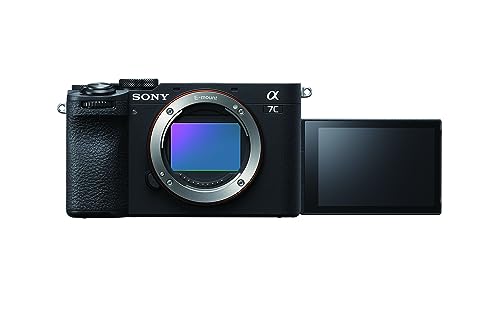
Sony a7C II — Best compact all-hours body
There is a night-photography truth that spec sheets ignore: the camera at home has a low-light performance of exactly zero. The a7C II’s contribution to this guide is being present. It carries the same 33-megapixel sensor as the a7 IV into a body small enough for a jacket-adjacent sling, pairs it with Sony’s newer AI-assisted processing for subject detection, and improves stabilisation to a claimed seven stops — which means the compact body is not merely as good after dark as its bigger sibling, but in handheld stills terms potentially better, because the shutter speeds you can borrow against blur are longer.
Evenings are where this compounds. A travel photographer will carry the a7C II to dinner, through the night market, onto the evening train, in situations where a full-size body would have been left in the room as too much commitment. Its autofocus finds eyes under street lighting, its files clean up like the a7 IV’s, and its video — ten-bit 4K with reliable auto-framing — covers the creator brief. In daylight the same discretion serves street photography, where a small silver body draws a fraction of the attention of a professional-looking rig.
The compromises are ergonomic and professional rather than photographic: one card slot, a smaller finder, a grip that large hands and long lenses find cramped, and fewer custom controls under the fingers. For a second body, a travel primary or an everyday-carry full-frame, those are fair trades printed in plain sight. For a paid wedding main body, they are not. Choose it for the life where the camera must fit around everything else — which, for most people’s actual photography, is the life being lived.
- Sensor: 33MP full-frame BSI CMOS
- Stabilisation: in-body, up to 7 stops
- Processing: AI unit for subject detection and auto-framing
- Video: 4K60, 10-bit colour
- Cards: single SD UHS-II slot
- Mount: Sony E
Strengths
- Full a7 IV-class night files from a body you will actually carry all evening.
- Stronger stabilisation than the a7 IV for handheld low-light stills.
- Discreet size changes how subjects react during candid day and night work.
Trade-offs
- Single card slot excludes it from some professional workflows.
- The compact grip tires large hands under heavy lenses.
- The smaller finder is less commanding in very dark or very bright scenes.
Best for: travellers, street photographers and everyday carriers who shoot from dawn to midnight.
Not suited for: professionals needing dual slots and a full-size grip for long lenses.

Panasonic LUMIX G9II — Best smaller-sensor option
Physics says a Micro Four Thirds sensor collects a quarter of the light of a full-frame one, and the G9II’s engineers apparently took that as a challenge rather than a verdict. Their answer is a system-level ambush: a 25.2-megapixel sensor with dual-gain behaviour that keeps high-ISO files far cleaner than the format’s history suggests, phase-detect autofocus that transformed the line’s usability, and stabilisation rated up to eight stops that lets still subjects be photographed at shutter speeds where the smaller sensor’s ISO debt never comes due. A night street scene shot at a fifth of a second and a moderate sensitivity from the G9II will embarrass a full-frame frame shot handheld at a sixtieth and a sensitivity two stops higher.
Computational features extend the ambush. Live Composite stacks exposures in-camera while you watch the image build, which turns light trails, star movement and fireworks — classic night subjects — into a guided exercise rather than a bracketing lottery. High-resolution modes serve tripod landscape work at dawn. The lens catalogue is the format’s eternal gift: fast primes the size of thimbles and bright zooms that keep a whole night kit inside a small sling, at total weights the full-frame systems cannot approach.
The boundaries are real and we will state them plainly. For moving subjects at night, where shutter speed cannot fall and sensitivity must rise, the full-frame picks pull away — a running child under streetlights is full-frame territory. Ultimate dynamic range at base ISO also belongs to the bigger sensors in harsh daylight. But for the enormous middle ground of still and slow subjects, travel weight limits and sane budgets, the G9II is not the compromise pick in this guide. On a stabilisation-adjusted basis it is, hour for hour, one of the most effective night cameras here.
- Sensor: 25.2MP Micro Four Thirds
- Stabilisation: in-body, up to 8 stops with compatible lenses
- Modes: Live Composite, high-resolution tripod mode
- Autofocus: phase-detect with subject detection
- Video: 5.7K and 4K120 options
- Mount: Micro Four Thirds
Strengths
- Eight-stop stabilisation lets still night subjects be shot at gentle sensitivities.
- Live Composite makes light trails and night stacking approachable in-camera.
- The smallest, lightest fast-lens ecosystem in this entire guide.
Trade-offs
- Fast-moving subjects at night expose the smaller sensor’s sensitivity ceiling.
- Base-ISO dynamic range trails the full-frame picks in brutal midday contrast.
- Shallow depth of field needs faster, rarer glass than full-frame equivalents.
Best for: travel and night-street photographers who value weight, stabilisation and clever modes.
Not suited for: night sports shooters or anyone needing maximum high-ISO headroom for motion.
How Do the Six Bodies Compare After Dark?
| Camera | Sensor | Stabilisation | Night speciality | Daylight strength |
|---|---|---|---|---|
| Sony a7 IV | 33MP full-frame | Up to 5.5 stops | Clean high-ISO files, dusk autofocus | Resolution and dynamic range |
| Nikon Z6 III | 24.5MP full-frame, partially stacked | Up to 8 stops | Finder clarity, dawn detection | Burst speed and readout |
| Canon EOS R6 Mark II | 24.2MP full-frame | Up to 8 stops | Handheld night stills, skin tones | 40fps action coverage |
| Panasonic LUMIX S5IIX | 24.2MP full-frame | Up to 7.5 stops with compatible lenses | Night video without time limits | Open-gate and pro video modes |
| Sony a7C II | 33MP full-frame | Up to 7 stops | Carry-anywhere night coverage | Discreet street work |
| Panasonic LUMIX G9II | 25.2MP Micro Four Thirds | Up to 8 stops | Stabilised stills, Live Composite | Reach and portability |
Which Lenses Turn a Good Body Into a Night Camera?
The lens is where night budgets should go first, because aperture is the one specification that helps every dark photograph without a side effect you must manage. A fast prime — the 35mm and 50mm f/1.8-class lenses every mount here offers, or an f/1.4 if the budget stretches — gathers two to three times the light of a kit zoom at its long end, and that difference converts directly into lower sensitivity or faster shutter speed on every night frame. Daylight forgives a kit zoom completely; darkness invoices it nightly. Photographers building a day-and-night kit from zero should buy the body one tier down if that is what funds the fast prime, because the combination will outshoot the flagship body behind slow glass after sunset.
Zooms earn their place as the second purchase. Modern f/2.8 constant-aperture zooms are the working photographer’s compromise: bright enough for receptions and night streets with stabilisation’s help, flexible enough to cover a whole event without a lens change in the dark. Wider is generally more useful at night than longer — architecture, interiors, astro landscapes and environmental portraits live between 14mm and 35mm — while telephoto night work is a specialist pursuit that demands the fastest glass and the steadiest technique in this entire guide. Whichever you choose, learn its behaviour wide open before the night it matters: every lens has a personality at maximum aperture, from gentle glow to clinical bite, and night highlights will introduce you to it rudely if you have not met beforehand.
How Should You Set Up for the Blue Hour and Beyond?
Arrive while it is still day. The photographers who produce the classic city-at-dusk images scouted the composition in daylight, set the tripod or chose the handheld position, and knew their exposure before the light became precious. As blue hour begins, work in a deliberate order: secure the composition, set white balance manually so the camera stops chasing the changing mix of sky and streetlight, and bracket exposures while the dynamic range is at its most theatrical. The fifteen minutes when ambient light balances artificial light are the most valuable of the twenty-four hours; a day-and-night camera earns its name by being ready inside them, not by recovering afterwards.
Technically, expose for the highlights and let the modern sensor’s shadow recovery do its celebrated work — every body in this guide tolerates shadow lifting far better than highlight reconstruction. Use the histogram rather than the bright rear screen to judge, because a screen glowing in the dark lies to your adapted eyes and flatters every exposure. For handheld work, set a minimum shutter speed floor in your auto-ISO settings that matches your subject — a sixtieth for standing people, faster for anything that gestures — and let sensitivity climb to a ceiling you have tested and accepted at home, rather than discovering your tolerance at a once-a-year event. For tripod work, the remote release or two-second timer, the disabled stabilisation on some systems, and the warm spare battery in your pocket are the unglamorous details that separate the astro trip that worked from the one that became a story.
How Do You Handle Mixed Lighting When Day Meets Night?
The hardest colour in photography is not darkness; it is two kinds of light in one frame. A shop window’s tungsten warmth spills onto a blue-hour street. A reception room mixes candlelight, DJ colour and the last daylight through a doorway. Office fluorescents lean green while the sunset through the glass leans amber. Auto white balance, asked to choose one truth, often chooses a different one for each frame of a sequence, and the photographer inherits a set of images that refuse to sit together in an album or an edit.
The working solution is to decide what the photograph is about and white-balance for that. If faces are the subject, balance for the light on the faces and let the background go warm or cool as atmosphere; skin rendered faithfully forgives almost any background eccentricity. If the scene is the subject — a night market, a neon street — a fixed daylight or tungsten setting chosen deliberately will hold the mood consistent across the evening, and consistency is what makes a set of night images feel authored rather than accidental. Every body in this guide lets you set and lock a manual white balance or a Kelvin value in seconds; the skill is remembering that the edges of the day are exactly when to stop delegating the decision.
Raw capture is the insurance policy underneath all of it. A raw file postpones the white balance verdict to your desk, where a whole evening can be harmonised in one gesture. Photographers shooting day-and-night events in raw are not being precious; they are buying the right to make one good colour decision later instead of fifty hurried ones under pressure. The file sizes are the premium, and on a body with dual card slots — most of this guide — the storage discipline is painless.
Can These Cameras Film Through a Whole Day and Night?
Hybrid shooters ask the around-the-clock question in a harder form, because video adds a failure mode stills never meet: heat. A body that photographs happily through a summer afternoon may end a long 4K take at noon, and the same body asked to film a concert at night faces high-sensitivity noise on top of thermal limits. The S5IIX exists in this guide precisely because its fan deletes the thermal term from that equation; it is the only pick we would hand a full day of event filming without a heat conversation. The others film beautifully in the rhythms real work usually takes — clips, scenes, interviews with natural pauses — and their owners should simply know that marathon continuous recording in summer sun is a specialist requirement, not a generic one.
At night, video exposure discipline differs from stills in one more way: the shutter is not yours to slow. Filming at twenty-four or twenty-five frames per second fixes the exposure time near a fiftieth of a second, so the night videographer’s levers are aperture and sensitivity alone, plus light they bring themselves. That is why small LED panels live in every night video kit and why the clean high-sensitivity behaviour of these full-frame sensors matters more on screen than in a still — noise in a photograph is texture, but noise in footage crawls, and the audience reads it as cheapness even when they cannot name it. Shoot a test at your venue’s light level before the event, find the sensitivity ceiling your own eyes accept on a television rather than a phone, and set the camera’s auto-ISO limit there.
Battery planning follows the same pattern as the stills advice in our companion guide, with one addition: recording draws power at a steadier, higher rate than photography, so the day-and-night filmmaker should think in total hours of footage per cell and carry for the longest single session, not the average. External power over USB-C, available across this shortlist, converts static filming — ceremonies, stages, interviews — into a wall-power exercise, reserving internal cells for the mobile work where they are irreplaceable.
What About the Special Cases: Stars, Flash and City Neon?
Astrophotography is night photography’s purest examination, and it reorders this guide’s priorities. Resolution matters less than clean long exposures, a screen that dims far enough to preserve night vision, and controls operable with gloves and a red headtorch. All six bodies can produce excellent Milky Way work with a fast wide lens; the differences are ergonomic. The G9II’s Live Composite offers a forgiving route to star trails, the Nikon’s bright finder helps composition on foregrounds, and the Sonys benefit from the widest choice of fast ultra-wide primes. Whichever you carry, the technique constants do not change: a sturdy tripod, a remote or timer, focus magnified on a bright star, and the patience to let the cold do its slow work on your battery while the sky does its slower work on your sensor.
Flash at night is the other discipline that humbles spec sheets. A small flash, used with the shutter dragged slow enough to admit the ambient scene, produces the classic night-portrait look — a lit subject inside a glowing city rather than pasted onto blackness. Every body here supports that technique, and the R6 Mark II’s colour under mixed flash and tungsten is a quiet reason event photographers love it. The cameras’ high-speed sync and flash exposure systems all behave competently; the limiting factor is the photographer’s willingness to practise the balance at home before a paying night depends on it.
Neon and LED city light, finally, is where rolling shutter and flicker enter the conversation. Cheap artificial lighting pulses, and electronic shutters can band under it; the mechanical shutters fitted across this guide remain the safe choice under suspect lighting, and several picks offer flicker-scan tools that fine-tune shutter timing to the local mains rhythm. A photographer whose night beat is clubs, arcades and signage should test any body under the actual lights of their favourite street — five minutes of experiment that no review, including this one, can perform on their behalf.
What Mistakes Ruin More Night Photographs Than Noise Ever Will?
Noise gets blamed because it is visible in the file, but the true killers are earlier and dumber. The first is camera shake mistaken for high-ISO failure: a soft frame at a modest sensitivity, deleted as noisy, that was actually blurred at a shutter speed the photographer never checked. The second is autofocus surrender — accepting the focus the camera grabbed on a bright background sign rather than the face in shadow, a failure the subject-detection systems here prevent only if you give them the right target and a moment to work. The third is white balance chaos under mixed lighting, left to an auto system that changes its mind between frames of the same scene, making a matched set of reception or street images nearly impossible to deliver.
Daylight has its own quiet saboteurs. Shooting a noon portrait with the sun directly overhead and blaming the camera for raccoon shadows is a lighting error wearing a gear costume. So is leaving exposure compensation where a snow scene or a black stage set it yesterday. The day-and-night brief is ultimately about attention across changing conditions: the photographers who thrive at both ends reset their assumptions as the light changes, and choose cameras — like these six — whose systems support that attention instead of fighting it.
How Does Weather Sealing Matter When You Shoot Around the Clock?
Photographers who keep dawn and midnight hours meet weather that nine-to-five shooters avoid: dew forming on cold grass before sunrise, sea mist rolling into a night harbour shoot, the fine rain that starts precisely during blue hour. All six bodies here carry weather sealing, but sealing is a system property, not a body property — the lens mounted, the hot shoe cover in place and the port doors closed decide whether the promise holds. The practical habit is to treat sealing as insurance for finishing the shot, not permission to stand in a downpour, and to dry the kit properly afterwards: an hour in a ventilated room, caps off, before the bag closes. Night condensation deserves special respect, because a camera brought from cold night air into a warm room fogs internally as surely as a lens fogs externally; a sealed plastic bag around the body before you come inside lets the condensation form on the bag instead of the camera, a mountaineer’s trick that costs nothing.
Cold also revisits battery behaviour, as our battery-life companion guide covers in depth: cells read empty early in the cold and recover when warmed, so the around-the-clock photographer rotates a spare through an inside pocket as a matter of routine. Heat at the other end of the day attacks through the sun rather than the air — a black body left on a tripod at noon can heat its own sensor into noisier long exposures by evening. Shade the camera between setups on summer days, and your night files will quietly thank you.
Final Recommendation
For most photographers the Sony a7 IV is the around-the-clock answer: it is the body least likely to be the weak link at any hour, behind the deepest lens catalogue in the class. Choose the Z6 III if your defining hours are dawn and dusk in the field with wildlife or sport, the R6 Mark II if your nights are handheld and full of people, and the S5IIX if they are filmed. The a7C II is the traveller’s version of the same promise the a7 IV makes, and the G9II is the thinking photographer’s route to serious night work at half the carried weight. Whichever you bring home, spend the first month deliberately shooting the same favourite place at noon, dusk and midnight — a camera you have watched behave across the whole clock is worth more than any specification, including the ones in this guide.
Frequently Asked Questions
Is full-frame always better than smaller sensors at night?
For moving subjects at high sensitivity, yes — the larger sensor’s advantage is physics, and the full-frame picks here pull away clearly. For still subjects, stabilisation rewrites the contest: the G9II can use shutter speeds several stops slower, which can erase or reverse the sensitivity gap. Match the sensor to whether your night subjects move.
How high can I push ISO before quality collapses?
There is no universal cliff; quality erodes gradually and depends on exposure accuracy and output size. On the full-frame bodies here, careful exposures at sensitivities that frightened photographers a decade ago now print respectably, especially with modern noise reduction. Underexposure is the real poison — a well-exposed frame at a high setting beats a dark frame at a lower one after both are brightened.
Do I still need a tripod with stabilisation this strong?
For still subjects and short exposures, often not — that is the genuine revolution in this guide. For long exposures, astro work, light trails beyond the G9II’s Live Composite, and any exposure measured in seconds, a tripod remains non-negotiable. Stabilisation also cannot freeze subject movement, which is why night sports still belong to fast lenses and high sensitivities.
Which single lens should a beginner buy for night work?
A fast prime near the focal length you use most in daylight — for most people a 35mm or 50mm in the f/1.8 class. It is affordable in every mount represented here, small enough to carry without thinking, and its aperture teaches night technique faster than any zoom, because every decision about depth of field and shutter speed becomes visible immediately.
Why do my night photos look sharp on the camera screen but soft at home?
Small screens flatter everything. At home, check whether the softness is missed focus, subject movement or camera shake by zooming into the focus point and reading the shutter speed from the file data. Each cause has a different cure — detection settings, a faster shutter floor, or stabilisation technique — and the file always tells you which one you need.
How Should You Test a Camera Across the Whole Clock Before Committing?
Rent or borrow before you buy if your photography truly spans the day, because the decisive tests are personal and quick. Take the candidate body to a familiar place three times in one day: midday, dusk and full dark. Photograph the same subjects each time — a face, a detailed scene, something that moves — and examine the files at home at the size you actually deliver or print. You are looking for your own thresholds: the sensitivity where the noise stops pleasing you, the shutter speed where your hands stop holding the stabilisation’s promise, the light level where the autofocus starts hunting for your subjects rather than the reviewer’s.
Pay attention to the body, not just the files. At noon, can you read the finder against glare with your glasses on? At dusk, do the controls fall under your fingers as the light dies, or does every change need a torch and a menu? At midnight, does the screen dim low enough to keep your night vision, and does the camera wake and focus at the speed of a moment actually happening? A day-and-night camera is a companion for the hours when photography is hardest, and companionship is an ergonomic quality before it is a technical one. The six bodies in this guide all pass the file tests; the one whose handling survives your three-visit test is the one that will still be with you, and still be chosen, three winters from now.
Is a brighter viewfinder worth paying for?
If your work concentrates at the edges of the day, yes. The finder is the instrument through which dawn and dusk compositions are made, and brightness plus colour honesty there translate directly into pictures seen and taken rather than guessed at. The Z6 III’s finder leads this guide for a reason. Daylight-only shooters will notice the difference far less, which is why it is a priority in this particular comparison and a footnote in most others.
Should I choose the body or the lenses first?
Choose the system whose fast lenses you can actually afford to own within a year, then the best day-and-night body inside it. A mount is a decade-long commitment of glass, and night photography is lens-limited before it is body-limited. Every system represented here offers a credible route; the expensive mistake is the orphaned body behind glass you never buy.
Does shooting raw really matter more at night?
Yes, for two compounding reasons. Night scenes mix light sources whose colours no single white balance satisfies, and raw postpones that decision until you can judge the whole set calmly. Night exposures also lean on shadow recovery, where raw files hold several times the usable information of a JPEG. The cost is storage and processing time; the return is an evening of mixed light rescued as a coherent set. For daylight snapshots the gap narrows, which is why many around-the-clock shooters run raw on a dual-slot body and never think about it again.
Which of these cameras is best for concerts and stage work?
Stage photography combines the worst variables in this guide: darkness, movement, coloured light that changes by the second and venues that may ban flash entirely. The a7 IV and R6 Mark II lead for stills because their subject detection keeps working on performers under theatrical light and their high-ISO files hold colour under gels. The S5IIX leads if the deliverable is footage, with its cooling and monitoring tools built for exactly that environment. Whichever you choose, a fast prime and a shutter-speed floor you refuse to drop below will matter more than the last few percent of sensor difference.
Can I use one of these cameras for professional work at both ends of the day?
Yes — five of the six are regular professional tools at weddings, editorial assignments and events, where the dual card slots, sealing and support networks matter as much as the sensors. The a7C II is the exception by design rather than quality: its single slot makes it a superb second body and travel primary, but many professionals will not main a body that cannot record to two cards at once. The G9II also works professionally within its format’s strengths, particularly for travel and editorial work where its size is an asset.
How important is a mechanical shutter for this kind of work?
More than the current fashion admits. Electronic shutters are silent and fast, and for dawn wildlife that silence is a genuine feature, but they read the sensor line by line, which can bend fast movement and band under pulsing artificial light. A mechanical or electronic first-curtain shutter reads the scene in a way that sidesteps most banding and behaves predictably under flash. Every body in this guide offers a mechanical option, and around-the-clock shooters — who meet every lighting technology humans have installed — should treat that as a requirement rather than a legacy courtesy when comparing against the few bodies that have dropped it.
Related Guides
Keep exploring with our companion guides: best battery life mirrorless cameras, best camera strap for mirrorless cameras and best mirrorless cameras for travel.


