What's inside
- Key Takeaways
- Quick Picks
- How did we choose these picks?
- Why does panel technology matter more at 55 inches than at any smaller size?
- How far should you sit from a 55-inch 4K screen?
- How do the four platforms compare when the television is the main screen?
- What happens to broadcast and older content on a 4K panel this size?
- Which 55-inch set matches the way your household actually watches?
- What should you plan for sound once the screen grows to 55 inches?
- How do the six compare side by side?
- How should you set up a 55-inch television for film, sport and games?
- What mistakes do buyers make when choosing a 55-inch 4K TV?
- Final Recommendation
- Frequently Asked Questions
- Related Guides
As an Amazon Associate I earn from qualifying purchases. This post may contain affiliate links at no extra cost to you.
widgetverdict.com is reader-supported. When you buy through links on our site, we may earn an affiliate commission.
Where to buy: the six televisions below were all verified on Amazon, and every pick name in this guide — in the opening table, in the detailed reviews and in the comparison grid — links to the listing it was checked against.
Fifty-five inches is where the television stops being furniture that happens to show pictures and becomes the room’s main event, and the best 55 inch 4K TVs are consequently the most contested screens in the entire market. This is the size living rooms are designed around, the size film fans choose when a projector feels like too much commitment, and the size at which panel technology stops being a footnote. In this guide the six verified picks span plain LED value, two different flavours of QLED, a 120Hz gaming-leaning TCL, Samsung’s Neo QLED Mini LED flagship thinking, and TCL’s QM6K Mini LED at a native 144Hz. Same diagonal, same resolution, six genuinely different ideas about what matters.
Platform divides the field three ways. Fire TV carries the Insignia and Amazon’s own Ember, Roku fields its Select Series with a QLED panel this time, and Google TV powers both TCL models, while Samsung runs its own Vision AI environment on the QN70H. That spread is useful: a household can decide its software allegiance first, then argue about backlights and refresh rates among the sets that remain, instead of falling for a panel and discovering the menus annoy them for a decade.
Key Takeaways
- All six picks are 55-inch class 4K panels, so the contest here is panel technology, refresh rate and platform — not resolution.
- Mini LED backlighting appears on the Samsung QN70H and the TCL QM6K, the two sets aiming hardest at contrast and brightness.
- Refresh rate separates the gamers’ choices: the TCL T7 runs at 120Hz and the QM6K at 144Hz, while the value picks make no such claim.
- Dolby Vision and Dolby Atmos are named together only on the TCL T7’s listing, a pairing film watchers should notice.
- Fire TV, Roku, Google TV and Samsung’s platform each appear, so software preference can be settled before panel preference.
- The Insignia F50 remains the straightforward route into 55-inch 4K for households that stream casually and value simplicity.
Quick Picks
| Pick | Badge | Why it earns its place |
|---|---|---|
| Insignia 55 F50 4K Fire TV | The living-room value pick | LED 4K and Fire TV with an Alexa voice remote, the simplest full-size streaming setup in the guide. |
| Roku 55 Select QLED TV | The calm-interface QLED pick | Roku’s even-handed platform on a 2026 QLED panel, for households that want colour without menu drama. |
| Amazon Ember 55 4-Series Fire TV | The integrated Fire TV pick | Amazon’s newest-model 4-Series with HDR10+ and a fast processor behind the platform it knows best. |
| TCL 55 T7 120Hz QLED TV | The sport and film all-rounder | A 120Hz QLED Google TV naming Dolby Vision, Dolby Atmos and HDR10+ in one listing. |
| Samsung 55 QN70H Neo QLED TV | The premium picture pick | Neo QLED Mini LED with Quantum Mini LED backlighting and Samsung Vision AI for 2026. |
| TCL 55 QM6K Mini LED TV | The bright-room gaming pick | Mini LED brightness at a native 144Hz on Google TV, aimed at fast games and sunlit rooms. |
How did we choose these picks?
Verification came before enthusiasm. Each set below has a confirmed listing whose title states the 55-inch class, the 4K resolution and the platform, and the analysis sticks to what those titles support: where a refresh rate, an HDR format or a backlight type is discussed, it is because the listing names it. Models that could not be confirmed on those basics were excluded regardless of reputation, because a guide that guesses at specifications teaches readers to guess too.
The second principle was technological spread. A 55-inch roundup containing six plain LED sets would waste the size class where panel differences are most visible, so the six deliberately climb a ladder: LED from Insignia and Ember, QLED from Roku and TCL’s T7, then Mini LED from Samsung and TCL’s QM6K. Readers can therefore trace exactly what each technology step claims to change — colour first, then backlight control and brightness — and decide whether their room and their content justify the climb.
Refresh rate earned its own filter because 55 inches is the size consoles migrate to. Two picks publish high native rates, 120Hz on the T7 and 144Hz on the QM6K, and the guide treats those numbers as first-class decision points for players, while refusing to invent gaming credentials for the other four. Platform coverage completed the selection: with Fire TV, Roku, Google TV and Samsung all represented, no reader has to abandon a preferred interface to follow the panel advice, and no panel is recommended only because its software was ignored.
A note on model years, since three of the six listings advertise 2026 or newest-model status. A current model year is not a vanity detail on a smart television: it sets the starting line for software support, security updates and app compatibility, all of which determine how gracefully a set ages. Where two picks in this guide otherwise tie — and several nearly do — the fresher model year is a legitimate tiebreaker, because the television that starts current stays current longest, and the household feels that difference in year six rather than week one.
Why does panel technology matter more at 55 inches than at any smaller size?
Scale exposes backlighting. On a small screen, a straightforward LED panel’s compromises hide in the corners of a bedroom picture; stretched across a living-room wall, the same compromises become the picture. Greyish blacks in a night scene, halos around bright subtitles, colour that thins out in a sunlit afternoon match — these are the artefacts that grow with diagonal inches, and they are exactly what QLED colour layers and Mini LED backlight zones are engineered to suppress. That is why this size class, more than any other in the wider guide series, rewards buyers who read panel specifications before platform slogans.
QLED, as the term is used across these listings, describes a colour-enhancing layer that widens the range and saturation a panel can show, most visibly in sport, animation and nature footage. Mini LED describes the backlight itself: far smaller, more numerous light sources that can be dimmed in finer zones, lifting contrast and peak brightness together. The two ideas stack rather than compete — the QM6K and QN70H combine Mini LED backlights with QLED-class colour — and the practical result is a picture that survives both a bright room at noon and a dark room at midnight with less adjustment from the viewer.
None of this makes the plain LED picks mistakes. A household watching news, soaps and streamed comedy in a shaded room will extract little from backlight zones it never stresses, and the money not spent on panel technology remains available for the soundbar that such households usually need more. The buying skill at 55 inches is matching the panel to the room’s light and the household’s most-watched content, and the detailed reviews below are organised to make that match explicit for each set.
How far should you sit from a 55-inch 4K screen?
Closer than instinct suggests. A 55-inch 4K panel holds its detail at distances where a same-size 1080p screen would soften, which is why this size suits both the three-metre sofa of a family room and the two-metre arrangement of a smaller flat. Sit too far back and the 4K premium quietly evaporates into a picture that a cheaper set would have drawn nearly as well; sit at a sensible range and fine detail in streamed film, the texture of a pitch in sport and the small text of game interfaces all resolve cleanly. Measure your room’s actual seating before ordering, because the honest answer to the size question is written in metres, not in marketing.
Height and angle deserve the same realism. The centre of a 55-inch screen should sit near eye level from the main seats, and the current fashion for mounting televisions high above fireplaces trades neck comfort for a photograph. If the set must live above a mantel, tilt it toward the seating and accept the compromise knowingly. Side seating matters too: households where half the viewers watch from an angled armchair should favour the picks whose listings emphasise brightness and colour, since off-axis viewing is where lesser panels wash out first, and should test the arrangement during the first weekend while repositioning is still easy.
How do the four platforms compare when the television is the main screen?
A main screen’s software is a household utility, closer to the heating controls than to a gadget, and it should be judged on reliability and temper. Fire TV, on the Insignia and the Ember, organises the evening around suggestions and folds Amazon’s services and Alexa into the centre of the experience. Households that enjoy being programmed for — in the broadcast sense — settle into it, and the voice remote becomes the primary way the television is driven. Its weakness is the same as its strength: the home screen is a shopfront as well as a menu, and some owners never stop noticing.
Roku’s Select takes the utility idea literally. The interface is a grid, the search is neutral, and the television’s personality is deliberately close to zero. On a shared main screen that restraint scales beautifully: children, grandparents and guests all operate the same unchanging layout, and nobody’s viewing history rearranges anybody else’s evening. Google TV, powering both TCLs, sits between the two philosophies — recommendation-led like Fire TV, but organised around content across services with individual profiles, which suits households where several adults share one screen and want their rows kept separate.
Samsung’s platform on the QN70H is the manufacturer’s own environment, polished and self-assured, with Vision AI woven through its picture handling. It rewards households already comfortable with Samsung’s devices and asks little in return beyond loyalty to its way of laying out a menu. None of the four lacks the major streaming services, so the decision is honestly about temperament: suggestions or grid, profiles or neutrality, ecosystem depth or platform independence. Make that call first, and the panel contest in the reviews below becomes a clean two- or three-way race instead of a six-way muddle.
What happens to broadcast and older content on a 4K panel this size?
Every 55-inch 4K television spends much of its life showing content that is not 4K: broadcast channels, older series, catch-up streams of variable quality. The set must upscale all of it, and upscaling quality is where processing pedigree quietly earns its money. Samsung’s Vision AI pitch and TCL’s current-model processing both speak to this daily reality, while the value picks handle standard content perfectly serviceably without the same refinement. Viewers whose diet is mostly broadcast sport and soaps should weight this section heavily, because their picture quality is decided by the upscaler far more often than by the panel’s native resolution.
There is a comfort in the numbers too. A 55-inch 4K screen at living-room distance is forgiving of standard-definition sources in a way that a 75-inch screen is not, since the pixels stay small relative to the viewing angle. Households upgrading from a smaller HD set will find even ordinary broadcasts look cleaner simply because the new panel renders them with more precision. The sets in this guide all clear that bar; the differences emerge at the extremes — the noisiest old streams, the fastest sport — which is why the reviews rank processing and refresh credentials where the listings support them and stay silent where they do not.
Which 55-inch set matches the way your household actually watches?

Insignia 55 F50 4K Fire TV — The living-room value pick
The F50 at 55 inches is the same honest proposition as its smaller sibling, scaled to the main room: an LED 4K UHD panel, Fire TV, an Alexa voice remote, and a listing model number, NS-55F501NA26, that makes no attempt to dress the set in borrowed glamour. For a large slice of households this is simply enough television. News at breakfast, streamed series in the evening, a weekend film with the lights low but not off — the F50 covers that routine with a bright, clean picture and an interface the whole family already half-knows from smaller Fire TV sets.
Its appeal compounds in Alexa households. Voice search from the remote, routines that can fold the television into evening lighting scenes, and live TV streaming inside the same menus as the apps give the set a feeling of belonging in an Amazon-centred home. What the F50 does not attempt is equally clear from its listing: no QLED colour claims, no Mini LED backlight story, no published high refresh rate. Buyers should therefore read it as the control group of this guide — the picture against which the technology picks must justify themselves — and for many rooms it will hold that ground stubbornly well.
The ownership texture is undemanding. Fire TV’s suggestion-led home screen keeps something watchable one click away, the remote is sparse in the right way, and the set’s ambitions stop where family patience would. Its ceiling appears in the showcase moments: a dark film scene in a dark room will show LED-class blacks, and a fast console game will run at the panel’s standard pace rather than the silky rates the TCL pair advertise. If your household’s viewing rarely visits those moments, the F50’s restraint is not a compromise at all; it is the correct allocation of a budget toward the sound and seating that surround the screen.
Think of the families who will love it: the ones upgrading from an ageing 40-inch set who want the room transformed by size alone, the landlords furnishing a rental’s living room with something modern and replaceable, the grandparents whose grandchildren visit and immediately want their programmes found. For all of them the F50 delivers the essential 55-inch experience without a learning curve, and that is a more valuable specification than any single HDR format.
Second-home and rental buyers should note how gracefully the F50 handles unfamiliar users. A holiday-let living room needs a television that explains itself to a new family every Friday, and Fire TV’s familiarity from millions of smaller sets means most guests arrive pre-trained. The landlord’s calculation and the family’s calculation converge here: maximum screen, minimum instruction manual.
- Panel: 55-inch class LED
- Resolution: 4K UHD
- Platform: Smart Fire TV
- Remote: Alexa Voice Remote
- Model in listing: NS-55F501NA26
Strengths
- The full 55-inch 4K experience in its simplest, most learnable form.
- Fire TV and Alexa integration suit Amazon-centred households immediately.
- An undemanding daily interface that every age group in the family can drive.
Trade-offs
- Plain LED colour and blacks trail the QLED and Mini LED picks in demanding scenes.
- No high refresh rate is published, so console players should look at the TCL models.
- Fire TV’s promotional rows will not charm viewers who want a neutral home screen.
Best for: a family living room upgrading on size and simplicity, where streaming series and weekend films are the whole brief.
Not suited for: a darkened film room chasing contrast, or a gaming corner built around high-refresh play.

Roku 55 Select QLED TV — The calm-interface QLED pick
Roku’s Select Series steps up a panel class at 55 inches: the listing specifies a QLED television at 4K resolution for 2026, with a voice remote and Wi-Fi, and that single word QLED changes the set’s character compared with Roku’s smaller LED offerings. Colour gains depth and confidence, particularly in the bright, saturated content — afternoon sport, animated family films, travel and food programmes — that dominates real living rooms. Paired with Roku’s famously unruffled interface, the result is a television that feels like an appliance in the best sense: capable, colourful and never the most complicated object in the house.
The platform argument deserves repeating at this size because the stakes rise. A 55-inch set is the household’s main screen, often shared by people with wildly different technical patience, and Roku’s stable app grid plus even-handed search removes the small daily frictions that accumulate into resentment of a television. Nobody’s recommendations colonise the home screen, nobody’s purchases are being nudged, and a visiting relative can find the news unaided. In a market where interfaces increasingly behave like shopfronts, that neutrality is a genuine feature and arguably this set’s headline act.
Picture expectations should be set at QLED level rather than Mini LED level. The Select will out-colour the plain LED pair and hold bright rooms gracefully, but its backlight is not the fine-zoned array the Samsung and the QM6K bring, so the deepest film blacks remain a class above it. The listing also makes no refresh-rate claims, which keeps competitive console players pointed toward the TCLs. What the Roku offers instead is balance: a modern panel, a 2026 model year, and the interface least likely to start an argument in a shared living room.
It is the set this guide would choose for a household that has been burned by smart TV software before — the family whose last television updated itself into a different menu layout twice a year, or buried their apps under promotions. The Select’s promise is that the television will stay out of the way while its QLED panel does the visible work, and for a main family screen that promise is worth more than a longer specification list written in a smaller font.
Parents of young children quietly champion sets like this one. A stable grid means a child can learn the two tiles that matter and nothing on the home screen shifts beneath them from week to week, while the QLED panel’s colour keeps Saturday-morning animation looking like Saturday-morning animation should. Calm software plus cheerful colour is a combination aimed squarely at real family life.
- Panel: 55-inch class QLED
- Resolution: 4K (2160p)
- Platform: Roku TV
- Remote: voice remote
- Connectivity named in listing: Wi-Fi
- Model year in listing: 2026
Strengths
- QLED colour lifts bright-room viewing clearly above the plain LED picks.
- Roku’s neutral, stable interface suits shared family screens better than any rival here.
- A current 2026 model, so the software starts its life up to date.
Trade-offs
- Backlight control stops short of the Mini LED pair, and film blacks show it.
- No published high refresh rate for serious console play.
- Roku’s ecosystem is deliberately plain beside Samsung’s and Amazon’s smart-home ambitions.
Best for: the shared family screen in a bright room, where colour matters and interface arguments are banned.
Not suited for: a contrast-obsessed film setup, or a player who needs the refresh rates the TCL listings advertise.

Amazon Ember 55 4-Series Fire TV — The integrated Fire TV pick
At 55 inches the 4-Series becomes Amazon’s argument that integration is a picture feature too. The listing describes the newest model of the line: a 4K Ultra HD screen with Fire TV, an Alexa remote, HDR10+ support and a fast processor. The processor point deserves emphasis at this size, because a main living-room television is used in short, impatient bursts — news on, match on, series resumed — and menu lag taxes every one of those moments. A set that responds instantly feels more expensive than its panel class, every day, for years.
HDR10+ is the Ember’s format commitment, the scene-by-scene dynamic HDR system that Amazon’s own streaming service favours. Households whose film nights run largely through Prime Video will see the pairing at its most coherent here, with supported titles tone-mapped as the platform intends. The panel itself is LED-class 4K, bright and tidy for series and sport, sitting a rung below the QLED sets on colour richness and below the Mini LED pair on backlight finesse. Amazon is effectively asking buyers to value the smoothness of the whole experience over the extremes of the picture, and at 55 inches that is a defensible trade rather than a consolation.
The wider ecosystem completes the pitch. Fire TV on Amazon’s own hardware receives features in step with the platform, Alexa routines treat the television as a native citizen, and setup inside an Amazon household is measured in minutes. Buyers wary of that gravity should note the flip side honestly: the Ember is least distinctive for households that stream mainly through rival services and use a different assistant, who will find the Roku’s neutrality or Google TV’s flexibility more congenial. Judge the set as the most polished expression of Fire TV at this size, and its place in the six is secure.
There is a rental and second-home angle as well. A 55-inch Ember in a holiday property or a games room gives guests an interface many already know from home, with voice search that spares everyone the letter-pecking tutorial. The set’s virtues are the ones that survive unfamiliar users: pace, clarity and integration, rather than delicate picture calibration that the next guest’s button-pressing would undo.
Note, too, how the Ember reframes the upgrade conversation for Fire TV households currently watching a small, ageing set. Nothing needs relearning: the same account, the same watchlists, the same voice habits, simply presented on a 55-inch canvas with a faster engine underneath. Upgrades that preserve habits are the ones households describe as effortless, and effortlessness at main-screen scale is a luxury feature in disguise.
- Panel: 55-inch class
- Resolution: 4K Ultra HD
- Platform: Fire TV (newest model)
- HDR named in listing: HDR10+
- Remote: Alexa Remote
- Noted in listing: fast processor
Strengths
- Menu pace that keeps a main-room television feeling responsive for years.
- HDR10+ aligns with the dynamic format Amazon’s own catalogue prefers.
- Hardware and platform from one maker, updated in step.
Trade-offs
- Dolby Vision is not the HDR format this listing leads with.
- LED colour sits below the QLED trio when footage turns vivid.
- The experience flatters Amazon households far more than rival-ecosystem homes.
Best for: a Prime-led living room that values a fast, integrated Fire TV experience across years of daily use.
Not suited for: a Dolby Vision film library, or a household standardised on a different voice assistant.

TCL 55 T7 120Hz QLED TV — The sport and film all-rounder
The T7’s listing is the most literate in this guide: a 55-inch QLED Google TV running at 120Hz, naming Dolby Vision HDR, Dolby Atmos and HDR10+ together. Start with the refresh rate, because 120Hz native is the specification that changes sport and games rather than merely describing them. Fast pans across a pitch stay coherent, racing and football keep their edges, and a current console finds a panel that can accept its high-frame-rate modes instead of downsampling the experience. At 55 inches, where motion artefacts have room to show themselves, that headroom is felt within the first weekend.
The HDR story is unusually complete. Dolby Vision covers the premium streaming catalogues mastered in that format, HDR10+ covers Amazon’s preferred dynamic standard, and having both in one listing removes the format anxiety that dogs the Ember-versus-Hisense arguments elsewhere in these guides. Dolby Atmos named alongside them signals sound ambitions beyond the class norm; a television’s own speakers will only sketch Atmos, yet the set is clearly prepared to pass a richer soundtrack to external audio, which makes it the natural partner for a soundbar upgrade path. Google TV ties the package together with strong content discovery across services and a profile system that suits households where several viewers share one screen.
Where does the T7 concede ground? Its QLED panel is not a Mini LED array, so the QM6K and the Samsung will out-muscle it on peak brightness and the finest backlight control, and buyers in very bright rooms or dark-room film purists should weigh that. The T7’s counter is breadth: no other pick in the six combines a high native refresh rate, both dynamic HDR formats and an Atmos nod in a single listing. It reads like a set designed by someone listing everything a living room actually does — sport on Saturday, a console on Sunday, a prestige film on Friday — and refusing to specialise in only one of them.
For the household that can only buy one television this decade, that breadth is the argument. Specialists beat it in their specialisms, yet most living rooms are generalists, and the T7 is the generalist with the fewest apologies in this guide. If your viewing diary mixes live sport, streamed film in both HDR formats and regular console sessions, this is the shortlist of one.
Sports households should linger on the T7 a moment longer. A native 120Hz panel does its finest work on the content sport actually broadcasts: sweeping camera moves across grass, fast breaks, racing lines. Where a standard panel smears those moments into approximations, the T7 keeps them legible, and at 55 inches legibility is the difference between watching a match and feeling present at it.
- Panel: 55-inch class QLED
- Resolution: 4K
- Refresh rate in listing: 120Hz
- Platform: Smart Google TV
- HDR named in listing: Dolby Vision, HDR10+
- Audio named in listing: Dolby Atmos
- Model in listing: 55T7, latest model
Strengths
- Native 120Hz motion gives sport and consoles the smoothness this size deserves.
- Dolby Vision and HDR10+ together end the dynamic-format dilemma.
- Google TV handles multi-service households and separate viewer profiles gracefully.
Trade-offs
- Backlight finesse stops short of the Mini LED pair in extreme brightness or darkness.
- Google TV’s recommendation rows are busier than Roku’s calm grid.
- Its breadth means specialists in one niche will find a sharper tool elsewhere in the six.
Best for: the mixed living room — live sport, both HDR film formats and a console — that wants one set fluent in all of it.
Not suited for: a dedicated dark-room cinema chasing Mini LED contrast, or a household loyal to Fire TV or Roku software.

Samsung 55 QN70H Neo QLED TV — The premium picture pick
Samsung’s QN70H carries the heaviest picture credentials in the guide. The listing stacks its terms deliberately: Neo QLED, Mini LED, Quantum Mini LED backlighting, 4K resolution, a 2026 model year and Samsung Vision AI as the intelligence layer. Neo QLED is Samsung’s name for its most refined combination of quantum-dot colour and miniaturised backlight control, and at 55 inches that combination addresses the two things living-room viewers actually complain about — colour that fades in daylight and blacks that grey out at night — with the most engineering in this group of six.
Vision AI is the set’s software thesis: processing that adapts the picture to content and room, inside Samsung’s own smart platform rather than a licensed one. Households already living with Samsung phones and appliances will find the continuity natural, and the platform’s polish at this tier is considerable. The QN70H is also the pick whose ambitions are least about any single feature and most about the absence of weak moments: bright scenes hold detail, dark scenes keep their depth, and upscaled broadcast content gets the benefit of the company’s most current processing thinking for 2026.
Discernment still applies. The listing does not publish a native refresh figure in the text this guide may use, so console players comparing hard numbers will find the TCL pair more forthcoming, and Samsung’s platform is a commitment — buyers who dislike a manufacturer’s own interface philosophy have two TCLs and a Roku in this guide as escape routes. The QN70H also asks to be judged as the premium option, and premium only makes sense where the room and the content will show it: a sunlit open-plan space, film nights with the lights down, sport watched from wide angles.
Consider it the connoisseur’s answer within a mainstream guide. It does not shout with a single headline number; instead it promises that nothing about the picture will nag at you across thousands of hours. Owners of televisions like this tend to stop thinking about televisions, which is the most expensive compliment a screen can earn and precisely what Samsung is selling here.
The QN70H also suits the buyer who keeps a television for a very long time. Premium processing and a current 2026 platform give it the longest plausible runway in this six before software or picture standards make it feel dated, and households that replace a main screen once a decade should weigh that runway more heavily than any single season’s feature contest.
- Panel: 55-inch class Neo QLED
- Backlight named in listing: Mini LED, Quantum Mini LED
- Resolution: 4K
- Platform: Samsung Smart TV with Vision AI
- Model year in listing: 2026
- Series in listing: QN70H
Strengths
- The most complete picture engineering in the guide, across bright and dark rooms alike.
- Quantum Mini LED backlighting gives contrast a finesse plain LED cannot approach.
- Samsung Vision AI processing keeps broadcast and streamed content looking composed.
Trade-offs
- The listing text used here publishes no native refresh figure for console comparisons.
- Samsung’s own platform is a commitment households should choose willingly.
- Its premium positioning is wasted on a dim room used only for casual viewing.
Best for: the main living room where picture quality is the purchase, across daylight sport and lamplit film alike.
Not suited for: a buyer comparing gaming refresh numbers above all, or a household wedded to Fire TV, Roku or Google TV.
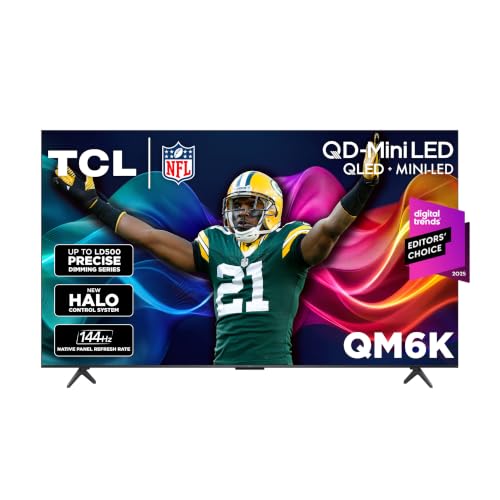
TCL 55 QM6K Mini LED TV — The bright-room gaming pick
The QM6K is TCL’s Mini LED argument at its most direct. Its listing names a QLED Mini LED panel at 4K, a native 144Hz refresh rate, high brightness and IMAX Enhanced certification among its credentials, all running on Google TV. That 144Hz figure is the highest in this guide and it speaks to PC and console players in their own language: this is a television built to keep fast motion liquid, with a backlight bright enough to keep the picture punchy while it does so. In a bright, glass-walled living room where lesser sets fade by lunchtime, the QM6K’s brightness headline is not vanity — it is the feature the room will use daily.
Mini LED backlighting is the second half of the story. Fine dimming zones let the QM6K hold a bright pitch and a shaded stand in the same frame without the compromise wash that plain LED produces, and HDR content benefits in both directions at once: highlights sparkle harder, shadows keep their detail. IMAX Enhanced in the listing signals alignment with a premium presentation standard for supported content, another film-friendly credential on a set that might otherwise be filed as a gaming screen. Google TV’s discovery and profiles round out a package aimed at households that do everything on the main screen.
Balance the enthusiasm with the class realities. A Mini LED set at 144Hz is engineered for intensity, and in a small, dim room its brightness headroom may simply never be called upon, making the calmer Roku QLED or the Samsung the more comfortable long-term companion. Google TV also asks more of its users than Roku does, with recommendation surfaces that reward a little configuration. Neither point diminishes the QM6K’s identity: it is the pick for the brightest rooms and the fastest content in this guide, and it owns that territory without serious challenge from the other five.
Picture the buyer: a south-facing lounge, a current console, a PC within cable reach, sport on bright afternoons and film after dark. That buyer’s shortlist across the whole market is short, and at 55 inches this TCL sits on it by right of specifications its listing is happy to print in full. Where the Samsung whispers refinement, the QM6K states numbers, and a certain kind of shopper will trust the numbers more.
PC players deserve a specific mention in the QM6K’s case. A 144Hz native rate is a specification written in the language of gaming monitors, and a 55-inch Mini LED screen that speaks it can serve as a room-scale display for a PC in a way no other pick here attempts. For the household where the computer and the console share one glorious screen, that dual citizenship settles the argument.
- Panel: 55-inch class QLED Mini LED
- Resolution: 4K HDR
- Refresh rate in listing: 144Hz
- Platform: Smart Google TV
- Brightness in listing: high brightness
- Certification named in listing: IMAX Enhanced
- Model in listing: 55QM6K, latest model
Strengths
- A native 144Hz rate, the highest here, keeps console and PC motion exceptionally fluid.
- Mini LED brightness defeats sunlit rooms that wash out lesser panels.
- Fine backlight zones give HDR scenes their highlights and their shadows simultaneously.
Trade-offs
- Its intensity is surplus in a small, shaded room that never stresses a backlight.
- Google TV rewards configuration and will feel busy to Roku loyalists.
- Film purists comparing processing pedigree may still lean toward the Samsung.
Best for: a bright open-plan room with a current console or gaming PC, where motion and brightness are daily requirements.
Not suited for: a dim, intimate viewing corner, or a household that wants the simplest possible interface.
What should you plan for sound once the screen grows to 55 inches?
Picture growth quietly raises the household’s expectations of sound. A stadium rendered across a 55-inch wall with the thin audio of a slim cabinet feels like watching through glass, and the mismatch, not the speakers alone, is what owners describe as disappointing. Every set in this guide carries serviceable built-in audio for news and everyday series, and the T7’s listing goes further by naming Dolby Atmos, which matters chiefly because it shows the set is ready to hand a rich soundtrack to external equipment rather than flatten it.
The practical plan is staged. Live with the television for a fortnight of real viewing — a film, a match, a week of news — and note whether dialogue ever competes with the room. If it does, a soundbar sized to the screen transforms the setup more completely than stepping up a panel tier would have, and it frees the television choice to be made on picture and platform alone. Households with open-plan spaces, hard floors and high ceilings will reach that conclusion fastest; small, carpeted rooms with close seating may never need the bar at all, and their owners should feel no obligation to buy one because the screen is large.
How do the six compare side by side?
| Model | Panel | Refresh in listing | Platform | HDR named | Defining trait |
|---|---|---|---|---|---|
| Insignia 55 F50 | LED | Not published | Fire TV | Not specified | Simple full-size streaming |
| Roku 55 Select | QLED | Not published | Roku | Not specified | Calm interface, richer colour |
| Amazon Ember 55 4-Series | LED | Not published | Fire TV | HDR10+ | Fast processor, tight integration |
| TCL 55 T7 | QLED | 120Hz | Google TV | Dolby Vision, HDR10+ | All-round sport and film fluency |
| Samsung 55 QN70H | Neo QLED Mini LED | Not published | Samsung Vision AI | Not specified | Premium picture processing |
| TCL 55 QM6K | QLED Mini LED | 144Hz | Google TV | HDR | Brightness with gaming pace |
The table’s empty cells are information, not omissions: where a listing publishes no refresh figure, this guide prints none, and readers should treat that silence as part of the comparison. Notice the ladder the six form. The two LED sets compete on platform and pace of menus; the QLED pair adds colour, with the T7 adding motion and formats; the Mini LED pair adds backlight authority, split between Samsung’s processing-led refinement and TCL’s number-led intensity. Almost every household’s answer sits on exactly one rung of that ladder, and the room’s light decides which rung more honestly than any showroom does.
How should you set up a 55-inch television for film, sport and games?
Give the set a picture mode per activity instead of one compromise for everything. Film viewing in the evening wants the mode named for cinema or film, with motion smoothing reduced so drama keeps its texture; sport wants a touch more brightness and motion clarity for bright afternoon broadcasts; games want the console’s input switched to the set’s game settings wherever the model provides them, so the TCL pair’s refresh headroom is actually used. Ten minutes spent labelling these presets during installation pays back every time the household’s evening changes genre.
Sound planning matters more at this size because expectations rise with the screen. A 55-inch picture showing a stadium or a starship exposes thin built-in audio quickly, and several picks here — the T7 with its Atmos nod most explicitly — are designed to hand sound to external equipment gracefully. Budget the soundbar conversation into the purchase from the start rather than discovering the gap during the first film night, and place the television so a bar can sit beneath it without blocking the remote sensor or the bottom bezel.
Finally, calibrate for the room’s worst hour, not its best. A picture adjusted at noon in full sun will look searing at midnight; one adjusted at midnight will wash out at noon. Use the set’s separate day and evening modes if it offers them, or settle on the evening as the reference and let the brighter picks’ headroom handle daylight. Gamers should also confirm, in the console’s own display settings, that the set is receiving the high-refresh signal the listing promises — the handshake between console and television is where many high-refresh purchases quietly fail to happen.
Wall-mounting decisions deserve a rehearsal too. A 55-inch screen on a stand shows its feet and its cables; on a wall it shows its shadow gap and its viewing height, and both arrangements interact with where the sofa actually sits. Before drilling, tape the screen’s outline on the wall at the intended height and live with the tape through an evening of sitting in the real seats. Households routinely move the outline down by a hand’s width after that rehearsal, and the tape costs nothing while the drilled holes are forever.
What mistakes do buyers make when choosing a 55-inch 4K TV?
The most expensive mistake is buying the panel for a room you do not have. Mini LED brightness bought for a shaded den is money parked in headroom that never gets used, while a plain LED set installed in a glass-walled lounge will disappoint every sunny afternoon for years. Walk the room at the hours you actually watch, note where the light lands, and let that audit rank the technologies before any brand preference gets a vote.
The second mistake is treating refresh rate as a universal virtue. A household that watches soaps, news and streamed drama gains nothing visible from 144Hz, while a console household that settles for an unpublished rate will feel the omission nightly. The error runs in both directions, and it comes from shopping the specification sheet instead of the viewing diary. Write down the last ten things the household watched before reading any listing; that list is the truest buying guide available.
Third, buyers underestimate the platform commitment. A main television’s interface is touched more often than the family car, yet people choose it in less time than they spend choosing shoes. If the menus irritate in the shop’s demo, they will irritate at home for a decade. And fourth, the sound afterthought: a large, vivid picture paired with neglected audio produces the strange sensation that the new television is somehow less cinematic than the old smaller one, when in fact only the soundtrack shrank by comparison. Plan picture and sound as one purchase, even if they arrive in two boxes.
Final Recommendation
If the choice still feels tangled, untangle it with two questions. First, what does your room’s light do at viewing hours — that answer ranks the panels. Second, which interface would your least technical household member choose — that answer ranks the platforms. The sets that survive both questions rarely number more than two, and between two finalists at this level there is no wrong answer, only the one whose strengths you will notice more often.
Most households will land happily on the TCL 55 T7: its 120Hz QLED panel, both dynamic HDR formats and Google TV breadth cover sport, film and games without forcing a specialism, and it is the set in this six least likely to be outgrown. Picture purists with the room to show it should step to the Samsung QN70H, while bright-room gamers belong with the QM6K and its 144Hz Mini LED intensity. The Roku Select is the family-peace choice, the Ember the Fire TV loyalist’s, and the Insignia F50 the honest value route onto the 55-inch wall. Choose by your room’s light and your diary’s contents, and this size will reward you every evening it is switched on. That is the quiet promise of the 55-inch class when it is bought with open eyes: no drama, no regret, just a screen fitted to the room, the household and the long run of evenings ahead of it.
Frequently Asked Questions
Does a bigger soundbar always beat the television’s own speakers?
Not always, and not automatically. A well-placed television in a small, soft-furnished room can sound perfectly adequate for dialogue-led viewing, while a large bar in the same room adds little beyond volume. The honest test is a fortnight of real programmes: if voices stay clear at the volume the household actually uses, the built-in speakers have passed, whatever the screen size suggests.
Is 55 inches big enough for a main living room?
For most living rooms, yes: at typical sofa distances a 55-inch 4K panel fills the view convincingly without dominating the wall. Very large open-plan spaces are the exception, and the guides to 65 and 75 inches in this series exist for exactly those rooms.
What is the real difference between QLED and Mini LED?
They describe different parts of the television. QLED concerns colour richness; Mini LED concerns the backlight’s finesse and brightness. The strongest sets here combine both, which is why the Samsung and the QM6K sit at the top of the picture ladder.
Do I need 120Hz or 144Hz if I do not play games?
Sport benefits visibly from high native refresh rates, so non-gamers who watch a great deal of live sport may still value the TCL pair. For drama, news and film alone, the benefit is modest, and panel quality matters more than the rate.
Which HDR format should I prioritise, Dolby Vision or HDR10+?
Follow your library. If your favourite services master their premium titles in Dolby Vision, prioritise it; if your viewing runs through Amazon’s catalogue, HDR10+ aligns naturally. The TCL T7 names both, which is why it suits mixed households so well.
Can these televisions replace a separate streaming box?
Yes. Every pick is a full smart platform with the major services built in, and for most households the external box becomes redundant. Viewers attached to a particular box’s interface can still connect one, but the sets here were chosen to stand alone.
Should I wall-mount a 55-inch TV or use its stand?
Both work, and the room decides. Stands are simpler and let the set migrate between rooms over its life; mounts free the furniture surface and suit rooms where small children or large dogs make a standing screen a worry. Whichever you choose, rehearse the height with tape first, because eye level from the sofa is lower than most people guess.
How long will a 55-inch set bought today stay satisfying?
Resolution will not date it — 4K is the settled standard for this size — so satisfaction hinges on panel headroom and interface pace. Buyers who match the panel to their room’s light and choose a platform they enjoy typically keep these sets happily for many years.


