What's inside
- Key Takeaways
- Quick Picks
- How Did We Choose These Picks?
- What Is the Real Difference Between 25 Watts and 45 Watts?
- Why Do Bundled Cables and Two-Packs Matter So Much Here?
- How Do the Six Android Chargers Compare Side by Side?
- How Should You Set Up Charging Places That Actually Work?
- What Mistakes Do Android Charger Buyers Keep Making?
- How Long Should a Wall Charger and Cable Last?
- How Does a Phone Actually Spend a Charge?
- What About Charging at Work, in Cars and in Other People’s Houses?
- How Should Parents and Shared Houses Run the System?
- What Should You Verify in the First Days With a New Block?
- How Do Galaxy Generations Change What You Should Buy?
- What About Tablets, Earbuds and the Rest of the USB-C Drawer?
- Final Recommendation
- Frequently Asked Questions
- Related Guides
As an Amazon Associate I earn from qualifying purchases. This post may contain affiliate links at no extra cost to you.
widgetverdict.com is reader-supported. When you buy through links on our site, we may earn an affiliate commission.
Where to buy: All six chargers below are sold through Amazon, linked from the quick picks table and from each review heading. Several picks include cables in the box, so read what is included before ordering a spare cable you may not need.
The best Android wall chargers live in a different world from the flagship laptop bricks elsewhere in our chargers coverage. Here the contest is about phones — overwhelmingly Samsung Galaxy models in these listings — and about the two speeds that dominate Android charging drawers: a 25-watt tier that covers the mainstream Galaxy range, and a 45-watt tier that serves the Ultra models and impatient owners. Five of the six picks bundle cables, most of them a generous six feet long, and several arrive as two-packs, because the real unit of Android charging is not the charger but the charging place: bedside, sofa, desk, kitchen, bag. This guide is organised around that truth.
A word about the words on the boxes. Listings in this tier speak of fast charging and super fast charging as marketing dialects rather than laboratory terms, and the wattage figure is the only number that travels reliably between brands. Twenty-five watts and forty-five watts are the two honest landmarks here. Everything else — which Galaxy generations a listing names, whether a cable is included, how many blocks share the box — is where the actual differences between these six picks live, and it is where these reviews concentrate.
Our Top Picks
Key Takeaways
- Android wall charging here divides into a 25-watt mainstream tier and a 45-watt tier aimed at Ultra-class Galaxy phones and faster top-ups.
- The Samsung 45-watt block is the only first-party pick; the rest compete on bundles, cables and two-pack value.
- Included six-foot cables are a genuine feature in this tier, ending the separate cable purchase most phone chargers quietly require.
- Two-packs solve the real problem — chargers are needed in several rooms at once — better than one premium block does.
- Match the wattage to your phone’s appetite: a phone that accepts 25 watts gains nothing from a 45-watt block except future-proofing.
- Listings name long Galaxy compatibility rosters; check your exact model against the listing before ordering.
Quick Picks
| Pick | Badge | Why it earns its place |
|---|---|---|
| Samsung 45W USB C Fast Charging Block | The first-party 45W | Samsung’s own 45-watt USB-C block, listed for the Galaxy S26, S25 and S24 families including the Ultra models. |
| Type C Charger 25W | The long-cord single | A 25-watt block bundled with lengthy 6+6FT charging cords for Galaxy phones, built for awkward outlet geography. |
| Type C Charger Fast Charging | The household two-pack | Two USB-C wall blocks with two six-foot cables, listed across a wide span of Galaxy generations. |
| Phone Charger USB C Charger Samsung Fast Charger | The veteran listing | A long-running USB-C fast charging block for Samsung Galaxy models from the S23 era back through earlier generations. |
| 45W USB C Fast Charger 2-Pack | The 45W two-pack | Two 45-watt blocks with a six-foot cable, listed for Galaxy Ultra models, Notes and recent iPhones alike. |
| Type C Charger 25W 2-Pack | The 25W two-pack | Two 25-watt blocks with long six-foot USB-C cables, listed for Galaxy models and recent iPhones. |
How Did We Choose These Picks?
We required a USB-C wall block whose listing states its wattage plainly and names the phones it serves, then deliberately kept both wattage tiers and both bundle shapes in the final six. A guide that listed only Samsung’s own block would be accurate and useless; a guide that listed only anonymous two-packs would ignore the buyer who wants the maker’s own hardware for a flagship phone. The tension between first-party assurance and bundle value is the real shape of this market, so the guide preserves it and argues both sides in the reviews.
Cable inclusion carried unusual weight in our choices, because in this tier the cable is half the product. A block without a cable is a promise half-kept for the buyer whose old cable is frayed, lost or still micro-USB. Listings bundling six-foot cables solve the reach problems of real rooms — the outlet behind the bed, the socket across the kitchen — in a way that a technically superior block with a three-foot cable in a separate purchase does not. We also valued honest compatibility rosters: listings that name specific Galaxy generations help buyers verify their own phone instead of gambling on a universal claim.
What Is the Real Difference Between 25 Watts and 45 Watts?
Both tiers fast-charge a phone; they differ in how hungrily the top of the battery fills and in which phones can use the extra headroom at all. A Galaxy model whose charging design tops out at the 25-watt tier will charge at its own pace from either block — the 45-watt unit simply holds capacity in reserve. An Ultra-class model designed for the higher tier can draw more deeply from a 45-watt block, which shows up most in the first half of a charge: the quick top-up before leaving, the airport half-hour, the lunch-break rescue. Across a full overnight charge, the tiers finish far closer together than the numbers suggest, because every phone slows itself as the battery fills.
The buying rule follows directly. Know your phone’s ceiling before choosing the tier; the information sits in the maker’s specifications for your exact model. Owners of Ultra models, and households mixing several recent Galaxy generations, get real value from the 45-watt picks. Owners of mainstream models get the same overnight result from the 25-watt picks and should spend the difference on the second charging place instead — a trade this guide recommends repeatedly, because a charger in the right room beats a faster charger in the wrong one.
Why Do Bundled Cables and Two-Packs Matter So Much Here?
Phone charging is a geography problem disguised as an electronics problem. Phones empty themselves in living rooms, kitchens, cars and offices, then look for power where they happen to be. A household with one excellent charger and four places that need one will experience charging as a mild daily friction — the carried block, the borrowed cable, the phone exiled to whichever room currently holds the charger. Two-packs and bundled cables attack that friction directly, and in this tier they do it at prices where the second place costs little more than the cable alone would.
Cable length deserves its own respect. Six feet, the bundled standard across most of these picks, is the difference between charging on the nightstand and charging on the floor beside an outlet hidden behind the bed frame; between a phone usable on the sofa while it charges and a phone held hostage at the wall. When you compare picks, count what is in the box as carefully as the wattage on it. In this category, the box contents are the specification.
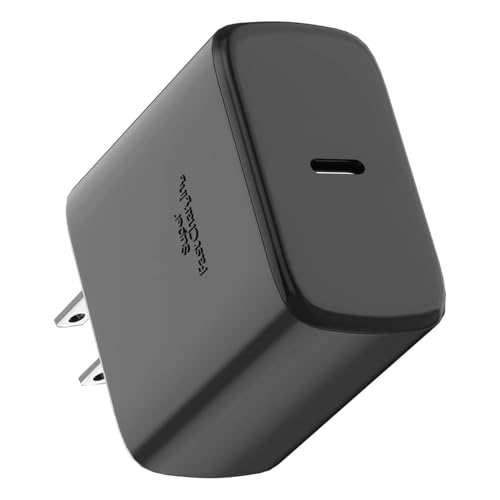
Samsung 45W USB C Fast Charging Block — The first-party 45W
Samsung’s own 45-watt USB-C block is the reference purchase for owners of the phones it names — the listing spans the Galaxy S26, S26 Ultra, S26+, S25 Ultra, S25 and S25+, and S24 generations in the same breath. First-party hardware carries a particular peace of mind in charging, a category where the phone and the block negotiate constantly: the maker of the phone also made the thing feeding it, and compatibility questions end at the listing’s own roster. For an Ultra owner who has just spent flagship money on the phone, that closed loop is a rational thing to buy.
The 45-watt tier is where this block lives, so its natural buyer is the owner whose phone can actually drink at that rate, or the household standardising on one block for several Galaxy generations at once. As a single block without a bundled cable story in its listing, it asks the buyer to bring a known-good USB-C cable to the marriage — ideally the one that arrived with the phone. Judge it as the purist’s choice: the block itself, from the source, at the full tier.
Its trade-offs are the mirror of the bundle picks below. One block serves one place, and households that need bedside and desk coverage will buy twice or look at the two-packs. Buyers of mainstream Galaxy models should also confirm their phone’s own ceiling before paying for the higher tier. None of that dims the block’s role as the guide’s anchor: when a reader asks what Samsung itself would hand them, this is the answer, and every other pick is an argument about why a different answer might suit a particular home better.
- Output: 45 watts, USB-C
- Maker: Samsung, first-party block
- Listing names: Galaxy S26, S26 Ultra, S26+, S25 Ultra, S25, S25+, S24 families
- Format: single wall block
- Role: flagship-phone charging at the full 45W tier
Strengths
- First-party compatibility with the named Galaxy generations.
- Full 45-watt tier serves Ultra-class phones as designed.
- One standard block can serve several Galaxy generations in a household.
Trade-offs
- Single block, single place — multi-room homes need more than one.
- Mainstream phones capped at lower wattage cannot use its ceiling.
- Buyers should bring a quality USB-C cable of their own.
Best for: Ultra owners and Samsung households who want the maker’s own 45-watt block.
Not suited for: buyers who need several charging places covered in one purchase.

Type C Charger 25W — The long-cord single
This pick’s personality is reach. The listing describes a 25-watt USB-C wall charger bundled with super fast charging cords in a 6+6FT arrangement, for Samsung Galaxy phones across the recent generations. Read that cord description as the product’s thesis: the block is a mainstream 25-watt unit, but the cables are long enough to redraw the map of a room. A phone can charge on the sofa, at the desk’s far corner, or on the kitchen counter while its owner cooks from a recipe displayed on its screen — all from the outlet that actually exists, rather than the outlet the furniture wishes existed.
Twenty-five watts is the correct tier for the wide middle of the Galaxy range, and this bundle spends its money on length rather than on a ceiling many phones cannot use. That is a defensible, even shrewd, allocation for the buyer whose problem was never speed but distance. Student rooms, older houses with sparse sockets and hotel stays all belong to the same geography, and a long-cord kit travels between them without accessories.
The questions to ask are the bundle questions. A single block still serves one place at a time, however heroic its cables, and households should count places before choosing it over the two-packs below. The generic branding also places more weight on the buyer’s verification: match your Galaxy model against the listing’s roster, and inspect the cables on arrival like any new purchase. Within its brief — one place, far from its outlet, mainstream phone — it is the most thoughtfully shaped kit in this six.
- Output: 25 watts, USB-C
- Included: charging cords in a 6+6FT arrangement, per listing
- Listing names: Samsung Galaxy phone generations
- Format: single block with bundled cords
- Role: long-reach charging for awkward rooms
Strengths
- Exceptionally long bundled cords solve real outlet geography.
- 25-watt tier matches the mainstream Galaxy range honestly.
- One purchase arrives as a complete, working kit.
Trade-offs
- One block still means one charging place at a time.
- Ultra owners seeking the 45-watt tier should look above or below.
- Generic brand means buyer verification matters more.
Best for: rooms where the outlet is never where the phone needs to be.
Not suited for: households needing two simultaneous charging places.

Type C Charger Fast Charging — The household two-pack
Two blocks, two six-foot cables, one box: the listing describes a two-pack of USB-C Android phone chargers with 2x 6ft USB-C cables, named for Galaxy models from the S8 and S9 era through the S10 generation and beyond in its compatibility roster. The breadth of that roster tells the product’s story — this is the household pack, bought for the drawer of mixed Galaxy generations that real families accumulate, where a charger must serve a new phone and a hand-me-down with equal indifference.
The two-pack format deserves the praise this guide keeps giving it, because it converts charging from a resource into a fixture. One block takes the bedside, the other takes the kitchen or the living room, and the phone stops commuting. Six-foot cables at both places preserve the usable-while-charging quality that short cables quietly destroy. For a couple, a small family or a single person with a two-room life, this is the purchase that ends the daily charger migration in a single order.
Its wattage story is told in the language of fast charging rather than a flagship tier figure, so Ultra owners chasing the full 45-watt experience should treat this as the household’s background coverage and keep a first-party block for the flagship’s bedside. Everyone else — the mainstream Galaxy majority — will find the practical experience entirely satisfying: phones that charge promptly, in the rooms where they are used, on cables long enough to use them while they do it.
- Format: 2-pack of USB-C wall blocks
- Included: 2x 6ft USB-C cables
- Listing names: Galaxy models from S8/S9/S10 generations onward
- Role: two charging places in one purchase
- Tier: fast charging for mainstream Galaxy phones
Strengths
- Two complete charging places end the household charger migration.
- Six-foot cables at both places keep phones usable while charging.
- Wide Galaxy roster suits mixed-generation family drawers.
Trade-offs
- Not the 45-watt flagship tier for Ultra-class top-ups.
- Generic branding asks for model verification against the listing.
- Two places may still leave a busy household one short.
Best for: couples and families standardising two rooms on Galaxy charging.
Not suited for: Ultra owners who want one block at the full 45-watt tier.

Phone Charger USB C Charger Samsung Fast Charger — The veteran listing
Some listings earn trust the slow way, by simply being the listing a category’s buyers have chosen for years. This USB-C fast charging block for Samsung Galaxy phones — its roster running across the S26, S25, S24 and S23 generations in its current description — is the veteran of this six. Its longevity in a brutally competitive accessory tier is itself a datum: products that disappoint at scale do not get to grow old in public.
The product underneath the patina is a straightforward fast charging wall block for Galaxy phones, without a bundle story to complicate the purchase. That plainness suits a particular buyer precisely: the one replacing a lost or failed block, who already owns good cables, knows their phone’s appetite, and wants the known quantity rather than a kit. It also suits the spare-drawer purchase — the block kept at a parent’s house, a workplace or a partner’s flat, where a full bundle would be wasted on a place the phone visits rather than lives.
Judge it against its own brief and it holds up; judge it as a household system and the two-packs above out-argue it. The veteran’s other caveat is the category’s standing one: verify your model against the listing’s current roster, because a listing that has served many Galaxy generations has also been revised across them. Buyers who do that one check get exactly what the listing’s long life promises — a familiar, unglamorous block that charges the phone and asks for no further thought.
- Type: USB-C fast charging wall block
- Listing names: Galaxy S26, S25, S24 and S23 generations
- Format: single block
- Role: replacement and spare-place charging
- Character: long-running listing in this tier
Strengths
- A proven, familiar option in a tier full of newcomers.
- Straightforward single-block purchase for cable owners.
- Current roster spans the recent Galaxy generations.
Trade-offs
- No bundled cable story for buyers starting from nothing.
- Single place coverage, like every lone block here.
- Verify the current listing roster against your exact model.
Best for: replacing a lost block or stocking a spare place with a known quantity.
Not suited for: first-time buyers who need block and cable in one box.

45W USB C Fast Charger 2-Pack — The 45W two-pack
This pick merges the two arguments the guide has been making separately: the 45-watt tier and the two-place household. The listing describes a two-pack of 45-watt USB-C fast charging blocks with a six-foot cable, named for the Galaxy S26 Ultra, S26, S26+, S25 Ultra, S24, S23, S22 and S21 generations, the Note 10 line, and recent iPhones. That cross-platform roster matters more each year, as households mix Galaxy flagships with an iPhone or two and resent maintaining separate charging religions at the same counter.
For the Ultra-owning household, the arithmetic is attractive: the flagship gets its full tier at the bedside, and the second block brings the same speed to the desk or the partner’s side, instead of demoting one place to whatever charger history left there. The bundled six-foot cable covers the place where a cable is missing, which is always one of them. Standardising a home on one block type also ends the subtle chaos of mismatched speeds that makes one nightstand feel cursed and the other blessed.
The buyer’s checks are the familiar ones, sharpened by the tier: confirm the second block’s cable arrangements in the listing before assuming symmetry, and confirm each phone’s ceiling so the 45-watt investment lands on phones that can use it — while remembering that reserve capacity harms nothing and future-proofs the drawer. Households of Ultra and recent Galaxy models will find this the most complete single purchase in the guide; households of older mainstream models should let the 25-watt two-packs save them the difference.
- Output: 45 watts, USB-C
- Format: 2-pack of blocks
- Included: 6ft cable, per listing
- Listing names: Galaxy Ultra and S generations, Note 10, recent iPhones
- Role: full-tier charging in two places
Strengths
- 45-watt tier in two places from one purchase.
- Cross-platform roster suits mixed Galaxy and iPhone households.
- Bundled long cable completes at least one place immediately.
Trade-offs
- Phones capped at 25 watts cannot use the extra ceiling.
- Check the listing for exactly what the second place includes.
- Generic brand, so verify your model against the roster.
Best for: Ultra-owning and mixed-platform households standardising two places.
Not suited for: owners of older mainstream phones who would overbuy the tier.

Type C Charger 25W 2-Pack — The 25W two-pack
The final pick is the mainstream tier in its most practical costume: two 25-watt blocks with long six-foot USB-C cables, listed for Galaxy models from the S26 and S25 generations back through the S21 line, plus recent iPhones. If the guide’s argument — that Android charging is a geography problem — has persuaded you, this is its purest expression: two complete, long-reach charging places, at the wattage the majority of phones actually use, in one box.
Twenty-five watts deserves defending against the assumption that it is the consolation tier. For the enormous population of non-Ultra Galaxy phones, it is the designed tier — the rate their charging systems were built around — and a 45-watt block would hand them nothing but reserve. Spending the household’s money on two right-sized places instead of one oversized one is not economy; it is accuracy. The iPhone compatibility in the roster extends the same accuracy to the mixed household’s second platform.
Its limits are the tier’s limits, stated once more for completeness: an Ultra in the house will top up below its potential at these blocks, and a household that later buys an Ultra should promote one place to a 45-watt block rather than replacing the system. Everything else about the pick is the two-pack virtue repeated — bedside and sofa covered, cables long enough to live with, and a drawer that stops being a source of low-grade daily negotiation.
- Output: 25 watts, USB-C
- Format: 2-pack of blocks
- Included: long 6FT USB-C cables, per listing
- Listing names: Galaxy S26 to S21 generations, recent iPhones
- Role: two right-sized charging places for mainstream phones
Strengths
- Two complete places at the tier most phones actually use.
- Long cables included for both charging places.
- Roster spans Galaxy generations and recent iPhones alike.
Trade-offs
- Ultra models charge below their 45-watt potential here.
- Generic branding places verification on the buyer.
- A future Ultra purchase means promoting one place later.
Best for: mainstream Galaxy households covering two rooms in one order.
Not suited for: households centred on an Ultra that should feed at full tier.
How Do the Six Android Chargers Compare Side by Side?
| Pick | Tier | Blocks | Cable story | Defining trait |
|---|---|---|---|---|
| Samsung 45W Block | 45W | 1 | Bring your own | First-party flagship block |
| Type C Charger 25W | 25W | 1 | 6+6FT cords | Maximum reach, one place |
| Type C Charger Fast Charging | Fast charging | 2 | 2x 6ft cables | Household two-pack |
| Phone Charger USB C (veteran) | Fast charging | 1 | Block only | Long-running replacement pick |
| 45W Fast Charger 2-Pack | 45W | 2 | 6ft cable included | Full tier, two places |
| Type C Charger 25W 2-Pack | 25W | 2 | 6FT cables | Mainstream tier, two places |
The table compresses the guide into one glance: choose the tier by your phone’s ceiling, choose the format by your household’s geography, and let the cable column settle ties. Any pick chosen by those two questions will feel right within a week.
How Should You Set Up Charging Places That Actually Work?
Put the charger where the phone already rests, not where you think it should. Phones gravitate to the bedside, the sofa arm, the kitchen counter near the door and the desk corner, and a charging place planted at one of those natural harbours gets used without discipline. Route the cable so the phone can be picked up, used and set down without unplugging — that small loop of slack is the difference between a charging place and a charging chore. Keep one cable long, as these bundles do, wherever furniture hides the outlet.
Then defend the places. A charging place fails when its block migrates to a bag or a child’s room, so give travel its own small block — the veteran pick above is made for that exile — and let the household places stay planted. Label nothing, organise nothing elaborate; simply agree that the bedside block lives at the bedside. Households that make that one agreement report that the nightly hunt for a charger, a friction so common it has become a domestic joke, quietly stops happening.
What Mistakes Do Android Charger Buyers Keep Making?
Buying the higher wattage tier for a phone that cannot use it leads the list, with its mirror close behind: feeding an Ultra from an elderly low-watt block and blaming the phone for slow top-ups. Third comes buying a lone block for a multi-room life, then carrying it forever. Fourth, owners pair a good block with a damaged or ultra-thin cable and chase the resulting slowness through settings menus. Finally, buyers skip the roster check — Android’s generations and charging ceilings vary enough that two minutes against the listing’s named models is the cheapest certainty in the whole purchase.
How Long Should a Wall Charger and Cable Last?
Blocks are patient devices; cables are the consumable half of every pairing here. A block that lives in one socket, unbent and un-sat-upon, can serve across several phones. A cable lives a harder life — coiled, yanked, trapped in drawers, run over by chair casters — and its failure usually announces itself as intermittent charging long before it stops entirely. When a trusted setup turns moody, suspect the cable first, replace it without ceremony, and keep the block. That diagnostic order will save most households at least one unnecessary charger purchase, and it is why bundles that include honest cables deserve the weight this guide gives them.
How Does a Phone Actually Spend a Charge?
Understanding why tier and place matter starts with how a phone battery empties and refills across a real day. The drain is uneven: a morning of navigation and photography can take what an afternoon of messaging barely touches. The refill is uneven too, in the opposite pattern — fast when the battery is low, deliberately slower as it approaches full, a taper every phone applies to protect its cells. That taper is why the 45-watt advantage concentrates in the first portion of a charge and why overnight comparisons between tiers shrink: given eight hours, both tiers arrive at full with time to spare, and the phone’s own caution, not the block’s ceiling, sets the pace for most of the night.
The practical consequence is that charging purchases should be sized for the rushed moments, not the patient ones. The twenty minutes before leaving for the airport, the half-hour at a café, the lunch break before an afternoon of site visits — those are the sessions where tier and a working cable earn their money. A household that understands its own rushed moments knows exactly which rooms need the fast place and which can be served by any honest block. It also explains why this guide treats the bedside with such calm: the bedside is the one place where speed barely matters, and where a two-pack’s second block, quietly waiting, is the perfect specification.
What About Charging at Work, in Cars and in Other People’s Houses?
The home system this guide builds has ambassadors. A block at the office desk, a block in the travel bag, a block at the house you visit every week — each extends the geography until low battery stops being a genre of anxiety altogether. The veteran single block in this six exists for exactly those ambassador posts: inexpensive to dedicate, familiar to use, and no great loss if it stays behind. Buying ambassadors deliberately, rather than promoting the household’s best block into exile, is the mark of a charging system that has matured.
Cars deserve a sentence of their own, because drivers routinely feed phones from whatever socket the vehicle offers and then wonder why a long drive barely held the battery level against navigation’s appetite. A phone working as a navigator is spending charge at working speed; it deserves a proper car charger of its own rather than a wall block on an adapter or a weak built-in socket. That product lives in another of our guides, but the principle belongs here too: match the charger to the appetite of the moment, and the battery stops featuring in your planning at all.
How Should Parents and Shared Houses Run the System?
Children’s phones introduce two complications: later bedtimes for the devices than for their owners, and a household geography that includes school bags, sports kits and friends’ houses. The two-pack logic scales gracefully here — one block per young person’s room, bought at the mainstream tier their phones actually use, ends the era of the family charger as a contested resource. The long bundled cables earn special praise in this setting, because a phone that can charge on the desk while homework happens on its screen is a phone that stays in the room it belongs in.
Shared houses and house-shares run the same system with adult labels: a common place in the kitchen that anyone may use, private blocks in private rooms, and a spare — the veteran again — for the guest room and the inevitable week when someone’s block vanishes into a partner’s flat. None of this requires a meeting or a spreadsheet. It requires only the recognition that chargers are infrastructure, like mugs and towels, and that households run better when infrastructure is plural, placed and unremarkable.
What Should You Verify in the First Days With a New Block?
Run the rushed-moment test: from a low battery, give the phone twenty minutes on the new setup and note the gain, then compare it with your old arrangement under the same conditions. That single observation confirms the block, the cable and the phone are cooperating, and it gives you a personal benchmark no listing can provide. Check, too, that the block sits firmly in the sockets where it will live — a loose fit in a worn outlet mimics electronic faults — and that the cable’s connectors seat with a clean, positive feel at both ends.
Then assign the places and stop rearranging. A charging system improves with stability: the household learns where power lives, guests get pointed once, and the blocks stop travelling. If a place proves wrong after a fortnight — the phone actually rests somewhere else — move it once, deliberately, and let the new geography settle. The goal is a home where nobody, including you, ever again asks where a charger is. Every pick in this guide can be the right block inside that system; the system itself is the purchase that matters most.
How Do Galaxy Generations Change What You Should Buy?
The listings in this guide name Galaxy generations the way wine merchants name vintages, and for the same reason: the years genuinely differ. Charging ceilings, and the exact marketing names for them, have shifted as the Galaxy line evolved, which is why a block that was the flagship answer for one generation can be the mainstream answer for the next. The buyer’s defence is the discipline repeated throughout this guide — check the exact model’s specification, then match the tier — rather than inheriting assumptions from the phone you owned three years ago.
Hand-me-downs complicate the map usefully. A household’s older Galaxy, passed to a child or a parent, brings its own ceiling with it, and the two-packs’ wide rosters exist precisely because that phone still deserves a proper place in the system. Notice how several listings here span from recent flagships back across many generations in a single compatibility breath: that breadth is a feature for the mixed drawer, even if it makes the listings read like roll calls. The household that maps each phone to its tier once, on paper, will never again buy a block on a guess.
What About Tablets, Earbuds and the Rest of the USB-C Drawer?
Android households rarely stop at phones. Tablets charge from the same blocks, usually with larger appetites and more patience; earbuds and their cases sip from anything; a handheld console or an e-reader joins the queue on weekends. The blocks in this guide will serve that whole drawer without complaint, because USB-C negotiation protects every device in the chain — each takes what it is designed to take. The only planning required is temporal: a tablet’s long session and a phone’s rushed top-up should not be scheduled against each other at the same single block, which is, for the last time in this guide, the two-place argument arriving by another door.
It is also worth keeping one cable standard honest across the drawer. Cables that live with a place, rather than with a device, get treated better and lost less. The bundles here seed that habit: a cable at the bedside, a cable at the sofa, each long enough to be kind. When the drawer’s population grows, add places, not wattage — the tiers in this guide already cover every appetite a phone-class device has yet invented, and the next decade of Android charging looks more likely to reward good geography than bigger numbers.
One more distinction is worth drawing clearly before the verdict, because it decides between the two 45-watt options more than any other. Samsung’s own block is a statement about trust in a single place: the flagship’s bedside, served by the flagship’s maker. The 45-watt two-pack is a statement about coverage: the same tier, extended across the household’s geography by a brand competing on bundle rather than on name. Neither statement is a compromise. A household with one Ultra and one charging place should buy the first without a backward glance. A household with two Ultras, or an Ultra and an iPhone sharing a counter, will feel the second statement’s logic every single day. The tier is identical; the philosophy is the product.
And a corresponding distinction separates the two 25-watt paths. The long-cord single kit spends everything on reach, for the room whose outlet geography defeats ordinary cables. The 25-watt two-pack spends everything on plurality, for the household whose rooms defeat a single block. A buyer can even need both philosophies in one home — reach in the bedroom with its hidden socket, plurality across the living spaces — and the modest tiers here make that combination painless. Read the six picks as a small kit of philosophies, not a podium, and the right basket assembles itself.
Finally, a word for the drawer itself, because every Android household has one: the tangle of retired cables, orphaned blocks and adapters for standards nobody alive still uses. The purchase that ends that drawer is not another block but a decision — the current phones, their tiers, their places, and everything else donated, recycled or retired to the travel spares box. The six products in this guide are at their best as the contents of that decision: few, matched, placed and sufficient. A household that makes it will find, somewhat to its surprise, that charging has stopped being a topic — which is the entire ambition of this category, and the standard against which every pick above was judged.
Consider the travel version of the same decision, because phones charge in hotels and relatives’ spare rooms as surely as they charge at home. A travel block should be the one whose loss would annoy you least and whose absence would strand you least — for most readers that is a mainstream-tier single with a long cable, the combination that forgives strange outlets and unknown geography. Keep it packed with its cable, permanently, and the home system never gets raided on departure morning. The households that travel calmly are not the ones with the strongest chargers; they are the ones whose chargers have assigned seats, at home and in the bag, and are therefore always exactly where the hand expects them in the dark.
There is also a generational courtesy worth practising with these purchases. Parents and grandparents inherit phones, and with them inherit charging ceilings they never chose and marketing names they never learned. Setting up their place — the right tier, a long cable, the phone resting where it always rests — is a small act of care that pays out nightly in a device that is simply full every morning. The two-packs in this guide make that courtesy inexpensive to extend, and the rosters make it easy to verify against the inherited model before the box is opened.
Before ordering, then, the whole method fits on an index card. Write down each phone in the house and its charging ceiling. Mark the rooms where phones actually sleep and lounge. Choose the tier from the first list and the format from the second, and let the bundled cables settle any remaining tie. That card, filled in honestly, will point at one or two of the six picks above with very little argument left over — and on the rare occasion it points at three, the third is the travel spare, and the system is complete.
Keep the card. Phones will change, rooms will be rearranged, a child will acquire a hand-me-down with a different ceiling, and the card turns each of those events from a fresh shopping expedition into a thirty-second consultation. Good infrastructure is boring in exactly this way, and a charging drawer that stays boring for years is the real best-in-class award this guide exists to hand out.
It is worth saying, as the verdict approaches, what this guide deliberately did not reward. It did not reward the largest number printed on a box, because Android phones themselves cap what they accept and publish that cap for anyone who looks. It did not reward novelty, because a wall block’s virtues are reliability and placement rather than surprise. And it did not punish generic brands for being generic, because in a tier where the specification is simple and the bundle is half the product, a well-described two-pack from an unknown name can serve a household better than a famous block bought in the wrong tier or the wrong quantity. Judgement in this category is mostly arithmetic plus geography, and both are available to every reader free of charge.
What it did reward, across all six reviews, is fit: between wattage and phone, between cable length and room, between the number of blocks and the number of places a household’s phones actually live. Fit is unglamorous and decisive. A fitted charging system disappears, and its disappearance is felt as a hundred tiny easings across a year — the unhurried morning, the unborrowed cable, the phone that is simply ready. Buy for fit, and the specific badge on the block becomes the least important part of a purchase that will nonetheless be used, gratefully, every day.
One last scenario, because it arrives in every household eventually: the phone upgraded mid-system. A new Galaxy joins the drawer with a new ceiling, and the question is whether the whole arrangement must be rebuilt. It must not. Promote the new phone’s place to its tier — a first-party block at the bedside, perhaps — and let the displaced block retire honourably to a lesser place or the travel bag. Systems built from the picks in this guide absorb upgrades one place at a time, which is precisely why buying by place and tier, rather than by bundle-of-the-moment, keeps paying long after the first order is forgotten.
And if the household’s phones are, for now, all one generation and all one tier, enjoy the simplicity while it lasts and buy the plain two-pack that matches it. Simplicity is a season in a household’s life, not a permanent state, and the right purchase for a simple season is a simple one — with cables long enough for the rooms you actually live in.
That is the note to end the argument on: seasons change, phones change, rooms change, and a charging system chosen by tier and place adapts to each change with a single small purchase instead of a fresh crisis. The six blocks and bundles above are the current season’s instruments for that system. Pick the ones your index card names, set their places, coil their long cables kindly, and let the subject of phone charging leave your household’s conversation for a good long while.
When that quiet arrives — and regular readers of household friction will recognise it within the first week — resist crediting the block. Credit the matching: a tier matched to a phone, a cable matched to a room, a count matched to a floor plan. The products were the easy part, and they were chosen, in this guide and hopefully in your basket, to make the matching easy to get right the first time.
First time is a fair ambition here, because nothing in this category punishes a careful buyer. The specifications are published, the rosters are printed, the tiers are two in number, and the rooms in your home are countable on one hand. Few technology purchases offer odds that friendly, and fewer still repay them every single night — which is why, modest as they are, the right Android wall chargers earn a full guide of their own.
So make the small investment in the index card, the roster check and the honest count of rooms, and then order with the calm of someone who has already solved the problem on paper. The box that arrives will merely confirm what the card decided — and the first evening the whole household’s phones are full, in their places, without a word exchanged on the subject, the purchase will have justified every paragraph spent on it.
That evening, multiplied across a year of evenings, is the return on a modest and well-aimed purchase — and it is available to any household willing to spend ten minutes matching tiers to phones and blocks to rooms before spending anything at all.
Ten minutes, two tiers, a handful of rooms and six honest products to choose among: the whole subject, held in one hand. Everything after this paragraph is simply the answer, stated once, for readers who have done the matching and want the guide’s own conclusion to check theirs against.
Readers who skipped to the verdict are forgiven, provided they take the one-sentence version of the method with them: match the wattage to the phone in your hand, not the phone in the advertisement, and put a charger in every room the phone sleeps in.
Do those two things with any of the six products above and the result will be the same quiet success, whatever badge the block carries.
Quiet success, repeated nightly across every phone in the house, is a larger prize than it sounds — ask anyone who has lived without it.
It is also, happily, the easiest prize in this entire chargers series to win outright, and to keep winning for years.
Win it once, properly and completely, and the subject closes for good, at last.
That closing is the verdict’s real and only promise, whichever of the six picks delivers it to your household, starting tonight, and every night after.
Final Recommendation
Let your phone’s ceiling pick the tier and your floor plan pick the format: Ultra owners should anchor on Samsung’s own 45-watt block or spread that tier across two places with the 45-watt two-pack, mainstream Galaxy households should cover two rooms with a 25-watt two-pack and stop overspending on reserve wattage, and anyone whose true enemy is a distant outlet should take the long-cord 25-watt kit — because in Android charging, the right charger in the right room beats the strongest charger in the wrong one, every night of the year.
Frequently Asked Questions
Will a 45-watt charger harm a phone designed for 25 watts?
No. Phones negotiate the power they accept, so a higher-tier block simply holds the surplus in reserve. The phone charges at its own designed rate, and the block’s headroom waits for a device that can use it.
How do I know which tier my Galaxy phone uses?
Check the maker’s specifications for your exact model. Ultra-class models are the usual residents of the 45-watt tier, while the mainstream Galaxy range is generally designed around the 25-watt tier — but the spec sheet for your model is the authority.
Are the bundled cables as important as the block?
In this tier, nearly. A six-foot cable decides whether the phone is usable while charging and whether the block can serve the room’s real resting places. Count box contents as part of the specification when comparing picks.
Should a mixed Galaxy and iPhone household buy separate chargers?
Usually not. Two picks here — the 45-watt two-pack and the 25-watt two-pack — name recent iPhones in their rosters alongside Galaxy models, so one standard can serve the whole counter.
Why buy a two-pack instead of one better block?
Because phones need power in several rooms, and a charger can only be in one. Two right-sized places remove more daily friction than one oversized place, for most households, most nights.
What should I replace first when charging turns slow or intermittent?
The cable. It is the wear item in every setup, and its failure mimics a failing block or a failing phone. Swap in a known-good cable before replacing anything else.


