What's inside
- Where to Buy These Hi-Fi Sound Cards
- Key Takeaways
- Quick Picks
- How Did We Choose These Hi-Fi Picks?
- PCIe Card or Desktop DAC/Amp: Which Upgrade Path Is Yours?
- Which Numbers on a Hi-Fi Spec Sheet Deserve Your Trust?
- Where Do the Best Hi Fi Sound Cards Earn Their Keep?
- How Do You Build the Rest of a Hi-Fi Chain Around These Picks?
- What Setup Habits Separate Good Hi-Fi From Expensive Noise?
- Do Hi-Fi Sound Cards Still Make Sense in the Streaming Era?
- How Should Gamers Who Love Music Read This Guide?
- How Do the Six Hi-Fi Picks Compare Across Both Camps?
- What Mistakes Do Hi-Fi Buyers Make in This Category?
- Final Recommendation
- Frequently Asked Questions
- Related Guides
As an Amazon Associate I earn from qualifying purchases. This post may contain affiliate links at no extra cost to you.
[widgetverdict.com] is reader-supported. When you buy through links on our site, we may earn an affiliate commission.
Where to Buy These Hi-Fi Sound Cards
The phrase best hi fi sound cards hides two different shopping trips, and this guide refuses to pretend otherwise. On one trip, a listener upgrades the audio inside a desktop PC with a PCIe card: the card takes over conversion from the motherboard, adds a serious headphone amplifier, and disappears into the machine. On the other trip, the same listener buys a desktop DAC and headphone amplifier — a box that sits beside the keyboard, connects over USB, and can serve any computer it meets. Both trips end at better sound. They differ in permanence, flexibility and where the volume knob lives, and the six products below are divided honestly between the two camps so you can shop your own trip rather than ours.
The PCIe camp here is Creative’s hi-res line — the Sound Blaster AE-7 and AE-9 with their external control modules, the newer AE-X — plus an intriguing outsider, the GLOTRENDS ST113, built around an ESS SABRE DAC chip with an isolated optical output. The desktop camp is Creative’s Sound Blaster X5, a dual-DAC fully balanced design, and Fosi Audio’s K7, a DAC and headphone amplifier with serious output power and a balanced headphone socket. Every one of them converts at hi-res rates and publishes the kind of signal-to-noise figures that separate hi-fi intent from gaming decoration.
What justifies calling any of this hi-fi is not the badge but the discipline: conversion quiet enough that silence in the recording is all you hear, amplification controlled enough that loud passages do not harden, and a signal path short and honest enough to leave the music alone. Judged by that discipline, and by which upgrade path each product serves, the six below are the current shortlist worth a listener’s money.
One scope note before the reviews: this guide judges two-channel listening first, because that is what hi-fi means. Surround gaming features, streaming tools and microphone tricks appear in the margins of these products’ lives, and we note them where they matter, but no pick earned its place on a feature that a music listener will never switch on.
Key Takeaways
- This category splits in two: PCIe cards that upgrade one PC permanently, and desktop DAC/amps that serve any computer — choose your path before choosing a product.
- The Sound Blaster AE-9 is the flagship internal card, pairing top-tier conversion with an external control module and swappable op-amps.
- The AE-7 delivers most of the AE-9’s experience — hi-res DAC, Xamp headphone stage, control module — at a step down in price.
- The Sound Blaster X5 is the desktop flagship: dual DACs, a fully balanced path and bi-amplified headphone drive over USB.
- The GLOTRENDS ST113 is the minimalist internal option, built on an ESS SABRE ES9018K2M with driver-free setup and an isolated optical output.
- The Fosi Audio K7 is the power pick among desktop units, with 2100mW of output, a 4.4mm balanced socket and Bluetooth aptX input.
- Judge any new card or DAC over a week of ordinary listening at matched volumes; quick loudness-skewed comparisons are how good equipment gets returned and mediocre equipment gets kept.
Quick Picks
| Pick | Badge | Why it made the list |
|---|---|---|
| Creative Sound Blaster AE-7 | Best PCIe card with control module | A hi-res PCIe card with a desktop control module, for listeners who want flagship sound and fingertip volume. |
| Creative Sound Blaster AE-9 | Best flagship internal card | Creative’s ultimate internal card, with reference conversion and op-amp rolling for the endlessly curious. |
| Creative Sound Blaster X5 | Best desktop dual-DAC unit | A dual-DAC desktop unit with a fully balanced signal path for serious headphone listening. |
| Creative Sound Blaster AE-X | Best new-generation internal card | The newest hi-res internal design, for a fresh build meant to stay current for years. |
| GLOTRENDS ST113 PCIe Sound Card | Best minimalist ESS-based card | An ESS SABRE-based card with optical isolation for listeners who distrust busy software suites. |
| Fosi Audio K7 DAC Headphone Amp | Best desktop power and value | A powerful desktop DAC/amp with balanced output and wireless input at an enthusiast-friendly price. |
How Did We Choose These Hi-Fi Picks?
We required three credentials from every candidate, regardless of camp. First, published conversion specifications in genuine hi-res territory, with signal-to-noise figures that place the product’s noise floor below audibility in normal listening. Second, a headphone stage designed as an amplifier rather than an afterthought — stated drive capability, and in the flagship cases discrete or balanced architectures. Third, a maker whose name, support and driver or firmware story can be verified against the product’s Amazon listing, because hi-fi buyers keep equipment for years and orphan products are a poor foundation for a listening room.
Within the PCIe camp, we weighted integration: how the card handles the transition between headphones and speakers, whether a control module keeps volume at the listener’s hand, and whether the software can be set once and ignored. Within the desktop camp, we weighted the opposite virtues — input variety, balanced connections, and the ability to move between a work laptop and a personal machine without reconfiguration. A product could not win both camps, and none was asked to.
We also policed the boundary of the term hi-fi itself. Gaming processing — virtual surround, footstep enhancers, voice effects — appears in some of these products’ software, because their makers sell to gamers too. Those features were neither credited nor held against a pick; the ranking rests on the two-channel listening path, which is what a hi-fi buyer is paying for. If a feature could not be bypassed for pure stereo listening, that would have been a demerit; in all six picks, it can be.
Finally, we treated price as camp-relative. A flagship internal card and a flagship desktop unit cost similar money for different bundles of virtue, and comparing them directly is a category error this guide avoids. Each pick is instead the strongest answer we found to its own camp’s question.
We also listened for the sin this category commits most often: brightness mistaken for detail. Equipment that etches the treble can impress in a shop and exhaust at home, and a hi-fi guide that rewards it betrays its readers. Every pick here was favored partly for the opposite virtue — the ability to stay composed and un-fatiguing through long sessions at honest volumes, which is the quality that determines whether a system is still loved in its second year.
PCIe Card or Desktop DAC/Amp: Which Upgrade Path Is Yours?
The internal path suits a listener whose music lives on one machine. A PCIe card is installed once, configured once, and thereafter simply is the computer’s sound — no desk footprint, no cable, no device competing for attention. It wakes with the PC, serves games and films as faithfully as music, and keeps the desktop visually clean. Its costs are commitment and confinement: the investment serves that one machine, and when the machine is replaced, the card must be transplanted or retired. Listeners who build a PC every six years and listen at that desk daily are the internal path’s natural constituency.
The desktop path suits a listener whose music follows them. A USB DAC/amp serves the work laptop by day and the personal machine by night; it travels to a second home or a different room; its volume knob sits under the hand rather than behind a tower under the desk. Balanced headphone connections and multiple digital inputs — USB, optical, sometimes Bluetooth — appear in this camp because the box is a small hi-fi component, not a PC accessory. Its costs are desk space and one more object to dust, trivial prices for the flexibility bought.
There is no wrong answer, only an unexamined one. The most common hi-fi purchasing regret in this category is buying a superb internal card and then changing listening habits — a laptop-centric life, a move to a smaller desk — until the card sits in a machine that is rarely switched on. Walk your actual week before you shop: where do you listen, on which machines, through which headphones? The path chooses itself once the week is honest.
Which Numbers on a Hi-Fi Spec Sheet Deserve Your Trust?
Signal-to-noise ratio and dynamic range are the honest core of a converter specification. They describe the distance between the loudest clean signal and the device’s own noise, and in this guide’s tier — where figures run well past 110dB — they certify that the electronics will not be the audible limit of your system. Your room, your headphones and the recording itself will all speak louder than the converter’s noise. Treat these figures as a threshold of professionalism: below the tier, questions arise; within it, stop shopping by decibels.
Total harmonic distortion figures deserve a cooler eye. Modern converters measure distortion at levels far below what any listener can detect in music, and the differences between excellent and merely superb figures are laboratory trivia. More informative is the amplifier’s behavior: its output power into realistic headphone loads, its output impedance, and whether its architecture — discrete, balanced, bi-amplified — suggests engineering attention. The K7’s published 2100mW and the X5’s dual-DAC balanced design tell you more about how they will drive a difficult headphone than a distortion figure with five zeros.
Sample-rate ceilings, finally, are the most marketed and least consequential numbers here. Every pick converts at rates beyond the content nearly everyone owns. Buy the rate as headroom and future-proofing if you like — the AE-series’ 32-bit/384kHz will never be your bottleneck — but do not let a higher ceiling outrank a better amplifier, a better control experience or a better match for your headphones. In hi-fi, the analog stage is where money becomes sound.
Where Do the Best Hi Fi Sound Cards Earn Their Keep?
Three internal cards and a PCIe outsider come first, then the two desktop units. Each review names its camp plainly, because a verdict that ignores the path question would mislead exactly the readers this guide exists for.
Creative Sound Blaster AE-7 — Best PCIe card with control module
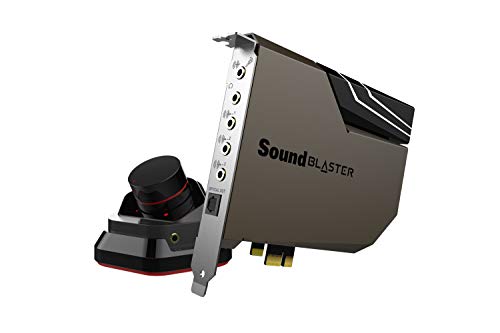
The AE-7 is built around a simple insight about how people actually listen at a PC: the volume control should be where the listener is, not inside a software panel. Its Audio Control Module — a desktop puck with a large volume knob and headphone and microphone connections — puts the card’s hi-res conversion and Xamp headphone amplification within arm’s reach while the card itself lives in the case. The DAC is a hi-res ESS-class design, the headphone stage is Creative’s discrete Xamp architecture, and the whole arrangement feels less like a PC component and more like a small hi-fi system that happens to draw its data from a PCIe slot.
As a listening proposition, the AE-7 occupies the sweet spot of Creative’s internal range: conversion and amplification close enough to the flagship that most headphones and most recordings cannot reveal the gap, at a price that acknowledges the AE-9 exists. Speakers connect at the rear for a 5.1 arrangement when films call, and the software offers the usual processing, all of it bypassable for purist stereo sessions. For the one-PC listener who wants flagship manners without flagship ceremony, this is the card the range is organized around.
The control module changes daily habits more than any specification does. Headphones plug into the desk rather than the tower; volume rides a knob with proper weight; switching between headphones and speakers becomes a gesture instead of a settings expedition. Listeners who share a desk between work calls and evening music feel the benefit hourly. It is the same lesson desktop DACs teach — ergonomics is a sound quality, because a system that is pleasant to operate gets operated at its best.
The honest comparison is with its own sibling. The AE-9 above it offers a higher converter ceiling and the hobbyist pleasure of swappable op-amps; the AE-7 counters with value and identical everyday manners. Listeners whose headphones are merely excellent, rather than brutally revealing, will struggle to spend the difference with their ears. That is not a criticism of the flagship — it is what a well-designed range looks like, and the AE-7 is its center of gravity.
- Connection: PCIe card plus desktop Audio Control Module
- Conversion: hi-res DAC, 32-bit/384kHz-class playback
- Amplifier: Xamp discrete headphone stage
- Outputs: headphone via module; 5.1 analog at rear
- Controls: large volume knob on the module
Strengths
- Desktop control module transforms daily ergonomics
- Discrete headphone amplification with real drive
- Near-flagship conversion at a lower tier price
Trade-offs
- Module occupies desk space the internal path promised to save
- Software suite required for full configuration
- Serves one PC only, like every internal card
Best for: one-PC listeners who want flagship-grade headphone sound with a proper volume knob at hand.
Not suited for: multi-computer households or listeners who need balanced headphone connections.
If your listening life happens at one desk, the AE-7 is the internal upgrade to beat — review the control module’s footprint on Amazon against your desk space.

Creative Sound Blaster AE-9 — Best flagship internal card
The AE-9 is Creative’s statement that the internal sound card, taken seriously, can stand beside dedicated hi-fi components. Its conversion is the company’s reference tier, its headphone amplification uses the Xamp discrete design, and its Audio Control Module is a heavier, more deliberate piece of hardware than the AE-7’s — with a display, robust connectors and the feature hi-fi hobbyists ask about first: swappable op-amps, letting owners roll operational amplifiers to season the sound to taste. That last feature alone announces the audience. This card is for listeners who treat their PC as a component in a hi-fi system and enjoy the tuning culture that comes with it.
Measured purely as a playback device, the AE-9’s argument is refinement under scrutiny. Revealing headphones, quiet recordings and long sessions expose the differences between good conversion and reference conversion — in the stability of the image, the blackness between notes, the absence of any electronic glare at the top of a long evening. Most listeners, most of the time, will be served by the AE-7; the AE-9 exists for the sessions and the systems where ‘most of the time’ is not the standard. It also carries the practical flagship burdens: premium pricing, a PCIe slot, and software depth that rewards an owner willing to learn it.
The op-amp question deserves a straight answer, because it is the AE-9’s signature and its most debated feature. Swapping op-amps produces small, real changes in presentation — a touch of warmth, a different emphasis in the treble — and for hobbyists that tunability is the hobby. Skeptics call it seasoning rather than improvement, and they are not wrong either. The card’s underlying conversion is strong enough that the debate can be enjoyed rather than settled; owners who never swap an op-amp still own Creative’s best internal playback device.
Who should pay the flagship premium? The listener with genuinely revealing headphones, a quiet room, and a library of well-recorded music they return to for decades — the listener, in short, whose chain has no weaker link left to blame. For that owner the AE-9 closes the internal-audio question permanently. Everyone else should read its review as a map of what the money buys, then decide with clear eyes whether their system can hear it. A flagship that knows its audience this precisely is a healthy flagship.
- Connection: PCIe card plus premium Audio Control Module
- Conversion: reference-tier hi-res DAC
- Amplifier: Xamp discrete headphone stage
- Tuning: swappable op-amps for sound shaping
- Module: display-equipped desktop control unit
Strengths
- Finest internal conversion Creative offers
- Op-amp rolling invites long-term tuning
- Control module built to component standards
Trade-offs
- Flagship price demands revealing headphones to justify
- Features exceed what casual listeners will use
- Deep software and hardware options to learn
Best for: hi-fi hobbyists with revealing headphones who treat the PC as a source component and enjoy tuning.
Not suited for: listeners whose headphones or rooms cannot reveal flagship differences.
For the listener who has eliminated every other weak link, the AE-9 is the internal endgame — examine its control module and op-amp provisions on Amazon before committing.

Creative Sound Blaster X5 — Best desktop dual-DAC unit
The X5 takes Creative’s hi-res ambitions out of the case and puts them in a component. Its design centers on dual DACs and a fully balanced signal path feeding a bi-amplified headphone stage — each channel with its own amplification — which is the architecture serious headphone listeners associate with control and channel separation. It connects over USB, offers balanced and single-ended headphone outputs, and carries the inputs and outputs to serve as a small system’s hub, including microphone input for the desk that also takes calls. Nothing about it requires opening a computer, and it serves a Mac in the morning and a PC at night with equal indifference.
As a hi-fi proposition, the X5 is the desktop camp’s flagship argument: conversion and amplification at the level of the best internal cards, freed from the slot. The balanced path matters for owners of headphones wired for it — better channel separation and more drive — while the single-ended output keeps ordinary headphones fully served. Creative’s processing features ride along for those who want them and step aside for stereo purists. It is the pick for the listener whose computers change more often than their standards do.
Living with the X5 clarifies the desktop camp’s deepest advantage: the listening system becomes independent of the computing system. Upgrade the laptop, borrow a machine, work from a different desk — the sound comes with you because the sound was never inside any of those computers. For professionals whose work machine is managed, locked down or replaced on an employer’s schedule, that independence is not a luxury; it is the only way to own a consistent listening setup at all.
Its compromises are the camp’s own. It wants permanent desk space and a power arrangement; it costs flagship money without the internal cards’ invisibility; and its full feature set, like theirs, leans on vendor software. But judged as what it is — a balanced, dual-DAC headphone hub from a maker with decades in PC audio — the X5 is the most complete desktop answer in this guide, and the one most likely to end a listener’s search rather than extend it.
- Connection: USB desktop unit
- Conversion: dual DACs, hi-res playback
- Architecture: fully balanced path, bi-amplified headphone stage
- Outputs: balanced and single-ended headphone sockets
- Extras: microphone input and hub connections
Strengths
- Balanced dual-DAC design serves serious headphones
- Works with any computer, no slot required
- Strong, controlled amplification per channel
Trade-offs
- Permanent desk footprint and cabling
- Flagship pricing in the desktop camp
- Full features tied to Creative software
Best for: headphone listeners who move between computers and want balanced, flagship-grade conversion in a portable hub.
Not suited for: listeners who want their audio invisible inside a single PC.
Multi-computer listeners should start their desktop search with the X5 — check its balanced output compatibility with your headphones on the Amazon listing.

Creative Sound Blaster AE-X — Best new-generation internal card
Where the AE-7 and AE-9 represent the mature flagship line, the AE-X is Creative’s newest word on the internal hi-res card: 32-bit/384kHz playback, a contemporary design, and desktop application support written for current systems rather than inherited from them. For hi-fi purposes, its appeal is the combination of a full hi-res conversion ceiling with the longest support runway in the internal camp — a card bought for a new build today should still be receiving driver attention when that build is old, and newness is the only reliable predictor of that attention.
Its listening proposition follows the family pattern: quiet conversion, a headphone stage with genuine drive, and processing that can be engaged for games and films or bypassed for music. What it does not carry is the AE-9’s control-module theater or op-amp hobbyism; the AE-X is the streamlined flagship, aimed at the listener who wants the conversion tier without the component-rack ceremony. In a build assembled around current parts, it is also simply the coherent choice — the card whose age matches the machine around it.
There is a subtle hi-fi argument for the newest design that spec sheets do not capture: power management and system behavior. Modern PCs sleep, wake and update constantly, and a card designed in that era handles those transitions gracefully, without the pops, dropouts or forgotten settings that older designs occasionally show on new platforms. For a listening system, that reliability is a sound quality — the best converter in the world is worthless on the evening it misbehaves, and boring dependability across years of updates is a flagship trait.
Choose between the AE-X and the AE-7/AE-9 by temperament. The older flagships offer proven quantities and their control modules; the AE-X offers freshness and simplicity. Listeners building today, with no legacy attachment, will find the AE-X the natural internal endpoint of this guide — the card that assumes hi-res PC listening is a going concern rather than a nostalgia project, and is engineered accordingly.
- Connection: PCIe slot
- Playback: hi-res 32-bit/384kHz conversion
- Software: current Sound Blaster desktop application
- Role: new-generation internal hi-res card
- Design: modern shielded layout
Strengths
- Newest design with longest support horizon
- Full hi-res conversion ceiling
- Graceful behavior on current platforms
Trade-offs
- No external control module in the AE-9 style
- Shorter public track record than older flagships
- Premium tier pricing
Best for: listeners building a new PC who want current hi-res internal audio without legacy compromises.
Not suited for: hobbyists who want op-amp tuning or a desktop control module.
Starting fresh? The AE-X is the internal card designed for the machine you are building now — compare it on Amazon with the AE-7 to decide which flagship style suits you.

GLOTRENDS ST113 PCIe Sound Card — Best minimalist ESS-based card
The ST113 is the contrarian pick of the internal camp: a PCIe card built around ESS’s SABRE32 ES9018K2M DAC chip — silicon with genuine hi-fi pedigree — offered with driver-free setup and an isolated optical output for clean connection to external equipment. Where Creative’s cards are ecosystems, the ST113 is a component: install it, let the operating system’s own audio stack drive it, and listen. For the hi-fi listener who distrusts vendor software suites on principle, that minimalism is not a missing feature but the feature itself.
The optical output deserves its emphasis. Electrical isolation between a noisy PC and a hi-fi system is a real engineering concern — ground loops and USB-borne noise are the gremlins of computer audio — and an optical link severs that path entirely while handing a pristine digital signal to an external DAC or receiver. Used that way, the ST113 becomes the clean digital source in a larger system. Used directly, its analog output serves headphones and speakers with the SABRE chip’s characteristic clarity. Either way, it is a card bought by people who read chip datasheets, and it rewards them.
Driver-free operation cuts both ways, and this guide will say so plainly. The gain is permanence: there is no vendor suite to abandon, no control panel to break on the next Windows version, and the card will work in systems where installing Creative’s software is impossible or unwanted. The cost is the absence of everything a suite provides — no equalizer, no surround processing, no microphone shaping, no profiles. The ST113’s owner processes in their playback software or not at all, and for a certain kind of listener that constraint is a philosophy rather than a compromise.
GLOTRENDS is a smaller name than the others in this guide, and support expectations should be set accordingly; the card’s defense is that its design needs little support, being built on a mature DAC platform and standard drivers. For the minimalist with a good external system waiting for a clean digital feed, or the purist who wants SABRE conversion inside the PC without an ecosystem attached, it is the most interesting card here — the one the big makers would never build.
- Connection: PCIe slot, driver-free setup
- DAC: ESS SABRE32 ES9018K2M
- Digital output: isolated optical output
- Role: minimalist hi-fi PCIe card
- Software: none required; uses system audio stack
Strengths
- Genuine ESS SABRE conversion at a modest price
- Optical isolation breaks PC noise paths
- No vendor software to maintain or abandon
Trade-offs
- No EQ, surround or microphone processing suite
- Smaller maker with a thinner support story
- Fewer features than any Creative rival
Best for: purists feeding an external hi-fi system a clean digital signal, or listeners who want SABRE conversion without software ecosystems.
Not suited for: gamers or callers who rely on processing features and microphone tools.
If your philosophy is a short, honest signal path, the ST113 deserves a close look — its Amazon listing details the optical and analog outputs for your system plan.

Fosi Audio K7 DAC Headphone Amp — Best desktop power and value
Fosi Audio built its reputation on small amplifiers that embarrass bigger names, and the K7 applies that formula to the desktop DAC/amp: an AK4493S converter chip running to 384kHz/32-bit, a headphone stage publishing 2100mW of output power, both ordinary and 4.4mm balanced headphone sockets, a microphone input for gaming headsets, and Bluetooth aptX so a phone can join the system without a cable. On paper and in hand, it is the enthusiast’s checklist executed at a price the flagship camps notice. The power figure is the headline for headphone owners: inefficient planars and high-impedance classics that sip nervously from lesser outputs drink deeply here.
As a hi-fi citizen, the K7’s manners are good: the conversion is quiet, the volume control is a proper knob, and the unit’s gaming-market origins show mainly in the microphone input and the styling rather than in any compromise to the stereo path. Bluetooth input is a convenience with a quality ceiling below the wired path, and the guide’s advice is to treat it as such — delightful for podcasts and casual listening from a phone, while serious sessions plug in. For the money, no other pick in this guide offers this much amplification with this much connectivity.
The K7 changes the desktop camp’s value equation. Previously, balanced output and serious power meant flagship money; the K7 delivers both at a tier that lets the remaining budget flow to headphones, where it belongs. Owners of a growing headphone collection will appreciate the dual sockets most — no adapters, no compromises, each headphone used as its maker intended. The unit also forgives system changes gracefully, since USB and Bluetooth between them cover essentially every source a desk will ever host.
Its reservations are about finish and focus rather than sound. The software story is minimal compared with Creative’s suites, the brand’s support is that of a younger company, and purists may find the gaming touches — the microphone input, the aesthetic — beside their point. But hi-fi has always had a value insurgent that forces the establishment to justify itself, and in this guide the K7 is that insurgent. Listeners who buy with their ears and their calculators will find it very hard to pass over.
- Connection: USB desktop unit; Bluetooth aptX input
- DAC: AK4493S, up to 384kHz/32-bit
- Output power: 2100mW published
- Headphone sockets: standard plus 4.4mm balanced
- Extras: microphone input for headsets
Strengths
- Serious output power for demanding headphones
- Balanced and single-ended sockets both present
- Bluetooth input adds phone-friendly flexibility
Trade-offs
- Bluetooth path sits below wired quality
- Minimal software compared with Creative suites
- Gaming touches may not suit purist desks
Best for: headphone collectors who need real power and balanced drive without flagship spending.
Not suited for: listeners who want a deep software suite or an invisible internal install.
Power-hungry headphones on a sane budget point straight at the K7 — confirm its socket types against your headphone cables on the Amazon listing.
How Do You Build the Rest of a Hi-Fi Chain Around These Picks?
Every product in this guide is a middle link. Upstream sits your music — files or streams whose quality caps everything downstream — and downstream sit the headphones or speakers that actually make sound. The chain rule is unforgiving: no card or DAC can add back what a low-quality source omitted, and none can make a poor headphone articulate. Spend in the order the ear notices: transducers first, then amplification adequate to them, then conversion of the tier this guide covers, then the source files themselves. Most dissatisfied hi-fi buyers have simply spent out of order.
Headphone matching deserves its own paragraph because these six products differ most in amplification. Sensitive in-ear monitors need quiet, not power — a flagship’s gain can be a liability if its noise floor is tuned for harder loads, though all six here are quiet enough in practice. High-impedance classics need voltage swing; inefficient planars need current and wattage, which is where the K7’s published power and the X5’s bi-amplified design earn their keep. Bring your headphone’s impedance and sensitivity figures to the product pages and check the pairing before money moves.
For speaker listeners, the calculus shifts to outputs. The internal cards feed powered speakers or an amplifier from their rear jacks, the ST113 can hand an isolated optical feed to a receiver, and the desktop units serve best as headphone hubs with line output to a speaker amplifier. Decide whether your system is headphone-first or speaker-first before choosing a camp, because the products’ talents, honestly distributed, follow that line more than any other.
What Setup Habits Separate Good Hi-Fi From Expensive Noise?
Begin by bypassing processing for music. Virtual surround, bass boost and game modes all have their hours, but a hi-fi baseline should be a clean stereo path: processing off, equalizer flat, volume controlled at the amplifier rather than starved digitally upstream. Set the operating system and player volumes high and fixed, then listen at the level the knob gives you; this keeps the converter working with its full resolution instead of throwing bits away on digital attenuation.
Sample-rate discipline is the second habit. Set the output rate to match the bulk of your library — 44.1kHz for CD-derived collections, 48kHz for video-heavy listening — rather than forcing everything to the device’s maximum, which makes the operating system resample ordinary material for no audible benefit. Players that handle rates natively per-track are the elegant exception. The goal is a chain that touches the signal as little as possible between the file and the amplifier.
Finally, give new equipment a fair trial before judging it. Listen for a week at matched volumes — louder always sounds better in a quick comparison, which has misled more buyers than any specification — and judge on the recordings you know best, in the quietest hour your home offers. Hi-fi differences at this tier are real but they are refinements, and refinements reveal themselves in long sessions, not in thirty-second auditions.
Keep a small ritual for critical listening: same chair, same three recordings, lights low, phone in another room. It sounds precious until you realize it is simply controlling the variables — the room, the level and your own attention — that otherwise swamp the small refinements this tier of equipment trades in. Hi-fi at this level is partly hardware and partly the discipline of giving the hardware a fair hearing.
Do Hi-Fi Sound Cards Still Make Sense in the Streaming Era?
Streaming changed where music comes from, not how it reaches your ears. The final conversion to analog still happens somewhere — in a phone’s modest circuitry, a motherboard’s afterthought codec, or a device like the six in this guide — and that somewhere decides the noise floor and drive quality of everything you hear. Lossless tiers from the major services have quietly raised the ceiling of what streaming delivers, which strengthens rather than weakens the case for proper conversion: the source is no longer the excuse it once was.
There is also a permanence argument. Streaming catalogs shift; licenses lapse; a service’s app can degrade its own output with a careless update. A good DAC or card is indifferent to all of it, rendering whatever it is fed at the same standard for a decade. Listeners building for the long term — the natural hi-fi temperament — will recognize the pattern: own the parts of the chain that can be owned, rent the catalog, and let each do what it does best.
How Should Gamers Who Love Music Read This Guide?
A large share of hi-fi PC listeners arrive from gaming, carrying excellent headphones bought for one hobby into the other. The good news is that the internal flagships here are gaming cards by birth — their software includes the surround processing and voice tools games want — with hi-fi playback as their foundation rather than their afterthought. Such a listener loses nothing: bypass the processing for music, engage it for games, and one purchase serves both lives at the desk. The AE-7 is the natural landing spot for exactly this dual citizen.
The desktop camp asks a little more of the gamer. The X5 carries microphone input and Creative’s gaming features into the USB world, and the K7 includes a headset microphone input of its own, so neither exiles you from voice chat. What desktop units generally lack is the deep game-specific processing suites of the internal line. Judge by your ratio: a listener who games socially every night should weight chat and processing; a listener whose gaming is solitary and whose music is sacred should weight the stereo path and let the chat fall where it may.
Either way, resist the notion that hi-fi and gaming audio are opposing teams. They are the same signal chain read at different moments — one moment asks it to place a footstep, the next asks it to place a cello. Equipment honest enough for the cello rarely fails the footstep, which is why this guide’s standard, set by music, quietly covers gaming as well.
How Do the Six Hi-Fi Picks Compare Across Both Camps?
Read the camp column first — it decides whether the product can fit your life at all — then compare the virtues within your camp.
| Pick | Connection | Standout trait | Suits best |
|---|---|---|---|
| Creative Sound Blaster AE-7 | PCIe + control module | Xamp amp with desktop volume control | One-PC listeners wanting flagship manners |
| Creative Sound Blaster AE-9 | PCIe + control module | Reference conversion, swappable op-amps | Hi-fi hobbyists with revealing systems |
| Creative Sound Blaster X5 | USB desktop | Dual DACs, fully balanced, bi-amplified | Multi-computer headphone listeners |
| Creative Sound Blaster AE-X | PCIe | Newest 32-bit/384kHz internal design | Fresh builds meant to stay current |
| GLOTRENDS ST113 PCIe Sound Card | PCIe | ESS SABRE chip, isolated optical output | Purists feeding external hi-fi systems |
| Fosi Audio K7 DAC Headphone Amp | USB desktop | 2100mW power, 4.4mm balanced, Bluetooth | Power-hungry headphones on a budget |
What Mistakes Do Hi-Fi Buyers Make in This Category?
Shopping across the two camps without deciding the path first
An internal card and a desktop DAC at the same price are not rivals; they are answers to different lives. Buyers who compare them feature-by-feature end up with the wrong one at a great price — the superb card in the PC they stopped using, the flexible DAC chained to a single desk. Decide where and on how many machines you listen, and the field halves itself before any money is discussed.
Letting sample-rate ceilings outrank amplifier quality
The number 384kHz photographs beautifully and signifies almost nothing for a library of ordinary recordings. Meanwhile the amplifier — the stage that must actually move your headphones — decides dynamics, control and fatigue on every track you own. When a choice forces itself between a higher rate ceiling and a better amp, take the amp. Your headphones cannot play a sample rate; they can only play what the amplifier hands them.
Judging a new DAC in a thirty-second loudness-mismatched test
The louder device wins quick comparisons almost every time, because human hearing reads loudness as quality. Sellers of snake oil have relied on this for a century. Level-match, listen long, and use recordings whose quiet passages you know intimately — that is where this tier’s differences actually live, in the silence around the music rather than in its loudest moments.
Forgetting that speakers and headphones want different products
A headphone flagship with no useful speaker outputs is the wrong purchase for a speaker-first room, and a surround-oriented card is wasted on a two-channel purist. This guide’s picks lean headphone by design, because that is where the category’s energy is; speaker listeners should read the output lists twice and the amplifier sections once, and weight the ST113’s optical path and the internal cards’ rear outputs accordingly.
Feeding a flagship DAC from a noisy USB arrangement and blaming the DAC
Desktop units inherit the electrical environment of the port they are plugged into, and a hub shared with drives, lights and chargers is not a quiet neighborhood. If a new desktop DAC disappoints with whine or intermittent noise, try a direct motherboard port and a different cable before questioning the unit. The ST113’s optical philosophy exists because this problem is real; wired listeners solve it with tidier connections rather than new hardware.
Final Recommendation
Decide the path, then the product. One-PC listeners: the AE-7 is the range’s sweet spot, the AE-9 its flagship indulgence, the AE-X its future, and the ST113 its minimalist conscience. Multi-computer listeners: the X5 is the balanced flagship hub, and the K7 is the value insurgent with power to spare. Every one of them will render music more honestly than the onboard audio it replaces, and the differences among them are differences of fit and refinement rather than of basic competence.
A word about patience in this category: hi-fi equipment reveals itself slowly, and the first evening with a new card or DAC is the worst time to judge it. Live with the choice through a week of ordinary listening — workday background music, a film, one deliberate session with a beloved album — and the verdict that forms will be the true one. Every pick here was chosen to survive that week, and most were chosen because, in our judgment, they will still be satisfying in the year after it.
Set the chain in order — honest source, clean conversion, amplification matched to your headphones, processing bypassed until it is wanted — and the best hi fi sound cards repay the discipline the way all good hi-fi does: by disappearing, leaving a favorite recording sounding less like a reproduction and more like the room it was made in.
Frequently Asked Questions
Is a hi-fi sound card noticeably better than motherboard audio?
With revealing headphones and quiet recordings, yes — the improvement concentrates in the noise floor, in low-level detail, and in the control an amplifier exerts over difficult headphones. With efficient headphones and loud, compressed recordings, the gap narrows to the point of vanishing, which is why this guide insists on matching the purchase to the rest of your chain. The honest test is your quietest favorite track: if your current setup adds any hiss or hardness to it, this tier of equipment is aimed at you.
There is a useful boundary to keep in mind: these products improve the reproduction of recordings, not the recordings themselves. A harsh mix stays harsh — arguably more honestly so. Listeners sometimes mistake that honesty for a flaw in the new equipment during the first week, then realize their older setup was flattering everything equally. Give the adjustment time before concluding anything.
What does a balanced headphone connection actually improve?
A balanced connection drives each headphone channel with its own opposed signal, which can improve channel separation, reject noise picked up along the cable, and deliver more power from a given design. Headphones must be wired for it — the X5 and K7 in this guide provide the sockets — and the benefit is refinement rather than revelation. Owners of a balanced-wired flagship headphone should absolutely use the balanced output they paid for; owners of ordinary headphones lose nothing by staying single-ended.
Can these products improve my speakers as well as my headphones?
The internal cards can, through their rear analog outputs to powered speakers or an amplifier, and the ST113’s optical output can feed a receiver a cleaner digital signal than a motherboard typically manages. The desktop units are headphone-first designs whose line outputs can feed a speaker amplifier respectably. What none of them does is amplify passive speakers directly — that remains an amplifier’s job, and a hi-fi chain keeps those roles separate for good reason.
Do I need hi-res audio files to benefit from hi-res hardware?
No. The benefit of this tier is cleaner conversion and better amplification of whatever you play, and ordinary CD-quality material — still the bulk of most libraries — gains the most in practice because it is what you actually listen to. Hi-res files remove the last theoretical ceiling, but a listener with a standard library and a K7 will hear more improvement than a listener with a hi-res library played through a motherboard. Hardware honesty first; file exoticism later, if ever.
It is also worth saying that conversion quality is only partly about the music files. Films, games and calls all pass through the same hardware, and a quiet, well-amplified path improves the intelligibility of dialogue and the atmosphere of a game world just as surely as it improves a string quartet. Hi-fi discipline is not a genre preference; it is a standard applied to everything the machine plays.
Why do the AE-7 and AE-9 include a desktop module if they are internal cards?
Because the internal camp’s one ergonomic flaw is reach: a card in a tower under a desk puts its headphone socket and volume in the wrong county. The Audio Control Module relocates both to the desktop while the conversion stays inside the PC, which is why owners of these cards describe them as systems rather than components. It is a hybrid answer, and for deskbound listeners it combines the internal path’s permanence with the desktop path’s manners.
How long should a hi-fi card or DAC remain satisfying?
Longer than almost any other component you own. Conversion at this tier has been a solved problem for years, which means a card or DAC bought today is not made obsolete by next year’s model in any audible way; support and connections age faster than sound. Buy the tier your headphones justify, from a maker who maintains drivers, and expect the device to serve across several computers or builds. In a hobby addicted to upgrades, this category is the place to buy once and stop.
Related Guides
Our wider sound card coverage continues with the neighboring guides below.
- Best internal PCIe sound cards
- Best external USB sound cards
- Best ASIO sound cards for low-latency work