What's inside
- Where to Buy
- Key Takeaways
- Quick Picks
- How We Chose These Picks
- Comparison Table
- How to Choose
- Can a star projector replace a night light for a child?
- Do these lamps work in a room that never gets fully dark?
- How should a ceiling lamp be placed for its best effect?
- Common Mistakes
- Final Recommendation
- Frequently Asked Questions
- Related Guides
As an Amazon Associate I earn from qualifying purchases. This post may contain affiliate links at no extra cost to you.
[SITE_DOMAIN] is reader-supported. When you buy through links on our site, we may earn an affiliate commission.
Where to Buy
Six lamps, six Amazon listings, and one shared rule for buying them: open the listing of the lamp whose effect matches your ceiling, because the current figure for each model lives on its own page and nowhere in this guide. The Govee scene lamp rewards readers who want the quantified option. The Sega Homestar Flux asks a closer read, since its title is the sparest here. The BlissLights Sky Lite in green, the encalife with its Bluetooth speaker, the Rossetta egg light and the CHIGIH aurora lamp each carry their own figure on their own page, where the maker’s photographs also show the effect words can only describe.
Start with a correction that will save somebody a disappointed evening: the best star and galaxy projectors are not projectors in the cinema sense at all. They are effect lamps — planetarium-style lights that paint stars, nebula clouds and aurora curtains across a ceiling — and not one of the six in this guide can show a film, a photograph, a game or a slide. There is no image input, no screen and no picture to focus. What they project is light itself, patterned and coloured, and judged on those terms they are wonderful devices. Judged as televisions they would all fail, which is why this guide insists on the distinction before recommending a single one of them.
The category divides into three families, and choosing a family matters more than choosing within one. Planetarium lamps, represented here by the Sega Homestar Flux, aim at the night sky itself — star fields meant to be recognised and enjoyed. Nebula lamps, the majority here, lay coloured clouds behind star points for a deep-space mood; the BlissLights, encalife, Rossetta and CHIGIH all live in this family, differing in sound, control and colour. Scene lamps, represented by the Govee, treat the ceiling as one element in a programmed bedroom routine, with dozens of scenes and sleep sounds under smart-home control.
Everything else in this guide follows from those families. Sound appears in half the titles — Bluetooth speakers in the encalife and Rossetta, white-noise libraries in the Govee and Rossetta — and is absent from the others’ titles entirely. Control ranges from a hand on the lamp to remotes, apps and voice. Only one title, the Govee’s, states a coverage area. Where a title is silent about a feature, the spec boxes in this guide say so in plain words rather than guessing, because a ceiling lamp bought on an assumed feature is a lamp returned.
One more framing helps before the reviews begin. These lamps are sometimes marketed beside toys and sometimes beside lighting, and both neighbours mislead a little: they are more durable in purpose than a toy, because a good ceiling effect becomes part of a room for years, and less functional than lighting, because none of them will help you read, work or find your shoes. Buy one the way you would buy a piece of furniture for the ceiling — for the room it creates, at the hours it creates it, with no other job demanded of it.
Prices in this category spread widely for objects that look similar in a thumbnail, which is another reason this guide reads titles instead of photographs: the difference between two near-identical lamps is usually written in the feature list — a speaker here, a remote there, a coverage figure somewhere else — and a buyer who shops by stated features can predict their ceiling, while a buyer who shops by pictures is gambling on a resemblance.
Key Takeaways
- These are effect lamps, not image projectors: no pick here can show a film, photo, game or presentation.
- The Sega Homestar Flux is the planetarium entry — a star field for its own sake, from Sega Toys.
- Only the Govee title states a coverage figure: 540 square feet, with more than 50 scenes and 18 white-noise sounds.
- Speakers appear in the encalife and Rossetta titles; white noise appears in the Govee and Rossetta titles.
- Control spans the full range here — manual lamps, a remote with the Rossetta, and app plus voice with the CHIGIH.
Quick Picks
| Pick | Badge | Why it is here |
|---|---|---|
| BlissLights Sky Lite | The green-star original | LED laser stars with a nebula wash for gaming rooms, home theaters and bedrooms, in the green-star version. |
| Govee Star Projector | The wide-coverage scene lamp | A 7-zone nebula effect covering 540 square feet per its title, with Matter compatibility, 50-plus scenes and 18 white-noise sounds. |
| Sega Homestar Flux Planetarium | The planetarium purist | A home planetarium from Sega Toys in satin black — the astronomy-first entry, built around a projected star field rather than nebula decor. |
| encalife Star Light Galaxy Projector | The speaker-equipped all-rounder | Starry nebula clouds with a Bluetooth speaker, adjustable brightness, ten colour options and timer modes for bedroom ambience. |
| Rossetta Galaxy Projector | The gift-ready egg light | An egg-shaped night light projector with white noise, a Bluetooth speaker, music sync, timer and remote — pitched squarely as a gift. |
| CHIGIH Galaxy Projector | The app and voice aurora | A northern-lights style nebula lamp with app and voice control, pitched for room and party decor and teen bedrooms. |
How We Chose These Picks
Selection began with the honesty test described above: every candidate had to be an effect lamp wearing its true nature in its title, and the six that passed were then arranged to cover the category’s real variety rather than six versions of the same lamp. One planetarium, one quantified scene lamp, one single-effect original, one speaker all-rounder, one gift-shaped egg and one aurora with voice control — a buyer whose ceiling matches none of those descriptions is probably shopping in the wrong category altogether, and this guide would rather say that than stretch a lamp to fit.
Features were read strictly from titles, which produced some bracing silences. Only one coverage figure exists in the whole set. Speaker claims exist for two lamps, white-noise claims for two others, control claims scatter differently again. Those silences are reported in each spec box with the standard wording this guide uses whenever a listing title leaves a point open, and the reviews never upgrade a silence into a feature. A lamp can still be recommended warmly with a sparse title — the Homestar is — but the recommendation then rests on what is stated, not on what a buyer might hope.
Finally, every pick was imagined in its room at midnight, because that is where these products succeed or fail. Does the effect reach the ceiling’s edges? Can it be dimmed, timed or silenced from the bed? Does it ask for an account before it will glow? The answers differ, and the reviews are organised so a reader can trace one lamp’s midnight behaviour end to end before comparing it with the next.
Durability of delight was the last filter, applied ruthlessly. A ceiling effect is a novelty for exactly one evening; from the second evening onward it is either a ritual or a reminder of money spent. Picks survived by having a reason to be switched on in month six — a sleep routine, a study subject, a party role, a gift relationship — and the reviews name that reason for each lamp so a buyer can test it against their own household’s habits rather than against a stranger’s enthusiasm.
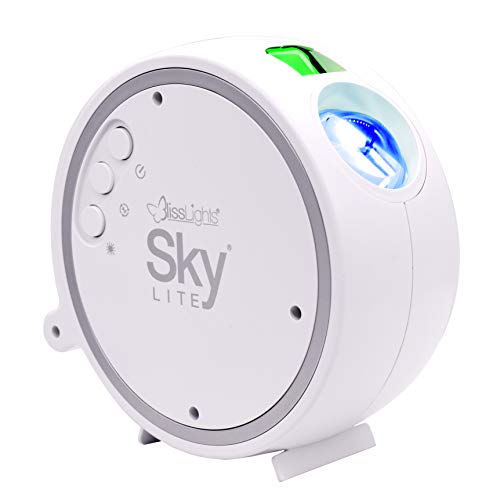
BlissLights Sky Lite — The green-star original
The Sky Lite is the lamp that taught a generation of buyers what this category actually does: it throws a field of green laser stars across a ceiling and lays a slow nebula wash behind them, turning a dark bedroom into something that feels like lying under a clear sky far from town. Its title names the rooms plainly — gaming room, home theater, bedroom — and names the job just as plainly: night light and mood ambiance. Nothing in that description promises a picture, a presentation or a film, and the lamp is better for the honesty. What it sells is atmosphere, delivered by light alone, with no source device, no screen and no content library involved at all.
Green is the defining choice in this version, and it deserves a buyer’s full attention before anything else. Green laser points read as the most star-like colour to eyes adjusted to darkness, which is why astronomy-flavoured lamps keep returning to it, and the contrast between those sharp green points and the softer nebula cloud behind them is the whole visual effect. A household that wants colour variety, app scenes or music reaction should look further down this list, because this lamp’s identity is a single, well-executed sky rather than a menu of them. A household that wants the ceiling above a gaming desk or a child’s bed to feel like the night sky will find the focus appealing.
- Light type named in the title: LED laser star projector with galaxy nebula lighting
- Star colour in this version: green
- Named uses: gaming room, home theater, bedroom night light, mood ambiance
- Bluetooth speaker: Not stated in the listing title — verify with the manufacturer documentation
- Coverage area: Not stated in the listing title — verify with the manufacturer documentation
- Timer and remote details: Not stated in the listing title — verify with the manufacturer documentation
Strengths
- The green laser star field is the most night-sky-like effect in this guide, sharp points against a soft nebula wash.
- Its purpose is unambiguous in the title — ambiance and night light — so expectations land exactly where the product does.
- No source device or content is needed; the lamp produces its entire effect by itself in a darkened room.
Trade-offs
- This version is green stars only; buyers wanting colour choice need a different pick in this guide.
- It cannot show images, video or presentations of any kind — it is a lighting effect, full stop.
- The title states no coverage figure, so very large ceilings are a gamble the listing does not settle.
Best for: a gaming room or bedroom ceiling where a single green star field over a nebula wash is the whole desired effect, night after night.
Not suited for: a room where anyone expects to watch content — this lamp has no image input or picture capability of any kind, only laser stars and nebula light.
Placement shapes the result more than any setting on a lamp like this. Aimed from a dresser or shelf toward the centre of the ceiling, the star field spreads widest; tucked into a corner it compresses into a bright patch with long tails. Because the effect lives on the ceiling, ceiling colour matters too — pale, matte surfaces return the nebula wash softly, while dark paint swallows the cloud and leaves mainly the star points standing out.
If the green-star version is the sky you pictured, the Sky Lite listing itself carries the current figure — glance at its page on Amazon before you settle the bedroom plan around it.
Ownership of a single-effect lamp teaches a household something the menu-driven lamps cannot: whether the ceiling ritual itself is loved, stripped of novelty features. Families who find, after a month, that the green stars are switched on nightly have learned their taste cheaply and can graduate within this guide knowing exactly which added feature — sound, scenes, voice — they actually missed. Families who find the lamp gathering dust have learned the same lesson at the lowest cost in the set, which is its own kind of value.

Govee Star Projector — The wide-coverage scene lamp
Govee’s entry is the most quantified lamp in this guide, and the numbers in its title sketch a particular household: one that wants the ceiling effect to be part of a connected, scheduled, whole-room routine rather than a novelty switched on by hand. The title states a 7-zone nebula effect, coverage of 540 square feet, more than fifty scenes, eighteen white-noise sounds and compatibility with Matter, the smart-home standard. Read together, those claims describe a sleep lamp for a large bedroom — a device that paints a wide ceiling, plays a sound bed, and answers to the same smart-home system as the rest of the house.
The coverage figure is the headline because it answers the question every buyer of the smaller lamps eventually asks: will it fill my ceiling? Five hundred and forty square feet is a generous room by any measure, and a title willing to print a number invites the buyer to measure their own ceiling and compare, which is exactly the right way to shop this category. The 7-zone wording matters alongside it — zones suggest the nebula is not one uniform wash but a field with variation across it, which is what keeps a large ceiling interesting rather than merely lit. For a primary bedroom where the lamp will run every night, that scale and variation are the argument.
- Effect named in the title: 7-zone nebula
- Stated coverage: 540 square feet
- Scenes stated: more than 50
- White noise sounds stated: 18
- Smart standard named: Matter compatible
- Named uses: bedroom LED night light, room decor, sleep lamp
Strengths
- The 540-square-foot coverage figure is stated outright, letting buyers match the lamp to a measured ceiling.
- More than fifty scenes give a nightly sleeper variety that single-effect lamps cannot offer.
- Matter compatibility lets the lamp join whole-house routines and schedules rather than living apart from them.
Trade-offs
- The title does not name a Bluetooth speaker function, so music playback should not be assumed from this listing.
- A lamp built around scenes and an ecosystem rewards setup time; buyers wanting one button and nothing else may prefer the Sky Lite.
- Its strengths target large bedrooms — in a small nursery the coverage and scene library are more than the room asks for.
Best for: a large primary bedroom whose owners already run a Matter smart home and want a scheduled sleep lamp painting the whole ceiling.
Not suited for: a household needing the lamp to double as the room’s music speaker — the title lists white noise but names no speaker or Bluetooth audio function.
The white-noise library deserves a word of its own, because it changes who this lamp is for. Eighteen sounds turn the device from decor into a sleep tool: the household that already sleeps to rain or fan noise can retire a separate sound machine and let one device own the bedtime routine, light and sound fading together. Households that sleep in silence lose nothing — the scenes run without sound — but they should know they are paying for a library they will not open.
For the Matter household, the Govee listing is where the current figure lives — open its Amazon page and confirm the scene count suits your ceiling before ordering.
A scene library changes its meaning over time in a way worth anticipating. In the first fortnight the fifty-plus scenes are a toy, auditioned nightly; by the second month the household has settled on three or four favourites and the library’s real gift reveals itself — seasonal and occasional variation, a different sky for a birthday, a stormy wash for a rainy weekend, without buying anything new. Judge the Govee less by whether you will use all its scenes and more by whether a handful of beloved ones, plus the freedom to change them, suits a lamp you will own for years.
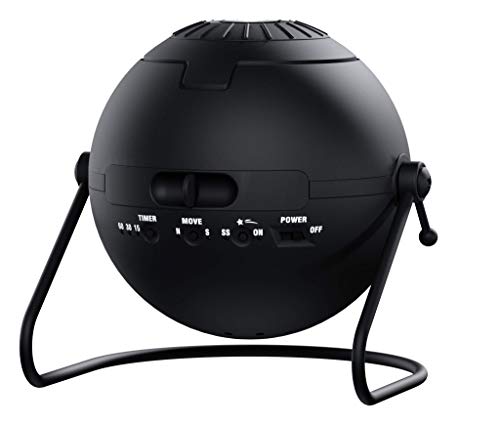
Sega Homestar Flux Planetarium — The planetarium purist
The Homestar Flux comes from a different branch of this family tree. Where most picks here descend from party lighting, the Homestar descends from the planetarium: Sega Toys builds home planetarium projectors, and this satin black unit is a star projector in that literal tradition — a device whose ambition is a recognisable night sky on the ceiling, not a coloured cloud with decorative sparkle. Its title is the shortest in this guide and the most restrained, naming the maker, the model, the finish and the category, and nothing else. Buyers who care about astronomy as a subject, not just a mood, are its audience.
That restraint cuts both ways and this review will not pretend otherwise. The title states no scene count, no speaker, no app, no coverage figure and no sound library, so every modern convenience found elsewhere in this guide must be treated as absent until the manufacturer’s documentation says otherwise. What the buyer gets instead is focus: a home planetarium from a maker whose name in this niche carries weight, in a finish — satin black — chosen to disappear into a dark room. For a teenager who can name constellations, or an adult who misses dark skies, that focus is the product. For a party room, it plainly is not.
- Maker and line: Sega Toys Homestar, home planetarium
- Model: Flux
- Finish: satin black
- Scene count: Not stated in the listing title — verify with the manufacturer documentation
- Speaker or app functions: Not stated in the listing title — verify with the manufacturer documentation
- Coverage area: Not stated in the listing title — verify with the manufacturer documentation
Strengths
- A true home planetarium lineage — the design brief is the night sky itself, not room decor.
- The satin black finish suits a dedicated dark room, telescope corner or astronomy-keen teenager’s bedroom.
- Its simplicity is a feature for purists: a star field, projected well, without a menu of party effects.
Trade-offs
- The title states no coverage figure, scene count or sound features — the sparsest specification in this guide.
- Buyers wanting nebula colour washes, music sync or white noise will find none of it claimed here.
- Planetarium accuracy depends on the discs and setup the documentation describes, which the title does not detail.
Best for: an astronomy enthusiast’s dark room, where a projected star field is studied and enjoyed for its own sake.
Not suited for: a children’s party room needing colour scenes and music — this title claims neither a speaker nor a single colour effect.
A planetarium lamp rewards a different evening ritual than the decor lamps around it. The others are background; this one is foreground — something a household gathers under, the way people once gathered around a telescope in a garden. It pairs naturally with a star atlas, a red torch and patience, and it is the only pick here a buyer might plausibly describe as educational without stretching the word. That is a narrower promise than the Govee’s, and for the right ceiling it is a deeper one.
Purists should read the Homestar Flux page on Amazon closely — its current figure sits there, and the listing’s own detail section is the place to confirm what the title leaves unsaid.
The Homestar also reframes what value means in this category. The decor lamps compete on features per purchase; a planetarium competes on the quality of attention it earns. A ceiling that a teenager studies — picking out the bright stars, learning the sky’s geography before a camping trip — is doing work no nebula wash attempts. Buyers torn between this and a feature-rich lamp should ask which evening they are actually buying: background glow for other activities, or the sky as the activity itself. The Homestar wins the second evening outright and does not enter the first.
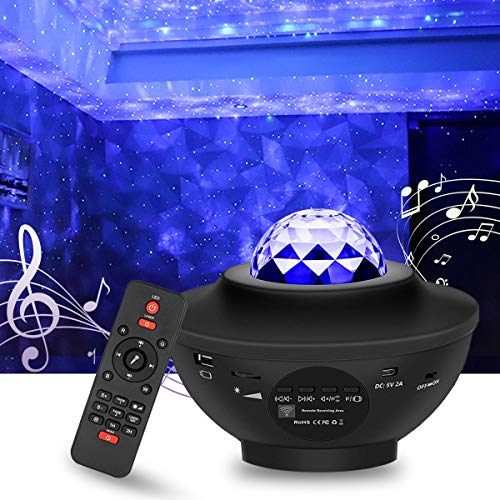
encalife Star Light Galaxy Projector — The speaker-equipped all-rounder
The encalife is the guide’s straightforward all-rounder: a bedroom galaxy lamp whose title lists the features most households actually ask for, in plain language. A Bluetooth speaker is built in. Brightness adjusts. Ten colour options cover the nebula. Timer modes let the lamp put itself to sleep. The imagery is described as starry space nebula clouds and a night sky, aimed at ambience in a bedroom. Nothing in that list is exotic, and that is precisely the appeal — this is the lamp for a buyer who read the fancier listings, felt the feature creep, and wanted the sensible middle with sound included.
The Bluetooth speaker changes the lamp’s social role. A ceiling effect paired with the household’s own music — a playlist, a podcast winding down, an audiobook chapter — becomes an evening device rather than a night light, and the timer modes complete the thought by letting the whole performance end itself after the room has gone quiet. Adjustable brightness matters more than it sounds, too: nebula lamps are frequently too bright at their single setting for genuine sleep use, and a lamp that can dim to a murmur is one that stays in the bedroom instead of migrating to a shelf.
- Imagery named in the title: starry space nebula clouds and night sky
- Audio: Bluetooth speaker built in
- Colour options stated: 10
- Brightness: adjustable
- Timer modes: stated in the title
- App or voice control: Not stated in the listing title — verify with the manufacturer documentation
Strengths
- The built-in Bluetooth speaker lets the ceiling effect run with the household’s own music and audiobooks.
- Adjustable brightness makes it usable as an actual sleep light, not only as a bright evening effect.
- Timer modes let light and sound end on their own after the room settles.
Trade-offs
- Ten colour options is a smaller palette than the app-driven lamps’ scene libraries elsewhere in this guide.
- The title states no coverage figure, so ceiling size matching is guesswork the listing does not resolve.
- No smart-home standard is named, so whole-house voice routines should not be assumed.
Best for: a bedroom that wants one device for ceiling ambience plus Bluetooth audio, dimmable enough to sleep under.
Not suited for: a smart-home household expecting voice or app control — the title names neither, only Bluetooth audio, timers and manual colour choice among its ten options.
Think of this lamp as the guest-room and teenager answer in the set. It asks nothing of its owner — no ecosystem, no account, no scene programming — and gives back the two things visitors and teenagers both want: a ceiling that looks like deep space and their own music floating under it. In a household with several bedrooms to furnish, that self-contained character is also a budgeting virtue, because the lamp needs no companions to be complete.
The encalife’s Amazon page holds its current figure — a quick visit there will also show the ten colours as the maker presents them, which words alone cannot settle.
The encalife’s ten colour options deserve a fairer reading than the raw count suggests. Ten well-chosen nebula colours, each dimmable, cover the practical range a bedroom uses — deep blues and violets for sleep, warmer tones for an evening, a green-leaning wash for the astronomy mood. Scene libraries running to dozens often pad their counts with variations few owners can tell apart. A buyer who values a short menu they will genuinely rotate through may find ten honest colours the better design, especially paired with the speaker the larger libraries sometimes lack.

Rossetta Galaxy Projector — The gift-ready egg light
The Rossetta announces its intentions in its own title: this is a gift, for Christmas and birthdays, for kids and adults, shaped like an egg and built to be handed over with a smile. That positioning is worth taking seriously rather than dismissing, because giftability is a real specification in this category — a lamp bought for someone else must delight on first switch-on, work without a manual-reading session, and suit a bedroom its buyer may never have seen. The Rossetta’s stated kit answers that brief directly: white noise for sleep, a Bluetooth speaker, music sync so the light answers the party, a timer, and a remote so none of it requires getting out of bed.
The egg form is doing quiet work in that brief. Most lamps in this guide are anonymous black boxes; an egg light is an object, something that looks intentional on a nightstand even at noon with its light off. For a child’s room that matters — the device is part of the room’s furniture, not a gadget tolerated by it — and for gift-givers it removes the risk of handing over something that looks like surveillance equipment. Music sync, meanwhile, is the party trick that justifies the gift at gatherings: the ceiling pulses with whatever is playing, and the lamp earns its applause in the first minute.
- Form named in the title: egg light for the bedroom
- Audio: white noise and a Bluetooth speaker
- Music sync: stated in the title
- Controls: timer and remote included in the title description
- Scene or colour count: Not stated in the listing title — verify with the manufacturer documentation
- Smart-home compatibility: Not stated in the listing title — verify with the manufacturer documentation
Strengths
- Remote control and timer make it operable from bed — the feature gift recipients actually use nightly.
- Music sync gives it a party life the sleep-focused lamps here do not claim.
- The egg shape reads as bedroom decor in daylight, not as equipment.
Trade-offs
- The title states no colour count or coverage figure, so its ceiling performance is the least quantified here.
- No app or smart standard is named; households wanting scheduled scenes should look at the Govee or CHIGIH.
- Its gift-first design brief means astronomy purists get ambience, not a planetarium sky.
Best for: a child’s or teenager’s bedroom given as a present, where remote control, white noise and music sync will all be used in the first week.
Not suited for: a buyer matching a lamp to a measured large ceiling — this title prints no coverage area and no scene count to match against.
There is a sensible way to gift any lamp in this guide and the Rossetta makes it easiest: pair it with the ritual, not just the object. A note saying the white noise is for the first school night, or that the remote lives on the pillow side, turns a gadget into a kept thing. The Rossetta’s breadth — sleep sound, speaker, sync, remote — means almost any recipient finds one feature that becomes theirs, which is the quiet definition of a successful gift in this category.
Gift-buyers can confirm the Rossetta’s current figure on its Amazon listing — worth doing before the birthday, not after it.
The remote deserves one more paragraph, because in practice it decides where the Rossetta lives. Lamps without remotes migrate toward sockets and switches; lamps with them migrate toward bedsides and stay there, within reach of the person they serve. For an elderly parent, a child in a bunk bed, or anyone whose mobility makes crossing a dark room a genuine cost, that small plastic rectangle is not an accessory but the feature that makes the whole product usable — and it is stated in this title while several dearer lamps here leave the point unmentioned.
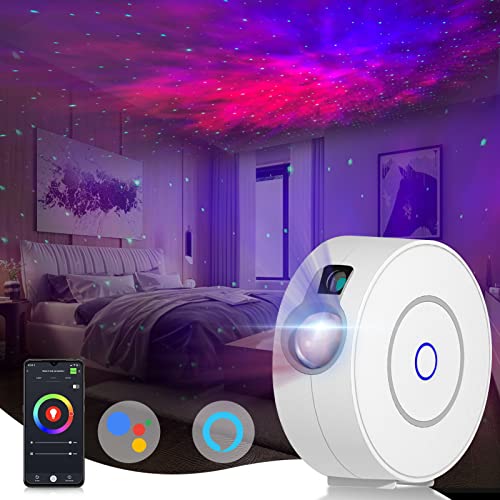
CHIGIH Galaxy Projector — The app and voice aurora
The CHIGIH aims its nebula at a specific aesthetic: the northern lights. Its title describes an LED starry-sky nebula lamp for the bedroom ceiling, app and voice controlled, styled as an aurora projector for room and party decor, and offered as a birthday gift for teens and women. The aurora framing matters because it sets the colour expectation — flowing curtains of green and violet light rather than a static star field — and the control story matters just as much: app and voice are the two hands-free routes the other lamps mostly lack, letting the ceiling answer a spoken word or a phone across the room.
Voice control sounds like a luxury until the lamp is installed where these lamps actually live: on a shelf or dresser across the room from the bed, aimed at a ceiling its owner watches while lying down. Every trip to adjust a lamp like that is a small defeat for the whole idea of a relaxing ceiling, which is why the remote-equipped Rossetta and this voice-and-app CHIGIH solve the same problem from opposite ends. The app route also suits the party half of its brief — a host can steer the aurora from the same phone running the playlist, without leaving the conversation the light is decorating.
- Effect named in the title: LED starry sky nebula, northern lights styling
- Placement named: bedroom ceiling projector
- Control: app and voice control stated
- Named uses: room and party decor
- Speaker function: Not stated in the listing title — verify with the manufacturer documentation
- Coverage area: Not stated in the listing title — verify with the manufacturer documentation
Strengths
- App and voice control together give the widest hands-free control story in this guide.
- The northern-lights styling offers a flowing aurora look distinct from static star fields.
- Its party-decor brief makes it a social lamp, not only a sleep lamp.
Trade-offs
- The title names no built-in speaker, so music sync or audio playback should not be assumed.
- No coverage figure or colour count is stated, leaving ceiling fit unverified by the listing title.
- App control implies an account and setup that the one-button lamps here avoid entirely.
Best for: a teen bedroom or party room where the aurora should answer voice commands and an app from across the room.
Not suited for: a sleeper wanting built-in white noise or a speaker — this title claims neither, unlike the Govee, encalife and Rossetta listings.
The aurora look deserves one honest caveat that applies to every lamp here but bites this one hardest: a flowing-light effect is only as good as the darkness around it. Streetlight leaking through thin curtains, a bright hallway under the door, a television left glowing — each one flattens the curtains of colour into a faint wash. Buyers drawn to the CHIGIH should budget a thought for blackout curtains alongside it; the lamp supplies the sky, but the room must supply the night.
If voice control is your deciding feature, the CHIGIH listing on Amazon carries the current figure — check it there alongside the maker’s own aurora photographs.
Voice control also future-proofs the CHIGIH in a modest, practical sense: households add voice assistants room by room, and a lamp already fluent in that language joins each new routine without replacement. The aurora styling helps its longevity from the other direction — flowing curtains of light date more slowly than novelty effects tied to a season’s fashions. A buyer furnishing a room for years rather than a term should weigh that steadiness alongside the missing speaker, because the lamp that stays is always better value than the lamp that dazzles and is replaced.
Comparison Table
| Pick | Headline figure from its title | Defining trait | Main limit |
|---|---|---|---|
| BlissLights Sky Lite | Green laser stars, nebula wash | The original single-effect sky | Green only; no stated coverage |
| Govee Star Projector | 540 square feet, 50+ scenes, 18 white-noise sounds | Quantified scene lamp with Matter | No speaker named in title |
| Sega Homestar Flux | Home planetarium, satin black | Astronomy-first star field | Title states no scenes, sound or coverage |
| encalife Star Light Galaxy | Bluetooth speaker, 10 colours, timers | Dimming all-rounder with audio | No coverage figure stated |
| Rossetta Galaxy Projector | Egg light, white noise, music sync, remote | Gift-ready, bed-operable | No colour count or coverage stated |
| CHIGIH Galaxy Projector | App and voice control, aurora styling | Hands-free northern lights | No speaker or coverage stated |
How to Choose
Choose the family first. If the ceiling is for studying the sky, the planetarium entry stands alone and the decision is already made. If the ceiling is a mood — deep space above a bed, a gaming desk, a party — the nebula lamps compete, and the contest moves to sound and control. If the ceiling is part of a nightly routine in a connected home, the scene lamp’s library and scheduling pull ahead of any single beautiful effect.
Measure the ceiling before falling for a lamp. Only one title here prints a coverage area, and it is a large one; for the other five, the honest method is to darken the room, note the ceiling’s size, and accept that a lamp lighting a double bedroom may leave a big open-plan ceiling patchy at the corners. Smaller rooms forgive almost everything in this guide; very large rooms forgive only the quantified pick, or a pair of lamps run together.
Decide the sound question separately from the light question. A household with a good speaker already in the bedroom gains little from a lamp that duplicates it, while a household with no audio in the room may find the speaker lamps’ second job decisive. The same logic applies to white noise: devoted sound-machine sleepers should note exactly which titles claim a library, and silent sleepers should not pay the idea any attention at all.
Consider who else uses the room. A nursery ceiling is watched by a parent at 3 a.m. as much as by the baby; a gaming room ceiling is a backdrop for people on camera as much as for the player; a guest room ceiling is a small act of hospitality. The lamp that suits the room’s second audience — dim enough for the parent, lively enough for the stream, simple enough for the guest — is frequently a different lamp from the one that suits its first, and this guide’s reviews try to keep both audiences in view.
Can a star projector replace a night light for a child?
For most children, yes — and the picks here divide by how well they handle the job’s unglamorous half. A child’s night light must dim, must switch itself off, and must not need an adult’s phone to behave. The encalife’s adjustable brightness and timer modes answer that brief in its title; the Rossetta adds a remote and white noise for children who settle to sound. The brighter, scene-rich lamps can overwhelm a small child’s room at full tilt, and the planetarium lamp is better saved for a child old enough to enjoy the sky as a subject rather than as a glow.
One caution belongs in every child’s-room discussion of laser star lamps: the stars are laser light, and the lamps are built to be aimed at ceilings, not into eyes. Placed on a stable surface out of reach, aimed upward, they do the job they were designed for; treated as a torch or a toy gun, they are misused in the one way that matters. Buy the lamp, place it deliberately, and let the ceiling have it.
Do these lamps work in a room that never gets fully dark?
Poorly, and the buyer deserves that answer unsoftened. Every effect in this guide is light projected onto a surface, competing with whatever light the room already holds; a lamp that looks like deep space at midnight looks like a faint stain under evening lamplight. The nebula lamps suffer most, because their clouds are the dimmest element in any of these displays, while sharp laser star points survive twilight longest. Households with streetlight flooding through thin curtains will get a fraction of the effect they paid for until the window is dealt with.
That physics also explains why brightness adjustment matters in the opposite direction from the one buyers expect. In a truly dark room, several of these lamps are bright — bright enough to read as entertainment rather than sleep aid — which is why the dimmable and scene-based picks earn their keep at bedtime. The category’s sweet spot is a room that can be made properly dark and a lamp that can then be turned down to live in it gently.
How should a ceiling lamp be placed for its best effect?
Placement is the cheapest upgrade in this category, because every lamp here improves dramatically with thirty seconds of thought. Aim from near the room centre when possible — a dresser, shelf or nightstand under the ceiling middle spreads the effect to all four corners evenly, while a lamp exiled to a corner spends half its light on one wall. Keep the surface stable and the lamp level; a tilted base skews star fields and aurora curtains alike, and a wobbling shelf turns a sleep aid into a worry.
Height matters in the opposite direction from intuition: a lower lamp throws a wider, softer field, while a lamp placed high concentrates brightness into a smaller, more intense patch. Bedrooms usually want the wide and soft version. Finally, clear the ceiling in your mind before ordering — beams, ceiling fans and dark paint all edit the picture, and the buyer who has pictured them honestly will not blame the lamp for architecture.
Common Mistakes
Buying one of these lamps to watch anything is the category’s founding error, and it still happens weekly: a buyer searches for a projector, meets a galaxy lamp, and discovers at home that stars are all it will ever show. Read the first section of this guide again if any doubt remains — light effects only, beautiful ones, and nothing else. A related error is buying for a bright room; these are darkness devices, and a lamp bought for a sunlit playroom will disappoint by lunchtime.
Overlooking control is the quieter error. A lamp that must be crossed to and adjusted by hand will be adjusted less, then used less, then shelved — the reviews here therefore state each pick’s control route plainly, from manual lamps through the Rossetta’s remote to the CHIGIH’s app and voice. Match the route to the room’s geography: the distance from pillow to lamp is the measurement that predicts whether the lamp is still in nightly use by spring.
Assuming a feature from a photograph causes the third class of returns. Listing images across this category show effects and settings the titles do not always claim, and this guide’s discipline — features only where a title states them, silences labelled as silences — exists precisely because a buyer cannot return a hope. Where a spec box here says a point is not stated in the listing title, treat the feature as absent, and let any pleasant surprise stay a surprise.
Skipping the ceiling itself is the final oversight worth naming. Buyers measure walls for televisions and floors for rugs, then order a ceiling lamp without once looking up: beams cross the field, a fan owns the centre, the paint is a deep colour chosen years ago for drama. Each of those facts edits the effect, and none of them is the lamp’s fault. The thirty seconds spent studying the actual ceiling, fan and all, is the highest-value research this category offers.
Final Recommendation
Match the lamp to the ceiling’s purpose and the choice narrows quickly. Astronomy takes the Homestar Flux. A large, connected bedroom takes the Govee and its stated 540 square feet. The classic green-star sky takes the Sky Lite. A self-contained bedroom with its own music takes the encalife; a gift takes the Rossetta; a voice-controlled aurora takes the CHIGIH. None of them will show a film, all of them will change a ceiling, and the right one is the one whose stated features — not its photographs — describe your room.
Stand under the ceiling you are buying for, lights off, and look up for a full minute before you order — the lamp you choose will live up there for years, and it should be chosen by the person who will actually lie beneath it.
A last word about buying two. Households furnishing siblings’ rooms or a bedroom plus a nursery often ask whether matched lamps or different ones serve better, and the answer follows the children rather than the decor: matched lamps end arguments, different lamps honour different sleepers. The Govee’s scenes can calm one room while the Rossetta’s white noise settles another, and nobody’s ceiling has to be a compromise. Buy for the sleeper under each ceiling, not for symmetry in a hallway photograph.
And if the ceiling in question belongs to a child who has asked for stars by name, let them choose between the final two lamps on your shortlist — a ceiling chosen is a ceiling used, and the modest difference between two good lamps matters far less than the ownership a young sleeper feels over the sky above their own bed. Adults furnishing their own rooms would do well to grant themselves the same courtesy: pick the effect you keep picturing, because that picture is the one you will switch on.
Frequently Asked Questions
Can any of these projectors play movies or connect to a phone for video?
No. All six are effect lamps that generate their own light patterns — stars, nebula clouds, aurora curtains. None accepts video input or displays images, photos, games or presentations. A phone connects to some of them only as a music source over Bluetooth or as a control app, never as a picture source.
Which pick is best for falling asleep?
[“The Govee and the Rossetta both claim white noise in their titles, and the encalife adds adjustable brightness with timer modes — the three sleep-relevant toolkits in this guide. Silent sleepers who want only dim light should weigh the encalife’s dimming; sound sleepers should choose between the Govee’s eighteen stated sounds and the Rossetta’s remote-operated set.”]
How large a ceiling can one lamp cover?
Only the Govee title answers with a figure: 540 square feet. For the other five, no coverage is stated in the listing title, so buyers with large or open-plan ceilings should expect the effect to concentrate over the lamp and fade toward distant corners, or plan on two lamps.
Are the star effects lasers, and does that matter?
[“The BlissLights title names LED laser stars explicitly, and laser points are what give star fields their sharpness. It matters mainly for placement: aim at the ceiling from a stable surface, keep the lamp out of children’s hands as a toy, and the design does the rest.”]
Which lamp works without any app or account?
[“The Sky Lite, the Homestar Flux and the encalife make no app claim in their titles and are the natural choices for a lamp that simply switches on. The Rossetta’s remote keeps it bed-operable without a phone, while the Govee and CHIGIH build their control stories around smart systems and apps respectively.”]
Do star lamps need bulb changes or much power?
These are LED and laser light devices rather than bulb projectors, and none of the six titles here discusses replaceable bulbs or consumable parts; the ownership story they tell is electronic. Running costs belong to each listing’s own detail, and this guide invents no consumption figures — buyers should expect a night-light class of device rather than a home-cinema class of expense, and confirm any specific figure in the manufacturer documentation before budgeting around it.
Can two different lamps be combined on one ceiling?
Yes, and some rooms are better for it: a planetarium star field from the Homestar layered under a faint nebula wash from a dimmed encalife gives a depth neither produces alone. The discipline is hierarchy — one lamp leads at full presence, the other supports at low brightness — because two lamps competing at full tilt produce a busy ceiling that relaxes nobody. Experiment on the first evening, agree the settings as a household, and then leave them alone.
Related Guides
Ceiling lights sit at the gentle end of this site’s projector coverage; the neighbouring guides cover machines that do show pictures: our daylight projector guide, for image projectors bright enough to fight a lit room, the true 4K projector guide, where resolution claims are separated into native and shifted, our classroom AV projector guide, for projectors bought to teach with.


