What's inside
- Where to Buy
- Key Takeaways
- Quick Picks
- How We Chose These Picks
- Comparison
- How to Choose
- What Actually Ends a Documentary Shoot Early?
- How Much Camera Does a First Documentary Really Need?
- How Should a Documentary Camera Behave in Somebody Else’s Home?
- Common Mistakes
- Final Recommendation
- Frequently Asked Questions
- Related Guides
As an Amazon Associate I earn from qualifying purchases. This post may contain affiliate links at no extra cost to you.
[SITE_DOMAIN] is reader-supported. When you buy through links on our site, we may earn an affiliate commission.
Where to Buy
Documentary bodies are rarely the whole purchase, so read these listings as anchors for systems. The Sony FX6 is listed as a body from Sony’s Cinema Line, the Sony FX3 bundle arrives with a 128GB card, battery and case among its extras, the Canon EOS C70 bundle includes a 64GB card, the Canon EOS C100 Mark II is a body with an EF lens mount, the Nikon ZR bundle brings a 50mm lens in the box, and the Sony a6400 kit pairs its body with an 18-135mm lens. Confirm each bundle’s contents on its page, because the extras change what remains to be bought.
Documentary filming is mostly waiting, and the best video cameras for documentary filmmaking are the ones still recording, still in focus and still welcome in the room when the waiting finally pays off. A subject forgets the camera exists at about the forty-minute mark; a battery, a card or a record limit that asserts itself before then has not merely interrupted a shoot, it has taxed the trust the whole enterprise runs on. Everything in this guide was judged against that long, unglamorous day: the interview that runs past its schedule, the workshop light that turns for ninety seconds, the procession that happens once.
The six cameras below divide by philosophy more than by price. Four are dedicated cinema bodies — two Sony Cinema Line cameras, two Canon cinema cameras spanning a decade of the form — built to live on rigs and tripods and to be operated deliberately. One is Nikon’s new cinema entry, sold here with the lens that makes it a working camera on arrival. And one is a small mirrorless stills-and-video hybrid whose documentary career is built on being unremarkable enough to take anywhere. Each philosophy has finished real films. The guide’s job is to match philosophy to production, not to crown a universal winner.
Honesty anchors the judgements that follow. Only what a listing title states is treated as specification: where a title prints recording formats, dynamic range or audio claims, they are discussed; where it is silent about record limits, stabilisation or sensitivity, the spec box records the silence. Documentary buyers, of all buyers, cannot afford assumptions — their subjects rarely agree to a second take.
Key Takeaways
- Sony’s FX6 states 4:2:2 10-bit recording up to QFHD 4K 120p in its title — the guide’s flagship cinema specification.
- The FX3 bundle arrives as a working kit with card, battery, cable, cleaning kit and case included.
- Canon’s EOS C70 states 16+ stops of dynamic range, built-in ND filters and C-Log 2 in its title.
- The EOS C100 Mark II is the elder statesman: an EF-mount cinema camcorder body with Dual Pixel CMOS AF.
- Nikon’s ZR bundle pairs a 6K full-frame cinema camera with a 50mm lens, RED colour science and 32-bit float audio as titled.
- Sony’s a6400 kit is the discreet option — a mirrorless body with an 18-135mm lens for unobtrusive filming.
Quick Picks
| Pick | Badge | Why it made the cut |
|---|---|---|
| Sony FX6 | Best flagship documentary body | Full-frame Cinema Line camera stating 10-bit 4:2:2 recording up to 4K 120p. |
| Sony FX3 Bundle | Best ready-to-shoot cinema kit | Full-frame cinema body bundled with card, spare battery, cable, cleaning kit and case. |
| Canon EOS C70 Bundle | Best dynamic-range pick | 16+ stops of dynamic range, ND filters and C-Log 2 as stated in the title. |
| Canon EOS C100 Mark II | Best EF-mount veteran | A proven cinema camcorder body with Dual Pixel CMOS AF for EF lens owners. |
| Nikon ZR 50mm Bundle | Best new-system entry | 6K full-frame cinema camera with 50mm lens, RED colour science and 32-bit float audio. |
| Sony a6400 18-135 Kit | Best discreet companion | A compact mirrorless kit whose 18-135mm lens covers a documentary day quietly. |
How We Chose These Picks
Selection began with failure modes, because documentaries fail in the field rather than the studio. What ends a take? A full card nobody noticed, a battery that quits during the answer that mattered, focus that drifts while a subject leans into their point, light that changes faster than the exposure plan. Cameras earned their places by answering those failures well — through stated recording depth, bundled power and media, autofocus systems their titles name, or simply the smallness that keeps a room relaxed.
Crew size drew the second line. A solo documentarian needs a camera that forgives: dependable autofocus, manageable size, a workflow one pair of hands can run while also conducting an interview. A two-person crew can trade forgiveness for image character, working a deliberate cinema body the way it asks to be worked. This guide contains both arrangements and labels them, because recommending a demanding body to a solo shooter is a disservice dressed as ambition.
Sound was weighed as a first-class citizen, as it must be in a genre remembered for its voices. Only one title here makes an explicit audio claim — the Nikon ZR’s stated 32-bit float audio — and it is discussed at length in its section. Elsewhere, this guide refuses to credit cameras with audio features their titles do not state, and says plainly that a documentary budget should fund microphones before it funds resolution.
Finally, ecosystems were treated as decade-long decisions. A documentary body anchors lenses, rigs, habits and muscle memory; Sony’s E-mount, Canon’s EF and RF worlds and Nikon’s Z mount each imply a different future of purchases. The sections below speak to those futures rather than pretending a body is a gadget bought in isolation.

Sony FX6 — Best flagship documentary body
The FX6’s title is a specification sheet in miniature: a Sony Cinema Line full-frame camera offering up to 4:2:2 10-bit recording, QFHD 4K at up to 120p, DCI recording up to 60p and Full HD up to 240p. Unpack that slowly, because each clause maps onto a documentary situation. The 10-bit 4:2:2 recording is the colourist’s clause: documentary light is found light — a subject’s kitchen lit by a window and a fridge bulb — and material recorded with that depth survives the corrections found light demands. Skin tones can be pulled back to humanity; a blown window can be argued with. Productions shooting thinner formats discover in the edit which scenes they have lost; the FX6’s stated recording exists to lose fewer of them.
The frame-rate clauses are the vérité clauses. QFHD 4K up to 120p means slow motion at full documentary resolution: the blacksmith’s hammer, the dancer’s turn, the moment a fishing net breaks the surface — real events whose emotional weight expands when time stretches. Full HD up to 240p goes further for inserts and action fragments. DCI up to 60p serves productions finishing for theatrical or festival projection, where the DCI frame is the native language. A documentary body that covers broadcast, festival and web deliverables from one sensor is not indulging its owner; it is simplifying the production’s entire delivery conversation.
Full-frame, in documentary terms, is a low-light and depth argument. The night-shift ward, the pre-dawn market, the bar where the story lives: a full-frame cinema body keeps faces legible in available darkness and lets a background fall away so a subject sits forward in the frame. The operational tax is focus — at wide apertures on moving subjects, sharpness is a razor’s edge — and crews should staff for it honestly, with a focus puller on narrative-leaning work or a modest aperture and trust in the system on solo days.
Cinema Line membership is the fourth clause, implied by the title’s first words. It means the body was designed for rigs, monitors, professional audio ecosystems and twelve-hour days rather than adapted from a stills camera’s weekend. Documentary units build their working lives around such bodies precisely because the accessories, media habits and colour pipeline extend across the line: an FX6 today can be joined by smaller Cinema Line bodies tomorrow and the footage will sit together in the edit without a colourist’s mediation.
None of this makes the FX6 the right camera for every documentary — its section in the final recommendation is deliberately narrow. It makes it the right camera for productions whose deliverables, light and crew can exploit what its title states. Those productions can check the Sony FX6 on Amazon and plan the lens and media budget with the seriousness the body deserves.
- Line: Sony Cinema Line, full-frame, per the listing title
- Recording: Up to 4:2:2 10-bit, per the listing title
- Frame rates: QFHD 4K up to 120p, DCI up to 60p, FHD up to 240p, per the listing title
- Model: ILME-FX6, per the listing title
- Record limit: Not stated in the listing title — verify with the manufacturer documentation
- Stabilisation: Not stated in the listing title — verify with the manufacturer documentation
Strengths
- Stated 10-bit 4:2:2 recording forgives mixed documentary lighting in the grade.
- High frame rates at 4K and FHD serve slow-motion vérité and inserts.
- Full-frame Cinema Line body anchors a professional multi-camera ecosystem.
Trade-offs
- Body-first purchase: lenses, media and audio are all additional budget.
- Full-frame focus at wide apertures taxes a solo operator.
- Its capabilities are wasted on productions finishing quickly for social clips.
Best for: a funded documentary unit shooting interviews and vérité for broadcast or festival delivery.
Not suited for: a one-person travel shoot where the camera must vanish into a shoulder bag.
A typical FX6 documentary day explains its professional following. Dawn: slow-motion market footage at high frame rate while the light is kind. Midday: the long interview, the body on sticks behaving like the shrunken cinema camera it is. Evening: available-darkness interiors where the full-frame sensor earns its hire. The same media, menus and colour science carry all three, and consistency across a day is the invisible feature working filmmakers actually buy.
Growth economics complete the case. Documentary careers are built over years on gradually owned kit, and a flagship body that shares its mount and pipeline with a whole professional line never becomes a dead end: it starts as the A-camera and remains professionally useful for a decade. Few purchases in a documentarian’s life amortise that gracefully.

Sony FX3 Bundle — Best ready-to-shoot cinema kit
The FX3 needs little introduction to documentary crews — a full-frame cinema camera in Sony’s compact Cinema Line form — but this listing’s interest lies in its bundle: the body arrives with an HDMI cable, a 128GB memory card, an NP-FZ100 battery, a cleaning kit and a case, described for professional video production. Read that bundle as a producer would. The card and battery mean the camera can work the day it lands; the case means it can travel; the cleaning kit acknowledges that documentary cameras live in dusty workshops and damp harbours rather than studios. Bundles often pad a box with novelties; this one reads like a kit list written by somebody who has lost a shoot day to a missing cable.
The body’s own documentary territory is the dark. A full-frame cinema sensor in a compact body serves the night and interior stories documentaries increasingly tell — the baker at 3 a.m., the night bus, the last train’s regulars — where smaller formats surrender faces to noise. Compactness matters as much as sensitivity here: an FX3-based rig stays small enough for a two-person crew to move through real spaces without turning every doorway into a negotiation, and small enough that subjects continue their lives around it instead of performing for it.
Cinema Line kinship with the FX6 above is the strategic point. The two bodies share a mount, a colour philosophy and an accessory world, so a production can run the FX3 as its discreet A-camera on solo days and as the second angle beside an FX6 on interview days, with footage that intercuts without a fight. Documentary units are built exactly this way in practice, and a bundle that starts the smaller body working immediately accelerates the whole arrangement.
The honest cautions mirror the FX6’s. Full-frame depth of field is an aesthetic gift and an operational tax on moving subjects; the body still expects lenses, audio and support to be budgeted around it; and the bundle, welcome as it is, does not include those larger decisions. Buyers should also confirm the bundle’s exact contents on the listing page, because bundle compositions are the part of any listing most likely to drift over time.
Crews who want the full-frame cinema look without a flagship body’s scale can see the Sony FX3 bundle on Amazon and note how much of a working kit the box already covers.
- Line: Sony full-frame cinema camera, body only bundle, per the listing title
- Bundle: 128GB memory card, NP-FZ100 battery, HDMI cable, cleaning kit, case, per the listing title
- Use: For professional video production, per the listing title
- Recording formats: Not stated in the listing title — verify with the manufacturer documentation
- Record limit: Not stated in the listing title — verify with the manufacturer documentation
- Stabilisation: Not stated in the listing title — verify with the manufacturer documentation
Strengths
- Bundle covers media, power, transport and care from day one.
- Compact full-frame cinema body suits night and interior stories.
- Shares the Cinema Line ecosystem with the FX6 for two-camera units.
Trade-offs
- Lenses and audio remain separate, significant purchases.
- Brief title leaves recording details to manufacturer documentation.
- Full-frame focus discipline is demanded of small crews.
Best for: a small documentary crew wanting full-frame cinema images in a body that arrives ready to work.
Not suited for: a daytime, deep-focus observational project better served by a smaller-format camera.
Consider the two-camera interview, the workhorse setup of modern documentary. The FX3 takes the tighter angle — the face, the hands — while a wider body holds the room. Because both cameras speak the same colour language, the edit cuts between them invisibly, and the interview’s rhythm belongs to the subject rather than to the colourist’s repair work. That invisible competence, more than any single specification, is what a Cinema Line bundle is really selling.
And when the production travels, the case in the bundle stops being packaging and becomes logistics: one protected box, camera and essentials together, that a producer can hand to a fixer or check into a hold with a clear conscience. Documentary gear earns its keep in transit as much as on set.

Canon EOS C70 Bundle — Best dynamic-range pick
The C70’s title makes three claims that documentary filmmakers should read slowly: Dual Pixel AF, 16+ stops of dynamic range, ND filters and C-Log 2, in a cinema camera bundled with a 64GB memory card. Dynamic range first, because documentary light is adversarial. The interviewee sits beside a window; the workshop door opens onto noon sun; the archive room is lit by a single bulb. Sixteen-plus stated stops is the camera’s promise to hold the face and the window in the same frame — to keep the highlight detail that tells the viewer where they are, without sacrificing the skin tones that tell them who they are watching. Range is not a laboratory number in this genre; it is the difference between a scene and a silhouette.
Built-in ND filters are the working filmmaker’s version of the same promise. Neutral density inside the body means exposure can be governed without screwing filters onto lenses between setups — the cloud breaks, the subject steps outside, the camera adapts in a click rather than a rummage. On fast-moving observational days, that speed is the difference between following the story and apologising to it. Cameras without internal ND can of course be filtered externally, but every documentary operator knows the mathematics of friction: the step that takes ten seconds gets skipped on the day everything happens at once.
C-Log 2 is Canon’s log recording profile named in the title, and its presence signals the intended workflow: footage shot flat, graded deliberately, finished by somebody who treats colour as part of the storytelling. Dual Pixel AF, also named, is the solo operator’s counterweight — Canon’s long-refined autofocus entrusted with the seated interview and the walking contributor while the operator conducts the conversation. A cinema camera that pairs a colourist’s recording with an autofocus a one-person crew can trust is aiming squarely at the modern documentary unit, and hitting it.
The bundled 64GB card makes the box shoot-ready in the small-print sense, and the bundle framing — for professional video and streaming — acknowledges that documentary cameras now also feed live events, remote interviews and festival Q and A sessions. Productions whose light cannot be controlled and whose crews cannot be enlarged can check the Canon EOS C70 bundle on Amazon and weigh its stated range against their worst-lit location.
- Type: Canon EOS C70 cinema camera, per the listing title
- Dynamic range: 16+ stops DR, per the listing title
- Filters: Built-in ND filters, per the listing title
- Recording: C-Log 2, per the listing title
- Autofocus: Dual Pixel AF, per the listing title
- Bundle: Includes 64GB memory card, per the listing title
Strengths
- Stated 16+ stops hold faces and bright windows in one frame.
- Internal ND filters adapt exposure without lens-front delays.
- Dual Pixel AF supports solo interview and walking-subject work.
Trade-offs
- Log workflow expects grading time and skill in post.
- Resolution and frame-rate details are not stated in the title.
- Bundle card is a start; a long documentary day needs more media.
Best for: documentary crews filming uncontrolled light — windows, workshops, weather — with small teams.
Not suited for: a shoot-and-publish workflow with no grading stage, where log footage would ship unfinished.
Picture the classic documentary trap: an elderly subject, a bright window, a lifetime of photographs on the wall behind. Expose for the face and the room vanishes into white; expose for the room and the face becomes a mask. Range is what lets the camera refuse that choice, and the C70’s title states its refusal in numbers. Filmmakers who shoot in real homes — which is to say, documentary filmmakers — should weight that claim as heavily as any in this guide.
The C70 also suits the streaming-adjacent documentary life its bundle names: the recorded interview in the morning becomes the live remote conversation in the afternoon, and a cinema body comfortable in both chairs saves a production from owning two lesser tools.

Canon EOS C100 Mark II — Best EF-mount veteran
Every guide needs its elder, and the C100 Mark II has earned the title honestly. Its listing states a cinema camcorder body with the Dual Pixel CMOS AF feature upgrade and an EF lens mount. Read that as a portrait of a working tool from the generation that taught a decade of documentarians their craft: a dedicated camcorder form — built to be held, shouldered and run for hours — wearing the most widely owned lens mount in documentary history. The EF mount is the argument. Across the world, drawers and kit bags hold EF lenses bought for earlier bodies; a C100 Mark II turns that existing glass into a cinema system without a single new lens purchase, and for productions whose money belongs elsewhere, that compatibility is worth more than novelty.
Dual Pixel CMOS AF, called out in the title as a feature upgrade, marked the moment camcorder autofocus became trustworthy for documentary work — the seated subject who leans, the contributor who gestures their way across a room. Owners of this body built interview styles around that trust. A guide written from titles must be careful about what else it claims for an older camera, and this one will not invent recording specifications the listing does not state; the spec box below is correspondingly plain, and buyers should take detailed formats from Canon’s documentation.
What can be said without invention is the role. This is the camera for the production that values a proven, dedicated video form and owns EF glass: community documentaries, institutional films, wedding-and-event documentarians crossing into longer forms, and B-camera duty beside newer Canon bodies where its image and handling remain professionally respectable. Age in a camera is not the insult marketing pretends; in documentary, a body whose behaviour is known by thousands of working shooters is a form of reliability no launch event can confer.
There is also a training argument. Crews learning documentary craft on a dedicated camcorder learn video-first habits — audio awareness, exposure discipline, recording stamina — rather than stills habits adapted to motion. Schools, community media centres and first-time feature units have started on this class of body for years, and their graduates’ footage shows it.
EF lens owners looking for a dedicated cinema body can look at the Canon EOS C100 Mark II on Amazon and match its mount against the glass already on their shelves.
- Type: Cinema camcorder body, per the listing title
- Mount: EF lens mount, per the listing title
- Autofocus: Dual Pixel CMOS AF feature upgrade, per the listing title
- Model: EOS C100 Mark II, per the listing title
- Recording formats: Not stated in the listing title — verify with the manufacturer documentation
- Sensor size: Not stated in the listing title — verify with the manufacturer documentation
Strengths
- EF mount unlocks the world’s deepest pool of existing documentary lenses.
- Dedicated camcorder form suits hours-long handheld and tripod work.
- Dual Pixel CMOS AF supports interview and walking-subject filming.
Trade-offs
- Older generation: current formats must be checked in documentation.
- Title states no resolution or frame-rate figures at all.
- Body only — though many buyers already own its lenses.
Best for: an EF-owning documentarian or institution wanting a proven, dedicated cinema camcorder body.
Not suited for: a production whose delivery contract demands the newest stated recording specifications.
Second-unit and teaching roles extend this body’s working life further. As a locked-off wide camera on interviews, a workshop camera for process footage, or the body a trainee operates while the A-camera carries the close-up, a veteran camcorder earns its shelf space in ways a spec comparison cannot capture. Documentary units are ecosystems, and reliable elders hold ecosystems together.
Buy it with clear eyes — for its mount, its form and its known behaviour — and it will not disappoint. Buy it expecting a current flagship’s stated numbers and the disappointment will be of the buyer’s own drafting, not the camera’s.

Nikon ZR 50mm Bundle — Best new-system entry
Nikon’s arrival in dedicated cinema cameras is the news story of this guide, and the ZR’s title announces it with unusual completeness: a RED Z 6K full-frame cinema camera with a 50mm lens in the bundle, a 4-inch DCI-P3 display, RED colour science and 32-bit float audio, plus battery and a 64GB memory card among the extras. Take the claims in order. The RED association brings a colour pipeline with a cinema pedigree into Nikon’s Z system; the 6K full-frame sensor states its resolution class plainly; and the bundled 50mm lens means the box contains a working camera, not a body awaiting decisions — a courtesy new-system buyers rarely receive.
The audio claim deserves the spotlight this guide promised it. Thirty-two-bit float audio, stated in the title, is a recording approach that captures an enormous range of levels, making clipped dialogue dramatically harder to achieve: the whisper and the shout in the same answer both survive. Documentary sound fails exactly there — the unexpected laugh, the voice that rises with emotion mid-sentence — and a camera whose own title addresses dialogue headroom is a camera designed by people who have lost an interview to a clipped peak. For solo documentarians who cannot watch levels while conducting a conversation, that stated headroom may be the most production-relevant claim in this entire guide.
The 4-inch DCI-P3 display, also stated, serves the monitoring reality of small crews: a screen large enough to judge focus and colour on location reduces the need for an external monitor on discreet or fast-moving days, and a cinema-grade colour space on that screen means the judgement being made is about the image the grade will actually start from. Combined with the included battery and card, the bundle’s philosophy is legible — arrive, open, film — which suits the documentary temperament suspicious of rig-building as a hobby.
Caution belongs in this section too, stated as plainly as the praise. A new cinema line is a young ecosystem: the depth of native accessories, the rental availability in a strange city, the decade of shared crew knowledge that older lines enjoy — none of that can be in a title, and none should be assumed. Early adopters are buying a direction of travel as much as a camera, and should do so because the stated claims serve their productions now, not because a roadmap promises anything later.
Documentarians intrigued by a cinema system being born rather than inherited can see the Nikon ZR bundle on Amazon and check exactly which lens and extras the current bundle lists.
- Type: 6K full-frame cinema camera, RED Z line, per the listing title
- Colour: RED color science, per the listing title
- Audio: 32-bit float audio, per the listing title
- Display: 4-inch DCI-P3 display, per the listing title
- Bundle: 50mm lens, battery, 64GB memory card and more, per the listing title
- Record limit: Not stated in the listing title — verify with the manufacturer documentation
Strengths
- Stated 32-bit float audio protects dialogue from clipped peaks.
- Bundled 50mm lens makes the box a working camera on arrival.
- RED colour science gives a young system a cinema-grade starting point.
Trade-offs
- New cinema line: accessory and rental ecosystems are still young.
- A single bundled focal length will not cover every documentary day.
- Long-term ecosystem depth cannot be judged from a listing title.
Best for: a solo or small-crew documentarian who values dialogue headroom and wants into a new cinema system early.
Not suited for: a production dependent on deep local rental shelves for matched extra bodies.
The 50mm bundle lens deserves a kind word of its own. Documentary history was substantially filmed near that focal length — close to how the eye attends, honest about space, flattering to faces at interview distance. A bundle that starts its owner there, rather than at an extreme wide or telephoto, understands the genre it is courting.
If the ZR’s stated claims hold up in working hands, this bundle may be remembered as the moment Nikon’s Z system became a documentary option rather than a stills system that also records. Early buyers are, knowingly, part of finding out.
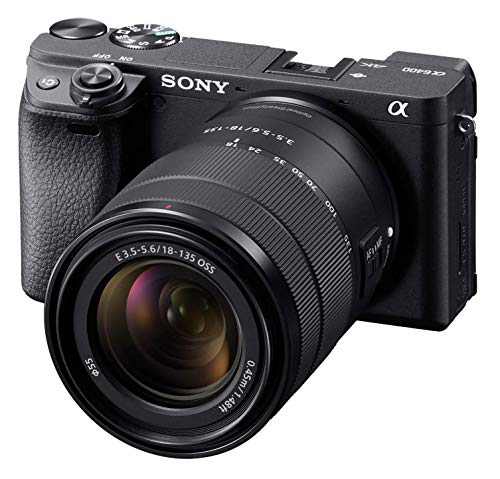
Sony a6400 18-135 Kit — Best discreet companion
Close the list with the camera most likely to be underestimated and most likely to be present. The a6400’s title is modest: a Sony Alpha mirrorless camera with an 18-135mm lens, in black. No cinema line, no stated recording heroics — and a documentary logic that the flagship sections cannot supply. This is the camera that goes where cinema bodies cannot: the family kitchen where a rig would end the conversation, the sensitive workplace where permission extends to something that looks like a holiday camera, the solo trip where every gram of luggage is argued over. Documentary access is often a function of how little the equipment frightens people, and small mirrorless kits have filmed masterpieces of access for exactly that reason.
The bundled 18-135mm lens is the kit’s quiet thesis. One lens spanning wide room views to a respectful interview telephoto means no lens changes in delicate moments, no sensor dust dramas in the field, no decision fatigue at the doorway. The documentary day it describes — arrive, observe, frame from where you stand — is the day most observational filming actually consists of, and a single versatile zoom serves it better than a bag of primes that stay in the bag.
Hybrid identity is the other half of the case. Documentaries generate stills whether their makers plan for them or not: the poster, the press kit, the funder’s report, the archive photograph of a place about to change. A body that takes its stills seriously covers that economy without a second camera, and for self-funded filmmakers who are also their own publicists, that consolidation is staffing, not luxury.
Honesty requires the limits to be stated as firmly as the virtues. This guide claims no recording formats, limits or stabilisation behaviour for the a6400, because its title states none; a production planning long interviews should verify record behaviour in Sony’s documentation and test the exact workflow before trusting it with testimony. Nor will this body match the cinema picks for rig-based production, monitoring ecosystems or the full-frame look in darkness. It is not trying to. It is the camera for the films that get made because the camera was there.
Filmmakers whose subjects come before their rigs can check the Sony a6400 kit on Amazon and imagine, accurately, how many of their last ten filming days it would have covered.
- Type: Mirrorless camera with 18-135mm lens, per the listing title
- Colour: Black, per the listing title
- Series: Sony Alpha, per the listing title
- Recording formats: Not stated in the listing title — verify with the manufacturer documentation
- Record limit: Not stated in the listing title — verify with the manufacturer documentation
- Stabilisation: Not stated in the listing title — verify with the manufacturer documentation
Strengths
- Small, unobtrusive kit films in rooms a cinema rig would disturb.
- One 18-135mm lens covers a whole observational day without swaps.
- Hybrid stills serve posters, press kits and funder reports.
Trade-offs
- No cinema-line rigging or monitoring ecosystem.
- Title states no recording details — long-take behaviour needs testing.
- Smaller format concedes the flagship low-light and depth look.
Best for: access-driven, solo and travel documentaries where discretion decides what gets filmed.
Not suited for: a rig-based production finishing for theatrical projection with a full crew.
There is a respectable argument that this is the most documentary camera in the guide, if documentary is defined by presence rather than production value. The history of the form is full of small cameras in the right rooms: the vérité classics were shot on the compact technology of their day, and their makers would recognise the a6400 kit’s bargain instantly — surrender specification, gain the room.
It also makes the ideal second body in a larger unit: the scout camera, the B-roll walker, the stills unit, the camera lent to a trusted contributor for a diary sequence. Kits, like crews, need their versatile members as much as their stars.
Comparison
| Camera | Form | Stated headline | Defining documentary strength |
|---|---|---|---|
| Sony FX6 | Full-frame cinema body | 4:2:2 10-bit, 4K 120p, FHD 240p | Flagship recording depth and frame rates |
| Sony FX3 Bundle | Full-frame cinema body | Card, battery, case bundled | Compact night and interior work |
| Canon EOS C70 | Cinema camera | 16+ stops DR, ND filters, C-Log 2 | Uncontrolled-light interviews |
| Canon EOS C100 Mark II | Cinema camcorder body | EF mount, Dual Pixel CMOS AF | Veteran form for EF lens owners |
| Nikon ZR Bundle | 6K full-frame cinema | RED colour, 32-bit float audio, 50mm lens | Dialogue headroom in a new system |
| Sony a6400 Kit | Mirrorless hybrid | 18-135mm lens included | Discretion and access |
How to Choose
Start from the film’s finishing line and work backwards. Festival or broadcast ambitions with a colourist attached argue for the stated recording depth of the FX6 or the C70’s range and log workflow. A solo production in uncontrolled rooms argues for autofocus trust and manageable size. A production whose subjects are wary argues, above all, for the a6400’s discretion. Then audit what you already own — EF lenses resurrect the C100 Mark II’s value; E-mount lenses bless the Sonys — because a documentary budget spent rebuying glass is a budget stolen from travel, translation and time.
Price the whole chain before admiring any body: lenses, media, power, sound, support and the storage the chosen format will devour. The finest codec in this guide is a liability to a filmmaker editing on an ageing laptop against a festival deadline.
What Actually Ends a Documentary Shoot Early?
Rarely the sensor. Shoots end early because a card filled during the best answer of the day, because the only battery is in the charger in another building, because the subject’s patience was spent on setup rather than conversation, or because the room’s sound — the fridge, the traffic, the echo — was discovered in the edit instead of on headphones in the first minute. Camera choice touches all of these indirectly: bundled media and power, as the FX3 and ZR listings offer, reduce the first two risks; manageable size reduces the third; and no camera in any guide can fix the fourth, which is why this one keeps insisting on headphones.
The professional habit that covers every one of those risks is the test day. Before the real subject sits down, run the exact workflow for a full session with a friend: record the full planned length, offload, back up, open the files in the actual editing software, and listen. Every camera in this guide whose title is silent about record limits — most of them — deserves that test rather than your faith, and the ones with stated recording depth deserve it too, because a production’s chain is only as honest as its weakest link.
Build the day’s rhythm around the subject, not the equipment. Arrive with the camera already configured, spend the first minutes on consent and conversation rather than menus, and let the technology recede. The cameras above differ enormously in capability, but they share one documentary truth: the footage that matters is filmed after the room forgets them.
How Much Camera Does a First Documentary Really Need?
Enough to be forgotten, and not one specification more. First documentaries die of ambition misallocated — the flagship body that consumed the travel budget, the codec whose files consumed the editing month, the rig whose assembly consumed the subject’s goodwill. A first film made on the a6400 kit or the C100 Mark II, with its remaining money spent on access, sound and finishing, will be a better film than the same story attempted on an FX6 with nothing left for the edit. That is not anti-equipment sentiment; it is sequencing. Buy the camera the current film needs, finish the film, and let the finished film argue for the next camera.
The counterweight is honesty about trajectory. A filmmaker already working — client films, institutional work, a second feature forming — may correctly buy the body the next three productions need, because the amortisation is real and the learning curve is paid once. The FX6 and C70 live in that territory. The question to answer in writing before purchase is simply which filmmaker you are this year: the one finishing a first film, or the one equipping a practice. Both are honourable; they need different cameras.
Renting bridges the two honestly. Rent the flagship for the interview weeks, own the dependable mid-tier body for the observational months, and discover from the rental what your own work actually uses. Rental houses have launched more sensible purchases than any review ever written, this one included.
How Should a Documentary Camera Behave in Somebody Else’s Home?
Most documentaries are filmed in places that belong to other people, and a camera’s behaviour as a guest is a specification no title prints. It should arrive configured, so the first ten minutes in the house are spent on tea and consent rather than menus. It should be quiet in every sense — small enough not to rearrange the furniture by its presence, quick enough not to make a family hold its life still while it prepares. And it should leave the room’s relationships intact: the measure of a home shoot is whether the family would have the crew back tomorrow, because documentary access compounds across visits exactly like interest.
That guest discipline rearranges the rankings in this guide depending on the production. In a stranger’s kitchen, the a6400 kit’s unremarkable silhouette is a professional credential; the C100 Mark II’s camcorder familiarity reads as television, which many contributors find reassuringly official; a full FX6 rig reads as an event, which can elevate a subject’s sense of occasion or freeze it solid, depending on the person. Experienced documentarians choose bodies partly for the temperature they bring into a room, and they learn each regular subject’s preference the way they learn the light in each regular location.
Practical guestcraft follows from the same thinking. Charge everything the night before so no cable hunt disturbs the morning. Bring the tripod that fits the room rather than the one that impresses the crew. Record a minute of the empty room’s sound and listen to it before the subject sits down, because the fridge’s hum and the clock’s tick are in every take whether they were noticed or not. None of this is in any listing title, and all of it decides whether the stated specifications ever get a chance to matter.
There is an ethical edge to the guest question that gear guides usually avoid and this one will not. A camera that subjects forget is a gift and a responsibility: people say things in hour two that they would not say in minute ten, and the filmmaker’s duty of care grows with the camera’s invisibility. The bodies in this guide differ in how completely they disappear; the obligation not to exploit that disappearance does not differ at all. Choose the discreet camera when the story needs it — and carry the consent conversation as carefully as the camera.
Common Mistakes
Buying resolution instead of reliability. A documentary is a hundred hours of ordinary light and ten minutes of magic; a camera that stops, overheats in spirit or frightens subjects loses the magic while winning the specification sheet. Stamina and trust are the genre’s true specifications.
Treating audio as a post-production problem. It is not repairable there. A microphone near the subject and headphones on the operator lift an interview further than any sensor upgrade, which is why the ZR’s stated audio headroom earns its emphasis in this guide.
Rigging beyond the crew. A beautiful twelve-accessory build that takes forty minutes to reconfigure between locations will be left assembled, then left behind, then left at home. Build the smallest rig the method needs; documentaries are filmed by the equipment that actually travels.
Neglecting releases, logs and backups until the edit. A flawless interview that cannot legally be shown is an expensive private screening, and footage that exists on one card exists provisionally. The discipline around the camera decides whether filming becomes a film.
Learning a record limit from a subject. Where titles are silent about limits, test at home across a full-length session. Never let a contributor’s best sentence be the one the camera missed while stopping.
Final Recommendation
Decide by production, not by prestige. The funded, crew-supported documentary belongs on the FX6, whose stated recording depth and frame rates cover broadcast and festival ambitions. Uncontrolled light with a small crew points to the C70 and its stated range, ND filters and log workflow. The FX3 bundle is the compact full-frame answer for night and interior stories, arriving ready to work. EF owners should honour the C100 Mark II’s veteran value; solo shooters who live or die by dialogue should study the ZR’s stated audio headroom closely; and access-driven filming belongs to the a6400 kit, the camera most likely to be in the room when the room finally relaxes. Choose the body your shooting method would choose for itself.
Then protect the finishing budget before spending anything: editing time, music, subtitling and festival fees are where documentaries actually become films, and no body in this guide can edit itself. A camera bought with the finish protected is a tool; a camera bought instead of the finish is a monument.
Frequently Asked Questions
Which of these suits a one-person documentary crew?
The C70 and the a6400 divide that answer by ambition. The C70 pairs stated Dual Pixel AF with internal ND filters and serious dynamic range for a solo operator filming interviews and observational days. The a6400 kit trades cinema features for discretion and simplicity. Solo shooters should weigh which of those their subjects and locations reward.
Why does 4:2:2 10-bit recording matter for documentaries?
Because documentary light is rarely controlled. The FX6’s stated recording depth gives a colourist material that survives correcting mixed, dim or window-lit scenes — skin tones and skies hold together instead of breaking apart. It is insurance bought at the moment of capture, when insurance is cheapest.
What is 32-bit float audio, and why does the ZR lead with it?
It is an audio recording approach with enormous level headroom, stated in the ZR’s title, designed so that unexpectedly loud moments do not clip into distortion. Documentary dialogue is full of unexpected loud moments — laughter, grief, emphasis — and a solo operator cannot ride levels while interviewing, so the headroom protects exactly the takes that cannot be repeated.
Is the C100 Mark II too old to consider?
Its title makes no current-format claims, and buyers must verify recording details in Canon’s documentation. Its case rests on the EF mount, a dedicated camcorder form and Dual Pixel CMOS AF — a rational purchase for EF lens owners and institutions, and a poor one for anyone whose contract specifies the newest formats.
Do I need internal ND filters for documentary work?
Need is strong, but the C70’s stated ND filters solve a daily documentary problem: exposure changes as subjects move between shade and sun, interiors and exteriors, and internal filters adapt in a moment without front-of-lens fuss. Crews filming controlled sets feel the benefit least; observational crews feel it constantly.
Should a beginner start with the a6400 or a cinema body?
Start with the camera matched to this year’s film. Access-driven, solo and travel projects point to the a6400 kit, which arrives complete with its lens. A beginner already crewed, funded and committed to a graded cinema workflow can justify starting higher. The mistake is buying the other filmmaker’s camera for the other filmmaker’s production.
Transcription and logging, the least glamorous documentary disciplines, deserve the guide’s last practical word because they decide whether shot material becomes a film or an archive of regrets. Log each day’s interviews the same evening, even roughly; mark the sentences that made you look up from the monitor; back the cards up before sleep and verify the backup by opening a file, not by trusting a progress bar. The camera’s work ends at the card slot — the filmmaker’s continues — and productions that respect that handover are, overwhelmingly, the productions that finish.
Keep the subjects in the finished film’s life, too. A documentary camera is also a promise — that the hours people gave will become something they can watch with pride — and the bodies above, for all their differences of format, mount and philosophy, share that obligation. Choose the one whose working method lets you keep the promise steadily, audibly and in focus, for as long as the story needs.
Related Guides
When the same skills turn toward narrative work, our prosumer camera guide for independent filmmakers covers the camcorder-and-cinema split from the fiction side. The unobtrusive end of documentary kit reappears in the family video camera guide, and stage work with remote cameras is covered by our PTZ camera guide for concerts.


