Our Top Picks
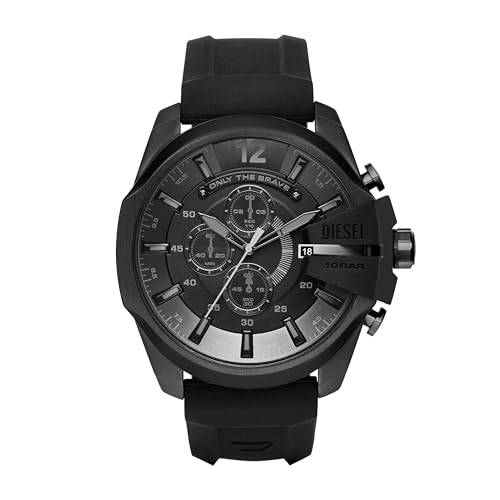
 Diesel Double Down Sporty Silicone Three-Hand Analog BigOne Size5.12 x 5.12 x 5.12 inches0.2 poundsCheck on Amazon
What's inside
- The design language, stated in millimetres rather than adjectives
- Straps and bracelets: leather, steel and silicone families
- Movements without romance: what is actually ticking
- Reading a listing line by line
- Sizing honestly: wrists, overhang and bracelet links
- Authenticity, reference numbers and the warranty record
- Care: leather, plating, batteries and storage
- Legibility and the dial as an instrument
- Choosing within the range: a decision order that works
- Ownership over years: costs and expectations
- Matching a reference to an occasion
- Questions worth asking a seller before paying
- How the catalogue photographs should be read
- A note on older references and discontinued colourways
- Check prices on Amazon
- The short verdict
As an Amazon Associate I earn from qualifying purchases. This post may contain affiliate links at no extra cost to you.
Disclosure: As an Amazon Associate, this site earns from qualifying purchases. The judgements below come from paper and pixels rather than from a loupe held over a borrowed sample: Diesel published collection pages and specification tables, instruction booklets for the quartz and chronograph movements the brand fits, water-resistance charts printed by the manufacturer, and warranty documents stating their own terms and exclusions. Nothing here rests on private handling, borrowed press pieces, or time spent wearing a watch that a reader cannot inspect in the same documents. Where a listing leaves a dimension or a movement detail unstated, this guide says so and treats the silence as part of the product record.
Diesel occupies a deliberate extreme in the fashion-watch market. While classic dress watches cluster between 36 and 40 millimetres across the case, Diesel builds much of its identity at 45 millimetres and beyond, with layered dials stacked like instrument panels, crowns the size of small thimbles, and model names that advertise scale rather than apologise for it. That boldness is the entire appeal and also the entire risk: a watch this assertive either suits a wrist and a wardrobe completely or misses both completely, with very little middle ground. Reading the brand well therefore means reading dimensions, movement functions, finishes and warranty terms with unusual care, because the photographs, dramatic as they are, answer almost none of the practical questions.
The design language, stated in millimetres rather than adjectives
Scale comes first in every Diesel conversation because scale is the brand signature. Entry designs in the range sit near 42 to 44 millimetres in case diameter, already large by traditional standards, the core chronograph families run from 45 to 51 millimetres, and the flagship lines push past that toward 55 millimetres and beyond in their biggest references. Case thickness follows diameter upward, commonly landing between 12 and 16 millimetres, so these watches stand tall off the wrist as well as spreading wide across it. A cuff that slides happily over a slim 38-millimetre dress piece may stop dead against a 15-millimetre Diesel chronograph, and that wardrobe fact deserves as much attention as the dial artwork.
Layering is the second signature. Instead of a flat printed dial, many Diesel faces stack several levels: a recessed chapter ring carrying the minute track, a raised centre plate, applied indices that stand proud of the surface, and subdials sunk into cut-outs at yet another depth. Screws, real or decorative, punctuate the bezel and lugs. The effect under changing light is genuinely architectural, with shadows moving across the dial furniture as the wrist turns, and it explains why still photographs undersell these watches while also hiding their bulk. Depth costs thickness, always, and the specification table thickness figure is where the layered look presents its bill.
Crowns and pushers form the third signature. The main crown is frequently oversized, knurled or coin-edged for grip, sometimes guarded by a hinged lever or a bridge of metal in the more theatrical references, and chronograph pushers flank it at two and four o-clock with a size and solidity borrowed from industrial controls. Left-side crown placement appears on certain families, moving the crown to nine o-clock so it cannot dig into the back of a bent hand, a practical idea dressed as a styling quirk. These controls are meant to be noticed and operated, and their dimensions, where a listing publishes crown diameter at all, run far beyond the discreet 5- to 6-millimetre crowns of classic watchmaking.
Mr. Daddy and Mega Chief: the far end of the range
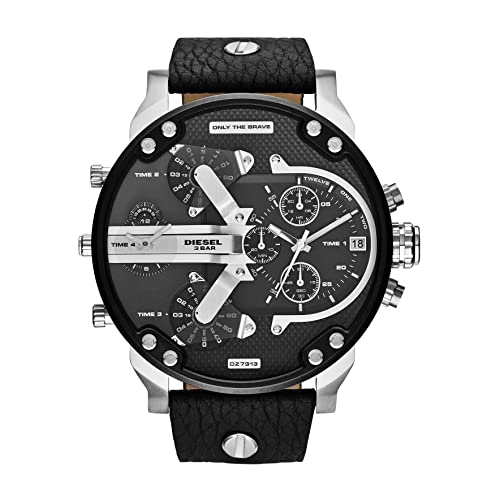
Two family names mark the outer boundary. Mr. Daddy references are the brand exhibition pieces, historically built around cases in the mid-50-millimetre region, with dials crowded by multiple time displays, oversized hardware, and a presence closer to a wrist instrument than to jewellery. Mega Chief sits a step below in size while keeping the same visual grammar: a bold round case, prominent pushers, a deeply layered dial, and chronograph subdials arranged for symmetry. Both families exist to make a statement at conversational distance, and both demand an honest wrist measurement before purchase, because their published diameters exclude the crown, and the crown on these lines adds several more millimetres of real-world width.
At the quieter end, the brand three-hand families strip the formula back: one dial level or two, baton indices, a date window, and case sizes that start in the low forties. These are the references that work under a shirt cuff and beside formal clothing, and they prove the design language survives without maximum volume. Comparing a restrained three-hand reference against a Mega Chief on the same specification table is the fastest education in what the extra money and millimetres actually buy: complication theatre, dial depth, and presence, rather than a different movement grade or a different crystal.
Straps and bracelets: leather, steel and silicone families
Leather straps on Diesel watches tend toward the substantial: wide, thickly padded, and frequently finished with contrast stitching, embossed logos, studs, or a distressed surface treatment that suits the industrial styling. Colours run from black and several browns into seasonal treatments that can include perforation, camouflage printing, or denim. Leather width at the lugs commonly measures 22, 24 or 26 millimetres on the larger cases, far beyond the 18 to 20 millimetres of classic watches, which matters greatly when shopping for replacements. A strap this wide also changes how a big case sits, spreading the load and resisting the tendency of a heavy head to rotate around the wrist.
Stainless steel bracelets define the heaviest end of the catalogue. Solid-link bracelets on the big chronographs pair brushed outer links with polished centre links, gunmetal or black ion-plated finishes, or two-tone treatments, and they push total watch weight into territory that surprises buyers arriving from smaller watches: full-steel references in the large families can exceed 180 grams sized for an average wrist, and the biggest pass 200 grams. Mesh bracelets appear on the slimmer lines, trading heft for a finer texture and a sliding clasp adjustment. Every bracelet buyer should note the clasp type in the specification, deployant with push-button release being the secure standard, because a watch of this mass tests its clasp thousands of times a year.
Silicone and polyurethane straps serve the sportier references and the summer wardrobe. They shrug off sweat and rain that would stain leather, they carry bold colour more cheaply than plated metal, and their keepers and buckles are usually colour-matched mouldings. Their weaknesses are slower to appear: silicone attracts lint, polyurethane can stiffen and crack after years of sun and heat, and neither material can be polished back to life the way steel can. Nylon and fabric straps occupy a small corner of the range, light and casual, drying slowly after a soaking. Across all four material families, the governing numbers remain lug width, strap length range, and buckle or clasp type, and a listing that omits any of them is asking the buyer to guess at fit.
Colour treatment deserves a paragraph separate from material, because Diesel sells the same reference in several finishes and the finish changes ownership more than the base metal does. Black, gunmetal, blue and gold-tone surfaces on steel are usually ion plating over stainless steel, discussed in depth later in this guide, while leather colours are surface dyes and coatings with their own wear behaviour at the fold and the buckle hole. Photographs under studio light flatter every finish equally; the specification line naming the treatment, and the care pages of the manual, separate a durable choice from a fragile one.
Movements without romance: what is actually ticking
Nearly every analog Diesel watch runs on a quartz movement, battery powered, regulated by a vibrating quartz crystal, and sourced from large Japanese and Chinese movement makers whose calibres power much of the fashion-watch industry. That is not a criticism; quartz brings accuracy measured in seconds per month rather than per day, thin construction, shock tolerance, and a price that lets the design budget go to the case and dial. Listings express this sourcing in careful language. Phrases such as Japanese quartz movement describe the movement origin honestly, while vaguer wording about premium movement or precision engineering, with no calibre named, describes marketing priorities. Diesel rarely prints a calibre reference on its public pages, so the instruction booklet packed with a specific reference, which names the movement maker booklet code, is often the most informative document a buyer can find.
A plain three-hand quartz calibre drives hour, minute and seconds hands, usually with a date complication. Battery life for such movements is typically quoted between two and three years depending on the cell fitted, and the seconds hand may be a full-size central hand or a small hand on a subdial, a styling choice that changes the dial balance considerably. Hacking, the ability to stop the seconds hand for exact setting, is uncommon in this class and should never be assumed. Accuracy figures, when the booklet states them, commonly sit near plus or minus twenty seconds per month at normal temperatures, a standard quartz tolerance that no fashion brand improves upon by styling.
Chronograph quartz and what each subdial registers
Chronograph models add a stopwatch function driven by the pushers, and their subdials are where listing photographs most often mislead the unprepared eye. A typical three-subdial Diesel chronograph assigns its registers as follows, though layouts vary by calibre and must be confirmed in the booklet for the exact reference. One subdial counts chronograph minutes elapsed, commonly up to sixty. A second subdial shows the time in 24-hour format, mirroring the main hands rather than measuring anything, and serving travellers who read military time. The third usually carries the small running seconds for the ordinary time display, while the large central seconds hand belongs to the chronograph and rests at twelve until the stopwatch starts. Some calibres instead place chronograph seconds on a subdial and leave the central hand for running seconds, which is why two visually identical watches can behave differently.
Decorative subdials are the trap at the budget edge of the wider fashion market: printed dials shaped like registers, with fixed hands that never move, fitted to a plain movement. Diesel own chronographs are functional, yet buyers comparing across brands should run one simple document check: the instruction booklet for a real chronograph contains pusher diagrams, zero-reset instructions, and a procedure for aligning chronograph hands after a battery change. A booklet silent on all three describes decoration. Tachymeter scales printed on bezels deserve similar calm reading; they are a mathematical scale for converting elapsed time over a known distance into speed, functional in principle, decorative in nearly all real use, and harmless either way.
Date windows appear at three, four-thirty, or six o-clock depending on the calibre and dial layout, sometimes magnified, sometimes framed, occasionally replaced by a day-date pair on multifunction models. Multifunction is its own category in the catalogue, distinct from chronograph: those watches use subdials to show day, date, and 24-hour time, with no stopwatch at all, and their pushers may only adjust subdial hands. Confusing multifunction with chronograph is the single most common specification error in this market, and the booklet terminology settles it in one line. The brand also sells connected smartwatches with touchscreens and digital complications; readers drawn to that side of the catalogue may want the comparison in best analog smartwatches, while this guide deliberately stays with the analog and chronograph fashion range that defines the Diesel look.
Reading a listing line by line
Case diameter is the headline number and the most misread. It measures the case across, usually from two o-clock to eight o-clock or straight across the bezel, and by convention it excludes the crown. On a Diesel chronograph with a 51-millimetre case and a large crown assembly, the total width spanning crown tip to opposite case edge can reach the high fifties, which is the width that determines whether the watch fits under a jacket cuff and whether it overhangs a narrow wrist. Thickness, the second number, measures from case back to crystal top; layered dials and domed mineral crystals push it upward. Lug-to-lug span, the distance from the tip of one lug to the tip of the opposite lug, is the third number and arguably the most honest fit predictor of all, yet it is the one listings most often omit. A 48-millimetre case with a short 52-millimetre lug span can wear smaller than a 45-millimetre case whose lugs stretch to 56 millimetres.
Lug width governs the strap economy of the watch for its whole life. It is the distance between the inner faces of the lugs, measured in millimetres, and Diesel large cases commonly use 24 or 26 millimetres, with mid-size lines at 22 and slimmer ones at 20. Replacement straps must match that width exactly, must handle the case weight without stretching at the spring-bar holes, and ideally should be thick enough at the ends to meet the case height without a visible step. Quick-release spring bars, fitted on some recent references, turn a strap swap into a fingernail job; traditional bars need a spring-bar tool and a steady hand over a soft surface, because a dropped Diesel case dents floors and itself with equal enthusiasm.
Weight completes the dimensional picture. A leather-strap 48-millimetre chronograph may weigh near 110 to 130 grams, noticeable but manageable, while its steel-bracelet sibling can add sixty grams or more. Weight distribution matters alongside the total: a top-heavy watch on a loose strap slides and rotates, while the same watch snug above the wrist bone settles. Listings that publish weight deserve credit, and buyers comparing two references should treat a fifty-gram difference as a full category difference in daily comfort, especially for anyone at a desk whose wrist rests on hard surfaces for hours.
Water resistance in ATM, translated honestly
Water ratings on fashion watches are expressed in atmospheres, ATM, sometimes converted to metres, and the conversion is where misunderstanding begins. The printed figure describes static pressure survived in laboratory testing on a new watch with fresh seals; it does not describe a depth the watch should visit in moving, warm, soapy real-world water. The brand published guidance, consistent across the industry, reads roughly as follows. A watch marked water resistant with no number, or rated 3 ATM, tolerates splashes, hand washing, and rain, and should stay out of the shower. At 5 ATM, showering and brief shallow immersion are generally permitted by the guidance charts, though hot water and steam remain poor ideas for gaskets and leather alike. At 10 ATM, swimming and surface water sports enter the permitted column. True diving demands ratings and construction, screw-down crowns and 20 ATM or beyond, that the Diesel fashion range does not claim and should not be asked to perform.
Several everyday forces defeat a rating that looks sufficient on paper. Hot shower water expands metal and gasket materials at different rates and carries detergents that attack seal compounds. The dynamic pressure of a wrist moving through water while swimming exceeds the static figure the depth suggests. Age degrades every seal, so a five-year-old 5 ATM watch that has never had a gasket service is not the watch that passed its test when new. Crowns or pushers operated while wet invite water past the stem seals, and chronograph pushers in particular should never be pressed underwater unless a maker explicitly certifies that use, which fashion chronographs do not. Leather straps, regardless of the case rating, should be treated as splash-only components that water stains, stiffens, and eventually cracks.
Crystals, plating and the way finishes wear
Mineral crystal is the standard glazing across the range: a hardened glass that resists scratches better than acrylic, can be scratched by harder materials such as quartz-rich stone and many ceramics, and can chip or shatter under a sharp impact that a plastic crystal would survive by flexing. Sapphire, markedly harder, is rare at fashion price points and its presence would be advertised loudly; assume mineral unless the specification says otherwise. Some references add coloured tints or iridescent coatings to the crystal, effects that look dramatic in photographs, can tint the dial reading in bright sun, and cannot be polished out if the coating itself is damaged. A flat crystal keeps reflections predictable, while a domed one magnifies the layered dial and collects a ring highlight that some wearers love and others find distracting within a day.
Ion plating is the process behind most coloured metal in the catalogue. In a vacuum chamber, the finish material is vaporised and deposited ion by ion onto the stainless steel case or bracelet, producing a thin, hard, even coat measured in microns. Gold-tone, black, gunmetal and blue finishes are commonly applied this way, sometimes identified by the related abbreviation PVD for the broader physical vapour deposition family. The ownership consequence is predictable wear geometry: the coating survives broad flat surfaces for years, yet thins first at sharp edges, crown ridges, clasp contact points, and the undersides of bracelet links that rub a desk. Once steel shows through at an edge, no polish restores the colour, because polishing removes more coating. Brushed plain steel, by contrast, hides micro-scratches in its grain and can be refinished, which is why the least theatrical finish is often the longest-lived choice for a daily watch.
Sizing honestly: wrists, overhang and bracelet links
Measure the wrist before admiring the watch. A flexible tape around the wrist just behind the wrist bone gives a circumference that translates into guidance far better than guesswork: wrists near 15 to 16 centimetres are slim, 17 to 18 centimetres sit in the broad middle, and 19 centimetres and beyond are large. Against those numbers, case fit can be judged with the lug-to-lug rule. When the lug span exceeds the flat width of the wrist top, the lugs overhang, the strap falls away at an angle, and the watch reads as borrowed regardless of how striking the dial is. A 51-millimetre Mega Chief with a lug span in the high fifties will overhang most slim wrists by several millimetres on each side; that is not a moral failing in either direction, simply geometry announcing itself.
Wrist shape modifies the arithmetic. A flat-topped wrist carries a wide case more comfortably than a round wrist of identical circumference, because the case back rests on a broader plateau. Strap material changes the verdict too: a stiff new leather strap holds a big case centred, a supple worn strap lets it wander, and a steel bracelet drapes the whole assembly so the effective footprint grows. Seasonal swelling is real and rarely mentioned; wrists expand measurably in summer heat, so a bracelet sized snug in a cool shop in January can bind in August, which argues for keeping the spare links and knowing where they are.
Bracelet sizing works by removing links, each typically contributing 8 to 12 millimetres of length depending on the design, with half-links on some references for finer steps. The clasp may add micro-adjustment, a few small holes or a short sliding range worth two to five millimetres, which is the adjustment that actually gets used day to day as the wrist swells and settles. Links should be removed evenly from both sides so the clasp stays centred under the wrist, a detail any competent jeweller handles routinely and any home attempt should respect. Push-pin and screw link systems differ in the tools they demand; the booklet or the brand sizing guidance names the system, and forcing the wrong method shears pins. Readers who prefer a lighter, slimmer profile for formal wear might compare notes with best fashionable smartwatches for women, where case sizing follows a different set of conventions altogether.
Leather and silicone straps size by holes, and hole spacing near 7 millimetres means fit jumps in steps; a wrist falling between holes forces a choice between slightly loose and slightly tight that changes across the day. Extra holes can be punched by a leather worker in minutes, placed to match the existing spacing and shape. Buckle position also signals strap length suitability: the ideal hole is near the middle of the punched range, leaving adjustment in both directions and a tail of moderate length for the keepers to manage.
Authenticity, reference numbers and the warranty record
Diesel watches are widely distributed, which makes channel discipline worthwhile. The brand own storefront and its authorised retailer network sell references covered by the official warranty, with current-season colourways and complete packaging, booklet, and warranty card. Third-party marketplaces and discount sellers can offer legitimate stock, older references, and lower prices, alongside a documented grey zone of old-new stock with ageing batteries, shop-worn plating, and warranty cards that were never stamped. The further a seller stands from the authorised network, the more the buyer personally carries the verification work described in the next paragraphs, and the more valuable a clear returns policy becomes relative to a small saving.
Every genuine reference carries a model number, and the case back is where the record lives. Diesel case backs are typically stamped or engraved with the reference code, often in a format beginning with the letters DZ followed by digits on many well-known families, plus the brand name, material notes such as stainless steel back or full stainless construction, the water rating, and sometimes the movement origin. That code should match the listing, the box label, and the warranty card exactly; a mismatch among the three is a reason to stop and ask questions before money moves. Dial printing quality, subdial function as described in the booklet, and the weight implied by the specification table provide supporting evidence, since counterfeit fashion watches routinely fail on heft and on decorative rather than working registers. Shoppers cross-shopping the connected end of the market will find a similar reference-checking discipline recommended in best high end smartwatches, though the stakes and price bands differ sharply.
The published international warranty for Diesel timepieces has generally run to two years from purchase, covering defects in materials and workmanship of the movement and watch construction, with the precise term and claim route stated on the warranty card and the brand regional pages, which govern over any summary here. The exclusions matter as much as the term. Battery exhaustion is treated as consumable service rather than defect. Straps and bracelets, crystals, and plating wear are commonly excluded or narrowly limited. Water damage following use beyond the rating, damage from accidents or unauthorised opening, and normal cosmetic wear fall outside cover. Proof of purchase from an authorised seller is typically required, which loops the warranty question back to the channel question: the cheapest listing can quietly cost the warranty, and for a plated chronograph worn daily, that trade should be made knowingly rather than discovered at a service counter.
Service reality completes the authenticity picture. Fashion-brand watches are usually serviced through the brand network rather than independent watchmakers, with battery changes, gasket checks, and pressure verification bundled at authorised counters. An unauthorised battery change that breaks the case-back seal without renewing the gasket can void water resistance and, on some terms, warranty standing. Keeping the stamped card, the receipt, and a note of the reference code together in one envelope is a five-minute habit that removes nearly all friction from any later claim.
Care: leather, plating, batteries and storage
Leather is a skin, and it keeps the habits of one. Perspiration carries salts that dry the strap from within, sunlight fades dye unevenly where a cuff shades part of the band, and repeated bending at the same buckle hole cracks the surface grain along that line first. Rotation is the published remedy in every serious strap guide: alternate days between two straps or two watches, let a worn strap rest a full day in air, and its service life stretches noticeably. Keep leather away from direct water beyond splashes, dry a soaked strap flat at room temperature rather than on a radiator, and expect a daily-worn leather strap to be a consumable with a life measured in one to three years depending on climate and rotation. Conditioners divide opinion among makers; several brand care pages advise against creams that can darken light straps or soften stitching adhesive, so the care leaflet for the specific strap outranks general leather lore.
Plated finishes ask for gentleness of a different kind. Wipe a plated case with a soft dry or barely damp cloth, keep perfume, sunscreen and cleaning sprays off the surface until they have dried on skin, and store the watch so its bracelet cannot grind against another watch in a drawer. The desk is the natural predator of bracelets: the underside links meet laminate and metal desk edges hundreds of times a week, which is precisely where plating thins into the tell-tale pale line. A desk pad is, in measurable plating terms, a watch-care device. Polishing cloths intended for plain steel should stay away from plated surfaces, because each polish is a small removal of the very layer that gives the watch its colour.
Battery replacement follows a rhythm the booklet states and owners should calendar. A typical fashion quartz cell runs two to three years; chronographs with heavier hands and register motors may sit at the shorter end. Warning behaviour differs by calibre: some movements make the seconds hand jump in multi-second steps as an end-of-life signal, others simply stop. Replacement is the moment to renew the case-back gasket and, for any watch that meets water regularly, to request a pressure check afterwards, because opening the case disturbs the seal that the ATM rating depends on. The brand guidance routes this work through authorised service for exactly that reason. A cell left dead inside a watch for years can leak and destroy the movement, converting a routine service into a write-off, so a stopped watch should be serviced promptly rather than drawer-stored in hope.
Storage sounds passive and is not. Quartz movements contain small magnets in their stepper motors, and strong external magnetic fields, from bag clasps, tablet covers, loudspeaker drivers and magnetic phone mounts, can disturb timekeeping or, in lesser fields, do no harm at all; the prudent rule printed in many booklets is distance from strong magnets during storage. A watch box or roll that separates pieces, keeps straps from folding at a fixed sharp bend, and sits in a room of stable, moderate humidity serves leather, plating and movement simultaneously. Silicone straps tolerate neglect best, steel asks only to be stored dry, and leather punishes a sealed damp box with mould spots that no cleaning fully reverses.
Legibility and the dial as an instrument
A layered dial can be thrilling to look at and still fail at its one job, which is to tell the time at a glance. Contrast governs that job. Polished silver hands over a silver sunray dial vanish at certain angles, black hands over a black dial with dark indices rely entirely on polished bevels catching light, and skeletonised hands trade reading area for style. Diesel best references manage the tension with thick luminous-filled hands, strong index contrast, or a deliberate two-tone split between the time display and the chronograph furniture. Listings rarely discuss legibility, yet a buyer can audit it from photographs by squinting at the dial image at arm length and asking which elements survive; the ones that disappear in the photograph will disappear on the wrist at dusk.
Luminous material, where fitted, is usually confined to hand tips and index pips, and its charge depends on light exposure through the day. Fashion watches rarely publish lume specifications, and expectations should be set accordingly: a brief glow after lights-out, not an all-night instrument display. Readers who genuinely need overnight legibility and activity features are drifting toward the territory surveyed in best active smartwatches, a different product philosophy from the analog statement pieces at the centre of this guide. Within the Diesel range, a high-contrast three-hand dial with full luminous hands will out-read a crowded chronograph every night of the year, one more reason the quieter references earn their place beside the flagships.
Dial colour interacts with wardrobe in ways the specification table cannot capture but a little forethought can. Blue dials with brown leather read warm and pair with denim and tan footwear; black-on-black references commit fully to a monochrome wardrobe and can look stranded beside brown shoes and belt; green and burgundy seasonal dials reward owners whose clothing already visits those colours. Metal finish should echo the other hardware a wearer uses daily, belt buckles, rings, glasses frames, bag fittings, not because rules demand matching, but because a watch of this size becomes the largest metal object on the body and sets the tone whether its owner plans it or not.
Choosing within the range: a decision order that works
Start with the wrist, not the photograph. Fix the largest lug-to-lug span the wrist carries without overhang, and let that single measurement delete half the catalogue without regret. Next, decide the complication honestly: a chronograph buys dial theatre and a stopwatch most owners use weekly at most, a multifunction buys day and date at a glance, and a three-hand buys clarity, thinness and the lowest service complexity. Then choose the finish by lifestyle rather than by studio photograph, plain brushed steel for desks and daily wear, plating for rotation wear where its edges meet the world less often, leather for character, silicone for heat and activity. Only at the end, with fit, function and finish settled, should dial colour and family styling arbitrate between the two or three references still standing.
- Measure wrist circumference and wrist-top width, then hunt down the lug-to-lug figure for any candidate, asking the seller when the listing omits it.
- Confirm from the booklet whether the model is a true chronograph, a multifunction, or a three-hand, and what each subdial registers on that exact reference.
- Match the ATM figure to real habits using the brand chart: 3 ATM for dry wear, 5 ATM for showers, 10 ATM for regular swimming, and leather straps excluded from water regardless.
- Weigh the full-steel version before committing to it, and check clasp type, micro-adjustment range, and whether spare links are included.
- Verify the reference code across listing, box and case back, and confirm the warranty card will be stamped by an authorised seller.
- Plan the strap future at purchase: note the lug width, identify one replacement strap source, and budget leather as a consumable.
Gift buying compresses all of this into guesswork, which argues for the middle of the range rather than its edges. A 45- to 48-millimetre chronograph on leather suits the widest span of wrists and wardrobes, avoids the full commitment of a steel bracelet that will need jeweller sizing on the day, and keeps the unmistakable Diesel character intact. Include the receipt and leave tags and protective films in place, because an oversize watch is the most fit-sensitive gift in menswear and an exchange path is part of the present. A slim-wristed recipient points toward the three-hand families; a large-wristed one can carry Mega Chief territory that would overwhelm most others.
Ownership over years: costs and expectations
The purchase price is the first payment in a longer schedule that honest guides should total up. A battery service every two to three years, a leather strap every one to three years of regular wear, a gasket renewal alongside battery work for water-exposed pieces, and eventual plating wear that no service reverses: none of these figures is large alone, and together they describe the real cost of keeping a fashion watch in full health across five years. Steel three-hand references sit at the cheap end of that schedule, plated chronographs on leather at the expensive end, and the gap is wide enough to influence which reference a careful buyer chooses when two designs appeal equally.
Resale expectations should be set with equal clarity. Fashion watches are bought for design, and the secondary market prices them as design objects rather than as stores of value; even immaculate references with full papers typically return a modest fraction of retail. That reality argues for buying the watch that will be worn constantly, in the finish that ages most gracefully, rather than speculating on limited colourways. A Diesel worn three hundred days a year for five years delivers its value on the wrist daily, which is the return this product class is actually designed to pay.
Trends cycle through the catalogue as well. Case sizes across the wider industry have been drifting downward in recent seasons, and Diesel answers with both its giant flagships and a growing set of mid-size references, so a buyer is not forced to choose between the brand and a wearable diameter. Seasonal colours retire, core black, brown and steel references persist, and strap compatibility across years of production means an older favourite can be refreshed with a current strap rather than replaced. Reading the catalogue as a system of cases, movements and straps, instead of a wall of photographs, turns a one-off purchase into a small, maintainable collection strategy.
The smartwatch in the room
Diesel sells touchscreen smartwatches under the same badge, with fitness tracking, notifications and changeable digital faces, and a buyer standing between the two product types should name the actual desire. If the desire is data, alerts and a screen that answers messages, the analog range cannot satisfy it and was never meant to. If the desire is a designed object with weight, depth and a dial that catches light rather than emitting it, a smartwatch satisfies it for exactly one product cycle before its software ages. The two lines share a logo and a taste for scale, and almost nothing else, and the brand own storefront separates them into distinct departments for sound reasons. This guide has stayed with the analog department because that is where the Diesel look, the thing the search phrase asks about, genuinely lives.
Matching a reference to an occasion
Office wear rewards restraint within the brand own grammar. A three-hand or slim chronograph reference in the low-to-mid forties, on leather or mesh, in steel, black or deep blue, reads as intentional beside tailoring and clears most shirt cuffs without a negotiation at the wardrobe each morning. The layered dial still announces the brand, yet nothing about the watch argues with a suit. Thickness is the governing figure here; a reference under roughly 13 millimetres behaves, while one beyond 15 millimetres belongs to open cuffs and knitwear.
Evening and social wear can carry the theatre that daytime tailoring resists. Gold-tone plating, a black dial with polished indices, or a Mega Chief worn with an open collar and a jacket uses scale as part of the outfit, and the watch size relative to the wrist matters less after dark than the confidence of the overall styling. Plated finishes earn their keep in this rotation role, meeting fewer desks, fewer sprays, and fewer hours of ultraviolet than a daily watch, so their edges stay coloured for years. Rotation, again, is the quiet technology behind every long-lived finish in this guide.
Travel argues for two specific features: a 24-hour subdial or a clear day-date display, and a strap that tolerates weather. A multifunction reference on silicone or steel crosses time zones with its 24-hour register preventing the classic midnight date-change confusion, shrugs off rain at both ends of the journey, and survives hotel safes and security trays with less cosmetic anxiety than a plated flagship. Weight returns as a consideration on long flights, where a heavy steel bracelet that felt reassuring at breakfast can feel like luggage by landing, and a leather or silicone reference earns its lighter specification line.
Weekend and outdoor-adjacent wear, markets, festivals, coast paths and long lunches, suits the big casual references on silicone or distressed leather, where a knock against a railing is a story rather than a claim. Even here the ATM chart governs: a festival in rain is a 3 ATM day only if the watch stays under a cuff during downpours, and a beach afternoon with swimming moves the requirement to a 10 ATM reference on a strap that water cannot harm. Matching the rating to the plan, rather than to optimism, is the difference between a watch that ages gracefully and one that fogs under its crystal on the second day of a holiday, a failure that moisture causes and that no amount of rice reliably cures once seals and lubricants are involved.
Questions worth asking a seller before paying
A short interrogation, conducted politely by message or at a counter, separates a confident seller from a hopeful one. Ask for the lug-to-lug span when the listing omits it, and note whether the answer arrives as a measurement or as reassurance. Ask which booklet ships with the watch and whether the warranty card will be stamped and dated, because those two papers carry the ownership record. Ask whether the bracelet price includes sizing and spare links in the box. Ask what the return window is for a watch whose protective films remain intact, since fit cannot be fully judged from a specification table, however carefully it has been read. Sellers inside the authorised network answer these questions from routine; evasive answers are information in themselves, and they arrive free, before the transaction rather than after it.
One more question belongs to the plated references specifically: which parts are plated, and which are solid-coloured base material or painted? Clasps, crowns and case backs sometimes differ from the case treatment, and the wear pattern two years later follows those hidden boundaries. The specification sheet may not volunteer the answer, yet the brand product line documentation often does, and a seller willing to check it is a seller worth returning to for the battery service that keeps the whole ownership story intact.
How the catalogue photographs should be read
Studio images of Diesel watches are shot to maximise drama: dials tilted toward the light so every applied index throws a shadow, straps curved as if already worn, and no wrist anywhere in the frame to supply scale. That last absence is the one to correct mentally on every image. Picture the stated lug-to-lug span laid across your own wrist before picturing anything else, and the photograph returns to being useful evidence about dial depth, finish and handset contrast rather than a promise about presence. Wrist photographs supplied by reviewers and owners, whatever their lighting flaws, carry the scale information the studio withholds, and a reference that looks balanced across several different wrists in such photographs is a safer choice than one that appears only in isolation.
Colour rendering deserves the same scepticism. Screens shift blues toward teal and gold tones toward yellow, plated gunmetal can photograph as black or as brown depending on white balance, and leather dyes vary slightly between production runs of the same reference. Where a purchase turns on an exact shade, the brand storefront photography is the most controlled record available, physical inspection through an authorised retailer is better still, and a returns window is the final insurance. None of this caution is unique to Diesel, yet the brand saturated colours and theatrical finishes give small colour errors nowhere to hide.
A note on older references and discontinued colourways
The second-hand and old-stock market for Diesel is large, and it follows rules of its own. A discontinued reference is not an inferior one; the movements are long-running calibres with parts and booklets still circulating, and a colourway retired two seasons ago may suit a wardrobe better than anything current. The risks are specific rather than general. Batteries in old stock may be near the end of their shelf life even in an unworn watch, so a first battery service should be budgeted into the apparent saving. Plating on shop-displayed pieces can carry micro-wear invisible in photographs. Straps on older leather references may have spent years folded at one angle in a box, taking a set that only weeks of wear will relax. Each risk has a price, and a listing that discounts for them honestly can be the best value in the entire market.
Documentation becomes more valuable, not less, as a reference ages. The booklet identifies the calibre family and its subdial logic long after web pages for the model have vanished, and the reference code on the case back remains the key that unlocks strap compatibility, battery type and service routing. Photograph the case back of any older purchase on arrival, record the code with the receipt, and store both with the warranty papers even when the warranty itself has expired. Future you, standing at a service counter in four years, will be grateful for a habit that costs ninety seconds today.
Collectors of the brand, and there are more of them than outsiders expect, tend to organise around families rather than individual references: a Mega Chief group, a Mr. Daddy group, a shelf of three-hand pieces in retired dial colours. Their habits offer a useful lesson to a first-time buyer. They keep boxes and booklets, they buy straps in the correct lug width before a favourite is discontinued, and they treat battery services as scheduled maintenance rather than emergencies. None of that requires collecting anything; it is simply ownership practised with the documents kept and the calendar marked, and a single Diesel bought today will repay exactly the same habits for exactly the same reasons.
Check prices on Amazon
Live listings for the shortlist in this guide are pulled from Amazon below, so prices and availability are always current at the moment you look.
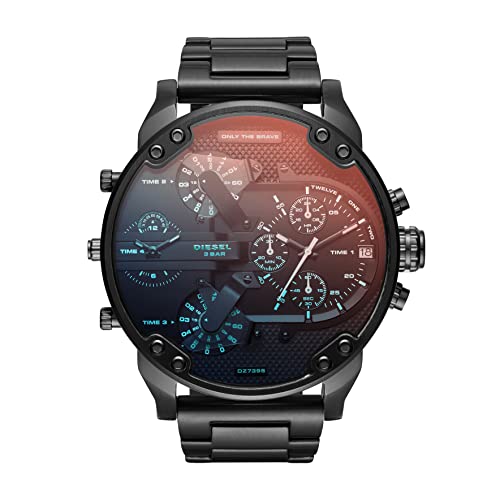
Diesel Mr. Daddy 2.0 Men's Watch, Stainless Steel Chronograph Sports Watch for Men, Color: Black Iridescent



The short verdict
Diesel rewards the buyer who reads it as engineering plus theatre, in that order. The theatre is real: few brands at any price commit so fully to scale, layered dials and industrial hardware, and the best references carry that commitment with genuine coherence. The engineering is ordinary in the honourable sense, proven quartz calibres, mineral crystals, plated steel, leather and silicone, all behaving exactly as their published specifications predict for anyone who reads them. Problems arise only in the gap between the two, when a buyer purchases the theatre and discovers the engineering later: the overhang, the weight, the 3 ATM chart, the plating at the clasp. Every section of this guide has aimed at closing that gap before purchase, using the same documents available to any reader patient enough to open the booklet before the box.
Choose the largest reference the wrist genuinely carries, prefer the finish that matches how often the watch will meet desks and daylight, respect the water chart as if it were printed on the dial, and keep the papers that prove what the watch is. Keep a small notebook page, physical or digital, holding the reference code, the battery service dates, the strap width and the seller name, because that single page will answer every question a future repair, resale or strap order can ask. Do those four things and a Diesel becomes what its designers plainly intended: not a cautious watch, not an apologetic one, but a deliberate piece of industrial jewellery whose boldness was selected with open eyes and measured in millimetres first.