Our Top Picks





What's inside
- The sealed lead-acid battery at the heart of most units
- The standard sizes: 12 volts with 7, 9, or 12 amp-hours
- Terminals F1 and F2: a difference of two millimetres that matters
- Cartridge packs and the RBC pattern
- Finding the right battery from the supply’s own documentation
- Runtime expectations: what a fresh battery can honestly promise
- Temperature: the quiet variable that halves or doubles life
- Recognising a battery that is reaching the end
- Hot-swap claims and what the manual actually allows
- Replacing the battery safely, step by step in principle
- Charging outside the supply: a narrow and careful topic
- Choosing by installation: home desk, network corner, and rack
- What a datasheet tells a careful reader
- Date codes, shelf life, and buying a battery that is actually new
- Managing several units without losing track
- When the honest answer is a new supply, not a new battery
- Installation environment: the details around the box
- Check prices on Amazon
- A buying sequence that avoids the common failures
As an Amazon Associate I earn from qualifying purchases. This post may contain affiliate links at no extra cost to you.
Links leaving this page may be affiliate links, and if you purchase through one, the seller may pay a commission that supports the work behind this guide. That possibility shapes nothing in the rankings or reasoning that follow. The comparisons are built from manufacturer specifications, published service documentation, and patterns that recur in owner feedback, which means the emphasis stays on verifiable figures and procedures rather than on any impression of a battery handled on a bench.
A replacement battery for an uninterruptible power supply looks deceptively simple. It is usually a grey or black block with two terminals, a voltage, and an amp-hour figure, and it invites the assumption that any block with matching numbers will do. Sometimes that assumption holds. Often it fails on a detail measured in millimetres: a terminal a fraction narrower than the connector expects, a case a few millimetres too tall for a tray that must slide home, or a cartridge arrangement in which several blocks are pre-wired in a configuration a bare replacement does not reproduce. The work of choosing well is mostly the work of identifying exactly what your unit shipped with and what its documentation permits.
People arrive at this purchase from a few familiar moments. The unit begins beeping a replace-battery warning, usually at an inconvenient hour. A brief outage reveals that a supply expected to hold a computer up for ten minutes collapsed in ninety seconds. Or a planned check of an ageing installation finds batteries that have quietly reached the age where failure is a matter of timing rather than chance. In each case the remedy is the same physical object, but the decision differs: an exact cartridge for a business-critical rack unit, a pair of standard blocks for a home tower, or a considered judgement that the supply itself, not only its battery, has reached the end of its useful life.
The sealed lead-acid battery at the heart of most units
The overwhelming majority of small and mid-sized supplies use sealed lead-acid batteries, usually described as valve-regulated lead-acid, shortened to VRLA. The chemistry is old, heavy, and well understood. Inside the case, lead plates and an electrolyte held in a glass-mat separator or a gel react to store and release energy, and a pressure-relief valve vents gas only if internal pressure rises beyond its design point. Because the electrolyte is immobilised, these batteries can operate on their sides, do not need topping up with water, and are approved for ordinary indoor equipment rooms and offices in a way that older vented designs never were.
Absorbent glass-mat construction, usually shortened to AGM, is the dominant variant in this role. The mat holds the electrolyte against the plates, internal resistance stays low enough to deliver the high current a supply demands during an outage, and self-discharge is slow enough for a battery that may sit on float charge for years. Gel variants exist and appear in some deep-cycle roles, but the discharge profile a supply needs during a short, heavy outage generally favours the AGM designs that manufacturers specify. When documentation names a construction type, treat that naming as part of the specification rather than as marketing texture.
Sealed does not mean immortal or maintenance-free in every sense. It means the routine electrolyte care of older batteries has been designed away, while the ageing processes continue: plates corrode slowly on float, active material sheds with cycling, and connections can loosen or corrode at the terminals. The battery remains a consumable with a service life measured in years, and the supply’s own electronics are built around that expectation, which is why replace-battery indicators, self-check routines, and documented replacement intervals exist at all.
The standard sizes: 12 volts with 7, 9, or 12 amp-hours
One physical family dominates the replacement market. The most common block measures roughly 151 millimetres long, 65 millimetres wide, and about 94 to 100 millimetres tall depending on whether height is quoted to the case top or over the terminals, and it is sold in versions commonly labelled 7 amp-hours, 7.2, 8, 9, and occasionally higher figures in the same footprint. Larger supplies and longer-runtime models step up to blocks in the 12 amp-hour class, which are physically bigger, typically around 151 by 98 by 95 millimetres, and heavier in proportion. Exact dimensions vary slightly between makers, and those small variations matter when a battery must slide into a moulded tray or pass through a narrow door in the chassis.
The amp-hour figure itself needs context. Lead-acid capacity is conventionally quoted at a twenty-hour discharge rate, meaning the figure describes what the battery delivers when emptied slowly over twenty hours. A supply does nothing slowly. It may draw the equivalent of a full discharge in ten or fifteen minutes, and at that rate the usable capacity of any lead-acid battery is substantially lower than its twenty-hour label suggests, a behaviour described by the relationship engineers call Peukert’s law. This is why runtime cannot be calculated by naively dividing the label figure by the load, and why manufacturer runtime charts, which are built from discharge data at realistic rates, are the honest source for expectations.
Higher amp-hours in the same case size deserve a measured reading. Genuine design differences exist, and a well-made 9 amp-hour block in the standard footprint is a real product category that many supplies specify from the factory. At the same time, the footprint imposes physical limits on how much plate material fits inside, so a claimed figure far beyond what established makers achieve in that case should prompt a check of the discharge tables in the maker’s own datasheet. The datasheet, with its constant-current and constant-power tables, is where capacity claims become verifiable, and reputable makers publish those tables for every model they sell.
Voltage is a system property, not just a battery property
Individual blocks are almost always 12 volts, but the battery inside a supply may not be. Smaller desktop units often use a single block. Larger units wire two, three, four, or more blocks in series to reach 24, 36, 48, or higher bus voltages, and some arrange series strings in parallel for capacity. Replacing one block of a series string with a fresh battery alongside aged companions is a compromise that documentation often warns about: the string charges and discharges as a unit, the weakest member limits performance, and a new block married to old ones ages unevenly. Where a supply uses multiple blocks, the documented guidance is generally to replace the set together, with batteries of the same model, capacity, and ideally the same production batch.
This has a practical consequence for ordering. Count the blocks inside, or confirm the count and arrangement from the service documentation, before deciding how many to buy. Photograph the wiring arrangement before disconnecting anything, because series jumpers, fuses built into the harness, and temperature sensors attached to a particular block all need to return to their original positions. A supply rebuilt with a string accidentally wired for the wrong voltage is not a bargain; it is a fault waiting for its first outage to announce itself.
Terminals F1 and F2: a difference of two millimetres that matters
Most blocks in this class connect with flat blade terminals, and the industry distinguishes two common widths. The F1 terminal is about 4.8 millimetres wide, and the F2 is about 6.35 millimetres wide. The difference sounds trivial until a push-on connector sized for one meets the other. A connector for the wider terminal fitted to the narrower one can feel attached while making poor contact, working loose with vibration or thermal cycling, and heating under load. A connector for the narrower terminal forced onto the wider one may splay, crack its insulation, or refuse to seat fully. Datasheets state the terminal type explicitly, and the existing battery’s terminals can be measured with calipers in seconds, so there is no reason to guess.
Adapters exist that convert between the two sizes, and they have a legitimate place when a chosen battery is otherwise exactly right. Even so, an adapter adds a joint, and every joint is a future point of resistance. The cleaner purchase is the battery whose terminals match the harness as built. Some larger blocks and cartridge designs use bolt-through terminals or proprietary connectors instead, and a few supplies solder or weld connections inside a sealed cartridge. Each of those arrangements pushes the decision toward the manufacturer’s own replacement format, which the next sections take up directly.
Terminal condition during replacement deserves attention in its own right. A push-on connector that has lost its spring tension, turned dark with heat, or grown a crust of corrosion will compromise a new battery from the first minute. Documentation and experienced owner reports agree on the order of work: inspect the harness while it is accessible, replace or have replaced any connector that no longer grips firmly, and ensure each connector seats fully with a straight push rather than a rocking motion that bends the blade. The battery gets blamed for many faults that live in the last two centimetres of wire.
Cartridge packs and the RBC pattern
Many rack-mount and business-oriented supplies package their batteries as a cartridge: a tray or enclosure containing the correct blocks, pre-wired in the correct arrangement, often with its fuse, connector, and sometimes a temperature sensor already fitted. Manufacturers identify these cartridges by a code, and the best-known naming pattern in the industry is the RBC series used by one major maker, where each number corresponds to a specific supply family and battery configuration. Other makers use their own cartridge codes with the same intent. The cartridge is the documented, no-interpretation replacement: slide the old one out, slide the new one in, and the internal arrangement is correct by construction.
The attraction of rebuilding a cartridge with loose generic blocks is equally clear. The blocks inside are standard products, the wiring is visible once the cartridge is opened, and the saving can be substantial. The risks are procedural rather than mysterious. The arrangement must be reproduced exactly, including jumper positions, fuse orientation, and any sensor placement. The blocks must match the original dimensions closely enough for the cartridge to close and slide. Adhesive foam, spacers, and retaining features that look like packaging are often part of the design, controlling movement and preventing chafing. Owners who rebuild successfully tend to describe the same habits: photographing every stage, transferring one connection at a time, and verifying total cartridge voltage at the connector before installation.
There are also cartridges that should not be opened. Some are sealed, some contain welded connections, and some supplies treat the cartridge as the only user-replaceable unit, with documentation that says so plainly. Warranty terms may distinguish between the two routes as well. The decision framework is straightforward: if the maker sells the cartridge as the service part and your unit is under warranty or supporting critical equipment, the cartridge is the defensible choice. If the supply is older, the cartridge is mechanically open, and you can reproduce the documented arrangement with verified blocks, a careful rebuild is a well-trodden path that owner communities have documented in detail for common models.
What generic really means in this market
The word generic covers a wide quality range, from established battery makers selling their own branded blocks with full datasheets, to unbranded products whose labels carry a capacity figure and little else. The meaningful distinction is not the logo but the evidence: a published datasheet with discharge tables, a date code that can be read, a stated design life under defined conditions, and a seller who can say when the stock was manufactured. Batteries age on the shelf as well as in service, so a fresh date code is a genuine product feature. A block that has spent years in a warehouse may arrive already partway through its life, and its early failure will look mysterious unless the date was checked at purchase.
Weight offers a rough cross-check that experienced buyers mention often. In a given footprint, a lead-acid battery’s capacity is closely tied to how much lead it contains, and established models in the standard size cluster within a recognisable weight band. A block claiming top-tier capacity at a weight far below that band is asking its label to do work its plates cannot. Weight alone does not certify quality, and makers publish it in their datasheets precisely so buyers can make this comparison before rather than after delivery.
Finding the right battery from the supply’s own documentation
The most reliable identification route begins with the supply rather than with the battery. The model number on the unit’s rear label, entered into the manufacturer’s support resources, leads to the documented replacement: either a cartridge code or a battery specification. Manuals typically state the battery type, and many makers publish replacement guides that map model families to cartridges and to the block specifications inside them. Where the original battery is still present, its label provides a second source: voltage, capacity, terminal type, and often the maker’s part number, all of which can be cross-checked against the manual rather than trusted in isolation, because a previous owner may have fitted an approximation.
Serial numbers refine the search more than many buyers expect. Long-lived supply models sometimes changed battery arrangements during production, and support documentation may split recommendations by serial range or revision. Entering the full serial when a maker’s tool offers the field can be the difference between the right cartridge and a near relative that differs in connector or tray depth. The same care applies to runtime modules and external battery packs, whose blocks may differ from the internal set even within one installation.
If documentation is missing entirely, the physical evidence can still identify a replacement, in a careful order. Note the number of blocks and how they are connected, measure each block, read its label, measure its terminals, and confirm the total string voltage matches what the supply’s rating label implies. That process identifies a compatible block for a great many standard designs. What it cannot do is certify that an undocumented substitute satisfies a cartridge-based unit’s expectations, which is why the effort to find the manual, usually a short search on the maker’s support site, is the highest-value step in the whole purchase.
Runtime expectations: what a fresh battery can honestly promise
Runtime is the product of stored energy, load, and conversion efficiency, and each of those terms pushes against optimism. A supply’s published runtime chart is drawn for a new battery, at a stated temperature, with a load described in watts or as a percentage of the unit’s rating. Real loads complicate the picture. A desktop computer’s draw swings with its workload, a gaming system under load consumes multiples of its idle figure, and network equipment draws steadily but modestly around the clock. The honest way to use a chart is to measure or look up your equipment’s actual running draw, find that wattage on the maker’s chart for your model, and treat the resulting minutes as the ceiling for a healthy battery in a cool room.
Remember also what the runtime is for. For most home and small-office installations, the goal is not to work through an outage but to save work and shut down cleanly, or to bridge the short interruptions that make up most real events. A battery that delivers six dependable minutes at your load may serve that goal completely, while a larger ambition, such as keeping a network rack alive for an hour, usually requires external battery packs designed for the unit rather than a heroic internal block. Matching the battery decision to the actual goal prevents both underspending that leaves a system exposed and overspending on minutes that will never be used.
Age rewrites the chart continuously. A battery three years into float service may hold a noticeably reduced fraction of its original capacity, and the supply’s self-check, which briefly transfers load to the battery or measures its response, estimates that decline with varying sophistication. When a unit begins reporting reduced runtime or failing its self-check, the cause is usually capacity loss rather than an electronics fault. Owner feedback follows a consistent pattern here: the first outage after years of silent service is the moment of discovery, which argues for paying attention to the unit’s own warnings and age records instead of waiting for an outage to conduct the assessment.
How batteries age: float life, cycle life, and the calendar
Datasheets quote two different lifetimes, and confusing them leads to misplaced expectations. Design life on float describes how long a battery can sit at a maintained charge in standby service, the normal condition inside a supply, before its capacity falls below a stated threshold, commonly four fifths of nominal. Figures in this class are typically expressed as a range of years at a reference temperature, often around twenty or twenty-five degrees Celsius. Cycle life describes how many discharge-and-recharge events the battery can deliver at a stated depth of discharge, relevant where outages are frequent or where a supply is deliberately cycled.
Most home and office batteries die by the calendar on float rather than by cycle count, because outages are rare and shallow compared with the battery’s cycle capability. That is why replacement guidance is so often expressed in years: many makers suggest expecting roughly three to five years from standard blocks in typical indoor conditions, with longer-life designs available at higher cost for installations where replacement access is difficult. The battery does not read the calendar, however. It responds to temperature, float voltage accuracy, and discharge history, so two identical blocks installed on the same day in different rooms can reach the end of service a year or more apart.
Recording the installation date is the simplest life-management tool available. A label on the unit or the battery itself, written at fitting time, converts every future question about age into a fact. Support conversations, warranty claims, and planned replacement programmes all run on that date. Feedback from owners who manage several units repeats this advice with unusual consistency, usually from people who once opened a supply to find an undated battery and no memory of when it went in.
Temperature: the quiet variable that halves or doubles life
Lead-acid ageing accelerates with heat in a well-documented pattern: as a working rule drawn from manufacturer data, service life roughly halves for each sustained rise of about eight to ten degrees Celsius above the reference temperature. A supply installed in a warm cupboard, above other heat-producing equipment, or in a room that bakes through summer afternoons will consume batteries at a pace that looks like poor quality until the thermometer is consulted. Conversely, the cool, ventilated shelf that seems like a trivial installation detail is worth years of battery life across the life of the unit.
Cold acts differently. It temporarily reduces available capacity and runtime without the same permanent ageing penalty, and it reverses as the battery returns to normal temperatures. A unit in an unheated outbuilding may therefore report disappointing runtime in winter while its battery remains fundamentally healthy. Distinguishing the two effects matters for diagnosis: heat damage is cumulative and permanent, cold slowness is situational, and the remedy for the first is relocation and replacement planning while the remedy for the second is simply honest expectations for winter outages.
Ventilation around the supply serves the battery as well as the electronics. Fan-cooled units need their intake and exhaust paths kept clear, and passively cooled units need the clearance their manuals specify. Batteries themselves can swell slightly at end of life or under overcharge stress, and a battery compartment with no room to spare turns that swelling into a removal struggle. Owners describing batteries that had to be prised from trays almost always add that the unit ran hot in a confined space, which ties the mechanical nuisance back to the thermal story.
Recognising a battery that is reaching the end
The signs form a recognisable cluster. The unit’s replace-battery indicator or a failed self-check is the designed warning and should be believed pending a check. Runtime that has visibly shrunk at the same load is the functional warning. Physical signs are the urgent ones: a case that bulges, a terminal with heavy corrosion, any crack, leakage residue, or a battery that feels unusually warm at rest. A swollen battery should be replaced promptly and handled carefully, because swelling indicates internal pressure from gas generation, and a case under stress can crack during removal if it is levered carelessly.
False alarms exist and are worth a calm check before money is spent. A self-check run immediately after installation, before the new battery has charged fully, may report failure that disappears after a full charge cycle, which is why documentation usually specifies a charging period, often most of a day, before the new battery’s performance is judged. Connections disturbed during other work can also trigger warnings. The order of operations is therefore: confirm the battery is fully charged, confirm the connections are clean and tight, run the documented self-check or calibration procedure if the maker provides one, and only then conclude that the battery itself is at fault.
Runtime calibration is a feature of more capable units that deserves correct use. The procedure lets the supply measure its actual battery performance under load and correct its runtime estimate, and makers generally recommend running it after a battery change, not as a routine. Running a calibration discharges the battery deeply by design, so it should be scheduled when an outage would be tolerable and the protected equipment can be managed. Used as documented, it converts the front-panel estimate from a guess based on a new battery into a figure grounded in the battery actually installed.
Hot-swap claims and what the manual actually allows
Many supplies advertise hot-swappable batteries, meaning the battery can be replaced while the unit continues to power its load from the mains. The feature is real and valuable for equipment that cannot be shut down, but its conditions live in the documentation. Hot-swap procedures assume the mains supply is present and stable, because during the interval with the battery removed or disconnected, the unit offers no protection at all: an outage in that window drops the load without ceremony. They also assume the specific steps are followed, which may include opening a particular door, disconnecting a particular plug, and supporting a heavy cartridge so its connector is not stressed at an angle.
Units without the feature must be powered down and unplugged following the documented sequence, and the distinction is not always obvious from the outside. A battery door on the front panel suggests user replacement, but it does not by itself promise that replacement under load is supported. The manual’s wording governs, and where the manual is silent, the conservative interpretation is to shut down. For home equipment, a planned shutdown costs minutes and removes all doubt. For rack equipment in continuous service, the hot-swap documentation, read before the battery arrives rather than during the beeping, is part of professional practice.
There is a middle case worth naming: supplies that allow battery replacement while running but require a brief transfer, a software command, or a bypass state first. Management software and network cards add their own procedures, including acknowledging alarms and clearing the replace-battery flag so that runtime estimates restart from the new battery’s baseline. Skipping the reset step is a common reason a fresh battery appears to perform like the old one on the dashboard, when in fact the electronics are still reporting against the previous battery’s learned condition.
Replacing the battery safely, step by step in principle
Manufacturer procedures differ in detail, but the shared principles form a safe sequence. Read the unit’s procedure first. Note the battery’s age record and photograph the installation before touching a connection. If the unit must be shut down, shut the protected equipment down first, then the supply, then disconnect it as directed. Remove jewellery that could bridge terminals, keep tools with insulated handles where the design involves bolted connections, and never lay metal objects across a battery’s terminals. Even a small block can deliver a very large short-circuit current, enough to weld a tool, spray molten metal, and damage the battery in an instant.
During removal, support the battery’s weight rather than lifting by its cables, and keep track of the order and orientation of every connection. Series strings deserve special care: label jumpers if there is any chance of confusion, and transfer connections methodically. If a cartridge is being rebuilt, work on a clean, non-conductive surface, move one lead at a time from the old block to the corresponding position on the new one, and verify the finished cartridge’s voltage and polarity at its connector against the documented values before it goes near the supply.
After installation, the work is not finished until the unit confirms it. Reconnect, power up in the documented order, allow the new battery its full initial charge, check that alarms have cleared or clear them as instructed, update the installation date in the unit’s software if it provides the field, and record the date physically as well. A brief functional check, such as the unit’s own self-check, belongs at the end of the process. Pulling the mains plug to improvise a live trial is a habit owner communities debate; where the maker documents a self-check, that procedure is the sanctioned way to gain the same confidence without subjecting connected equipment to an unplanned transfer.
Handling the old battery and the recycling obligation
A spent lead-acid battery is both hazardous material and a genuinely recyclable product, and those two facts define its correct exit. The lead, plastic, and acid inside are recovered at high rates through established recycling streams, which is why retailers and battery specialists commonly accept old units at the point of sale, and why municipal hazardous-waste programmes take them without fuss. What the old battery should never do is enter ordinary household waste or sit indefinitely in a garage corner where its case can be damaged and its terminals left exposed.
Prepare it for the journey simply. Keep it upright, protect the terminals with tape or the caps from the new battery so nothing conductive can bridge them, and transport it in a container that would contain any residue if the case is compromised. If the battery is swollen, cracked, or leaking, tell the receiving point in advance and follow their handling advice rather than improvising packaging. Many sellers of the replacement will take the old block in the same transaction, which closes the loop neatly and is worth asking about before the new battery is ordered, since it can affect which seller is most convenient overall.
Charging outside the supply: a narrow and careful topic
Questions about charging these blocks outside the supply arise naturally, because a spare battery kept for emergencies loses charge slowly on the shelf, and because a deeply discharged block sometimes needs attention before a supply will accept it. The governing facts are that these are lead-acid batteries designed around a regulated float voltage, that the supply’s internal charger is matched to them, and that external charging belongs only to chargers designed for sealed lead-acid batteries, used at the settings their documentation specifies. Readers researching that equipment will find the maintenance end of the subject covered by this guide to best battery float chargers, which deals with holding a stored battery at its correct float level rather than with bulk charging a vehicle battery.
The broader charger categories repay separation rather than blending. Units described in this comparison of best automatic battery chargers manage their own charge stages and shutoff decisions, which is the behaviour a sealed block requires if it is ever connected outside its supply. Construction-specific guidance appears in this overview of best agm battery chargers, because the glass-mat design inside most supply batteries has voltage limits that differ from flooded batteries and should not be charged on settings intended for them. Higher-output equipment such as the units in this roundup of best 10 amp auto battery chargers belongs mainly to vehicle starting batteries with far larger capacity, and its relevance here is mostly as a warning: charge rates appropriate to a car battery can overwhelm a small sealed block, whose datasheet states a maximum initial charge current that should be treated as a hard ceiling.
For most owners, the practical conclusion is modest. Store spares in a cool place, note their dates, and return them to service or to a suitable maintenance charge on the schedule the battery maker publishes, because a sealed block left discharged for months can sulfate to the point where no charger restores it. The supply itself remains the primary charger its battery was designed around, and external equipment is a supplement for storage and edge cases, not a replacement for the unit’s own charging system.
Choosing by installation: home desk, network corner, and rack
A single desktop supply protecting one computer and a monitor is the simplest case. The battery is usually one standard block, the documented replacement is easy to identify, and the main judgements are freshness and terminal match. Here the standard block from an established maker, bought with a recent date code, is the rational centre of the market, and the cartridge premium buys little beyond convenience. The owner’s real risk is neglect: the unit sits under a desk for six years, its warning beep is silenced without action, and the battery’s condition is discovered during the outage that mattered.
A network installation, where a supply carries a router, a switch, and a small storage device, has a different profile. The load is modest, so runtime can be generous, but the equipment is expected to survive outages unattended and to recover without anyone present. Battery reliability and predictable ageing matter more than headline capacity, and the replacement interval should be planned rather than reactive, because a network that drops mid-outage takes remote access and communications with it. Owners of such setups feature prominently in feedback praising nothing more exotic than a calendar reminder and a battery replaced on schedule.
Rack and small-server installations sit at the demanding end. Loads are higher, heat from neighbouring equipment shortens battery life, access may require scheduled downtime, and the cost of an unexpected drop dwarfs the price difference between battery options. This is cartridge territory, where the documented replacement, replaced as a complete set and logged properly, is the professional default. Extended-runtime models add external packs whose batteries must be tracked as separate assets with their own dates, a bookkeeping detail that separates installations that age gracefully from those that become archaeological puzzles.
What a datasheet tells a careful reader
Beyond the headline voltage and capacity, a proper battery datasheet contains the material for every important decision in this guide. The constant-power discharge tables predict runtime at realistic loads far better than the amp-hour label. The float and cycle life curves, read at the temperature your installation actually experiences, set the replacement plan. The stated maximum charge current and recommended float voltage explain what the battery expects from its charger. Dimensions with tolerances, terminal drawings, and weight allow the physical fit to be verified before ordering rather than discovered at the tray.
Reading two datasheets side by side is also the fastest way to calibrate a market full of confident labels. Established makers’ figures for the same footprint cluster together, because the chemistry and the case impose shared limits. An outlier claim becomes visible immediately against that background, and the absence of a datasheet at all is its own datum. Sellers of serious batteries make these documents easy to find, since their customers include equipment makers and service companies who buy on documentation. A buyer protecting a home office deserves the same evidence and should ask for it with the same directness.
Standby, line-interactive, and online units share the same battery logic
The topology of the supply changes how its electronics treat the mains, but the battery inside obeys the same rules in all three families. Standby and line-interactive units, which dominate homes and small offices, keep the battery on float and call on it during outages or significant voltage events. Online double-conversion units run power through their conversion stages continuously and lean on the battery as the constant backstop. In each case the block is a sealed lead-acid product with the same sizing conventions, the same terminal questions, and the same temperature sensitivities, which is why this guide’s identification method, starting from the model documentation, works across the range.
Where topology does matter is in expectations. A line-interactive unit may transfer to battery for voltage corrections more often than a pure standby unit, adding shallow cycles to the battery’s life in areas with unstable mains. An online unit’s internal heat can be greater, returning the discussion to ventilation and temperature. Neither changes the replacement battery choice, but both refine the service-life estimate a thoughtful owner writes on the planning calendar.
Date codes, shelf life, and buying a battery that is actually new
Every reputable block carries a production date, expressed as a stamped code whose format the maker explains in its documentation or support material. Learning to read that code for the brands you are considering takes minutes and changes the purchase materially, because a sealed lead-acid battery begins ageing at manufacture, not at installation. Stored correctly, a fresh block loses little in its first months. Stored warm or left for years, it can arrive with a meaningful share of its float life already spent and with self-discharge that has taken it into the zone where sulfation begins to harden into permanent capacity loss.
Sellers who move volume in this category usually stock recent production and will state a date policy when asked. The question itself is a useful filter: a seller who can answer when the stock was made, and who ships the oldest acceptable stock first in an orderly rotation, is running the kind of operation this product needs. Where a listing is silent about age and the price is far below the established makers’ typical level, the discount may be the warehouse’s age rather than the seller’s generosity. Owner feedback contains a repeating story of bargain blocks that failed within a year, followed by the discovery of a date code several years old at fitting, and the lesson is cheaper to learn from those accounts than from a personal repetition.
On arrival, a healthy new block also shows a sensible resting voltage after a short settling period, and makers publish the expected range along with the state of charge it implies. A block that arrives deeply discharged deserves a question before installation, because deep discharge in storage is exactly the condition that shortens lead-acid life. Documentation from the maker, rather than folklore, should decide whether a given arrival voltage is normal for that model or a reason to contact the seller while the purchase is still fresh.
Managing several units without losing track
Homes and small offices accumulate supplies the way they accumulate routers: one for the desk, one for the network shelf, one inherited with a server, each with a battery ageing on its own schedule. A simple register transforms this quiet fleet from a set of surprises into a maintained system. Record the unit’s location, model, battery specification or cartridge code, installation date, and the date of the last self-check concern. A shared note or a label maker and a wall calendar achieve the same result; the tool matters less than the habit.
Staggering replacements is the second habit worth adopting. If three units were bought together, their batteries will approach the end together, and replacing them in the same season concentrates cost and effort into one alarming month. Planned staggering, replacing the oldest or most critical first and the rest across following months, smooths both. It also creates a natural review rhythm in which each visit to a unit includes the quick physical inspection that catches swelling, corrosion, and blocked vents early, while those findings are still cheap.
Spares policy belongs in the same conversation. Keeping one spare standard block suits a household with several compatible units, provided the spare is stored cool, its date is recorded, and it is rotated or maintained as its documentation directs rather than forgotten in a cupboard. For cartridge-based rack units, a spare cartridge is a larger commitment, and the decision turns on how costly an unexpected outage would be during the days a replacement would take to arrive. Criticality, not anxiety, should size the shelf.
When the honest answer is a new supply, not a new battery
A battery replacement restores a healthy unit; it does not resurrect a failing one. Certain findings argue for replacing the supply itself. Repeated battery failures at short intervals in a cool, well-ventilated installation can indicate a charger fault that overcharges every battery fitted, cooking each successor in turn. Burnt smells, heat damage around the battery compartment, a fan that no longer turns, or a unit whose electronics behave erratically on mains power all point beyond the battery. Fitting a fresh block to such a unit wastes the block and can create a hazard, since an overcharging fault applied to a sealed battery produces exactly the swelling and venting that safety design tries to prevent.
Age and support status refine the judgement. A supply whose maker no longer publishes documentation, firmware, or replacement cartridges, and whose design predates the equipment it now protects, may be a poor vessel for a new battery investment even if it still functions. The comparison to make is between the cost of the battery plus the remaining risk, and the cost of a modern unit whose runtime, management features, and battery support are documented for the load you actually run today. Owner accounts of endlessly re-batteried elderly units often end with the observation that the eventual new supply cost less than the last two battery cycles combined.
Conversely, a well-kept unit from a maker with strong documentation deserves its battery without hesitation, and many supplies deliver a decade or more of service across two or three battery cycles. The battery is the designed consumable; everything else in the box was built to outlast several of them. Distinguishing a consumable reaching its end from a system reaching its end is the final diagnostic skill this guide can offer, and like the others, it rests on records, temperatures, and observed behaviour rather than on guesswork at the moment the beeping starts.
Installation environment: the details around the box
The room completes the specification. A supply belongs on a stable surface with the clearances its manual states, away from direct sunlight, radiators, and the warm exhaust of other equipment, and not inside an unventilated enclosure unless the maker explicitly rates it for that use. Cables should reach without strain, the battery door or tray should be openable without dismantling the furniture, and the unit should be reachable by the person who will respond to its alarms. Installations that fail these basics generate a disproportionate share of early battery deaths and of replacements postponed because access was miserable.
Dust and moisture deserve their brief mention. A supply in a workshop or a damp outbuilding lives harder than its office sibling: dust insulates and clogs, moisture corrodes terminals and connectors, and temperature swings widen. More frequent inspection is the proportionate response, along with honest adjustment of the expected battery interval. Documentation sometimes specifies the intended environment in plain terms, and installations outside those terms should expect to pay for the difference in consumables rather than in complaints about them.
One further check belongs in every plan: confirm what the protected equipment actually draws today, not what it drew when the supply was bought. Computers are replaced, monitors grow, and a network shelf quietly gains a storage device and a camera recorder, so a battery that was adequate for the original load may deliver half the expected minutes for the present one. A plug-in power meter used for an evening, or the draw figures in each device’s documentation added together honestly, restores the calculation to reality. If the total has outgrown the supply, the correct purchase may be a larger unit with its own fresh battery, and discovering that on paper is far cheaper than discovering it during the first long outage after a battery change. Where the load still fits comfortably, the same figures let you read the maker’s runtime chart with precision and choose between a standard block and a longer-life design on evidence instead of on hope.
Documentation deserves one more word, because it is the thread running through every section above. Keep the supply’s manual, the battery’s datasheet, and your own installation note together, whether as printed pages in a folder near the unit or as files in a folder named for it. The next replacement, several years from now, will be handled by a future version of you who remembers none of today’s reasoning, or by someone else entirely who never shared it. That person deserves the model mapping, the terminal size, the string count, and the date written down where they can be found in one minute, and leaving that record is the cheapest reliability upgrade in this entire guide.
Check prices on Amazon
Live listings for the shortlist in this guide are pulled from Amazon below, so prices and availability are always current at the moment you look.
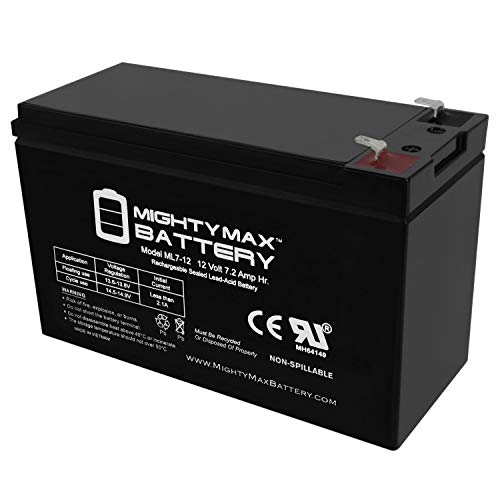
Mighty Max Battery ML7-12 – 12V 7.2AH Replacement UPS Battery for APC Back-UPS-550 BE550G

Mighty Max Battery ml9-12 – 12 Volt 9 ah, f2 Terminal, Rechargeable SLA agm Battery,Pack of 1



A buying sequence that avoids the common failures
Begin with the supply’s model and serial, and obtain the documented replacement specification. Decide between cartridge and loose blocks using the warranty, criticality, and mechanical design of your unit. If buying blocks, confirm voltage, capacity class, dimensions, and terminal type against both the datasheet and the existing battery, and confirm how many blocks the string requires. Check the date code policy of the seller, prefer recent production, and arrange the old battery’s recycling route in the same conversation. Finally, plan the installation window: the charge time the new battery needs, the shutdown or hot-swap procedure the manual prescribes, and the self-check that will close the job.
The failures this sequence prevents are unglamorous and almost entirely informational: the F1 terminal bought where an F2 lives, the single block ordered for a two-block string, the cartridge rebuilt with jumpers transposed, the bargain battery manufactured years before its sale, the hot-swap attempted on a unit that never promised it. None of them require engineering genius to avoid. They require the modest discipline of letting documentation lead and letting the physical battery in front of you confirm, rather than replace, what the documentation says.
It is worth ending on the quiet virtue that makes all of this worthwhile. A correctly chosen replacement battery restores a promise the whole installation was built on: that when the lights flicker at the worst possible moment, the work on the screen survives, the network stays standing, and the evening continues with nothing more dramatic to report than a beep, a pause, and the small, satisfying sound of a household that never had to find out what it almost lost.