What's inside
- Where to Buy
- Key Takeaways
- Quick Picks
- How We Chose These Picks
- Comparison
- How to Choose a JVC Home Theatre Projector
- What Makes D-ILA Different From Other Projector Technologies?
- Should You Buy a Discontinued Flagship Like the NZ7 or NZ9?
- How Large a Screen Can These JVC Projectors Serve?
- How Should a JVC Theatre Be Calibrated and Kept Honest Over Time?
- What Do JVC Owners Argue About Once the Projector Is Installed?
- Common Mistakes When Buying a JVC Home Theatre Projector
- Final Recommendation
- Frequently Asked Questions
- Related Guides
As an Amazon Associate I earn from qualifying purchases. This post may contain affiliate links at no extra cost to you.
widgetverdict.com is reader-supported. When you buy through links on our site, we may earn an affiliate commission.
Where to Buy
Each projector below links to its Amazon listing from its name. The range opens with the JVC DLA-NZ500, the native 4K laser entry point — its listing shows the live figure. The flagship tier follows: the JVC DLA-NZ800 with 8K e-ShiftX, and the lamp-era JVC DLA-NP5 for buyers who prefer its documented brightness and lens. The JVC DLA-NZ7 and the JVC DLA-NZ9 complete the D-ILA ladder — note that both titles carry the word Discontinued, so check availability and the current figure on their listings carefully. The set closes with the JVC LX-NZ3W, the white DLP laser outlier, whose Amazon page carries today’s price.
Rounding up the best jvc home theater projectors means entering the most single-minded catalogue in projection. JVC’s theatre reputation rests on one technology — D-ILA, its reflective liquid-crystal design — and one virtue pursued for decades: contrast, the depth of black from which every other picture quality in a dark room grows. Five of the six picks here are D-ILA machines spanning the range from the native 4K laser NZ500 to the 8K e-ShiftX flagships. The sixth, the LX-NZ3W, is a DLP laser model in white, included deliberately and labelled honestly, because JVC sells both architectures and a faithful guide to the brand must show the fork in its own road.
That distinction governs everything below. When a review says D-ILA, it means the reflective three-panel design whose native contrast figures JVC prints in its titles. When the LX-NZ3W’s review says DLP, it means single-chip projection with a laser source, a different set of strengths — and none of the D-ILA line’s claims transfer to it by badge. Readers who came for the famous black levels are shopping the first five reviews; readers who came for JVC engineering in a brighter, more flexible form should read the sixth with equal seriousness and different expectations.
Specification honesty matters at these prices more than anywhere else in this batch of guides. Figures are taken only from the listing titles: brightness where a title prints it, contrast where a title prints it, light-source life nowhere, because no title here states one — and this guide will not supply hour counts from the brand’s wider literature. Two titles, the NZ7 and NZ9, carry the word Discontinued in their own text; that status is reported in their reviews as a material fact about availability and support, not edited away to make the range look tidier than it is.
Key Takeaways
- Five picks are D-ILA designs (NZ500, NZ800, NP5, NZ7, NZ9); the LX-NZ3W is a DLP laser model and is reviewed as one.
- Stated brightness runs from 1,900 lumens (NP5) to 3,000 lumens (NZ9); the NZ800 title prints no lumen figure.
- Only the NZ500 title prints a contrast figure: native contrast stated as 40K:1.
- HDR10+ is named in the NZ800, NP5, NZ7 and NZ9 titles; Frame Adapt HDR appears in the NZ800, NZ7 and NZ9 titles.
- The NZ7 and NZ9 titles both carry the word Discontinued — availability and support should be confirmed before purchase.
Quick Picks
| Pick | Badge | Why it earns a place |
|---|---|---|
| JVC DLA-NZ500 | Native 4K laser entry | Native 4K laser D-ILA at 2,000 lumens with native contrast stated as 40K:1. |
| JVC DLA-NZ800 | Current flagship | D-ILA laser with 8K e-ShiftX, Gen2 Frame Adapt HDR and HDR10+. |
| JVC DLA-NP5 | Lamp-era value | D-ILA 4K HDR at 1,900 lumens with a 65mm all-glass lens and HDR10+. |
| JVC DLA-NZ7 | Discontinued laser step | D-ILA laser at 2,200 lumens with 8K e-Shift and Frame Adapt HDR — title marked Discontinued. |
| JVC DLA-NZ9 | Discontinued flagship | D-ILA laser at 3,000 lumens with 8K e-ShiftX — the range-topper, title marked Discontinued. |
| JVC LX-NZ3W | The DLP outlier | 4K DLP laser in white, for rooms that want JVC without the D-ILA brief. |
How We Chose These Picks
The range itself made the first decision. A guide to JVC home theatre that omitted the D-ILA ladder’s rungs would misrepresent the brand, so the five D-ILA picks span its documented territory: the current native 4K laser entry, the current 8K e-ShiftX flagship, the lamp-era NP5 that remains the value argument, and the two discontinued laser models whose titles still circulate in listings and which buyers genuinely encounter. Excluding the discontinued pair would have tidied the guide by lying about the market; they are here, flagged, because shoppers will meet them.
The LX-NZ3W’s inclusion was debated and decided on transparency grounds. It is not a D-ILA projector, and any guide that let a reader believe otherwise would be trading on confusion. But it is a JVC home theatre projector by its own title — 4K, DLP, laser — and buyers comparing within the brand deserve to see the alternative architecture presented inside the same covers, with its different strengths argued fairly. It closes the guide as the explicit exception that proves the range’s rule.
Title discipline was enforced at its strictest here, because flagship marketing invites inflation. Brightness is claimed for five picks and withheld for the NZ800, whose title genuinely prints no figure — a notable silence at the top of the range, recorded in its spec box rather than filled from the NZ9’s numbers. Contrast is claimed once, where the NZ500 prints it. HDR wording follows each title exactly: HDR10+ where named, Frame Adapt HDR where named, and no borrowing across models that share a badge and little else.
Finally, the set was balanced by ownership model. Laser permanence against the NP5’s lamp-era economics; current production against discontinued value; dedicated-theatre darkness assumed throughout, because every title here belongs to machines built for controlled light. A JVC guide that pretended these were bright-room appliances would betray the brand and the reader in a single gesture.

JVC DLA-NZ500 — Native 4K laser entry
The NZ500 is where the current D-ILA range begins, and its title is the most numerically honest in the guide: a native 4K laser projector at 2,000 lumens, with native contrast stated as 40K:1. Native is the load-bearing word. This is a true 4K imaging design rather than a pixel-shifted construction, and at the entry point of a range famous for asking serious money, that fact reorganises the value argument — the buyer is purchasing the genuine article’s resolution and the laser’s permanence, in the smallest and most attainable D-ILA package JVC currently describes.
The contrast figure deserves its emphasis. Native contrast — the ratio the panels themselves deliver without dynamic assistance — is the specification JVC’s audience reads first, because it governs the black floor of every scene: the letterbox bars that vanish into the room, the night skies that stay night, the shadow detail that survives in a dark grade. A stated 40K:1 native figure in the title is the manufacturer putting that virtue in writing at the range’s front door, and it is the only contrast claim in this guide because it is the only one a title prints.
Two thousand stated lumens defines the room this machine expects: a dedicated theatre, light-controlled, with a screen sized for quality rather than spectacle. That is not a limitation to apologise for but the D-ILA philosophy stated in numbers — output is spent on contrast and gradation in the dark, not on fighting windows at noon. Buyers whose rooms cannot darken should absorb that lesson early and look at brighter generalist machines elsewhere on this site, because no setting will turn an NZ500 into a living-room projector.
Suits the committed theatre owner entering the JVC world at its current ground floor: a finished dark room, a film diet, and the intention to keep the machine for the long term its laser source is built for. It is also the range’s cleanest purchase — current, native, documented — against which the discontinued flagships above it must argue their discounts and their risks.
- Technology: D-ILA, laser light source
- Resolution: native 4K
- Brightness: 2,000 lumens (as stated in the listing title, printed as 2000lm)
- Contrast: native contrast stated as 40K:1 in the listing title
- HDR formats: Not stated in the listing title — verify with the manufacturer documentation
- Inputs: Not stated in the listing title — verify with the manufacturer documentation
Strengths
- Native 4K resolution at the range’s entry point, in the title.
- A printed native contrast figure anchors the D-ILA promise.
- Laser source suits a decade-scale dedicated theatre.
Trade-offs
- 2,000 stated lumens demands a genuinely dark room.
- HDR formats are not named in the listing title.
- Input details must be confirmed in manufacturer documentation.
Best for: a light-controlled dedicated theatre entering the D-ILA range with a current native 4K laser model. Not suited for: a multipurpose living room used in daylight, where 2,000 stated lumens cannot sustain a satisfying picture.
Judge this projector by its darkest scene. Put on the film whose night photography you know best, in the room at its darkest, and watch the bars above and below the picture. When they disappear into the wall and the image floats in blackness, you are seeing what the entire JVC premium purchases — and the NZ500 is the least expensive current door into that room, which is precisely its distinction in this guide.

JVC DLA-NZ800 — Current flagship
The NZ800 carries the range’s current flagship technology stack, and its title spends its words on processing rather than output: a D-ILA laser projector with 8K e-ShiftX technology, Gen2 Frame Adapt HDR, two HDMI inputs specified at 8K/60p and 4K/120p, HDR10+ compatibility, and ISF certification. Read as a manifesto, it says the top of the JVC range is no longer about more light — the title prints no lumen figure at all — but about more intelligence applied to the light there is: finer pixel construction, second-generation frame-by-frame HDR interpretation, and calibration credentials.
Frame Adapt HDR, in its Gen2 form here, is the JVC idea that matters most to film viewers. Rather than applying one tone map to an entire film, the system analyses the image frame by frame and adapts its mapping continuously, which addresses the projector HDR problem at its root: a single static compromise cannot honour both a candlelit scene and a beach at noon. HDR10+ compatibility, named separately in the title, covers the dynamic-metadata format from the source side, so the NZ800 claims both an intelligent house system and the standardised one — belt and braces for the format-anxious flagship buyer.
The input specification is the gamer’s line in an otherwise cinematic title: 8K/60p and 4K/120p across two HDMI inputs describes bandwidth that current consoles and high-end PCs can actually use, making this the one D-ILA flagship whose title speaks to high-frame-rate play as fluently as to film. ISF certification closes the specification with a promise to the calibration-minded: the machine belongs to the ecosystem of professional setup, and owners who commission an ISF calibration are buying the documented endpoint of that promise.
Suits the flagship buyer whose theatre is finished, dark and ambitious — the owner for whom the projector is the room’s final component rather than its first. The missing lumen figure in the title should be obtained from JVC’s documentation during the purchase conversation, not treated as an oversight to be forgiven: at this tier, every figure belongs in writing, and a buyer who cannot get one answered should pause regardless of the badge.
- Technology: D-ILA, laser light source
- Resolution processing: 8K e-ShiftX technology
- HDR: Gen2 Frame Adapt HDR, HDR10+ compatible
- Inputs: 2 HDMI inputs — 8K/60p and 4K/120p (as stated in the listing title)
- Certification: ISF certified
- Brightness: Not stated in the listing title — verify with the manufacturer documentation
Strengths
- Gen2 Frame Adapt HDR plus HDR10+ covers both HDR philosophies.
- 8K e-ShiftX tops the range’s resolution processing.
- 4K/120p inputs give flagship gaming a documented path.
Trade-offs
- No brightness figure is printed in the listing title.
- Its processing virtues need a dark, finished theatre to appear.
- Flagship ownership assumes calibration-level commitment.
Best for: a finished flagship theatre wanting the current top of JVC’s processing stack. Not suited for: a purchase that needs every figure, brightness included, confirmed on the listing page before a dealer is engaged.
Buy the NZ800 as the start of a calibration project, not as an appliance. Its title promises intelligence — adaptive HDR, certification, bandwidth — and intelligence in a projector is realised through setup: the screen pairing, the room’s black level, the professional calibration its ISF badge invites. Owners who complete that project own the most considered picture in this guide. Owners who unbox it onto a white wall in a grey room own an expensive lesson in what the D-ILA philosophy actually requires.

JVC DLA-NP5 — Lamp-era value
The NP5 is the range’s bridge to its own past: a D-ILA 4K HDR home theatre projector whose title states high brightness at 1,900 lumens, a low latency mode for gaming, two HDMI inputs with HDCP 2.3 at 4K/120P compatibility, HDR10+, and a 65mm all-glass lens. Notably, the title never uses the word laser — the only D-ILA pick here of which that is true — and this guide records the light source as unstated rather than assuming either way, while noting that the NP5 belongs to the generation before laser swept the range.
The all-glass lens is the connoisseur’s detail. Lens quality governs how much of the panel’s resolution and contrast survives the journey to the screen, and a 65mm all-glass element stated in the title is a manufacturer signalling optical seriousness at a tier where plastic assemblies quietly tax lesser machines. Paired with HDR10+ support and full-bandwidth HDMI, the NP5’s specification reads as the mature distillation of its generation: everything the lamp-era flagship class learned, in one documented package.
Low latency mode, printed in the title, gives this theatre machine its second life in gaming rooms — a reminder that the NP5 was designed when JVC’s audience began asking its cinema projectors to serve consoles as well. At 1,900 stated lumens it expects the same dark room as its laser siblings, and its value argument rests on the total picture: D-ILA contrast character, a serious lens, modern format support, at the rung of the ladder where the laser premium has not been added.
Suits the film-first buyer who wants the D-ILA experience with its figures documented and its generation’s maturity priced in — and who accepts the lamp-era ownership rhythm the rest of the range has retired, whatever the listing’s silence on the source. Buyers for whom laser permanence is a hard requirement should climb to the NZ500 and accept its different balance of figures.
- Technology: D-ILA
- HDR: 4K HDR, HDR10+
- Brightness: 1,900 lumens (as stated in the listing title)
- Lens: 65mm all-glass lens
- Inputs and gaming: 2 HDMI/HDCP 2.3 inputs, 4K/120P compatible, low latency mode
- Light source: Not stated in the listing title — verify with the manufacturer documentation
Strengths
- A 65mm all-glass lens is stated outright in the title.
- HDR10+ and 4K/120P inputs keep its format brief current.
- The D-ILA character at the range’s value rung.
Trade-offs
- 1,900 stated lumens is the lowest figure in this guide.
- The title does not claim a laser light source.
- Its generation predates the current Frame Adapt flagship stack.
Best for: a dark theatre buyer who values a documented all-glass lens and D-ILA contrast over laser permanence. Not suited for: a shortlist whose first requirement is a laser light source, because this title does not claim one.
The NP5 rewards the buyer who reads generations correctly. It is not the range’s future and does not pretend to be; it is the point where a mature technology’s virtues — the lens, the panels, the format support — meet a price the laser era left behind. Theatres are long-lived rooms, and a machine that serves one beautifully for its own span is a rational purchase at the right figure, which its listing will tell you today.
JVC DLA-NZ7 — Discontinued laser step
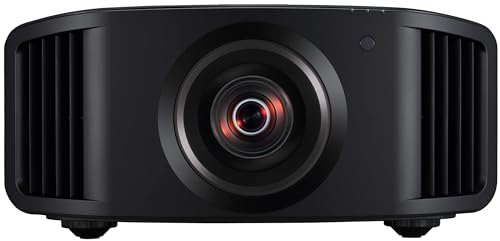
The NZ7’s title tells a complete flagship story and then ends it with a parenthesis: a D-ILA laser home theatre projector at 2,200 lumens, native 4K with 8K e-Shift technology, Frame Adapt HDR, two HDMI inputs supporting 8K-60P and 4K-120P, gaming intent, HDR10+ — and the word Discontinued. This guide prints that word wherever the title does, in this review’s heading summary and here in its first paragraph, because a buyer deserves the range’s history straight: this was a mainstay of the laser D-ILA line, and it is no longer in production.
Discontinued is not a synonym for defective, and the specification shows why these units remain in circulation and in demand. Native 4K D-ILA panels, laser light, 2,200 stated lumens, Frame Adapt HDR and the full flagship input brief — that is a theatre machine of the first rank by the standards of its generation, and the secondary and clearance channels where discontinued flagships surface are where experienced theatre builders hunt value. The laser source is the discontinued buyer’s friend: with no lamp cycle to inherit, a used or old-stock laser unit’s remaining life is a steadier bet than a lamp machine’s.
The risks are equally concrete and belong in the open. Warranty position on a discontinued model must be confirmed in writing; firmware support has a horizon; and the seller’s identity matters more than the listing’s adjectives. None of that is a reason to refuse the machine — it is the due diligence schedule for buying any discontinued flagship, applied here to a title honest enough to declare its own status.
Suits the experienced theatre builder who knows the D-ILA range, can evaluate a seller, and recognises the NZ7’s specification as the value it represents when the paperwork checks out. It does not suit a first-time flagship buyer who needs the full shelter of current production, current support and a current warranty — that buyer belongs with the NZ500 or NZ800, and the price difference is the cost of the shelter.
- Technology: D-ILA, laser light source
- Resolution: native 4K with 8K e-Shift technology
- Brightness: 2,200 lumens (as stated in the listing title, printed as 2200 Lumen)
- HDR: Frame Adapt HDR, HDR10+
- Inputs: 2 HDMI inputs, supports 8K-60P and 4K-120P
- Status: Discontinued (as stated in the listing title)
Strengths
- A full flagship D-ILA laser specification from its generation.
- Frame Adapt HDR and HDR10+ are both named in the title.
- Laser light steadies the value case for a discontinued unit.
Trade-offs
- Discontinued status, stated in the title, limits support horizons.
- Warranty position must be confirmed with the seller in writing.
- Its e-Shift generation precedes the NZ800’s e-ShiftX.
Best for: an experienced JVC buyer who can verify warranty and seller before purchasing a discontinued flagship. Not suited for: a first-time flagship owner who needs current production status and full manufacturer support.
Handle this purchase like the specialist transaction it is: serial number, warranty document, seller history, and a test with your darkest material before the return window closes. Do that diligence and the NZ7 can be the shrewdest seat in this guide — flagship D-ILA laser performance bought with open eyes at a discontinued model’s figure, its current number waiting on the listing for the buyer who did the homework.

JVC DLA-NZ9 — Discontinued flagship
The NZ9 was the summit: a D-ILA laser home theatre projector at 3,000 lumens — the highest figure in this guide — with native 4K and 8K e-ShiftX technology, Frame Adapt HDR, two HDMI inputs supporting 8K-60P and 4K-120P, gaming intent and HDR10+, and the same closing parenthesis as its NZ7 sibling: Discontinued, printed in its own title. Everything the NZ7 review said about discontinued diligence applies here at flagship scale, where the sums are larger and the paperwork matters proportionally more.
As a specification, it remains formidable. Three thousand stated lumens gave this generation’s flagship the headroom to fill larger theatre screens while keeping the D-ILA black floor that defines the brand — the combination, brightness with contrast, that lesser ranges force buyers to choose between. The e-ShiftX processing it shares with the current NZ800 shows how recently this was the state of the art; the NZ800’s advances are generational refinements — Gen2 Frame Adapt among them — rather than a repudiation of what the NZ9 does.
The honest buyer’s calculus is therefore sharp. Against the current NZ800, the NZ9 offers its generation’s peak output figure and, typically, the discontinued discount; against it stand the support horizon, the warranty question and the newer machine’s processing generation. There is no universal answer, which is why this guide presents both machines with their titles’ full wording intact — including the word one of them would probably prefer to omit and this guide refuses to.
Suits the flagship hunter with experience and a finished theatre: the buyer who can audition the unit, verify its provenance, and weigh a support horizon against a specification that still embarrasses most current ranges. It is emphatically not the pick for a buyer who wants the manufacturer relationship to be simple for the next decade — that relationship now belongs to the NZ800, and its premium is partly the price of exactly that simplicity.
- Technology: D-ILA, laser light source
- Resolution: native 4K with 8K e-ShiftX technology
- Brightness: 3,000 lumens (as stated in the listing title, printed as 3000 Lumen)
- HDR: Frame Adapt HDR, HDR10+
- Inputs: 2 HDMI inputs, supports 8K-60P and 4K-120P
- Status: Discontinued (as stated in the listing title)
Strengths
- 3,000 stated lumens is the highest brightness figure in this guide.
- 8K e-ShiftX matches the current flagship’s processing family.
- A complete flagship D-ILA laser specification in one title.
Trade-offs
- Discontinued status, stated in the title, caps the support horizon.
- The NZ800’s Gen2 Frame Adapt generation succeeds it.
- Provenance and warranty verification are the buyer’s burden.
Best for: an experienced flagship buyer with a large dark theatre who verifies provenance before paying. Not suited for: an owner who wants a decade of current-line manufacturer support with no diligence required.
If you pursue the NZ9, let the audition be worthy of the machine: the largest screen it will serve, the darkest material you own, the full input chain it will live with. A flagship of this rank either justifies itself completely in that session or reveals the reason its previous chapter ended. The buyers who do this homework are the ones who write the forum posts everyone else reads — the ones where a discontinued flagship turns out to have been the best purchase in the theatre.
JVC LX-NZ3W — The DLP outlier
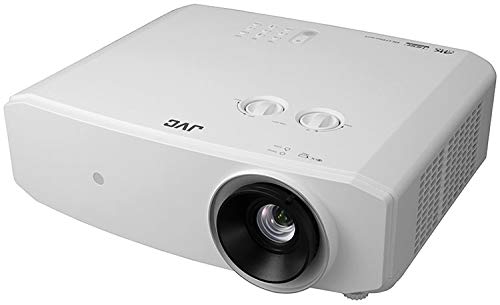
Every range has its heretic, and the LX-NZ3W wears the family’s white finish as if to declare itself: a 4K DLP laser projector, in white, carrying the JVC name into the rival architecture. Its title is four facts long and this review builds on exactly those four — no brightness figure, no HDR formats, no contrast claims are printed, and none are transferred from the D-ILA reviews above, whose virtues belong to a different technology and stay there.
What the DLP architecture offers, as general knowledge, is its own coherent theatre proposition: single-chip sharpness with no panel convergence to drift, strong motion character, and — paired here with a laser source — the steady, low-maintenance ownership that laser brings to either camp. The white finish points the machine at living spaces rather than blacked-out caves: rooms where the projector is visible furniture, where a white unit against a light ceiling is the discreet choice, and where the audience’s relationship with the machine is domestic rather than devotional.
That positioning makes the LX-NZ3W the guide’s bridge to the LX-NZ30B reviewed in this site’s HDR guide — the same JVC DLP laser family in its other finish — and to the DLP-versus-LCD comparison, where this model’s architecture argues its case in full. Readers deciding between this machine and the D-ILA five are really deciding what their room is: a theatre that happens to be in a house, or a living room that hosts theatre. The badge is the same; the briefs are opposites, and both are legitimate.
Suits the JVC loyalist whose room cannot be a cave — the bright-adjacent living space, the white-ceilinged media room — and who wants the brand’s engineering in the architecture that fits their light. It does not suit the buyer who came for D-ILA black levels, and this guide’s final service to that reader is clarity: no sentence in this review should be read as promising them here.
- Technology: DLP
- Resolution: 4K
- Light source: laser
- Colour: white
- Brightness: Not stated in the listing title — verify with the manufacturer documentation
- HDR formats: Not stated in the listing title — verify with the manufacturer documentation
Strengths
- 4K DLP laser from JVC, in a living-room-friendly white finish.
- Single-chip design carries no panel convergence to maintain.
- The brand’s engineering in the architecture brighter rooms prefer.
Trade-offs
- It is not a D-ILA design and claims no D-ILA virtues.
- No brightness figure is printed in the listing title.
- HDR formats are not named in the listing title.
Best for: a JVC buyer whose media room stays a living space, wanting 4K DLP laser in a discreet white unit. Not suited for: a black-level devotee building a dedicated cave, because that brief is the D-ILA range’s entire reason to exist.
Let the LX-NZ3W close the guide as its honesty emblem. A brand guide that hid this machine would flatter the flagship story; a guide that blurred it into the D-ILA range would betray the reader. Presented plainly — four facts, one architecture, a different room in mind — it earns its place, and it sends the undecided reader to the right next question, which is not which JVC is best but which JVC their room has been describing all along.
Keep one reference disc untouched by that evolution: the same film, the same pressing, watched once a season from the same seat. It is the theatre’s control sample, the fixed point against which projector, screen, room and eyes can all be judged at once. When the reference looks wrong, something specific has changed and can be hunted; when it looks right, every new release can be argued about on its own merits, which is the argument the room was built to host in the first place.
Note the reference disc’s chapter and timestamp in the calibration file, beside the settings it validates. A future technician — or a future owner of the same house, inheriting its theatre — will read that page the way sailors read a log: as proof that the room was run by people who measured what they loved, and as instructions for keeping it that way long after the original crew has forgotten which slider did what.
Comparison
| Pick | Technology | Brightness (title) | HDR in title | Standout from title |
|---|---|---|---|---|
| JVC DLA-NZ500 | D-ILA laser | 2,000 lumens | Not stated in the listing title | Native 4K, 40K:1 native contrast |
| JVC DLA-NZ800 | D-ILA laser | Not stated in the listing title | HDR10+, Gen2 Frame Adapt HDR | 8K e-ShiftX, ISF certified |
| JVC DLA-NP5 | D-ILA | 1,900 lumens | HDR10+ | 65mm all-glass lens |
| JVC DLA-NZ7 | D-ILA laser | 2,200 lumens | HDR10+, Frame Adapt HDR | Discontinued in title |
| JVC DLA-NZ9 | D-ILA laser | 3,000 lumens | HDR10+, Frame Adapt HDR | Discontinued flagship output |
| JVC LX-NZ3W | DLP laser | Not stated in the listing title | Not stated in the listing title | White finish, rival architecture |
The table is the range’s biography in six rows: a current entry and a current flagship, a lamp-era value model holding its ground, two discontinued flagships still circulating with their status printed, and one white DLP machine declining to join the family’s religion. Every cell is a title’s own wording, including the empty ones — the NZ800’s missing brightness and the LX-NZ3W’s missing everything are facts a buyer should carry into their dealer conversation.
Read vertically, the brightness column teaches the brand’s philosophy better than any essay: the figures cluster between 1,900 and 3,000 lumens because D-ILA theatres are dark by design, and the range’s genius is spent on what happens inside that darkness. Readers whose rooms cannot join that philosophy have learned the guide’s most valuable lesson from a table, before spending anything at all.
That log-keeping instinct is, in the end, the thread that ties this guide’s six machines together despite their two architectures, three generations and one discontinued pair. JVC ownership has always been a documented pursuit — figures printed in titles, statuses declared in parentheses, calibration treated as a discipline — and the buyers who thrive in this range are the ones who meet the brand on that ground: reading exactly what is claimed, writing down exactly what was set, and letting the darkness speak for itself in between.
Bring that same documentation habit to the audition itself. Score each candidate against the same three scenes, in the same order, with the same notes sheet, and file the sheets with the purchase paperwork whichever machine wins. Memory flatters whichever projector was watched last; paper does not flatter at all, and at flagship prices the difference between the two is worth real money.
Keep the losing candidates’ sheets as well. A theatre evolves — screens grow, rooms darken further, formats shift — and yesterday’s runner-up, auditioned and scored in your own room, is the most valuable starting point imaginable when the next upgrade conversation begins. The file turns a future purchase from a fresh research project into a continuation of one, which is how considered rooms are actually built: one documented decision at a time, each one making the next cheaper to get right.
That paper trail has one more use nobody anticipates at purchase time: resale and inheritance. A documented flagship — calibration file, audition notes, service record, original paperwork — commands trust in exactly the channels where discontinued JVCs change hands, because it answers the questions this guide taught its buyer to ask. Keep the file, and the machine carries its own provenance with it, whichever theatre it lights next.
How to Choose a JVC Home Theatre Projector
Settle the architecture first, because it settles the room. D-ILA is a commitment to darkness: black levels, gradation and contrast that only appear when light is excluded, in a room built or adapted for the purpose. The LX-NZ3W’s DLP design serves the rooms that stay social and lit. Buyers who blur that decision — a D-ILA flagship in a glass living room, a bright-room machine in a finished cave — waste whichever machine they choose, so describe your room honestly before describing your budget.
Within D-ILA, choose your generation deliberately. Current production — NZ500 for native 4K laser entry, NZ800 for the processing flagship — buys support, warranty simplicity and the latest HDR intelligence. The NP5 buys the mature lamp-era package with its lens and documented figures. The discontinued NZ7 and NZ9 buy flagship specifications at the price of diligence: provenance, warranty paperwork and a support horizon accepted in writing. All three routes are rational; they differ in who does the work of assurance, the manufacturer or you.
Match output to screen with the darkness assumed. The stated figures here — 1,900 to 3,000 lumens across the D-ILA five — serve theatre screens at theatre sizes; larger screens climb the ladder toward the NZ9’s figure, smaller screens let the NZ500’s contrast lead. Resist importing brightness habits from living-room projection, where output fights daylight; in a JVC theatre the enemy is not light in the room but light in the image’s blacks, and that enemy is fought with panels and processing, not lumens.
Close with the ownership infrastructure: a dealer or seller you can interrogate, calibration in the budget for the flagships, and the signal chain — sources, cables, receiver — verified for the formats the titles promise. A JVC projector is the centrepiece of a system built to reference standards, and it rewards the buyer who budgets the system rather than worshipping the centrepiece.
What Makes D-ILA Different From Other Projector Technologies?
D-ILA is JVC’s name for its reflective liquid-crystal imaging: instead of shining light through LCD panels or bouncing it off a single mirrored chip, D-ILA devices reflect light off liquid-crystal layers mounted on silicon, combining high pixel density with the deep native contrast the design is known for. That architecture — described here as general technology knowledge — is why JVC titles can print native contrast figures like the NZ500’s stated 40K:1, and why the brand’s theatres are judged first on their black floor. The image exists all at once, in three panels’ worth of colour, so the sequential-colour artefacts of single-chip DLP have no mechanism here.
The costs of the design are the mirror of its virtues. Reflective panels and their optics are precision components, which is part of why the range prices the way it does; the machines are built for dark rooms because their genius is gradation in darkness; and the range’s brightness figures, read across this guide’s table, stay in theatre territory rather than chasing living-room numbers. D-ILA is a specialisation, pursued by one manufacturer with unusual consistency, and its audience rewards that consistency with a loyalty no specification fully explains.
Against that background the LX-NZ3W’s presence in the catalogue reads correctly: not as dilution but as JVC acknowledging that some of its customers live in rooms D-ILA cannot serve, and offering them the brand’s engineering in the architecture that can. A guide’s job is to keep the two promises separate, which this one has done by labelling every claim with its technology — the reader who finishes it knowing which JVC is which has the only brand knowledge that matters at purchase time.
Should You Buy a Discontinued Flagship Like the NZ7 or NZ9?
Conditionally, yes — and the conditions are the content of this section. A discontinued flagship is a known quantity: its performance has been measured by a generation of owners, its weaknesses are documented in public, and its price in the channels where it surfaces reflects its status rather than its ability. For an experienced buyer with a finished theatre, that combination can be the best value in the entire range — flagship D-ILA laser pictures, of the NZ9’s 3,000 stated lumens and e-ShiftX processing, at figures current production does not visit.
The conditions are diligence, and they are not optional. Confirm the warranty position in writing, because discontinued stock travels through varied channels. Verify the seller and the serial number. Establish what firmware support remains. Audition the exact unit, or secure a return window that functions as one, with the darkest material you own. And price the alternative honestly: the current NZ800’s premium buys the support relationship and the newer Frame Adapt generation, and for some buyers that premium is the correct purchase all by itself.
What a buyer should never do is stumble into a discontinued flagship unknowingly — which is why this guide prints the word wherever the titles do, in the Quick Picks, the reviews and the comparison. The titles themselves declare it, to their manufacturers’ credit. A market that labels its discontinued flagships honestly is a market an informed buyer can navigate, and the NZ7 and NZ9, navigated properly, are opportunities rather than traps.
How Large a Screen Can These JVC Projectors Serve?
The honest answer follows the darkness. In a properly dark theatre, the stated outputs in this guide — from the NP5’s 1,900 lumens to the NZ9’s 3,000 — serve the screen sizes domestic theatres actually build, with the larger figures buying either larger screens or more headroom for HDR’s highlights on the same screen. The variable that breaks the calculation is always the room: a theatre that leaks light spends its lumens on survival, and the same projector that floats a vast image in a cave will look apologetic in a grey room at half the size.
HDR raises the stakes on size discipline. Tone mapping needs highlight headroom, and headroom is brightness per unit area — which falls as the screen grows. Flagship owners chasing the largest possible image sometimes discover they have traded away the HDR brilliance that justified the flagship, a self-defeating bargain this guide flags in its HDR companion as well. The JVC philosophy points the other way: a screen sized for the machine’s contrast and gradation, in a room dark enough to honour both.
Throw and lens complete the geometry, and here the titles’ silence must be respected: no throw ratios are printed in this guide’s titles, so screen planning belongs in JVC’s documentation for the exact model, confirmed against the room’s measured mounting distance. The NP5’s stated 65mm all-glass lens is the one optical detail a title offers, and it speaks to quality rather than geometry. Measure the room, read the datasheet, then fall in love with a screen size — in that order.
How Should a JVC Theatre Be Calibrated and Kept Honest Over Time?
Begin by admitting that a flagship projector leaves the factory as a promise, not a finished picture. The screen’s gain and colour, the room’s residual light, the throw distance and the seating all bend the result, which is why the NZ800’s title carries ISF certification as a headline rather than a footnote: the machine is designed to be measured and adjusted in situ by someone with instruments. Owners of any pick in this guide will get more from one professional calibration than from a year of menu experiments, because calibration converts the panel’s native virtues — the contrast these titles print, the gradation the processing promises — into numbers verified in the only room that matters.
After calibration, protect it. Record every setting, photograph the menus if the machine allows no export, and resist the seasonal urge to improve the picture by memory. JVC theatres drift socially more than technically: a guest adjusts a mode for a football match, a firmware update resets a preference, a new source arrives with its own output habits, and the reference picture quietly becomes a rumour. The household that can restore its calibrated state in five minutes owns a reference theatre; the household that cannot owns a very good projector and a story about how it looked in its first month.
Revisit the calibration on the schedule the room dictates: when the screen changes, when the seating moves, when a laser unit’s years begin to accumulate, or when a new format becomes the household’s staple. Each revisit is cheap beside the machine it protects, and each one renews the original purchase’s logic. A JVC is bought for the accuracy of its darkness. Calibration is how that accuracy is kept from becoming nostalgia.
What Do JVC Owners Argue About Once the Projector Is Installed?
Not brightness — the argument moves to material. Owners compare pressings and transfers the way other hobbyists compare pressings of records: which release of a favourite film holds its blacks, which stream betrays its bitrate in the night scenes, which concert disc was graded by someone who understood the medium. This is the cultural consequence of owning a high-contrast projector: the machine stops being the variable, and the content becomes one. New owners should expect their standards to rise permanently, and their tolerance for careless transfers to fall just as permanently.
They also argue, productively, about screens. A JVC theatre reveals screen texture, gain artefacts and uniformity problems that lesser projectors politely hid, so the upgrade path in these rooms often runs through the surface rather than the projector for years after the flagship arrives. That is a healthy sign rather than a failure: it means the projector has headroom the room has not finished exploiting, and it gives the hobby somewhere to go that does not involve replacing its centrepiece.
Finally, they argue about the future with unusual calm, because the laser range’s ownership rhythm is calm. No lamp anxiety, no annual brightness mourning — just the slow evolution of formats arriving at inputs the flagships already documented. Whether that calm survives the next resolution transition is a question for a future guide; within the span these machines were bought for, the JVC owner’s argument is the enviable one of a person whose equipment has stopped being the problem.
Common Mistakes When Buying a JVC Home Theatre Projector
Putting a D-ILA flagship in a bright room. The range’s genius is darkness. A glass-walled living room wastes it completely and unkindly.
Blurring the LX-NZ3W into the D-ILA range. It is a DLP projector with a JVC badge. Its strengths are real and entirely different, and no D-ILA claim transfers to it.
Missing the word Discontinued. Two titles in this guide print it. Buy those machines with diligence and paperwork, or buy current production instead — but never buy them unknowingly.
Assuming the NZ800’s brightness from its siblings. Its title prints no figure. Obtain it from JVC’s documentation during the purchase, in writing.
Sizing the screen for spectacle over HDR. Every added inch spends the headroom tone mapping needs. In a JVC theatre, restraint in size is a picture-quality feature.
Final Recommendation
For most JVC buyers, the range resolves into two clean decisions. Enter with the NZ500 if you want the current, native, documented ground floor of D-ILA laser ownership; ascend to the NZ800 if your theatre is finished and your appetite is for the current processing flagship, Gen2 Frame Adapt and all. Take the NP5 if its lens, its figures and its generation’s value speak to you more than laser permanence does. And if you know this range well enough to do provenance paperwork happily, the discontinued NZ7 and NZ9 wait as the connoisseur’s arbitrage — flagship pictures whose titles honestly declare their status.
Choose the room before the projector and the badge will take care of itself: darkness earns D-ILA, light earns the white DLP exception, and either way a JVC bought for the room it will actually serve becomes the piece of equipment its owners describe, years later, as the one they would buy again first.
Frequently Asked Questions
What is the difference between D-ILA and the LX-NZ3W’s DLP?
D-ILA is JVC’s reflective three-panel design, pursued for native contrast and black depth in dark theatres. The LX-NZ3W uses single-chip DLP with a laser source — a different architecture with different strengths, suited to rooms that stay lighter. They share a badge and a brand’s engineering standards, and nothing else in this guide should be read as transferring claims between them.
Are the NZ7 and NZ9 still worth buying if they are discontinued?
They can be, for experienced buyers who verify warranty, provenance and seller in writing and audition the unit. Their specifications remain flagship-grade. Buyers who need current production status and a simple support relationship should choose the NZ500 or NZ800 instead — that is what the current range’s premium purchases.
Why does the NZ800 title not state its brightness?
Because the listing chooses to headline its processing — 8K e-ShiftX, Gen2 Frame Adapt HDR, ISF certification — and leaves output to the datasheet. This guide records the omission rather than borrowing a sibling’s figure. Any serious purchase conversation should obtain the documented figure from JVC before committing.
Do these projectors work for gaming?
Several titles speak to it directly: the NZ800 and both discontinued flagships cite 4K/120P input support, and the NP5 names a low latency mode for gaming. A dedicated gaming buyer should still confirm lag figures per model in manufacturer documentation, since no title here prints a millisecond number.
How long will a laser JVC last compared with the NP5?
Laser sources are designed for long, steady service without lamp changes, which is the ownership rhythm five of these six picks promise. No title in this guide prints a lifespan figure for any model, so rated life must come from JVC’s documentation for the exact unit, weighed against your theatre’s weekly hours.
Related Guides
Theatre owners building a wider creator setup around the room can browse the best inexpensive mirrorless cameras for starting a channel or documenting a build without leaving this site’s shortlists. Those planning to film events in the finished theatre will find the reliability-first shortlist of the best mirrorless cameras for wedding photography, chosen for all-day work a practical companion. And readers who shoot outdoors as seriously as they watch indoors can finish with the best mirrorless cameras with weather sealing for work in rough conditions.