What's inside
- Key Takeaways
- Quick Picks
- How We Chose These Picks
- Comparison
- Where Should a Kitchen TV Actually Live?
- Can You Hear a Small TV Over a Working Kitchen?
- How Do You Follow a Recipe on a Kitchen TV?
- What About Heat, Steam and the Life of the Screen?
- Common Mistakes
- Final Recommendation
- Frequently Asked Questions
- Related Guides
As an Amazon Associate I earn from qualifying purchases. This post may contain affiliate links at no extra cost to you.
widgetverdict.com is reader-supported. When you buy through links on our site, we may earn an affiliate commission.
The best kitchen hd tvs live the hardest life of any screens in the house. They work at arm’s length and across the room in the same hour, they compete with extractor fans and boiling kettles, they get operated with floury hands, and they sit in steam, splashes and the warm fug above a stove’s orbit. All five linked picks in this guide are 24-inch HD models, because 24 inches is the size a kitchen actually has: the end of a counter run, a shelf between cabinets, a wall patch above the breakfast table. A sixth entry, an under-cabinet flip-down design, is covered without a link because it represents a mounting idea every kitchen buyer should consider, even though no verified listing for it sits behind this guide.
What a kitchen asks of a television differs from every other room. The picture is glanced at more than watched — a recipe step checked, a score glanced up at, the news held in the corner of an eye — so legibility at odd angles and a forgiving picture matter more than cinematic depth. The sound competes with the loudest appliances in the home, so dialogue clarity at modest volume is a real specification here. And the interface gets used in fragments, thirty seconds at a time, which rewards platforms that wake fast and resume instantly. Fire TV, Roku and Xumo divide the five linked sets, and one Westinghouse abandons smart features entirely in favour of a built-in DVD player, a decision that makes more sense in a kitchen than anywhere else in the house.
Resolution needs a kitchen-sized perspective. These are HD panels, several of them 720p by their listings, and at 24 inches that is not the compromise it would be on a lounge screen. Text in a recipe video stays readable, broadcast and streamed content looks clean at counter distance, and the eye simply cannot prosecute pixel counts on a screen this size while also watching a pan. Spend your attention instead on placement, sound and platform, the three things a kitchen will test daily. A television that survives the room’s steam and noise with its dignity intact is worth more than a sharper panel that sulks in the corner it was exiled to.
Safety earns its sentence here, because kitchens concentrate water, heat and electricity in one room. A television in this space should be positioned by the same logic as a toaster: dry zone, stable surface, cable managed, never within reach of a filling sink’s splash or a pan handle’s swing. None of that is a reason to deny the room a screen; millions of kitchens run one happily for years. It is a reason to spend the ten placement minutes this guide keeps recommending, because those minutes are the difference between an appliance and an accident looking for an occasion, and kitchens, which forgive so much, do not forgive carelessness with heat and water near live electronics.
One more kitchen truth before the rankings: this screen will be the household’s most social television. It plays to cooks and to the people who drift in to talk to cooks. It shows the match while dinner is made, the morning news over coffee, the baking final while the household’s own baking rises or fails in sympathy. Buy it like a kitchen appliance — for reliability, legibility and ease — and it will be used more hours than the flagship in the lounge, which is the quiet fate of almost every kitchen television ever installed.
Key Takeaways
- All five linked picks are 24-inch HD sets; at this size, platform and placement matter more than resolution.
- The Insignia F20 brings Fire TV and Alexa voice control, useful when your hands are covered in flour.
- Roku’s 24-inch Select is a 720p set with Bluetooth Headphone Mode for cooking in a sleeping house.
- Westinghouse offers two different answers: a Roku smart model with AirPlay, and a non-smart model with a DVD player built in.
- The Element Xumo set adds a 120Hz effective refresh rate and Apple Home and AirPlay support to the small-screen mix.
- An under-cabinet flip-down television, covered without a link, is the mounting idea to weigh before buying any counter model.
Quick Picks
| Pick | Badge | Why it makes the cut |
|---|---|---|
| INSIGNIA 24″ Class F20 Series LED HD Smart Fire TV | Voice-first kitchen pick | Fire TV with a Voice Remote and Alexa for hands-busy control, plus free and live TV for background viewing. |
| Roku 24-Inch Select Series Smart TV 2026 – 720p HD TV | Quiet-hours Roku | Roku’s simple interface with Bluetooth Headphone Mode for early-morning or late-night cooking sessions. |
| Westinghouse Roku 24 Inch HD Smart TV | Casting-friendly all-rounder | Roku platform with Dolby Audio, Apple AirPlay and a mobile app for recipe videos sent from a phone. |
| Westinghouse 24 Inch TV with DVD Player Built in | DVD combo specialist | A non-smart HD television with a disc player inside, made for kitchens, RVs and rooms that value simplicity. |
| Element 24-inch 720p HD Xumo Smart TV | Xumo alternative | Xumo platform with voice remote, 120Hz effective refresh, Dolby Audio and Apple Home and AirPlay support. |
| Sylvox under-cabinet kitchen TV (flip-down design) | Mounting idea to consider | Folds away beneath a cabinet when not in use; covered as a design route without a verified listing link. |
How We Chose These Picks
The size filter was absolute: 24-inch HD televisions with verified listings, because the keyword promises counter-friendly sets and kitchens punish anything larger. Within that filter, platform coverage drove the selection. Fire TV, Roku twice over in different flavours, a non-smart DVD combination and Xumo give a kitchen buyer the full map of what the 24-inch market actually offers, rather than five versions of the same idea wearing different badges. Each linked model had to earn its place with a kitchen-relevant trait stated in its own listing: voice control for messy hands, headphone listening for quiet hours, AirPlay for recipe casting, a disc player for media collections, or an effective refresh rate for sport at the breakfast table.
The prose-only entry passed a different test. Under-cabinet flip-down televisions solve the kitchen’s scarcest resource — counter space — by spending none of it, and any honest guide to this category has to discuss the design even when no verified listing supports a purchase link. It is included as a route to research, clearly labelled, rather than as a product to buy from this page. That distinction, maintained throughout this site’s guides, is what keeps a shortlist trustworthy: linked means verified, unlinked means context.
One more criterion ran quietly through the selection: repairability of a bad decision. A 24-inch television is light, cheap to move and easy to rehome, so a platform that disappoints can migrate to a bedroom or a workshop while its replacement takes the kitchen. That forgiving economics is part of this class’s charm, and it argues for buying the set that fits today’s kitchen rather than agonising over a decade-long commitment. Few purchases in the house are this reversible; enjoy the freedom it gives you to choose by habit and instinct.
Kitchen testing criteria were applied in the writing even where listings stay silent. Viewing angles from a cook’s working positions, dialogue legibility against appliance noise, the speed of waking and resuming a programme mid-recipe, the cleanability of a screen living near steam and oil — these are the axes the reviews below argue along. Specifications beyond the listings, such as exact brightness or port counts, are left unstated in the spec boxes rather than guessed, because a kitchen buyer deserves the same honesty as a flagship buyer, in smaller type.

INSIGNIA 24″ Class F20 Series LED HD Smart Fire TV — Voice-first kitchen pick
Voice control stops being a novelty in a kitchen and becomes the entire interface. Hands under a tap, hands in dough, hands holding a hot tray — the Insignia F20’s Voice Remote with Alexa answers all three situations, letting the cook pause a recipe video, raise the volume over the extractor fan or switch to the match without touching anything with anything. That single design alignment between product and room is why the F20 leads this guide. Fire TV’s free and live TV bench fills the background hours, when the kitchen wants company rather than a programme, and the platform’s app depth covers the recipe channels and streaming services a cooking household actually uses.
The hardware is the familiar F20 formula at 24 inches: an LED HD panel in a light, simple cabinet that sits happily on a counter, a shelf or a small wall bracket. HD at this size and distance is the right resolution for the room, as the introduction argues, and the panel’s job is legibility rather than spectacle. Fire TV wakes and resumes with the briskness fragmented kitchen viewing demands, and Alexa timers — set by voice, checked by voice — quietly become the kitchen’s second oven clock. Owners of Echo devices elsewhere in the house will find the F20 behaving like a screen-equipped member of the family, which simplifies everything from shopping lists to intercom calls to the dining room.
Limits should be named plainly. The listing states no headphone mode, so the early riser cooking in a sleeping house relies on low volume and subtitles rather than the Roku’s Bluetooth answer below. Fire TV’s home screen leans toward Amazon’s storefront, which bothers some households and is invisible to others. And a counter-standing set near a stove will need its screen wiped and its vents kept clear of the kitchen’s ambient grease, a chore true of every pick here but worth scheduling for the set that sits closest to the action. None of that dents the core case: for a voice-run kitchen, this is the natural first choice.
Placement advice for the F20 is simple. Give it the counter end or wall patch with the clearest view of the main worktop, keep it out of the direct steam line above the kettle and hob, and pair the remote’s home with the knife block or the mug tree — one fixed place, because a kitchen remote migrates into drawers like no other object in the home. Set up that way, the F20 becomes what the best kitchen televisions become: not a screen the household gathers to watch, but a companion the cook talks to all day.
Breakfast television is this set’s home fixture, and it handles the shift well: the news on while lunches are packed, the weather checked by voice while the kettle boils, a cookery programme idling through a slow Sunday morning of baking. Fire TV’s home screen, whatever its storefront leanings, is quick to resume what the household was watching, and in a room of fragments, resumption speed is a picture-quality feature of its own kind. The F20 never asks the cook to navigate; it asks only to be told, and kitchens reward that manners system every single day.
- Size and panel: 24-inch LED, HD
- Platform: Fire TV
- Remote and voice: Voice Remote with Alexa
- Content: Free and Live TV per listing
- Resolution class: HD
- Series: F20 Series
Strengths
- Alexa voice control suits messy-handed kitchen operation better than any button layout.
- Fire TV’s free and live channels cover the background-viewing hours kitchens run on.
- Light, compact hardware fits counters, shelves and small brackets without drama.
Trade-offs
- No headphone listening provision is stated in the listing for quiet-hours cooking.
- Fire TV’s Amazon-leaning home screen will not suit every household’s taste.
- HD resolution is right for the room but will not satisfy pixel counters.
Best for: Alexa households and cooks running the television entirely by voice while their hands work.
Not suited for: silent early-morning use, where the Roku’s headphone mode answers a problem this set leaves open.

Roku 24-Inch Select Series Smart TV 2026 – 720p HD TV – RokuTV — Quiet-hours Roku
Roku’s own 24-inch set is the diplomat of this guide: the television least likely to start an argument in any kitchen. Its platform is the simplest here, a grid of services with impartial search, and its listing carries the feature that changes kitchen life for shift workers and early risers — Bluetooth Headphone Mode. The household member who cooks at 5 a.m. or midnight can listen at full clarity through headphones while the rest of the home sleeps, and the television stays a pleasure rather than a negotiation. In a room defined by noise, the ability to subtract noise entirely is a kind of superpower.
The panel is 720p HD per the listing, and at 24 inches that figure deserves defence rather than embarrassment. Broadcast television, streamed series and recipe content all present cleanly at this scale, and Roku’s interface text remains legible from the worktop. The voice remote covers search when hands are busy, though Roku’s voice system is a search tool rather than a full household assistant like Alexa; it finds programmes brilliantly and sets no timers. Wi-Fi is built in, the design is a plain flat LED cabinet, and the 2026 model year gives it the longest platform runway of the group alongside its 32-inch sibling in the bedroom guide.
Content positioning in the listing leans on streaming live local news, sports and movies, which is precisely the kitchen’s diet: the morning bulletin, the lunchtime headlines, the evening match simmering alongside dinner. Roku’s live TV guide gathers free channels into a familiar programme grid, sparing the cook the app-hopping that fragmented viewing cannot afford. Where the set concedes ground is colour and audio branding — no QLED claims, no Dolby Audio in the title — and households that want the kitchen screen to double as a small film screen for a kitchen-diner should weigh the Westinghouse Roku below, which adds Dolby Audio and AirPlay to the same platform.
Installed under a small bracket or standing at a counter’s end, the Select asks little and gives the kitchen its essentials in their calmest form. It is the pick for cooks who value quiet — quiet interface, quiet hours, quiet design — and who would rather a television be dependable than dazzling. Kitchens, of all rooms, understand that value system instinctively, because the appliances that earn love there are the ones that work every single day without asking to be admired.
Carers and new parents will recognise another use for the headphone mode: the kitchen television that entertains the cook during night feeds and early sterilising rounds without waking the baby in the next room. Small features in small televisions often map onto the tender hours of a household’s life, and Roku, deliberately or not, has built the 24-inch set that respects those hours best. That respect, repeated nightly, is what turns an appliance into a favourite.
- Size and panel: 24-inch flat LED, 720p HD
- Platform: Roku TV
- Audio feature: Bluetooth Headphone Mode
- Remote and connectivity: Voice Remote, Wi-Fi
- Content focus: streaming live local news, sports and movies
- Model year: 2026
Strengths
- Bluetooth Headphone Mode makes it the quiet-hours champion of the kitchen class.
- Roku’s impartial, uncluttered interface suits fragmented thirty-second interactions.
- Live TV guide gathers free channels into one familiar grid for background viewing.
Trade-offs
- 720p is the joint-lowest resolution here, fine for the room but not for pixel purists.
- Voice control is search-focused rather than a full smart-home assistant.
- No Dolby Audio branding in the listing, so its audio story is the plainest here.
Best for: shift workers, early risers and anyone who cooks while the rest of the house sleeps.
Not suited for: households prioritising the richest sound and casting options on the Roku platform.

Westinghouse Roku 24 Inch HD Smart TV, Dolby Audio, Apple AirPlay, Alexa — Casting-friendly all-rounder
The Westinghouse Roku model is the kitchen set for households that live through their phones. Apple AirPlay is the headline: a recipe video found on a phone, a cooking programme paused on a tablet, photos from the weekend — all of it can be sent to the kitchen screen with a tap, which is exactly how kitchen viewing actually begins in 2026. Nobody searches for a recipe on a television interface. They find it on the device already in their hand and want it on the bigger screen by the stove. This set is built around that gesture, with compatibility for Alexa and Google Assistant named in the listing for voice households of either flavour.
Dolby Audio gives it the strongest stated sound story among the Roku pair, and sound is a kitchen specification whether buyers treat it as one or not. Dialogue that survives a boiling kettle and a running tap is dialogue engineered with some care, and Dolby Audio’s processing is aimed at exactly that clarity. The panel is HD, the platform is Roku with its mobile app and Wi-Fi connectivity, and the whole package reads as the most feature-complete 24-inch Roku set in the guide: where Roku’s own Select wins on headphone mode and model-year freshness, the Westinghouse counters with casting and audio.
The choice between the two Roku sets is therefore a tidy one, decided by a single question: which matters more in your kitchen, silent listening or phone casting? Households with an iPhone in every apron pocket will feel AirPlay’s pull daily. Households with a night-shift cook will feel the headphone mode’s pull nightly. Both run the same calm interface, so the household’s habits, not the platform, make the call. Westinghouse’s value positioning usually sharpens the argument further — check price on Amazon for the day’s gap — and the brand’s long history in small televisions shows in a cabinet designed without fuss for exactly this size class.
One installation note suits this model especially: casting households should confirm the kitchen’s Wi-Fi reaches the television’s corner strongly, because AirPlay over a weak signal stutters in ways that unfairly blame the set. A strong signal turns the Westinghouse into the kitchen’s display terminal, ready for whatever the family’s phones throw at it. In a house run from pockets and countertops, that readiness is the feature that gets used every day.
Recipe following is where the casting case becomes concrete. A video recipe’s steps are small text and quick cuts; watched on a phone propped against the olive oil, they are a squint and a hazard. Cast to the Westinghouse and the same video becomes a worktop display you can read with your hands in a mixing bowl, pausing by voice through the assistants it supports. That workflow — phone finds, television shows, voice conducts — is the most modern interaction pattern in this entire guide, and this set is its cheapest complete expression.
- Size and panel: 24-inch flat HD
- Platform: Roku TV
- Audio: Dolby Audio
- Casting and voice: Apple AirPlay, Alexa and Google Assistant compatible
- Connectivity: Wi-Fi and mobile app per listing
- Series: Westinghouse Roku TV
Strengths
- Apple AirPlay matches how kitchen viewing really starts: on a phone, mid-recipe.
- Dolby Audio gives dialogue its best chance against kettles, taps and extractor fans.
- Compatibility with both Alexa and Google Assistant keeps voice households of either camp welcome.
Trade-offs
- No Bluetooth headphone mode is stated, conceding the quiet-hours crown to Roku’s own set.
- HD rather than higher resolution, standard for the class but worth stating plainly.
- Casting quality depends heavily on the kitchen’s Wi-Fi strength at the screen’s corner.
Best for: iPhone households that cast recipes and programmes from the phone in their hand to the screen by the stove.
Not suited for: silent-hours cooking, which depends on the headphone provision this listing does not state.

Westinghouse 24 Inch TV with DVD Player Built in, HD Small Non-Smart TV — DVD combo specialist
Every guide needs one pick that rejects the premise, and this Westinghouse rejects smartness itself. It is a 24-inch HD television with a DVD player built into the cabinet and no smart platform at all, and in the right kitchen that is not a deficiency but a philosophy. The listing names its habitats honestly: RVs and campers, bedrooms, and rooms where a streaming stick or set-top device can be added if wanted. Translated to the kitchen, it serves households with a shelf of cookery DVDs, a collection of films the family re-watches, or a simple desire for a screen that plays what it is given and asks for no accounts, passwords or updates in return.
The built-in player changes the object’s whole character. There is no slot-loading hunt for a separate box, no second remote, no HDMI cable draped across the counter. Put a disc in and the film plays — a interaction a grandparent, a child or a holiday-let guest understands instantly. For kitchens that serve as the household’s informal cinema during long cooking projects, a beloved cookery series on disc is a companion that never buffers, never logs out and never rearranges its home screen overnight. In an age of platform churn, there is a real peace in a television whose interface is a play button.
The compromises are structural and should be bought knowingly. Streaming requires an added device — the listing itself notes it works with Fire Stick, Roku and Apple TV type streamers — which returns the second remote the design tried to banish. There is no voice control for messy hands, no headphone mode in the listing, and no app for casting. Buyers should therefore see this set as the centre of a disc-based or broadcast-based kitchen, not as a streaming screen in waiting. Judged on those terms it is superb value in simplicity, and its RV heritage means a cabinet built to travel and to shrug off vibration, which kitchens — slammed drawers, humming fridges — quietly appreciate.
It also makes the guide’s best second-kitchen argument. Holiday homes, annexes, workshops with a kettle, the kitchen of a rental property: places where accounts should not live and guests should not need instructions. The DVD combo asks nothing of anyone. If your kitchen’s viewing is discs, broadcast and the occasional added streamer, this Westinghouse is not the old-fashioned option. It is the correctly-fashioned one, and its inclusion here is a reminder that the best technology for a room is sometimes the technology that stays out of the room’s way.
Children’s cookery deserves a footnote in this set’s favour. A child’s DVD collection — baking shows, film favourites worn smooth by repetition — plays on the Westinghouse with no account, no adverts and no algorithmic detours into content nobody chose. In a kitchen where a young sous-chef is entertained while dinner is made, that closed, predictable library is a feature parents price correctly even when reviewers overlook it. The set is a jukebox as much as a television, and jukeboxes have never needed an internet connection to be loved.
- Size and panel: 24-inch HD
- Player: DVD player built in
- Platform: non-smart by design
- Stated habitats: RV or camper, bedrooms, kitchens
- Streaming route: works with Fire Stick, Roku, Apple TV type devices
- Series: Westinghouse DVD combo
Strengths
- Built-in DVD player removes the second box, second remote and cable clutter entirely.
- No accounts, updates or interface changes: the simplest operation in this guide.
- RV-grade design intent suits vibrating, travelling and hard-working environments.
Trade-offs
- Streaming needs an added device, which reintroduces the extra remote it avoids for discs.
- No voice control, casting or headphone provisions are stated in the listing.
- Disc collections are a shrinking library, so its strength depends on what your shelves hold.
Best for: disc-owning households, holiday kitchens and any room that wants a screen without accounts or updates.
Not suited for: streaming-first kitchens, where built-in apps and voice search are what the buyer is actually paying for.
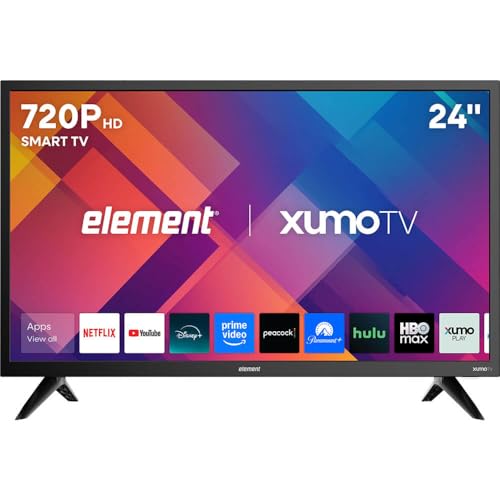
Element 24-inch 720p HD Xumo Smart TV — Xumo alternative
The Element brings a fourth platform to a five-set guide, and Xumo deserves the introduction. Xumo is the streaming platform built around free, ad-supported channels gathered into a familiar guide, with a voice remote to navigate it — a proposition aimed squarely at viewers who want television to feel like television: turn it on, something is playing, surf from there. For kitchen background viewing, that is a genuinely apt design. The cook does not always want to choose a programme; often the kitchen wants company, headlines or a cookery channel that was already mid-episode when the kettle went on. Xumo’s channel-first layout serves that mood better than app grids do.
The listing adds two specifications its rivals do not state. A 120Hz effective refresh rate addresses motion smoothness, which kitchen sport — the match simmering through a Sunday roast — appreciates, with the honest caveat that effective rates are a processing figure rather than a native panel rate. Dolby Audio covers the dialogue-against-kettle problem, Bluetooth headphone capability appears in the listing for quieter sessions, and Apple Home and AirPlay support lets iPhone households cast recipes and control the set within Apple’s home ecosystem. On paper, that is the broadest feature list of any set here, on the platform with the least household penetration — the classic challenger profile.
The challenger question is therefore about comfort rather than capability. Xumo’s app depth and long-term platform trajectory are less proven than Fire TV’s or Roku’s, and households should confirm their essential services live on it before committing. Element’s own positioning is value-led, which usually makes this set’s price part of its argument — check price on Amazon against the Roku pair. For a kitchen that runs on free channels, background sport and cast recipes, the Element may be the smartest pound-for-pound purchase in the guide. For a kitchen that lives inside specific subscription apps, the safer platforms above earn their premiums.
Design is a plain flat LED cabinet, light and unfussy, suited to a shelf or bracket. The voice remote keeps floury hands off the buttons for search. Taken together, the Element is the guide’s reminder that the small-screen market is wider than its two famous platforms, and that a kitchen — a room of brief, frequent, practical interactions — may be exactly where a channel-first platform proves itself. If your household’s viewing is more surfing than selecting, start here and let the bigger names argue you out of it.
Landlords and holiday-let hosts should note the Element’s profile as well. A channel-first free platform needs no guest accounts, leaves no previous visitor signed in, and entertains immediately — three properties that matter in kitchens nobody owns permanently. Combined with its value positioning, that makes the Element a quietly excellent fit for rental kitchens and second homes, where the television’s job is to be welcoming infrastructure rather than a personalised media centre.
- Size and panel: 24-inch flat LED, 720p HD
- Platform: Xumo
- Refresh: 120Hz effective refresh rate per listing
- Audio: Dolby Audio, Bluetooth headphone capable
- Casting and home: Apple Home and AirPlay support
- Remote: voice remote included
Strengths
- Channel-first Xumo platform matches background kitchen viewing better than app grids.
- The broadest stated feature list here, from effective refresh to AirPlay and Bluetooth audio.
- Voice remote keeps search hands-free for a room where hands are rarely free.
Trade-offs
- Xumo’s app catalogue and track record are less proven than Fire TV or Roku.
- 720p resolution, standard for half this guide but the figure pixel counters will quote.
- Effective refresh is a processing claim, not a native panel rate, and should be read as such.
Best for: channel-surfers and free-TV households whose kitchen screen is company first and cinema second.
Not suited for: households anchored to specific subscription apps, who should verify Xumo carries them first.
Sylvox Under-Cabinet Kitchen TV (Flip-Down Design) — Mounting idea to consider
Before buying any set in this guide, stand in your kitchen and look at the underside of your wall cabinets. That strip of dead space is where the flip-down kitchen television lives: a screen mounted beneath a cabinet that folds down for viewing and tucks away flat when the counter is needed, leaving every centimetre of worktop free. Sylvox is the name most associated with purpose-built under-cabinet kitchen televisions, and the design solves the category’s central scarcity — counter space — more completely than any counter-standing model can. When the screen is up, the kitchen is a kitchen. When it folds down, the cook has a display at eye height, close to the worktop where recipes are actually followed.
This entry carries no purchase link, deliberately. No verified listing for an under-cabinet model sits behind this guide, and the site’s rule is that links follow verification, not enthusiasm. Treat the design as a research route: measure your cabinet depth and the clearance above your worktop, check that the folded screen clears your tallest countertop appliances, and consider the wiring path to a socket that keeps cables out of the steam. Purpose-built kitchen models in this style are designed around the room’s heat and splashes in ways a general television is not, which is part of their premium.
Who should take the detour? Kitchens where counter space is genuinely contested — small flats, galley kitchens, serious bakers whose worktop is a worksurface — and cooks who follow video recipes step by step at close range. Who should not? Kitchens with a comfortable free wall or counter end, where a linked set from this guide installs in minutes and costs less than specialist mounting hardware. The flip-down idea earns its place in this guide because it reframes the purchase: sometimes the best kitchen television decision is not which screen, but where a screen can live without costing the room its function.
Renters should weigh the idea with care: under-cabinet mounting usually means screws into cabinetry that may not be yours, and the deposit implications can outweigh the counter saved. For owners of small kitchens, though, the calculus reverses — the installation is a one-afternoon project that permanently removes a daily obstruction. Either way, the measurement discipline the design demands is healthy for every buyer in this guide: cabinet depth, counter clearance, sightlines and sockets, all settled before money moves.
- Size and panel: compact class, sized to cabinet width
- Mounting: under-cabinet, flip-down and fold-away
- Purchase route: no verified listing, prose-only
- Defining trait: uses zero counter space
- Design intent: purpose-built for kitchen heat and splashes
- Role in this guide: placement alternative to weigh first
Strengths
- Folds away completely, returning the whole counter to cooking.
- Eye-height, close-range position suits step-by-step recipe following.
- Purpose-built kitchen designs account for steam and splashes by intention.
Trade-offs
- No verified listing supports a link here, so research and sourcing are the buyer’s own work.
- Installation is a cabinet project, not a counter placement, with wiring to plan.
- Specialist designs usually cost more than general 24-inch sets of similar size.
Best for: small or galley kitchens where counter space is the scarcest resource in the room.
Not suited for: kitchens with an easy free wall, where a linked counter or bracket set installs in minutes.
Comparison
| Pick | Resolution | Platform | Kitchen-specific strength | Status |
|---|---|---|---|---|
| Insignia F20 24 | HD | Fire TV | Alexa voice control for messy hands | Linked |
| Roku Select 24 | 720p HD | Roku TV | Bluetooth Headphone Mode for quiet hours | Linked |
| Westinghouse Roku 24 | HD | Roku TV | AirPlay casting, Dolby Audio | Linked |
| Westinghouse DVD Combo | HD | Non-smart | Built-in DVD player, zero accounts | Linked |
| Element Xumo 24 | 720p HD | Xumo | Channel-first free TV, 120Hz effective | Linked |
| Sylvox under-cabinet | HD class | Varies by model | Flip-down mounting, zero counter use | Prose-only |
Where Should a Kitchen TV Actually Live?
Placement decides more kitchen televisions than specifications do. The counter end is the classic: easy to install, easy to see from the worktop, and first in line for splashes and steam, so keep it back from the hob’s plume and expect to wipe the screen as part of the weekly clean. A wall bracket on a free patch lifts the set out of the splash zone and aims it at the room, which suits kitchen-diners where the audience sits at a table. The under-cabinet route, covered in the prose-only entry, is the space miser’s answer. Whichever you choose, run the sightline test from your actual chopping position and from the table, at standing eye height, before drilling anything. Kitchens are worked in, not sat in, and the screen must serve a standing, moving viewer.
Viewing height in a kitchen surprises people. The audience stands, so the screen’s centre belongs higher than a lounge set’s — roughly at a standing viewer’s eye level, tilted slightly down toward the worktop positions. A set placed at seated height forces cooks to stoop their gaze all day, and a set shoved on top of a tall fridge forces the opposite strain while putting the screen in the room’s warmest, greasiest air layer. The comfortable middle, on a bracket or a counter at the room’s working end, is where every pick in this guide wants to live.
Power and cables deserve the same forethought. A kitchen’s sockets are contested by kettles, mixers and chargers, so plan the television’s supply rather than discovering the contest on installation day. Keep cables out of the sink’s splash radius and off the worktop entirely if you can; a television trailing a lead across a food-preparation surface fails the room’s hygiene logic no matter how good its picture is. Small efforts here — a bracket, a cable channel, a dedicated socket — are what separate a kitchen screen that feels built-in from one that feels parked.
Can You Hear a Small TV Over a Working Kitchen?
Children change the kitchen audio equation in the opposite direction: the set must stay clearly audible to the cook at a volume that does not dominate a small person’s ears at the breakfast table. That balance — near-field clarity for one listener, restraint for the room — is exactly what dialogue processing aims at, and why the audio lines in these listings were read so closely during selection. A kitchen television is a shared instrument played at household volume, and the households that love theirs are the ones that tuned it for the room’s people, not for its appliances alone.
Mostly, if you choose and place for it. Dialogue clarity beats raw volume in a noisy room, because turning a small television up until it shouts over an extractor fan punishes everyone, including the neighbours. The Dolby Audio sets in this guide — the Westinghouse Roku and the Element — process sound toward speech intelligibility, which is the right engineering for the room. Placement helps too: a screen angled toward the cook’s working position delivers its modest speakers far better than one firing across the room. And for the hours when the kitchen must be quiet rather than loud, the Roku Select’s headphone mode inverts the problem completely. Judge kitchen audio by the worst ten minutes of a Sunday roast, not by a quiet showroom, and the right set identifies itself.
How Do You Follow a Recipe on a Kitchen TV?
Timers deserve their own word in a kitchen workflow, because the television that shows the recipe can also mind the oven’s schedule. Voice assistants on the Fire TV set and the assistant-compatible Westinghouse make hands-free timers trivial, and even without them, a screen in the cook’s eyeline showing a countdown is worth a drawer of egg timers. Households that cook seriously end up routing half their kitchen timing through the television; buy the set whose timer behaviour you can run with your elbows, because your hands will be busy.
Set the workflow up before the ingredients come out. Find the video or programme on your phone, where searching is fast, then cast or open it on the kitchen screen so the instructions live at reading distance from the worktop. Pause points matter more than picture quality: a voice command or a single remote press should freeze the step you are on without a menu in between, which is why the voice-led sets in this guide earn their keep during actual cooking rather than in demonstrations. Keep a microfibre cloth in the cutlery drawer for the screen, because a recipe followed through a film of steam and flour dust is a recipe misread, and misreading at step four is how a sauce becomes a story.
Sound strategy completes the setup. Cookery content is narration, so favour the dialogue-clear presentation your set offers, keep the volume modest and constant rather than riding it against each appliance, and let subtitles carry the steps when the extractor fan is at full cry. Households that cook along with television daily develop these habits within a week, and the difference between a kitchen screen that assists and one that merely plays is almost entirely made of them.
What About Heat, Steam and the Life of the Screen?
There is a budgeting corollary: because the room is hard on screens, the kitchen is the wrong place for the household’s most precious television and the right place for the honest, replaceable class this guide covers. A 24-inch set that serves five hard years and is then replaced without grief has done its job completely. Buy with that lifecycle in mind and the modest specifications stop looking modest; they look correctly engineered for a room that measures value in service, not in specifications framed on a wall.
Kitchens age electronics faster than any other room, and honesty about that improves buying decisions. Steam carries grease, grease settles on vents and screens, and heat cycles work on every joint in the cabinet. None of the five linked sets claims a kitchen-proof rating in its listing, so placement is the protection you control: distance from the hob’s plume, clearance for vents, a wipe-down rhythm. The DVD combo’s RV heritage and the flip-down category’s purpose-built designs approach the problem from the hardware side. Everyone else should treat the room’s atmosphere as a maintenance schedule rather than a surprise, and a 24-inch set cared for that way will outlast the household’s larger, cosseted televisions more often than pride expects.
Common Mistakes
Buying a lounge television for a kitchen leads the list: too big for the counter, too glossy for the steam, too complicated for thirty-second interactions. The 24-inch HD class exists because kitchens asked for it. A second classic error is mounting the screen in the steam line — directly above the hob or kettle — then blaming the television for a fogged, greasy picture and a shortened life. Heat and moisture are placement facts, not product flaws. Third, households forget the remote’s survival: kitchen remotes fall into drawers, bins and once, famously in testing folklore, a stockpot. Voice control and phone apps are not luxuries here; they are the backup plan for the room where remotes go to disappear.
Ignoring the household’s second cook is a mistake with a human cost. The person who washes up, the teenager who makes tea, the grandparent who supervises from the table — all of them use the kitchen screen from different positions and at different hours. A set chosen only for the main cook’s sightline and platform taste will quietly fail the rest of the roster. Walk the room’s other positions before ordering, ask the other users what they watch there, and let the answers moderate the choice. Kitchens are democracies with better snacks.
Sound gets misjudged in the quiet of the shop. A set that sounds ample in a showroom whispers in a working kitchen, so weight the listings’ audio provisions and plan the screen’s angle toward the cook. Finally, do not let the television colonise the last free socket or trail its cable across the worktop. Kitchens forgive a modest picture indefinitely. They do not forgive an appliance that makes cooking harder, and a television, in this room, is an appliance first. Treat it with an appliance’s respect — placed safely, kept clean, chosen for work — and it will repay the room in years of company, instruction and quietly perfect timing.
Final Recommendation
Second kitchens and second chances run through this category. The set you buy for the main kitchen today may serve a studio flat, a workshop or a parent’s kitchen in a few years, and every platform here travels well because none of them demands a particular room. Buy the one your current kitchen needs, install it kindly, and let the future reassign it without ceremony.
Decide the mounting question first, because it may send you down the under-cabinet research route before any product choice matters. If a counter or wall set is the answer, let the household’s habits pick the platform. Voice-run Alexa kitchens belong to the Insignia F20. Quiet-hours cooks belong to the Roku Select and its headphone mode. iPhone households that cast everything belong to the Westinghouse Roku. Disc libraries and account-free rooms belong to the Westinghouse DVD combo. Channel-surfers who want free television that feels like television belong to the Element Xumo. Each of those sentences is a complete recommendation, and the right one is the one that describes your kitchen at 7 a.m. on a weekday.
Price discipline in this class is pleasantly simple. All five linked sets live in the same modest territory, and the differences between them on any given day are smaller than the differences between their platforms and features — so check price on Amazon, note the day’s order, and then buy the feature set your kitchen actually needs rather than the badge that happens to be discounted. A headphone mode used nightly is worth more than a saving spent once.
Whichever set lands in the room, install it like a kitchen appliance: out of the steam, aimed at the cook, powered without a cable across the counter, and wiped down with the weekly clean. Do that, and a modest 24-inch HD screen will out-work and out-last the household’s grander televisions in hours of actual use. The kitchen does not ask its screen to be a cinema. It asks it to be company, instruction and news in the busiest room of the house — and every pick in this guide was chosen because it can hold that job with grace.
Frequently Asked Questions
Is HD enough for a 24-inch kitchen TV?
Yes. At 24 inches and kitchen distances, HD and 720p panels present streamed and broadcast content cleanly, and recipe text stays legible. The room’s real tests are placement, sound and platform speed, which is where this guide concentrates its judgements.
Which kitchen TV is best for early mornings?
The Roku Select 24-inch, because its listing includes Bluetooth Headphone Mode for listening without filling a sleeping house with sound. The Element also states Bluetooth headphone capability, making it the alternative for Xumo-curious households.
Why include a TV with a DVD player in a smart TV guide?
Because kitchens, RVs and guest spaces often value a screen that plays discs with no accounts or updates. The Westinghouse combo serves that household honestly, and its listing notes it can work with streaming sticks if needs change.
Can I mount one of these under my cabinets?
The linked sets are counter and bracket designs. True under-cabinet viewing is the flip-down category discussed in the prose-only entry, which needs its own measurements for cabinet depth and counter clearance before purchase.
How do I keep a kitchen TV clean and safe?
Keep it out of the direct steam line above hobs and kettles, wipe the screen with the regular kitchen clean, keep vents clear of grease build-up, and route cables away from the sink’s splash zone and off food-preparation surfaces.
Can a kitchen TV replace a recipe tablet?
For video recipes, largely yes: the screen is bigger, always positioned and shared by everyone cooking. For text recipes you scroll at your own pace, a tablet still wins. Many households run both — tablet for the written method, television for the video, the news and the match.
How far should the TV sit from the hob?
Far enough to stay out of the direct steam and splash plume, with its vents clear and its screen wipeable. A counter’s far end or an adjacent wall bracket achieves it in most kitchens; directly above the hob is the one placement this guide advises against for every model.
Which platform is best for recipe videos?
The one that matches how you find recipes. Phone-first cooks should take the Westinghouse Roku or Element for AirPlay casting; voice-first cooks should take the Insignia’s Alexa control; channel-first cooks should look at Xumo’s guide on the Element.
Related Guides
When you are ready to choose the platform first and the size second, the 43-inch Roku TVs comparison shows what the same operating system offers two sizes up. The main room’s gaming ambitions are covered by the 4K TVs with HDMI 2.1 guide, where port bandwidth is the whole argument. And the smartwatch series begins with the hybrid smartwatches round-up, for readers whose kitchen timer already lives on their wrist.


