What's inside
- Key Takeaways
- Quick Picks
- How We Chose These Picks
- Comparison
- Which Platform Belongs in a Bedroom?
- HD or Full HD at 32 Inches: Does It Show From a Bed?
- How Do You Set Up a Bedroom TV for Sleep-Friendly Viewing?
- What About Children, Guests and Second-Hand Bedrooms?
- Common Mistakes
- Final Recommendation
- Frequently Asked Questions
- Related Guides
As an Amazon Associate I earn from qualifying purchases. This post may contain affiliate links at no extra cost to you.
widgetverdict.com is reader-supported. When you buy through links on our site, we may earn an affiliate commission.
The best bedroom smart tvs are not shrunken living-room televisions, and shopping for them as if they were leads to the classic mistake: a screen chosen for a showroom, glowing like a billboard at midnight in a room built for sleep. All six picks in this guide are 32-inch models, because that is the size bedrooms actually absorb — on a dresser, on a modest wall mount, across from the bed at a distance of two to three metres. What separates them is not size or even resolution. It is platform, and the platform decides everything about living with the thing: how fast it wakes, how the remote feels at 1 a.m., whether your headphones connect without waking your partner, and which voice assistant answers when you ask for the weather from under the duvet.
Four platforms share the six places, and each has a genuine personality. Fire TV powers the Insignia F20 and Amazon’s own Ember 2-Series, built around Alexa and a deep bench of free and live channels. Roku powers the Roku Select Series and the Hisense QD4, with the simplest interface in the business and a Bluetooth headphone mode in the Roku’s listing that bedroom viewers will use nightly. Samsung’s One UI Tizen carries the two Samsung models, the HD H5000F and the Full HD F6000, bringing HDR and Knox Security to the brand-loyal. Resolution splits the field quietly: the Roku Select and Samsung F6000 are Full HD 1080p per their listings, the Hisense QD4 and Ember are HD, and the Insignia F20 is an LED HD set — distinctions worth noticing at this size, though less than the platform choice.
Bedroom viewing has its own physics. The light is low or off, so contrast and comfortable minimum brightness matter more than daylight punch. The viewer is horizontal, often at an angle from below if the set sits on a dresser, so stand height and tilt deserve a thought before ordering. Sound travels through thin walls and sleeping households, which makes headphone options and sane volume behaviour features rather than footnotes. And the television shares the room with an alarm clock’s job: many of these sets end up as the household’s second screen for morning news, weather and a streamed radio station while the day gets dressed. Judge the six below by that life, not by a film-critic’s checklist, and the right one tends to identify itself quickly.
Stand or mount is the first physical decision, and bedrooms argue for the mount more often than other rooms. A wall-mounted 32-inch set frees the dresser top entirely, tilts down toward the bed, and removes the wobble risk when drawers slam. A stand keeps installation trivial and lets the set migrate rooms later. Neither is wrong, but decide before ordering, because the furniture you own — a low chest, a tall dresser, a bare wall — usually makes the decision for you once you look at it honestly.
Price expectations can stay relaxed here in a way flagship guides never allow. The 32-inch class is the most affordable territory in television, and the differences between these six are measured in platform preference and panel resolution rather than in multiples of money. Where cost enters an argument below, the instruction is simply to check price on Amazon, because small-screen pricing moves with promotions weekly. Spend your decision energy on the interface you will touch every night and the remote you will operate half-asleep. Those two things, far more than any specification, decide whether a bedroom television is loved or merely tolerated.
Key Takeaways
- All six picks are 32-inch sets; platform, not size, is the real decision — Fire TV, Roku and Tizen divide the list.
- The Roku Select Series is the Full HD 1080p option with Bluetooth Headphone Mode listed for quiet partner-friendly listening.
- Samsung’s F6000 is the other Full HD pick, while its H5000F sibling stays HD and adds Knox Security on One UI Tizen.
- The Hisense QD4 brings Hi-QLED colour and Full Array LED backlighting to a Roku bedroom set.
- Amazon’s Ember 2-Series adds Ambient Experience, turning the idle bedroom screen into photos and widgets.
- The Insignia F20 is the straightforward Fire TV value route with a voice remote and free live channels.
Quick Picks
| Pick | Badge | Why it makes the cut |
|---|---|---|
| INSIGNIA 32″ Class F20 Series LED HD Smart Fire TV | Fire TV value anchor | Voice Remote with Alexa and free and live TV in a simple HD package that suits guest rooms and main bedrooms alike. |
| Roku 32-Inch Select Series Smart TV 2026 – 1080p Full HD | Sharpest Roku sleeper | Full HD resolution plus Bluetooth Headphone Mode for listening while a partner sleeps, on the simplest interface here. |
| Samsung 32-Inch Class HD H5000F Smart TV (2025 Model) | Tizen with Knox | One UI Tizen, HDR and Knox Security from the biggest name in televisions, in an HD bedroom format. |
| SAMSUNG 32-Inch Class Full HD F6000 Smart TV (2025 Model) | Full HD Samsung | Steps the Samsung bedroom formula up to Full HD with the same HDR, Object Tracking Sound Lite and Knox package. |
| Hisense 32″ QD4 Series Hi-QLED HD Smart AI Roku TV | QLED colour on Roku | Hi-QLED panel, Full Array LED and Dolby Audio give the Roku platform its richest picture in this size class. |
| Amazon Ember 32″ 2-Series with Fire TV | Ambient all-rounder | Fire TV with Alexa+, Dolby Audio and an Ambient Experience that makes the idle screen useful in a bedroom. |
How We Chose These Picks
The filter began with the room. Candidates had to be 32-inch smart televisions with verified listings, because that is the size the keyword promises and the size bedrooms take without rearranging furniture. Anything larger was excluded even when excellent, and anything without a proper smart platform was excluded even when cheap, because a bedroom set that needs a separate streaming stick and a second remote fails the room’s basic test of half-asleep convenience. The survivors divided naturally by platform, and the final six were chosen to give each platform its strongest representative plus the resolution steps that exist inside it.
Resolution was scored with bedroom honesty. At 32 inches viewed from a bed, the gap between HD and Full HD is real but modest: text in menus, fine detail in nature footage and the crispness of a news ticker are where 1080p earns its keep. That is why both Full HD models — the Roku Select and the Samsung F6000 — are flagged clearly in their reviews, and why the HD models are not dismissed: a good HD panel with a platform you love beats a sharper panel fronted by an interface you fight nightly. Sound was judged for the room too, with Dolby Audio and headphone provisions noted exactly where listings state them.
Sound leakage was treated as a selection factor in its own right, which is unusual in television guides and overdue in bedroom ones. A set’s speakers fire into a quiet house at night, and the difference between a television that stays intelligible at low volume and one that must be turned up to be understood is the difference between a considerate purchase and a nightly negotiation. Dolby Audio on the Hisense and Ember, and Object Tracking Sound Lite on the Samsungs, were therefore read as bedroom features first and specification garnish second.
A crowded 32-inch shelf meant inclusion here required a distinct bedroom job, not duplication. Two Samsungs stay because the HD-to-Full-HD step between them is a real buyer’s fork. Two Fire TV sets stay because Amazon’s own Ember and Insignia’s F20 serve different budgets and ambitions inside the same ecosystem. The Roku pair stays because one is Roku’s own sharp, headphone-friendly hardware and the other is Hisense’s colour-rich interpretation of the platform. Six sets, four platforms, no filler: that is the shape of the 32-inch market when it is described truthfully.

INSIGNIA 32″ Class F20 Series LED HD Smart Fire TV — Fire TV value anchor
The Insignia F20 is the television equivalent of a good guest-room mattress: unglamorous, correctly priced, and exactly right for the job. Its formula is Fire TV in an LED HD panel, with a Voice Remote carrying Alexa and the platform’s free and live TV offering front and centre. For a bedroom, that combination covers the genuine bases — the big streaming services, a channel guide of free content for channel-surfing moods, and voice search for the moment the remote is lost in the bedding and typing a title letter by letter feels like a cruel joke. Say the name of the film, and the television does the clerical work.
HD resolution at 32 inches deserves a fair hearing rather than an apology. From a bed two or three metres away, streamed drama and comedy — the bulk of bedroom viewing — look clean and complete on a panel this size. Where HD shows its limits is fine text and the smallest detail in sweeping nature footage, and bedroom sets are rarely bought for either. The F20’s LED panel keeps the design slim and the whole unit light enough for one person to mount or move between rooms, which matters more than visitors expect: bedroom televisions migrate, to guest rooms, to student flats, to the kitchen wall, across their working lives.
The Fire TV ecosystem is the deciding factor, for better and for households already in it, clearly better. If your home runs on Alexa routines, Amazon content and Fire TV in the lounge, the F20 slots in without a new interface to learn, and the same voice commands work from the pillow. If your household is a Roku or Google household, the same logic points elsewhere in this guide, and there is no shame in that: platform familiarity is a legitimate feature. Insignia is Best Buy’s house brand heritage shows in the value positioning — check price on Amazon against the Ember below, because the gap between them buys the Ember’s extras, and some bedrooms need those extras while many honestly do not.
Set the F20 up with sleep in mind and it rewards you. Fire TV’s sleep timer habits, a dimmed picture mode for night viewing, and the voice remote’s ability to kill the screen without a menu expedition make it a considerate midnight companion. It will not be the sharpest picture in this guide, and its listing makes no headphone promises, so partner-quiet listening needs a workaround the Roku below solves natively. As the straightforward, affordable Fire TV bedroom set, though, it is the benchmark the others must beat on features rather than on price.
Guest rooms are where the F20 quietly shines brightest. Visitors need a television that explains itself: a familiar Fire TV grid, a voice remote that forgives not knowing the channel numbers, and free live content that works without signing into anyone’s subscriptions. Hosts need a set that costs little, sips power and survives being ignored for weeks between guests. The F20 is that set, and its presence in spare rooms across the country is exactly why it anchors this guide’s value end without apology.
- Size and panel: 32-inch LED, HD
- Platform: Fire TV
- Remote and voice: Voice Remote with Alexa
- Content: Free and Live TV included in platform
- Resolution class: HD
- Series: F20 Series
Strengths
- Fire TV with Alexa voice search suits half-asleep operation better than any on-screen keyboard.
- Free and live TV channels give it a channel-surfing life beyond the subscription apps.
- Light, simple hardware that one person can mount, move and re-home easily.
Trade-offs
- HD rather than Full HD, so menu text and fine detail trail the two 1080p picks.
- No headphone mode is stated in the listing for silent partner-friendly listening.
- Fire TV’s Amazon-centred home screen will not charm households invested in other platforms.
Best for: Alexa households with a simple brief — an affordable bedroom or guest-room screen that just works from the pillow.
Not suited for: viewers who read on-screen text closely or want native headphone listening built in.
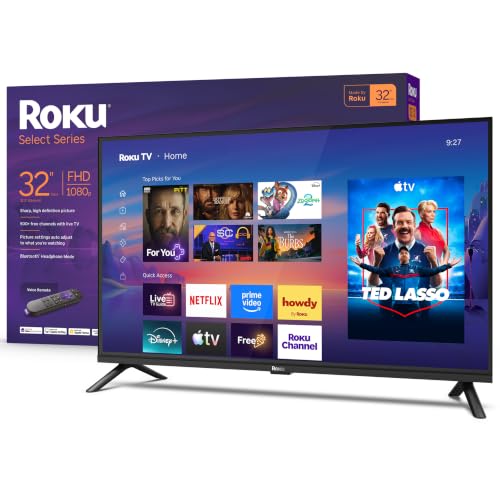
Roku 32-Inch Select Series Smart TV 2026 – 1080p Full HD TV – RokuTV — Sharpest Roku sleeper
Roku’s own television makes the strongest pure bedroom argument in this guide, and it starts with two words in its listing: Full HD. At 1080p, the Select Series is one of only two picks here resolving a full high-definition picture, which sharpens everything from film grain to the weather map in the morning. Roku builds its own hardware to show its platform at its best, and the Select Series is that showcase in the 32-inch class: a flat LED panel, a voice remote, Wi-Fi, and an interface that remains the easiest in the industry to operate with one eye open. There are no nested menus to excavate at midnight. The home screen is a grid of your services, and the bed is a place where that simplicity becomes a luxury.
The bedroom-specific jewel in the listing is Bluetooth Headphone Mode. One partner asleep, the other finishing a film: the sound routes to headphones, the room stays silent, and nobody negotiates volume treaties at midnight. Any household that has ever watched a whispered action film through television speakers at volume level four understands that this single feature can be worth the entire purchase. It also serves early risers catching the news while the house sleeps, and night-shift workers whose viewing hours are everyone else’s sleeping hours. Features that solve a daily domestic friction outrank specifications that win arguments, and this one solves a classic.
Roku’s content pitch in the listing leans on live and local news, sports and movies, which suits the bedroom’s second job as a morning screen. The platform’s search is famously even-handed across services, showing where a title can be watched rather than steering you toward one storefront, and for a second television that impartiality keeps the peace. The set is a 2026 model, so its platform support runway is as long as any here. What it does not bring is QLED colour or a manufacturer’s picture-processing brand name; the panel is a straightforward LED, and picture purists chasing richer colour should look at the Hisense QD4 below, which runs the same platform on richer glass.
Pair the Select with a small wall mount and it becomes the archetypal bedroom installation: quick to wake, quiet in operation, legible from the bed, silent through headphones when required. Roku’s remote is famously minimal, which cuts both ways — fewer buttons to fumble in the dark, but also fewer shortcuts. Voice control covers the gap for search. Of the six sets here, this is the one we would hand to a non-technical relative for a bedroom without a follow-up phone call, and that is high praise in a category where the user is tired, horizontal and holding the remote upside down.
Students and first flats deserve a mention in the Select’s favour too. A bedroom in a shared house is a living room, cinema and study in one, and a television that wakes fast, searches impartially across whichever services a student actually subscribes to, and keeps the peace with headphone listening at 1 a.m. is close to a perfect single screen for that life. The 2026 platform runway means it will not feel abandoned by the time the degree finishes, either.
- Size and panel: 32-inch flat LED, 1080p Full HD
- Platform: Roku TV
- Audio feature: Bluetooth Headphone Mode
- Remote and connectivity: Voice Remote, Wi-Fi
- Content focus: live local news, sports and movies per listing
- Model year: 2026
Strengths
- Full HD resolution makes it one of the two sharpest pictures in this guide.
- Bluetooth Headphone Mode solves the sleeping-partner problem natively and completely.
- Roku’s interface is the easiest here to run half-asleep, with impartial cross-service search.
Trade-offs
- Plain LED panel without the QLED colour richness of the Hisense alternative.
- Roku’s minimal remote lacks the shortcut buttons some viewers rely on.
- No Dolby Audio branding in the listing, so its speaker story is plainer than rivals’.
Best for: couples with different sleep schedules and anyone who values the simplest possible interface at midnight.
Not suited for: colour purists, who should take the same platform on the Hisense QD4’s richer panel instead.

Samsung 32-Inch Class HD H5000F Smart TV (2025 Model) — Tizen with Knox
Samsung’s presence in a bedroom guide is about trust and ecosystem gravity. The H5000F runs One UI Tizen, the same platform family as the Samsung televisions in millions of lounges, so a household standardised on Samsung remotes and menus gets a bedroom set that behaves like the main screen’s smaller sibling. The listing adds two Samsung signatures worth pausing on. HDR support lifts streamed films beyond basic HD presentation, giving highlights and shadow detail more room even at this size. Knox Security is the other: Samsung’s security platform applied to a television, which matters more than it used to now that a bedroom screen holds streaming accounts, voice profiles and a microphone’s worth of household data.
Object Tracking Sound Lite appears in the title too, Samsung’s attempt to give small televisions a sense of audio direction rather than a flat wash from two small speakers. Bedroom audio is close-range audio, heard from two metres in a quiet room, and even modest improvements in dialogue placement register clearly there. The panel is HD rather than Full HD, which places this set in the same resolution class as the Insignia and Ember; its case rests on platform, brand support and HDR rather than pixel count. For Samsung households, that trade is usually acceptable before the discussion even starts, because remotes and menus they already know are worth real sharpness to real people.
As a 2025 model, the H5000F is a current, supported product from the largest television maker in the world, with the firmware attention that position implies. Tizen’s app catalogue covers the mainstream services comprehensively, and the One UI design language keeps settings where Samsung owners expect them. The honest hesitations are two. First, the Full HD F6000 directly below exists, and if the price gap is small on the day you buy — check price on Amazon for both — the sharper set is the natural upgrade. Second, households outside the Samsung ecosystem gain less from the brand gravity that is this set’s main argument, and may find Roku’s simplicity or Fire TV’s voice focus more persuasive.
Bedroom duty flatters the H5000F in one more way: Samsung’s picture tuning tends toward a clean, bright presentation that survives the bedroom’s mixed lighting, from morning sun through a bedside lamp to full darkness, without the owner spelunking through menus at each change. Set a comfortable night picture once and the television largely minds its manners thereafter. It is the conservative pick of the six, and conservatism in a bedroom appliance is not a criticism. The room is for sleeping; the television should be the least dramatic object in it.
There is also a resale-and-rehome argument that Samsung owners understand instinctively. A television from the market’s biggest brand, running a platform the next owner will recognise, is easy to pass to a relative, a student or a holiday let when the main bedroom upgrades. The H5000F’s conservative specification is precisely what makes it transferable: nothing exotic to explain, nothing fragile to warn about, just a current Samsung that behaves as expected in whichever room it lands.
- Size and panel: 32-inch, HD
- Platform: One UI Tizen
- Picture: HDR supported
- Audio: Object Tracking Sound Lite
- Security: Knox Security
- Model year: 2025
Strengths
- One UI Tizen matches the main Samsung screen in Samsung households, remotes and menus included.
- Knox Security treats a connected bedroom television with unusual seriousness.
- HDR support gives streamed films more range than the HD resolution alone suggests.
Trade-offs
- HD resolution while its own F6000 sibling offers Full HD in the same guide.
- The brand-ecosystem argument means little to households not already running Samsung.
- No headphone provision is stated in the listing for silent late-night listening.
Best for: Samsung households matching the bedroom screen to the lounge screen’s platform and behaviour.
Not suited for: sharpness-first buyers, who should step straight to the Full HD F6000 beside it.

SAMSUNG 32-Inch Class Full HD F6000 Smart TV (2025 Model) — Full HD Samsung
The F6000 exists to answer the H5000F’s one soft spot. Everything in the Samsung bedroom formula carries over — One UI Tizen, HDR, Object Tracking Sound Lite, Knox Security — and the panel steps up to Full HD. That step is worth more on a Samsung than on most, because Tizen’s interface is dense with text: app rows, settings pages, programme information. At 1080p that text stays crisp from the bed, menus stop shimmering, and the whole television feels a tier more expensive than its HD sibling even before a film starts. For viewers who use the bedroom set for morning news tickers, streamed sport with on-screen graphics, or the occasional game, the sharper panel is the one they will notice daily.
Film and drama benefit in the quieter way resolution always works at this size: not as a revelation, but as an absence of softness. Faces hold their detail in close-up, subtitles sit cleanly, and the picture stops reminding you it is a small television. Paired with HDR support, the F6000 is the most complete picture package Samsung offers at 32 inches, and for a main bedroom — as opposed to a guest room — that completeness is the sensible place to land. Main bedrooms accumulate hours: a series every night, films at weekends, the news every morning. Appliances that accumulate hours should be bought a tier up, and this is the tier up.
The platform argument mirrors its sibling’s, so the deciding work is comparative. Against the Roku Select, the other Full HD pick, the F6000 trades Roku’s headphone mode and impartial simplicity for Samsung’s ecosystem, HDR branding and Knox. Neither trade is irrational; they suit different households. Against its own sibling, the question is purely the day’s price gap — check price on Amazon, and if the F6000’s premium is modest, take the sharper panel, because resolution is the one specification you can never upgrade later. If the gap is wide and the room is a guest room, the H5000F’s HD panel will leave every visitor perfectly content.
Installation and daily manners match the H5000F’s: a light 32-inch unit that mounts easily, a platform that behaves consistently, picture tuning that copes with the bedroom’s swing from daylight to lamplight to darkness. One usage note for both Samsungs: explore the platform’s sleep and timer settings during the first week, because a bedroom television that can dismiss itself after you fall asleep is worth more than one with a finer spec sheet and no manners. The F6000, set up once and then forgotten, is what a main-bedroom television should be.
Gamers borrowing the bedroom deserve a line as well. A 32-inch Full HD screen at bed distance is a comfortable second gaming display for a console that migrates between rooms, and the F6000’s sharper panel handles interface text and HUD elements with a clarity the HD sets cannot match. It will not trouble the dedicated gaming televisions in our HDMI 2.1 guide, and it does not pretend to; as an occasional, comfortable second screen for play, its specification is pitched exactly right.
- Size and panel: 32-inch, Full HD
- Platform: One UI Tizen
- Picture: HDR supported
- Audio: Object Tracking Sound Lite
- Security: Knox Security
- Model year: 2025
Strengths
- Full HD sharpens Tizen’s text-heavy interface as much as it sharpens films.
- Carries the full Samsung package of HDR, Object Tracking Sound Lite and Knox Security.
- The natural main-bedroom tier for Samsung households, built for high accumulated hours.
Trade-offs
- Costs more than its HD sibling for a difference some casual viewers will barely register.
- Lacks the Roku Select’s built-in Bluetooth headphone answer for silent listening.
- Tizen’s depth can feel busy compared with Roku’s deliberately plain home screen.
Best for: main bedrooms in Samsung households, especially where news text, sport graphics and long nightly hours reward sharpness.
Not suited for: guest rooms on a budget, where the HD H5000F covers every visitor’s needs for less.
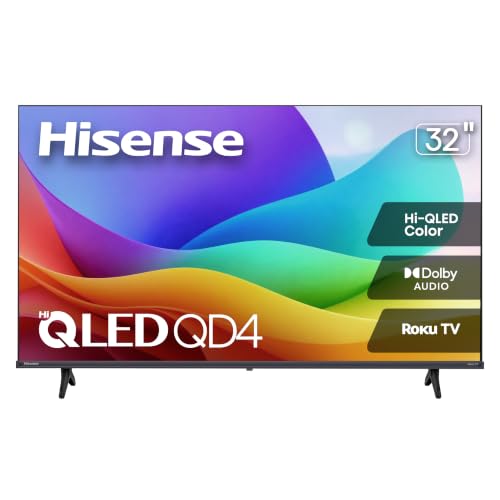
Hisense 32″ inch QD4 Series Hi-QLED HD Smart AI Roku TV (32QD4HSR, 2026 NEW) — QLED colour on Roku
The Hisense QD4 is the picture enthusiast’s route into this guide, because it attacks the one thing small televisions usually sacrifice: colour. Its Hi-QLED panel uses quantum-dot colour to widen the palette beyond ordinary LED, and the listing pairs it with Full Array LED backlighting, so brightness is distributed across the panel rather than sprayed from the edges. In a dark bedroom, full-array backlighting is the difference between a night scene that glows evenly and one with cloudy corners. On Roku’s platform, with Dolby Audio from the speakers and a slim bezel design that keeps the unit looking modern on a dresser, the QD4 assembles the richest all-round specification of any HD set here.
Roku is the platform, and that pairing is the point: Hisense supplies the glass, Roku supplies the manners. You get the interface the Roku Select above is praised for — the plain grid, the impartial search, the quick wake — running on a panel with more colour ambition. Alexa compatibility is noted in the listing for households that run voice control through Amazon’s assistant while preferring Roku’s interface, a diplomatic combination more common than platform wars suggest. As a 2026 model, the QD4 also carries the longest support runway of the group alongside the Roku Select.
The trade is printed in the resolution line: HD, not Full HD. So the QD4 and the Roku Select frame the guide’s most interesting argument. Sharpness or colour? At 32 inches from a bed, colour richness is arguably the more visible daily gift — skin tones, sunsets, football pitches all live in the palette — while resolution shows mainly in text and fine detail. Viewers who watch films and series in the dark will likely side with the Hisense. Viewers who read tickers, browse menus and game will likely side with Roku’s own set. Both are defensible, and the existence of the argument is why both sets earned their places.
Practical bedroom notes favour the QD4 as well. The slim bezel keeps a 32-inch unit visually compact on furniture that was never designed for a television. Dolby Audio gives dialogue a fighting chance at low volumes, which is where bedroom speakers live. And Roku’s ecosystem of private-listening options through its app can soften the absence of a headphone mode in this listing, though the dedicated Bluetooth provision on Roku’s own hardware remains the cleaner solution. For the viewer who cares most about how the picture actually looks in a dark room, this is the HD set to beat.
One more household pattern suits the QD4: the bedroom that doubles as the film room because it is the darkest, quietest space in the home. Plenty of households watch their serious cinema in bed by choice, blackout blinds drawn, and for them the bedroom set is not the second television at all — it is the reference screen. Full-array backlighting and quantum-dot colour are reference-screen virtues, and the QD4 is the only set in this guide that brings both to the room.
- Size and panel: 32-inch Hi-QLED, HD
- Backlight: Full Array LED
- Platform: Roku TV, Smart AI Roku per listing
- Audio: Dolby Audio
- Voice: compatible with Alexa
- Model reference: 32QD4HSR, 2026 new
Strengths
- Hi-QLED colour and full-array backlighting give it the richest picture of the HD picks.
- Roku platform manners on Hisense glass combine the guide’s best interface with its best colour.
- Slim bezel design keeps it visually quiet on bedroom furniture.
Trade-offs
- HD resolution concedes the sharpness argument to the two Full HD picks.
- No Bluetooth headphone mode is stated in its own listing, unlike Roku’s own set.
- Colour advantages show best in the dark; in bright rooms the gap narrows.
Best for: film and series viewers who watch in darkness and value colour richness over menu sharpness.
Not suited for: text-heavy use and gaming, where the Full HD picks justify themselves immediately.

Amazon Ember 32″ 2-Series with Fire TV (newest model), HD smart TV with Alexa Remote — Ambient all-rounder
Amazon’s own television closes the list with the most bedroom-aware feature in the guide: Ambient Experience. Borrowed from the Echo Show’s philosophy, it turns the idle screen into a display of photographs, art and glanceable widgets — calendar, weather, the time — instead of a black rectangle or a burnt-in menu. In a bedroom, where the television is also the room’s largest surface, that idle life matters. A screen showing the family archive at low brightness is a digital photo frame with a cinema inside it. The Ember is the newest model of Amazon’s 2-Series line, running Fire TV with an Alexa Remote and Alexa+ assistance for faster show-finding by voice.
The rest of the specification is sensibly matched to the room. HD resolution, Dolby Audio for clearer low-volume dialogue, fast streaming as the listing promises, and Fire TV’s free and live TV bench for the channel-surfing hours. Amazon builds this set as the platform’s own reference hardware, much as Roku does with the Select, so the interface runs as its makers intended, updates arrive promptly, and the Alexa integration is the deepest available — routines, smart-home control from the bed, and voice search that understands follow-up questions. Households running Echo devices elsewhere will feel the Ember behaving like a large, wall-mounted member of the same family.
Comparisons clarify its place. Against the Insignia F20, the Ember is the same ecosystem with more ambition: ambient display, Amazon’s own hardware polish and the newest platform generation, at a premium the day’s pricing will define — check price on Amazon on both before deciding, because the F20’s simplicity wins many bedrooms outright. Against the Roku pair, the Ember trades interface minimalism for voice depth and that ambient second life. Against the Samsungs, it offers Amazon’s ecosystem instead of Knox and HDR branding. There is no universal winner in that web of trades, only households with existing loyalties and habits, which is precisely how the bedroom market should be shopped.
One caution belongs to the ambient feature itself: a screen that glows with photographs is lovely at dusk and unwelcome at 3 a.m. if configured carelessly. Set the ambient schedule and brightness with the same care you would give an alarm clock’s display, use the platform’s night behaviour, and the Ember becomes the most considerate object in the room. Configured thoughtlessly, any glowing rectangle can argue with sleep. Configured well, this one earns its place as the most complete Fire TV bedroom set and the most forward-looking design in the guide.
Morning routines may be the Ember’s stealth strength. A glanceable weather and calendar display while dressing, news headlines over coffee brought back to bed, a photo slideshow while the room is tidied — the ambient layer turns dead screen time into household information, and bedrooms are where households start their days. No other set in this guide attempts that job, which is why the Ember reads less like a television with a feature and more like a different category of bedroom device altogether.
- Size and panel: 32-inch, HD
- Platform: Fire TV, newest model
- Idle display: Ambient Experience
- Audio: Dolby Audio
- Remote and voice: Alexa Remote, Alexa+ show-finding
- Content: free and live TV per listing
Strengths
- Ambient Experience gives the idle bedroom screen a useful, attractive second life.
- Deepest Alexa integration here, suiting Echo households and voice-first operation.
- Amazon’s own hardware keeps Fire TV running as the platform’s reference implementation.
Trade-offs
- HD panel in a guide where two rivals offer Full HD at the same size.
- Ambient features need careful scheduling to respect a dark sleeping room.
- Fire TV’s Amazon-centred layout will not convert households loyal to other platforms.
Best for: Alexa households that want the bedroom screen to double as a photo display and smart-home surface.
Not suited for: light-sensitive sleepers, for whom a television should vanish completely when it is off.
Comparison
| Pick | Resolution | Platform | Panel note | Standout feature |
|---|---|---|---|---|
| Insignia F20 | HD | Fire TV | LED | Voice Remote with Alexa, free live TV |
| Roku Select 32 | 1080p Full HD | Roku TV | Flat LED | Bluetooth Headphone Mode |
| Samsung H5000F | HD | One UI Tizen | LED class | Knox Security, HDR |
| Samsung F6000 | Full HD | One UI Tizen | LED class | Full HD with HDR and Knox |
| Hisense QD4 | HD | Roku TV | Hi-QLED, Full Array LED | Quantum-dot colour, Dolby Audio |
| Amazon Ember 2-Series | HD | Fire TV | LED class | Ambient Experience |
Which Platform Belongs in a Bedroom?
Choose by the remote you already love. Fire TV’s strength is voice: Alexa search, routines that dim the house from the bed, and a content bench deep in free channels, carried here by the Insignia and the Ember. Roku’s strength is neutrality and calm: one grid, impartial search, no storefront steering, carried by Roku’s own Select and the Hisense QD4. Tizen’s strength is continuity for Samsung households, with the lounge’s menus and habits replicated in miniature and Knox guarding the accounts. None of the three is objectively best at 2 a.m.; the best platform is the one whose home screen your thumb already knows, because a bedroom interface is operated by muscle memory far more than by thought.
Voice control deserves a balanced word in a sleeping room. Asking a television to find a film without hunting for the remote is a genuine midnight mercy, and both Fire TV and the Alexa-compatible Hisense offer versions of it. But a bedroom is also where people talk in their sleep, argue with plot twists and read aloud, and an always-listening household is a choice rather than a default. Every platform here lets you mute or limit the microphone; the right setting is the one both partners agree on, reached before the first night rather than after the first strange activation.
Households without an existing loyalty should weigh two bedroom-specific behaviours. First, private listening: Roku’s Bluetooth Headphone Mode on the Select is the cleanest built-in answer to mismatched sleep schedules, and platforms differ in how gracefully they route sound to headphones or apps. Second, idle behaviour: a bedroom screen spends most of its life off or ambient, so the Ember’s Ambient Experience and each platform’s screen-off manners deserve as much research as their film performance. The television you live with is mostly the television when it is not showing anything.
HD or Full HD at 32 Inches: Does It Show From a Bed?
There is a generational wrinkle worth knowing. Bedroom televisions are often bought for parents or grandparents, and for those rooms the resolution question inverts: interface legibility beats everything. Larger menu text on a Full HD panel stays readable without glasses, and a simple platform reduces the support calls to the family. If the set is a gift for an older relative, weight the Roku Select’s clarity and the Samsungs’ familiar menus above the last degree of colour science, and set the text size generously during installation rather than leaving it as an exercise.
Honestly, sometimes. Pillows place the viewer roughly two to three metres from a 32-inch screen, and at that distance a Full HD panel’s advantage concentrates in text, interface crispness and fine detail rather than in the broad strokes of a drama scene. The Roku Select and Samsung F6000 earn their premiums in menus, tickers, subtitles and games. The HD sets — Insignia, H5000F, QD4, Ember — remain entirely respectable for streamed series and films, which is why this guide keeps four of them. If the bedroom set will double for a desk-adjacent gaming or work-from-bed role, buy Full HD. If it is a pure wind-down screen, spend the difference on the platform and panel colour you prefer, and lose no sleep over the resolution line — in every sense of the phrase.
How Do You Set Up a Bedroom TV for Sleep-Friendly Viewing?
Begin with light discipline. Choose the picture mode you will actually use at night — usually the film or standard preset — and lower its brightness to a level that stays comfortable with the lamps off, because a screen tuned for a bright afternoon will glare through a midnight episode. Enable the platform’s sleep timer and make it a habit rather than a rescue, so the set dismisses itself on the nights you drift off mid-episode. Then handle sound: set a volume ceiling if the platform offers one, keep dialogue-oriented audio modes on, and pair headphones in advance if your set supports them, because pairing Bluetooth at midnight, whispering, is a special kind of misery.
Wi-Fi placement finishes the technical side. Bedrooms sit at the ends of hallways, far from routers, behind the doors that weaken signals most. Before blaming any of these sets for buffering, check the signal at the pillow with a phone; a small mesh node or a relocated router cures more bedroom streaming complaints than any television upgrade ever will, and every platform here depends on that invisible foundation.
Placement finishes the job. Keep the remote’s home consistent — a bedside table, a charging spot, one place — because most bedroom television frustration is really lost-remote frustration wearing a disguise, and a disguise fools nobody at midnight when the film is paused and the duvet has swallowed the evidence again. If the set displays a clock or ambient content, schedule its bright hours to end before the household’s sleep hours begin. And run one full test night before declaring the installation finished: a film, an episode, the morning news. The bedroom will tell you what to adjust more honestly than any settings guide, including this one.
What About Children, Guests and Second-Hand Bedrooms?
Bedrooms multiply. The set bought for the main bedroom today becomes the guest-room screen in three years and the teenager’s first television in five, and the six picks here were chosen partly for how gracefully they make that journey. Platform simplicity is the trait that survives rehousing best: Roku’s grid explains itself to a grandparent, Fire TV’s voice remote rescues a guest who cannot find a channel, and Tizen’s familiarity carries between Samsung homes. When you buy, you are really choosing the interface your household will explain least often over the next decade. That is a surprisingly practical way to break a tie between two otherwise equal sets.
Common Mistakes
Oversizing is the bedroom classic. A 43- or 50-inch screen bought in a showroom looms over a real bedroom, dominates the wall opposite the bed and turns late-night viewing into a light show the room cannot absorb. Thirty-two inches is not a compromise in this room; it is the proportion the room asks for. A second frequent error is ignoring the partner problem until the first midnight argument: volume, light spill and remote hunting all have solutions in this guide, from headphone modes to voice remotes to ambient scheduling, but only if they are considered before the purchase rather than after the first bad night.
Buying the lounge’s leftovers is a subtler trap. A household upgrades its main screen and exiles the old one to the bedroom, where its size, brightness and fan of remotes were never meant for a sleeping room. Sometimes that inheritance works beautifully. Often it explains why the bedroom television feels wrong for years without anyone naming the reason. If the exiled set is too big, too bright or too complicated for the room, sell it and buy a purpose-chosen 32-inch set from this list; the bedroom deserves a decision, not a donation.
Mounting height causes quieter misery. A screen hung at living-room height above a dresser forces a pillow-propped neck angle that ruins films slowly. Centre the panel closer to the eye line of a person sitting up in bed, tilt it down slightly if it must sit high, and test with an actual film before finalising the bracket. Buyers also forget the morning job: a bedroom television with a slow, cluttered wake-up routine fails the news-and-weather shift that half its hours consist of. Finally, check the stand width against the dresser you actually own; 32-inch feet still need furniture that fits them.
Final Recommendation
Match the set to the household’s habits and the answer is rarely difficult. Couples on different sleep schedules should start with the Roku Select: Full HD sharpness and that Bluetooth Headphone Mode are the two most bedroom-specific virtues in the guide. Samsung households should choose between the H5000F’s value and the F6000’s sharper panel, taking the F6000 for a main bedroom and the H5000F for a guest room. Alexa households split the same way between the Insignia F20’s simplicity and the Ember’s ambient ambition. Colour lovers watching in the dark should give the Hisense QD4 a long look, because its panel is the richest here and Roku’s manners come with it.
Budget the whole installation, not just the screen. A small mount or a taller stand, a pair of headphones for the headphone-capable sets, perhaps a simple streaming-friendly power strip with a switch — the bedroom television’s supporting cast is cheap, but it is not free, and it is what turns a good set into a settled installation. Decide those pieces while the television is in the basket, and the first night will feel like the hundredth.
Every one of the six will stream the same series tonight; they differ in how gracefully they handle the hours around the viewing — the waking, the winding down, the partner asleep beside you. Buy for those hours and the bedroom television stops being a small appliance and becomes part of how the room rests. Of all the screens in a house, this is the one that should feel the least like technology and the most like furniture that happens to dream in programmes.
Frequently Asked Questions
Is 32 inches big enough for a main bedroom?
For most bedrooms, yes. The viewing distance from a bed is short, and 32 inches fills it comfortably without overwhelming the room. Very large master suites with the bed far from the opposite wall are the exception, and even there, proportion and light matter more than raw size.
Which of these is best for watching without waking a partner?
The Roku Select Series, thanks to the Bluetooth Headphone Mode in its listing, which routes sound to headphones while the room stays quiet. Dim picture settings and voice control help on every model, but native headphone support is the complete answer.
Does HD look bad on the four HD models?
No. At 32 inches from a bed, HD handles streamed drama, comedy and news perfectly well. Full HD on the Roku Select and Samsung F6000 shows its edge in text, menus, subtitles and fine detail rather than transforming ordinary viewing.
What is the Ember’s Ambient Experience actually for?
It gives the idle screen a second life as a display for photos, artwork and glanceable information like weather and calendar, instead of a blank black panel. In a bedroom it behaves like a large, polite photo frame until you ask it to be a television.
Should I match my bedroom TV platform to my living-room TV?
If the household already runs one platform confidently, matching it removes all learning friction and keeps remotes and voice commands consistent. If the bedroom has a specific job — silent listening, ambient display — let that job choose the platform instead.
Can a 32-inch TV work for gaming in a bedroom?
As a comfortable second screen, yes. The Full HD models keep game interfaces crisp at bed distance, and casual or retro play suits the size well. Serious competitive play belongs on the dedicated gaming sets in our HDMI 2.1 guide, where refresh and input handling are the whole point.
Do I need a soundbar in the bedroom?
Rarely. Bedroom listening happens at low volume over short distances, where the Dolby Audio and Object Tracking Sound Lite systems in this guide handle dialogue well. Spend first on headphone capability if partners sleep at different hours; that solves the bedroom’s real audio problem.
Where should a bedroom TV be mounted?
Centred near the eye line of someone sitting up in bed, tilted down slightly if furniture forces it higher. Test the angle with a full film before tightening the bracket, because neck comfort across two hours is the real specification.
Related Guides
The kitchen is the other room where small screens earn their keep, and the 24-inch kitchen HD TVs guide covers that even smaller class. If Roku won your bedroom decision, the 43-inch Roku TVs comparison extends the same platform logic to the next size up. And for the main room’s gaming and cinema ambitions, the 4K TVs with HDMI 2.1 round-up covers the full-bandwidth end of the television world.



[…] the main room is settled, the sleeping quarters usually follow, and our guide to 32-inch bedroom smart TVs sorts the small-screen platforms for late-night viewing. The smallest bright-room battleground is […]