What's inside
- Key Takeaways
- Quick Picks
- How We Chose These Picks
- Comparison
- How Much Brightness Do You Actually Need?
- Should You Choose 1080p or 4K at This Level?
- How Do You Set Up a First Projector Room Cheaply?
- What Should You Budget Beyond the Projector Itself?
- Which Room Should Get the Projector First?
- How Do Throw Distance and Image Size Fit Together?
- What About Sound — Are Built-In Speakers Enough?
- How Long Will an Affordable Projector Actually Last?
- What Image Size Should You Actually Aim For?
- Common Mistakes
- Final Recommendation
- Frequently Asked Questions
- Related Guides
As an Amazon Associate I earn from qualifying purchases. This post may contain affiliate links at no extra cost to you.
widgetverdict.com is reader-supported. When you buy through links on our site, we may earn an affiliate commission.
Finding the best affordable home projectors used to mean accepting a dim, washed-out picture and a fan loud enough to argue with the dialogue. That trade has changed. The six machines below come from Epson, BenQ and Optoma, and they split into two honest camps: 1080p models that spend their budget on brightness and colour, and 4K PRO-UHD models that borrow the sharpness of far pricier home cinema gear. None of them asks for a dedicated theatre room, blackout curtains on every window, or a ceiling mount installed by a professional. A white wall, a media console and a free evening will get any of them running.
All six picks link to Amazon listings we checked against the manufacturers’ model names, so the projector in the box matches the projector reviewed here. Affordable is the theme of this guide rather than a price tag pinned to any single machine, because projector pricing shifts with seasonal promotions; where a pick’s cost matters to the argument, we say check price on Amazon and compare it against the tier described. If a listing shows a different model number in its title, close the tab — variant confusion is common in this category.
One orientation note before the rankings. Three of these picks are Epsons built on 3LCD chips, which matters if anyone in your household sees rainbow artefacts on single-chip DLP machines. The BenQ and Optoma entries take the other road. Neither technology is automatically better at this level; they fail differently, and the reviews below name the failure mode of each pick plainly so you can choose the one your eyes forgive.
Finally, a word about expectations, because affordable projection rewards honesty. These machines will give you the largest, most involving picture your money can buy, and they will do it with fan noise you can hear in silent scenes, black levels that read as very dark grey, and setup rituals a television never asks for. Households that accept those terms fall in love with projection permanently. Households that wanted a 120-inch television for projector money end up disappointed by physics rather than by any particular model — so read the trade-offs under each pick as seriously as the strengths, every single time.
Key Takeaways
- The Epson Home Cinema 3800 is the pick to stretch for if the room is permanent: 4K PRO-UHD sharpness and HDR handling without leaving the affordable tier’s neighbourhood.
- Streaming households should look first at the Home Cinema 2350, the only pick here with Android TV built in alongside its 2,800 lumens.
- BenQ’s HT2060 is the colour purist’s option, with DCI-P3 and Rec.709 gamut coverage and an LED light source that never needs a lamp swap.
- The Home Cinema 1080 is the brightness hammer of the group at 3,400 lumens, suited to living rooms that never get properly dark.
- Optoma’s HD146X keeps the formula plain: Full HD, home theatre intent, nothing you have to learn before film night.
- Every pick here is a long-throw or standard-throw box, so measure your room depth before falling for any of them.
Quick Picks
| Pick | Badge | Why it makes the cut |
|---|---|---|
| Epson Home Cinema 3800 | Sharpest picture here | 4K PRO-UHD 3LCD with HDR technology for rooms that host film nights weekly. |
| Epson Home Cinema 2350 | Streaming built in | Android TV, 2,800 lumens and a 10 W speaker remove the separate streamer from the shopping list. |
| Optoma HD146X | Plainest setup | A Full HD home theatre projector that asks for an HDMI cable and very little else. |
| BenQ HT2060 | Colour first | LED light source, wide colour gamut and lens shift in a 1080p HDR package. |
| Epson Home Cinema 980 | Newest 1080p Epson | A current-generation 3LCD movie projector for buyers who prefer the latest model in a line. |
| Epson Home Cinema 1080 | Brightness hammer | 3,400 lumens of colour and white brightness for rooms with lamps, windows and life happening in them. |
How We Chose These Picks
Affordable is a slippery word in projection, so we set the boundary by role rather than by a number: every machine here belongs to the tier a household buys instead of a mid-range television, not the tier a dedicated cinema room demands. Within that boundary we favoured projectors from lines with a service network behind them, because a projector is a long-lived appliance with a fan, filters and a light source that ages. A no-name box with a heroic brightness claim and no support channel lost its place to a duller-sounding Epson every time.
Picture priorities came next. At this level, resolution is only one ingredient, and often not the deciding one. Colour brightness, contrast behaviour in a grey-walled room and the honesty of the HDR tone mapping shape what a film actually looks like on your wall. That is why a 1080p BenQ with a wide colour gamut sits comfortably beside two 4K PRO-UHD Epsons: on real film content, in a real living room, the gap between them is smaller than the spec sheets suggest, and sometimes it runs the other way.
Long-term costs were scored openly rather than discovered later. Lamp models carry a known future expense; the LED BenQ removes it and charges its premium up front. Smart models carry a different cost — dependence on a platform’s update schedule — while the platform-free HD146X will work with whatever streamer exists in ten years. Neither cost disqualifies a pick, but a buyer deserves to see them itemised before choosing which kind of future bill they prefer.
We also weighted placement forgiveness. Affordable projectors overwhelmingly live on coffee tables, sideboards and bookshelves rather than ceiling mounts, so lens shift, zoom range and keystone tools earned real marks. A projector that only makes a square picture from one exact spot punishes renters and anyone whose room has furniture in it. Finally, each listing was checked so the model named in this guide is the model the seller ships; several near-identical Epson model numbers circulate in this category, and confusing them is the easiest buying error available.
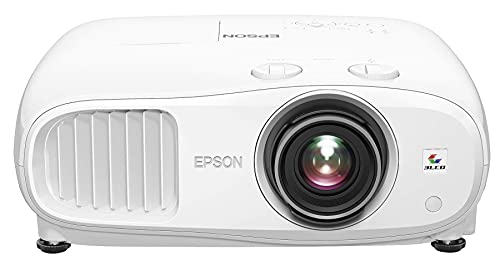
Epson Home Cinema 3800 — Sharpest picture here
The Home Cinema 3800 is where this guide stops compromising on resolution. Its 4K PRO-UHD system shifts a 3LCD image fast enough to put far more detail on the wall than any native 1080p machine here, and the difference shows exactly where you would hope: facial texture in close-ups, brickwork and foliage in wide shots, the weave of a football kit during a night match. Because the underlying engine is 3-chip 3LCD, colour and white brightness stay matched, so a bright red jersey does not dim just because the scene around it is dark.
HDR technology is the second half of its appeal. Affordable projectors often accept an HDR signal and then display it worse than the standard version, crushing shadow detail into a grey-brown murk. The 3800 handles HDR10 content with more care, holding onto highlight detail in skies and explosions while keeping night scenes legible. It will not match a premium home cinema projector for black depth — no machine in this guide will — but it treats HDR as a feature to honour rather than a logo to print on the box.
Ownership suits a settled room. This is the largest commitment of the six in placement terms: it rewards a fixed position, a screen if you can manage one, and a household that watches films often enough to justify its place at the head of the list. Gamers should note it is built for cinema first; the low-latency specialist in this guide is the Home Cinema 2350 below. For film-led households, though, the 3800 is the affordable pick that least often makes you think about the projector instead of the picture.
Resale and hand-me-down logic also argue for choosing the flagship of an affordable guide. When this projector eventually moves to a second room or a relative’s house, its 4K PRO-UHD badge and Epson badge still mean something, and its picture will still embarrass the televisions around it. Buyers who think in five-year arcs rather than single seasons tend to land here, accepting the highest commitment in the guide in exchange for the longest stretch before upgrade itch returns. The 3800 does not apologise for being the serious option; it simply asks whether your room is serious too.
Consider how it handles an ordinary Tuesday, not just a premiere. Sport at 1080p upscales cleanly, broadcast television does not fall apart, and the image stays composed when a scene mixes a bright window with a shadowed face — the exact cocktail that exposes weak HDR handling. Fan noise in the quieter picture modes is low enough that a shelf behind the sofa works, which frees the ceiling from cable runs. Owners stepping up from a television will notice the absence of a smart interface most: pair the 3800 with the streamer or player you already trust and it becomes a pure display, ageing at the pace of your source box rather than its own software.
- Resolution: 4K PRO-UHD (pixel-shifted)
- Technology: 3-chip 3LCD
- HDR: HDR technology stated in listing title
- Light source: lamp (type per listing)
- Brightness figure: Not stated in listing title
Strengths
- Noticeably sharper picture than the 1080p picks on large images
- 3LCD colour behaviour keeps bright scenes vivid, not washed
- HDR handled with more shadow care than budget rivals usually manage
Trade-offs
- The stretch pick of the guide; the 1080p Epsons cost less commitment
- Built for cinema, so keen gamers should read the 2350’s review first
- Rewards a fixed installation more than a carry-it-out routine
Best for: film-led households setting up one room properly and keeping the projector for years.
Not suited for: casual viewers who project twice a month onto a spare wall and want the simplest possible box.

Epson Home Cinema 2350 — Streaming built in
The Home Cinema 2350 starts from a different question: what if the projector simply was the streaming box? Android TV is built in, so Netflix-style apps, casting and the remote-driven interface live inside the projector itself. For a bedroom or a rental living room, deleting the separate streamer, its power brick and its HDMI cable is a genuine quality-of-life gain. Setup becomes: position projector, join Wi-Fi, sign in, watch.
Picture credentials are serious underneath the convenience. It is a 4K PRO-UHD 3LCD machine rated at 2,800 lumens of both colour and white brightness, with HDR10 and HLG support. HLG matters more than it gets credit for, because broadcast and streamed live content — sport especially — uses it, and a projector that ignores HLG shows those feeds at their flattest. The listing also calls out low latency, unusual for a streaming-led model, and a 10 W built-in speaker with Bluetooth output for sending audio to a soundbar or headphones without another cable across the floor.
Where does it concede ground? The 3800 above is the more single-minded cinema instrument, and a household that already owns a good streamer gains less from the 2350’s headline trick. Its speaker is fine for dialogue and sport commentary, but film scores deserve the Bluetooth route to something bigger. Judged as the one-box answer for a room that currently has no projector and no streamer, though, it is the most complete package in this guide.
Families should also weigh the HLG support during the long sports seasons. Broadcasters increasingly send live events in HLG, and a projector that maps it properly keeps grass green and kits accurate instead of flattening the whole feed. Combined with the low-latency note in its listing, the 2350 quietly covers the two living-room duties — live sport and family gaming — that pure cinema models treat as afterthoughts. It is the guide’s generalist, and generalists win households.
There is a subtler benefit to the all-in-one design: one remote, one power cable, one thing for guests and grandparents to operate. A projector that needs a streamer, a soundbar remote and an input-switching ritual tends to sit unused on weeknights, while the 2350’s press-and-play routine gets used for a single episode at lunch. Bluetooth also earns its keep after dark, sending audio to headphones so one person can watch a late match without lighting up the whole house. For families negotiating shared walls and different bedtimes, that feature alone can justify the model.
- Resolution: 4K PRO-UHD (pixel-shifted)
- Brightness: 2,800 lumens colour and white
- Smart platform: Android TV built in
- HDR: HDR10 and HLG
- Audio: 10 W speaker, Bluetooth output
Strengths
- Deletes the separate streaming stick and its cable clutter
- 2,800 matched colour and white lumens suit imperfectly dark rooms
- Low latency plus Bluetooth audio cover gaming and late-night viewing
Trade-offs
- Built-in speaker is a starter, not a destination, for film sound
- Less cinema-focused than the 3800 for a permanent screen room
- Smart platform ages on Google’s schedule, not Epson’s
Best for: bedrooms, rentals and first projector rooms where one box should do everything.
Not suited for: households with a beloved streamer and a soundbar already wired, who gain little from the built-in platform.

Optoma HD146X — Plainest setup
Optoma’s HD146X represents the traditional route into home projection: a Full HD 1080p home theatre projector with no smart platform to configure, no app store to sign into, and no software personality to learn. You feed it a signal over HDMI — from a streamer, a console, a Blu-ray player, a laptop — and it projects that signal. For buyers who already own the sources they like, that plainness is a feature with a long shelf life, because there is no onboard software to fall out of date.
The picture proposition is honest 1080p. At sensible image sizes for a living room, a good 1080p feed still looks convincingly sharp, and the HD146X’s home theatre positioning means its tuning aims at film contrast rather than the punchy, blue-leaning look of office projectors. Single-chip DLP designs like this one also tend to hold their sharpness edge-to-edge well. The counterweight, as with any DLP, is that a small minority of viewers perceive rainbow fringing on high-contrast moving edges; if that is you or your partner, the 3LCD Epsons in this guide exist precisely as the alternative.
Running costs follow the classic pattern too: a lamp-based light source that will eventually want replacing, priced into the affordable end of the market where that remains an accepted bargain. Treat the HD146X as the guide’s baseline done properly — the machine against which the smarter, brighter and sharper picks above and below have to justify their extra claims.
One more constituency should keep the HD146X on its list: buyers building a projector around a games console they already own. A no-platform projector adds no input-switching detours between the console and the screen, and its home theatre tuning flatters the cinematic single-player games that dominate modern consoles. Pair it with the console’s own streaming apps and the missing smart platform stops mattering entirely — the box becomes a lens and a lamp in service of hardware you chose yourself.
Placement and daily handling follow the same unfussy script. It is a standard-throw machine, so expect to set it back from the wall roughly in line with the image size you want, and its adjustments cover the small imperfections of a coffee-table perch. Because there is no smart platform, startup is quick and the first thing on screen is your source’s picture, not a home page of app tiles. Households that lend the projector to a teenager’s room or a garden-room setup will appreciate a box with nothing to log out of and no accounts to protect.
- Resolution: Full HD 1080p
- Technology: DLP home theatre projector
- Smart platform: none — external source required
- Brightness figure: Not stated in listing title
- Positioning: home theatre, per listing title
Strengths
- No onboard software to age, sign into or troubleshoot
- Film-tuned 1080p picture at the traditional end of the category
- Works with whatever sources you already own
Trade-offs
- You supply the streamer, console or player — nothing is built in
- DLP rainbow artefacts bother a minority of viewers
- Lamp replacement joins the long-term budget eventually
Best for: source-rich households adding projection to an existing stack of players and consoles.
Not suited for: anyone hoping the projector alone, with no other box, will stream tonight’s film.

BenQ HT2060 — Colour first
Ask what the HT2060 spends its budget on and the listing answers in one breath: colour. This 1080p HDR projector covers the DCI-P3 and Rec.709 gamuts — the cinema and broadcast colour spaces — which means the reds of a period drama and the greens of a nature documentary land where the colourist put them instead of where a cheaper projector’s narrower palette guesses they belong. On animated films and prestige television, that accuracy reads as richness you feel before you can name it.
The light source is LED rather than a lamp, and that changes the ownership maths. No lamp to dim noticeably over a couple of thousand hours, no replacement to budget for mid-life, and consistent colour as the machine ages. BenQ also fits the placement tools coffee-table life demands: vertical lens shift for nudging the image without tilting the box, 2D keystone for off-centre positions, and a 1.3x zoom for sizing the picture to the wall you actually have. Twin 5 W speakers, HDMI 2.0 and an S/PDIF output round out a spec that treats audio hand-off seriously.
Gamers get a specific, citable figure: 8.3 ms at 120 Hz, which is the fast mode for 1080p console and PC play. That will not worry the dedicated gaming projectors in our sister guide, but for a film-first machine it is a startlingly good second talent. The HT2060’s real limitation is resolution on very large images — past roughly 120 inches, the 4K Epsons pull ahead in fine detail. Below that size, in a colour-led room, it is arguably the most satisfying picture in this guide.
Long-session comfort is the quieter dividend of the LED design. Colour stays stable from the first minute to the fourth hour, so a double bill or a long match does not drift as a lamp warms and ages through the evening. For households that project daily — homework help, evening news, a film after dinner — that stability compounds into the feeling that the picture is simply always right. The HT2060 asks you to accept 1080p and rewards you every single day you use it.
Sound deserves a sentence of its own, because twin 5 W chamber speakers put the HT2060 ahead of the token audio most projectors carry. Dialogue stays intelligible at modest volumes without a soundbar, which suits bedroom and study setups, while the S/PDIF output gives a clean path to an amplifier when the room graduates. The 3D support named in the listing is a legacy pleasure now — the format’s discs are cheap second-hand, and few new projectors bother. Treat it as a bonus for collectors rather than a reason to buy, but it underlines the HT2060’s enthusiast leanings at an un-enthusiast tier.
- Resolution: 1080p Full HD, HDR
- Colour: DCI-P3 and Rec.709 gamut coverage
- Light source: LED
- Gaming figure: 8.3 ms at 120 Hz, per listing title
- Placement: vertical lens shift, 2D keystone, 1.3x zoom
- Audio: built-in 5 W x 2 speakers, S/PDIF output
Strengths
- Wide, accurate colour that flatters film and animation
- LED source removes lamp replacements from the budget
- Lens shift and zoom forgive real furniture arrangements
Trade-offs
- 1080p ceiling shows on very large images
- Brightness figure is not stated in the listing title, so demo-room claims need care
- Colour-first tuning rewards good source material most
Best for: colour-sensitive film fans projecting at moderate sizes from a coffee table or shelf.
Not suited for: viewers planning a 150-inch wall who will sit close enough to count pixels.

Epson Home Cinema 980 — Newest 1080p Epson
The Home Cinema 980 is the current-generation statement of a simple idea: a 3-chip 3LCD, 1080p movie projector from the line that defined this category. Epson refreshes this tier regularly, and the 980’s appeal is partly that recency — the newest processing, the newest lamp generation and the longest remaining support runway of the 1080p Epsons listed here. Buyers who keep appliances a decade tend to value that more than a single headline feature.
What the listing title does not do is hand us a brightness figure, and we will not invent one. The honest framing is generational: this is Epson’s mainstream 1080p home cinema chassis, designed for darkened-room film viewing rather than for fighting midday sun through patio doors. If your room never gets dark, the Home Cinema 1080 below — with its stated 3,400 lumens — is the Epson shaped for your problem. If your room does get dark, the 980’s 3LCD colour behaviour and full HD resolution cover film night without paying the 4K tier’s premium.
Position it as the guide’s straight replacement for an ageing 1080p projector or a first step up from a mini projector. It keeps the Epson virtues — no rainbow artefacts, matched colour and white output by design, a remote and menu system your household will learn in one evening — and asks little in return beyond a sensible throw distance and a wall or screen worth projecting onto.
It is worth stating who should skip the 980, because a guide that recommends everything recommends nothing. If streaming must live inside the projector, the 2350 is your Epson. If the room is bright, the 1080 is your Epson. If you sit close to a huge image, the 3800 is your Epson. The 980 is for the remaining, very large group: a normal room, a normal source box, a wish for the newest version of the normal Epson. That is not a consolation prize; it is the centre of the market, served properly.
Think of the 980 as the pick for buyers who read owner forums before they read spec sheets. Mainstream Epson chassis accumulate years of shared knowledge — which picture settings suit a grey wall, which ceiling mounts fit the bolt pattern, how the filter cleaning routine goes — and a current model inherits all of it while starting its own clock at zero. For a household replacing a much-loved older projector, that continuity has real value: the room, the throw and the habits built around the old machine mostly carry over, and film night resumes the same evening the box arrives.
- Resolution: 1080p Full HD
- Technology: 3-chip 3LCD
- Role: current-generation Epson movie projector
- Brightness figure: Not stated in listing title
- Smart platform: Not stated in listing title
Strengths
- Newest model in its line, with the longest support runway
- 3LCD design sidesteps DLP rainbow artefacts entirely
- Mainstream chassis with a deep base of owner knowledge
Trade-offs
- No streaming platform is claimed in the title — plan a source
- Unspecified brightness in the title means bright rooms should look at the 1080
- 1080p resolution, like the BenQ, caps very large images
Best for: upgraders replacing an old and tired 1080p unit, valuing the current Epson iteration of a proven formula.
Not suited for: sunlit open-plan rooms, where the stated-lumens picks earn their place.

Epson Home Cinema 1080 — Brightness hammer
Some rooms refuse to be cinemas. The kitchen light stays on, the hallway door leaks daylight, the match is on at four in the afternoon with friends drifting in and out. The Home Cinema 1080 was built for that house. Its listing states 3,400 lumens of colour brightness and 3,400 of white brightness — the matched pair matters, because a projector can post a huge white figure while its colour output lags, leaving bright scenes oddly drained. Epson’s 3LCD design holds the two together, so a sunlit football pitch looks sunlit, not bleached.
Resolution is 1080p, and at living-room distances with sport, news, cartoons and general television — the content bright rooms actually host — that is rarely the limiting factor. The built-in speaker keeps the setup to one box and one cable for casual viewing, and HDMI input covers the streamer or console of your choice. Epson explicitly pitches it at bedrooms and living rooms, which matches its character: sociable projection, not hushed cinema ritual.
The trade is black level and finesse after dark. In a properly dark room, the 3800 and HT2060 will show you shadow detail and colour subtlety this machine trades away for punch. But households do not all watch the same way, and for the room where the projector competes with real life, brightness is not a spec-sheet vanity — it is the difference between an image everyone can follow and one only the person nearest the wall can read.
Parents in particular will recognise this projector’s natural habitat: Saturday-morning cartoons with curtains open, a birthday-party film while adults talk in the same room, homework videos on a wall big enough for three children to share. None of those moments wants a blacked-out cinema; all of them want an image that survives the room as it is. The Home Cinema 1080 is honest about that trade, and honesty about light is rarer in this category than any resolution badge.
It also travels well between roles. The same brightness that holds a living-room image at dusk makes the 1080 the natural pick for a community hall, a classroom-style training evening or a big garden-party screen where the audience sits far back and the content is sport or a family film rather than a moody thriller. Portability between rooms is realistic — it is a carry-by-hand box, not an installation — so a household can treat it as the shared projector, migrating from the children’s den to the main room as the occasion demands. Few affordable models wear that many hats without complaint.
- Resolution: 1080p Full HD
- Brightness: 3,400 lumens colour and white
- Technology: 3-chip 3LCD
- Audio: built-in speaker
- Input: HDMI, per listing title
Strengths
- Highest stated brightness in this guide, matched for colour and white
- Keeps sport and daytime viewing legible without blackout curtains
- One-box convenience with its built-in speaker
Trade-offs
- Dark-room shadow finesse trails the 3800 and HT2060
- No smart platform named in the title; bring your own source
- Brightness-first design is wasted in a dedicated dark room
Best for: bright living rooms, sports afternoons and households that watch with the lights partly up.
Not suited for: dedicated dark rooms chasing the deepest blacks this budget allows.
Comparison
| Pick | Resolution | Stated brightness | Light source / tech | Standout trait |
|---|---|---|---|---|
| Epson Home Cinema 3800 | 4K PRO-UHD | Not stated in listing title | 3-chip 3LCD | HDR technology with the sharpest image here |
| Epson Home Cinema 2350 | 4K PRO-UHD | 2,800 lumens | 3-chip 3LCD | Android TV built in, HDR10 and HLG |
| Optoma HD146X | 1080p Full HD | Not stated in listing title | DLP | No onboard software to age |
| BenQ HT2060 | 1080p HDR | Not stated in listing title | LED | DCI-P3 and Rec.709 colour, lens shift |
| Epson Home Cinema 980 | 1080p | Not stated in listing title | 3-chip 3LCD | Current-generation Epson movie chassis |
| Epson Home Cinema 1080 | 1080p | 3,400 lumens | 3-chip 3LCD | Brightness for rooms that stay lit |
How Much Brightness Do You Actually Need?
Brightness advice usually arrives as a single lumens number, which is nearly useless, because need depends on the room, the image size and the hour. Work through it in that order. A bedroom or living room that can be darkened for film night asks the least: any pick in this guide will fill a 100-inch image convincingly after sunset. A room with one uncovered window or a habit of keeping a lamp on pushes you toward the stated-brightness picks — the 2350 at 2,800 lumens or the Home Cinema 1080 at 3,400. A bright open-plan space used at midday is the hardest case, and honesty requires saying the image will look like projection, not like a television, whatever you buy at this tier.
Image size multiplies the problem. The same projector painting 80 inches concentrates its light; stretched to 140 inches it spreads that light across three times the area, and the picture dims accordingly. If you dream of a wall-filling image, either darken the room properly or choose from the brighter end of this list. And remember that colour brightness is the figure that protects saturated scenes: Epson’s practice of stating colour and white brightness side by side exists because the two can diverge sharply on some designs.
Should You Choose 1080p or 4K at This Level?
Sit far, watch mostly sport and broadcast, and 1080p will rarely leave you wanting — the source material itself is often the limit. Sit closer than about one and a half times the image width, watch a lot of 4K film and prestige drama, and the PRO-UHD Epsons earn their premium through visible fine detail and smoother gradients. There is also a middle truth worth hearing: a well-tuned 1080p picture with accurate colour, like the HT2060’s, can look richer than a careless 4K picture. Resolution is the easiest number to market and the easiest to overweight. Decide by seating distance and content diet, not by the badge.
How Do You Set Up a First Projector Room Cheaply?
Start with the wall you have. A smooth, light-coloured wall is a legitimate screen for the first months; a fixed screen can come later once you know your image size. Place the projector so its lens is centred on the wall and level — lens shift or a small height adjustment beats keystone correction, which spends resolution to square the picture. Run one good HDMI cable, keep the remote’s batteries fresh, and set the picture mode to the cinema or movie preset before judging anything; showroom modes exist to win shop-floor comparisons, not film nights. Finally, sit in the actual seats with a familiar scene and adjust brightness and contrast by eye. Ten unhurried minutes there teaches more than an evening of menu archaeology.
What Should You Budget Beyond the Projector Itself?
The projector is the largest line item, not the only one, and planning the small ones in advance keeps the total honest. A streaming stick or a spare HDMI cable covers the source-less picks. A basic fixed screen, bought after you know your image size, transforms the picture more than any menu setting. A soundbar is the third step — every pick here can start on its own speakers or your existing audio, but film soundtracks are half the experience, and the jump from projector speakers to even a modest bar is the single most felt upgrade in home projection. Ceiling mounts, long HDMI runs and blackout blinds for one problem window complete the usual list. None of it is mandatory on day one; all of it is cheaper bought deliberately than in a film-night panic.
Running costs deserve the same clear-eyed treatment. Lamp-based picks will want a replacement lamp years down the line, and using the genuine part matters for brightness and safety. Filters need occasional cleaning, a five-minute job that owners forget until the temperature warning teaches them. The LED HT2060 removes the lamp line from that ledger entirely, which is part of why its ownership story appeals to buyers who hate maintenance schedules. Electricity, for honesty’s sake, is a rounding error next to the television it replaces for film night.
Which Room Should Get the Projector First?
New owners often aim at the biggest room and discover the hardest room. The easiest first installation is the one with the fewest compromises: a wall without a window directly opposite, seating that already faces it, and a surface — shelf, sideboard, low cabinet — at the right distance for the image size you want. Bedrooms score surprisingly well on all three counts, which is why so many households start there and promote the projector to the living room a year later, buying a second, brighter model for the harder space. If the living room must be first, choose the pick by its light, not its resolution: the Home Cinema 1080 and the 2350 forgive windows and lamps that the cinema-led picks cannot.
Sound follows the room too. A small bedroom flatters built-in speakers; a large open-plan space swallows them. Plan the audio path — Bluetooth to a bar, S/PDIF to an amplifier, HDMI to a receiver — before the projector arrives, and the first film night will sound like you meant it.
How Do Throw Distance and Image Size Fit Together?
Throw distance is the measurement that decides whether a projector suits your room, and it is the one first-time buyers most often skip. Every standard-throw model in this guide needs to sit a certain distance from the wall to make a given image size; double the image width and you roughly double the distance. Before ordering, measure from the wall you will project on to the furthest sensible projector position — a shelf, a cabinet, the back of the sofa line — and treat that as your ceiling. Then choose the image size that distance supports rather than the size in the advertisement photograph.
Zoom ranges soften the arithmetic. The HT2060’s 1.3x zoom, for instance, lets one shelf position serve a range of image sizes, which is why placement tools earned marks throughout this guide. Keystone correction is the emergency tool, not the plan: it squares an angled image by discarding pixels, softening the picture and, on some models, adding input lag. Use lens shift and honest positioning first, the zoom second, and keystone only when the room leaves no alternative.
Seating completes the triangle. Sit too close to a 1080p image and you will see the pixel grid on text and subtitles; sit at a sensible distance and the same image looks continuous. As a working rule, a viewing distance around one and a half times the image width flatters 1080p, while the PRO-UHD Epsons stay composed noticeably closer — one reason cinema-led households pair them with bigger images in smaller rooms.
What About Sound — Are Built-In Speakers Enough?
Projector speakers carry an unfair reputation, because the honest answer splits by content. Dialogue-led television, sport commentary, cartoons and video calls come through built-in speakers perfectly well, and the 2350’s 10 W unit or the HT2060’s twin 5 W chambers sit at the capable end of what affordable projectors offer. Nobody pauses a nature documentary because the presenter’s voice sounded thin. Where built-in audio runs out of road is scale: a film score swelling under a battle scene, bass that should be felt in the sofa, surround cues that place a helicopter behind you. No speaker that fits inside a projector — at any price this guide would call affordable — reproduces that, and pretending otherwise would be a disservice.
The upgrade path is mercifully simple, and every pick here supports at least one clean route out. Bluetooth models send audio wirelessly to a soundbar or headphones. The HT2060’s S/PDIF output feeds an amplifier or bar over a single optical cable. HDMI carries sound to a receiver-based system. Choose the route your existing audio gear supports, keep the cable run short and hidden where you can, and remember that lip-sync delay is adjustable on most bars and receivers if dialogue drifts a frame behind the picture.
Position matters as much as equipment. A projector behind the sofa firing its small speakers at the back of your head will always sound detached from the image on the far wall; a soundbar under the picture anchors voices to faces. If budget forces a choice between a bigger projector and a modest soundbar, many households report the bar changed their evenings more. Sound is half the film, and it is the half this category’s spec sheets discuss least.
Late-night viewing deserves its own plan. Headphones over Bluetooth solve the sleeping-household problem completely, and two of this guide’s picks — the 2350 with its Bluetooth output — were chosen partly with that scenario in mind. A household that watches together at seven and separately at eleven needs both paths: speakers for the group, a wireless route for the night owl.
How Long Will an Affordable Projector Actually Last?
Treat a projector like the appliance it is and the lifespan question becomes practical rather than anxious. The light source sets the first clock: lamps dim gradually over thousands of hours and are replaceable, while the HT2060’s LED design trades that errand for a very long, slow stability. Fans and filters set the second clock, and both reward five minutes of attention a few times a year — a vacuumed filter and unobstructed vents do more for longevity than any accessory you can buy. Electronics set the third clock, and it is the one brand support influences most, which circles back to why this guide is built from Epson, BenQ and Optoma rather than anonymous marketplace labels.
Usage pattern matters more than calendar age. A projector run four hours nightly in a dusty, pet-filled room ages faster than one used for weekend films in a clean study, whatever the badge says. Eco picture modes extend lamp life and quieten fans at a small brightness cost that dark rooms never notice. Buy the machine whose maintenance rhythm matches your temperament: lamp models for owners happy with an occasional replacement, the LED BenQ for owners who would rather never think about it again.
What Image Size Should You Actually Aim For?
Bigger is the instinct, and within limits it is right — the emotional difference between a 65-inch television and a 100-inch projected image is the entire reason this category exists. But size interacts with every other choice the buyer makes. A larger image spreads the same light thinner, so brightness falls; it magnifies the pixel structure, so 1080p picks show their grid sooner; and it demands wall width that furniture, doors and windows often refuse to surrender. The sweet spot for most living rooms with these machines lands between 92 and 120 inches: large enough to feel like an event, small enough that the stated-brightness picks stay punchy and the 1080p models stay smooth from a normal sofa.
Television habits distort judgement here. Viewers sit far from modest TVs for years, then assume a projector image should fill the wall edge to edge. A better test is the cinema test: the image should occupy your central vision without forcing your eyes to travel during dialogue scenes. If you find yourself scanning the frame to follow a conversation, the picture is too big for the seat, whatever the wall allowed. Adjust the zoom, move the sofa, or accept the smaller, sharper image — comfort across a two-hour film outranks a spectacular first five minutes.
Children and sport rewrite the maths again in size’s favour. A cartoon at 120 inches delights a room of six-year-olds even with some softness, and a match watched by eight adults needs width more than it needs pixel perfection. Let the dominant content decide: film-led rooms optimise for the 100-inch sweet spot, event-led rooms stretch larger and lean on the brighter picks to pay for it.
Common Mistakes
Buying on a single brightness number leads the list — specifically, comparing one brand’s white-only figure against another’s matched colour-and-white figure and concluding the bigger number wins. Second comes ignoring throw distance: these are standard-throw machines, and a shallow room can strand you with an 70-inch image from a projector you bought for 120 inches of glory. Measure the room, check the throw for your target size, then order.
A third error is mounting or shelving the projector where its exhaust has nowhere to go; affordable projectors move real heat, and a sealed cubby shortens lamp and electronics life. Fourth: judging the picture in the vivid showroom preset, then blaming the projector when films look wrong at home. Fifth: forgetting the source. Two picks here stream by themselves; the other four need a stick, console or player, and discovering that on film night sours an otherwise good purchase.
Sixth comes buying the screen first and the projector second, locking an image size before knowing what the room’s throw distance supports. Seventh: placing the projector off to one side and leaning on keystone correction every night, quietly taxing sharpness for a furniture decision that a shelf move would fix. Eighth — and the one that generates the most regret — is choosing the dimmest acceptable option for a bright room because a review praised its black levels in a dark studio. Your room is the test bench that counts; buy for its light, its depth and its seating, and the projector will feel chosen rather than endured.
Final Recommendation
For most households reading a guide with “affordable” in its title, the Home Cinema 2350 is the easiest machine to live with: 4K PRO-UHD detail, streaming inside the box, enough stated brightness for real rooms, and latency low enough that games do not feel like they are happening underwater. Film devotees with a permanent setup should stretch to the Home Cinema 3800, colour devotees to the HT2060, and bright-room households straight to the Home Cinema 1080. The HD146X and 980 remain the honest traditional routes — one DLP, one 3LCD — for buyers who already own their sources. A first projector should make the room feel bigger, not the shopping feel harder; every pick here clears that bar, and the 2350 clears it with the fewest extra boxes.
One closing test separates the right pick from the merely good one: picture the third month, not the first night. In the third month the novelty has faded, the household routine has formed, and the projector either fits that routine — its brightness matching the room’s light, its controls matching the family’s patience, its sound matching the hours you keep — or it gathers dust while the television does the work. Choose for the third month. The first night will take care of itself, because a big picture in a darkened room is a small miracle even when everything around it is ordinary.
Frequently Asked Questions
Can an affordable projector really replace a television?
For evening viewing in a room you can dim, yes — the picture size alone changes how films and sport feel. As an all-day, lights-on, news-in-the-background screen, a television still wins on convenience and brightness. Many households end up with both: TV for the day, projector for the event.
Do I need a screen, or is a wall enough?
A smooth, pale wall is enough to start and to learn your preferred image size. A screen adds gain, flatter colour and a defined border that makes the picture feel finished. Buy the screen second, sized to the image you actually settled on, not the one you imagined.
How long do projector lamps last in this tier?
Lamp life varies by model and picture mode, with eco modes stretching it considerably; the listing title for each pick is the place to confirm the figure for that machine. The LED-based HT2060 sidesteps the question, which is part of its ownership appeal.
Will these projectors work for gaming?
Casual and story-driven gaming, comfortably. The HT2060 states 8.3 ms at 120 Hz and the 2350 is described as low latency; competitive players chasing the lowest possible lag should read our gaming projector guide, where input lag is the whole argument.
Can I use one of these in the garden?
Occasionally, yes, with expectations set by the room rules outdoors: wait for dusk, pick a calm evening, and favour the brightest stated model you own — the Home Cinema 1080’s 3,400 lumens give it the best chance against a fading sky. None of these six is weather-sealed or battery-powered, so garden duty means an extension lead, a dry night and a trip back indoors afterwards. Households whose viewing is primarily outdoors should look at the dedicated outdoor guide in Related Guides below, where batteries and portability lead the argument.
What does 4K PRO-UHD actually mean on the Epsons?
It is Epson’s pixel-shifting system: the 3LCD chips move rapidly to put a 4K-class image on screen from Full HD panels. It is visibly sharper than plain 1080p at large sizes, and it is also not the same construction as a native 4K chip — a distinction that matters at higher prices more than it does here.
Related Guides
Short on throw distance rather than budget? Our round-up of short throw projectors that make big pictures from a few feet away covers the coffee-table specialists. If the projector will live in a bag between rooms, the affordable mini projectors for small rooms guide trades brightness for portability honestly. And when lamp changes start to annoy you, the home laser projectors for lamp-free movie rooms round-up shows what the next light-source step looks like.


