What's inside
- Key Takeaways
- Quick Picks
- How Did We Handle a Category This Messy?
- What Is the Difference Between Native 720p and “1080p Supported”?
- How Do the Six Options Compare Honestly?
- How Did 720p Go From Cinema Standard to Footnote?
- How Should You Test Any 720p Candidate in the Returns Window?
- When Should You Step Up to 1080p Instead?
- What Mistakes Do 720p Shoppers Make Most?
- Final Recommendation
- How Should You Read a Used Projector Listing Like an Inspector?
- What Does a Sensible 720p Household Buy Around the Projector?
- How Do Children, Students and Renters Each Use This Class Differently?
- What Else Should a 720p Shopper Ask Before Ordering?
- How Should You Set Up a Mini for Its Best Evening?
- Frequently Asked Questions
- Related Guides
As an Amazon Associate I earn from qualifying purchases. This post may contain affiliate links at no extra cost to you.
widgetverdict.com is reader-supported. When you buy through links on our site, we may earn an affiliate commission.
Where to buy: Two of the picks below carry Amazon links to listings whose native resolution we could verify as genuinely 720p. The rest of this guide is deliberately link-light, and the reason is the subject of the guide itself: in this corner of the market, the honest recommendation is often a category, a second-hand class, or a decision to step up — not a product page.
This guide begins with a confession the rest of the projector internet avoids. The best 720p projectors, as a living category of new, branded, native high-definition machines, barely exist any more. The major makers have moved their ranges to 1080p and beyond, and what remains at native 720p in the new market is a shifting population of small, unbranded or lightly branded mini projectors — some genuinely native 720p and perfectly charming, many quietly native 480p wearing a badge that reads “1080p supported”, which describes what the machine accepts, not what it shows you.
That distinction — native resolution versus supported resolution — is the entire ballgame at this end of the market, and this guide will teach you to read it in thirty seconds. What follows is an honest map: two verified native 720p minis that earn links, a clear-eyed tour of the prose-only territory (the misleading 480p class, the second-hand branded WXGA machines that are secretly the best value here, and older short-throw models on the used market), and one deliberate step-up pick — a current 1080p projector from the verified pool — for readers whose real conclusion, once the arithmetic is visible, is that 720p no longer serves them. No invented specifications, no phantom brands, no pretending the category is something it is not.
Key Takeaways
- Native resolution is what the panel or chip actually displays; “1080p supported” on a mini projector usually means a 480p or 720p native image accepting a Full HD signal.
- New, branded, native 720p projectors have effectively left the market; the honest new options are verified generic minis, checked listing by listing.
- Second-hand branded WXGA projectors — 1280 by 800, the business cousin of 720p — are the category’s hidden value for buyers comfortable with used lamps.
- At typical mini-projector prices, the step up to a current entry-level 1080p machine is smaller than the frustration gap; this guide includes one such step-up pick and says so openly.
- Judge any 720p candidate in a dark room, at your real screen size, with text on screen — specification pages in this class are literature, not measurement.
Quick Picks
| Pick | Badge | Why it is here |
|---|---|---|
| Generic Native 720P Mini Projector | Best Verified New Mini | A listing-checked native 720p mini for casual big pictures in dark rooms. |
| Generic Native 720P Portable Projector | Best Portable | Native 720p in a travel-friendly body for gardens, bedrooms and borrowed walls. |
| Epson Home Cinema 1080 | The Honest Step-Up | A current, branded 1080p machine included openly for readers who should skip 720p entirely. |
| The 480p “1080p Supported” Mini Class | Know What You Are Buying | Prose-only: the misleading badge class, explained so you can buy it knowingly or avoid it entirely. |
| Second-Hand Branded WXGA Projectors | Best Used Value | Prose-only: ex-classroom 1280 by 800 machines from major brands, bought carefully. |
| Used Short-Throw WXGA Gaming-Era Models | Best for Small Rooms, Used | Prose-only: older short-throw designs that still build a big picture from a metre. |
How Did We Handle a Category This Messy?
Normally this site verifies a product against a pool and links it. Here, the pool itself tells the story: of all the projector listings verified for this batch, exactly two are native 720p machines, both generic minis. Rather than inventing four more branded 720p recommendations that do not exist as current, checkable products, we verified those two, linked them, and wrote the rest of the guide as prose — describing classes of machine you can hunt intelligently, with the checks that separate a good example from a scam wearing the same description.
The step-up pick required a judgement call, and we made it openly. The Epson Home Cinema 1080 is a 1080p projector in a 720p guide, included because thousands of readers land on this search precisely because they are deciding whether 720p is enough, and the honest answer for many of them is a current, warranted, branded Full HD machine at the top of this budget territory. It is labelled as a step-up everywhere it appears. Nothing in this guide is disguised.
Every claim below about the generic classes is written to survive a listing change: sellers in this segment rename, re-badge and revise constantly, so we describe what to verify — native resolution stated in the specification table, realistic brightness language, return terms — rather than pretending a badge is a manufacturer.
What Is the Difference Between Native 720p and “1080p Supported”?
Native resolution is the count of pixels the projector physically creates: a native 720p machine builds a picture from 1280 by 720 elements, every frame, whatever you feed it. Supported resolution describes the signals the machine’s input will accept and downscale. A native 480p mini — 854 by 480 elements, roughly a quarter of 720p’s count — will happily accept a 1080p signal, downscale it, and advertise the acceptance in the largest type on the box. The picture it throws is 480p. It will always be 480p. The badge is technically defensible and practically a trap.
Your eyes can arbitrate in one minute. Project a page of small text — a settings menu, a document, subtitles at a modest size — at your intended screen width. Native 720p keeps small text legible, if soft; native 480p turns it to porridge, and no focus ring will rescue it, because the pixels simply are not there. Diagonal lines and game HUD elements tell the same story: stair-stepping that survives every adjustment is a pixel count confessing itself.
Why does the trap persist? Because 720p and 480p minis share shells, supply chains and price points, and the honest sellers compete against the badge at a disadvantage. The defence is literacy: find the native figure in the specification table — not the headline, not the bullet points, the table — and treat any listing that will not state it plainly as a listing that has answered you.
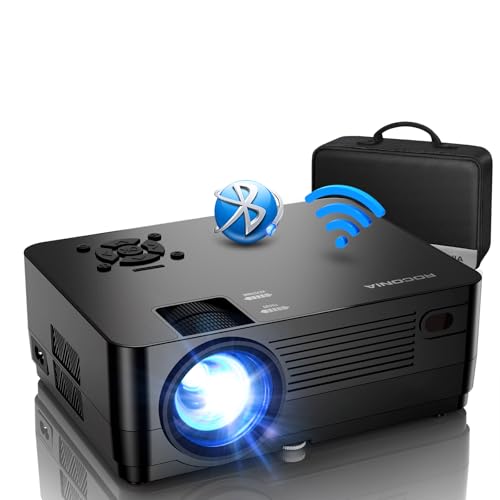
Generic Native 720P Mini Projector — Best Verified New Mini
This is the honest centre of the new 720p market: a compact mini projector whose listing, checked for this guide, states a native 720p resolution — the real 1280 by 720 — in a body built for casual, dark-room, big-picture fun. It is not a home cinema instrument and does not pretend to be. It is the machine for a bedroom wall, a child’s film afternoon, a garden sheet after dark and a rented flat where a television feels like a commitment.
Picture expectations should be set by physics rather than by hope. In darkness, at widths up to roughly two metres, a native 720p image is genuinely enjoyable: films read clearly, colours are cheerful, and the softness relative to 1080p is the softness of a smaller canvas, not a defect. In daylight, like every mini, it surrenders — brightness claims in this class should be read as poetry, and the room, not the specification, will decide what you see.
The generic ownership terms apply in full. The brand is a badge rather than an institution, firmware support is a hope rather than a policy, and the remote, fan and speakers are built to a price. What redeems the proposition is the returns window: buy it, test it on your wall with your text, in your darkness, within the window, and keep it only if the picture in your room matches the picture in this paragraph.
Judged by that test, a verified native 720p mini is a legitimate little projector — the last honest representative of a resolution class that served home cinema honourably for a decade, still serving wherever the screen is modest and the lights are low.
Households discover uses for a machine like this that no product page predicts. A recipe video thrown large on a kitchen wall while hands are floury; a grandparent’s face, life-size, on a video call routed through a laptop; a star chart on a bedroom ceiling for a child who fears the dark and loves astronomy. None of these duties needs a pixel more than 720p, and all of them need exactly what this mini offers — a big, kind picture that appears wherever it is pointed.
Its fan will be audible in quiet scenes, because small bodies move air noisily, and the honest mitigation is placement and content: a metre or two from the nearest ear, a film with a living soundtrack, and the machine becomes background. Owners who demand silence should hear that as the category speaking, not this unit failing.
Finally, a word about longevity expectations, set kindly: treat a generic mini as a two-to-three-year companion rather than a decade’s fixture, keep its lens capped and its vents blown clear, and it will likely outlive the modest expectation — while the money it saved remains available for the day the household’s brief grows into the step-up pick below.
- Native picture: 1280 by 720, verified from listing
- Form: compact mini, tabletop placement
- Brightness: modest; dark rooms only
- Sound: built-in, suitable for casual viewing
- Best screen width: up to about two metres
Strengths
- Genuine native 720p at a mini price
- Small, simple and easy to store
- Perfectly enjoyable films in darkness
Trade-offs
- Generic support and firmware prospects
- Daylight viewing is not realistic
- Fan and speakers are built to cost
Best for: bedrooms, children, gardens and casual renters.
Not suited for: bright rooms, fine text or permanent cinemas.

Generic Native 720P Portable Projector — Best Portable
The second verified listing in this guide takes the same honest native 720p foundation and leans into portability: a body meant to travel between rooms and houses, to live in a drawer and emerge for occasions — a match on a borrowed wall, a film in a holiday rental, a slideshow at a family gathering where the television is the wrong shape for the crowd.
Portability reframes the resolution question kindly. A picture that travels is judged by the standards of the occasion, not of the cinema, and native 720p at portable sizes — a metre and a half of wall, a sheet, a ceiling above a bed — looks entirely at home. The softness that would bother a cinephile at three metres is invisible at the sizes and distances portable viewing actually uses, which is why this class, honestly specified, refuses to die.
The checks from the previous pick apply with doubled force, because portable minis are the badge-trap’s favourite habitat. Verify the native figure in the specification table of this exact listing, treat brightness language as atmosphere, and let the returns window be your laboratory: a weekend of real use will tell you more than any review, including this one.
Kept within its brief — dark-ish rooms, modest sizes, cheerful content — a verified portable like this one is among the most-used gadgets a household can own, precisely because it asks for nothing: no mount, no screen, no ceremony. It is projection as a party trick that happens to be a real projector.
Travel changes what a projector is for, and this portable’s real specification is the bag it fits in. A machine that goes to the holiday house, the grandparents’ spare room and the friend’s garden without negotiation gets used in all those places; a marginally finer machine left at home for safety gets used in none of them. Portability is not a compromise in this pick — it is the product.
Battery and power arrangements in this class vary by listing and season, so verify the exact arrangement on the page before a trip depends on it, and carry the cable regardless: a borrowed wall near a socket is the portable cinema’s natural habitat, and a power bank rated for the draw extends the habitat to the garden’s far end.
Children, it should be said, are this machine’s most honest reviewers. They do not count pixels; they measure the picture in wonder per evening, and a verified 720p portable pointed at a sheet delivers wonder at a rate that shames far costlier equipment. Buy it for the audience that will actually gather, and the resolution debate dissolves.
- Native picture: 1280 by 720, verified from listing
- Form: portable mini, carry-friendly
- Brightness: modest; evenings and dark rooms
- Setup: tabletop, quick and informal
- Best screen width: up to about a metre and a half
Strengths
- Honest resolution in a travel body
- Zero-installation viewing anywhere
- Occasion viewing flatters its strengths
Trade-offs
- Generic long-term support
- Small picture ceiling before softness shows
- Built-in audio suits small groups only
Best for: travel, gatherings, bedrooms and borrowed walls.
Not suited for: permanent installation or daylight duty.

Epson Home Cinema 1080 — The Honest Step-Up
This pick breaks the guide’s own title, deliberately and in the open. The Home Cinema 1080 is a current Epson 3LCD projector with a native Full HD picture, brightness in the 3,400-lumen class and the support of a real manufacturer — and it sits in this guide because, for a large share of the readers who arrive here, it is the correct purchase that the 720p search was circling. When the price distance between a generic mini and a warranted, branded, dramatically brighter 1080p machine is measured in a modest step rather than a leap, honesty requires showing the step.
What the step buys is not merely pixels. It buys brightness that survives a lamp-lit room, colour that arrives whole through three panels with no rainbow artefacts, a lamp and parts ecosystem that will exist in five years, and a picture that fills a proper screen rather than apologising to one. Films stop being an occasion that requires darkness negotiations and become the room’s default — the transformation that decides whether a projector gets used weekly or monthly.
Choose it if your intentions have quietly outgrown the mini brief: a fixed room, a real screen, regular film nights, sport with the lights partly up, or any text at all. Choose the minis above if the brief is genuinely casual, portable or minimal — they serve that brief at a fraction of the commitment, and there is no virtue in buying a cinema for a party trick.
We include this pick linked, from the verified pool, with its nature declared in every mention, because a guide that hid the step-up would be protecting a keyword rather than serving a reader. The 720p category’s most important fact is where its ceiling is; this Epson is what stands immediately above the ceiling.
The step-up decision deserves a framework rather than a feeling. Add the honest costs of the mini route — a replacement when the generic support evaporates, the screen you will eventually buy anyway, the second purchase when the brief outgrows it — and the Epson’s price often stops looking like a premium and starts looking like the same money spent once. Households are not obliged to buy their second projector first, but they are entitled to see the arithmetic before choosing.
There is also a confidence dividend. A warranted Epson on a fixed screen simply removes projection from the list of things a household thinks about: it turns on, it is bright, it is sharp, and the evening proceeds. For busy families, that absence of friction is worth real money, and it is the quality the minis, for all their charm, cannot sell at any price.
None of this retracts the minis’ case for their own briefs. It merely insists that the reader, not the keyword, choose which brief is theirs — and this pick exists so that choosing the larger brief does not require leaving the guide to discover it.
- Native picture: 1920 by 1080, three-chip LCD
- Brightness: mid-3,000 lumen class
- Form: conventional home projector
- Support: full manufacturer ecosystem
- Role in this guide: declared step-up pick
Strengths
- Real brightness for real rooms
- Branded warranty, lamps and support
- Full HD detail on proper screens
Trade-offs
- Costs more than the minis by design
- Not portable or drawer-sized
- Exceeds a genuinely casual brief
Best for: readers whose real brief is a first proper home projector.
Not suited for: travel, minimal budgets or occasional party use.
The 480p “1080p Supported” Mini Class — Know What You Are Buying
This pick is a warning wearing a pick’s clothing, included because it is, by volume, what most 720p shoppers are actually offered. The class: ultra-cheap minis, native 854 by 480, marketed on their acceptance of Full HD signals, sold under a rotating cast of badges at prices that undercut even the honest generics above. They are not fraudulent in the legal sense — the specification table, read closely, usually confesses the native figure — but they are engineered to be misread at speed.
Is there any honest use for one? Narrowly, yes: a child’s bedroom ceiling for cartoons, a Halloween window projection, a disposable travel toy where loss or breakage would be a shrug. At those sizes and contents, 480p’s poverty is genuinely hard to see, and the price is genuinely trivial. Bought knowingly for those duties, the class is a toy that works.
Bought unknowingly as a film projector, it is the single most common disappointment in this entire market: the soft text, the visible pixel grid at modest sizes, the sense that projection itself is a gimmick. That disappointment then poisons the category for a household that might have loved the real thing. If you take one idea from this guide, take the thirty-second text test from the explainer above, and apply it inside the returns window of anything in this class.
We link nothing here and name no badge, because badges in this class change faster than any guide can track, and a link would be an endorsement the class has not earned. Buy it as a toy or not at all.
The class also teaches a transferable skill: how to read any technology listing against its marketing. The pattern — a true statement about compatibility promoted until it impersonates a statement about capability — recurs in televisions, cameras and laptops, and a shopper who learns to hunt the native figure here will hunt panel types, sensor sizes and refresh truths elsewhere with the same reflex. In that sense the 480p badge class, studied properly, is an education that pays for itself.
Sellers of the honest minis above suffer most from this class, which is worth a moment’s sympathy and a practical response: if a listing states its native resolution plainly, in the table, where it can be checked, that plainness is itself a credential. Reward it with your custom when the duties match, because markets become what buyers reward.
And if you already own one of these machines, bought in a hurry and judged harshly ever since, consider re-homing it to the duties it can actually perform — the ceiling, the window, the children’s den — before replacing it. A tool misjudged is often a tool misassigned, and 480p assigned honestly is a toy that works.
- Native picture: typically 854 by 480
- Marketing: leads with supported resolutions
- Form: ultra-compact minis
- Honest duties: cartoons, effects, disposable travel
- Verification: native figure, specification table only
Strengths
- Trivial prices for toy duties
- Accepts modern sources without complaint
- Small enough to risk anywhere
Trade-offs
- Picture is 480p whatever the badge implies
- Text and detail dissolve at size
- Support is effectively nonexistent
Best for: knowingly bought toy and effects duties.
Not suited for: films, sport detail, text, or anyone expecting 720p.
Second-Hand Branded WXGA Projectors — Best Used Value
Here is the category’s open secret. For years, the world’s classrooms and meeting rooms ran on branded WXGA projectors — 1280 by 800, a breath wider than 720p — from Epson, BenQ, ViewSonic and their peers, built with real lenses, real brightness and serviceable parts. Those fleets now retire in waves, and the used market offers them, in honest condition, for the price territory of a new generic mini. For a buyer willing to shop second-hand carefully, this is the best picture-per-money in the entire 720p landscape.
The shopping discipline is specific. Ask for lamp hours and a photograph of a projected menu — uniformity blotches and a tired lamp announce themselves plainly. Favour sellers who describe the unit’s origin and faults like adults, budget mentally for a genuine replacement lamp during your ownership, and confirm the remote is included, because a missing remote on some models is a genuine handicap rather than an inconvenience.
What you receive for that diligence is a different species from the minis: brightness that handles a lit room’s edges, optics that focus evenly, colour that behaves, and a chassis built for a decade of institutional mornings. The picture’s ceiling is the panel’s — this is 720p-class detail, honestly delivered — but everything around the picture is grown-up.
We link no listing because used stock is individual by nature; a link would be stale or wrong within weeks. Hunt the class, apply the checks, and let a specific, photographed, honestly described unit earn your money.
Where do these fleets surface? The usual estuaries of institutional surplus: refurbishers who grade and warranty their stock, local marketplaces near the schools and offices that retired them, and the occasional charity shop with a remarkable shelf. The refurbisher route costs a little more and returns a tested unit with a lamp figure you can believe, which for most buyers is the correct trade.
Timing helps the hunter. Institutional refresh cycles cluster around budget years and term breaks, and a patient buyer watching listings across a season will see the same models recur until a clean example appears. Set an alert for the class rather than a badge, keep the lamp budget in reserve, and let patience do the negotiating.
One more virtue deserves naming: these machines were built to be serviced. Panels open, filters slide, lamps swap with a screwdriver and a manual that still exists online. In an era of sealed gadgets, a projector a owner can maintain is a small act of resistance, and part of why the used route suits the readers this guide respects most.
- Native picture: 1280 by 800 WXGA
- Origin: retired classroom and office fleets
- Brightness: typically far beyond mini class
- Key check: lamp hours and uniformity photo
- Budget note: allow for a genuine lamp
Strengths
- Branded optics and brightness at mini prices
- Built for long institutional service
- Parts and lamps remain findable
Trade-offs
- Condition varies unit by unit
- Lamp replacement likely during ownership
- No warranty beyond the seller’s word
Best for: patient used-market shoppers wanting real projection cheaply.
Not suited for: buyers needing a warranty and a returns window.
Used Short-Throw WXGA Gaming-Era Models — Best for Small Rooms, Used
The final territory on this honest map is a class that no longer exists new: the short-throw WXGA projectors of the gaming and education era, built by the major brands to throw a large 1280 by 800 picture from about a metre. In their day they served interactive whiteboards and small-room gaming; today they surface on the used market as the only route to genuine short-throw projection at 720p-class money.
Their virtues survive their age. The geometry remains transformative in a small room — projector on a low table, players and audience behind the beam, a wall filled from a distance where a standard throw would manage a postage stamp — and the branded engines deliver brightness and focus the new minis cannot approach. For a child’s gaming den or a student room, a good example is a small miracle of value.
The cautions are the used market’s usual liturgy, amplified by age: lamp hours matter doubly, fans and filters carry a decade of dust, and the HDMI vintage should be confirmed against your sources before money moves. Buy from a seller who will show the unit projecting, at length, in a photograph or a visit, and walk away from any listing that will not.
Like the WXGA class above, this pick carries no link, because the right unit is the one in front of you, inspected — not a product page. The class earns its place here by being, for small rooms, the most capable 720p-class projection that modest money can still buy.
Imagine the room this class was born for, because it still exists in millions of homes: the box room, the student let, the child’s bedroom where the only wall is two metres from the only chair. Standard-throw projection cannot live there at any resolution; a television can, at television size. A used short-throw WXGA fills that wall from the bedside table and turns the smallest room in the house into its cinema, a transformation no new product at this money currently offers.
The gaming fit is more than nostalgia. The consoles of these machines’ era, and the PC at modest settings, match the panel’s resolution natively, so the picture arrives without scaling apologies, and the short throw keeps the player’s shadow out of the story. A retro-gaming den built around one of these is not a compromise den; it is a period-correct one.
Buy the cleanest example rather than the cheapest listing, keep the filter ritual sacred, and this ageing class will repay the diligence with years of big pictures in small rooms — the exact service its designers promised, delivered a decade late at a tenth of the price.
- Native picture: 1280 by 800 WXGA class
- Throw: short, large picture near one metre
- Origin: education and gaming era, used only
- Key check: lamp, fan, filter and input vintage
- Setting: small rooms and gaming dens
Strengths
- Short-throw geometry unavailable new at this level
- Branded brightness and focus
- Big pictures in genuinely small rooms
Trade-offs
- Ageing lamps, fans and filters
- Older inputs may need adaptation
- Condition is entirely unit-specific
Best for: small rooms willing to shop used carefully.
Not suited for: buyers wanting new, warranted and returnable.
How Do the Six Options Compare Honestly?
| Option | Native pixels | New or used | Linked here | Core truth |
|---|---|---|---|---|
| Generic 720P Mini | 1280 by 720 | New | Yes | Honest mini for dark rooms |
| Generic 720P Portable | 1280 by 720 | New | Yes | Honest mini that travels |
| Epson HC 1080 | 1920 by 1080 | New | Yes, as step-up | The exit from the category |
| 480p Badge Class | 854 by 480 | New | No | A toy, buy knowingly |
| Used Branded WXGA | 1280 by 800 | Used | No | Best value with diligence |
| Used Short-Throw WXGA | 1280 by 800 | Used | No | Small-room geometry, used |
How Did 720p Go From Cinema Standard to Footnote?
A brief history steadies the judgement. High definition arrived in homes wearing 720p’s face: the first affordable projectors, the first HD broadcasts and a generation of beloved films were mastered and watched at this resolution, and at the screen sizes of that era it was revelatory. The class did not fail; it was succeeded, as panel economics made 1080p the default and then 4K the aspiration, and the brands’ ranges marched upward leaving the old standard to the generic makers and the used market.
That history matters because it separates the resolution from the implementations. A 720p picture from a good lens, honestly fed, remains a good picture — the retired branded fleets prove it nightly. What declined is not the format but the average new machine sold under its name, as the badge drifted downmarket into the badge-trap class. Readers who understand that distinction can shop the whole landscape — new generic, used branded, or the step beyond — with their eyes open and their money intact.
How Should You Test Any 720p Candidate in the Returns Window?
Run the same three tests on any candidate, new or used, before the window closes. First, the text test: a settings menu or document at your real screen width, judged from your real seat — legibility is the native resolution confessing itself. Second, the darkness test: a familiar film scene with shadow detail, in the darkest conditions your room can honestly offer, because that is the picture you will actually live with. Third, the endurance test: a full feature’s length in one sitting, listening for fan character and watching for focus drift as the machine warms, the two flaws that only time reveals.
For used purchases, add the uniformity test — a plain bright field, where panel blotches and dust shadows declare themselves — and the lamp conversation, in writing, before payment. A seller who welcomes these tests is selling a projector; a seller who resists them is selling a story.
Keep the packaging until every test has passed. In this category more than any other on this site, the returns window is not a formality; it is the second half of the product, and the honest sellers price it in.
When Should You Step Up to 1080p Instead?
Step up when any of these become true: the screen grows beyond about two metres in a room you use weekly; text, spreadsheets or game HUDs become regular content rather than occasional guests; the room refuses to darken and brightness becomes a need rather than a wish; or the projector is becoming furniture — a fixed installation whose compromises you will meet every night for years. Each condition taxes exactly the things 720p-class machines, new or used, cannot supply.
Stay at 720p, without a shred of embarrassment, when the brief is the one this class serves beautifully: occasional, portable, small-screen, dark-room, cheerful viewing, especially for children, travel and gatherings. A resolution is not a virtue ranking. It is a fit between a picture and a purpose, and a native 720p mini matched to its purpose will make its owners happier than a mis-bought flagship ever made anyone.
What Mistakes Do 720p Shoppers Make Most?
The badge mistake leads the field: reading “1080p supported” as a resolution and discovering 480p at home. The brightness mistake follows — believing a mini’s lumen poetry and planning a daylight picture that physics will not deliver. Third comes the size mistake, stretching a modest native picture across a wall it cannot feed, then blaming the technology rather than the arithmetic.
Used-market shoppers add their own: skipping the lamp-hours question, accepting a listing without a projected-image photograph, and forgetting that a missing remote or a clogged filter is a cost, not a detail. Every one of these mistakes is avoidable with the checks in this guide, which is the most useful sentence a 720p guide can contain.
Final Recommendation
Decide what you are actually buying. If it is a new, casual, portable big picture for dark rooms and modest walls, the two verified native 720p minis in this guide are the honest new market, and either will serve the brief cheerfully. If it is value with grown-up optics and you can shop carefully, the used branded WXGA fleets are waiting with the best pictures this money can buy. If it is a toy, buy the 480p class knowingly and cheaply, and never let it stand in judgement of real projection.
And if the brief has quietly become a home cinema — a fixed room, a real screen, films that matter — then let this guide’s most honest sentence be its last: step up, as the Epson pick above invites you to, because the kindest thing a 720p guide can do for a reader who has outgrown 720p is to say so, clearly, before the money is spent rather than after the picture disappoints.
How Should You Read a Used Projector Listing Like an Inspector?
Read for evidence, not adjectives. A listing that states lamp hours, shows the menu projected on a wall, names the included accessories and admits a fault in plain language is a listing written by someone who expects inspection — buy from that temperament wherever the class takes you. A listing of superlatives without a single projected photograph is asking you to fund its optimism.
Ask three questions before payment, in writing: the lamp’s hours and whether it is the original, the state of the remote, and whether the image is uniform corner to corner. The answers, and the willingness to give them, are the condition report. Sellers of retired fleet machines answer such questions daily; silence or irritation in reply is data, and the correct response to it is the next listing.
Finally, price the whole acquisition, not the winning bid: postage for a heavy machine, the lamp reserve, a filter, perhaps a remote. A used bargain that needs all four on arrival can cost more than the refurbished unit with a warranty that needed none — the oldest arithmetic in the second-hand world, and the one this guide most wants its readers to perform.
What Does a Sensible 720p Household Buy Around the Projector?
Very little, and that restraint is the class’s charm — but the little matters. A streaming stick if the machine lacks a platform, a small speaker that lives near the screen, a lens cap that is actually used, and, for the used-market routes, a genuine lamp bought calmly before the old one forces the question. Those four items, together, cost less than the difference between the honest mini and the badge-trap beneath it, and they convert a gadget into a household appliance.
What not to buy deserves equal emphasis. Do not buy an expensive screen for a mini whose brightness cannot honour it, a ceiling mount for a machine whose charm is the drawer, or a warranty extension whose terms the badge will not survive to honour. The 720p ecosystem rewards proportion: modest machine, modest accessories, honest expectations, and evenings that punch far above the arithmetic.
How Do Children, Students and Renters Each Use This Class Differently?
For children, the 720p mini is a story machine: cartoons on a ceiling, a film tent in the garden, a picture large enough to gather cousins and forgiving enough to survive popcorn logistics. Resolution is the least of its duties; robustness, simplicity and a returns-tested picture are the whole specification, and the verified minis meet it.
For students, the class is a social instrument — a match in a shared house, a presentation rehearsed on a bedroom wall, a film society in a room that seats four and projects to twelve. The used WXGA route flatters the student with a library to serve and a landlord to answer to; the portable mini flatters the one who moves each term.
For renters, finally, the governing virtue is reversibility. Nothing in this guide’s new picks asks for a drill, a mount or a deposit negotiation, and the used short-throws ask only for a table. A category that can be uninstalled in minutes and carried out in a box is a category designed for lives in motion, and that, more than any pixel count, is why 720p’s honest remnant endures.
What Else Should a 720p Shopper Ask Before Ordering?
How loud is a mini projector, really?
Small fans in small bodies are audible in quiet rooms, typically as a steady hush that dialogue covers and silence exposes. If your viewing is hushed and close, favour the used branded machines or the step-up pick; if your viewing is social, animated or outdoors, the minis’ noise disappears into the occasion.
Can I use a 720p mini with a streaming stick?
Yes — an HDMI stick plus USB or mains power turns either verified mini into a streaming screen, and the combination is the class’s most popular modern use. Keep the stick’s power independent of the projector’s USB port if that port proves weak, a common mini economy.
What screen works with a mini projector?
At this level, a smooth pale wall outperforms a cheap wrinkled screen, and a simple fixed or tripod screen outperforms both once the habit forms. Spend on flatness before gain; the minis have no brightness to spare for exotic materials, and their pictures forgive a wall more readily than a wave.
How long will a generic mini last?
Plan for a few years of cheerful service rather than a decade, keep vents clear and the lens capped, and treat any years beyond that plan as a dividend. The used branded machines invert the expectation: older at purchase, but built for institutional decades and maintainable throughout.
Is 720p acceptable for sport?
For casual viewing at modest sizes, yes — the ball is visible, the score is readable, and the occasion carries it. For devotees who read a match the way others read novels, the step-up’s brightness and detail will repay them every weekend.
What is the first test on delivery day?
Text, at size, from your seat — before the film, before the celebration. It takes one minute and it is the whole truth about the machine in front of you.
Are replacement lamps for used WXGA models still sold?
For the major brands’ popular fleet models, generally yes, through projector parts specialists. Confirm availability for the exact model before buying the projector itself — that order of operations is the used market in one sentence.
Can a mini projector replace a bedroom television?
For streamed series and films in a darkened bedroom, many households find that it can, with the ceiling or wall as its screen and a small speaker as its voice. News at breakfast and sport at noon remain a television’s natural duties.
Should I gift a 720p mini?
Yes, if the recipient’s brief matches the class — a child, a student, a traveller — and if you choose a verified native listing rather than the cheapest badge. Include the small speaker if the occasion allows; the gift then arrives as a complete evening rather than as a component.
What throw distance does a mini need?
Most minis build their intended picture from one to three metres, with the exact figure on the listing’s throw chart. Measure your room’s available distance before ordering, because minis rarely offer zoom to forgive a guess.
What is the cheapest honest route to a big picture?
On the evidence of this guide, a tie: a verified native 720p mini bought new with its returns window intact, or a carefully inspected used WXGA machine with its lamp budget reserved. Both routes are honest; choose by whether you value a warranty’s paperwork or an institution’s engineering more.
Do 720p projectors still receive new releases?
As new branded models, effectively no; as new generic minis, constantly, under rotating badges. That is why this guide verifies listings rather than badges, and why its two linked picks are described by their verified native figure rather than by a brand story.
What if the listing will not state a native resolution?
Treat the silence as the answer. Sellers of genuine native 720p machines state the figure because it is their best argument; a listing that hides behind supported resolutions is telling you, in the only language available to it, that the native figure would end the conversation.
Can a 720p projector work for presentations?
For large-type slides in a small room, comfortably; for spreadsheets and detailed documents, the used WXGA machines or the step-up pick serve far better. Match the machine to the smallest text it must carry, not the largest headline.
Is a ceiling projection safe for a mini?
Many households do it for children’s rooms, with the machine stable, ventilated and cabled so nothing can pull it down. Check the vents are unobstructed in that orientation and never leave a hot lamp-era used machine running unattended over a bed.
Why do some 720p listings quote enormous brightness?
Because the class’s brightness figures are often quoted in unstandardised units or under laboratory courtesies that no living room reproduces. Read every mini brightness claim as “dark room required” and you will never be disappointed by the translation.
How Should You Set Up a Mini for Its Best Evening?
Give the little machine every courtesy the room allows. Darken what can be darkened — a curtain, a door closed against the hallway — because at this brightness level, ambient light is not a condition but an opponent. Level the projector rather than keystoning it, since a 720p picture has no resolution to donate to digital correction, and focus at the centre of the screen with text on display, then leave the ring alone.
Sound deserves one upgrade before any other: a small Bluetooth speaker or a wired portable placed near the screen will transform the occasion more than any picture setting, because the minis’ built-in speakers are the thinnest part of their design. Route the audio, dim the room, size the picture honestly, and a verified 720p mini will deliver an evening that its specification sheet, read cold, would never have promised.
A closing word about dignity, because this category is often reviewed with a smirk it does not deserve. The households in this guide — the child with the ceiling cartoons, the student with the borrowed wall, the grandparent watching a slideshow at a size that finally does it justice — are not failed cinephiles awaiting rescue by a flagship. They are people whose purposes a modest, honest picture serves completely, and a guide that respects those purposes will always matter more than one that merely ranks resolutions. Buy the machine that fits the evenings you actually have, verify it like an inspector, and let the pixels fall where they honestly may.
Frequently Asked Questions
Is 720p enough for films?
At modest screen sizes in a dark room, yes — generations of viewers loved films at this resolution, and the picture remains enjoyable. It stops being enough as screens grow, seating closes in, or fine detail and text become the content.
How can I tell a projector’s real native resolution?
Find the native figure in the specification table on the listing or the maker’s page, ignoring headline claims about supported signals. Then confirm with the text test in your own room during the returns window.
Why are there so few branded 720p projectors now?
Panel and chipset production moved to 1080p and beyond, and the brands followed the volume. The class survives new only in generic minis, and used in the retired fleets of the branded era.
Is WXGA better than 720p?
Slightly, on paper: 1280 by 800 carries a little more vertical information than 1280 by 720 and suits documents well. For films the difference is negligible; the used WXGA machines win on optics and brightness, not on the extra eighty rows.
Can a 720p projector show my 1080p console?
Yes — it will accept and downscale the signal, and games remain perfectly playable. You simply see a 720p rendition of them, which at these screen sizes many players find entirely acceptable.
Should I buy a used projector without seeing it?
Only with the protections this guide describes: lamp hours stated, a projected-image photograph, the remote included, and a seller whose description reads like a condition report. Otherwise, the new verified minis and their returns window are the safer money.
Why does keystone correction make my 720p picture look softer?
Because digital keystone fixes a tilted rectangle by discarding and rescaling pixels, and a 720p image has few pixels to spare. Tilt the projector to reach a screen it cannot face squarely, apply correction, and fine text loses its edges first, followed by facial detail and patterned clothing. The cure is physical, not digital: raise or lower the projector on books, a tripod or a small shelf until its lens points straight at the screen centre, then switch correction back to zero. Reserve keystone for temporary setups where repositioning genuinely is impossible.
Related Guides
Read next our 1080p projector roundup for step-up shoppers, the native versus supported resolution explainer, and our portable projector and garden cinema guide.


