What's inside
- Key Takeaways
- Quick Picks
- How We Chose These Picks
- Comparison
- With the Platform Fixed, Which Panel Difference Matters Most?
- Is 43 Inches Right for Your Room?
- How Do You Set Up a Roku TV for a Household That Shares?
- What Happens to a 43-Inch Roku TV Over Ten Years?
- Common Mistakes
- Final Recommendation
- Frequently Asked Questions
- Related Guides
As an Amazon Associate I earn from qualifying purchases. This post may contain affiliate links at no extra cost to you.
widgetverdict.com is reader-supported. When you buy through links on our site, we may earn an affiliate commission.
Choosing among the best 43 inch roku tvs is an unusual exercise, because the platform question — the argument that dominates most television shopping — has already been settled. Every linked pick in this guide runs Roku TV: the same calm grid of apps, the same impartial search, the same voice remote philosophy. What remains is the interesting part. Five manufacturers’ panels wear that one interface, and they differ in resolution, colour technology, brightness ambition and gaming features. Holding the software constant turns this guide into a pure panel comparison, which is the cleanest way to learn what your money actually buys in a modern television once the operating system stops being the differentiator.
One fact must be stated before any ranking, because it splits the field in two: the Westinghouse 43-inch model is a 1080p Full HD television, while the other four linked picks are 4K. That is not a footnote. At 43 inches, in a bedroom, a small lounge or a kitchen-diner, 1080p remains a legitimate resolution, and Westinghouse prices the set accordingly — but buyers deserve the distinction in the first paragraph rather than the small print. The 4K contingent divides further: Roku’s own Select Series as the platform’s reference hardware, Hisense’s E6SR with Hi-QLED colour and a gaming feature set, TCL’s R7D with QLED and high brightness positioning, and TCL’s older 4-Series as the value elder of the group. A sixth entry, Roku’s earlier Plus Series, is discussed without a link as the line that proved Roku could build premium hardware of its own.
A word on terminology before the reviews, because this class attracts sloppy language. Manufacturers use refresh, motion rate and effective rate to mean different things, and this guide preserves each listing’s own wording rather than translating them into a single invented scale. When the TCL R7D says Motion Rate 240, the review calls it a motion-processing figure. When a listing says nothing about motion at all, the review says nothing either. That discipline will feel pedantic until the day it saves you from buying a number that was never a panel, sold by a headline that counted on nobody asking.
Why fix on 43 inches at all? Because it is the size that fits the rooms other televisions outgrow: the second lounge, the generous bedroom, the student house, the kitchen-diner’s far wall, the home office that doubles as a gaming den. At this size a television is big enough for a film to feel like an event and small enough to move house without a van and a prayer. Roku’s platform suits those rooms particularly well, because second rooms get used by everyone — guests, children, grandparents — and Roku’s interface is the one nobody needs explained. Keep that context in mind as the panels argue their cases below: the winner for a main lounge and the winner for a hard-working second room are not always the same television.
Energy and standby behaviour merit a sentence in a second-room guide, because these sets spend most of their lives waiting. Roku’s platform is frugal in standby and quick to wake, which suits rooms used in bursts — the guest room’s weekend, the office’s lunch hour, the bedroom’s evening hour. A television that wakes before the kettle boils gets used; one that performs a boot ceremony gets bypassed for a phone, and a bypassed television is furniture with a power cord. All five linked sets share that platform virtue equally, which quietly levels another field buyers often assume differs by brand.
Gaming threads through this size class more than buyers expect. A 43-inch screen at desk or bed distance is a natural second gaming display, and two of the picks — the Hisense E6SR with Game Mode Plus, VRR and ALLM in its listing, and the TCL R7D with its Motion Rate 240 — speak directly to that use. The others serve film, sport and streaming households without gaming pretensions, and their reviews say so plainly. Read the five linked reviews as five different answers to one question: with Roku guaranteed, what should the glass in front of it be?
Key Takeaways
- Every linked pick runs Roku TV, so this guide compares panels, not platforms: resolution, colour and gaming features decide.
- The Westinghouse 43-inch is 1080p Full HD; the Roku Select, Hisense E6SR and both TCL models are 4K — stated plainly, up front.
- Hisense’s E6SR is the gaming-leaning pick, with Game Mode Plus, VRR and ALLM named in its listing.
- TCL’s R7D brings QLED colour and High Brightness positioning, while the older TCL 4-Series is the value route into 4K Roku.
- Roku’s own Select Series is the platform’s reference hardware, with Bluetooth Headphone Mode for private listening.
- The earlier Roku Plus Series is covered without a link as the premium experiment that shaped Roku’s own TV line.
Quick Picks
| Pick | Badge | Why it makes the cut |
|---|---|---|
| Roku 43-Inch Select Series Smart TV 2026-4K (2160p) HDR TV | Platform reference | Roku’s own 4K hardware with voice remote and Bluetooth Headphone Mode, the interface exactly as its makers intend. |
| Hisense 43″ Class E6SR Series Hi-QLED 4K UHD Smart Roku TV | Gaming-leaning QLED | Hi-QLED colour with Dolby Vision, Game Mode Plus, VRR and ALLM for the room that also hosts a console. |
| TCL 43-Inch R7D Series QLED 4K UHD HDR Smart Roku TV | Brightness-leaning QLED | QLED panel with High Brightness and Motion Rate 240 positioning, plus Google Cast and AirPlay 2. |
| Westinghouse Roku TV 43 Inch Smart TV, 1080p Full HD | Honest 1080p value | The Full HD exception in a 4K field, with Apple AirPlay 2, priced for rooms where 1080p is genuinely enough. |
| TCL 43″ Class 4-Series 4K UHD HDR Smart Roku TV – 43S455 | Established 4K value | The long-running 4-Series formula: 4K UHD HDR on Roku at the friendliest end of the range. |
| Roku Plus Series 43-inch (earlier Roku-branded line) | Premium predecessor | Roku’s first premium own-brand step, covered for context without a verified current listing link. |
How We Chose These Picks
The platform filter was the keyword itself: Roku TV, verified in each listing, with no exceptions smuggled in from rival systems. That discipline is what makes the comparison honest — an Insignia Fire TV model at this size may be a fine television, but it does not belong in a Roku guide, and it is not here. Within the Roku field, the five linked picks were chosen to span the genuine forks a buyer faces: own-brand versus partner brands, 4K versus the one credible 1080p holdout, QLED colour versus plain LED value, gaming features versus streaming simplicity. The prose-only Plus Series entry covers the own-brand line’s history so the Select Series can be judged with its ancestry in view.
Claims discipline matched the platform discipline. Resolution is stated for every pick because every listing states it. Gaming features are claimed only where a title names them — the E6SR’s VRR, ALLM and Game Mode Plus; the R7D’s Motion Rate 240 — and refresh-rate numbers are not invented for the sets whose listings stay silent. Where a listing is brief, the spec box below says what is known and leaves the rest unstated rather than borrowing figures from other sizes in the same series, a common review sin this guide refuses on principle: a 43-inch television must be judged as the 43-inch television it is.
Price transparency was treated as part of the comparison rather than a footnote to it. This class clusters tightly, and the day’s gaps between the five linked sets routinely matter less than the feature differences — with one exception: the Westinghouse’s 1080p discount and the 4-Series’ elder-model pricing can open gaps wide enough to decide the question on their own. The reviews therefore tell you to check price on Amazon at the decision points where the number genuinely arbitrates, instead of pretending a ranking written in one week can hold a price line in another.
Finally, the rooms were kept in view. Forty-three inches is a second-room and small-room size, so the reviews weigh guest-friendliness, private listening, casting from phones and the ability to serve as a part-time gaming screen, rather than pretending every pick is auditioning for a cinema. A television that will be operated by visitors and children needs Roku’s calm more than it needs a showroom picture, and the rankings honour that reality instead of apologising for it.

Roku 43-Inch Select Series Smart TV 2026-4K (2160p) HDR TV — Platform reference
When a platform company builds its own television, the result is a reference design: the hardware the software team had in mind. Roku’s Select Series at 43 inches is that object — a 4K HDR flat LED panel running Roku TV exactly as its makers intend, with a voice remote, Wi-Fi and the Bluetooth Headphone Mode that has become the line’s signature kindness. Nothing about the set chases a spec-sheet headline. Its argument is coherence: the interface wakes fast, the search treats every service impartially, the remote has exactly the buttons a tired person needs, and the whole appliance behaves like one product rather than a panel and a platform negotiating a treaty.
The headphone mode deserves its paragraph in this size class especially. Forty-three-inch televisions live in bedrooms, guest rooms and second lounges — rooms adjacent to sleeping people. Routing film sound to Bluetooth headphones while the room stays dark and silent is the difference between a television that fits a household’s rhythms and one that generates nightly negotiations. Roku also positions the set for streaming live local news, sports and movies, and its live guide gives second rooms the channel-surfing life that guests and grandparents expect from a television, rather than an app grid they must be taught.
Picture expectations should be set by the tier. The Select’s LED panel is competent and honest rather than colourful in the QLED sense, and its listing makes no gaming claims beyond the platform’s general abilities. Viewers who want richer colour should walk one review down to the Hisense. Viewers who want the purest expression of why they chose Roku in the first place should stop here. As a 2026 model, it also carries the longest support runway in the guide, which matters for a set that may serve a decade across three different rooms of a house. Roku’s own hardware is the safe pair of hands in this comparison, and safe hands are underrated in second rooms.
Installation is the usual 43-inch pleasure: one person can carry it, most stands and brackets fit it, and the room does not need rearranging around it. Pair it with headphones during setup, sign the household’s services in once, and the set disappears into the room’s routine. That disappearance is the Select’s real specification, the one no listing can print: a television that never becomes a topic of conversation, because it never gives the household a reason to discuss it.
Renters and frequent movers should register the Select’s practical virtues too. It is light enough to move between flats without drama, its platform carries no household accounts that cannot be signed out in a minute, and its unremarkable, tidy design offends no landlord’s furnished room. A television that travels well through a decade of addresses is worth more than its specification suggests, and Roku’s own hardware, boring in all the ways that matter, travels best in this guide.
- Size and panel: 43-inch flat LED, 4K (2160p) HDR
- Platform: Roku TV
- Audio feature: Bluetooth Headphone Mode
- Remote and connectivity: Voice Remote, Wi-Fi
- Content focus: streaming live local news, sports and movies
- Model year: 2026
Strengths
- Roku’s own hardware runs the platform with a coherence partner brands rarely match.
- Bluetooth Headphone Mode suits the bedrooms and guest rooms this size serves.
- 2026 model year gives it the longest platform support runway in the guide.
Trade-offs
- Plain LED colour concedes the richness argument to the two QLED picks.
- No gaming features are claimed in the listing, unlike the Hisense beside it.
- Reference-design restraint means no headline specification to boast about.
Best for: second rooms, guest rooms and bedrooms where Roku’s calm and private listening matter most.
Not suited for: colour enthusiasts and console players, who have two better-matched picks below.
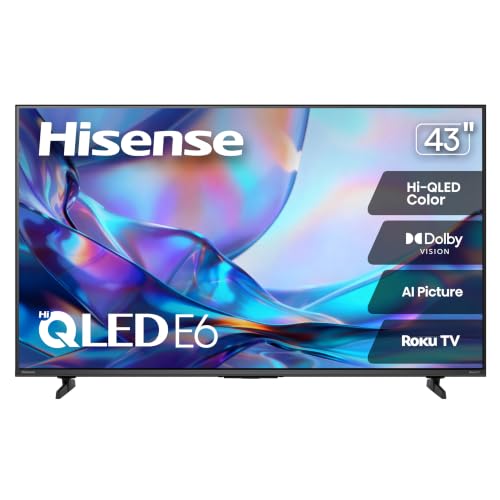
Hisense 43″ Class E6SR Series Hi-QLED 4K UHD Smart Roku TV (43E6SR, 2026 Model) — Gaming-leaning QLED
The E6SR is what happens when a partner brand decides Roku’s platform deserves ambitious glass. Hi-QLED colour widens the panel’s palette beyond ordinary LED, Dolby Vision brings the premium HDR format to streamed films, and then the listing does something no other pick here does: it talks to gamers directly. Game Mode Plus, VRR and ALLM are named outright — variable refresh to keep console output smooth, auto low latency so the set switches into its fastest behaviour when a console wakes, and a game mode tuned as a package rather than a buried setting. In a 43-inch television, that trio marks the E6SR as the room’s part-time gaming screen by design, not by afterthought.
DTS Virtual:X handles the audio side, aiming for spacious sound from a small cabinet, and Apple AirPlay plus compatibility with Alexa and Google Assistant cover the casting and voice bases for households of either assistant persuasion. The Roku platform underneath keeps the whole thing approachable for the non-gaming hours, which is the E6SR’s balancing act: a set that a console player can respect at midnight and a grandparent can operate at breakfast. Few televisions in this size class even attempt that breadth, and fewer still keep the price in the class’s normal territory — check price on Amazon, because Hisense’s habit of undercutting is part of this model’s story too.
The honest questions are about scale and taste. Forty-three inches is a comfortable gaming size at desk or close-sofa distance, but players building a dedicated setup around a large screen should look at the HDMI 2.1 guide instead, where port bandwidth is specified in full. Hisense’s picture tuning also leans vivid, which sport and games wear well and film purists occasionally find eager; Roku’s picture settings tame it, but the character is there. Neither point dents the central verdict: if one 43-inch Roku television must serve a mixed room — films, family streaming and a console that appears most evenings — the E6SR covers every one of those jobs without asking the room to reorganise around it.
As a 2026 model it shares the Select’s long support runway, and its feature list reads like a deliberate rebuttal to the idea that Roku televisions are basic televisions. They are not, or at least this one is not. It is the pick for the household that chose Roku for its calm and then discovered it also wanted colour, HDR and a console-ready panel, and would prefer not to change platforms to get them.
Parents should note the E6SR’s split personality as a family asset. The same screen that runs a console at midnight can be handed to children at breakfast without a settings expedition, because Roku’s home screen does not change its nature with the hour. Parental controls live in the platform the family already knows, the gaming provisions wake only when the console does, and the set never asks the household to choose between being a toy and being a television. Versatility of temperament, not any single feature, is what mixed rooms actually consume.
- Size and panel: 43-inch Hi-QLED, 4K UHD
- Platform: Roku TV
- Gaming: Game Mode Plus, VRR, ALLM per listing
- Formats and audio: Dolby Vision, DTS Virtual:X
- Casting and voice: Apple AirPlay, Alexa and Google Assistant compatible
- Model reference: 43E6SR, 2026 model
Strengths
- The only pick whose listing names a full gaming trio of Game Mode Plus, VRR and ALLM.
- Hi-QLED colour with Dolby Vision gives it the richest film picture among the Roku panels.
- AirPlay and dual assistant compatibility keep every household’s phones and voices welcome.
Trade-offs
- Vivid house tuning may need calming for film purists used to a more neutral picture.
- Serious dedicated gaming rigs will still want the fully specified ports of larger gaming sets.
- Its breadth makes it pricier than the value picks, though usually by less than expected.
Best for: mixed rooms where a console lives beside the streaming apps and one screen must do everything well.
Not suited for: purist cinema rooms, where a larger, film-tuned panel would serve the hobby better.

TCL 43-Inch R7D Series QLED 4K UHD HDR Smart Roku TV, 43R7D (2026) — Brightness-leaning QLED
TCL’s R7D enters the comparison with a positioning its rivals do not claim: High Brightness, printed in the listing, on a QLED 4K panel. Brightness at 43 inches matters in the rooms this size inhabits — kitchen-diners with garden doors, offices with unshaded windows, student lounges that never draw a curtain. A panel that holds its picture against daylight earns its place in those rooms more honestly than a colour-rich panel that washes out by noon. TCL pairs the claim with Motion Rate 240, its motion-processing figure, aimed at the live sport and fast content that bright second rooms so often show. Read that figure as processing, not as a native panel rate, and it still signals where TCL spent the money: on the moving, daylight picture.
Casting is the R7D’s second string, and it is unusually complete: Google Cast and AirPlay 2 are both named, so Android and iPhone households can each send content in their native way — a diplomatic detail in shared houses and student homes where both phone tribes live under one roof. The listing also highlights a Live TV Channel Guide for streaming live news, sports and movies, which suits the second-room habit of wanting television that is simply on. Roku underneath keeps operation calm for every user the room rotates through.
Against the Hisense E6SR, the argument is brightness and motion versus gaming features and Dolby Vision. The R7D’s listing claims neither VRR nor ALLM, so console players should take the Hisense’s explicit gaming trio over this set’s general competence. Against Roku’s own Select, the R7D offers QLED colour and the brightness pitch in exchange for the headphone mode and reference coherence. These are clean, legible trades, and the guide’s job is to keep them legible rather than to blur them into a false tie. TCL’s 2026 model year matches the freshest support horizon in the group.
For the bright second room that watches sport, streams all day and hosts two kinds of phones, the R7D is the most precisely aimed pick in this comparison. It does not pretend to be a gaming television or a cinema panel. It promises a bright, colourful, cast-friendly Roku screen, and its listing supports every word of that promise, which is rarer in this industry than it should be.
Home workers have quietly become a constituency for this size class, and the R7D reads their brief well. A bright panel that stays legible through a workday’s changing light, casting from whichever laptop or phone the job uses, and a news channel idling in the background — the office-den television is a real product category now, and TCL’s brightness-and-casting formula fits it more precisely than any rival here. When the workday ends, the same screen is already in position for the evening’s streaming, no rearrangement required.
- Size and panel: 43-inch QLED, 4K UHD HDR
- Platform: Roku TV
- Positioning: High Brightness per listing
- Motion: Motion Rate 240 per listing
- Casting: Google Cast and AirPlay 2
- Model reference: 43R7D, 2026
Strengths
- High Brightness positioning suits the sunlit kitchen-diners and offices this size serves.
- Both Google Cast and AirPlay 2 cover mixed-phone households without favouritism.
- QLED colour lifts it above the plain LED picks for daytime sport and streaming.
Trade-offs
- No VRR or ALLM is claimed, so console players should choose the Hisense instead.
- Motion Rate is a processing figure and should not be read as a native refresh rate.
- No headphone mode is stated, conceding quiet-hours listening to Roku’s own set.
Best for: bright second rooms and shared houses where sport, daylight and two kinds of phones meet.
Not suited for: console-first buyers, whose feature list is printed in the Hisense review above.
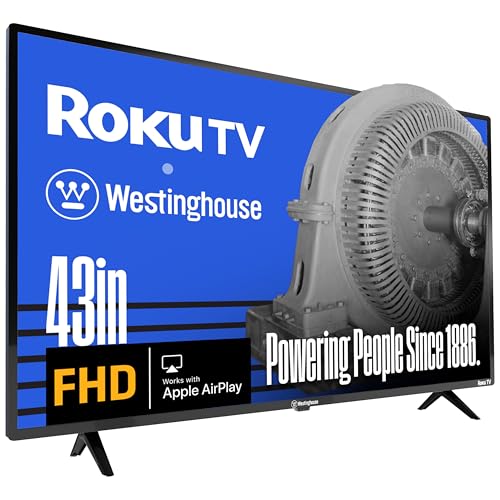
Westinghouse Roku TV 43 Inch Smart TV, 1080p Full HD, Apple AirPlay 2, Alexa — Honest 1080p value
Here is the guide’s declared exception, wearing its resolution in its title like a name badge: 1080p Full HD in a field of 4K panels. The Westinghouse makes no attempt to hide it, and this review will make no attempt to apologise for it. At 43 inches, viewed from a bed, a small sofa or a kitchen table, a good 1080p panel delivers broadcast, streaming and sport with a completeness that surprises buyers raised on resolution marketing. The pixel gap exists — menus are less crisp, fine detail in 4K masters is politely declined — but the room distances this size serves forgive most of it, and the price forgives the rest. Westinghouse is selling sufficiency, honestly labelled, and sufficiency is a respectable product.
The set is no austerity special in other respects. Roku TV runs the platform identically to its 4K rivals, which is the quiet magic of fixing the platform: the interface, search and app catalogue do not care about the panel’s resolution. Apple AirPlay 2 lets iPhone households cast, Alexa compatibility covers voice households, and the whole package suits the rooms 43-inch sets actually land in — the spare room, the rental, the first flat, the holiday home. In those rooms, a television’s virtues are reliability, familiarity and a price that does not require a family meeting, and the Westinghouse is engineered squarely at that brief.
Who should walk past it? Anyone feeding the screen with 4K sources at close range — a desk-adjacent setup, a gaming chair pulled near — will see what the missing resolution costs. Film collectors with 4K libraries will feel the downscale. And buyers who keep televisions for a decade should weigh whether 1080p will still feel sufficient in year eight, because panels outlive the rooms they were bought for. For everyone else, the Westinghouse reframes the guide’s question usefully: if the platform is identical and the room is forgiving, how much is a resolution step you may barely see actually worth? Check price on Amazon for the day’s answer, because the gap between this set and the 4K field is the entire argument.
There is a broader honesty worth crediting. In a category that loves to blur resolution in headlines, a listing that prints 1080p Full HD in its own title respects the buyer. Westinghouse has built small and mid-size televisions for a long time, and this set’s plain-dealing character — Roku’s calm, AirPlay’s convenience, no inflated claims — makes it the easiest recommendation in the guide to give a budget-conscious relative. It will not win a spec-sheet contest. It was never entered in one.
Holiday homes make the Westinghouse’s case in a single sentence: a television that guests can run, that costs little enough to leave in a house that stands empty, and whose platform carries no one’s personal accounts between visits. Add a streaming profile signed in for the season and the set serves a summer of visitors without a support call to the owner. Value televisions earn their keep in the houses nobody writes reviews about, and this one is built for exactly those houses.
- Size and panel: 43-inch, 1080p Full HD
- Platform: Roku TV
- Casting: Apple AirPlay 2
- Voice: Alexa compatible per listing
- Resolution class: Full HD — the field’s stated exception
- Series: Westinghouse Roku TV
Strengths
- Honest 1080p positioning at a price the 4K field cannot follow.
- Identical Roku platform and app catalogue to its sharper rivals.
- AirPlay 2 keeps iPhone households casting without extra hardware.
Trade-offs
- 1080p visibly softens menus and fine detail at close viewing distances.
- 4K sources are downscaled, so film collectors leave picture quality unused.
- Long-keepers may find the resolution ceiling arrives before the panel wears out.
Best for: spare rooms, rentals, first flats and any forgiving room where Roku’s platform matters more than pixels.
Not suited for: close-range desks and 4K film libraries, where the resolution gap is on daily display.
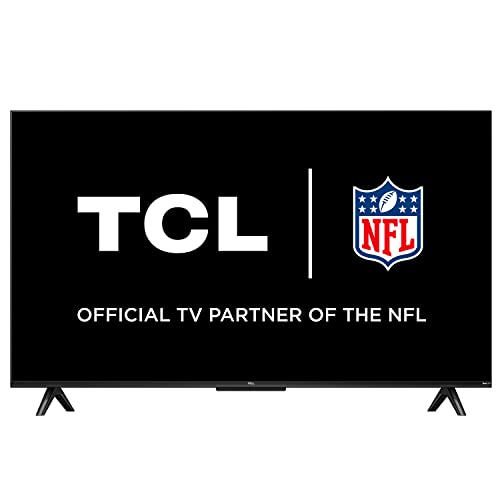
TCL 43″ Class 4-Series 4K UHD HDR Smart Roku TV – 43S455 — Established 4K value
The TCL 4-Series is the elder of this guide, and its longevity is its credential. This 43S455 formula — 4K UHD HDR on Roku TV — has been the default recommendation for a value 4K set for so long that it functions as the class’s baseline: the television against which newer models must justify their premiums. Its listing is the briefest here, stating the essentials and little more, and there is a kind of confidence in that brevity. The 4-Series does not need gaming acronyms or brightness slogans. It offers the full Roku platform on a genuine 4K HDR panel at the friendliest end of the range, and it has a generation of satisfied second rooms behind it.
Judged against the newcomers, its role is the control sample. If the Hisense’s gaming features, the R7D’s brightness pitch and the Select’s headphone mode do not match your room’s actual habits, the 4-Series is what remains when the extras are stripped away — and what remains is still a complete television. Streaming households that watch series, films and sport at ordinary distances will find its picture entirely satisfying, because the 4K Roku baseline is a high baseline. TCL’s panel-tuning at this tier favours a bright, friendly presentation that flatters broadcast and streamed content, the diet of the rooms it serves.
The cautions are generational. An established model carries an older platform runway than the 2026 sets, and its listing states no casting, headphone or gaming provisions, so households with those needs should buy them explicitly elsewhere in this guide rather than assume them here. Pricing also needs a live check — check price on Amazon — because an elder model’s value depends entirely on the day’s gap to the newer TCL and Hisense sets; when the gap narrows, the newer hardware argues for itself, and when it widens, the 4-Series becomes the obvious buy all over again.
Think of the 43S455 as the guide’s answer to decision fatigue. Five televisions, one platform, a spreadsheet of features — some households simply want the proven 4K Roku set that the market settled on years ago, at the price that made it famous. That household is real, it is large, and this television was built for it. Elders earn their place in a guide not by novelty but by still being right.
There is a sustainability argument for the elder model too, rarely voiced in television guides. A proven design with years of production behind it has a known reliability record, available parts knowledge and a second-hand market that keeps units in service instead of in landfill. Buying the established formula is not nostalgia; for many households it is risk management, choosing the devil the market has already mapped. The 4-Series’ continued presence in this guide is that argument made by a product rather than by an editorial.
- Size and panel: 43-inch, 4K UHD HDR
- Platform: Roku TV
- Series: TCL 4-Series
- Model reference: 43S455
- Positioning: established value line
- Extras: not stated in listing
Strengths
- The proven 4K Roku baseline, with a generation of second rooms behind the formula.
- Full 4K UHD HDR panel at the friendliest end of this guide’s range.
- Simplicity itself: no feature promises the room does not need.
Trade-offs
- An older model with a shorter remaining platform runway than the 2026 picks.
- No casting, headphone or gaming features are stated in its brief listing.
- Its value depends on the day’s price gap to newer TCL and Hisense models.
Best for: streaming households that want the established 4K Roku formula at its classic value point.
Not suited for: buyers with explicit gaming, casting or headphone needs, which are served by name elsewhere here.
Roku Plus Series 43-Inch (Earlier Roku-Branded Line) — Premium predecessor
Before the Select Series became Roku’s reference hardware, the Plus Series was the experiment that proved the concept could stretch upward. Roku’s first own-brand televisions split into a value line and this premium-leaning Plus line, which added picture ambitions — richer panels and more processing care — to the platform’s trademark calm. The 43-inch Plus model mattered because it showed Roku understood something its partner brands sometimes missed: the people who choose Roku for its interface still care about the picture in front of it, and they will pay a fair premium for better glass without surrendering the grid they love.
This entry carries no purchase link because the Plus line has been superseded in Roku’s own range by the current Select generation, and remaining listings are the tail of an outgoing line rather than a current, verifiable offer. Discussing it matters for two reasons. First, owners researching an upgrade deserve to know where their set sits in the story: the Plus walked so the current range could run, and its platform continues to be supported as Roku televisions generally are. Second, buyers who meet a discounted Plus on a shelf should understand what they are looking at — a genuinely premium-leaning Roku set from the previous own-brand generation, to be priced against the current Select rather than against its launch position.
If that discounted encounter happens, the checks are the familiar ones for outgoing lines: sealed stock, warranty in writing, and a price that acknowledges the newer generation exists. Judged kindly, the Plus Series is the reason this guide can treat Roku’s own hardware as a serious panel contender rather than a software demo. Judged practically, its place in a 2026 buying decision is as context and as a bargain to evaluate, not as a first recommendation — which is exactly the honest position this prose-only entry gives it.
The Plus also explains a shift in how Roku thinks about itself. A platform company that once licensed its software to anyone with a panel factory chose, with this line, to stand behind hardware with its own name on the bezel. That decision raised the floor for every partner brand in this guide: Hisense and TCL now build Roku sets knowing Roku’s own premium attempt defined what the platform could look like with ambition. The current Select generation inherited that ambition in a calmer form, which is why the lineage belongs in a buying guide rather than a history book.
- Size and panel: 43-inch, premium-leaning Roku-branded line
- Platform: Roku TV
- Current status: superseded by the current Select generation
- Purchase route: no verified current listing, prose-only
- Defining trait: Roku’s first premium own-brand step
- Role in this guide: lineage and leftover-stock context
Strengths
- Proved Roku’s own hardware could carry premium picture ambitions, not just a friendly interface.
- Remains a satisfying set for existing owners, with the platform still in family support.
- Discounted sealed stock can undercut the current generation for the same platform.
Trade-offs
- An outgoing line, so stock, warranty and support horizons need written confirmation.
- Superseded by the Select generation, which carries the longer runway.
- No verified listing means no responsible purchase link can be offered here.
Best for: understanding Roku’s own-brand lineage, and for evaluating a genuinely discounted sealed unit against the Select.
Not suited for: a first-choice purchase in 2026, where the current generation is the safer recommendation.
Comparison
| Pick | Resolution | Panel note | Named extras | Status |
|---|---|---|---|---|
| Roku Select 43 | 4K HDR | Flat LED | Bluetooth Headphone Mode | Linked |
| Hisense E6SR | 4K UHD | Hi-QLED | Game Mode Plus, VRR, ALLM, Dolby Vision | Linked |
| TCL R7D | 4K UHD HDR | QLED | High Brightness, Motion Rate 240, Cast and AirPlay 2 | Linked |
| Westinghouse 43 | 1080p Full HD | LED class | Apple AirPlay 2, Alexa compatible | Linked |
| TCL 4-Series 43S455 | 4K UHD HDR | LED class | Established value formula | Linked |
| Roku Plus Series 43 | 4K class | Premium-leaning | Earlier own-brand premium line | Prose-only |
With the Platform Fixed, Which Panel Difference Matters Most?
Resolution decides first, because it is the only difference that cannot be softened by settings. The Westinghouse’s 1080p is a deliberate, priced choice; the other four linked sets resolve 4K and will keep doing so for every source that offers it. Colour comes second: the Hi-QLED Hisense and QLED TCL R7D render a wider, richer palette than the plain LED sets, visible in skin, sport and cinema alike, and it is the difference viewers notice most in side-by-side viewing. Brightness positioning third, for the daylight rooms. Gaming features last, but decisively for the households they serve: a named VRR and ALLM in a listing is a promise a console player can build on, while their absence is information too.
Sound is the difference nobody lists and everybody hears. None of these listings makes a grand audio claim beyond the Hisense’s DTS Virtual:X, and small-room televisions generally speak through modest speakers. In the rooms these sets serve — near-field, furnished, carpeted — modest speakers at two metres outperform grand speakers at five, which is why the class works. Households that want more should budget a compact soundbar rather than climbing panel tiers, because audio upgrades and picture upgrades are separate purchases wearing one disguise in most showrooms.
The practical method is to rank your room’s needs in that order and let the ranking eliminate sets. Need headphones for a sleeping household? The Select survives and the field narrows. Need a console to feel at home? The E6SR stands alone. Need daylight punch and both casting systems? The R7D. Need the lowest honest price for a forgiving room? The Westinghouse or the 4-Series, split by whether 4K matters to your sources. A fixed platform makes television shopping refreshingly deductive, and this guide is structured to let you deduce rather than guess.
Is 43 Inches Right for Your Room?
Furniture votes too. A 43-inch screen fits the media units, dressers and desk widths that 55-inch sets overwhelm, and it leaves wall room for the shelves, pictures and windows that make a second room feel like a room rather than a screening booth. Households furnishing a space from scratch often discover the size chooses itself once the furniture is placed; the panel decision that remains is the one this guide exists to settle.
Measure the viewing distance and be honest about the room’s job. At roughly one and a half to two and a half metres, 43 inches composes beautifully for film and sport without demanding the room reorganise itself around it. Closer than that — a desk setup — and the 4K sets pull ahead of the Westinghouse, because text and interface detail fill more of your vision. Further away, in a long lounge, and no panel technology will rescue a screen that is simply small for the distance; that room wants the larger sizes covered elsewhere on this site. The 43-inch class is the sweet spot of the second room and the modest first room, and within it, these five panels cover every sensible priority a household can name.
How Do You Set Up a Roku TV for a Household That Shares?
Start by arranging the home screen for the least technical regular user, not for yourself. Put the household’s three most-used services in the first row, enable the live TV guide if the room channel-surfs, and set the picture mode once for the room’s light rather than leaving a showroom preset in charge. Sign in to shared services on the television itself rather than casting from one person’s phone, because a second room serves whoever walks into it. If the set offers private listening, pair the household’s headphones during setup and label them, so the feature exists before the first night it is needed rather than being configured in whispers at midnight.
Accounts deserve the same forethought as cables. A shared room’s television accumulates sign-ins the way a shared kitchen accumulates mugs, and a quarterly tidy — removing the departed flatmate, the finished trial, the duplicate profile — keeps the home screen honest and the recommendations sane. Roku makes this housekeeping painless, but painless is not automatic; put it on the same list as the smoke-alarm batteries and the set will serve the household’s present rather than its past.
Then write the household a kindness: a small card near the remote noting the voice button, the headphone trick if the set has it, and which input the console lives on. Second rooms fail socially more often than technically, and a television that guests can operate without an induction ceremony is a television that gets used. Every pick in this guide can be that television; the setup hour is what decides whether it becomes one.
What Happens to a 43-Inch Roku TV Over Ten Years?
Children raised on a household’s second screen offer the long view for free. Ask a teenager which television in the house they actually like and they will rarely name the flagship; they name the one that wakes instantly, finds things without an argument and never demands an update ceremony before a programme. That is the 43-inch Roku class’s natural constituency, and it explains the platform’s grip on second rooms better than any market report. Longevity in this class is measured in affection as much as in firmware.
It migrates. The set bought for a small lounge becomes the bedroom screen when the lounge upgrades, then the guest-room or student screen after that, and Roku’s platform — account-based, easily reset, identical across generations — travels with it more gracefully than most. That lifecycle argues for two buying habits. First, favour the current model years when prices are close, because platform support is the one ageing curve you cannot outrun; the 2026 sets here hold that advantage over the elder TCL and the discontinued Plus. Second, do not over-buy panel for the first room at the expense of the third: a set destined to serve three rooms should be the one all three rooms can operate, which is again an argument for this platform’s calm over any rival’s cleverness.
Common Mistakes
Buying for the first room only is the strategic version of the same mistake. A 43-inch set will almost certainly serve a second and third room across its life, so a feature that seems minor today — headphones for a future bedroom, casting for a future student — can be the feature that keeps the set in service instead of in storage. Read the five reviews with the set’s whole biography in mind, and several rankings quietly rearrange themselves.
Assuming all Roku televisions are the same television is the founding error this guide exists to correct. The platform is shared; the panels are not, and resolution, colour and gaming provisions differ enough to change a room’s daily experience. A related slip is buying the Westinghouse while believing it is 4K, or dismissing it while believing 1080p is unwatchable at this size — both errors come from reading the badge instead of the listing, which is why this guide states the resolution split in its first paragraphs and repeats it in every table.
Wall-mounting by guesswork is the physical version of the same error. A 43-inch set is light enough that owners skip the stud check, the bracket rating and the tilt test, then live with a screen angled at the ceiling’s reflection. Twenty minutes of measurement — eye height from the actual seats, bracket matched to the set’s weight, cables planned before the mount closes — converts the installation from a compromise into a fixture. Second rooms deserve first-room care at exactly this unglamorous level.
Feature assumptions cause the quieter regrets. Headphone listening lives in the Select’s listing, not in Roku’s platform generally. VRR and ALLM live in the Hisense’s listing, not in the category. Casting splits three ways across the guide — AirPlay here, Google Cast there, neither stated for the elder TCL — and households that cast daily should buy the provision by name. Finally, remember the second room’s users: a set bought for a guest room or a child’s room should be judged by the least technical person who will hold its remote, and on that test Roku’s platform is the great leveller that makes any of these five a defensible buy.
Final Recommendation
One tie-breaker remains for households torn between two finalists: buy the set whose named extras match the room’s calendar, not its aspirations. The console that appears twice a year does not outvote the headphones used nightly; the film library watched weekly outvotes the gaming mode used monthly. Calendars are honest in a way wish lists are not, and a week of actually noting what the current screen does will settle most ties in this guide without another review being read.
Let the room’s dominant habit choose. The mixed room with a console chooses the Hisense E6SR, the only set here whose gaming intent is printed in its own listing, with QLED colour as its film-night dividend. The quiet household chooses Roku’s own Select, whose headphone mode and reference coherence suit bedrooms and guest rooms perfectly. The bright shared room chooses TCL’s R7D for its brightness positioning and dual casting. The budget room chooses between the Westinghouse’s honest 1080p and the 4-Series’ proven 4K value, decided by how close the seating sits and how long the set will be kept. Every one of those is a complete answer, and none of them requires leaving the platform the household already picked.
That is the quiet lesson of the 43-inch Roku class: when the software argument is settled, television buying becomes honest engineering — glass, light and features, priced in the open. Choose the panel that matches your room’s light and your household’s habits, and the Roku grid will greet every member of the family, every day, without ever asking to be learned again. In a house full of screens competing to be clever, there is a deep and underrated comfort in the one that simply behaves — the same way, for everyone, on the first press of the button, every single time the room asks.
Frequently Asked Questions
Are all 43-inch Roku TVs 4K?
No, and this guide flags the exception prominently: the Westinghouse 43-inch is 1080p Full HD, while the Roku Select, Hisense E6SR, TCL R7D and TCL 4-Series are 4K models. Always read the resolution in the listing rather than assuming it from the size class.
Which 43-inch Roku TV is best for gaming?
The Hisense E6SR, because its listing names Game Mode Plus, VRR and ALLM — the provisions a console player actually uses. The other sets will display games perfectly well, but only the Hisense makes gaming promises in writing.
Which one should I buy for a guest room?
Roku’s own Select Series is the natural guest-room set: the interface explains itself, the live guide feels like television, and Bluetooth Headphone Mode lets guests watch late without filling the house with sound.
Is the Westinghouse’s 1080p a problem at 43 inches?
At bedroom and small-lounge distances, mostly not — broadcast and streamed content look complete. At desk distance or with a 4K film library, the gap shows, and the 4K picks justify themselves. The set’s honest pricing is built around that trade.
TCL R7D or TCL 4-Series: what actually separates them?
Generation and intent. The R7D is the 2026 model with QLED colour, High Brightness positioning, Motion Rate 240 and both casting systems in its listing. The 4-Series is the established value formula — 4K HDR on Roku with a brief, essentials-only listing.
Do these TVs work well in a student house?
Exceptionally well, which is no accident: shared houses rotate users, mix phone brands and punish complicated interfaces. The R7D’s dual casting and the platform’s impartial search suit that life, while the Westinghouse and 4-Series keep the cost survivable when the set is bought collectively.
Will a 43-inch Roku TV feel small for films?
At second-room distances, no. Seating in bedrooms and small lounges sits close enough that 43 inches fills the view honestly. In a long main lounge it will feel modest, and that room should shop the larger guides on this site instead.
Can I cast from an iPhone to these TVs?
Where the listing says so: the Hisense E6SR and Westinghouse state Apple AirPlay, and the TCL R7D states AirPlay 2 alongside Google Cast. The Roku Select and 4-Series listings do not state casting provisions, so do not assume them there.
Related Guides
Consoles that outgrow a 43-inch second room belong in the 4K TVs with HDMI 2.1 guide, where port specifications are stated model by model. The wearable side of the site opens with hybrid smartwatches for readers who like their technology understated. And the training-focused follow-up, multisport smartwatches, covers the watches built for race day rather than the office.


