What's inside
- Key Takeaways
- Quick Picks
- How We Chose These Picks
- Comparison Table
- How small is small enough? A practical pocket test you can apply to any camera
- AA batteries or rechargeable: which power philosophy suits your travel?
- Why does a pocket camera still earn its place beside a flagship phone?
- What separates the premium pocket camera from the budget one in real photographs?
- How do you carry a pocket camera so it survives pocket life?
- How do you get the best from a small-sensor pocket camera?
- What photographs does a pocket camera take that a phone genuinely cannot?
- How do the two Kodak twins serve a child’s first camera?
- How does the RX100 change the way its owner travels?
- What is the honest case for the FZ80D in a guide about pockets?
- How should you light-proof a pocket camera’s files for printing?
- Why do pocket cameras keep being declared dead, and why do they keep selling?
- How do you photograph a wedding as a guest with only a pocket camera?
- What is the right pocket camera for a tradesperson or site worker?
- How do you keep a pocket camera ready during a long festival or event day?
- How does a pocket camera serve a student on a year abroad?
- What settings turn a pocket camera into a reliable document scanner for family archives?
- How do you photograph pets with a pocket camera?
- How should a pocket camera be cleaned after a beach holiday?
- Why does the simplest camera in this guide deserve the longest defence?
- Common Mistakes
- Final Recommendation
- Frequently Asked Questions
- Related Guides
As an Amazon Associate I earn from qualifying purchases. This post may contain affiliate links at no extra cost to you.
widgetverdict.com is reader-supported. When you buy through links on our site, we may earn an affiliate commission.
The test for the best compact pocket point and shoot cameras is embarrassingly physical: the camera must disappear into a coat pocket and be forgotten until the moment it is needed. That single requirement disciplines this entire guide, and it exposes one pick immediately — a Panasonic bridge-style camera whose listing joins this set on zoom strength, and whose review states honestly that it stretches the pocket definition past breaking point.
The remaining five pass the test in genuinely different ways. Kodak’s PIXPRO twins offer the simplest possible route to a dedicated camera, one rechargeable and one running on AA batteries with all the travel implications that choice carries. Sony’s original RX100 brings a 1-inch sensor and a ZEISS lens to a pocket body as the premium anchor. Sony’s WX350 and Canon’s ELPH 360 supply slim, stabilized zoom in everyday form.
A pocket camera competes with the phone already in the other pocket, so each pick must justify its existence in one clear sentence: simpler, tougher, longer-reaching, better in low light, or cheap enough to risk where a phone would never go. The reviews below hold every camera to that standard, because a pocket camera without a reason is just extra weight.
Key Takeaways
- Pocketability is the entry ticket: five picks genuinely vanish into a coat pocket, and the bridge-style Panasonic is flagged honestly as the exception.
- The Sony RX100 is the premium anchor, with a 1-inch sensor and 28-100mm ZEISS zoom lens stated in its listing.
- Kodak’s FZ45 runs on AA batteries per its title — a real travel trade-off: spares anywhere, but ongoing battery costs and weight.
- The ELPH 360 brings the longest pocketable optical zoom here at 12x, with image stabilization and Wi-Fi.
- Kodak’s FZ55 is the simplest rechargeable route: 16MP, 5x optical zoom, 1080p video and a 28mm wide-angle lens.
Quick Picks
| Pick | Badge | Why it made the cut |
|---|---|---|
| KODAK PIXPRO FZ55 | Simplest rechargeable pocket camera | The FZ55 with 16MP, 5x optical zoom, 1080p Full HD video, 28mm wide-angle lens, 2.7-inch LCD and a Li-Ion battery, aimed at vlogging and everyday shooting. |
| KODAK PIXPRO FZ45 | AA-powered travel insurance | The FZ45 with 16MP, 4x optical zoom, 1080p Full HD video, 27mm wide-angle lens and AA battery power for travel and family photography. |
| Sony RX100 | Premium 1-inch pocket anchor | The original RX100 with 20.2 MP, a 1-inch sensor, 28-100mm ZEISS zoom lens and 3-inch LCD — the camera that defined the premium pocket class. |
| Sony Cyber-shot WX350 | Slim everyday Cyber-shot | Sony’s DSC-WX350 at 18 MP in black — a slim Cyber-shot for everyday pocket photography, with its listing keeping the specification brief. |
| Panasonic 4K Point and Shoot Camera (FZ80D) | Bridge zoom — the pocket exception, stated plainly | Panasonic’s 4K point and shoot vlogging camera with 60x optical zoom and image stabilization, model DC-FZ80D — included for reach, flagged for size. |
| Canon PowerShot ELPH 360 HS | Longest true pocket zoom | Canon’s ELPH 360 with 12x optical zoom and image stabilization, Wi-Fi and NFC enabled, in black — reach and sharing in a slim body. |
How We Chose These Picks
Candidates were measured against the pocket first and the specification sheet second. Any camera whose body demanded a bag was either excluded or, in the single case kept for its zoom value, labelled without euphemism. Slim compacts that passed were then separated by their one-sentence reason to exist, so the shortlist reads as a set of distinct tools rather than six near-identical black rectangles.
Battery philosophy was treated as a first-class difference. Rechargeable lithium-ion packs suit daily carriers who charge at home; AA power suits travellers who pass through places where a shop shelf matters more than a socket. Both philosophies appear below, with the trade-offs argued openly rather than resolved by fiat.
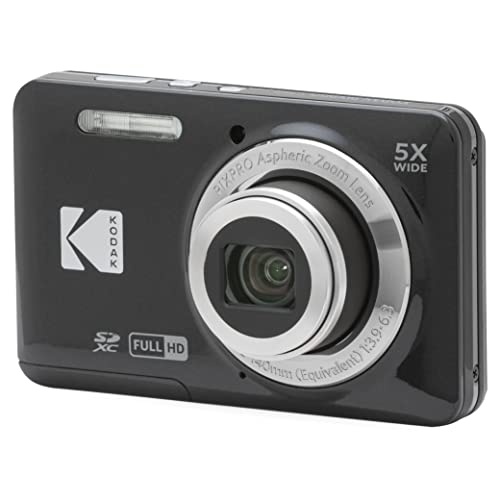
KODAK PIXPRO FZ55 — Simplest rechargeable pocket camera
The FZ55 is the pocket camera for people who find modern cameras intimidating. Its specification is deliberately modest — 16 megapixels, a 5x optical zoom starting at a useful 28mm wide angle, 1080p Full HD video and a 2.7-inch LCD — and every part of it serves straightforward point-and-shoot photography and casual vlogging, the uses its own listing names. There is nothing here to configure wrongly, which for its audience is the highest praise available.
The rechargeable Li-Ion battery keeps the body slim and the running costs at zero beyond electricity, suiting a camera that lives in a coat and gets charged with the phone. Five-times zoom will not chase distant wildlife, but it frames portraits, market scenes and family groups with genuine optical quality a phone crop cannot match at the long end. This is the honest baseline of the pocket class.
- Model: KODAK PIXPRO FZ55
- Sensor: 16MP, as listed
- Zoom: 5x optical zoom, 28mm wide-angle lens
- Video: 1080p Full HD video, as listed
- Display: 2.7-inch LCD
- Battery: Li-Ion rechargeable, as listed
Strengths
- Operation simple enough to hand to anyone without instruction
- 28mm wide end handles interiors and group shots gracefully
- Rechargeable battery keeps ownership costs near zero
Trade-offs
- 5x zoom is the joint-shortest reach among the pocketable picks
- 2.7-inch screen is small beside modern expectations
- Specification is aimed at simplicity, not enthusiast control
Best for: a casual shooter who wants a dedicated camera simpler than their phone’s camera app.
Not suited for: a traveller photographing distant monuments, where the ELPH 360’s 12x zoom earns its slightly larger presence.

KODAK PIXPRO FZ45 — AA-powered travel insurance
The FZ45’s defining decision sits in its title in two capital letters: AA. This camera runs on the most available battery format on Earth, which transforms its travel character completely. A lithium camera with a flat battery in a remote town is a souvenir; the FZ45 walks into the nearest shop and shoots again in five minutes. For expedition travellers, festival-goers and anyone far from reliable sockets, that is not a detail — it is the product.
The costs are equally real. AA batteries add recurring expense and weight, disposables create waste, and rechargeable AAs demand their own charger discipline at home. The camera around the batteries is a close sibling of the FZ55: 16 megapixels, 1080p video, a slightly wider 27mm lens and a slightly shorter 4x zoom. Choose this Kodak when your journeys prize guaranteed power over rechargeable convenience.
- Model: KODAK PIXPRO FZ45
- Sensor: 16MP, as listed
- Zoom: 4x optical zoom, 27mm wide-angle lens
- Video: 1080p Full HD video, as listed
- Display: 2.7-inch LCD
- Battery: AA batteries, as listed — spares available almost anywhere
Strengths
- AA power can be restored in almost any shop on Earth
- 27mm wide end is the widest starting point among these Kodaks
- Same simple operation as its FZ55 sibling
Trade-offs
- Ongoing battery cost and weight exceed a rechargeable pack
- 4x zoom is the shortest reach in this guide
- Disposable batteries create waste unless rechargeable AAs are used
Best for: a long-distance traveller whose routes pass through places where a charging socket cannot be trusted but a shop shelf can.
Not suited for: a daily city carrier who charges devices nightly and would simply pay for AA batteries forever without benefit.

Sony RX100 — Premium 1-inch pocket anchor
Every premium pocket camera since owes its existence to this one. The RX100 put a 1-inch sensor — several times larger than typical compact sensors — behind a 28-100mm ZEISS zoom lens inside a body that still slides into a pocket, and its 20.2 megapixels and 3-inch LCD completed a specification that embarrassed cameras twice its size. It remains this guide’s premium anchor because the formula it invented is still the formula that works.
As the first generation of its line, it lacks the refinements of descendants that this guide’s other articles cover, and buyers pay for the sensor and lens rather than for modern connectivity. For stills photography — travel, street, family, low light — that allocation of money is exactly right. Photographers who carry one camera everywhere and care about what the files look like enlarged will find the RX100’s priorities match their own.
- Model: Sony RX100 premium compact
- Sensor: 20.2 MP with 1-inch sensor, as listed
- Lens: 28-100mm ZEISS zoom lens, as listed
- Display: 3-inch LCD (listing shows 3” LCD)
- Positioning: Premium compact digital camera
- Configuration: Camera listing
Strengths
- 1-inch sensor transforms low-light quality beside small-sensor rivals
- ZEISS-branded lens covers a useful 28-100mm range
- The defining design of the premium pocket category
Trade-offs
- First-generation model without later refinements
- Zoom range is shorter than the ELPH’s 12x reach
- Premium pricing beside the Kodak pair
Best for: a photographer who carries one pocket camera everywhere and judges it by enlarged print quality.
Not suited for: a stage-side parent needing long zoom reach, where the RX100’s 100mm end falls short and the ELPH’s 12x wins.

Sony Cyber-shot WX350 — Slim everyday Cyber-shot
The WX350 occupies the sensible middle of this guide: an 18 megapixel slim Cyber-shot in black, from the line that spent years perfecting the pocket zoom camera as an everyday object. Its listing title is brief — model, resolution, colour — so this review resists embellishing it with figures the title does not provide, and buyers should read the full specification on the listing page before ordering.
What the model line promises, and what this camera’s buyers consistently seek, is unobtrusive competence: a body that rides in a pocket daily, deploys quickly and handles the family-and-travel brief without drama. Against the Kodaks it offers Sony’s mature compact polish; against the RX100 it trades sensor size for a slimmer brief and a gentler price tier. It is the pocket camera as reliable appliance.
- Model: Sony DSC-WX350 (Cyber-shot WX350)
- Sensor: 18 MP, as listed
- Colour: Black
- Detailed zoom and video figures: Not stated in the listing title — verify on the listing
- Positioning: Slim everyday compact
- Configuration: Camera listing
Strengths
- Slim Cyber-shot body designed for daily pocket carry
- 18MP resolution covers family and travel printing needs
- Understated black finish suits discreet everyday use
Trade-offs
- Listing title withholds the detailed specification buyers may want
- Small-sensor class beside the RX100’s 1-inch sensor
- No bundle accessories are named
Best for: an everyday carrier who wants a slim, mature Sony compact for family and travel snapshots.
Headline specification detail is sparse here: the Kodak and Canon listings state more in their titles, leaving closer checking before this slim Cyber-shot compares fairly.

Panasonic 4K Point and Shoot Camera (FZ80D) — Bridge zoom — the pocket exception, stated plainly
Honesty first: the FZ80D does not belong in a trouser pocket, a clutch bag or any honest definition of pocketable. It is a bridge-style camera with a substantial grip and a long lens, and it appears in this guide because its listing travels with this keyword’s shopping traffic. Its review therefore serves as the boundary marker: this is where the pocket category ends, whatever the search terms suggest.
As a camera, its proposition is strong and clearly stated: 4K video, a 60x optical zoom with image stabilization, and a vlogging-and-travel positioning. That reach dwarfs every true pocket camera here, and buyers whose subjects are distant — birds, boats, stages across fields — may happily trade pocketability for it. Just make the trade knowingly, with a strap and a small bag in the plan, rather than discovering the dimensions at the door.
- Model: Panasonic DC-FZ80D point and shoot camera
- Video: 4K, as listed
- Zoom: 60x optical zoom with image stabilization, as listed
- Positioning: Vlogging camera for travel, per the listing
- Colour: Black
- Form warning: Bridge-style body — not a pocket camera
Strengths
- 60x optical zoom out-reaches every genuinely pocketable pick here
- 4K video leads the pocket set’s video specifications
- Stabilization supports its long zoom in handheld use
Trade-offs
- Fails the pocket test that defines this guide
- Bridge body requires a strap and bag for daily carry
- Small sensor behind the long zoom limits low-light results
Best for: a distant-subject shooter who arrived via pocket-camera searches but honestly needs bridge-camera reach.
Not suited for: a coat-pocket minimalist, for whom this body’s size defeats the entire purpose of the purchase.
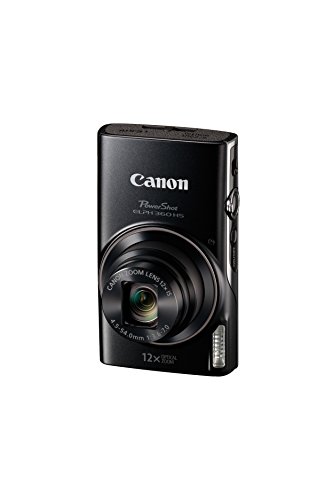
Canon PowerShot ELPH 360 HS — Longest true pocket zoom
The ELPH 360 resolves the pocket camera’s central tension more completely than most: a body slim enough to forget, carrying a 12x optical zoom long enough to matter. Image stabilization keeps that telephoto end honest in handheld use, and the resulting combination — pocketable reach — is precisely what a phone cannot counter, since phone zoom at these magnifications is cropping dressed as capability.
Wi-Fi and NFC complete the modern brief, moving photographs to a phone for sharing without cables. Against the RX100, the ELPH concedes sensor size and therefore low-light quality; against the Kodaks, it concedes simplicity and price innocence. Its buyer is the traveller who photographs across distances all day — viewpoints, wildlife enclosures, performances — and wants the camera back in a pocket between subjects.
- Model: Canon PowerShot ELPH 360
- Zoom: 12x optical zoom, as listed
- Stabilization: Image stabilization, as listed
- Connectivity: Wi-Fi and NFC enabled
- Colour: Black
- Form: Slim pocketable body
Strengths
- 12x optical zoom is the longest reach that still truly pockets
- Stabilization makes the telephoto end practically usable
- Wi-Fi and NFC streamline phone sharing
Trade-offs
- Small sensor trails the RX100 in evening light
- Slim body leaves little grip for one-handed telephoto work
- No 4K video is claimed in this listing
Best for: a traveller whose subjects sit far away all day and whose camera must vanish into a pocket between them.
Not suited for: a low-light enthusiast shooting evening street scenes, where the RX100’s 1-inch sensor is the correct priority.
Comparison Table
| Pick | Badge | Headline fact from its listing |
|---|---|---|
| KODAK PIXPRO FZ55 | Simplest rechargeable pocket camera | KODAK PIXPRO FZ55 16MP Compact Digital Camera, 5X Optical Zoom, Black |
| KODAK PIXPRO FZ45 | AA-powered travel insurance | KODAK PIXPRO FZ45 16MP Compact Digital Camera, 4X Optical Zoom, AA, Black |
| Sony RX100 | Premium 1-inch pocket anchor | Sony RX100 20.2 MP Premium Compact Digital Camera w/ 1-inch sensor, 28-100mm ZEISS zoom lens, 3-inch LCD |
| Sony Cyber-shot WX350 | Slim everyday Cyber-shot | Sony DSCWX350 18 MP Digital Camera (Black) |
| Panasonic 4K Point and Shoot Camera (FZ80D) | Bridge zoom — the pocket exception, stated plainly | Panasonic Point and Shoot Digital Camera 4K, Vlogging Camera for Travel |
| Canon PowerShot ELPH 360 HS | Longest true pocket zoom | Canon PowerShot ELPH 360 Digital Camera w/ 12x Optical Zoom and Image Stabilization – Wi-Fi & NFC Enabled |
How small is small enough? A practical pocket test you can apply to any camera
Ignore marketing words like compact and slim, which have described everything from shirt-pocket cameras to small bags’ worth of bridge body. Apply three physical tests instead. The camera should slide into the pocket you actually wear — coat, jacket or jeans — without forcing the fabric. It should be removable one-handed while walking. And you should be able to forget it is there for an hour, which is a weight test no specification sheet prints.
Five picks in this guide pass those tests; the FZ80D fails all three and is labelled accordingly. That labelling matters because search results mix categories freely, and a buyer who trusts the keyword over the tape measure ends up carrying a bridge camera in a bag they never wanted to bring.
When dimensions are listed, compare them against a deck of playing cards and a smartphone — objects your hands already know. Numbers in millimetres persuade nobody; the card-deck comparison has saved more buyers from size regret than any review paragraph.
AA batteries or rechargeable: which power philosophy suits your travel?
The FZ45’s AA power and the FZ55’s rechargeable Li-Ion pack represent the two honest answers to camera power, and the right choice depends on where the camera travels. AA batteries can be bought in almost any settlement on Earth, swapped in seconds and shared with torches and radios. For remote, long or unpredictable journeys, that universality is a form of reliability no charger matches.
Rechargeable packs win the home game decisively: no recurring cost, no waste stream, a slimmer body and a camera that tops up beside the phone each night. Daily and weekly travellers who sleep near sockets gain nothing from AA flexibility and pay for it in batteries forever.
Hybrid discipline exists for AA owners: run rechargeable AAs at home, carry a set of lithium disposables as the emergency reserve on trips. That combination keeps costs and waste low while preserving the walk-into-a-shop rescue that makes the FZ45’s design philosophy coherent.
Why does a pocket camera still earn its place beside a flagship phone?
Three reasons survive scrutiny. The first is optical zoom: the ELPH’s 12x lens and even the Kodaks’ modest zooms resolve distant detail that phone cropping invents. The second is consequence: a pocket camera can be lent to a child, taken to a beach, a festival or a worksite, and risked in ways a phone carrying your banking and identity cannot. The third is presence — a dedicated camera signals photography is happening, and subjects respond to it differently.
A fourth reason matters to a quieter group: separation. A camera holds no messages, no feeds and no notifications. Photographers who shoot to escape their phones describe the pocket camera as the only screen they own that gives attention back instead of taking it.
None of this requires the camera to beat the phone at everything. It must win its chosen moments decisively — the distant stage, the risky environment, the undistracted afternoon — and be absent, weightlessly pocketed, for all the others.
What separates the premium pocket camera from the budget one in real photographs?
Sensor size, again. The RX100’s 1-inch sensor gathers several times the light of the small sensors in the Kodak and ELPH class, and the difference appears exactly when light is scarce or backgrounds should melt: evening streets, indoor family scenes, portraits with separation. In bright daylight, the gap compresses to near invisibility, which is why budget pocket cameras delight holidaymakers.
Lens quality is the second separator. The RX100’s ZEISS-branded 28-100mm lens is built to resolve its larger sensor corner to corner, while budget zooms prioritize range and cost. Enlargements reveal the difference; social-media sizes mostly hide it, and buyers should match the camera to the destination their photographs actually reach.
The honest conclusion flatters both tiers. Shoot in daylight for sharing, and the budget picks are rational. Shoot in mixed light for printing, and the premium anchor earns every part of its price.
How do you carry a pocket camera so it survives pocket life?
Pockets are hostile environments: lint, keys, coins and compression. Give the camera the pocket to itself, lens facing away from anything hard, and use a slim case or pouch if your pockets double as tool storage. The retracting lens mechanisms on every pick here are their most delicate feature, and most pocket-camera deaths are mechanical, not electronic.
A wrist strap is the cheapest insurance in photography. Attach it, use it, and the camera survives the fumbled draw at the viewpoint and the knocked elbow in the crowd. Drops onto stone end more pocket cameras than years of ordinary wear.
Empty the pocket lint from the camera’s seams with a blower monthly, and wipe the lens with a soft cloth rather than a shirttail. Small habits, applied to a small camera, are the whole maintenance regime this class requires.
How do you get the best from a small-sensor pocket camera?
Feed it light. Small sensors reward bright conditions and punish darkness, so compose toward windows indoors, choose the sunlit side of the street, and treat evening as the RX100’s shift rather than forcing the budget cameras beyond their nature. A photograph taken in good light on a simple camera beats a murky one from an expensive body almost every time.
Use the zoom to compose, not to compensate. Step closer when you can, zoom when you cannot, and keep the digital extension of any zoom switched off so files stay honest. Brace against walls and doorframes at the long end; stabilization helps, but architecture helps more.
Finally, review sparingly and archive faithfully. Pocket cameras fill cards with the raw material of family history, and the owners who copy cards to two places at each trip’s end are the ones still showing those photographs in twenty years.
What photographs does a pocket camera take that a phone genuinely cannot?
Start with the distant ones. A school stage from row twenty, a lighthouse from the harbour wall, a fox at the field’s edge — the ELPH 360’s 12x optical zoom resolves these as photographs, while a phone’s aggressive crop resolves them as impressions. The difference is not subtle at print size, and it is not recoverable in editing, because the information was never recorded. Optical reach is the pocket camera’s first unanswerable argument, and every pick in this guide carries some measure of it.
Continue with the risky ones. Festivals, beaches, building sites, children’s parties and boat decks share a property: things get dropped, splashed and knocked there. A pocket camera costing a fraction of a phone can be carried into those environments with a steady heart, lent to a cousin, or fished from a bag by sandy hands. Photographers insure phones and baby them accordingly; the pocket camera’s replaceability is a creative licence to be present in places the phone stays zipped away from.
Finish with the quiet ones. A dedicated camera at a family dinner changes the room’s behaviour less than a phone does, because it carries no implication of messages being checked or feeds being fed. Subjects relax differently in front of an object that only photographs. That social distinction sounds soft beside specifications, yet the resulting portraits — unguarded, attentive, undistracted — are the ones families frame.
How do the two Kodak twins serve a child’s first camera?
A child’s first camera must survive its education. It will be dropped, left in rain-threatened backpacks, and aimed at subjects ranging from the cat to the contents of a lunchbox, and its pedagogical value lies precisely in being a real camera — optical zoom, honest files, consequences for shaking — rather than a toy that beeps. The Kodak twins fit that brief because their cost makes adults calm, and calm adults let children experiment, which is where all photographic learning actually happens.
Choosing between them for a child is a study in household logistics. The FZ55’s rechargeable battery suits a home with a charging routine and removes the recurring cost that makes parents quietly ration a child’s shooting. The FZ45’s AA power suits the peripatetic family — grandparents’ houses, camping trips, festivals — where a shop-bought battery resurrects the camera without hunting for the right cable among a drawer of wrong ones.
Either way, add the same two accessories: a wrist strap sized to a small wrist, and a card large enough that deleting in the field never becomes a lesson taught under pressure. Then resist reviewing with corrections for the first month. A child who fills a card with experiments and finds three frames they love has learned more about photography than any specification in this guide can teach, and the pocket camera that enabled it has earned its keep permanently.
How does the RX100 change the way its owner travels?
Owners of 1-inch pocket cameras describe a specific liberation: the big camera stays home. The interchangeable-lens system that once colonised every trip — the bag, the lens decisions at every doorway, the low-grade vigilance in crowds — is replaced by a single object in a coat pocket that handles ninety percent of travel photography at quality the owner respects. The remaining ten percent, the deliberate dawn landscape or the wildlife excursion, still justifies the system camera, but it travels by choice on chosen days rather than by obligation on all of them.
The RX100’s formula is what makes the substitution honest. A smaller-sensor pocket camera would force compromises at every evening meal and old-town dusk, and the owner would drift back to the big bag within a trip or two. The 1-inch sensor and ZEISS lens hold the line where travel photography is most vulnerable — mixed light, indoor treasures, night streets — so the pocket camera’s files interleave with the system camera’s in the same album without apology.
That is the premium anchor’s true function in this guide: not to be the best pocket camera on a chart, but to be the one that lets a serious photographer travel light without feeling diminished. Buyers who recognise their own travel fatigue in that description are its audience, and they rarely regret answering it.
What is the honest case for the FZ80D in a guide about pockets?
The case is candour about how shopping actually happens. Buyers searching pocket-camera terms are frequently not describing a pocket at all; they are describing a wish for a camera smaller and simpler than the DSLR they fear, and the search engine files bridge cameras under the same query. A guide that excluded the FZ80D would leave those buyers to discover its dimensions from the delivery box. A guide that includes it — labelled, measured and warned about — serves both the true pocket buyer and the reach buyer standing in the same queue.
For the reach buyer, the camera’s credentials are legitimately strong: 4K video, a 60x optical zoom with stabilization, and a vlogging-and-travel positioning that suits the safari-park and coastal-path photography its owners actually do. Carried on a strap in a small bag, it is a genuinely portable instrument by any standard except the pocket standard this guide is named for. The distinction is not a dismissal; it is the information the purchase turns on.
There is also a disciplinary benefit for the whole category. A labelled exception teaches readers to interrogate every other listing they meet, because it demonstrates that category words in titles and search results are marketing weather rather than measurement. The FZ80D, honestly flagged, may protect more buyers from size regret than any five-star review of a genuinely small camera ever will.
How should you light-proof a pocket camera’s files for printing?
Pocket camera files print beautifully when their limits are respected, and the respect begins at capture. Small sensors deliver their cleanest files at their lowest sensitivity settings, so the printing photographer treats light as an ingredient: window seats in cafes, the bright side of the street, the golden hour rather than the blue one. A daylight pocket-camera file at a family album’s sizes is effectively indistinguishable from a far more expensive camera’s, which is why these cameras’ holiday prints delight their owners.
The RX100 extends the printing envelope into the evening, and its owners can plan enlargements the small-sensor picks should not promise. Even there, discipline pays: brace the camera, expose for the highlights, and let shadows fall where they will rather than forcing the sensor into noise. A sharp, contrasty file prints with conviction; a rescued murky one announces its rescue at a glance.
At the desk, restraint completes the chain. Resist heavy cropping — the pocket camera’s zoom was the tool for framing, and its files carry no surplus for aggressive recomposition — and apply gentle sharpening sized to the print. Follow that chain from capture to paper and the pocket camera stops being the album’s weak link. It becomes, as its owners have known for a decade, the camera whose prints cover the family wall.
Why do pocket cameras keep being declared dead, and why do they keep selling?
The declaration has been published annually for a decade, and it rests on a true observation: phone cameras absorbed the casual snapshot, and compact sales collapsed from their peak. What the obituaries miss is the residue — the substantial minority of photographs phones still do badly or cannot be risked for, and the substantial minority of people who prefer a dedicated object for the act of photographing. A market need not be mass to be durable, and the pocket camera’s surviving niches are defined by physics rather than fashion.
Optical zoom is the clearest of those niches, because lens magnification cannot be miniaturised into a phone slab beyond modest limits. Sensor size in a pocketable body is the second, and the RX100’s continued following proves its durability. Replaceability is the third: as phones became thousand-unit identity vaults, the appetite for a camera that can be lent, dropped and beach-carried grew rather than shrank, a reversal the obituary writers never priced in.
The models in this guide are the survivors of that winnowing, and survivors of a winnowing are usually the fit ones. Kodak’s simplicity, Sony’s premium formula, Canon’s pocket zoom — each persists because a real brief persists beneath it. The pocket camera’s future is narrower than its past and sturdier than its reputation, which is exactly the profile of a tool worth buying deliberately.
How do you photograph a wedding as a guest with only a pocket camera?
The guest’s pocket camera has one supreme advantage over the professional’s system: it is welcome. Work from your seat and the celebration’s edges, never competing with the official photographer’s sightlines, and let the ELPH’s 12x zoom or the RX100’s low-light quality — whichever matches the venue — harvest the candids the staged coverage misses: the ushers laughing before the ceremony, the grandparents dancing after it. Those frames, not another copy of the group shot, are the gift the couple will thank you for.
Indoors, feed the sensor. Sit near windows for the reception, brace on chair backs, and accept the warm, grainy honesty of available light over the blast of a compact’s flash, which flattens faces and announces itself in every frame. The RX100’s 1-inch sensor was made for this room; the smaller-sensor picks should hunt the bright spots — the dance floor’s edge, the doorway’s spill — and shoot there with confidence.
Send the couple a small, edited set within the week, while the day is still being relived, and archive your full card untouched. Guest photographs occupy a special place in wedding albums precisely because they were taken from inside the celebration rather than in front of it, and the pocket camera — unobtrusive, instant, unfeared — is the instrument that takes them best.
What is the right pocket camera for a tradesperson or site worker?
Worksite photography has its own specification: one-handed operation with gloves half-off, a body cheap enough that a drop is an annoyance rather than an insurance claim, and files clear enough to document a fault, a measurement or a finished joint for a client who was not there. The Kodak twins were practically designed in this image. The FZ45 adds the decisive site virtue — AA batteries from any petrol station — because a camera that dies at a rural job by ten in the morning is worse than no camera at all.
Dust and knocks are the environment, so the camera lives in a belt pouch, not a pocket shared with screws, and its lens gets a blower’s attention at the day’s end rather than a sleeve’s. Photograph methodically: wide shot for context, close shot for detail, a tape measure or coin in frame for scale. That three-frame discipline, applied to every snag and every triumph, builds the record that settles disputes and sells the next job.
The premium picks have no place here, and that is a compliment to the brief’s clarity. A worksite camera is a tool in the same sense as a tape measure — judged by reliability, replaceability and the evidence it produces. The pocket class serves it better than any phone wrapped in a rugged case, because the camera can be handed to an apprentice, dropped in a bucket of dust, and replaced from petty cash without a single form being signed.
How do you keep a pocket camera ready during a long festival or event day?
Festival days are marathons run in bursts: long idle stretches in crowds, then ninety seconds of unrepeatable action on a distant stage. The pocket camera’s readiness routine starts with power — a full charge, a spare battery or, in the FZ45’s case, fresh AAs in the morning and a spare set in the bag — because the day’s best set is statistically scheduled for the moment a neglected battery dies. Set the camera before the gates: largest fine files, stabilization on, digital zoom off, and the screen brightness raised for daylight legibility.
Carry it on a wrist strap in the pocket nearest your dominant hand, and practise the draw until it is one motion: out, on, framed. The ELPH’s 12x reach turns a mid-crowd position into a front-row frame, which at a festival is not a convenience but the difference between photographing the performance and photographing the audience’s phones. Between acts, the camera sleeps in its pocket and you are a festival-goer again — the rhythm the whole class was invented to allow.
Pace the card as you pace yourself, reviewing nothing in the glare and deleting nothing in haste. The evening’s transfer, done once with the day complete, doubles as the day’s retelling. Festival photography rewards the carrier who was present for all of it, camera ready and attention free, over the technician who spent the headline set adjusting settings in the dark.
How does a pocket camera serve a student on a year abroad?
The year abroad generates more photographs per month than any other year of a life, in the widest range of conditions: host-family kitchens, night trains, mountain weekends, museum masterpieces and the ordinary Tuesdays that turn out to matter most in memory. A pocket camera serves that year by being unlosable-in-practice — cheap enough to carry everywhere, small enough to survive in a jacket through four seasons, and separate enough from the phone that its theft or loss would not also erase the student’s identity, banking and messages.
The battery question argues by itinerary. Hostel-and-train travel across one continent favours the rechargeable FZ55 or the ELPH, charged in the dorm’s socket forest. Fieldwork, festivals and the long way home through places where sockets are rumours favour the FZ45’s AA insurance. Either way, the discipline that protects the year is the weekly backup: card to laptop, laptop to cloud when bandwidth allows, because the photographs are the year’s true coursework.
Students also discover the social physics this guide keeps noting. A camera at a host family’s table is an honoured guest; a phone is an interruption. The pocket camera’s photographs from such tables — unposed, warm, printed later as thank-you gifts — become the year’s most durable souvenirs, outlasting every landmark the zoom was bought for.
What settings turn a pocket camera into a reliable document scanner for family archives?
Every family owns a shoebox: photographs, letters, certificates and clippings that exist exactly once. A pocket camera on a bright, overcast day is a perfectly serious digitising instrument for that archive, and the method is mostly geometry. Lay the item flat near a large window, hold the camera directly above it parallel to the page — a stack of books either side makes a serviceable copy stand — and fill the frame without cropping into the document’s edges, because the edges are part of the evidence.
Use the camera’s lowest sensitivity, its standard colour, and the self-timer so your hands leave the frame entirely before the exposure. Photograph a ruler or a note with the item’s date and owner in the first frame of each set, the archivist’s trick that keeps a thousand files self-describing. The RX100’s larger sensor resolves faded handwriting best, but even the Kodaks produce copies from which prints and transcriptions can be made — which is the archive’s purpose.
Store the results as the family’s new negatives: two copies, one outside the house, named by person and year rather than by the camera’s numbers. The shoebox can then go back to being a treasure instead of a single point of failure, and the pocket camera has performed the most valuable service any camera in this guide ever will — it has made the past survivable.
How do you photograph pets with a pocket camera?
Pets defeat photographers through speed and indifference in equal measure, and the pocket camera’s counter is availability: it is already in the room, already charged, when the cat assumes the impossible position or the dog delivers the expression that will define him in family legend for a decade. Keep it on the shelf nearest the animals’ theatre of operations, card half-empty and ready, because pet photography’s first rule is that the moment does not repeat for a camera fetched from another floor.
Technique follows the animal’s light. Outdoors, the zoom lets you frame from a distance the pet ignores, and natural behaviour replaces the stiff poses that approaching photographers provoke. Indoors, the RX100’s sensor earns its premium again, while smaller-sensor owners should lure the production toward the window with the ancient tools of treat and toy. Focus on the nearer eye, shoot in bursts, and expect to delete four frames in five — the professional’s ratio, not a beginner’s failure.
Resist dressing the process in flash and fuss. Available light keeps the animal calm and the colours true, and the resulting portrait — unguarded, at home in its own territory — is the one that gets framed when the animal is old. Pocket cameras have taken more of those portraits than every studio system combined, simply by being there, which remains the highest compliment this guide can pay any camera.
How should a pocket camera be cleaned after a beach holiday?
Sand is the pocket camera’s nemesis and the beach its natural habitat, so the post-holiday ritual is not optional. Begin dry: with the camera off and the lens retracted, brush every seam with a soft brush and blow around the barrel, buttons and battery door, working over a bin so the dislodged grit falls away from the camera rather than across it. Only when the grit is gone should a cloth touch any surface — a cloth first would grind the sand it was meant to remove.
Inspect the lens before judging the holiday’s files. A single adhered grain can appear in every frame as a soft spot, and the blower removes most; stubborn marks yield to a breath of condensation and a proper lens tissue, never a shirttail. Check the battery contacts for the dull film that salt air paints, and wipe them dry. Then run the zoom through its range ten times, listening for the grittiness that says a grain reached the mechanism and a service visit outranks a struggle.
Store the camera afterwards in a dry place with the battery out if it will rest for months, and note the ritual in the household calendar before the next trip rather than after it. Beach holidays are where pocket cameras earn their legend — the risky, sandy, glorious photographs no phone should have attempted — and fifteen minutes of aftercare is the entire premium on that insurance.
Why does the simplest camera in this guide deserve the longest defence?
Because simplicity is the feature the industry keeps designing away and photographers keep rediscovering. The Kodak FZ55 asks its owner for one decision — when to press the button — and in exchange removes every barrier between an occasion and its photograph: no menus to mis-set, no modes to misunderstand, no firmware to update, no lens to choose. For the grandparent, the child, the worksite and the glovebox, that removal is not a compromise. It is the product, whole and entire.
The history of photography is mostly the history of simplification, from the box camera’s promise that you press the button and we do the rest, to the phone’s computational present. The pocket camera’s surviving niche sits deliberately on that line: simpler than a system, more honest than a phone’s processing, and dedicated to the single act. Its files will not win the specification war this guide has refereed, and they were never entered in it.
Judge the FZ55 and its twin by the photographs that exist because of them — the ones taken by people who would have taken none with a more demanding instrument. That is a large and honourable catalogue, and it is why the simplest cameras here are recommended without a whisper of condescension.
Common Mistakes
Trusting the keyword instead of the tape measure
Search results for pocket cameras happily include bridge bodies like the FZ80D, whose 60x zoom is wonderful and whose pocketability is fictional. Check dimensions and weight for every candidate, apply the coat-pocket test honestly, and let one labelled exception in a guide teach suspicion toward unlabelled ones elsewhere.
Buying AA power for a socket-rich life
The FZ45’s battery philosophy serves remote travel. A buyer whose camera will live in a city flat, charged nightly beside a phone, gains nothing from it and pays in batteries indefinitely. Match the power system to the journeys you actually take, not the expedition you daydream about.
Judging pocket cameras by their worst photographs
Small sensors fail at dusk, and reviews that dwell there miss the class’s purpose. These cameras are daylight-and-family instruments judged by the photographs they make possible — the risky, distant, lent-out and undistracted ones. Buy for the successes in your album, not the edge cases in a test chart.
Leaving the camera unprotected because it was inexpensive
A budget camera dropped on stone dies as completely as a premium one, and its photographs die with it. A wrist strap, an unshared pocket and a pouch cost almost nothing. Cheap cameras deserve the same mechanical respect as dear ones, because their contents are worth the same.
Final Recommendation
The pocket class resolves into clear assignments. The RX100 is the quality anchor for photographers who print and shoot in mixed light. The ELPH 360 owns pocketable reach. The Kodak twins split the simplicity vote by battery philosophy — FZ55 for the rechargeable life, FZ45 for the road that runs out of sockets. The WX350 is the slim everyday Sony, and the FZ80D stands at the border, labelled, for buyers who discover their real brief was reach all along.
Whichever assignment matches your days, hold the line the category is named for: if it does not vanish into your pocket, it is not the camera this search promised. The right pick disappears until the moment arrives — and then, unlike the phone busy being everything else, it is simply and entirely a camera.
One final habit separates satisfied pocket-camera owners from the rest: the camera lives in the same pocket, charged, every day, without exception or ceremony. Tools that are present get used, and used tools justify themselves. Choose the pick above that fits your pocket and your days, then give it that permanent place and let the photographs accumulate their own argument.
Frequently Asked Questions
Which of these cameras genuinely fits a pocket?
Five of the six: both Kodaks, both Sonys and the Canon ELPH 360 are slim compacts built for coat-pocket carry. The Panasonic FZ80D is the exception — a bridge-style body with 60x zoom that needs a strap and bag. Its review labels that plainly so nobody orders it expecting pocketability.
Is AA battery power a drawback or a feature on the FZ45?
Both, depending on the journey. AA batteries can be replaced in almost any shop worldwide, which rescues remote travellers, but they add recurring cost and weight for home-based shooters. The FZ55’s rechargeable pack suits socket-rich lives. Neither answer is wrong; each is wrong for the other’s owner.
Why is the Sony RX100 the premium anchor?
Its listing states the formula: a 20.2 MP camera with a 1-inch sensor and a 28-100mm ZEISS zoom lens. That sensor is far larger than the other pocketable picks’ sensors, delivering low-light and print quality they cannot match, in a body that still pockets. It is the original definition of the premium compact class.
Which pocket camera has the longest zoom?
Among the genuinely pocketable picks, the Canon ELPH 360’s 12x optical zoom. The Panasonic FZ80D reaches 60x but is a bridge body, not a pocket camera — the distinction is the entire point of this guide’s labelling. Buyers must decide whether reach or pocketability governs before comparing those two numbers.
Can a pocket camera handle vlogging?
The Kodak FZ55’s listing names vlogging among its uses, with 1080p Full HD video and a 28mm wide-angle lens suited to arm’s-length framing. The FZ80D offers 4K video for creators who accept its size. Dedicated vlogging cameras with flip screens serve the purpose better still, but a pocket camera already owned beats a perfect camera never bought.
Related Guides
Keep exploring with the APS-C mirrorless guide for pocket-camera owners stepping up, then compare our portable monitor picks for editing on the road, and finish with the 4K portable monitor shortlist for detailed photo review.


