Our Top Picks
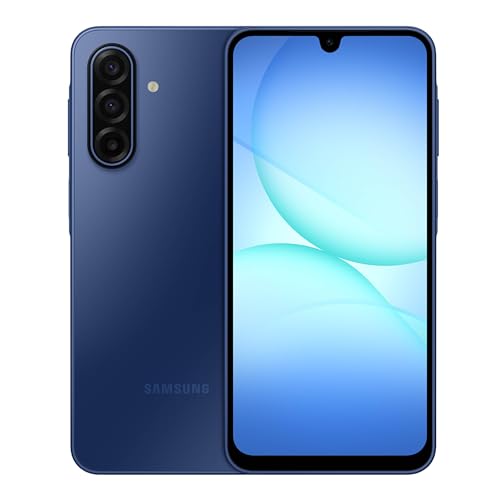
 Samsung Galaxy A16 4G LTE 128GB+4GB SM-A165F/DS Factory3.07 x 0.31 x 6.47 inches0.4 poundsCheck on Amazon
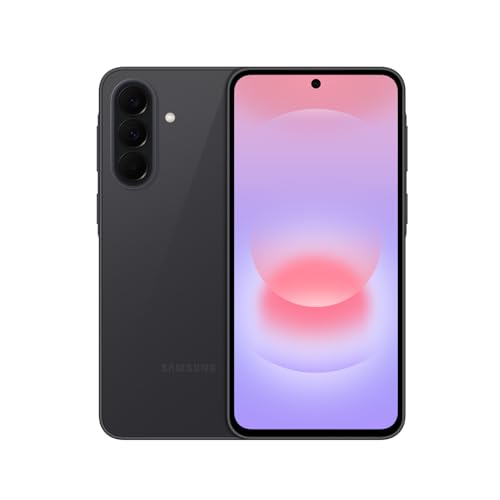
 Samsung Galaxy A16 5G 128GB Cell PhoneNot Specified6.47 x 3.07 x 0.31 inches0.44 poundsCheck on Amazon


What's inside
- Three national networks, two radio partnerships, one enormous country
- The bands that matter: n78, n77, n66 and n71 explained for Canadian buyers
- Urban speed, rural reality: how Canadian 5G actually feels
- Cross-border questions: Canadian phones in the United States, American phones in Canada
- Unlocked by law: the Canadian advantage most buyers forget they have
- Software updates in Canada: who delivers, who dawdles, and why it matters more here
- The best 5G phones for Canada, pick by pick
- Canada–US plans, roaming economics and the snowbird test
- Tabs, financing and bring-your-own-device: how Canadians actually pay for phones
- Second-hand, hand-me-downs and eSIM: the rest of the Canadian playbook
- Buying for someone else: parents, teenagers and the family reality
- Where Canadian 5G goes next, and what it means for the phone you buy today
- Check prices on Amazon
- Before you buy: a short Canadian checklist
As an Amazon Associate I earn from qualifying purchases. This post may contain affiliate links at no extra cost to you.
How Widget Verdict funds this guide: Canadian carriers and retailers sometimes pay us a referral commission when readers buy through coverage like this. We choose and rank the phones ourselves, and a commission has never softened a criticism printed below.
Buying a 5G phone in Canada looks, from a distance, like buying one anywhere else: the same glass rectangles, the same brand names, the same promises of speed. Move closer and the ground shifts. Canada runs its mobile market through three national networks whose coverage maps are drawn by the second-largest country on earth, sells its spectrum in auctions that produced a band plan related to — but not identical with — the American one, and regulates its carriers under a wireless code that quietly gives Canadian buyers protections their southern neighbours would envy. A phone that is a perfect purchase in Ohio can be a subtly wrong purchase in Ontario, and the difference lives in details no spec sheet headline will tell you.
This guide is built around those details. It explains which frequency bands actually carry Canadian 5G, why the experience in downtown Toronto and rural Saskatchewan might as well belong to different technologies, and what happens when a phone bought in Canada crosses the border — or when a phone bought in the United States is brought north and asked to live here. The shortlist that follows favours handsets sold through Canadian channels with full support for the national networks, long software commitments, and radios that behave well in both directions across the forty-ninth parallel. Shoppers weighing the unlocked route in particular should also read our survey of best 4g and 5g unlocked phones, because in Canada the unlocked question has a legal twist that changes the answer.
A note on what this guide does not do: it prints no prices, in either Canadian currency or any other, because carrier promotions and retailer pricing in this market move too quickly for a printed figure to stay truthful. Each phone is placed by segment — premium, upper mid-range, mid-range, budget — and your final comparison should be made against live offers from Rogers, Bell, Telus, their flank brands, and the major retailers on the week you buy. What does not move quickly is band support, update policy and network architecture, and those are the foundations on which every recommendation below is built.
Three national networks, two radio partnerships, one enormous country
Canadian mobile service rests on three national carriers. Rogers operates its own radio network end to end. Bell and Telus, though fierce commercial rivals, share a jointly built radio access network across much of the country, which is why their coverage maps resemble each other so closely in region after region: the towers and radios serving a Bell customer in a given town are frequently the same infrastructure serving a Telus customer standing beside them. The two companies differentiate on pricing, customer service, bundled services and core network features, but the raw geography of their signals is substantially shared, a fact worth knowing before you agonise over choosing between them on coverage grounds alone.
Layered around the big three are their flanker brands — Fido under Rogers, Virgin Plus under Bell, Koodo under Telus — which sell more affordable plans over the same networks, and a set of regional carriers, most prominently in parts of Quebec, the prairies and the Atlantic provinces, whose home territories matter greatly to the people who live in them. For phone buying, the practical consequence is simple: a handset that fully supports one national network’s bands will generally serve its flanker brands equally well, while a phone bought for a regional carrier deserves a closer look at whether it will roam gracefully when its owner travels outside the home region.
Geography dominates everything. The overwhelming majority of Canadians live within a narrow band along the southern border, and the networks are densest exactly there: the Toronto–Ottawa–Montreal corridor, Metro Vancouver, Calgary, Edmonton, Winnipeg and the other major metros enjoy layered coverage from every carrier. Beyond the cities, coverage follows highways and population in long, thin threads, and vast stretches of the country have no terrestrial mobile signal at all. A Canadian phone, more than a phone bought almost anywhere else, is a tool for two different worlds — the dense urban grid and the enormous rural in-between — and the best choices in this guide are the ones that serve both honestly.
The bands that matter: n78, n77, n66 and n71 explained for Canadian buyers
Canada’s mid-band 5G story centres on the 3500 MHz spectrum auctioned in 2021, which lives in the band designated n78. This is the frequency that transformed 5G in Canadian cities from a marketing badge into a felt experience: wide channels, serious capacity, and speeds that hold up under the load of a downtown lunch hour or a sold-out arena. Rogers, Bell and Telus all built their urban 5G identities on n78, and any phone sold for the Canadian market that lacks it is missing the main event. When you check a spec sheet for one thing only, check for n78.
The second act arrived with the 3800 MHz auction, spectrum that falls within band n77 and extends the mid-band story outward — more capacity in cities, and crucially, a path to faster service in smaller communities where 3500 MHz holdings were thinner. Newer handsets increasingly support both n78 and n77, and for a buyer planning to keep a phone for four or five years, that dual support is worth real attention, because the network your phone must satisfy in its final year will lean harder on the newer band than the network of today does. Phones limited to n78 alone remain perfectly good purchases now; phones with both are the more future-proofed ones.
Beneath the mid-band sit the coverage layers. Band n66, built on the AWS frequencies that Canadian LTE grew up on, carries 5G across wide suburban and regional areas and handles the everyday traffic of much of the country. Band n71, at 600 MHz, is the long-distance layer: it travels far, penetrates buildings and northern weather, and delivers the signal that keeps a phone useful on a highway between towns or inside a rural home. Its speeds are modest, and that is the correct trade — reach first, velocity second. A Canadian phone with n78 and n77 for the cities, n66 for the regions and n71 for the spaces between is equipped for the whole country; a phone missing the low band will feel oddly fragile exactly where Canadians most need reliability.
Millimetre wave, the ultra-fast short-range technology that dominated early American 5G marketing, plays almost no role in Canada, where it has not been deployed for general consumer service. This has a liberating consequence for cross-border shoppers, explored later in this guide: the band differences that genuinely matter between Canadian and American handsets are in the mid and low bands, not in the exotic high frequencies, and they are differences of tuning and certification rather than of wholly separate hardware families. It also means Canadian buyers can ignore an entire category of spec-sheet anxiety that American marketing works hard to create.
Urban speed, rural reality: how Canadian 5G actually feels
In the big metros, Canadian 5G has matured into something genuinely impressive. Mid-band coverage blankets the downtown cores and inner suburbs of the largest cities, standalone 5G deployments have been expanding the technology’s independence from its LTE foundations, and the practical experience — fast downloads, responsive video calls, hotspots that can carry a laptop through a workday in a coffee shop — matches anything available south of the border. Commuters in the big corridors are the best-served mobile users in the country, and for them the choice of phone matters mostly at the margins: any handset in this guide will feel quick in the places they spend their days.
Drive an hour in most directions and the story changes its character. Smaller cities and large towns typically enjoy mid-band service in their centres, thinning to the coverage bands at their edges. Rural and northern areas depend heavily on the low frequencies, where 5G performs much like strong LTE — entirely adequate for messaging, navigation, music and standard video, unremarkable for bulk downloads. Honest expectations matter here. No phone purchase can conjure a mid-band tower into a township that lacks one, and the buyer in a rural area should weight their decision toward antenna quality, low-band support and battery endurance rather than toward peak-speed heroics that their local network cannot feed.
Season and terrain add Canadian footnotes. Heavy snow, dense forest and the shield country’s rock all tax a signal, and fringe coverage that suffices in July can become marginal in January when a phone is working harder to hold a link. Battery behaviour follows the same pattern: a handset hunting for signal on a rural property or a long highway drive will drain itself far faster than the same handset in a city, which is why the picks below pay unusual attention to battery capacity and efficiency. For Canadians whose lives include cottages, job sites, farms or long winter drives, these unglamorous traits are not secondary considerations. They are the product.
Cross-border questions: Canadian phones in the United States, American phones in Canada
Few countries share a border, an economy and a phone market the way Canada and the United States do, and millions of Canadians use their handsets on American networks every year — snowbirds wintering in Arizona and Florida, truckers and business travellers, families on road trips, shoppers crossing for a weekend. The good news is that modern flagships and quality mid-range phones are effectively continental devices. A current premium phone bought from a Canadian carrier or retailer carries the bands for American mid-band 5G, roams onto the big American networks without drama, and handles everything from navigation in Nevada to video calls from a Florida condo. For the traveller, the phone is rarely the problem; the plan is, and roaming terms deserve a read before any long stay.
The reverse direction needs more care. A phone bought in the United States for American networks will usually work in Canada — the shared band heritage of the two markets sees to that — but the details can bite. Some American carrier variants are tuned and certified primarily for their home network, and mid-band support for Canada’s n78 should be verified model by model rather than assumed from the family name on the box. Warranty service is the quieter trap: a handset bought from an American carrier or retailer may need to return to the United States for repair, and manufacturer warranty terms differ by country of purchase in ways that only become interesting at the worst possible moment. Canadians tempted by an American promotion should price in that friction honestly before counting their savings.
There is also the matter of how the two countries’ retail channels shape the same phone. Canadian carriers sell devices on financing plans whose structures were reshaped by regulation, American carriers lean harder on monthly credit promotions, and the identical handset can carry a very different total cost depending on which side of the border signs the paperwork. Cross-border workers and dual residents should run their numbers in both markets, with their actual usage in each, and should confirm that the specific variant they buy is unlocked or unlockable under the rules of the country where they bought it. The section that follows explains why Canadians, in particular, hold a strong hand in that negotiation.
Unlocked by law: the Canadian advantage most buyers forget they have
Since December 2017, every phone sold in Canada has been required to be sold unlocked, and carriers must unlock older devices free of charge on request. This single regulatory decision, part of the national Wireless Code, reshaped the Canadian market’s power balance. A Canadian who finances a phone through a carrier still owes the financing balance if they leave early — the device payment is a loan, and it behaves like one — but the handset itself is never held hostage. It can move to another carrier the day it is bought, accept a local SIM abroad, or be sold into a second-hand market where unlocked status is simply the Canadian default.
For buyers, the practical strategy flows from that freedom. Because the phone is yours in every sense that matters, the plan becomes a genuinely separable decision: you can chase a flanker-brand promotion in November, move a line between carriers when a household’s needs change, or hand a phone down to a family member on a different network without a single unlocking phone call. It also strengthens the case for buying devices through manufacturer stores and general retailers during seasonal sales, since a Canadian unlocked phone and a Canadian carrier phone are, in band support and certification, the same device aimed at the same networks. Our companion coverage of best 5g phones android explores the Android side of that freedom in more depth for readers still choosing an ecosystem.
Two cautions keep the picture honest. First, unlocked freedom does not erase financing: leaving a carrier mid-term means settling the remaining device balance, sometimes with the loss of a promotional discount that was being applied across the term, so the exit cost should be read before signing rather than discovered after. Second, phones bought outside Canada — during a trip, from an international marketplace, from an American promotion — arrive under their country of sale’s rules, not Canada’s, and may be locked, differently banded, or awkward to service. The Canadian advantage is real, but it attaches to Canadian purchases.
Software updates in Canada: who delivers, who dawdles, and why it matters more here
A phone’s update policy decides how long it stays secure, compatible and pleasant, and in Canada the question has a local flavour. Because devices here are certified for the national networks, major software releases for carrier-sold Android phones have historically passed through carrier testing before reaching customers, adding a delay — sometimes days, sometimes considerably longer — between a manufacturer’s announcement and a Canadian phone actually receiving the software. The brands differ in how well they manage this. The longest commitments in the industry now run to many years of both system upgrades and security patches, and the gap between the best and worst performers has widened into one of the most consequential differences between phones that look similar in a store.
Apple sits outside this machinery almost entirely, releasing its updates to Canadian iPhones on the same day as the rest of the world, which remains one of the platform’s quiet structural advantages in this market. Google’s Pixel line approaches that immediacy on the Android side, with updates flowing from the manufacturer and a support commitment that now stretches across a span once unthinkable for the category. Samsung has transformed its own position over recent generations, promising long support even into its mid-range lines, though Canadian carrier variants can still trail the manufacturer’s global schedule by a modest margin. Motorola and the value brands remain the segment to interrogate hardest: their hardware can be excellent for the segment while their update windows stay short, a trade that matters little to a two-year keeper and enormously to a five-year one.
The Canadian stakes in this are higher than they first appear, because this country’s buyers keep phones a long time. Expensive devices, financing terms that stretch across years, and a second-hand market that rewards longevity all push Canadian ownership periods upward, and a phone abandoned by its maker at year three becomes a security concern while it is still, physically, a perfectly good handset. When two phones in this guide compete closely, the longer and more reliable update promise is the tiebreaker we apply, and we would urge every Canadian reader to apply it the same way.
The best 5G phones for Canada, pick by pick
Each phone below is sold through Canadian channels, supports the national networks’ essential bands including n78, and earns its place for a defined kind of Canadian buyer. Segments are described in words rather than figures, and we recommend confirming the current offer with carriers and retailers at the moment of purchase, since Canadian promotions rotate briskly. Read the picks against your own geography first — the phone that serves a Vancouver commuter and the phone that serves a Manitoba farmer are both here, and they are not the same phone.
Apple iPhone 17 — the cross-border champion for most Canadians
Segment: premium. If a single phone had to be recommended to a Canadian household without knowing anything about it, this would be the one. The standard iPhone flagship pairs full support for Canada’s mid and low bands with equally complete support for American networks, receives its software updates the day they are released anywhere on earth, and holds its value in the Canadian second-hand market with a stubbornness that effectively discounts its own purchase across a long ownership. For snowbirds, cross-border workers and anyone whose phone regularly lives in two countries, its indifference to the border is a feature no rival quite matches.
Daily life with it is defined by consistency rather than spectacle. The cameras handle the Canadian family workload — arena lighting at a minor hockey game, bright snow that fools lesser exposure systems, summer evenings that last until ten — with a reliability that makes photography feel solved. Battery behaviour suits a long day, charging is flexible, and the build shrugs off the knocks of ordinary use, though a case remains wise anywhere ice is involved. Its size suits most hands, and the wider Apple ecosystem of watches, earbuds and computers is as fully supported in Canada as anywhere, including French-language services that matter to many buyers here.
The limitations are the platform’s familiar ones. Buyers who want deep customisation, a stylus, or the folding experiments of the Android world will find none of it here, and the phone sits firmly in the premium segment however it is financed. But judged against the specific demands of Canadian ownership — bands, border, updates, resale, longevity — it is the most complete answer in this guide, and the recommendation we expect to fit the largest number of readers.
Samsung Galaxy S25 Ultra — the maximum Android, tuned for Canadian networks
Segment: premium Android flagship. Samsung Canada sells this phone in a variant certified for the national networks, and that detail matters: the Canadian model is the one whose band set, software schedule and warranty are all aimed at Rogers, Bell and Telus customers, and it shows in uneventful, reliable behaviour from downtown towers to provincial highways. Around that radio sits the most maximalist Android handset in the country — a vast bright display that stays legible in summer glare and winter whiteout alike, a stylus for marking up documents and sketches, and a zoom camera system that turns distant wildlife, mountain ridges and arena stages into photographs rather than suggestions.
Performance headroom is generous to the point of excess, which is precisely the point for a buyer intending a four- or five-year run: the phone that feels overpowered today feels merely adequate in its fourth year, when heavier software meets an ageing battery. Samsung’s extended update commitment protects that plan, and its software offers the deepest control in the business over radios, battery behaviour and multitasking. For Canadians whose work runs through their phone — contractors on job sites, realtors between listings, anyone signing and annotating documents in parking lots from Halifax to Victoria — the combination of screen, stylus and stamina is genuinely difficult to argue with.
The costs of maximalism are literal and physical. This is a large, heavy, squared-off device that demands two hands and a tolerant pocket, and it occupies the very top of the market’s pricing structure. Buyers who will not use the stylus or the long zoom are paying for jewellery. But for the Canadian power user who wants one device to serve city and country, office and field, for as many years as the software allows, this is the Android summit, and its Canadian variant is the version to buy.
Google Pixel 10 — the software purist’s Canadian bargain
Segment: upper mid-range to premium depending on the promotion. Google sells the Pixel line directly to Canadians with the same update immediacy it offers its home market, and that fact alone gives the Pixel 10 a character no other Android phone here fully shares. Its call features read like they were designed for a country exhausted by spam: screening that interrogates unknown callers, transcription that turns voicemail into text, and filtering that quietly disposes of the robot-call traffic that plagues Canadian numbers as relentlessly as any on earth. Add a camera system whose computational photography produces balanced, honest images in the mixed light where real life happens, and the case becomes compelling quickly.
On Canadian networks the phone covers the bands that matter, n78 included, and behaves well across the big three and their flankers. Its processor favours efficiency and intelligence over raw gaming force, a trade most owners will never notice and heavy gamers reliably will. Battery life is a solid day rather than a marathon, and the hardware, while handsome, lacks the theatrical flourishes of the Ultra class. What it offers instead is sanity: clean software, the fastest updates in Android, and pricing behaviour that — in the Canadian market as elsewhere — dips so regularly that patient buyers seldom need to pay its opening figure.
Choose it if your priorities are photography of people, freedom from call spam, and software that stays current for years. Hesitate if your home sits at the fringe of coverage where Samsung’s radios hold a small real-world edge, or if marathon gaming sessions are a daily ritual rather than an occasional indulgence. For the broad middle of Canadian buyers who live on their phones but not inside them, it may be the smartest money in this entire guide.
Samsung Galaxy A36 5G — the sensible Canadian mid-range, flanker-brand approved
Segment: mid-range. The Galaxy A36 5G is the phone Canadian carriers and their flanker brands reach for when a customer wants modern 5G without premium financing, and its ubiquity is earned. It supports the national mid-band, wraps it in a bright smooth display and a battery that handles long days gracefully, and carries a Samsung update commitment that stretches years past what this segment used to promise — a meaningful trait in a country where phones are kept until they wear out. Water resistance, once a flagship courtesy, appears here too, which matters in a climate that tests devices with rain, slush and the occasional drop into snow.
Through Fido, Koodo and Virgin Plus, this class of phone is the backbone of the affordable Canadian plan market, and buying it there is painless: certified variant, Canadian warranty, financing spread gently across a term. Bought outright from a retailer during one of the segment’s frequent sales, it is equally at home. Day-to-day performance covers the genuine essentials — messaging, banking, maps, streaming, social feeds, video calls with family — without the stutters that once defined the class, and Samsung’s software arrives in its full broad form rather than a cut-down imitation.
The compromises are honest ones. Cameras are capable in daylight and merely willing after dark; the processor will not sustain demanding games at their prettiest settings; wireless charging is absent. Buyers in deep-rural areas should confirm low-band behaviour on their specific network, as with any phone. None of this displaces it as the default recommendation for Canadians who want a phone that simply works, on any national network, for years, at a mid-range commitment — the teachers, parents, students and pragmatists who quietly constitute most of the market.
Motorola Moto G 5G — the budget pick for rural routes and second phones
Segment: budget. Motorola has served the Canadian value market for years through carriers and big-box retailers alike, and its current Moto G 5G continues the tradition with priorities correctly ordered for its audience: a large clear display, battery endurance that stretches across the long days and long drives of Canadian life, and clean software that elderly users and first-time smartphone owners find mercifully uncluttered. Its 5G support covers the mainstream bands of the national networks, making it a legitimate citizen of all three rather than a compromise that works properly on one.
In this guide it carries a specific brief: the phone for buyers whose map is mostly rural, whose usage is calls, messages, maps and photographs of grandchildren, and whose budget is firmly budget. It is also the natural second phone of the Canadian market — the handset for the truck, the cottage, the teenager, the glovebox — roles where a premium device would be an anxiety rather than an asset. Retail pricing on this line drifts downward across its life in predictable fashion, and the settled street level, rather than the launch figure, is where its value case becomes overwhelming.
Expectations should be set in daylight: the cameras are serviceable, the update window is the shortest in this guide, and the construction is practical rather than precious. Within its brief none of that matters much, and some of it — the simplicity, the stamina, the indifference to being knocked about — is exactly what its buyers are shopping for. Verify the exact Canadian variant when buying, as with every unlocked purchase, and this phone will do its unglamorous job for years.
OnePlus 13 — the enthusiast’s unlocked alternative, with homework attached
Segment: premium, sold mainly through manufacturer and online channels. OnePlus serves Canada directly with devices whose speed, displays and charging pace embarrass phones in higher segments, and the OnePlus 13 is the line’s fullest expression: a flagship processor, a superb screen, wired charging so fast it changes habits, and a camera system that has matured into genuine competitiveness. For the enthusiast buyer comfortable purchasing outside the carrier store, it offers the flagship experience with the flagship markup stripped away.
The homework is band and support diligence. OnePlus sells Canadian customers proper North American variants, and those are the ones to buy: confirm that the model on offer lists n78 and the Canadian low bands, and buy through the manufacturer’s Canadian storefront or an authorised retailer so that warranty service runs through Canadian channels. Software support has lengthened considerably from the brand’s early days, though it still trails the longest commitments in this guide by a margin that five-year keepers should weigh. Carrier certification quirks can also mean that some advanced network features arrive later here than on carrier-sold rivals, a tax the enthusiast audience generally accepts in exchange for the hardware.
Readers comparing the wider unlocked Android field may find our overview of best affordable premium smartphones useful context for where this phone sits among its value-flagship rivals. Judged on its own terms — performance per segment, charging, screen quality — it is the most exciting purchase in this guide, and for the buyer who enjoys doing the homework, the most rewarding one too.
Canada–US plans, roaming economics and the snowbird test
No feature of the Canadian market confuses phone buyers more than the question of what their handset will cost them the moment it leaves the country. The phones themselves, as established earlier, are continental devices. The plans are not. Canadian carriers have historically sold roaming as a daily add-on: a flat per-day charge that unlocks your domestic plan’s data, calls and messages while you travel, capped at a set number of charged days per billing cycle. For a weekend in Seattle or a business trip to Chicago, the convenience is real and the cost is tolerable. For a snowbird spending four months in Florida, the same structure becomes a significant line in the winter budget, charged day after day for a phone that mostly sits on a condo counter receiving photographs of grandchildren.
The market’s answer, increasingly, is the Canada–US plan: a domestic plan whose allowances simply work on both sides of the border, offered by all three national carriers and creeping steadily down from the premium tiers toward the mainstream. For genuine cross-border lives — snowbirds, cross-border commuters in Windsor and Niagara and the Fraser Valley, truckers, consultants, families split between two countries — these plans have transformed the calculation, and they change the phone-buying advice too. A household that will live on a Canada–US plan should choose phones, like the leading picks in this guide, whose American band support is complete and whose roaming behaviour on the big American networks is well proven. Readers curious about how the American side of that relationship looks from the other direction can browse our coverage of best 5g at t phones for a sense of which handsets American carriers themselves push hardest.
There are workarounds for the plan-less traveller, and a Canadian guide should name them honestly. A phone with dual-SIM capability can carry a Canadian number for calls and banking codes alongside a local American prepaid SIM or travel eSIM for data, a combination that serves long stays particularly well. Airport and online travel eSIMs have made the data half of that arrangement almost trivially easy to set up before departure. What no workaround fully replaces is reachability on your Canadian number, which banks, family and two-factor authentication systems all assume; the traveller who goes fully local for four months will spend some of that time locked out of accounts that insist on texting a number that no longer answers. Plan for the number first and the data second, and the snowbird test — four months, one phone, no surprises — becomes passable.
One more border detail belongs in any honest guide: devices and plans interact with emergency services and network features differently across the line, and a phone bought in Canada will behave as a guest on American networks, subject to those networks’ roaming agreements and priorities. In practice, for the major carriers and current handsets, the guest experience is seamless. But the traveller relying on a phone for navigation through genuinely remote American terrain should download offline maps with the same discipline they would apply at home, because neither country’s networks cover their continent’s empty quarters, and the spaces between towns in Montana are every bit as silent as the spaces between towns in Saskatchewan.
Tabs, financing and bring-your-own-device: how Canadians actually pay for phones
Canadian phone pricing has its own vocabulary, and fluency in it prevents expensive misunderstandings. The dominant structure separates the plan from the device payment: you choose a service plan, then add a monthly device amount that retires the phone’s cost across a fixed term, after which the device charge simply falls off your bill. That transparency, hardened by the Wireless Code’s requirement that contracts state their terms plainly and that cancellation after two years carry no penalty beyond the remaining device balance, is a genuine Canadian advantage. The bill you can read is the bill you can manage, and a Canadian customer who reaches the end of a device term owns an unlocked phone and a suddenly cheaper monthly payment — a moment of leverage worth using, since carriers count on customers rolling silently into a new device instead of pocketing the difference.
Some carriers also offer lease-flavoured structures in which the monthly device charge is lower because a portion of the phone’s value is deferred to the end of the term, payable if you keep the device or forgiven if you return it in good condition. These arrangements suit habitual upgraders and punish keepers, and the return condition deserves respect: a phone that must go back undamaged after two years is a phone that needs a case, a screen protector and a certain temperament in its owner. Run the end-of-term scenario that matches your real habits before choosing the cheaper monthly figure, because the structure that saves money for your neighbour the annual upgrader can cost you, the five-year keeper, a painful lump sum at exactly the wrong moment.
Against both structures stands the bring-your-own-device plan, the quiet hero of Canadian mobile economics. Because every Canadian phone is unlocked, a customer who buys a handset outright — during a retailer sale, from a manufacturer’s store, or second-hand with the checks described elsewhere in this guide — can pair it with a discounted plan that assumes no device subsidy, and flanker brands compete ferociously for exactly these customers during the big seasonal windows. The arithmetic frequently startles people encountering it for the first time: the outright phone plus two years of a bring-your-own-device plan can undercut the financed equivalent by a margin that buys the accessories, the case and a year of streaming subscriptions. It requires capital on the day of purchase, which is its own barrier, but for Canadians who can manage it, it is the closest thing this market offers to a structural bargain.
Quebec buyers operate under an additional layer of provincial consumer protection that strengthens their hand further, with rules on contract disclosure and cancellation that rank among the most consumer-favourable in North America, and regional competition in that province has historically produced plan pricing the rest of the country regards with envy. The broader lesson generalises: Canadian phone buying rewards the customer who reads the structure, not the customer who reads the advertisement. Whether the money moves as a device payment, a deferred balance, a plan discount or a seasonal promotion, the total across your real ownership period is the only figure that deserves your loyalty — a principle this guide has applied to networks and bands, and which applies with equal force to the bill.
Second-hand, hand-me-downs and eSIM: the rest of the Canadian playbook
Canada’s unlocked-by-law market has a thriving second act: the used phone. Because every handset sold here since late 2017 arrived unlocked, a used Canadian phone is a known quantity in a way that used carrier-locked devices elsewhere never are, and the country’s strong culture of hand-me-downs — phones flowing from parents to teenagers, from upgraders to parents, from offices to spare drawers — runs on that guarantee. Buying used still deserves method. Verify the device’s identity and status before money moves: a phone reported lost or stolen is blacklisted across Canadian carriers and will refuse service no matter how healthy its screen looks, and the national device-check services exist precisely so that buyers can confirm a clean status in minutes. Meet sellers in public, test the phone with your own SIM, and check the battery health figure that modern phones report in their settings, because in a used handset the battery is the component most likely to be quietly dying.
Refurbished channels offer the middle path for buyers who want the saving without the classifieds. Carrier-certified pre-owned programmes and established refurbishers sell inspected Canadian devices with warranties and return windows, and in this market their stock skews toward exactly the phones this guide recommends — recent flagships and durable mid-range models whose update runways still stretch years ahead. Apply the same test as with any used purchase: count the remaining software support before counting the saving, because a cheap phone in its final year of patches is not cheap at all when it must be replaced early. A two-year-old device from a maker with a long commitment, professionally refurbished with a healthy battery, is arguably the single most rational purchase available to a Canadian buyer who does not need the newest anything.
The eSIM transition threads through all of this as the market’s newest habit. Canadian carriers support eSIM across their main brands, new activations increasingly arrive as a QR code rather than a plastic card, and the practical benefits for the readers of this guide are concrete: travellers can add an American data plan without touching their Canadian line, dual-line users can carry a work number and a personal number in one handset, and switching carriers during a seasonal promotion no longer involves waiting for mail. Two cautions temper the enthusiasm. Transferring an eSIM between phones is still more ceremonious than swapping a physical card, which matters to the hand-me-down culture described above — a phone passed to a parent is simplest when a physical SIM passes with it. And some budget handsets still omit eSIM entirely, a spec-sheet line worth checking for any buyer who expects to travel or run two numbers. The flagship and mid-range picks in this guide handle eSIM properly; verify it explicitly anywhere else.
Pull these threads together and a distinctly Canadian buying philosophy emerges, quite different from the promotion-chasing that dominates discussion elsewhere. Buy a phone with the right bands and a long update promise, through a channel that gives you Canadian warranty and an unlocked device — which is to say, almost any channel in this country. Keep it longer than feels fashionable. Let the device payment fall off your bill and enjoy the cheaper months that follow. Pass it down or sell it into a market that values it precisely because it is unlocked and supported. In a country this large, with winters this serious and distances this real, a phone is infrastructure; the Canadians who treat it that way, rather than as a seasonal accessory, are the ones this guide was written for.
Buying for someone else: parents, teenagers and the family reality
A large share of Canadian phones are bought by one person for another, and the criteria shift in ways spec sheets never capture. For a parent or grandparent, the decisive features are a screen that stays readable outdoors, battery that forgives a forgotten charger, software that will keep itself secure without supervision, and a handset their carrier’s local store will recognise and help with when something confuses them — which quietly favours the mainstream picks in this guide over exotic imports, however impressive the imports look on paper. For a teenager, durability and the family’s existing ecosystem usually outrank camera heroics, and the mid-range picks here exist precisely so that a dropped phone is a bad afternoon rather than a financial event. In both cases, the buyer should set the phone up completely before handing it over: accounts signed in, updates applied, emergency contacts and medical information entered, and the old device’s photographs and messages confirmed transferred, because the handover moment is the last time the family’s most technical member will have both phones in the same room.
Family plans add one structural note. Canadian carriers price additional lines to reward consolidation, and a household that gathers its phones onto one account with one carrier usually pays less in total than the same household scattered across providers — but consolidation also concentrates risk, since a coverage weakness at the family home now affects everyone at once. Test the chosen network at the house, the school and the commute before gathering every line onto it, using a single line or a flanker-brand trial as the scout. The savings of consolidation are real; so is the wisdom of sending one phone ahead to confirm the territory before the whole family moves.
Where Canadian 5G goes next, and what it means for the phone you buy today
Three developments will shape the network your new phone lives on during its years with you, and each argues quietly for the future-proofing this guide has emphasised. The first is the buildout of the 3800 MHz spectrum in band n77: as carriers light up this capacity beyond the largest metros, phones carrying both n77 and n78 will find fast mid-band service in places where n78-only devices fall back to the coverage layers. The second is the continued migration toward standalone 5G, in which the connection no longer leans on LTE anchors at all, bringing steadier latency and better behaviour at the edge of coverage; current quality handsets support it, but it is one more reason to favour recent models with mature modems over ageing bargains. The third is the arrival of satellite backup for ordinary phones — direct-to-device services, launched in partnership with Canadian carriers, that let a standard handset send messages from places no tower has ever reached. For a country with Canada’s backcountry, that is not a novelty; it is a safety feature whose value any hunter, angler, snowmobiler or northern worker will grasp immediately.
None of these developments should stampede a buyer into the most expensive handset on the shelf. Their real lesson is about the middle of the market: the gap between a phone that merely works today and a phone equipped for the network of three years from now is mostly a matter of band support and software commitment, both of which are available well below the premium tier if you shop with a checklist instead of a slogan. Read the band list. Count the update years. Let the carriers’ roadmaps, rather than their advertisements, tell you which specifications are about to matter.
Check prices on Amazon
Live listings for the shortlist in this guide are pulled from Amazon below, so prices and availability are always current at the moment you look.


Before you buy: a short Canadian checklist
Everything in this guide compresses into a handful of verifications. Confirm the exact variant you are buying lists band n78, and ideally n77 alongside it, plus n66 and n71 for the coverage layers. Buy through a Canadian channel when you can, so the Wireless Code’s unlocked guarantee, the manufacturer’s Canadian warranty and the carrier certification all apply to your handset. Match the phone to your geography honestly: city buyers can chase speed, rural buyers should chase reception and battery, and cross-border lives should chase the models whose band support is complete on both sides of the line. Read your carrier’s financing terms for the exit cost, even though your phone itself is unlocked, because the loan and the lock are different things. And weigh the update promise as heavily as the camera, because in Canada you will likely live with this phone long enough for the promise to become the product.
One last habit costs nothing and saves more grief than any other in this guide: after buying, spend the first week deliberately testing the phone where your life actually happens — the basement, the barn, the far end of the driveway, the train platform, the arena parking lot — while the return window is still open. Coverage maps are promises drawn by marketing departments, but a week of your own geography is evidence, and Canadian return policies give you the time to gather it. A phone that fails your map can go back; a phone that passes it has earned its years with you before the first payment has even settled.
Do those things and the Canadian market’s quirks turn from traps into advantages — a regulatory code that frees your handset, a band plan that rewards one careful spec-sheet check, and networks that, for all the country’s immensity, serve their populated corridor as well as any on the continent. The right phone bought the Canadian way will cross provinces and borders, winters and years, without ever asking you to think about it again; choose the one whose strengths match your map, and it will quietly disappear into your life the way the best tools always do.


