What's inside
- Key Takeaways
- Quick Picks
- How We Chose These Picks
- Comparison Table
- What Does “5G Capable” Really Mean: Bands, Sub-6, and mmWave Explained?
- How Can You Check a Phone’s Real 5G Bands Before Buying?
- How Do Carriers Differ in What “Capable” Must Cover?
- What Happens to 5G Phones as Networks Move to Standalone 5G?
- Which Capable Phone Suits Rural, Suburban, and City Life Best?
- How Should You Read a Speed Test Without Fooling Yourself?
- What Should Businesses and Schools Look for in a Capable Fleet Phone?
- When Is LTE Still the Smarter Connection?
- How Do Antennas and Phone Size Quietly Shape 5G Performance?
- What Will 5G Capability Mean for Resale and Hand-Me-Downs?
- How Should You Set Up a New 5G Phone for the Best First Week?
- How Do Carrier Aggregation and MIMO Quietly Decide Real-World Speed?
- Does 5G Drain a Battery Faster, and How Do You Manage It?
- What Common Mistakes Do 5G Phone Shoppers Make?
- Final Recommendation
- Frequently Asked Questions
- Related Guides
As an Amazon Associate I earn from qualifying purchases. This post may contain affiliate links at no extra cost to you.
widgetverdict.com is reader-supported. When you buy through links on our site, we may earn an affiliate commission.
Where to buy: the six handsets below are available through Amazon in the unlocked US or clearly described variants named in each review, and several circulate as renewed units that reward careful inspection. Shoppers searching for the best 5g capable phones are really asking a translation question, because “5G capable” hides three different networks wearing one label, and the phone you choose decides which of them you can actually use.
Here is the short version before the detailed one. Sub-6GHz 5G is the workhorse layer, split between low bands that travel for miles and mid bands that deliver the big urban speed jumps. Millimetre wave, or mmWave, is the sprinter: astonishing pace inside stadiums and dense downtown blocks, defeated by walls, windows, and weather. A phone advertised as 5G capable might support only the low bands, which produces a 5G icon and a shrug. Every pick in this guide supports sub-6 including mid-band, and the reviews note which ones add mmWave for venue duty.
That distinction shapes this list more than camera rankings do. A budget handset with honest mid-band support will feel faster across a whole city than a glamorous import limited to low-band frequencies. Read each review with your own geography in mind: rural drivers live on low band, commuters feast on mid band, and season-ticket holders are the rare crowd for whom mmWave deserves real money. The guide explains the trade at every step rather than assuming one reader’s map matches another’s.
Key Takeaways
- “5G capable” only means something when the band list includes mid-band sub-6 spectrum such as n41, n77, or n78, where the genuine speed gains live.
- Google’s Pixel 8a covers the essential sub-6 bands and adds software polish, making it the thinking buyer’s default capable handset.
- Samsung’s Galaxy S23 remains a compact powerhouse whose modem handles every US sub-6 layer plus mmWave in supported venues.
- Motorola’s Edge (2024) pairs mid-band fluency with a 144Hz screen and proper water resistance at a mid-tier position.
- The TCL 50 XL 5G proves a large, smooth display and honest 5G need not cost much, provided camera expectations stay modest.
- Nothing Phone (2) and the Galaxy Z Fold 6 show capable 5G wearing two very different costumes: playful minimalism and a folding tablet.
Quick Picks
| Pick | Badge | Why it made the cut |
|---|---|---|
| Google Pixel 8a | Best capable all-rounder | Full sub-6 coverage, seven years of updates, and a camera that punches upward. |
| Samsung Galaxy S23 | Best compact flagship | Complete US band support including mmWave in a genuinely pocketable body. |
| Motorola Edge (2024) | Best mid-range screen | 144Hz pOLED, IP68, and mid-band 5G without flagship pricing pressure. |
| TCL 50 XL 5G | Best big-screen bargain | A 6.78-inch 120Hz canvas with honest sub-6 support for media lovers. |
| Nothing Phone (2) | Best design statement | Glyph lighting, clean software, and a flagship-grade modem package. |
| Samsung Galaxy Z Fold 6 | Best folding multitasker | Tablet-class workspace with the fullest band support Samsung sells. |
How We Chose These Picks
Modem literacy came before everything else. Each candidate’s band table was checked for the sub-6 frequencies American carriers actually deploy: low bands for reach, n41 for T-Mobile’s mid-band, n77 for AT&T and Verizon mid-band, and the shared bands that keep rural roaming alive. Handsets that wore a 5G badge while skipping mid-band were rejected regardless of their other charms, because the gap between their marketing and their street performance is exactly what this guide exists to expose.
mmWave support earned credit but never dictated the ranking. It transforms downloads inside arenas and airport terminals, yet its footprint remains a garnish on the national map. Buyers in mmWave-dense postcodes will find it noted in the relevant reviews; everyone else can treat it as future-proofing. Beyond radios, the scoring weighed update duration, battery behaviour under 5G load, and whether the phone’s price position, judged qualitatively, matched the completeness of its network support.
The final six deliberately span shapes and budgets: a compact flagship, a folding flagship, a design-led upper-mid phone, two sensible mid-rangers, and one big-screen bargain. That spread lets readers prioritise their own geography. A rancher and a stadium usher should not buy the same phone, and a guide that pretends otherwise is selling something. Where renewed listings dominate, the reviews say so and describe the checks that keep the purchase safe.

Google Pixel 8a — Best capable all-rounder
The Pixel 8a is what happens when a flagship’s brain and modem move into a sensible body. Its Tensor G3 drives the same sub-6 band coverage as Google’s pricier phones, including the mid-band frequencies that make 5G feel like an upgrade rather than a logo. Around town it hops between low and mid band without the hesitation that plagued early 5G handsets, and call quality stays crisp in the concrete stairwells where lesser radios give up.
Google’s seven-year update promise transforms the value story. A phone bought for a teenager today can plausibly serve through school and into a first job, still patched, still compatible with banking apps that abandon older Android versions. The 6.1-inch OLED is bright and colour-honest, the camera inherits the family’s computational magic, and wireless charging appears at a tier where rivals still treat it as a luxury. For most households, this is the capable 5G phone against which the rest must argue.
Arguments exist, and they are specific. Charging is unhurried, the bezels are chunkier than fashion prefers, and the plastic back will never feel like the flagships it imitates. mmWave is absent from most 8a variants, so stadium downloads rely on sub-6 alone. Storage cannot expand. None of these flaws touches the phone’s core competence, though, and its renewed and discounted listings frequently make it the smartest money in this entire guide. Check price on Amazon before assuming the mid-range rivals undercut it.
Teachers and healthcare workers keep surfacing in the 8a’s fan base, and the pattern makes sense: gloves-off simplicity, a camera that documents a classroom project or a workplace hazard clearly, and updates that arrive without an IT department’s blessing. The phone’s size suits scrubs pockets and lanyard cases, while call screening silences the robocall tide that targets school and clinic numbers relentlessly. It is a professional tool disguised as a modest consumer handset, and its mid-band fluency means emailed photos and uploaded forms leave the building as fast as the Wi-Fi would have sent them.
- Display: 6.1-inch OLED, 120Hz
- Chip: Google Tensor G3
- Camera: 64MP main with OIS, ultrawide
- Battery: 4,492mAh, wired and wireless charging
- Network: sub-6 5G including mid-band, no mmWave on most variants
Strengths
- Mid-band support that delivers real 5G speeds across all three carriers.
- Seven-year software runway unmatched at its position.
- Camera output that embarrasses phones positioned far above it.
Trade-offs
- Charging pace belongs to an earlier generation.
- Design and materials feel practical rather than premium.
- No memory card slot and no mmWave on typical variants.
Best for: families, students, and anyone buying one phone for many years. Not suited for: stadium regulars chasing mmWave or fast-charge devotees.

Samsung Galaxy S23 — Best compact flagship
Small phones with complete network support have become rare enough that the S23 deserves a preservation order. Its US unlocked variant covers low, mid, and mmWave 5G bands, driven by a Snapdragon 8 Gen 2 that still outruns most new mid-range silicon. At 6.1 inches it slips into cycling jerseys, clutch bags, and the front pockets that modern flagships have declared war upon, yet nothing about its radio or camera reads as compromise.
Daily performance is flagship-smooth: the 120Hz AMOLED is bright, the triple camera includes a proper 3x telephoto that compact rivals omit, and Samsung’s update pledge keeps the phone patched for years. Renewed US units through Amazon have turned this former flagship into a value play, provided buyers verify battery health on arrival. For commuters who hold a rail with one hand and their phone with the other, the S23’s dimensions are not nostalgia; they are ergonomics.
The honest caveats involve stamina and charging. A 3,900mAh battery serves moderate users a full day and asks heavy users for an evening top-up, especially on mid-band 5G with the screen bright. Charging peaks at a modest wired rate and the phone predates the seven-year support era, so its runway, while respectable, is shorter than the Pixel 8a’s. Buyers who accept those terms receive the most complete small Android phone of its generation, with a modem that wants for nothing.
One-handed photography is the S23’s secret party piece. Because the phone is narrow and light, a parent can hold a toddler’s hand and still frame a shot, a dog walker can manage a lead and a camera, and a commuter can photograph a platform sign without a two-handed ceremony. The telephoto’s reach then does the walking that your feet cannot. Couples who share one good phone between them often choose this model, because it suits two different hand sizes without either owner feeling they are borrowing a tablet.
- Display: 6.1-inch AMOLED, 120Hz
- Chip: Snapdragon 8 Gen 2
- Cameras: 50MP main, ultrawide, 3x telephoto
- Battery: 3,900mAh, wired and wireless charging
- Network: sub-6 and mmWave 5G, US unlocked
Strengths
- Complete band support, mmWave included, in a compact frame.
- Telephoto camera that small-phone rivals usually skip.
- Renewed pricing turns flagship hardware into a value purchase.
Trade-offs
- Battery capacity limits heavy 5G days.
- Support runway shorter than the newest seven-year pledges.
- Charging speeds are respectable, never remarkable.
Best for: compact-phone loyalists, commuters, and venue-goers who value mmWave. Not suited for: two-day battery seekers or buyers wanting the longest update runway.

Motorola Edge (2024) — Best mid-range screen
Motorola aimed the Edge (2024) at people who stare at their phone for a living. The 6.6-inch pOLED refreshes at 144Hz, a rate usually reserved for gaming flagships, and the curved edges give streamed video and long documents a borderless ease. Underneath, the Snapdragon 7s Gen 2 keeps the interface fluid while its modem covers the sub-6 bands US carriers depend on, including the mid-band layer that defines a genuinely capable 5G experience in 2026.
IP68 water resistance at this tier still deserves applause, as does the 5,000mAh battery paired with fast wired charging and wireless charging support. Motorola’s software stays close to stock Android with thoughtful additions, and the renewed listings circulating through Amazon make the whole package startlingly attainable. Photographers get a 50MP main camera that handles daylight and documents confidently, backed by an ultrawide that doubles as a macro.
Where does it fall short? Motorola’s update cadence trails the leaders, the curved screen divides opinion and complicates protector fitting, and low-light photography softens noticeably. The chip will not sustain elite gaming frame rates indefinitely. None of that undermines its central proposition: a beautiful, durable, properly connected 5G phone for people whose priorities are reading, streaming, and working rather than benchmark trophies. On a train through mid-band country, it feels every bit the modern handset its badge promises.
Journalists and students who read for hours gravitate to the Edge’s screen for a subtler reason than its refresh rate: Motorola’s flicker management and warm colour modes make long documents gentler after midnight. The phone doubles as a respectable e-reader that happens to make calls, and its battery survives a research day of PDFs, browser tabs, and recorded interviews. Add a folding stand case and it becomes a miniature workstation on a café table, with mid-band speeds feeding cloud documents as quickly as the venue’s Wi-Fi.
- Display: 6.6-inch pOLED, 144Hz, curved edges
- Chip: Snapdragon 7s Gen 2
- Cameras: 50MP main with OIS, ultrawide with macro
- Battery: 5,000mAh, fast wired and wireless charging
- Network: sub-6 5G including mid-band, IP68 build
Strengths
- Fastest-refreshing screen in this roundup.
- Full water resistance plus wireless charging at mid-tier money.
- Mid-band support that keeps 5G honest outside city centres.
Trade-offs
- Update schedule lags Samsung and Google.
- Curved glass is a love-it-or-tolerate-it choice.
- Night photography and sustained gaming are mid-pack.
Best for: readers, streamers, and commuters who live on their screen. Not suited for: photography perfectionists or buyers demanding seven-year support.
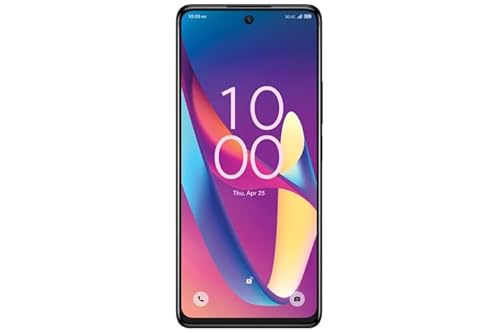
TCL 50 XL 5G — Best big-screen bargain
TCL builds televisions, and the 50 XL 5G reads like a TV maker’s idea of a phone: the biggest screen the budget allows, tuned for video first. That screen spans 6.78 inches at 120Hz, swallowing streamed matches, split-screen recipes, and large-print reading with ease. The Dimensity 6100+ supplies honest sub-6 5G including the bands US prepaid and mainstream carriers lean on, so this bargain does not cheat on the very feature this guide is auditing.
Everyday manners are better than the price chatter suggests. The 5,010mAh battery outlasts a day of streaming and navigation, stereo speakers give dialogue body, and TCL’s software extras for eye comfort suit the readers and long-shift watchers who gravitate to big displays. A headphone jack survives here, a small mercy for travellers with wired earbuds and aeroplane entertainment systems. Storage expansion via microSD keeps media libraries local and cheap.
Temper expectations where TCL spent less. The cameras document rather than dazzle, low-light shots smear, and the plastic build flexes its budget origins. Update support is brief compared with the Pixel 8a’s marathon pledge, and the display, while smooth, cannot match OLED contrast after dark. Buyers choosing it for films, football, and fonts the size of headlines will feel clever; buyers expecting flagship photography will feel misled by their own optimism rather than by anything TCL claimed.
Grandparents video-calling grandchildren are the TCL’s most devoted demographic, and the reasoning is pure ergonomics. Faces appear large, type stays legible without squinting, and the speakers render voices clearly enough that nobody shouts at a tablet across the kitchen. Prepaid carriers stocking this model have effectively become the family-plan gateway for older relatives who refuse fragile flagships. Its honest 5G keeps those calls stable on a walk to the shops, which is where the handset quietly outperforms the dusty home broadband it replaces.
- Display: 6.78-inch LCD, 120Hz
- Chip: MediaTek Dimensity 6100+
- Camera: 50MP main, basic companions
- Battery: 5,010mAh, wired charging
- Extras: stereo speakers, headphone jack, microSD slot
Strengths
- Huge, smooth screen tailored to video and reading.
- Genuine sub-6 5G with US band support at bargain positioning.
- Battery and speakers that respect long viewing sessions.
Trade-offs
- Camera quality is documentation grade.
- Short software support compared with Google or Samsung.
- LCD contrast trails OLED rivals in dark rooms.
Best for: streamers, large-print readers, and prepaid shoppers wanting real 5G. Not suited for: photographers or long-horizon owners.

Nothing Phone (2) — Best design statement
Nothing built its reputation on a transparent back and a constellation of LED strips called the Glyph, then backed the theatre with serious hardware. The Snapdragon 8+ Gen 1 remains brisk, the 6.7-inch 120Hz OLED is excellent, and the modem package covers the sub-6 bands that matter in the US, with the phone sold unlocked for GSM-leaning carriers. The Glyph itself turns out to be genuinely useful: flip the phone face-down and lights alone communicate timers, deliveries, and which contact is calling.
Software is the quieter triumph. Nothing OS stays close to stock Android, adds a distinctive dot-matrix personality, and avoids the duplicate-app clutter of heavier skins. Updates arrive respectably, battery life from the 4,700mAh cell covers a full day of mid-band 5G use, and wireless charging is included. For buyers bored senseless by identical glass rectangles, this handset offers individuality without the usual penalty of an exotic import’s broken band support.
Caveats keep it from the top step. Camera performance is good rather than class-leading, particularly after dark, and there is no telephoto. Carrier fit needs a moment’s thought: Verizon shoppers in particular should verify current compatibility reports, since Nothing’s US support historically centred on GSM networks. Water resistance is splash-grade. None of that dims its appeal for its intended owner, the style-conscious buyer who still demands that “5G capable” mean the fast bands, not merely the icon.
Café culture adopted the Nothing Phone (2) for an unanticipated reason: the Glyph lets owners stay present. Face-down on the table, it signals only what matters through patterns of light, ending the reflexive screen-checking that ruins conversations. Creative workers assign distinct light signatures to clients, so a glance replaces an unlock. Underneath the manners sits a properly capable modem, which matters when the café becomes an office and a client deadline depends on mid-band throughput rather than the venue’s contested Wi-Fi password.
- Display: 6.7-inch OLED, 120Hz
- Chip: Snapdragon 8+ Gen 1
- Cameras: dual 50MP main and ultrawide
- Battery: 4,700mAh, wired and wireless charging
- Extras: Glyph LED interface, transparent design
Strengths
- Design identity no rival in this guide attempts.
- Clean software with thoughtful notification hardware.
- Proper sub-6 coverage in an unlocked US-friendly package.
Trade-offs
- Carrier fit favours GSM networks; Verizon buyers must verify.
- No telephoto and middling night shots.
- Splash resistance rather than full waterproofing.
Best for: design lovers on GSM carriers who still demand real mid-band speed. Not suited for: Verizon-first households or zoom photographers.

Samsung Galaxy Z Fold 6 — Best folding multitasker
The Fold 6 is two devices negotiating shared custody of one modem, and both halves connect superbly. Closed, it is a narrow handset for one-handed replies; open, a 7.6-inch workspace where a spreadsheet, a video call, and a notes app coexist without the usual shuffling. Its Snapdragon 8 Gen 3 and Samsung’s fullest band package, sub-6 and mmWave alike, make it the most completely connected object in this guide, and renewed US unlocked stock has begun softening its formidable positioning.
Productivity features justify the fold for the right owner. Multi-window layouts survive in muscle memory within a week, the taskbar behaves like a desktop’s, and S Pen support on the inner display turns markup and sketching into natural acts. Video calls benefit from the hinge itself, propping the phone at angles no kickstand matches. For consultants, realtors, and anyone whose office is a sequence of other people’s offices, the Fold replaces a tablet purchase entirely.
Reality checks are unavoidable. The crease remains visible at certain angles, the inner screen demands gentler treatment than ordinary glass, and repairs outside warranty are sobering. Battery capacity is modest for the screen area, so heavy multitaskers will charge nightly without fail. It is also, even renewed, the most expensive route in this guide by a distance. Buy it because the workspace changes how you work, not because folding is fashionable, and confirm the renewed grading carefully before paying.
Realtors were among the Fold 6’s earliest believers, and their workflow explains the format’s future. A listing’s floor plan, the client’s message thread, and a mortgage calculator share the inner screen during a kerbside conversation, while the cover display handles quick calls between viewings. Photographers reviewing a shoot on location get a viewfinder large enough to judge focus honestly. The phone’s complete band support keeps those showings connected in suburbs where mid-band is still arriving street by street, and the hinge’s party tricks remain genuinely useful long after the novelty should have faded.
- Display: 7.6-inch folding AMOLED plus 6.3-inch cover screen
- Chip: Snapdragon 8 Gen 3 for Galaxy
- Cameras: 50MP main, ultrawide, 3x telephoto
- Battery: 4,400mAh, wired and wireless charging
- Network: sub-6 and mmWave 5G, US unlocked
Strengths
- A genuine tablet workspace that folds into a phone.
- The most complete band support in this roundup.
- Multitasking software matured over six generations.
Trade-offs
- Fragility and repair costs exceed every slab rival.
- Battery sized for a phone, feeding a tablet.
- Premium positioning persists even in renewed channels.
Best for: mobile professionals who would otherwise carry a tablet. Not suited for: butter-fingered owners, dust-heavy worksites, or modest budgets.
Comparison Table
| Phone | 5G layers | Screen | Headline strength | Watch out for |
|---|---|---|---|---|
| Google Pixel 8a | Sub-6 low + mid | 6.1-inch OLED | Updates and camera value | Slow charging |
| Samsung Galaxy S23 | Sub-6 + mmWave | 6.1-inch AMOLED | Compact completeness | Battery size |
| Motorola Edge (2024) | Sub-6 low + mid | 6.6-inch 144Hz pOLED | Screen and IP68 | Update cadence |
| TCL 50 XL 5G | Sub-6 low + mid | 6.78-inch 120Hz LCD | Big-screen value | Camera modesty |
| Nothing Phone (2) | Sub-6 low + mid | 6.7-inch OLED | Design and clean software | GSM-leaning fit |
| Galaxy Z Fold 6 | Sub-6 + mmWave | 7.6-inch folding AMOLED | Multitasking workspace | Fragility and cost |
What Does “5G Capable” Really Mean: Bands, Sub-6, and mmWave Explained?
Start with the physics. Radio spectrum behaves like lanes on roads of different widths. Low-band 5G, below 1GHz, travels for miles and passes through walls, but its lanes are narrow, so speeds resemble strong LTE. Mid-band, roughly 2.5 to 4GHz, balances reach with width: a few city blocks per tower, lanes broad enough for the several-hundred-megabit speeds in carrier adverts. mmWave, above 24GHz, offers motorway width across a single street, then surrenders at the first brick wall or tinted window.
“Sub-6” simply gathers the low and mid bands under one term, and it is where nearly all real-world 5G life happens. When a listing says a phone is 5G capable, the question to ask is which sub-6 bands it names. In the US, n71 anchors T-Mobile’s low band, n41 its mid band; n77 serves AT&T and Verizon mid-band ambitions; n5, n2, and n66 fill coverage gaps across carriers. A phone naming those bands is capable in the meaningful sense. One naming only exotic foreign frequencies is capable in the legal sense, which helps nobody at a bus stop in Ohio.
mmWave deserves its paragraph because marketing treats it as the main event. Inside a stadium, an airport concourse, or a few downtown intersections, mmWave delivers downloads that finish before the progress bar registers. Step inside a coffee shop and the signal often vanishes entirely, handing the phone back to sub-6. That is why this guide treats mmWave as a delightful bonus on the S23 and Fold 6 rather than a requirement: buy it if your life includes arenas and terminals weekly, ignore it happily if your map is suburbs and highways.
How Can You Check a Phone’s Real 5G Bands Before Buying?
The manufacturer’s specification page is the primary source, and the band list lives near the bottom under connectivity. Copy the model number from the exact listing you intend to buy, because regional variants of the same phone carry different radios. Cross-check that model against your carrier’s published band requirements, then search owner forums for the pairing of that model with your network; activation quirks surface there months before they reach official FAQs.
Beware the phrase “international version” in marketplace listings. It often signals a handset whose bands suit Europe or Asia beautifully and North America partially, which translates to 5G in some postcodes and LTE in others. The picks in this guide were selected in their US-friendly variants deliberately. If a price looks impossibly generous beside the same model’s other listings, the band table is usually where the missing money went.
After purchase, verify rather than trust. Field-test apps display the connected band in real time, so a walk from your front door to the nearest mid-band zone confirms whether the phone negotiates n41 or n77 as promised. Test during the return window, in the places you actually frequent, with your own SIM installed. A phone that proves its bands in your geography has passed the only examination that matters.
How Do Carriers Differ in What “Capable” Must Cover?
T-Mobile built its 5G reputation on mid-band breadth, converting spectrum from its Sprint merger into the n41 layer that blankets much of urban and suburban America. A capable phone for T-Mobile lives or dies by n41 plus the n71 low band beneath it. Verizon and AT&T arrived at mid-band later through n77, and their networks lean harder on low-band and LTE foundations outside cities, which is why a phone can feel transformed on one carrier and merely adequate on another while standing in the same kitchen.
Prepaid brands inherit their parent networks’ bands but sometimes add plan-level speed policies, so a capable phone on a discount carrier may still meet artificial ceilings at busy hours. That is a billing fact, not a hardware failure, and it explains many puzzled reviews. Before concluding a handset underperforms, test it with a full-tier SIM or during quiet hours. The picks here all possess the hardware headroom; what a plan permits them to use is a separate negotiation between you and a pricing page.
Roaming adds a final wrinkle. Domestic roaming agreements let a phone borrow a rival’s rural towers at reduced speeds, and international roaming leans on foreign mid bands such as n78 that US models increasingly include. The flagships here travel best, while budget models may cover fewer foreign frequencies. A buyer planning a long European trip should scan the band list for n78 and n28 alongside the American essentials, a two-minute check that separates a seamless arrival from a week of hotel Wi-Fi dependence.
What Happens to 5G Phones as Networks Move to Standalone 5G?
Most early 5G ran in non-standalone mode, where the phone anchored to an LTE core and used 5G as a speed booster. Standalone 5G cuts that cord, running entirely on a 5G core with lower latency and better efficiency. Carriers are migrating steadily, and the modems in this guide’s picks support standalone operation on their home bands, which protects them against the next several years of network engineering. A phone limited to non-standalone would slowly become a guest on networks redesigned for natives.
Voice calls ride this transition too. Voice over New Radio carries calls natively on 5G rather than dropping to LTE, improving call setup speed and letting data sessions continue at full pace during conversations. Support varies by carrier rollout more than by handset at this point, and every pick here is ready when its carrier flips the local switch. This is the unglamorous sense in which buying a properly capable phone in 2026 is an infrastructure decision, not a fashion one.
Latency improvements from standalone networks will matter most to gamers, remote workers on video calls, and anyone whose phone becomes a hotspot for a laptop. The reductions are measured in milliseconds that accumulate into responsiveness you feel rather than numbers you quote. When friends ask why a new phone feels snappier on the same street where the old one crawled, the honest answer is usually this quiet architectural migration working beneath the icon in the status bar.
Which Capable Phone Suits Rural, Suburban, and City Life Best?
Rural ownership is a low-band story with an LTE chorus. Towers sit miles apart, foliage eats signal in summer, and the phone’s antenna design matters more than its peak modem category. Larger handsets like the TCL 50 XL and Fold 6 often hold fringe signals a little longer simply because physics grants them roomier antenna layouts, while the flagships compensate with superior radio tuning. Any pick here will serve a farmhouse or a lakeside cabin, provided expectations are set by the map rather than the marketing: downloads will be patient, calls will be reliable, and a roof antenna or booster remains a legitimate household upgrade.
Suburban life is where mid-band shines brightest and where most readers actually live. Cul-de-sacs that suffered congested LTE evenings now stream happily on n41 and n77, and a capable phone transforms homework hours, doorbell cameras, and driveway video calls simultaneously. The Pixel 8a and Edge (2024) are the suburban sweet spot: priced for households buying two or three handsets, connected enough to exploit the new towers, and supported long enough to still feel modern when the street’s next network upgrade arrives.
City dwellers face congestion rather than distance. Their capable phone must negotiate crowded cells, hand over between small cells on successive corners, and find mid-band in the concrete shadows where low band alone would crawl. mmWave becomes a genuine treat in this geography, rewarding the S23 and Fold 6 in station concourses and arena districts. Urban buyers should also value Wi-Fi 6E or better for apartment life, since half their phone’s working day happens on home routers battling forty neighbouring networks.
How Should You Read a Speed Test Without Fooling Yourself?
A speed test measures a moment, a server, and a radio negotiation, not a phone’s character. Run three tests across a day in the places you actually use data: the morning platform, the lunchtime café, the evening sofa. Compare medians, not peaks, and watch the upload column, because posting video and joining calls depend on it while adverts quote downloads. A phone that posts modest but consistent numbers everywhere will serve you better than one that spikes gloriously downtown and sulks at home.
Latency deserves equal billing with throughput. Anything under roughly fifty milliseconds feels responsive for browsing and gaming; beyond a hundred, taps feel drunk. Jitter, the variation between pings, explains why a video call stutters despite a fat download figure. Field-test apps reveal the band and signal quality behind each result, turning anecdotes into diagnoses: a slow test on a strong mid-band cell implicates congestion or plan throttling, while a slow test on weak low band implicates geography.
Finally, test the tasks rather than the network in the abstract. Time a map download for your county, upload a one-minute video, and join a call from your worst room. Those three chores predict satisfaction more honestly than any synthetic benchmark, and they expose the fringe behaviours, band hunting, thermal slowdowns, and Wi-Fi handover quirks, that shape daily affection for a handset. A capable phone passes your chores, not a laboratory’s.
What Should Businesses and Schools Look for in a Capable Fleet Phone?
Organisations buying dozens of handsets read “capable” differently: it means a device their network, their security policy, and their support desk can all live with for four years. The Pixel 8a wins many of those tenders quietly, because Google’s update calendar is published, its management tools are mature, and its mid-band support prevents the helpdesk tickets that begin with “the warehouse has no signal.” Samsung’s Knox platform gives the S23 and Fold 6 an enterprise argument of their own, with containerised work profiles that keep personal photos and corporate documents politely separated.
Schools add durability and filtering to the calculation. A capable school phone must survive a backpack ecosystem of chargers, water bottles, and gravity, while its network support handles a campus where hundreds of students hit the same cells at lunch. The TCL’s price invites bulk purchase, though its shorter support life means a refresh cycle arrives sooner; administrators should cost the whole four years rather than the purchase order. Motorola’s Edge splits the difference for staff devices, offering polish and water resistance without flagship replacement anxiety.
Whatever the fleet, standardising on one or two models multiplies every advantage: shared chargers, shared cases, shared knowledge when something breaks at 8 a.m. on a Monday. The band discipline in this guide matters even more at scale, because a single wrong variant purchased fifty times becomes an institution-wide coverage complaint. Procurement teams should demand the exact model numbers in writing, the same advice this guide gives a parent buying one phone, merely with more zeros attached to the consequences.
When Is LTE Still the Smarter Connection?
Honesty requires admitting that 4G LTE remains the better tool for certain jobs. A phone left in a vehicle as a tracker, a handset serving a holiday home’s occasional hotspot duty, or a backup device in a glovebox sips power and stays cool on LTE while delivering everything those tasks demand. Some rural cells still offer uncongested LTE beside a strained low-band 5G layer, and a phone forced to LTE there can feel faster than its 5G neighbour. Capable hardware gives you the choice; dogma takes it away.
Voice reliability also still leans on mature LTE in many regions. Calls that drop during a 5G-to-LTE handover frustrate everyone, and until voice-over-5G is universal, some professionals in fringe areas deliberately pin their phones to LTE for call-heavy days. The picks here all handle that pinning gracefully in their network menus. Knowing when to use the older network is not a failure of the 5G era; it is the mark of an owner who treats bands as tools rather than trophies.
The broader lesson is that capability means options. A phone fluent in low band, mid band, mmWave where offered, and LTE everywhere owns the full menu of American mobile infrastructure. Cheaper handsets that skip layers force their owners into whatever the nearest tower happens to serve. That is why this guide keeps returning to band tables: they are the menu itself, printed in advance, for every meal the phone will eat during its working life.
How Do Antennas and Phone Size Quietly Shape 5G Performance?
Modem specifications get the headlines, but antennas decide what the modem is allowed to hear. Larger phones distribute their antenna lines around a bigger frame, which helps them maintain mid-band connections when a hand wraps the edges during a call or a gaming session. Compact phones fight that physics with clever tuning, and the S23’s strong real-world reception shows how far engineering can push back. Even so, a death-grip on any handset in a fringe area costs signal, which is why field tests with your own hands beat laboratory charts.
Cases join this story more often than owners expect. Metallic finishes, magnetic rings placed carelessly, and thick wallet folds can detune antennas or block mmWave windows entirely. The flagships here mark their mmWave antenna areas subtly, and case makers worth their price design around them. If a new case coincides with a sudden coverage complaint, remove the case before blaming the carrier; this five-second experiment has solved a surprising number of mysteries in support forums.
Foldables write their own chapter. The Fold 6 must maintain reception open, closed, and propped at angles, so Samsung distributes antennas across both halves and tunes for each posture. That it matches slab performance is an engineering achievement disguised as a non-event. For buyers, the lesson generalises: judge reception by testing in your grip, your case, and your rooms, because the specification sheet’s band list is a promise that only real-world handling can cash.
What Will 5G Capability Mean for Resale and Hand-Me-Downs?
A phone’s second life begins the day its first owner upgrades, and band completeness decides how wide that second market stretches. A handset fluent in every carrier’s mid-band can serve a niece on T-Mobile, a parent on Verizon, or a stranger across the country without a compatibility interrogation. Phones missing key bands sell into a narrower pool and wait longer for a buyer, which quietly taxes the original purchase. The flagships in this guide hold that advantage most strongly, but even the Pixel 8a’s honest band list makes it an easy hand-me-down within any household.
Software support compounds the effect. A used phone with years of patches remaining is a gift; one abandoned by its maker is a liability wearing a cracked screen protector. Parents calculating total family cost should therefore read the 8a’s seven-year pledge as a resale feature, not a footnote. When the day comes to pass a phone along, factory-reset it together with its new owner, transfer the number properly, and include the charger you would want to receive. The capable phone’s story continues, and its bands, chosen carefully at the start, are what let the story travel between networks without an unhappy chapter.
There is an environmental footnote worth a sentence of its own. Every additional year a capable handset stays in service is a year its materials are not replaced, and band completeness is often the difference between a phone that can serve a second owner and one retired early for coverage reasons alone. Buying the complete modem today is, in that small but real sense, the sustainable choice as well as the selfish one.
One more setup habit pays for itself: photograph the phone’s model and IMEI screens and store the images with your household documents. If the handset is ever lost at a venue whose lost-property office asks for identifiers, or if a carrier support call demands the exact variant code, you will answer in seconds instead of reading tiny print off a box in the attic.
Keep the retail box somewhere dry while you are at it; renewed buyers pay more readily for a complete set, and the box carries the variant codes that settle compatibility questions instantly.
And if a younger relative inherits the handset later, walk them through the network menu once yourself. Five minutes of explanation about bands, roaming toggles, and data savers prevents the confused phone call from a motorway service station that every family eventually receives, and it turns your careful purchase into a small piece of household wisdom passed hand to hand.
How Should You Set Up a New 5G Phone for the Best First Week?
Begin with the network menu rather than the wallpaper. Confirm the preferred network mode allows 5G with automatic fallback, update the carrier settings and the system software before installing your app library, and let the phone learn your towers with a few ordinary days of movement. Download your offline maps and music over Wi-Fi on the first evening, because a phone that starts life provisioned calmly behaves better than one baptised by a hundred simultaneous downloads in a weak-signal kitchen.
Then walk your own map with a field-test screen open once, not obsessively, but curiously. Note which band serves your desk, your bus stop, and your evening walk, and compare those notes with the promises in the listing you bought. If mid-band never appears where your carrier swears it lives, that discovery belongs inside the return window, raised with the seller while remedies are simple. Owners who perform this small ritual once rarely think about bands again, which is exactly the peace of mind the exercise buys.
Shoppers comparing two otherwise identical listings can use one practical shortcut: favour the variant whose documentation names aggregation across low and mid bands together, since that pairing is what American suburbs actually serve at dinner time, when every household streams at once and the network earns its keep.
How Do Carrier Aggregation and MIMO Quietly Decide Real-World Speed?
Two acronyms separate a phone that merely lists the right bands from one that exploits them. Carrier aggregation lets a modem bond several bands into a single wider pipe, combining, for example, a far-reaching low band with a fast mid band so uploads stay healthy while downloads fly. The flagships in this guide aggregate more combinations than the budget picks, which is one reason their speeds hold up at cell edges where a spec-sheet comparison predicted a tie.
MIMO, multiple antennas sending and receiving in parallel, is the second quiet multiplier. A 4×4 MIMO arrangement on mid band can nearly double throughput in good conditions compared with a 2×2 design, and it stabilises connections in reflective city streets where signals bounce between towers and glass. Larger handsets find it easier to fit those antennas, one more physics tax on compact phones, though the S23 shows how far careful engineering bends the rule.
Neither feature appears in the marketing headline, yet both explain why two phones showing the same band list can feel a generation apart on the same street corner. When a listing or review mentions aggregation combinations or MIMO class, treat it as meaningful evidence rather than jargon. Your future self, uploading a video from a fringe suburb, will be living inside those specifications.
Does 5G Drain a Battery Faster, and How Do You Manage It?
Early 5G phones earned their thirsty reputation honestly: weak mid-band signals forced radios to shout, and first-generation modems sipped power like commuters at a free coffee stand. Modern integrated modems have closed much of that gap. In strong mid-band coverage, today’s picks stream and navigate with battery costs close to LTE. The drain spikes at the fringe, where a phone clings to a distant 5G cell instead of accepting a strong LTE one, hunting and re-hunting until the percentage slides.
Management is mostly common sense wearing a settings menu. Every pick here offers a mode that prefers 5G where it is strong and falls back gracefully elsewhere; leave it on rather than forcing 5G constantly. In known dead zones, such as a rural cabin weekend, switching to LTE-only can add hours. Screen brightness still out-drinks any radio, so the big-display picks benefit most from auto-brightness discipline. None of this requires obsession: the current generation has made 5G stamina a solved problem for all but the most fringe-dwelling routines.
Heat is the other hidden tax. Sustained mid-band downloads in summer sun warm any handset, and thermal throttling then slows the very speeds the network offered. Downloading films over Wi-Fi before leaving, rather than at the platform, keeps both battery and temperature civilised. The Fold 6 and TCL, with their large surfaces, shed heat well; compact phones like the S23 concentrate it, one more reason their owners download ahead.
What Common Mistakes Do 5G Phone Shoppers Make?
Trusting the icon is mistake number one. A 5G symbol certifies a connection type, not a speed, and low-band 5G can feel indistinguishable from the LTE it replaced. Shoppers who buy any 5G-labelled bargain and expect transformation set themselves up for disappointment that a band check would have prevented. The second mistake mirrors it: paying a premium for mmWave hardware while living beyond mmWave’s tiny footprint, funding a feature that will activate twice a year at an airport.
Ignoring the plan ranks third. Some discounted carrier plans cap 5G access to low bands or deprioritise data in congestion, silently nullifying a capable phone. Fourth, buyers forget that a dual-SIM arrangement often limits one line’s 5G behaviour, which matters to the two-number crowd. Fifth, and most quietly expensive, is buying a foreign variant for its storage or colour, then discovering its bands strand the household on LTE across half its home city.
The thread connecting these errors is reading marketing before specifications. Bands, plan terms, and variant codes are dull paragraphs that decide delightful or dreadful ownership. Spend twenty minutes with them before purchase, as this guide’s shortlist already has, and the phone that arrives will match the phone you imagined.
Final Recommendation
For the majority of readers, the Pixel 8a is the correct answer to the capable question: honest mid-band support, a superb camera, and a seven-year runway at a humane position in the market. The Galaxy S23 adds mmWave and compact flagship manners for a little more, the Edge (2024) serves screen devotees, the TCL 50 XL stretches a budget across a huge display, the Nothing Phone (2) dresses the same competence in gallery clothing, and the Fold 6 turns capable connectivity into a mobile office.
Decide by geography first and taste second. Map where your days actually happen, match the bands to that map, and only then argue about cameras and finishes. A 5G capable phone chosen that way stops being a spec-sheet lottery and becomes what it should have been all along: a tool whose connection you stop thinking about, because it simply keeps up with your life.
Frequently Asked Questions
What is the difference between sub-6 and mmWave 5G?
Sub-6 covers frequencies below 6GHz, split between far-reaching low bands and speedy mid bands; it carries nearly all everyday 5G traffic. mmWave uses far higher frequencies for extreme speeds over very short distances, mostly in stadiums, airports, and dense downtown blocks.
Can a phone show 5G but still feel slow?
Yes. Low-band 5G often performs like strong LTE because its channels are narrow. Congestion, plan deprioritisation, and weak signal can also slow any 5G connection. Mid-band coverage is where the dramatic speed improvements actually live.
Which bands matter most in the United States?
Look for n71 and n41 for T-Mobile, n77 for AT&T and Verizon mid-band, plus n5, n2, and n66 for coverage depth. A phone listing those frequencies will feel properly capable across the country rather than in selected postcodes.
Is mmWave worth paying extra for?
Only if arenas, airports, or dense downtown districts feature in your weekly routine. Everyone else gains more from strong mid-band support, battery life, and update longevity. Treat mmWave as a bonus on phones you already like.
Do all variants of the same phone support the same bands?
No. Regional variants frequently differ in radios while sharing a name and appearance. Always check the band table for the exact model number in the listing you are buying, especially with international versions.
Will a 5G capable phone still work where only 4G exists?
Absolutely. Every pick here falls back to LTE automatically, and rural coverage will rely on that for years. The modem negotiates the best available network without any action from the owner.
Related Guides
Continue with best 4G and 5G unlocked phones for every carrier, best 5G Android phones ranked by experience, and best 5G phones for AT&T subscribers.


