Our Top Picks


What's inside
- Group size, model codes, and terminal position
- Cold cranking amps and honest starting expectations
- Sealed AGM versus flooded batteries that need watering
- Lithium iron phosphate: lighter weight, stricter charging rules
- Tray dimensions across Honda, Yamaha, Polaris, and Can-Am
- How the common replacement sizes compare on published data
- Dry charge batteries and correct first activation
- Winter storage and battery tender discipline
- Installation habits and the faults that imitate a bad battery
- Matching the battery to how the quad actually works
- Winches, sprayers, and the accessory loads that drain quad batteries
- Parasitic draw and the quad that dies while parked
- Terminal styles, cable condition, and the last inch of the circuit
- Seasonal machines: hunting quads, plough quads, and summer trail quads
- Warranty claims, core charges, and keeping the paperwork straight
- When the battery is not the problem: a short diagnostic order
- Reading rested voltage and what the numbers mean
- Cable gauge, starter draw, and voltage drop hunting
- Choosing between retailer house brands and established makers
- Preparing a quad for sale or long term loan
- The first start after installation, and what to listen for
- Check prices on Amazon
- Keeping records across a multi machine household
As an Amazon Associate I earn from qualifying purchases. This post may contain affiliate links at no extra cost to you.
Affiliate disclosure: some links leaving this page are affiliate links, meaning a purchase made after following one may return a small commission to this site at no added cost to the buyer, and commissions play no part in which batteries appear below or in the order they are discussed. The guidance here is assembled from manufacturer fitment charts, published cranking and dimension data, and themes that recur across owner reports from riders who keep utility and sport quads running season after season.
Replacing an ATV battery looks simple until the wrong unit arrives: terminals reversed, a case a few millimetres too tall for the strap, or cranking output that turns a cold morning start into a clicking relay and a winch assisted recovery plan. Quad batteries live hard lives, shaken over rutted trails, splashed through creek crossings, baked beside exhaust routing in summer, and left idle through winter, so the replacement decision deserves the same care as any other part that decides whether a ride starts at all.
The sections that follow begin with fitment language, the group size codes and terminal positions hidden inside model names, then move through cold cranking amps, the practical divide between sealed AGM construction and serviceable flooded designs, the weight and charging questions raised by lithium iron phosphate options, tray dimensions across the big four makers, dry charge activation, and winter tender habits. Riders maintaining several powersports machines may also value the charger comparisons gathered under best motorcycle battery chargers, since most of those units service quad batteries equally well.
Group size, model codes, and terminal position
ATV batteries are identified by codes that compress size, capacity, and terminal layout into a short string, with Yuasa nomenclature the most widely copied reference system in the category. In a code such as YTX14-BS, the opening letters signal the series and construction family, the number approximates the capacity class in amp hours, and suffix letters describe terminal arrangement and case details, which is why two batteries sharing a number but differing in suffix can still be the wrong part for a particular machine.
The letter L inside many codes carries a specific and easily missed meaning: it marks reversed polarity, with the positive terminal on the opposite side compared with the otherwise identical non L version. Installing a reversed unit forces cables to stretch or cross, strains terminals against the tray, and in the worst case invites a direct short if a stretched positive lead contacts grounded metal, so photographing the original battery before removal is the simplest insurance a rider can buy for free.
Cross reference charts published by battery makers translate between brands, mapping a Yuasa code to equivalents from other manufacturers whose naming may look entirely different while the case, capacity, and polarity match exactly. Relying on those charts beats relying on a seller search box, because marketplace listings occasionally group near matches together, and a battery that almost fits an ATV tray usually fits badly in ways that appear only when the seat or side panel refuses to reinstall.
Measuring the old battery remains worthwhile even with a code in hand, since previous owners sometimes install creative substitutions held down by improvised straps. Length, width, and height in millimetres, plus a note of which side each terminal occupies when the label faces you, gives a five point fingerprint that confirms any candidate in seconds and exposes substitutions before they become your own inherited problem.
Cold cranking amps and honest starting expectations
Cold cranking amps describe how much current a battery can deliver for thirty seconds at zero degrees Fahrenheit while holding voltage above a defined floor, a standardised test that makes CCA the most comparable number on a powersports battery label. Larger displacement engines, high compression singles, and machines started in genuine winter conditions need more of it, while a small trail quad garaged in a mild climate may never approach the limit of even a modest rating.
Matching or modestly exceeding the factory CCA figure is the sound target, because the starter motor draws what it draws and surplus cranking capacity mainly buys margin against age, cold oil, and a battery that sat through a month of inactivity. Chasing the highest CCA in a given case size can involve thinner plates or denser packing depending on design, so riders who value longevity often prefer a respected mid range rating from a maker whose published figures have a reputation for honesty.
Symptoms of insufficient cranking power are familiar: the starter labours, the solenoid chatters as voltage collapses under load, and the machine starts reluctantly only after repeated attempts warm the battery slightly. Those symptoms also appear when cable connections corrode or a starter itself wears out, so cleaning terminals and confirming cable condition belongs in the diagnosis before money is spent, a sequence experienced owners repeat whenever a no start discussion begins.
Reserve capacity and amp hour ratings answer a different question, namely how long accessories such as lights, heated grips, a sprayer pump, or a winch can run before the battery fades. Utility riders who idle around farm chores with lights and accessories drawing steadily should weigh amp hours alongside CCA, while pure sport riders who start once and ride hard all day can reasonably prioritise cranking performance and vibration resistance instead.
Sealed AGM versus flooded batteries that need watering
Absorbed glass mat construction holds electrolyte inside fibreglass separators pressed between the plates, producing a sealed battery that tolerates vibration well, mounts without spill anxiety, and needs no periodic watering because it recombines gases internally during normal charging. Those traits suit ATVs particularly well, since quads lean, bounce, and occasionally rest on their sides in ways that would weep acid from a vented flooded battery, which explains why AGM has become the default replacement choice across most of the market.
Flooded conventional batteries keep liquid electrolyte free inside the case, cost less at purchase, and ask the owner to inspect levels and top up with distilled water as charging gradually consumes moisture. On a quad whose battery hides beneath bodywork, that maintenance is easy to forget, and low electrolyte exposes plate tops that then sulphate and shed capacity permanently, so the apparent saving often evaporates within a couple of seasons of neglected service.
Self discharge separates the two designs during storage as well, with AGM typically losing charge more slowly on the shelf and therefore surviving the gap between hunting season and spring trail opening with less help. Flooded units stored discharged suffer accelerated sulphation, a chemical change that hardens on the plates and resists later charging, which is why a flooded battery left flat over winter so often becomes a flooded battery replaced in spring.
Charging profiles overlap but are not identical, and quality chargers offer distinct AGM and flooded settings because recommended voltages differ slightly between constructions. The comparisons collected at best agm battery chargers explain those profile differences in detail, and riders running a mixed fleet of quads, mowers, and motorcycles benefit from one charger that handles each chemistry correctly rather than a basic unit that treats every battery the same.
Lithium iron phosphate: lighter weight, stricter charging rules
Lithium iron phosphate batteries replace lead and acid with a chemistry that stores comparable starting energy in a fraction of the weight, often saving several pounds against the lead acid unit they succeed, and that saving is concentrated high in the chassis where riders notice it during slow technical riding. Their cranking delivery feels eager because voltage stays comparatively flat under load, and their low self discharge makes long parking intervals less punishing than lead acid owners expect.
The trade offs begin with charging compatibility, because a lithium powersports battery contains an internal management system expecting a suitable voltage profile, and older or basic lead acid chargers with automatic desulphation pulses can confuse or damage that electronics package. Makers of lithium units publish charger requirements explicitly, and following them is not brand preciousness but protection for a battery that costs considerably more than the lead acid equivalent it replaces.
Cold weather behaviour also differs, since lithium cells deliver reduced output when deeply chilled and may need a brief load, such as running the lights for a short interval, to warm themselves internally before the starter draws heavily. Riders in northern climates weigh that quirk seriously, and many conclude that a quality AGM remains the pragmatic winter choice while lithium suits machines used mainly in moderate temperatures or where weight saving genuinely matters to the riding style.
Physical fit needs attention too, because lithium cases are sometimes smaller than the tray they enter and ship with foam spacers to fill the difference securely. A battery that can shift under its strap will eventually chafe cables or crack a terminal, so using the supplied padding, confirming strap tension, and rechecking after the first rough ride are small steps that separate a tidy lithium conversion from a loose installation waiting to cause an electrical fault miles from the trailer.
Tray dimensions across Honda, Yamaha, Polaris, and Can-Am
Honda utility models such as the FourTrax and Rancher families commonly use mid size powersports batteries in the YTX14 class, mounted under the seat in a tray that leaves little spare height for taller substitutes. Yamaha Grizzly and Kodiak machines frequently share a similar size class yet route cables from a particular side, which makes the polarity variant as important as the case itself when ordering a replacement for those quads.
Polaris Sportsman models span several battery sizes across model years, and some place the battery low in the chassis or toward the front storage area rather than beneath the seat, changing both the size fitted and the contortions needed to change it. Can-Am Outlander and Renegade machines likewise vary by generation and engine, and their trays can be particular about height because bodywork closes closely over the top of the battery once panels are refitted.
Because manufacturers revise suppliers and layouts between model years, the year and exact trim of a machine belong in every fitment check alongside the model name, and the battery physically removed from the tray remains the ultimate authority when charts disagree. Owner forums for each brand carry long threads of confirmed fitments that function as a useful second opinion, particularly for older machines whose original specification has been superseded by a newer code in current catalogues.
Hold down method deserves a glance while the tray is empty, since rubber straps perish, metal brackets corrode, and missing foam pads let a new battery vibrate against hard plastic all season. Replacing a perished strap during the battery swap costs little and protects the new unit, and cleaning leaves, mud, and corrosion out of the tray at the same moment gives the installation the tidy start that encourages the next owner, or the same owner in three years, to maintain it properly. Riders who maintain batteries across several machines often keep notes beside the guidance in best automatic battery chargers for which charger lead belongs to which vehicle.
How the common replacement sizes compare on published data
The following paragraphs survey the replacement landscape size by size using figures that makers and retailer listings publish openly, so the relationship between code, cranking output, and weight stays visible before any individual machine fitment is confirmed against a chart.
The Weize YTX20L-BS lists 210 cold cranking amps on its published sheet, with a sealed case measuring in the common powersports footprint and a stated weight near 17.1 pounds. Warranty terms advertised for this segment commonly span eighteen months, and owners frequently advise keeping the receipt because claims usually start from the purchase date rather than the installation date. Factory literature for the Banshee YB14L-A2 quotes 220 cold cranking amps, terminal placement matching the original equipment layout, and a shipping weight around 12.6 pounds.
In the YB14L-A2 size, the Chrome Battery version publishes 270 cold cranking amps and roughly 17.1 pounds, figures that place it directly against the factory fitted unit it replaces. Some makers offer this size in both standard and high output variants sharing one case, a split that rewards reading the cranking figure rather than assuming from the code alone. Retailer specifications describe the Banshee YTX20CH-BS as a 270 amp rated unit of about 12.6 pounds, sold with the hardware needed for standard tray mounting.
Published data for the Mighty Max Battery YTX20L-BS gives 200 cold cranking amps and 15.4 pounds, while the maker fitment chart lists several seasons of Honda, Yamaha, Polaris, and Can-Am machines. Several makers print a production date code on the top label, and experienced buyers check it because a battery that already sat 9 months in a warehouse arrives with part of its service life quietly spent. The Weize entry in YTX14 form advertises 200 cold cranking amps on its label and 13.9 pounds in its dimension table, matching the envelope most factory trays were moulded around.
Owners cross shopping the Yuasa YTX7L-BS will find 210 cold cranking amps in the headline data, 15.4 pounds in the weight column, and polarity arranged to mirror the stock battery it succeeds. Several makers print a production date code on the top label, and experienced buyers check it because a battery that already sat 17 months in a warehouse arrives with part of its service life quietly spent. Specification summaries for the Banshee YB14L-A2 state 340 cold cranking amps, approximately 9.8 pounds total, and absorbed glass mat construction in the majority of current listings.
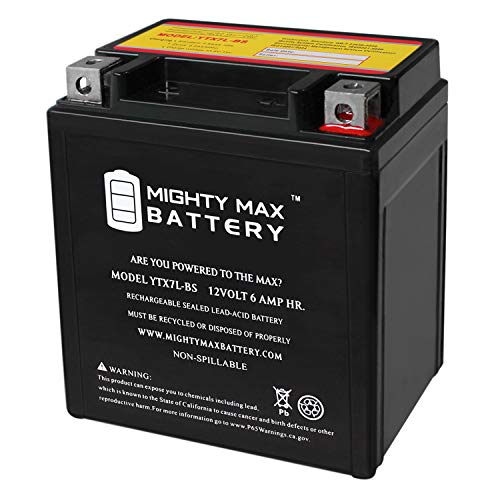
A YTX20CH-BS battery from Banshee carries published figures of 310 cold cranking amps and 11.2 pounds, which simplifies comparison against the rating stamped on the original unit. Terminal hardware in the box usually includes two bolts with square nuts, a small detail that matters when the original fasteners have corroded beyond reuse. The documented sheet for the Mighty Max Battery YTX7L-BS reads 240 cold cranking amps with weight near 11.2 pounds, and its maker positions it as a direct dimensional replacement rather than a universal approximation.
Why two batteries with the same code can still differ
Shared codes guarantee shared dimensions and polarity, not shared plate quality, paste formulation, or quality control, which is why one maker unit in a given size outlasts another by seasons in owner reports. Published weight offers a rough clue, since a heavier battery in the same case usually contains more lead and therefore more active material, and riders comparing otherwise identical listings often treat a noticeable weight gap as meaningful information rather than a shipping detail.
Freshness compounds the difference, because lead acid batteries age on the shelf as surely as they age in a tray, losing charge and slowly sulphating while they wait for a buyer. A recently produced unit from a mid tier maker will usually out serve an older premium unit that sat discharged in a distribution warehouse, and that is why date codes feature so prominently in the advice experienced riders give to first time buyers in this category.
Fitment tables pair the Banshee YTX9-BS with 210 cold cranking amps and a listed 9.8 pounds, and owner feedback on this size tends to discuss tray fit before anything else. Case dimensions in this group typically run near 150 millimetres in length, 85 in width, and 144 in height, though individual makers vary by a millimetre or two. For the ExpertPower YB14L-A2, published cold cranking performance reaches 270 amps and listed mass sits near 10.4 pounds, numbers that anchor the replacement decision for many utility quads.
Cross reference material places the Mighty Max Battery YB14L-A2 at 200 cold cranking amps and 15.4 pounds, intended for machines whose factory battery carried the same code family. Amp hour capacity for units in this class generally sits between 12 and 20 amp hours depending on the exact code, which shapes how long accessories can run with the engine off. Where the Banshee catalogue covers YTX9-BS, the entry pairs 210 cold cranking amps with 10.4 pounds and notes the tray hardware pattern common to that size group.
A rider scanning the Chrome Battery range for YTX12-BS fitment will find 240 cold cranking amps quoted beside 15.4 pounds, figures meant to be checked against the removed battery. Cold climate packages occasionally bundle this size with an insulating wrap, reflecting how strongly temperature governs cranking performance in northern service. Within the Deka line, the YTX9-BS unit is the one documented at 385 cold cranking amps and 11.2 pounds, dimensions that decide whether bodywork closes cleanly above it.
Documentation accompanying the ExpertPower YB16CL-BS confirms 270 cold cranking amps and a 10.4 pound scale figure, consistent with its role as a standard replacement size. Cold climate packages occasionally bundle this size with an insulating wrap, reflecting how strongly temperature governs cranking performance in northern service. The Deka catalogue entry in YTX20CH-BS states 13.9 pounds first in its table while the 340 amp cranking figure headlines the label, serving two different comparison habits.
Judged purely on published numbers, the Deka YB14L-A2 presents 340 cold cranking amps and 10.4 pounds, a pairing that invites comparison with the original equipment benchmark. Several makers print a production date code on the top label, and experienced buyers check it because a battery that already sat 14 months in a warehouse arrives with part of its service life quietly spent. Sales literature for the Yuasa version emphasises cold starting while the technical table underneath records YTX9-BS fitment and 17.1 pounds for buyers who read further.
Dry charge batteries and correct first activation
Some replacement batteries ship dry charged, meaning the plates were charged during manufacture and the electrolyte travels in a separate sealed container, leaving the owner to perform activation before installation. The procedure rewards patience: fill each cell evenly to the marked level, let the battery stand so the acid absorbs and the initial reaction settles, then apply a slow initial charge at the rate the instruction sheet specifies before the battery ever meets a starter motor.
Rushing activation is the classic route to a short lived battery, because a dry charged unit pressed straight into service without its full initial charge begins life partially discharged and never quite recovers the capacity it was built to deliver. Makers state plainly that correct first charging can decide a large share of eventual service life, and owners who follow the sheet methodically routinely report better outcomes than those who treat activation as a formality between unboxing and riding.
Acid handling demands ordinary respect rather than fear: gloves and eye protection, a surface that tolerates splashes, baking soda solution nearby for spills, and no smoking or sparks anywhere near a battery that vents hydrogen while charging. Any electrolyte left over belongs in secure storage away from children or in local hazardous waste collection, never poured casually into a drain, and the empty container should be rinsed and disposed of according to the guidance printed on it.
Factory activated sealed batteries remove this entire stage, arriving filled, charged, and ready after a confirming top up charge, which is a major reason many riders now choose them even at a modest premium. For machines that must return to service quickly, such as a work quad feeding livestock through winter, the sealed route also removes the risk of an activation mistake made in a hurry inside a cold barn at the end of a long day.
Winter storage and battery tender discipline
A battery tender, properly called a maintainer, holds a stored battery at a float voltage that offsets self discharge without the overcharging a basic trickle unit can inflict over months. Connecting a quad in autumn and leaving it on a quality maintainer until spring is the routine most consistently linked with multi season battery life in owner accounts, particularly for AGM units whose slow self discharge still empties them across a long, cold storage period.
Preparation before storage multiplies the benefit: wash and dry the battery top so damp grime cannot form a slow discharge path between terminals, clean and grease the connections, confirm electrolyte level on serviceable flooded designs, and charge the battery fully before the maintainer takes over. A maintainer asked to rescue an already flat battery may never bring it back, because maintainers are designed to hold charge rather than restore it, and sulphation that sets in during weeks at low voltage resists ordinary charging afterwards.
Riders without power at the storage building can remove the battery to a maintained location, disconnect the negative lead to stop parasitic draws from clocks and controllers, or use a small solar maintainer where the machine parks in daylight, an approach surveyed among the options at best 12 volt solar chargers. Whatever the method, a stored battery should rest on a shelf or board rather than damp ground, separated from fuel containers and from the clutter that accumulates around parked machinery over a season.
A discharged battery can freeze in severe weather because its electrolyte approaches plain water as charge falls, and ice expansion cracks cases and buckles plates in ways no spring charging routine can undo. Keeping charge up through winter is therefore mechanical protection as much as electrical convenience, and a springtime load check, or at minimum a rested voltage reading before the first ride, tells the owner whether the battery survived storage as a starting battery or merely as a heavy souvenir of the previous season.
Installation habits and the faults that imitate a bad battery
Correct installation order protects both the machine electronics and the person holding the wrench: connect the positive lead first and the negative lead last when fitting, reverse that order when removing, and keep tools from bridging the terminals against the frame in between. A surprising share of replacement batteries are condemned within weeks for faults that trace back to a loose ground, a corroded eyelet hidden under insulation tape, or a hold down strap left slack enough for the battery to hammer its own terminals loose on rough ground.
Dielectric grease or purpose made terminal protectant slows the white and green corrosion that creeps across lead posts, while felt washers treated with anti corrosion compound give flooded batteries extra defence against acid film migrating up the post. Torque matters in both directions, because under tightened hardware vibrates loose and over tightened hardware cracks the soft lead terminal, and either failure presents later as intermittent starting that owners understandably blame on the battery itself.
After installation, a charging system check separates battery problems from machine problems: a healthy quad charging circuit typically shows a clear voltage rise at the battery with the engine running and revs raised, while no rise points toward the regulator, rectifier, stator, or their wiring. Fitting a new battery to a machine that cannot charge it simply schedules the next failure, and makers warranty departments know the pattern well enough to ask about charging voltage early in any claim conversation.
Finally, disposal of the old unit belongs in the same job list as installation, since retailers and parts stores commonly accept cores for recycling and the lead inside a powersports battery is valuable material in that loop. Leaving a dead battery in a barn corner leaks risk without benefit, while returning it promptly completes the replacement properly and often recovers a core charge that quietly reduces the true cost of the new battery the rider just installed.
Matching the battery to how the quad actually works
A trail sport quad ridden weekly in mild weather asks mainly for vibration resistance and dependable cranking, so a sealed AGM from a reputable maker in the exact factory code is rarely the wrong answer. A utility machine that winches, sprays, ploughs snow, and powers auxiliary lighting asks for more reserve capacity and forgiving deep draw behaviour, pushing the decision toward the stronger end of the correct size class and toward charging habits that replace accessory energy promptly after each working session.
Machines that sit for months between uses, common among hunting quads and seasonal farm vehicles, reward low self discharge and maintainer compatibility above headline cranking figures. For those owners the best replacement is often the battery whose maker publishes clear storage guidance and whose seller moves stock quickly enough that units arrive fresh, because calendar ageing during idle months, not starting effort during active weeks, is what actually consumes the service life of their batteries.
Budget decisions deserve a whole ownership view rather than a shelf price view, since a cheaper flooded unit replaced twice can cost more than one sealed unit that serves through both intervals, before counting the rides missed to flat batteries and the labour of repeated swaps under bodywork. None of that makes the premium choice mandatory, but it reframes the comparison honestly, and honest framing is what separates a considered purchase from a hopeful one in a category full of near identical black boxes.
Whichever direction a rider chooses, recording the purchase date, code, and maker on a label fixed to the battery itself pays off years later when memory blurs and the next replacement decision begins. That tiny record, combined with the fitment, cranking, and storage principles covered above, turns battery replacement from a recurring emergency purchase into a planned maintenance event with predictable cost and a machine that starts when the key turns.
Winches, sprayers, and the accessory loads that drain quad batteries
A winch pull is the heaviest electrical event most utility quads ever experience, drawing starter level current for far longer than a starter motor runs and heating cables, solenoids, and the battery itself in the process. Maker guidance for winches assumes a healthy battery and a running engine contributing charge during recovery, and owners who winch repeatedly on a tired battery discover that the last pull of the day can consume the energy the ride home depended on.
Agricultural sprayer pumps, seed spreaders, and auxiliary lighting add smaller but steadier draws that accumulate across a working morning, quietly converting a starting battery into a partially discharged one by lunchtime. Amp hour capacity, rather than cranking rating, predicts how gracefully a battery absorbs that pattern, which is why working machines benefit from the stronger end of their correct size class and from a charging top up after heavy accessory days.
Heated grips and thumb warmers transform winter riding comfort while adding a continuous load that marginal charging systems on older quads barely outpace at low engine speeds. Riders who plough snow at walking pace with lights, grips, and a winch cycling should expect the battery to finish the session lower than it started, and planning a maintainer connection after ploughing is the practical countermeasure repeated throughout owner discussions of winter work machines.
Tracking accessory habits honestly before choosing a replacement prevents a common misdiagnosis in which a perfectly good battery is blamed for a workload it was never sized to carry. Listing every electrical accessory, estimating its draw from maker figures, and comparing the total against alternator output at working engine speeds gives a rider arithmetic instead of suspicion, and occasionally reveals that the correct purchase is a charging habit rather than a larger battery.
Parasitic draw and the quad that dies while parked
Modern quads draw small currents while parked for clocks, controllers, and in some cases tracking or security electronics, and a draw measured in milliamps still empties a small powersports battery across a month of stillness. Owners chasing a repeated flat battery can measure that draw with a multimeter in series at the negative terminal, following the meter maker instructions carefully, and compare the reading against the expectation that a healthy parked machine sips rather than gulps.
Aftermarket accessories are frequent culprits because a light bar relay, a powered phone mount, or an audio system wired directly to the battery may keep a circuit awake long after the key is removed. Wiring accessories through switched power, or adding a simple isolating switch for seasonal equipment, converts a mysterious drain into a managed one, and the battery that was replaced twice sometimes turns out to have been innocent all along.
Corroded ground straps create a different parked problem by preventing full charging while riding, so the battery slowly loses ground week after week despite regular use. The symptom pattern, a machine that starts eagerly after a maintainer session and fades across several rides, points toward charging path resistance, and cleaning every ground point between engine, frame, and battery costs an hour that can save the price of an unnecessary replacement.
Keeping a simple log of parked duration and starting behaviour turns these faults from folklore into evidence, because dates reveal whether the battery fades after three days or three weeks, and that timescale separates parasitic draw from self discharge with unusual clarity. Riders who log tend to fix the actual fault once, while riders who guess tend to own a shelf of batteries that were never the problem.
Terminal styles, cable condition, and the last inch of the circuit
Powersports batteries use compact flag or post terminals sized for the cables quads carry, and replacement units occasionally arrive with hardware whose bolt length or nut style differs subtly from the original. Forcing mismatched hardware cross threads soft lead, leaves connections finger tight beneath a seemingly snug bolt, or cracks a terminal boss, so comparing new hardware against the old before installation is a two minute check with an outsized effect on reliability.
Cable ends deserve inspection as part of every battery change because the green and white corrosion that grows inside a crimped eyelet can hide beneath intact looking insulation. Flexing the cable near the eyelet, looking for stiffness or powder, and cleaning bright metal surfaces before reassembly restores the low resistance path a starter needs, while a cable that crumbles or shows broken strands has reached the end of its own service life regardless of battery condition.
Cable routing after installation should keep leads clear of exhaust heat, steering movement, and sharp tray edges, with enough slack for vibration but not enough to chafe against bodywork. Factory routing photographs in service literature exist partly for this reason, and returning cables to their original clips and guides, rather than the shortest path a tired installer can find, prevents the slow insulation wear that produces intermittent faults months later.
A final tug check on each connection, a wiggle of the battery against its hold down, and a first start watched with the seat still off complete the installation more honestly than any paperwork. Faults found in that moment cost seconds, while the same faults found on a trail cost a tow, and the difference explains why methodical riders treat the last inch of the circuit with as much respect as the battery itself.
Seasonal machines: hunting quads, plough quads, and summer trail quads
A hunting quad may run intensively for six autumn weeks and then sit until the following season, a duty cycle in which calendar ageing and storage discipline dominate every other battery consideration. For such machines the replacement decision should favour low self discharge construction and a maker whose storage guidance is explicit, and the ownership routine should include scheduled maintainer checks even when the machine itself is never started between seasons.
Snow plough duty inverts the pattern, demanding repeated cold starts, winch cycles for blade lifts, and long low speed running with lights blazing, all in temperatures that suppress battery output. Riders in plough country commonly keep the battery on a maintainer between storms as a matter of course, because the machine must start at the worst moment of the coldest morning rather than on an average afternoon chosen for convenience.
Summer trail quads face heat instead, and under seat temperatures on slow technical climbs can stay high enough to accelerate water loss in serviceable flooded batteries and to age any chemistry faster than its temperate climate rating assumes. Checking flooded levels mid season, keeping terminals clean against dust and dried mud, and parking in shade where possible are the modest habits that separate a battery that survives three summers from one that fades during the second.
Recognising which seasonal pattern a machine actually lives prevents buying for an imaginary duty cycle, a subtle error in which a rider purchases maximum cranking output for a storage problem or maximum reserve for a starting problem. The correct size code remains non negotiable in every pattern, but within that code the choice between constructions and ratings becomes clearer once the calendar of real use is written down honestly.
Warranty claims, core charges, and keeping the paperwork straight
Powersports battery warranties typically run from the purchase date and require proof of that date, so photographing the receipt and the top label together on installation day creates a record that survives faded thermal paper. Claim conversations go more smoothly when the owner can also describe charging equipment and storage habits, because makers distinguish manufacturing defects from sulphation caused by months of discharged storage, and documentation supports the honest cases.
Core charges refunded on return of the old battery are a normal part of the replacement economy, reflecting the value of lead returned to the recycling stream, and riders sometimes forfeit that refund by leaving the old unit behind during a rushed purchase. Planning the return trip when buying, or choosing a seller whose core process is simple, keeps the true cost of the replacement at the figure the buyer believed they were paying.
Registering a purchase where the maker offers it, and noting the installation date on the battery label in marker, closes the loop between paperwork and machine. Years later that small label inscription settles arguments about battery age instantly, informs the next replacement decision with fact instead of estimation, and occasionally surprises an owner who discovers the battery they blamed for a starting fault is barely a season old and therefore probably innocent.
When the battery is not the problem: a short diagnostic order
Experienced owners work a no start in a fixed order because the order is cheap before it is expensive: confirm the kill switch and neutral or brake interlock positions, listen for the solenoid, inspect terminals and grounds, read rested battery voltage, and only then suspect deeper electrical components. A rested voltage near full charge with a starter that still clicks directs attention to connections and the starter circuit, while low rested voltage after recent riding directs attention to charging output.
Jump starting from another vehicle can confirm a discharged battery but should follow the vehicle maker instructions, with the donor engine state and cable order exactly as specified, because quad electrical systems are compact and intolerant of voltage spikes from careless connections. A machine that starts instantly on assistance and charges normally afterwards probably suffered a drain or storage lapse, while one that dies again quickly is announcing a fault that a new battery alone will not cure.
Starter motors themselves wear, drawing more current as brushes and bushings age until even a strong battery sounds exhausted turning them, a pattern recognisable when cranking stays laboured with a verified full battery and clean connections. Recognising that pattern saves riders from serial battery purchases, and it illustrates the wider principle running through this guide: the battery is one component in a starting system, and honest diagnosis treats the system rather than the most replaceable part.
Reading rested voltage and what the numbers mean
A lead acid battery read with a simple voltmeter after resting several hours tells a surprisingly honest story, with roughly 12.7 volts indicating full charge for a conventional flooded unit and readings near 12.2 volts suggesting about half charge remaining. AGM units rest slightly higher when full, and maker charts for each construction give the precise bands, so comparing a reading against the correct chart matters more than memorising one universal number.
Readings taken immediately after riding or charging sit artificially high because of surface charge, which is why experienced owners either wait or apply a small load briefly before measuring, following the battery maker guidance for the method. A battery that shows a healthy rested figure yet collapses the moment the starter engages has failed a different way, usually through high internal resistance, and that distinction explains why voltage alone cannot acquit a battery that behaves badly under load.
Load evaluation with a dedicated carbon pile or electronic conductance instrument, available at most parts stores as a counter service, completes the picture by estimating cranking health against the rating on the label. Riders preparing a machine for a remote trip often request that check before departure, because discovering a marginal battery at a parts counter is incomparably cheaper than discovering it at a trailhead beyond mobile coverage.
Cable gauge, starter draw, and voltage drop hunting
Voltage drop evaluation across each cable and connection while cranking reveals resistance that visual inspection misses, with small fractions of a volt expected across healthy segments and larger drops marking the exact joint that needs cleaning or replacement. The method requires only a multimeter and the meter maker safety guidance, yet it converts the vague complaint of lazy starting into a map of the circuit showing precisely where energy is being wasted as heat.
Starter current draw rises as engines grow, oils thicken, and starters themselves wear, which is why a battery that served a machine happily when new may seem inadequate years later without having changed at all. Comparing measured draw against the starter specification in service literature separates battery weakness from starter appetite, and that separation decides whether money belongs in a battery, a starter service, or simply in thinner winter grade oil where the engine maker permits it.
Ground path integrity deserves equal billing with the positive side because every amp the starter consumes must return through the engine case, frame, and ground strap, and any corrosion in that loop throttles starting exactly as a weak battery would. Machines stored outdoors or washed frequently grow that corrosion fastest, and an annual ground circuit inspection belongs on the same maintenance list as oil and filters for quads that must start reliably.
Choosing between retailer house brands and established makers
House brand batteries sold through large retailers often originate from the same factories as recognised names, yet the specification discipline, date freshness, and warranty handling behind them vary enough that maker reputation still carries information. Buyers comparing a house label against an established maker should weigh published cranking figures, stated weight, warranty length, and local return convenience together, because a battery replaced under warranty at a nearby counter can outvalue a theoretically superior unit claimed through a distant process.
Freshness at purchase can outweigh brand entirely in this category, since lead acid stock rotates at different speeds in different outlets and a recently delivered house brand may be months younger than a slow moving premium unit. Checking the date code before paying, and choosing the freshest example on the shelf where the retailer permits it, is a legitimate and widely practised buyer behaviour that staff in parts departments recognise immediately.
Reviews for batteries require careful reading because a large share of negative reports describe fitment mistakes, charging neglect, or machine faults rather than battery defects, while glowing reports written on installation day describe hope rather than service life. The most informative owner accounts mention seasons served, storage method, and machine type, and aggregating those details across many reports gives a fairer picture than any average score computed from first impressions.
Preparing a quad for sale or long term loan
A machine leaving for a new owner or a season with a relative deserves a battery whose age and habits are stated plainly, because an honest description prevents the new keeper from misreading normal maintenance as failure. Including the charger or maintainer the battery has lived on, noting its code and installation date, and passing along any fitment quirks of the tray turns a handover into continuity rather than a fresh round of guesswork for somebody else.
For machines entering indefinite storage rather than active loan, removing the battery to a maintained environment usually serves better than any in machine arrangement, since it eliminates parasitic draw, leak risk, and forgotten maintainer failures in one decision. Labelling the removed battery with the machine it belongs to and the date of removal prevents the familiar workshop mystery of orphan batteries whose origin nobody can reconstruct two winters later.
The first start after installation, and what to listen for
The first start on a new battery deserves attention rather than relief, because the sound and speed of that crank establish the baseline every future start will be compared against. A healthy installation turns the engine briskly with no solenoid chatter, no cable warmth afterwards, and a charging voltage that settles into the maker specified range once the engine runs, and noting those three observations in the moment gives the owner a reference that memory alone would blur within a month.
If that first crank labours despite a charged battery, stopping to recheck terminal tightness and ground integrity is wiser than repeated attempts that heat the starter and drain the new unit. Most installation faults announce themselves immediately and cheaply, while the same faults discovered after a week of struggling starts have already taxed the battery, the starter, and the patience of everyone sharing the machine.
Check prices on Amazon
Live listings for the shortlist in this guide are pulled from Amazon below, so prices and availability are always current at the moment you look.


Keeping records across a multi machine household
Households running several quads, a mower, and perhaps a motorcycle benefit from one shared battery notebook or phone note listing each machine, its battery code, installation date, and maintainer arrangement. That single page prevents the annual confusion in which three black batteries of similar size sit on a bench and nobody remembers which machine each belongs to, a confusion that ends with the wrong polarity variant forced into a tray it was never meant to enter.
The record also smooths seasonal routines, because spring preparation becomes a checklist executed against known ages rather than a series of surprises discovered one flat battery at a time. Machines whose batteries approach the age where their construction typically fades can be scheduled for evaluation before the season begins, converting emergency purchases at peak season availability into planned replacements chosen calmly with full choice of maker and freshness.
When a machine is sold, passing that record to the buyer is a small courtesy that raises confidence and reflects honestly on the seller, since a documented battery history signals a maintained machine far more persuasively than a verbal assurance. Buyers who receive such records consistently report fewer early ownership surprises, and the habit costs the seller nothing beyond the minutes already spent keeping the record for their own benefit.
That record keeping instinct, applied consistently, changes the economics of ownership as much as the reliability, because batteries replaced on schedule at a chosen moment almost always cost less, in money and in ruined plans, than batteries replaced in desperation at the only store open near a trailhead on a holiday weekend.
Match the code, respect the cranking figure, keep the charge topped through winter, and the next replacement becomes a scheduled task instead of a stranded morning.