Our Top Picks
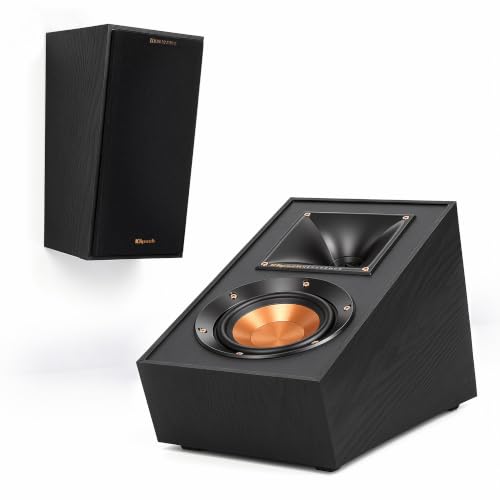 Klipsch R-41SA Powerful Detailed Home Speaker Set ofR-41SA13 x 5.75 x 7.5 inches6.75 poundsCheck on Amazon
 Fluance Elite High Definition 2-Way Bipolar Surround SpeakersBipolar Speaker5.5 x 11 x 10.2 inches14.8 poundsCheck on Amazon


What's inside
- What rear channels actually do in 5.1 and 7.1
- Monopole, bipole, and dipole: choosing a radiation pattern
- Timbre matching with the front stage
- Placement: height, angle, and distance
- Sensitivity, impedance, and the receiver partnership
- Running the wire: walls, trim, and honest alternatives
- Calibration: levels, distance, and delay
- Small rooms, large rooms, and different honest answers
- The upgrade path: 3.1 to 5.1 to 7.1
- Common mistakes when buying rear speakers
- How film, music, and games use the rear field differently
- Reading specifications with a surround eye
- Living with the system after the first week
- Rear speakers in rooms that also work for a living
- Questions to settle before ordering
- Height, width, and the shape of the rear field
- Seasonal and everyday maintenance of the rear pair
- Check prices on Amazon
- Two worked layouts, described in words
As an Amazon Associate I earn from qualifying purchases. This post may contain affiliate links at no extra cost to you.
As an Amazon Associate we earn from qualifying purchases. Rear channel speakers rarely get the attention lavished on the front pair, yet they are the difference between a film that happens in front of you and a room that seems to extend past its own walls, with rain behind the sofa and a doorway creaking somewhere over your shoulder.
That modest job description hides a surprising number of decisions. Rear speakers must blend with a front stage they did not grow up with, fire from positions dictated by doors and windows rather than by acoustics, and reproduce everything from a whisper in a thriller to the roar of a stadium crowd without calling attention to themselves as boxes in a room. Choosing them well is less about finding the most impressive small speaker available and more about matching type, placement, and calibration to the system and the space you already have.
What rear channels actually do in 5.1 and 7.1
In a 5.1 system, the rear pair, more precisely called the surround pair, carries the ambience and effects that wrap around the listening area: the murmur of a restaurant behind the main characters, wind moving through trees, the echo that tells you a scene sits inside a warehouse rather than a studio. Dialogue and the musical score stay anchored at the front, where the left, center, and right speakers do the heavy lifting. The surrounds support that front stage; they are not asked to replace it, and judging them as if they were main speakers leads to poor purchases.
A 7.1 system splits the rear work between side surrounds and rear surrounds behind the seats. That split lets effects travel more convincingly, passing from front to side to back instead of jumping, and it gives larger rooms a smoother sense of envelopment. It also doubles the placement and wiring questions, and it only pays off when the room offers genuine space behind the listening position. In a room where the sofa presses against the back wall, a well-arranged 5.1 layout will usually outperform a cramped 7.1 attempt, a point worth remembering before buying four speakers out of ambition.
Modern object-based soundtracks add height possibilities, but the rear channels remain the foundation of the surround field. Without them, height effects float above a flat front presentation; with them placed and leveled properly, the whole rear half of the room becomes part of the soundtrack. Readers planning the wider system around these speakers will find helpful context in this overview of best 5 2 surround sound speakers, which covers how multi-speaker layouts divide labor across a room.
Effects, ambience, and the art of not being noticed
The best rear speakers disappear. You notice the room they create, not the boxes creating it, and that invisibility depends on restraint in both level and character. A surround pair set too loud turns every film into a demonstration, pulling your attention backward each time an effect arrives. A pair with a bright, forward character unlike the front speakers breaks the illusion differently: a voice or instrument panning across the room changes personality mid-journey, and the spell of a continuous space breaks with it.
Rear channels also carry more sustained ambience than many buyers expect. Extended scenes in rain, crowds, traffic, or a humming spacecraft ask the surrounds to play continuously at moderate levels for minutes at a time, not merely to pop with occasional effects. That duty favors speakers that stay composed and unstrained on long passages, with enough sensitivity to work cleanly at modest receiver power, over speakers that impress in a brief loud moment and harden or thin out when an ambience bed runs under an entire sequence.
Monopole, bipole, and dipole: choosing a radiation pattern
A monopole speaker is the familiar direct radiator: drivers on one face, sound aimed at the listener, location easy to pinpoint. Most bookshelf and satellite speakers work this way, and for rear duty they offer precision. Effects land where the mix intends, movement tracks cleanly, and music in surround formats keeps its definition. In rooms where seats sit a reasonable distance from the rear speakers, monopoles are the straightforward, predictable choice, and they pair naturally with front speakers of similar design.
Bipole speakers carry drivers on two faces firing outward in phase, spreading sound along the wall while reducing the direct blast at nearby ears. Dipole designs fire their two sides out of phase, creating a quiet zone near the speaker and a diffuse field around it, a pattern developed for older surround formats that prized ambience over pinpoint effects. Both approaches trade precision for envelopment, which suits some rooms and tastes and fights others, particularly now that modern mixes often contain discrete, directional rear effects.
When each pattern earns its place
Choose monopoles when your seats sit several feet from the rear speakers, when you listen to much music in surround, when gaming matters and directional cues guide you, or when the rear pair must double for other duties. Choose bipole designs when seats sit close to the back or side walls and a direct speaker would fire straight into the nearest listener, because spreading the output softens that hot spot while keeping modern effects reasonably distinct. Reserve dipole thinking mainly for dedicated film rooms pursuing a deliberately diffuse, cinema-like wash, and even there, sample the result before committing a whole system to it.
Distance is the deciding variable most shoppers overlook. A monopole six or more feet behind the seats has room for its output to blend before it arrives; the same speaker eighteen inches behind a listener dominates that ear and ruins balance for everyone else. If your room forces close placement, either diffuse the radiation with a bipole design or mount monopoles higher and angled so their strongest axis passes above and beyond the nearest heads rather than into them.
Timbre matching with the front stage
Timbre is the tonal personality of a speaker: how it renders voices, strings, and the texture of sounds as they move. When a car crosses the screen from left to right and then recedes behind you, its sound should keep the same character throughout the journey. That continuity is why the classic advice favors rear speakers from the same family as the fronts, sharing driver materials and design voicing, and why the center channel, which carries most dialogue, is considered the most critical match of all.
Perfection is not required at the back. Rear channels carry fewer voices and less sustained musical detail than the front trio, so a close tonal relative usually blends convincingly even when it is not an exact sibling. Readers building outward from a simpler front arrangement, such as the setups discussed in this guide to best 2 0 home theater speakers, should prioritize a center that matches their front pair first, then choose surrounds whose character sits in the same broad family: similar tweeter type, similar voicing philosophy, no jarring brightness or dullness relative to the front.
Practical ways to judge a match without a showroom
Specifications hint at timbre only loosely, but driver materials tell a story: soft dome tweeters front and back tend to agree, while pairing a mellow front pair with a horn-loaded rear pair invites contrast. Manufacturer families exist precisely to solve this, and staying within one brand ecosystem for the surround pair is a reasonable shortcut when listening first is impossible. If you already own the fronts, note their sensitivity and impedance too, because a surround that demands far more power or presents a difficult load complicates the receiver side of the match.
Room correction in a modern receiver can smooth level and frequency differences between mismatched speakers, and it genuinely helps surrounds blend. It cannot rewrite a speaker fundamental character, though, and heavy correction applied to force unlike speakers together can flatten the front stage you were happy with. Treat correction as polish, not as permission to ignore matching entirely; get the family resemblance right in the purchase, then let the receiver tidy the remainder during calibration.
Placement: height, angle, and distance
Rear speakers belong somewhat above ear level when seated, commonly by a modest margin that lets their output clear the back of the sofa and spread across the listening area rather than firing into upholstery. Too low, and the nearest listener blocks the sound for everyone else while receiving an outsized share personally. Too high, near the ceiling, and effects detach from the screen action, floating in a separate layer that draws attention upward whenever a door slams behind the characters in a scene.
In a 5.1 layout, the surround pair sits to the sides of the listening position and slightly behind it, angled inward toward the seats. In 7.1, side surrounds move to sit almost directly beside the listeners, while the rear pair takes positions behind, spread apart but not pushed into the corners. Corner placement deserves its reputation for trouble: walls reinforce bass unevenly there, and the corner speaker ends up louder and boomier than its partner, which calibration then struggles to civilize without thinning everything else it plays.
Aiming and the question of toe-in
Direct radiators behind the seats usually sound best aimed toward the listening area, but the exact target depends on distance. Speakers several feet back can point at the central seat and serve the whole sofa reasonably. Speakers close behind should often aim across, toward the opposite side of the seating, or be angled slightly past the listeners, so no single ear sits on the hottest axis. Bipole units, by contrast, are generally mounted flat against their wall and left to spread their output as designed, without toe-in experiments borrowed from front speaker practice.
Symmetry matters more than perfection. A pair mounted at equal heights, equal distances from the main seat, and equal angles will calibrate cleanly and image a stable rear field, whereas a theoretically ideal left position paired with a compromised right one, blocked by a door swing or a tall bookcase, produces a lopsided result that no menu setting fully repairs. When the room forces compromise, compromise both sides equally: shift the pair together, raise both together, and preserve the mirror relationship that surround imaging depends on.
Stands, shelves, and wall mounts
Stands offer the most placement freedom and suit renters and rearrangers, at the cost of floor space and a cable path that must cross walking routes safely. Wall mounts free the floor and make height easy, but they fix positions permanently enough that you should live with a temporary arrangement first, on stands or stacked books, through several films before drilling. Shelves and the tops of bookcases tempt many households; they can work when the speaker sits near the front edge, clear of side walls inside the shelf, and not buried among objects that rattle or block its output.
Whatever the support, isolate the speaker from buzzing furniture and keep its ports, if it has rear-facing ones, a sensible distance from the wall behind it. A rear-ported compact speaker jammed against plaster will boom on effects and thicken ambience, while the same speaker given a little breathing room sounds like a different, calmer product. Small bookshelf designs repurposed as surrounds, like those surveyed among best active bookshelf speakers, also remind buyers to check whether a design expects to be a self-powered unit or a passive partner for a receiver, because rear positions complicate power cable runs for active models.
Sensitivity, impedance, and the receiver partnership
Sensitivity describes how loud a speaker plays for a given input, and at the rear of the room it determines how hard your receiver works to keep effects at reference balance with the front stage. A notably insensitive surround forces its channels upward in the calibration settings, eating headroom the receiver could have kept in reserve. A very sensitive surround is easy to drive but may reveal hiss in quiet passages if the system gain structure ends up awkward. Aim for surrounds whose sensitivity sits in a similar neighborhood to your fronts, and the calibration numbers will land in a sensible middle range.
Impedance deserves a calmer reading than it often gets. Most home speakers present loads that mainstream receivers handle comfortably, but a surround pair with a low nominal figure, especially one that dips lower still on demanding passages, asks more current from receiver channels that are frequently the least generously supplied in the chassis. Check that your receiver is rated for the load you intend to attach, keep ventilation honest around the unit, and remember that rear channels play effects at high momentary levels even though their average duty seems light.
Crossover and the subwoofer handoff
Small rear speakers should rarely be asked to reproduce deep bass. Setting an appropriate crossover in the receiver hands their lowest content to the subwoofer, freeing the little drivers to handle ambience and effects cleanly, with less distortion and more headroom. The crossover point should reflect the actual low reach of the surround model, not a number copied from the front speakers, which may be considerably larger. Set it too high and rear effects lose body and localize to the subwoofer position; set it too low and the surrounds strain on content they were never built to carry.
Listeners with full-range front towers sometimes resist crossing the surrounds over, fearing an inconsistent philosophy, but the rear channels in film mixes are not a full-range music system and benefit from the same bass management discipline as a small center or satellite. Consistency of method, each speaker relieved below the point where it struggles, produces a more coherent whole than insisting that every channel fend for itself regardless of cabinet size.
Running the wire: walls, trim, and honest alternatives
Speaker wire to rear positions is the chore that separates plans from finished rooms. In-wall runs, planned during renovation or fished patiently through existing cavities, give the cleanest result and suit permanent 7.1 layouts. They demand attention to local building rules for cable ratings, care around electrical runs and insulation, and a realistic assessment of wall structure before holes appear. Where a fireplace, exterior wall, or lease forbids that path, surface routes along baseboards, under carpet edges, or inside adhesive raceways painted to match trim achieve most of the tidiness with none of the permanence.
Wire gauge should match run length rather than habit: longer runs to a distant rear pair justify heavier gauge to keep resistance from subtly dulling the signal and upsetting the balance the calibration assumes. Keep the two rear runs broadly similar in length, label both ends before you close anything up, and leave a little slack at each speaker for repositioning during the weeks when placement is still being refined. Photograph in-wall routes before covering them; future you, drill in hand, will be grateful for the map.
Wireless rear kits and their compromises
Wireless transmitter kits that feed rear speakers promise escape from the long wire run, and for renters or rooms divided by a doorway they can be a pragmatic blessing. They still need power at the speaker end, they introduce a small delay that receiver calibration must absorb, and their reliability depends on the same crowded radio environment as everything else in a modern home. Treat them as a solution to a specific routing impossibility, verify that the receiver delay settings can compensate, and keep expectations aligned with convenience rather than with the quiet perfection of a cable.
Calibration: levels, distance, and delay
Calibration is where a collection of speakers becomes a system. The receiver delay settings, usually entered as distances, align arrivals so that a sound mixed to reach you from all channels at a dramatic instant actually does. Measure from each speaker to the main listening position honestly, including the rear pair, rather than copying the front distances across the menu. A rear speaker misreported by several feet smears effects that should snap into place, and the error is entirely avoidable with a tape measure and five unhurried minutes.
Level calibration follows the same philosophy. Automatic routines with a supplied microphone do a respectable job of balancing channels, and they are the right starting point for most rooms. Afterward, live with the result through varied material before adjusting: a dialogue-heavy drama, a concert recording, and one busy action sequence will reveal whether the surrounds sit naturally or announce themselves. If adjustment is needed, move in small steps and resist the temptation to run the rear pair hot simply because they are new and you want to hear your purchase working.
Checking the result with real scenes
Choose familiar passages and listen for specific things. Rain should form a continuous canopy rather than two audible boxes. A crowd should swell around the room without a gap at the back. An effect that travels, a vehicle, a voice calling from behind, a door closing off-screen, should move smoothly and keep its tonal character from front to back. If a pan changes personality midway, revisit timbre and levels; if it jumps instead of traveling, revisit placement symmetry and delay figures before blaming the speakers themselves.
Also check the quiet end of the scale. At low evening volume, surrounds should still contribute a sense of space without hiss, hum, or a level so relatively high that ambience overwhelms whispered dialogue at the front. Many receivers offer dynamic range features for late listening; confirm the rear balance still feels natural with those engaged, because a system balanced only at loud levels serves only part of a household real schedule.
Small rooms, large rooms, and different honest answers
Small rooms punish excess. A sofa against the rear wall leaves no honest space for rear surrounds in a 7.1 sense, and even 5.1 surrounds must sit mostly to the sides, mounted a little higher and chosen or aimed to avoid blasting the nearest seat. Compact monopoles angled carefully, or bipole designs that spread their output, both answer this geometry well. What does not answer it is a large rear speaker bought for its specifications, wedged into a corner at ear height, overwhelming one listener and rattling the wall it nearly touches.
Large rooms present the opposite arithmetic. Distance eats level, so rear speakers there need either more sensitivity, more amplifier willingness, or placement on stands drawn closer to the seating instead of mounted on a far back wall simply because the wall exists. A seating island in the middle of a big room is actually a placement gift: stands behind the sofa at a measured distance give a textbook rear field, and 7.1 earns its keep by filling the genuine space between side and rear positions that a large room provides.
Open-plan and awkward rooms
Many listening rooms are really the end of an open living space, with a kitchen behind the sofa or a hallway opening where a rear speaker wants to live. In such rooms, stands and ceiling-adjacent mounting near the seating, rather than at the far end of the combined space, keep the surround field tied to the screen instead of to the architecture. Accept asymmetry in the room while preserving symmetry around the seats: the system serves the sofa, not the floor plan, and calibrating to the listening position rather than the room center is what makes an open plan work.
The upgrade path: 3.1 to 5.1 to 7.1
A 3.1 system, front pair, center, and subwoofer, is a strong and complete answer for dialogue and music with film weight, and it is the right foundation to build on because the front stage defines the system character. Adding the surround pair converts that foundation into genuine 5.1 and delivers the largest single jump in immersion available in home audio for the effort involved: two speakers, two wire runs, one calibration session. Households sequencing purchases over time should make that jump before considering height channels or a second subwoofer, because the rear field is foundational rather than decorative.
From 5.1, the move to 7.1 should wait for the room to justify it: real space behind the seats, a receiver with the channels and processing to feed them, and a listening habit dominated by film and gaming that rewards the smoother rear travel. When that move happens, the existing surrounds usually become the side pair and a new matched pair goes behind, which is another argument for buying surrounds within a speaker family that will still be available when you return for the second pair. Shoppers whose front stage includes substantial towers, like those covered in this look at best 1000 floor standing speakers, should keep that family continuity in mind from the very first surround purchase.
Budget thinking in qualitative tiers
A restrained approach buys a matched compact pair from the front speakers family, mounts them carefully, and spends remaining effort on wire routing and calibration. A balanced approach steps up to surrounds with better sensitivity and a radiation pattern chosen for the room geometry, plus proper stands or mounts rather than improvised perches. An ambitious approach plans 7.1 from the start, buys both pairs within one family, and runs wire inside walls during other work. In every tier, placement and calibration contribute more than the price step between adjacent models, and money saved by resisting oversized rear speakers is better spent on the center channel or the subwoofer.
- Confirm the radiation pattern suits the distance between seats and speakers.
- Match driver family and voicing to the front pair and center where possible.
- Check sensitivity and impedance against your receiver comfortable range.
- Decide the wire route before choosing stands, mounts, or a wireless kit.
- Plan the crossover point from the surround model real low-frequency reach.
- Leave placement adjustable until several films have passed judgment.
- Buy within a family you can return to if a 7.1 expansion comes later.
Common mistakes when buying rear speakers
The most frequent error is shopping by front-speaker logic: pursuing deep bass figures, maximum power claims, or a flagship model reputation, then installing the result in a role that needs none of those things and suffers from the size they impose. Rear speakers succeed on blend, dispersion, and placement flexibility, qualities that specification tables describe poorly. A modest speaker that disappears into the system outperforms, in this role, an impressive one that keeps reminding the room it is there.
A second error is ignoring the nearest listener. Systems are usually judged from the central seat by the person who bought them, while a partner or friend at the sofa end sits a foot from a surround firing at full level. Balance the system for the whole seating area, walk the sofa while material plays, and accept a central-seat compromise if it rescues the end seats from misery. A surround field that only works for one person in one chair is a demonstration, not a household system.
How film, music, and games use the rear field differently
Film mixes treat the rear channels as storytelling space. A sound designer places a ringing phone behind the audience to turn heads, lets a crowd swell during a stadium scene, or keeps a room tone alive behind dialogue so a cut does not feel like the world switched off. Those choices reward surrounds that handle both whispers and swells without changing character, and they explain why a pair that sounds exciting on a two-minute effects reel may fatigue across a three-hour drama: the rear field works continuously, in the background of attention, where tonal roughness accumulates quietly.
Music in surround asks something stricter. Concert recordings place audience and hall ambience behind the listener, which flatters almost any competent surround pair, but studio recordings mixed with instruments in the rear channels expose timbre mismatches immediately. A guitar moved to the back should still sound like the same instrument family heard at the front, and a backing vocal should not arrive thinner or brighter than the lead it supports. Households that listen this way often should weight monopole precision and family matching more heavily than film-first households, and should judge candidate surrounds with a familiar recording rather than with effects alone.
Games add an interactive demand: rear audio carries information. Footsteps behind a player, a vehicle approaching off-screen, a teammate calling from the rear of a virtual space, all need direction that arrives promptly and reads clearly at modest volume. Diffuse patterns blur those cues, while a well-aimed monopole pair sharpens them. Players who share the room with film watchers must balance both arts, and the usual settlement is a monopole pair placed with enough distance and height to stay comfortable for films while keeping game cues distinct, then calibrated so neither use requires a menu visit before it begins.
Dialogue clarity and the rear channels indirect role
Rear speakers do not carry primary dialogue, yet they influence how clearly the front center is heard. Excess rear level masks the center by flooding the room with competing ambience, and a boomy surround pair, mounted in corners or against walls without breathing room, adds a low haze that blurs speech far more than its level suggests. Keeping surrounds clean, crossed over sensibly, and a touch conservative in level is therefore a dialogue decision as much as an effects decision, especially for households where one viewer prefers lower overall volume and relies on clarity rather than loudness.
Reading specifications with a surround eye
Frequency response figures for small speakers need translation. A compact surround that claims extension into low territory usually achieves it at reduced level or with rising distortion, which is why the crossover discussion matters more than the brochure number. Look instead for a response that stays smooth through the midrange and treble, where ambience and effects live, and for a cabinet and driver size that will not be asked to perform heroics below its comfort. Smoothness, not depth, is the surround virtue hidden inside specification tables.
Power handling numbers invite similar calm. Rear channels receive short peaks and long moderate passages, and a speaker honest rating matters less than the partnership between its sensitivity and your receiver output. A surround that plays cleanly at the levels your room actually uses, with headroom to spare on the loudest effects you tolerate, is correctly specified for the job even if a rival advertises a larger maximum. Remember too that listeners sit closer to surrounds than to fronts in most rooms, so the level demanded of them at the seat is lower than front-speaker arithmetic suggests.
Size, weight, and the mounting reality check
Every surround purchase is also a furniture and hardware decision. A speaker that seems compact in a product photograph may carry enough weight to defeat a light wall bracket, demand a stud rather than a plaster anchor, or overwhelm a narrow stand top. Check mounting points, bracket compatibility, and the connector position before buying, because a binding post that exits the back panel can prevent the flush wall placement the room requires, while a keyhole slot or threaded insert can make a tidy installation simple. These unglamorous details decide whether a good-sounding choice ever gets installed at its intended height and angle.
Cabinet finish matters in a rear role for a different reason than at the front: surrounds sit in peripheral vision during films. A glossy cabinet catching screen light at the edge of view distracts in a darkened room, and a finish that clashes with the wall it mounts on draws the eye that the sound design hoped would stay on the screen. Matte, wall-friendly finishes and compact proportions serve the disappearing act that rear speakers are hired to perform, and grilles left in place usually help both the look and the domestic peace of a shared living room.
Living with the system after the first week
The first week with new rear speakers is a poor judge if it is spent only on spectacle. Big scenes flatter any surround pair, and novelty itself makes listeners generous. The honest verdict arrives during ordinary viewing: a quiet drama where ambience should sit almost below notice, a news broadcast that should stay entirely at the front, a late-night episode watched at low volume while someone sleeps in the next room. If the rear pair behaves in all three, contributing space without intrusion and falling silent in spirit when the mix asks little of it, the purchase and the calibration are right.
Households also discover practical frictions in that first week. A mount that seemed solid may buzz on one particular low effect, a wire route may cross a doorway where feet catch it, or a stand may sit exactly where a vacuum cleaner needs to pass. Solve those frictions while placement is still provisional, because a surround pair that annoys the household physically will be nudged, unplugged, or quietly disconnected no matter how beautifully it performs on film night. Durability of the arrangement is an audio quality in its own right.
Children, pets, and shared living rooms
Rear speakers live at the most vulnerable end of the room, near the traffic to kitchens and hallways, at heights that invite curiosity. Stands should be stable enough to survive a bumped elbow or an enthusiastic dog, wall mounts should keep curious fingers away from cones and domes, and grilles earn their place in family rooms even among listeners who prefer the look of bare drivers at the front. Wire should vanish along trim rather than dangle within reach, not merely for tidiness but because a pulled cable can bring a speaker down with it.
Volume habits change with company as well. A system balanced for two adults on the sofa may serve a room full of guests poorly, with extra bodies absorbing rear output and conversation competing with ambience. Resist recalibrating for a party; instead, know in advance which small level adjustment restores balance for a crowded room, note it, and return to the reference settings afterward. A written note of the normal figures, kept with the receiver manual, protects the careful calibration from well-meant improvisation.
Rear speakers in rooms that also work for a living
Many listening rooms now double as workspaces, and the rear pair sits behind a desk chair during the day even when its real job begins in the evening. That dual life argues for mounts and stands that do not obstruct shelving, doors, or the path of an office chair, and for wire routes that survive furniture being rolled between work and viewing arrangements. If the desk faces the screen, the surrounds may serve music during work hours at low level, a duty that rewards the same smoothness and freedom from hiss that film ambience demands at night.
Video calls add a stranger consideration: rear speakers near a desk can feed a microphone when a call plays through the system, producing echo that baffles colleagues. Most households will route calls to headphones or a dedicated small speaker instead, but it is worth knowing before installation whether the rear pair position crowds the work corner. A few inches of separation between a surround and a desk microphone position can decide whether the room works smoothly in both of its lives without daily rearrangement.
When the television is the center of everything
Some households build outward from a television and a soundbar rather than from a receiver, and rear speakers enter that world through proprietary kits tied to the bar. Those kits simplify setup and guarantee family matching by design, yet they limit placement, crossover control, and future expansion in ways a receiver-based system does not. The deciding question is trajectory: a household content with a finished 5.1 arrangement may value that simplicity highly, while a household already dreaming of 7.1, a stronger center, or a second room should build on the receiver path before rear speakers lock the architecture in place.
Questions to settle before ordering
Walk the room with a tape measure and answer plainly: how far is each rear position from the nearest ear, how far from the main seat, and what stands between, in furniture, doors, and openings? Note the wall material where mounts would go, the outlets available for any powered option or wireless kit, and the exact path a cable would travel, including the awkward threshold or fireplace that plans tend to skip. Those answers narrow the field more honestly than any review roundup, because they eliminate designs the room cannot host well.
Then settle the system questions. Which family do the front speakers belong to, and does it include a surround-sized model? What does the receiver support comfortably in impedance and channel count, and does its calibration offer the delay range your distances require? Will this pair remain the surrounds in a future 7.1 layout, becoming the side pair when a second set arrives, and if so, does the family offer a logical partner for that later step? A purchase that answers these questions in advance rarely disappoints, even when the chosen model is a modest one.
A note on buying used or mixing generations
Surround duty is one of the kinder roles for an older speaker, and a previous generation of the same family as your fronts can be an inspired match, sometimes closer in voicing than a current model redesigned around new materials. Inspect surrounds and foam edges for age damage, confirm both speakers of a pair share the same production character, and be wary of single orphan speakers married into a pair from a different line. Cabinets fade and grilles yellow unevenly in sunlit rear positions, so a pair that lived together ages together, which matters when both sit in view of the sofa.
Mixing generations across the front stage is riskier than mixing at the back, which is another reason the rear pair is the forgiving place to be economical. Spend the serious money and matching effort on the center and front pair, let the surrounds be close relatives rather than twins, and the system will still pan voices and effects with conviction. That hierarchy of priorities, front first, blend second, spectacle last, is the thread that runs through every sound surround decision in this guide.
Height, width, and the shape of the rear field
The spread between the rear pair shapes the field as surely as their height does. Placed too close together behind a sofa, surrounds collapse the rear image into a narrow blob that effects enter and leave abruptly, and the sense of a continuous room behind the listener never forms. Spread too wide, into the corners of a broad room, and a gap opens in the middle of the rear field, so a sound traveling behind the audience seems to vanish and reappear rather than glide. A useful starting picture is a rear pair spread roughly as wide as the seating itself, adjusted after listening rather than treated as a rule carved into the wall.
Ceiling height quietly enters the calculation too. In a low room, surrounds mounted high sit close to the ceiling plane and pick up a reinforcement and reflection pattern that can harden ambience; a slightly lower mount often sounds calmer there. In a tall room, the same modest height that works elsewhere may leave the rear field feeling detached from the screen, and raising the pair a little restores the wrap. These are small adjustments with outsized effects, which is why provisional placement, on stands or temporary supports, deserves a week of films before any mount becomes permanent.
Reflections, curtains, and the back wall
The wall behind the seats is an active participant. A bare, hard back wall close behind the sofa bounces surround output forward again, smearing the field and adding a slap that listeners often blame on the speakers. Curtains, a bookcase with varied contents, upholstered panels, or even a tall plant break that surface and calm the result, and moving the sofa even a short distance off the wall helps both the listeners and the speakers breathe. Rear-ported cabinets near that wall compound the problem, so the choice between a sealed or front-ported design can matter in tight rooms for reasons that have nothing to do with raw output.
Side walls play their part as well in 5.1 layouts, where surrounds sit near them. A speaker mounted on one side wall with its partner on an open side, facing a hallway or kitchen, will never quite mirror its twin, and the honest remedy is often a pair of stands that restore symmetry around the seats rather than a calibration marathon. Treat the seating area as a small room within the room, arrange the rear pair around it symmetrically, and let the architecture beyond that zone be whatever it is.
Seasonal and everyday maintenance of the rear pair
Surround systems drift out of tune in mundane ways. A stand gets bumped during cleaning and returns a few degrees off aim, a mount loosens almost imperceptibly, a pet dislodges a cable that still works but no longer seats firmly, and a firmware update in the receiver quietly resets a preference. A twice-yearly ritual, checking aim and height against your original notes, confirming cable seating, and playing one familiar scene, catches that drift before it hardens into a vague feeling that films sound less involving than they used to.
Dust and sunlight deserve a mention because rear speakers often live near windows behind the seating. Dust on a dome or in a grille dulls nothing dramatically, but a gentle routine keeps finishes and fabrics honest, and direct sun on one speaker of a pair ages its cabinet and surround materials faster than its shaded partner, eventually making the pair visibly and perhaps audibly uneven. A curtain drawn during the harshest afternoon hours is the cheapest audio accessory in the entire system, and it protects the front speakers furniture and screen as well.
Documenting your calibration
Write down the final distances, levels, crossover points, and any correction settings once the system satisfies you, and photograph the speaker positions from the main seat. Receivers get replaced, settings get lost in a reset, and housemates explore menus; a one-page record turns each of those events from a weekend of recalibration into twenty minutes of restoration. Note also which scenes you judged the balance with, because returning to the same passages after any change gives your ears a fixed reference in a hobby full of moving impressions and confident but unreliable memory.
Check prices on Amazon
Live listings for the shortlist in this guide are pulled from Amazon below, so prices and availability are always current at the moment you look.


Two worked layouts, described in words
Picture a modest living room, sofa against the shorter wall, television opposite, a doorway breaking the left side wall near the back. A 5.1 answer here places compact monopoles on low stands just behind the sofa ends, a little above seated ear height, aimed across toward the opposite seats so neither end listener sits in the direct beam. The wire travels under the rug edge and along the baseboard, the doorway side stand sits a fraction closer to preserve symmetry of angle rather than of wall distance, and calibration confirms what the layout promises: a rear field centered on the sofa, not on the room, with the doorway simply absent from the acoustic picture.
Now picture a longer room, seating in the middle, dining space behind, windows along one side. This room can host honest 7.1: side surrounds on stands beside the sofa, rear surrounds on the back wall spread moderately, all four within one speaker family, wire run along trim to the rear wall and across behind the dining furniture where feet rarely go. The rear pair here has genuine distance to work with, so monopoles keep their precision, pans travel the full half-circle, and the dining area beyond the system stays a dining area, unclaimed by equipment. The contrast between the two rooms is the lesson: the layout follows the seating and the space behind it, never a diagram copied from a larger or smaller home.
The apartment and the shared-wall consideration
Apartments add a neighbor below and beside, and rear speakers mounted on a shared wall can transmit more structure-borne energy than their modest output suggests, particularly on stands coupled to a resonant floor or mounts fixed to a thin partition. Isolation pads under stands, mounts on the room own walls where the layout allows, and a surround level set with evening courtesy in mind keep both the film and the neighborly peace intact. Subwoofer placement usually dominates apartment complaints, but a rear pair firing at full enthusiasm into a shared wall at midnight deserves the same thoughtfulness, and the modest level discipline that good calibration already encourages serves both purposes at once.
Renters face the mounting question in its sharpest form, and the stand-based layout, raceways with removable adhesive, and speakers sized to move house gracefully are the honest toolkit. A renter who plans for the next home as well as this one buys surrounds within a durable family, keeps the original packaging for the move, and treats the wire plan as temporary by design, which is not a compromise in sound at all when stands place the pair exactly where the seats require.
Trusting your ears over the diagram
Every diagram in every manual assumes a room that nobody actually owns: rectangular, empty of doorways, with seating placed by geometry rather than by where the light falls or the family prefers to gather. Use diagrams as a starting sketch, then move the rear pair in small steps, a few inches of height, a slight change of angle, a stand drawn closer to the sofa, and listen to the same familiar passage after each move with the levels untouched. The position that makes a traveling effect sound continuous and a rainstorm sound like weather rather than equipment is the correct position for your room, even when it differs from the printed ideal by a margin that would trouble a purist, because the system exists to serve the people on that particular sofa, in that particular room, watching the films they love on ordinary evenings as well as on the grand occasions that first inspired the purchase, with friends and family gathered in the seats that the whole arrangement was built around from the very beginning.
Finally, many buyers set the rear level once, during an exciting action film, and never revisit it. Ambience-heavy dramas then feel empty or, more commonly, ordinary dialogue scenes acquire a strange rearward pull from an over-eager pair. Revisit levels after a few weeks of varied listening, adjust in small steps, and let the speakers settle into their supporting role. When a storm surrounds the room, a quiet street extends behind the sofa, and nobody in the room can point to where the sound comes from, the rear pair has done exactly the job it was bought for, and the walls of the room seem to stand a little farther apart than the tape measure insists.


