What's inside
- Key Takeaways
- Quick Picks
- How Did We Choose Projectors at This Tier?
- What Does This Budget Actually Buy in Picture Quality?
- Fixed Projector or Portable: Which Life Are You Buying?
- Why Do Cheap No-Name Projectors Quote Such Enormous Numbers?
- What Running Costs Should You Expect Across Five Years?
- What Separates the Brands at This Tier From the Shelf Below?
- Which Projectors Deserve the Budget, Tribe by Tribe?
- How Should You Spend the Rest of the Setup Budget?
- How Do You Test a Budget Projector During the Return Window?
- How Big a Picture Should This Budget Aim For?
- How Does This Tier Handle Gaming and Sport?
- What If Your Room Is Small and the Throw Will Not Fit?
- How Do the Six Compare at the Same Budget?
- What Mistakes Do Buyers Make at This Price Point?
- Final Recommendation
- Frequently Asked Questions
- Related Guides
As an Amazon Associate I earn from qualifying purchases. This post may contain affiliate links at no extra cost to you.
widgetverdict.com is reader-supported. When you buy through links on our site, we may earn an affiliate commission.
Where to buy: Everything below is sold through Amazon, and at this tier the listing deserves a slower read than usual, because the budget shelf is crowded with lookalike models whose specifications are written by optimists. Confirm native resolution in the product details, not in the headline, before any of them earns your money.
Five hundred dollars is the most interesting amount of money in projection, because it is exactly where the compromises change character. Below this tier, projectors ask forgiveness: for soft panels wearing a 1080p costume, for brightness that evaporates in a lit room, for fans that narrate the film. At the 500 dollar mark, the best 500 dollar projectors stop apologising and start being projectors, native Full HD panels from the serious brands, light output a living room can use, and picture tuning done by people who expect their work to be compared. This guide’s six picks are the machines that prove the tier’s promise, and they divide by lifestyle as much as by specification.
Three of them are proper home projectors in the classic sense, lamp-lit, standard throw, built to live on a ceiling or a rear shelf and fill a screen in a darkened room. One is the value anchor of that tribe, one its cinema favourite, one its family-friendly smart model. The other two picks leave the ceiling behind entirely: portable projectors with batteries, handles and streaming built in, trading raw picture power for the freedom to make any wall, garden fence or campsite into a cinema. The budget question is therefore not which projector is best, but which kind of evenings you are buying, and this guide will keep asking it until the answer chooses for you.
One promise about method before the picks: the budget in the title is treated as a tier, not as a price tag pasted onto each model, because prices move with seasons and sellers while the tier’s meaning stays put. Every machine here belongs to that tier’s neighbourhood in its normal retail life, and the guide judges what the neighbourhood buys rather than chasing this week’s arithmetic.
Key Takeaways
- At this tier, native 1080p from a real brand replaces the supported-resolution tricks of cheaper listings.
- The classic lamp projectors here give the biggest, most cinematic picture per dollar in a dark room.
- The two portables trade brightness and contrast for batteries, streaming and genuine anywhere use.
- Every pick still expects help: a screen or smooth wall, some darkness, and sound beyond a courtesy speaker.
- Money saved by dropping one tier buys regret; money spent one tier up buys refinement, not transformation.
- Decide fixed versus portable first, because that fork matters more than any specification below it.
- The return window is part of the purchase at this tier: test with your own films, in your own room, at your own hour.
Quick Picks
| Pick | Badge | Why it is here |
|---|---|---|
| ViewSonic PX701HD | Best Pure Value | The full native 1080p experience at the gentle end of the tier, leaving budget for the screen it deserves. |
| Optoma HD146X | Best Cinema Picture at the Tier | The film lover’s choice: contrast and texture that make a dark room feel like a cinema rather than a setup. |
| BenQ TH575i | Best for Families | Android TV inside a real home projector, so the family’s films, apps and games live in one box. |
| Epson Home Cinema 1080 | Best for Bright-Edged Rooms | 3LCD colour brightness for the living room that darkens imperfectly and hosts everything from sport to film. |
| XGIMI MoGo 2 Pro | Best Portable for Streaming Anywhere | A smart portable with native 1080p, automatic setup and a battery-free plug-or-power-bank life that suits movers. |
| Yaber T2 | Best Portable for Outdoors | A handle, a battery and native 1080p, built for gardens, campsites and the big match away from home. |
How Did We Choose Projectors at This Tier?
Native resolution was the gate, and it was absolute. Every pick had to display a genuine 1920 by 1080 image, verified against the manufacturer’s own specifications rather than the marketplace headline, because the budget shelf’s favourite trick is a low-resolution panel advertised by the signals it accepts. Projectors that failed that test were excluded however bright, however cheap, however charming their lifestyle photography, and readers should apply the same cruelty to any model not listed here that catches their eye at a suspiciously gentle price.
Brightness honesty came second. At this tier the serious brands quote figures a living room can plan around, while the no-name shelf quotes numbers measured in ways no room will ever reproduce. We weighted rated output from BenQ, Epson, Optoma, ViewSonic, XGIMI and Yaber accordingly, and judged each machine against the room it imagines: the lamp models against a darkened living room and a proper screen, the portables against a wall at dusk and a garden after dark. A portable that is dim by cinema standards can still be excellent at its own job, and this guide scores jobs, not abstractions.
Third came the total cost of the evening. A projector at this tier still needs a surface, darkness and sound, so we favoured models whose ownership does not ambush the budget afterwards: mainstream lamps with sane replacement costs, portables whose batteries and streaming remove the need for extra boxes, and designs from brands whose support exists after the sale. The six below are the survivors of that accounting, and each entry states the extra spending its choice honestly implies.
We also refused to fill the list with six near-identical lamp boxes. The tier’s real story is the fork between the fixed cinema and the portable lifestyle, and a guide that hid that fork behind a wall of similar specifications would fail the reader who most needs it: the one spending a serious sum for the first time and choosing the shape of their viewing life, not merely a product.
We also considered what happens when the first projector succeeds, because at this tier it usually does. The household that begins here tends to build the room around the machine across the following year, and the picks were favoured partly for how gracefully they accept that growth: standard mounts, mainstream lamps, inputs that welcome better sources, and pictures that improve as the room improves rather than being embarrassed by it. A first projector should be a foundation, not a cul-de-sac.
What Does This Budget Actually Buy in Picture Quality?
It buys the end of the apology era. A native Full HD panel means text in a game’s interface stays crisp, faces in a streamed series hold their detail, and the pixel grid disappears at sensible seating distances. It buys colour tuned by a brand with a reputation to protect, which shows most in skin tones and in the greens of a football pitch, the two places cheap projection confesses first. And it buys brightness that survives the room as it is rather than the room in the advertisement, provided the room still does its part with curtains and a matte surface.
What it does not buy is equally worth naming. It does not buy 4K, whose honest tier begins noticeably higher. It does not buy the deep, inky contrast of enthusiast DLP or the colour confidence of brighter 3LCD flagships, and it does not buy a picture that defeats afternoon sun through open blinds, because no projector at any sane tier does that. Buyers who understand the tier as excellence within physics will be delighted by every machine here; buyers who expect it to repeal physics will be disappointed by all of them and should save longer or darken the room.
Fixed Projector or Portable: Which Life Are You Buying?
The fixed machines in this guide assume a room that stays a room. They reward commitment: a ceiling mount or a dedicated shelf, a screen that never moves, cables run once and forgotten. In exchange they deliver the tier’s best picture by a clear margin, bigger brightness, calmer fans, and the settled feeling of a cinema that is simply there when the evening calls for it. Households with a living room that can host the arrangement permanently should buy from this tribe without much hesitation, because the picture-per-dollar of a fixed lamp projector at this tier remains unbeaten by anything that folds, charges or travels.
The portables assume a life that moves. Their picture is smaller in ambition and larger in geography: the spare-room wall, the children’s den, the garden fence on a summer night, the holiday rental that becomes a cinema for a week. Built-in streaming and batteries dissolve the setup into minutes, and their speakers, voiced for exactly this use, are the only ones in this guide that can carry an evening unaided. The trade is written in brightness and contrast, visible the moment a portable is asked to do a fixed machine’s job in a bright room at noon. Choose the tribe by where your films will actually happen, and be honest, because the wrong tribe at this tier is a genuinely good projector resented daily.
Why Do Cheap No-Name Projectors Quote Such Enormous Numbers?
Because the numbers are chosen for the listing rather than for the room. Brightness on the budget shelf is often quoted in units and conditions that flatter by an order of magnitude, resolution is described by the signal the box accepts rather than the picture it displays, and contrast figures are measured between a fully white frame and a fully black one in a way no film scene will ever reproduce. None of this is new and none of it is accidental; it survives because the buyer who is burned once usually blames projection itself rather than the arithmetic, and buys a television next time.
The defence is procedural rather than technical. Buy brands whose specifications are published in full on their own sites, read the native resolution line and nothing else until it says 1920 by 1080, treat any brightness claim without a recognised standard behind it as decoration, and use the return window with your own room and your own films. The six picks in this guide are, among other things, a demonstration that at this tier you no longer need to gamble on arithmetic at all, which is precisely what the money is for.
What Running Costs Should You Expect Across Five Years?
The lamp models ask for one predictable thing: a replacement lamp somewhere in the middle distance, priced as a mainstream part and fitted in minutes, plus the electricity of a bright appliance and the occasional filter clean. Budgeted honestly, that is a modest annual figure, and it buys the tier’s best pictures. The portables ask differently: their light sources are long-lived, but their batteries age with cycles and years, and a heavily travelled portable in year five may live closer to its charger than it did in year one, which is a gentler failure but a real one.
Neither profile should frighten a buyer at this tier, and both reward the same habit: buy the brand whose parts and support will exist when you need them. The no-name shelf’s true cost hides exactly here, in the lamp that cannot be sourced and the battery that cannot be replaced, turning a small saving at purchase into a whole projector discarded. The six brands in this guide all pass the five-year test, which is a large part of why they, and not their cheaper imitators, are the ones listed.
What Separates the Brands at This Tier From the Shelf Below?
Accountability. A BenQ, Epson, Optoma, ViewSonic, XGIMI or Yaber projector carries a published specification the brand will defend, a warranty a household can invoke, firmware and parts that exist after the season ends, and a picture tuned by engineers whose next product depends on this one’s reputation. That infrastructure is invisible in a comparison table and decisive across five years of evenings, and it is the largest single thing the budget buys when it climbs from the no-name shelf to the names in this guide.
The second separation is honesty about light. The brands here quote brightness in units a room can plan around, which is why their figures look smaller than the shelf below while their pictures look bigger. Buyers comparing across that boundary should ignore the raw numbers entirely and compare native resolution, light-source type and the experiences of owners in rooms like theirs. The tier’s promise is not that it outshouts the imitators; it is that it no longer needs to.
Which Projectors Deserve the Budget, Tribe by Tribe?
Fixed machines first, in ascending order of specialisation, then the two portables that redefine what the same money can mean. Each entry names the spending its choice implies beyond the projector itself.
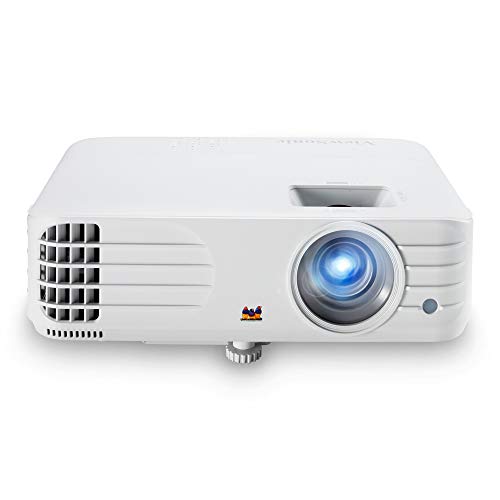
ViewSonic PX701HD — Best Pure Value
The PX701HD is the pick for the buyer who wants the tier’s promise kept with money left over. Its native Full HD panel, honest DLP contrast and cinema-leaning colour deliver the essential experience this entire guide is about, a big, convincing picture in a darkened room, while its position at the gentle end of the budget leaves room for the purchases that transform it: the fixed screen, the blackout curtains, the soundbar. A more expensive projector aimed at a bare wall will lose, in the lived experience of the room, to this ViewSonic aimed at a proper surface, and that arithmetic is the soul of value buying.
Its ownership profile suits the cautious first step. The lamp’s eco ratings stretch the first replacement far beyond the horizon of weekend film use, setup asks nothing exotic of its owner, and the dual inputs cover the streamer-and-console pairing that constitutes most households’ entire source list. It also demotes gracefully when enthusiasm eventually upgrades the main room, becoming the second-room or lending projector without complaint, which stretches its value across years the specification sheet cannot see.
The limits are the visible kind. Brightness wants a darkened room and sulks in a bright one, the picture’s refinement sits a step behind the cinema favourite below, and there are no smart features to hide the need for a streaming stick. None of that diminishes its argument, which is that at this tier the fundamentals are the luxury, and the PX701HD delivers them with the least theatre of any machine here.
The PX701HD also teaches its owner the hobby’s most useful lesson at no extra charge: that the room is half the projector. Owners who begin here tend to become the people who later give good advice, because they have watched the same machine transform as the screen arrived, as the curtains went up, as the soundbar replaced the courtesy speaker. That education is worth money, and this ViewSonic delivers it while still being, on any given Friday, a thoroughly enjoyable way to watch a film.
- Native 1080p DLP, standard throw
- Brightness suited to darkened living rooms
- Lamp eco modes with long rated intervals
- Dual HDMI for streamer and console
- Light chassis for shelf, table or mount
Strengths
- Native 1080p fundamentals with budget to spare
- Leaves money for the screen that transforms it
- Simple, forgiving ownership for beginners
Trade-offs
- Needs darkness; brightness is modest
- No built-in streaming or smart features
- Refinement behind the tier’s cinema favourite
Best for: First-time buyers building a complete setup within the budget.
Not suited for: Bright rooms or buyers wanting an all-in-one smart box.

Optoma HD146X — Best Cinema Picture at the Tier
Spend the whole budget on the projector alone and the HD146X is where film lovers land, because its talents are the ones a dark room notices. The DLP contrast gives night scenes their proper weight, the colour tuning prefers the filmmaker’s intent to the showroom’s applause, and the resulting picture has the settled texture that makes a 110-inch image feel like cinema rather than like a large television with the lights off. At this tier that combination is not common, and it is why this model anchors so many first serious setups.
The supporting cast is sensible rather than lavish. The lamp behaves economically in its eco modes, the game mode covers the household console’s casual visits, and the standard throw with zoom fits the ceiling positions real rooms offer. Optoma’s menus and remote are the familiar, unglamorous kind that disappear from attention once set, which in a dark room is exactly the design goal. Owners tend to keep this machine a long time, and the range’s mainstream lamp supply is a quiet part of that longevity.
What the full-budget buyer gives up is flexibility elsewhere. The screen, curtains and sound must be funded from somewhere, and the HD146X’s brightness will not rescue a room that refuses to darken. Rainbow-sensitive viewers should test it with their own eyes, as with any single-chip DLP. Judged as the tier’s cinema instrument, though, it is the pick this guide expects to be defending in arguments years from now, because dark rooms and good films are not going out of fashion.
There is a ritual argument for the HD146X at this tier that deserves air. A dedicated film setup changes a household’s relationship with films: they become appointments rather than background, chosen rather than scrolled past, and the projector’s cinema tuning is the part of the system that honours the appointment. Owners describe the effect as the difference between watching more and watching better, and at a fixed budget, better is the rarer and more durable pleasure.
- Native 1080p DLP with strong contrast for the tier
- Cinema-tuned colour out of the box
- Lamp engine with civilised eco behaviour
- Game mode for casual console evenings
- Standard throw with zoom for ceiling installs
Strengths
- Contrast and texture lead the tier for film
- Tuning that respects the source material
- Long-term ownership supported by mainstream parts
Trade-offs
- Budget spent here leaves less for screen and sound
- Dark room required for its best work
- Rainbow caveat applies to sensitive viewers
Best for: Film-first buyers with a darkened room and a screen already planned.
Not suited for: Households needing brightness for sociable, lit viewing.

BenQ TH575i — Best for Families
The TH575i spends the budget on removing friction from a family’s evenings. Android TV lives inside the projector, so the applications the household actually uses are one remote away from a native Full HD picture, with no streamer to buy, no input to hunt and no second box arguing about which device owns the television’s habits. For a family living room, that integration is worth more than a specification increment, because a projector everyone can operate is a projector everyone uses, and used projectors are the ones that justify their wall.
The picture underneath the convenience is a proper home-cinema picture rather than a portable’s compromise. BenQ’s colour tuning flatters films, the brightness holds a curtained room together, and the low-lag mode makes the big screen a legitimate home for the household console, which at this budget is usually the same screen the family games on. Lamp economy in the eco modes keeps the running costs of that double duty civilised, and the machine’s general build feels ready for the handling family life provides.
Its caveats are the smart era’s own. The built-in platform will age by software years before the optics age by use, at which point a streaming stick restores it in minutes, and the ultimate black depth sits behind the HD146X’s single-minded tuning. Families choosing between the two should ask whether their evenings are ceremonies or habits; habits, repeated nightly, are where the TH575i earns every part of its place here.
The TH575i’s streaming also quietly solves the guest problem that fixed setups suffer. Visitors can cast or sign in without the household’s source box being reconfigured, children can operate the evening’s entertainment without a tutorial, and the projector’s own interface becomes the family’s shared language for film night. That social smoothness never appears in a specification table, and it is the reason smart projectors at this tier outsell cleverer rivals that demand a household technician on call.
- Native 1080p DLP with home-cinema colour
- Android TV built in for apps and casting
- Low-lag mode for the household console
- Lamp brightness for curtained living rooms
- Standard throw for shelf or ceiling
Strengths
- Streaming built in for one-remote evenings
- Family-proof colour, brightness and build
- Gaming mode covers the household console
Trade-offs
- Smart platform ages faster than the optics
- Blacks behind the cinema-first pick
- Heavy family use consumes lamp hours steadily
Best for: Families wanting films, apps and games from a single box.
Not suited for: Purists with separate high-end sources already in place.

Epson Home Cinema 1080 — Best for Bright-Edged Rooms
The Home Cinema 1080 spends the budget on forgiveness. Its 3LCD engine produces colour at the same brightness as its white output, at a level that keeps the picture vivid in the living room most households actually have: curtains that dim rather than black out, a lamp that stays on because somebody is reading, a match watched with the room still sociable. Buyers whose rooms match that description will get more cinema from this Epson across a year of real evenings than from a contrast-led rival that only truly performs in a darkness the household rarely achieves.
In proper darkness it remains thoroughly enjoyable, with natural skin tones and the smooth, even colour fields that make 3LCD a comfortable technology for long viewing, and its compact body suits the shelf or tripod placement that renters and casual rooms prefer. It is also the pick here least likely to provoke the rainbow conversation, since there is no colour wheel to perceive, which settles the matter for households with a sensitive viewer without any testing drama.
The costs are the familiar Epson ones at this tier. Black depth in a fully darkened, dedicated room concedes to the HD146X, there is no lens shift for the perfectionist ceiling install, and the lamp keeps its calendar. Within the budget’s logic, though, the Home Cinema 1080 is the insurance policy: the projector whose picture survives your room as it is, bought by people who have measured their evenings honestly.
The Home Cinema 1080 earns a further word for mixed households, where one viewer’s sport, another’s series and a third’s film club all claim the same wall across a week. Its brightness and colour confidence make it the diplomat of this list, never the absolute best at any single evening and never wrong at any of them, and diplomacy across a family’s tastes is a specification no laboratory measures. Households arguing between the cinema pick and the portable pick often discover this Epson is the answer both sides can live with, which is a different and underrated kind of best.
- Native 1080p 3LCD, colour brightness equal to white
- High rated brightness for living rooms
- Lamp engine in a compact body
- HDMI for streamer, player and console
- Modes spanning sport, series and cinema
Strengths
- Colour stays vivid when the room stays sociable
- No rainbow artefacts for sensitive viewers
- Flexible placement suits renters and shelves
Trade-offs
- Blacks trail the DLP cinema pick in darkness
- No lens shift for fine ceiling work
- Lamp replacement remains scheduled
Best for: Living rooms that darken imperfectly and host mixed viewing.
Not suited for: Dedicated blackout rooms chasing maximum contrast.

XGIMI MoGo 2 Pro — Best Portable for Streaming Anywhere
The MoGo 2 Pro is what the budget buys when the room refuses to be chosen. XGIMI built it as a streaming appliance first and a projector second, and the order shows in the best way: switch it on, let the automatic focus and alignment settle the picture on whatever wall the evening provides, and the apps are simply there. Its native Full HD panel separates it from the portable crowd’s lower-resolution habits, so text, faces and film detail survive the translation to a bedroom wall, a rental’s blank space or a ceiling above a bed, which is this machine’s quietly famous party trick.
Living with it is an exercise in lowered friction. The body is genuinely portable rather than technically movable, the speakers carry a room’s casual viewing without reinforcements, and the whole ritual from cupboard to cinema takes minutes, which means it happens on weeknights and not only on occasions. For students, renters, young families and anyone whose address changes faster than their taste in films, that rhythm is the product, and the picture, bright enough for a darkened space and honest in colour, supports it without embarrassment.
The boundaries must be respected to love it. It is not bright enough for a lit living room at noon, its contrast belongs to the portable class rather than to the lamp machines above, and a fixed screen in a dark room will always show what the same money in a ceiling projector could have done. Buy it for movement and immediacy and it delights; buy it as a cheap substitute for a home cinema and the disappointment will be misaddressed.
The MoGo 2 Pro’s ceiling trick deserves its reputation examined rather than repeated. Projecting above a bed sounds like a novelty until the first winter evening it is used, when it becomes clear that the machine has invented a new room in the house, one with a screen where no screen could hang. Portable projectors live or die on whether they create occasions that would not otherwise exist, and by that measure this XGIMI earns its tier every time it turns a ceiling into a cinema for the price of lying down.
- Native 1080p in a compact portable body
- Smart streaming platform built in
- Automatic keystone and focus aids
- Compact speaker system voiced for casual viewing
- USB-C power flexibility for travel use
Strengths
- Native 1080p in a genuinely portable body
- Automatic setup makes any wall a screen
- Streaming and sound built in, nothing to add
Trade-offs
- Brightness confines it to dim spaces
- Contrast is portable-class, not cinema-class
- Not a substitute for a fixed install
Best for: Renters, students and movers who watch wherever they land.
Not suited for: Fixed living-room cinemas or bright daytime viewing.

Yaber T2 — Best Portable for Outdoors
The Yaber T2 spends the budget on the outdoors. The handle is not a styling exercise; it is the product’s thesis, that a projector should be carried to the evening rather than installed against it. A built-in battery frees the garden, the campsite and the borrowed holiday house from the extension lead, the streaming platform removes the source problem, and the native Full HD panel keeps the picture respectable on a fence, a sheet or the side of a tent at a size no portable television could imitate. For households whose best evenings happen outside, this is not a compromise purchase but the correct instrument.
Its manners suit the mission. Setup is quick and forgiving, the speakers are voiced to carry voices and commentary in open air where a fixed projector’s courtesy speaker would vanish, and the whole machine tolerates the handling, dust and improvisation that outdoor life includes. Sport is its natural content, a big match thrown large for a garden of viewers, with films after dark a close second, and in both roles the limiting factor is ambient light rather than the projector, which performs honestly once dusk does its part.
Indoors, in a fixed room, the lamp machines above it outclass it in brightness, contrast and sheer cinema gravity, and its battery convenience buys nothing at a ceiling mount. That is not a flaw but a specialisation, and it should be bought as one: the T2 is the second projector many households dream of and the first projector for households whose screen is wherever the people are. At this tier, that is a legitimate way to spend the whole budget.
The T2’s outdoor brief also includes a duty its specification understates: the communal screen. A garden match or a campsite film gathers people who would never assemble for a television, and the projector becomes the campfire’s modern form, a bright rectangle everyone faces together. Households that buy it for that reason report a strange arithmetic in which the least technically impressive picture in this guide produces the evenings remembered longest, which is either a warning about specifications or the entire point of them.
- Native 1080p portable with an integrated handle
- Built-in battery for cable-free sessions
- Streaming apps on board
- Speaker arrangement aimed at outdoor casual use
- Compact body designed to travel
Strengths
- Battery and handle make it genuinely location-free
- Native 1080p keeps outdoor pictures respectable
- Sound and setup designed for open-air use
Trade-offs
- Fixed-room picture trails the lamp picks
- Needs dusk; daylight defeats any portable
- Battery sessions need planning for long films
Best for: Gardens, camping, travel and outdoor sport with friends.
Not suited for: Dedicated indoor cinema rooms.
How Should You Spend the Rest of the Setup Budget?
However the projector choice lands, reserve something for the surface and the sound, because at this tier those two purchases separate a setup from a cinema more than any model upgrade can. A fixed-frame screen is the ideal, a smooth matte wall the acceptable rehearsal, and a wrinkled sheet the honest enemy of every picture in this guide. For sound, the fixed machines want a soundbar as a minimum and will thank you for it in every dialogue scene, while the portables arrive with their evening’s audio already aboard, which is part of what their price is buying.
Light control is the third purchase and the cheapest per unit of improvement. Blackout curtains or a blind for the screen wall convert the lamp models’ brightness into contrast and give the portables their dusk a few minutes earlier, and they cost less than the difference between any two projectors in this list. Buyers who fund the room in this order, surface, sound, darkness, consistently report the strange experience of their projector seeming to improve for months after purchase, which is the room learning its job.
How Do You Test a Budget Projector During the Return Window?
With your own material, in your own room, at your own viewing hour: those three conditions expose everything a specification conceals. Watch the darkest film you own for black level and fan noise, a football match for motion and colour, an episode of a series you know well for skin tones, and ten minutes of a game if the household plays. Check the corners of the picture for focus uniformity, listen during a quiet scene, and confirm that the native resolution the listing promised is the resolution the menus report.
Then make the decision like an owner rather than a reviewer. A projector that passes your library in your room will serve you for years, and small specification regrets evaporate within a week of good evenings. A projector that fails your room will not be rescued by a better score elsewhere. The return window exists for exactly this examination, and at this tier, where the money is serious and the choices are genuinely good, using it well is the last skill the budget asks of you.
How Big a Picture Should This Budget Aim For?
The sweet spot for the fixed machines here is the same as it is a tier up: 100 to 120 inches in a darkened room, where the panel’s detail, the lamp’s brightness and the seating distance all agree. Pushing to the largest image the wall allows taxes brightness first and sharpness second, and the picture’s quiet scenes pay for the owner’s ambition. The portables invert the advice: their honest canvas is smaller, roughly the size of a large television multiplied by two rather than by four, and owners who respect that canvas get a bright, convincing picture instead of a large, apologetic one.
Screen size also decides seating, and seating decides whether the household actually gathers. A picture sized so the whole sofa sits inside its comfortable field of view becomes the room’s hearth; a picture sized for one perfect chair becomes one person’s hobby with witnesses. At this budget, where the projector is often the household’s first, size for the gathering and the gathering will justify the purchase every weekend it assembles.
How Does This Tier Handle Gaming and Sport?
Better than its price history suggests. The lamp models here carry game modes whose lag suits the household console’s story titles and family games outright, and the cinema favourite among them will satisfy all but the competitive fringe. Sport is the tier’s quiet strength: a 100-inch match in a darkened room with friends is the experience that converts more sceptics than any film, and the brighter picks hold that picture together with the room still sociable enough to find the snacks. The portables join in differently, turning a garden or a spare wall into the venue when the match matters more than the room does.
Competitive players should be honest about the fringe. If ranked ladders and fighting-game frames are the household’s religion, the dedicated gaming projectors in this site’s other guides exist for you, and this tier’s all-rounders will feel a half-step behind in the hand. Everyone else, which is most households, will find the response here entirely sufficient and the scale transformative, and should not let a specialist’s stopwatch talk them out of a generalist’s bargain.
What If Your Room Is Small and the Throw Will Not Fit?
Measure before despairing, because a small room punishes assumptions in both directions. A standard-throw model at the back of a compact room still throws a picture larger than any television this budget contemplates, and the throw charts of the fixed picks here cover more modest rooms than their cinema image suggests. The portables dissolve the problem entirely by moving the projector to the picture’s distance rather than the room’s, which is why small flats so often end up in the portable tribe even when their owners arrived dreaming of a ceiling mount.
If the room is genuinely tiny and the screen must be genuinely huge, the honest answer leaves this tier: short-throw specialists exist for exactly that geometry and usually sit a step higher in budget. Naming that boundary matters, because a buyer who forces a standard-throw machine into an impossible room will blame the projector for the tape measure’s verdict, and the projector, for once, will be innocent.
How Do the Six Compare at the Same Budget?
Same money, different evenings. The table’s job is to make the fork visible: fixed machines spend the budget on picture, portables spend it on freedom, and the standout column names what each choice is really purchasing.
| Pick | Light engine | Throw | Standout trait | Watch out for |
|---|---|---|---|---|
| ViewSonic PX701HD | DLP, lamp | Standard throw | Fundamentals plus change for a screen | Picture refinement is the upgrade path |
| Optoma HD146X | DLP, lamp | Standard throw with zoom | Cinema character at full budget | Room must do its part |
| BenQ TH575i | DLP, lamp, Android TV | Standard throw | Convenience without portable compromise | Platform ageing is the long note |
| Epson Home Cinema 1080 | 3LCD, lamp | Standard throw | Brightness with colour honesty | Contrast purists pay elsewhere |
| XGIMI MoGo 2 Pro | Portable, smart platform | Flexible placement, auto setup | Anywhere streaming with a real panel | Picture power is the trade |
| Yaber T2 | Portable, battery powered | Carry-anywhere placement | Outdoor evenings as the design brief | Indoor cinema gravity is the trade |
What Mistakes Do Buyers Make at This Price Point?
Believing the headline numbers of the no-name shelf is the expensive mistake at this tier, because the genuine article is now affordable and the imitation’s savings are bought with a panel that cannot display the resolution on its box. Verify native resolution from the manufacturer’s own documentation, and treat any listing that will not state it plainly as having stated it.
The second mistake is spending the entire budget on the projector and nothing on the room, then blaming the machine for a picture the wall, the light and the speaker conspired against. The picks above are good enough that the room becomes the limiting factor immediately; fund the surface and the darkness alongside the box, even if that means choosing the value pick over the flagship of the tier.
A third error is buying the portable for a fixed room or the fixed projector for a travelling life, because each tribe’s compromises are only virtues in its own habitat. The portable in a dedicated cinema room is dim and apologetic; the ceiling projector in a rented flat is a negotiation with a landlord. The fork in this guide is the decision, and the models are merely its consequences.
Finally, buyers chase the tier above for reassurance and arrive with a finer projector feeding the same bare wall and the same lit room, having spent the screen’s money on refinement they cannot see. At this price point more than any other, the disciplined purchase beats the ambitious one, and the discipline is mostly about the room.
A fifth mistake is treating the budget as a ceiling for the whole project rather than for the projector. Buyers who announce that everything, screen, sound, curtains and cables, must fit inside the same figure as the projector alone end up with a fine machine performing in an unfinished room, and the unfinished room wins every argument about picture quality. Let the projector take the budget it needs from this guide’s tier, and let the room be finished in stages afterwards; a staged cinema that improves monthly beats a compromised one that never changes.
Final Recommendation
It is also worth defending the tier itself against the two snobberies that flank it. From below, the claim that a cheaper listing with theatrical numbers does the same job; it does not, and the native panel is the proof. From above, the claim that serious projection begins a tier higher; it begins exactly here, in a darkened room, at a hundred inches, with a film the household chose on purpose. Everything above this budget is refinement of an experience this budget already delivers whole.
Start with the fork. If the projector will live in one room, the ViewSonic PX701HD keeps the tier’s promise with money left for the screen, the Optoma HD146X spends the whole budget on the best film picture here, the BenQ TH575i gathers a family’s streaming and gaming into one box, and the Epson Home Cinema 1080 forgives the room that never fully darkens. If the projector will live a travelling life, the XGIMI MoGo 2 Pro is the streaming portable for anywhere indoors, and the Yaber T2 takes the same idea outside with a battery and a handle.
Five hundred dollars, spent this way, buys the moment projection stops being a gamble and becomes a room’s best feature. Choose the tribe honestly, fund the surface and the darkness, and the tier will reward you every evening it is switched on.
Frequently Asked Questions
Is a projector at this tier really better than a large television?
For size, unambiguously: nothing at this budget in television approaches a 100-inch picture, and size is the experience most buyers are actually purchasing. For brightness in a lit room, ease of use and casual daytime viewing, the television still wins its home ground. Most households that buy well at this tier end up dividing the labour, projector for films, sport and events, television for the everyday, and consider the division a feature rather than a compromise. The honest middle path many households take is the projector for the evening and a modest television for the daytime, each doing the job it was born for.
How can I tell if a budget projector is really native 1080p?
Read the manufacturer’s own specification for the display or imaging chip and look for the native resolution stated as 1920 by 1080. Listings that emphasise supported, accepted or compatible resolutions while staying vague about the native panel are telling you the answer by omission. Every pick in this guide is native Full HD from a brand that publishes the figure plainly, which is one of the things the budget is buying. The same test applies to brightness: a claim that cannot name its measurement standard is a claim about the listing, not about the light.
Do I need a screen at this budget, or is a wall enough?
A smooth, light, matte wall is enough to begin, and many owners do. A proper screen is the first upgrade the setup will ask for, because it flattens texture, corrects tint and defines the image edge, improving every source and every film impartially. If the choice is between a dearer projector on a wall and a pick from this guide on a screen, choose the screen combination; the room will show you why within one film. Renters can lean a fixed frame against the wall or use a quality pull-down, accepting a small compromise in flatness for a large gain in deposit.
Which of these suits a garden or camping?
The Yaber T2, whose battery, handle and outdoor-voiced sound were designed for exactly that life, with the XGIMI MoGo 2 Pro as the choice when the travel is between indoor rooms rather than into the open air. Both need dusk to perform, because no portable defeats daylight, and both reward a flat, light surface, whether that is a fence, a sheet pulled properly taut or a portable screen. A power bank extends the XGIMI’s range for indoor travel, while the Yaber simply asks to be charged like any other member of the modern travelling kit.
How long will the lamp models here last before running costs bite?
In eco modes and ordinary household use, owners measure the first lamp’s life in years, with film-night households at the generous end and heavy gaming or family streaming use shortening the interval in proportion. Replacement lamps for these brands are mainstream parts at predictable cost, and budgeting for one across a long ownership is simply part of the tier’s honest arithmetic, set against the portables’ batteries, which age on their own schedule instead. Portables sidestep the lamp question but introduce the battery one, so the five-year conversation happens either way; only its vocabulary changes.
Should I save longer and buy above this tier instead?
Only if your room and habits can use what the extra money buys: a prepared dark room will reveal a finer projector’s refinement, and a 4K library argues its own case elsewhere. If the room is a living room, the sources are streams and the screen is not yet bought, the tier above purchases improvements your setup cannot yet display. Spend at this level, build the room, and let a future upgrade arrive when the room deserves it. The picks here also hold their value as second-room machines, which softens the cost of a later upgrade more than most buyers expect at the outset.
Related Guides
Keep reading with our companion guides: best affordable 1080p projectors for tighter budgets best 1080p home theatre projectors best portable projectors for travel and gardens.


