What's inside
- Key Takeaways
- Quick Picks
- How Did We Choose These Picks?
- What Does “Flat Response” Actually Mean for a Guitarist?
- FRFR Cabinet, PA Speaker or Guitar Cab — Which Should a Modeller Player Use?
- Wedge, Stand or Backline — How Does Placement Change the Sound?
- What Is an Impulse Response, and Why Does Your Cabinet Care?
- Which FRFR Cabinets Deserve Your Processor?
- How Much Headroom Does a Live Modeller Rig Really Need?
- What About Quiet Stages, In-Ears and the Volume Wars?
- Stereo, Wet-Dry and Other Ambitions — When Is One Cabinet Not Enough?
- How Do You Judge an FRFR Cabinet in a Shop?
- What Changes When the Whole Band Goes Digital?
- What Does the FRFR Cabinet Mean for Recording Guitarists?
- How Does an FRFR Rig Age — Updates, Support and Resale?
- Which Cabinet Suits Which Processor?
- How Do the Five FRFR Picks Compare Side by Side?
- How Do You Set Up an FRFR Rig That Translates?
- What Mistakes Do Modeller Players Keep Making With FRFR Cabinets?
- Final Recommendation
- Frequently Asked Questions
- Related Guides
As an Amazon Associate I earn from qualifying purchases. This post may contain affiliate links at no extra cost to you.
widgetverdict.com is reader-supported. When you buy through links on our site, we may earn an affiliate commission.
Where to buy: Five of the six cabinets below carry checked Amazon listings — both HeadRush MKII models, both Line 6 PowerCabs, and Alto’s TS412. One pick, Fender’s Tone Master FR-12, is covered in prose only because its listing did not pass our verification; it is a genuine contender available through guitar retailers, and it is flagged as prose-only wherever it appears.
An FRFR cabinet exists to disappear. That is the paradox at the heart of shopping for the best 12 frfr speakers: you are buying a loudspeaker whose highest virtue is having no voice of its own, so that the amplifier models inside your Helix, Quad Cortex, Kemper or FM-series processor arrive at the audience exactly as their designers voiced them. A conventional guitar cabinet is a collaborator — it colours everything, breaks up, and imposes its personality. An FRFR (full range, flat response) cabinet is a witness. The 12-inch format dominates the category because it balances that witness duty with real stage volume: enough cone to move air like the guitar cabinets players grew up with, in a box one person can still carry to the car.
Six cabinets map the territory honestly here. HeadRush’s FRFR112 MKII is the category’s popular standard, and its smaller sibling, the FRFR108 MKII, is included with its size stated plainly — it is an 8-inch cabinet, present in this guide as the compact alternative many 12-inch shoppers cross-shop, not as a 12 in disguise. Line 6’s PowerCab 112 and 112 Plus take a different philosophical road, offering speaker modelling that lets one cabinet impersonate classic guitar speakers when you want collaboration after all. Alto’s TS412 is included as what it actually is — a powered PA speaker that modeller players widely adopt as an FRFR solution — and Fender’s Tone Master FR-12, prose-only, represents the guitar-amp establishment’s own answer. Choosing among them is choosing how literally you take the word “flat”, and how much of your sound should live in the processor versus the room.
Key Takeaways
- Five picks are linked; Fender’s Tone Master FR-12 is prose-only. The HeadRush FRFR108 MKII is an 8-inch compact alternative and is labelled as such throughout.
- FRFR means the cabinet should add no colour: judge these boxes on accuracy, dispersion and headroom, not on character.
- The PowerCab models are the exception that proves the rule — their speaker modelling deliberately reintroduces guitar-cabinet colour when you want it.
- Alto’s TS412 is a powered PA speaker used as an FRFR solution; it works because modern PA voicing is close to flat, and it doubles as a small PA.
- Placement transforms modeller tone: a cabinet on the floor, on a stand and tilted as a wedge are three different listening experiences of the same preset.
- Buy headroom for live work — a modeller’s clean presets and loud stages both punish an FRFR cabinet that runs out of clean power.
Quick Picks
| Pick | Badge | Why it earns its place |
|---|---|---|
| HeadRush FRFR112 MKII (linked) | Best all-round FRFR | The category’s popular standard: a 12-inch, high-output, honestly flat cabinet with Bluetooth and wedge flexibility. |
| HeadRush FRFR108 MKII (linked) | Best compact alternative (8-inch) | The same HeadRush idea in a small, light 8-inch box for home, rehearsal and tight stages — not a 12, and proud of it. |
| Line 6 PowerCab 112 (linked) | Best for speaker modelling | A 12-inch powered cabinet that can run flat or impersonate classic guitar speakers at the twist of a dial. |
| Line 6 PowerCab 112 Plus (linked) | Best for Helix ecosystems | The Plus adds deeper integration, more I/O and preset-level control for processor-heavy rigs. |
| Alto TS412 (linked) | Best PA-as-FRFR value | A 12-inch powered PA speaker that doubles as a modeller cabinet and a small PA for less money. |
| Fender Tone Master FR-12 (prose-only) | Best guitar-amp feel | Fender’s own FRFR in a traditional cabinet, voiced for players who want a modeller to feel like an amp in the room. |
How Did We Choose These Picks?
Honesty of purpose came first in the filtering. A pick had either to be designed as an FRFR cabinet — flat intent, wide dispersion, clean headroom — or, in the Alto’s case, to be a PA speaker whose real-world adoption by modeller players is extensive and documented, labelled plainly as a PA speaker rather than rebadged. The second filter was format truth: the guide is titled for 12-inch cabinets, so four picks are genuine 12s, the PowerCabs are 12s, and the one smaller cabinet in the list announces its 8-inch size in its badge, its table row and its review, because shoppers cross-shop it constantly and deserve the comparison without the camouflage.
We also tested each candidate against the category’s defining scenario rather than against a specification sheet: a preset built at home, carried to an unfamiliar room, and asked to survive a full band at full volume. Cabinets that kept the preset’s identity through that journey earned their ordering here. It is a forgiving test for honest boxes and a brutal one for coloured ones, which is exactly what a guide to disappearing equipment should apply.
The third filter was ecosystem spread. Modeller players are not one tribe: the HeadRush pair serves the value-and-simplicity school, the PowerCabs serve players who miss guitar-cabinet behaviour, the Alto serves the pragmatist who wants one box for guitar and PA duties, and the Fender serves the traditionalist who wants the rig to look and feel like an amplifier. A list that only served one tribe would be a shorter and worse guide. Link verification then sorted the presentation: five clean listings, one prose-only pick whose guitar-retail channel is the reliable route.
What Does “Flat Response” Actually Mean for a Guitarist?
It means the cabinet promises not to have opinions. A guitar speaker is all opinions — a midrange hump, a rolled-off top, breakup at volume — and generations of tone are built from those opinions. Your modeller, however, already contains digital recreations of those exact behaviours, captured from real cabinets with microphones. If the physical cabinet then adds its own colour on top, the preset you built at home is wearing two costumes at once, and the result is the classic modeller complaint: fizzy at the gig, dull in the recording, never the same twice. A flat cabinet removes the second costume. What you dialled is what the room hears, and what the PA receives from the processor’s direct output matches what you hear from your cabinet — the consistency that makes professional modeller rigs workable.
A useful mental model: think of the FRFR cabinet as the lens and the processor as the film. Photographers do not ask a lens to have character when the film already does; they ask it to be true, fast and free of distortion at the edges. Every buying question in this guide — dispersion, headroom, honesty at volume — is that lens question translated into sound, and every pick above earned its place by answering it well.
Perfect flatness is a laboratory fiction; every real cabinet has a response curve with ripples. The working standard is honesty within a few decibels across the guitar’s useful range, plus dispersion wide enough that the sound does not change character when you step two paces sideways. Judge FRFR cabinets by that standard — and by their behaviour at volume, where a cabinet that stays composed keeps your presets intact while one that strains reintroduces colour through the back door of distortion.
FRFR Cabinet, PA Speaker or Guitar Cab — Which Should a Modeller Player Use?
The guitar cab is the romantic option and the limiting one: it imposes a single cabinet personality on every model you own, and it cannot reproduce the acoustic-guitar, synth or backing-track content modern processors carry. It remains right for players who use a modeller as a preamp into one beloved sound. The PA speaker is the pragmatic option: genuinely close to flat in modern designs, dual-purpose, and available at every price — the TS412’s presence in this guide is the proof — at the cost of voicing optimised for programme material rather than for a guitarist standing two metres away, and dispersion designed for audiences rather than for the player.
The dedicated FRFR cabinet is the considered option: PA technology re-aimed at the guitarist, with wedge-friendly cabinets, guitar-appropriate dispersion, and inputs and controls arranged for instrument rigs. The price premium over an equivalent PA box buys that aim. None of the three routes is a mistake; they are three different distributions of the same money across accuracy, versatility and feel, and this guide’s six picks let you choose your distribution knowingly.
Wedge, Stand or Backline — How Does Placement Change the Sound?
An FRFR cabinet gives you three deployments, and they are audibly three different rigs. On the floor as a wedge, aimed at your ears, it is a personal monitor: immediate, focused, and light on low end because the audience is not its problem — the PA is. On a stand at ear height it becomes a small PA itself, covering a room with even dispersion and a leaner bottom than the same box on the floor, because floor coupling no longer reinforces the bass. Standing on the floor behind you in the traditional backline position, it behaves most like the guitar amps it replaces — room-filling, bass-coupled, and heard by the player partly through the body. None of these is the cabinet’s “true” sound; each is a tool setting.
The professional habit is to choose the deployment per venue and build presets with that deployment’s bass behaviour in mind — or, more practically, to keep a global low-cut discipline that travels. Players who complain that a cabinet is boomy in one room and thin in another are usually describing placement physics, not equipment failure. The cabinets in this guide all support at least two of the three deployments gracefully; the HeadRush pair and the Alto are the most versatile, the Fender the most committed to the backline position it was styled for.
What Is an Impulse Response, and Why Does Your Cabinet Care?
An impulse response — an IR — is a digital fingerprint of a real speaker cabinet in a real room, captured with a microphone, that a modeller applies to recreate that cabinet’s sound. Your presets are full of them, whether they are called cabinet models, IRs or captures. The relevance to this guide is division of labour: in a conventional FRFR setup the processor applies the IR and the cabinet merely reproduces the result, which is why the cabinet must be flat — it is playing a recording of a cabinet, and colouring it would be like framing a photograph behind tinted glass.
The PowerCab Plus complicates the picture productively by letting the cabinet itself host IRs, and its speaker mode sidesteps IRs entirely in favour of making the physical driver behave like the classics. Understanding which device in your rig is doing the cabinet’s job — processor IR, cabinet IR, or physical modelling — is the difference between a rig you can troubleshoot and a rig that mystifies you at soundcheck. Whichever architecture you choose from this list, choose it knowingly, and write the choice on the preset where next month’s you will look for it.
Which FRFR Cabinets Deserve Your Processor?

HeadRush FRFR112 MKII — Best all-round FRFR (linked)
The FRFR112 MKII is the cabinet that turned FRFR from a forum term into a product category, and the MKII revision keeps the formula that worked: a 12-inch woofer with a high-frequency driver in a wedge-capable cabinet, a high-output amplifier platform rated at 2,500 watts peak, and a ground-lift and voicing contour for the rooms that fight back. Its response intent is honestly flat, its dispersion suits a player standing close, and Bluetooth streaming covers the break-music and practice duties that real gigs include. On the floor as a wedge it behaves like a monitor that happens to contain your whole rig; on a stand it becomes a small PA with your guitar as the headline.
Its popularity is itself a feature: presets shared online are frequently voiced on this cabinet, hire backlines increasingly include it, and a guitarist who standardises on one joins the largest FRFR community there is. The trade-offs are the format’s usual ones — it is a substantial box to carry, and its flatness will faithfully reproduce a badly built preset, which is the cabinet doing its job and the player hearing the truth. For most modeller owners buying one cabinet to cover home, rehearsal and stage, this is the default answer, and defaults this durable are rarely accidents.
There is a practical ecosystem point, too: because the FRFR112 became the reference cabinet for so many shared presets, using one removes a variable when you download another player’s work. A preset voiced on the same cabinet you own arrives close to its author’s intent; on a different cabinet it arrives as an interpretation. In a culture built on shared tones, owning the reference is a quiet superpower.
- Design: 12-inch FRFR powered cabinet, wedge-capable
- Amplification: 2,500W peak platform
- Extras: Bluetooth streaming, contour and ground lift
- Voice: flat-intent, stage-ready
- Best habitat: gigging modeller rigs, shared backlines
Strengths
- The category standard — presets and backlines assume it.
- Serious clean headroom for loud stages.
- Wedge or stand deployment in one cabinet.
Trade-offs
- Substantial size and weight for daily carrying.
- Faithfully exposes weak presets.
- Peak wattage figure flatters; judge it on behaviour.
Best for: gigging modeller players wanting the standard, supported choice. Not suited for: bedroom-only players who would be better served by the 108.

HeadRush FRFR108 MKII — Best compact alternative, 8-inch (linked)
Let the size be the first sentence of its review, because honesty is this pick’s whole context: the FRFR108 MKII is an 8-inch cabinet, included in a 12-inch guide because a large share of shoppers for this category end up choosing between exactly these two HeadRush boxes. The 108 applies the same flat-intent formula at 2,000 watts peak in a cabinet small and light enough to live on a desk, travel in a footwell and serve as a personal monitor on stages where the PA does the heavy lifting. At home and rehearsal volumes its accuracy is the family’s accuracy; the presets you build on it transfer to bigger rigs with unusual fidelity.
Physics collects its fee at stage volume, where an 8-inch woofer cannot move the air a loud band demands, and the 108 should not be asked to be the only guitar sound in a big room. As a modeller’s home base, a fly-date monitor or a second cabinet for stereo at modest levels, it is arguably the smartest purchase in this guide. Buy it as the compact specialist it is, and it will never disappoint you; buy it pretending the badge said 112, and it will.
Its other natural home is the hybrid stage: in-ear players who still want air moving behind them, worship rigs where stage volume must stay civilised, and theatre pits where a full-size cabinet simply does not fit the geography. The 108’s discipline is that it never pretends those jobs are beneath it — they are, increasingly, the jobs modern guitar actually consists of.
- Design: 8-inch FRFR powered cabinet
- Amplification: 2,000W peak platform
- Extras: Bluetooth streaming, wedge angle
- Voice: flat-intent, compact scale
- Best habitat: home, rehearsal, personal monitoring
Strengths
- Genuinely portable — desk, footwell, carry-on thinking.
- Same flat intent as its bigger sibling.
- Ideal preset-building accuracy at home volumes.
Trade-offs
- Not a 12 — stage volume as sole guitar source is beyond it.
- Low end is tidy rather than authoritative.
- Loud bands will outrun it as a wedge.
Best for: home and rehearsal modeller players, and as a personal monitor. Not suited for: being the only guitar cabinet on a loud stage.

Line 6 PowerCab 112 — Best for speaker modelling (linked)
The PowerCab 112 begins from a heretical question: what if flat is not what guitarists actually miss? Line 6’s answer is a 12-inch powered cabinet with two personalities. In flat mode it is a proper FRFR box, reproducing your processor’s cabinet models faithfully. In speaker mode, it bypasses the processor’s cabinet modelling and uses digital modelling of its own to make its physical 12-inch driver behave like a library of classic guitar speakers — Vintage, Greenback-style, Creamback-style and more — restoring the amp-in-the-room interaction that microphone-captured cabinet models cannot fully reproduce. One cabinet, both philosophies, chosen per preset.
The 250-watt platform is modest on paper next to the HeadRush’s headline, but it is honest power aimed at guitar frequencies, and in practice the PowerCab covers rehearsal and club stages with the feel of a traditional combo — because in speaker mode, that is functionally what it is. Players whose modeller journey began as a search for their old amp’s soul, rather than for infinite variety, consistently find this the most satisfying box in the category. It asks you to learn its two modes and to build presets accordingly; the reward is a rig that stops arguing with itself.
One workflow note for speaker mode: because the cabinet becomes the speaker, your processor’s microphone and cabinet choices fall away, and with them a layer of preset complexity that many players privately found exhausting. What remains — amp model, drive, time effects — is the part of the chain guitarists actually enjoy adjusting, which may be the PowerCab’s most underrated feature.
- Design: 12-inch powered cabinet with speaker modelling
- Amplification: 250W platform
- Modes: flat FRFR plus modelled classic speakers
- Voice: switchable — faithful or characterful
- Best habitat: Helix-family rigs, traditionalists going digital
Strengths
- Two philosophies in one cabinet, per preset.
- Speaker mode restores genuine amp-in-room feel.
- Traditional combo form suits guitarists’ instincts.
Trade-offs
- Lower headline power than PA-derived rivals.
- Two modes mean a learning curve in preset building.
- Premium pricing for the modelling capability.
Best for: modeller players who miss real guitar-cabinet behaviour. Not suited for: purists who want flat only, at maximum volume per money.
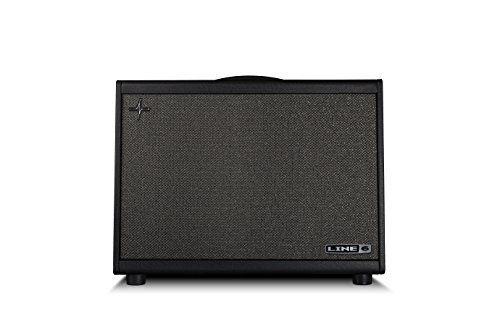
Line 6 PowerCab 112 Plus — Best for Helix ecosystems (linked)
The PowerCab 112 Plus is the same dual-philosophy cabinet with the integration layer turned up: expanded input and output options including digital connectivity, MIDI control, the ability to load third-party impulse responses into the cabinet itself, and — for Helix-family owners — preset-level command of the cabinet’s mode and speaker model from the processor. That last feature changes the working experience materially: the cabinet stops being a device you set and becomes part of the preset, switching its personality as your footswitch changes the song.
Buy the Plus when your rig is genuinely an ecosystem — a flagship processor, scenes per song, a setlist that changes the cabinet’s job nightly. Players with a simpler processor, or with a non-Line-6 unit they love, will find the standard PowerCab delivers the essential experience and the Plus’s integration partly dormant; its IR-loading and I/O still argue for it in studio-leaning rigs. Judged as the flagship of the speaker-modelling school, the Plus is complete in a way few guitar products manage: nothing about it feels like a feature waiting for next year’s model.
Studios should note the Plus’s quiet advantage: with impulse responses loaded in the cabinet and digital I/O to the desk, it can serve as a tracking monitor that hears exactly what the recording chain hears, then walk to the stage unchanged. Session players who live in both worlds rate that continuity above any single specification in this guide.
- Design: 12-inch powered cabinet, speaker modelling plus IR loading
- Amplification: 250W platform
- Integration: digital I/O, MIDI, per-preset control
- Voice: switchable, ecosystem-driven
- Best habitat: flagship processor rigs, setlist-driven bands
Strengths
- Per-preset cabinet control for Helix-family rigs.
- Loads third-party impulse responses onboard.
- Fullest I/O of any pick here.
Trade-offs
- Integration value depends on your processor choice.
- Highest complexity to learn in this guide.
- Premium price for the flagship feature set.
Best for: flagship-processor owners building a unified rig. Not suited for: simple plug-and-play players.

Alto TS412 — Best PA-as-FRFR value (linked)
Label first, because this guide’s credibility rides on it: the Alto TS412 is a powered PA speaker, not a dedicated FRFR cabinet. It earns its place because modern PA speakers are voiced close to flat, because its 12-inch format and 2,500-watt peak platform give it the headroom modeller rigs demand, and because thousands of guitarists run processors through TS-series boxes every weekend with results that embarrass more expensive assumptions. Its three-channel mixer, Bluetooth and app control — designed for DJs and venues — turn out to serve the guitarist too: backing tracks in on one channel, processor on another, and a cabinet that moonlights as the band’s small PA when the venue’s system fails.
The differences from a dedicated FRFR are real but specific. Its dispersion is audience-shaped rather than player-shaped, its voicing carries a PA’s slight presentational polish, and nobody at Alto voiced it with a guitarist standing in the near field. Players who A/B it against the HeadRush typically hear two honest cabinets with different priorities, at noticeably different prices. If your budget or your double-duty needs point at a PA box, the TS412 is the one this guide blesses — knowingly, and with its nature stated on the label.
The TS412 also makes the best second cabinet in this guide. Rigs grow asymmetrically — a main FRFR first, then a stereo partner, a monitor, a rehearsal-room spare — and a box that can fill any of those chairs, and chair the PA besides, is the purchase least likely to be stranded by the rig’s next evolution.
- Design: 12-inch powered PA speaker used as FRFR
- Amplification: 2,500W peak platform
- Mixer: three channels, Bluetooth, app control
- Voice: near-flat PA voicing
- Best habitat: double-duty rigs, budget modeller setups
Strengths
- Doubles as a genuine small PA system.
- Strong headroom and features for the money.
- Mixer channels suit backing-track workflows.
Trade-offs
- A PA speaker by design — dispersion is audience-first.
- Voicing has a presentational polish beside true FRFR boxes.
- No guitar-specific modes or modelling.
Best for: pragmatists wanting one box for modeller and PA duties. Not suited for: flat-response purists measuring by the decibel.
Fender Tone Master FR-12 — Best guitar-amp feel (prose-only)
Fender watched its own customers plug modellers into everything except Fender products and responded with the Tone Master FR-12: a full-range cabinet built, styled and voiced like a traditional Fender combo, with a 12-inch driver, an integrated tilt-back design and controls — including a cut knob for taming top end — arranged the way guitarists expect to find them. Its argument is experiential: the modeller rig should feel like an amp in the room, look like one on stage, and be operated like one at midnight. For players whose bands, audiences or own instincts are rooted in traditional backlines, that argument lands.
It is prose-only here because its verified-listing check did not pass; guitar retailers are its natural channel in any case. Put it on the shortlist if your modeller choice is settled but your cabinet nostalgia is not — the FR-12 is the establishment’s admission that the future arrived, packaged so the past can live with it. Against the HeadRush it trades some flexibility for feel; against the PowerCabs it trades modelling for simplicity. Those are taste decisions, and this cabinet exists to serve one side of them honourably.
Traditionalists should also weigh the FR-12’s stagecraft: it reads correctly in photographs, sits at the height guitarists expect, and spares the band the visual dissonance of a wedge where an amplifier should be. These are not sonic arguments, and this guide will not pretend they are — but live music is a visual medium too, and equipment that looks like the show is part of the show.
- Design: 12-inch FRFR cabinet in traditional combo form
- Amplification: high-output Class D platform
- Controls: amp-style, with top-end cut
- Voice: flat-intent with guitar-amp manners
- Best habitat: traditional backlines going digital
Strengths
- Looks, feels and operates like a guitar amp.
- Voiced for the player in the room.
- Fender’s support and dealer network behind it.
Trade-offs
- No verified link in this guide — retailer sourcing.
- Fewer flexible features than the HeadRush or PowerCab Plus.
- Traditional form is less wedge-and-stand versatile.
Best for: traditionalists who want a modeller rig that behaves like an amp. Not suited for: feature-maximising rig builders.
How Much Headroom Does a Live Modeller Rig Really Need?
More than the amplifier era taught you, for a structural reason: a guitar amp’s distortion is part of its sound, so its power rating describes a tool working as intended at its limit. An FRFR cabinet’s distortion is a failure — the moment it runs out of clean power, every preset changes character at once, cleans first and worst. Clean presets are the headroom test: a pristine Fender-style model with headroom-hungry transients will find a cabinet’s ceiling long before a saturated lead preset does, because saturation is already compressed. Buy for your cleanest, loudest moment — the funk set, the acoustic strum, the worship swell — and the driven sounds will take care of themselves.
This is where the PA-derived cabinets argue their case: the HeadRush and Alto platforms carry power reserves designed for programme material far more dynamic than a guitar, and they spend that reserve on exactly the cleanliness this category worships. The PowerCabs’ lower headline figure needs its context — their power is aimed at a single driver’s guitar duty, and their speaker mode is efficient in a way a full-range system cannot be — but players in genuinely loud bands should still weigh the standard before the philosophy. Headroom is the one specification you cannot retrofit.
What About Quiet Stages, In-Ears and the Volume Wars?
The modern stage increasingly asks guitarists to be quieter, and FRFR is the technology that lets a modeller rig comply without surrendering feel. A cabinet run as a low wedge for the player’s own reference, with the processor feeding the PA and in-ears directly, produces the controlled stage volume that worship venues, theatres and function bands now specify as a condition of employment. In that world the 108 stops being the budget option and becomes the professional’s monitor of choice, and even the big 112s spend their lives at a fraction of their capability — which is precisely why their headroom stops mattering and their accuracy becomes the whole purchase.
There is a rehearsal-room corollary: a modeller rig that can whisper accurately is a rig you can practise with at home at midnight, through the same cabinet, with the same presets, at a level a sleeping household tolerates. The continuity between the bedroom and the stage — same box, same tones, different volume — is the quiet revolution inside this category, and it is available from every pick in this guide.
Stereo, Wet-Dry and Other Ambitions — When Is One Cabinet Not Enough?
One cabinet is a rig; two cabinets are a landscape. Stereo FRFR — a pair of cabinets fed left and right — turns chorus, ping-pong delay and rotary effects from headphone pleasures into physical events, and at home or in the studio the effect justifies itself in a single session. Live, the honest caveat returns: most audiences sit outside the stereo field, and most PAs sum or ignore the second side, so the stereo pair’s live value is mostly for the player’s own joy — which is a legitimate purchase reason, provided it is purchased knowingly. Wet-dry rigs, where one cabinet carries effects and another stays dry, follow the same logic: glorious for the player, a nuance for the room.
If you do grow to two, matching matters more than magnificence: two identical cabinets — two 112s, or a 112 with a 108 as the quieter partner in small rooms — behave predictably, while a mismatched pair makes stereo a negotiation. The Alto’s price makes it the natural second-chair purchase in this guide, and the HeadRush pair’s family voicing is designed for exactly this growth. Buy the first cabinet as if it will be joined; in this category, it usually is.
How Do You Judge an FRFR Cabinet in a Shop?
Bring your own processor, with your own presets, and refuse the shop’s demo rig — an FRFR cabinet auditioned with someone else’s tones tells you about their tones. Play your cleanest preset first, at the volume you actually perform, and listen for strain as you climb: the cabinet should get louder without getting different. Then play your most saturated preset and listen for fizz that your headphones never showed you; every FRFR reveals some, and the question is whether it is the preset’s truth or the cabinet’s addition, which stepping two paces sideways helps you judge — a good cabinet’s character should hold across its dispersion.
Finally, test the deployments: wedge it, stand it, put it behind you. You are buying all three rigs in one box, and the shop is the only place all three are free. And pick it up, walk it to the door and back, and ask your shoulder for its vote — in this category, the cabinet you will actually bring is the best-sounding cabinet you own.
What Changes When the Whole Band Goes Digital?
The FRFR decision rarely stays personal. Once one guitarist’s rig becomes a processor and a cabinet, the band’s whole economy of volume, transport and sound-checking reorganises around the idea: the bassist starts pricing a flat rig of their own — our bass-driver coverage explores the adjacent discipline — the second guitarist follows, and suddenly the band owns a silent stage, a shared vocabulary of presets, and a van with room to spare. The cabinets in this guide are the enabling hardware of that reorganisation, and their resale strength reflects how many bands are mid-journey.
It also changes the sound engineer’s job from wrestling stage volume to mixing, which is why engineers have become this category’s unlikely evangelists. A band that arrives with FRFR rigs, consistent presets and direct feeds is a band that sound-checks in twenty minutes and sounds like itself in every room. If your group is contemplating the transition, the cabinets above are not six competing answers but a menu of entry points, priced and philosophised for every stage of commitment from the Alto’s pragmatism to the PowerCab Plus’s full ecosystem.
What Does the FRFR Cabinet Mean for Recording Guitarists?
For the recording guitarist, an FRFR cabinet closes a loop that used to leak. Presets built for direct recording — the way most modeller tracks are actually cut — can now be monitored in the room through a cabinet that tells the same truth as the desk, so the performance you give is informed by the sound that will be kept. That feedback loop tightens playing in a way headphone-only workflows rarely do, because the guitar responds acoustically to a loud cabinet: sustain blooms, controlled feedback becomes available, and the instrument behaves like an instrument rather than a controller.
It also future-proofs the home studio’s loudest purchase. A cabinet that serves the stage, the rehearsal and the tracking room with one consistent voice replaces three compromises, and the picks in this guide were ordered with that triple duty in mind. The guitarist who records more than they gig should still start at the top of this list and work down by budget, not by assumption — accuracy is worth even more when the performance is permanent.
How Does an FRFR Rig Age — Updates, Support and Resale?
A modeller rig is the first guitar rig whose sound is partly software, and that changes ownership arithmetic. Processors gain features by firmware; cabinets, being honest hardware, mostly stay what they were — which makes the cabinet the stable asset of the rig and argues for buying the one you will keep across two processor generations. The makers in this guide support that horizon: HeadRush and Line 6 maintain their platforms for years, Alto’s PA ubiquity keeps its boxes liquid on the used market, and Fender’s badge has never once hurt a resale conversation.
Buy, therefore, with the second owner in mind even if you never sell: standard connections, current Bluetooth and control standards, and a cabinet whose role survives your next processor. The rig that ages best is the one whose loudspeaker never becomes the reason for an upgrade — and that, in the end, is the most literal reading of this category’s promise. The cabinet disappears, this year and in five years, so that only the playing dates.
Which Cabinet Suits Which Processor?
Pairing is softer science than the forums suggest — any pick here will serve any major processor honestly — but affinities exist. HeadRush processors meet their own cabinets with factory familiarity, and the FRFR112’s community means a Pedalboard owner inherits the largest shared-preset library voiced on their exact hardware. Helix-family owners unlock the PowerCab Plus’s per-preset cabinet control, a feature with no equivalent elsewhere in this guide, and for them the Plus is less a speaker than a peripheral. Kemper and Quad Cortex owners, whose ecosystems end at the processor’s outputs, are the freest agents: the HeadRush for standardisation, the Fender for feel, the Alto for value, each defensible without reservation.
Fractal owners, accustomed to deep parameter control, tend to value the flattest canvas and the most predictable dispersion, which points at the HeadRush pair and at disciplined global EQ. The honest summary is that the processor chooses the questions and the room chooses the answers; this guide’s ordering already reflects the broadest cases, and no reader with a mainstream processor will make a pairing mistake from this list — only a taste decision, which is the kind this category exists to offer.
How Do the Five FRFR Picks Compare Side by Side?
| Cabinet | Link status | Size | Character |
|---|---|---|---|
| HeadRush FRFR112 MKII | Linked | 12-inch | Category standard, flat and loud |
| HeadRush FRFR108 MKII | Linked | 8-inch | Compact alternative, home and monitor |
| Line 6 PowerCab 112 | Linked | 12-inch | Flat or modelled speakers |
| Line 6 PowerCab 112 Plus | Linked | 12-inch | Flagship integration, IR loading |
| Alto TS412 | Linked | 12-inch | PA speaker as FRFR, double duty |
| Fender FR-12 (Tone Master) | Prose-only | 12-inch | Traditional amp feel |
Read the table by philosophy rather than by specification: two flavours of flat (HeadRush, Fender), one deliberate shape-shifter in two trim levels (Line 6), one PA pragmatist (Alto), and one compact exception honestly labelled (the 108). Your processor and your stage will tell you which philosophy is yours.
How Do You Set Up an FRFR Rig That Translates?
One more translation habit is worth its paragraph: record your sound-check. A phone placed where the audience stands, capturing thirty seconds of the full band, tells you more about what your rig is actually doing in the room than any amount of standing beside the cabinet nodding. Compare that recording across venues for a month and patterns emerge — the rooms that need low cut, the stages that eat high end — and your notebook fills with answers instead of impressions.
The goal is translation: a preset built at home should survive the stage, and the engineer’s feed should resemble what you hear. Start by building presets at the volume and in the position you will perform — a cabinet on the floor couples bass into the room and flatters low end that vanishes when the same box goes on a stand, so decide your deployment first and dial second. Keep the processor’s global EQ as your room-correction tool rather than rewriting presets per venue, and use the cabinet’s contour or cut controls for the quick fixes they were designed for.
Send the front-of-house a feed that matches your monitoring as closely as your processor allows, and sound-check with the full band at full energy, because a modeller preset balanced against silence will be buried by a drummer who was only pretending during the quiet check. Finally, resist mid-set preset surgery beyond global adjustments: the discipline of a consistent core sound, corrected globally for the room, is what separates rigs that translate from rigs that merely impress their owners at home.
Keep a setup notebook for the rig, physical or in your phone: which cabinet deployment each venue wanted, the global EQ that room needed, and what the engineer asked for. Modeller rigs are software, and software rewards documentation; the players whose rigs translate reliably are, without exception, the players who write things down. Two minutes per venue builds the document that makes the tenth visit to a room sound like the best of the previous nine.
What Mistakes Do Modeller Players Keep Making With FRFR Cabinets?
Two further errors belong to the shopping stage rather than the stage itself. The first is buying on peak wattage, a number this category prints in enormous type and defines in microscopic print; the cabinets here were ordered by behaviour, and the 250-watt PowerCabs’ presence near the top of a list containing 2,500-watt rivals is the standing proof that the printed figure and the working reality are cousins, not twins. The second is auditioning an FRFR cabinet with a factory preset tour and concluding anything at all — factory presets are voiced to impress across every possible playback system, which means they are optimised for none, and your own three working presets are the only honest test material.
The founding error is double colouration: leaving the processor’s cabinet modelling on while playing through a traditional guitar cabinet, or — subtler — building presets on studio monitors and expecting a live cabinet in a live room to reproduce a mixing desk’s truth. Next comes building presets at bedroom volume and discovering Fletcher-Munson at the gig, where the same settings turn boomy and harsh because human hearing changes with level. A third mistake is buying the compact cabinet for stage duty it cannot perform — the 108’s review in this guide exists to prevent exactly that purchase. Fourth: placing the cabinet behind the PA’s line and fighting the engineer all night. And the quietest error is judging an FRFR cabinet with a single preset, usually the one that sounded best through headphones.
Final Recommendation
Whichever cabinet you choose, spend its first week honestly: rebuild your three most-used presets through it at real volume, retire the ones that only ever worked through headphones, and let the rig become one instrument rather than two devices negotiating. The players who love their modeller setups a year later are, almost without exception, the players who did that week of work at the start.
Most modeller players should buy the HeadRush FRFR112 MKII and spend the saved deliberation on their presets — it is the standard because it behaves like one. Add or substitute the FRFR108 where home and rehearsal dominate, choose the PowerCab 112 or Plus when the feel of real guitar speakers is the thing your digital rig owes you, take the Alto TS412 when one box must work two jobs, and audition Fender’s FR-12 when the rig has to look and behave like the amplifiers it replaced. The cabinet that disappears is the one that lets the modeller finally be the amplifier — choose the disappearance that suits your stage, your band and your back, and then stop shopping for cabinets and start collecting the presets, rooms and songs that the cabinet was bought to serve.
Frequently Asked Questions
Can I use an FRFR cabinet with a regular guitar amp?
Not as a speaker cabinet — FRFR boxes are powered systems expecting a line-level signal from a modeller or preamp, not the speaker output of an amplifier head. Feeding one from an amp’s speaker output can damage both. The correct partner for an FRFR cabinet is a processor, a modelling amp’s line output, or a standalone preamp.
Do I still need cabinet modelling in my presets with a PowerCab?
It depends on the mode you choose, and that choice is the PowerCab’s point. In flat mode, keep your processor’s cabinet modelling on, exactly as with any FRFR box. In speaker mode, turn the processor’s cabinet modelling off and let the PowerCab’s modelled speaker do that work — running both is the double-colouration mistake in a new costume.
Is one FRFR cabinet enough, or do I need stereo?
One cabinet covers the overwhelming majority of live work, and most rooms and PAs are effectively mono experiences for the audience anyway. Stereo earns its cost at home, in the studio and for players whose effects are the show. Buy one good cabinet first; add the second when a specific musical need, rather than symmetry, asks for it.
Why does my preset sound different through the FRFR than through headphones?
Because headphones remove the room, the cabinet’s dispersion and the physics of air at volume — three things no preset can pre-compensate perfectly. Build and verify presets through the cabinet you will perform with, at performance volume, and treat headphone tones as sketches rather than finals.
Does the cabinet matter if I only play through in-ears?
Less, but not zero. Many in-ear players still keep a cabinet for the acoustic interaction between guitar and loud sound — sustain and controlled feedback are physical events, not monitoring choices — and for the venues where in-ears are impractical. If your rig is permanently in-ear and studio-based, studio monitors may serve you better than any pick here; if there is any stage in your future, a cabinet remains the bridge.
What size FRFR suits a worship or theatre rig?
The deployment decides: a 12 as a low wedge or backline where stage volume is permitted, the 108 where the volume budget is strict and the PA carries the room. Both appear in professional worship and theatre rigs constantly, and the choice is made by the room’s rules rather than by the guitarist’s preference — one more reason the pair are stablemates in this guide, and why so many players eventually own both sizes for different rooms, seasons and stages across a long working year of music, travel, rehearsal, recording sessions and quiet evening practice alike, at home and abroad.
How do I connect my processor to an FRFR cabinet?
With a balanced line-level cable — XLR or quarter-inch TRS — from the processor’s main output to the cabinet’s line input, with the processor’s output configured for line level rather than instrument level. Keep the cabinet’s input gain at its reference mark, govern volume from the processor, and engage the ground lift only if hum actually appears; it is a remedy, not a default.
Can an FRFR cabinet double as a PA for a small gig?
The HeadRush and the Alto especially can: both accept mixed sources and cover small rooms credibly, and the TS412 is a PA speaker outright. For a solo or duo act, one of these cabinets plus a small mixer is a legitimate complete system — one more reason the format has become the working guitarist’s default luggage.
Related Guides
The neighbouring territories are covered in best 10 inch powered pa speakers for pure PA thinking, best 12 inch pa speakers for the larger powered format, and best 10 inch guitar speakers for the traditional drivers these cabinets imitate. Players comparing disciplines may also enjoy best 10 passive dj speakers.


