What's inside
- Key Takeaways
- Quick Picks
- How These Picks Were Chosen
- The Six Headsets in Detail
- Comparison Table
- One Desk, Two Disciplines: Where Gaming and Podcasting Actually Agree
- How to Choose a Headset for Both Play and Recording?
- The Voice Chain Beyond the Headset
- Recording the Game You Play: Capture Workflows That Respect Both Crafts
- The Listener’s Side: Why Your Audience Hears a Different Show
- Two Creators Walk Into a Headset: Matching Picks to Partnerships
- Common Mistakes
- Frequently Asked Questions
- The Long Season: Durability, Spares and Episode One Hundred
- What Pros Actually Argue About
- Final Recommendation
- Related Guides
As an Amazon Associate I earn from qualifying purchases. This post may contain affiliate links at no extra cost to you.
widgetverdict.com is reader-supported. When you buy through links on our site, we may earn an affiliate commission.
Where to buy: the six headsets below link to their Amazon listings; begin with the Audio-Technica BPHS1 if the broadcast voice is your ambition, and confirm today’s price on each listing page.
The best gaming and podcast headsets live a double life, and this guide refuses to pretend the two halves want the same things. Gaming asks for immersion, positional audio and comfort across long sessions. Podcasting asks for a voice that sounds like it belongs on the radio, captured cleanly in an untreated room. The headsets that serve both honestly are rare and identifiable: broadcast headsets that game gracefully, gaming headsets with microphones worth publishing, and specialists that unite the desk where both jobs happen. Six of them are ranked below, from a genuine broadcast standard to a single-ear interview tool.
A note on priorities before the rankings: for a creator, the microphone is the career. Listeners and viewers meet your voice before they meet your gameplay, your editing or your ideas, and every pick here was chosen because its voice side could be published without apology.
Key Takeaways
- Broadcast headsets — the BPHS1 and NTH-100M — bring radio-grade voice discipline to creators who also play.
- Dynamic cardioid capsules forgive untreated rooms, which is where nearly all podcasts are actually recorded.
- The Cloud II is the crossover classic: gaming surround and comfort with a microphone creators publish on.
- Detachable booms, as on the talomen, let one headset serve recording and mixing shifts separately.
- Single-ear design on the VOLUBLES is an interviewing tool, keeping the host’s other ear on the room.
- Comfort decides publishing consistency: the headset welcome at hour three gets used for episode fifty.
Quick Picks
| Pick | Badge | Why it earns its place |
|---|---|---|
| Audio-Technica BPHS1 Broadcast Stereo Headset | The broadcast standard-bearer | A dynamic cardioid boom microphone on a stereo broadcast headset — the design radio stations reached for before streaming existed. |
| RODE NTH-100M Broadcast Headset | The modern media professional | RØDE’s over-ear headset for media, broadcast, podcasting, content creation, streaming and working from home, in one listing that names every job. |
| talomen Studio Monitor Headphones with Detachable Boom Microphone | The studio monitor hybrid | Wired over-ear studio headphones with a detachable boom microphone, pitched at podcast, broadcast, streaming and audio mixing alike. |
| Yamaha CM500 Headset with Built In Microphone | The unpretentious veteran | Yamaha’s long-running headset with a built-in microphone — no theatrics, just a working tool from a serious audio house. |
| HyperX Cloud II Gaming Headset | The gaming crossover classic | 7.1 surround, memory foam pads and an aluminium frame, working across PC, PS4, PS4 PRO, Xbox One and Xbox One S. |
| VOLUBLES Podcasting Headset for Online Podcast Recording and Video Calls | The single-ear call specialist | 3.5mm and USB-A connections, a gooseneck mic arm, mute and volume controls and a single-ear design for recording and video calls. |
Creators whose work leans toward live performance rather than edited podcasts should cross-read Best Softphone Bluetooth Headsets for the call-side discipline, and the pilot-grade thinking in Best Headsets for Airline Pilots for what professional voice equipment demands.
How These Picks Were Chosen
Every pick had to satisfy both halves of the title with evidence in its own listing: a microphone story a podcaster could publish — broadcast capsule, detachable boom, gooseneck arm or a proven chat pedigree — and a listening story a gamer could live in, from surround staging to monitor honesty. Headphones without microphones were excluded, as were headsets whose voice side was clearly an afterthought, however dazzling their game audio.
We spanned the desk’s real population deliberately: the broadcaster, the hybrid professional, the producer, the dependable veteran, the gaming all-rounder and the interview specialist. Creators are not one job, and a guide that ranked six near-identical gaming headsets would fail the podcaster on page one. Where listings stay silent on a detail, the spec boxes say so rather than inventing.
The Six Headsets in Detail

Audio-Technica BPHS1 Broadcast Stereo Headset
The BPHS1 comes from a world where audio failure is not an option: broadcast. Its listing describes a stereo headset with a dynamic cardioid boom microphone, and each of those words carries professional weight. Dynamic capsules tolerate loud voices, close placement and rough handling without the fragility or the power requirements of condensers. Cardioid pattern rejects the room behind the capsule. A boom puts the capsule where voices live and keeps it there through a whole show. For a podcaster who also games, this is the headset equivalent of buying the tool the radio station uses.
Podcast voices, in particular, flatter the dynamic tradition. The capsule rewards proximity with warmth and authority — the closeness effect that makes broadcast voices sound like broadcast voices — while discounting the untreated room that most home podcasters record in. Pair that with stereo monitoring honest enough for editing decisions, and the BPHS1 covers the full podcast workflow: record, review, publish, then wear the same headset into the evening’s game without changing a thing.
Gaming through a broadcast headset has its own character. You hear the game as a mix engineer would present it rather than as a surround spectacle, which suits story games, strategy and the commentary-driven play most podcasters actually publish. Chat clarity is superb because the microphone was the point of the design, not an accessory clipped to it.
The boundaries are equally clear. There is no surround processing, no wireless, no console-native chat balancing, and the aesthetic is studio equipment rather than gaming furniture. Buyers who want their headset to glow should look elsewhere in this guide; buyers who want their voice to sound like radio already know their answer.
Longevity completes the case. Broadcast tools are bought for seasons of daily use and supported like it, and a podcaster building a long-running show is buying exactly that horizon.
There is a workflow elegance to the broadcast approach that reveals itself over a season. The same headset that records the episode monitors the edit, takes the co-host call and then plays the evening’s game, so the creator’s ears learn one consistent presentation of their own voice and their own content. Consistency is an underrated production value: episodes recorded months apart sound like one show, because the instrument never changed. Studios guard that consistency jealously, and the BPHS1 hands it to a bedroom creator in a single purchase.
It also disciplines ambition in a healthy direction. A creator wearing broadcast equipment starts asking broadcast questions — about levels, about room, about the guest’s audio — rather than shopping questions. That shift in curiosity is worth more than the capsule, and it tends to happen precisely because the tool on your head came from a world where those are the only questions that matter.
Strengths
- Dynamic cardioid boom delivers the classic broadcast voice
- Stereo monitoring serves recording and editing honestly
- Broadcast build suits daily, years-long production schedules
Trade-offs
- No surround processing or wireless gaming features
- Studio aesthetic will not satisfy RGB tastes
- Proximity technique rewards a little microphone discipline
| Microphone | Dynamic cardioid boom mic |
|---|---|
| Format | Broadcast stereo headset |
| Intended use | Broadcast and voice production |
| Extras | The listing title keeps to the essentials — consult Audio-Technica documentation for connection variants |
Best for: podcasters who game, and gamers who podcast, with the voice firmly in charge of the purchase.
Not suited for: players seeking wireless freedom and virtual surround spectacle above voice quality.
Voice-first creators can open the BPHS1 listing, confirm the connection variant for their mixer or PC, and check the Amazon price for a broadcast classic.

RODE NTH-100M Broadcast Headset
RØDE built its name on microphones for creators, and the NTH-100M is that pedigree worn on the head. Its listing is unusually explicit about the intended territory: a professional over-ear headset for media, broadcast, podcasting, content creation, streaming and working from home. That breadth is credible from this manufacturer because the jobs genuinely converge — all of them are a voice, a pair of ears and a deadline — and RØDE’s contribution is to treat the headset as a monitoring instrument first and a microphone platform second.
The monitoring side deserves the emphasis. Podcast editing, stream audio checks and long production days all punish headphones that flatter; a professional over-ear design aims for honesty, so what you approve in the edit is what listeners receive. For the gamer-podcaster, honest monitoring doubles as a competitive kindness: footsteps and cues arrive without cosmetic bass fog, and long sessions stay analytically clear.
As a working-from-home tool the same headset closes the loop elegantly — calls, recordings and review sessions on one device, with a microphone positioned by design rather than by a laptop’s guesswork. Hybrid creators, whose day genuinely contains meetings, a recording and a game, are the NTH-100M’s natural constituency, and the listing seems written by someone who has lived that day.
Set expectations on the gaming axis: this is a professional’s headset that games well, not a gaming headset that podcasts adequately. There is no surround branding and no platform chat gadgetry. What there is, is a coherent professional instrument from a house that podcasters already trust with their standalone microphones.
The working-from-home clause in the NTH-100M’s brief deserves more respect than it usually gets, because the hybrid creator’s scarcest asset is a desk that does not need reconfiguring between jobs. A headset that sits at the centre — calls at nine, recording at eleven, edit at two, game at eight — removes the daily friction of swapping devices, re-checking levels and re-learning controls. Friction is the silent killer of creative schedules, and professional tools earn their price by deleting it rather than by decorating the moments that survive it.
RØDE’s presence in the creator ecosystem adds a practical footnote: the company speaks the language of the software and platforms creators already use, and its documentation assumes a reader who records for a living. For a first professional headset, that assumption is a form of respect — and a useful education in how the industry expects its tools to behave.
Strengths
- Professional monitoring honesty for editing and production
- One headset credibly spans broadcast, podcast, stream and calls
- RØDE’s creator-audio pedigree behind the microphone side
Trade-offs
- Gaming features are restrained beside dedicated gaming picks
- Professional positioning prices it above casual starters
- Over-ear enclosure suits desks better than hot, mobile use
| Format | Professional over-ear headset |
|---|---|
| Intended use | Media, broadcast, podcasting, content creation, streaming, working from home |
| Colour | Black |
| Microphone | Headset boom configuration — see RØDE documentation for the full specification |
Best for: hybrid creators whose single desk hosts meetings, recordings, streams and evening games.
Not suited for: competitive players wanting surround processing and console chat hardware first.
Hybrid creators can open the NTH-100M listing, weigh its professional brief against their week, and review the Amazon figure accordingly.
talomen Studio Monitor Headphones with Detachable Boom Microphone
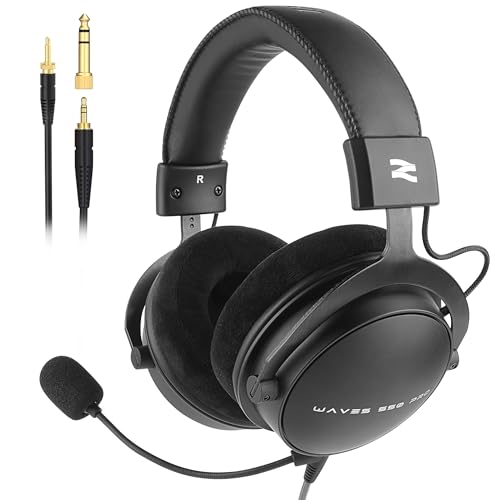
The talomen entry approaches the same problem from the studio monitor side: wired over-ear studio headphones for recording, with a detachable boom microphone, positioned for podcast, broadcast, streaming and audio mixing. The detachable boom is the conceptual key. A monitor headphone must sometimes be only a monitor headphone — during mixing, editing and critical listening — and a headset that sheds its microphone for those hours respects the difference between performing and producing.
Studio monitor tuning serves the podcast half of this guide’s brief directly. Mixing a voice recording demands headphones that show problems rather than hide them: the rumble to cut, the harshness to tame, the level that drifts. A headset that monitors honestly and then accepts a boom to become the recording device collapses a two-headphone workflow into one object, which matters in small studios and smaller budgets.
For gaming, wired over-ear monitoring gives clean, fatigue-light listening for narrative and creative play, and the boom restores voice chat when the session turns social. Competitive surround specialists will find their features elsewhere in this guide; the talomen’s game is fidelity and flexibility at the desk.
As a newer name beside the broadcast houses here, it carries the newcomer’s bargain: strong specification intent at an accessible position, with a shorter public track record. Buyers comfortable judging a tool by its design logic — detachable boom, monitor tuning, wired reliability — will find the logic sound and the roles it claims genuinely unified by it.
The talomen’s proposition sharpens when you consider the economics of a small studio. Two specialised objects — monitor headphones for production, a headset for recording — cost more, clutter more and drift apart in character over time. One object that performs both roles keeps the creator’s reference consistent: the voice you recorded is judged on the same transducers that captured your performance of it. Engineers call that a closed loop, and closed loops are how small operations achieve big-operation consistency.
Its wired nature belongs in the same ledger. Production desks are stationary by definition, and a cable at a stationary desk is not a limitation but a guarantee — of power, of connection, of one less battery in a workflow already full of charged devices. The talomen is a desk citizen and makes no apology for it, which is the correct posture for the jobs it lists.
Strengths
- Detachable boom converts between monitoring and recording roles
- Studio monitor intent serves podcast mixing honestly
- Wired over-ear design suits desk production completely
Trade-offs
- Shorter public track record than the broadcast houses
- No surround or wireless gaming features in its brief
- Newer brand means community knowledge is still forming
| Format | Wired over-ear studio headphones |
|---|---|
| Microphone | Detachable boom microphone |
| Intended use | Podcast, broadcast, streaming and audio mixing |
| Monitoring | Studio monitor positioning, per the listing |
Best for: producers who mix and record at the same desk and want one wired tool for both halves of the job.
Not suited for: players wanting wireless mobility or console-first chat features.
Desk producers can open the talomen listing, picture the boom attached and detached across their workflow, and check the Amazon price for the hybrid route.
Yamaha CM500 Headset with Built In Microphone
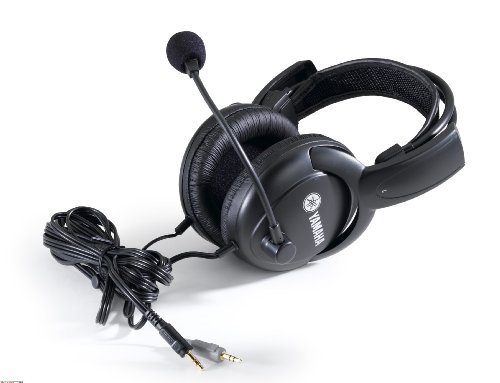
The Yamaha CM500 is the guide’s quiet veteran: a headset with a built-in microphone from one of the most serious names in audio, described in its listing with a restraint that borders on stubbornness. No surround claims, no lighting, no lifestyle photography in the title — just the tool. That restraint is itself information. Yamaha sells to musicians, studios and institutions that buy on behaviour, and the CM500’s long presence in the catalogue says the behaviour has satisfied that demanding audience for years.
For podcasting, the CM500 suits the participant more than the auteur: the guest chair, the co-host seat, the second position in a two-person recording where reliability and intelligibility matter more than signature tone. Its microphone keeps voices clear for conversation-led formats, and its headphone side keeps long recording sessions civilised. Many real podcasts are exactly that — conversations that need to be captured cleanly, weekly, without a production department.
Gamers will find a similarly honest tool. Chat arrives and departs clearly, game audio is presented without cosmetic drama, and the headset asks nothing of its owner beyond plugging in. In a guide full of specialisation, the CM500 represents the generalist virtue: one less thing to think about, bought from a company that will still exist to support it.
Buyers chasing a distinctive voice print or competitive gaming features should spend elsewhere in this guide, and the CM500 would not argue. Its buyer is the podcaster equipping a second seat, the gamer tired of fragile novelty, the institution buying four of something dependable.
Institutions understand the CM500 in a way individual buyers can learn from. When a school, station or studio buys headsets for seats rather than for people, the criteria reorder themselves: every unit must behave like every other, replacements must be painless, and the sound must be good enough that nobody’s work is compromised by their chair. The CM500 has filled that brief quietly for years, and a podcaster with a regular co-host is running a two-seat institution whether they call it one or not.
There is also a generosity argument. Guests judge a podcast by how they were treated, and handing a guest a clean, comfortable, working Yamaha — rather than the cracked spare from a drawer — is treatment they can hear. Shows that respect their guests’ ears get better conversations and more return invitations, which is a growth strategy disguised as a headset decision.
Strengths
- Yamaha’s audio pedigree and long catalogue presence
- Clear, dependable voice capture for conversation formats
- Ideal second-seat and guest-chair podcast duty
Trade-offs
- Listing keeps specification detail minimal by modern standards
- No gaming surround or wireless features
- Voice character is honest rather than signature
| Microphone | Built-in microphone |
|---|---|
| Brand | Yamaha |
| Format | Headset for voice and listening |
| Details | The listing title is brief — Yamaha documentation carries the full current specification |
Best for: podcasters equipping co-host and guest seats, and gamers who value dependability over features.
Not suited for: creators chasing a signature broadcast voice as their first purchase.
Pragmatists can open the CM500 listing, appreciate its restraint, and weigh the Amazon price as the cost of a dependable second seat.

HyperX Cloud II Gaming Headset
The Cloud II is the gaming world’s answer to the crossover question, and its listing reads like the checklist that made it famous: 7.1 surround sound, memory foam ear pads, a durable aluminium frame, multi-platform support across PC, PS4, PS4 PRO, Xbox One and Xbox One S, in the red edition listed here. Millions of players learned what a proper gaming headset felt like on this design, and podcasters keep adopting it because its microphone and comfort survive contact with real recording schedules.
Comfort is the bridge between the two worlds. A podcast recording session and a raid night have the same hidden requirement — a headset still welcome at hour three — and memory foam over an aluminium frame delivers it with a durability that plastic rivals envy. The frame matters for creators, whose headsets are handled, packed and travelled with more than a pure desk tool.
The 7.1 surround serves the gaming half with positional staging, while the microphone serves the podcast half with the clear, chat-proven capture that made the model a default recommendation for years. It will not out-broadcast the BPHS1 — no gaming headset here does — but for a creator whose podcast is an extension of a gaming channel, the balance is exactly right: play like a gamer, publish like a neighbour they trust.
Platform breadth completes the crossover case. A creator whose audience lives across PC and console can standardise on one headset for every recording context, simplifying levels, habits and spares. In a category of specialists, the Cloud II is the accomplished all-rounder with the longest public evidence behind it.
The Cloud II’s longevity in the market carries a lesson about what creators actually need. Fashions in gaming audio cycle quickly — new surround brands, new lighting, new materials — yet this design’s combination of comfort, build and competent voice capture has outlasted several fashion cycles because it answers the permanent questions correctly. A creator building a channel on it is standing on unusually well-surveyed ground: every quirk is documented by years of owners, every accessory exists, every platform behaviour is known.
That surveyed ground matters when something goes wrong mid-season. A problem with a famous headset is a problem with a thousand public answers; a problem with an exotic one is a research project. Production schedules have no room for research projects, which is why proven all-rounders keep winning creator budgets that spec sheets say should go elsewhere.
Strengths
- 7.1 surround stages game audio for immersive play
- Memory foam and aluminium frame sustain long sessions
- Multi-platform support covers PC and console recording contexts
Trade-offs
- Microphone is chat-excellent rather than broadcast-grade
- Wired design only
- Design lineage means fewer surprises — and fewer novelties
| Surround | 7.1 surround sound |
|---|---|
| Fit | Memory foam ear pads, durable aluminium frame |
| Platforms | PC, PS4, PS4 PRO, Xbox One, Xbox One S |
| Colour | Red (KHX-HSCP-RD), per the listing |
Best for: gaming creators whose podcasts grow out of their channels and who record across PC and console.
Not suited for: studio podcasters for whom the broadcast voice outranks every gaming feature.
Crossover creators can open the Cloud II listing, match platforms to their setup, and check the Amazon price for the classic all-rounder.

VOLUBLES Podcasting Headset for Online Podcast Recording and Video Calls
The VOLUBLES closes the guide with the most specialised shape of all: a single-ear podcasting headset for online podcast recording and video calls, with 3.5mm and USB-A connections, a USB 3 A-C adapter, a gooseneck mic arm, mute and volume controls, compatibility across Mac, PC, iOS and Android, and no software required. Read that listing slowly and a specific creator emerges — the interviewer. Single-ear designs keep one ear on the room and the guest’s physical presence, while the gooseneck arm places the microphone with a precision fixed booms envy.
Interview podcasting is a listening art. The host who hears the room — the guest shifting, the door, their own voice in the air as well as the feed — asks better follow-ups and interrupts less. A single-ear headset is the traditional tool of radio phone-ins for exactly this reason, and the VOLUBLES brings that tradition to the laptop era with connections for everything and controls on the device itself, where a mid-interview hand can find them.
Mute and volume controls on the headset, plus a no-software promise, suit the recording situations that actually happen: borrowed laptops, guest machines, call platforms with opinions. The gooseneck’s adjustability also makes this the forgiving pick for shared use, since each new wearer can bend the microphone to their own geometry in seconds.
Its limits are the mirror of its focus. One ear will not immerse a gamer, and this is not a surround or stereo showcase. Buy it as the interview and calls specialist it declares itself to be, and it has no rival in this guide for that desk.
The interview craft deserves one more paragraph, because it is where this specialist earns its keep most visibly. A great host’s questions sound spontaneous and land softly, and that softness is partly acoustic: a host who hears the room naturally modulates their voice to the room, rather than projecting at broadcast level into a quiet kitchen-table conversation. The single-ear format teaches that modulation by simply leaving one ear in the real world, which is why radio never abandoned the shape even as stereo headsets conquered everything else.
The on-device controls complete the hosting picture. Interviews turn on moments — a cough, a doorbell, a guest’s confidence that needs a pause — and a mute that lives under the host’s own thumb, rather than in a software menu, is what turns those moments into clean edits instead of apologies. Small controls, correctly placed, are a form of editorial power.
Strengths
- Single-ear awareness suits interviewing and hosting craft
- Gooseneck mic arm adjusts precisely to each wearer
- Mute and volume controls on the device; no software required
Trade-offs
- One ear cannot deliver gaming immersion or stereo staging
- Specialist shape serves calls and interviews first
- Not the pick for music-led listening sessions
| Connections | 3.5mm and USB-A, USB 3 A-C adapter |
|---|---|
| Fit | Single-ear |
| Microphone | Gooseneck mic arm |
| Controls | Mute and volume control; Mac/PC/iOS/Android listed |
Best for: interview podcasters and call-heavy hosts who listen with one ear on the room.
Not suited for: gamers seeking stereo immersion and surround staging.
Hosts can open the VOLUBLES listing, admire the gooseneck logic, and check the Amazon price for the interview specialist.
Comparison Table
| Headset | Voice story | Listening story | Standout trait | Natural home |
|---|---|---|---|---|
| Audio-Technica BPHS1 | Dynamic cardioid boom | Broadcast stereo | Radio-station heritage | Voice-led shows |
| RODE NTH-100M | Professional headset mic | Honest over-ear monitoring | Creator-audio pedigree | Hybrid media desks |
| talomen Studio Monitor | Detachable boom | Studio monitor tuning | Record and mix in one | Producer desks |
| Yamaha CM500 | Built-in microphone | Unpretentious clarity | Dependable veteran | Guest and second seats |
| HyperX Cloud II | Proven chat capture | 7.1 surround, memory foam | Platform breadth | Gaming channels |
| VOLUBLES Podcasting | Gooseneck arm, on-device mute | Single-ear awareness | Interview specialisation | Hosts and callers |
One Desk, Two Disciplines: Where Gaming and Podcasting Actually Agree
Strip away the marketing tribes and the two crafts agree on more than they dispute. Both punish fatigue, so comfort is a creative feature. Both live or die on the voice being understood the first time, because a repeated sentence costs a game its moment and a podcast its listener. Both reward equipment that behaves identically every session, since creators build rituals around their tools. The disagreements — surround spectacle versus monitor honesty, immersion versus room awareness — are real but secondary, and they are exactly what the six picks above distribute among themselves.
The practical consequence is liberating: a creator does not need two headsets and a switching ritual. They need one headset whose compromises lean toward their primary craft and tolerate their secondary one. Podcast-first creators lean broadcast; play-first creators lean gaming; the interview host leans single-ear and never looks back.
How to Choose a Headset for Both Play and Recording?
Start by timing your week. Count the hours spent recording and editing against the hours spent playing, and let the larger number choose your tribe from the comparison table. Then examine your room with a podcaster’s honesty: untreated and lively rooms argue for dynamic cardioid discipline; treated, quiet rooms widen the field. Finally, decide how many seats your recordings involve, because the second seat is where veterans like the CM500 quietly become the smartest money in the guide.
Platform checks come last and still matter: console recording contexts favour the Cloud II’s breadth, while PC production desks can exploit every pick here. Razer-focused players comparing a gaming-first alternative should also see Best Gaming Headsets Razer before settling, since brand ecosystems influence spares and software habits.
The Voice Chain Beyond the Headset
A headset is the front of a chain, and creators do well to understand the links behind it in plain terms. The capsule captures; placement decides what it captures; the connection carries it; the software levels and polishes it; the room supervises everything. Improving the weakest link outperforms upgrading the strongest, which is why this guide keeps returning to boom distance and room behaviour — they are the links beginners most often leave weak while shopping for stronger capsules.
Editing is the chain’s final link and the headset’s second job. Honest monitoring — the NTH-100M and talomen’s home ground — makes editing decisions that survive other people’s speakers. A creator who records on a broadcast capsule and edits on honest monitors has built, inside one or two objects, the complete voice pipeline that studios assemble from a catalogue.
Recording the Game You Play: Capture Workflows That Respect Both Crafts
Creators who record gameplay face a small technical drama the pure podcaster avoids: the game, the voice and the chat all want the same ears and the same microphone at once. The headsets in this guide solve the drama at the hardware layer — one device hearing the game, one capsule carrying the voice — but the creator still conducts the balance. Keep the game a respectful distance under the voice in any recording, because commentary is the content and gameplay is the illustration; audiences who want pure game audio have the entire internet to choose from.
Session structure helps more than settings. Record a thirty-second voice check before the session, at the volume and excitement level the session will actually reach, because a level set in calm will clip in triumph. Mark the moments worth clipping as you go — a note, a timestamp, a keyword in the episode file — and the edit that follows will take an evening instead of a weekend. These are broadcaster habits, and they are why the broadcast-bred picks in this guide feel so at home in creator workflows: the crafts share a skeleton.
Finally, archive the raw recordings. Storage is cheap, regret is permanent, and the episode that seems ordinary in March becomes the clip a new audience discovers in December. A headset that captures cleanly is what makes archiving worthwhile — nobody re-uses audio that hurts — so the voice quality bought today quietly appreciates across the channel’s whole future catalogue.
The Listener’s Side: Why Your Audience Hears a Different Show
Your audience does not hear your studio; they hear a phone speaker on a train, a car stereo, earbuds in a gym. That reality should steer creator decisions more than it does. Voices with strong midrange presence and controlled lows survive small speakers; booming, distant or hissy voices evaporate. Broadcast capsules earned their reputations in exactly that unforgiving world — radio has always been heard on kitchen sets and car dashboards — which is why their sound translates so reliably to podcast reality.
Test like a listener before you publish like a creator. Play the draft episode through the worst speaker you own, at the volume of a distracted room, and notice what survives: if the words are effortless there, they are effortless everywhere. Headsets that monitor honestly make this test truthful, because flattering headphones will lie to you in the edit and let the phone speaker tell the truth later, in public.
Gaming audio obeys the inverse rule. Your own immersion is private, so buy it entirely for yourself — surround, warmth, spectacle, whatever makes the world convincing at hour two. The guide’s separation of the voice story from the listening story exists precisely so each can be judged by its own audience: the voice by everyone, the game by you alone.
Two Creators Walk Into a Headset: Matching Picks to Partnerships
Many channels are partnerships, and partnerships change the buying logic. Two matching headsets simplify everything — levels mirror, habits transfer, one spare serves both — which argues for standardising on the Cloud II for a gaming duo or the BPHS1 for a voice duo. Mixed setups can work when the roles genuinely differ: the host on the VOLUBLES listening like a radio professional, the co-host on a comfortable all-rounder, each equipped for the job they actually do in the conversation.
What partnerships must avoid is the accidental hierarchy, where one voice sounds like a studio and the other like a stairwell. Listeners read that difference as importance, however innocent its cause, and guests read it as respect. Budget across the seats before spending within one: two good headsets will always out-publish one magnificent headset and one apology.
Common Mistakes
Buying a gaming headset by its surround demo and discovering its microphone on the first recording is the category’s founding heartbreak. Record a voice test before committing, on your own voice, in your own room. The second mistake is the mirror image: buying a broadcast headset for a competitive gaming life and missing the positional and platform features the games assume.
Third, creators record at arm’s length from fixed microphones and blame the capsule; boom discipline is free quality. Fourth, guest seats get the leftover headset with the broken earcup, and guests — whose experience decides whether they return — get the worst audio on the show. Fifth, comfort is judged across minutes while publishing schedules run across years. Buy for episode fifty, not for the unboxing.
Frequently Asked Questions
Can a gaming headset really carry a podcast?
The right one can. The Cloud II’s microphone has carried countless shows because it is clear, close and consistent, which are the virtues podcasting actually needs. What gaming headsets rarely offer is the broadcast capsule’s room forgiveness and proximity warmth, which is why voice-led shows graduate to the BPHS1 class.
Why do broadcast headsets use dynamic microphones?
Dynamic capsules handle loud, close voices gracefully, reject more of the room by their nature and survive decades of daily handling. In untreated home studios those are precisely the virtues that matter, and the slight loss of condenser delicacy is a trade most spoken-word producers make happily.
Do I need surround sound for gaming if I podcast?
Only if your games reward it. Positional staging helps competitive and atmospheric play; it does nothing for your recorded voice. Creators should buy surround as a gaming feature with gaming money, never as a podcasting investment, and the comparison table keeps the two stories in separate columns for that reason.
What should the second seat in a two-person podcast use?
A dependable, clear headset the host trusts — the CM500 is this guide’s exemplar, and the VOLUBLES serves hosts who interview. Matching both seats to the same model is tidier still, since levels and habits then mirror each other across the table.
Is a detachable boom worth having?
For producer-creators, yes: it lets the headset serve mixing and listening shifts without a microphone in the way, as the talomen demonstrates. Pure performers who never remove the boom gain less, which is why the feature is a workflow question rather than a quality ranking.
The Long Season: Durability, Spares and Episode One Hundred
Podcasts and channels are marathons measured in hundreds of sessions, and headsets should be bought the way marathoners buy shoes — for the distance, with respect for the small injuries of repetition. Ear pads compress, headbands loosen their memory, cables stiffen at their flex points and boom arms develop opinions about where they wish to point. None of this is scandal; it is the maintenance rhythm of a working tool, and the picks in this guide differ chiefly in how gracefully their makers support that rhythm with parts, documentation and designs that invite repair rather than replacement.
Creators feel the rhythm first in consistency. A voice recorded through a headset whose pads have collapsed sits closer to the capsule and further from last month’s sound, and long-running shows develop an audible drift their hosts rarely notice until a listener does. Scheduling a pad refresh the way you schedule a season break — expected, budgeted, unremarkable — keeps episode one hundred sounding like a sibling of episode ten, which is the quiet professionalism audiences register as trust.
The same logic governs the second headset every serious creator eventually buys. It is not an indulgence but the difference between a cancelled recording and a rearranged one when the main unit fails, travels or is simply on the wrong desk. The veteran picks in this guide — the CM500 above all — exist in many studios precisely as that insurance, bought cheaply, stored kindly and thanked twice a year.
What Pros Actually Argue About
Spend time with working podcasters and gamers and their equipment arguments surprise newcomers by their modesty. Nobody fights about driver materials. They argue about whether a boom holds its position through a laughing fit, whether a mute can be found blind, whether the headset still feels kind in the last hour of a recording day, and whether the voice on the playback sounds like the person they know. Those are the arguments this guide has tried to settle pick by pick, because they are the ones that decide whether a headset is loved in month six or merely owned.
They also argue about honesty in monitoring, and here the professional and gaming tribes genuinely divide. Players often prefer a presentation that flatters the game; producers need one that indicts their mistakes. The creator who does both jobs must choose which ear to please during which hour — and the detachable, convertible and monitoring-led picks in this guide exist because that choice, made deliberately, is the real craft of the double life.
One more test before the money moves: the two-voice test. Record yourself and a friend, each wearing the candidate arrangement, trading lines at conversational distance in your real recording room. Play it back on a phone speaker in a kitchen with the kettle on — the natural habitat of podcast listening — and ask whether both voices arrive as equals. That modest experiment predicts audience experience more faithfully than any studio audition, and it has settled more creator purchases than any specification ever printed.
If the tie persists after that, buy for the craft you would keep if the other disappeared. The podcaster who would podcast without gaming belongs in broadcast company; the player who would play without podcasting belongs in gaming company; and the fortunate creator who cannot imagine losing either has the Cloud II’s well-worn middle road, walked by enough predecessors to be signposted the whole way.
Remember what the purchase is really for. Not the unboxing, not the spec-sheet victory over a forum — the two hundredth hour, when the headset is invisible, the voice is trusted and the only thing in the room that matters is the conversation or the game in front of you. Every pick above was chosen to disappear in exactly that way, each by a different route, and the route that matches your working week is the one your future self will thank you for choosing.
So choose it this week, record the test the day it arrives, and let the first episode or the first session be the last time you think about the decision at all.
A word, finally, about taste. Two creators can hear the same headset and honestly prefer different voices — one warm and close, one bright and open — the way singers prefer different microphones across a career. Neither is wrong, and no guide can overrule the evidence of your own recorded voice played back in your own kitchen. Use these rankings to build the shortlist and to understand what each design is attempting; then let a ten-minute recording of your own voice, on your own content, cast the deciding vote it has earned.
That recording test has one more gift to give: it becomes episode zero, the private benchmark against which every later upgrade, room change and technique adjustment can be measured. Keep it, date it, and revisit it when the channel feels stuck — the distance between that file and your latest episode is the truest growth chart a creator owns, and it started with a headset chosen on purpose.
And when episode zero sounds charmingly rough a year from now, resist the urge to delete it. Every creator’s archive needs its first pancake — the imperfect, earnest proof that the voice started somewhere real and learned its way forward, one honest recording at a time.
The archive point generalises: creators are historians of their own work whether they intend to be or not, and the equipment that captures cleanly is what makes the history listenable. Buy the capture right once, and every future version of your audience — including the one that discovers you years late and starts from the beginning — hears the early work the way it deserved to be heard.
That long view is the final argument for buying the voice properly at the start. Games will be patched, platforms will rise and fall, and the headset’s listening side will be re-judged by every new release — but the recordings made through its microphone are permanent the moment they publish. Spend where permanence lives, and the double life stops being a compromise and becomes a catalogue.
Catalogues are built one session at a time, by creators whose equipment stopped being the story early enough for the work to become it. Choose the headset that removes itself from your story fastest, and the rest of the catalogue — the games, the guests, the ideas — gets the attention it was always supposed to have.
Attention, in the end, is the currency both crafts trade in — the audience’s attention to you, and yours to the work. A headset that spends none of yours on itself is the closest thing this category has to a professional secret, and it is hiding in plain sight across all six rows of the table above.
Pick the row whose working week reads like your own, trust the recording test over the showroom, and start the catalogue. The microphone is waiting, the audience is patient, and the first take is closer than the deliberation makes it feel.
Deliberation has a cost nobody invoices: the episodes not recorded and the sessions not played while a decision sat open. Close it with the evidence you have — the room, the week, the two-voice test — and let the work itself refine every later choice, because creators learn their equipment by publishing with it, not by postponing publication until the equipment feels beyond argument.
Beyond argument is not where good tools live, anyway. They live in the middle distance of daily use — good enough to trust, honest enough to learn from, durable enough to still be there when the channel grows into the ambitions that made you shop for them in the first place.
Ambition, properly equipped, stops sounding like a plan and starts sounding like a programme — episode after episode, session after session, in a voice listeners recognise before the introduction ends. That recognition is the whole prize, and it is built one recording at a time.
Recognition begins with the first clear sentence you publish, so make that sentence soon, and make it sound like you on your best day.
The best day is a reasonable standard, and every headset above was chosen because it can deliver yours without negotiation.
No negotiation, no apology, no second take on the introduction — just the work, sounding the way it was meant to.
That is the standard worth buying to, and it is reachable from every row of this guide.
Reachable, recordable and ready when you are.
Keep the receipt with the episode files, keep the spare pads with the headset, and keep the standard where this guide put it — in the voice, where the audience lives.
Final Recommendation
Voice-led creators should buy the BPHS1 and sound like radio from the first episode; hybrid professionals should buy the NTH-100M; producer-desks should take the talomen; second seats should be filled with the CM500; gaming channels should standardise on the Cloud II; and interview hosts should claim the VOLUBLES. Each recommendation is a description of a working week, so choose the week that resembles yours.
Do that, set the boom a hand’s breadth from your mouth, and press record — because the audience for a clear voice playing and speaking well is already out there, waiting for a channel that sounds like it means it.