What's inside
- Key Takeaways
- Quick Picks
- How These Picks Were Chosen
- Side-by-Side Comparison
- How to Choose Your Performance Tier
- Does a Thin Gaming Laptop Give Up Sustained Performance?
- Integrated or Discrete Graphics: Which Route Is Honest Value?
- How Much Do AI Features Matter in a Gaming Laptop?
- Common Mistakes
- Final Recommendation
- Frequently Asked Questions
- Related Guides
As an Amazon Associate I earn from qualifying purchases. This post may contain affiliate links at no extra cost to you.
[SITE_DOMAIN] is reader-supported. When you buy through links on our site, we may earn an affiliate commission.
Each machine below links to its Amazon listing, and in this category the listing page deserves a slower read than usual: gaming and performance laptops are sold in dense configuration families, and the graphics card, memory, and storage in the title are the contract for what arrives. Match all three, slowly and in order, against the review you relied on before ordering, and treat any difference you find there as a reason to pause, re-read the review for the configuration actually on offer, and decide again with the correct figures in front of you, and treat any configuration selector on the page as a new decision, not a detail.
The best high performance thin and light laptops exist because of a refusal — a refusal to accept that serious graphics power must live in a machine that travels like a paving slab. The six designs gathered here are all, by the standards of gaming hardware, slim and portable: two MSI Cyborg models that wear the thin-and-light brief in their own marketing, an Acer Nitro that pairs the strongest graphics card in the guide with a high-refresh 16 inch display, an Alienware Aurora that brings a premium name to the formula, an HP Victus from an earlier generation that now competes on value, and a NIMO that takes a genuinely different technical route to light gaming. Every one of them can be carried daily without resentment, and every one of them can play modern games or accelerate creative work in a way no ordinary ultraportable can.
Graphics hardware is the axis this guide turns on, and the titles state it with unusual clarity, so the reviews honour that clarity. Four picks carry NVIDIA GeForce RTX 5050 or 5060 laptop graphics — current-generation discrete cards with dedicated video memory where the title states it. One carries the previous generation’s RTX 3050, still a real discrete card and priced by the market accordingly. One, the NIMO, carries no discrete card at all: its Radeon 680M is integrated graphics built into the processor, a distinction this guide states plainly wherever it matters, because integrated and discrete graphics are different tools for different budgets and pretending otherwise would betray the reader at the exact point of decision.
Displays divide the field almost as sharply. Refresh rate is the gaming specification that titles here actually print: 144Hz on both MSI machines, 180Hz on the Acer, 120Hz on the Alienware’s higher-resolution 2560 by 1600 panel, and a Full HD panel on the Victus whose title leaves the refresh rate unstated. A player moving from a standard 60Hz laptop screen to any of the high-refresh panels will feel the difference in the first minute of a fast game; a player whose library is strategy, simulation, and story-driven titles may value the Alienware’s resolution more. The reviews keep that exchange in view throughout.
Memory and storage complete the performance picture, and the spread is instructive. Thirty-two gigabytes in the Acer stands at one pole, 8GB in the Victus and the NIMO at the other, with 16GB — the current sweet spot for gaming — in the remaining three. Storage runs from the NIMO’s 256GB, which a modern game library will test within months, to a full terabyte in the A15, the Nitro, and the Alienware. Read each review as a balance sheet of these quantities rather than a verdict on a brand, because in this class the quantities are the experience.
Key Takeaways
- The Acer Nitro V 16S AI carries the strongest headline specification here: an RTX 5060, a 180Hz WUXGA display, 32GB of memory, and a 1TB Gen 4 SSD.
- Both MSI Cyborg models pair RTX 5050 graphics with 144Hz displays; the A15 AI adds a terabyte of storage and DDR5 memory over the Intel model’s 512GB.
- The Alienware 16 Aurora trades refresh rate for resolution — a 2560 by 1600, 120Hz, 16:10 panel — and carries the guide’s most recognisable gaming name.
- The HP Victus 15 is the previous generation’s answer: an RTX 3050 and 8GB of memory, sensible only when its price acknowledges both.
- The NIMO uses Radeon 680M integrated graphics, not a discrete card — a lighter gaming tool for lighter libraries, with the smallest storage here at 256GB.
- Every graphics claim in this guide comes from the listing titles; where a title is silent, such as the Victus refresh rate, the spec boxes say so.
Quick Picks
| Pick | Badge | Why it is here |
|---|---|---|
| MSI Cyborg 15 | Dock Included | An RTX 5050 and a 144Hz screen with a Belkin 6-in-1 GaN dock bundled in the listing. |
| MSI Cyborg A15 AI | Terabyte Cyborg | The Ryzen-powered Cyborg with RTX 5050 graphics, DDR5 memory, and 1TB of storage. |
| Acer Nitro V 16S AI | Strongest Spec | An RTX 5060, a 180Hz display, 32GB of memory, and a Gen 4 terabyte drive. |
| Alienware 16 Aurora | Sharpest Screen | An RTX 5060 behind a 2560 by 1600, 120Hz panel in Alienware’s Aurora design. |
| HP Victus 15 | Value Generation | An RTX 3050 machine from 2022 whose appeal depends entirely on its current price. |
| NIMO 15.6 Light Gaming | Integrated Route | A Ryzen 7 machine gaming on Radeon 680M integrated graphics, with 100W fast charging. |
How These Picks Were Chosen
The admission test for this guide had two gates, and both had to be passed from the listing title alone. The performance gate required a stated graphics solution with real gaming intent — a current or recent discrete RTX card, or, in the NIMO’s deliberately different case, a stated integrated solution powerful enough for light gaming and honest about what it is. The portability gate required a design from a thin-and-light line: every machine here belongs to a product family its maker positions around carrying, which excludes the full-size desktop-replacement class entirely, however powerful its members are.
With the gates passed, selection aimed for a truthful cross-section of how performance is actually sold in slim machines right now. That meant including two generations of graphics card, because the previous generation does not stop being sold when a new one launches and buyers deserve a guided comparison rather than a pretence that only the newest exists. It meant including the integrated-graphics route, because for a large class of players — older libraries, esports titles, indie games — it is the rational spend. And it meant including the bundle and the premium name alongside the specification leaders, because buyers meet all of those in the same search results.
One editorial rule deserves stating in the open: graphics descriptions in this guide never travel beyond the titles. Where a title states dedicated video memory, the review may repeat it; where a title names a card without a memory figure, the review does not supply one from general knowledge. The same discipline governs refresh rates, AI performance figures, and charging speeds. A performance guide that invents the numbers it exists to clarify would be worse than useless, and the spec boxes below show the discipline in action, gaps included.

MSI Cyborg 15 — Dock Included
The Intel-powered Cyborg 15 is MSI’s thin gaming formula in its most complete retail form: a 15.6 inch Full HD display refreshing at 144Hz, an Intel Core i5-13420H processor, GeForce RTX 5050 graphics with 8GB of dedicated memory as stated in the title, 16GB of RAM, a 512GB SSD, and Windows 11, in a grey chassis — with a free Belkin 6-in-1 GaN dock rated at 130W bundled into the listing. That dock is not a decorative extra. A thin gaming laptop lives a double life, portable by day and desk-bound by night, and a single-cable dock is the accessory that makes the desk half of that life tidy: monitor, peripherals, and power through one connection, and one cable pulled when the machine goes back in the bag.
The core specification is the current entry point to serious laptop gaming, and it is worth being precise about what that means. The RTX 5050 is a current-generation discrete card, and with 8GB of video memory stated it is equipped for modern titles at the panel’s native Full HD resolution — the resolution and the card are well matched, which is more thoughtful than pairings that bolt a flagship card behind a screen it cannot feed or a modest card behind a panel it cannot fill. The 144Hz refresh rate completes the match: competitive and fast-paced games gain the smoothness that is this class’s whole reason to exist over a standard laptop, and the i5-13420H is a proven gaming processor with the core count to keep the card fed.
Sixteen gigabytes of memory is the right allocation for a gaming-first machine in this tier, and the 512GB SSD is the specification that asks for a plan. Modern game libraries are heavy — a handful of large titles can occupy most of that drive alongside Windows and applications — so a buyer with a broad library should expect to curate installations or add external storage for the archive. For a focused library of current favourites, 512GB is workable and keeps the machine’s price where MSI intends it.
The Cyborg’s design language — translucent accents and a gaming silhouette kept slim — will please the player who wants the machine to look like what it is without shouting across a meeting room. It remains, in the end, a gaming laptop that can attend a lecture rather than a business laptop that can game, and its buyer should want exactly that priority. Head to the Cyborg 15’s Amazon listing to confirm the dock is still bundled as the title describes, since that bundle is a material part of this pick’s value case.
One more angle matters for students and younger players, this machine’s natural audience: the dock makes a small room work harder. A dorm desk with one monitor, a keyboard, and the Cyborg becomes a proper battlestation through a single cable, and the same machine undocks into a lecture-hall laptop in seconds. Few specifications in this guide change daily life as concretely as that one-cable habit, and it is a large part of why this particular listing, rather than a bare Cyborg configuration, leads the guide.
Ownership economics favour this listing in one more way worth noting. A gaming laptop’s first-year accessory list — dock, hub, extra cables, perhaps a stand — routinely adds a noticeable sum to the headline purchase, and buyers who skip those accessories live with a bird’s nest of connections instead. Having the dock in the box collapses that second purchase into the first and, just as usefully, guarantees the dock and the machine were paired deliberately. For a gift purchase or a student setup bought in one transaction, that completeness has a value beyond the dock’s own specification.
- Display: 15.6 inch Full HD, 144Hz
- Processor: Intel Core i5-13420H
- Graphics: GeForce RTX 5050, 8GB as stated in the title
- Memory and storage: 16GB RAM, 512GB SSD
- Operating system and finish: Windows 11, Grey
- Bundled extra: Belkin 6-in-1 GaN Dock 130W, per the listing title
Strengths
- A current RTX card matched honestly to a 144Hz Full HD panel
- The included dock solves the desk half of a thin gaming laptop’s life
- 8GB of video memory stated in the title, not left to guesswork
Trade-offs
- 512GB fills quickly under a broad modern game library
- Gaming styling will not pass as a boardroom machine
- The bundle’s value depends on the dock remaining in the listing
Best for: gaming at Full HD with a one-cable desk setup in a dorm room or small flat.
Not suited for: a game library of many large titles kept installed at once, or a silent, formal office image.

MSI Cyborg A15 AI — Terabyte Cyborg
The A15 AI is the Cyborg formula reworked around AMD, and the changes are more than a processor swap. The title specifies a 15.6 inch Full HD 144Hz display under the thin-and-light gaming banner, a Ryzen 7 260 processor, GeForce RTX 5050 graphics, 16GB of DDR5 memory, a 1TB SSD, Wi-Fi 6E, and Windows 11. Set beside its Intel sibling, the A15 answers that machine’s two soft spots directly: storage doubles to a full terabyte, and memory moves to the DDR5 standard. A buyer choosing between the two Cyborgs is really choosing between the Intel model’s included dock and this model’s roomier, more current supporting specification.
The terabyte deserves emphasis because it changes the ownership experience of a gaming laptop more than any other single figure. A 1TB drive holds a broad library — the current rotation, the perennial favourites, the one enormous title everyone returns to — with room for the operating system and creative applications beside it, and it postpones the delete-or-download dilemma that 512GB owners meet within the first year. For a machine bought to be a primary computer as well as a games machine, that headroom is the difference between a tool and a negotiation.
The Ryzen 7 260 and RTX 5050 pairing targets the same Full HD, high-refresh gaming as the Intel model, and the 144Hz panel gives that pairing its proper stage. The AI element in the model name reflects the current generation of AMD platform branding, and the practical traveller’s note is Wi-Fi 6E: on networks that support it, the 6E standard offers cleaner spectrum in crowded environments — dormitories, shared flats, convention venues — where a gaming laptop’s connection quality is tested nightly. In a thin chassis that will live in exactly those environments, that is a more useful line in the title than it first appears.
Between the two Cyborgs, then, the decision is refreshingly concrete. Choose the Intel model if the dock will genuinely anchor a desk setup and your library is focused; choose this A15 if the library is broad, the machine is your only computer, or you simply prefer the AMD platform and DDR5. Either way the gaming proposition — RTX 5050 at 144Hz in a slim 15.6 inch design — stays constant. Review the A15 AI’s listing on Amazon to verify the terabyte configuration before ordering, since storage is the figure configuration selectors most often change.
This configuration also holds a longevity edge worth stating carefully: memory standard and storage capacity are the two specifications that age a gaming laptop fastest, because games grow and libraries accumulate on a schedule the owner does not control. A machine that begins life with DDR5 and a terabyte starts that race with a head start over one that begins with less, and in a purchase expected to serve for years of releases, the head start is worth real money. The A15 is the Cyborg for the buyer thinking in those terms.
Shared-house and dormitory life, where this machine will often live, adds one more consideration in the A15’s favour: a single device that is genuinely both the games machine and the coursework computer reduces the total hardware a small room must hold. The terabyte absorbs the dual role’s files, the DDR5 keeps coursework applications fluid beside a game, and the slim chassis moves between bedroom desk and library without ceremony. Machines that force a student to maintain two computers teach neither role well; the A15’s configuration is the argument for consolidation, made in specification form.
- Display: 15.6 inch Full HD, 144Hz
- Processor: AMD Ryzen 7 260
- Graphics: GeForce RTX 5050
- Memory and storage: 16GB DDR5, 1TB SSD
- Wireless: Wi-Fi 6E
- Operating system: Windows 11; model B2HWEKG-074US
Strengths
- A full terabyte — the storage a broad game library actually needs
- DDR5 memory and Wi-Fi 6E keep the supporting spec current
- The same 144Hz RTX 5050 gaming core as its sibling
Trade-offs
- No dock bundled, where the Intel model includes one
- Video memory figure not stated in the title
- Thin gaming chassis still prioritises portability over cooling mass
Best for: a broad game library on a single primary machine, carried daily between home, class, and friends.
Not suited for: a desk setup needing a dock included in the box, or maximum settings at resolutions above Full HD.

Acer Nitro V 16S AI — Strongest Spec
The Nitro V 16S AI carries the most complete specification in this guide, and it does so at the intersection this category cares about: power that remains portable. Its title lists an AMD Ryzen 7 260 processor, an NVIDIA GeForce RTX 5060 laptop GPU credited with 572 AI TOPS, a 16 inch WUXGA IPS display refreshing at 180Hz, 32GB of DDR5 memory, a 1TB Gen 4 SSD, and Wi-Fi 6. Every line of that is a step up from the Cyborg pair — a stronger card, a faster and slightly larger screen, double the memory, a terabyte of current-generation storage — and the cumulative effect is a machine that does not ask its owner to identify the compromise before buying, because the compromises have been pushed to the edges: size, and the Nitro line’s gaming-first design language.
The display pairing is the heart of it. WUXGA resolution on a 16 inch panel gives a player more scene and a creator more workspace than Full HD, while 180Hz — the fastest refresh in this guide — serves competitive titles where frame rate is a genuine input to results. The RTX 5060 is the card in this group best matched to that ambition, and Acer’s decision to state its AI TOPS figure in the title signals the other half of this machine’s intended life: AI-accelerated creative and productivity features, where that number is the currency. A buyer whose week mixes ranked matches with video timelines or design work is precisely the reader this specification was assembled for.
Thirty-two gigabytes of DDR5 is the allocation gaming laptops reach when they are also meant to be workstations, and it shows in the workloads that surround gaming rather than in the games themselves: streaming while playing, editing captured footage without closing the game, running a development environment beside a test build. The Gen 4 terabyte repeats the A15’s storage headroom at a faster drive generation. Taken together, the Nitro is the pick that treats thin-and-light as a chassis discipline rather than a performance ceiling.
The honest counters are physical and aesthetic. A 16 inch machine is the largest format that still travels willingly, and it will fill a backpack’s laptop compartment completely; the Nitro design announces its gaming intent in a way the Alienware refines and the Cyborgs soften. Buyers whose professional life requires the machine to disappear into a conservative room should register that. Buyers whose life is play and production, in that order or the reverse, should start their comparison here: the Nitro V 16S AI’s Amazon page will confirm the full configuration, and its specification sets the bar the rest of this guide is measured against.
Creators deserve a specific word, because this machine courts them hardest. The combination of a current RTX card, a high-resolution high-refresh IPS panel, and workstation-class memory is the exact shopping list of the player who also edits, streams, or produces — a growing class for whom a gaming laptop is not a toy beside the real computer but the real computer itself. If that description fits, the Nitro’s premium over the Cyborg pair buys capability you will use weekly, not headroom you will admire in a specification table.
A note on the Nitro’s place in Acer’s own range may help buyers cross-shopping the brand: the Nitro line is Acer’s gaming-first family, distinct from its creator and ultraportable lines, and the V 16S AI’s specification reflects that priority — nothing in the title is spent on convertible hinges or tablet modes, and everything is spent on the card, the panel, the memory, and the drive. Buyers who value that single-mindedness will find the machine refreshingly free of features they did not ask for; buyers who wanted a hybrid life from one device should look at the convertible guides linked below instead.
- Display: 16 inch WUXGA IPS, 180Hz
- Processor: AMD Ryzen 7 260
- Graphics: NVIDIA GeForce RTX 5060 laptop GPU, 572 AI TOPS as stated
- Memory and storage: 32GB DDR5, 1TB Gen 4 SSD
- Wireless: Wi-Fi 6
- Model: ANV16S-41-R2AJ
Strengths
- The strongest graphics and display pairing in this guide
- 32GB of memory serves streaming, editing, and production work
- A Gen 4 terabyte drive at current-generation speed
Trade-offs
- A 16 inch chassis is the practical ceiling of portable
- Gaming design language is unapologetic
- Wi-Fi 6, where a rival offers the 6E standard
Best for: competitive play at high refresh rates combined with streaming, editing, or production work.
Not suited for: a conservative office setting, or a bag already at its size limit.
Alienware 16 Aurora — Sharpest Screen
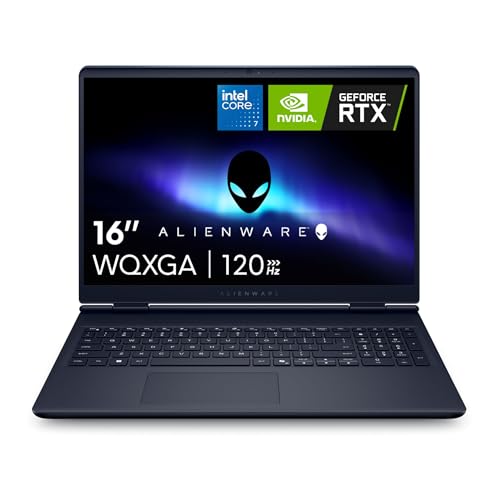
Alienware’s Aurora takes the same RTX 5060 found in the Nitro and points it at a different kind of panel, and that single decision defines the machine. The title specifies a 16 inch display at 2560 by 1600 resolution, refreshing at 120Hz in a 16:10 aspect ratio, with an Intel Core 7 240H processor, 16GB of DDR5 memory, a 1TB SSD, Windows 11 Home, a backlit keyboard, and a blue finish. Where Acer chased frames, Alienware chased pixels: this is the sharpest screen in the guide, with a taller aspect ratio that serves documents and creative timelines as generously as it serves games.
The exchange deserves a clear explanation, because buyers must choose their side of it. Refresh rate governs how fluid motion feels and how current the image under a moving cursor is; resolution governs how much detail and workspace the panel holds. At 120Hz the Aurora remains a genuinely high-refresh gaming display — double the standard rate, and enough for the great majority of players and titles. What it returns for the frames it declines is a picture with visibly finer texture in games, crisper text in the working day, and a 16:10 canvas that shows more of a document or a timeline without scrolling. Players whose libraries lean cinematic, strategic, and creative will feel they got the better half of the bargain.
The supporting specification is flagship-grade without excess. Sixteen gigabytes of DDR5 suits gaming and general production; the terabyte of storage matches the guide’s leaders; the Core 7 240H is a current Intel performance processor. Alienware’s contribution beyond the numbers is the one its name has always carried — design and identity. The Aurora’s blue finish and the brand’s design language make this the machine in the guide most likely to be chosen partly as an object, and there is nothing shallow in that: a laptop carried and used daily for years is allowed to be liked, and Alienware’s support ecosystem stands behind the badge.
Home edition Windows, rather than Pro, is the one specification where the Aurora sits a step below some rivals, and it matters only where Pro’s business features are required. For its intended owner — the player-creator who wants the premium name, the tall sharp screen, and current RTX power in a 16 inch design — the package is coherent and complete. Open the Alienware 16 Aurora’s listing to confirm the 2560 by 1600 configuration, since display options are exactly where configuration selectors earn their caution.
One practical note for desk workers: the 16:10 screen reduces the itch for an external monitor in a way 16:9 panels do not, because the extra vertical space is where documents, code, and timelines actually live. A buyer equipping a small desk may find the Aurora replaces a two-screen plan with a one-screen reality, and that hidden saving belongs in its value calculation beside the badge and the pixels.
The Aurora also suits the growing class of players whose gaming is social in a specific way: the machine as the room’s entertainment centre. A sharp 16 inch screen, a recognisable design, and a terabyte of library make it the laptop friends gather around and the one that connects to a television for couch play without apology. Alienware built its name in rooms like that, and the Aurora’s specification — power sufficient for the current generation, storage sufficient for the shared library — shows the brief understood at a level beneath the marketing.
- Display: 16 inch, 2560 by 1600, 120Hz, 16:10
- Processor: Intel Core 7 240H
- Graphics: NVIDIA GeForce RTX 5060
- Memory and storage: 16GB DDR5, 1TB SSD
- Operating system and input: Windows 11 Home, backlit keyboard
- Finish: Blue
Strengths
- The sharpest, tallest display in this guide
- RTX 5060 power with a terabyte of storage
- Alienware design, identity, and support ecosystem
Trade-offs
- 120Hz where the Nitro offers 180Hz for competitive play
- Windows 11 Home rather than the Pro edition
- 16GB of memory where the Nitro doubles it
Best for: cinematic and strategy gaming plus creative work on a tall, sharp 16:10 screen.
Not suited for: competitive players prioritising maximum refresh rate, or workflows needing Windows Pro features.
HP Victus 15 — Value Generation
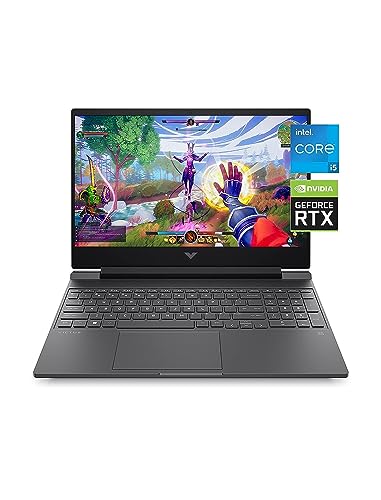
The Victus 15 is the guide’s representative of a permanent truth in gaming hardware: last generation’s machines do not vanish, they get cheaper, and at the right price they remain the smartest purchase in the room. This configuration is a 2022 model, as its title states, built around an NVIDIA GeForce RTX 3050, a 12th generation Intel Core i5-12500H, 8GB of memory, a 512GB SSD, a Full HD display, Windows 11 Home, a backlit keyboard, and enhanced thermals. Every figure there is a step behind the guide’s current machines, and the review’s job is to price that distance honestly rather than pretend it away.
Begin with what remains genuinely good. The RTX 3050 is a real discrete graphics card, and for the enormous library of games released before this decade’s most demanding titles — plus esports titles designed to run on anything — it delivers an experience in a different league from integrated graphics. The i5-12500H was a strong gaming processor in its day and remains entirely adequate behind a 3050. Enhanced thermals, headlined in the title, matter in a slim gaming chassis more than specification sheets admit: sustained performance in a long session is a cooling story as much as a silicon story, and HP designed this line with that in mind.
Then the limits, without varnish. Eight gigabytes of memory is the tightest allocation in this guide alongside the NIMO, and modern gaming increasingly treats 16GB as the assumed floor; the Victus will ask its owner to close background applications before launching demanding titles, and some current releases will strain it regardless of settings. The RTX 3050 itself sits a full two generations behind the 5060 machines here, which in practice means recent flagship titles at reduced settings rather than native glory. The title does not state the display’s refresh rate, so the spec box records that gap rather than borrowing a figure from the model’s reputation.
The Victus therefore lives or dies on a single comparison the reader must perform: its price against the Cyborg pair. If the gap is wide, the Victus is the rational machine for a player whose library leans classic and competitive, and whose budget has other claims on it. If the gap has narrowed to a sliver, the current generation’s memory, card, and display make the newer machines the better buy at nearly the same money. Check the Victus 15’s listing with that gap in mind and let arithmetic, not nostalgia or novelty, decide.
There is one more buyer for whom this machine is exactly right: the parent or gift-buyer equipping a younger player’s first gaming laptop. A first machine should be capable, replaceable without tears, and matched to a library of age-appropriate and back-catalogue titles rather than launch-day flagships. The Victus fits that brief with room to spare, and its limitations become a curriculum — settings, optimisation, and hardware literacy are learned on machines that ask for them.
Second-hand and hand-me-down logic also flatters the Victus. A machine of this specification, bought carefully now, has a natural second life as a younger sibling’s or a child’s first gaming computer when its owner eventually upgrades — the RTX 3050’s library of playable titles will remain enormous for years, even as the frontier moves on. Purchases that cascade through a household deliver more total value than their first owner’s spreadsheet shows, and previous-generation machines cascade better than any other class because their limitations are known, stable, and priced in from the start.
- Display: 15 inch class Full HD; refresh rate Not stated in the listing title — verify with the manufacturer documentation
- Processor: 12th Gen Intel Core i5-12500H
- Graphics: NVIDIA GeForce RTX 3050
- Memory and storage: 8GB RAM, 512GB SSD
- Operating system and input: Windows 11 Home, backlit keyboard
- Cooling and model: enhanced thermals; 15-fa0025nr, 2022
Strengths
- A real discrete RTX card at a previous-generation position
- Enhanced thermals suit sustained gaming sessions
- A strong-in-its-day processor that still matches the card
Trade-offs
- 8GB of memory is below the modern gaming comfort floor
- The RTX 3050 trails the 5060 machines by two generations
- A 2022 model with a correspondingly shorter support runway
Best for: back-catalogue and esports libraries, and a first gaming laptop bought on a careful budget.
Not suited for: current flagship titles at high settings, or heavy multitasking around a demanding game.

NIMO 15.6 Light Gaming — Integrated Route
The NIMO must be introduced with its defining fact stated first and without decoration: this laptop has no discrete graphics card. Its title describes an 8-core AMD Ryzen 7 processor, credited with performance up to 4.75GHz, paired with Radeon 680M graphics — and the Radeon 680M is an integrated graphics solution, built into the processor itself, sharing the system’s memory rather than carrying its own. Any description of this machine as a discrete-GPU laptop would be false, and this guide does not make it. What the NIMO offers instead is the strongest class of integrated graphics AMD has put in a laptop processor, in a slim 15.6 inch design aimed at light gaming, content creation, and student entertainment, with 8GB of DDR5 memory and a 256GB SSD.
Integrated graphics of this calibre occupy a real and useful niche, and dismissing them would be as dishonest as inflating them. The 680M generation earned its reputation by making genuinely playable experiences out of esports titles, indie games, older releases, and lighter modern games at modest settings — the libraries, in other words, that a great many students and casual players actually own. For that audience, the integrated route removes the cost, heat, and much of the bulk of a discrete card, and the NIMO wraps it in features that suit its crowd: a backlit keyboard, and 100W fast PD charging as stated in the title, which refills a travel machine quickly through the USB-C PD ecosystem its owners already carry for phones and tablets.
The boundaries are equally concrete. Current flagship games at high settings are beyond integrated graphics, full stop; a buyer whose library centres on those titles belongs with the RTX machines above. Storage is the second boundary: 256GB is the smallest figure in this guide, and even a light library plus Windows and applications will keep it under gentle pressure, so cloud saves and curated installations become habits from day one. The 8GB of memory is shared with the graphics, which tightens it further under gaming loads — the practical consequence is modest settings chosen willingly rather than maximum settings chosen hopefully.
Judged as what it declares itself to be — a light-gaming laptop for creators, students, and entertainment — the NIMO is a coherent and unusually honest entry in a category full of inflated claims, and its maker’s own title, which names the integrated graphics plainly, deserves credit for that. Readers whose gaming fits its niche should examine the NIMO’s Amazon listing closely; readers whose gaming does not should take the clarity of this review as the guide’s service and move up the page to the discrete cards.
A final constituency suits this machine particularly well: the player whose gaming happens in short sessions between other work, on trains, in shared flats, in the gaps of a student day. That pattern rewards quick charging, a slim chassis, and graphics matched to lighter titles far more than it rewards a flagship card carried everywhere and unleashed rarely. The NIMO is built for the gaps, and there are more gamers living in the gaps than the flagship marketing of this industry ever admits.
Parents and partners shopping for a player should also recognise the NIMO’s shape: it is the gaming laptop that does not reorganise a household around itself. No dock farm, no external drive archive, no settings anxiety — a slim machine that charges from a common standard, plays the lighter library its owner actually has, and doubles as an entirely respectable student computer the rest of the day. In households where the gaming is real but not the centre of life, that proportion is the feature, and the flagship machines in this guide are, by the same logic, the disproportionate choice.
- Display: 15.6 inch Full HD
- Processor: AMD Ryzen 7, 8 cores, up to 4.75GHz as stated
- Graphics: Radeon 680M — integrated graphics, not a discrete card
- Memory and storage: 8GB DDR5, 256GB SSD
- Charging and input: 100W fast PD charging, backlit keyboard
- Positioning per title: AI content creators, student entertainment and productivity
Strengths
- The strongest class of integrated graphics, honestly described
- 100W fast PD charging through the USB-C ecosystem
- A slim design unburdened by discrete-card cost and heat
Trade-offs
- Integrated graphics cannot run flagship titles at high settings
- 256GB is the smallest storage in this guide
- Memory is shared with the graphics under load
Best for: esports, indie, and older libraries in short sessions, plus student entertainment and light creation.
Not suited for: current flagship games at high settings, or a large locally installed library.
Side-by-Side Comparison
| Machine | Graphics | Display | Memory | Storage |
|---|---|---|---|---|
| MSI Cyborg 15 | RTX 5050, 8GB | 15.6 inch FHD 144Hz | 16GB | 512GB SSD |
| MSI Cyborg A15 AI | RTX 5050 | 15.6 inch FHD 144Hz | 16GB DDR5 | 1TB SSD |
| Acer Nitro V 16S AI | RTX 5060 | 16 inch WUXGA IPS 180Hz | 32GB DDR5 | 1TB Gen 4 SSD |
| Alienware 16 Aurora | RTX 5060 | 16 inch 2560×1600 120Hz | 16GB DDR5 | 1TB SSD |
| HP Victus 15 | RTX 3050 | Full HD, refresh Not stated in the listing title | 8GB | 512GB SSD |
| NIMO 15.6 Light Gaming | Radeon 680M integrated | 15.6 inch FHD | 8GB DDR5 | 256GB SSD |
How to Choose Your Performance Tier
Let your library, described honestly, choose the tier. Write down the five games you will actually play this year — not the ones you admire, the ones you will open — and note their ages and appetites. A list dominated by esports titles, indies, and releases more than a few years old is served completely by the NIMO’s integrated graphics or the Victus’s RTX 3050, and the money saved is real. A list anchored by current flagship releases at native resolution needs the RTX 5050 machines as its floor. A list that mixes flagship gaming with streaming or content production belongs to the Nitro’s 32GB and 5060, or the Alienware’s sharper screen over the same card.
Then decide the screen question, because it cannot be changed later. Frames or pixels: 144Hz and 180Hz panels reward fast, competitive play; the Aurora’s 2560 by 1600 panel rewards detail, workspace, and cinematic titles. Competitive players should not let a prettier specification talk them out of refresh rate, and creative players should not let a frame counter talk them out of the resolution their timelines and canvases will use every day. Both camps are right, about different games.
Finally, budget for the library’s growth. Storage is the specification that a gaming laptop consumes, and the spread from 256GB to a terabyte in this guide maps directly onto how often the owner will be deleting something to install something else. Anyone familiar with that ritual should pay for the terabyte tiers now; a buyer with a focused rotation can let 512GB serve and spend the difference on the games themselves.
A last piece of choosing advice concerns timing, because this category moves faster than any other in the guide. Graphics generations turn over on a roughly two-year rhythm, and a machine bought just after a new generation lands — as the 5050 and 5060 models here have — carries the longest useful runway its price can buy. A machine bought late in a generation’s life should be bought the way the Victus should be: knowingly, and at a price that pays the buyer for the shorter runway. Neither timing is a mistake in itself; the mistake is paying a new-generation price for an old-generation runway, or refusing a genuine bargain out of a superstitious need for the newest badge. The titles in this guide state their generations plainly, and a reader who has absorbed the reviews can now price that plainness for themselves in any listing they meet.
Does a Thin Gaming Laptop Give Up Sustained Performance?
Some, and honesty about the mechanism serves buyers better than either marketing extreme. A slim chassis has less room for cooling hardware and airflow than a thick desktop replacement, so under a sustained maximum load a thin machine may moderate its clocks sooner than a bulky one with the same card on paper. In practice, the designs here are engineered around that reality — the Victus headlines its enhanced thermals precisely because the class takes cooling seriously — and for the gaming sessions most owners actually play, the difference between a thin machine and a thick one is far smaller than the difference between graphics generations. The buyer who plays marathon sessions at maximum settings in a warm room is the edge case who should weight cooling design and reviews of sustained behaviour most heavily; the buyer who plays in the evening, at sensible settings, will be served by any machine in this guide at its tier.
Integrated or Discrete Graphics: Which Route Is Honest Value?
Both, for different libraries — and the NIMO’s presence in this guide is the proof that the question deserves a real answer rather than a sneer. Discrete graphics, the RTX cards in the other five picks, carry their own video memory and an order of magnitude more rendering power; they are the only route to current flagship titles at satisfying settings. Integrated graphics of the Radeon 680M’s class trade that ceiling for a slimmer, cheaper, cooler machine that still plays the lighter half of the gaming world well. The dishonest outcomes are the mismatches: integrated graphics sold to a flagship player, who will be disappointed within a week, and a flagship card sold to an esports-only player, whose money bought capability that will never be switched on. Match the route to the library and both are honest value.
How Much Do AI Features Matter in a Gaming Laptop?
Enough to appear in three of these six titles, and the buyer should understand what is being claimed. Acer prints the Nitro’s 572 AI TOPS figure in its title — a measure of the machine’s throughput for AI workloads — while the Cyborg A15 and the NIMO carry AI in their positioning for creators and platform features. The practical face of these capabilities today is acceleration: upscaling and frame-generation features in games, speed in creative applications that use AI tools, and responsiveness in the assistant features woven through current software. A pure player can treat AI figures as a secondary specification; a player-creator, for whom the same machine edits and renders, should treat them as part of the core comparison, because that is the work where the numbers convert into hours.
Common Mistakes
Comparing graphics cards by name across generations without context. An RTX badge spans an enormous performance range across its generations and wattages. The 3050 in the Victus and the 5060 in the Nitro share a naming scheme and little else; judge each card by its generation and the settings your library demands, not by the comfort of a familiar label.
Calling integrated graphics discrete, or buying as if they were. The NIMO’s Radeon 680M is a fine integrated solution and a poor impersonation of an RTX card. Any listing, review, or salesperson that blurs that line is setting the buyer up for a returned machine and a wasted month.
Buying refresh rate your card cannot feed, or resolution it cannot fill. Panel and graphics card are a pair. A very high-refresh screen behind an entry card, or a very high-resolution screen behind a modest one, wastes whichever half of the pairing cost more. The matches in this guide are deliberate; preserve the logic when comparing configurations elsewhere.
Underbuying storage for a library that only grows. Games do not shrink, and libraries do not prune themselves. The 256GB and 512GB machines here are honest tools for focused libraries; a buyer whose installed collection already exceeds those figures at a desktop will repeat the overflow on the laptop, weekly and resentfully.
Final Recommendation
The Acer Nitro V 16S AI is this guide’s specification summit and its recommendation for the buyer who wants one slim machine to do everything at the highest level here: the RTX 5060, the 180Hz screen, the 32GB of memory, and the Gen 4 terabyte form a package with no apology in it. The Alienware 16 Aurora is the connoisseur’s alternative over the same card — the buyer who values the 2560 by 1600 screen, the 16:10 workspace, and the badge should take it without a backward glance. Between the Cyborgs, the A15 AI is the more complete computer and the Intel model the better desk citizen with its dock; both deliver the class’s core promise of RTX 5050 gaming at 144Hz in a carryable 15.6 inch design. The Victus earns its recommendation the moment its price opens a real gap beneath them, and the NIMO closes the guide as the honest lightweight — integrated graphics, plainly labelled, for the large and underserved class of players whose libraries never needed a discrete card at all, and whose money is better spent on the games, the bag, and the years of evenings the machine will actually serve.
Frequently Asked Questions
What does the Hz figure in these titles actually change?
It is the display’s refresh rate — how many times per second the panel can present a new image. A 144Hz or 180Hz panel, fed by a graphics card producing frames at that pace, makes fast motion look markedly smoother and more responsive than a standard 60Hz screen. The benefit concentrates in fast-paced and competitive games; slower, cinematic titles gain less, which is why the Alienware’s resolution-first panel is a legitimate alternative rather than a lesser one.
Is the Radeon 680M a discrete graphics card?
No. The Radeon 680M in the NIMO is integrated graphics, built into the AMD processor and sharing the system’s memory. It is a strong example of its class and plays esports, indie, and older titles well, but it does not have the dedicated memory or rendering power of the RTX cards in the other five picks, and it should never be described — or purchased — as a discrete-GPU machine.
How much memory does a gaming laptop need now?
Sixteen gigabytes is the current comfort point for gaming alone, and it is where most of this guide sits. Thirty-two, as in the Nitro, serves the player who also streams, edits, or produces on the same machine. Eight gigabytes, in the Victus and the NIMO, is workable for lighter libraries with background applications kept closed, and is the first specification those machines’ owners will feel as titles grow more demanding.
Can these thin machines connect to a desk setup?
Yes, and the guide’s lead pick builds the answer into its listing: the Intel Cyborg 15 bundles a Belkin 6-in-1 GaN dock for one-cable connection to a monitor and peripherals. The other machines can serve a desk through their own ports and an owner’s dock or hub. For a laptop that splits its life between bag and desk, that one-cable habit is worth arranging from the first week rather than improvising for years.
Is a previous-generation gaming laptop a false economy?
Only when it is priced like a current one. The Victus’s RTX 3050 and 8GB of memory are real limitations against current flagship titles, and no discount changes that. But for back-catalogue and esports libraries, a previous-generation machine at a genuinely lower price delivers years of appropriate service, and the money it saves can fund the games themselves. The comparison that matters is the size of the price gap on the day you buy, checked against the Cyborgs above it.
Why do two picks use AMD and others Intel?
Because both makers’ current performance processors serve this class well, and the machines here were chosen as complete packages rather than as processor advertisements. The Ryzen 7 260 powers the Cyborg A15, the Nitro, and the NIMO’s platform; Intel’s Core processors power the Cyborg 15, the Aurora, and the Victus. In this tier the graphics card, display, memory, and storage separate the machines far more decisively than the badge on the processor does.
Related Guides
Performance in a slim chassis neighbours several other questions worth their own shortlists: best convertible laptops for students for folding machines that balance class and couch, best detachable laptops for tablet-first designs that type when required, and best business convertible laptops for 2-in-1 machines built for the working week rather than the weekend’s library.