What's inside
- Key Takeaways
- Quick Picks
- How We Chose These Picks
- Why Does Wired Still Win at a LAN Party?
- What Actually Matters When Twelve Players Share One Room?
- Which LAN Headsets Earn a Full Review?
- How Do You Run a Headset Check Before the Tournament Starts?
- How Should a Team Standardise Its Headsets Without Starting an Argument?
- What Do Console Seats at a LAN Need That PC Seats Do Not?
- How Long Should a Wired LAN Headset Last, and What Kills It First?
- How Does Voice Chat Discipline Change What a Team Should Buy?
- What Is the Right Way to Handle Glasses, Hair and Long Sessions?
- How Should a Home Tournament Borrow the Habits of Big LANs?
- How Do the Six LAN Headsets Compare Side by Side?
- What Should a LAN Spares Bag Contain?
- How Do You Keep Twelve Headsets Hygienic and Working Across Events?
- What Mistakes Do LAN Headset Buyers Keep Making?
- Final Recommendation
- Frequently Asked Questions
- Related Guides
As an Amazon Associate I earn from qualifying purchases. This post may contain affiliate links at no extra cost to you.
widgetverdict.com is reader-supported. When you buy through links on our site, we may earn an affiliate commission.
Where to buy: Amazon carries all six headsets in this guide, and every one of them arrives ready to plug in — no charging cradle to unpack, no firmware to update, no pairing ritual before the first match of the night.
The best lan headsets are wired, and this guide will not apologise for that, because a LAN party is the one gaming environment where the cable’s advantages all cash out at once. There is no battery to die in game four of a tournament bracket. There is no wireless latency to blame, however honestly or dishonestly, for a missed shot. There is no interference from the eleven other headsets in the same room hunting for clean airspace. And when a cable eventually fails — at a LAN, cables are consumables — it can be swapped, borrowed or replaced from the spares bag in the time a wireless headset spends looking for its dongle. Wired discipline is not nostalgia. At a table full of machines, it is logistics.
What a LAN actually demands from a headset is specific. Sessions run long, so weight and clamping force decide who is still comfortable at midnight. Rooms run loud — a dozen players, a commentator friend, a speaker somewhere — so earcup isolation matters more than it does in a quiet bedroom. Voice chat carries tactics, so the microphone has to stay intelligible when its owner gets excited, and a flip-to-mute or detachable arrangement helps when the conversation turns to the pizza order rather than the match. Every pick below is a wired multi-platform or PC headset whose listing states the hardware that serves those demands: driver sizes, microphone designs, connection types, weights where the maker publishes them.
One promise this guide refuses to make: none of these headsets will make you play better in some mystical professional sense. Marketing departments sell tournament mystique; a headset sells sound, a microphone and comfort. A player who can hear footsteps clearly, call them out intelligibly and forget the thing on their head for six hours has everything a headset can honestly give. The rest is practice, and it does not come in the box.
Key Takeaways
- Every pick is wired — no batteries, no pairing, no wireless latency — because a LAN table rewards exactly those absences.
- The HyperX Cloud III offers the widest connection kit: USB-C, USB-A and 3.5 mm in one listing, covering PC and both console families.
- The Razer BlackShark V2 X is the weight story at 240 g, with a cardioid microphone built to reject the room.
- Flip-to-mute microphones on the Turtle Beach Recon 70, JBL Quantum 200 and Logitech G432 suit shared rooms where chat needs an off switch.
- The Logitech G432 adds DTS Headphone:X 2.0 surround processing over USB for PC players who want positional processing built in.
- Judge LAN headsets on comfort across six hours and microphone clarity at excited volume — the two things a tournament actually tests.
Quick Picks
| Pick | Badge | Why it is here |
|---|---|---|
| HyperX Cloud III Wired Gaming Headset | Best all-platform LAN pick | 53 mm drivers, a clear 10 mm microphone and three ways to connect across PC, PlayStation and Xbox. |
| Razer BlackShark V2 X Wired Headset | Best lightweight contender | 240 g with titanium-coated 50 mm drivers and a cardioid mic that keeps the room out of your callouts. |
| SteelSeries Arctis Nova 1P Wired Headset | Best comfort-first design | A lightweight multi-system headset with hi-fi drivers and a noise-cancelling microphone for long sessions. |
| Turtle Beach Recon 70 Wired Headset | Best simple team headset | Flip-to-mute microphone and 40 mm speakers in a light frame that works on every machine at the table. |
| JBL Quantum 200 Wired Headset | Best voice-focus value | A directional flip-up microphone tuned for voice, with memory foam cushions for the long bracket run. |
| Logitech G432 Wired Gaming Headset | Best PC surround option | 50 mm drivers with DTS Headphone:X 2.0 over USB, plus a plain 3.5 mm route for everything else. |
How We Chose These Picks
Wired was the entry ticket — a headset that needs charging has no place in a guide about LAN discipline. Beyond that, we weighted the LAN-specific virtues in the order a tournament tests them: wearing comfort across a full evening, microphone clarity for team communication, connection flexibility across the mixed machines a LAN table actually contains, and build that tolerates being thrown in a bag weekly. Every pick is a multi-system or PC headset from a maker whose listing states its drivers and microphone design plainly. We deliberately included a spread of weights and prices of effort — from the featherweight BlackShark to the surround-processing G432 — because LAN groups buy in bunches, and a guide that helps a team equip six seats sensibly serves the keyword better than six variations of the same flagship.
Why Does Wired Still Win at a LAN Party?
Count the failure modes a cable removes. A wireless headset at a LAN carries a battery with a finite evening in it, a dongle that belongs to exactly one machine, a pairing state that can attach itself to the wrong laptop, and a radio link sharing spectrum with every other headset, phone and router in the room. Each is survivable alone; together they guarantee that across a twelve-person LAN, somebody spends match time troubleshooting instead of playing. The wired headset’s entire failure list is shorter: the cable works or it visibly does not, and a spare cable — or a borrowed headset — fixes it in a minute.
Latency is the honest part of the argument. Modern wireless gaming headsets are fast, and this guide will not pretend otherwise; but wired is faster by physics, costs nothing extra to be faster, and never has a bad night. At home-tournament level the difference will rarely decide a round. The reliability difference decides evenings, which is why organisers of serious LANs standardise on cable and why every pick here follows their lead.
What Actually Matters When Twelve Players Share One Room?
Isolation and microphone discipline, in that order. A LAN room’s noise is not background hum; it is twelve people calling out, laughing and arguing, several of them wearing the same model of headset you are considering. Earcups that isolate — the BlackShark’s noise-isolating design is explicit about this — keep your game’s audio yours. A cardioid or directional microphone that favours the mouth over the room keeps your callouts clean for teammates who may be sitting three metres away yet hearing you through voice chat, because the in-game channel is how teams talk even in the same room.
Comfort is the third factor and the one buyers underrate at the shop and overrate at hour five. Two hundred and forty grams versus a heavier frame is a rounding error in the hand and a genuine difference on the neck by midnight. Memory foam, which appears in the Cloud III’s and Quantum 200’s listings, spreads pressure and seals better around glasses — a detail that decides evenings for the substantial share of players who wear them.
Which LAN Headsets Earn a Full Review?

HyperX Cloud III Wired Gaming Headset — Best all-platform LAN pick
A LAN table is a museum of connection standards — a new PC with only USB-C, an older tower with USB-A, consoles that want 3.5 mm at the controller — and the Cloud III is the pick that arrives fluent in all of them. Its listing states USB-C, USB-A and 3.5 mm connectivity for PC, PS5 and Xbox Series X|S, which makes it the headset a LAN organiser can hand to any seat without asking what machine lives there. Underneath the diplomacy sit 53 mm drivers, the largest in this guide, and a microphone the listing describes as ultra-clear at 10 mm — boom size matters, because a bigger capsule at the right distance is the simplest route to callouts your team understands first time.
HyperX built the Cloud line’s reputation on comfort, and the listing’s memory foam and durable frame claims continue that argument. Memory foam earns its place at a LAN specifically: it seals around glasses arms, it spreads the clamp across a long session, and it recovers between game nights instead of packing flat by the third event. The durable frame is the travel argument — this headset will live in a backpack, under a monitor stand, occasionally under a chair, and a frame built for that life outlasts a prettier one.
For a mixed-platform group, this is the standard-issue answer: one model to buy in quantity, one microphone behaviour for the whole team to learn, one connection kit that ends the adapter hunt. A team equipping six seats with Cloud IIIs will spend its preparation time on strategy rather than on the traditional pre-tournament ritual of discovering whose headset does not fit whose machine.
Its honest limitation is that it pursues the all-round brief rather than any extreme. It is not the lightest pick here, and it offers no surround processing of its own in the listing — PC software can add that downstream, but the headset itself is a stereo instrument. Buyers chasing a specialism should read on; buyers chasing the LAN default should stop here.
- Connections: USB-C, USB-A and 3.5 mm, per the listing title
- Platforms named in the listing: PC, PS5, Xbox Series X|S
- Drivers: 53 mm
- Microphone: 10 mm, described as ultra-clear in the listing
- Cushions: memory foam
- Frame: described as durable in the listing title
Strengths
- Three connection types cover every machine a mixed LAN table contains.
- Largest drivers in the guide with a full-size 10 mm microphone for clear callouts.
- Memory foam and a durable frame suit weekly travel to events.
Trade-offs
- No surround processing is claimed in the listing — stereo is the instrument.
- Not the lightest option for players who prioritise neck comfort above all.
- Its all-round brief means specialists may find a sharper tool below.
Best for: a mixed-platform LAN group buying one model for every seat, PC and console alike.
Not suited for: a player who wants built-in surround processing, or the absolute lightest frame on the table.
Check the Cloud III’s price on Amazon — it is the natural bulk buy for a whole team’s seats.

Razer BlackShark V2 X Wired Headset — Best lightweight contender
The BlackShark V2 X makes its argument in grams: 240 g, a figure the listing states outright and the lightest claim in this guide. Across a six-hour LAN that number compounds — less neck load, less clamp fatigue, less of the end-of-night headset headache that players blame on screens and actually owe to weight. Razer pairs the light frame with TriForce Titanium 50 mm drivers, its three-part driver design intended to tune lows, mids and highs separately, and with noise-isolating earcups that keep the room’s twelve voices out of your audio.
The microphone is the other half of the LAN case: a HyperClear cardioid mic. Cardioid pickup favours what is in front of the capsule — your mouth, at boom distance — and discounts the teammate shouting two seats away. In a shared room where everyone talks through voice chat anyway, that directionality is the difference between a callout and a chorus. The 3.5 mm connection keeps the headset honest and universal: controller, PC splitter, laptop, the spare machine in the corner — if it has the jack, the BlackShark works, and the listing names PC, PS5, PS4 and Switch among its platforms.
Razer’s design language here is esports-plain rather than lounge-friendly, and the wired-only, single-jack simplicity cuts both ways: there is no USB path for players who want on-headset processing, and no surround feature claimed in the listing. What remains is the LAN essence distilled — light, isolating, clear-voiced, plugged in. For a player whose tournament days are long and whose machine has a 3.5 mm jack, that distillation is exactly the point.
Treat the 240 g figure as the deciding test: if you have ever finished a LAN with a sore neck, this is your pick; if weight has never bothered you, the Cloud III’s connection kit may serve you better.
- Weight: 240 g, as stated in the listing
- Drivers: TriForce Titanium 50 mm
- Microphone: HyperClear cardioid
- Earcups: noise-isolating, per the listing title
- Connection: 3.5 mm
- Platforms named in the listing: PC, PS5, PS4, Switch
Strengths
- 240 g is the lightest stated weight here — a real advantage across tournament-length sessions.
- Cardioid microphone rejects the shared room while keeping callouts forward.
- Noise-isolating earcups protect your game audio from the LAN’s volume.
Trade-offs
- 3.5 mm only — no USB connection or processing path in the listing.
- No surround feature is claimed; positional audio comes from the game itself.
- PC use may need a splitter for separate mic and headphone jacks, depending on the machine.
Best for: a long-session player who feels headset weight by midnight and plays in a loud shared room.
Not suited for: players who need USB connectivity or built-in surround processing from the headset itself.
Check the BlackShark V2 X on Amazon if the scale, more than the spec sheet, has decided your past headsets.

SteelSeries Arctis Nova 1P Wired Headset — Best comfort-first design
SteelSeries sells the Arctis Nova 1P on a feeling: its listing strings together hi-fi drivers, 360° spatial audio, a comfort design, durable and lightweight construction, and a noise-cancelling microphone, across PS5, PS4, PC, Xbox and Switch. Read as a LAN brief, that list maps neatly onto the evening’s demands — sound quality for immersion, comfort engineering for duration, light weight for the neck, and a microphone that cancels the room’s noise for your teammates’ benefit.
The comfort emphasis is the pick’s identity. Where the BlackShark wins on a stated number, the Nova 1P wins on design intent: the Arctis line built its name on ski-goggle-style suspension comfort and earcups meant to disappear, and the listing’s comfort-and-lightweight pairing says that inheritance is intact. For players who find conventional headbands create a pressure point at the crown by hour three, this design philosophy is not a luxury — it is the difference between wearing the headset and enduring it.
The spatial audio claim deserves its honest framing: 360° spatial audio in a wired headset of this class is delivered through the platform and game support, and its quality varies by title. What the headset guarantees is the driver quality and the wearing comfort; the surround experience rides on the software you feed it. That is true of every spatial claim in gaming audio, and the Nova 1P’s listing at least anchors the claim to hi-fi drivers rather than to mystique.
The 1P variant is the PlayStation-facing member of its line, which suits console-heavy LANs, while the stated multi-system support keeps it useful when the same player migrates to PC or Switch seats. For a group whose machines skew PlayStation and whose sessions skew long, it is the comfort candidate to beat.
- Drivers: hi-fi drivers, per the listing title
- Audio: 360° spatial audio, as claimed in the listing
- Microphone: noise-cancelling, per the listing title
- Build: comfort design, durable, lightweight — all as described in the listing
- Platforms named in the listing: PS5, PS4, PC, Xbox, Switch
- Driver size: the listing title gives no millimetre figure — check the full product page if size is decisive
Strengths
- Comfort-first design philosophy aimed squarely at long sessions.
- Noise-cancelling microphone serves teammates in a loud room.
- The widest platform list in this guide, spanning both console families, PC and Switch.
Trade-offs
- No stated weight or driver size in the title, so spec-led comparison needs the full listing.
- Spatial audio quality depends on the game and platform feeding it.
- The PlayStation-facing variant may not be the natural pick for an Xbox-only group.
Best for: a comfort-sensitive player on a PlayStation-leaning, multi-system LAN setup with long sessions.
Not suited for: spec-first shoppers who compare strictly by published driver and weight figures before anything else.
Check the Arctis Nova 1P’s price on Amazon, and try the fit early in the return window — comfort claims are personal.

Turtle Beach Recon 70 Wired Headset — Best simple team headset
The Recon 70 is the headset LAN organisers buy by the armful, and its listing explains why in plain terms: a flip-to-mute microphone, 40 mm speakers, a lightweight build with soft earpads, and compatibility spanning PS5, PC, Xbox Series X|S, Xbox One, PS4 and mobile. Nothing in that list is exotic. Everything in it answers a real LAN need, starting with the mute: in a room where half of every conversation is not for the team channel — food orders, side jokes, a parent in the doorway — a microphone that mutes by flipping up, visibly and instantly, is a social feature as much as a technical one.
Turtle Beach’s headset heritage is console-first, and the Recon 70’s multiplatform spread reflects decades of living at controller jacks. For a home tournament where half the seats are consoles and the rest are laptops with 3.5 mm ports, one model covers the room, spares interchange freely, and nobody’s setup requires an adapter hunt. The 40 mm speakers are the smallest drivers in this guide, and the honest consequence is a leaner low end than the 50 mm-class picks deliver; for voice-driven team games and general play, that trade buys the light weight and simplicity the listing leads with.
Soft earpads and a light frame target the younger and casual end of the LAN — the school-holiday tournament, the family games night that grew competitive, the first headset a new player owns. It will not be the last headset a serious player buys, and it does not pretend otherwise in its listing. What it promises is that every seat at the table can hear, be heard, and mute with a flick, tonight, without a settings menu.
Buy it as the team standard for casual brackets and as the universal spare for serious ones: the headset that rescues the seat whose premium model failed, because it plugs into everything and asks for nothing.
There is also a fairness argument organisers quietly appreciate: when every casual seat wears the same headset, nobody at the table owns an equipment advantage worth arguing about, and post-match analysis stays where it belongs — on the play, not the peripherals.
- Speakers: 40 mm, per the listing title
- Microphone: flip-to-mute
- Build: lightweight with soft earpads, per the listing title
- Platforms named in the listing: PS5, PS4, Xbox Series X|S, Xbox One, PC, mobile
- Connection: wired — the listing title does not single out a connector type, so confirm the plug on the full product page
- Driver class note: smallest drivers in this guide, traded for weight and simplicity
Strengths
- Flip-to-mute is the fastest, most visible mute at a social LAN table.
- Broadest console compatibility here, including older generations and mobile.
- Light weight and soft pads suit younger players and long casual sessions.
Trade-offs
- 40 mm speakers give a leaner low end than the 50 mm-class picks.
- No noise-cancelling or cardioid claim for the microphone in the listing.
- Serious players will outgrow it; it is a standard and a spare, not a final headset.
Best for: a casual or family LAN, a school club, or any organiser equipping many mixed seats simply.
Not suited for: a player chasing maximum driver size or a noise-rejecting microphone for a loud room.
Check the Recon 70 on Amazon when the shopping list says six headsets rather than one.

JBL Quantum 200 Wired Headset — Best voice-focus value
JBL comes to gaming from loudspeakers, and the Quantum 200’s listing leads with the microphone rather than the drivers: a voice focus directional flip-up mic. Directional is the operative word at a LAN. A voice-focus pickup aims the capsule’s sensitivity at the mouth and away from the room, which is precisely the geometry of a player calling tactics while eleven other voices fill the air. Flip-up adds the mute gesture the Recon 70 also trades on — raise the boom and you are off the channel, a movement teammates can see and trust.
The wearing side is covered by memory foam ear cushions, the listing’s stated comfort feature, which seal around the ear and around glasses frames better than basic foam across a long evening. JBL’s audio tuning heritage suggests a sound signature built by people who measure speakers for a living; the listing itself stays modest, naming the Quantum range rather than publishing driver figures, and this guide respects that modesty — check the full product page if driver size is a deciding figure for you.
Position the Quantum 200 as the value seat with a specialist microphone: for a player whose role is shot-calling — the in-game leader whose voice is the team’s most-used instrument — a directional voice-focus mic at this level is a sharper tool than a bigger driver. For a player who mostly listens, the calculus reverses and the Cloud III or G432 argues louder.
Its wired over-ear design keeps faith with the guide’s discipline: no battery, no pairing, a cable that either works or is replaced. In a spares bag for a team, it is the headset that fixes a microphone problem, which at a LAN is the failure that actually loses rounds.
- Microphone: voice focus directional flip-up mic, per the listing title
- Cushions: memory foam ear cushions
- Form: wired over-ear
- Driver size: no figure appears in the listing title — the full product page carries the detailed specification
- Brand note: JBL’s Quantum gaming range, from a loudspeaker maker
- Mute: flipping the boom up, by the design described in the listing
Strengths
- Directional voice-focus microphone is aimed exactly at the LAN callout problem.
- Flip-up mute gives the visible, instant off switch shared rooms need.
- Memory foam cushions support long sessions and glasses wearers.
Trade-offs
- The listing title publishes no driver figure for spec-first comparison.
- Its value concentrates in the microphone; pure listeners gain less from it.
- No platform list in the title — verify your machine’s connection on the full listing.
Best for: a shot-caller or in-game leader whose callouts must cut cleanly through a loud room.
Not suited for: anyone who wants every specification — drivers, weight, platforms — confirmed from the title alone.
Check the Quantum 200’s price on Amazon if your team’s problem is being understood, not hearing.
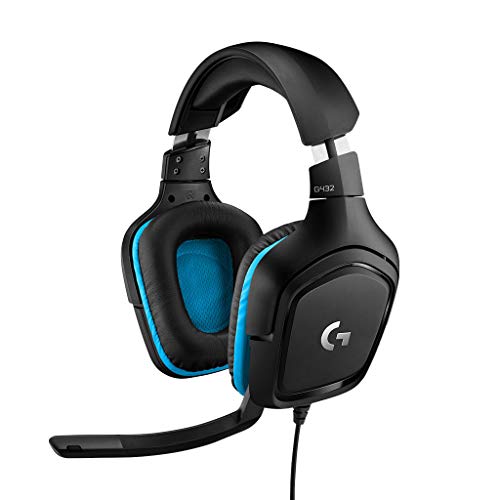
Logitech G432 Wired Gaming Headset — Best PC surround option
The G432 is the PC specialist of the six, and its listing’s headline is a processing feature: DTS Headphone:X 2.0 surround, delivered over USB, from 50 mm audio drivers. For PC players whose games support it, that processing turns stereo drivers into a positional soundscape — footsteps acquire direction, a reload behind a wall acquires a location — and at a LAN, where screen-watching is both possible and frowned upon, honest positional audio is a competitive courtesy as much as an advantage. The flip-to-mute microphone covers the social side, and a plain 3.5 mm jack keeps the headset useful at console seats and laptops where the USB path is not available.
The dual-connection design is the mature part of the proposition. USB for the PC seat where surround lives; 3.5 mm for everywhere else. A player can compete on the PC bracket with processing on, then carry the same headset to the console corner for casual rounds, with no second purchase and no unfamiliar fit. Logitech’s G-series software ecosystem sits behind the USB connection for those who want to tune equalisation, though the headset’s core virtues — drivers, mic, two cables’ worth of flexibility — need no software to function.
Honesty about surround processing belongs in every guide that mentions it: DTS Headphone:X renders its effect from the game’s audio, and its value varies by title, by mix and by the listener’s own ears. Some players swear by it; some compete better in plain stereo. The G432’s virtue is that it offers the choice on PC while remaining a competent wired stereo headset when the processing is off or the jack is analogue. It is the specialist pick that never becomes a stranded one.
For a PC-first LAN — the classic garage or hall full of towers — this is the seat-by-seat recommendation: surround where the platform supports it, a real microphone, and an escape route to every other machine in the building.
- Drivers: 50 mm audio drivers, per the listing title
- Surround: DTS Headphone:X 2.0, over USB
- Connections: USB and 3.5 mm jack
- Microphone: flip-to-mute
- Platform focus in the listing: PC compatible
- Analogue note: surround processing belongs to the USB path; the 3.5 mm route is plain stereo
Strengths
- Built-in DTS surround processing for PC titles that support it.
- USB and 3.5 mm connections split the difference between PC specialism and universal fit.
- 50 mm drivers match the guide’s larger class for game audio weight.
Trade-offs
- Surround value varies by game and by listener; stereo purists may never use it.
- The processing lives on PC — console seats get the analogue headset only.
- An older design than the Cloud III, with a correspondingly plainer feature list.
Best for: a PC-first LAN player who wants positional processing available without giving up a universal wired headset.
Not suited for: a console-only player, who would pay for a USB specialism they cannot use.
Check the G432 on Amazon if your LAN is a row of PCs and your games support the processing.
How Do You Run a Headset Check Before the Tournament Starts?
Fifteen minutes of discipline before game one saves the evening’s loudest arguments. Seat every player, open a voice channel, and have each person read the same sentence at match volume while the room is at match noise — not in the quiet before doors, which flatters every microphone. The listener at the far end notes whose callouts blur, whose boom sits too low, whose volume clips when they shout a warning. Fix positions then: booms rise to mouth-corner height, gains settle so excitement does not distort, and flip-to-mute gestures get practised until they are reflexes.
Then check the physical layer. Every cable gets a flex test along its length while its owner speaks; a crackle found now is a cable swapped from the spares bag, while the same crackle found in a semi-final is a forfeit’s opening argument. Confirm each machine recognises its headset as both output and input — the classic LAN failure is game audio in the cups and a laptop’s built-in microphone broadcasting the whole room. End the check with one full-volume minute: everyone talks at once, everyone listens for their own clarity. It is noisy, faintly ridiculous, and the most useful quarter hour of the night.
How Should a Team Standardise Its Headsets Without Starting an Argument?
Every gaming group contains a gear romantic — the player whose headset is an identity — and a pragmatist who would play in earbuds from a cereal box. Standardising for LAN play does not require converting either. The workable compromise most groups land on is a team standard for the shared spares bag and for anyone buying fresh, with personal favourites grandfathered in as long as they are wired and their cables reach. The standard model should be chosen by the group’s machines, not by vote on sound signatures nobody can A/B test honestly: a mixed PC-and-console group lands on the Cloud III’s connection kit by logic, while a PC-only crew can let the G432’s processing argue its case.
Buy the standard in one order where possible. Identical headsets bought together share a purchase date, a warranty story and a spares pool, and the group’s troubleshooting knowledge compounds — when one member learns where the G432 hides its volume control, everyone has learned it. Stagger the purchases across a year and the group owns three revisions, two cable types and a permanent low-level argument about which seat sounds wrong. The headset is a small purchase; the uniformity is the actual product, and it is bought all at once or not at all.
One more diplomatic device: let the romantic keep the flagship at the home desk. LAN standardisation governs the travelling kit, and a player who arrives with the team headset in the bag and the beloved model safe at home has lost nothing. Groups that frame the rule as logistics rather than taste find it survives contact with their strongest personalities.
What Do Console Seats at a LAN Need That PC Seats Do Not?
The controller is the console seat’s audio hub, and everything follows from that. A 3.5 mm plug at the controller means the headset cable runs from the player’s hands, not from a distant tower — shorter effective reach, different snag points, and a cable that gets yanked when the controller is set down carelessly. Console seats therefore reward lighter headsets and strain-relieved plugs, and they punish headsets whose only path is USB, since the controller offers no such port. This is why the Recon 70’s and BlackShark’s plain-jack designs remain LAN staples long after PC marketing moved on: at half the seats in the room, the humble jack is the entire interface.
Chat mixing is the second console difference. Balancing game audio against voice happens in the console’s own menus or on in-line controls, and a headset with accessible volume adjustment saves its owner repeated dives into system settings mid-match. Organisers running mixed events should seat-test one headset per console family before the event — a five-minute check that the plug seats fully in each controller type, that chat is audible at the room’s noise level, and that the mute gesture works as advertised. Consoles are standardised hardware; the surprises are few, but they are all discovered at the worst time when nobody checks in advance.
Finally, console seats move. Players swap chairs, controllers pass between hands during casual rounds, and headsets get shared in ways PC towers discourage. Soft pads that wipe clean and frames that tolerate being worn by six different heads in an evening — the Recon 70’s brief again — are worth more at the console corner than a final increment of driver diameter.
How Long Should a Wired LAN Headset Last, and What Kills It First?
The electronics in a wired headset are nearly immortal by gaming standards; nothing in the signal path wears out on a human timescale. What dies is mechanical, in a predictable order. Cables fail first, at the two flex points where they meet plug and cup, work-hardened by a thousand coiling sessions. Cushions fail second, foam compressing until seal and comfort go together. Boom pivots loosen third, until the microphone drifts from the mouth it was aimed at and callouts soften event by event. Headbands and sliders, stressed by the one-size adjustment ritual of shared use, round out the list.
Every item on that list is either replaceable or preventable, which is the wired headset’s longevity argument. Loose coiling doubles a cable’s life. A spare cable in the bag converts the most common death into a two-minute repair. Cushions swap in seconds on most designs. A headset bought for a LAN group should therefore be judged partly on its consumables: are cushions and cables findable for this model, at sane effort, two years from now? The big gaming brands in this guide support their lines accordingly, which is an unglamorous reason they dominate team purchases. The tournament is won by the headset that is still working at the tenth event, and that headset is the one whose weak points were all replaceable.
How Does Voice Chat Discipline Change What a Team Should Buy?
Teams talk differently, and the differences map onto hardware. A disciplined team on push-to-talk produces short, sparse transmissions; almost any microphone in this guide serves them, and their buying weight falls on comfort and game audio. A team on open microphones — the casual LAN default — keeps every mic live all evening, and then the microphone’s room rejection becomes the team’s collective sound quality: one player with a wide, sensitive mic broadcasts the whole room to everyone, twice. Groups that play open-mic should weight the cardioid and directional picks — BlackShark, Quantum 200 — far above driver diameter, because the team’s ears are hostage to its worst microphone.
There is a volume culture to match. Players who shout callouts clip their microphones and fatigue their own voices; players who set gains so that a normal speaking voice sits comfortably in the channel can talk for six hours. The pre-tournament check described earlier exists to set exactly that, and a team that institutionalises it gets more from a mid-priced headset than an undisciplined team gets from flagships. Buy the microphone for the discipline you actually have, then improve the discipline — in that order, because the tournament is this weekend and habits are not.
What Is the Right Way to Handle Glasses, Hair and Long Sessions?
A significant share of any LAN wears glasses, and headset design treats them as an afterthought at the buyer’s expense. The pressure point is the earcup’s seal against the glasses arm: a stiff cushion presses the arm into the temple, and by hour three the player has a headache with a precise address. Memory foam — stated in the Cloud III’s and Quantum 200’s listings — yields around the arm and reseals, which is why those listings’ foam claims matter more to glasses wearers than any driver figure. Trying a headset with your actual frames, for twenty minutes rather than twenty seconds, is the only honest test, and the return window exists for exactly this.
Hair and head size run the same errand. Long hair worn down changes a headband’s grip; a suspension-style fit like the Arctis line’s spreads load differently from a padded band; small and large heads sit at the ends of adjustment ranges that marketing photographs never show. None of this is in any listing, which is precisely why this guide keeps returning to the pilot principle: the specifications narrow the field to the six above, and then wearing — real wearing, at real length, in the real room — makes the final call. A LAN group buying six seats should buy one first, pass it around for a weekend, and let the group’s heads vote before the fleet order goes in.
How Should a Home Tournament Borrow the Habits of Big LANs?
The home tournament — six friends, one living room, a bracket drawn on a whiteboard — runs better with three habits borrowed from events a hundred times its size. The first is assigned seats with assigned gear: each station keeps the same headset all night, so adjustments, gains and cable routes are set once and stay set. The second is a single spare station’s worth of equipment, bagged and labelled before the first guest arrives, because a failure at a home event has no organiser’s cupboard to raid — the spares bag is the cupboard. The third is the sound check as a social ritual: five minutes, everyone mic-tested, levels agreed, and the flip-to-mute gestures demonstrated to the one friend who has never used a boom. It reads as fussiness and plays as professionalism, and guests remember the event that simply worked.
Home events add one consideration the big halls lack: the neighbours, and the household asleep upstairs. A room of open speakers is not an option, which quietly makes the LAN the most headphone-dependent format in gaming — every player’s entire soundscape arrives through the cups. That dependence raises the comfort stakes (nobody can take a speaker break) and the isolation stakes (the television in the corner is somebody else’s entertainment, not yours). It is also why the home tournament is the purest test of this guide’s shortlist: six wired headsets, one room, no fallback, and an evening that succeeds exactly to the extent that nobody thinks about the equipment after the first match.
How Do the Six LAN Headsets Compare Side by Side?
| Headset | Drivers | Microphone | Connections |
|---|---|---|---|
| HyperX Cloud III | 53 mm | 10 mm, ultra-clear per listing | USB-C, USB-A, 3.5 mm |
| Razer BlackShark V2 X | 50 mm TriForce Titanium | HyperClear cardioid | 3.5 mm |
| SteelSeries Arctis Nova 1P | Hi-fi — size not in title | Noise-cancelling | Wired multi-system |
| Turtle Beach Recon 70 | 40 mm | Flip-to-mute | Wired multiplatform |
| JBL Quantum 200 | Not stated in title | Voice focus directional flip-up | Wired over-ear |
| Logitech G432 | 50 mm | Flip-to-mute | USB with DTS, 3.5 mm |
Read the microphone column as the LAN column: in a loud shared room, the mic decides whether a team functions. The drivers column separates the audio-weight contenders from the light-and-simple seats, and the connections column tells an organiser which headsets can be handed to any machine without a question first.
What Should a LAN Spares Bag Contain?
The spares bag is where wired discipline pays its second dividend. A spare headset — the Recon 70 is this guide’s natural candidate, since it fits every seat — rescues any failure in the room. Two spare 3.5 mm cables and a PC splitter cover the most common cable deaths and the oldest towers. A roll of tape and a marker label every player’s headset and cable at the door, because identical models migrate between seats all night and ownership disputes are a poor use of a final. A power strip is not a headset accessory, strictly, but the bag’s owner will be thanked for it by midnight regardless.
What the bag does not need is equally instructive: no chargers, no spare batteries, no replacement dongles, no firmware laptop. That absence is the wired argument made physical. A wireless LAN’s spares bag is a small electronics shop; a wired LAN’s fits in a shoebox and solves everything it contains.
Add one unglamorous item organisers learn to love: a short printed card per seat with the evening’s voice settings — which input device to select, where the gain was set during the sound check, the mute gesture for that seat’s model. Players change machines, guests rotate in, and the card answers the three questions that otherwise get shouted across the room mid-match. It takes ten minutes to write the cards during setup and saves ten interruptions an hour, which across a tournament is the difference between an event that flows and one that frays.
How Do You Keep Twelve Headsets Hygienic and Working Across Events?
Shared headsets need a wipe-down ritual between events — cushions and headbands carry the evening with them otherwise — and a storage habit that does not strangle cables. Coil each cable in loose loops, never wound tight around the frame, and store headsets cups-down in a crate rather than in a tangled pile that bends booms into new and interesting shapes. Foam cushions are consumables; a set that has gone flat changes both comfort and isolation, and replacing cushions on the heavily used seats each season costs less than one headset. Label the crate’s contents by model, because a Cloud III cable and a Quantum cushion are not interchangeable however similar they look at midnight.
What Mistakes Do LAN Headset Buyers Keep Making?
The classic mistake is bringing wireless to a wired party — a fine headset at home that spends the LAN hunting for its dongle, draining by game four, and pairing enthusiastically with a neighbour’s laptop. The second is buying for driver size alone, then discovering the microphone turns callouts to soup in a loud room. Third, players buy the heaviest, most isolating flagship for a six-hour session and spend the final rounds with a headache they attribute to the games. Fourth, organisers equip every seat differently, so no spare fits every failure. And fifth, buyers believe the tournament mystique — that a headset confers skill — when everything honest in this category is sound, voice and comfort, repeated reliably for an evening.
Final Recommendation
For most LAN tables, the HyperX Cloud III is the standard to issue: every connection, the largest drivers, a serious microphone, and a frame built for the bag. The BlackShark V2 X serves the player who counts grams and needs the room rejected, the Arctis Nova 1P the one who counts comfort first, and the G432 the PC player who wants surround processing on tap. The Recon 70 equips the casual bracket and stands spare for all of them, while the Quantum 200 arms the shot-caller whose voice is the team’s real instrument. Wire the table, test the microphones before the bracket, pack the spares bag — and the headsets will do the only thing they were ever honestly able to do, which is disappear, leaving twelve players, one room, and the games themselves as the loudest thing in it.
Frequently Asked Questions
Why not just use wireless headsets at a LAN?
You can, and many do at home. At a shared event the cable removes a whole class of failures at once — dead batteries, lost dongles, mispairing, crowded spectrum — and replaces them with a single visible failure mode that a spare cable fixes. That reliability, not nostalgia, is the wired case.
Does driver size decide which headset sounds best?
Not alone. The guide spans 40 mm to 53 mm, and tuning, seal and fit move perceived quality as much as diameter does. Driver size is a useful shorthand for audio weight; the microphone and the wearing comfort usually decide a LAN evening first.
Can one headset model really cover PC and consoles?
Yes, when the connection kit is honest. The Cloud III’s listing covers PC, PlayStation and Xbox with its trio of USB-C, USB-A and analogue connections, and the Recon 70 covers both console families plus PC and mobile. Check the platform list in each pick’s specification box before buying for a mixed table.
What does flip-to-mute actually help with at a LAN?
Speed and visibility. Raising the boom mutes instantly during the side conversations a shared room constantly produces, and teammates can see the gesture. Three picks here — Recon 70, Quantum 200 and G432 — build their mute around that movement.
Is surround processing worth having for competitive play?
It depends on the game and the listener. The G432’s DTS Headphone:X 2.0 over USB can add positional clarity in titles mixed for it; other players prefer plain stereo. Treat it as an option to test during the return window, not a guaranteed edge.
How many spare headsets should an organiser bring?
One per eight seats is a sane floor, plus spare cables. A single universal spare like the Recon 70 covers any seat at the table, which is the entire point of standardising connections before the event.
What should I do if my microphone picks up the whole room?
Work through the physical causes before the settings. Move the boom closer to the corner of your mouth and slightly off the breath line, lower the input gain so your normal voice sits comfortably rather than distantly, and check that the machine has not silently selected a laptop’s built-in microphone instead of the headset. If the room still floods in, a cardioid or directional model from this guide — the BlackShark or the Quantum 200 — is the hardware answer, in that order of attempts.
Related Guides
Younger players need their own shortlist, and Best Gaming Headsets For Children keeps manufacturer-stated volume limits in plain sight throughout. The wireless counter-argument gets its hearing in Best Wireless Business Headsets, where mobility rather than the table decides the design. And the desk-bound original sits in Best Headsets For Desk Phone, where DECT bases and RJ9 cords run a quieter kind of tournament.


