Our Top Picks
 FLASLD E-Bike Battery Bag Fireproof Safe Charging Bag16 x 4.3 x 5inch16 x 4.3 x 5 inchesCheck on Amazon
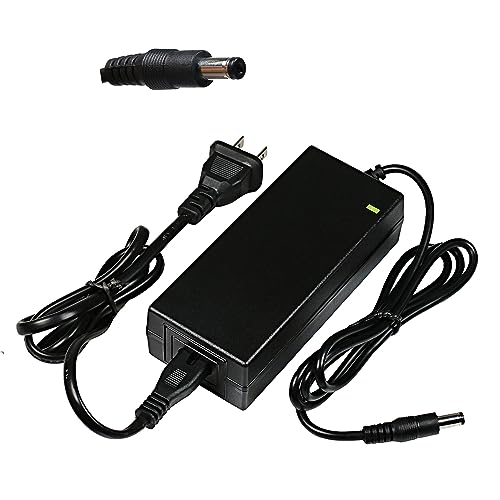 Jucuwe 42V 2A DC Male Power Adapter for5.5mmx2.1mm/2.5mm4.7 x 1.96 x 1.25 inches0.5 poundsCheck on Amazon


What's inside
- Why e-bike packs and RC LiPo packs are not the same thing
- Pack voltages: 36, 48, and 52 volts explained
- Connectors: XLR, DC barrel, XT60, and the rest
- Charge current, capacity, and realistic charging times
- Balance charging and what the BMS actually does
- Safety: fire risk, charging bags, and room habits
- Smart features, fans, and the noise question
- The compatibility check that must precede every purchase
- Storage charging and seasonal care
- Troubleshooting common charging problems
- How bicycle charging relates to the wider charging shelf
- Charging in shared spaces, fleets, and rental settings
- Check prices on Amazon
- Closing perspective for careful owners
As an Amazon Associate I earn from qualifying purchases. This post may contain affiliate links at no extra cost to you.
Charging a large traction battery on a kitchen counter deserves more respect than plugging in a phone, because the energy involved is greater and the consequences of a mismatched charger are far less forgiving. As an Amazon Associate we earn from qualifying purchases. This guide untangles a naming problem that confuses many new electric bike owners, explains how pack voltage and connector choice decide which charger belongs with which battery, and walks through charge rates, balance care, cooling, noise, and the fire-safety habits that responsible owners build into every single charging session at home.
The phrase LiPo charger carries two meanings that collide in search results. In the radio-control hobby, LiPo means a lithium polymer pouch cell pack built for model aircraft, drones, and RC cars, usually wired with a balance lead and charged on a programmable hobby charger. On an electric bicycle, the battery is almost always a lithium-ion pack built from cylindrical cells such as 18650 or 21700 formats, sealed inside a case with its own management electronics. Sellers sometimes label e-bike chargers with loose language borrowed from the hobby world, so a product title alone cannot tell you whether a unit suits your bike.
That distinction matters because the two families expect different charging behaviour. A hobby balance charger supervises individual cell groups through a separate balance connector and lets the user set voltage, current, and termination manually. An e-bike pack hides its cell groups behind a battery management system, often shortened to BMS, and expects a simpler two-wire charger that delivers a fixed voltage ceiling and a steady current until the pack approaches full. Feeding hobby settings into a sealed traction pack, or expecting a dumb brick to balance an exposed hobby pack, invites trouble in both directions.
Throughout this guide the word charger means the external unit that converts household alternating current into the controlled direct current your pack accepts. The discussion stays with specifications, connector standards, and documented safety practice rather than brand folklore. Voltage numbers, charge currents, and connector names are the vocabulary that decides compatibility, so each receives careful attention before any discussion of convenience features such as displays, fans, or carrying handles. Readers who understand the vocabulary can evaluate any listing calmly, including listings written with sloppy or borrowed terminology.
Why e-bike packs and RC LiPo packs are not the same thing
Cylindrical lithium-ion cells dominate electric bicycle batteries for practical reasons. Their metal cans tolerate vibration, their sizes are standardised across many manufacturers, and pack builders can weld them into series and parallel arrangements that reach the voltage and capacity a motor system needs. A typical arrangement described as 13S4P, for example, places thirteen cell groups in series to set voltage and four cells in parallel within each group to set capacity. The finished pack lives inside an aluminium or plastic case mounted to the frame, the rear rack, or a downtube cradle.
Hobby LiPo packs follow a different construction philosophy. Flat pouch cells are stacked and wrapped, producing a light rectangular brick with a main discharge lead and a thin multi-wire balance lead. These packs favour low weight and very high discharge rates for short flights or races, and they accept more owner involvement in exchange. Their soft wrapping punctures more easily than a metal can, and their owners are expected to monitor cell balance personally. Treating a pouch pack like a sealed bicycle battery, or the reverse, misunderstands both designs.
The management electronics widen the gap further. Inside a sealed e-bike pack, the BMS watches group voltages, limits charge and discharge current, blocks charging when temperatures fall outside its allowed window, and disconnects the pack when a fault appears. The external charger can therefore be relatively simple, because supervision lives inside the case. A hobby pack carries no such guardian, so its charger must perform the supervision externally through the balance lead. This is why hobby chargers look like small laboratory instruments while bicycle chargers look like laptop power bricks.
Owners who also fly drones sometimes ask whether one programmable charger can serve both worlds. Some advanced hobby units offer a lithium-ion mode and enough voltage range to reach smaller bicycle packs, yet the balance lead arrangement rarely matches a sealed pack, and the current available may be modest for a large traction battery. Using such a unit demands an adapter lead, correct manual settings, and constant attendance. For most riders, a dedicated charger matched to the pack remains the calmer and safer answer, and readers comparing dedicated options may also want the broader background in our guide to best li ion battery chargers for how fixed-voltage lithium charging works across device categories.
The vocabulary printed on labels
Labels compress a great deal into a few numbers, and reading them fluently prevents most buying mistakes. Nominal voltage describes the middle of a pack’s operating range rather than its full point, which is why a so-called 48 volt pack spends much of its life above and below that figure. Capacity in amp-hours states how much charge the pack holds, while energy in watt-hours combines voltage and capacity into the number that predicts range. Charge current in amps describes how quickly the charger pushes energy in, and the charger’s output voltage states the ceiling it will not exceed.
Series count hides inside those headline numbers for anyone who cares to decode it. Each lithium-ion cell group contributes roughly 3.6 to 3.7 volts nominally and 4.2 volts when full. Ten groups in series produce the class sold as 36 volts, thirteen groups produce the 48 volt class, and fourteen groups produce the 52 volt class. Knowing the series count lets a rider sanity-check a charger label instantly, because the charger’s stated output should equal 4.2 multiplied by the group count, within a small tolerance for manufacturer rounding.
Pack voltages: 36, 48, and 52 volts explained
The 36 volt class powered the first broad wave of electric bicycles and still suits lighter commuter machines, folding bikes, and modest hub motors. A ten-series pack charges to 42.0 volts and delivers gentle performance that many city riders find entirely sufficient. Chargers for this class are labelled 42 volt output, a figure that startles newcomers who expected the label to repeat the 36 volt name. The label is correct, because chargers are specified by the ceiling they deliver, not by the nominal name of the pack family.
The 48 volt class became the mainstream default for mid-drive systems and stronger hub motors. Thirteen series groups charge to 54.6 volts, and the higher system voltage lets a motor draw a given power level at lower current, which reduces heat in wiring and controllers. Riders upgrading from 36 volt systems often notice stronger hill performance and less voltage sag under load. The corresponding chargers are labelled 54.6 volt output, and that precise decimal matters, because a charger labelled with a rounded or different figure may belong to another chemistry or another series count entirely.
The 52 volt class squeezes one more series group into the same general form factor, charging to 58.8 volts. Enthusiast builders favour it for the extra headroom it gives a compatible 48 volt controller, since many controllers accept the higher ceiling and reward the rider with slightly stronger performance across the discharge curve. The risk is that some controllers, displays, and accessories rated strictly for 48 volt systems object to the extra voltage. A 52 volt pack is therefore a deliberate system choice, not a casual upgrade, and its charger must be the 58.8 volt unit rather than the 54.6 volt unit used by its near neighbour.
Mixing these classes is the single most damaging mistake in this category. A 54.6 volt charger connected to a 36 volt pack will attempt to push the smaller pack far beyond its design ceiling, and only the BMS stands between that error and serious harm. A 42 volt charger connected to a 48 volt pack produces the opposite frustration, stopping far below full and leaving the rider with a fraction of the expected range. Voltage matching is therefore the first check on any purchase, ahead of connector shape, ahead of charge speed, and ahead of every convenience feature a listing advertises.
Reading the charger label before anything else
A trustworthy label states input range, output voltage, output current, and polarity in plain figures. Input range tells you whether the unit accepts your household supply, commonly a wide range spanning both North American and European mains. Output voltage should match your pack’s full-charge figure exactly as discussed above. Output current predicts charging speed and heat. Polarity matters most on barrel connectors, where centre-positive is the common convention yet never something to assume without checking the diagram printed beside the specification block.
Certification marks deserve a glance as well. Listings from established manufacturers usually reference recognised safety certifications for power supplies, and the physical label on the unit should repeat whatever the listing claims. A charger with no legible label, no stated output voltage, or contradictory figures between the listing photographs and the specification table is a charger to walk away from. Documentation quality correlates strongly with build quality in this category, because careful manufacturers tend to be careful in both places at once.
Connectors: XLR, DC barrel, XT60, and the rest
Voltage decides whether a charger may be used at all, but the connector decides whether it can be attached, and connector confusion causes a large share of returns in this category. Electric bicycle packs draw from a small pool of connector families, each with its own pin count, locking behaviour, and current capacity. Photographing your pack’s charge port before ordering sounds trivial, yet that single habit eliminates most mismatches. Sellers photograph their plugs clearly, and a side-by-side comparison of shape, pin arrangement, and diameter settles questions that product titles leave vague.
The three-pin XLR connector borrowed from professional audio appears on many mid-range and premium packs. Its metal shell locks with a latch, its pins are generously sized for moderate charge currents, and its keyed shape prevents reversed insertion. Wiring convention assigns the positive and negative conductors to specific pins, with the third pin sometimes unused or reserved for a temperature or communication line depending on the pack builder. Because conventions can vary, an XLR plug that fits mechanically still deserves a polarity check against the pack maker’s documentation before its first use.
DC barrel connectors dominate lighter and older packs. These are the familiar cylindrical plugs found on countless consumer electronics, produced in several diameters that look deceptively similar on a product page. Common sizes include 5.5 millimetre outer diameter with either 2.1 or 2.5 millimetre inner pins, and a half-millimetre difference is enough to prevent a proper connection or to create a loose one that heats under load. Measuring the existing plug with calipers, or ordering from the pack manufacturer, beats guessing from a photograph whenever barrel connectors are involved.
XT60 connectors come from the hobby world and appear on some enthusiast and DIY packs. The yellow two-pin housing uses a shrouded design that resists accidental short circuits, grips firmly, and handles healthy current for its size. Its presence on a bicycle pack usually signals a builder-oriented product whose documentation expects the owner to understand polarity and wire gauge. Adapters between XT60 and other formats exist, but every adapter adds a contact point and a possible source of resistance, so a native connector match remains preferable for daily charging.
Other shapes appear at the edges of the market. Rosenberger magnetic connectors serve some European city bike systems with a self-aligning snap and data contacts. Anderson Powerpole connectors show up on utility and cargo builds where owners crimp their own leads. Proprietary multi-pin plugs protect the ecosystems of large integrated brands whose chargers also exchange data with the pack. None of these is inherently better than the common three; the practical rule is simply that the charger plug, the pack port, the pin assignment, and the voltage class must all agree before current flows.
Adapters, polarity, and the multimeter habit
Adapters tempt owners who already own a good charger with the wrong plug. A short, well-made adapter from a reputable supplier can be a reasonable bridge, particularly between barrel sizes or from XT60 to a pack-specific plug. Long chains of adapters, mystery adapters with no stated current rating, and adapters that reverse polarity silently are hazards rather than conveniences. Each added junction should be checked for warmth during the first charging session, because a connector that grows noticeably hot is announcing resistance that will only worsen with time and oxidation.
A basic multimeter removes the guesswork from polarity questions in under a minute. With the charger powered and its plug accessible, measuring the direct current voltage between contacts reveals both the true output figure and which contact sits positive. Comparing that reading with the pack maker’s stated pin assignment turns an assumption into a verified fact. Riders who keep small cylindrical cells for lights and accessories will recognise the same verify-first habit from the chargers covered in our guide to best 18650 battery chargers, where slot polarity and cell orientation receive similar respect.
Charge current, capacity, and realistic charging times
Charging time follows from simple arithmetic that every owner can perform. Divide the pack’s amp-hour capacity by the charger’s amp output to estimate hours, then add allowance for the slower final phase described below. A 14 amp-hour pack on a 2 amp charger therefore needs roughly seven hours of bulk charging in theory and somewhat longer in practice. The same pack on a 4 amp charger halves the bulk phase. Sellers who promise dramatically shorter times for large packs at low currents are describing arithmetic that does not survive this division.
Lithium charging proceeds in two broad phases that explain why the last portion always feels slow. During the constant-current phase the charger delivers its rated amps while pack voltage climbs steadily toward the ceiling. Once the ceiling is reached, the charger holds voltage steady and current tapers gradually as the cells accept less and less. That constant-voltage tail protects the cells from overcharge stress, and cutting it short by unplugging early costs only a small slice of capacity. Riders in a hurry can legitimately unplug near the end of the bulk phase on days when full range is unnecessary.
Charge rate expressed relative to capacity, often written as a C-rate, frames the stress discussion. A 2 amp charger feeding a 14 amp-hour pack works near 0.14C, a gentle pace that cells tolerate happily for years. Doubling to 4 amps still sits below 0.3C for that pack, well within the comfort zone of quality cells. Small packs change the picture, because the same 4 amps pushed into a 7 amp-hour pack exceeds 0.5C and approaches the limits many cell datasheets set for routine charging. Matching charger current to pack size, rather than buying the largest current available, is the mark of an informed purchase.
Heat is the tax that faster charging collects. Cells convert a portion of incoming energy into warmth, and packs sealed inside thick cases shed that warmth slowly. Charging a hot pack immediately after a hard ride compounds the problem, so experienced owners let the battery rest until it feels neutral to the touch before connecting the charger. Warm rooms, direct sunlight, and charging inside a closed storage box all raise the pack’s starting temperature. A modest current in a cool, ventilated space quietly extends pack life more than any additive or accessory marketed for battery health.
Standard, fast, and adjustable chargers
Standard chargers supplied with complete bicycles usually deliver 2 amps, occasionally 3, and prioritise gentleness and low cost. For an owner who rides during the day and charges overnight, that pace is entirely adequate and arguably ideal for longevity. The weakness appears when a rider needs a midday turnaround between a morning commute and an evening trip. In that pattern a second, faster charger kept at the destination can be more useful than replacing the home unit, provided its voltage class and connector match the same pack exactly.
Fast chargers in the 4 to 6 amp range serve high-capacity packs and time-pressed riders. Their larger cases, heavier cables, and cooling fans reflect the extra energy they move. Adjustable chargers occupy the enthusiast tier, offering selectable current steps and sometimes a partial-charge ceiling near 80 or 90 percent for owners who deliberately trade a little range for reduced cell stress during daily use. That partial-charge strategy has genuine support in battery research for packs cycled frequently, although riders planning a long weekend route will still want the full ceiling available when range matters most.
Charge termination behaviour separates thoughtful designs from crude ones. A well-behaved charger reduces current to a trickle near the ceiling, recognises completion, and signals the state change with an indicator that shifts from red to green or an equivalent display message. Some advanced units disconnect output entirely at completion, which suits owners who cannot always unplug promptly. Others hold a maintenance state indefinitely, which is harmless for a managed pack yet still no substitute for the general advice to unplug once charging finishes and the indicator confirms it.
Balance charging and what the BMS actually does
Cell groups inside a series pack never age in perfect unison. Tiny differences in capacity and internal resistance accumulate over hundreds of cycles, so one group reaches the full ceiling slightly before its neighbours while another lags behind. Uncorrected, that drift narrows usable capacity because the weakest group dictates when charging and discharging must stop. Balancing is the corrective process that nudges group voltages back into alignment, and understanding where balancing happens clarifies which charger features genuinely matter for a sealed bicycle pack.
Inside most e-bike packs, balancing is a passive function of the BMS. Near the top of charge, the board bleeds a small current from any group that rises above its peers, holding the eager group in place while the charger continues feeding the laggards. The bleed currents are tiny, often measured in tens of milliamps, which means a badly drifted pack may need many hours at the top of charge to recover alignment. This is the practical origin of the advice to leave a pack plugged in overnight occasionally, not daily, so the balancer has time to finish its quiet work.
Hobby balance charging works actively and visibly by contrast. The charger reads every group through the balance lead, adjusts delivery per group, and displays individual voltages on its screen. Owners of exposed pouch packs depend on that visibility because no internal board watches on their behalf. Readers who want the full hobby picture, including per-group displays and programmable termination, will find it in our dedicated guide to best lipo balance chargers, which covers that equipment on its own terms rather than as bicycle gear.
Confusion arises when marketing language borrows the word balance for sealed-pack chargers that cannot access individual groups at all. A two-wire bicycle charger has no channel through which per-group correction could travel; any balancing that occurs happens inside the pack under BMS direction. Such a charger can support balancing indirectly by holding the ceiling voltage long enough for the bleed circuit to work, and a charger that cuts off abruptly the moment total voltage peaks may actually shorten that window. Reading claims carefully, with the wiring in mind, separates engineering from decoration.
Signs of imbalance a rider can notice
Imbalance announces itself through behaviour rather than warning lights on most consumer packs. Range that shrinks noticeably despite gentle riding, a charge indicator that jumps from nearly full to empty under load, and a charger that reaches its green state unusually quickly all point toward one group limiting the whole string. A pack that grows warm in one localised spot during charging deserves immediate retirement from service and professional inspection. None of these symptoms can be repaired by buying a stronger charger, because the limitation lives inside the sealed case.
Owners with a display that reports pack voltage can watch for sag patterns that corroborate the suspicion. A healthy 48 volt pack holds its voltage predictably under a known load, while a pack with a weak group dips early and recovers oddly at rest. Recording the voltage at the end of a standard route every few months creates a personal baseline that makes gradual decline visible before it becomes a breakdown. That notebook habit costs nothing and informs the eventual decision between professional pack service and full replacement.
Safety: fire risk, charging bags, and room habits
Lithium packs store enough energy that a failure during charging commands respect, even though such failures remain rare relative to the millions of packs charged daily. Thermal runaway, the chain reaction in which a damaged or defective cell heats its neighbours beyond their stability limits, is the event every safety practice aims to prevent or contain. Causes include internal cell defects, crush damage from a crash, water ingress that corrodes connections, and charging errors that push voltage or current beyond design limits. Careful charger selection removes the last cause from the list, which is entirely within the owner’s control.
Charging location deserves the same deliberation as charger selection. A clear, hard, non-flammable surface away from bedding, curtains, and stored solvents gives a failing pack the least opportunity to spread harm. Garages, tiled utility rooms, and concrete porches suit the task better than bedrooms, and the route between the charging spot and an exit should stay unobstructed. Smoke detection in the charging area is a basic expectation, and charging while the household sleeps is best paired with a charger that terminates output at completion rather than holding the pack at its ceiling for hours.
Fire-resistant charging bags and metal containment boxes divide opinion, and the honest position is that they are mitigation rather than protection. A quality LiPo bag built from woven fibreglass with a sealed flap can contain flames and sparks from a small hobby pack long enough to matter. Large bicycle packs hold far more energy than the small pouches those bags were sized for, so owners should view a bag as a partial barrier that buys time, not as a licence to charge carelessly indoors. Rigid metal boxes with ventilation gaps serve the same philosophy for storage of suspect or spare packs.
Rules that prevent most incidents
Never charge a pack that has been crashed, punctured, swollen, or soaked until a qualified technician has examined it, because hidden damage is the classic precursor to a delayed failure. Never leave a first session with a new charger unattended, since that session is when wiring errors and unexpected heat reveal themselves. Keep the charger and pack visible rather than buried under coats or luggage, and unplug both ends when a session ends instead of leaving the brick energised at the wall. Replace any cable with cracked insulation or a plug that fits loosely, and treat a burning smell or a hissing sound as an emergency signal to cut power from a safe distance.
Cold weather adds a quieter hazard that northern riders must respect. Charging lithium cells below freezing can plate metallic lithium onto the anode, permanently reducing capacity and raising internal risk, which is why better BMS designs block charging until the pack warms. Bringing a cold pack indoors and allowing several hours for its core to reach room temperature protects it far better than any charger feature. The same patience applies in reverse after a winter ride, since a pack that feels merely cool outside may still be near freezing at its centre.
Smart features, fans, and the noise question
Modern chargers advertise intelligence in several forms, and only some of it changes daily life. Automatic shutoff at full charge is the headline feature worth having, because it ends the session cleanly when the rider forgets or falls asleep. Temperature sensing, where offered through a third connector pin or a pack communication line, lets the charger pause during overheating rather than relying solely on the BMS. Multi-stage indicator lights and small voltage displays help an owner confirm at a glance that the correct ceiling has been selected on adjustable models, which is a genuine safety contribution on units with switchable outputs.
Cooling design splits the market into silent and audible camps. Low-current bricks dissipate their modest heat through the case and run silently, which suits bedroom-adjacent charging and office corners. Higher-current units move more energy and usually carry a small fan that spins during the bulk phase and idles or stops near completion. Fan noise varies widely between designs, from a soft rush that disappears behind conversation to a whine that carries through a studio apartment. Owners sensitive to sound should favour current ratings matched honestly to their needs, because an oversized fast charger brings its fan to a task a silent brick could have handled overnight.
Fan placement and intake design influence reliability as much as acoustics. A fan that draws air across the internal heatsinks and exhausts it away from the cable exit tends to run cooler than a decorative vent arrangement. Dust is the slow enemy of every fan-cooled unit, especially in workshops and garages where bicycle charging often happens. Periodic inspection of the intake, a blast of dry air when debris accumulates, and storage off the floor all extend service life. A fan that begins to rattle or stall is announcing bearing wear, and a charger whose cooling has failed should be retired rather than trusted at reduced output.
Displays, indicators, and honest information
The humble two-colour indicator remains the interface on most bicycle chargers, showing bulk charging in one colour and completion in another. Better units add a rough state-of-charge indication through a row of lights or a percentage estimate derived from voltage. Enthusiast adjustable chargers go further with live voltage and current readouts that let an owner watch the taper phase behave as theory predicts. That visibility is genuinely educational during the first weeks of ownership, after which most riders settle into trusting the indicator and the calendar of their riding routine.
Beware of displays that promise precision the hardware cannot possess. A two-wire charger cannot know individual group voltages, cannot measure true capacity without a full controlled cycle, and cannot diagnose internal pack health from the charge port alone. Screens that decorate a listing with invented diagnostics are performing confidence rather than measurement. The information worth paying for is accurate output figures, a truthful completion signal, and selectable settings that stay where the owner left them between sessions, because a charger that silently resets to its highest voltage after a power cut is a hazard in a mixed-voltage household.
The compatibility check that must precede every purchase
Compatibility resolves into four questions that a buyer can answer from documentation alone. First, what is the pack’s full-charge voltage, derived from its series count or printed on its own label? Second, which connector does the charge port use, including diameter and pin assignment where relevant? Third, what charge current does the pack maker permit, a figure sometimes printed near the port or stated in the manual’s specification table? Fourth, does the pack expect any communication or temperature line through an extra pin, as some integrated systems do? A charger that satisfies all four answers is compatible; enthusiasm for its other features can safely follow.
The pack maker’s own charger deserves consideration as the default candidate whenever it remains available. Its voltage, connector, and current were chosen alongside the BMS settings, and its behaviour with the balancer’s timing is known rather than inferred. Third-party chargers earn their place when the original is lost, when a second location needs its own unit, when faster turnaround is genuinely required, or when an adjustable model offers a partial-charge ceiling the original lacks. In each case the replacement should replicate the original’s electrical figures exactly unless the pack documentation explicitly blesses the change.
Households with several electric bicycles face a labelling discipline problem rather than an electrical one. Two chargers with identical plugs and different ceilings will eventually be swapped by a tired rider, a helpful partner, or a guest tidying cables. Colour-coded tape at both ends of each cable, a label naming the bicycle beside the connector, and storage that keeps each charger with its own machine all reduce the odds of the one mistake this category cannot forgive. Some families standardise on a single voltage class across their fleet partly to make chargers safely interchangeable.
Second chargers for work, travel, and spares
A second charger at a workplace transforms commuting economics, because a rider can arrive with a depleted pack and leave with a full one without carrying a brick in a pannier daily. The office unit can be a modest standard-current model, since a working day offers ample hours for a gentle fill. Its connector and voltage must mirror the home unit exactly, and a conversation with whoever manages the building about where charging may happen prevents misunderstandings about unattended batteries in shared spaces. Some employers designate a charging corner with a hard surface and clear access, which suits everyone.
Travel raises different questions. A charger with a wide input range handles foreign mains with only a plug adapter, while a fixed-input unit may be useless or unsafe abroad. Weight matters when the charger rides along, and the compact standard brick usually wins that contest against a fan-cooled fast unit. Riders touring between overnight stops should also confirm that the charger tolerates the generator or inverter supplies occasionally found at remote lodging, since modified sine wave sources upset some power supply designs. The pack itself, of course, travels under separate transport rules that airlines enforce strictly.
Keeping a spare charger is cheap insurance against the most mundane failure in the system. Bricks fail through dropped cases, fatigued cables, and tired capacitors, usually without drama and always at an inconvenient moment. A verified spare in a drawer converts that failure from a week of waiting into a shrug. The spare should be exercised occasionally rather than stored for years untouched, and its output verified against the pack after any long storage, because confidence in a backup should rest on a recent successful session rather than on hope.
Storage charging and seasonal care
Packs stored for weeks or months prefer a partial state of charge rather than a full one. Lithium cells age fastest at the extremes of their range, and a pack parked at its ceiling voltage all winter surrenders capacity it would have kept at a middle charge. Many experienced owners store near half charge, check the level monthly, and top up modestly if self-discharge and BMS housekeeping draw it downward. Adjustable chargers with an 80 or 90 percent setting help with routine partial charging, while true storage level usually means charging to roughly half and verifying by voltage or the pack’s own gauge.
Storage environment matters alongside storage charge. A cool, dry interior space shields the pack from the temperature swings of an uninsulated shed and the damp of a basement floor. The pack should rest disconnected from both bicycle and charger, with its charge port cover closed against dust. Any pack that swells, smells sweet or chemical, or shows corrosion at its terminals during storage should be isolated on a non-flammable surface and assessed professionally before it is charged again. Seasonal inspection takes minutes and occasionally prevents the worst outcome in this entire subject.
Returning a stored pack to service deserves a gentle first cycle. Charge at the standard rate in a supervised setting, watch for unusual warmth, and take a short ride before committing to a long route. Capacity that seems reduced after storage sometimes recovers partially across the next few cycles as the balancer restores alignment. A pack that has sat for a full year or longer warrants extra suspicion, and its first charges belong in the most fire-conscious location available to the household. Patience during recommissioning is simply the storage chapter of the same safety story.
Charge habits that lengthen service life
Daily habits influence longevity more than any single purchase decision. Avoiding a full charge until shortly before a ride, rather than the evening before a week of rides, trims the hours a pack spends at its ceiling. Avoiding deep discharge to the controller’s cutoff preserves the weakest group from the deepest stress. Neither habit needs to become anxiety; a pack bought to be used should be used, and occasional full charges serve the balancer as described earlier. The balanced pattern is full charges when range or balancing calls for them, partial charges for routine days, and prompt recharging after deep rides rather than leaving the pack empty.
Heat management during ordinary weeks is equally mundane and equally effective. Charge indoors during heatwaves instead of in a sun-baked garage, let a hard-ridden pack cool before connecting it, and keep the charger’s vents unobstructed by the clutter that accumulates around bicycles. Riders who log their charges sometimes notice that a pack’s behaviour changes with the seasons, accepting charge more slowly in the cold and finishing suspiciously fast when a group begins to fail. Those observations, written down, are the closest thing a consumer pack offers to a service history.
Troubleshooting common charging problems
A charger whose indicator never leaves its bulk state may be facing a pack that cannot reach the ceiling because one group has failed, or a charger whose own output has drifted low. Testing the same charger on a known healthy pack of the same class, where a friend or shop can help, separates the two suspects quickly. Conversely, a charger that shows completion within minutes on a depleted pack is either delivering far less than its label claims or reading a voltage that the pack cannot sustain under load. Both patterns justify removing the combination from service until the cause is identified.
Intermittent charging that starts and stops often traces to the connector rather than the electronics. A barrel plug worn oval, an XLR pin sprung from repeated side loads, or corrosion filming the contacts can break the circuit whenever the cable shifts. Cleaning contacts with an appropriate contact cleaner, supporting the cable so its weight does not hang from the port, and replacing a plug that rocks in its socket resolve many ghost faults. Heat localised at the plug during an otherwise normal session confirms resistance at that junction and marks the part for replacement.
A pack that refuses charge entirely after a deep discharge may have fallen below the BMS wake threshold, a protective state some boards enter when group voltage sinks too far. Certain chargers and boards support a gentle recovery behaviour, while others require bench equipment and professional judgement. Forcing current into a deeply depleted pack with improvised wiring is precisely how preventable fires begin, so the consumer answer to a sleeping pack is a service visit rather than a experiment. Documenting the circumstances, including how long the pack sat discharged, helps the technician judge whether recovery is responsible.
When the charger is the problem
Chargers announce their own decline through a recognisable set of symptoms. Output that sags well below the label figure under load, a case that grows hotter than its history suggests, a fan that grinds, or an indicator that flickers with cable movement all precede outright failure. Internal repair of a sealed switching power supply is not a consumer task, because mains-side capacitors retain hazardous charge after unplugging. Replacement, recycling through an electronics stream, and verification of the new unit against the pack close the episode properly.
Cable damage deserves its own vigilance because it is the most common and most overlooked fault. The flex point where the output lead leaves the case, and the corresponding point at the plug, concentrate years of bending into a few millimetres of copper. Intermittent continuity there can arc under load and damage the pack’s port as well as the charger. Running fingers along the lead during a supervised session sometimes reveals a warm or crackling section before visible insulation failure appears. A charger with a damaged lead is retired whole, since consumer splices rarely restore the original strain relief or insulation integrity.
How bicycle charging relates to the wider charging shelf
Owners who also keep an electric car sometimes wonder whether the two charging worlds overlap, and the honest answer is that they share principles rather than hardware. Both translate household alternating current into controlled direct current, both taper delivery near full, and both rely on the vehicle’s own management system for final authority over the battery. The scales differ by orders of magnitude, and no adapter bridges them. Readers curious about the household end of that larger world can browse our overview of best at home ev chargers to see how the same principles are packaged for a vehicle that fills a garage bay.
The bicycle charger market also borrows credibility from adjacent categories in ways worth recognising. Hobby chargers bring genuine engineering in per-cell supervision, bench power supplies bring precision in voltage control, and laptop adapters bring miniaturisation. A bicycle charger needs none of those extremes; it needs the correct ceiling, a sane current, a truthful indicator, honest cooling, and a connector that matches. Judged against that short list, many unglamorous bricks outperform feature-laden units whose specifications wander from the pack’s actual requirements.
A calm buying sequence
Begin with the pack, not with the listings: record its voltage class, full-charge figure, connector, and permitted current from its label and manual. Photograph the charge port and measure any barrel plug before opening a single product page. Shortlist only chargers whose stated output matches the recorded figure exactly, then compare current options against the pack size and the turnaround your riding pattern demands. Prefer sellers who publish complete specifications and certification information over sellers who publish adjectives. When the unit arrives, verify its output with a meter, supervise its first session completely, and check every connector for warmth before settling into routine.
Price positioning in this category follows build quality loosely and marketing loudly, so the specification sheet remains the buyer’s anchor. A mid-range charger from a maker who prints full figures, uses a recognised connector with sound strain relief, and documents its termination behaviour will serve a pack faithfully for years. Money spent beyond that point buys adjustability, displays, and speed, which are legitimate comforts for enthusiasts and fleet households. Money saved below that point often costs the pack its balancer time, the owner a truthful indicator, or both, and the pack is always the more expensive component to replace.
Charging in shared spaces, fleets, and rental settings
Charging leaves the private garage more often than safety guidance assumes. Apartment residents wheel bicycles into utility rooms, delivery riders swap packs at depots, and small rental fleets charge a dozen batteries along one wall every night. Each setting multiplies the consequences of sloppy labelling and tired routines, because the person connecting a charger may not be the person who bought it. Written charging stations, with the voltage class printed at each position and cables captive to their assigned chargers, remove memory from the loop entirely. A station that cannot be misconnected by a newcomer at midnight is designed correctly.
Fleet operators add a rotation discipline that private owners can borrow in miniature. Packs cycle through service in order rather than favourites being ridden daily while spares age untouched, and any pack showing swelling, damage, or abnormal charge behaviour leaves the rotation immediately for assessment. Chargers receive the same suspicion as packs, with a suspect unit tagged and removed rather than left in service for the next shift to discover. Charge logs in fleet settings look bureaucratic until the first incident review, when the notebook becomes the only reliable witness to what was connected, where, and for how long.
Insurance and building rules increasingly speak to this subject, and owners in shared buildings should expect questions about where batteries charge. Some property managers designate a ground-floor room with detection and a hard floor, others prohibit charging in units entirely, and local fire codes evolve as the vehicle population grows. Cooperating early with those rules, and being able to describe your charger’s ceiling, termination behaviour, and certifications in plain language, positions a rider as part of the solution. The documentation habits recommended throughout this guide turn out to be social tools as much as technical ones.
Teaching the household the two rules that matter
Most charging accidents in homes begin with a borrowed charger or a borrowed battery, which is why the household briefing matters more than the equipment briefing. Two rules cover nearly every domestic scenario: never connect a charger whose label has not been checked against the pack, and never charge a pack that has just been crashed, soaked, or dropped hard. Children, guests, and partners do not need the series-count lecture to follow those rules faithfully. A charger stored with its own bicycle, labelled at both cable ends, makes the first rule easy to obey on a tired evening.
The second rule needs a designated place to put a suspect pack, because a worried owner holding a possibly damaged battery will otherwise set it down wherever is convenient. A metal box or a clear patch of concrete floor, agreed in advance, gives that moment a safe default. From that spot the pack can be observed, kept uncharged, and taken for assessment without being carried through the whole house repeatedly. Households that rehearse this small choreography once rarely improvise badly when the moment actually arrives after a crash on a wet road.
One further habit separates careful owners from lucky ones: they keep the pack’s original documentation together with the charger’s label figures in a single envelope or phone note. Series count, full-charge voltage, connector type, permitted current, and the date the spare charger was last verified all fit on one card. When a charger fails on a Sunday evening or a relative offers a spare from another bicycle, that card answers every compatibility question in seconds, without anyone crouching beside the pack with a torch trying to read embossed lettering on a dusty case in poor light.
Check prices on Amazon
Live listings for the shortlist in this guide are pulled from Amazon below, so prices and availability are always current at the moment you look.


Closing perspective for careful owners
The riders who get the longest service from their batteries rarely own exotic equipment; they own correct equipment and unremarkable habits. They matched a ceiling voltage to a series count before they ever compared charge speeds, they know which plug their pack wears and why an adapter deserves suspicion, and they charge on a clear surface with a detector overhead. None of that requires hobbyist depth, and all of it follows from the handful of numbers printed on two labels. Treat those numbers as the whole conversation, and the charger becomes what it should be: a quiet appliance that refills the bicycle while the household gets on with its evening, trusted precisely because its limits were understood before it was ever plugged in.


