Our Top Picks


What's inside
- What solar charging can and cannot do on a journey
- Panel formats a traveller will meet
- Understanding wattage without being misled by it
- Batteries: the reservoir that makes solar practical
- Sun angle, placement, and the moving target
- Weather resistance and rough handling
- Weight, bulk, and the honest packing decision
- Charging routines for different journeys
- Phones, heat, and battery health on the road
- Safety, regulations, and travelling with stored energy
- Environmental honesty about solar gear
- Questions to answer before choosing
- Disappointments travellers report, decoded
- Cell technologies in everyday language
- Indicators, displays, and knowing what is happening
- Group travel and shared energy
- Water based journeys and coastal specifics
- Winter, altitude, and desert extremes
- Setting up camp energy as a small system
- Comparing panel claims like a sceptic
- When solar is the wrong answer
- Maintaining the kit between journeys
- Charging other small devices beyond phones
- A realistic day of harvest, hour by hour
- Final judgement for travellers
- Two contrasting packing lists
- Check prices on Amazon
- How to run the first field trial
As an Amazon Associate I earn from qualifying purchases. This post may contain affiliate links at no extra cost to you.
A phone that dies halfway through a mountain trail or a long festival weekend creates problems out of proportion to its size. Maps vanish, train tickets hide inside an application, cameras stop recording, and the simple reassurance of contacting home disappears. Solar chargers promise independence from wall sockets by turning daylight into stored energy wherever a traveller happens to pause. The promise is real, within limits set by weather, panel size, and patience, and understanding those limits before departure separates a useful companion from dead weight carried hopefully across three countries.
This guide examines portable solar charging for journeys and campsites in practical terms. The comparison covers panel formats, battery pairing, output ports, realistic charging speeds under changing skies, durability against knocks and rain, and the packing maths that decide whether a panel earns its place in a rucksack. Different travellers need different answers: a backpacker counting grams, a family keeping tablets alive at a campsite, and a van traveller running lights each evening will not choose the same equipment, so the sections below keep those lives separate.
How this page supports itself deserves a brief, honest note: some links leading outward from this site may return a small commission when a reader eventually makes a purchase, and that income helps fund further guides without changing the amount anyone pays. Recommendations here follow the reasoning laid out in the open. If a product type suits a journey poorly, the text says so, because a panel left at home after one disappointing trip helps nobody.
What solar charging can and cannot do on a journey
Sunlight delivers generous energy, but a travel sized panel captures only a slice of it. A folding panel spread across a picnic table at midday in summer gathers enough to refill a phone over a few hours, charge a head torch quickly, or top up a separate battery pack for later use. Expecting the same panel to run a laptop continuously, power a heated blanket, or rescue a completely flat tablet in twenty minutes invites disappointment. The technology rewards steady, opportunistic harvesting across a day rather than urgent rescue at dusk.
Cloud, season, and latitude reshape the harvest constantly. A panel that performs cheerfully in Mediterranean July may gather a third as much under a grey northern sky in October. Travellers learn to think in terms of a daily energy budget: so much collected during a lunch stop, so much stored in the battery, so much spent on evening photographs and messages. That budgeting habit, more than any headline wattage, determines whether devices stay alive across a week away from sockets.
Direct charging versus charging a battery first
Connecting a phone straight to a panel works when sunshine is strong and steady, yet passing clouds interrupt the flow and many phones respond by stopping and restarting their charging cycle, wasting energy and heating the device in direct sun. Routing the harvest into a dedicated power bank first smooths those interruptions. The bank accepts variable input patiently, stores the result, and later feeds the phone at a stable rate in the shade of a tent. Most experienced travellers favour that two step pattern, treating the panel as a collector and the bank as the reservoir.
Direct connection still has moments where it shines. Topping up a small torch, a watch, or wireless earbuds during a sunny rest stop avoids unnecessary conversion losses. Some panels include a small integrated battery for exactly this buffering role, blending both approaches in one object. The trade off is weight and the reality that a built in battery ages with the panel, whereas a separate bank can be replaced independently when its capacity fades after years of cycles.
Panel formats a traveller will meet
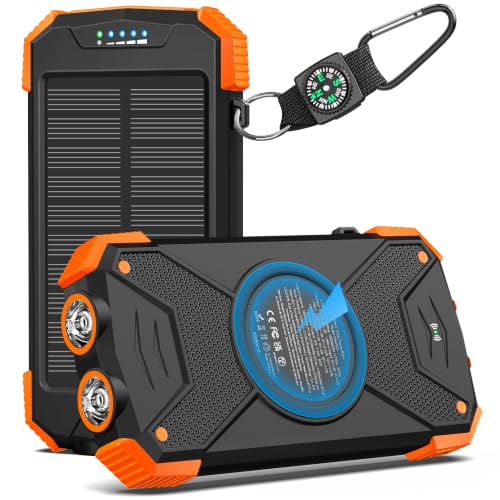
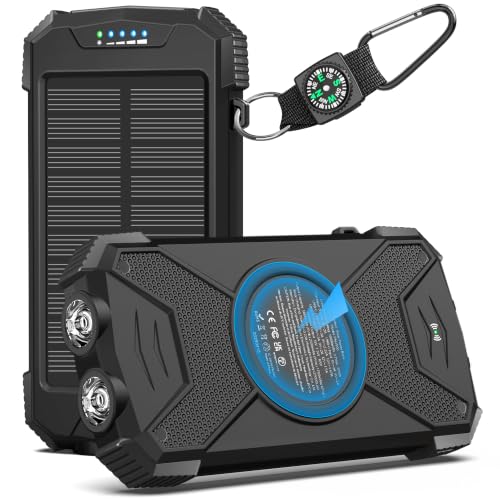
Folding fabric panels dominate the travel market. Several rigid segments sewn into a tough textile shell fold down to the size of a hardback book and open into a broad collecting surface. Rollable and flexible sheets suit strapping to a rucksack or kayak deck. Rigid framed panels serve car campers who have space and want durability. Finally, compact single panels integrated with a battery form the pocket end of the range, useful for light duties and emergency top ups rather than full daily supply.
Anyone comparing vehicle based solar for keeping a starter or leisure battery topped up will find a different scale of equipment in best 12 volt solar chargers, where panels are larger and controllers enter the picture. The travel formats below stay focused on personal devices carried by hand, though the underlying lessons about sun angle and shade apply at every scale.
Folding panels for rucksacks and campsites
The folding design balances area against packability. Opened fully, a typical travel folder presents enough surface to matter; closed, it slides against the back panel of a rucksack or into a laptop sleeve. Eyelets at the corners accept cord or carabiners for hanging from a tent, a fence, or a tree branch at the angle the sun demands. Kickstands sewn behind some models prop the panel toward the light without improvised piles of luggage, a small feature that earns gratitude daily.
Durability varies with fabric and stitching quality. Panels live outdoors, dragged across grass, folded with grit in the creases, and stuffed into bags beside boots. Reinforced corners, sealed junction boxes, and cables with proper strain relief predict a longer life than glossy finishes do. Buyers report that hinges and fold lines fail before the solar cells themselves, so handling a display unit or studying close photographs of the fold construction reveals more than specification tables.
Flexible sheets and pack mounted options
A thin flexible panel strapped to the top of a rucksack harvests while walking, which sounds ideal until terrain and tree cover intervene. On open ridges and desert trails the arrangement genuinely accumulates charge across a day of hiking. Under forest canopy the yield collapses to a trickle, and the panel becomes an ornament. These sheets tolerate bending and weigh little, but their efficiency per area often trails rigid cells, and abrasion against straps slowly clouds the surface.
Understanding wattage without being misled by it
Panel ratings describe output under standard laboratory illumination that real skies rarely match. A rating tells a buyer the ceiling, not the expectation. Morning and late afternoon sun arrives at an angle, heat reduces cell efficiency on still days, and any partial shading across a section can cut production disproportionately. Experienced users mentally halve headline figures for planning, then feel pleasantly surprised on brilliant days rather than stranded on ordinary ones. That conservative habit is the single most useful piece of arithmetic in this entire category.
Matching panel size to device appetite
Phones sip, tablets gulp, and laptops demand a feast that travel panels rarely serve. A modest panel keeps a phone and a torch alive indefinitely in sunny country. A mid sized folder supports a phone plus a camera battery and an evening reading light for a small group. Tablets for children at a campsite push requirements upward again, especially when video drains them daily. Listing the actual devices, and how many charges each needs per day, converts vague anxiety into a panel size decision that can be defended.
Campers who have tried purpose built combinations often describe the pairing of panel and bank as a system rather than separate purchases. Guidance aimed specifically at that pairing appears in best camping solar panel phone chargers, which travellers may consult alongside the broader criteria here. The overlap is healthy: campsite routines expose weaknesses, such as short cables and awkward hanging points, that hotel based travel never reveals.
Ports, protocols, and cable reality
Output sockets decide which devices charge at their best speed. Common universal serial bus formats appear on nearly every panel, with newer oval connectors supporting faster negotiated charging on compatible phones. Some panels add a direct current output for larger banks or small stations, widening their usefulness for van travellers. The negotiation matters: a phone that cannot agree a fast protocol with the panel output falls back to a slow trickle, and the owner blames the sun for a conversation failure between chips.
Cables are the forgotten half of the system. A short, good quality lead loses less energy and tangles less in a tent than a long bargain one. Carrying one spare lead weighs grams and rescues trips, because cables fail at connectors after repeated packing more often than panels fail at all. Travellers who colour code or label their leads save fumbling time at dusk, a small organisational pleasure that compounds across a fortnight.
Batteries: the reservoir that makes solar practical
A power bank sized for travel stores enough for two to four phone refills, balancing usefulness against the weight penalty of larger capacities. Airline rules restrict spare lithium batteries in cabin baggage by energy content, with common travel sizes designed to sit comfortably inside those limits. Checking the printed watt hour figure before flying avoids confiscation conversations at security. Banks with pass through behaviour allow simultaneous collecting and spending, though heat management during that double duty deserves respect on hot afternoons.
Reading capacity figures honestly
Manufacturers quote cell capacity at cell voltage, while devices charge at a higher voltage, and conversion between the two loses a share of the total. The practical refill count therefore lands lower than naive division suggests. Owner experience converges on a simple rule: expect roughly two thirds of the printed figure to arrive in devices after losses, cable resistance, and the bank own electronics take their share. Planning around that fraction prevents the familiar shock of a bank that promised four charges delivering fewer than three.
Integrated batteries inside panels
Combining storage into the panel simplifies packing and guarantees the two components cooperate. The compromise appears years later, when the battery fades while the cells still work, or when a traveller wants a bigger reservoir for a longer expedition. Separate components evolve independently and allow a damaged cable or tired bank to be replaced alone. Neither architecture is wrong; the choice reflects whether a buyer values simplicity today or flexibility across a decade of trips.
Sun angle, placement, and the moving target
A panel lying flat on the ground collects respectably near midday in summer and poorly at most other times. Tilting the surface toward the sun, roughly perpendicular to incoming light, lifts output noticeably. Travellers develop a ritual of adjusting position at each stop, the way sailors trim a sail. Even a rough tilt using a water bottle or a folded jacket as a prop outperforms a flat panel ignored for hours. Shadows deserve vigilance: a single tent pole line across the cells can throttle the whole array on designs wired in series.
Heat works against harvest. Cells lose efficiency as they bake, so airflow beneath a propped panel helps both output and longevity. Placing a dark panel on hot tarmac in still air creates the worst combination, while a breeze across a raised panel on grass preserves performance. Phones and batteries should never share that direct sun. Keeping the bank in the panel shadow or inside a shaded pocket protects its chemistry and prevents thermal shutdowns that halt charging entirely.
Harvesting during stops rather than motion
The most productive minutes of a travel day often arrive at lunch, during a swim, or while camp is pitched in late afternoon light. Spreading the panel deliberately at those pauses, angled and unobstructed, gathers more than a full day of dangling from a bouncing rucksack in mixed shade. Walkers on open terrain are the exception, collecting steadily as they move. Everyone else should plan around stationary windows, which also gives the ritual of rest a productive edge without turning the journey into a chore.
Weather resistance and rough handling
Travel panels meet dew, drizzle, dust storms, and the occasional full downpour when a tent vestibule floods. Resistance ratings describe protection against jets and splashes, and sealed output boxes matter as much as the cell surface. A panel can survive rain while its junction box corrodes quietly, failing weeks later at home. Drying equipment fully before packing it away for the season prevents that slow decay, as does storing it unfolded or loosely folded so creases rest.
Sand deserves special mention for beach and desert travellers. Grit abrades protective coatings when wiped carelessly, and grains work into hinges and zips. Shaking and soft brushing before folding preserves the surface. Salt air near coasts accelerates connector corrosion, so a freshwater wipe after seaside trips extends cable life. None of this care is burdensome; it folds into the ordinary tidying that ends any outdoor day.
What breaks, and what merely complains
Owner accounts repeat a consistent failure list: cracked solder joints at fold lines, frayed cables where they exit the junction box, delaminating surfaces after prolonged dashboard heat, and eyelets tearing from fabric under gusty wind loads. The cells themselves rarely die outright. Designs that route cables with slack, reinforce eyelets with webbing, and warn against leaving panels behind glass in parked cars address the real enemies. A carrying case, sometimes dismissed as padding for profit, genuinely protects fold lines during transit in a crowded boot.
Weight, bulk, and the honest packing decision
Every gram carried uphill is a gram argued for. Ultralight walkers may decide that a small bank charged at hostels beats any panel on routes with frequent villages, reserving solar for remote stretches. Cyclists with pannier space accept larger folders happily. Families driving to a campsite barely notice a kilogram either way and should buy area generously, since sunshine per square centimetre is the fundamental currency. The correct panel is therefore partly a transport question disguised as an electronics question.
Bulk shapes behaviour as much as weight. A panel that unfolds in seconds gets used at every coffee stop; one requiring origami patience stays folded during short pauses, missing the best light. Trying the fold sequence at home, timed and unhurried, predicts field behaviour surprisingly well. Pockets for cables and the bank on the panel itself reduce the scatter of small parts across a picnic blanket, which in turn reduces losses to grass, sand, and forgetfulness.
Charging routines for different journeys
The multi day hiking route
Walkers should start each morning with the bank as full as yesterday allowed, spend phone charge sparingly on navigation checks rather than constant screen use, and harvest at the midday halt. Evening discipline matters: aeroplane mode overnight preserves both phone and bank, while photographs taken during the day can wait for sorting until a socket appears. On routes above the treeline the harvest improves dramatically, and many walkers report that a modest folder keeps navigation and emergency communication alive indefinitely in settled summer weather.
The campsite family base
A static camp transforms solar economics. The panel can live angled on a windbreak or table all day, feeding a large bank that then services tablets, lights, and phones in the evening. Children learn the household rhythm quickly: devices charge from the bank after supper, the bank charges from the sky during the day. A second small panel dedicated to lighting batteries spreads risk, so one failure never darkens the whole camp. This is the scenario where generous panel area pays back most visibly.
The city break with rural excursions
Not every traveller sleeps outdoors. Someone based in hotels but taking day trips to ruins, beaches, or vineyards may need only a compact panel and bank combination for insurance against a long day away from the room. Here packability inside a day bag outweighs maximum harvest. The panel earns its keep on the three days of a fortnight when sockets are absent, and sits light enough the rest of the time to avoid resentment. Travellers organising their everyday carry may also review best travel chargers for phones for the socket based side of the same packing puzzle.
The festival and event weekend
Festivals combine heavy phone use, photography, and scarce sockets into a perfect energy storm. A panel spread at a tent during the lazy midday hours, while stages are quiet, collects exactly when demand sleeps. Security thinking matters in crowded fields: keep the bank with you, let the panel work at the tent, and avoid advertising expensive electronics to passers by. A lockable tent porch or a panel inside a gazebo line of sight balances harvest against opportunistic theft.
Phones, heat, and battery health on the road
Lithium batteries dislike heat, and a phone charging in direct sunshine suffers a double insult of hot environment plus charging warmth. The result can be throttled charging, accelerated ageing, or a protective shutdown that looks like a fault. Shade the device, always. A hat, a map, or the panel own shadow suffices. Travellers in very hot climates charge during morning and evening light, accepting slower collection in exchange for kinder temperatures, and their batteries thank them across subsequent years.
Keeping a phone between moderate charge levels during a trip also reduces stress compared with repeated full drains and complete refills. Solar routines naturally encourage that pattern, since energy arrives in partial top ups across the day. The habit aligns convenience with chemistry, a rare free win. Only navigation emergencies justify draining a phone to empty in remote country, and a reserved slice of bank capacity should exist precisely for that moment.
Cold weather behaviour
Mountain mornings and winter trips invert the problem. Cold batteries accept charge reluctantly and report misleading percentages, recovering apparent capacity as they warm against the body. Panels, interestingly, produce strong voltage in cold bright conditions, so a winter sun day at altitude can harvest well while the bank hides inside a jacket to stay receptive. Keeping the reservoir warm and the panel cold is the paradoxical winning arrangement in alpine light.
Safety, regulations, and travelling with stored energy
Airlines permit spare batteries in hand luggage within stated energy limits and prohibit them in checked bags, rules that shape which banks a flyer may carry. Panels themselves travel freely, though large folders attract questions at security occasionally and benefit from being packed visibly rather than buried. Damaged or swollen batteries should never fly or be charged unattended anywhere; a bank that has been crushed in a pack or baked on a dashboard until its case warped has retired, whether its owner accepts the news or not.
At camp, charging equipment deserves the same fire sense as any electrical device. Keep connections dry, avoid charging inside a sealed sleeping bag where heat accumulates, and inspect cables for nicks after trips involving mice prone storage sheds. Solar feels benign because it is silent and smokeless, yet the stored energy in a large bank commands respect. Treating it like a small fuel can, stored cool and upright and away from sharp metal, is the right mental model.
Environmental honesty about solar gear
A panel is not impact free. Its manufacture consumes energy and materials, and a cheap unit discarded after one season may never repay that footprint. Buying a durable panel sized correctly, using it for years, and repairing cables rather than replacing the whole object is where the environmental case becomes genuine. Travellers who borrow or hire panels for a single expedition also act sensibly. The greenest charger, as with most equipment, is the one already owned and actually carried.
End of life matters too. Batteries belong in dedicated recycling streams, not general waste, and many retailers accept returned banks. Panels with failed electronics join electronic waste collections. Planning that disposal when a product eventually dies completes the responsibility that began with enjoying free light in remote places.
Cost thinking across several seasons
Paid charging lockers at festivals, replacement cables bought in panic at airports, and café purchases made mainly to justify socket use all add up across trips. A dependable panel and bank combination, spread over several seasons of holidays, often compares favourably with that scattered spending while delivering independence money cannot always buy at a remote bothy. Conversely, a traveller taking one sunny weekend trip per year may rationally borrow rather than buy. Frequency of use, not enthusiasm at the shop, should drive the decision.
Readers assembling a broader kit around cable free convenience might glance at best portable chargers that dont require a cable to understand how integrated cable designs reduce the small parts count in a travel bag. Fewer loose leads means fewer losses, and solar systems benefit from the same tidiness because every connection in the chain either carries the harvest faithfully or quietly wastes it.
Questions to answer before choosing
- Device list: which items truly need daily energy, and how many refills does each require between sockets?
- Sun reality: what season, latitude, and tree cover describe the actual route, rather than the hoped for postcard weather?
- Carrying method: will the panel ride in a rucksack, a pannier, a car boot, or a day bag, and what folded size fits that space?
- Buffer plan: is there a separate bank to smooth cloudy intervals, and is its energy content legal for any flights involved?
- Port match: do the outputs negotiate fast charging with the specific phones and tablets in the group?
- Weather exposure: how much rain, sand, and dust will the equipment meet, and are connectors sealed accordingly?
Disappointments travellers report, decoded
The commonest complaint, slow charging, usually traces to optimistic expectations, partial shade, or a phone negotiating a slow protocol, rather than a defective panel. The second complaint, a bank that seems smaller than promised, reflects conversion losses described earlier. Third comes physical fragility at folds and cables, which careful handling and honest design both mitigate. Reading complaints through that diagnostic lens helps a buyer separate products with genuine flaws from products blamed for physics.
A subtler disappointment is behavioural. Some owners discover they dislike tending a panel: angling it, chasing sun patches, and guarding it from theft interrupts the relaxation they travelled for. Those travellers often end happier with a large bank charged from sockets whenever available, using solar only as emergency backup. Self knowledge belongs in the buying decision alongside wattage, and there is no shame in concluding that attentive harvesting does not suit a particular holiday style.
Cell technologies in everyday language
Most travel panels use monocrystalline cells, recognisable by their uniform dark appearance and strong efficiency in a limited area. That efficiency matters when pack space is tight, because more harvest per folded centimetre means a smaller object to carry. Polycrystalline cells, with a mottled blue look, appear in older and larger budget panels where area is cheap. Thin film materials trade efficiency for flexibility and shade tolerance, performing comparatively gracefully when light is diffuse or part of the surface is covered, which explains their niche in pack mounted sheets despite lower peak figures.
Newer cell architectures keep nudging efficiency upward and improving behaviour when a section is shaded. For a traveller, the practical translation is simple: recent designs from reputable makers tend to restart charging more gracefully after a cloud passes and lose less output to a stray shadow. Chasing the very newest cell type matters less than sound construction, honest ratings, and a junction box that will not become the failure point in year two.
How shade tolerance changes real days
Campsites are patchworks of moving shade. A panel with bypass behaviour that isolates a shaded section keeps the remainder working, while a simpler array can slump when a guy rope shadow crosses it. That difference rarely appears in headline specifications, yet it decides whether a panel left near a tent produces steadily or only during the hour when the sun clears the trees. Owners camping in woodland rate this quality highly, while desert travellers barely think about it. Context, again, ranks the features.
Indicators, displays, and knowing what is happening
A tiny light confirming output sounds trivial until a traveller has wasted an afternoon angled toward a disconnected cable. Better panels show output level through a small display or a row of indicators, letting the owner hunt for the best angle by watching numbers climb. That feedback transforms placement from superstition into a quick experiment: tilt, pause, read, adjust. Banks likewise benefit from clear remaining capacity indicators, because a vague single blinking light invites the overconfidence that ends with a dark phone at midnight.
Some travellers add a tiny inline meter to their kit for diagnosis. It weighs little and answers arguments about whether the sun, the cable, or the device is limiting the flow. Such a tool is optional for holiday use and genuinely valuable for long expeditions where energy planning is a daily discipline. Either way, information prevents the most common solar error, which is assuming harvest is happening because the panel looks sunny.
Group travel and shared energy
Travelling parties pool risk and multiply demand. One generous panel serving six phones creates a queue and, occasionally, friction about whose device drank the bank. Agreeing a rota early keeps friendships intact: navigation phones first, cameras second, entertainment last. A designated energy officer sounds comic until the third evening, when somebody must decide whether the remaining charge funds a torch or a video call. Groups larger than four often do better with two medium systems than one large one, gaining redundancy and parallel charging at different tents.
Children change the equation through tablets and torches they treat as infinite. Setting expectations at the start of a camping holiday, framed as a game of collecting sunshine, works better than rationing announced in anger later. A visible bank indicator becomes a household gauge everyone can read. Several parents describe solar limits as an accidental benefit, nudging evenings toward cards and conversation once screens retire early.
Expeditions, work trips, and professional use
Field researchers, photographers on assignment, and guides carry energy as part of their professional kit. For them, redundancy is not luxury: two panels, two banks, and cables in duplicate, split across bags so one loss never ends capability. Weight budgets accommodate that duplication because the cost of failure is a missed dataset or an unhappy client rather than a quiet phone. Their packing lists also include repair tape, spare connectors, and a multimeter mindset: diagnose calmly, substitute components one at a time, and record what the sky actually delivered each day to refine the next expedition plan.
Water based journeys and coastal specifics
Kayakers, sailors, and paddleboard campers meet solar in its friendliest setting: open sky, reflective water, and long daylight on deck. Flexible panels lashed to a deck harvest for hours while their owners travel, a rare case where motion and collection cooperate fully. The enemies are salt and immersion. Connectors need protection inside dry bags when not in use, panels need rinsing after trips, and banks should live below deck rather than baking beside the panel. A lanyard on every component prevents the heartbreaking sight of a charger sliding gracefully into deep water at a jetty.
Beach holidays present a milder version of the same pattern. A panel can work from a windbreak while its owner swims, provided somebody in the group keeps an eye on belongings. Sand management dominates: keep ports plugged or taped, shake the panel before folding, and never drag cables through grit. The reward is a phone ready for evening photographs without a return to the room, which many holidaymakers rank among the small luxuries that improve a whole trip.
Winter, altitude, and desert extremes
High mountains offer intense light, thin air, and cold cells that operate efficiently, a combination expedition travellers prize. Snow reflection can even add harvest from below on bright days. The limiting factors become short days in winter, gloves that make small connectors fiddly, and batteries that must be kept warm to accept charge. Panels with larger connector housings and simple operation win friends at altitude, where fiddling carries a cost in cold fingers and fading patience.
Deserts invert every priority toward heat management and dust. Midday harvest is abundant but brutal on batteries, so seasoned desert travellers collect during morning and late afternoon, rest the system at noon, and bury cables under a cloth to shade them. Dust films cut output gradually and invisibly; a daily wipe with a dry soft cloth restores the surface. Water scarcity forbids washing panels, making that dry routine essential. Equipment that survives a desert season usually survives anything else a traveller will meet.
Cycling and motorcycle touring notes
Riders enjoy airflow, open roads, and luggage that punishes bulk. A folder strapped across a rear rack or pannier top harvests during lunch stops and at camp, while vibration during riding argues against leaving delicate connections plugged in on rough surfaces. Motorcycle tourers with larger luggage sometimes carry rigid panels, though most adopt the same folding kit as cyclists. The shared lesson from both communities is to charge the bank while stationary and spend from it while moving, keeping cables packed away from chains, straps, and hot exhaust parts.
Setting up camp energy as a small system
Thinking of panel, bank, cables, and devices as one system prevents mismatched purchases. The panel should comfortably refill the bank across a decent day; a huge bank paired with a tiny panel never fills, while a tiny bank wastes a large panel harvest by saturating at noon. Balanced sizing means both components finish an ordinary sunny day near full, ready for the evening spend. Travellers can test that balance in a garden before departure, noting how many hours of local sun a full refill requires, then scaling expectations for the destination season.
A pre trip rehearsal also exposes missing adapters while shops are still reachable. Charge every device from the bank, run the panel through a real afternoon, and pack the exact cables used into the panel pocket afterwards. That closed loop, where the kit returns to its bag complete after the rehearsal, is the difference between a system and a pile of electronics. Many returned panels, one suspects, failed their owners at this organisational level rather than at the level of photovoltaic physics.
Labelling and tiny organisational habits
- Mark each cable: a small tag naming its device saves dusk fumbling and prevents forcing wrong connectors.
- Keep a reserve: hold back a slice of bank capacity for navigation and emergencies, never for entertainment.
- Log the sky: a brief note of daily harvest against weather builds realistic expectations for the next route.
- Dry before storage: panels and banks packed damp after the final day corrode quietly in cupboards.
- Rotate the spend: charge the most critical device first each evening while energy decisions are still fresh.
Comparing panel claims like a sceptic
Marketing photographs favour noon in a desert. A sceptical buyer looks for output figures stated at realistic angles, weight including cables and case, and folded dimensions measured rather than rounded optimistically. Warranty length signals how the maker expects fold lines and junction boxes to age. Independent owner accounts from travellers in similar climates outweigh influencer enthusiasm filmed over a single bright weekend. None of this requires cynicism; it simply applies the same calm scrutiny a traveller would give a tent or a pair of boots before trusting them far from home.
Beware bundles that inflate value with accessories nobody needs. A panel sold with a tangle of obscure adapters, a flimsy tripod, and three cables of the wrong length may still be a fine panel, but the bundle price should be judged on the panel alone. Conversely, a spare cable and a decent case in the box represent genuine value because they address the two commonest field failures directly.
When solar is the wrong answer
Honesty requires naming the journeys where a panel stays home. City breaks with nightly hotel sockets need only a good bank. Winter weekends at high latitude offer too little light to justify the weight. Trips built around driving, where the vehicle alternator provides abundant energy, favour in car charging. Recognising those cases protects the reputation of solar where it truly excels: multi day outdoor travel in decent light, far from sockets, with time at stops to harvest. Buying for that scenario, and borrowing for edge cases, keeps both money and enthusiasm intact.
There is also the question of attention. Some holidays are for switching off entirely, and a traveller who delights in a dead phone gains nothing from a panel except pressure to reconnect. The equipment should serve the journey its owner wants, not dictate a new one. A charger is, after all, only a means of keeping chosen tools alive; choosing fewer tools remains a legitimate and sometimes wiser strategy.
Maintaining the kit between journeys
Equipment that lives in a cupboard for eleven months and performs for one deserves a small maintenance rhythm. Every few months, check the bank charge level and top it toward the middle range favoured for storage, since lithium cells age fastest when left completely full or utterly empty. Inspect panel folds for trapped grit, wipe the surface, and run the system for an hour on a bright windowsill or in a garden to confirm every cable still negotiates properly. Discovering a dead cable in April is a minor errand; discovering it on a ferry is a ruined plan.
After each trip, a ten minute debrief pays for itself. Note which device drank more than expected, which cable felt fragile, and whether the panel size matched the weather actually encountered. Tuck that note into the panel pocket. Future packing then starts from evidence rather than optimism, and the kit evolves toward the traveller real habits. Equipment diaries sound excessive until the first time one prevents a repeated mistake on a route where mistakes are expensive.
Repair, spare parts, and maker support
Ask how a maker handles a failed junction box or a torn eyelet before purchase, because those answers reveal whether the product is designed as a repairable object or a disposable one. Standard connectors allow third party cables to substitute in an emergency, a quiet virtue that proprietary fittings deny. Some owners carry a small repair kit: electrical tape, a spare lead, cable ties, and a microfibre cloth. That pouch weighs little and resolves the majority of field problems without improvisation involving hair bands and hope.
Charging other small devices beyond phones
Modern travel kits include satellite communicators, action cameras, drones with strict limits, e readers, head torches, lanterns, electric razors, and medical devices such as hearing aid chargers. Each arrives with its own appetite and cable. Listing them all during planning often surprises owners, whose mental model stopped at the phone. E readers sip so slowly they can share any surplus, while camera batteries in cold conditions may need a dedicated charging cradle fed from the bank. Medical essentials deserve first claim on stored energy and a backup plan that does not depend on sunshine at all.
Drone batteries deserve a caution of their own. Their capacity and charging requirements often exceed what travel panels deliver gracefully, and partial charging cycles in heat do them no favours. Most drone carrying travellers treat solar as a supplement for controllers and phones, fuelling the aircraft itself from vehicle or mains power whenever available. Knowing which device sits outside the solar plan is as important as knowing which ones sit inside it.
Lighting as a campsite priority
After communication, light is the service campers value most. A lantern that charges during the afternoon and burns through the evening transforms a campsite, and its modest appetite fits solar supply beautifully. Head torches for each person, charged on rotation, remove the midnight scramble for spare disposable cells. Planning the lighting load explicitly, rather than treating it as an afterthought fed by leftovers, usually reveals that a slightly larger bank would remove the only nightly anxiety in the whole system.
A realistic day of harvest, hour by hour
Dawn contributes little, because low sun and long shadows starve the cells, so experienced travellers sleep through it without guilt. Mid morning begins the useful climb, and a panel angled during breakfast starts repaying its carriage. The hours around midday deliver the bulk of the day total in most seasons, rewarding anyone who pauses, spreads the panel fully, and keeps it clear of drifting shade. Afternoon output declines gracefully, still worthwhile at a campsite, until evening light turns golden and production fades to a trickle that lanterns and banks can ignore.
That rhythm shapes itineraries more than newcomers expect. Routes planned with a long midday halt near water or a viewpoint harvest better than routes marching through the brightest hours under trees. Photographers already pause for light; solar travellers pause for energy, and the two pauses often coincide pleasantly. Accepting the rhythm, rather than fighting it with ever larger panels, is the mature stage of travelling with sunshine as a fuel source.
Final judgement for travellers
The dependable travel setup pairs a honestly rated folding panel with a separate bank, matched cables, and a routine built around midday stops and shaded batteries. Walkers in open country can trust a modest area; families at static camps should buy area generously; city based travellers may need only a compact insurance policy. In every case the winning product is the one whose weight, fold, and output fit the journey already planned, not an imaginary expedition invented in the shop.
Test the complete system at home, label the cables, protect a reserve for navigation, and let conservative arithmetic govern expectations. Sunshine then becomes what it should be on a good journey: a quiet, renewable convenience gathered almost without thought at lunch stops and lazy afternoons. For the traveller watching a bank refill beside a high lake while dinner cooks, that small independence feels like the entire reason the panel was carried.
Two contrasting packing lists
Consider a solo walker crossing open moorland for five days. Their kit centres on a mid sized folder, one bank, two cables, and a phone used sparingly for navigation and evening messages. A head torch and a small e reader complete the electrical inventory. Nothing else competes for the harvest, the panel rides inside the pack lid during showers, and every sunny halt becomes a collecting opportunity. Simplicity keeps the system robust, and the walker finishes most days with the bank fuller than the morning found it.
Contrast a family of five driving to a coastal campsite for a week. Their inventory includes two tablets, five phones, a lantern, torches, and a camera, and their panel can be the largest folder that fits the car boot without argument. A bigger bank, perhaps two, circulates between panel and tent. Nobody counts grams; everybody counts evening entertainment. The family system succeeds through capacity and routine rather than efficiency, proving that correct sizing is always relative to the party, the vehicle, and the devices they genuinely use.
The middle path most travellers actually take
Between those poles sits the common case: a couple hiking or touring with phones, one camera, torches, and a shared bank. A folder of moderate area, chosen for sound construction and sensible ports, covers their needs in most summer conditions at temperate latitudes. They will meet one grey day where the harvest disappoints, spend the reserve calmly, and adjust by conserving until the sun returns. That resilience, designed in advance through a reserve and modest habits, distinguishes a mature setup from a fragile one that only works when the sky cooperates perfectly.
Check prices on Amazon
Live listings for the shortlist in this guide are pulled from Amazon below, so prices and availability are always current at the moment you look.



How to run the first field trial
Choose a day trip with an easy escape to sockets, then deliberately live on solar from breakfast onward. Note the bank level at each stop, photograph the panel angle that worked at the campsite or picnic spot, and record which device surprised you with its appetite. Resist topping up from a car or café, because the trial only teaches when the system carries the full load. By evening, the numbers in your notebook will say more about the correct panel size for your travels than a month of reading specifications.
Repeat the trial in different weather if the intended journey involves changeable country. A system that copes with one bright day may still fail a three day pattern of cloud, and knowing that boundary in advance lets a traveller add a second bank, trim the device list, or plan a mid route socket stop at a hostel. None of those adjustments signals failure. They are the ordinary engineering of a trip, done at home with tea rather than on a hillside with a dying phone and gathering dusk.
Beyond the trial, one habit separates contented solar travellers from frustrated ones more reliably than any purchase: they plan the evening spend before the day begins. Knowing that navigation takes priority, that photographs can be culled tomorrow, and that a video call home matters more than scrolling in a tent turns a finite harvest into a feeling of sufficiency. Scarcity managed deliberately feels like freedom, because every device that matters stays alive and nothing essential depends on luck. Scarcity discovered accidentally at midnight feels like failure, even when the panel performed exactly as physics promised.
That mindset also improves packing for the next journey. Travellers return home knowing precisely which gadget earned its energy and which one merely consumed attention, and the device list shrinks toward the essentials that made the trip better. A lighter bag, a simpler charging routine, and a panel sized for a honest inventory follow naturally. Over several seasons the system and the traveller shape each other, until collecting sunshine at a rest stop becomes as unremarkable as filling a water bottle at a spring. Carry the panel that fits that life, tend it kindly, and let daylight quietly do the work it has always done for those patient enough to gather it.
One final detail belongs in every packing conversation: the charger you already understand beats the unfamiliar upgrade bought the night before departure. Familiarity means knowing how long a refill takes under local cloud, which cable negotiates quickly with your phone, and how the fold behaves when hands are cold and light is fading. That knowledge cannot be downloaded at the airport. It accumulates through short trials, small mistakes corrected at home, and the quiet confidence of a kit that has already survived a wet weekend. Leave the last minute purchase for snacks, and give the energy system the rehearsal time its importance on the road genuinely deserves.
So pack deliberately, angle the panel toward whatever bright patch the day offers, guard the stored reserve for the moments that truly matter, and trust a rehearsed routine over hopeful improvisation, because a journey powered patiently by daylight rewards its traveller with calm evenings, living maps, and photographs that actually make it home.
And when the tent is finally struck and the road home begins, a traveller who gathered energy patiently all week carries back more than charged devices: a proven routine, a lighter sense of dependence, and the confidence to wander a little farther next time.


