Our Top Picks
 Mini Karaoke Machine Toys Gifts: Kids Toys BirthdayEye6.4 x 2.8 x 6.1 inchesMP3 AudioCheck on Amazon
 Portable Bluetooth Speaker Stocking Stuffers: Outdoor Essentials Waterproof3 x 3 x 3.8 inchesCheck on Amazon


What's inside
- Why a speaker for a child is not a small adult speaker
- Volume limits and what safe listening actually means
- Durability: drops, water, and the corners that take the hit
- Controls a child can actually operate
- Battery design, charging covers, and honest runtime
- Small parts, straps, and material safety
- Where the speaker will actually live: home, car, outdoors, classroom
- Speech clarity, audiobooks, and why bass comes last
- Checking by age: toddlers, preschoolers, and older children
- Disclosure and how this guide was put together
- Check prices on Amazon
- A calmer way to choose
As an Amazon Associate I earn from qualifying purchases. This post may contain affiliate links at no extra cost to you.
Why a speaker for a child is not a small adult speaker
A living room speaker assumes an adult chooses the volume, places the unit on a shelf, and leaves it there. None of those assumptions survive contact with a four-year-old. Children carry speakers by whatever part fits a small hand, set them down on wet grass, press every button in sequence, and listen much closer to the driver than any adult would. Distance matters because sound pressure rises sharply as a speaker moves toward an ear, and a child holding a speaker against a shoulder or pillow is in a completely different exposure situation from a parent across the room.
Portability changes the risk profile in another way. Adult models chase output, stereo width, and finish quality, while a product meant for children has to limit output, survive drops, and remain understandable at low levels. Clarity at modest volume is the real performance target here, not loudness. When speech stays intelligible without turning anything up, the child has less reason to push the level higher in a noisy kitchen or car.
Look at the category through daily routines and the differences sharpen. Story time needs calm, even playback without sudden jingles at full blast on power-up. Travel needs a housing that tolerates being wedged into a backpack beside a water bottle. Outdoor play needs sealed controls and a shape that does not roll off a picnic table. Each routine points to design choices that rarely appear on adult spec sheets at all, which is exactly why this category deserves separate scrutiny.
Marketing language often hides that separation. A bright color and a cartoon face do not make a speaker child-appropriate if the volume can climb without limit, the charging port sits exposed, or a detachable strap forms a loop a toddler can pull free. Parents should read past the paint job and examine limiters, materials, seams, and controls. Those unglamorous details decide whether a speaker fits a child or merely looks as if it does.
Age spreads inside the category are unusually wide. A speaker suitable for a nine-year-old who manages a tablet independently may be entirely wrong for a two-year-old who mouths objects and throws what frustrates her. Manufacturers sometimes print a single age grade on the box, yet the underlying needs diverge: mouthing safety and hard volume caps dominate early years, while independent pairing, longer battery life, and headphone-free group listening matter later. Treating kids as one audience is the first buying mistake.
Sound sources differ too. Children listen to narrated stories, songs with repeated choruses, classroom recordings, and video audio at close range, often for long stretches. Adult listening tends to be shorter, farther away, and more varied in level. Long, close, repeated exposure is precisely the pattern hearing guidance worries about, so a dedicated kids speaker builds its whole design around controlled output over long sessions rather than impressive peaks over short ones.
Volume limits and what safe listening actually means
Decibels describe sound pressure on a logarithmic scale, which means small number changes carry large physical weight. A rise of ten decibels represents roughly a doubling of perceived loudness, so the gap between 75 and 85 on a spec sheet is not a minor rounding difference. For parents, the practical lesson is simple: a limiter set a few points lower offers meaningfully gentler exposure across an afternoon of stories, even if the two numbers look close in print.
Many child-focused designs cap output near 85 decibels, a figure that appears in occupational and consumer guidance as an upper reference for extended listening, while some models aimed at younger children cap lower, near 75 or 80. Lower caps suit toddlers who hold speakers close. Higher caps may suit older children listening across a room, where distance eats into level before sound reaches the ear. Neither figure guarantees safety in every pattern of use, because duration counts alongside level, and breaks matter.
Quiet defaults help as much as hard caps. A speaker that powers on at its last, loud setting can startle a child and deliver a blast before small fingers find the down button. Models that restart at a moderate level, or that rise gradually after power-up, remove that spike. Parents can check for this behavior in manuals, where it may be described as a startup volume, memory volume, or gentle start feature, though wording varies widely between brands.
Hardware caps versus app-based limits
A hardware limit lives in the amplifier or firmware and cannot be undone from the front panel. Whatever a child presses, output stays below the ceiling, and that permanence is the strongest form of protection a speaker can offer. Some designs add a physical switch, sometimes hidden inside a compartment or set with a recessed control, so a parent chooses between two or three ceiling levels and the child cannot reach the control during play.
Software limits work differently. An app on a parent phone sets a maximum, and the speaker obeys until settings change, a reset occurs, or a different phone pairs. App control offers flexibility, granular steps, and sometimes listening-time reports, yet it depends on the app staying installed, the account staying signed in, and the setting surviving firmware updates. For a speaker shared between households or handed to grandparents, an app-only limit can quietly disappear without anyone noticing.
Hybrid designs deserve attention because they combine both layers. A fixed hardware ceiling provides the outer fence, while an app lets a parent set a lower everyday level inside that fence for bedtime or close listening. Reading product literature, parents should ask which layer exists, who can change it, and whether the limit applies to every input. A cap that governs Bluetooth but not a wired connection or a memory card slot leaves a gap a curious older child will eventually find.
Spec sheets state limits in inconsistent ways. Some list maximum output in decibels at a stated distance, often half a meter or one meter, while others quote a vague safe volume claim with no distance, no test signal, and no standard named. Distance is not a footnote; a speaker measured at one meter will read far louder at ten centimeters. A credible listing names the cap, the distance, and whether the figure covers all sources. When a maker publishes only adjectives, parents should treat the limit as unverified and contact support for the test conditions before buying.
Parents can do a rough sanity check at home without laboratory gear. Place the speaker where the child normally listens, play a familiar story at the highest allowed setting, and judge whether conversation at arm length remains comfortable without raised voices. Smartphone sound meter apps give approximate readings, not certified measurements, but they can reveal a speaker that is plainly far louder than a sibling model. Use the same distance and the same recording for any comparison, and treat the numbers as relative rather than absolute.
Headphone jacks, where present, need the same scrutiny. A speaker may cap its own driver yet feed a connected headphone at higher levels, or the reverse. Manuals sometimes list separate output figures for the jack. Families planning to use wired headphones on long trips should confirm the limit covers that path too, and should favor headphones that themselves carry a volume limit for younger children.
Durability: drops, water, and the corners that take the hit
Drops happen from table height, from car seats, from bunk beds, and from hands that simply let go. A child speaker earns its keep in those moments through structure rather than slogans. Thick walls, internal bracing, and a driver mounted with some isolation from the shell all help, though few makers publish internal details. External clues remain useful: weight in hand, flex when the housing is squeezed gently, and the way panels meet at seams tell a parent more than a drop-height claim printed without a surface or angle.
Rubber overmolding on corners absorbs the most common impact, because speakers tend to land on an edge rather than flat. Raised bumpers that stand proud of the shell by a few millimeters give the rubber something to compress before force reaches the hard plastic beneath. Continuous wraps protect better than decorative strips glued along a side. Parents examining product photos should zoom in on corners and feet, looking for real thickness, rounded transitions, and bumpers that also keep the speaker from sliding on a smooth table.
Ingress protection ratings follow a recognizable pattern once the code is decoded. The letters IP are followed by two digits: the first covers dust, the second covers water. IPX4 means splash resistance from any direction with no dust figure claimed, IPX5 resists low-pressure jets, IPX7 involves immersion at a stated depth for a stated time, and a rating such as IP67 pairs complete dust sealing with that immersion figure. Each step up the water scale involves a defined test, not a general promise about rain, pools, or bath time.
Real life complicates those laboratory definitions. Ratings assume fresh water, intact seals, and ports closed as the maker directs. Salt water, soapy bath water, and a charging cover left ajar all fall outside the tidy test. Sand can grind into seams and compromise a gasket over a season. After any dunking, a speaker should dry fully before charging, because moisture in a port plus current is a corrosion recipe. Parents should read the manual section on water exposure rather than relying on the two digits alone.
Grille material shapes both survival and sound. Woven fabric over a rigid frame resists denting, hides scuffs, and can be brushed clean, though it may hold moisture and pick up odors after a summer of outdoor snacks. Molded plastic grilles wipe clean in seconds and shrug off damp, yet a hard knock can crack a thin section or pop it from its clips. Metal mesh dents visibly but protects the driver well. None is universally best; the match depends on whether the speaker lives in a kitchen, a backpack, or a poolside bag.
Buttons and ports are failure points long before drivers quit. Membrane-sealed buttons tolerate wet fingers and resist crumbs working into gaps. Recessed ports with tethered covers keep grit out, while exposed ports invite pocket lint and sand. A cover that is hard for an adult to open will frustrate a child, but a cover that flaps open in a bag protects nothing. The sweet spot is a firm, hinged cap a parent can open deliberately and a school-age child can close with a clear click.
Warranty terms quietly reveal how a maker expects the product to be treated. Some warranties exclude liquid damage even on water-rated models, a contradiction worth noticing before purchase. Others cover a defined period for defects only, not drops. Reading the exclusions takes five minutes and prevents the common assumption that rugged styling equals free replacement. Keep the receipt and the manual together, since serial numbers for small speakers often live on a base label that wears away with use.
Controls a child can actually operate
Large, widely spaced buttons are the single most child-friendly control choice a designer can make. A palm-sized play and pause key with a raised symbol can be found by touch, pressed with a whole thumb, and understood without reading. Volume keys that are separate, clearly marked, and placed away from track keys reduce accidental skips. When buttons share functions through long presses and double taps, adults may cope, but younger children experience the interface as random, and frustration leads to harder pressing and louder demands for help.
Rotary knobs look friendly and often are not. Small knobs require a pinch grip and fine wrist control that many preschoolers lack, and a smooth knob gives no feedback about how far it has turned. A knob with detents, a large diameter, and a hard stop at maximum can work well for older children, especially when the volume ceiling sits behind it in hardware. Parents should favor designs where the child-facing control cannot defeat the parent-set limit, whatever form that control takes.
Bluetooth pairing should be boring. A dedicated pairing button, a spoken or tonal confirmation, and automatic reconnection to the last device cover most family needs. Speakers that enter pairing mode on every power-up invite accidental connections to a neighbor tablet in an apartment building or a sibling device in the next room. Manuals describe reconnection behavior, and parents should check whether the speaker remembers one device or several, and how to clear that memory when a family tablet is replaced.
Voice assistants raise a separate set of questions. A microphone in a child bedroom or classroom changes the privacy picture, and some families will prefer speakers with no microphone at all. Where an assistant is present, a physical mute switch matters more than a software toggle. Product pages do not always highlight microphone presence, so the manual and the regulatory filings are the reliable places to confirm. For many households, a plain speaker that simply plays audio from a parent device is the calmer choice.
Wired backup earns its place on long trips and in classrooms. A 3.5 mm input or a USB audio connection keeps the speaker useful when Bluetooth fails, when a tablet battery dies, or when a school network policy blocks pairing. The cable itself should be short, replaceable, and stored somewhere sensible; a speaker with a cable groove or a small storage recess is less likely to arrive at a destination without its lifeline. Parents should also confirm whether wired input bypasses the volume limiter, a detail manuals sometimes bury.
Feedback lights and sounds deserve a quick review before purchase. A gentle chime at power-up is helpful; a loud jingle at maximum volume defeats the purpose of a limiter. Status lights that blink rapidly can distract at bedtime, and some models offer a night mode or a way to dim them. Makers rarely advertise light behavior, so parent reviews and manual diagrams are the practical sources. Small irritations like these decide whether a speaker stays in nightly use or migrates to a drawer.
Battery design, charging covers, and honest runtime
Sealed internal batteries dominate this category for good reasons. Without a battery door, there is nothing for a child to open, no cells to mouth, and no compartment to flood. The trade-off arrives years later, when capacity fades and replacement requires a service process or is not offered at all. For a speaker expected to serve one child through preschool, a sealed cell is usually the safer bargain. For a classroom unit expected to run for many cohorts, serviceability may matter more.
Replaceable cells appear in a minority of designs, usually behind a screwed panel. Screws matter: a coin-turn latch that a strong child can open defeats the point, while a panel requiring a screwdriver keeps cell access in adult hands. Where cells can be swapped, the manual should state the exact type, the polarity markings, and whether rechargeable cells are supported. Mixing old and new cells, or charging cells inside a unit not designed for it, are hazards the manual language should address plainly.
Charging port covers tie battery design to water resistance. A USB-C port under a tethered rubber flap keeps the rating intact when closed, and the flap should seat with a visible, even edge all around. Micro-USB ports linger on older designs and work fine, though the one-way plug frustrates children and wears faster under crooked insertions. Wireless charging appears rarely in this category and adds alignment fuss; a simple cable a parent controls is usually the more robust routine.
Published runtime figures assume conditions that families rarely match. Makers typically measure at half volume or lower, with a steady test signal, at room temperature. Louder playback draws disproportionately more power, so a speaker rated for twenty hours may deliver half that at the levels used to cover road noise in a car. Cold weather trims capacity further. Parents comparing models should compare figures only when the stated volume conditions match, and should treat unmatched figures as marketing ranges rather than measurements.
Charge time matters as much as runtime in family logistics. A speaker that needs five hours to refill will miss the morning school run if it died the night before, while a model that gains a few hours of play from a short top-up fits real routines. Manuals list charge times and whether playback is allowed while charging. That last point matters for story time: some units hiss, heat up, or disable controls on a cable, and discovering that at bedtime is nobody idea of a calm evening.
Battery indicators help children learn to hand over a device before it dies mid-story. A simple gauge, a spoken low-battery prompt at modest volume, or a color change near empty all beat a sudden shutdown. Parents should also look for automatic sleep after inactivity, with a timer long enough not to cut a quiet story passage. A speaker that stays awake all night on a shelf will be flat by the weekend, whatever its rated runtime says.
Small parts, straps, and material safety
Detachable parts decide whether a speaker belongs near a toddler at all. Feet, port covers, decorative caps, and button covers that pull free become mouth-sized objects, and a child will find the weak one within a week. Parents should tug firmly on every removable-looking piece during unboxing, check that covers are tethered or captive, and re-check after a few months, because plastic clips fatigue. A part that felt solid in November may wobble by spring after daily handling and temperature swings in a car.
Straps and clips look helpful and deserve skeptical reading. A short hand loop sized for carrying between rooms differs from a long lanyard that can loop around a neck, and makers do not always state intended use clearly. Carabiner-style clips can pinch skin and snap shut on small fingers. Removable straps should detach entirely for toddler use, and any strap kept in service should break away under load or be short enough that it cannot form a dangerous loop. When the manual is silent on strap safety, caution wins.
Material disclosures vary from thorough to absent. Parents can look for statements about BPA-free plastics, phthalate-free soft parts, and water-based or low-odor paints on surfaces a child might mouth. Silicone sleeves are common and generally easy to wash, though they attract lint and hair. Hard plastics with a matte finish hide scratches and avoid the sticky feel that some soft coatings develop after a year near a sunny window. If a strong chemical smell greets you at unboxing, air the unit in a ventilated room and contact the maker before handing it over.
Certifications give those material claims a structure. In the United States, toys must meet the ASTM F963 standard and carry tracking information, and electronic products fall under Federal Communications Commission rules for radio emissions. European listings may cite EN 71 for toy safety and CE marking for electronics. A speaker sold purely as an adult electronic may carry only electronics marks, even when its styling targets children. Parents who want toy-level scrutiny should look for toy standards named explicitly in the manual or on the packaging, not implied by artwork.
Speaker magnets are strong, small, and worth a thought. Inside a sealed housing they pose no issue, but a cracked housing after a hard drop can expose components that were never meant to be handled. Any speaker with a cracked shell, a loose grille, or a rattling interior should leave service until the maker advises, especially around toddlers. That rule sounds strict until you picture the alternative: a damaged unit shedding fragments into a play area over several days before anyone notices.
Cleaning routines intersect with safety more than most guides admit. A speaker that cannot be wiped down will carry kitchen grease, sunscreen, and classroom germs on every surface a child touches. Removable silicone sleeves that wash with soap and water are a genuine advantage. Fabric grilles may need a soft brush and patience. The manual should state which cleaners are safe; alcohol wipes can cloud some plastics and crack certain soft coatings, turning a hygiene routine into slow material damage.
best battery powered bluetooth speakers
Where the speaker will actually live: home, car, outdoors, classroom
Bedtime story listening rewards restraint above all else. Low minimum volume matters here, because a speaker whose quietest step is still brisk will fill a dark bedroom and keep a drowsy child alert. Fine steps at the bottom of the range let a parent fade a story down as sleep approaches. A sleep timer, a dim display, and a voice-free interface keep the ritual calm. Place the unit across the room rather than beside the pillow; distance smooths level, reduces direct exposure, and keeps buttons out of reach after lights out.
Kitchen and living room listening during the day is a different problem. Background noise from cooking, siblings, and appliances pushes volume upward, and the temptation is to let it climb. Positioning solves more than power does: a speaker at child height on a stable surface, facing the listening spot, sounds clear at lower levels than a louder unit muffled inside a toy bin. Parents who build the habit of moving the speaker closer instead of turning it up will get more from any model they own.
Car travel adds road noise, vibration, and the risk of a loose object moving in a sudden stop. A compact speaker should ride secured in a seat pocket or bag, never loose on a rear shelf. Volume in a car is deceptive; road roar masks quiet passages, and a child may demand levels that are far higher than home listening. Downloaded stories with consistent recording levels help, as does choosing narration over dynamic film audio. On long drives, scheduled listening breaks give ears and tempers a rest, and a wired connection avoids pairing drama at a rest stop.
Outdoor play rewards water resistance, a stable base, and a handle a child can grip with sandy hands. Grass muffles sound less than people expect, but open air disperses it, so group listening outdoors gathers children closer around the unit, which again argues for clear speech at modest level rather than raw output. Sun exposure heats dark housings and can shorten a battery day; shade and light colors help. After outdoor use, a quick check for grit in ports and seams prevents small damage from compounding.
Classroom listening scales every question by twenty children. A teacher needs one-button playback, reconnection that survives a weekend, and enough clarity to reach the back of a reading rug without shouting over it. Mono playback from a single central unit often serves a group better than a small stereo pair that only the middle seats hear correctly. Durability expectations rise too, since a classroom speaker is handled by many children and cleaned often. Buyers for schools should weigh replaceable cables, a lockable volume ceiling, and a housing that tolerates frequent wiping.
Grandparents houses and shared custody arrangements add a quieter requirement: simplicity across households. A speaker that needs an app account will falter when it travels between homes with different phones. Physical controls, automatic reconnection, and a charger that matches common cables travel well. A printed card in the bag with pairing steps and the volume ceiling setting saves a phone call at bedtime in another house, and it keeps the child routine identical in both places.
Speech clarity, audiobooks, and why bass comes last
Narrated stories live in the midrange, where consonants carry meaning. A young listener learning language depends on hearing the difference between similar words, and a speaker that smears consonants behind boomy low notes makes stories harder to follow, especially for children with any hearing or language difficulty. When makers publish frequency information, parents should value a smooth, present midrange over an extended low end that a small housing cannot reproduce honestly anyway.
Bass in a palm-sized box is mostly illusion. Small drivers move little air, and designers often boost upper bass harmonics to suggest depth, which can thicken voices and tire listeners over a long story. For music with drums and dance routines, some warmth is fun, and children certainly enjoy a lively chorus. The balance point is a speaker that keeps voices forward even when a song gets busy. Product descriptions that lead with bass claims for a child product are answering a question few parents asked.
Mono versus stereo matters less at this size than placement does. Two tiny drivers separated by a few centimeters cannot create a meaningful stereo image for a listener a meter away, and a well-voiced single driver often sounds clearer. True stereo from two paired speakers can be delightful in a classroom or living room, though pairing adds cost, charging, and another unit to manage. For a single child with a story, mono done well is not a compromise; it is the sensible default.
Recording quality varies wildly across children audio. Some audiobooks are mastered quietly, some podcasts for kids carry loud ad breaks, and volume jumps between episodes can startle. A speaker cannot fix mastering, but features such as volume leveling, sometimes called normalization or dynamic range control, can soften those jumps where offered. Parents can also curate playlists with consistent levels and preview new sources once at home volume before a child hears them in a quiet room.
best affordable bluetooth speakers
Podcasts and radio plays add music beds under speech, which exposes muddiness quickly. A clear speaker keeps narration on top of the bed without the parent reaching for the volume at every scene change. When reading reviews or manuals, look for mention of vocal clarity, dialogue mode, or a voice-enhancing equalizer preset. A simple tone control, even a two-position switch, can rescue a muffled recording, while a multi-band app equalizer will rarely be touched after the first week.
Listening fatigue is real for children even if they cannot name it. Harsh treble, distortion at high volume, and constant low-frequency thump make a child restless or unwilling to finish a story, and adults often misread that as boredom with the content. A speaker that stays clean at the levels a family actually uses will quietly extend story sessions. That is a practical outcome worth more than any peak specification, and it is why moderate, honest output beats impressive numbers in this category.
Checking by age: toddlers, preschoolers, and older children
Under three: mouthing, throwing, and hard ceilings
For the youngest listeners, the speaker is as much an object as a device. Every surface may be mouthed, every edge tested, and the unit will be thrown when a story ends too soon. Hard volume ceilings at the lower end of the range, sealed housings with no detachable parts, and the absence of straps and cords during use define a suitable product. Playback will usually be controlled entirely by an adult, so child-facing controls matter less than a simple parent interface and a unit that survives the floor.
Content control sits with the adult device in this age band, which is another reason a plain speaker without its own internet connection suits toddlers well. There is no catalog to wander, no recommendation engine, and no microphone. A parent phone or tablet in another room streams a chosen story, and the speaker does one job. When a maker markets connected features to this age group, parents should ask what problem those features solve for a two-year-old, because the honest answer is usually none.
Three to six: first independent control
Preschoolers want to press play themselves, carry the speaker to a fort, and choose between two favorite stories. Big buttons, picture-friendly symbols, and a handle sized for small hands become central. The volume ceiling should remain parent-set and hardware-backed, since a child this age will discover maximum quickly and enjoy it. Water resistance starts to pay for itself around kitchen tables and garden play, and a housing that tolerates a drop from chair height will be tested within the first month.
Routines shape the right feature mix at this age. A child who listens during breakfast needs splash tolerance and a stable base. A child building a reading corner needs a sleep timer and gentle lights. Travel between homes argues for simple charging and no account. Parents should write down the two routines the speaker must serve, then judge every feature against those routines and ignore the rest of the feature list, however charming it looks in a product video.
Seven and up: independence with guardrails
Older children pair devices, manage playlists, and listen with friends. They can handle a wider volume range responsibly when a parent has set a ceiling that suits group listening across a room. Stereo pairing, longer battery life, and a headphone jack for shared spaces become relevant. So does durability of a different kind: a speaker carried in a school bag faces crushing, rain, and being lent to friends, which argues for strong seams and a finish that does not look babyish to a ten-year-old.
Privacy and buying controls enter the picture if a speaker carries an assistant or a store connection. Parents should disable buying by voice, review any listening history features, and prefer a physical microphone mute where a microphone exists. Many families will still choose a plain speaker and keep smart features on a household device in a shared room. That separation keeps the child speaker simple, cheap to replace, and free of account entanglements when it is eventually handed down.
A pre-purchase checklist pulls the age questions together. Confirm the ceiling type and figure, the rating and what it covers, the button layout against your child hand size, the charging cover and cable type, the runtime at realistic volume, the strap and small-parts picture, the material and toy-standard statements, and the warranty exclusions. Eight checks, most answerable from a manual in fifteen minutes, will eliminate most unsuitable models before price or color enters the discussion at all.
Returns policies deserve a line in that checklist. A speaker can pass every paper check and still have a startup chime your child hates or buttons too stiff for her thumbs. Buying from a seller with a clear return window lets a family live with the unit for a week of real routines. Keep packaging until the speaker has survived story time, a car ride, and one drop, because those three events reveal more than any unboxing afternoon.
best bluetooth outdoor speakers for pool
Reading a spec sheet without guesswork
Spec sheets reward a slow, line-by-line reading because the important qualifications hide in footnotes. Output power in watts tells a parent almost nothing about loudness at a child ear, since efficiency varies between drivers and enclosures. Sensitivity figures, where given, connect power to level, but few child models publish them. The lines worth hunting for are the ceiling figure with its distance, the rating code with its port conditions, the battery capacity in watt-hours or milliamp-hours with its voltage, and the Bluetooth version with its supported codecs. Each line either carries its conditions or it does not, and that difference separates documentation from decoration.
Bluetooth version affects daily life in quiet ways. Newer versions generally hold a connection through walls more reliably and sip power, which shows up as fewer dropouts when a parent phone sits in a kitchen while the speaker plays in a bedroom. Codec support matters less for spoken stories than for music, though a stable basic codec beats a fancy one that stutters on an older tablet. Multipoint connection, where a speaker holds two devices at once, can help in two-parent households, yet it can also cause a speaker to jump to the wrong device at bedtime, so many families will leave it off.
Weight and dimensions deserve more respect than they get. A speaker a preschooler carries in one hand should be light enough that a drop is a shrug, not an injury risk to a bare foot, and its shape should not roll. Flat bases, squared sides, and a low center of gravity keep a unit planted on a shelf edge. Handles molded into the housing cannot detach, unlike clip-on loops, and a recessed handle keeps the silhouette smooth in a bag. Parents comparing two similar models can let carry comfort break the tie, because a speaker left behind is a speaker wasted.
Wired and wireless charging choices ripple into routines for years. A household already standardized on one cable type will feel every exception daily, in the small friction of hunting for the right lead at bedtime. Spare cables for the car and the grandparents house cost little and prevent the dead-speaker standoff. Where a speaker charges through a proprietary dock, that dock becomes a single point of failure; lose it on holiday and the speaker is silent until a replacement arrives. Simple cable charging is rarely exciting and almost always the wiser family choice.
Sound checks a parent can run at home
Families can evaluate speech clarity with material they already own. Play a familiar narrated story at the volume you expect to use, then walk to the distance where the child will sit and listen for consonants at the ends of words. Words that blur at home volume will blur worse in a car. Try a quiet passage and a loud chorus back to back to hear whether the speaker jumps unpleasantly between them. None of this requires instruments, only attention, and it works on any unit during a return window.
Button checks belong in that same first week. Hand the speaker to the child it was bought for and watch, without coaching, whether play, pause, and volume are found by touch and pressed successfully three times in a row. Observe whether a press-and-hold surprises the child by skipping a track or calling an assistant. If the interface needs a week of teaching, it is the wrong interface for that age, whatever the box promised. Children adopt tools that respond predictably and abandon tools that feel arbitrary.
Drop readiness can be judged without dropping anything. Set the speaker on the surfaces it will live on and nudge it gently: does it slide, tip, or sit firm? Check that the grille does not flex inward under a thumb press near the driver, and that port covers still seat flush after being opened and closed ten times. Look along each seam for gaps wide enough to catch a fingernail. These small inspections mirror the stresses of a year of use, compressed into ten quiet minutes at a kitchen table.
Shared spaces, siblings, and hand-me-downs
Siblings complicate every setting a speaker offers. An older child ceiling may be wrong for a younger one who inherits the same unit at story time, so a speaker with two ceiling levels earns real value in a mixed-age house. Volume habits also transfer: a younger child copies an older sibling habit of listening loudly, which is another argument for a hardware fence that no habit can cross. Families with a wide age spread should set the ceiling for the youngest regular listener and let distance, not level, serve the older ones.
Hand-me-downs extend a speaker life across children, and design choices made at purchase decide whether that works. Replaceable cables, a housing that cleans up well, and a battery that still holds a useful charge after two years all matter more than a fashionable color. A unit bought for a seven-year-old with a toddler sibling in mind should be checked against the toddler rules from the start: no detachable small parts, no long strap left fitted, and a ceiling that can be set low when the younger child takes over.
Gifts from relatives are a special case of the same problem. A well-meant present may arrive with no ceiling, a loud startup jingle, and a microphone nobody asked for. Parents can still set boundaries: keep that unit in a shared room at parent-controlled volume, pair it only with a family device, and reserve the bedroom story role for a speaker that meets the full checklist. Framing the rule around rooms rather than around the gift keeps feelings intact while keeping the safety logic consistent.
When a speaker should be retired
End of life arrives through small failures before total silence. A port cover that no longer seats, a button that sticks, a battery that swells or a housing that bulges, a grille loosened by a drop, or a charger that runs unusually hot are all stop signs. Swelling in particular is not a wait-and-see condition; a bulging unit should be powered off, kept away from bedding, and handled through local battery recycling guidance. Children should never be given a damaged speaker to play with as a toy once it leaves audio service, because its insides were never designed as playthings.
Software abandonment can retire a speaker just as surely. An app-dependent model whose app vanishes from a store loses its ceiling controls and pairing management, even if the hardware still plays. That risk is a final argument for speakers whose core protections live in hardware and whose basic playback needs no account. A plain speaker bought today should still be a plain, safe speaker in five years, usable by whichever child inherits it, with nothing more than a cable and a button press between silence and a story.
Travel kits, storage, and the bag test
How a speaker travels decides whether it travels at all. A unit that fits a child backpack side pocket, with its cable coiled in the same pocket and its port cover closed, will be ready at a destination without a search through adult luggage. Hard travel shells protect a grille on long trips, though most families will manage with a soft pouch that keeps sand and crumbs off the surface. Label the cable with a small tag if the household owns several similar leads, because the wrong cable discovered at bedtime in a holiday rental is a small crisis with a loud soundtrack.
Storage at home shapes battery health and readiness alike. A speaker stored fully flat for months ages its cell faster than one stored partly charged in a cool drawer, and manuals for rechargeable products often suggest a partial charge for long storage. A defined home spot, on a low shelf near the charging cable, also teaches a child where the speaker lives, which reduces drops from improvised perches. Before a long gap in use, clean the grille, close every cover, and note the ceiling setting on a card kept with the unit, so the next user starts from known ground.
Air travel adds one more layer of rules that parents should check before packing. Rechargeable speakers belong in cabin baggage under airline battery rules, and a speaker that switches itself on inside a bag can arrive flat or draw unwanted attention. A lock mode, a recessed power button, or simply traveling with the unit partly charged and its buttons protected inside a pouch all prevent that slow drain. Download stories before departure, because a speaker is only as useful offline as the library stored on the device feeding it.
Finally, consider the household charging station as part of the product. One shelf or basket where speakers, tablets, and headphones return each night turns charging from a hunt into a habit, and it keeps cables away from toddler hands during the hours when nobody is watching. A speaker that joins that routine without a special dock or an unusual connector will be charged, current, and ready far more often than a technically superior unit that demands its own corner of the house. Readiness, repeated daily, is a feature no spec sheet lists and every family feels.
Cost of ownership beyond the box
Long-term cost hides in accessories and replacements rather than in the speaker itself. A spare charging cable, a replacement strap, a protective pouch, and eventually a second unit for a sibling all belong in a realistic family budget, even though none of them appear on the product page. Designs that use standard cables and widely available parts keep those follow-on costs low and predictable. Proprietary docks and unusual connectors do the opposite, turning a lost accessory into a forced hunt through one maker catalog. Parents comparing two otherwise equal speakers should favor the one whose everyday parts can be replaced from many sources, because that flexibility compounds over years of family use and keeps a good speaker in service instead of in a drawer.
Energy use is minor for a single speaker, yet charging habits still matter at household scale when several child devices rotate through the same outlets every night. A speaker that charges fully and then stops drawing heavily is kinder to its own cell than one left on a cable for days, swelling slowly with heat. Simple routines, charge overnight before a trip and unplug in the morning, protect the battery better than any smart feature. Teaching an older child that routine is also a first lesson in looking after rechargeable things, a habit that will serve every device that follows this one into their hands.
Disclosure and how this guide was put together
This guide rests on published manufacturer documents, spec sheets, and user manuals, together with the safety standards and rating systems those documents cite. The writer did not personally handle or use the products discussed, and no listening session or drop trial by the writer sits behind any statement here. Where a maker published a figure, this guide reports the conditions attached to that figure and flags where conditions were missing, so readers can weigh the claim rather than take it on trust.
As an Amazon Associate we earn from qualifying purchases.
Reader circumstances will still vary. Hearing guidance evolves, children differ, and manufacturers revise firmware and manuals without fanfare. Treat the checks in this guide as a way to interrogate any current listing, whatever models happen to be on sale this season, and re-read the manual for the exact unit you bring home, because small revisions change port covers, ceilings, and pairing behavior more often than product names change.
Check prices on Amazon
Live listings for the shortlist in this guide are pulled from Amazon below, so prices and availability are always current at the moment you look.


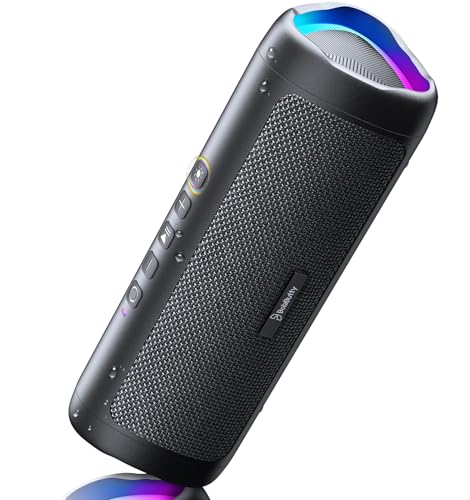


A calmer way to choose
Picture the speaker at the end of an ordinary Tuesday: a story playing at a level that lets a parent cook and a child follow every word, buttons a small thumb can manage, a housing that has already survived the floor twice, and a battery that will still be alive on Friday. That picture, not a feature list, is the product worth buying. Start with the ceiling, confirm the build, match the controls to the child in front of you, and let everything else be secondary. A speaker chosen that way tends to disappear into family life, quietly doing its one job well, and that disappearance is the surest sign the choice was right.


