What's inside
- Key Takeaways
- Quick Picks
- How Did We Choose Six From the Most Crowded Bracket in Gaming?
- What Does the Money Buy in This Bracket — and What Does It Not?
- Surround, Stereo, and Drivers — How Should a Buyer Read the Audio Claims?
- How Do You Set Up a USB Gaming Headset for Its Best First Week?
- Which Games Should Steer the Choice — Shooters, Stories, or Sport?
- Why Does This Bracket Stay Wired When Everything Else Went Wireless?
- Which USB Gaming Headsets Earn Their Desk Space?
- How Does the Whole Bracket Look in One View?
- Pads, Cables, and Booms — What Decides Whether the Headset Sees Year Three?
- What Mistakes Do Buyers Make in This Bracket?
- How Should You Audition a New Headset Before the Return Window Closes?
- Final Recommendation
- Frequently Asked Questions
- Related Guides
As an Amazon Associate I earn from qualifying purchases. This post may contain affiliate links at no extra cost to you.
widgetverdict.com is reader-supported. When you buy through links on our site, we may earn an affiliate commission.
Where to buy: Amazon lists all six headsets in this comparison, and in this bracket the exact variant matters more than the brand — several of these lines exist in USB and 3.5mm-only editions — so confirm the connection named in the listing title matches the one you are ordering before checkout.
Shopping for the best gaming headsets under 150 usb means shopping the most contested bracket in gaming audio, the tier where every major brand fields a serious wired contender and the compromises are chosen rather than suffered. The under $150 frame is this guide’s organising fact: it is the budget the keyword sets, it is generous enough to include surround processing, real microphones, and frames built to survive years, and it is strict enough to exclude the wireless flagships. No individual pick’s price is quoted anywhere in this guide — prices move, and the bracket is the point — but every pick was selected as a resident of this tier, with a USB path to the PC at the centre of its brief. What separates the six is not the bracket but the philosophy inside it: driver size against lightness, surround brand against surround brand, the gaming-only instrument against the headset that also answers the phone at a call centre.
The specifications quoted here come from the listing titles alone, and the titles in this bracket are admirably specific: driver dimensions of 50mm and 40mm, surround systems named DTS Headphone:X 2.0 and several flavours of 7.1, a flip-to-mute microphone here and a detachable boom there, memory foam and aluminium where comfort and durability are the pitch. Where a title is silent — and one famous title in this guide is silent about its very connection — the spec box records the silence rather than laundering outside knowledge into a claim. Players whose squads also play in the physical world should compare the comms discipline in Best Communication Headsets for Airsoft, where the same microphone virtues are graded under far worse conditions than a desk ever imposes.
Key Takeaways
- Every pick competes inside the same under $150 bracket; the differences are design philosophies, not tiers.
- Surround is nearly universal here — DTS Headphone:X 2.0 on the Logitech, 7.1 claims on four of the other five titles.
- Driver sizes are stated on three titles: 50mm twice, 40mm once — the bracket’s honest spec-sheet divide.
- Microphone designs span flip-to-mute, detachable boom, and fixed booms with noise cancelling claims.
- Only the HyperX Cloud II names memory foam and an aluminium frame in its title.
- Two titles reach beyond the PC — the EKSA names consoles and call centre work, the FIFINE names Xbox and PlayStation alongside PC.
Quick Picks
| Pick | Badge | Why it earns its place |
|---|---|---|
| Logitech G432 | The DTS all-rounder | DTS Headphone:X 2.0, 50mm drivers, USB and 3.5mm paths, and a flip-to-mute mic for PC play. |
| Razer Kraken V3 X USB | The lightweight Razer | A USB-native design with TriForce 40mm drivers, a HyperClear cardioid mic, 7.1, and Chroma RGB. |
| HyperX Cloud II | The comfort classic | 7.1 surround, memory foam ear pads, and a durable aluminium frame across PC and consoles. |
| EKSA E1000 USB | The double-duty worker | USB 7.1 with a noise cancelling mic and RGB, briefed for consoles, laptops, and call centre desks. |
| FIFINE H9 | The detachable-boom value | 50mm drivers, 7.1, a detachable boom mic, and a USB control box across PC, Xbox, and PlayStation. |
| SADES SA902 | The USB purist | 7.1 over USB with a microphone and LED light — the bracket’s most single-minded PC brief. |
How Did We Choose Six From the Most Crowded Bracket in Gaming?
The first screen was the bracket itself and the USB path: a pick had to belong to this price tier as the market understands it, and its title had to support a USB route to the PC — with one deliberate, disclosed exception examined in its own section below, where a legendary model’s title names its platforms but not its plug. The second screen was surround processing, because in this tier the surround system is the closest thing to a house philosophy: DTS against the several 7.1 implementations is a real fork in how a game world is staged, and the guide keeps both philosophies represented rather than pretending one has won. The third screen was the microphone, graded by design rather than by adjectives: flip-to-mute, detachable, cardioid, noise cancelling — each mechanism implies a different daily relationship with your own voice, and the six were chosen to span those relationships.
The fourth screen was honesty about second jobs. Two of these headsets work for a living beyond games — the EKSA names the call centre outright, the FIFINE’s control box and detachable boom suit the streaming desk — and a guide that ignored the work-from-home reality of its readers would be reviewing for a world that no longer exists. The final screen was the title test applied throughout this programme: every specification in the sections below can be pointed at, word for word, in the pick’s own listing title, and everything else is labelled as unstated. In a bracket this crowded, that discipline is the difference between a comparison and a collage.
What Does the Money Buy in This Bracket — and What Does It Not?
Inside the under $150 frame, the money buys processing and materials. Processing means the surround systems: a named, licensed implementation like DTS Headphone:X 2.0, or the 7.1 virtual surround that four other titles claim, which stages footsteps, reloads, and callouts in a wider, more legible space than plain stereo. Materials means the difference between a frame that creaks in month two and the Cloud II’s stated aluminium, between ear pads that flatten by summer and memory foam that keeps its shape, between a microphone treated as an afterthought and one given a name, a pattern, and a muting mechanism. It also buys the second connection — the G432’s and FIFINE’s dual paths — which is really buying insurance against the next machine, the console, the controller.
What the bracket does not buy is equally clarifying. It does not buy wireless in this guide’s company — every pick here is wired, which the competitive crowd should read as a feature, since the wire is why latency and battery anxiety are absent from these pages. It does not buy active noise cancellation claims, which appear in no title here; the isolation on offer is the passive kind, earned by cups and pads. And it does not buy exemption from the fundamentals: fit, microphone placement, and the game’s own audio settings will outweigh the difference between any two of these six in an actual match. The bracket buys a well-chosen set of compromises, professionally executed — and at its best, as several of these picks demonstrate, it buys a headset that owners keep for five years and recommend without being asked. Desk players who take calls between matches may also want the office-grade microphone thinking in the wired world beyond gaming, where the same dollars chase certification instead of surround.
Surround, Stereo, and Drivers — How Should a Buyer Read the Audio Claims?
Begin with what surround claims in a headset actually are: signal processing that uses two drivers to suggest a multi-speaker space. DTS Headphone:X 2.0 on the G432 is a licensed, named implementation — its presence in a title is a specific, checkable claim. The 7.1 claims elsewhere describe virtual surround processing of the same family of ideas, implemented by each brand in its own way. Neither should be read as seven speakers hiding in the earcups, and both should be judged by the only test that matters: whether positional cues in your games — the footstep behind-left, the reload above — become easier to place. Competitive players in quiet, directional games feel the benefit most; players in chaotic, music-forward titles may prefer honest stereo, and every headset here can be run plain when the processing does not suit the game.
Driver size is the second claim to read soberly. The titles state 50mm on the G432 and FIFINE, 40mm on the Kraken V3 X — and the correct reading is that driver size is a design choice with trade-offs, not a league table. Larger drivers move more air and are the traditional route to bass weight; smaller drivers serve the Kraken’s lightweight brief, where grams are the specification that decides whether hour four feels like hour one. Tuning outweighs diameter in practice, and no title here publishes the measurements that would let a stranger arbitrate — so this guide treats driver size as a statement of design intent: the 50mm picks intend weight and scale, the 40mm pick intends lightness, and both intentions are honourable. Buy the intention that matches your sessions.
A word, finally, on the lighting that three of these titles advertise, because buyers secretly weigh it and guides rarely dignify it. RGB wins no rounds, clarifies no callouts, and cushions no ears — and it is, for a great many battlestations, the difference between a tool and a possession. A desk is a place a player lives, and the objects on it are allowed to please them. This guide’s only counsel is ordering: choose the headset by surround, mic, and fit first, and let the lighting be the tiebreak it honestly is, rather than the headline it pretends to be in the photographs.
How Do You Set Up a USB Gaming Headset for Its Best First Week?
Install like a professional, because the defaults are not your friend. Plug the headset in, then set it explicitly as the output and input device in the operating system and again inside each game and chat app — three layers, three chances for a silent mismatch, and the classic symptom of hearing the game while your team hears your laptop’s built-in microphone is a layer problem, not a hardware one. Enable the surround processing in the headset’s software or the game’s settings, then test it in a controlled space: a training range, a bot match, a quiet corner of a familiar map where you can spin slowly and learn what behind-you now sounds like. That ten-minute calibration teaches your ears the new staging, and players who skip it often conclude, wrongly, that surround is a gimmick — it is a language, and languages need an afternoon.
Place the microphone as deliberately as the headset: a boom at the corner of the mouth, a flip-to-mute gesture rehearsed until it is faster than the sneeze it exists to catch, a detachable boom seated with a firm push rather than a hopeful one. Set chat and game volumes as separate citizens — the mix where callouts sit above effects but below pain — and write the settings down, because a driver update or a new game will eventually reset them and memory is a poor backup. Finish with the cable: routed off the chair’s wheel path, slack at the desk edge, because in this bracket more headsets are killed by office furniture than by any defect of manufacture. Squads who also play the field version of teamwork will recognise the same rehearsal logic from airsoft’s comms culture — kitchen first, battlefield second, always.
Which Games Should Steer the Choice — Shooters, Stories, or Sport?
Genre is the buyer’s most honest filter, because genres spend a headset’s virtues at different rates. Tactical shooters and battle royales spend surround and microphone: positional staging decides rounds, and the callout is a weapon system, which pushes the G432’s licensed processing and flip-to-mute, and the Kraken’s cardioid discipline, to the front of the queue. Story-driven and open-world games spend comfort and bass weight across six-hour narrative sessions, which is the Cloud II’s foam-and-frame brief and the 50mm picks’ home ground. Sports and racing titles spend almost nothing on positional audio and everything on chat clarity and lightness, an EKSA and Kraken conversation. Streaming inverts the ledger entirely: the audience hears only your microphone, so the FIFINE’s creator heritage and the Kraken’s pattern discipline outrank every audio consideration on the receive side.
The mixed-library player — which is to say, nearly everyone — should weight by the genre that punishes failure hardest, not the genre played most. A story game forgives a mediocre mic completely; a tactical shooter forgives nothing. Buy for the least forgiving game in your rotation, and the forgiving ones will be served by the same headset without ever noticing the difference. That single heuristic resolves most of this bracket’s agonising, and it is why the all-rounder’s chair at the top of this guide is occupied by the headset whose surround and mute serve the strictest genre in the room.
Why Does This Bracket Stay Wired When Everything Else Went Wireless?
The wire persists in this tier for reasons that are structural, not nostalgic. A wired USB connection carries the surround processing without a battery budget, delivers the microphone’s voice without a wireless codec’s compromises, and costs the manufacturer nothing in radios — which is precisely how this bracket affords its drivers, frames, and foams at its price. The competitive scene’s loyalty is the same calculation worn as doctrine: latency that cannot spike, a headset that cannot die in a final, a connection whose failure modes are all visible and mechanical. Wireless has its own legitimate kingdom — the couch, the commute, the living room — but the deskbound player’s kingdom is this one, and its borders are drawn by physics and arithmetic rather than by fashion.
The honest cost of the wire is the tether itself: a radius around the desk, a cable to route, a headset that stays where the PC lives. Players whose gaming life is genuinely mobile within the home should price that tether honestly and shop the wireless shelves with this guide’s blessing. Players whose life is a chair, a desk, and a squad should stop apologising for the cable — it is not the compromise in this bracket. It is the mechanism by which everything else in the bracket became affordable.
Which USB Gaming Headsets Earn Their Desk Space?
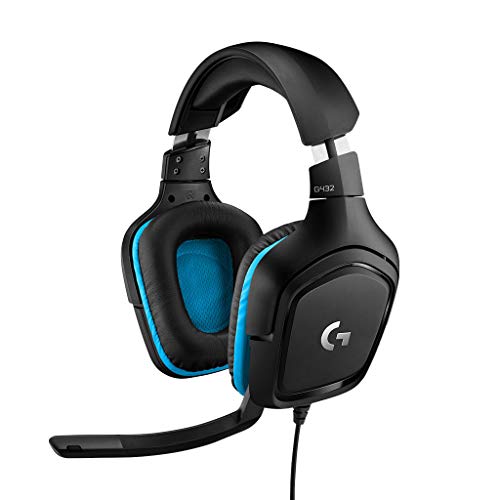
Logitech G432 — The DTS all-rounder
The G432 is Logitech’s argument that the bracket’s centre is the best place to stand: a wired gaming headset in black whose title leads with DTS Headphone:X 2.0, continues with 50mm audio drivers, offers USB and 3.5mm connections, adds a flip-to-mute mic, and closes with PC compatibility. The DTS licensing is its distinguishing asset — a named, mature surround implementation rather than a house-brand claim — and it suits the player whose games reward staging: tactical shooters and battle royales where the difference between left-behind and right-behind is the difference between rounds. The 50mm drivers serve the same immersion brief on the stereo side of the ledger.
The flip-to-mute microphone is the design’s daily pleasure. Muting by rotating the boom is the fastest, most tactile mute in this guide — no hunting a cable control, no software state to distrust — and in households where a headset must coexist with family life, that gesture is used a dozen times a session. The dual connection quietly future-proofs the purchase: USB for the PC’s surround path, 3.5mm for the controller, the laptop, the handheld. What the title does not claim is console surround or platform breadth beyond PC, and buyers should honour that boundary — the G432 is a PC-first instrument with a useful analogue second life. As the bracket’s all-rounder from its most establishment brand, it is the pick against which the specialists below define themselves.
It is also the natural first serious headset: the purchase a player makes when the bundled earbuds stop being funny, and its balance of processing, driver size, and mic manners is exactly what a first purchase should be — strong everywhere, eccentric nowhere, and honest about its PC home.
One more constituency should be named for it: the returning player, back after years away, whose last headset predates the surround era entirely. For that reader the G432 is the gentlest possible modernisation — one licensed processing system to learn, one mute gesture to trust, one brand whose software will not ambush them — and gentleness, in a re-entry purchase, compounds across every session that follows.
- Surround: DTS Headphone:X 2.0
- Drivers: 50mm audio drivers
- Connections: USB and 3.5mm jack
- Microphone: flip-to-mute
- Compatibility per title: PC
Strengths
- A named, licensed surround implementation rather than a house claim.
- Flip-to-mute is the fastest, most trustworthy mute gesture here.
- Dual connections give the PC headset a controller second life.
Trade-offs
- PC is the only platform its title names.
- No memory foam or frame-material claims in the headline.
- Console players must look to the multi-platform picks for stated support.
Best for: PC players who want licensed surround and a mute they can trust blindfolded. Not suited for: console-first players needing stated platform support.

Razer Kraken V3 X USB — The lightweight Razer
The Kraken V3 X is the contrarian of the bracket: where rivals compete on driver diameter, it competes on grams. Its title calls it a wired USB gaming headset, lightweight, in black, and then specifies TriForce 40mm drivers, a HyperClear cardioid mic, 7.1 surround sound, and Chroma RGB lighting. The USB-native design is the purist’s connection — one plug, the surround path built in, no analogue detour — and the lightweight brief is a serious engineering position rather than a missing feature: in a five-hour session, the headset’s weight is the specification your neck grades, and the Kraken’s whole design is an answer to the fatigue that ends sessions early.
The cardioid microphone claim deserves its translation: a cardioid pattern listens forward, toward your mouth, and discounts the room behind the mic — the keyboard, the fan, the household — which is why streamers and open-mic players prize the pattern by name. HyperClear is Razer’s branding for that brief. The 40mm TriForce drivers serve the lightness with a multi-part driver design, and buyers should read the smaller diameter as the cost of the headline virtue, honestly traded. Chroma RGB is the aesthetic line item: it does nothing for the audio and everything for the battlestation’s coherence, and in a bracket where several picks light up, Razer’s ecosystem lighting is the most developed dialect. For the long-session PC player who values a disappearing headset and a disciplined mic, the V3 X is the specialist pick of the six.
It is also the pick that most clearly knows its owner: a PC-only, USB-only, weight-first player. Specialists always exclude someone, and the Kraken excludes cheerfully — console players, analogue loyalists, and bass maximalists should all walk past it toward their own sections below, which is what a well-sorted guide is for.
The glasses-wearing player should claim a share of it too: lightness is not only a neck specification but a temple one, since every gram a frame does not weigh is a gram not pressing spectacle arms into the skin across a long session. Players who have ended evenings with the twin grooves of headset-plus-glasses will read the lightweight line in this title the way sailors read a weather forecast — as the single number that decides whether the day is pleasant.
- Connection: USB, native
- Drivers: TriForce 40mm
- Microphone: HyperClear cardioid
- Surround: 7.1 surround sound
- Extras per title: Chroma RGB lighting, lightweight design
Strengths
- Lightweight brief serves the longest sessions in the guide.
- Cardioid mic pattern discounts the room behind your voice.
- USB-native simplicity with the surround path built in.
Trade-offs
- Smaller drivers trade bass weight for the headline lightness.
- No 3.5mm path for controllers or analogue sources.
- RGB is an aesthetic virtue only — it will not win a single round.
Best for: long-session PC players who grade headsets by the neck, and open-mic players in noisy rooms. Not suited for: console players or anyone needing an analogue connection.

HyperX Cloud II — The comfort classic
The Cloud II is the bracket’s elder statesman, a headset whose reputation was built across a decade of desks, and its title reads like a summary of why: 7.1 surround sound, memory foam ear pads, a durable aluminium frame, multi-platform support spanning PC, PS4, PS4 PRO, Xbox One, and Xbox One S, in red. Comfort and durability are the headline acts — memory foam that keeps the seal’s shape across a session, aluminium where rivals use plastic — and for the player whose previous headsets died at the yoke or flattened at the pad, those two lines are the entire review. The platform list is the widest console reach in this guide, stated model by model.
Now the disclosure this guide owes you, in plain sight: the Cloud II’s title does not name its connection. It says multi-platform and lists the machines; it does not print USB. The model is included in a USB guide on the strength of its bracket position and platform brief, but this guide’s standing rule is that titles are contracts — so the connection is recorded in the spec box below as unstated in the headline, and the buyer for whom a printed USB claim is a requirement should treat the five other picks, whose titles name their paths, as the strict shortlist. What is not in doubt is the comfort-and-durability brief, which the title states in full and a decade of owners corroborate in spirit. Buy the Cloud II for the frame and the foam, having first confirmed the connection variant on the listing — the same variant discipline this guide preaches everywhere.
There is a lesson in its inclusion that transcends the model: famous headsets accumulate famous assumptions, and the disciplined buyer verifies the boring lines — connector, variant, platform — even when, especially when, the reputation makes verification feel unnecessary.
- Surround: 7.1 surround sound
- Comfort: memory foam ear pads
- Frame: durable aluminium
- Platforms per title: PC, PS4, PS4 PRO, Xbox One, Xbox One S
- Connection: the listing headline does not name the connection type — confirm the variant on the listing before ordering
Strengths
- Memory foam and aluminium answer the two commonest headset deaths.
- The widest stated console list in the guide.
- A decade-deep reputation for session-length comfort.
Trade-offs
- The title names no connection — variant verification is mandatory.
- The platform list names the previous console generation.
- No microphone mechanism is described in the headline.
Best for: comfort-first players and multi-platform households who will verify the variant before ordering. Not suited for: strict title-only shoppers, for whom an unstated connection is a disqualification.

EKSA E1000 USB — The double-duty worker
The EKSA E1000 states the double life of the modern desk more honestly than any rival here: a USB PC gaming headset with mic and 7.1 surround, computer headphones with a noise cancelling microphone and RGB light, wired for PS4 and PS5 consoles, laptops — and call centre work, named outright in the title. That last phrase reframes the whole product. A headset briefed for call centres is briefed for eight-hour wear, for a microphone that must behave in a room full of other voices, and for controls that survive being used by someone whose attention is on a customer, not a game. The E1000 brings that professional brief home and points it at a battlestation in the evening.
The noise cancelling microphone is its working core — in a call-centre sense, cancellation serves the listener at the other end, cleaning your voice of your environment — and the same virtue serves the squad channel on a Friday night. USB is its stated PC path, with the console and laptop reach broadening the desk it can serve. RGB light keeps its gaming credentials visible. What the title does not offer is driver dimensions or frame materials, so the spec-led buyer should note the silence and weigh the EKSA on its brief rather than its numbers: this is the headset for the reader whose headset budget must be justified to themselves in working hours as well as in play, and in this bracket that reader is a plurality. EKSA, a brand built in the gaming-accessory trenches rather than the esports arena, prices that proposition aggressively within the bracket — though, per this guide’s rule, the proposition is argued here without a single quoted figure.
Home workers who take the headset off at six and put it back on at eight for a raid will understand the E1000 instantly: it is one purchase wearing two uniforms, and both uniforms fit.
The call-centre line in its title also smuggles in a durability expectation worth respecting: equipment briefed for contact-centre floors is briefed for shift handovers, shared desks, and cleaning routines — a harder life than any home battlestation imposes. A buyer whose household shares a headset between a working adult and a gaming teenager is, whether they know it or not, running a two-shift operation, and the E1000 is the only pick here whose title admits it was designed by people who run exactly that.
- Connection: USB
- Surround: 7.1 surround sound
- Microphone: noise cancelling mic
- Platforms per title: PS4, PS5, laptop, PC
- Second brief per title: call centre work
Strengths
- The only title here that names call centre duty — an eight-hour wear brief.
- Noise cancelling mic serves customers and squads alike.
- Console, laptop, and PC reach in one wired purchase.
Trade-offs
- No driver size is stated in the title for spec-led comparison.
- No frame-material or memory-foam comfort claims in the headline.
- Xbox platforms are absent from its stated list.
Best for: work-from-home players who need one headset to earn its keep in both shifts. Not suited for: spec-sheet shoppers who buy by driver diameter.

FIFINE H9 — The detachable-boom value
FIFINE built its name on microphones for creators, and the H9 reads like a microphone company designing a headset from the voice outward: a wired gaming headset with microphone, 3.5mm and USB connectivity, 50mm drivers, 7.1 surround, a lightweight build with soft ear cushions, a detachable boom mic, and a USB control box, for PC, Xbox, and PS4/5. The detachable boom is the signature decision. A headset whose mic removes cleanly becomes two products — the gaming instrument and the plain headphone for the train, the film, the focus playlist — and for the player whose headset travels beyond the desk, that transformation is worth more than another lighting mode.
The USB control box is the second creator-flavoured detail: controls gathered into a desk unit rather than scattered along a cable, which suits the streaming and recording desk where the H9’s maker made its reputation. The platform list spans the current console conversation — PC, Xbox, PS4/5 — more completely than most rivals here, and the dual connection means the analogue path serves controllers while USB serves the PC’s surround. Lightweight with soft cushions is its comfort dialect: not memory foam by name, but the same intention in different words. In a bracket of specialists, the H9 is the content-creator’s cousin at the table — the pick for the player who records, streams, or simply refuses to wear a boom mic to the shops.
Its value positioning inside the bracket is a matter of feature density: detachable boom, control box, dual connection, current platforms, big drivers. Buyers making a spreadsheet will find the H9’s column fills fastest; buyers making a decision should still ask whether its particular density matches their particular desk, because a control box is a virtue only where a desk exists to hold it.
- Connections: 3.5mm and USB
- Drivers: 50mm
- Microphone: detachable boom mic
- Controls: USB control box
- Platforms per title: PC, Xbox, PS4/5
Strengths
- Detachable boom turns the gaming headset into an everyday headphone.
- The widest current platform spread in the guide.
- A control box suits streaming and recording desks.
Trade-offs
- A detachable boom is also a losable boom — spares discipline required.
- Comfort is claimed as soft cushions rather than named memory foam.
- The control box presumes a desk; couch players gain less from it.
Best for: streamers, creators, and players whose headset leaves the desk. Not suited for: players who know a loose boom mic would vanish within a month.

SADES SA902 — The USB purist
The SA902 closes the guide with the shortest title and the clearest conscience: 7.1 USB surround sound PC headsets, over-ear gaming headphones with microphone and LED light. Everything about that sentence is a decision. USB only — no analogue second life, no controller ambitions. PC only — no platform list to parse. 7.1 over that USB path, a microphone, over-ear coverage, and an LED for the battlestation’s sake. In a bracket where rivals hedge across consoles, connections, and second careers, the SA902 is the single-purpose instrument, and single-purpose instruments have a devoted constituency: the PC player who wants the surround path and the mic, full stop, and resents paying — in complexity, in cable segments, in setup — for versatility they will never exercise.
SADES has served the budget end of PC gaming audio for years, and the SA902’s proposition within the under $150 frame is maximal directness per decision: there is almost nothing to configure wrongly, nothing to adapt, nothing to detach and lose. The over-ear format is the comfort baseline of the category. What the title withholds — driver size, mic mechanism, frame materials — marks it as the pick bought on brief rather than on specification, and buyers who need those numbers should look to the G432 and FIFINE, whose titles print them. For the PC purist, though, the SA902’s restraint is the recommendation: it promises the smallest set of things in this guide and, by the logic of honest titles, stands behind every one of them.
It is also the natural second-PC headset — the guest machine, the sibling’s rig, the LAN-party spare — where a single-purpose USB instrument that simply works on any PC it meets is worth more than a versatile one that must be configured for each.
There is a discipline lesson in the SA902 for the whole bracket: every feature a headset adds is a feature that must be powered, configured, carried, and eventually repaired or replaced. The purist’s headset declines that compound interest. Players drowning in ecosystems — three apps, two dongles, a charging rota — sometimes discover that the most luxurious specification of all is a short one, and the SA902 is where this guide keeps that discovery.
- Connection: USB
- Surround: 7.1 USB surround sound
- Format: over-ear gaming headphones
- Microphone: included, mechanism not described in the title
- Extras per title: LED light
Strengths
- The simplest brief in the guide — nothing to adapt, detach, or misconfigure.
- USB surround path built for the PC alone.
- An ideal guest-rig and second-machine headset.
Trade-offs
- No analogue path and no console platforms in its brief.
- Driver size and mic design go unstated in the title.
- Single-purpose by design — versatility seekers should look elsewhere.
Best for: PC purists and second-rig builders who want the surround path with zero ceremony. Not suited for: console players or anyone needing a 3.5mm fallback.
How Does the Whole Bracket Look in One View?
| Pick | Surround | Drivers | Connections per title | Defining trait |
|---|---|---|---|---|
| Logitech G432 | DTS Headphone:X 2.0 | 50mm | USB and 3.5mm | Licensed surround, flip-to-mute |
| Razer Kraken V3 X USB | 7.1 | TriForce 40mm | USB | Lightweight, cardioid mic |
| HyperX Cloud II | 7.1 | Not stated in title | Not stated in title | Memory foam, aluminium frame |
| EKSA E1000 USB | 7.1 | Not stated in title | USB | Call centre second brief |
| FIFINE H9 | 7.1 | 50mm | 3.5mm and USB | Detachable boom, control box |
| SADES SA902 | 7.1 | Not stated in title | USB | Single-purpose PC purist |
The table’s silences are as informative as its entries. Three titles print a driver size and three do not; one prints a licensed surround name and five print the 7.1 family claim; one — the most famous name here — prints neither connection nor driver, and sells on foam and aluminium instead. That is the bracket’s real lesson: at this tier every brand chooses a different column to win, and the buyer’s job is to decide which column is theirs before the marketing decides for them. Crew players coordinating outdoors will recognise the same choose-your-column discipline in Best Boat Headsets, where range, duplex, and crew size divide a field exactly as surround, drivers, and connections divide this one.
Pads, Cables, and Booms — What Decides Whether the Headset Sees Year Three?
A gaming headset’s lifespan is written in its consumables. Ear pads compress, crack, and shed; the seal they made in month one is a memory by year two, and with it goes both the bass and the isolation the buyer paid for. The Cloud II’s memory foam delays that obituary, but no pad is immortal, and the wise owner treats pads as scheduled maintenance — inspect them each season, replace them when the foam stops recovering, and notice how the headset sounds new again for the price of a consumable. Headbands and yokes fail by fatigue at their flex points, which is the aluminium frame’s whole argument, while plastic frames ask for gentler handling and a hook rather than a desk-corner to live on.
Cables fail by choreography: the chair wheel’s daily crossing, the door-side run, the coil wound tight enough to train a permanent spiral that eventually fractures a conductor. Route the cable once, kindly, and the bracket’s commonest death is postponed indefinitely. Booms fail by enthusiasm — bent past their stops, detached and reattached a hundred times, or, in the FIFINE’s case, simply lost — and each design here implies its own discipline: flip gently, detach deliberately, store the removed boom in the same place every time. None of this maintenance appears in a title, and all of it decides whether the title’s promises are still being kept in the third year, which is the only year that separates a purchase from a subscription to replacements.
What Mistakes Do Buyers Make in This Bracket?
The first is buying the surround logo instead of the surround test: enabling the processing, never calibrating it in a training space, and declaring it hollow — when the honest verdict required ten minutes of spinning in a quiet map. The second is microphone theatre: choosing by the mic’s name rather than by a recording of your own voice in your own room, which is the only microphone review that has ever mattered. The third is variant blindness — ordering the 3.5mm edition of a USB headset, or the previous console generation’s platform list, because the photograph looked right; the Cloud II section of this guide exists as a standing warning that even famous titles must be read, not remembered.
Fourth, buyers treat the bracket as a ceiling to escape rather than a sweet spot to inhabit, overspending on wireless flagships whose batteries and latency they then spend a year forgiving. Fifth, they ignore the second-job question until the headset meets a work call and the gaming mic’s manners embarrass them — or, in reverse, they buy the office headset for the squad and discover its brief never included a game. Sixth, they let the cable die by chair wheel, the bracket’s leading cause of headset mortality, and blame the manufacturer in the review. Route the cable, rehearse the mute, record your voice, calibrate the surround: four habits that will do more for your season than any upgrade inside this bracket. The hearing-protection crowd learned the same lesson about fit over figures in Best Electronic Hearing Protection Headsets — the instrument you set up properly beats the instrument you merely bought, in every category this programme covers.
How Should You Audition a New Headset Before the Return Window Closes?
Give the headset four examinations in its first week, while returning it is still a clerical act rather than a regret. The voice examination: record yourself in your real room, at your real volume, through the real chat app, and listen as your squad listens — the microphone’s truth lives in that recording and nowhere else. The staging examination: ten minutes spinning slowly in a quiet training space with the surround on, learning where behind-you lives in the new processing, and ten more with it off, so the comparison is yours rather than a reviewer’s. The marathon examination: one full session at full length, because comfort is a fourth-hour property and no amount of first-minute plushness predicts it.
The household examination is the one nobody schedules and everybody needs: take the work call, answer the door-side question with the mute gesture, let the headset meet the actual life it will be lived in. A headset that passes all four examinations in week one will not surprise you in month six; a headset that fails one has told you so at the only moment when the information is free. This bracket’s tragedy is never the wrong purchase — every pick here is defensible — it is the unexamined one, kept past its window by inertia and resented for a year.
Final Recommendation
Inside the under $150 frame, choose your column and commit. The surround purist takes the G432’s licensed DTS and its flip-to-mute certainty; the long-session player takes the Kraken V3 X and lets lightness be the luxury; the comfort loyalist takes the Cloud II, variant verified, and lets foam and aluminium do their decade-tested work; the double-shift worker takes the EKSA and its call-centre brief; the creator takes the FIFINE and its detachable boom; the purist takes the SADES and its beautiful restraint. Every one of those is a defensible summit of the same bracket, reached by a different path — and the player who calibrates the surround, places the mic, and routes the cable like the setup sections above prescribe will get more from any of them than a careless owner gets from twice the budget. That is the bracket’s final secret, and it is not really a secret: under $150, the setup is the spec.
Buy in that spirit and the bracket rewards you out of proportion to its size. The players still wearing a headset from this tier three seasons later are never the ones who agonised longest over the logo; they are the ones who matched the philosophy to their genre, verified the variant, calibrated the processing in one honest afternoon, and then stopped shopping and started playing. Six defensible summits stand in this guide. Pick the one whose path matches your feet, and climb it properly.
And keep the bracket’s perspective when the flagship marketing finds you at a weak moment: the players at the top of your game’s ladder are separated by aim, by hours, and by the discipline this guide keeps prescribing — calibration, placement, rehearsal — not by the price tier of the plastic on their heads. This bracket, honestly bought and properly set up, has never been the thing standing between a player and the next rank. It is, on the evidence of these six, the thing that lets a player stop thinking about equipment entirely — which is where every rank climb actually begins.
Frequently Asked Questions
Is USB better than 3.5mm for a gaming headset?
USB carries the surround processing path in most of these designs — the processing lives on the USB side — while 3.5mm offers universal analogue reach to controllers and other sources. The dual-connection picks, the G432 and FIFINE, refuse the choice; the USB-native picks, the Kraken, EKSA, and SADES, bet on the processing path. Choose by where your hours are spent.
Does 7.1 surround in a headset really help?
It helps the players who calibrate it: positional cues in directional games become easier to place once your ears learn the staging, which takes the training-space session this guide prescribes. Uncalibrated, it is a wider sound you may or may not prefer. Every pick here can also run as plain stereo, so the experiment costs nothing but ten honest minutes.
Why is one famous headset’s connection not stated?
Because its title does not state it — the Cloud II’s headline names platforms, foam, frame, and surround, but not a plug. This guide reports titles as written and flags the gap rather than filling it from reputation, and the practical consequence is simple: verify the exact variant on the listing before ordering that model.
Can these headsets handle work calls as well as games?
One title says so itself — the EKSA names call centre duty — and the FIFINE’s creator-grade mic heritage suits the streaming and meeting desk. The gaming-first picks will all carry a call competently, but buyers whose day is measured in call hours should weigh the EKSA’s brief and the office category’s certifications as the primary instruments, with gaming as the bonus.
How long should a headset in this bracket last?
Years, if the two mortal threats are managed: the cable, which dies by wheels and kinks, and the pads, which compress with use. The Cloud II’s aluminium frame and memory foam are this guide’s most explicit answers to those threats; every other pick benefits equally from the cable routing and storage habits in the setup section.
Judge lifespan by your own history rather than by hope: if your previous headsets died at the cable inside eighteen months, weight the frame-and-cable virtues heavily and route kindly from day one; if they died of boredom while still working, weight the philosophy fit — surround school, mic mechanism, second-job brief — because the headset you will actually replace is the one you stop enjoying, and it will be replaced at full working order and full price.
Should I buy for my current PC or my next one?
For the connection you will use daily this year — headsets in this bracket are replaced on a shorter cycle than the philosophies behind them, and a dual-connection pick like the G432 or FIFINE already hedges the transition. The exception is the player mid-upgrade to a platform the current headset cannot serve at all; that buyer should let the new platform choose, and let this guide’s platform columns, quoted strictly from the titles, do the choosing with them.
Do I need a separate microphone for streaming?
Not on this evidence. The Kraken’s cardioid pattern, the FIFINE’s detachable boom from a microphone maker, and the EKSA’s noise cancelling brief all address the streamer’s core problem — a clean voice over a lived-in room. A dedicated desk mic remains the upgrade path for full-time creators, but this bracket’s best mics are well past the threshold where a stream sounds amateur.
The test, as ever, is a recording: sixty seconds of your own commentary over real gameplay, listened to on a phone speaker in another room. If the voice survives that journey — intelligible, present, free of the room’s echo and the keyboard’s percussion — the microphone question is closed, and the stream’s remaining problems are the honourable ones of content rather than equipment. Most streamers who run that test on a headset from this bracket discover the microphone was never their bottleneck at all — a discovery worth the price of the recording, which is nothing, and considerably cheaper than the dedicated microphone they were about to buy instead of the headset they actually needed.
Related Guides
Whichever summit you chose, run the four first-week examinations before you settle, and let the headset earn its permanence rather than inherit it. Players equipping the rest of their setup may also want Best Boat Headsets for crew comms afloat, Best Electronic Hearing Protection Headsets for the range days between matches, and Best Communication Headsets for Airsoft for the squad’s outdoor season.
Related guide: Best Business USB Headsets
Related guide: Best Call Center Headsets Under $150


